19 Mid-Century Modern Bathroom Ideas Without the Retro Look
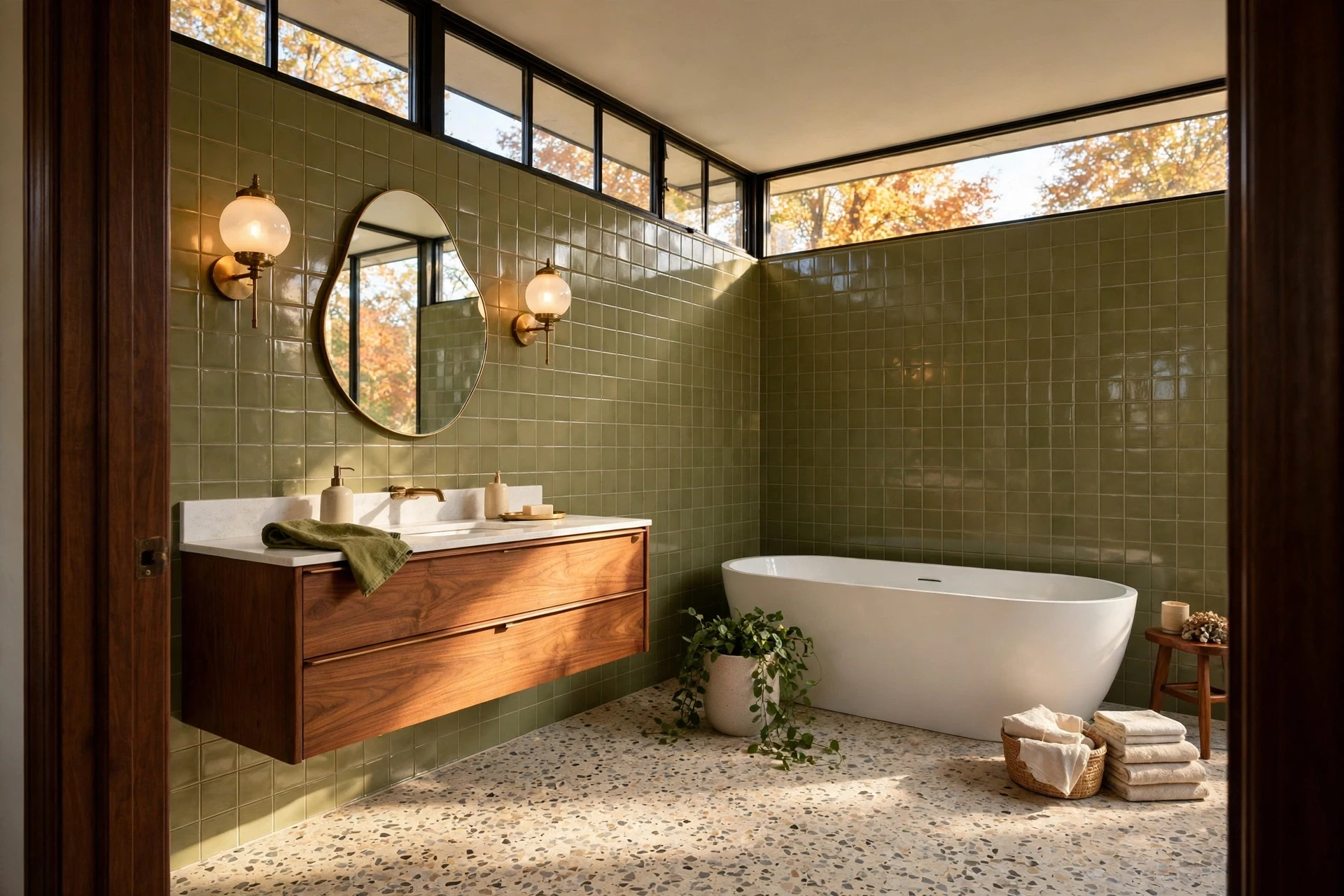
Close your eyes and picture two bathrooms. The first has pink tile, an avocado tub, and a floral floor. The second has a warm walnut vanity, a slab of white stone, and a round mirror catching the afternoon light.
Both could be called mid-century. Only one feels like a home today.
Mid-century modern design grew out of the 1950s and 1960s, when designers wanted homes that were simple, useful, and close to nature. That is why the style still works. It has clean lines, honest materials, and a little playful shape.
The trick is knowing where to stop. The 19 ideas below show you how to keep the warmth, the wood, and the geometry, while leaving the full retro costume behind. Pick two or three that fit your room, and you will get the look without the theme-park effect.
Quick answer: what is a mid-century modern bathroom? A mid-century modern bathroom uses clean lines, warm wood like walnut or teak, geometric tile, soft organic curves, and simple brass or black fixtures, inspired by mid-1900s design. To avoid a full retro look, keep the base modern and add one or two vintage-inspired details, like a starburst light or a hex tile floor.
1. Anchor the Room With a Floating Walnut Vanity
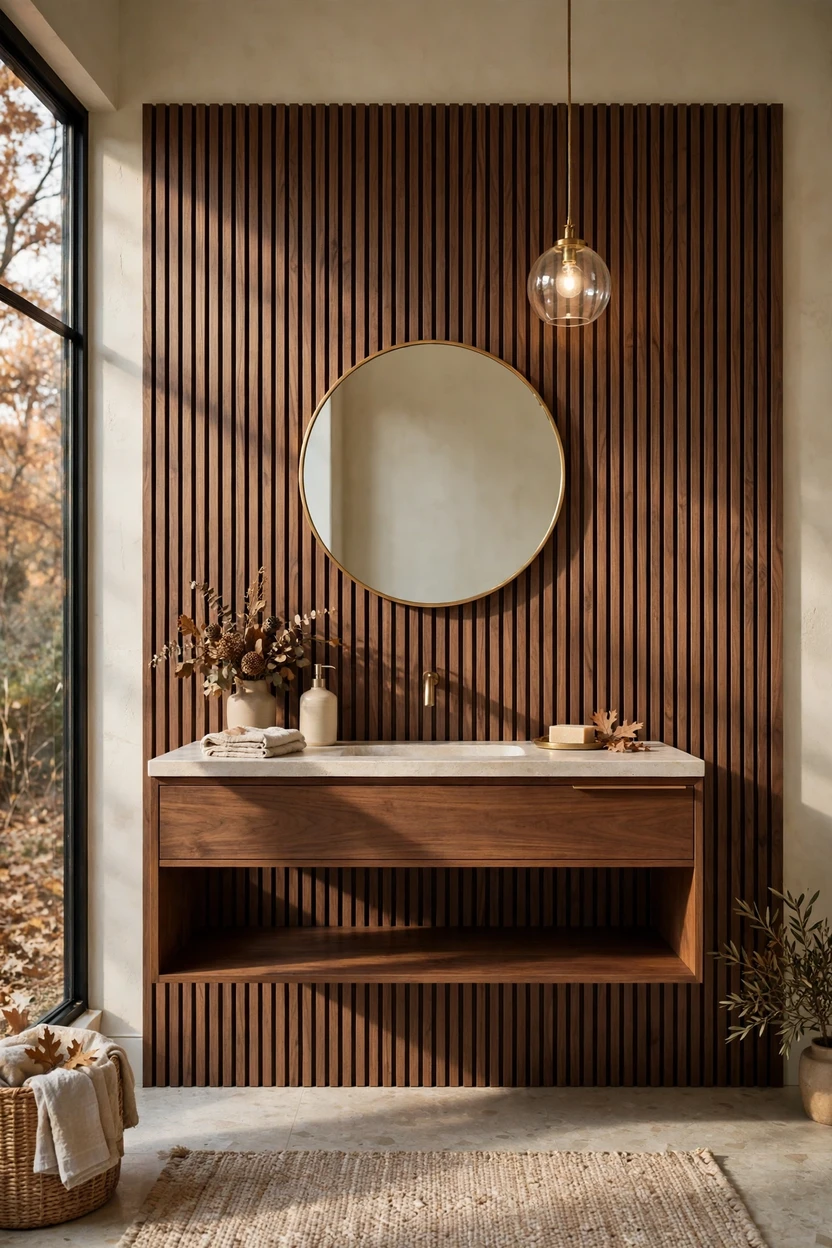
Start with the vanity, because it sets the tone for the whole room. A floating walnut vanity with slab fronts and no fussy hardware reads as mid-century but still looks current. The warm brown wood brings the rich grain this era is known for. Choose a white or soft-gray stone top so the wood stands out. Walnut needs a strong water-resistant finish in a bathroom, so ask how it is sealed and wipe splashes away.

2. Pull One Color From the Retro Palette
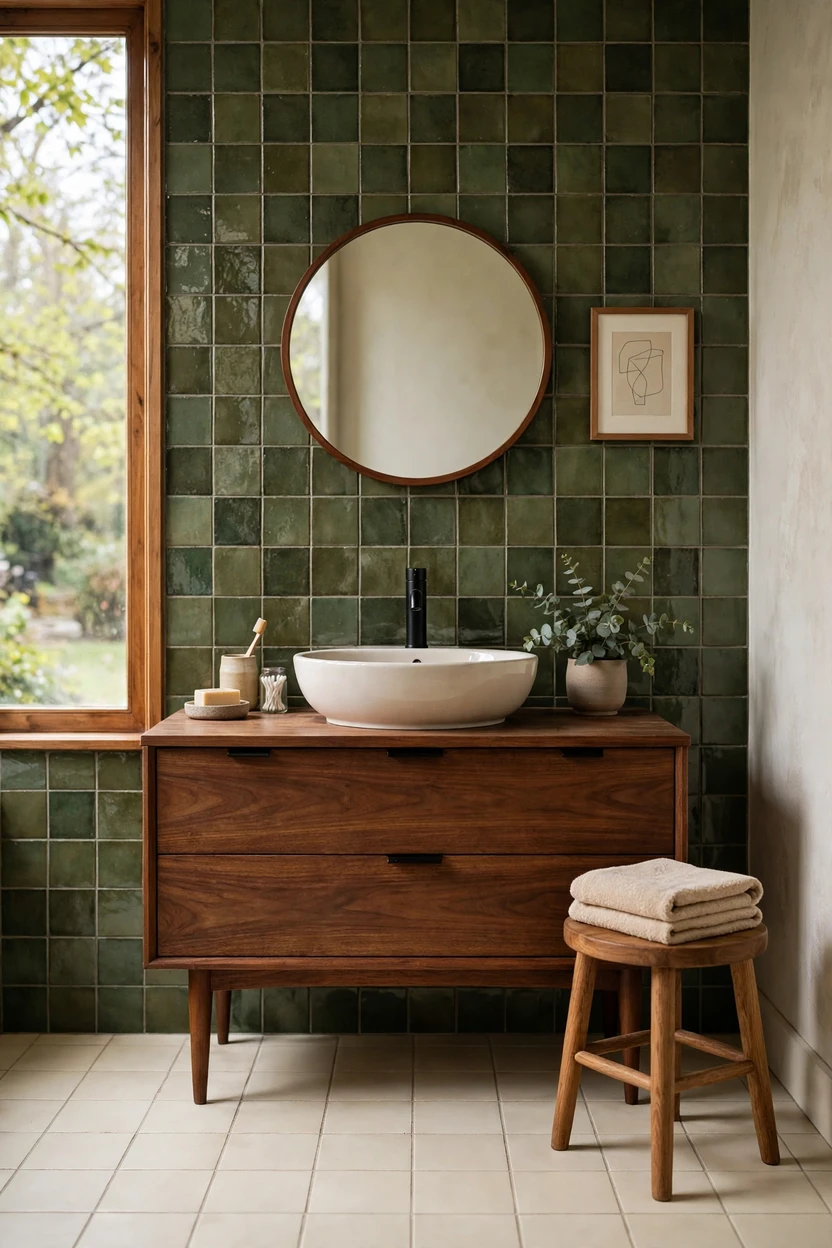
Skip the full 1950s pink-and-mint combo and borrow a single color from that era instead. Muted olive, deep teal, soft mustard, and warm clay all look at home with walnut and cream. Use the bold shade on one surface, like a tile wall, a vanity front, or a painted door. Keep everything else in warm white, oat, and soft gray so the color has room to breathe. Test paint swatches by the mirror, since bathroom light can shift a color a lot.
3. Use Terrazzo on the Floor or Counter
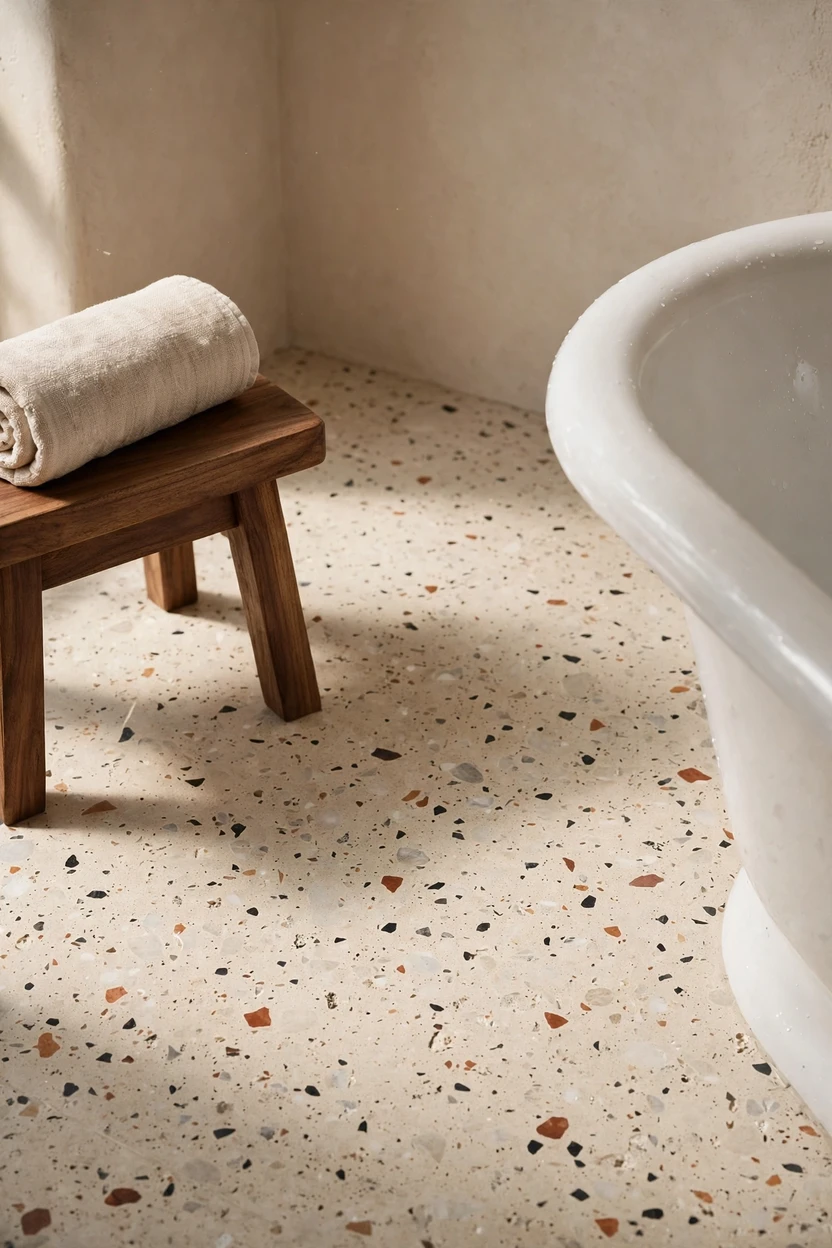
Terrazzo is a mid-century favorite, made from chips of stone set in cement or resin. Today you can find terrazzo-look porcelain tile, which is easier to buy and easier to care for. Use it on the floor or on the vanity top, but not both, so the pattern does not take over. Pick a small-scale chip in cream, gray, and one warm accent that matches your wood. Pair it with plain, flat-color walls so the speckles stay the star.
4. Lay Stacked Square Tile in a Straight Grid
Stacked square tile gives a mid-century feel without feeling old. Lay handmade-look squares in a straight grid, with grout lines that line up both ways, instead of the usual brick pattern. A soft glaze in cream, sage, or sky blue adds warmth and gentle color shifts. Run the tile to the ceiling on one wall for a clean, graphic backdrop. Choose a grout that closely matches the tile so the grid looks calm instead of busy.

5. Try a Hexagon Mosaic Floor
A hexagon floor is a classic mid-century detail with built-in grip. Small mosaic tiles have many grout lines, which adds traction on a wet floor. Go bold with black and white, or stay soft with warm gray and cream. Keep the walls simple, because a busy floor needs a quiet partner. Seal the grout once it cures to help it resist stains.

6. Hang One Sculptural Light Fixture
Lighting is the fastest way to add mid-century style. A starburst or sputnik-style fixture brings the atomic shapes the era loved, while a simple dome or globe pendant feels softer. Choose one statement piece in matte black, brass, or opal glass, and keep the other lights plain. Hang it where nobody will bump it, and use a damp-rated or wet-rated fixture if it sits near water. Ask a licensed electrician which fixtures are safe in each zone.

7. Flank the Mirror With Globe Sconces
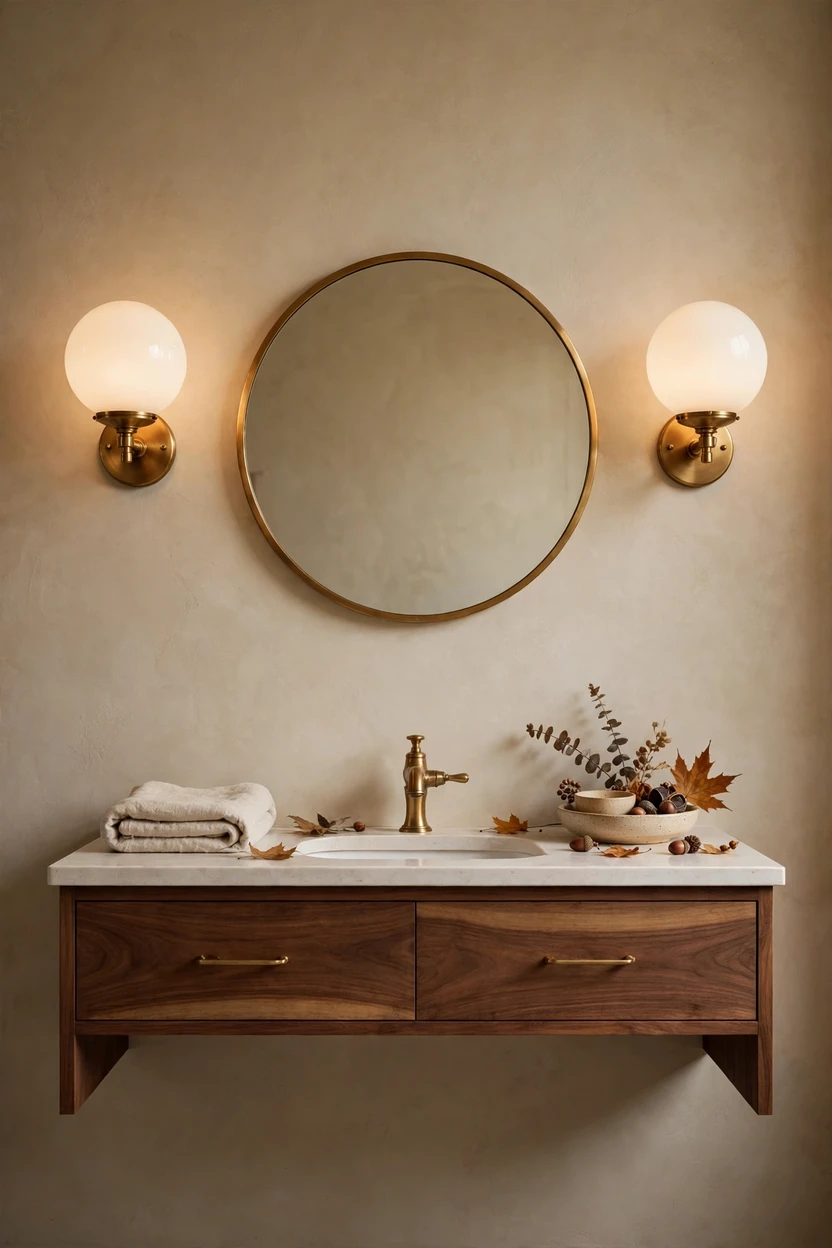
Globe sconces on each side of a mirror give soft, even light on your face. This cuts shadows better than a single light above. Opal glass globes feel right for the era without looking stage-set. Mount them near eye level, and use warm bulbs so skin tones look natural. Pair them with a simple mirror so the lights remain the accent.
8. Choose an Organic-Shaped Mirror
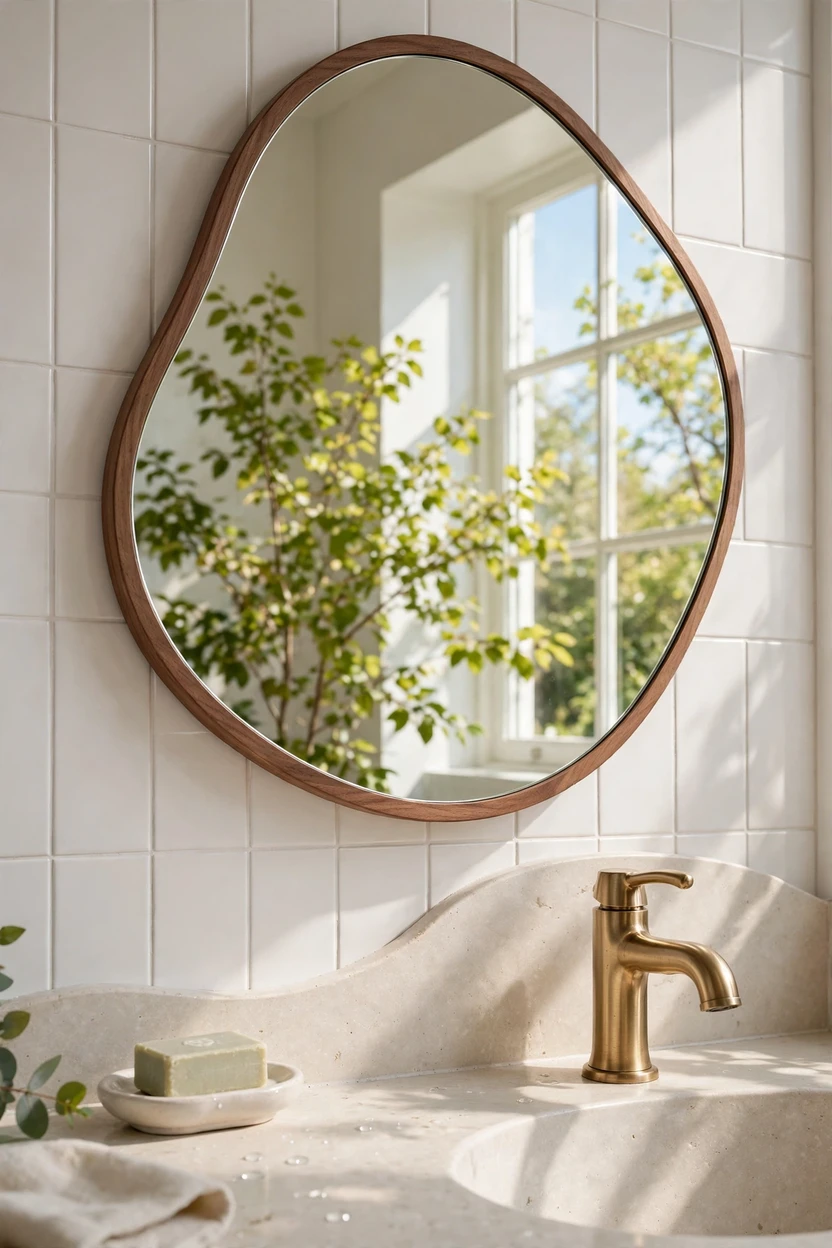
Mid-century designers loved soft, pebble-like shapes, and a curved mirror brings that over in one move. Try an oval, a pebble shape, or a gentle kidney curve with a slim frame in walnut or brass. Hang it so the center sits at eye height. Pair it with a straight-edged vanity so the curve and the line balance each other. A wide mirror that nearly spans the vanity also makes the room look larger.
9. Stick to One Metal Finish
Brushed brass and matte black both suit mid-century style, but they work best when you choose one and repeat it. Use the same finish on the tap, shower arm, towel bar, and drawer pulls. Brass adds a warm glow against walnut, while matte black draws a thin, graphic line against pale tile. Pick slim, simple shapes and avoid ornate handles. If you mix two metals, let one clearly lead and use the other only once or twice.

10. Build a Nib Wall With a Glass Shower Panel
A nib wall is a short wall that stands beside the shower and holds a clear glass panel. It keeps the room open and gives the shower a clean, architectural edge, which suits mid-century layouts. Cover the nib in the same tile as the shower so it looks built in. A frameless or thin-framed glass panel keeps light moving through the space. Add a small niche or bench to the wall so it works hard, not just looks good.

11. Add a Warm Wood Ceiling or Slat Wall
A wood ceiling or slat wall brings in the nature-first spirit of mid-century homes. Vertical slats in oak or walnut add rhythm and hide small flaws. Use a moisture-rated material and a sealed finish in wet areas, and keep wood out of direct shower spray. Good ventilation matters, so check the exhaust fan before you install anything. If a full ceiling feels heavy, a single slat wall behind the vanity gives the same effect.
12. Let in Light With a Clerestory or Round Window
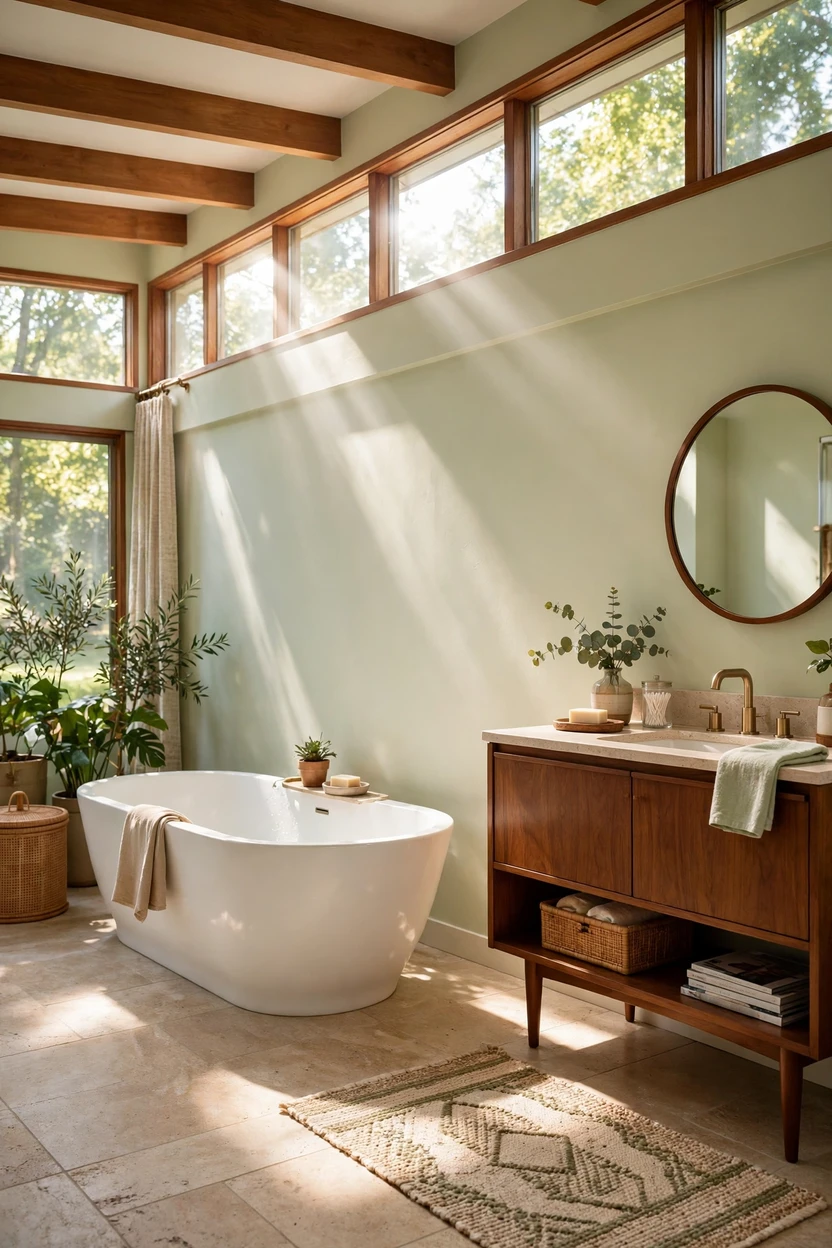
Natural light is a big part of mid-century design. A clerestory window is a row of small windows set high on the wall, which brings in daylight and keeps the room private. A round window makes a soft contrast to the straight lines of tile and cabinets. Both give you light without showing the neighbors your morning routine. If you cannot add a window, a frosted glass panel above the door or a skylight can help.
13. Pick a Slim, Plain Freestanding Tub
A freestanding tub with a plain oval or rectangular shape suits mid-century style well. Skip ornate feet and rolled rims, which lean traditional. A matte white finish keeps the look modern. Place it near a window or against a tile wall so it looks designed, not dropped in. Make sure the floor can carry the weight before you order.

14. Borrow Palm Springs With a Breeze Block Accent
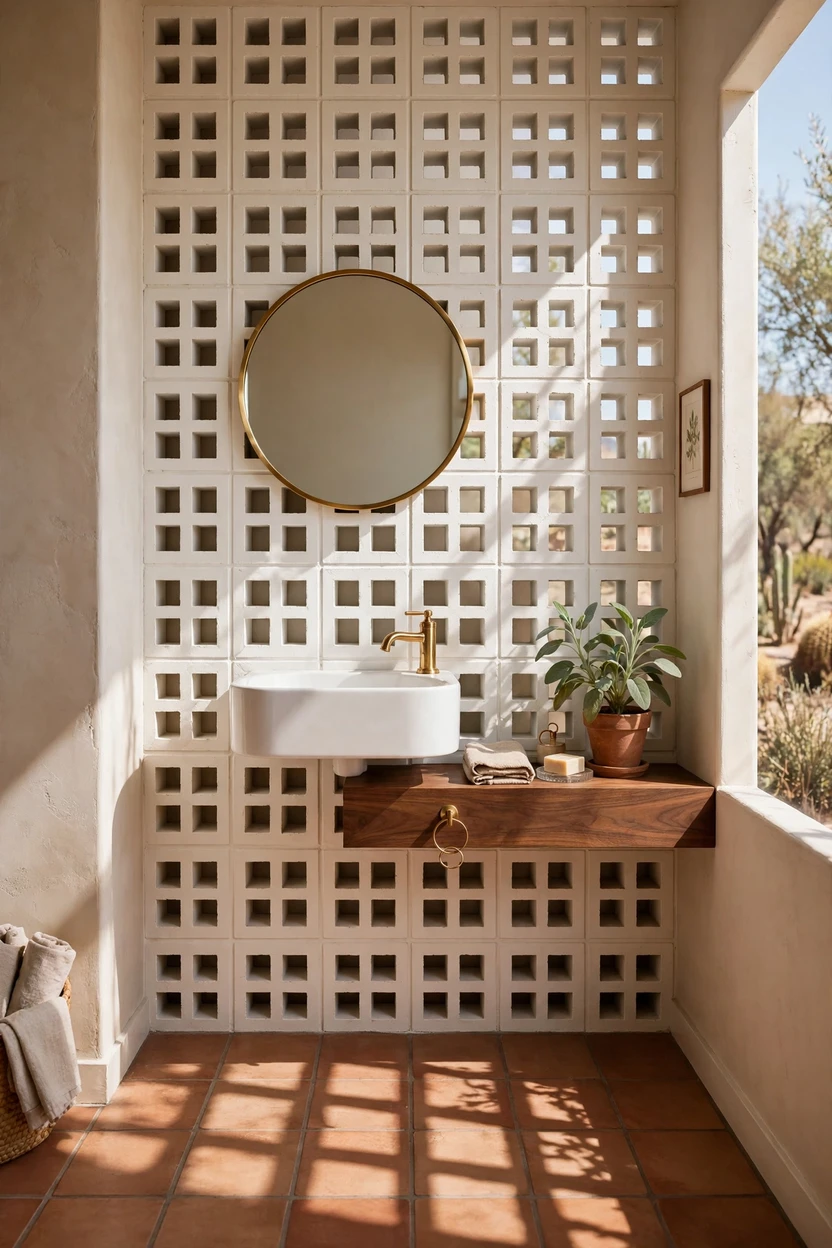
Breeze blocks are the patterned concrete screen blocks seen in Palm Springs and many mid-century homes. They add geometry and play with light in a way few other materials do. In a bathroom, you can use a small screen wall, a tile in the same pattern, or a breeze-block-style niche. Keep it to one spot so it stays special. Pair it with plain walls and warm wood so the pattern pops, and make sure any real block is sealed and moisture-safe.
15. Bring in One Vintage Find
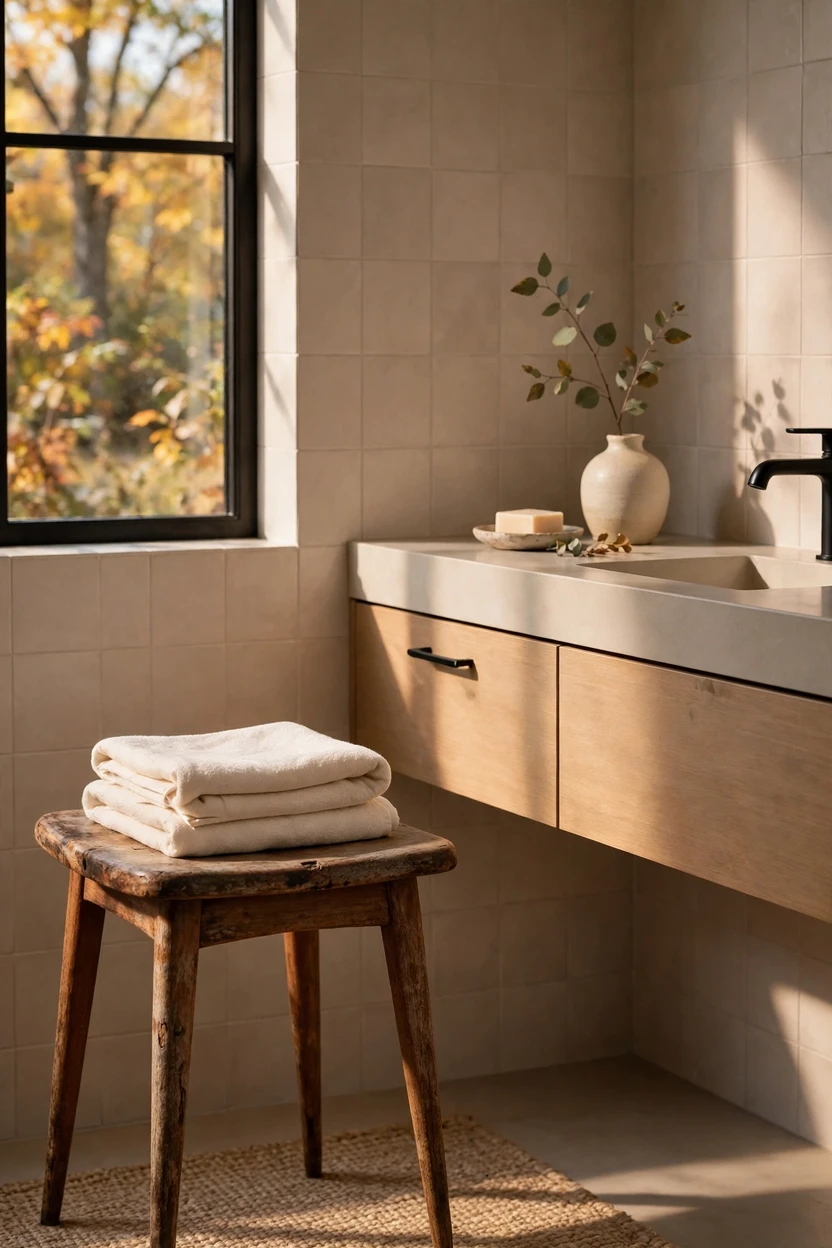
One vintage piece makes the room feel lived in. Look for a teak stool, a small mid-century cabinet, a brass mirror, or a ceramic vase from the era. Keep the rest of the room modern, so the vintage piece feels like a pleasant surprise. Check the finish for moisture, and keep real wood furniture away from direct splashes. Thrift stores, estate sales, and flea markets are good places to look.
16. Use Slab-Front Storage and a Recessed Cabinet
Mid-century design cared about function, and a bathroom is where that shows. Flat-front cabinets with a push latch or a slim pull keep the lines clean. A recessed mirrored medicine cabinet saves wall space and hides clutter. A tall, narrow cabinet in walnut or oak holds towels and spare supplies. Keep one open shelf for something pretty, like a ceramic dish, and close up the rest.

17. Style Plants in Sculptural Planters
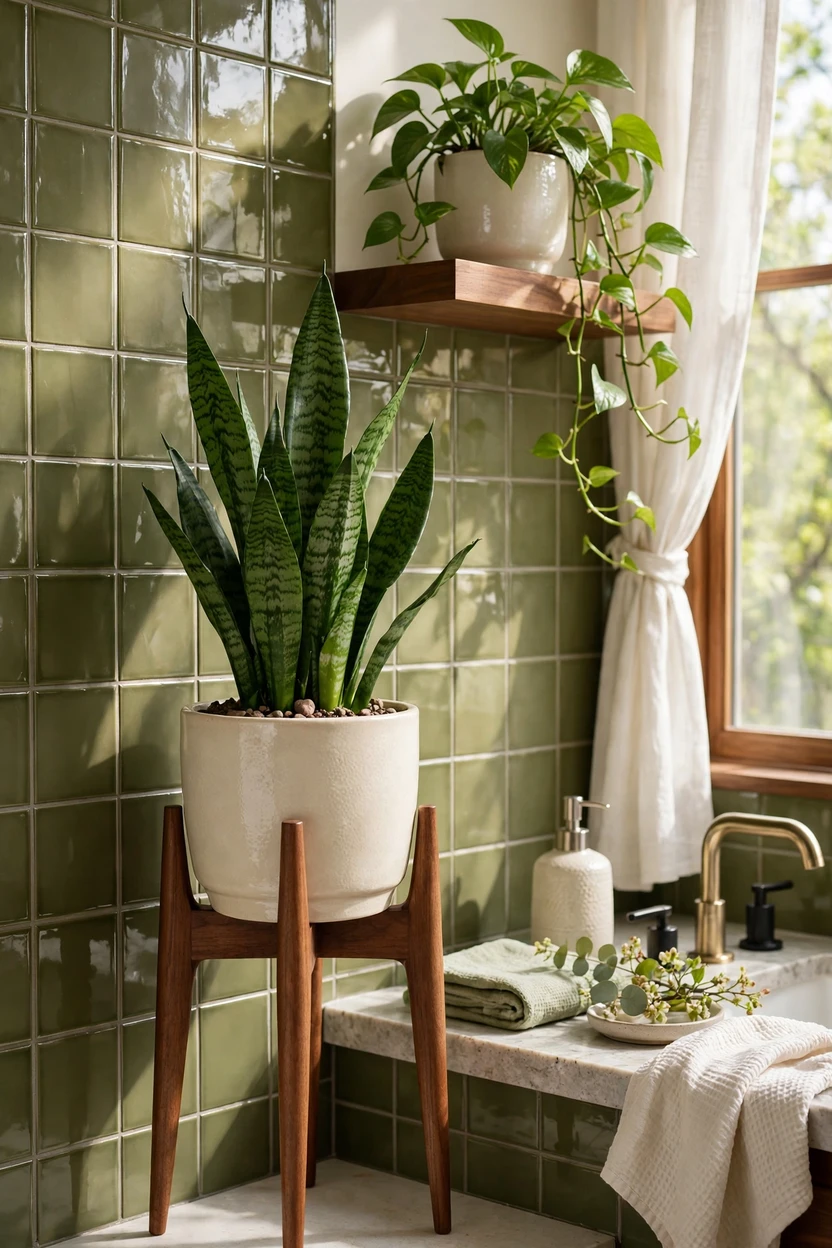
Plants echo the indoor-outdoor idea at the heart of mid-century homes. Set a plant in a matte ceramic planter on a slim wood stand, a style often called a bullet planter, or hang one near the window. Pothos, snake plants, and ZZ plants handle humid rooms well. Choose one or two plants, not a jungle. Check the light first, because some bathrooms are dim and need a spot near a window.
18. Add Graphic Art and Simple Ceramics
A little art keeps a clean room from feeling blank. Hang one bold geometric or abstract print in a simple wood frame, away from direct splashes. Add a handmade-looking ceramic dish and a simple vase. Choose shapes with soft curves and colors that match your accent shade. Use framed art with glass and a sealed back so it can handle the humidity.

19. Follow the 80/20 Rule
End by editing. Keep about 80 percent of the room modern and plain, and let 20 percent carry the mid-century details. Choose two or three bold features, like a walnut vanity, a hex floor, and a starburst light, and keep everything else simple. If the room starts to feel like a museum, take one thing out. This rule is what keeps a mid-century bathroom from going full retro. A good test is to ask whether the room would still look good in ten years.

Styling Tips
Color: Build on warm white, oat, and soft gray, then add one accent like olive, teal, clay, or mustard.
Materials: Walnut, teak, or oak for warmth. Terrazzo or honed stone for texture. Brass or matte black for lines.
Shapes: Pair soft curves, like a pebble mirror or oval tub, with straight lines, like a slab vanity.
Pattern: Use one bold pattern, not three. Hex tile, breeze block, or a graphic print can each lead.
Legs and lift: Floating or tapered pieces show the floor, which makes rooms feel lighter.
Empty space: Leave surfaces calm. Mid-century style looks best with room around each object.
Practical Implementation Ideas
You can build this look in stages. This order keeps costs and stress low.
Step 1: Pick the backbone. Choose your wood, your base color, and your one metal. Everything else follows from these three.
Step 2: Start with the cheap changes. Swap bulbs for warm ones, paint the walls, and change the hardware and mirror. These steps change the feel fast.
Step 3: Add one statement. Choose a vanity, a tile wall, or a light fixture as the star of the room.
Step 4: Layer in soft pieces. Add a vintage stool, a plant, simple ceramics, and linen towels in muted shades.
Step 5: Plan the big work last. Tile, layout changes, and plumbing moves cost the most, so confirm the look with smaller changes first.
Use the 60-30-10 rule for color. About 60 percent warm neutral, 30 percent wood and stone, and 10 percent accent color keeps the room balanced.
Keep the zones clear. Put the wet zone, the grooming zone, and the storage zone in separate areas so the room feels organized.
Protect your materials. Run the exhaust fan during and after showers, seal wood and grout, and use damp-rated lighting where needed. Ask licensed pros for electrical and plumbing work.
Common Mistakes to Avoid
Going all in on one era. If every piece is vintage, the room feels like a set. Mix modern and mid-century.
Using too many bold patterns. Hex floor, breeze block, and printed wallpaper together will fight. Pick one star.
Choosing a color that is too sweet. Heavy pink, mint, and avocado can read as costume. Use muted, earthy versions.
Skipping the sealant on wood. Walnut and teak look great but need protection from steam and splashes.
Mixing too many metals. Pick brass or matte black and repeat it.
Using cold, harsh bulbs. Warm light brings out the wood and the glaze on tile.
Buying fake wood grain that looks flat. Real veneer or good-quality wood-look surfaces look much richer than shiny printed ones.
Forgetting function. A pretty vanity with no storage will annoy you every morning. Plan drawers and a recessed cabinet first.
Small-Space Alternatives
Float the vanity. Seeing the floor makes the room feel bigger.
Use a wide, simple mirror. It bounces light and doubles the sense of space.
Choose a glass shower panel. It keeps sightlines open, unlike a curtain.
Go with one tile family. The same tile on the floor and wall makes a tiny room look calm and whole.
Add a clerestory or frosted window. Light from above brings brightness without losing privacy.
Use wall-mounted taps and sconces. They free up counter space.
Use a recessed cabinet. It stores a lot without taking floor space.
Budget-Friendly Alternatives
Paint and bulbs first. One warm accent color and warm bulbs cost little and change the mood fast.
Swap hardware and mirror. New pulls, a tap, and a round mirror update a room quickly.
Use peel-and-stick or paint on tile. Choose options made for wet areas, and follow the instructions for prep.
Add a vintage find. A thrifted teak stool or ceramic vase gives character for very little.
Frame a bold print. An affordable graphic print in a simple frame adds the era feel.
Choose terrazzo-look tile or vinyl. The look is close, and the price is lower than real stone.
Buy a simple globe sconce. One opal glass fixture in the right spot makes a big difference.
Rent-friendly picks: a strap-hung mirror, plants, a bath mat in a geometric pattern, and a freestanding shelf leave no marks.
Pro Styling Recommendations
Choose the hero first. Let the vanity, the tile, or one light fixture lead, and keep everything else quiet.
Pick one retro moment per zone. One in the shower, one at the vanity, and one in the lighting is plenty.
Hold samples together in daylight. Check wood, tile, and paint side by side. If one looks pink and another looks yellow, keep looking.
Repeat one shape. If you pick a round mirror, echo it with a round stool top, a round tray, or a globe light.
Think in sightlines. Stand in the doorway and check what you see first. Make it the best part of the room.
Edit every season. Swap towels, rotate a plant, and remove anything that starts to feel like clutter.
Frequently Asked Questions
Conclusion
You do not need to turn your bathroom into a 1958 set to get the mid-century feel. A warm walnut vanity, one graphic tile moment, and a round mirror already say enough.
Start with the part you notice every morning, like the light or the vanity, and build from there. Let one piece be bold and the rest stay calm. When the room feels warm, simple, and a little playful, you have found the sweet spot between then and now.