19 French-Inspired Nursery Ideas That Feel Fresh & Calm

Picture it. It is early morning. Soft gray light slips through linen curtains, and the nursery already feels calm.
A cream crib frame. A small chandelier that catches the glow. A mirror holding a bit of sky.
That is the French-inspired nursery in one image. It is quiet, a little romantic, and easy to live in at 3 a.m.
Here is the good news. You do not need a cartoon Paris theme or a room full of ruffles. The look people save on Pinterest is simpler. It is soft color, smart texture, and a few old-fashioned details placed with care.
Below are 19 ideas, each with the styling logic behind it, so you know why it works. You will also find safety notes, budget swaps, small-space fixes, and answers to the questions parents ask most.
Quick answer: What is a French-inspired nursery? A French-inspired nursery is a baby room built on soft neutral colors, wall molding, linen fabrics, gentle curves, and a few vintage-style pieces. It borrows from French country, French provincial, and Parisian apartment style. The goal is a calm room that looks collected, not themed.
Table of Contents
Soft Cream Wall Molding (Boiserie)
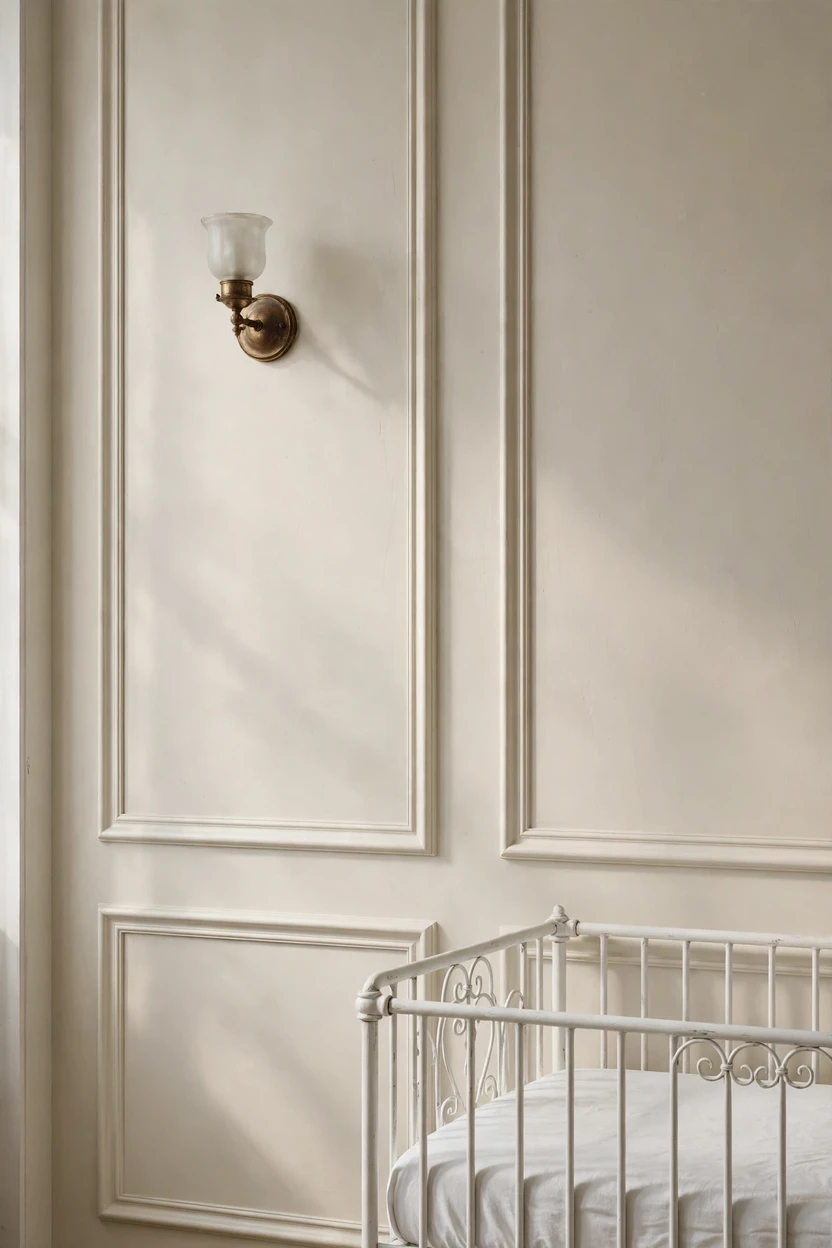
Picture-frame molding gives a plain wall French bones in one weekend. Thin strips of trim form tall rectangles, and you paint the whole wall one color so the lines show up as soft shadow. Cream, oyster, or pale greige keeps the room quiet while the shadows add depth. In a small room, run the panels to the ceiling so the walls feel taller. Choose an eggshell or satin finish, because it wipes clean when little hands start touching everything.
A Dusty Blue Toile Accent Wall
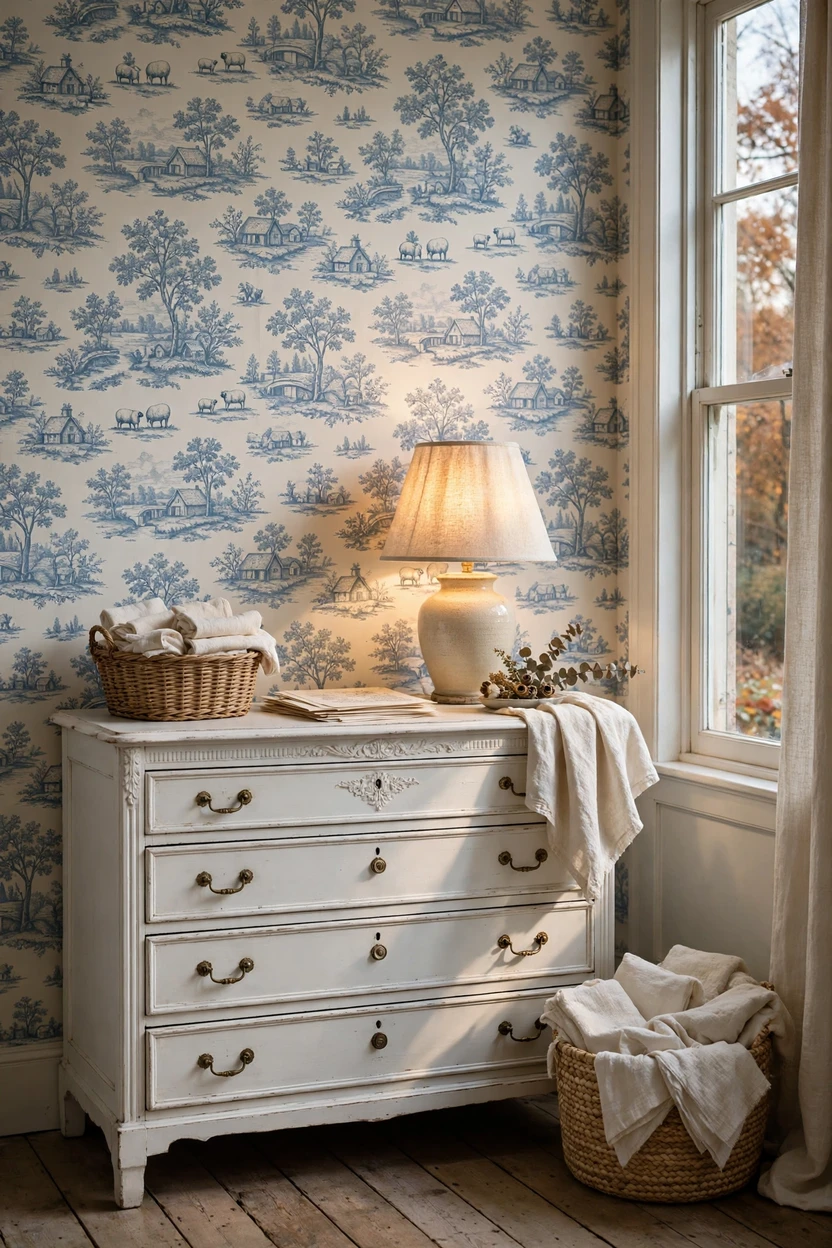
Toile de Jouy is the pattern most people link with French country style. It uses tiny countryside scenes in a single color on a pale background. Dusty blue and cream reads calm and works for a girl, a boy, or a surprise. Put it on one wall only, usually behind the crib or dresser, and paint the other walls a quiet plain shade. Pick a small repeat in a small room so the scenes feel like texture and not a crowd. Peel-and-stick versions suit renters and come off cleanly.
A Warm Grey, Cream, Blush, and French Blue Palette
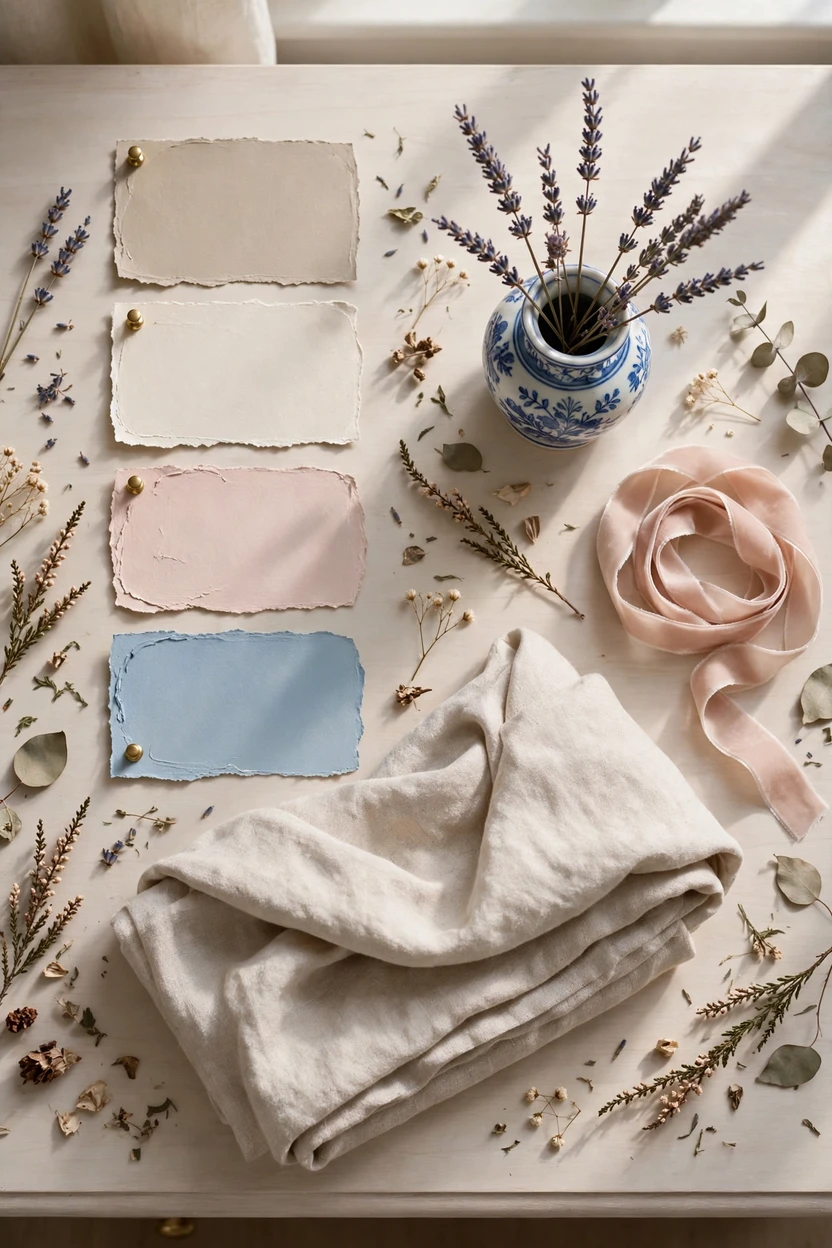
Start with a warm grey or greige that leans soft, never cold. Add cream for freshness. Then pull in blush or French blue in small amounts, such as a pillow, a rug stripe, or a framed print. A simple split works well: about 60 percent main neutral, 30 percent second tone, and 10 percent accent. Keeping the big pieces neutral means you can swap the accents later for a few dollars. Test paint swatches in the morning and at night, because north-facing light pulls colors bluer.
A Wrought-Iron or Gilded Crib
A crib with curved iron rails or a soft gold finish brings French character before you add a single accessory. Choose a new crib that meets current safety standards, with a firm, flat mattress and a snug fitted sheet. Keep the inside bare. Safe-sleep guidance says no bumpers, pillows, or loose blankets, so let the frame carry the style. Place the crib away from windows, cords, and shelves. A pretty crib does the design work so the sleep space can stay simple.

A Sheer Drape Behind the Crib
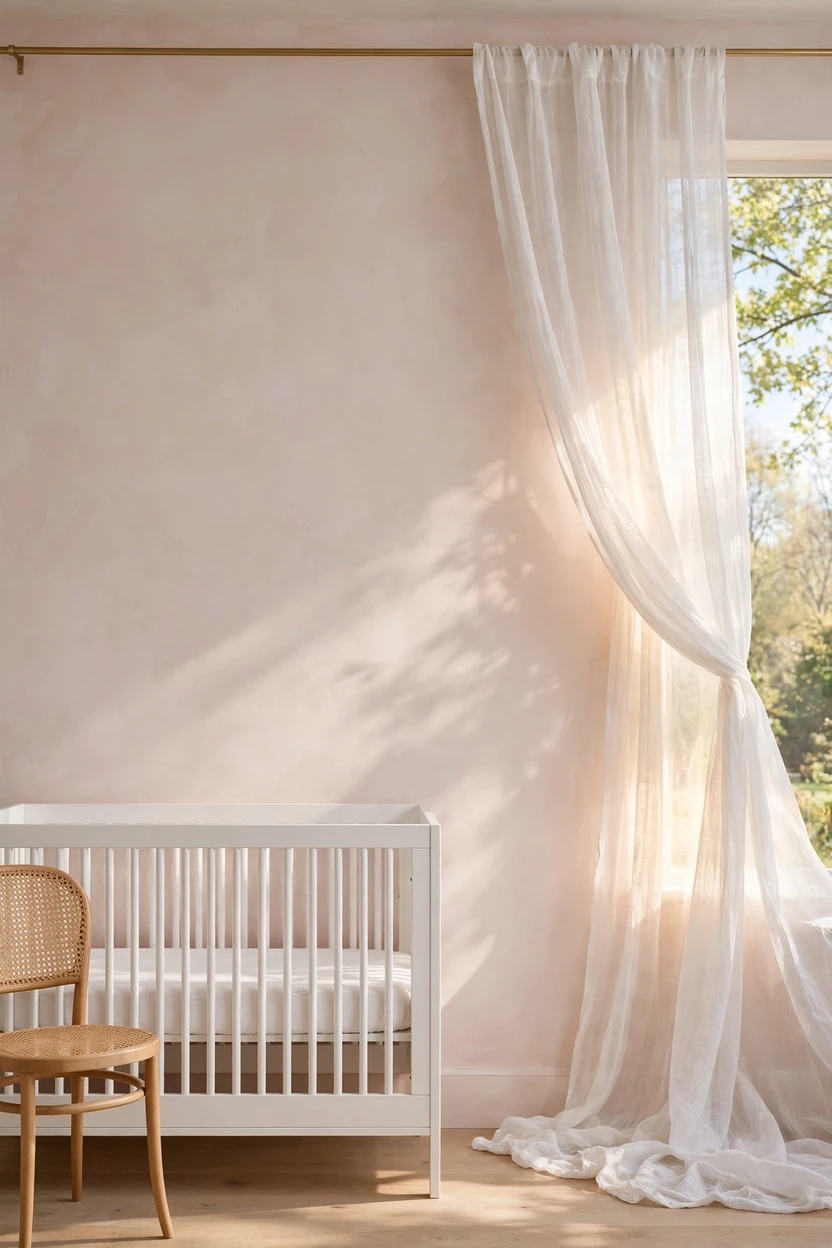
A canopy is the most French picture of all, but fabric hanging over a sleeping baby is a safety risk. Here is a safer way to get the same soft backdrop. Mount a curtain rod or curved bracket on the wall behind the crib and let a plain cotton or linen gauze panel fall to the side. Keep it fully out of reach, and skip long ties, ribbons, and tassels. Anchor the hardware into studs or rated wall anchors so it cannot pull down. You get the dreamy shape on the wall without any fabric above or inside the crib.
A Mini Chandelier With Ceramic Lamps
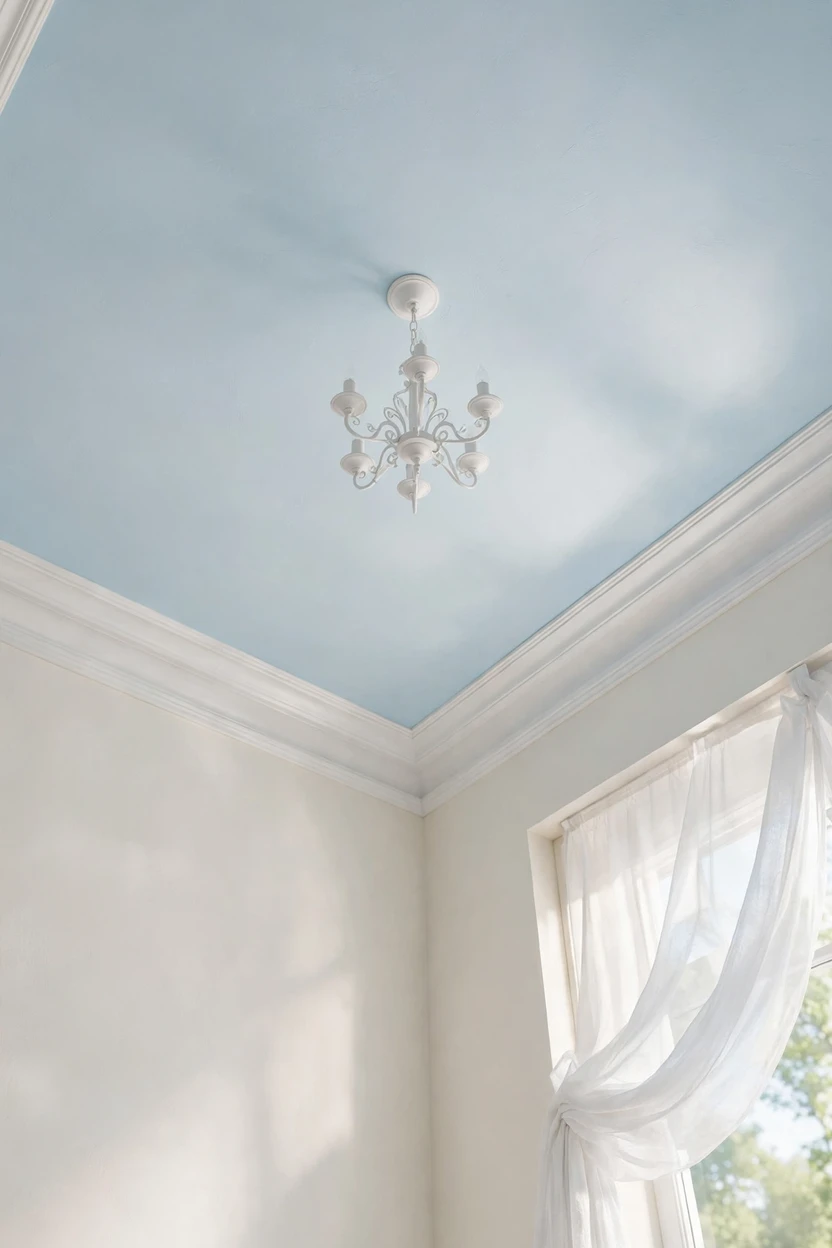
A small white chandelier is one of the most saved French details, and it gives the ceiling something to do. In a nursery, weight and placement matter. Choose a light fixture made of paper, rattan, or thin painted metal, and have an electrician hang it near the room’s center, not over the crib or changing pad. Then add one ceramic lamp with a linen shade on the dresser and put it on a dimmer. Layered light lets you handle 2 a.m. diaper changes without waking the whole house. Warm bulbs around 2700K keep the glow soft.

Relaxed Linen Curtains
Linen filters harsh light into a soft glow and adds the loose texture French rooms are known for. Hang the rod high and wide, close to the ceiling, so the window looks taller. Pick off-white or oatmeal, and add a blackout liner so naps still work in daytime. Choose cordless or tied-back designs, because dangling cords are a strangulation risk for babies and toddlers. A washable linen blend can also handle spit-up and the occasional spill.

An Antique-Style Dresser as the Changing Table
A low dresser with curved legs and brass pulls does two jobs: it holds clothes and doubles as a changing station. Pick a top height near your elbow, so you are not bending over a wiggly baby for months. Add a contoured changing pad with a safety strap, plus a small tray for wipes and cream. Soft grey, whitewash, or pale French blue paint can refresh a thrifted piece fast. Anchor the dresser to the wall so it cannot tip, and never leave your baby alone on the changing pad.

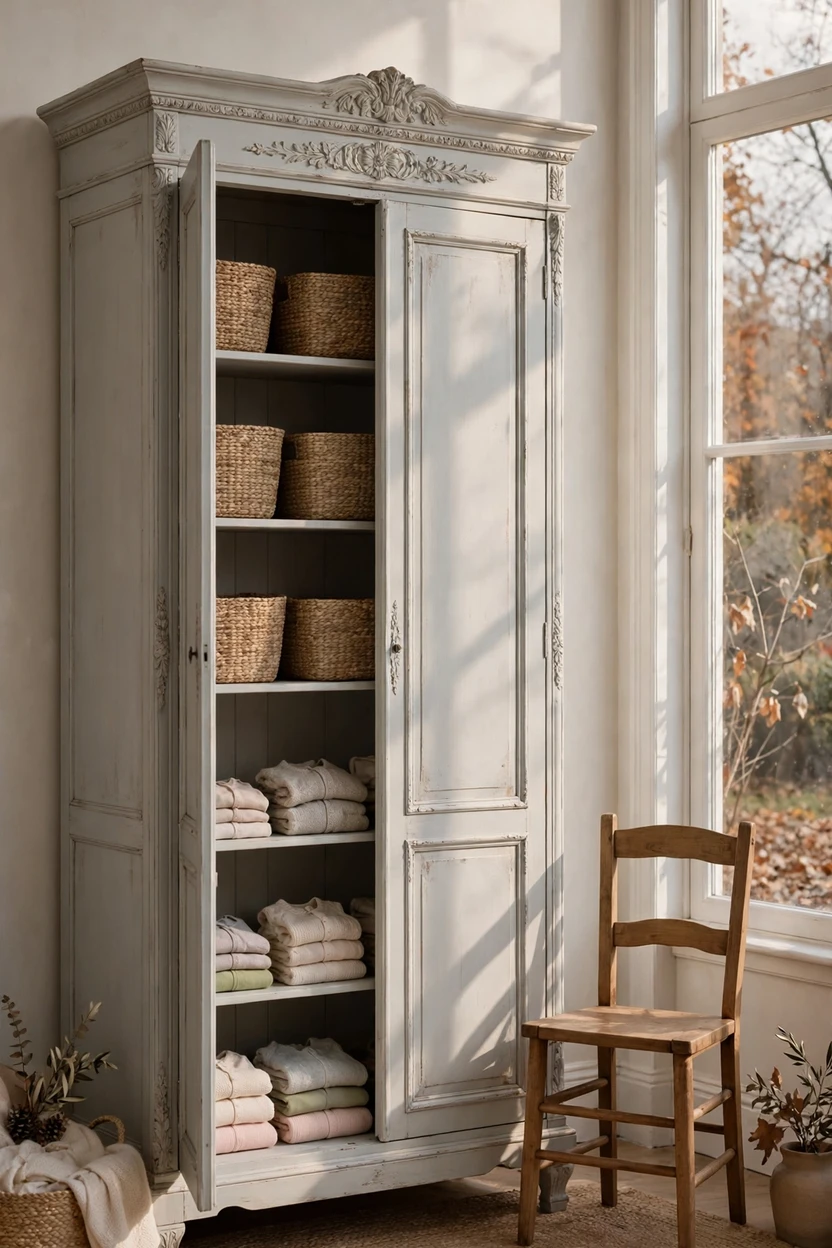
One Painted French Armoire
A tall armoire stores more than a dresser in the same floor space, which helps in small rooms. Hang tiny clothes low, put bedding on the upper shelves, and add baskets inside for socks and burp cloths. Paint it soft white, pale grey, or sage so it feels light. Choose one statement piece instead of a matching suite, since French rooms look collected, not bought in a set. Anchor it to wall studs, and later it can hold toys, coats, or books.
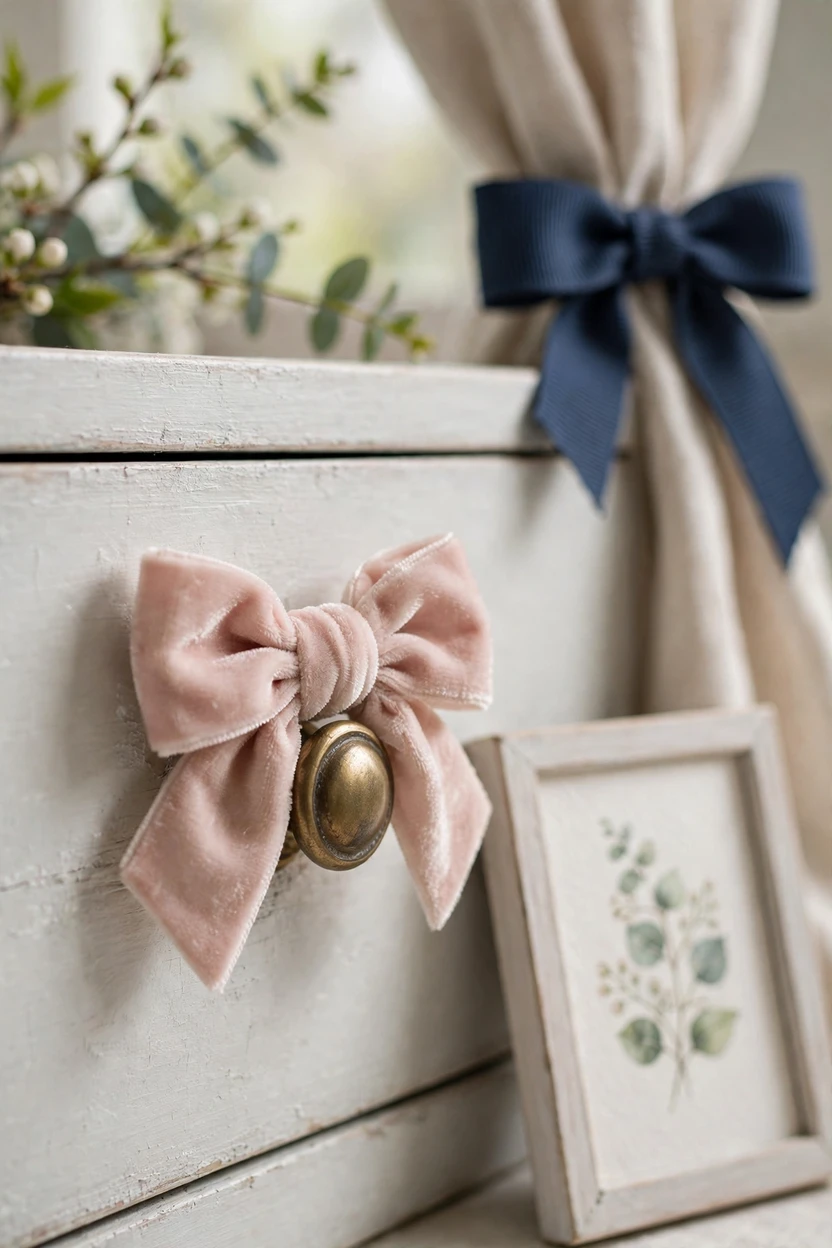
Bows in Small, Smart Doses
Bows are the playful side of French style, and they work best in small doses. Tie one on a drawer pull, a curtain tieback, or a framed print, and stop there. Keep every ribbon on the walls and furniture, never inside the crib, because loose ties are a safe-sleep hazard. Velvet ribbon in blush adds a soft sheen, while navy or sage grosgrain keeps the look gender-neutral. A bow on every surface feels busy, but three or four in the room feel intentional.
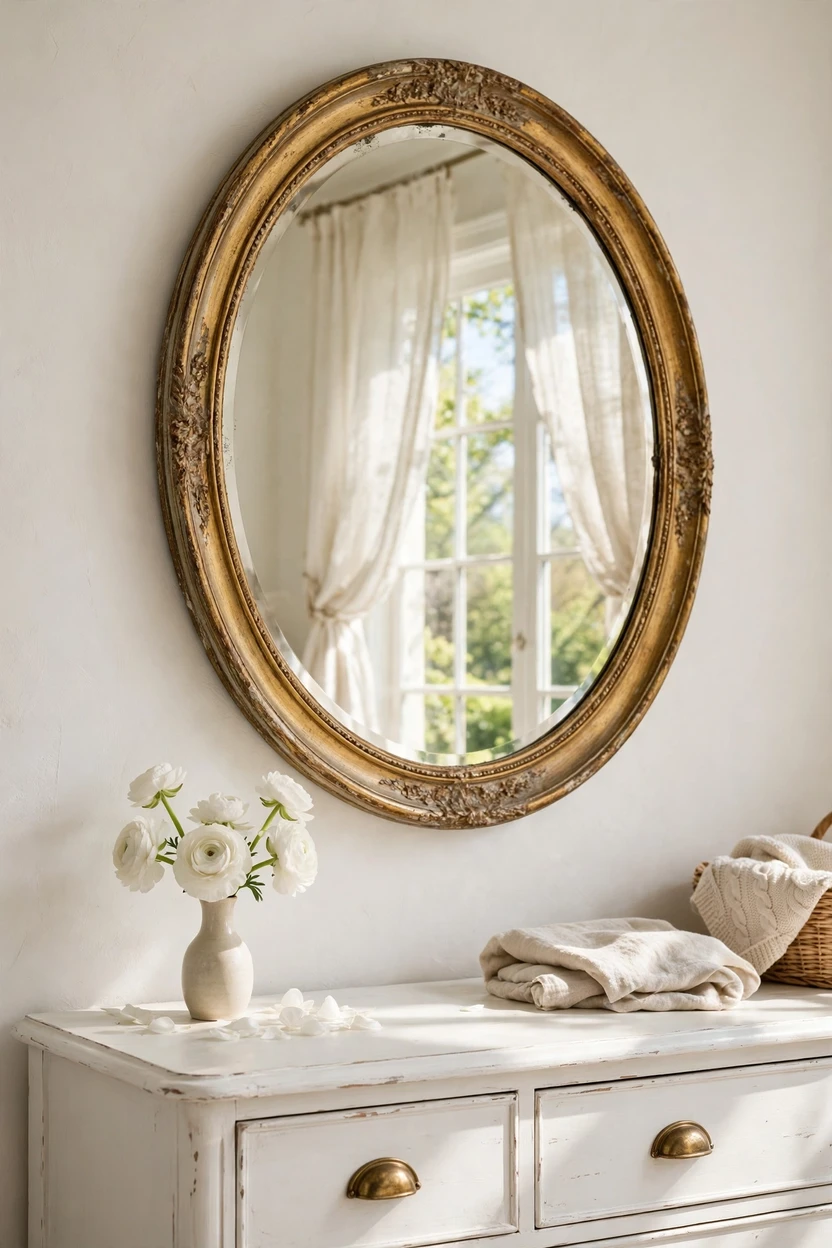
A Gilded Oval Mirror
A mirror with curved gilt edges bounces window light across the room, so a small nursery feels bigger and brighter. Hang it above the dresser, high enough to stay out of reach, and use strong wall hardware rated for its weight. An oval or arched shape echoes the curves of the crib and chair. Choose a softly aged gold finish for warmth. Place it so it catches daylight from a window, not so it faces the crib and flashes headlights-style glare at night.
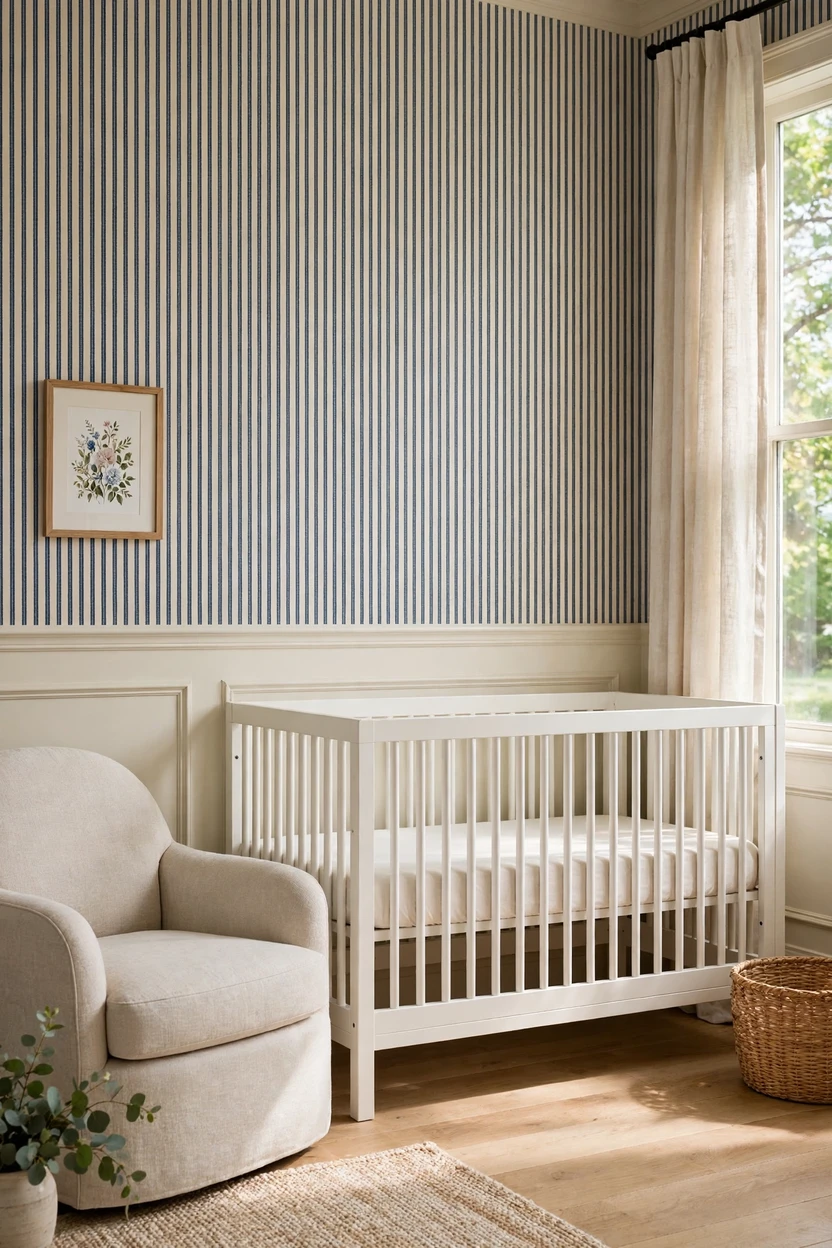
French Ticking Stripe Wallpaper
French mattress ticking, with thin stripes in navy, grey, or French blue on cream, is a fresh, boy-friendly way to get the look. Vertical stripes make a low ceiling feel taller, and narrow ones read as quiet texture from across the room. Keep the rest of the room soft so the stripes don’t feel stiff. A floral print, a rounded chair, and a linen curtain all help. Use it on one wall or on the upper half above wall molding.
A Softly Painted Ceiling
The ceiling is the surface a baby sees most while lying on their back. Paint it a pale blush, a faint sky blue, or a soft sage, only one or two shades off white. That small surprise is very French, and it makes the room feel finished without adding a single object. White crown molding around the edge frames the color neatly. Use flat, low-VOC ceiling paint, ventilate well, and finish painting a few weeks before the baby arrives.
A Slipcovered Glider With Curved Lines
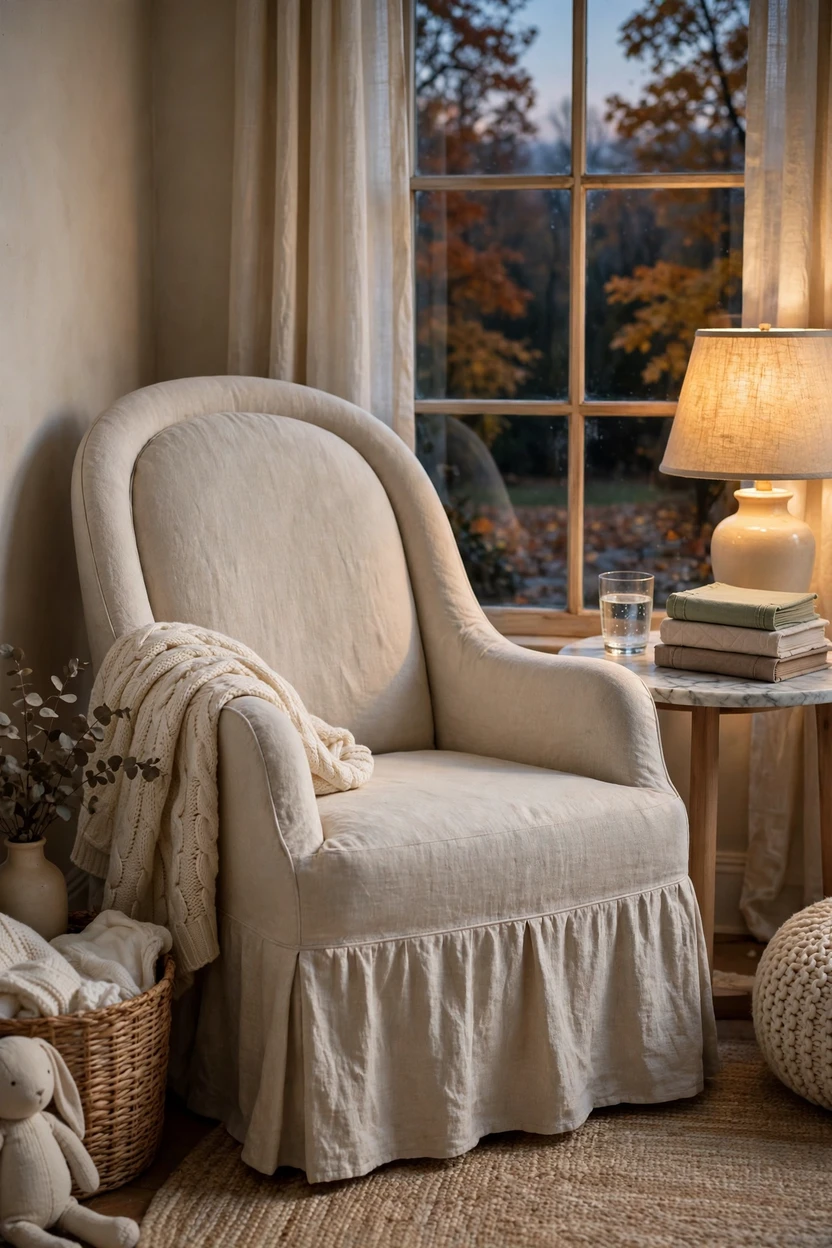
You will spend hundreds of hours in this chair, so comfort comes first and style second. Choose a glider or armchair with a curved frame or a skirted base, then dress it in a washable white or oatmeal linen slipcover. Make sure the seat height lets your feet rest flat on the floor. Add a small side table within reach for water, burp cloths, and your phone. A rounded back and soft arms echo the curves in the crib and mirror, which ties the room together.
A Faded Vintage-Style Rug
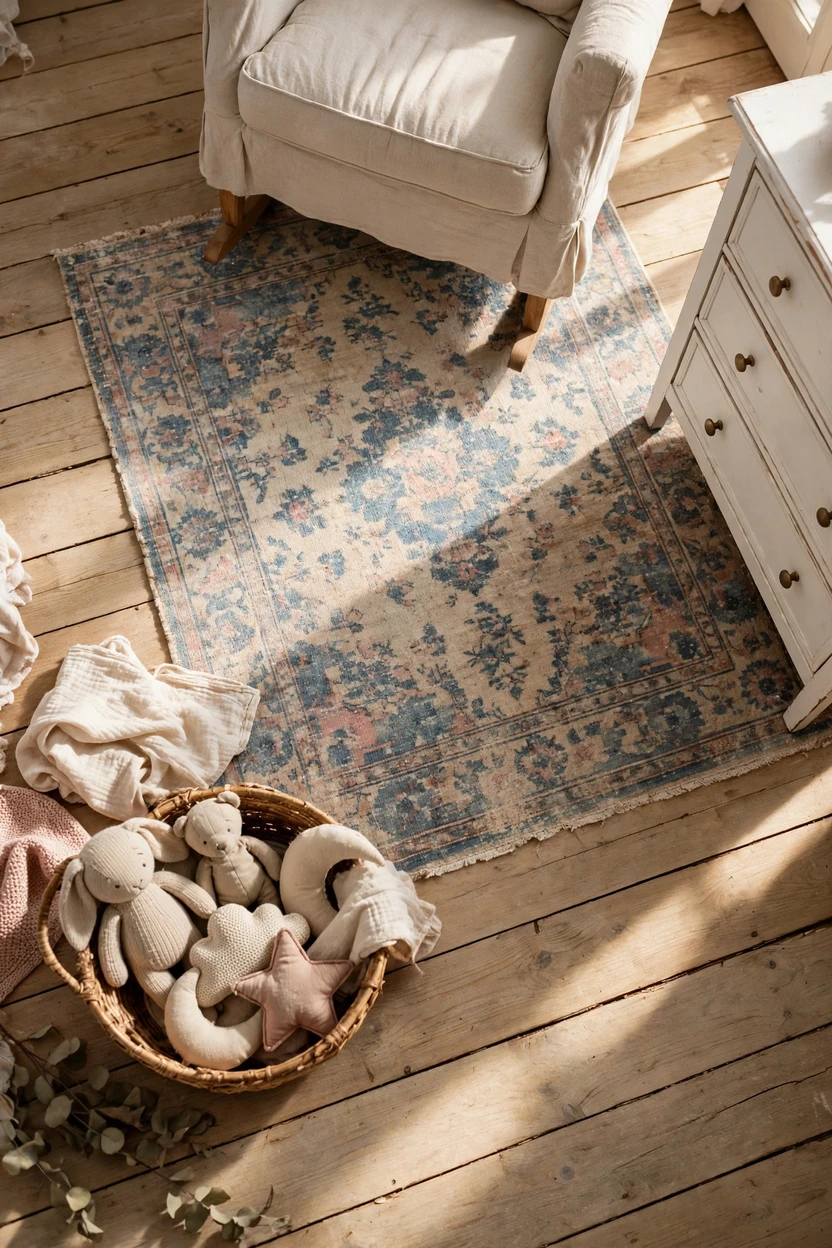
A softly worn Persian or French-style rug adds pattern underfoot without adding noise to the walls. Faded reds, blues, and creams hide crumbs and small spills far better than a plain pale rug. Look for a flat weave or low pile, and a washable version if you can find one. Put a non-slip pad underneath so it stays put during crawling and early walking. Size it so at least the front legs of the glider and dresser sit on it, which is often a 5 by 8 feet rug in a standard nursery.
A Botanical Print Gallery Wall
Vintage botanical prints, pressed flowers, and one short French phrase look sweet in thin gold or white frames. Mix three or four sizes, but keep the frame color the same so the group looks calm. Lay everything on the floor first, or cut paper templates and tape them up to test the layout. Hang the group above the dresser at eye level, never over the crib. Use acrylic glazing instead of glass, and anchor each frame well. Many old botanical illustrations are in the public domain, so printing them costs very little.

A Woven Moses Basket for the Newborn Months
A rattan Moses basket or bassinet on a stand suits the first few months, and it is light enough to move from room to room. Use only the firm mattress made for it, covered with a snug fitted sheet, and nothing else inside. The woven texture adds warmth against smooth painted walls, so it is one of the easiest ways to add depth. Follow the maker’s age and weight limits and stop using it when the limit is reached. Keep it near your bed in the early weeks and away from lamps, cords, and curtains.

A Soft Countryside Mural
A hand-painted or peel-and-stick mural of rolling hills, lavender rows, or a quiet village road gives the room a Provence feel. Choose washed, muted tones so the scene reads as a calm backdrop and not a busy picture. Place it on the wall behind the glider, not directly behind the crib, so the sleep area stays visually quiet. A mural also draws the eye to one place, which lets the rest of the room stay simple. Peel-and-stick panels give renters the same look with no paint.

A French Picture-Book Ledge
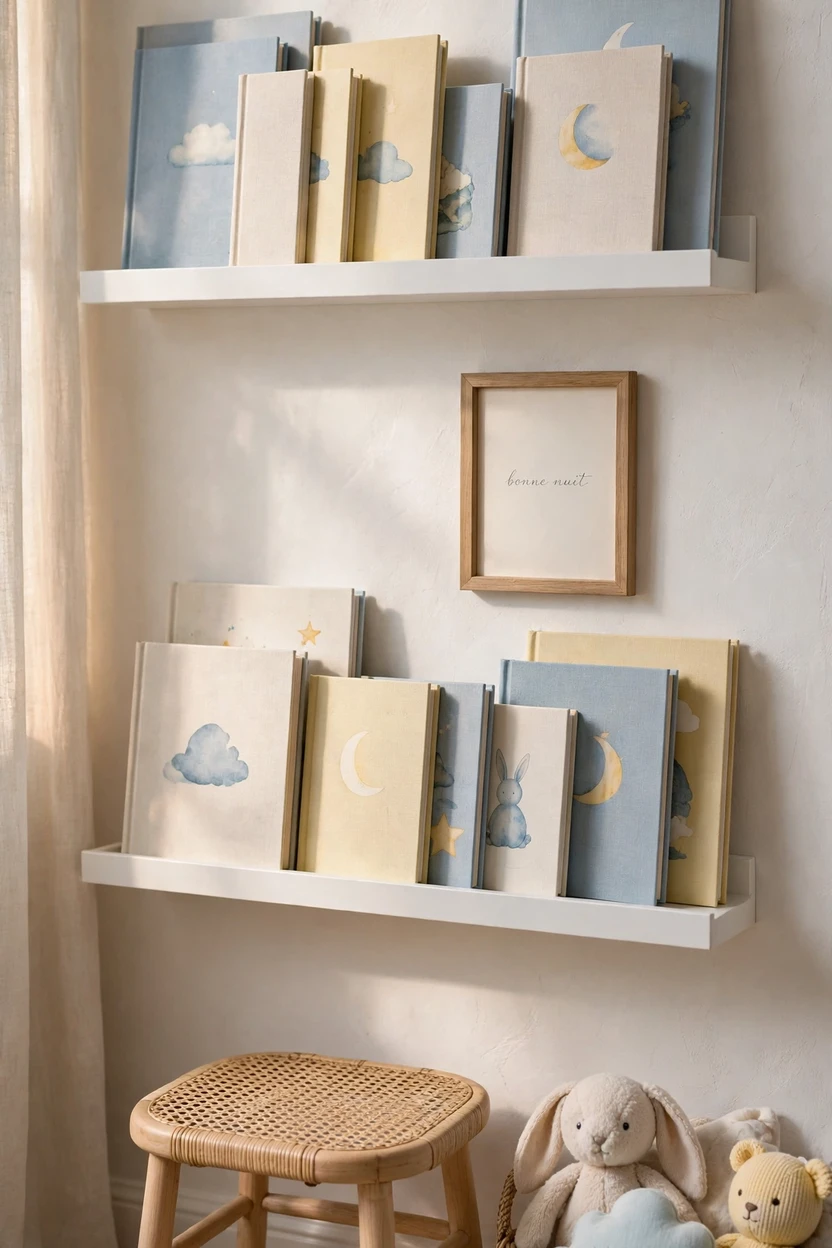
Front-facing picture ledges show book covers like small pieces of art, and little hands can reach the books later. Fill one with French-linked classics such as Madeline, which is set in Paris, Babar, and The Little Prince. Add a small print with a French lullaby phrase like bonne nuit to finish the look. Pick ledges about 2 to 3 inches deep and mount them securely, with heavier books on the lower shelf. Pediatric groups encourage reading aloud from the early months, so this corner does real work, not just decorative work.
Styling Tips
Use the rule of three textures. Pair one smooth surface (painted wood), one soft surface (linen), and one woven surface (rattan or wool) in every corner.
Choose one antique-style piece. A single dresser, mirror, or armoire with age and character beats a full matching set.
Mix curves with straight lines. Round mirrors, arched frames, and curved chair backs soften square rooms and boxy furniture.
Leave quiet space. Blank wall, bare floor, and empty shelf space are part of the look. They are what makes the details stand out.
Repeat one color three times. If French blue shows up in a print, a pillow, and a lamp base, the room feels planned.
Hide the plastic. Put toys, wipes, and baby gear in baskets, lidded boxes, or a closed armoire.
Pick washable fabrics. Linen blends, cotton, and slipcovers handle spills and look better with wear.
Practical Implementation Ideas
A simple order keeps the project calm and affordable.
Measure and mark safe zones. Decide where the crib, changing area, and chair go before you buy anything. Keep the crib away from windows, cords, and shelves.
Do the walls first. Add molding, paint, and any wallpaper before furniture arrives. Finish painting a few weeks before the baby comes home, and keep the room ventilated.
Hang window treatments next. Use cordless or tied-back curtains and a blackout liner.
Place the big pieces. Set the crib, dresser, armoire, and glider. Anchor every tall or heavy piece to the wall.
Layer the lighting. Add the ceiling fixture, one lamp, and a dimmer, then test the room at night.
Add soft goods. Rug with pad, slipcover, throw, and curtains.
Style last. Gallery wall, mirror, books, and plants come last, once you know what space is left.
Do a safety walk-through. Check the crib interior is bare, cords are out of reach, and nothing hangs above the sleep space.
Common Mistakes to Avoid
Going full theme park Paris. Eiffel Tower decals, berets, and baguette art look cute for a week and dated fast. Use French style, not French souvenirs.
Hanging a canopy over the crib. It looks lovely in photos, but fabric above a sleeping baby is a safety risk. Mount drapery on the wall behind or beside the crib.
Putting bows, bumpers, or blankets inside the crib. Keep the sleep space bare with only a fitted sheet.
Buying an old crib. Vintage and hand-me-down cribs may not meet current safety rules. Use an old piece for a dresser or chair, not for sleep.
Ignoring paint age on vintage furniture. Older painted pieces may contain lead paint. Test them, or have a professional strip and refinish before using them near a baby.
Skipping the wall anchors. Dressers, armoires, and shelves can tip. Anchor every tall piece.
Choosing a heavy ornate set. Too much carved, dark wood makes a small room feel crowded. Mix in lighter, plainer pieces.
Forgetting the lighting plan. One bright overhead light is harsh at night. Layer a dimmable lamp for feeds and diaper changes.
Over-matching. When the curtains, crib skirt, rug, and wallpaper all share the same pattern, the room feels like a catalog. Vary scale and tone instead.
Small-Space Alternatives
Paint-on molding. Thin trim strips take very little room and add detail without furniture.
A slim armoire or wall-mounted shelves. Go up to free the floor.
A mini crib. It fits in a corner of a bedroom or a closet-sized nursery and still looks sweet in iron or white.
Mirrors opposite the window. They bounce light and make the room feel wider.
Wall sconces instead of lamps. They free up dresser space. Plug-in versions work for renters.
One accent wall. A single toile or stripe wall gives the look without crowding the room.
Multi-use furniture. A dresser with a changing tray, or a bench with storage, does two jobs.
Light colors on the ceiling and trim. They make a small room feel taller.
Budget-Friendly Alternatives
| Splurge look | Budget swap |
| Hand-painted mural | Peel-and-stick countryside panel |
| Real boiserie paneling | Paint-on picture-frame molding with thin trim |
| Antique dresser | Thrifted dresser, painted and fitted with new brass pulls |
| Designer toile wallpaper | Toile on one wall only, or toile fabric framed as art |
| Crystal chandelier | Paper or rattan pendant |
| Custom linen curtains | Washed cotton or linen-blend panels from a big-box store |
| Gilded antique mirror | Thrifted mirror with gold paint or gilding wax |
| Wool vintage rug | Flat-weave washable rug with a vintage pattern |
A useful rule: spend on the items that matter for safety and daily use (crib, mattress, glider comfort), and save on the decor.
Pro Styling Recommendations
Pick the finish before the furniture. Choose paint sheen and fabric colors first, then match pieces to them, not the other way around.
Use one metal. Aged brass or soft gold across hardware, mirror, and lamp bases looks calm. Mixing three metals looks busy.
Build in swap points. Pillow covers, art prints, and ribbons are cheap to change, so the room can move from newborn to toddler without a full redo.
Look at the room from the crib. Stand where a baby will see the room and check what meets the eyes: ceiling, window, and mirror all matter.
Test the glare at night. Turn on the lamp and the overhead light, then look for reflections in the mirror and glass frames.
Plan the grow-up. Choose a crib that converts, a neutral base, and replaceable accents so the room still fits at age five.
Check all safety points twice. Bare crib, anchored furniture, cordless window coverings, and nothing hanging over the sleep area.
FAQs
What is a French-inspired nursery?
It is a baby room styled with soft neutral colors, wall molding, linen fabrics, curved shapes, and a few vintage-style pieces. It draws on French country, French provincial, and Parisian apartment style. The result feels calm and collected, not themed.
What colors work best in a French nursery?
Cream, warm grey, greige, blush, French blue, dusty blue, and soft sage are the most common. Pick one main neutral, one second tone, and one small accent. Muted shades look more French than bright ones.
Can a French nursery work for a boy or a gender-neutral room?
Yes. Use ticking stripes, dusty blue toile, navy or sage bows, and linen in oatmeal or grey. Skip heavy ruffles and lots of pink, and the same French details feel balanced for any baby.
What is the most French wallpaper pattern for a nursery?
Toile de Jouy is the best known, with tiny pastoral scenes in one color. Ticking stripes, small botanicals, and chinoiserie-style florals are other good choices. Use one pattern per wall so the room does not feel crowded.
Is a crib canopy safe?
Fabric hanging over or around a sleeping baby is a safety concern, so it is best to avoid it. Safe-sleep guidance calls for a bare crib with a firm mattress and a fitted sheet only. For the same soft look, mount a sheer panel on the wall behind or beside the crib, out of reach. Always check current guidance from your pediatrician or a national safe-sleep group.
What furniture suits a French nursery?
Curved-leg dressers, a painted armoire, a wrought-iron or soft-gold crib, a skirted or slipcovered glider, and a round or oval mirror. Choose one or two statement pieces and keep the rest simple. Anchor all tall furniture to the wall.
How do I make a French nursery on a budget?
Paint on picture-frame molding with thin trim, thrift a dresser and add new brass pulls, use peel-and-stick toile on one wall, and buy washed-cotton curtains. Spend your money on safety and comfort items first, such as the crib, mattress, and glider.
How do I fit French style into a small nursery or rental?
Use paint-on molding, peel-and-stick wallpaper, wall sconces, a mini crib, and a mirror opposite the window. One accent wall gives the French look without crowding the room.
What is the difference between French country, French provincial, and Parisian nursery style?
French country leans cozy and rustic, with whitewashed wood, linen, and woven baskets. French provincial adds more curves and carved details. Parisian style is more polished, with wall molding, gilded mirrors, and light, high-ceiling touches. You can mix them in one room.
How do I keep a French nursery from looking too frilly?
Limit ruffles and bows to a few spots, choose plain linen over lace, and let wall molding and paint carry the style. Add one or two straight-lined pieces, like a simple wood stool or a modern frame, to balance the curves.
Will a French nursery still work when my child grows up?
Yes, if you keep the base neutral. Molding, paint, curtains, and the dresser all work for a toddler or school-age room. Swap crib bedding, prints, and small accents as your child grows.
It is a baby room styled with soft neutral colors, wall molding, linen fabrics, curved shapes, and a few vintage-style pieces. It draws on French country, French provincial, and Parisian apartment style. The result feels calm and collected, not themed.
Cream, warm grey, greige, blush, French blue, dusty blue, and soft sage are the most common. Pick one main neutral, one second tone, and one small accent. Muted shades look more French than bright ones.
Yes. Use ticking stripes, dusty blue toile, navy or sage bows, and linen in oatmeal or grey. Skip heavy ruffles and lots of pink, and the same French details feel balanced for any baby.
Toile de Jouy is the best known, with tiny pastoral scenes in one color. Ticking stripes, small botanicals, and chinoiserie-style florals are other good choices. Use one pattern per wall so the room does not feel crowded.
Fabric hanging over or around a sleeping baby is a safety concern, so it is best to avoid it. Safe-sleep guidance calls for a bare crib with a firm mattress and a fitted sheet only. For the same soft look, mount a sheer panel on the wall behind or beside the crib, out of reach. Always check current guidance from your pediatrician or a national safe-sleep group.
Curved-leg dressers, a painted armoire, a wrought-iron or soft-gold crib, a skirted or slipcovered glider, and a round or oval mirror. Choose one or two statement pieces and keep the rest simple. Anchor all tall furniture to the wall.
Paint on picture-frame molding with thin trim, thrift a dresser and add new brass pulls, use peel-and-stick toile on one wall, and buy washed-cotton curtains. Spend your money on safety and comfort items first, such as the crib, mattress, and glider.
Use paint-on molding, peel-and-stick wallpaper, wall sconces, a mini crib, and a mirror opposite the window. One accent wall gives the French look without crowding the room.
French country leans cozy and rustic, with whitewashed wood, linen, and woven baskets. French provincial adds more curves and carved details. Parisian style is more polished, with wall molding, gilded mirrors, and light, high-ceiling touches. You can mix them in one room.
Limit ruffles and bows to a few spots, choose plain linen over lace, and let wall molding and paint carry the style. Add one or two straight-lined pieces, like a simple wood stool or a modern frame, to balance the curves.
Yes, if you keep the base neutral. Molding, paint, curtains, and the dresser all work for a toddler or school-age room. Swap crib bedding, prints, and small accents as your child grows.
Conclusion
A French-inspired nursery is not about buying the fanciest pieces. It is about calm color, layered texture, and a few old-world details that make a room feel loved.
Start with one move you can finish this weekend, like paint-on molding, a toile accent wall, or a mirror above the dresser. Then add one detail at a time until the room feels like yours.
Keep the sleep space bare, anchor the big furniture, and the beauty and the safety can live in the same room.
Save your favorite ideas to a Pinterest board and come back to them as your plans take shape.