16 Future Home Ideas That Feel Warm, Calm, and Smart (Not Cold or Techy)
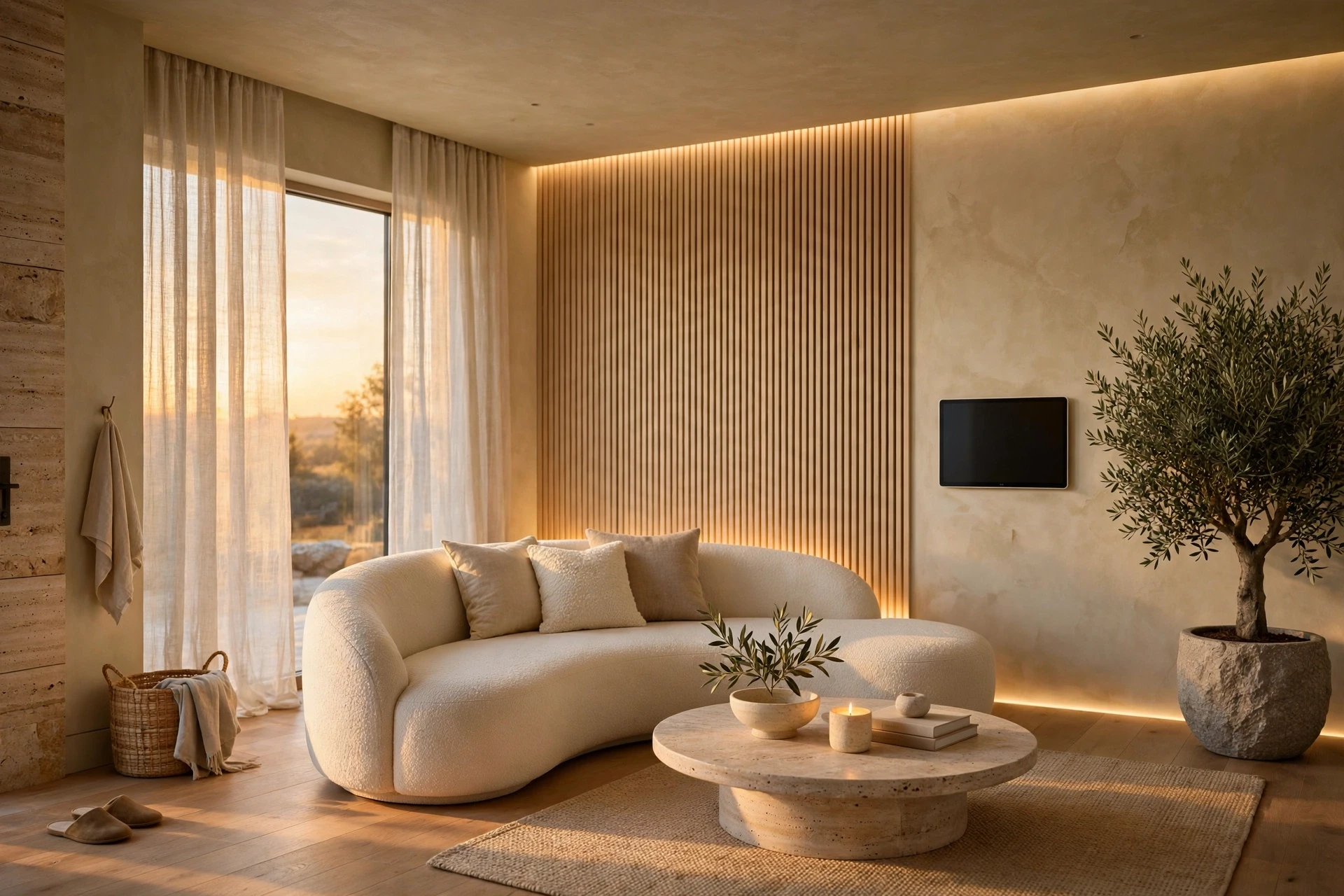
Picture a home that quietly takes care of you. The lights warm up as the sun goes down. The curtains open a little before you wake. The room is soft and hushed, and not a single cable or blinking light is in sight.
That is the future home worth wanting. It isn’t a metal pod with screens on every wall. It’s a place that feels like a deep breath, with smart help tucked behind the scenes.
The tricky part is knowing where to begin. Smart homes can feel noisy, pricey and a little creepy. So this list keeps things human. You’ll find real settings, easy swaps and a clear order to follow, plus options for renters and small budgets. Whether you’re building, renovating or just dreaming, these 16 ideas help your future home feel warm, calm and smart all at once.
Table of Contents
Hide the Tech in Plain Sight
The calmest smart homes show almost no gadgets. Tuck hubs, routers and chargers into a closed cabinet or a ventilated console, and paint wall switches and plates to match the wall. Use flush ceiling speakers, or a small speaker that looks like a ceramic object. Keep one clean control point, like a single wall panel or one app, instead of five remotes. When tech disappears, the room’s natural warmth gets to lead.
Use Light That Follows the Sun
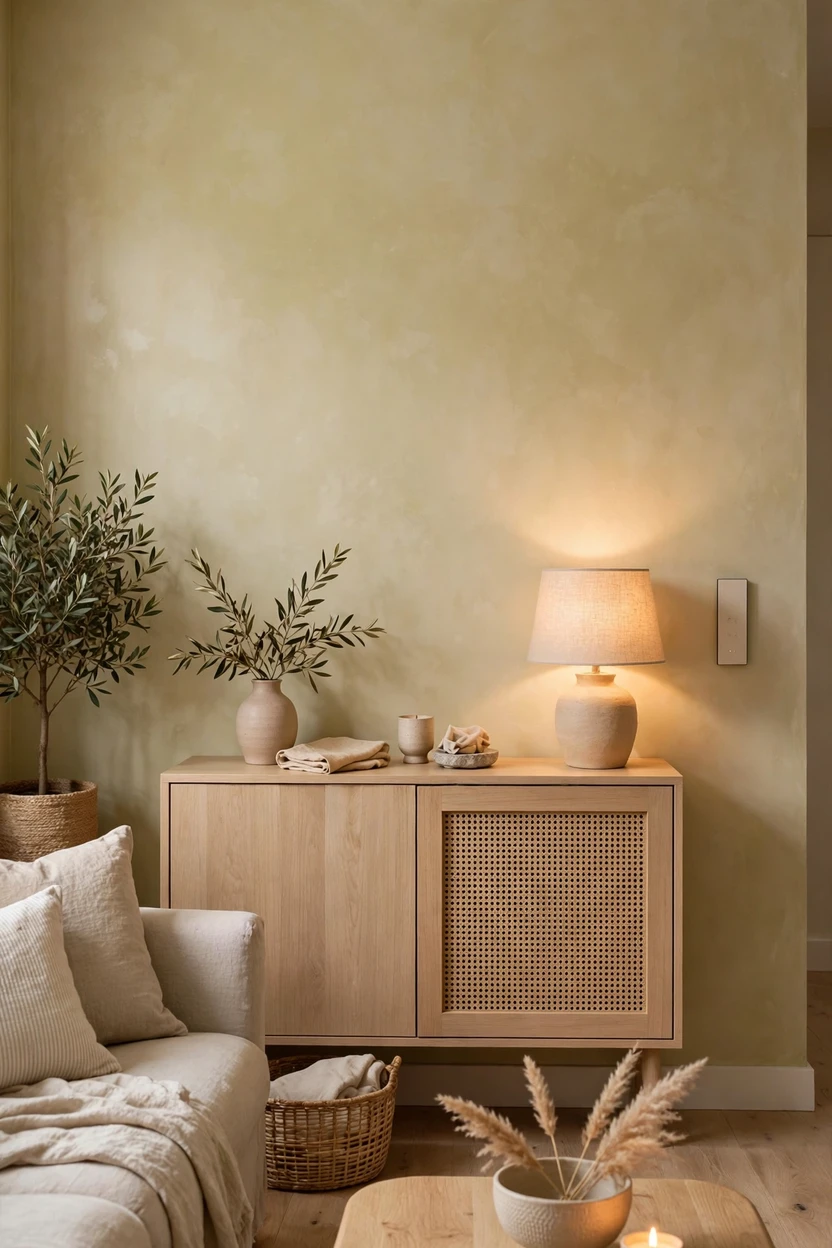
Lighting is the biggest comfort upgrade for the smallest cost. Smart bulbs or tunable white LEDs can run brighter and cooler in the morning, then slide to a warm, dim glow around 2200 to 2700K at night. Set it on a schedule so you never think about it. Layer table lamps, wall lights and a floor lamp, and avoid relying on the ceiling light alone. Always keep a normal wall switch that works, so guests and family are never confused.

Choose Warm Materials Over Cold Metal
Future homes are moving away from chrome and glossy plastic. Pick oak, walnut, ash, stone, clay plaster, limewash and wool instead. Matte finishes soak up light and feel gentle to look at and touch. Add one tactile surface per room, like a ribbed oak wall or a lime-washed fireplace. These materials age well and keep a tech-filled room from feeling like a showroom.

Soften Everything With Curves and Organic Shapes
Sharp corners say “machine,” and curves say “home.” Try a curved sofa, a round coffee table, arched doorways or a rounded wall niche. In a small room, rounded edges are also easier to move around. Pick two or three curved pieces and keep the rest simple. The shapes make clean modern lines feel kind.

Give the Room One Big Biophilic Moment
One strong dose of nature does more than many small plants. Try a large indoor tree, a planted wall with built-in drip care, or a seating spot angled toward a garden view. Place it where you see it from the sofa and the kitchen. Choose plants that suit your light so they don’t struggle. If you can’t keep plants alive, use a big dried-branch arrangement and a real wood surface nearby.

Add Quiet, Automatic Window Coverings
Shades that open and close on a schedule make mornings gentler and save your energy. Battery-powered motors fit many existing curtains and shades, so you don’t need a rebuild. Choose sheers for daytime and a blackout layer for sleeping rooms. Let them close at sunset for privacy and open slowly after you wake. Keep a manual pull cord or button as backup for any day the system acts up.

Design a Home That Sounds Calm
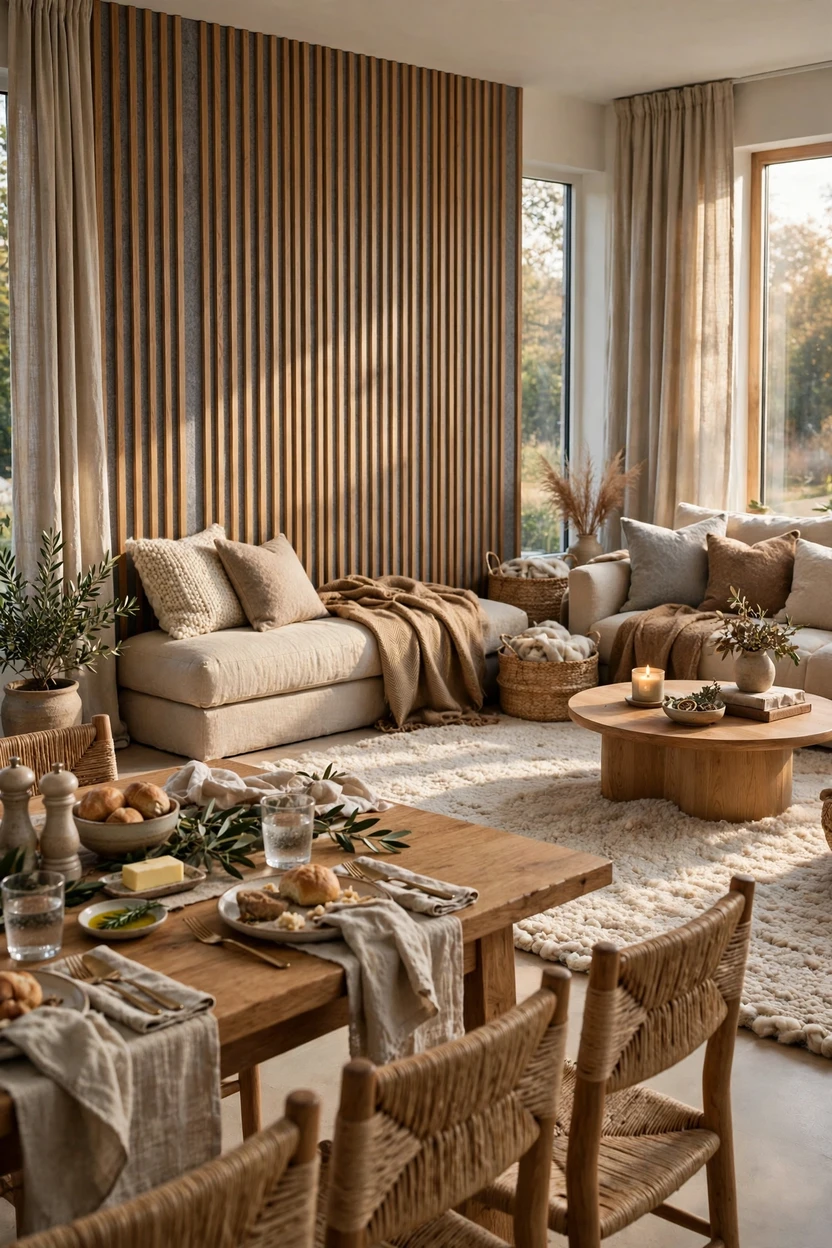
Noise is a hidden source of stress, and hard surfaces make it worse. Soften rooms with thick rugs, heavy curtains, upholstered pieces, bookshelves and fabric or wood-slat wall panels with felt behind them. Look for acoustic panels that look like art. Add a rug under the dining table and a soft headboard in the bedroom. If you can hear echo when you clap, the room needs more soft surfaces.
Plan Clean Air You Don’t Notice
Good air is part of a calm home. Ventilate when you cook and shower, and use a quiet purifier in the room where you spend the most time. Choose low-VOC paints and finishes, and keep humidity in a comfortable range. Hide the purifier inside a console or choose one with a soft fabric or wood look. A small air-quality monitor in a living area helps you see what’s changing.
Make Rooms That Change Jobs
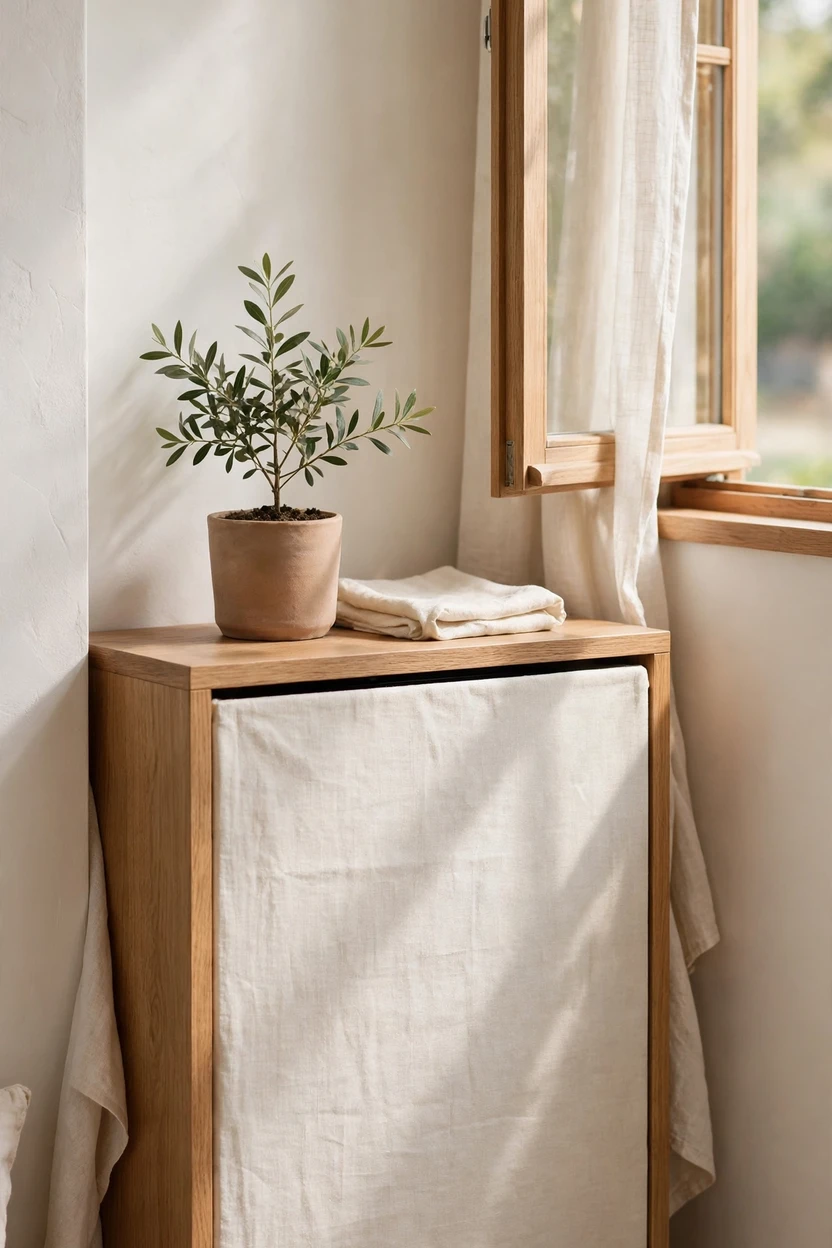
Homes now need to switch from work to rest to guests in minutes. Use a fold-down desk, a sliding panel, a daybed or a console that hides a laptop station. Roll-on-wheel tables and nesting stools help you reset in a minute. Keep the furniture low and light in color so it doesn’t make the room feel full. A flexible room keeps your home useful as life changes.

Build Smart Storage Into the Walls
Clutter makes a smart home feel dumb. Use flat-front built-ins, window-seat drawers, toe-kick drawers and a closed wall of cabinets painted to match the wall. Add a charging drawer with outlets inside so devices stay tidy. Label baskets by task, such as “chargers” or “guest linens,” so everyone knows where things go. Storage works best when it’s planned before the room is styled.

Create a Quiet Kitchen With Hidden Appliances
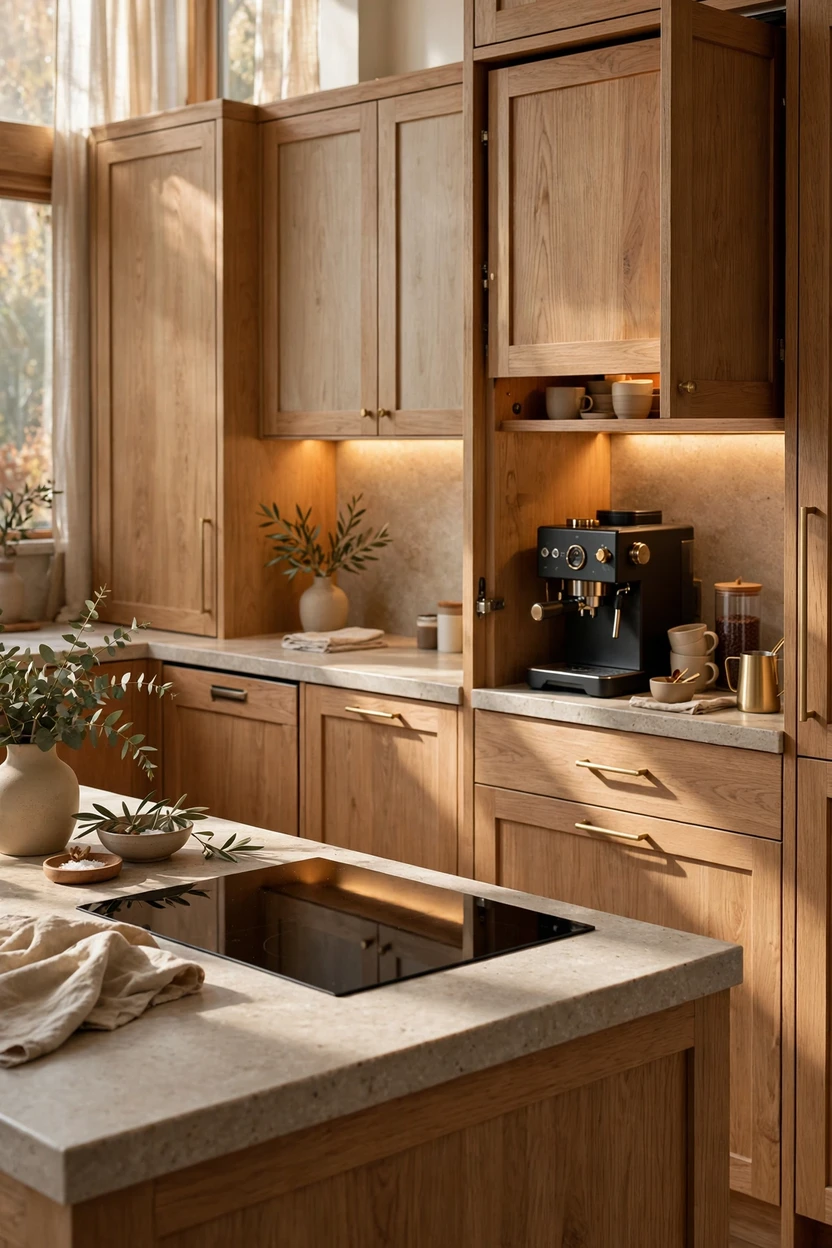
Think of the kitchen as the calm heart of the home. Use panel-front appliances, an induction cooktop that wipes clean fast and a tall cabinet that hides the coffee station. Warm wood, stone or soft-matte counters keep it friendly. Add under-cabinet lighting that dims. Choose quiet appliances when you can, since noise can be the first thing to break the mood.
Turn the Bathroom Into a Spa-Style Reset
Small comforts matter here: warm floors, a heated towel rail, dimmable lights and a mirror with soft, even light around it. Choose matte tiles in sand, clay or stone shades. Use a fan that runs quietly and clears steam. Add a shelf niche so bottles stay out of sight. Set a “wind-down” light level that you can turn on with one touch.

Build a Sleep-First Bedroom
A good bedroom is dark, quiet and a little cool at night, with warm light before bed. Use blackout curtains, a sunrise-style lamp or a gentle wake-up schedule and a dimmer on every bedside light. Keep screens out of arm’s reach and charge phones across the room. Choose breathable bedding like linen or cotton, and a soft headboard to help with sound. The room should feel like a nest, not a control center.

Set Up an Energy-Smart Home Base
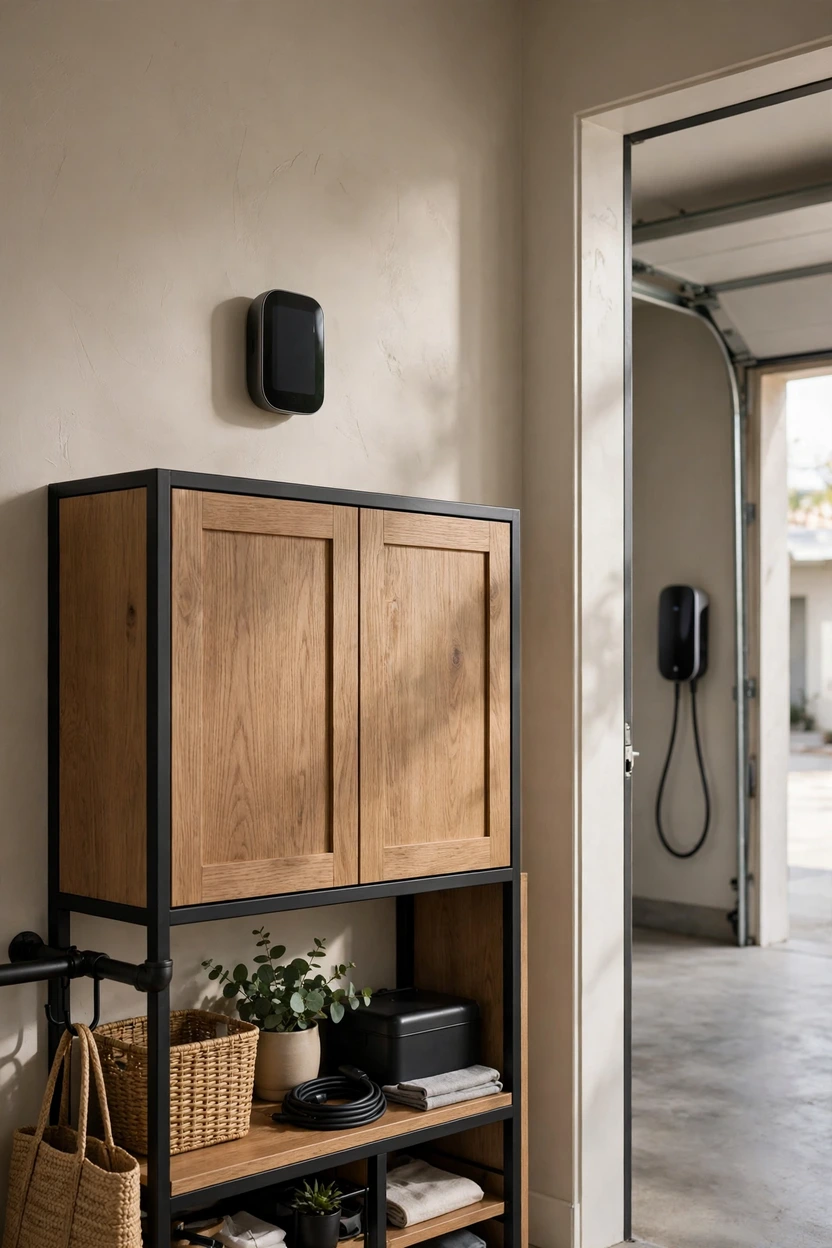
Some of the smartest upgrades are the ones you never see. A smart thermostat with zones, good insulation, a heat pump and LED lighting can make a home steadier and cheaper to run. If you build or renovate, leave space and wiring for an EV charger, solar panels and a battery, even if you add them later. Put a small energy display where the family can see it, not on every wall. Think of these as quiet layers that support everything else.
Create a Calm Entry and Drop Zone
The front door sets the tone for the whole home. Add a smart lock with a key backup, a bench, hooks, a shoe cabinet and a small tray for keys. A motion-activated light makes arriving easy at night. Keep the layout simple so you can drop everything in 30 seconds. A tidy entry stops clutter before it reaches the living room.

Keep One Screen-Free Corner
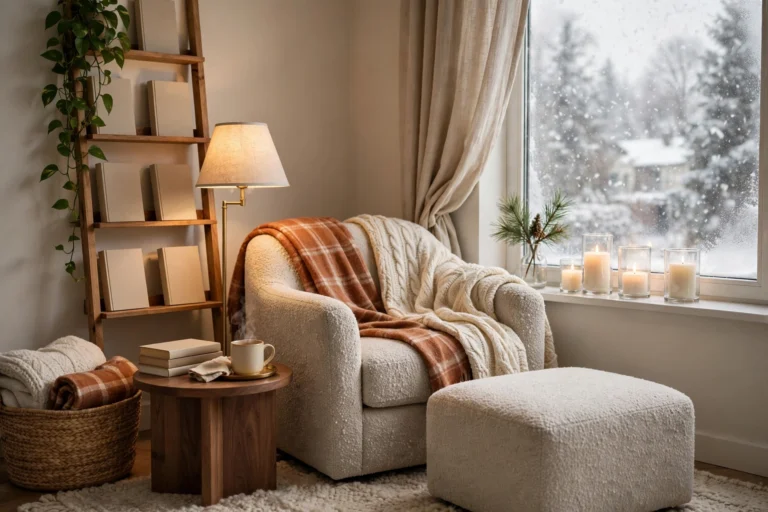
Even a smart home needs a place to unplug. Choose a window seat, an armchair with a floor lamp or a small reading nook. Keep it free of TVs, tablets and loud devices, and give it a basket for blankets and a shelf for paper books. Use a warm bulb and a soft rug to make it inviting. This corner reminds everyone that the point of a smart home is to give you time back.

Styling Tips
- Repeat one warm material (like oak) in three places so the home feels planned.
- Hide cords, but keep devices easy to reach for resets.
- Use dimmers on every lamp and light you can.
- Mix matte, textured and soft surfaces in each room.
- Choose neutral devices in white, oat or black so they blend into the background.
- Keep one object per surface that’s personal, like a photo or a ceramic bowl.
Practical Implementation Ideas
Follow this order:
- Light first. Smart bulbs, dimmers and warm lamps give the biggest change for the least money.
- Sound next. Rugs, curtains and soft furniture are simple and instantly noticeable.
- Air and comfort. Add a quiet purifier, better ventilation and a smart thermostat.
- Storage and layout. Plan built-ins and flexible furniture before decorating.
- Automation last. Add schedules once the basics feel good.
Keep it safe and private:
- Put smart devices on a separate guest or IoT Wi-Fi network.
- Use strong, unique passwords and turn on two-step login.
- Turn off cloud viewing for cameras if you only watch them at home.
- Choose devices that work with the Matter standard when you can, so they work together and last longer.
- Keep wall switches and manual controls working.
Common Mistakes to Avoid
- Buying too many gadgets before fixing light and sound.
- Using cool white bulbs in living areas at night.
- Choosing devices that only work with one app.
- Letting tech show instead of tucking it away.
- Forgetting manual backups for lights, locks and shades.
- Skipping outlets, cable routes and ventilation in the plan.
- Making every room “smart” when only a few need it.
- Ignoring privacy settings.
Small-Space Alternatives
- Use one smart plug and a warm lamp to start.
- Choose wall-mounted lights and shelves to free the floor.
- Pick a daybed or sofa bed for guests.
- Hang long curtains and add a rug to calm the sound.
- Use a console with doors to hide the router and cords.
- Choose a nesting table set and stackable stools.
Budget-Friendly Alternatives
- Low cost: warm bulbs, plug-in timers, a rug, long curtains and a basket for cords.
- Mid cost: smart bulbs, a battery shade motor, a quiet air purifier and a smart thermostat.
- Bigger projects: built-in storage, in-wall wiring, a heat pump, solar-ready prep and acoustic wall panels.
- Buy secondhand wood furniture and refresh it with oil.
- Spend more on things you touch every day, like your mattress, sofa and lighting.
Pro Styling Recommendations
- Start every room by deciding how it should feel, then pick the tech.
- Keep a calm palette of three or four warm neutrals.
- Hide what you can, and make the rest beautiful.
- Pair every high-tech item with something soft or natural.
- Plan wiring and outlets before walls close or furniture arrives.
- Review the home once a year and remove anything you don’t use.
FAQs
What is a future home?
A future home blends comfort, smart tools and wellness features. It uses light, sound, air and materials to help you feel calm, with technology staying in the background.
How do I make a smart home feel warm and cozy?
Use warm bulbs, natural wood, soft fabrics and curved furniture. Hide devices in cabinets and use matte finishes so the home feels like a place to relax.
What are the most important smart features to add first?
Start with lighting, since it changes mood and sleep the most. Then add a smart thermostat, window coverings and a quiet air purifier.
What color light is best for a calm home?
Warm light around 2200 to 2700K is best for evenings. Many people use brighter, cooler light in the morning and shift to warm tones as the day goes on.
How can renters create a future home look?
Use smart bulbs, plug-in timers, battery shades, rugs, curtains, plug-in air purifiers and peel-and-stick cord covers. All of these can go with you when you move.
Are smart homes safe and private?
They can be, if you set them up well. Use a separate network for devices, strong passwords, two-step login and privacy settings, and choose trusted brands.
What is biophilic design?
Biophilic design brings natural elements indoors, like plants, daylight, wood, stone and garden views. It helps a home feel fresh and calming.
What should I plan for in a new build or renovation?
Plan wiring for lighting controls, outlets inside storage, cable routes, ventilation, insulation and space for future needs like an EV charger or solar panels.
How do I stop a smart home from feeling too techy?
Hide hardware, keep manual switches, limit the number of apps and add natural textures. Create a screen-free corner so the home stays human.
Is a future home expensive?
Not always. Start with low-cost light, sound and storage changes, then add bigger upgrades over time. Many of the best changes cost far less than a full smart system.
Conclusion
The best future home isn’t the one with the most gadgets. It’s the one that makes daily life feel easier, softer and quieter. Start with light, add sound comfort, tuck away the tech and keep one corner for real rest. Do that, and your home will feel ready for whatever comes next.