17 Laundry Room Wallpaper Ideas: Pattern, Scale & Balance

You carry a full basket past the washer, and the wall behind it is the same flat white you stopped seeing years ago. The room works hard. It just does not look like anyone cares about it.
Wallpaper can change that fast. A laundry room is small, so it takes very little paper. You are in and out, so a bold choice does not wear on you. And the room often sits behind a closed door, which makes it the safest place in the house to try something fun.
The trick is not picking a pretty print. It is picking the right size of print, putting it in the right spot and keeping everything else calm around it. These 17 ideas are built around that.
Quick answer: What wallpaper works best in a laundry room? Choose a wipeable vinyl or vinyl-coated paper in a pattern with open space between motifs. Use it on one wall, above a wainscot or on the ceiling. Keep cabinets, baskets and hardware simple, keep paper out of the sink splash zone and run the exhaust fan to control steam.
Table of Contents
1. Soft Botanical Sprigs on a Light Ground
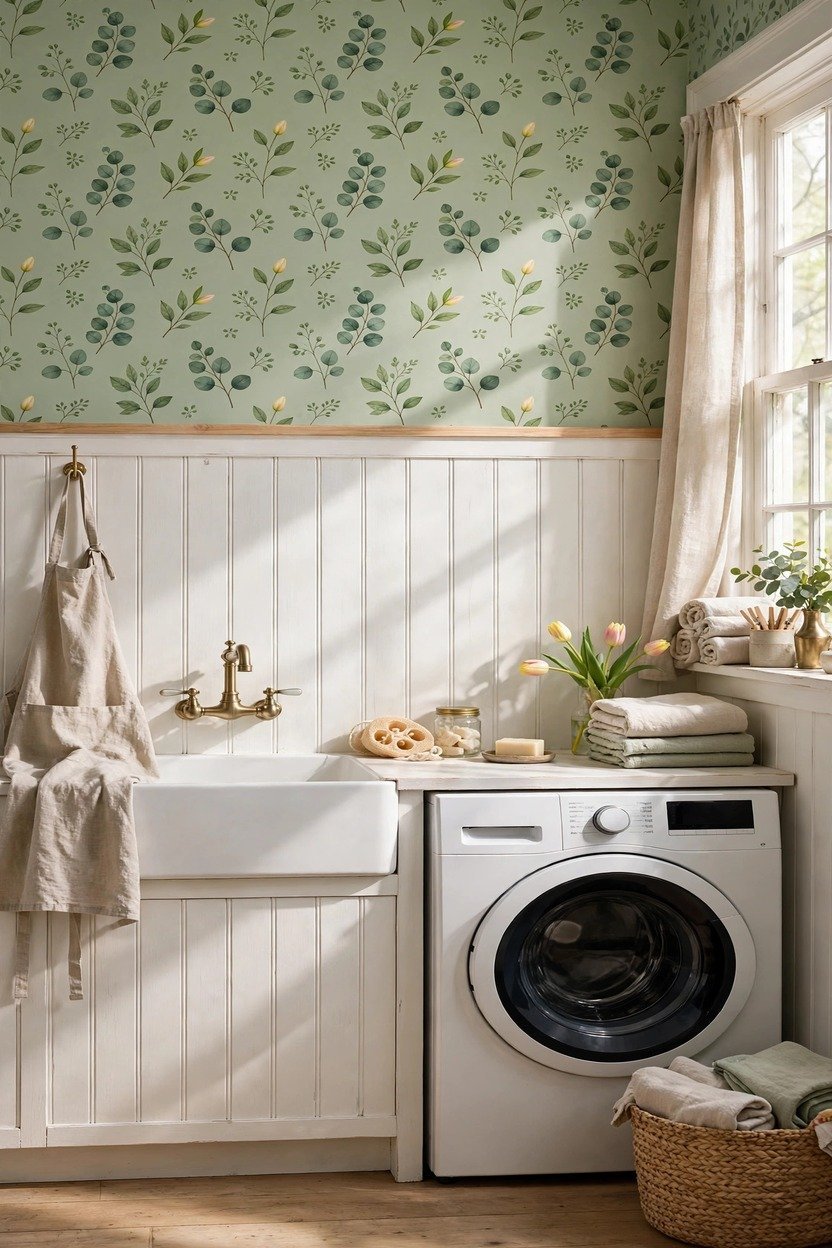
Small leaf and sprig prints are the easiest way to start with wallpaper. Pick a design with clear space around each stem, so the wall reads like a quiet texture and not a busy field of dots. Cream, pale sage and soft blue backgrounds bounce light around a room with no window. A common rule of thumb is that repeats under about 6 inches look busy up close, while repeats of 12 inches or more feel calmer, so aim for the open end of that range. Cover all four walls only if you have few cabinets, and paint the ceiling white to keep things light.

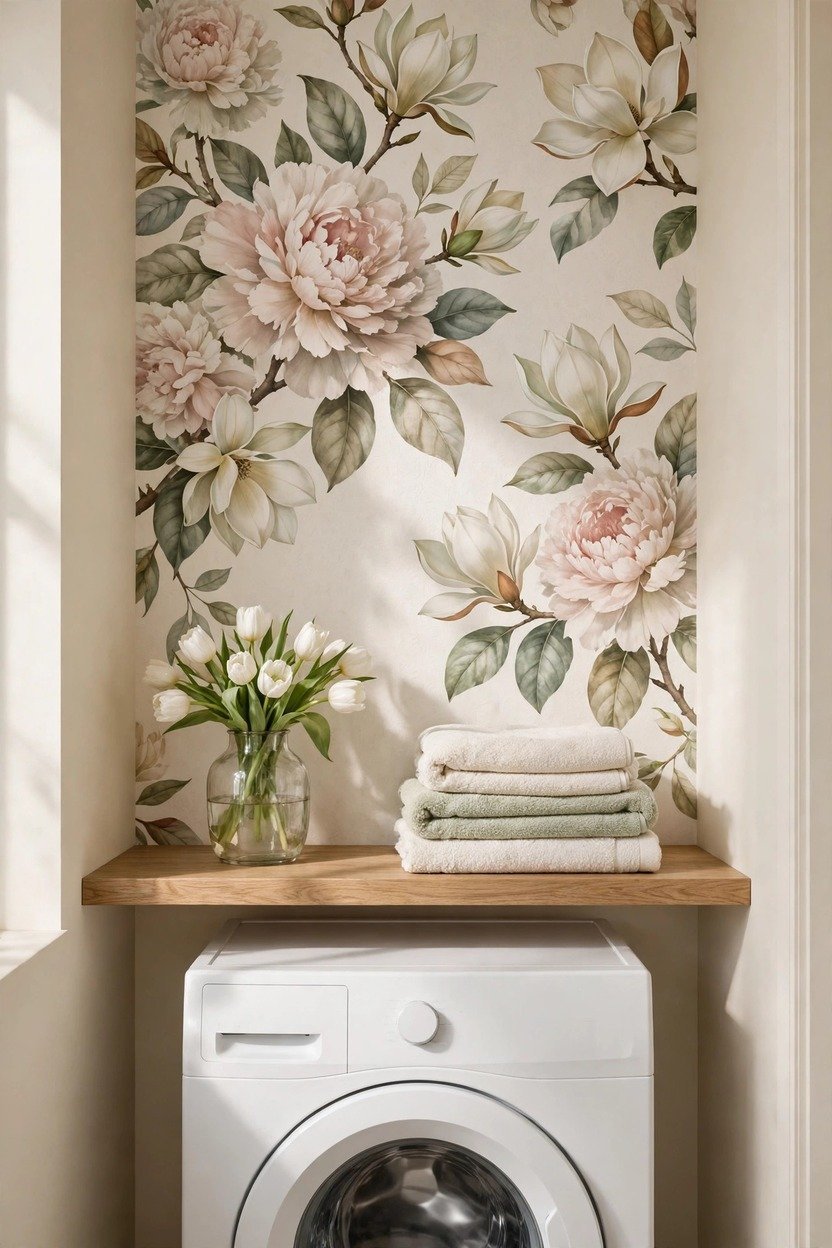
2. Oversized Florals on One Short Wall
A big floral can feel loud on four walls and calm on one. Choose the short wall you see first when you open the door, and let the blooms act like a large painting. Look for large flowers with plenty of open background, so each bloom has room to breathe. Paint the other walls in the lightest shade from the print, such as cream or blush, so the flowers get the spotlight. Keep baskets, jars and bins plain, since the wall is already doing the talking.
3. Blue-and-White Toile or Chinoiserie
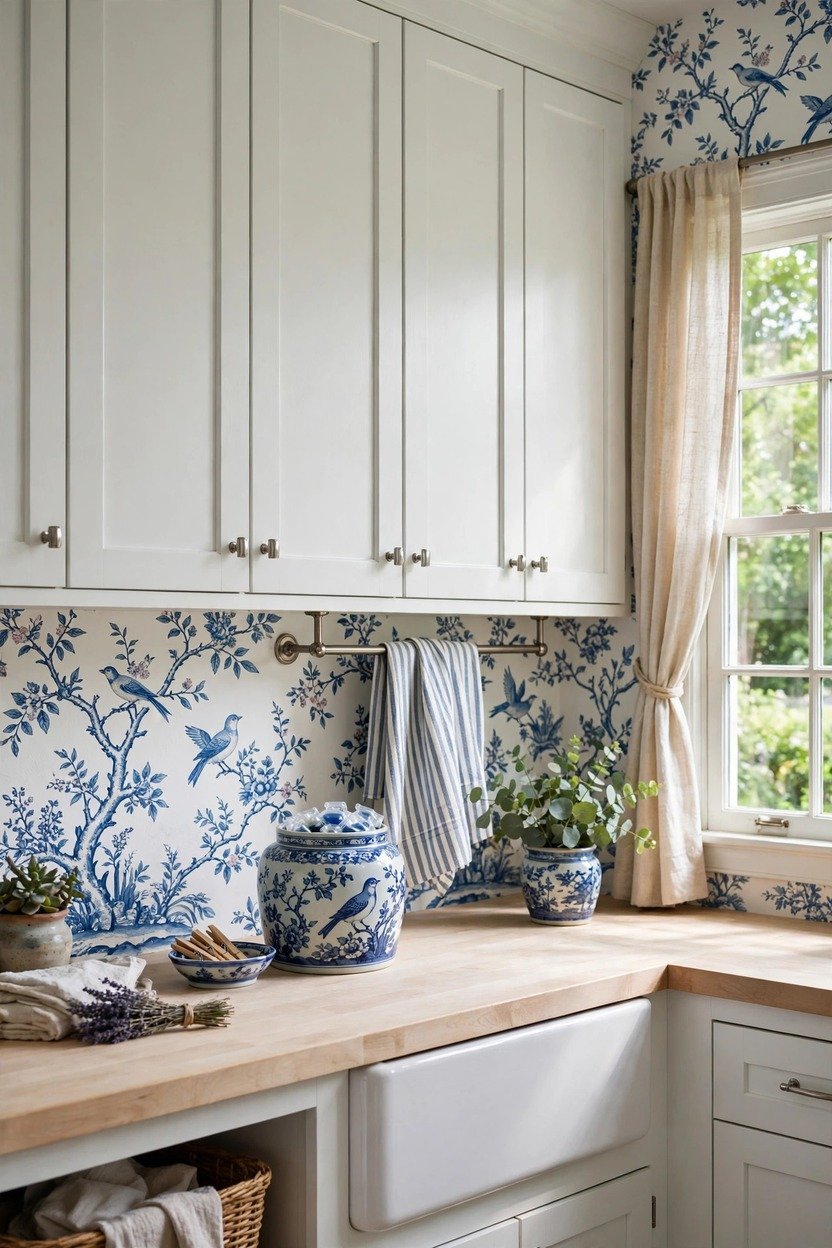
Toile and chinoiserie tell tiny stories in a repeating scene, which gives a laundry room a classic, collected feel. Pick a vinyl-coated version, since this room sees steam and splashes. Stay with one blue and white, and let the rest of the room be white shaker cabinets, a pale wood counter and nickel or brass pulls. Repeat the blue just once more, in a ceramic pot or a striped towel, so the look feels planned. A medium-sized scene reads well from the doorway and still looks sweet up close.
4. Narrow Vertical Stripes
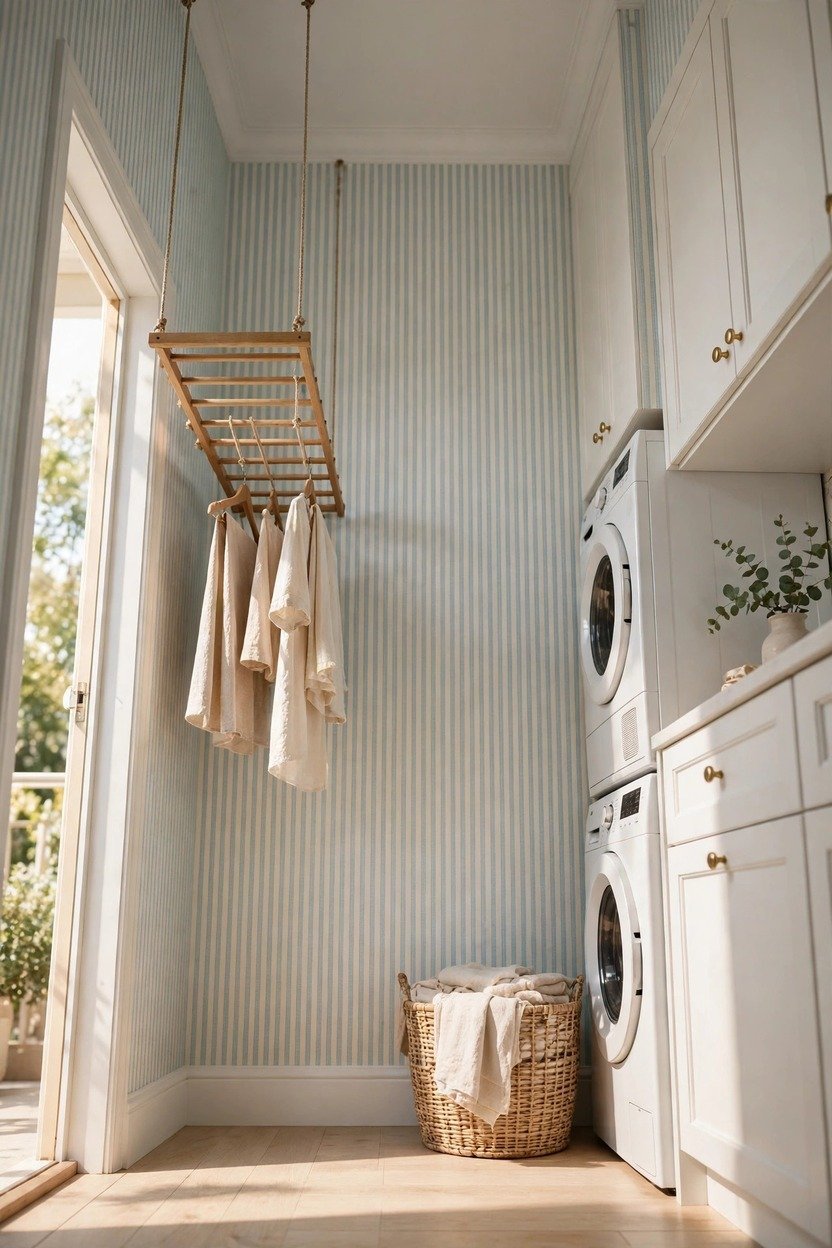
Vertical stripes pull the eye up, which makes a low ceiling feel taller. Pick a soft contrast, like cream and sage or white and pale blue, because gentle lines hide small seam gaps better than bold black and white. Use a plumb line or laser level when you hang the first strip, since stripes show every crooked edge. Old homes often have walls that lean slightly, so check before you buy. Keep cabinets plain and let the stripes be the only pattern in the room.
5. Low-Contrast Gingham or Checks
A soft check brings a farmhouse feel without piling on rustic props. Keep the contrast low, such as oatmeal on cream or sage on white, so the grid reads as texture and does not buzz in the eye. High-contrast tight checks can look dizzying in a small room, so scale up the squares a little if you love the look. Pair the paper with a butcher block counter, a simple peg rail and a metal bucket. The charm comes from restraint, so stop at two or three accessories.

6. Soft Trellis or Lattice
A trellis pattern adds structure without any flowers or animals. Look for thin lines in a tone-on-tone color, such as ivory on cream or soft gray on white. Pair it with curved items, like a round mirror, a woven basket or a scalloped shelf bracket, so the straight lines do not feel stiff. Choose flat-front or classic shaker cabinets, because busy cabinet doors will fight the lattice. A matte finish keeps the design calm under bright overhead lights.

7. Dark and Moody Botanicals
A dark wallpaper with leaves or flowers can make a small laundry room feel snug and rich, like a little jewelry case. Navy, forest green and ink black grounds hide corners, so the room feels deeper, not smaller. Use warm 2700K bulbs and add a mirror or brass accents so the dark walls glow. White appliances and light wood shelves pop against the color. If the idea feels scary, try it on one short wall first.
Related: 16 Green Laundry Room Ideas That Are a Design Shortcut

8. Wallpaper on the Ceiling
The ceiling is the wall most people forget, and in a small laundry room it is often what you see from the doorway. Keep the walls painted in a soft solid and let the ceiling carry a small or medium pattern, so the room has one star. Because steam rises, choose a vinyl-coated paper and run the exhaust fan after every load. Ceiling work is a two-person job, so ask a friend to hold the strip while you smooth it. Pick a pattern without strong directional lines, since you will look at it from many angles.

9. Paper the Back of the Washer-Dryer Alcove
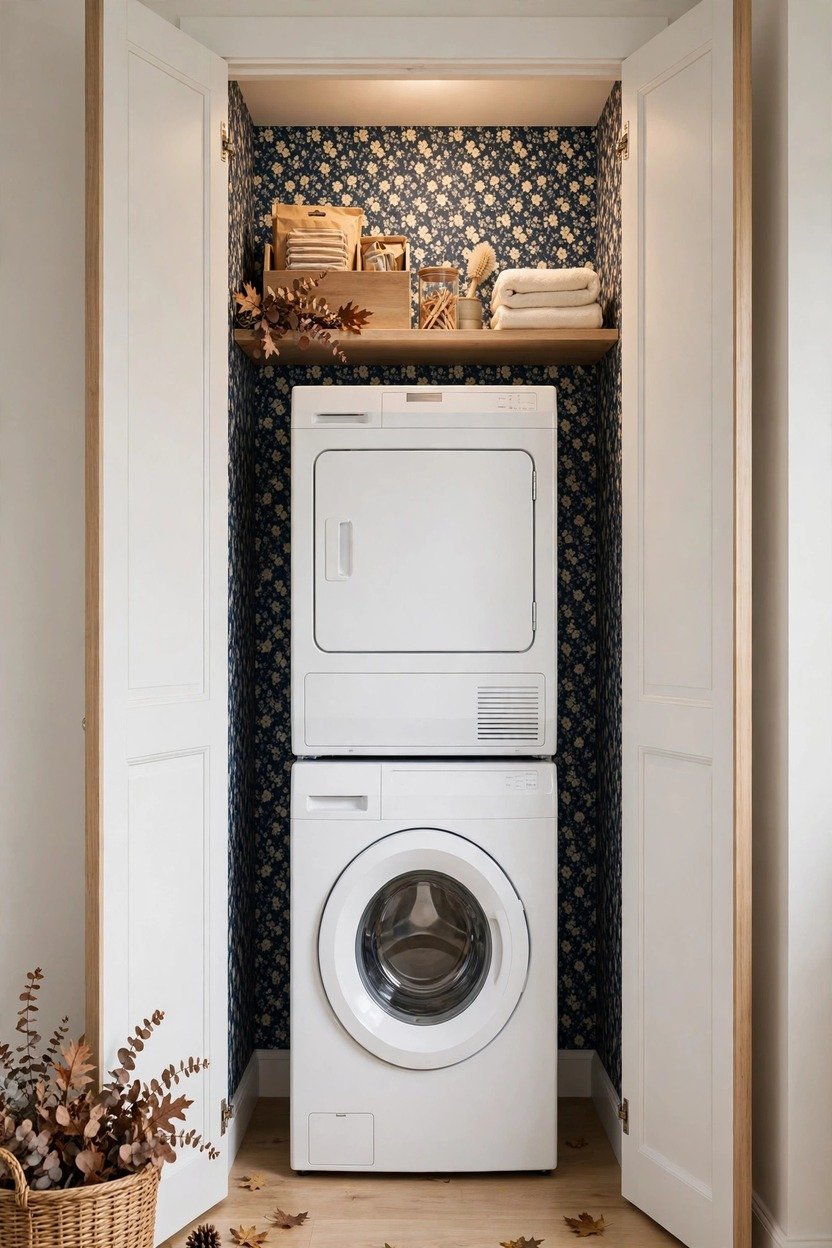
If your machines sit in a nook or stacked in a closet, paper only the back wall of that alcove. The pattern peeks out around the appliances and frames them like a picture mat. Only a strip of paper will show, so choose a smaller scale or a repeat with simple shapes. Leave the area behind the machines unpapered where hoses and vents attach, and keep the paper trimmed so the machines can still slide out. White machines look crisp against pale florals, and chrome ones look sharp against navy.
10. Line the Back of Open Shelves
Open shelves look fuller and more finished when the wall behind them has pattern. Floating shelves 10 to 12 inches deep hide part of the paper, so pick a medium repeat that still looks good when partly covered. Use two or three colors from the paper on the objects, such as white jars, natural wood bowls and sage bottles. This keeps the shelf from looking like a yard sale. Take down the shelves before papering so the edges look clean.

11. Surprise Inside the Cabinets
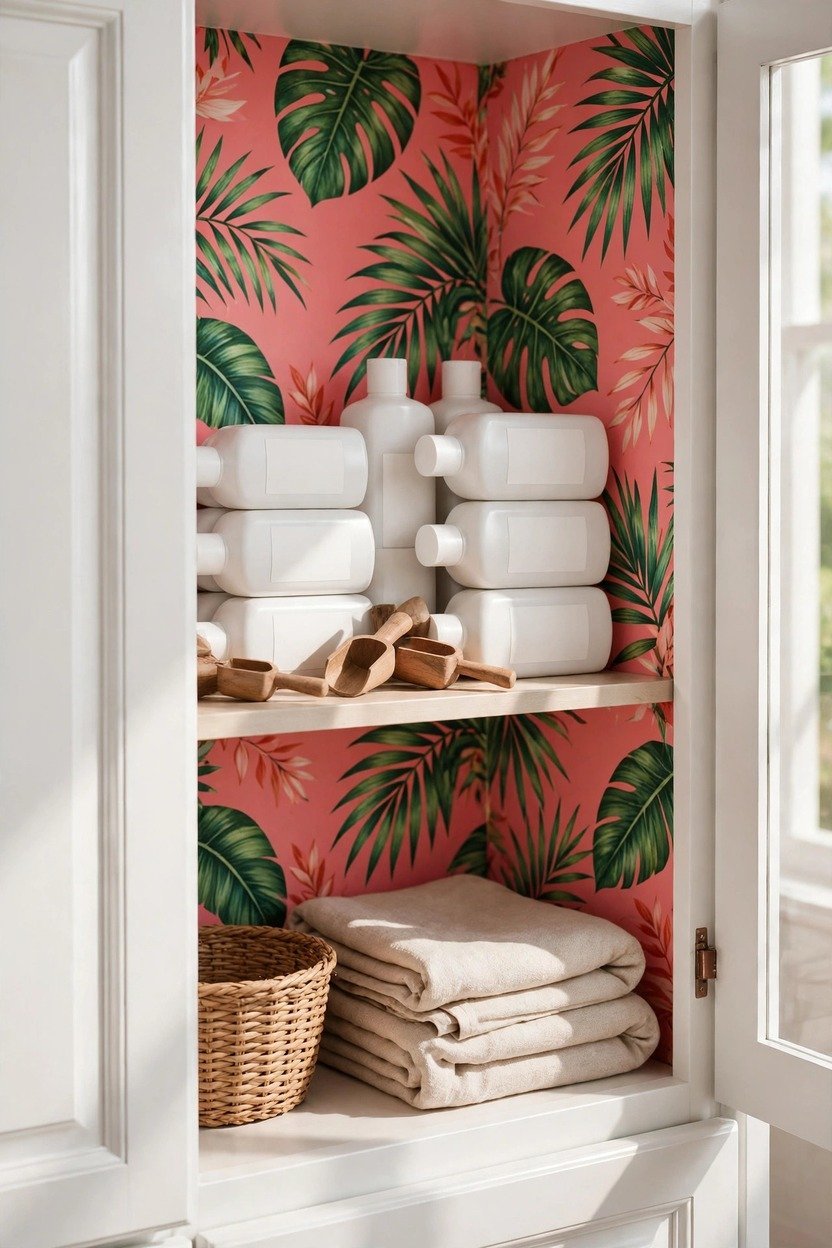
A wallpapered cabinet interior is a small secret you share with yourself every time you reach for detergent. It uses a tiny amount of paper, so leftover rolls and sample sizes work well. Peel-and-stick sheets are the easiest option here, because you can cut them to fit and the surface is protected from steam. Press the edges down firmly and smooth out bubbles with a plastic card. Choose a bolder print inside than you would on the walls, since only the open doors show it.
12. Wallpaper Above Beadboard or Wainscot
Beadboard below and wallpaper above is one of the smartest combinations for a busy laundry room. The painted lower wall takes the bumps from baskets and the splashes from the sink, while the paper stays higher and drier. Set the wainscot cap about 32 to 36 inches from the floor, so it lines up with a counter or the top of a machine. Paint the paneling in a semi-gloss that wipes clean, and pick a pattern that works above that line, like a soft check, a leaf print or a small floral. Finish with a simple wood cap so the paper edge looks sharp.
13. Faux Grasscloth for Quiet Texture
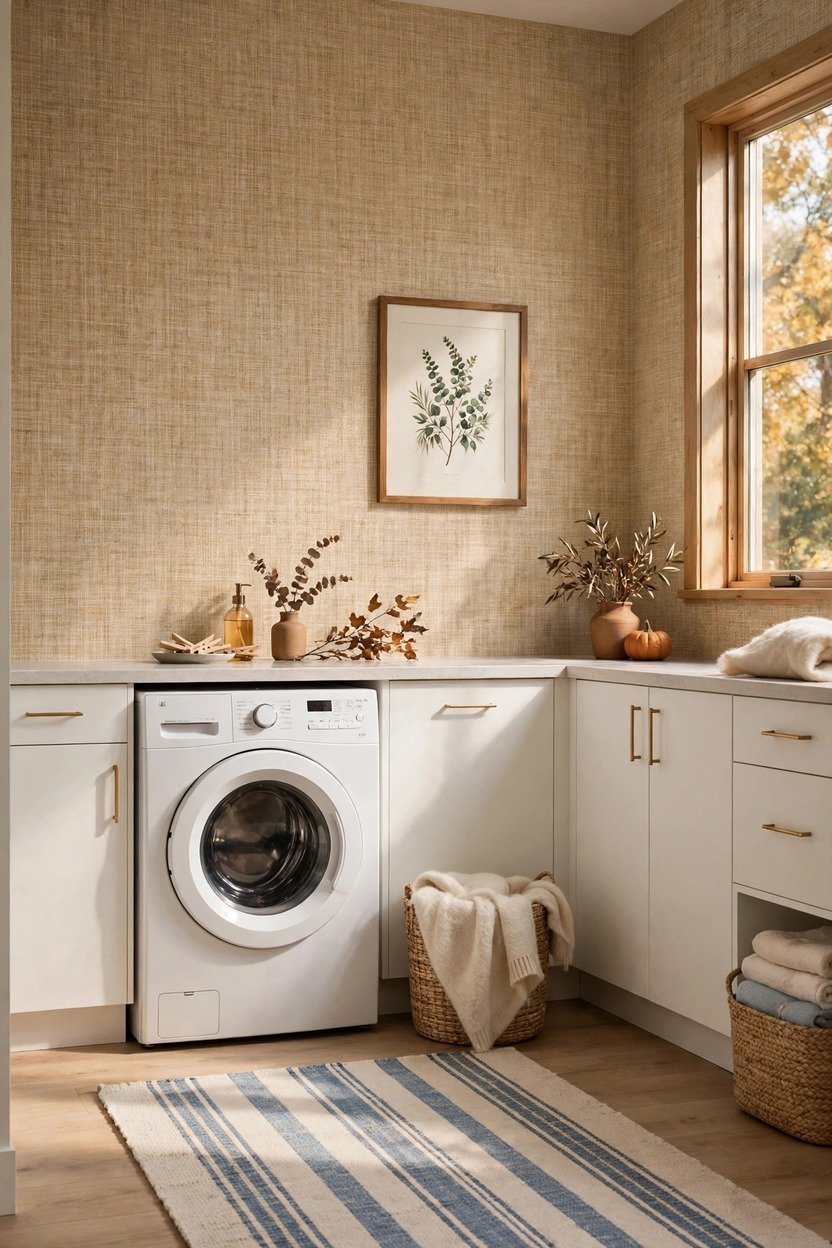
If you like pattern but fear it, texture is a gentle first step. A faux grasscloth in vinyl gives the look of woven fibers without the stains and warping that real grasscloth gets from moisture. The fine lines add warmth and hide small bumps in the wall. It works well with a colorful rug, a piece of art or a pretty bottle of detergent, because the wall stays quiet. Choose a warm oat or soft gray for a calm feel, or a muted blue for a little color.
14. A Scenic Mural on One Clear Wall
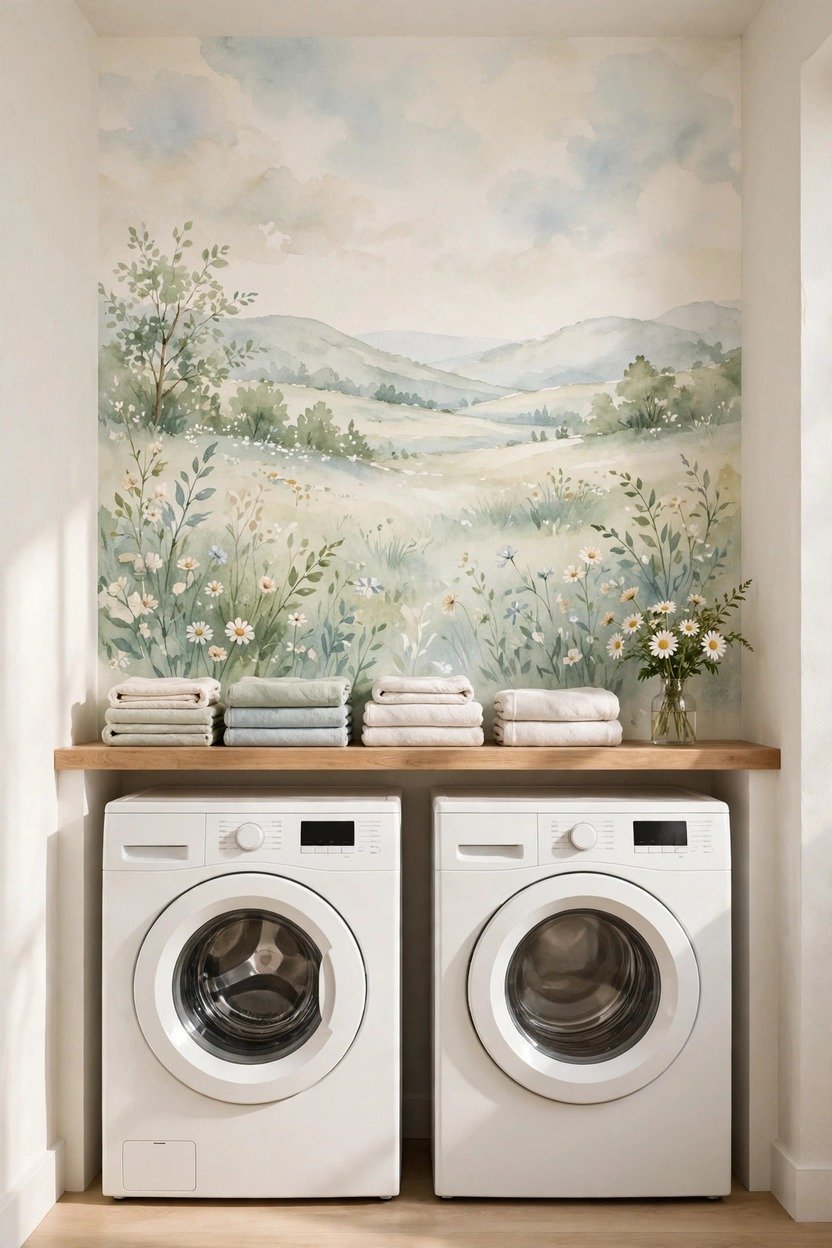
A mural turns one plain wall into a view, like a window that does not need cleaning. Choose a wall with no door or window, then measure its width and height before you order. A washer or dryer is about 38 to 40 inches tall, so the main part of the scene should sit above that line or it will hide behind the machines. Soft landscapes, sky scenes and watercolor gardens make small rooms feel deeper. Keep the other walls solid and the cabinets simple.
15. Citrus and Fruit Prints
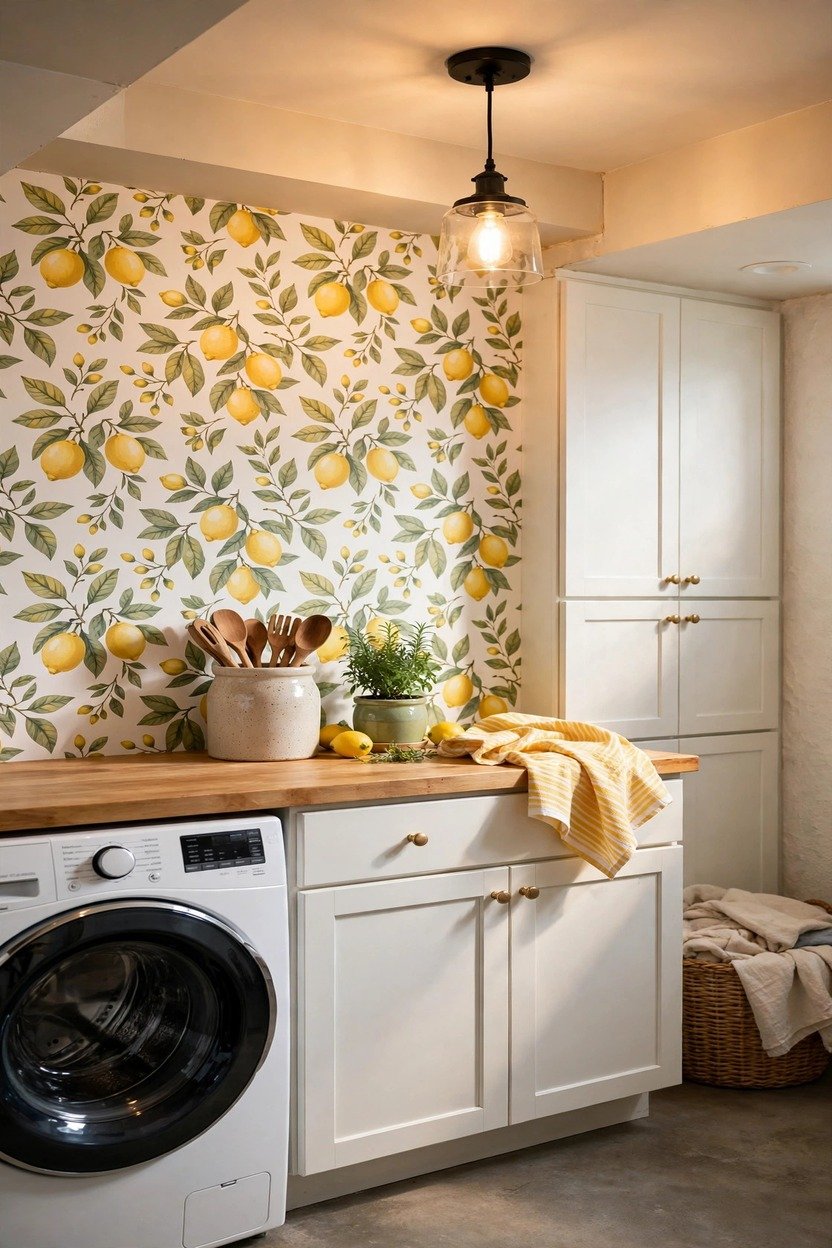
A lemon, orange or pear print wakes up a basement or windowless laundry room in a hurry. Choose a medium-scale design with space between the fruits and leaves, so it feels fresh and not like a grocery store. Pull one yellow or green from the paper into a towel or a pot, and keep cabinets white. Use the print on one short wall, or on the wall behind the sink, to keep the energy fun, not tiring. Warm white bulbs will make the yellows look sunny, not green.
Related: 18 Small Laundry Room Ideas That Feel Complete (Not Cramped)
16. Pull the Cabinet Color from the Paper
The quickest way to balance wallpaper is to borrow a color from it and paint the cabinets to match. If the paper has a sage leaf, paint the lower cabinets sage and keep the uppers white, so the room stays light on top. Tape a paint chip next to a wallpaper sample and check them together in morning and evening light. Choose the mid-tone from the print, not the darkest, because the darkest color can look heavy on a big cabinet. Finish with plain hardware in brass, black or nickel so nothing else competes.

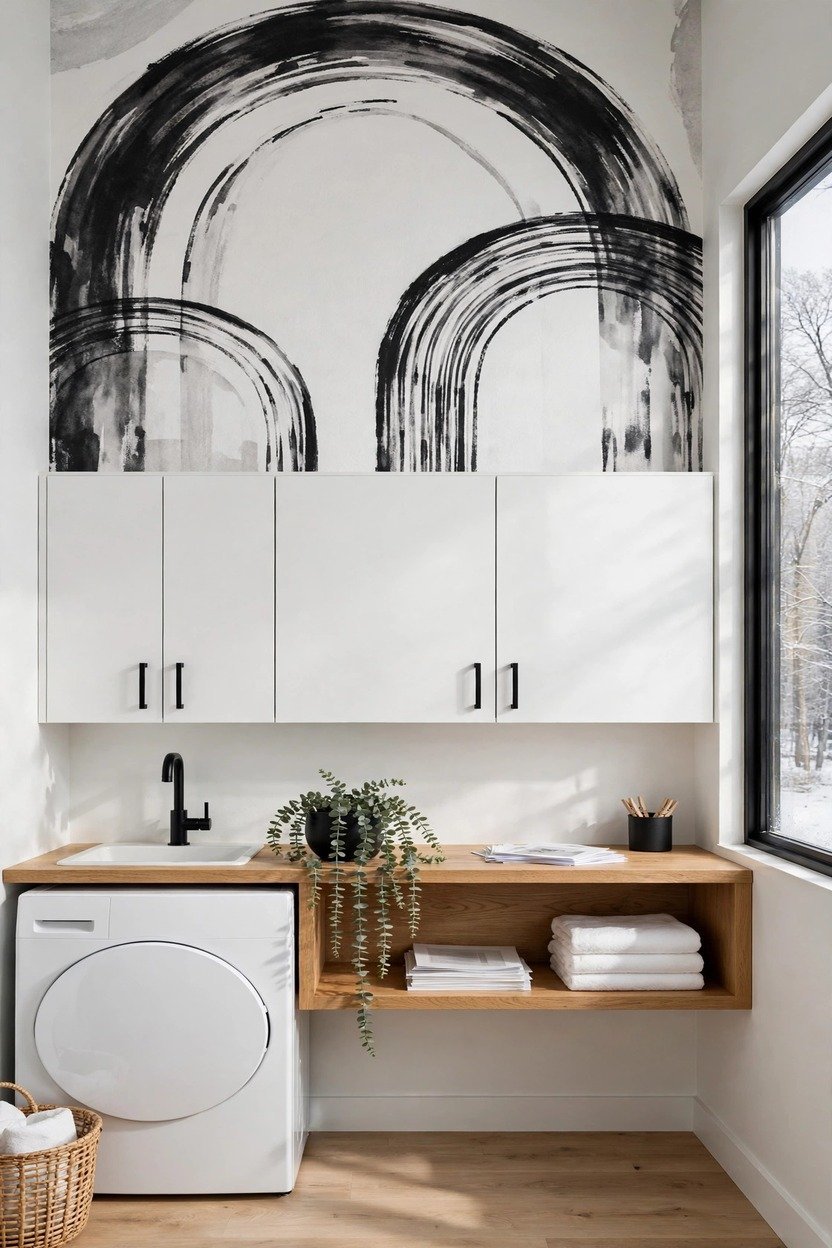
17. Bold Black-and-White Graphics
A graphic black-and-white wallpaper gives a laundry room a crisp, modern snap. Pick a large, open design, like wide stripes, simple arches or an abstract line drawing, so the room does not feel like a puzzle. Add matte black hardware and a black faucet to tie in, and keep everything else white, wood or gray. Skip a second pattern, like a busy rug or a printed shower curtain, since the wall is already the pattern. A warm wood shelf or a plant softens the contrast.
Styling Tips
- Let the wall be the star. Choose one patterned surface, and keep the other walls, the cabinets and the baskets simple.
- Echo, do not match. Repeat one color from the paper in one or two objects, like a towel or a ceramic jar.
- Pick one metal. Brass, nickel or matte black looks calmer than a mix on faucets, pulls and lights.
- Add a soft layer. A woven basket, a cotton towel or a runner keeps a utility room from feeling cold.
- Use warm bulbs. 2700K light makes paper colors look true and skin tones look kind.
- Tuck away the mess. Hide detergent bottles in jars or a cabinet, so the pattern is the only busy thing you see.
- Add one living thing. A small pothos or herb adds a fresh note against a printed wall.
- Test in your light. Tape a large sample next to your cabinets and look at it morning, noon and night.
Pattern Scale Cheat Sheet
- Under about 6 inches between repeats: reads tight and busy up close. Works best on one wall or in a soft, low-contrast color.
- 12 inches or more between repeats: reads calmer and more like art. A good choice for one short wall.
- Open space between motifs: feels lighter than a dense print, even when the motifs are big.
- Judge by your wall, not the room: the longest uninterrupted wall tells you how much of the print you will actually see.
- Large print plus small room: works best on a single wall, with solid colors on the rest.
A Simple Balance Formula
Think of the room as three layers. About 60 percent should be quiet: walls, appliances and ceiling in soft colors. About 30 percent should be medium: cabinets, counters and baskets. The last 10 percent is where the bold pattern or color lives. If the paper covers more than that, make everything else calmer.
Practical Implementation Ideas
A laundry room is a hard-working room, so the material and the prep matter as much as the pattern.
Choose the right material
- Vinyl or vinyl-coated paper: The best choice for steam and splashes. The surface wipes clean and resists moisture.
- Non-woven paper: Breathes better than vinyl, which helps in rooms with good ventilation. It is less forgiving of direct splashes.
- Peel-and-stick vinyl: The easiest option for renters and first-timers. It needs smooth, clean, fully dry walls, and the edges can lift in very steamy rooms, so choose a quality vinyl and ventilate well.
- Real grasscloth and delicate papers: Skip these in a laundry room, since moisture can stain and warp them.
Plan your install
- Measure each wall. Multiply width by height, add the areas, and add 10 to 15 percent for waste and pattern matching. Check the coverage printed on each roll.
- Order a sample first. Tape it up near your cabinets and live with it for a few days.
- Prep the wall. Fill holes, sand rough spots, wipe away dust and let the wall dry fully. Prime if the paper maker calls for it.
- Improve the air. Run the exhaust fan or open a window during and after laundry. Make sure the dryer vents outside, not into the room.
- Mark a plumb line. Use a level for the first strip so the pattern stays straight.
- Hang from the focal point. Start at the center of the main wall and work outward, so the pattern looks balanced when you enter.
- Smooth and trim. Work out bubbles with a smoothing tool, then trim edges with a sharp blade and a straight edge.
- Protect the splash zone. Keep paper out of the direct spray area near the sink. Tile, paint or beadboard works better there.
Common Mistakes to Avoid
- Choosing paper from a tiny photo. A small online picture hides the repeat size. Order a sample and look at the whole motif.
- Using a fragile paper. Non-vinyl papers and real grasscloth can stain or warp in a steamy room.
- Papering the splash zone. Water from a utility sink will lift edges over time. Keep paper back and use a tile or painted backsplash.
- Stacking pattern on pattern. A busy rug, busy towels and busy paper together make the room feel loud.
- Skipping prep. Dust, grease or a damp wall causes peeling, and peel-and-stick needs a smooth surface most of all.
- Ignoring ventilation. Steam shortens the life of any wallpaper. An exhaust fan or open window helps.
- Forgetting the appliances. If machines will cover the lower part of the wall, do not put the best part of the design there.
- Picking a color that fights your cabinets. Hold the paper next to a cabinet door before you commit.
Small-Space Alternatives
- Laundry closet: Paper the back wall and the inside of the doors.
- Hallway laundry nook: Use a large single-panel mural or a bold paper on just the wall behind the machines.
- Stacked washer-dryer in a bathroom: Match the paper to the bathroom, so both areas feel like one room.
- Basement laundry area: Use warm paper colors and bright bulbs to make a low, cool room feel friendlier.
- Galley laundry room: Choose vertical stripes or a tall pattern on the long wall to draw the eye up.
- Very small room with no spare wall: Paper the ceiling and keep the walls plain.
Budget-Friendly Alternatives
- Paper one short wall. A single wall uses a fraction of the paper of a full room.
- Buy a single roll. Many accent walls and shelf backs need just one roll.
- Use peel-and-stick tiles or sheets. They are cheaper to try and easier to fix if you make a mistake.
- Use sample sizes. Small sheets cover cabinet insides, shelf backs and drawer fronts.
- Frame wallpaper as art. Stretch a piece of paper over a canvas or frame for a no-commitment look.
- Paint the rest. Painting the other walls a color from the paper costs little and ties the room together.
- Skip new hardware at first. Existing pulls can wait while the paper does the heavy lifting.
Pro Styling Recommendations
- Think about the doorway view. Stand where you first see the room and place the best pattern in that view.
- Match visual weight. If the wall pattern is heavy, make the counter and cabinets light. If the paper is soft, you can add a bolder cabinet color.
- Check the repeat against furniture. Compare the pattern size to the width of a washer. A motif much bigger than the machine may feel out of scale.
- Use one frame of white. White trim, baseboards and a white ceiling give a busy pattern a clean border.
- Plan for the seams. Choose a pattern that hides seams well, like a random sprig, if your walls are uneven.
- Light the wall. A sconce or a small picture light on a papered wall makes the pattern glow at night.
FAQs
Can you put wallpaper in a laundry room?
Yes. Choose a vinyl or vinyl-coated paper, prep the walls well and keep the room ventilated. Wallpaper handles the usual damp air of a laundry room when the material is right, but it should stay out of the direct splash zone near a sink.
What type of wallpaper is best for a laundry room?
Vinyl or vinyl-coated wallpaper is the most reliable choice because the surface resists moisture and wipes clean. Non-woven paper works in well-ventilated rooms. Peel-and-stick vinyl suits renters, as long as the wall is smooth, clean and dry.
Is peel-and-stick wallpaper okay for a laundry room?
It can be, if you pick a quality vinyl and prep the wall. The surface should be clean, smooth, dry and fully cured if freshly painted. In very steamy rooms the edges may lift over time, so run the exhaust fan and press the edges down firmly.
Should I use a large or small pattern in a small laundry room?
Both can work. Small, open patterns read like quiet texture, while large patterns with space between motifs can feel cleaner and more modern on one wall. Avoid dense, tight patterns on every wall, since they can feel busy up close.
Which wall should I wallpaper in a laundry room?
Choose the wall you see first from the doorway, or the wall behind the sink or shelves. These walls get the most attention and often have the fewest windows and doors. An accent wall also keeps costs low.
Can you wallpaper a laundry room ceiling?
Yes. It is a fun way to add pattern without using any wall space. Use a vinyl-coated paper, ventilate well and keep the walls plain. Ceilings are easier with two people.
Should I wallpaper behind the washer and dryer?
Only where the paper will show. Paper the visible back wall of an alcove, but leave space where hoses, vents and plugs connect. Make sure machines can still slide out for service.
How do I keep wallpaper from peeling in a laundry room?
Start with a clean, dry, smooth wall. Use a moisture-friendly material, press the seams and edges firmly and run an exhaust fan after laundry. Keep paper out of direct splash areas, and wipe condensation away quickly.
What colors work best for laundry room wallpaper?
Blue and white, sage and cream, soft blush and warm neutrals feel fresh and clean. Deep green, navy and ink black feel cozy in the right light. Hold a sample next to your cabinets and appliances before you decide.
How much wallpaper do I need for a laundry room?
Measure the height and width of each wall, add the areas and check the coverage printed on the roll. Add 10 to 15 percent for waste and pattern matching. A single accent wall often needs just one or two rolls.
Conclusion
A laundry room does not need a big budget to feel good. It needs one decision made with care.
Related: 17 Farmhouse Laundry Room Ideas That Spark Joy (Cozy + Practical)
Pick a pattern that has room to breathe. Put it on the wall you see first, or up on the ceiling where nobody expects it. Then let everything else stay quiet, from the cabinets to the baskets.
Start with a sample taped to the wall. Look at it in the morning, and look at it again after the sun goes down. If it still makes you smile, you have your answer, and the next load of laundry might feel a little lighter.