17 Farmhouse Laundry Room Ideas That Spark Joy (Cozy + Practical)
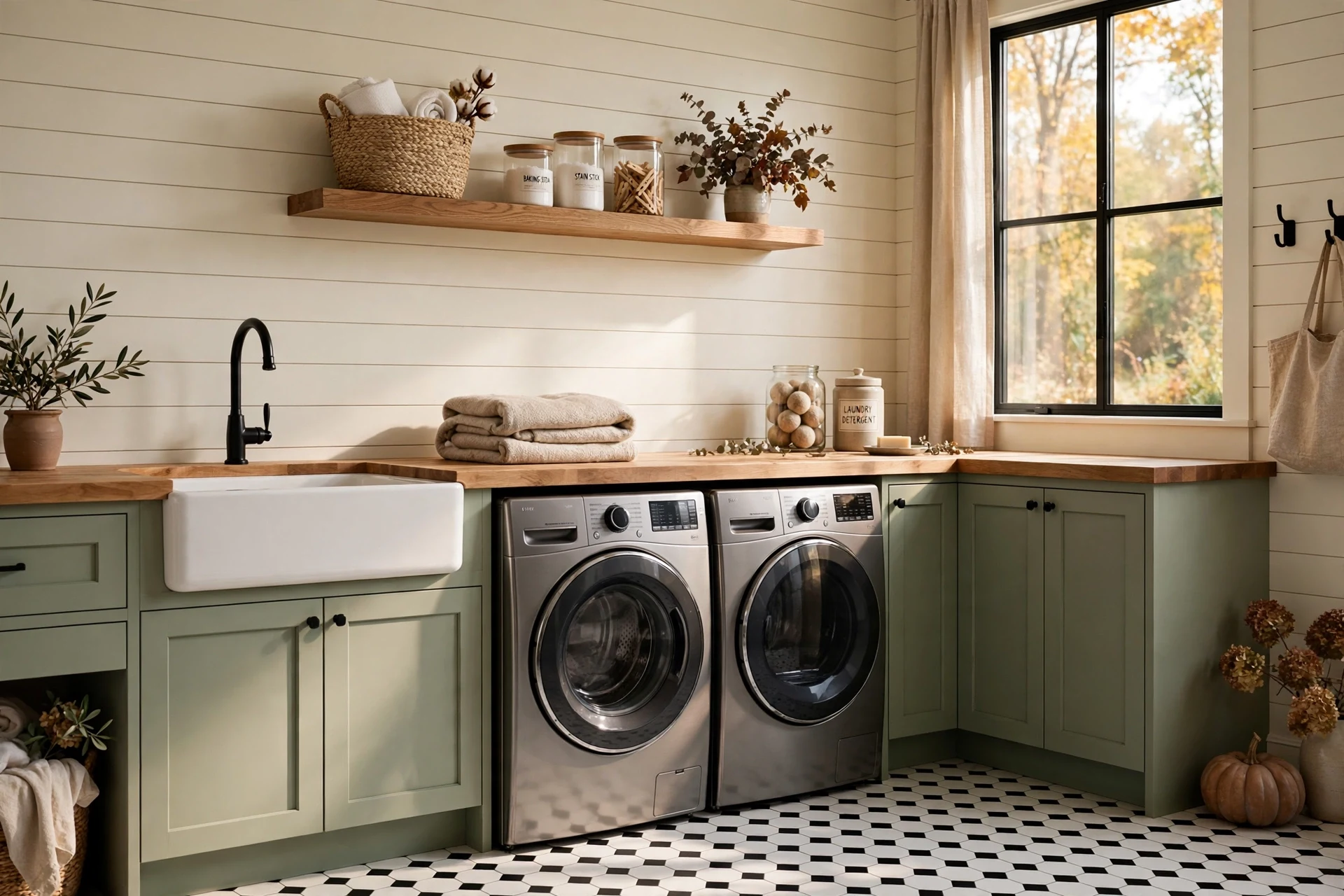
Picture a quiet laundry room with soft morning light on cream shiplap. A woven basket sits beside a deep white sink. The dryer hums, and a stack of warm towels waits on a wood counter.
Now picture the usual version: a bare bulb, a plastic hamper, and a wire shelf crowded with half-empty bottles.
You don’t need a big budget to get from the second room to the first. You need a clear plan, a few honest materials, and storage that fits your real routine.
This list gives you 17 farmhouse laundry room ideas that look cozy and work hard. You’ll find ideas for small closets, narrow hallways, mudroom combos, and rentals. Each one explains the styling logic, so you know why it works before you spend a dollar.
Quick Answer: What Is a Farmhouse Laundry Room?
A farmhouse laundry room is a practical utility space styled with warm whites, natural wood, simple shaker or beadboard details, black or aged-metal hardware, and soft textures like linen and woven baskets. The look depends on honest materials and visible, useful storage, not fussy extras. Modern versions lean cleaner and lighter, with creamy neutrals and muted greens in place of heavy rustic decor.
Table of Contents
17 Farmhouse Laundry Room Ideas
Creamy Shiplap Walls That Brighten a Small Room
Walls do the heavy lifting in a farmhouse laundry room, so start there. Horizontal shiplap in a soft cream, like the popular Sherwin-Williams Alabaster or Benjamin Moore White Dove, adds gentle shadow lines that make a flat wall feel layered. Creamy white also looks warmer next to bright white machines than stark builder white does. Use a satin or semi-gloss finish so steam and splashes wipe right off. If your room is narrow, the horizontal lines help it feel a little wider.
Sage Green Shaker Cabinets With a Wood Counter
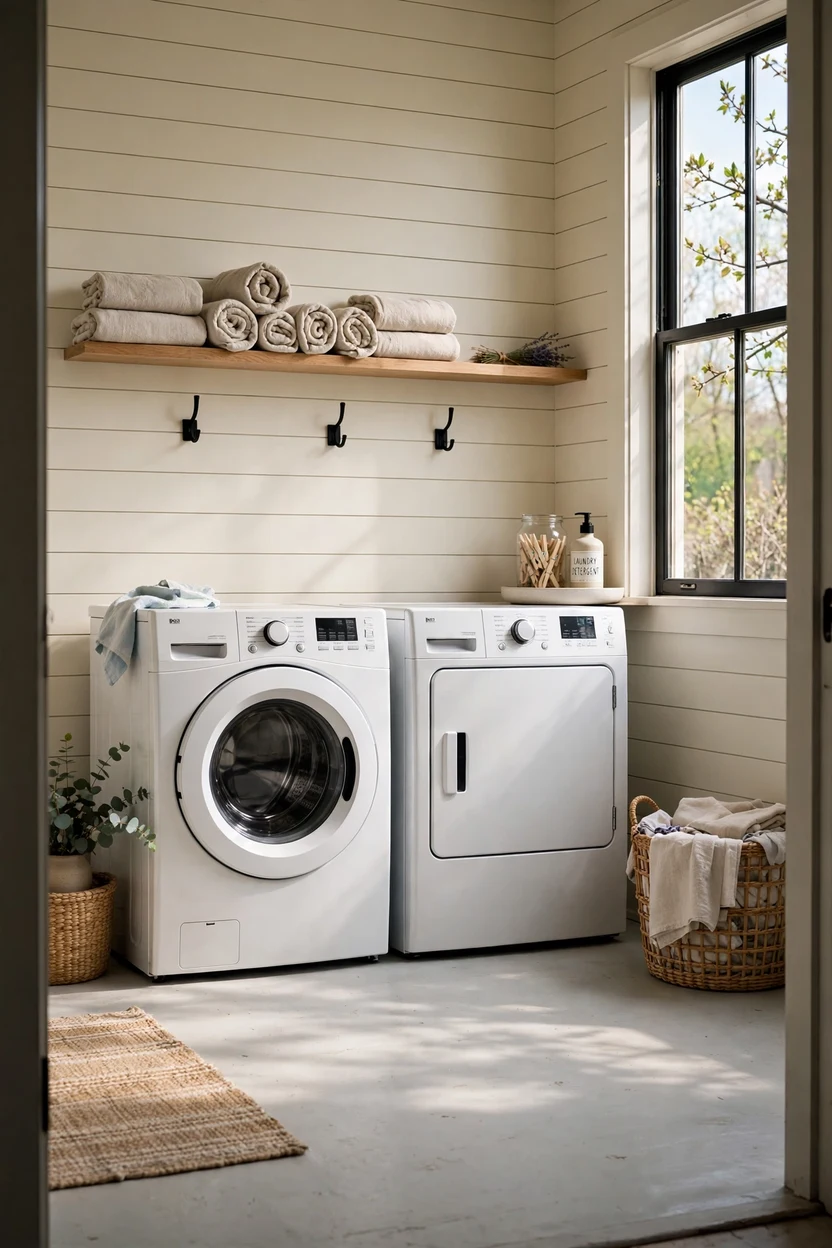
A muted sage gives you color without breaking the calm. Pick a gray-leaning green instead of a bright mint, because earthy tones sit better beside cream walls and natural wood. Pair the cabinets with a butcher block counter, since the warm wood softens the green and keeps it from feeling heavy. Use cabinet-grade paint in satin, because laundry rooms run humid and doors get touched all day. Black bar pulls add a crisp outline that keeps the look modern.
Related: 18 Modern Farmhouse Living Room Ideas With Texture & Warmth

An Apron-Front Sink Deep Enough to Work
A deep farmhouse sink earns its spot by handling hand-washing, stain soaks, and muddy boot rinses in one basin. White fireclay looks classic and wipes clean, and a matte black gooseneck faucet adds contrast. Choose a faucet with a pull-down sprayer so you can rinse the corners without splashing the wall. These sinks are heavy, so plan a sturdy base cabinet and ask your installer about extra support. Keep a small tray nearby for a stain stick and a nail brush.

A Floating Wood Shelf With Baskets and Glass Jars
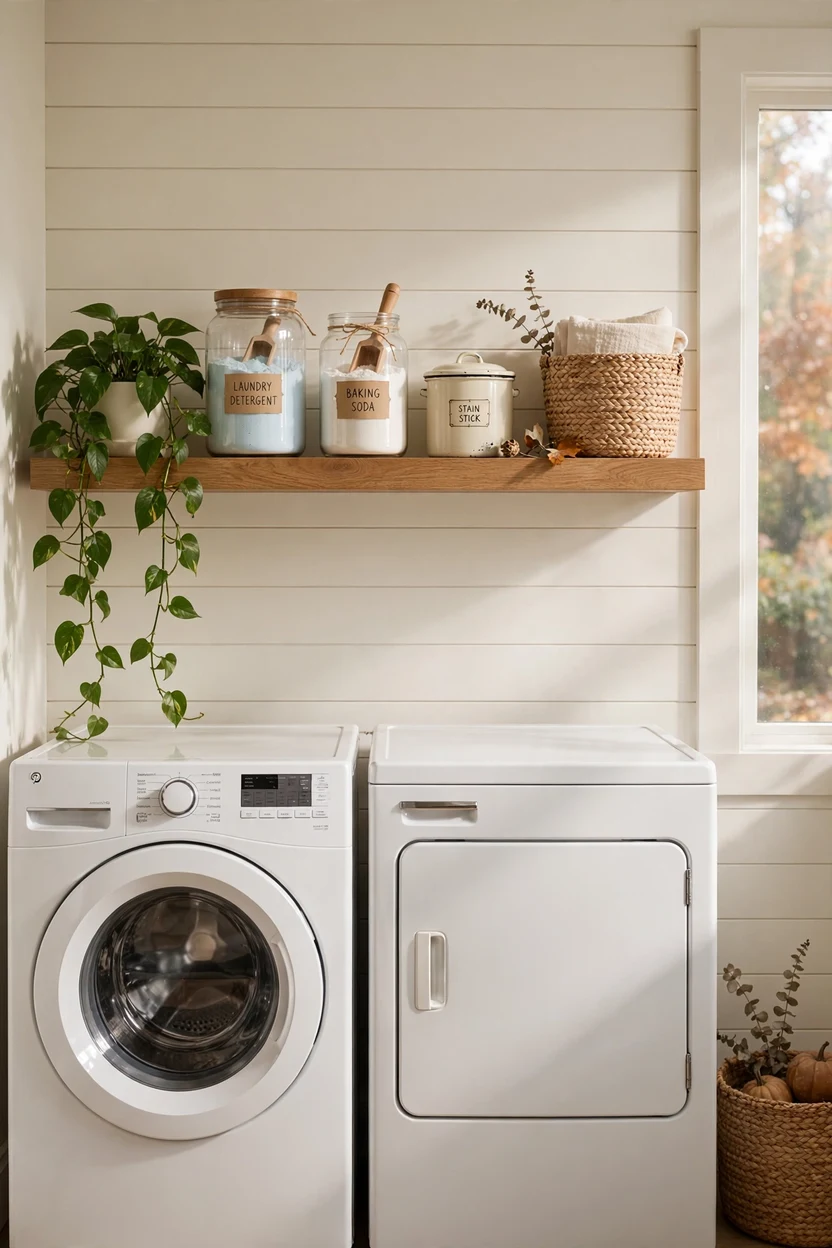
One thick shelf above the machines can hold most of your daily supplies. Mount it about 18 to 24 inches above the top of the washer, then test the spacing with the lid or door open before you drill. Put detergent and dryer sheets in glass jars or tins, and tuck stray socks and lint-roller refills into a woven basket. Keep heavy jugs in a cabinet or on the floor and use the shelf for lighter items. Anchor the brackets into studs, since filled jars add up fast.
A Butcher Block Folding Counter Over Front-Loaders
Front-load machines have flat tops, which makes them ready for a counter. Many laundry layouts put the folding surface between 36 and 42 inches high, so choose the height that suits your machines and your back. A butcher block slab about one and a half inches thick, sealed with a water-resistant finish, gives you a warm, forgiving place to fold. Support the counter from side cabinets or brackets, not from the machines, and check your manual for the clearance your dryer needs. The finished counter also makes the whole wall feel built in.

Black-and-White Patterned Tile Underfoot
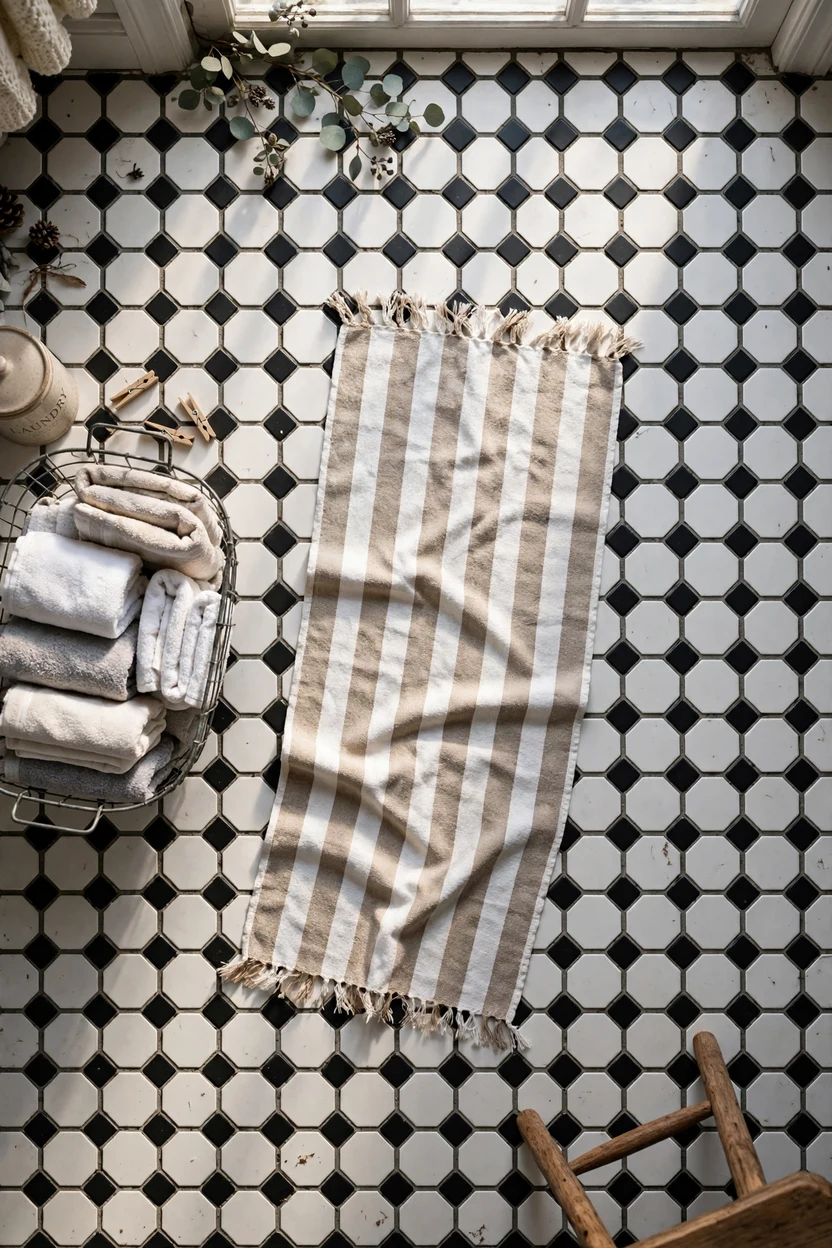
Floors are where a farmhouse laundry room can show a little personality. Hex tile or a simple checkerboard in matte porcelain hides lint and dust better than plain white. A mid-gray grout stays looking clean longer than bright white grout. Matte finishes grip better when the floor gets wet. Add a striped cotton runner in front of the machines so your feet stay warm in winter.
A Hanging Rail and Drying Rack
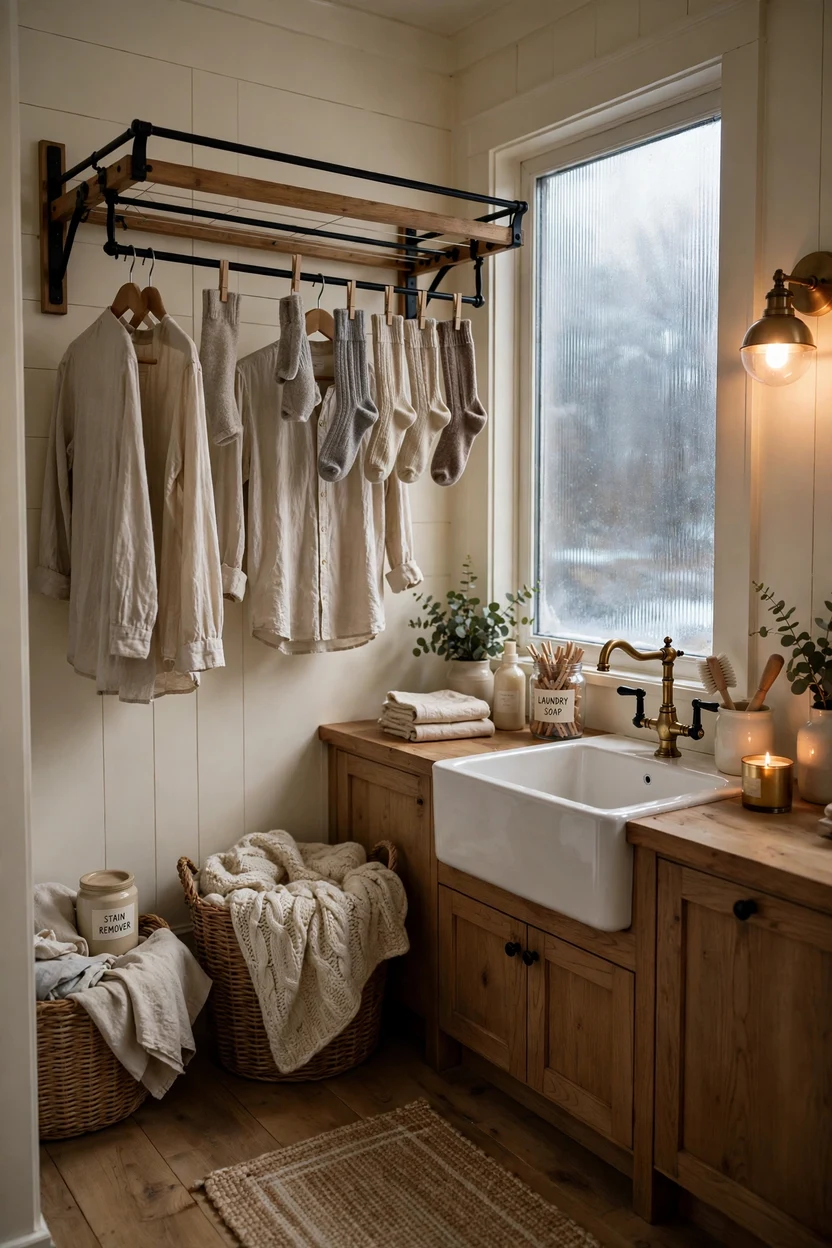
Every laundry room needs a place for air-dry pieces. A wall-mounted wood-and-iron rail, a fold-down rack, or an old-style ceiling rack with a pulley all keep sweaters and shirts off the floor. Mount the rail high enough that a long shirt hangs free without touching anything. A rod above the sink is handy too, since drips land right in the basin. When the rack is empty, it reads as a design detail instead of clutter.
Related: 16 Green Laundry Room Ideas That Are a Design Shortcut
A Rolling Cart and Wire-and-Canvas Hampers
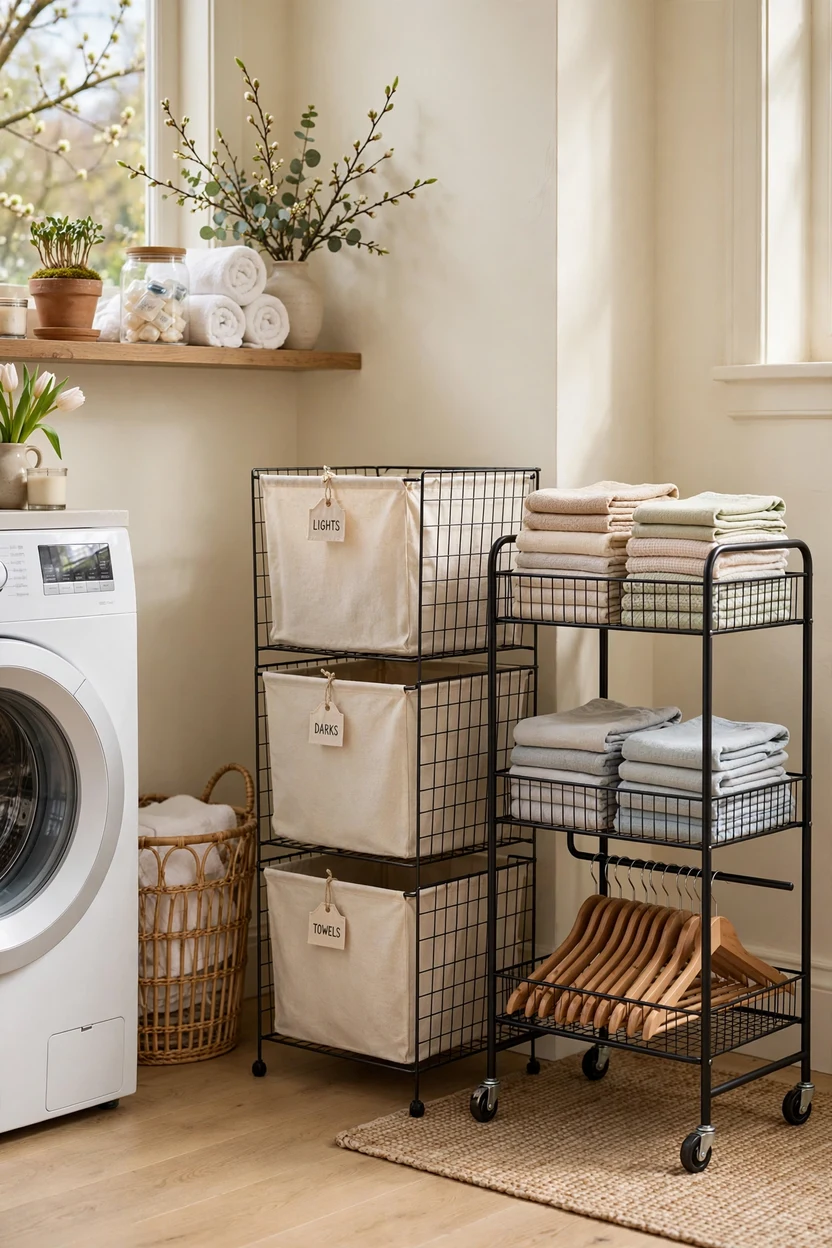
Sorting is easier when the bins do the work for you. A three-section wire hamper with removable canvas bags lets you split lights, darks, and towels before the wash. Lift a bag out and carry it straight to the machine. A slim rolling cart can tuck into the gap beside the washer and hold cleaning cloths, stain sticks, and spare hangers. Choose oatmeal or ticking-stripe liners so the whole setup looks calm instead of busy.
Board-and-Batten With a Peg Rail
Vertical board-and-batten draws the eye up, which helps a low ceiling feel taller. Paint it a warm mushroom or soft cream for a cozy backdrop that hides scuffs. Add a Shaker-style peg rail at shoulder height for aprons, tote bags, lint brushes, and hang-dry items. Screw the rail into studs so it can carry real weight. A small framed botanical print above it gives the wall a finished look.

Peel-and-Stick Wallpaper for Renters
Renting doesn’t have to mean boring walls. A small-scale ticking stripe, tiny floral, or faux brick in peel-and-stick form gives you a farmhouse look that comes off when you move. Smooth, clean, painted walls hold it best, so wipe the wall down and test a sample first. Keep it on one wall or behind a shelf, away from steamy dryer vents and splash zones. Navy-and-cream or soft sage prints keep the room calm instead of loud.
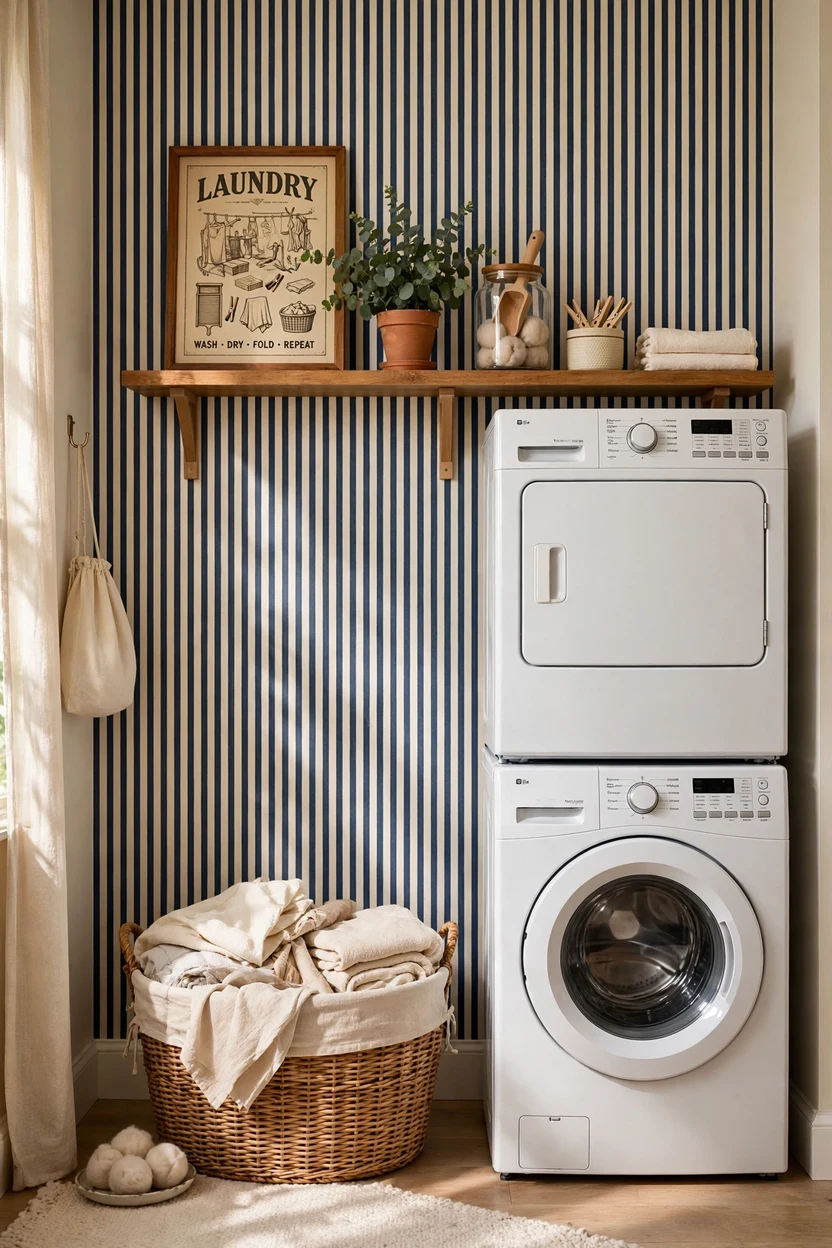
A Fabric Skirt That Hides Supplies
A gathered linen or ticking skirt on a tension rod hides the mess under a counter without the cost of cabinet doors. It also softens all the hard edges in a room full of appliances. Use it to cover bins of cleaning supplies, spare towels, and exposed plumbing. Hang it about an inch above the floor so the hem stays dry and dust-free. Because fabric goes in the wash, it’s one of the easiest pieces to swap with the seasons.

Black Hardware and a Barn Pendant Light
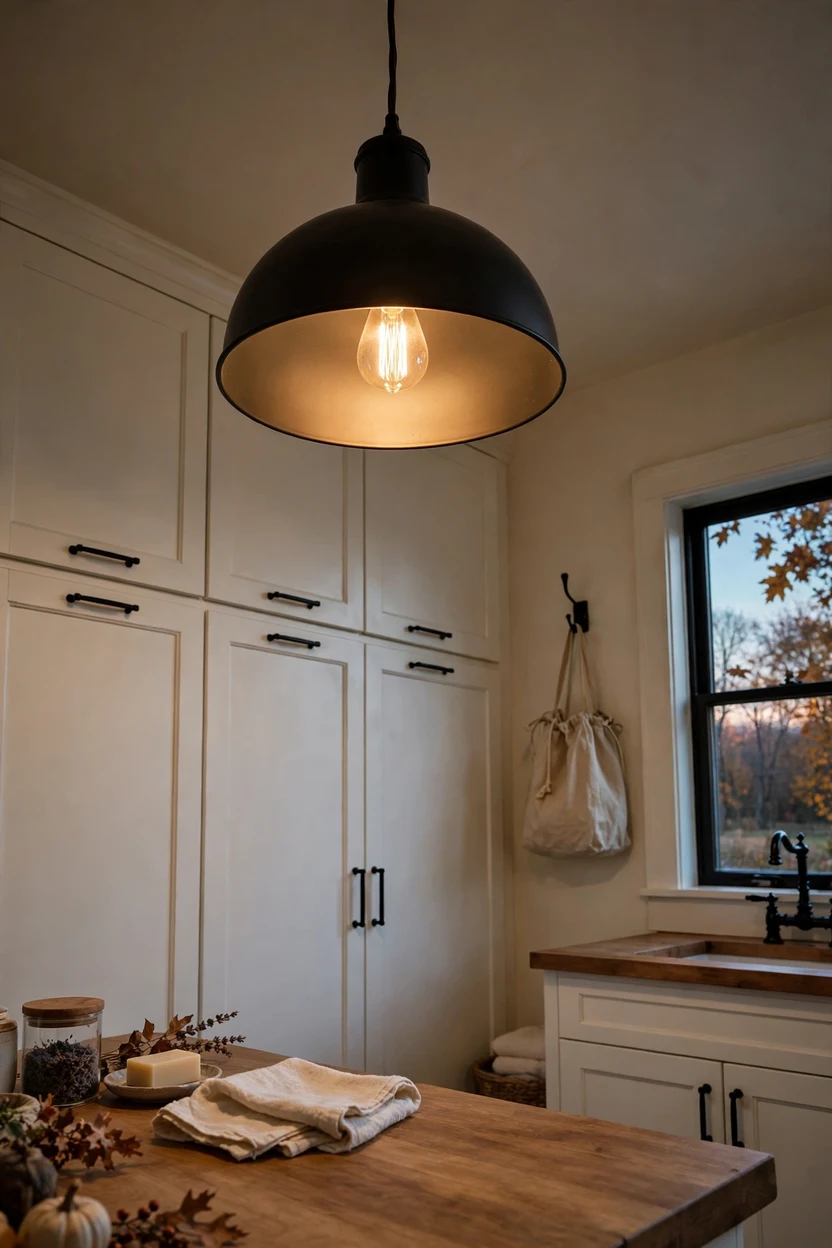
Matte black pulls, hooks, and a dome pendant give a farmhouse laundry room a clean, grounded finish. Warm white walls with black fixtures is a popular pairing right now, and it replaces the all-chrome look of past years. Choose warm bulbs around 2700K so fabrics and skin tones look natural. Add a brighter task light near the sink or counter, since stains are hard to spot in dim light. Repeat the black finish in at least three places so it looks planned.
A Tall Cabinet Beside Stacked Machines
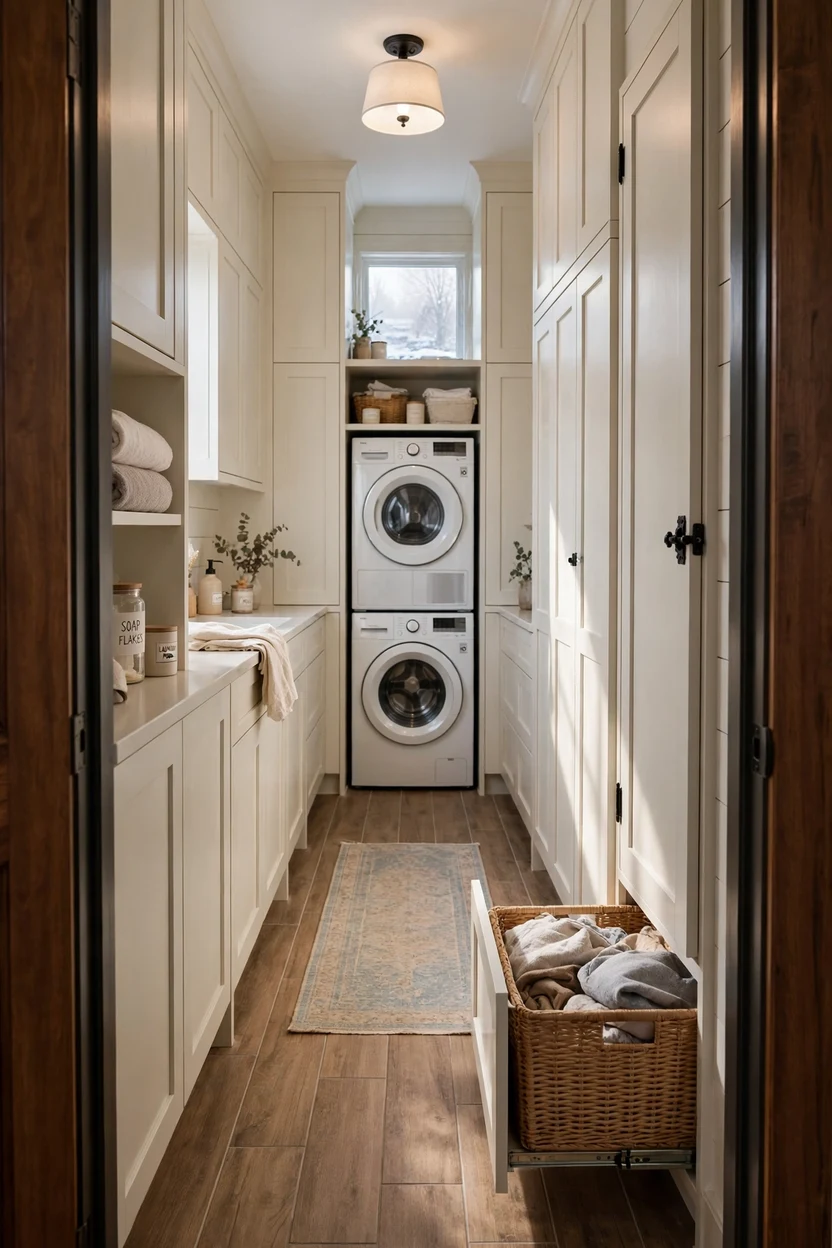
Stacked machines free up floor space, but a stacked pair often stands around 75 inches tall, which leaves little room above it in an eight-foot room. Instead of fighting that height, build storage beside it. A tall, slim cabinet next to the stack can hold a pull-out hamper, a broom, an ironing board, and extra supplies. Paint the cabinet the same color as the wall so it fades back. Add a short cabinet above the stack only if the machine manuals allow enough room.
A Built-In Pet Corner
If a dog or cat shares your laundry room, give them a spot of their own. A cubby under the counter fits a dog bed, and a shallow drawer can hold bowls and food. Hang a leash hook on a peg rail and keep a rinse towel nearby for muddy paws. Choose washable mats and hard-wearing flooring that shrugs off scratches. Store detergent pods and cleaning products in a closed cabinet or on a high shelf, because they are hazardous to pets and children.

A Laundry and Mudroom Combo With Bench and Cubbies
When the laundry room is also the back door, you need a landing zone. A built-in bench with cubbies and one hook per person keeps jackets and bags off the machines. Add a boot tray or rubber mat so wet shoes don’t ruin the floor. Choose tough flooring, like porcelain or slate-look tile, that handles dirt and moisture. Small wood name tags on each cubby help the system stick.
Related: 18 Small Laundry Room Ideas That Feel Complete (Not Cramped)

A Detergent Station With Jars, Tins, and Labels
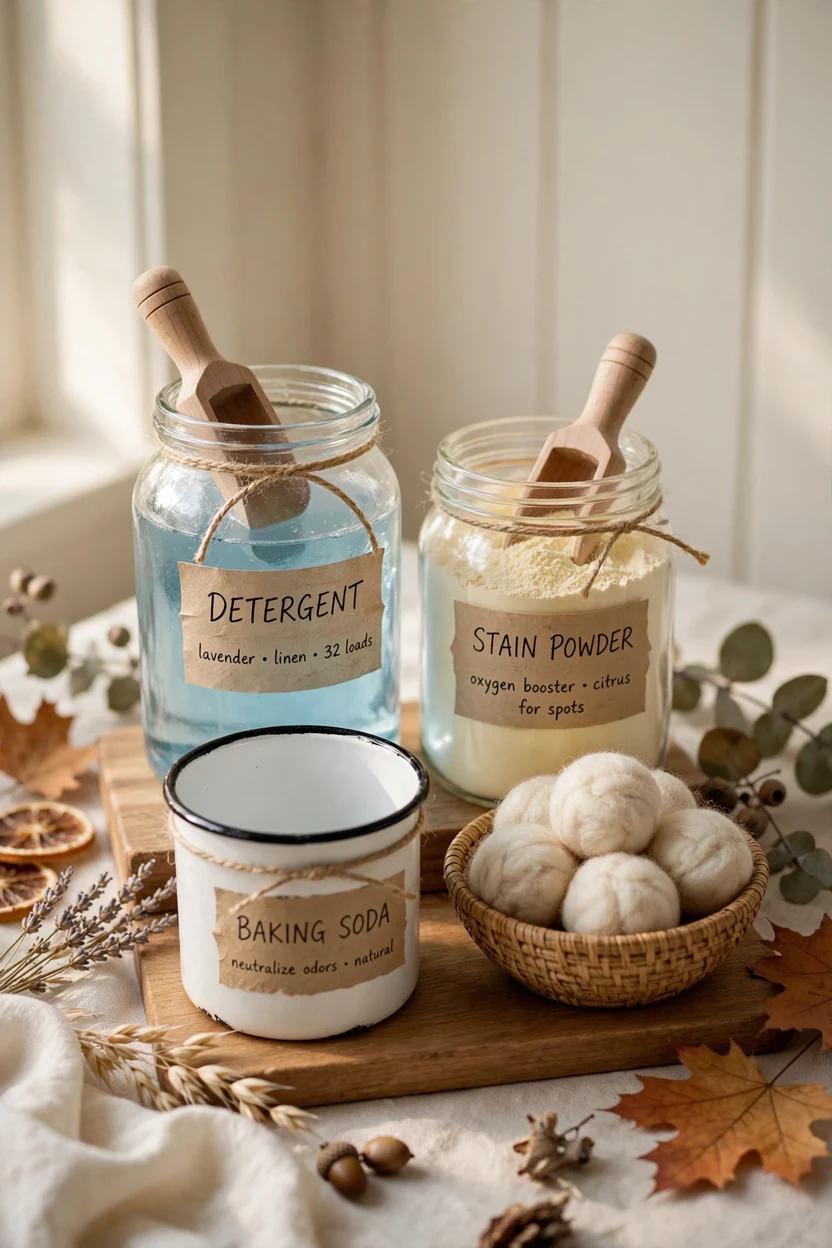
Decanting detergent into glass jars makes a shelf look tidy and calm. Use wide-mouth jars with a scoop, and keep dryer sheets and wool dryer balls in enamel tins or a woven bowl. Set everything on a small wood tray so drips stay in one place. Keep the original packaging for any product you decant, since it carries the safety and mixing instructions, and never combine laundry products unless the labels say it’s safe. Add simple handwritten labels so everyone in the house knows what’s in each jar.
A Window Nook With a Cafe Curtain and Seasonal Vignette
Natural light makes any laundry room feel friendlier. A half-height cafe curtain on a tension rod keeps privacy while letting light in at the top. Add one small plant that tolerates humidity, such as pothos, and a vintage enamel pitcher with eucalyptus or seasonal stems. Swap the vignette through the year: small pumpkins in fall, evergreen branches in winter, tulips in spring. Keep it to one tight cluster so the counter stays useful.

Styling Tips
- Keep the palette small. Choose a creamy white, one soft color like sage or dusty blue, black accents, and natural wood. A rough 60-30-10 split works well: 60 percent walls, 30 percent cabinets, 10 percent accents.
- Mix textures, not patterns. Shiplap, wood grain, linen, wicker, and metal give the eye plenty to enjoy. Stick to one pattern, like a floor tile or a wallpaper, and let everything else stay plain.
- Repeat your finishes. Use black hardware in at least three spots and wood in at least two. Repetition makes a small room feel planned.
- Group in threes. Three jars, three baskets, or three stems look natural and balanced.
- Go bigger with baskets. A few large baskets look calmer than many tiny ones.
- Leave breathing room. Keep about a third of each shelf empty so the display doesn’t feel crowded.
- Light it warm. Warm bulbs make cream walls glow and make the room feel like part of the house, not a basement.
Practical Implementation Ideas
You can finish a first round of upgrades in a weekend. Here is an order that saves rework.
- Measure first. Write down wall width, ceiling height, and your machine dimensions with doors and lids open. This one step prevents most shelf and counter mistakes.
- Clear and sort. Pull everything out, toss expired products, and keep only what you use. Fewer items means smaller storage and a cleaner look.
- Paint before anything else. Walls, trim, and cabinets come first, using satin or semi-gloss paint that handles humidity.
- Swap hardware. New pulls, hooks, and a faucet change the feel of a room fast.
- Mount the shelf and rail. Find studs, mark your heights, and test with the door open before drilling.
- Upgrade the light. Add a warm pendant or flush mount, and a task light where you work.
- Style last. Add baskets, jars, a plant, and one seasonal vignette once everything else is in place.
Two safety notes. Check the dryer vent for lint buildup and keep it clear, and ask an electrician about outlets near a sink, since those usually need ground-fault protection.
Common Mistakes to Avoid
- Hanging shelves too low or too high. Test with the lid or door open, and stand where you’ll actually reach.
- Blocking dryer clearance. Counters and cabinets need to follow the manual. Dryers need airflow and a clear vent.
- Using flat paint. It stains easily in a humid room. Choose satin or semi-gloss.
- Cold, harsh bulbs. They make cream walls look gray and tired.
- Open shelves with no plan. Without matching containers, open storage looks messy fast.
- Too many patterns. A tile floor, wallpaper, and striped curtain all at once will fight each other.
- Leaving wood unsealed. Butcher block near water needs a water-resistant finish.
- Forgetting sink support. A fireclay sink is heavy and needs a strong base.
- Skipping the hamper plan. Pretty rooms still need a place for dirty clothes.
Small-Space Alternatives
- Laundry closet: Swap bi-fold doors for shaker-style or louvered doors, and use the inside of the door for hooks and a slim shelf.
- Narrow gaps: A pull-out shelf on runners, around four to eight inches wide, fits between machines and walls for detergent and stain sticks.
- Vertical storage: A leaning ladder shelf or tall wall rack uses height without eating floor space.
- Fold-down surface: A wall-mounted drop-leaf shelf gives you folding room that disappears when you’re done.
- Stacked machines: Stacking frees up floor space for a cart or a counter next to the pair.
- Light colors and mirrors: A cream wall, a small mirror in a wood frame, and a cafe curtain make a tiny room feel brighter.
- Over-the-door rack: A simple rack holds an ironing board and a drying rod without drilling.
Budget-Friendly Alternatives
Spend on the things you touch and see every day, like paint, hardware, and lighting. Save on the things that are easy to swap later.
- Instead of shiplap planks: Use peel-and-stick planks, or paint thin plywood strips in horizontal rows.
- Instead of butcher block: Try a stained and sealed pine board or a butcher block remnant cut to size.
- Instead of an apron sink: Install a basic utility sink and hide the legs with a fabric skirt.
- Instead of custom shelves: Mount a pine board on simple black brackets.
- Instead of new tile: Use sheet vinyl or peel-and-stick tile in a hex or checkerboard pattern.
- Instead of new cabinets: Sand lightly, prime, and repaint the ones you have, then add new pulls.
- Instead of buying all new baskets: Shop thrift stores and mix a few new liners for a matched look.
Pro Styling Recommendations
- Pick paint first. Everything else, from baskets to towels, is easier to choose once the walls and cabinets are set.
- Keep dark colors low. Put darker cabinets and sinks near the floor and lighter shelves above so the room feels open.
- Hide the ugly, show the pretty. Closed storage for bulky jugs and pods, open storage for jars, baskets, and wood.
- Match your metals. One finish, like matte black, looks calmer than three different ones.
- Add one vintage piece. A thrifted enamel pitcher, an old crate, or a wood sign gives the room history.
- Edit by season. Change one vignette four times a year instead of adding more items.
- Photograph the room. A quick phone photo shows clutter your eyes have stopped noticing.
Frequently Asked Questions
Conclusion
A laundry room will never be the star of the house, and that’s fine. What it can be is a room that makes you exhale a little when you walk in. Soft walls, warm wood, and a spot for everything do more for your mood than you’d expect.
You don’t have to try all 17 ideas. Pick the one that solves your biggest daily annoyance, whether that’s a messy shelf, a dark corner, or a pile with no home. Do that first, live with it for a week, and see what you want next.
Save this post, grab a tape measure, and start with one wall.