23 Design Ideas to Make Your Mobile Home Look Like a Real House
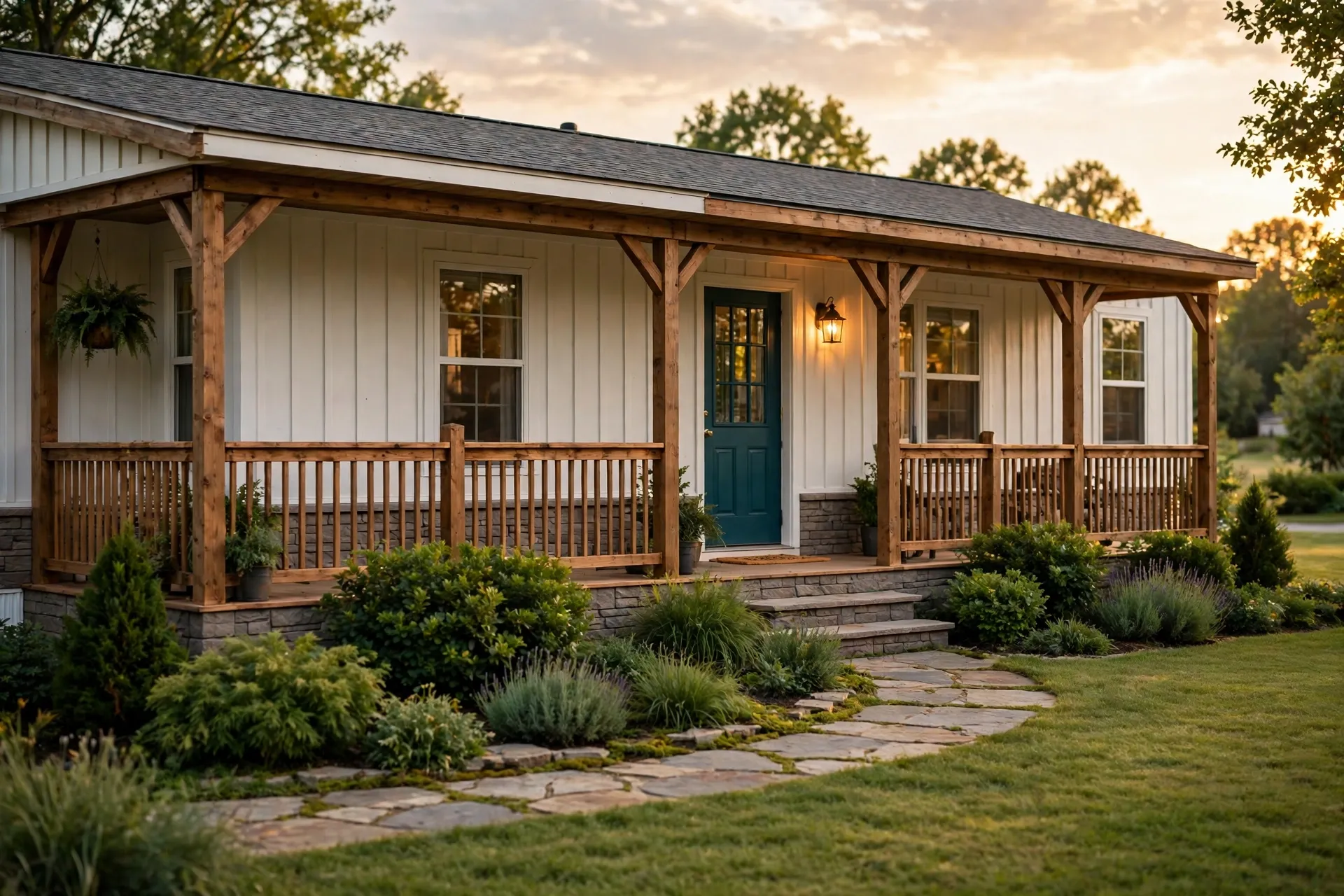
A mobile home can feel like a real house long before anyone steps inside, and the change often starts with the small details people see first. The low roof, the thin skirting, the narrow steps, and the plain front door all give the game away, but each one has a fix that is easy to picture and easy to plan. You do not need to rebuild the whole home to change how it reads from the street.
The ideas below start outside, where the biggest visual clues live, and move inside, where the walls, floors, and doors shape how the home feels day to day. Some take a weekend and a can of paint, while others are bigger jobs worth saving for, and you can mix them in any order that fits your budget. Pick the one that bothers you most each time you pull into the drive, and start there.
Quick Answer
A mobile home looks more like a site-built house when the base looks solid, the roof has height, the entry has a porch and a clear path, and the inside has smooth walls, one floor style, and full-size doors. Start with skirting, paint, and wide trim, because those three changes hide the most obvious signs of a factory-built home for the least money. Then add a porch or an entry gable, layer in shrubs and warm lighting, and finish inside with crown molding, painted cabinets, and one floor running through every room. Check local rules and keep the home’s red certification label clear before any structural work, such as a roof-over or a new porch frame.
1. Swap Thin Vinyl Skirting for Stone-Look Panels
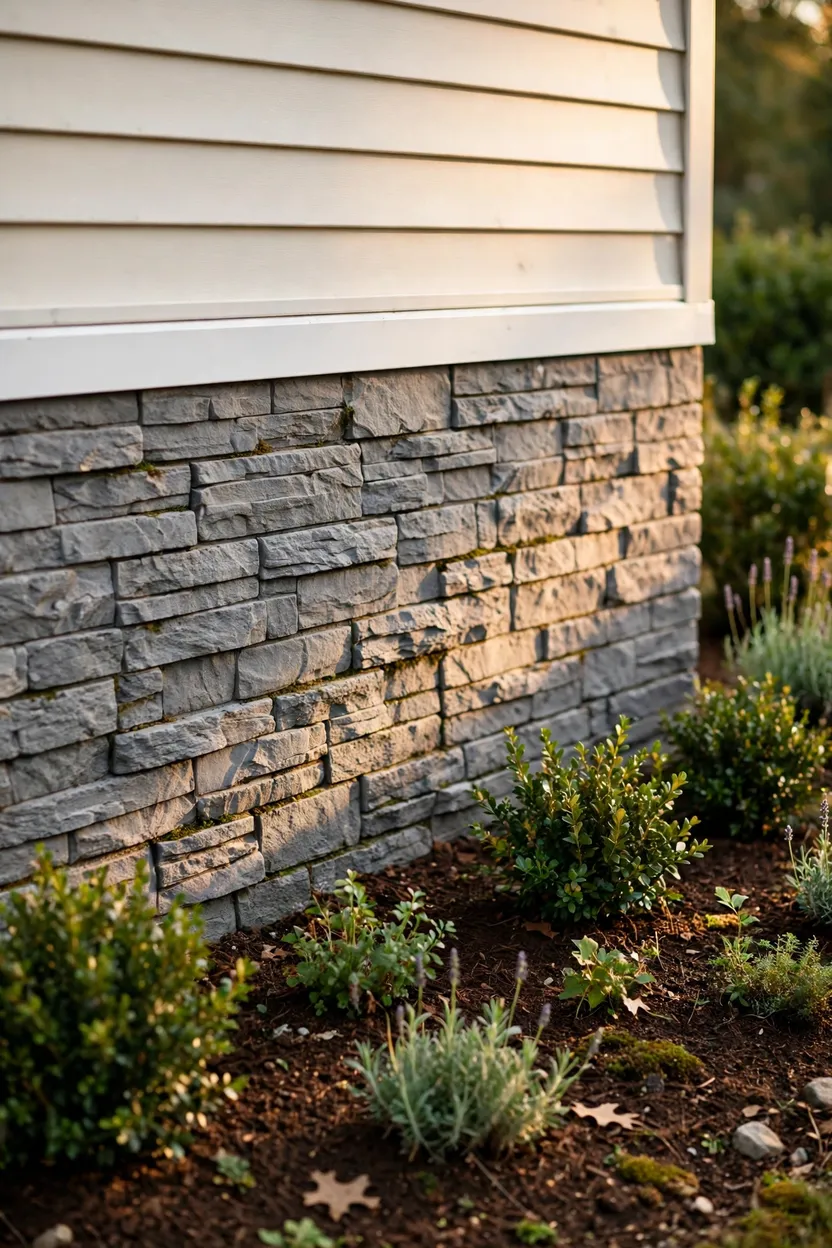
The strip of thin vinyl under your home is one of the first things people notice, so swapping it for stone-look panels changes the whole first impression. These panels come in stacked stone and brick patterns that read as a solid base, and they fit over a simple wood frame with screws and a finish nailer. Pick a tone that sits close to your siding, such as warm gray stone with cream siding or red brick with soft white siding, so the base looks planned rather than patched on. Leave the small vents in place and keep them clear, because air still needs to move under the floor to keep wood dry and stop damp smells. Finish the top edge with a slim trim board in your trim color, and the line where the wall meets the ground will look neat and settled instead of open and bare.
2. Paint the Siding in a Soft Two-Tone Palette
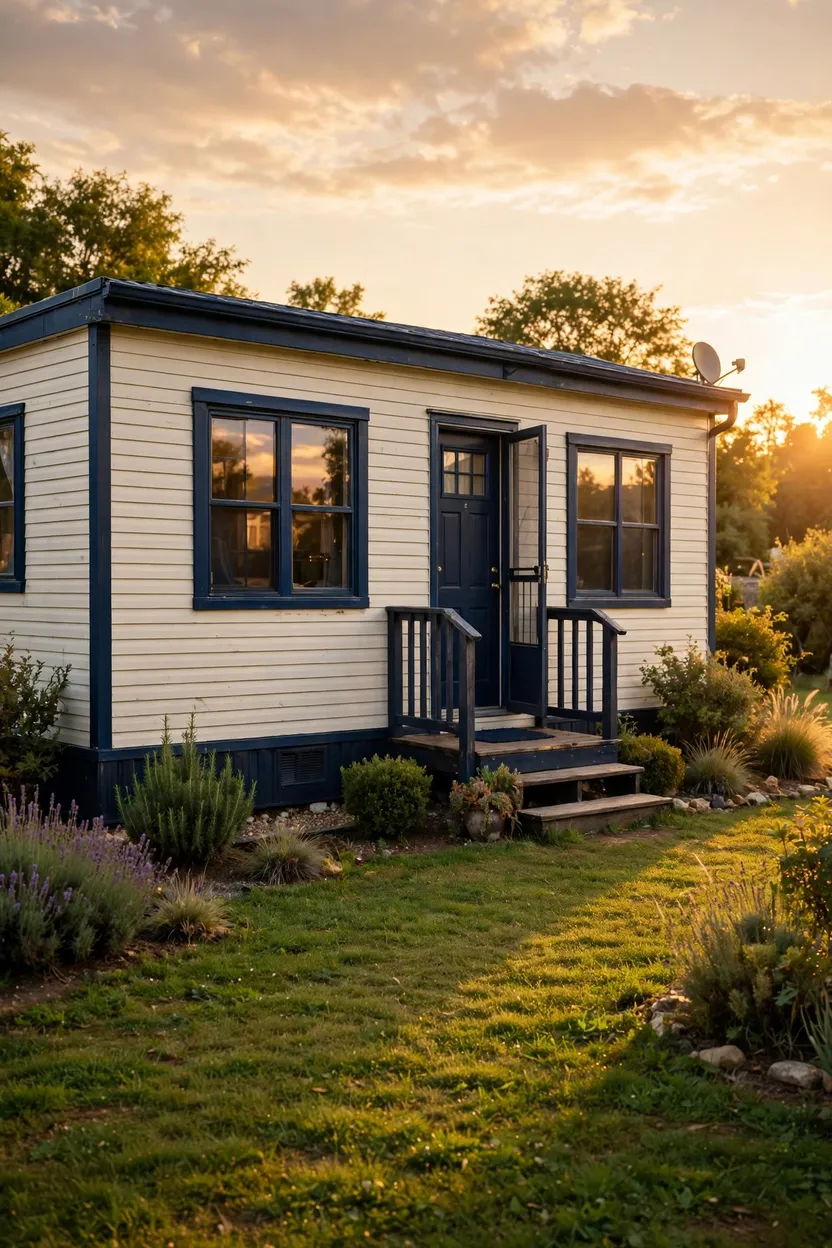
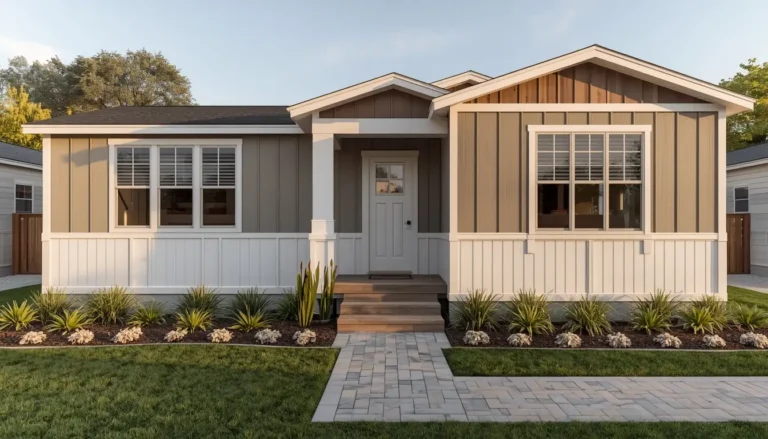
A fresh coat of paint in two calm tones can make flat siding look like the walls of a cottage, even before you change anything else. Paint the main walls a soft warm white, pale sage, or light greige, then paint the trim, corner boards, and window frames in a deeper shade such as navy, charcoal, or dark green. That contrast gives the long flat walls a clear edge and makes the windows stand out, which is what gives site-built homes their tidy, finished face. On vinyl siding, use paint made for vinyl and stay with light to mid tones, since very dark colors can hold heat and make panels warp in strong sun. Paint a test patch on a side wall first and look at it in morning and evening light, because a color that looks soft at noon can turn cold or chalky by dusk.
3. Add a Full-Width Covered Front Porch
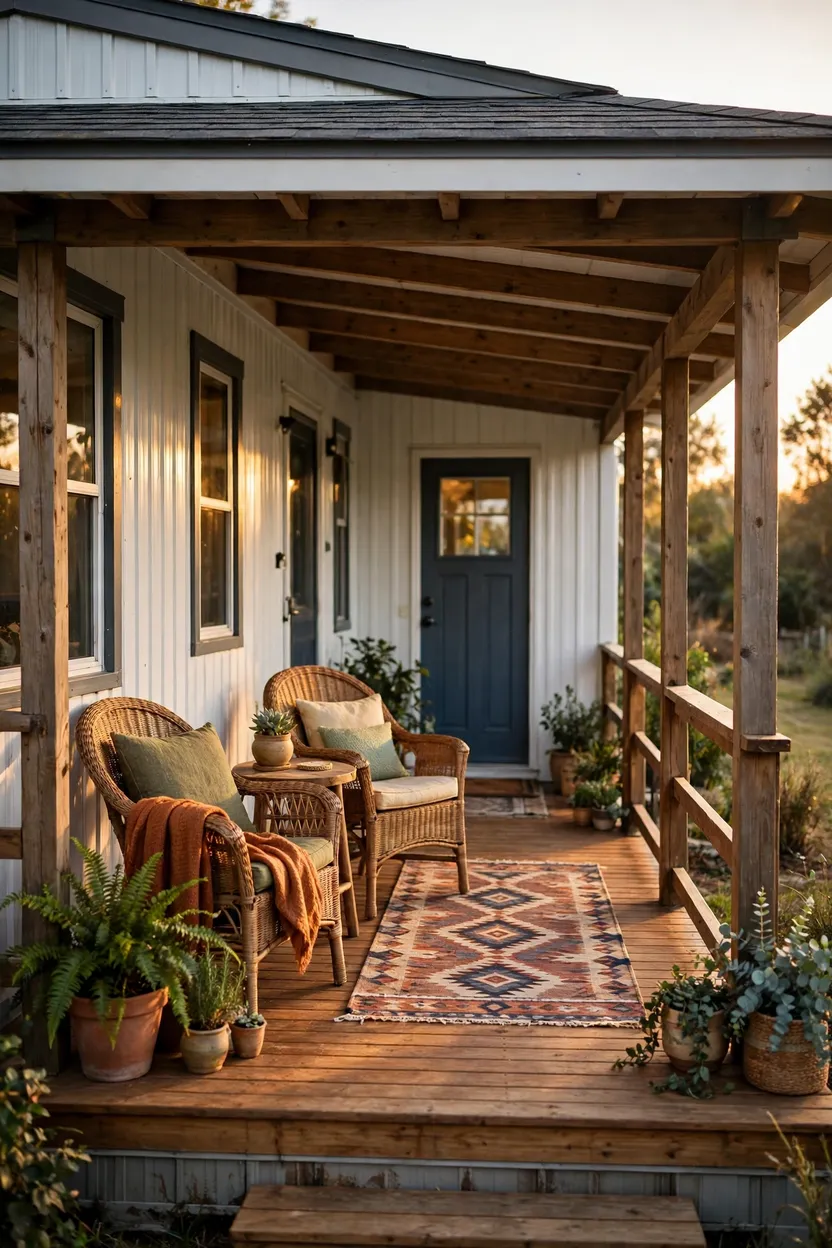
A full-width covered porch is the single change that makes a long, straight home feel like a house with a front room outside. Build it as a freestanding frame beside the home, with wood posts, a simple rail, and a roof pitch that matches the main roof, so it looks joined on purpose rather than tacked on. Keep the deck boards in a warm wood tone or a soft gray composite, and leave room for two chairs, a small table, and a rug that fits the space without crowding the door. A porch roof also shelters the entry from rain, gives you a dry spot for boots and parcels, and shades the front windows on hot afternoons. Before you build, check local rules and keep the home’s red certification label clear, since porches often need a permit even when the work looks simple.
4. Build Wide Wooden Steps with Planters on Each Side
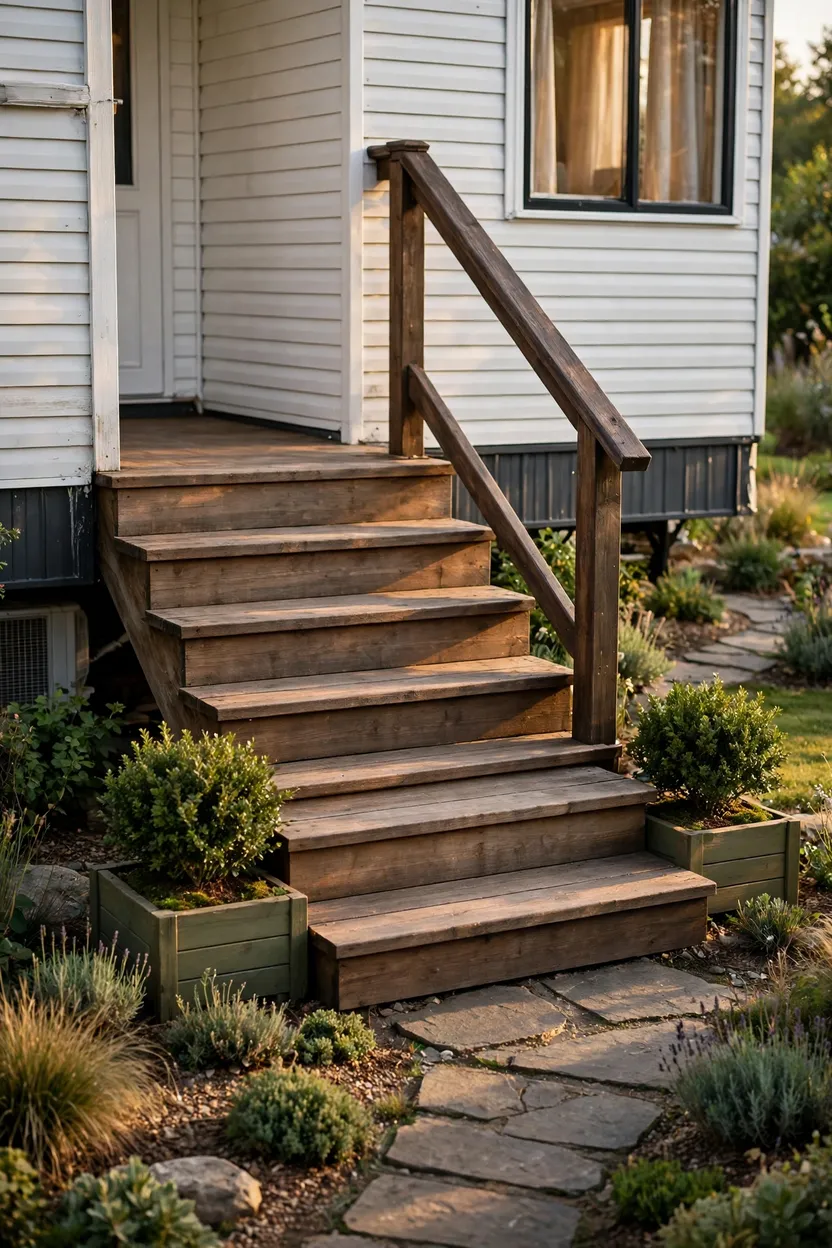
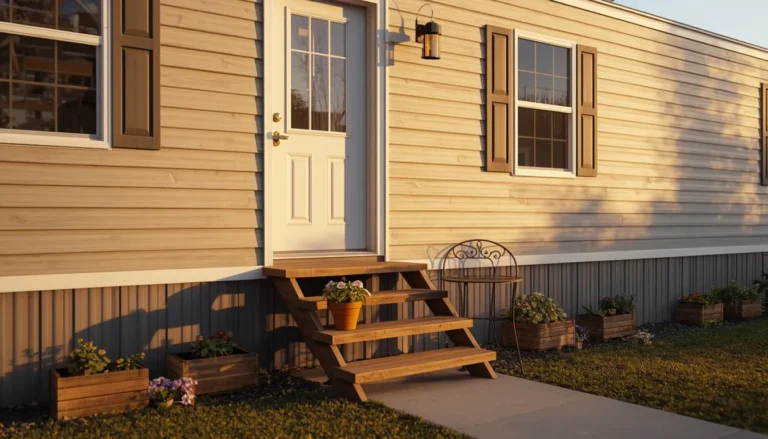
Narrow metal steps make an entry feel temporary, while wide wooden steps make it feel like the front of a house. Build steps at least as wide as the door frame, with deep treads, a solid handrail, and a small landing where two people can stand and talk without crowding. Set a planter on each side of the bottom step with green shrubs or trailing plants, and the steps will read as part of the garden rather than a ladder up to the door. Paint or stain the steps in a tone that matches the porch or the trim, and add a non-slip strip on each tread for wet mornings. Keep the path from the steps clear and level, so guests walk straight to the door instead of stepping around pots, hoses, or loose stones.
5. Give the Front Door a Bold Color and Glass Panels
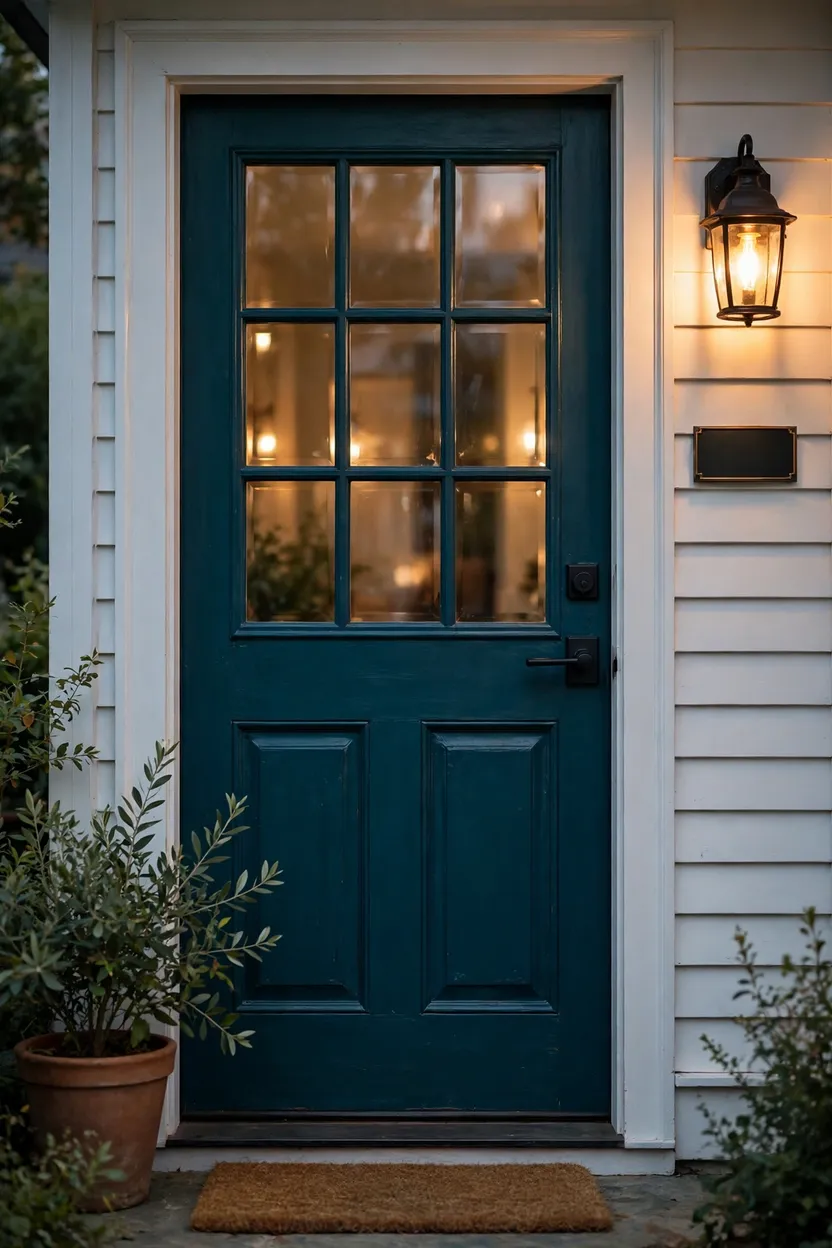
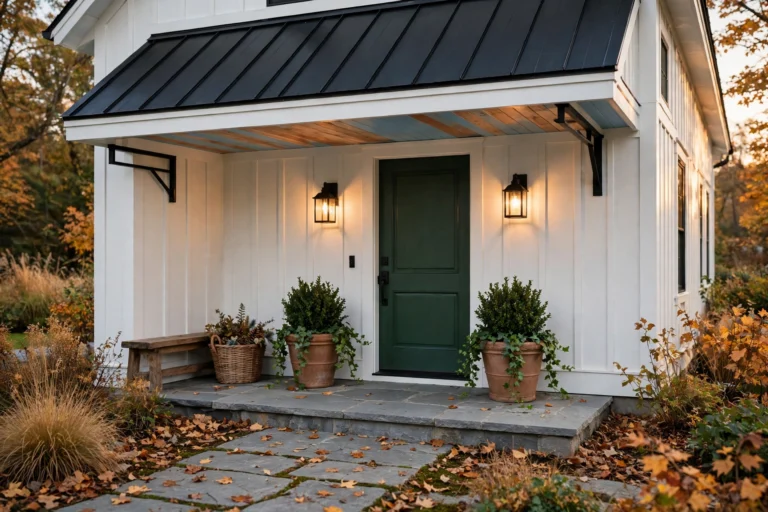
A plain flat door with a small window can make the whole front feel plain, so give the entry a door that looks like it belongs on a house. Pick a solid door with glass panels in the top half, a simple grid or a clear pane that lets light into the hall, and a handle in matte black or aged brass. Paint it a color with some depth, such as deep teal, warm red, or navy, and keep the frame and trim in clean white so the color has a clear edge. Add a house number in a clear, simple style beside the door, plus a small wall lantern, and the entry will have the same parts you expect on a street of houses. Check the door size first, because many mobile homes use smaller doors, and a full-size door may need the frame widened by a skilled installer.
6. Add a Small Gable Roof Over the Entry
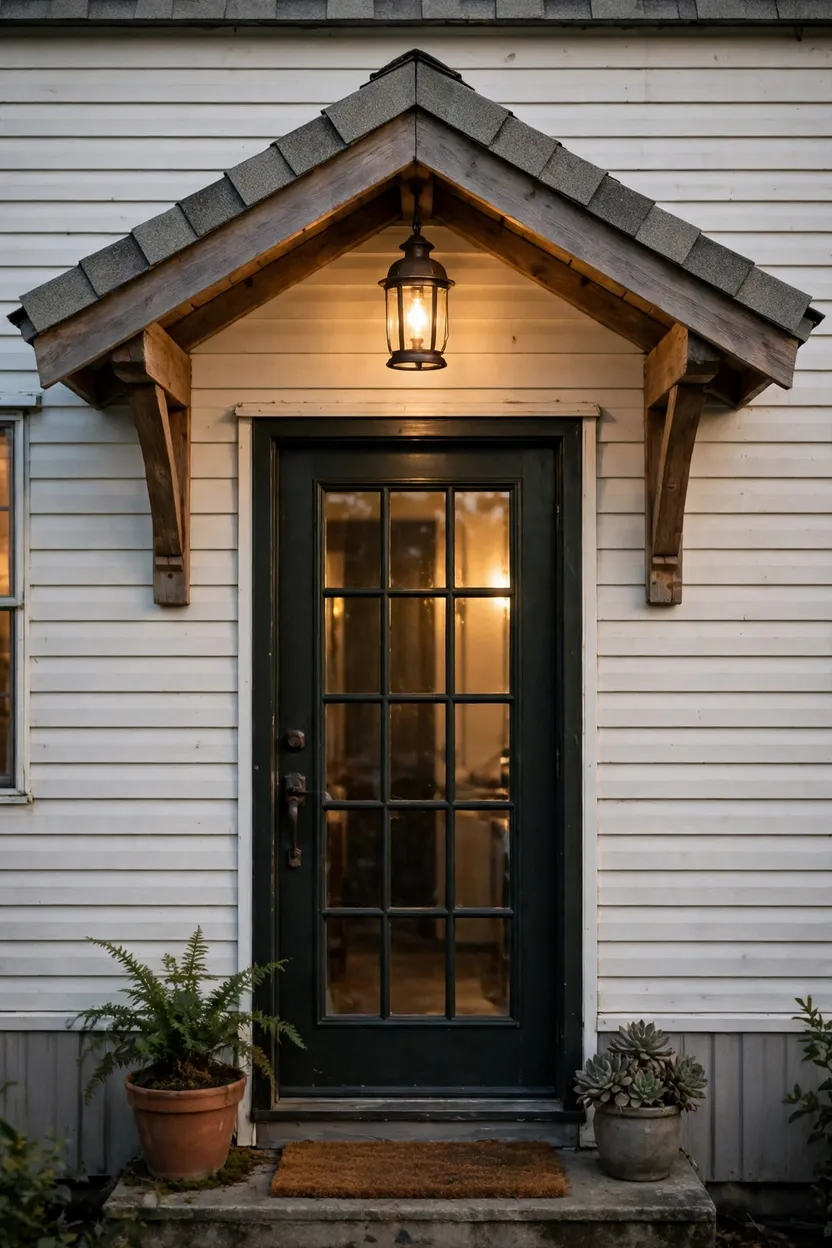
A small gable roof over the front door adds height and a clear focal point to a long, flat wall. Frame it as a small triangle with the same shingles as the main roof, and support it with two wood brackets or slim posts that match your trim color. The gable keeps rain off the step, shades the door on sunny days, and gives you a place to hang a lantern or a small sign without drilling into the siding. Keep the gable modest, about as wide as the door plus a hand’s width on each side, so it looks in scale with the home instead of heavy on top. Match the pitch to the main roof where you can, because a gable that slopes at a different angle can look stuck on rather than built in.
7. Raise the Roofline with a Pitched Roof-Over
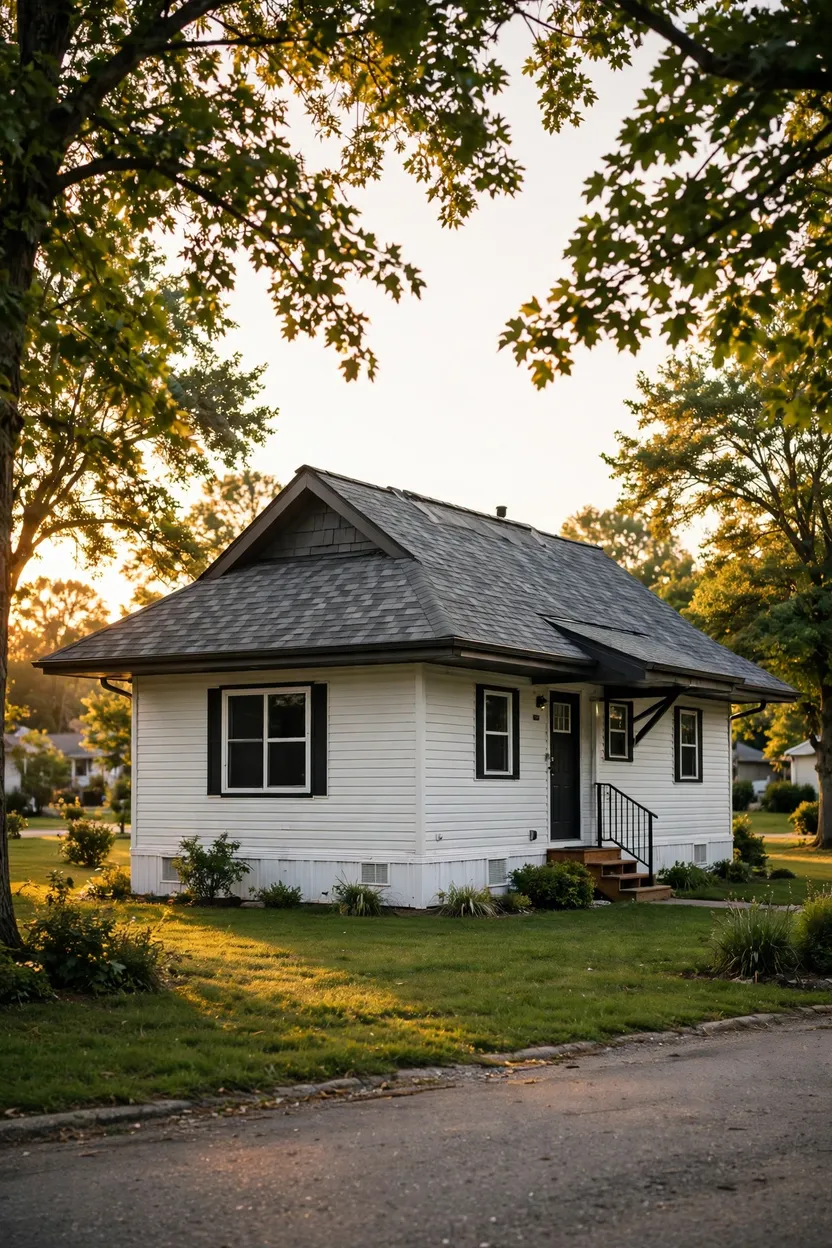
A low, flat roof is the clearest sign of a mobile home, so a pitched roof-over changes the shape of the whole house from the street. A roof-over adds a new frame of trusses above the old roof, which lifts the ridge, gives the home a steeper slope, and leaves room for thicker insulation. Cover it with architectural shingles in a soft gray, brown, or charcoal, since their layered edges add depth that flat three-tab shingles do not have. This is a big job that needs a licensed builder, a check on the frame load, and a local permit, so get a few quotes and ask each builder how they will vent the new roof space. Once it is done, the home gains a taller outline, better rain runoff, and a roofline that reads like the houses around it.
8. Extend the Eaves for Deeper Shadow Lines
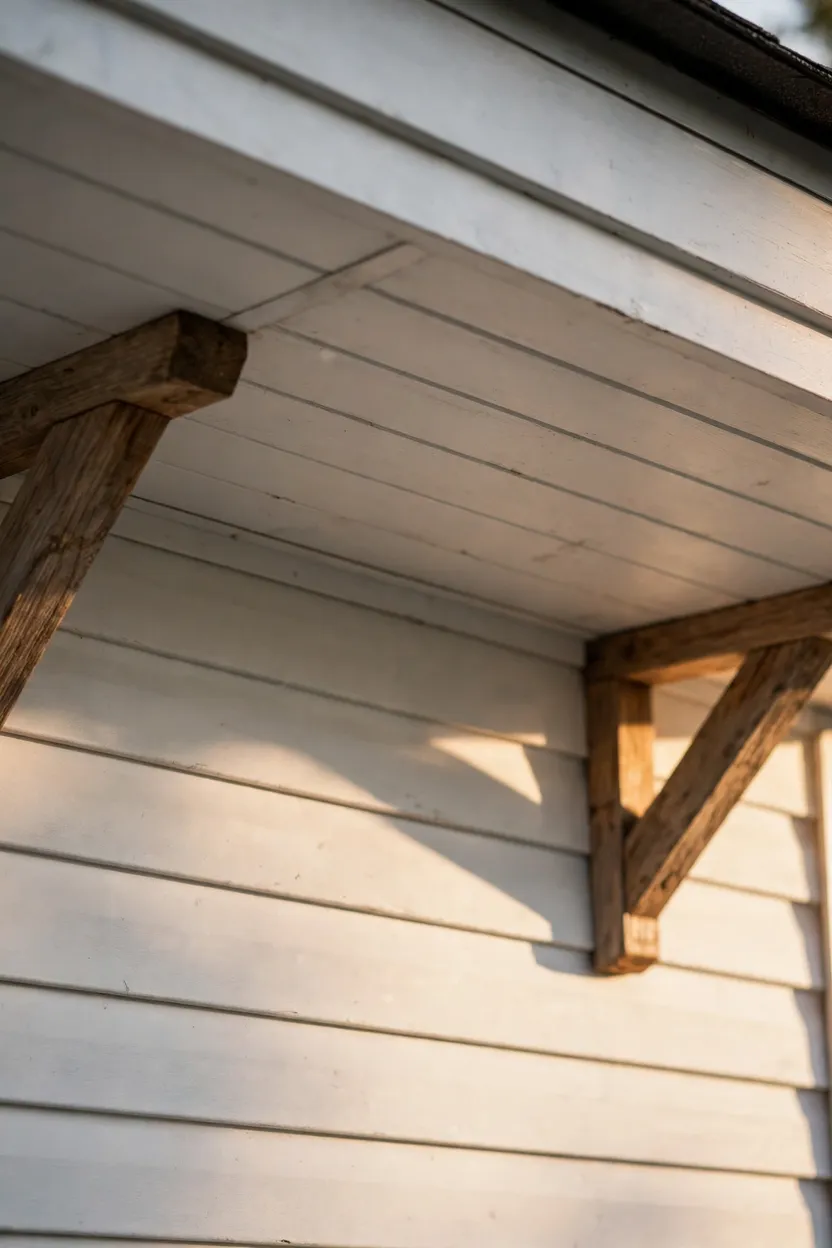
Short or missing eaves leave a roof looking flat against the wall, while deeper eaves add a soft shadow line that makes the whole home look more solid. Extend the eaves by a foot or two where the roof allows, and finish the underside with smooth boards painted in your trim color. That shaded strip also helps keep rain off the siding, which cuts down on streaks and keeps the paint looking fresh for longer. Add simple wood brackets under the eaves near the corners, and the roof edge gains a crafted detail that most factory-built homes skip. If a full extension is too much work, even a neat fascia board in a deeper trim color can sharpen the roof edge and make the line look cared for.
9. Replace Thin Siding with Board-and-Batten
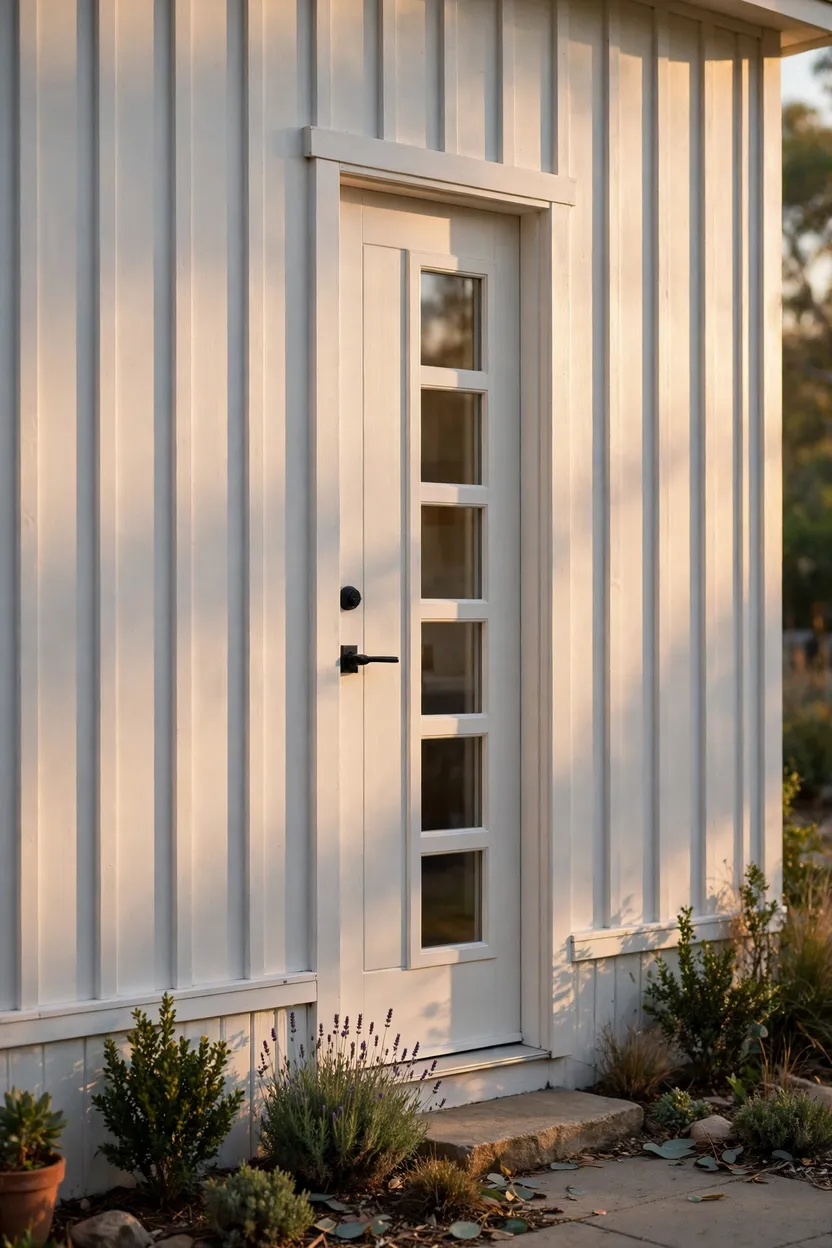
Thin horizontal vinyl can look flat from the street, while board-and-batten siding adds tall, even lines that give the walls height and rhythm. The wide boards sit flat, and the narrow battens cover each joint, which creates a soft shadow down the wall that changes with the sun through the day. Fiber cement boards hold paint well and stand up to rain and sun, while wood-look composite gives the same lines with less upkeep. Use it on the full front or just around the entry and the gable ends, and keep the rest of the siding in a matching flat tone so the feature wall stands out without looking busy. Paint the battens the same color as the boards for a calm look, or paint them a shade deeper if you want the lines to read clearly from the road.
10. Add Wide Trim and Shutters Around the Windows
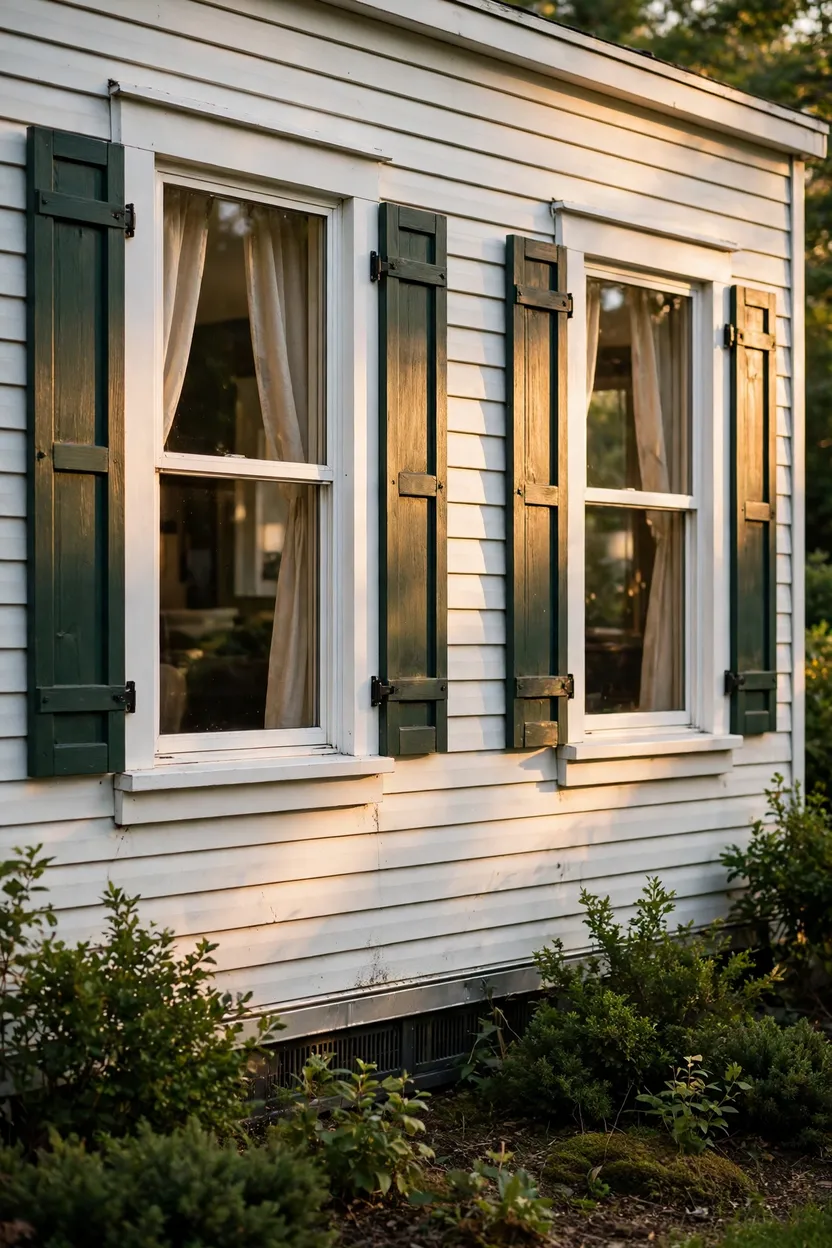
Wide trim around the windows is a small change that makes a big difference, because it gives each window a frame instead of a thin edge. Add boards about four inches wide around each window, paint them in your trim color, and add a simple sill at the bottom that sticks out just enough to cast a small shadow. Pair the trim with shutters sized to cover half the window each, fixed flat to the wall, in a color pulled from the door or the roof. Real wood shutters need paint and care, while composite shutters hold their shape in rain and sun with little upkeep. Keep every window dressed the same way, because one window with shutters and the next without can make the front look unfinished.
11. Add Window Boxes Full of Green Plants and Blooms
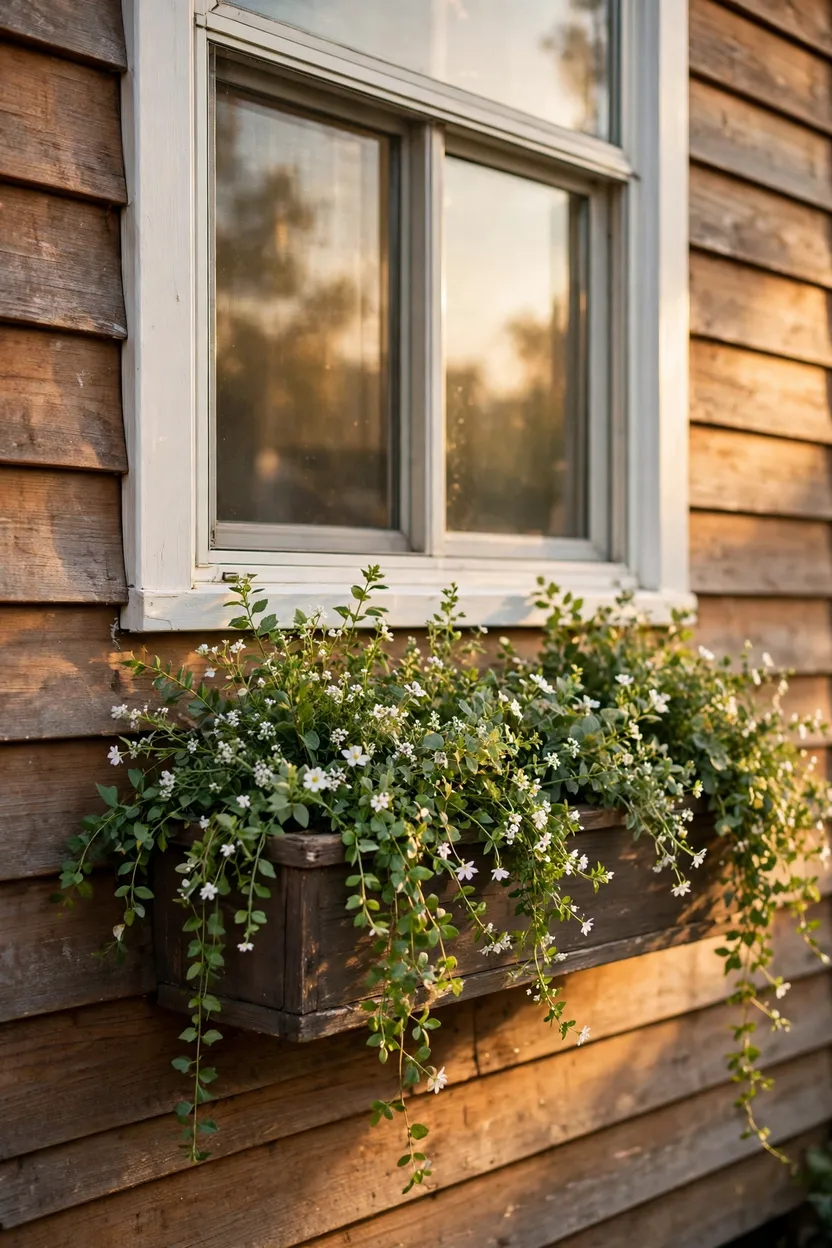
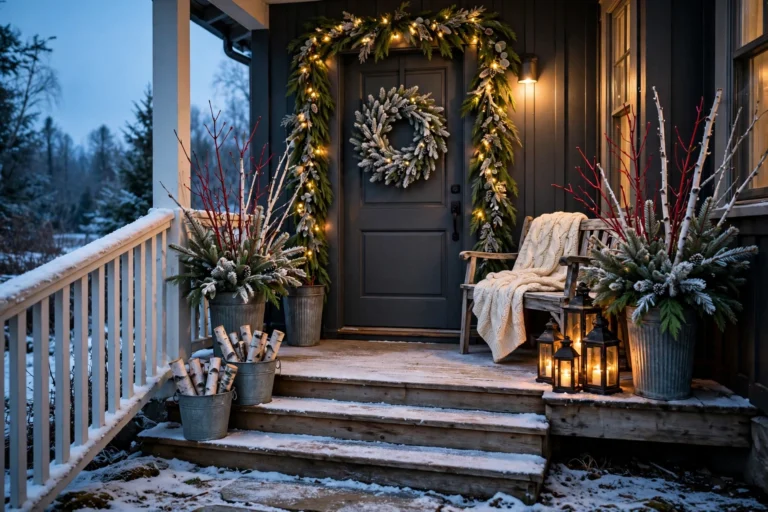
A window box turns a plain window into a small garden, and that touch of green makes the whole wall feel lived in. Pick a box in wood or metal that matches the trim, fix it firmly under the sill, and line it so water drains out instead of sitting against the wall. Fill it with trailing green plants, small white blooms, and one taller plant at each end, so the box looks full without hiding the glass. Water the boxes in the morning and trim dead stems each week, because a dry, bare box can make the window look worse than no box at all. In cold months, swap the blooms for pine sprigs, small pinecones, and a few red berries, and the window will still look cared for through winter.
12. Add a False Dormer for Height and Charm
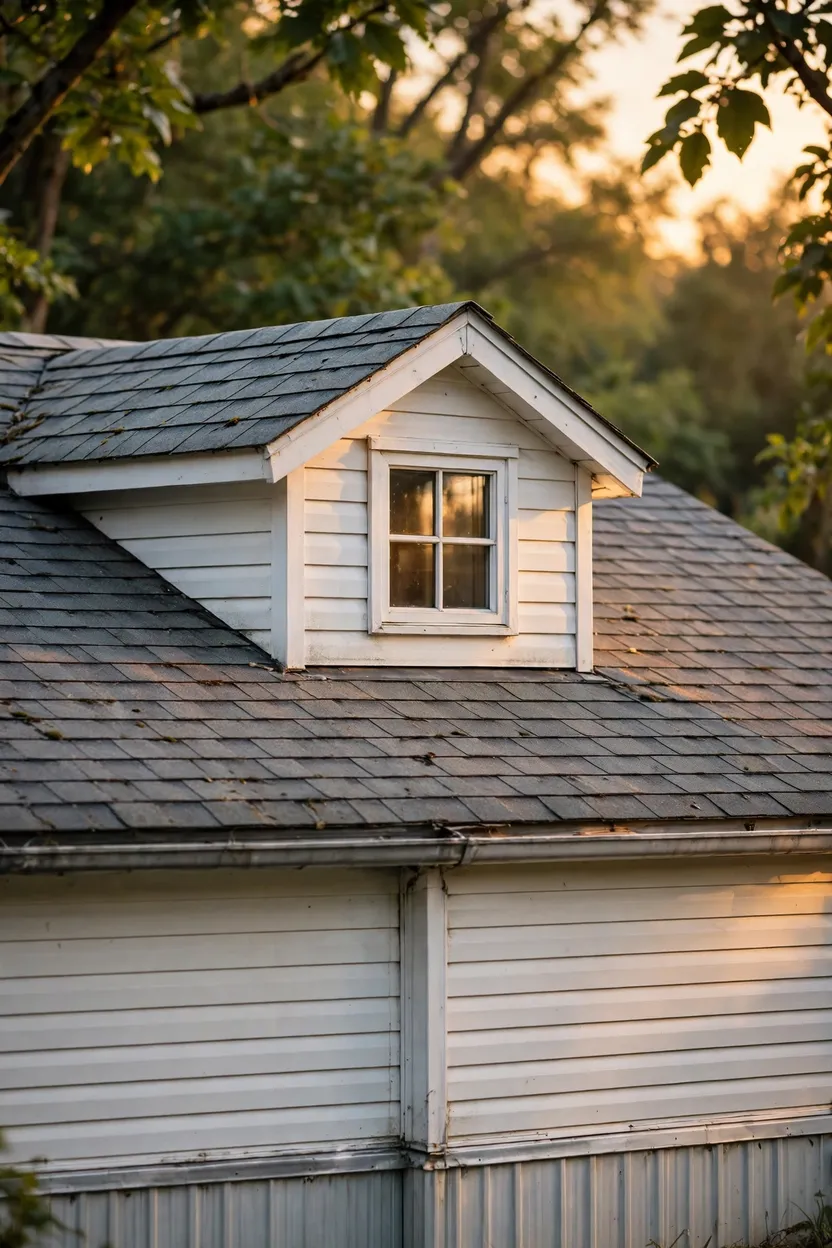
A false dormer adds a small peaked window shape to the roof, which breaks up a long, low roofline and hints at rooms upstairs. Builders can frame a shallow dormer on the front slope with matching siding and shingles, even when there is no room behind it. Give it a small window with the same trim as the rest of the house, and paint the frame to match so it reads as part of the roof, not an afterthought. One or two dormers are enough, placed with even spacing, since a row of small peaks can crowd a roof that is not very tall. This is a job for a skilled builder, so ask for photos of past dormer work and check that the new joints are flashed well to keep rain out.
13. Lay a Stone Path from the Drive to the Door
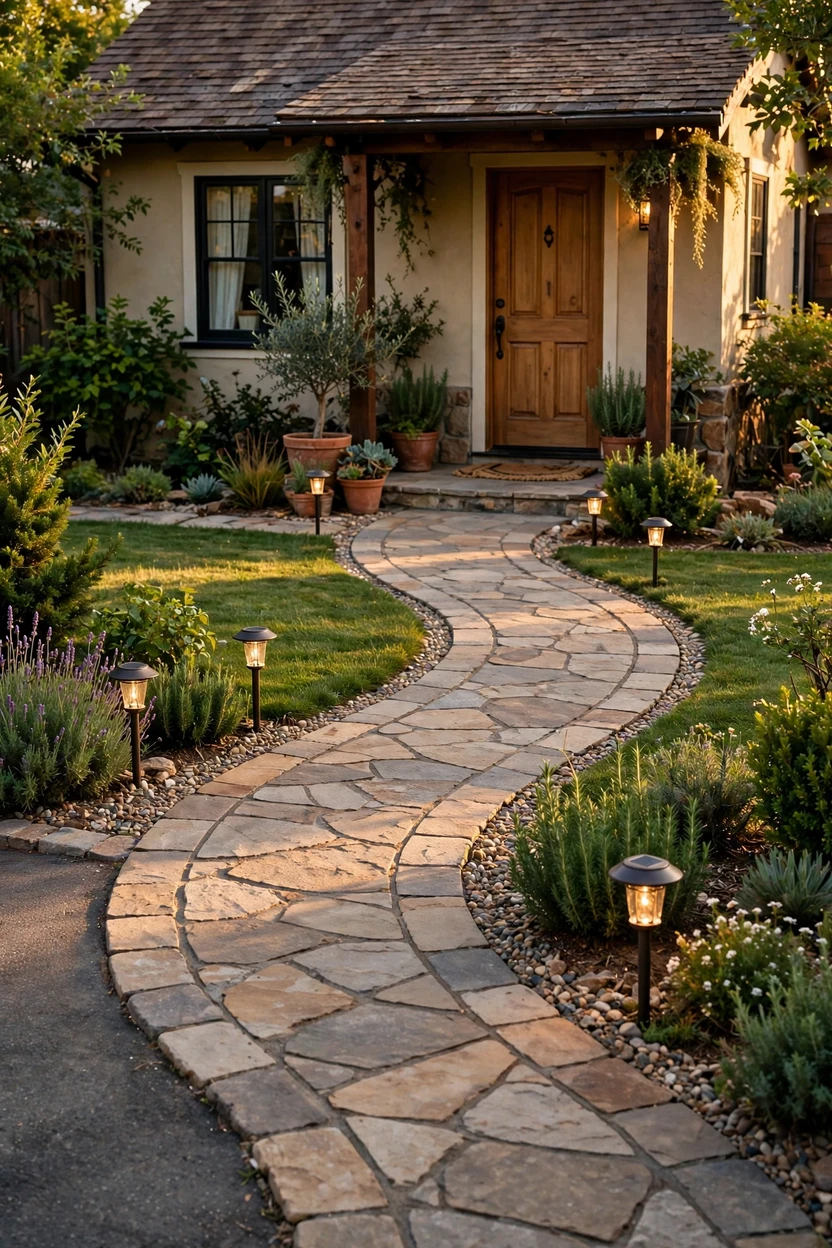
A clear path from the drive to the door tells guests where to walk and makes the home feel set into its lot like any other house. Lay flat stones or pavers in a gentle curve, with a hand’s width of gravel or low ground cover between them, so the walk feels soft underfoot and easy to keep clean. Edge the path with small stones or low metal edging to hold the pavers in place and keep grass from creeping across the walk. Keep the path at least as wide as the front steps, and add a low solar light on each side so the way to the door is clear after dark. A path also protects the lawn from worn tracks and muddy shoes, which keeps the front yard looking tidy through wet weeks.
14. Plant Layered Shrubs Along the Foundation
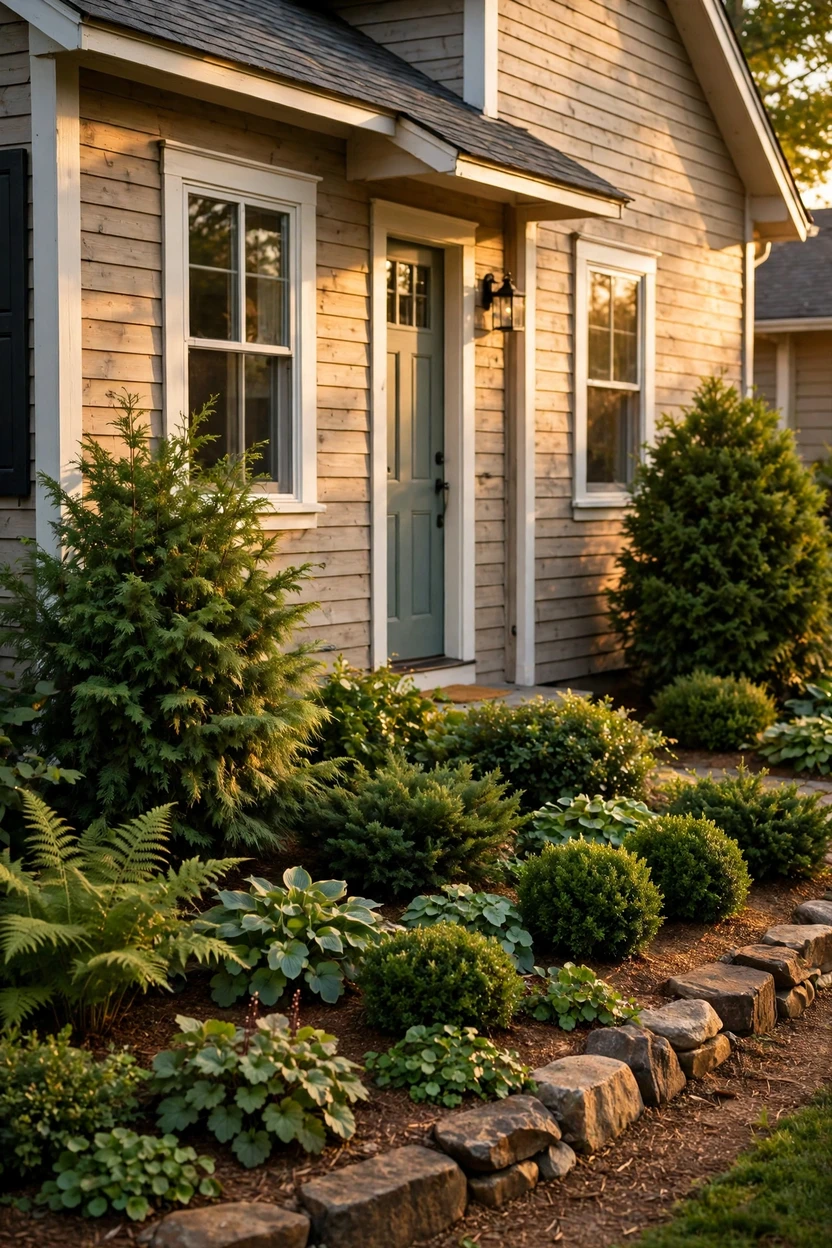
Bare skirting and bare ground make a home look new to its lot, while layered shrubs make it look settled and rooted. Plant low evergreen shrubs close to the base, then add mid-height shrubs behind them and a few taller plants near the corners, so the front reads in soft steps. Leave a gap between the plants and the wall for air and for cleaning, and keep the soil a little below the siding so water drains away from the home. Mix leaf shapes and greens, such as round boxwood, spiky grasses, and soft ferns in shade, so the bed looks full in every season. Mulch the bed in a natural brown tone and edge it with stones, and the planting will look like a planned garden bed rather than a row of pots.
15. Add Warm Lantern Lighting by the Door and Path
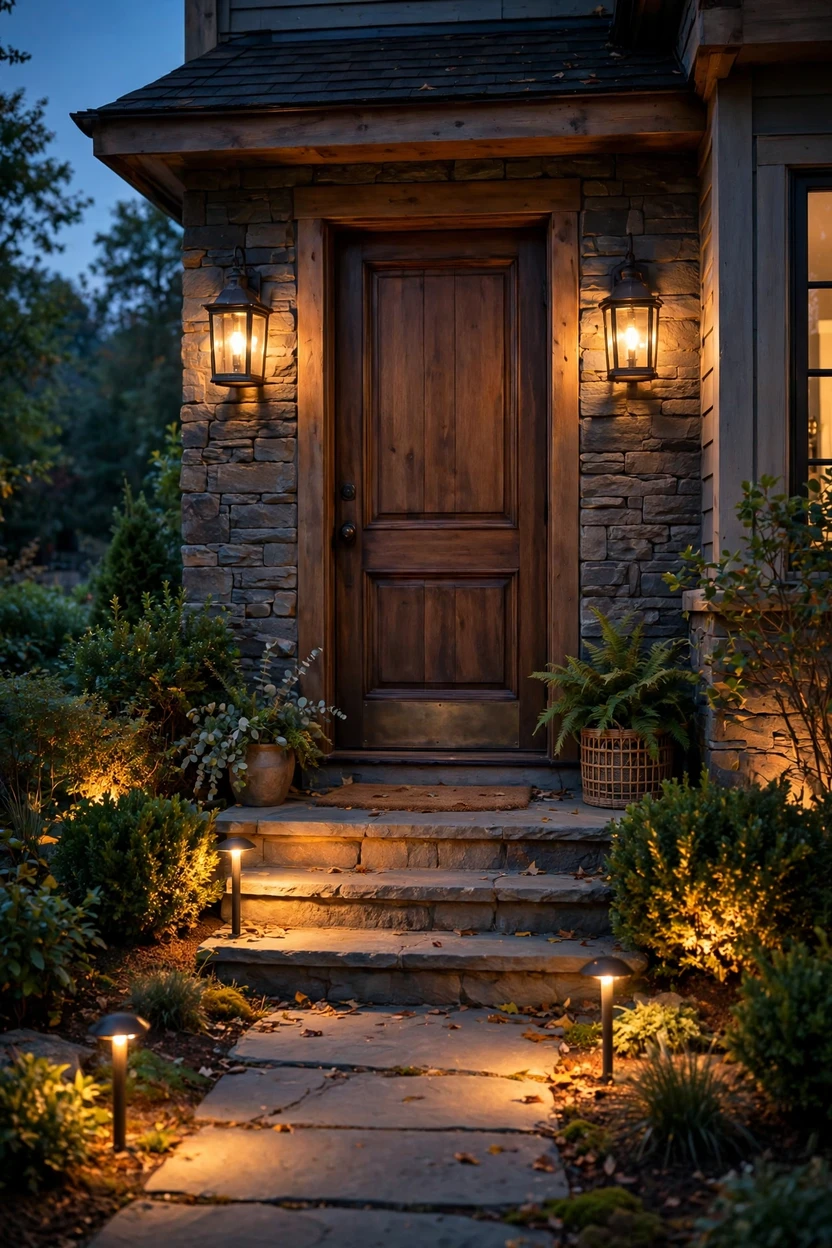
Warm light by the door and along the path makes a home look welcoming at dusk, which is when most guests first see it. Hang a lantern-style sconce on each side of the front door, or one large lantern above it, with warm bulbs that cast a soft glow on the steps. Add small path lights or uplights at the base of shrubs, aimed up at the wall, so the porch and the planting have gentle pools of light instead of one harsh flood. Use fixtures in the same metal finish as the door handle, such as matte black or aged brass, so the hardware reads as one set. Put the porch light on a timer or a dusk sensor, so the entry is lit when you come home late and you never have to think about switching it on.
16. Add a Carport with Matching Trim and Roof
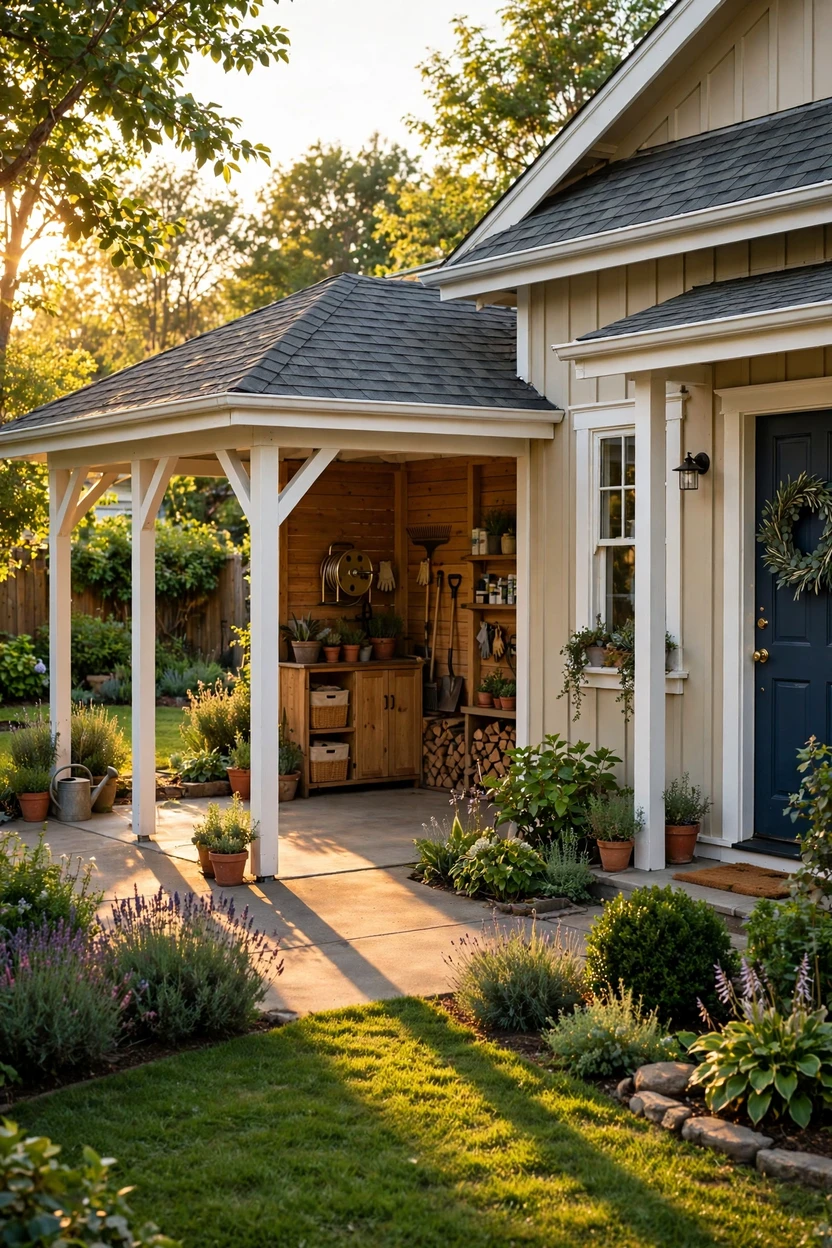
A carport with a matching roof and trim can make a mobile home look like part of a full property, with a place for the car as well as the house. Build it to one side of the home with posts painted in your trim color, a roof in the same shingles, and a simple beam that ties the two roofs together in the eye. Add a paved pad under the carport and a small storage nook at the back for tools, bins, and garden gear, so the yard stays clear. If space allows, a small detached garage with the same siding and roof color gives even more of a house-like feel and adds useful storage. Keep the carport roof lower than the main roof and set it back a little from the front wall, so the home stays the clear focal point.
17. Run One Flooring Style Through the Whole Home
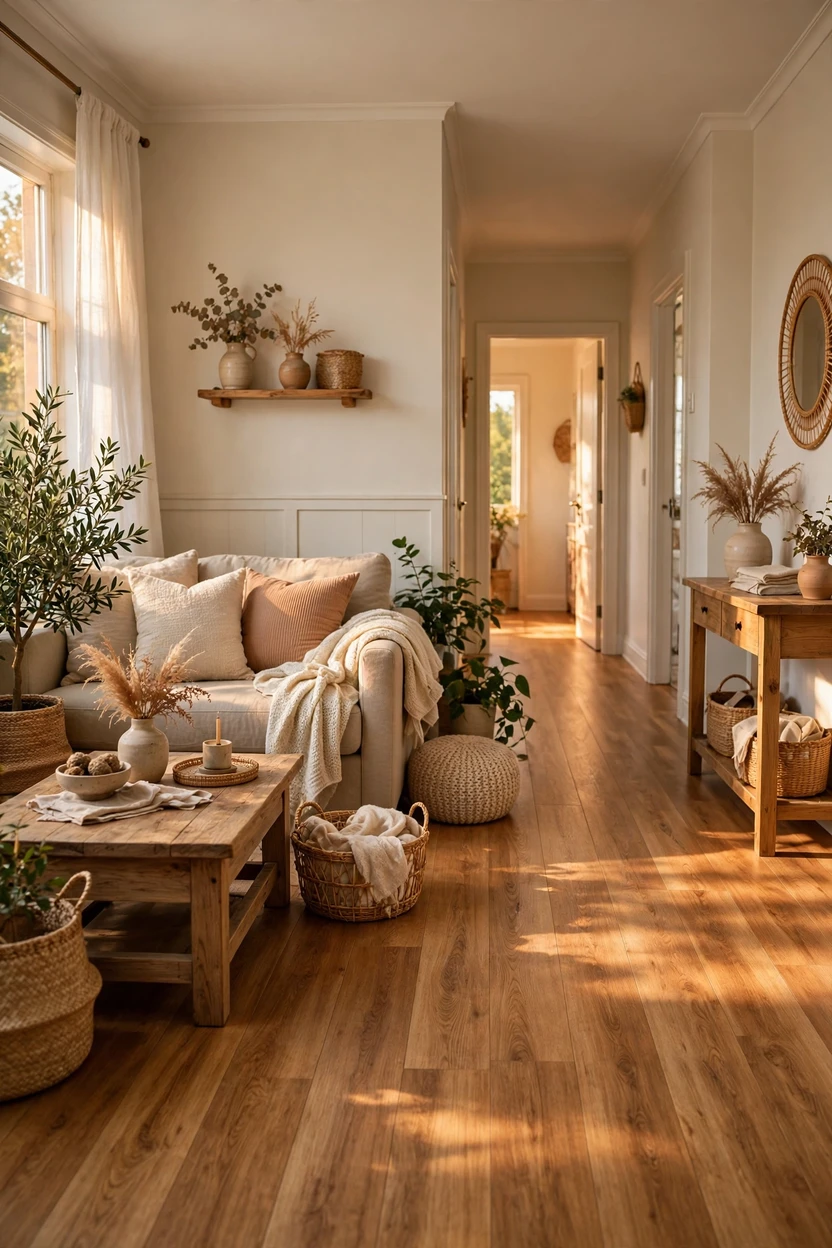
Mixed floors in each room can chop a narrow home into small boxes, while one floor running through the whole home makes it feel wider and calmer. Luxury vinyl plank in a warm honey oak or a soft pale wood tone works well, because it is thin, water-friendly, and clicks together without glue. Run the planks in the same direction down the hall and into the living room, and skip thresholds between rooms where the floor is level. A single floor also makes cleaning simpler, since dust and crumbs have no raised strips to catch on as you move from room to room. Pick a plank with a matte finish and a clear wood grain, because a shiny floor can show scuffs and make a small room feel cold.
18. Hide the Ceiling Seam with Crown Molding
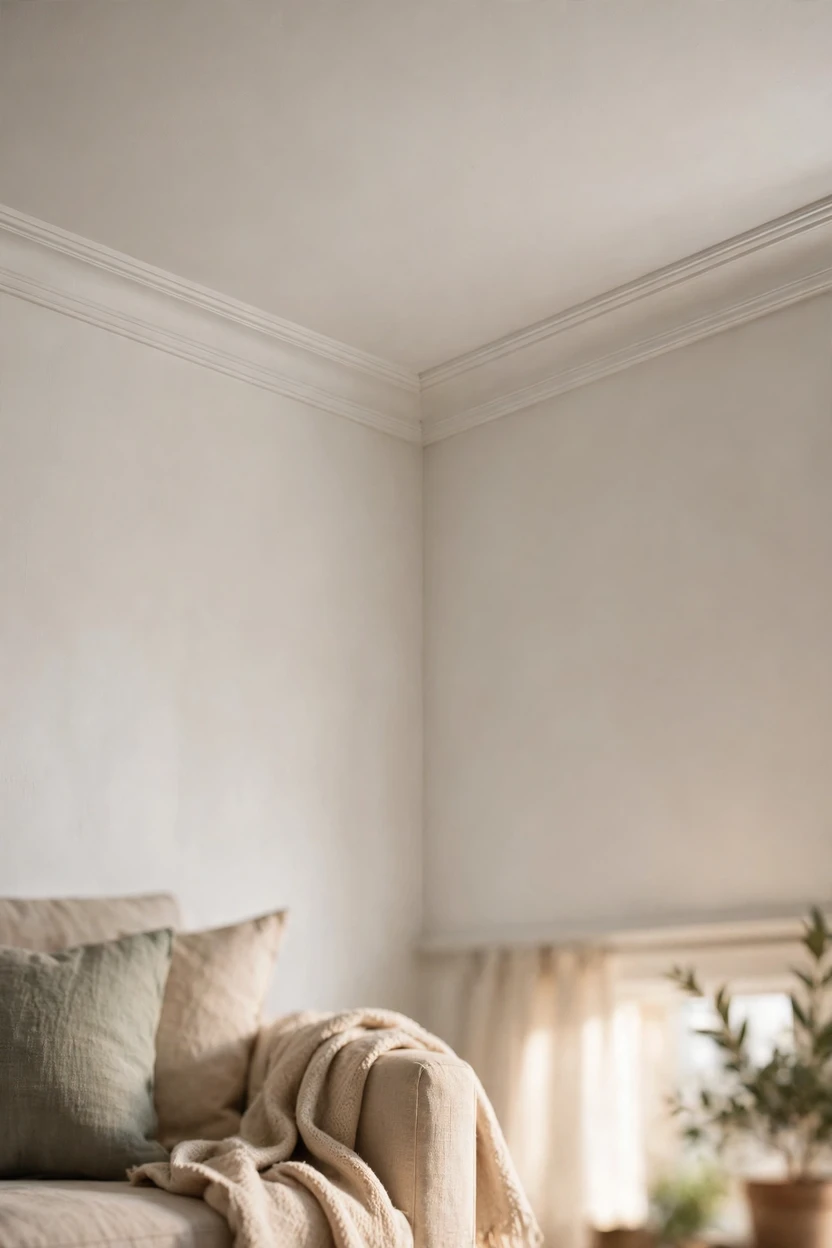
The thin seam where the ceiling meets the wall is a clear sign of a factory-built home, and crown molding hides it in one neat line. Light foam or wood molding in clean white runs along the top of each wall, and it gives the ceiling a finished edge that the eye reads as built in. Paint the molding the same white as the ceiling for a quiet look, or use a soft cream if your walls are warm and white would look too stark. Miter the corners with care or use corner blocks, because neat joints are what make molding look like skilled work rather than a quick fix. Add the same molding in the hall and the bedrooms, and the whole home will feel more joined up from room to room.
19. Paint the Kitchen Cabinets and Swap the Hardware
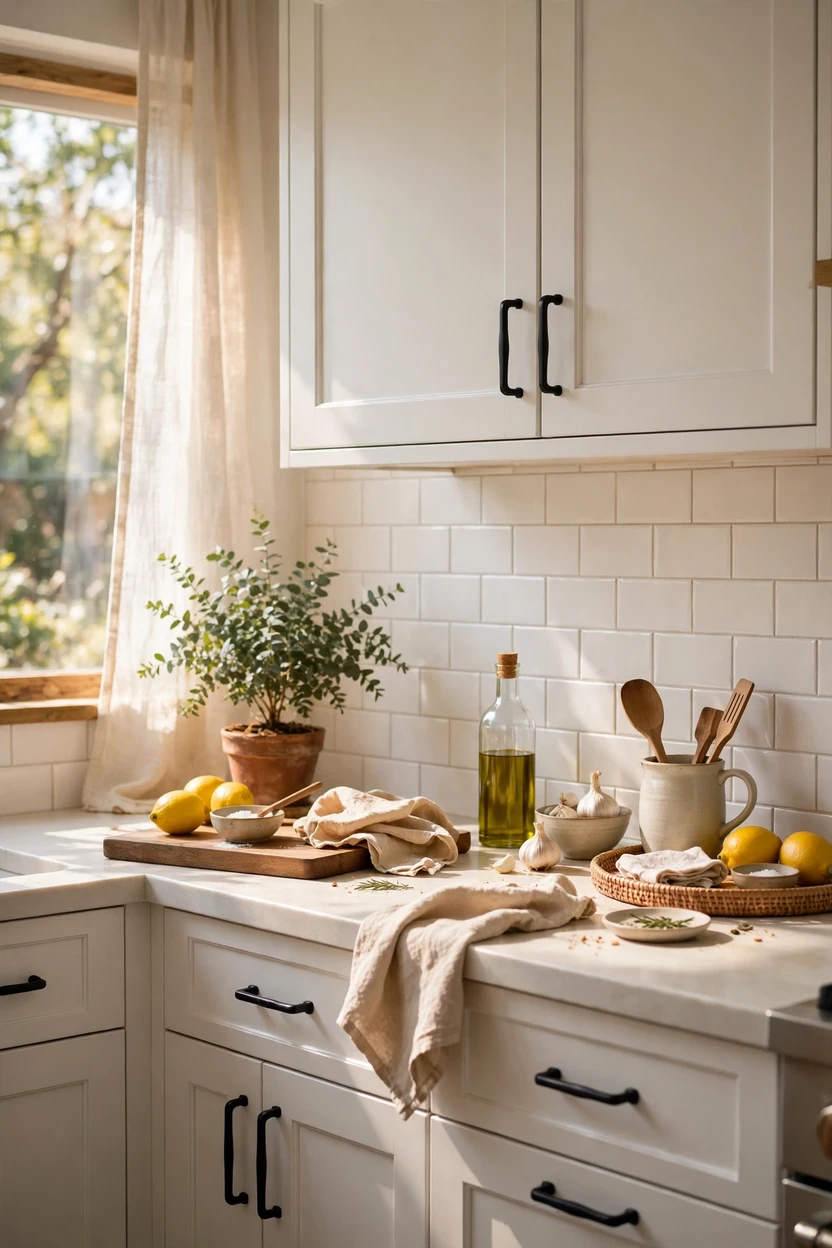
Dark, dated cabinets can make a kitchen feel small, while painted cabinets in a soft white or pale sage can make the same room feel bright and new. Clean the doors well, sand them lightly, prime with a grip primer, and paint two thin coats with a cabinet paint that dries hard and wipes clean. Swap the old knobs for simple pulls in matte black or aged brass, and fit them at the same height on every door so the row looks even. Add a light backsplash in white subway tile or soft beadboard, which gives the wall between the counters a clean, house-like finish. Keep the layout as it is and spend the effort on the finish, because new doors and hardware often change the look more than moving a cabinet ever could.
20. Cover Wall Paneling with a Smooth Drywall Finish
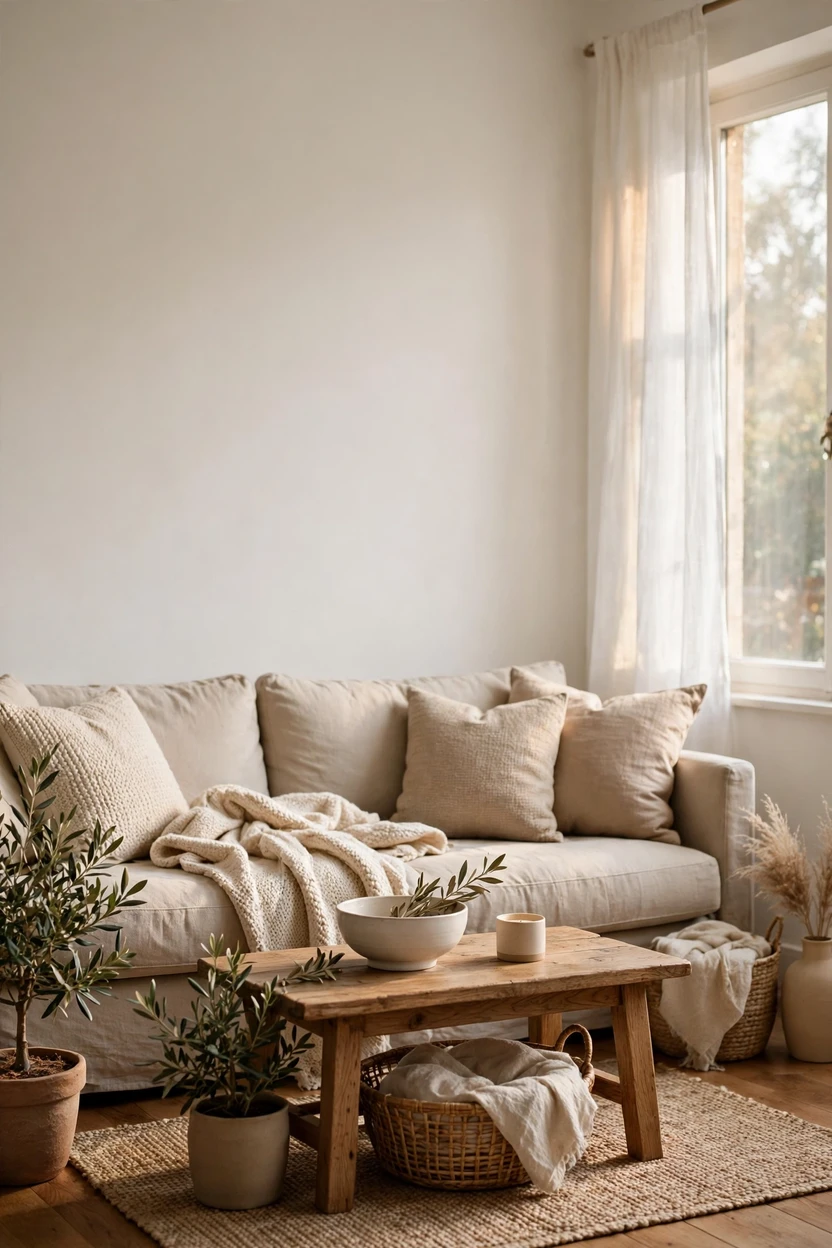
Grooved wall panels with shiny seams can make a room feel dated, while smooth walls make the same room feel like any other house. Fill the grooves with joint compound, tape the joints, and sand them flat, then prime with a stain-blocking primer before you paint. A light texture spray can help hide small flaws, but keep it soft so the wall still reads as smooth from across the room. Paint in a warm white or a pale greige, and the room will hold light better and show off your furniture instead of the wall joints. Work one wall at a time and let each coat dry fully, because rushed mud and paint can crack and show lines that are harder to fix later.
21. Add Wainscoting and Tall Baseboards
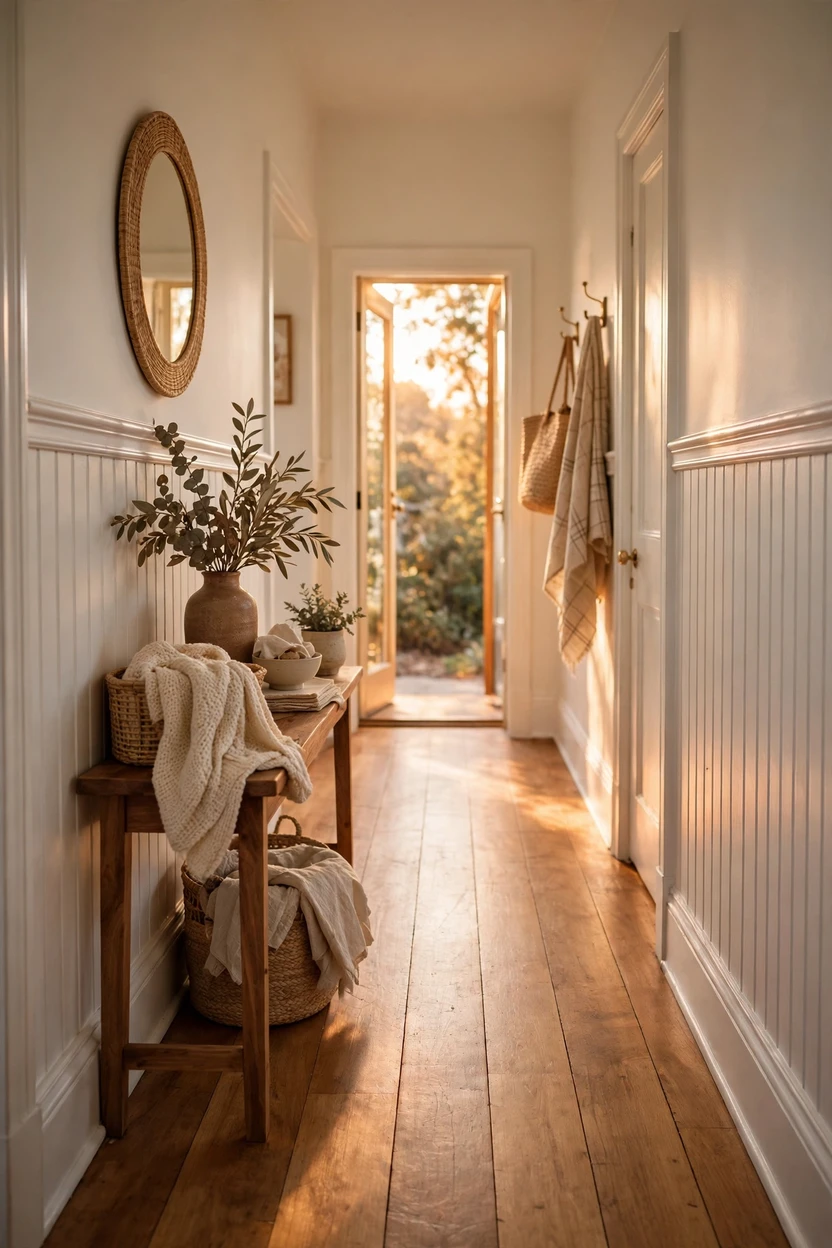
Tall baseboards and a band of wainscoting give plain walls a sense of structure that most mobile homes lack. Fit beadboard or simple flat panels on the lower third of the hall or dining wall, cap them with a slim chair rail, and paint the whole band in clean white. Replace thin baseboards with boards at least five inches tall, and paint them the same white so the floor meets the wall in a crisp line. That white band also protects the wall from scuffs by chairs, shoes, and vacuum cleaners, which keeps the room looking fresh with daily use. Keep the panel style the same in each room you dress, because a mix of beadboard in one room and flat panels in the next can look patched together.
22. Swap Small Interior Doors for Full-Size Panel Doors
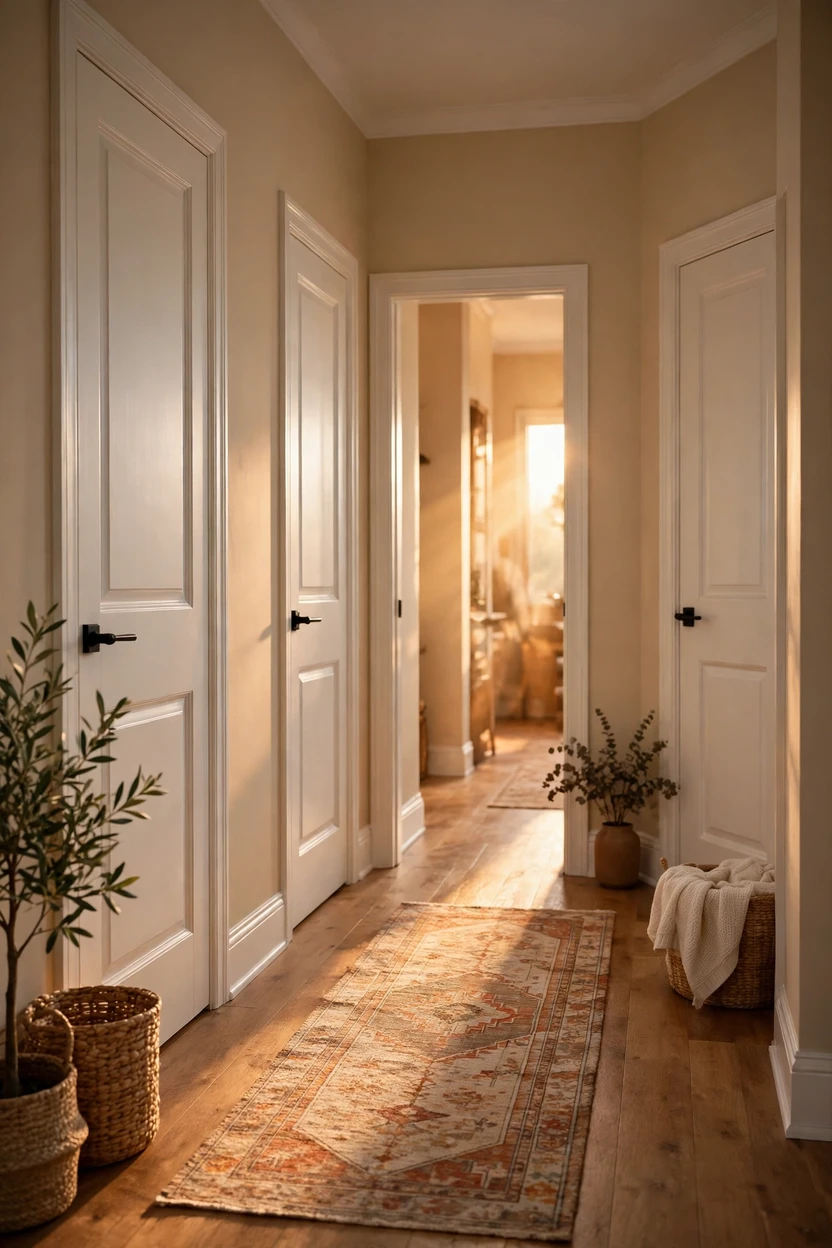
Small, hollow doors with flat faces can make a home feel temporary, while full-size panel doors make each room feel like part of a real house. Swap accordion doors and thin sliders for hinged panel doors with two or four raised panels, and fit them with simple handles in the same finish as the kitchen pulls. Check the opening size first, because many mobile home doors are narrower than standard doors, and a new frame may be needed for a full-size fit. Paint the doors in the same white as the trim, and the hall will read as one calm run of white frames instead of a mix of sizes and colors. Add a soft door stop behind each door and a felt pad on the frame, so the new doors close quietly and do not mark the fresh paint.
23. Add a Wood Accent Wall and Layered Lighting in the Living Room

A wood accent wall in the living room adds warmth and a focal point that draws the eye away from the long, straight shape of the room. Fit thin wood slats or shiplap on the wall behind the sofa, in a warm oak or a painted soft sage, and keep the other walls plain so the feature wall has room to breathe. Hang one large piece of art or a mirror in the center, and keep the shelf below it clear except for a small plant and a stack of books. Swap a single ceiling light for layered light: a floor lamp by the sofa, a small table lamp, and warm recessed lights that wash the wall in a soft glow. That mix of wood texture and soft light makes the room feel cozy at night and calm by day, which is how a living room in a house should feel.
Styling Tips
Pick one style and carry it through the whole home, inside and out, so the porch, the siding, and the living room feel like one house rather than a set of separate fixes. Repeat one or two colors from the front door on the shutters, the planters, and a cushion on the porch, and repeat one metal finish on the lights, the handle, and the house number. Keep the front simple enough to read from the road: one hero change, such as the porch or the new skirting, plus two small details, such as the lanterns and the window boxes. Step back to the street at dusk and look at the whole front, because that view shows which parts blend in and which parts still stand out as plain. Warm white light suits wood, stone, and painted siding alike, while a cool white bulb can make cream paint look gray and green shrubs look flat.
Practical Implementation Ideas
Start with the changes that hide the biggest clues, then move to the ones that add charm, so each step makes the home look better even before the next one begins. Measure every door, window, and wall before you order, because mobile homes often use sizes that differ from standard house sizes by an inch or two. Keep a small sample board with your siding color, trim color, door color, and one metal finish, and check every new piece against it before you buy. For structural work such as a roof-over, a porch frame, or a dormer, hire a licensed builder, get the work permitted, and keep the home’s red certification label clear and easy to find. Finish one side of the home before you start the next, and take a photo from the street after each step so you can see the change the way a guest would.
Common Mistakes to Avoid
The most common mistake is mixing too many styles at once, such as farmhouse shutters, modern black trim, and cottage window boxes on the same front, which makes the home look unsure of itself. Another is picking a skirting or siding color that fights the roof, so hold samples against the roof in daylight before you commit. Skipping vents in new skirting can trap damp air under the floor, and painting vinyl in a very dark color can make panels warp in strong sun, so both shortcuts cost more to fix than they save. Inside, the same rule holds: too many floor styles, too many paint colors, or a different door style in each room can chop a small home into pieces. Finally, do not hide the certification label or block access panels with new siding or skirting, because both need to stay reachable for service and for a future sale.
Small-Space Alternatives
A single-wide home has less wall and less yard to work with, so pick changes that add height and light instead of width. A small entry gable, a slim porch with a rail, and one dormer can add shape without taking up ground, while stone-look skirting and tall shrubs make the base look solid without a wide deck. Inside, one floor style, smooth walls, and crown molding matter even more in a narrow home, because they stop the eye at each seam and joint. Use a fold-down table by the porch and slim planters instead of wide pots, and keep the path clear so the entry never feels crowded. A mirror over the sofa and a light rug in the living room can also make a narrow room feel wider without moving a single wall.
Budget-Friendly Alternatives
You can change how a mobile home reads with very little money if you start with paint, trim, and plants. Paint the front door a deep color, paint the trim in clean white, and add wide trim around the two front windows for a fresh face in one weekend. Swap thin vinyl skirting panels for painted lattice or wood-look panels, and plant low shrubs from small pots that will fill in over a season or two. Thrift shops and salvage yards often have solid doors, shutters, and lanterns for a few dollars, and a coat of paint can bring them back to life. Inside, paint the kitchen cabinets, swap the hardware, and add tall baseboards in the hall, which together cost far less than new cabinets or new floors. Save the roof-over, the full porch, and the new siding for later, and let the small changes carry the look until then.
Pro Styling Recommendations
Choose your palette before you buy anything, and write it down: one siding color, one trim color, one door color, and one metal finish, used the same way on every part of the home. Let the roof set the tone, since a gray roof suits cool whites and navy trim, while a brown roof suits warm whites and deep green trim. Mix textures on purpose, such as smooth painted trim with rough stone skirting, soft wood decking with matte black lanterns, or a wood accent wall with a plain linen sofa. Keep the entry as the brightest and tidiest spot on the front, with the path, the steps, and the door all clean and clear, because that is where the eye lands first. Take a photo from the street each time you finish a step, and adjust anything that looks dark, lopsided, or out of scale before you move on to the next change.
Conclusion
A mobile home does not need to stay looking like a mobile home, and it does not need a full rebuild to feel like a house. Stone-look skirting, a calm two-tone paint job, a porch with room to sit, and a door with glass and color can change the whole front, while smooth walls, one floor, and full-size doors change how the inside feels. Start with the fix that bothers you most, do it well, and let each change lead to the next. The homes that look most like houses are not the ones with the most money spent on them — they are the ones where every choice, from the skirting to the lantern by the door, looks like it belongs.