
17 Budget-Friendly Mobile Home Outdoor Space Ideas That Feel Cozy
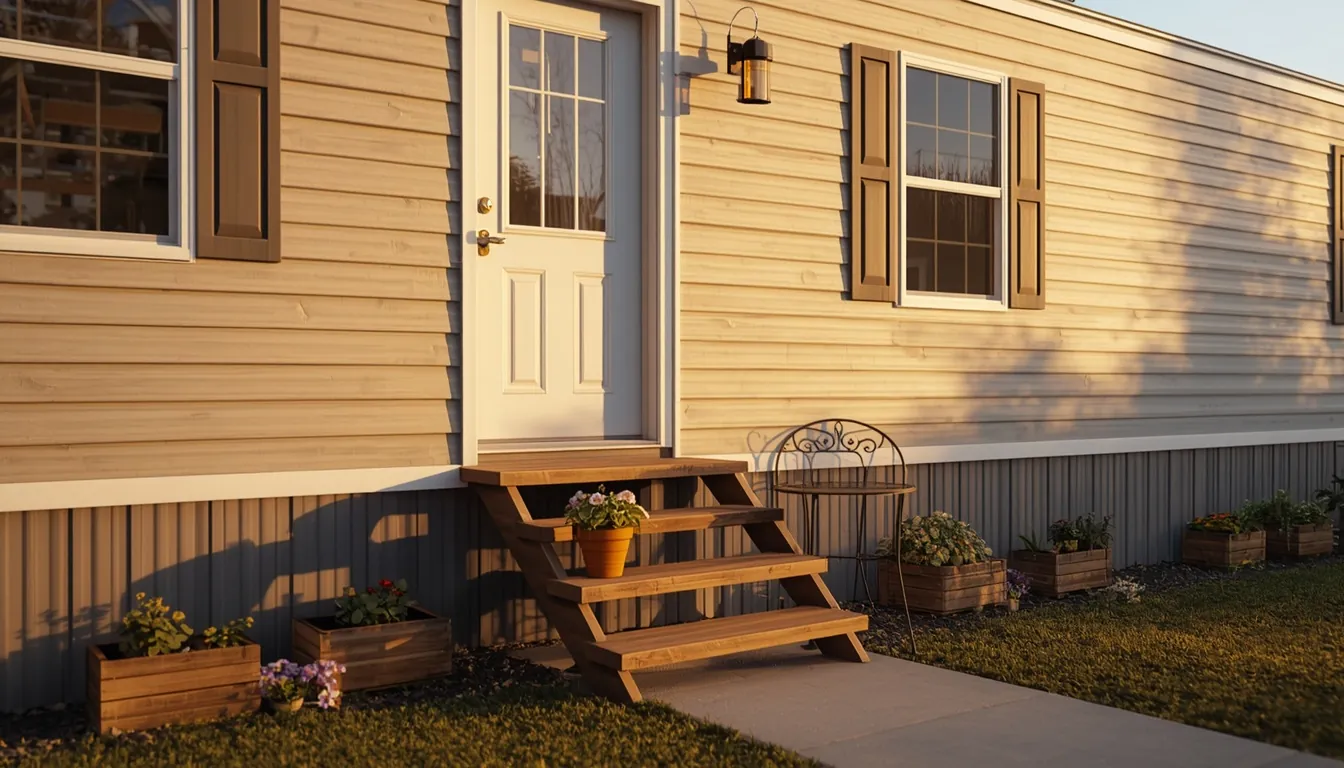
Most outdoor decorating advice assumes you have a full backyard, buried electrical, and nobody living twelve feet from your porch railing. A mobile home lot rarely works that way.
There’s the narrow strip of grass between your home and the neighbor’s. The tie-down straps anchoring the home to the ground that nobody wants front and center in a photo. The skirting panel that needs to stay accessible for repairs, so it can’t just be buried under decor. The park rulebook that says no permanent decks without approval. And often, no exterior outlet at all, which makes half the string-light tutorials online useless before you even start.
None of that means a mobile home’s outdoor space can’t feel genuinely cozy, it just means the ideas need to actually account for those realities instead of ignoring them. These 17 ideas are built specifically around how a manufactured home lot actually works: the skirting, the tie-downs, the narrow porches, the shared lot lines, and the budget most of us are actually working with. Every idea here is designed to add warmth and charm without fighting the structure you’ve already got.
Table of Contents
17 Mobile Home Outdoor Space Ideas
Idea 1: Line The Skirting Base With Matching Planter Boxes
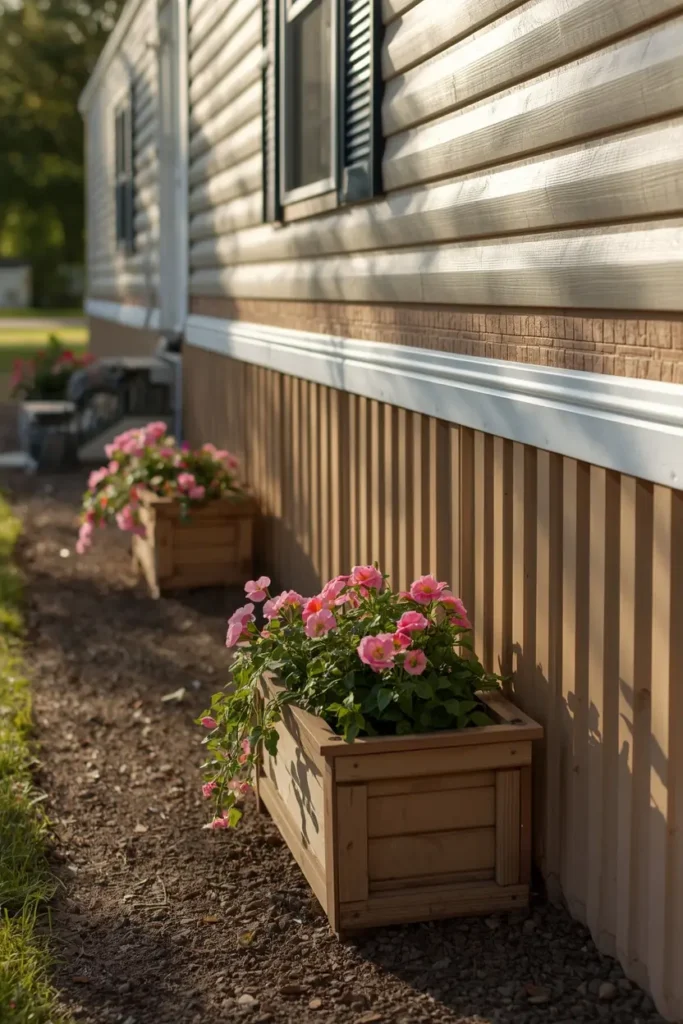
The vinyl or metal skirting around a mobile home’s base does an important job hiding the crawl space underneath, but it can also make the bottom of the home feel visually flat and unfinished. Lining that base with a row of simple planter boxes, painted or stained to complement the skirting color rather than clash with it, softens that hard edge and ties the whole exterior together. Choosing planters that sit on legs or a small stand rather than directly against the skirting keeps the panels accessible in case a plumbing or utility repair ever requires removing a section. Low, spreading plants like creeping thyme, sweet alyssum, or trailing petunias work especially well here, since they soften the line without growing tall enough to block the skirting’s ventilation gaps, which need airflow to prevent moisture buildup underneath the home.
Idea 2: Build A Non-Permanent Modular Deck Platform
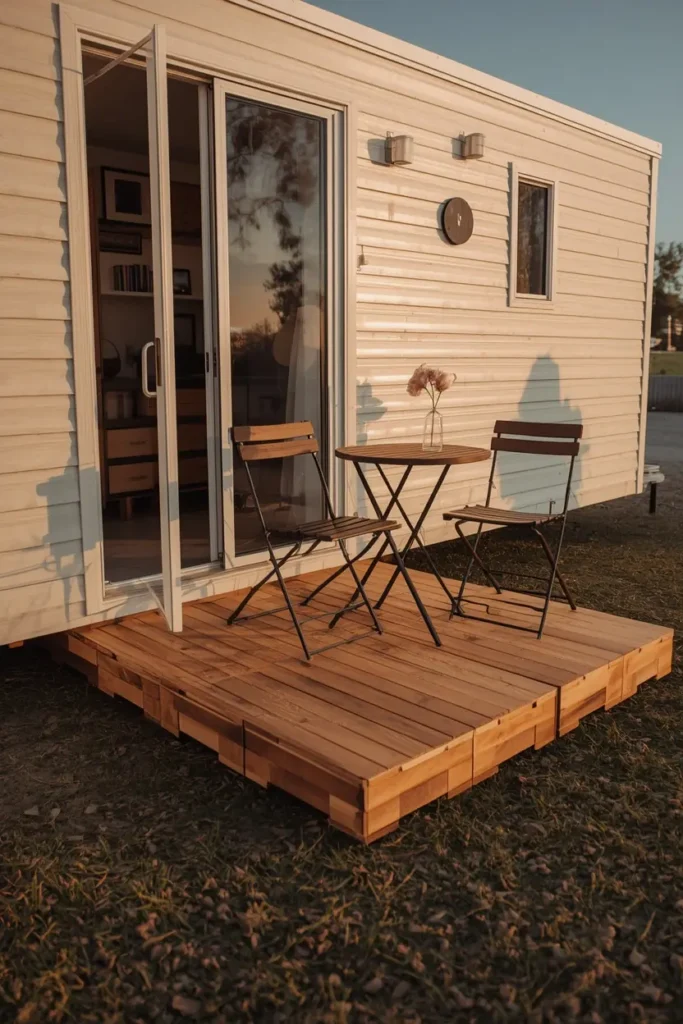
Many mobile home parks and manufactured housing communities have specific rules against permanent, attached decks without prior approval, since anything bolted directly into the ground or the home’s frame can affect the lot’s utility access or violate community guidelines. A modular deck platform, built from interlocking deck tiles or a freestanding frame that simply rests on the ground rather than anchoring into it, creates the same cozy, elevated feel without technically being a permanent structure. These platforms can be disassembled and moved in an afternoon if the park’s rules change or if you relocate, which also makes them a smart investment for anyone who doesn’t own the land their home sits on. Checking your specific park’s guidelines before building anything is worth the extra step, since rules vary significantly from one community to another.
Idea 3: Turn An Existing Carport Into A Shaded Lounge
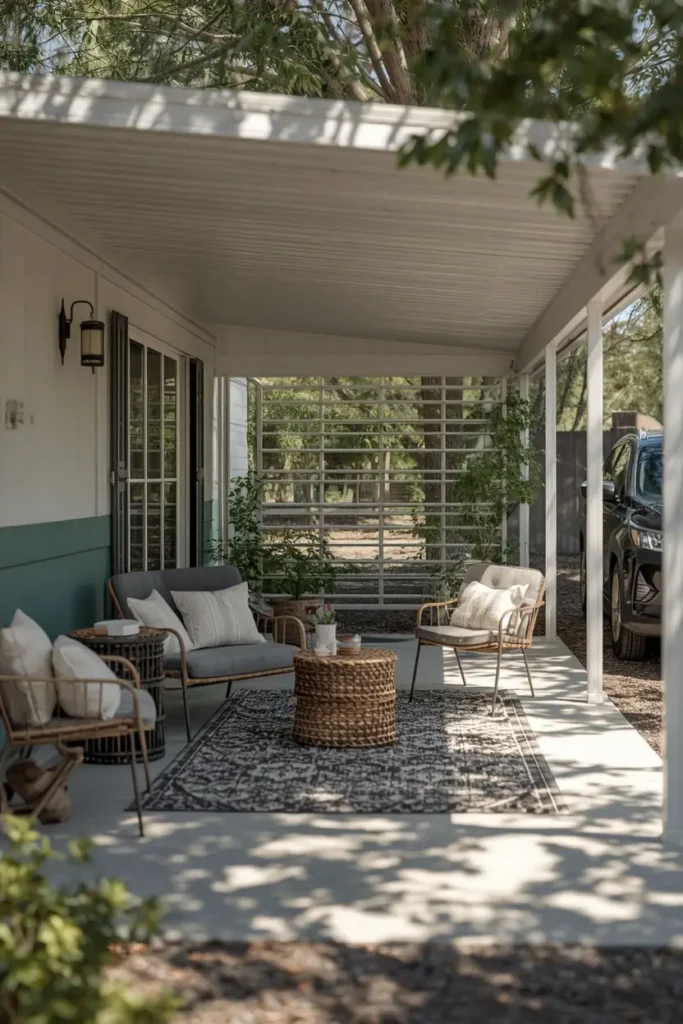
Many mobile and manufactured homes already come with an attached carport, and repurposing part of that existing structure into a shaded lounge area makes use of a covered space that’s already there instead of building something new. A couple of comfortable outdoor chairs, a small side table, and an outdoor rug placed along one side of the carport, away from where the car actually parks, creates an instantly usable seating area protected from both sun and rain. Because the structure and roofline already exist, this is one of the lowest-cost ideas on this list, requiring only furniture and styling rather than any construction. Adding a curtain panel along one open side using tension wire can also add a layer of privacy and softness without altering the carport itself.
Idea 4: Add Vertical Privacy Screening To A Narrow Side Yard
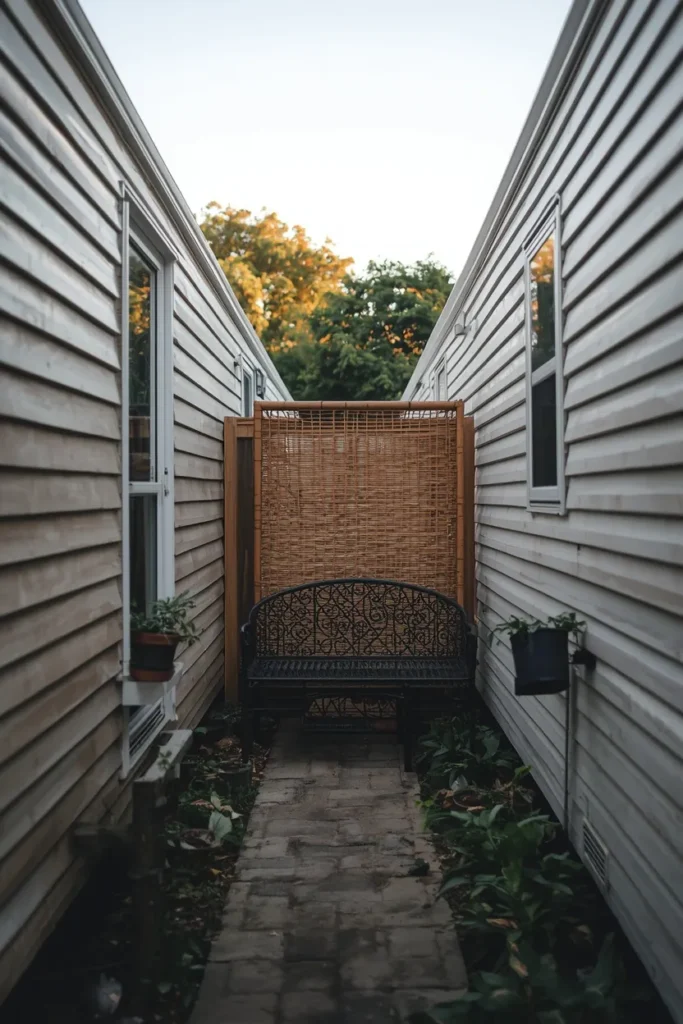
Mobile home lots are often spaced closely together, and the narrow strip of yard between two homes can feel exposed rather than relaxing without some kind of privacy element. A simple freestanding trellis panel or a roll of woven reed or bamboo fencing, both of which can lean against or clip to an existing fence or railing rather than requiring posts dug into the ground, creates a visual boundary without a major construction project. This works particularly well paired with a single narrow bench or a couple of small chairs positioned to face away from the neighboring lot rather than directly toward it. Because these screening options are lightweight and freestanding, they’re also easy to take down and store if seasonal weather or a park inspection requires it.
Idea 5: Upgrade The Entry Stoop Into A Mini Porch
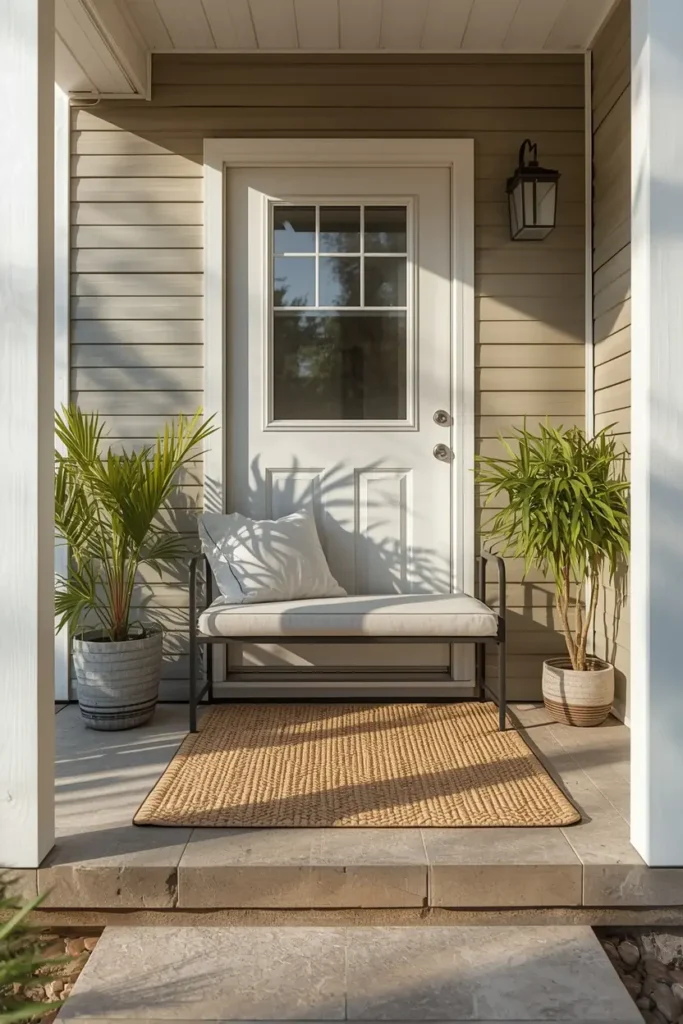
Many single-wide mobile homes come with only a small metal or concrete stoop at the entry door rather than a full porch, which can feel more like a step than a place to actually sit and enjoy the outdoors. Adding a small weatherproof bench, a folding chair, and a couple of potted plants transforms that stoop into a genuine mini porch, even if the total footprint is only a few square feet. A small outdoor rug sized to fit the stoop exactly helps visually define the space as intentional seating rather than simply the path to the front door. This is one of the highest-impact, lowest-cost ideas on this list specifically because it works with the smallest possible starting footprint many mobile homes have to offer.
Idea 6: Switch To Solar-Powered Lighting
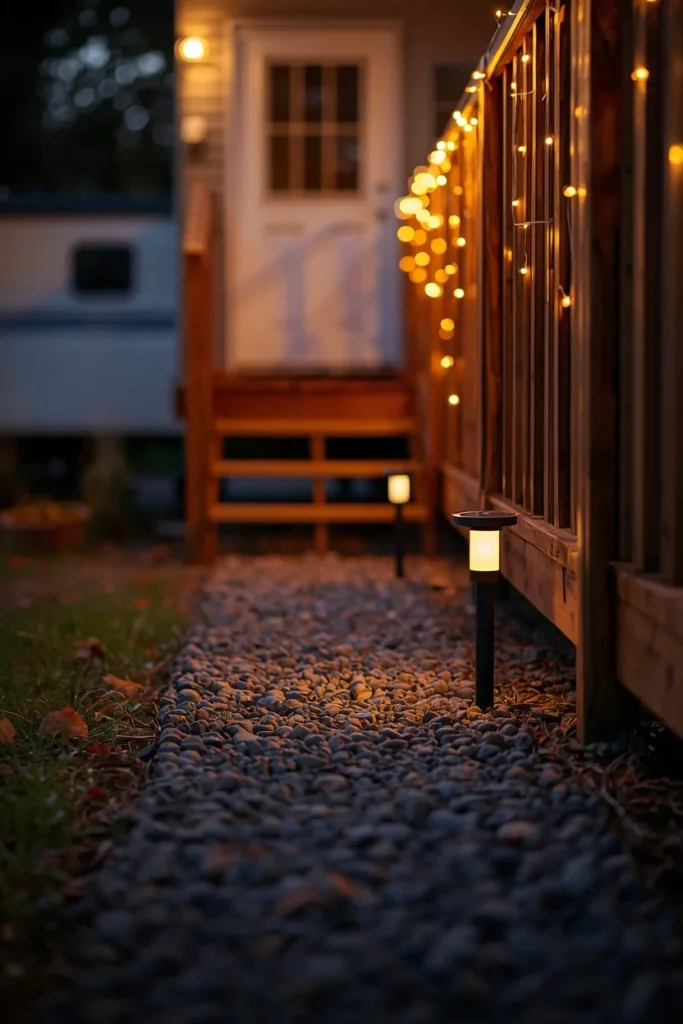
Many mobile home lots don’t have a dedicated exterior outlet near the porch or patio area, which makes plug-in string lights and lanterns impractical without running an extension cord through a window or door. Solar-powered string lights, path lights, and lanterns solve this entirely, charging during the day and turning on automatically at dusk without needing any electrical access at all. Because solar fixtures are self-contained, they can be placed anywhere sunlight reaches during the day, along a railing, staked along a walkway, or clipped to a fence, regardless of where the home’s electrical panel happens to be. This is one of the most practical fixes on this list for a genuinely common mobile home lot limitation that most general patio advice doesn’t account for.
Idea 7: Add A Small Portable Fire Pit In A Safe, Approved Spot
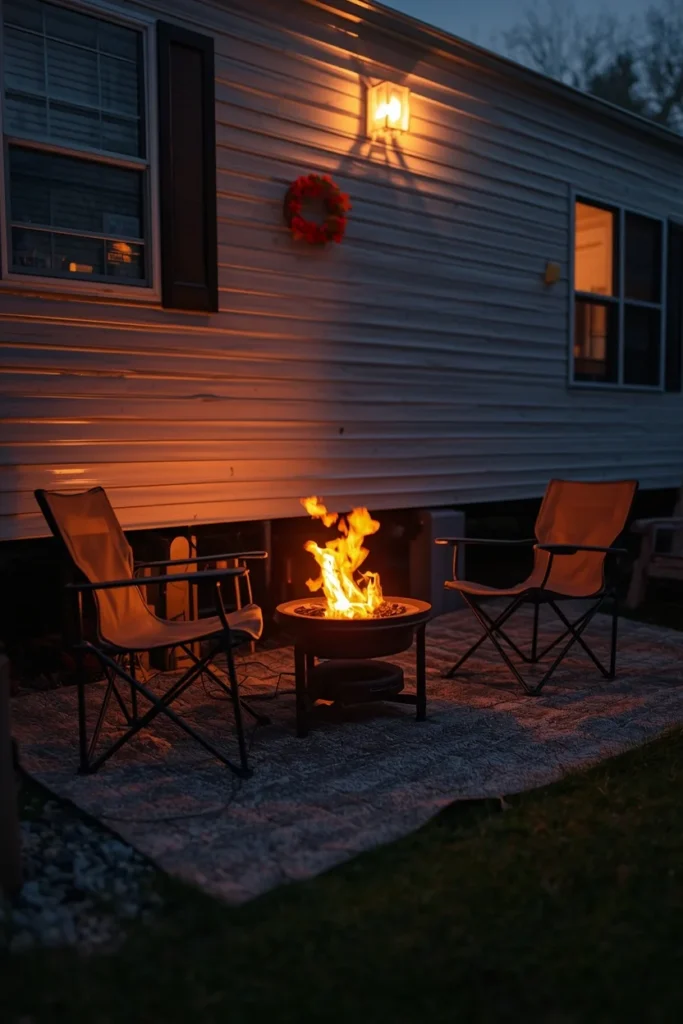
A small, purpose-built portable fire pit can add real warmth and a natural gathering point to a mobile home’s outdoor space, but placement matters more here than in a typical backyard, since manufactured home siding and skirting can be more heat-sensitive than brick or stucco. Checking both local fire codes and your specific park’s rules before setting one up is an important first step, since many communities have clear guidelines on distance from the home, the type of fire pit allowed, and whether open flame is permitted at all. Once a safe, approved spot is confirmed, typically several feet away from the home’s exterior and any overhanging structure, a small tabletop or freestanding propane fire feature can provide the same cozy evening glow as a larger backyard fire pit in a much smaller, safer footprint. This is one idea where checking the rules first genuinely matters more than the decorating itself.
Idea 8: Camouflage Tie-Down Straps With Decorative Rock Or Planters
Tie-down straps and ground anchors, the systems that secure a manufactured home to the ground and help protect it during high winds, are a necessary safety feature but aren’t exactly a design element anyone wants front and center. Rather than removing or obscuring them entirely, which isn’t safe or advisable, placing decorative river rock, mulch, or low plantings around the base of each anchor point can soften their appearance without interfering with their function. A small, tasteful planter positioned just beside, rather than directly on top of, a tie-down anchor keeps the area both attractive and fully accessible for the inspections these systems periodically require. This idea proves that even a purely functional, safety-related feature can be worked into a cohesive outdoor design rather than fought against.
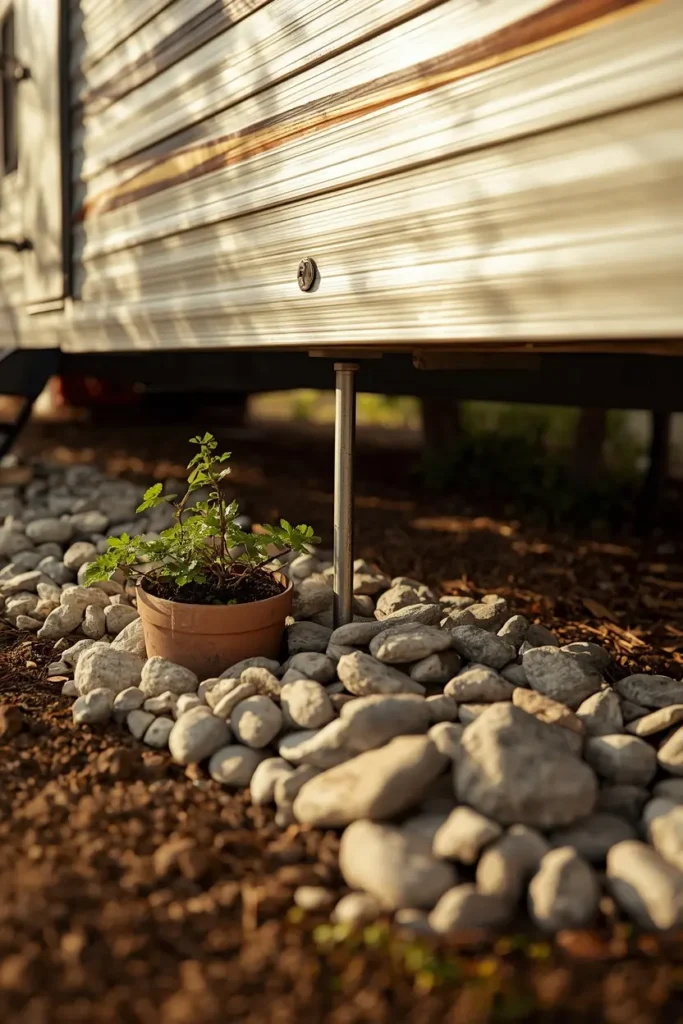
Idea 9: Build A Pallet Garden Along The Skirting Line
A vertical garden built from a single upcycled wooden pallet, stood on end and lined with small pots or fabric planting pockets, adds real greenery along the skirting line without requiring any ground space at all. This is a particularly good fit for the narrow strip that often runs along the side of a mobile home, where there’s rarely enough width for a traditional garden bed but plenty of vertical wall-like surface to work with. Herbs, succulents, and shallow-rooted flowers all do well in this kind of vertical planting setup, and the pallet itself can usually be sourced for free or very cheap from a local hardware store or shipping company. Leaning the pallet against the home’s siding rather than the skirting itself helps avoid trapping moisture against the ventilation panels underneath.
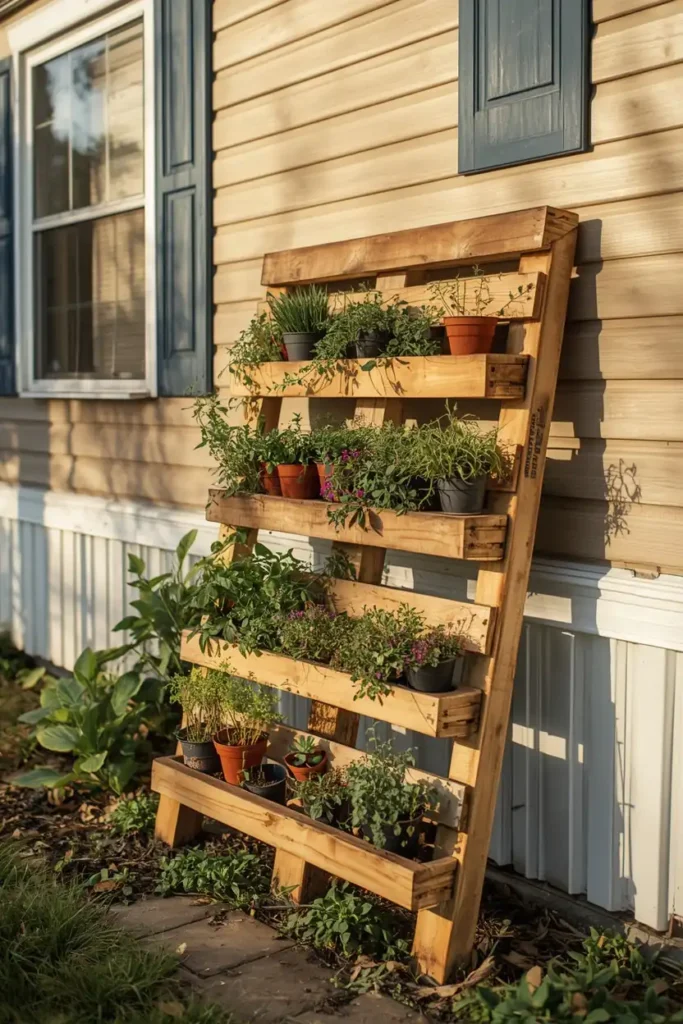
Idea 10: Add A Clip-On Shade Panel Along A Single-Wide’s Length
The long, narrow strip along the side of a single-wide mobile home often gets full sun exposure for much of the day, making it too hot to comfortably use without some kind of shade. A retractable or clip-on shade panel, mounted to the home’s existing gutter or fascia using clamps rather than screws, can extend out to cover a narrow seating or walking area during the hottest parts of the day and retract when it’s not needed. This works especially well paired with the entry stoop or a modular deck platform idea from earlier in this list, extending the usable hours of that space significantly during warmer months. Because it clips on rather than mounting permanently, it also satisfies most park rules against structural changes to the home’s exterior.
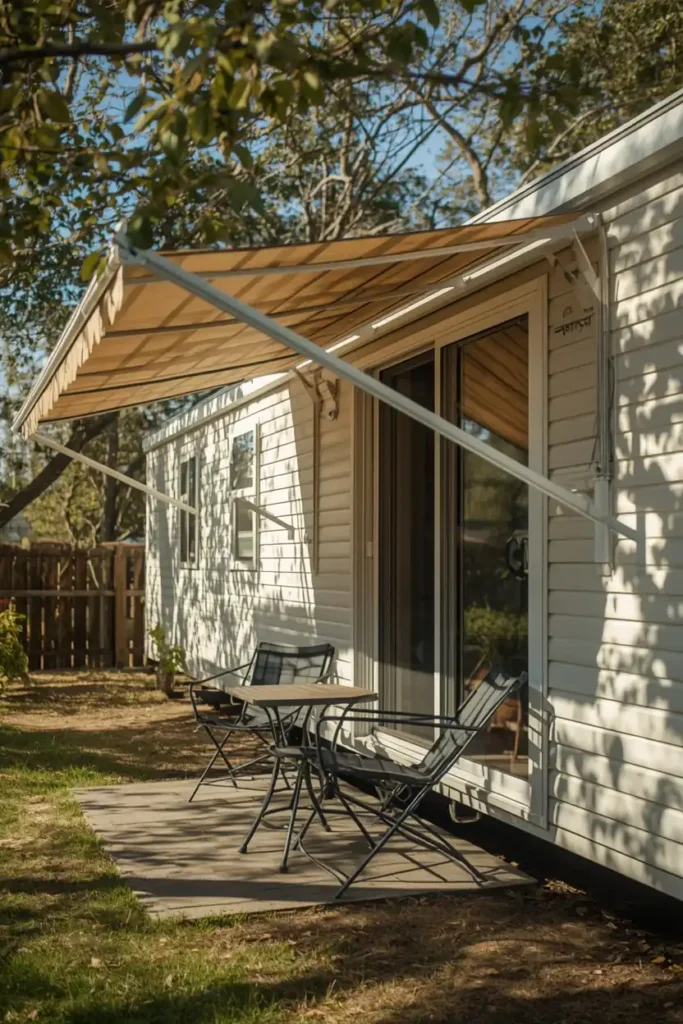
Idea 11: Create A Cozy Nook Under The Carport With A Rug And Curtain
Beyond simply adding furniture, layering a rug and a soft curtain panel into an existing carport space can make it feel like a genuine outdoor room rather than just covered parking with a chair pushed into the corner. A weather-resistant outdoor rug grounds the seating area visually, while a length of outdoor curtain fabric hung from a tension wire along one open side adds both privacy and a softer, more finished look. This combination works particularly well in the evening, when the curtain can be drawn partway to create a more enclosed, intimate feeling as the space transitions from a daytime utility area to an evening lounge spot. Because both the rug and curtain are simply placed or hung rather than permanently installed, they can be removed in minutes if the carport needs to be used for parking again.
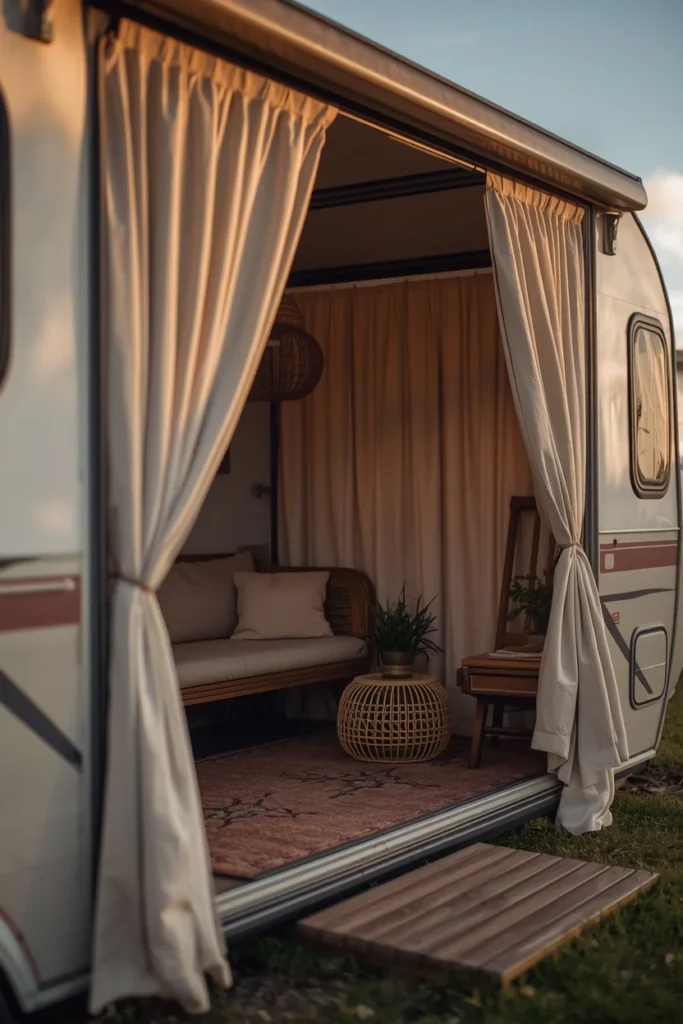
Idea 12: Grow A Vertical Garden Against The Skirting
Beyond a pallet-specific project, a simple wall-mounted vertical planter system, sold as a set of stackable pockets or a modular grid, can be leaned against the home’s siding just above the skirting line to add a full wall of greenery in a very shallow footprint. This works especially well for renters of a mobile home lot who want the option to take the entire garden with them if they move, since the system typically isn’t attached to the home itself. Trailing plants at the top and more compact, bushy plants toward the bottom create a fuller, more layered look than a single row of pots would achieve in the same space. Because the system leans rather than mounts, it also avoids putting any additional weight or strain on the skirting panels themselves.
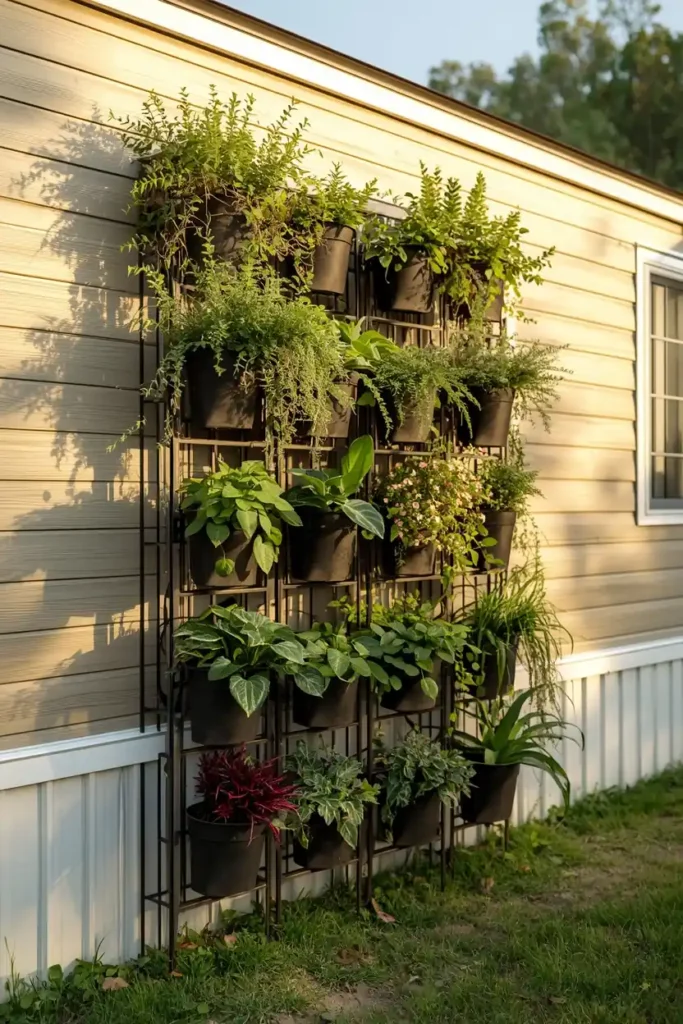
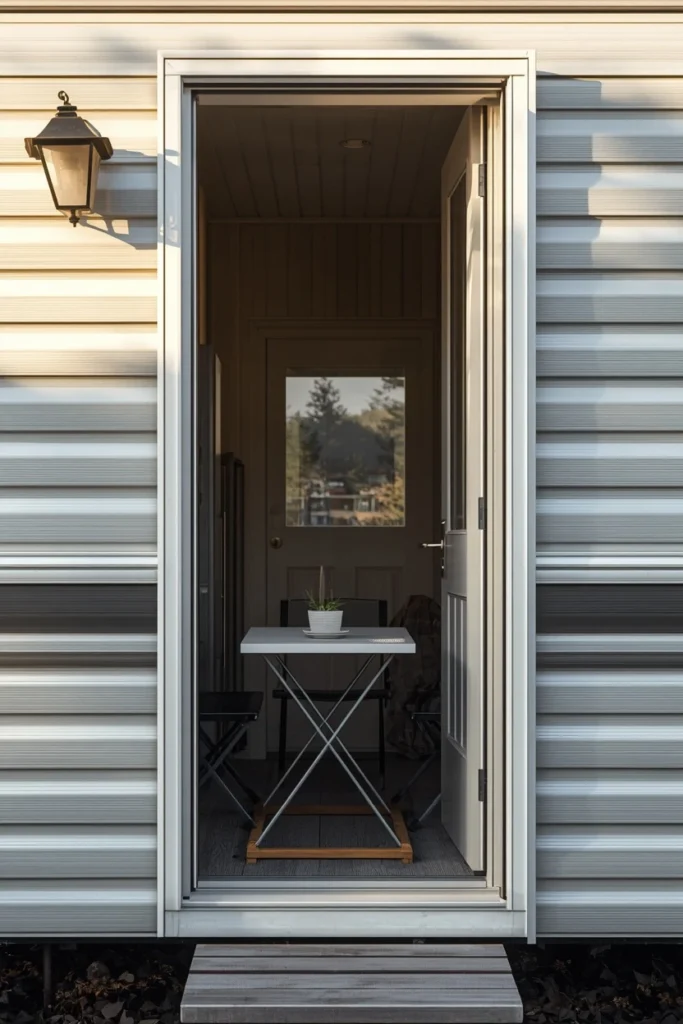
Idea 13: Choose A Slim Folding Bistro Set For A Narrow Porch
Standard outdoor furniture is often sized for a full patio or deck, which can overwhelm the narrow porch or stoop many mobile homes actually have to work with. A slim, foldable bistro table and two chairs solve this by offering real seating without eating up the entire available footprint, and folding designs can be tucked away entirely when extra walking space is needed. This is particularly useful for a mobile home with only a few feet of clearance at the entry, since a bulky sectional or a wide dining set simply wouldn’t leave room to open the front door. Look for a set with a small footprint specifically rated for outdoor use, since indoor folding furniture tends to warp or rust quickly when left exposed to the elements.
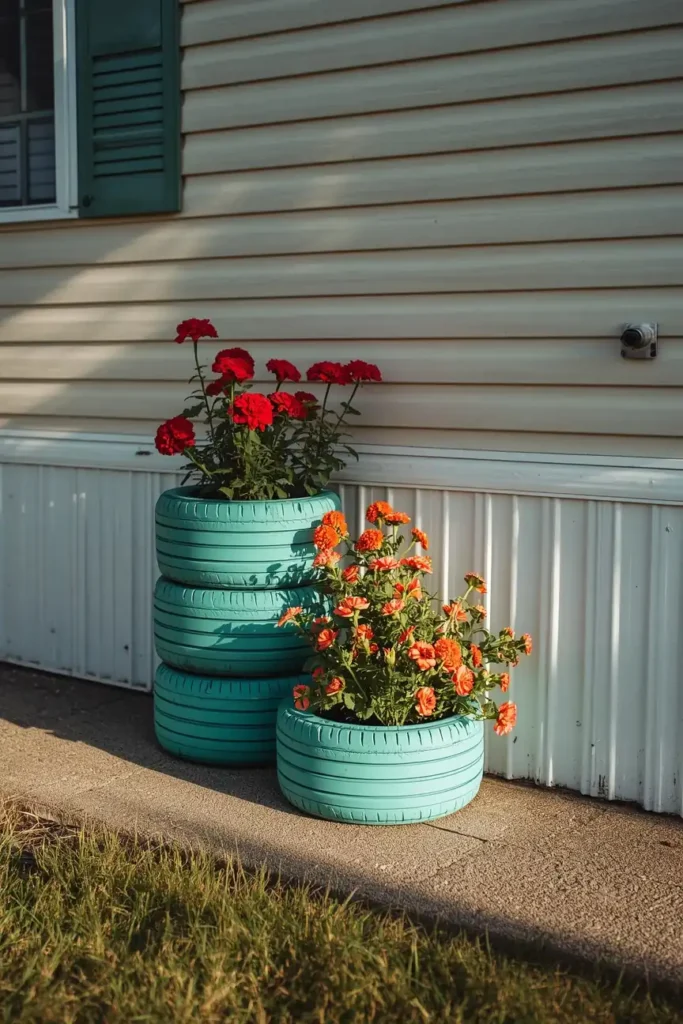
Idea 14: Repurpose Tires Or Containers As Planters
A classic mobile home park upcycling trick, turning old tires, metal buckets, or plastic containers into painted planters, remains one of the cheapest ways to add greenery to an outdoor space with almost no material cost. Stacking two or three tires and painting them a cohesive color, then filling the top with soil and flowers, creates a raised planter with real visual height for very little money. This idea works especially well for anyone without access to a yard at all, since the containers can sit directly on a concrete pad, gravel lot, or even a small section of the carport. A little sanding and a coat of spray paint designed for plastic or rubber goes a long way toward making a repurposed container look intentional rather than simply recycled.
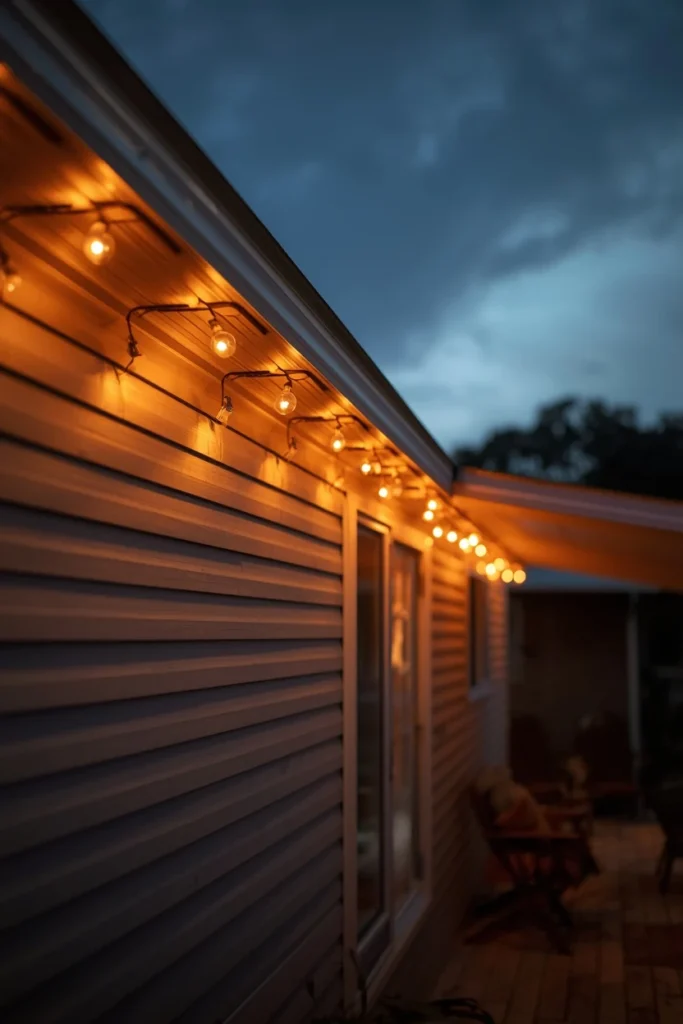
Idea 15: Run String Lights Along The Roofline With Clip Hooks
Rather than string lights draped between posts that may not exist on a mobile home lot, clip-style hooks designed to attach to the edge of a roofline or gutter offer a simple way to run lighting along the entire length of the home without any drilling or permanent mounting. This creates a warm, defined glow along the perimeter of the outdoor space once evening arrives, similar to holiday lighting but left up year-round in a more understated color like warm white or amber. Because the clips grip onto the existing gutter or fascia edge rather than requiring hardware, they can be added or removed easily each season, or adjusted if the home’s exterior ever needs maintenance access. This idea pairs particularly well with the solar lighting option covered earlier, for a lot without any nearby exterior outlet.
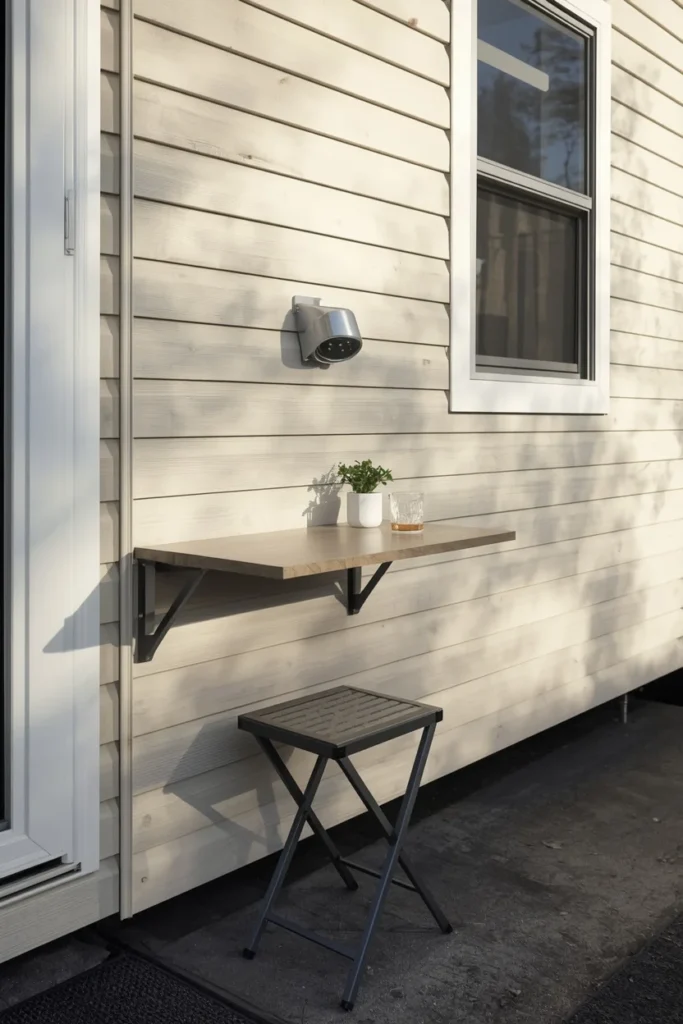
Idea 16: Add A Fold-Down Table With No-Drill Brackets
For a narrow porch or stoop with no room for a standing table, a fold-down table mounted to the home’s exterior wall using heavy-duty adhesive brackets rather than screws provides a flat surface for drinks or a small plant when needed, then folds flush against the wall when it’s not. This is especially useful on a stoop too small to fit even a slim bistro table, since the table only occupies space in the room when it’s actually being used. Because the mounting brackets rely on adhesive rated for outdoor use rather than drilling into the home’s siding, this idea works even in a strict rental or park situation where altering the exterior isn’t allowed. A small folding stool stored nearby completes the setup for genuinely tight spaces that still want a place to sit and set something down.
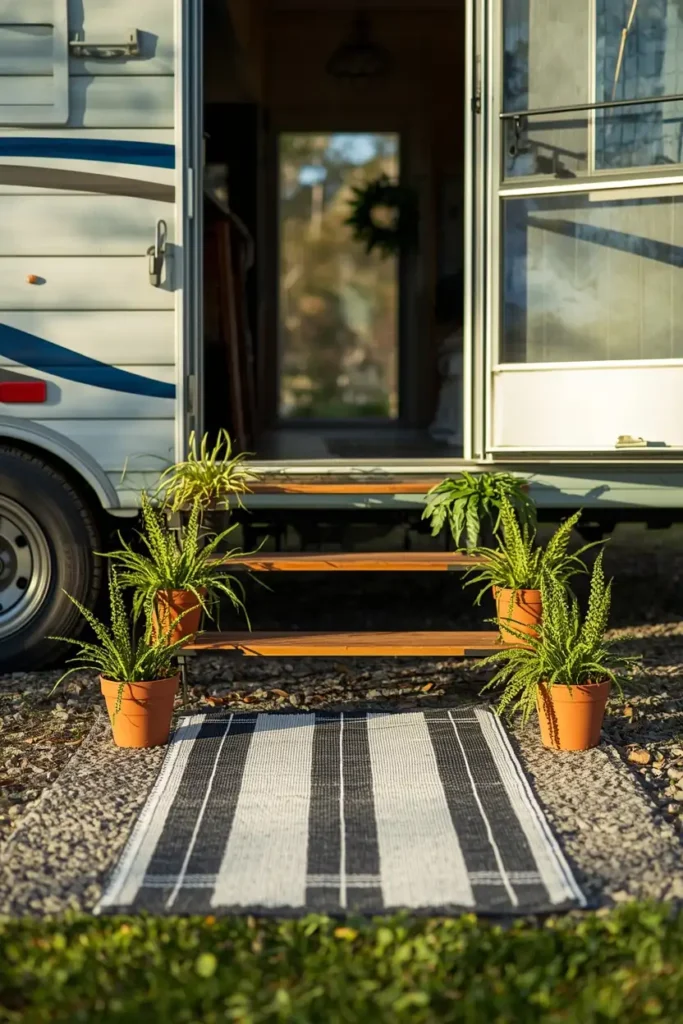
Idea 17: Dress Up The Ramp Or Steps With Plants And A Runner
Many mobile homes include a required ramp or a set of metal or wooden steps leading to the entry door, and while these are functional necessities, they don’t have to look purely utilitarian. Lining the edges of a ramp with a row of potted plants, spaced far enough apart to keep the pathway fully clear and accessible, softens the transition from yard to door without interfering with its function. An outdoor runner rug, cut or purchased to fit the width of the steps or ramp, adds color and texture underfoot while also improving grip and safety in wet weather. This is one of the simplest ideas on this list to execute, since it requires no tools or construction, just thoughtful placement of a few plants and a rug along a structure that’s often already there.
Styling Tips
- Match planter and furniture colors to the home’s existing siding and skirting tones rather than introducing a completely unrelated palette, since a cohesive look reads as intentional even on a small budget.
- Keep any decor near skirting panels removable or on legs, since utility access underneath the home may be needed at some point.
- Layer at least two textures (wood, woven fiber, metal) even in a small space, since a single material throughout can start to feel flat rather than cozy.
- Choose warm-toned lighting (string lights, solar lanterns) over cool white options, since warm light consistently reads as more inviting in outdoor evening settings.
- Keep walkways, ramps, and steps fully clear of decor, since these are functional safety features first and decorating opportunities second.
Practical Implementation Ideas
- Review your specific park or community’s written rules before building anything semi-permanent, like a modular deck or a mounted shade panel, since requirements vary widely between communities.
- Test solar lighting placement for a few days before committing to a full setup, since shade from the home itself or nearby trees can affect how well certain spots charge.
- Prioritize the entry stoop or carport first if working with a limited budget, since these are usually the largest existing functional spaces to build around.
- Choose furniture and structures that can be disassembled or moved in under an hour, since this flexibility matters more for manufactured homes than for a permanent residence.
- Check with a park manager or community office before placing anything directly over or near a utility access point, tie-down anchor, or septic cleanout.
Common Mistakes To Avoid
- Blocking skirting ventilation panels with planters or decor, which can trap moisture and lead to problems underneath the home over time.
- Installing a permanent deck or structure without first checking park rules, which can result in a required removal after the work and cost are already done.
- Placing decor directly on top of a tie-down anchor point instead of beside it, which can interfere with routine safety inspections.
- Choosing furniture or shade structures too large for the actual footprint available, which ends up blocking doors, walkways, or required exits.
- Relying on standard plug-in lighting without confirming outdoor outlet access first, which often leads to an unfinished project once the cord won’t reach.
Small-Space Alternatives
- If there’s no room for a modular deck platform at all, a single well-chosen outdoor rug and one folding chair on the existing stoop can still create a defined, cozy spot.
- In place of a full vertical pallet garden, a single hanging planter or two wall-mounted pots can add greenery to an extremely narrow side yard.
- A single strand of clip-on string lights along just the entry area, rather than the whole roofline, still adds meaningful evening ambiance in a smaller footprint.
- One tire planter or repurposed container can serve as a small space’s entire greenery statement, rather than needing a full row.
- A fold-down table alone, without additional furniture, can make even the tightest stoop functional for a morning coffee or evening drink.
Budget-Friendly Alternatives
- Tires, buckets, and other repurposed containers cost little to nothing and can be painted to match nearly any exterior color scheme.
- Solar lighting is a one-time cost with no ongoing electricity expense, making it more budget-friendly long-term than running extension cords or adding wiring.
- A secondhand pallet, often available for free from local businesses, can become a full vertical garden for the cost of a few plants and some soil.
- Thrifted or clearance outdoor furniture, even mismatched pieces painted the same color, can achieve the same cozy look as a matching new set for a fraction of the price.
- DIY a privacy screen from leftover fencing material or a repurposed door rather than buying a purpose-built trellis panel.
Pro Styling Recommendations
- Manufactured housing designers often recommend working with the home’s existing rooflines and structures, like a carport or an entry awning, before adding anything new, since these existing elements usually offer the best return on a small budget.
- A cohesive color palette between the home’s siding, skirting, and any added furniture or planters tends to make the smallest lot look considerably more finished than a mismatched collection of budget pieces.
- Vertical solutions (pallet gardens, hanging planters, mounted shade panels) consistently offer the best storage and greenery payoff on a narrow mobile home lot, where floor space is almost always the limiting factor.
- Checking park guidelines before starting any project, even a seemingly minor one, tends to save both money and disappointment compared to building first and asking questions later.
- Investing in one or two higher-quality, weather-rated pieces (a good outdoor rug, sturdy solar lights) tends to hold up better across seasons than several cheaper items that need frequent replacing.
FAQs
Conclusion
A mobile home’s outdoor space doesn’t need a full backyard or a big budget to feel like somewhere you actually want to sit down. It needs ideas that work with the lot you actually have, the narrow porch, the shared lot line, the skirting that needs to stay accessible, rather than advice written for a completely different kind of home.
Start with whatever existing structure you already have, the entry stoop, the carport, the ramp, and build outward from there with plants, lighting, and a little bit of color. Cozy doesn’t require permanent, and on a mobile home lot, that’s actually the whole advantage.