19 Mobile Home Curb Appeal Ideas That Prove Style Beats Size

Mobile homes carry a reputation they don’t deserve. Say “manufactured home” and a lot of people picture something temporary-looking, no matter how well it’s actually maintained. But the truth is, most of what makes a manufactured home’s exterior read as a “trailer” instead of a house has nothing to do with the home’s actual size or quality. It’s a handful of specific visual details — a flat, uninterrupted color, a visible seam between sections, shutters that don’t match the window size, straps and anchors peeking out along the base.
The 19 ideas below tackle both halves of the problem: the classic curb appeal upgrades that work on any home, done with more specificity than the generic advice you’ll find elsewhere, and the manufactured-home-specific fixes that most curb appeal lists never mention at all. None of these require a full renovation budget. Most can be done in a weekend or two. All of them prove that a mobile home’s curb appeal comes down to intention, not square footage.
Table of Contents
1. Break the Horizontal Profile With a Two-Tone Paint Scheme
A manufactured home’s long, low proportions are one of the biggest visual giveaways of the format, and a single flat color across the entire length of the home only emphasizes that shape rather than softening it. Splitting the facade into two tones, a deeper greige or navy on the lower half or the end sections, with a crisp white or cream on the upper band near the roofline, breaks the eye’s read of the home into shorter visual segments instead of one long rectangle. Adding a slightly different accent color on just the trim around windows and doors, rather than making everything three colors at once, keeps the scheme looking intentional instead of busy. Choose exterior paint specifically rated for the home’s siding material, since vinyl and metal siding require different formulations than what’s typically used on wood siding. This single change does more to shift a manufactured home’s overall visual proportions than almost anything else on this list, since color blocking is a direct, low-cost way to interrupt a shape rather than just decorating it.

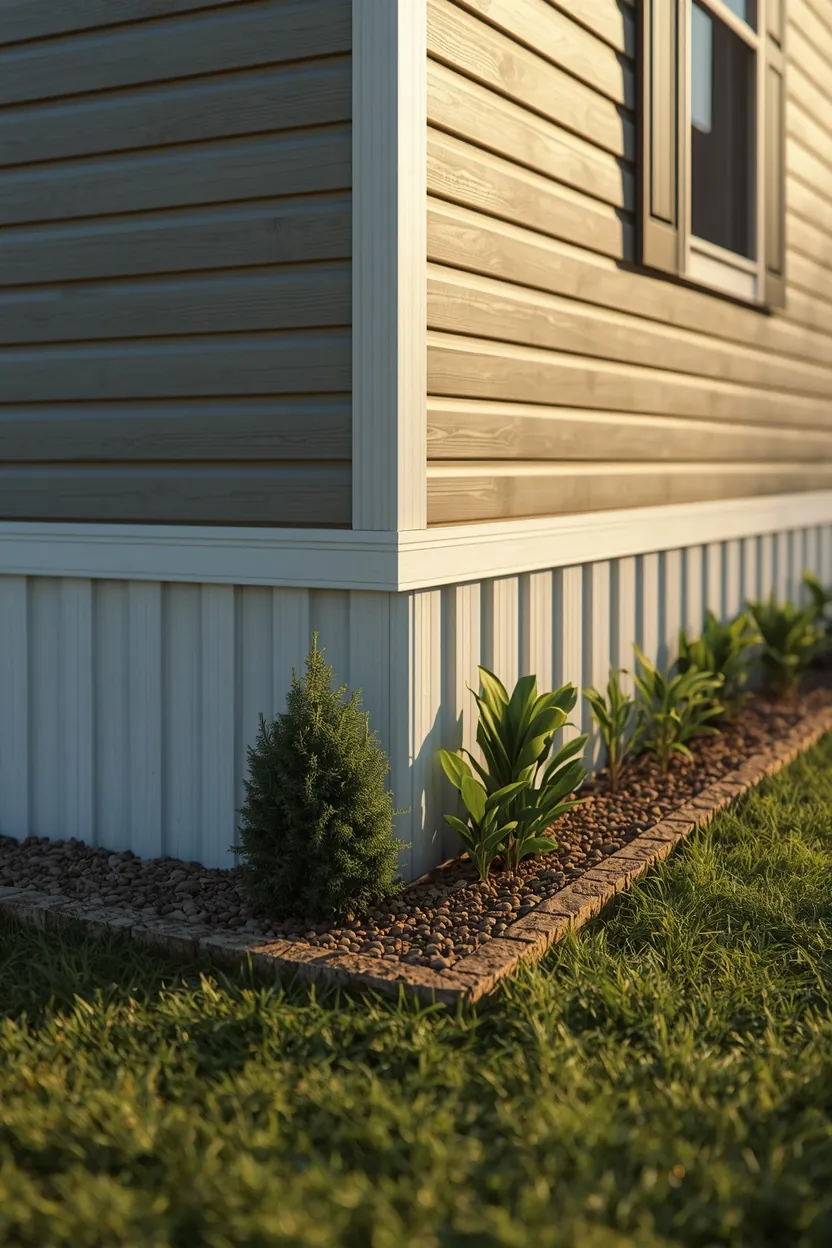
2. Upgrade to Board-and-Batten or Faux Stone Skirting
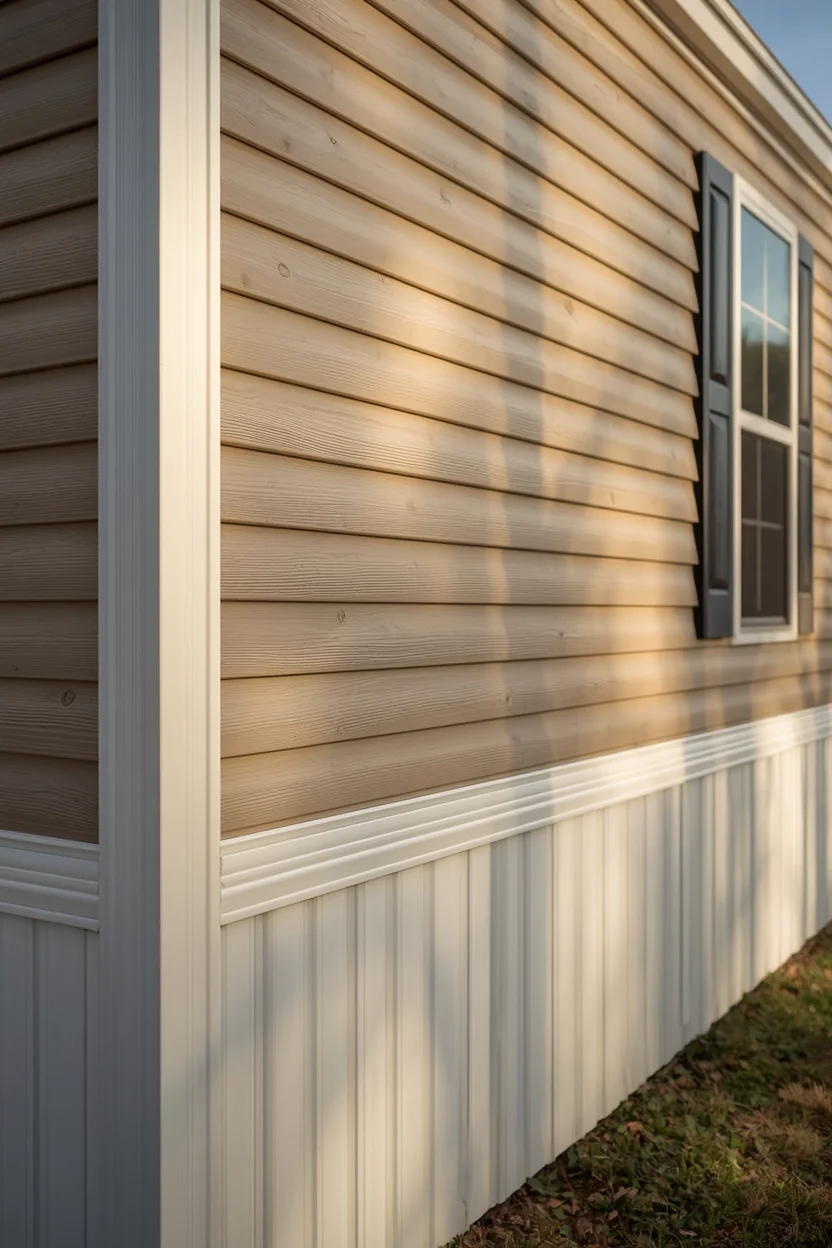
Standard thin vinyl skirting is one of the fastest visual signals that a home is manufactured rather than site-built, and swapping it for board-and-batten panels or faux stone skirting immediately changes the entire base of the home’s visual weight and texture. Board-and-batten in particular pairs well with a modern color-blocked paint scheme, since the vertical lines of the battens introduce a second visual rhythm that contrasts nicely with the home’s inherently horizontal shape. Faux stone skirting panels, now widely available in lightweight, DIY-friendly kits, add texture and a grounded, substantial feel to the base of the home without the weight or cost of real stone. Whichever material is chosen, make sure any required ventilation gaps for the crawlspace underneath stay clear and unobstructed, since skirting still needs to breathe properly regardless of its finish. This upgrade is consistently one of the highest-impact changes on this entire list because skirting makes up a visually significant portion of the home’s total facade, especially when viewed from the street.

3. Add a Small Covered Portico at the Entry
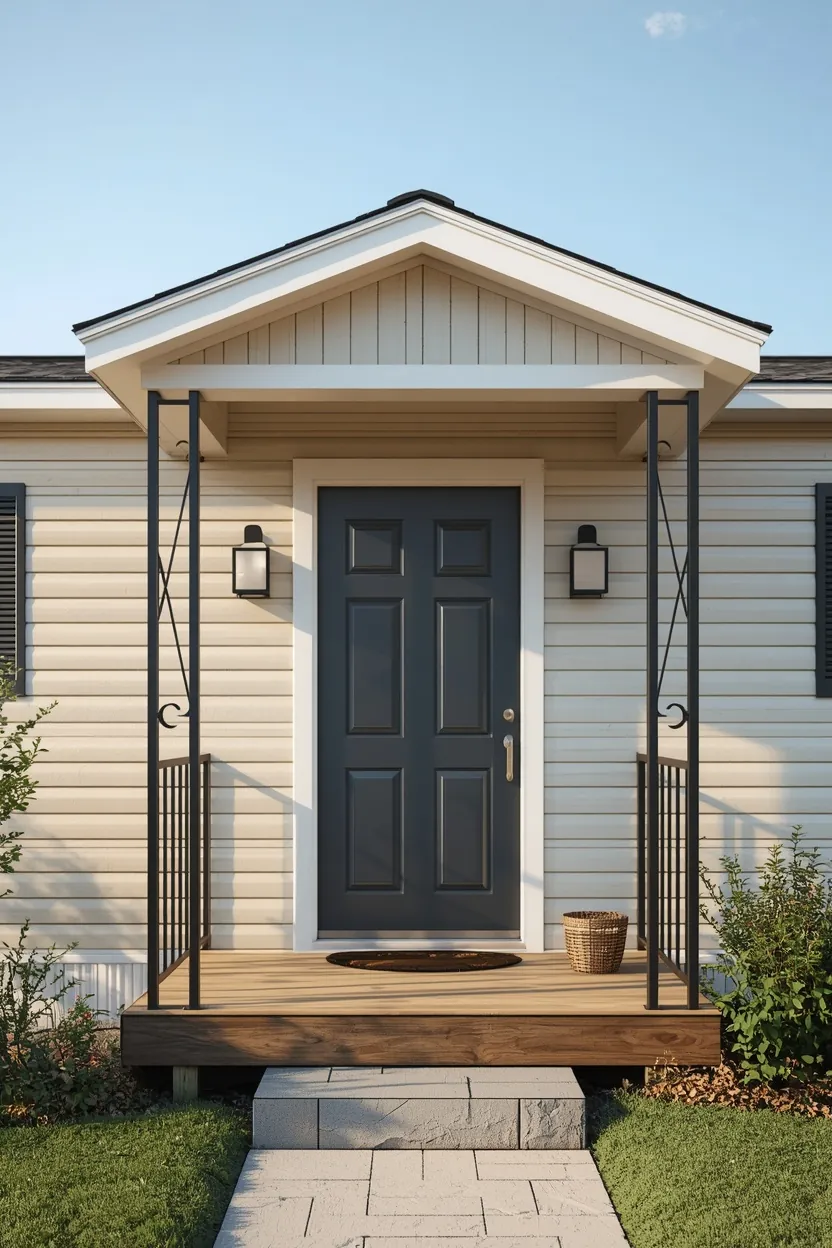
A small covered portico or overhang built above the front door adds genuine architectural depth to what’s often a completely flat facade on a manufactured home, creating a shadow line and a sense of dimension that a flat wall simply can’t. Even a modest portico, just large enough to cover the door and a step or two, breaks up the roofline and gives the entry a clear focal point instead of a door that reads as just another opening along a flat wall. Match the portico’s roofing material and pitch to the home’s existing roof where possible, since a mismatched addition can look more like an afterthought than an intentional design choice. Adding simple support posts in a material that complements the skirting, like matching wood tone or a coordinating black metal, ties the new structure visually back to the rest of the home’s updated exterior. This is a bigger project than most on this list, but it’s also one of the few upgrades that genuinely adds architectural dimension rather than just surface decoration, which matters specifically for a home shape that tends to read as flat from the street.
4. Disguise the Marriage Line on a Doublewide
Every doublewide has a marriage line, the seam where the two halves of the home meet during installation, and on many homes this line is visible from the street as a subtle shift in siding alignment or a thin vertical shadow running the full height of the facade. A vertical trim board installed directly over this seam, painted to match or intentionally contrast with the surrounding siding, turns an accidental visual flaw into what looks like a deliberate architectural detail, similar to a corner board on a site-built home. If the two halves have a slight color or texture mismatch after years of weathering unevenly, a full repaint across both sections at once, rather than patch-painting just one side, resolves the inconsistency completely rather than drawing more attention to it. This fix is worth prioritizing specifically on doublewide homes, since the marriage line is one of the only structural details unique to multi-section manufactured homes that most people can spot immediately once they know to look for it, even if they couldn’t previously say why the home looked slightly “off.”
5. Repaint the Roof Fascia to Match the Trim
The metal fascia and flashing along a manufactured home’s roofline, often installed at the factory in a plain aluminum or mismatched color, is a small detail that quietly undercuts an otherwise well-updated exterior if it’s left untouched. Repainting this fascia in the same trim color used around the windows and doors, using a paint formulated specifically for metal, ties the roofline visually back into the rest of the facade instead of leaving a strip of dull, mismatched material running the full length of the home. This detail sits at the very top of the home’s silhouette, which means it’s visible from a distance even when other ground-level details aren’t, making it a disproportionately high-impact fix relative to how little material and time it actually takes. Check for any rust or corrosion on the fascia before painting, treating it with a rust-inhibiting primer first, since paint alone won’t hold up over an already-corroding surface. This is a genuinely overlooked detail on most curb appeal checklists, but it’s one of the fastest ways to make the whole roofline read as finished rather than factory-default.

6. Size Shutters to the Actual Window Width
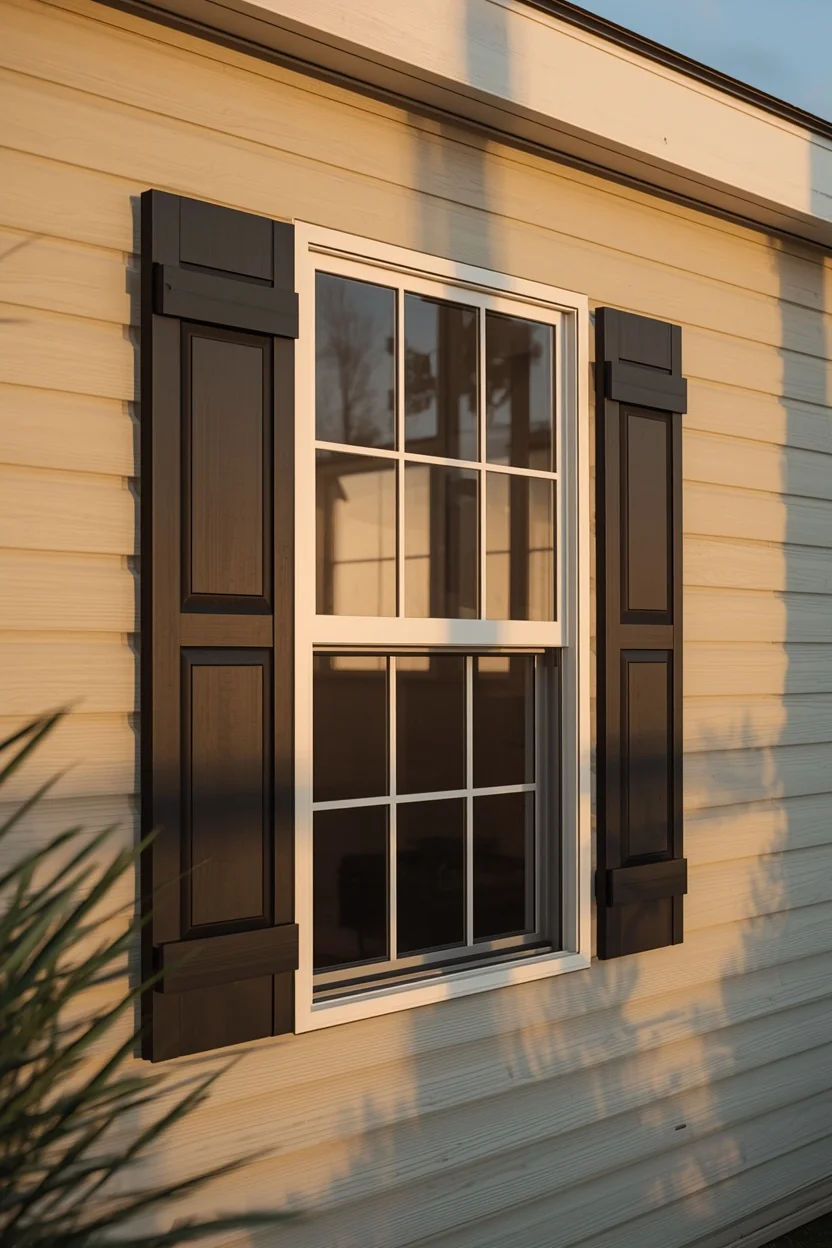
Standard off-the-shelf shutters are typically sized for site-built home window proportions, and mounting a pair that’s too wide or too narrow for a manufactured home’s actual window frame is one of the most common curb appeal mistakes on this entire list, often making the home look less finished than having no shutters at all. Measure the exact window width before ordering shutters, and choose a size where each shutter panel, if it were closed, would cover roughly half the window’s actual width, which is the proportion that reads as authentic rather than purely decorative. Mounting shutters slightly too small leaves an awkward gap of bare siding on either side of the window, while oversized shutters overlap the window trim in a way that looks bulky rather than balanced. A simple board-and-batten or louvered style in a color that contrasts with the siding, rather than blending in too closely, gives the window definition without overwhelming the smaller scale of a manufactured home’s facade. This fix costs very little but directly addresses a proportion mistake that undermines several of the bigger investments on this list if left unaddressed.
7. Choose a Bold, Properly Scaled Front Door
A front door in a saturated, confident color, whether a deep navy, forest green, or matte black, gives a manufactured home’s flat facade a genuine focal point, and the door is one of the few elements on the entire exterior that can carry real personality without needing to match anything else on the home exactly. Make sure the door’s style and hardware scale is proportional to the smaller overall facade of a manufactured home, since an oversized, heavily paneled door meant for a large site-built entry can look disproportionate on a narrower manufactured home entry. A simple flat or lightly paneled design in a bold color usually reads better here than a highly ornate style, since the color is doing most of the visual work rather than the door’s shape. Pairing the new door color with updated, matching hardware, in a finish like matte black or aged brass, finishes the look completely rather than leaving builder-grade hardware on an otherwise upgraded door. This is one of the lowest-cost, highest-visibility upgrades on the entire list, since the front door sits at the exact focal point most people’s eyes go to first when approaching any home.

8. Soften Visible Tie-Down Straps With Landscaping
Tie-down straps and ground anchors, required by code to keep a manufactured home stable in high winds, are sometimes visible along the base of the home where they meet the ground, and while they should never be removed, covered, or obstructed in any way that affects their function, the visual impact of the exposed strap ends can be softened with the right landscaping approach. Planting low, mounded shrubs or ornamental grasses a few inches back from the anchor points, rather than directly over them, screens the hardware from a typical street-level view without blocking access for future inspection or maintenance. Always leave clear, unobstructed access to every anchor point for the home’s required periodic safety inspections, since tie-down systems need to remain fully visible and reachable to anyone checking or servicing them. This is a detail worth handling thoughtfully rather than skipping entirely, since visible strap ends along an otherwise beautifully updated exterior can undercut the polished look achieved everywhere else. If there’s ever a question about whether a planting plan interferes with tie-down access or function, checking with the home’s installer or a manufactured housing inspector first is the safer approach.

9. Frame the Yard With a Low Slat or Picket Fence
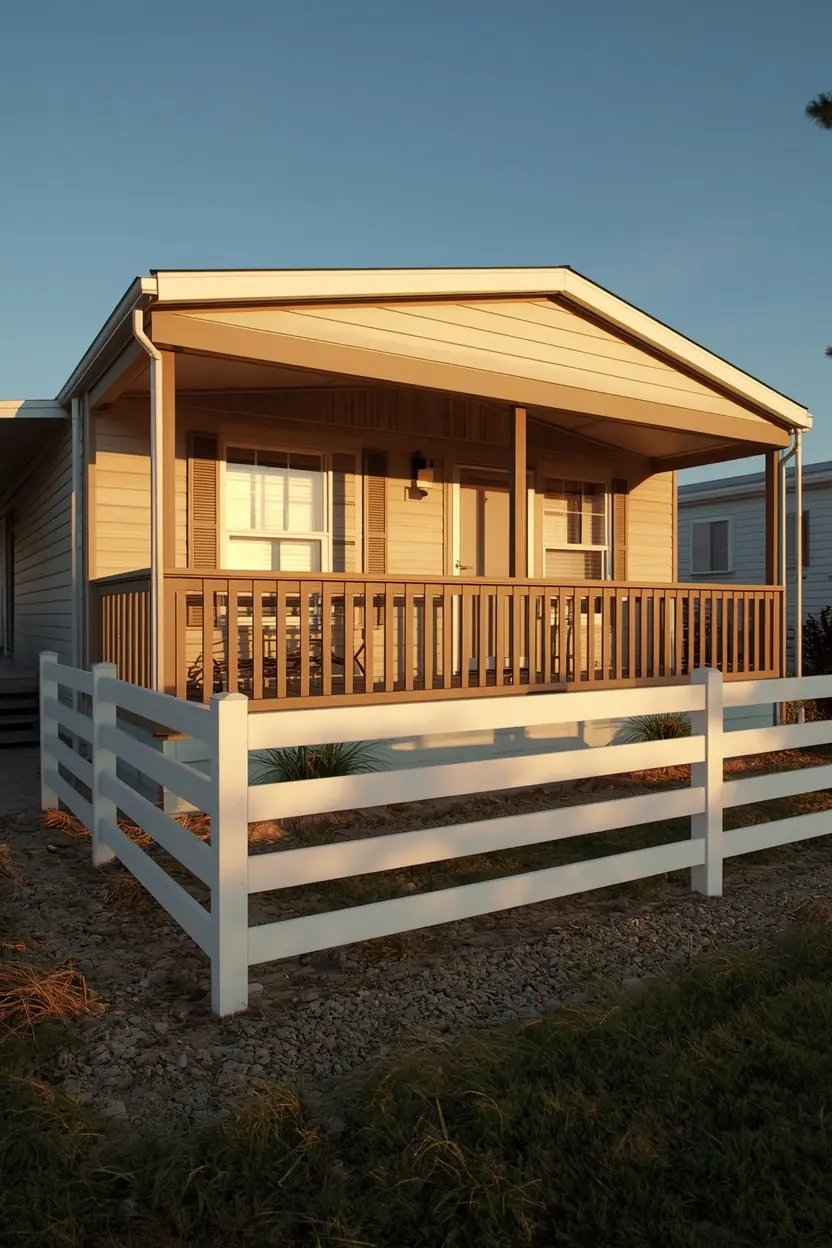
A short section of horizontal slat or classic picket fencing along the front property line gives a manufactured home’s yard a defined edge and a sense of intentional landscaping, rather than a yard that blends directly into the street or a neighboring lot with no clear boundary. Check the mobile home community’s specific rules before installing any fencing, since many parks have height restrictions or material requirements for anything installed along shared property lines, and a quick call to park management before starting avoids a costly redo later. A partial fence, framing just the front yard or the area around a patio rather than enclosing the entire lot, is often enough to create the visual effect without triggering stricter regulations that sometimes apply to full perimeter fencing. Painting the fence to match the home’s trim color, rather than leaving it a mismatched natural wood tone, ties the new structure back into the overall color scheme established elsewhere on the exterior. This idea works particularly well paired with the layered foundation planting elsewhere on this list, since both elements work together to make the yard feel like a considered space rather than an afterthought.
10. Add a Vertical Trellis or Arbor at the Entry
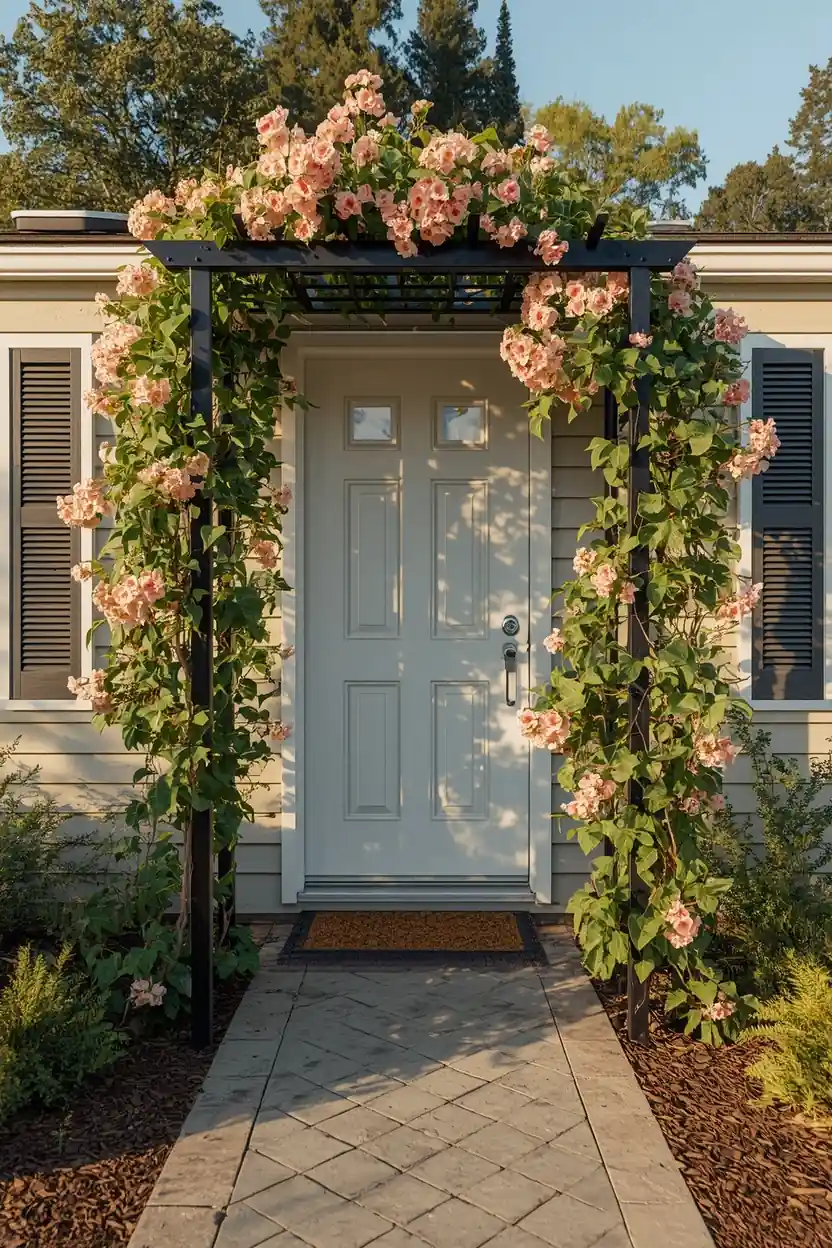
A simple wood or metal trellis or a small arched arbor positioned right at the entry path introduces a strong vertical element that directly counters the long, horizontal lines dominating the rest of a manufactured home’s exterior. Training a climbing plant, like a flowering vine or clematis, up the structure over a season or two adds both height and softness at the exact point where visitors first approach the home. Position the trellis or arbor a few feet in front of the entry rather than flush against the home itself, which creates a small sense of arrival and a transition moment before reaching the actual front door. Choose a material and finish that coordinates with the home’s updated hardware and door color, like matching matte black metal, so the new structure reads as part of a considered plan rather than an unrelated addition. This is one of the more affordable ways on this list to introduce genuine vertical architecture to a home shape that’s naturally lacking in it.
11. Upgrade House Numbers and the Mailbox Together
Replacing builder-grade house numbers and an old mailbox as a matched pair, in the same modern finish and font style, is one of the smallest and most affordable upgrades on this entire list, and pairing the two together rather than updating just one makes the change register as a deliberate style choice rather than a random swap. Choose a number size that’s actually legible from the street or curb, since numbers scaled too small to match a home’s more modest facade can end up harder to read than they were before the upgrade. A simple sans-serif font in matte black or brushed brass suits most updated manufactured home exteriors well, especially when it matches the finish already chosen for the front door hardware elsewhere on this list. Mounting the new mailbox on a coordinating post, rather than leaving a mismatched or leaning old post in place, completes the upgrade fully instead of leaving one visibly outdated element next to a shiny new mailbox. This is a genuinely high-return upgrade for the cost, since both items sit directly in a visitor’s or passerby’s line of sight and are replaced in well under an hour combined.
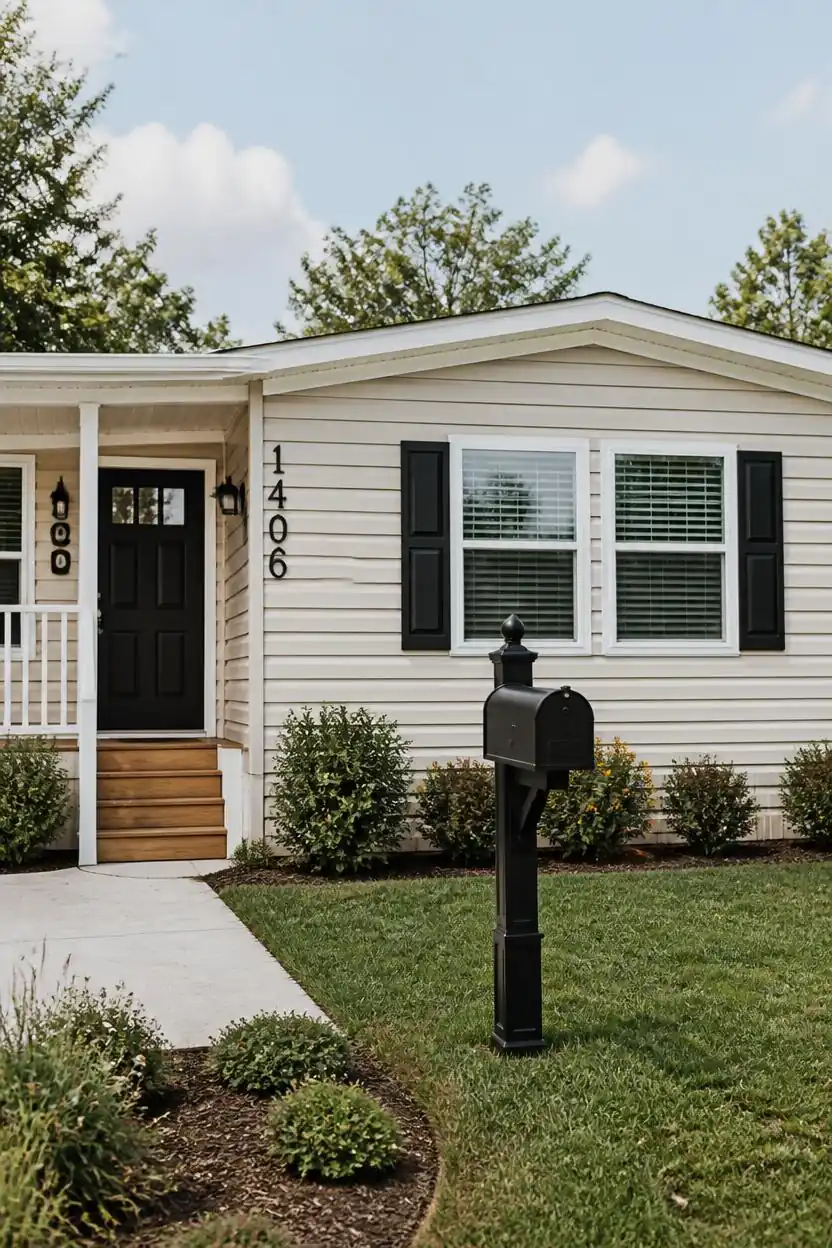
12. Layer Foundation Planting to Bridge Skirting and Ground
The transition point where a manufactured home’s skirting meets the ground is often left completely bare, creating a hard, awkward line that draws attention to the home’s elevated foundation rather than softening it. Layering foundation plants in graduated heights, taller shrubs at the back near the skirting and shorter groundcover or flowering plants in front, gradually bridges that hard line into the surrounding yard instead of leaving one abrupt transition. Choose plant varieties suited to the home’s specific sun exposure and climate zone, since foundation plantings that struggle or die back seasonally undercut the polished look this idea is meant to create. Keep the planting bed’s depth proportional to the home’s overall scale, since an oversized bed can look disconnected from a smaller manufactured home footprint, while a bed that’s too shallow won’t achieve the gradual visual transition intended. This idea works especially well combined with the new skirting upgrade earlier in this list, since well-chosen skirting paired with layered planting in front of it addresses the entire base of the home as one cohesive, finished zone rather than two separate elements.
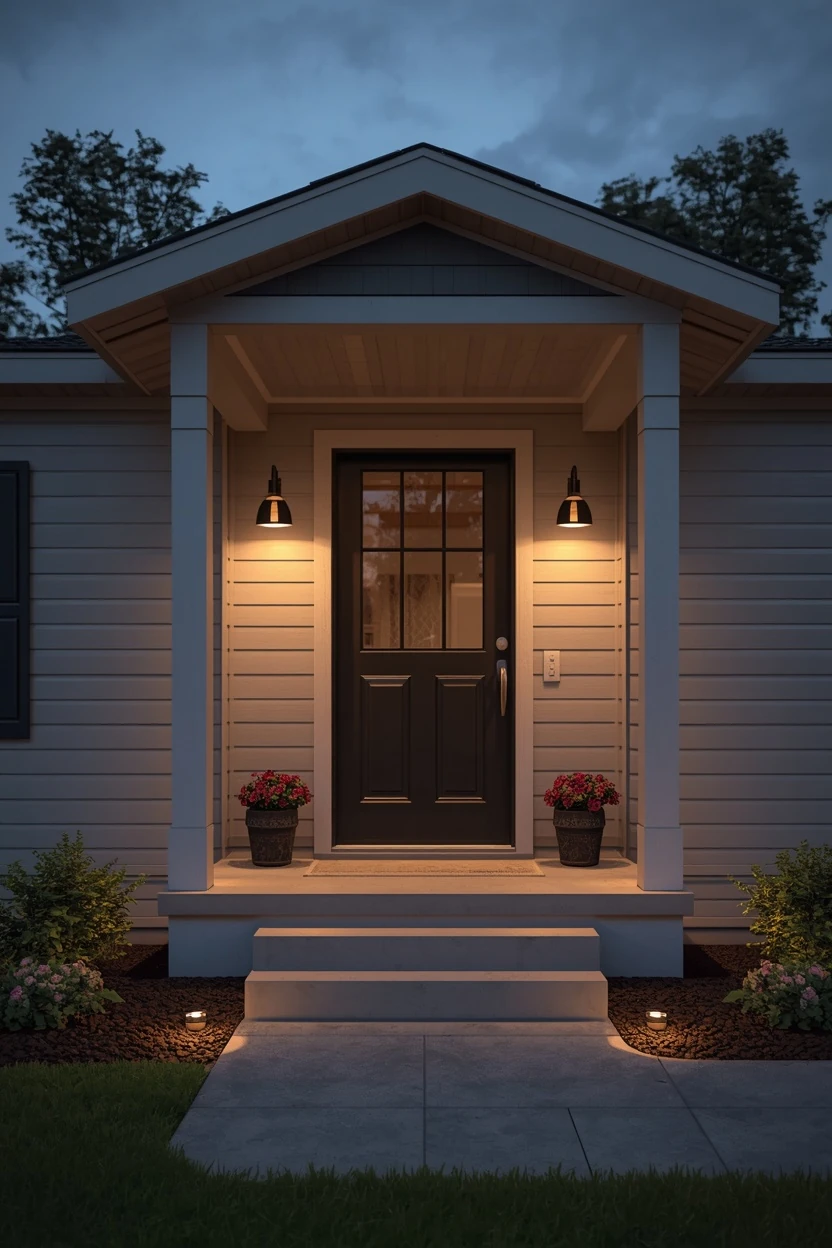
13. Add Uplighting and Porch Sconces
A pair of matching sconces flanking the front door, paired with a few small uplights positioned at the base of any foundation planting or the entry portico posts, extends the home’s curb appeal into the evening hours, when a home with only a single porch bulb tends to disappear entirely after dark. Choose fixtures in the same finish as the newly updated house numbers, mailbox, and door hardware, since a mismatched collection of exterior metals is one of the more common inconsistencies that undercuts an otherwise cohesive update. Position uplights to highlight specific vertical elements, like the entry arbor or a particularly full shrub, rather than spreading them evenly and randomly across the whole facade, since targeted lighting reads as designed while even flood-style lighting reads as purely functional. A warm bulb temperature, in the same 2700K to 3000K range used for interior lighting, keeps the exterior glow inviting rather than harsh or clinical. This upgrade matters specifically for a manufactured home because the format’s typically lower profile means it can get visually lost after dark next to taller neighboring homes unless the lighting plan actively counters that.
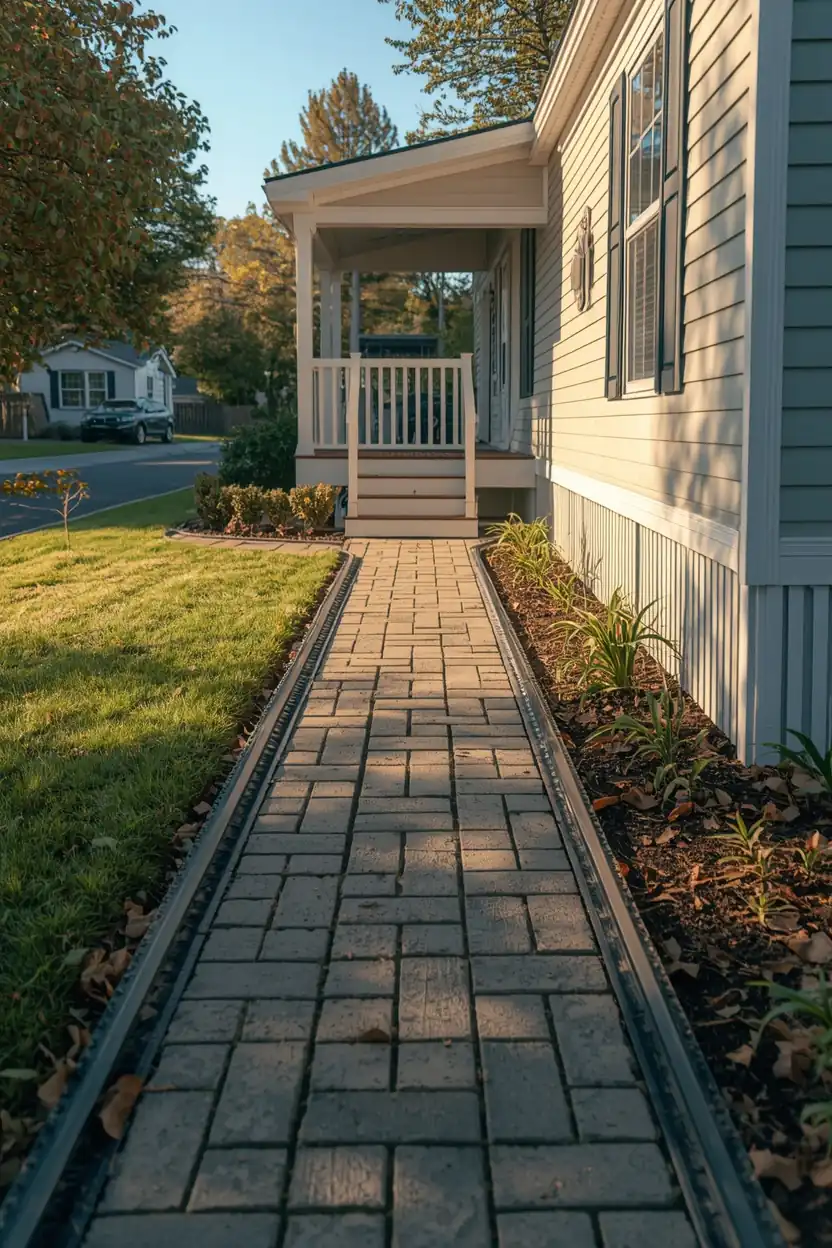
14. Define a Paver or Gravel Path to the Door
A clearly defined path, whether simple pavers, a gravel strip with a steel edge, or poured stepping stones, leading from the driveway or street directly to the front door gives visitors an obvious, intentional route to follow instead of walking across open lawn or a plain concrete slab. Choose a material that complements the home’s updated skirting and trim, like a warm gray paver to match a greige paint scheme, rather than a mismatched material that looks unrelated to the rest of the exterior’s color story. Keep the path’s width proportional to the home’s scale, generally wide enough for one or two people to walk comfortably side by side, since an oversized path can visually compete with a smaller manufactured home’s more modest facade. Lining the path with the same low plantings or edging used elsewhere in the landscaping ties this element back into the rest of the yard’s design rather than leaving it as an isolated feature. This idea is particularly effective paired with the entry arbor or trellis earlier in this list, since a defined path leading toward a vertical structure creates a genuine sense of arrival that a plain walk-up entry doesn’t offer.
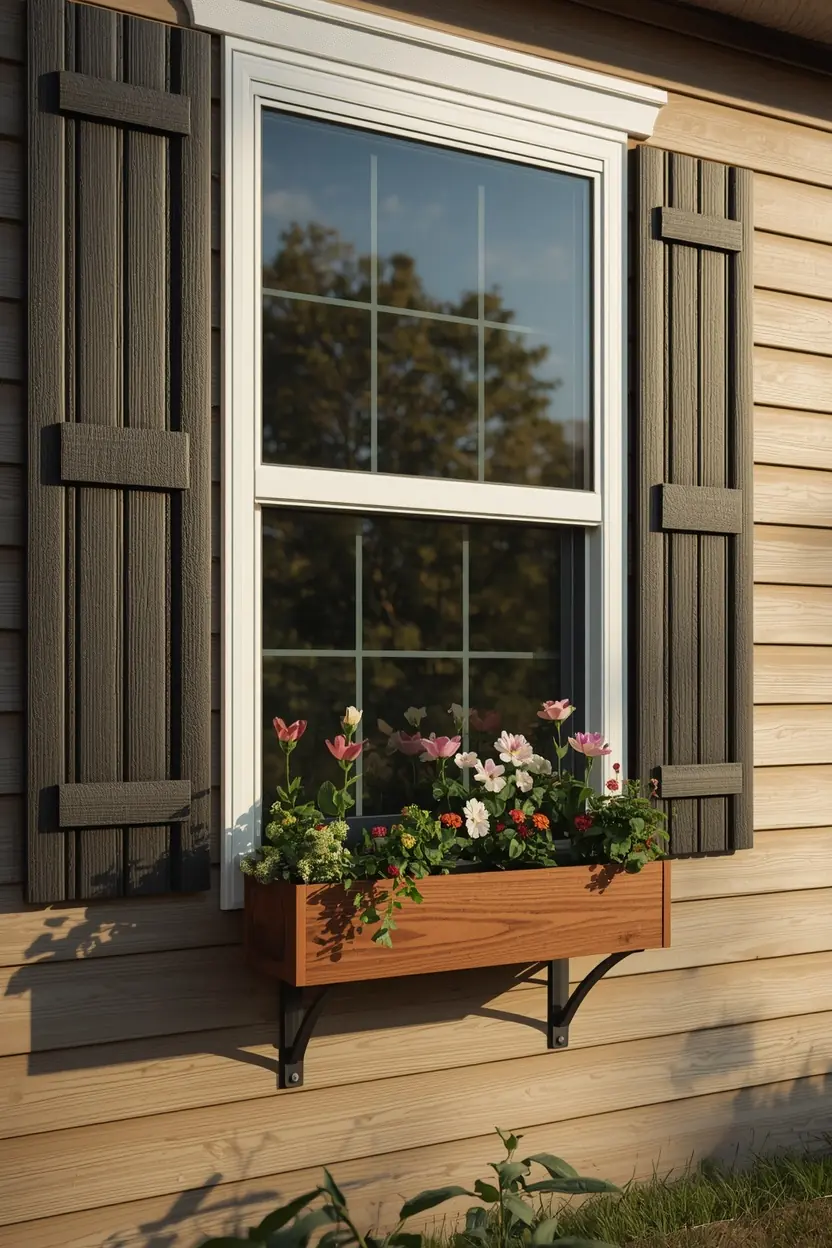
15. Add Window Boxes Under the Front Windows
Window boxes filled with seasonal flowers or greenery add color and a sense of care directly at window height, which is a level of detail that’s rare on manufactured homes and immediately signals an intentional, well-tended exterior. Choose a window box width that matches the window frame closely, similar to the shutter-sizing principle earlier in this list, since an undersized or oversized box breaks the same proportional balance that mismatched shutters do. Mount the boxes securely into the home’s structural framing rather than just the siding itself, since siding alone typically can’t support the weight of a filled, watered planter box over time. Rotate the plantings seasonally, keeping a simple, cohesive color palette that complements the exterior paint rather than clashing with it, which keeps this detail looking fresh throughout the year rather than fading into the background after the first season. This is a small, affordable idea, but it adds a layer of color and texture at exactly the height most passersby naturally look, right alongside the windows themselves.
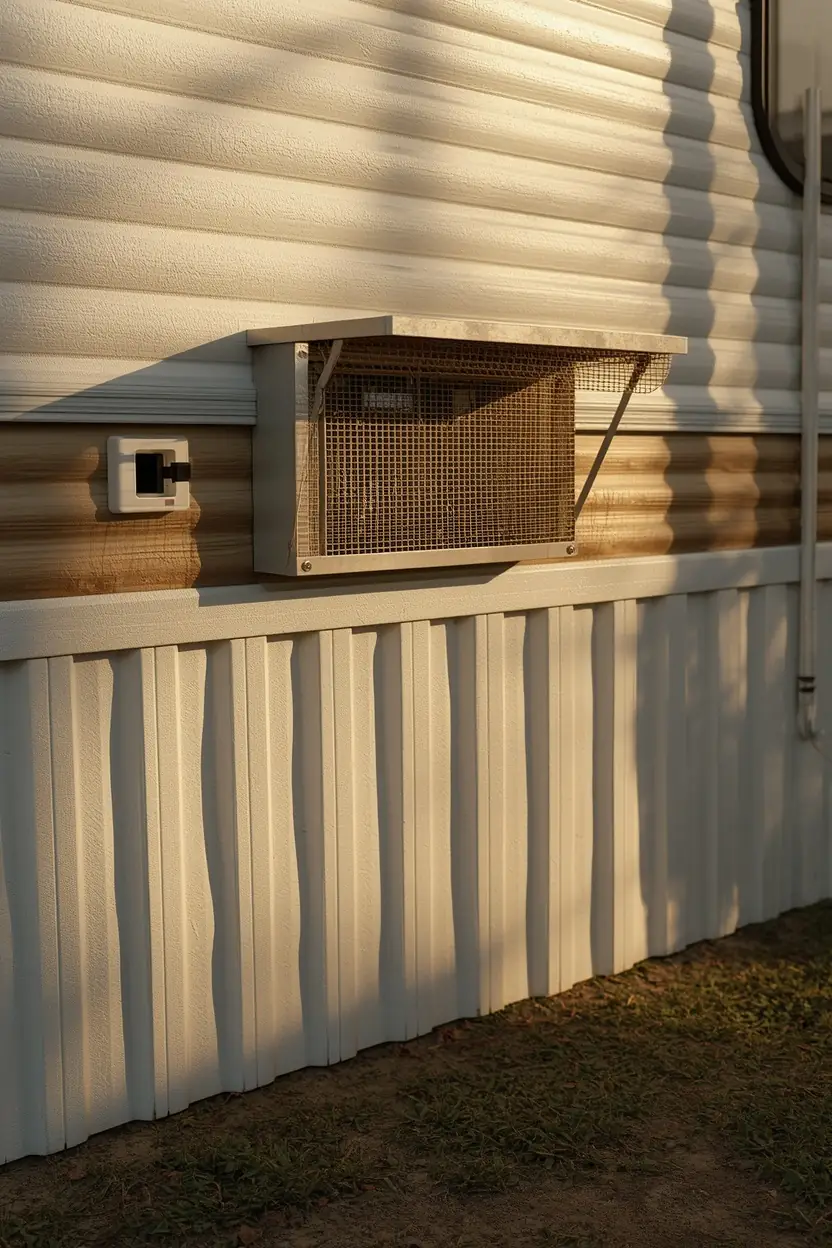
16. Disguise the Utility Panel and Breaker Box
The exterior breaker box, water spigot, and utility hookup panel on a manufactured home are often left in plain, mismatched gray or beige, sitting in clear view along one side of the home where they can undercut an otherwise carefully updated exterior. A simple hinged screen or small enclosure, built or bought to match the home’s skirting material and color, covers these utilitarian elements while still allowing full, unobstructed access whenever a technician or the homeowner needs to reach them. Never permanently seal, lock without a spare key, or restrict emergency access to any utility panel, since these need to remain reachable at all times for both routine maintenance and emergency shutoffs. Positioning any decorative screen with a simple latch or hook, rather than a fully fixed panel, keeps access genuinely quick and unobstructed rather than adding a real barrier. This detail is easy to overlook because these fixtures are often on a side wall rather than the main front facade, but on many lots that side wall is still visible from the street or a neighboring lot, making it worth addressing as part of a full exterior update.
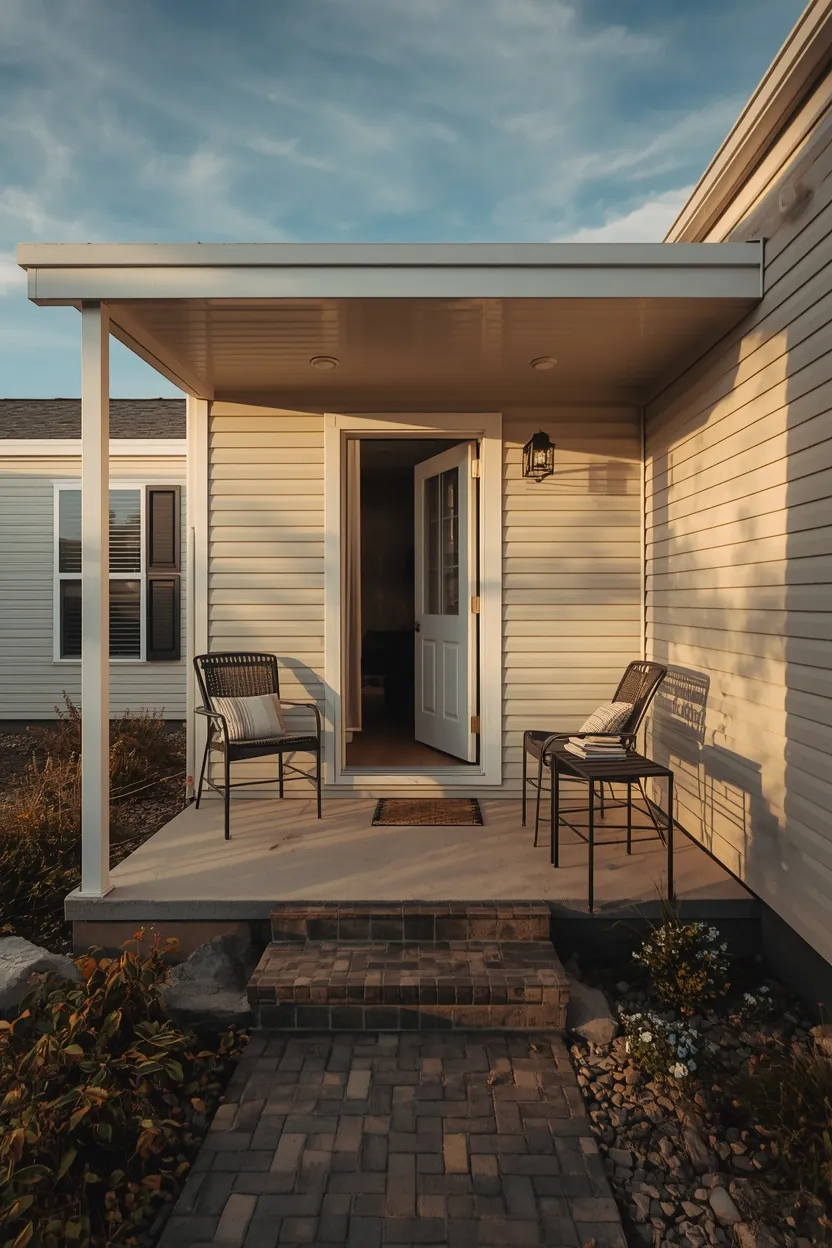
17. Build a Small Deck or Paver Patio
A modest deck or paver patio extending from the front or side entry adds genuine usable outdoor living space while also visually grounding the home to its lot in a way that a home sitting on bare piers or a narrow concrete stoop often doesn’t achieve. Even a small footprint, just large enough for a couple of chairs and a side table, changes how the entry reads by giving it a clear destination rather than a door that opens directly onto a step and then grass or gravel. Choose decking or paver material that coordinates with the path and skirting choices made elsewhere in the project, since a patio in a mismatched material can look like an unrelated add-on rather than part of one cohesive plan. Check setback and structural requirements with the home’s manufacturer or a local contractor before building anything attached to the home itself, since manufactured home structures sometimes have specific guidelines for what can be securely attached to the exterior wall versus what needs to be freestanding. This is a bigger investment than most ideas on this list, but it does double duty, improving both the home’s curb appeal and its actual everyday livability.
18. Standardize Exterior Hardware in One Finish
Every metal element on a manufactured home’s exterior — house numbers, mailbox, door hardware, porch light fixtures, and any railing hardware — should share one consistent finish, whether that’s matte black, aged brass, or brushed nickel, since a mismatched combination of finishes is one of the most common reasons an otherwise well-updated exterior still looks slightly unfinished. This is a coordination step more than a standalone project, meaning it doesn’t require buying everything new at once; it simply means checking that each individual upgrade elsewhere on this list, from the mailbox to the porch sconces, is chosen with the same finish in mind from the start. Matte black has become the most versatile, forgiving choice across a wide range of siding and paint colors, though a warmer aged brass can work beautifully against a darker, richer paint scheme instead. Keeping a small sample or paint chip of the chosen finish on hand while shopping for each individual piece prevents the common mistake of picking pieces one at a time that seemed close enough in person but don’t actually match once installed side by side. This is a low-cost, high-impact coordination step that ties every other idea on this list together into one cohesive final result.

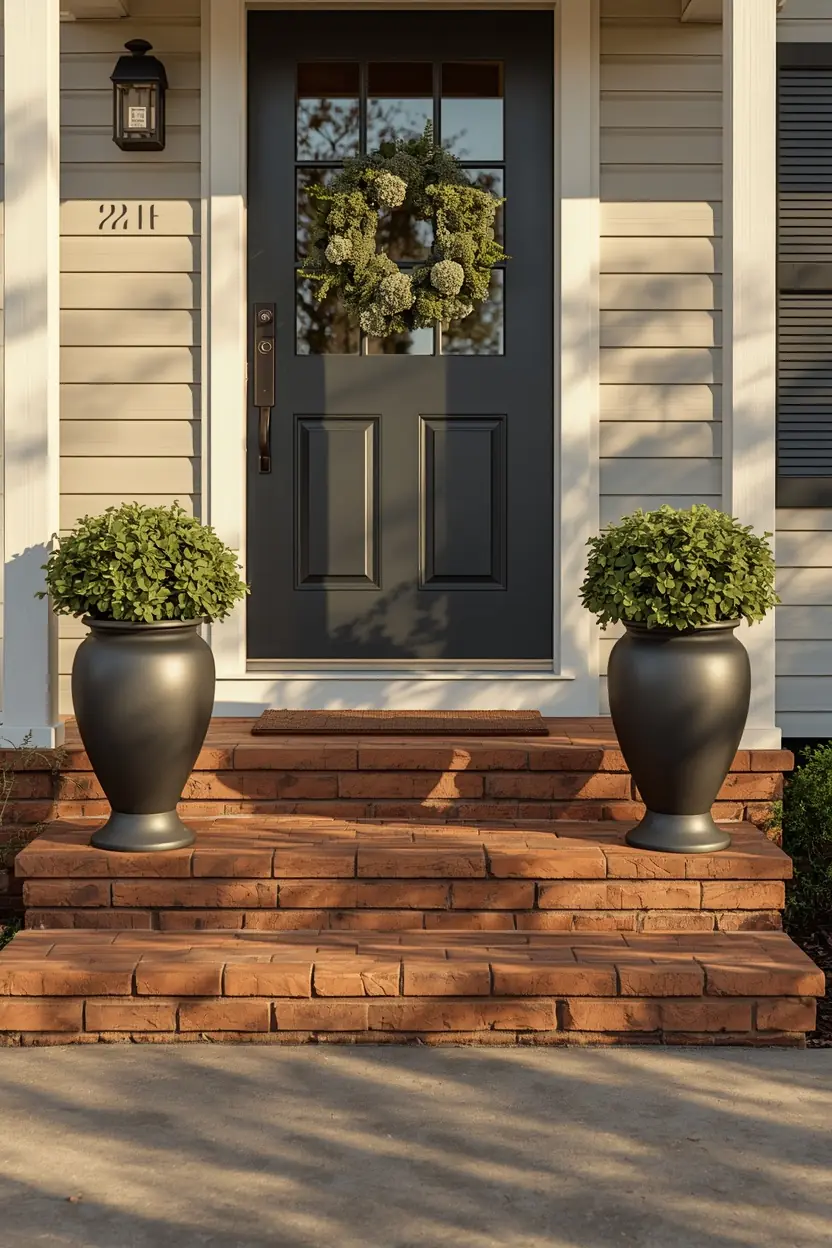
19. Flank the Entry Steps With Matching Planters
A pair of matching planters, positioned symmetrically on either side of the entry steps or the front door, is one of the oldest and most reliably effective curb appeal tricks available, and it works just as well on a manufactured home’s entry as it does on any site-built porch. Choose planters in a material and color that coordinates with the home’s skirting or trim, like a matte charcoal ceramic pair against a lighter exterior, so the planters read as part of the overall color story rather than a separate decorative afterthought. Fill both planters with the same plant variety and in the same arrangement, since mismatched planting on either side undercuts the symmetry that makes this idea work in the first place. Keep the plants seasonally appropriate and consistently maintained, since a pair of dead or leggy planters at the entry does more visual harm than having no planters there at all. This is a fitting idea to end on because it’s one of the simplest, least expensive upgrades on the entire list, and yet it’s positioned at the exact spot every single visitor sees up close on their way to the door.
Styling Tips
- Pick one cohesive color story — a base siding color, one trim color, and one accent color — and carry it through every single upgrade on this list, from the skirting to the mailbox, since consistency across many small changes is what makes them read as one intentional project rather than a series of unrelated updates.
- Prioritize vertical elements, like an arbor, a trellis, or a portico, wherever the budget allows, since a manufactured home’s biggest visual challenge is its horizontal proportions, and vertical details do more to counter that than almost any other design choice.
- Address the base of the home, where skirting meets the ground, with the same care given to the roofline and entry, since that transition zone is one of the most visually overlooked areas on most manufactured homes.
Practical Implementation Ideas
- Start with the front door and house numbers first, since these are the lowest-cost, highest-visibility changes on the list and give an immediate sense of progress before tackling bigger projects like skirting or a portico.
- Handle the marriage line and roof fascia fixes before repainting the whole exterior, since both are easier to address properly as part of a full repaint rather than as a separate touch-up afterward.
- Budget landscaping and hardscaping changes, like the path and foundation planting, for a season when plants are actually available and likely to establish well, rather than rushing them in the wrong time of year.
Common Mistakes to Avoid
- Choosing shutters or window boxes sized for a standard site-built home window, rather than measuring the manufactured home’s actual, often narrower window frame, is one of the most common and most easily avoidable mistakes on this entire list.
- Removing, covering, or obstructing any visible tie-down strap or utility access point for purely aesthetic reasons is a genuine safety and code issue, not just a style choice, so any landscaping or screening around these elements must preserve full access and function.
- Skipping the roofline and skirting in favor of only addressing paint and decor leaves two of the most visually significant zones on a manufactured home’s exterior untouched, undercutting the impact of everything else that was upgraded.
Small-Space Alternatives
- On a smaller lot or a singlewide with very little front yard space, prioritize vertical elements like the entry arbor and a portico over wider hardscaping projects like a large patio, since vertical upgrades add visual interest without needing additional footprint.
- A single well-placed pair of matching planters and updated house numbers can carry much of the curb appeal impact in a tight entry space where a full landscaping bed simply isn’t possible.
- Skip the fence idea entirely in a very small lot, since a fence can make an already compact space feel more boxed in rather than more defined.
Budget-Friendly Alternatives
- Updating house numbers, the mailbox, and door hardware together typically costs well under a hundred dollars combined and delivers some of the highest visual return relative to cost on this entire list.
- A gallon of exterior paint for the front door and a can of metal paint for the roof fascia address two separate ideas on this list for a fraction of the cost of a full exterior repaint.
- Foundation planting using small starter plants, rather than mature nursery stock, costs significantly less upfront and fills in within a season or two with regular watering and care.
Pro Styling Recommendations
- Photograph the home’s front exterior before starting any project, then compare progress photos after each individual upgrade, since it’s easier to notice a home’s improving proportions and cohesion in photos than while looking at the changes happen gradually in person.
- Choose the hardware finish and color palette before purchasing anything, then keep a small sample on hand while shopping for each subsequent piece, since coordinating after the fact is far harder than planning it from the start.
- Check in with the home’s manufacturer, a local contractor, or the mobile home community’s management before any project that involves attaching new structures to the home itself or the property line, since manufactured homes and their communities often have specific guidelines worth confirming before investing time and materials.
Frequently Asked Questions
Conclusion
A manufactured home’s curb appeal was never really about size to begin with. It’s about paying attention to the details that get skipped everywhere else — the seam nobody talks about, the shutters sized for the wrong window, the flat metal fascia nobody thinks to repaint. Handle those alongside the classics like paint, skirting, and lighting, and the home stops reading as a smaller version of a house and starts reading as a home that someone genuinely cares about, which was the whole point of curb appeal all along.