19 Farmhouse Entryway Ideas That Wow Guests Instantly
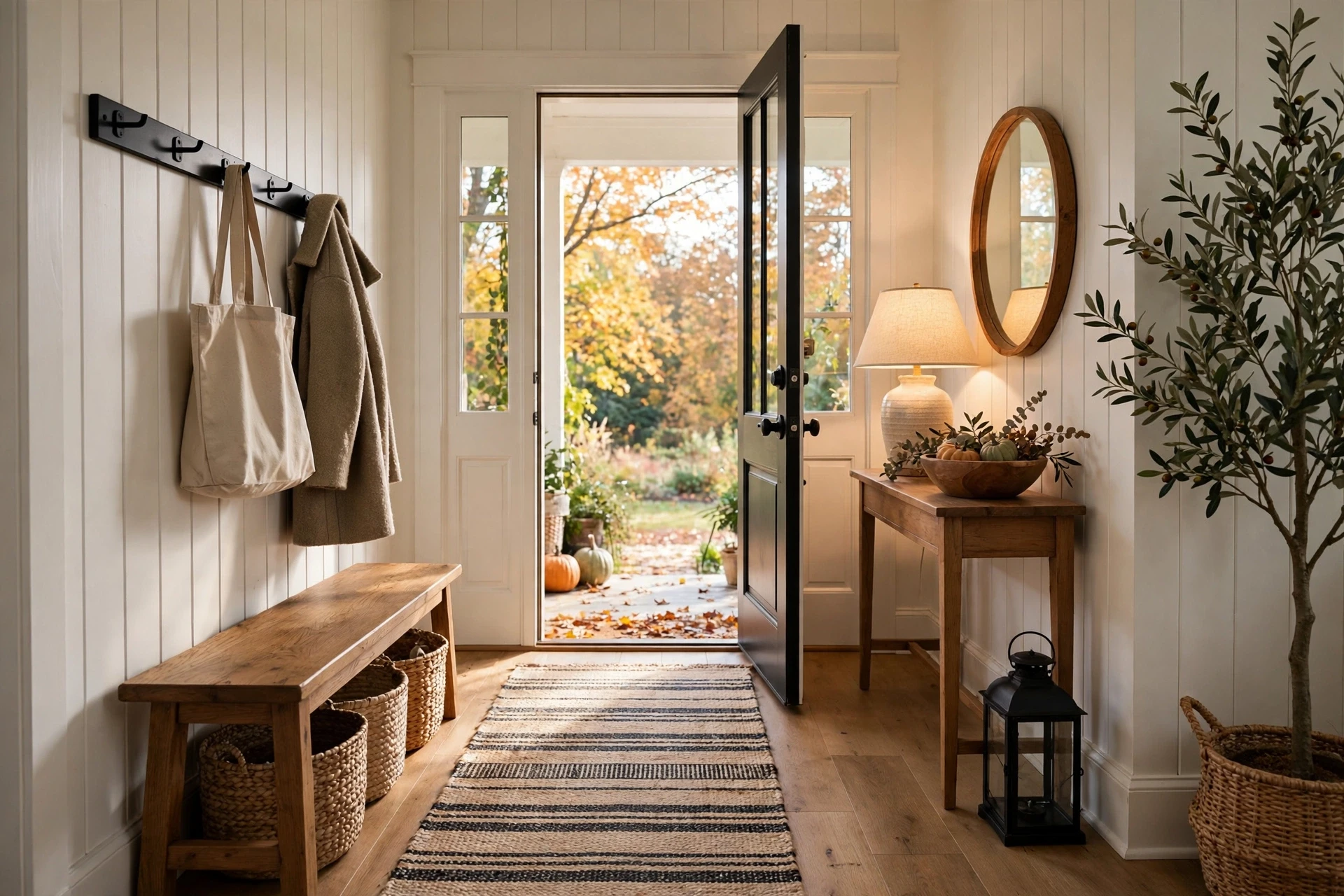
Imagine your guest on the porch. They knock. You open the door. Before a single word, they’ve already seen your wood bench, felt the warm glow of a lantern and caught a whiff of something like apples and cedar.
That’s the power of an entryway. It’s the shortest walk in your home, but it sets the mood for every room behind it.
A farmhouse entry works best when it does two jobs at once: it looks welcoming, and it deals with the real mess of coats, boots, keys and mail. Get both right, and your home feels calm from the first step.
Below are 19 farmhouse entryway ideas that cover color, texture, light, storage and a few small touches guests remember. Each one shows cost, effort and whether renters can try it.
Table of Contents
What Is a Farmhouse Entryway?
Quick answer: A farmhouse entryway is a warm, practical entry that uses natural wood, white or warm neutral walls, black iron details, woven baskets and vintage pieces. It’s built for real life, with a bench, hooks and storage, and it feels cozy and uncluttered.
The look comes from working farms, where the entry was a mudroom first and a pretty space second. That’s why you see peg rails, benches, baskets, galvanized buckets and boot trays in farmhouse design. The beauty comes from the usefulness.
Farmhouse vs Modern Farmhouse vs Rustic Entryways
These styles overlap. Here’s a quick way to tell them apart.
Classic farmhouse: Warm, vintage and collected. Think distressed wood, spindle benches, enamelware, galvanized metal and soft florals.
Related: 21 Industrial Farmhouse Ideas That Explain the Obsession
Modern farmhouse: Cleaner and lighter. Think white board and batten, black hardware, simple shapes and a limited palette of white, black and wood.
Rustic: Rougher and more natural. Think rough-hewn beams, stone, antlers, leather and heavy timber.
If you want a tidy, photo-friendly entry, lean modern farmhouse. If you love thrifted charm, go classic. If you live in a cabin or lodge-style home, add rustic touches.
The Five-Second Rule: What Guests Notice First
Guests start forming an impression before they say hello. Focus your effort on the things they see, smell and feel first.
- The door. Color, wreath and hardware set the tone from the porch.
- The light. A warm glow feels welcoming. A harsh, cool bulb does not.
- The focal point. One styled spot, like a console with a mirror, gives the eye somewhere to land.
- The order. Shoes, coats and bags tucked away say “you’re expected.”
- The scent. A light, clean scent lifts the whole space.
- The texture. Wood, wool, jute and linen make the entry feel inviting underfoot and at hand.
Use this list as a checklist. If you only have an hour, fix the light, clear the floor and style one surface.
Quick Budget Cheat Sheet
Prices are rough US estimates. Thrifting and using what you own lowers them.
- Free to $15: dough bowl catch-all (9), key hook station (12), scent (18)
- Under $50: wreath (2), runner (5), lantern or sconce (6), mirror (8), peg rail (11), umbrella bucket (14), picture ledge (16), guest slipper basket (19)
- Under $100: console table and lamp (7), bench and baskets (10), boot tray and shoe storage (13), tall greenery (17)
- Weekend projects (25-250): painted door (1), warm white and black accents (3), board and batten wall (4), vintage dresser (15)
19 Farmhouse Entryway Ideas
A Painted Front Door in a Deep, Moody Color
Cost: 25-60 | Effort: one weekend | Renter-friendly: With landlord approval
The door is the first thing guests see, so give it color. Deep green, charcoal black, navy or a warm barn red all look right with farmhouse siding and brick. Choose a satin or semi-gloss exterior paint, because it handles weather and wipes clean. Sand lightly, prime if you’re going from a light color to a dark one, and paint in thin coats for a smooth finish. Add black or aged brass hardware so the color looks chosen, not accidental.

A Wreath and Seasonal Door Decor
Cost: 10-40 | Effort: 10 minutes | Renter-friendly: Yes, with an over-the-door hook
A wreath turns a plain door into a greeting. Choose boxwood, a simple grapevine ring or dried wheat, and size it to about two-thirds the width of the door. Hang it near eye level, with the center around 60 inches from the floor. Use an over-the-door hook or a removable hanger so the paint stays safe. Swap in mini pumpkins and ribbon for fall, and evergreen sprigs for winter.

Warm White Walls With Black Accents
Cost: 30-60 | Effort: one weekend | Renter-friendly: With landlord approval, or use black accessories only
Entries are often small and dim, so warm white walls help them look bigger and brighter. Choose a white with a creamy base so it doesn’t feel stark next to wood. Then repeat black in three places, such as hooks, a mirror frame and a lantern, to give the farmhouse look its crisp lines. Keep trim in the same warm white or a slightly lighter shade. Test your paint on the wall first, since entry light is often different from the rest of the house.
A Board and Batten or Shiplap Wall
Cost: 60-200 DIY, or 40-100 for peel-and-stick planks | Effort: one weekend | Renter-friendly: Peel-and-stick only
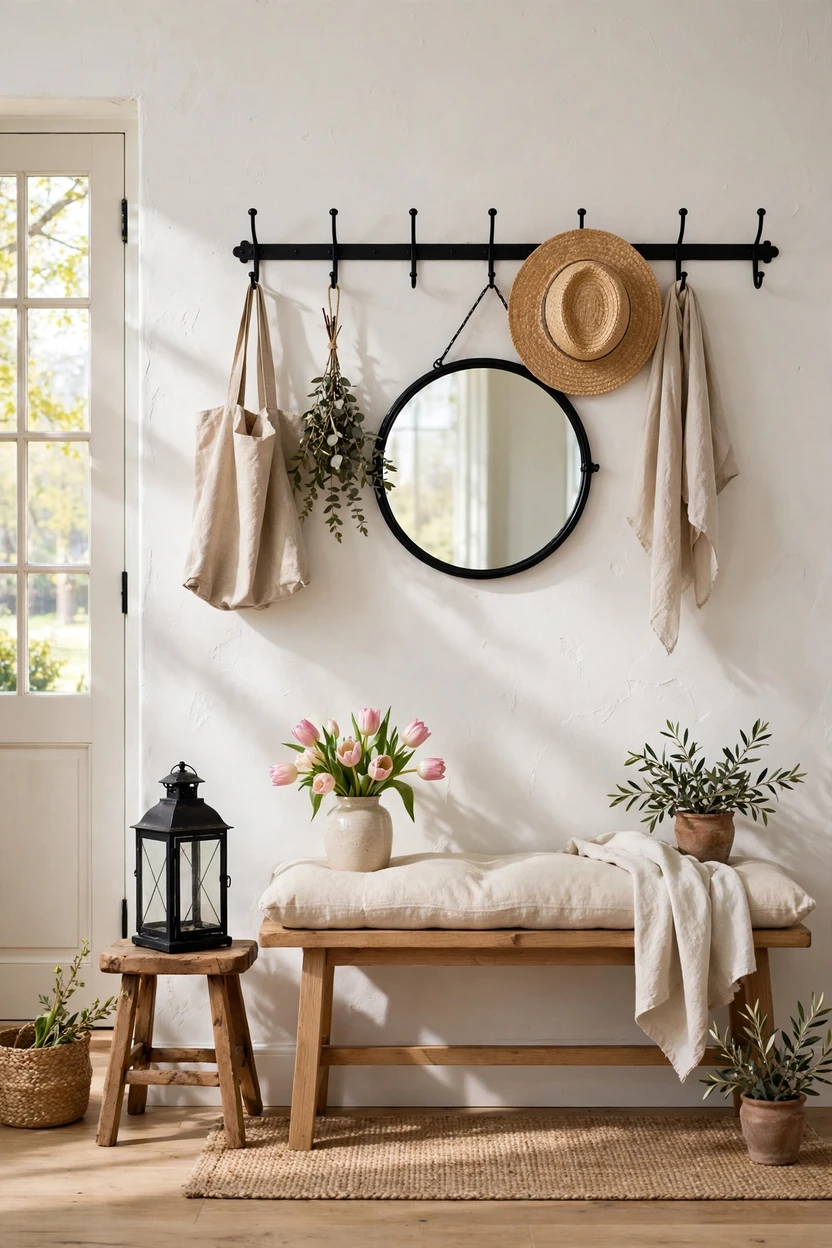
Vertical board and batten or horizontal shiplap gives a farmhouse entry its structure. For board and batten, space thin wood strips about 12 to 16 inches apart on the wall, caulk the gaps and paint everything one color. Peel-and-stick wood-look panels are an option for rentals, though test a small patch first. The wall also gives hooks and shelves something solid to hold, so find the studs before you mount anything heavy. Paint the wall in warm white or a soft greige for a calm base.
A Layered Runner or Washable Entry Rug
Cost: 25-100 | Effort: 5 minutes | Renter-friendly: Yes
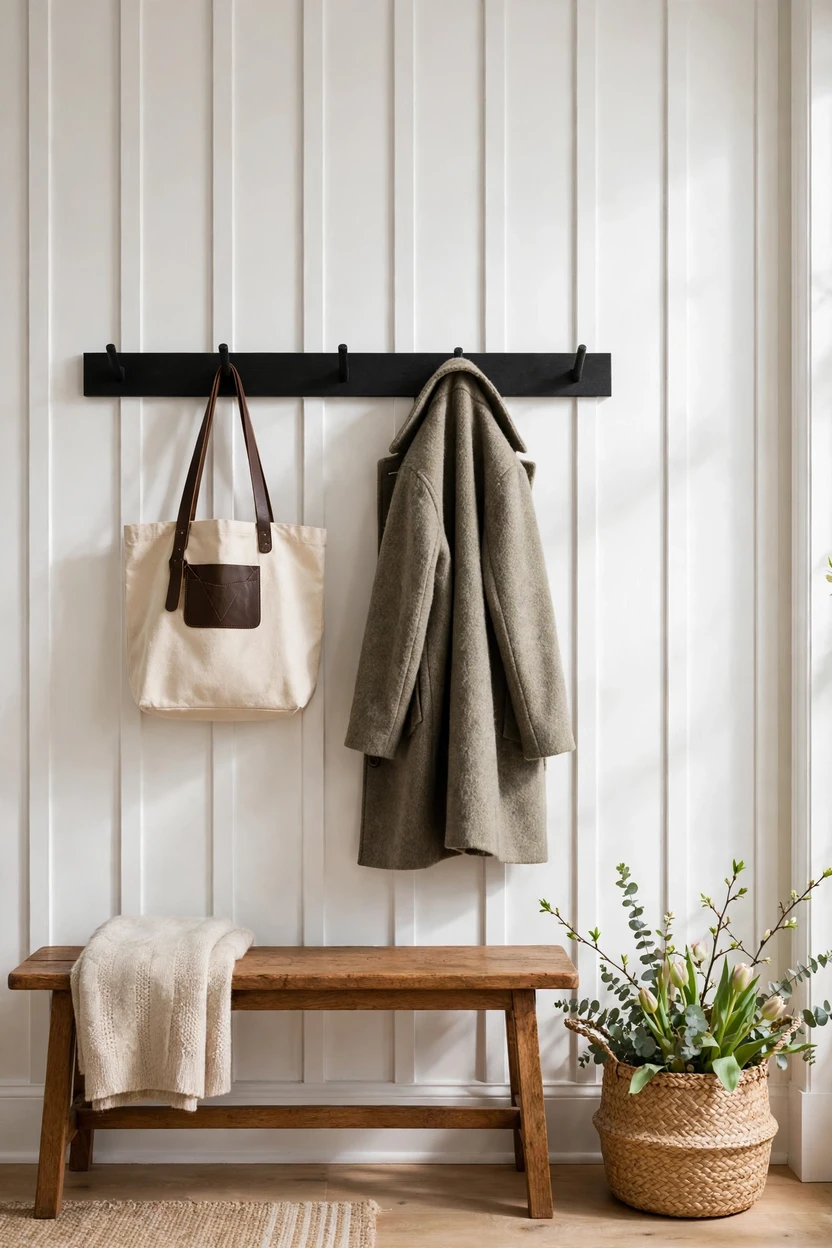
A rug catches grit and adds pattern at the same time. Choose a flat-weave runner in jute, a striped cotton or a faded floral, and layer a smaller mat over it if the space is wide enough. Pick a machine-washable style with a non-slip pad, since this rug takes the most wear in the house. Keep the profile low so the door can swing over it, and measure before you buy. Cream, black and a muted red or blue are easy shades to pair with farmhouse wood.
Related: 18 Modern Farmhouse Living Room Ideas With Texture & Warmth
Lantern or Plug-In Sconce Lighting
Cost: 20-70 | Effort: 15 minutes | Renter-friendly: Yes
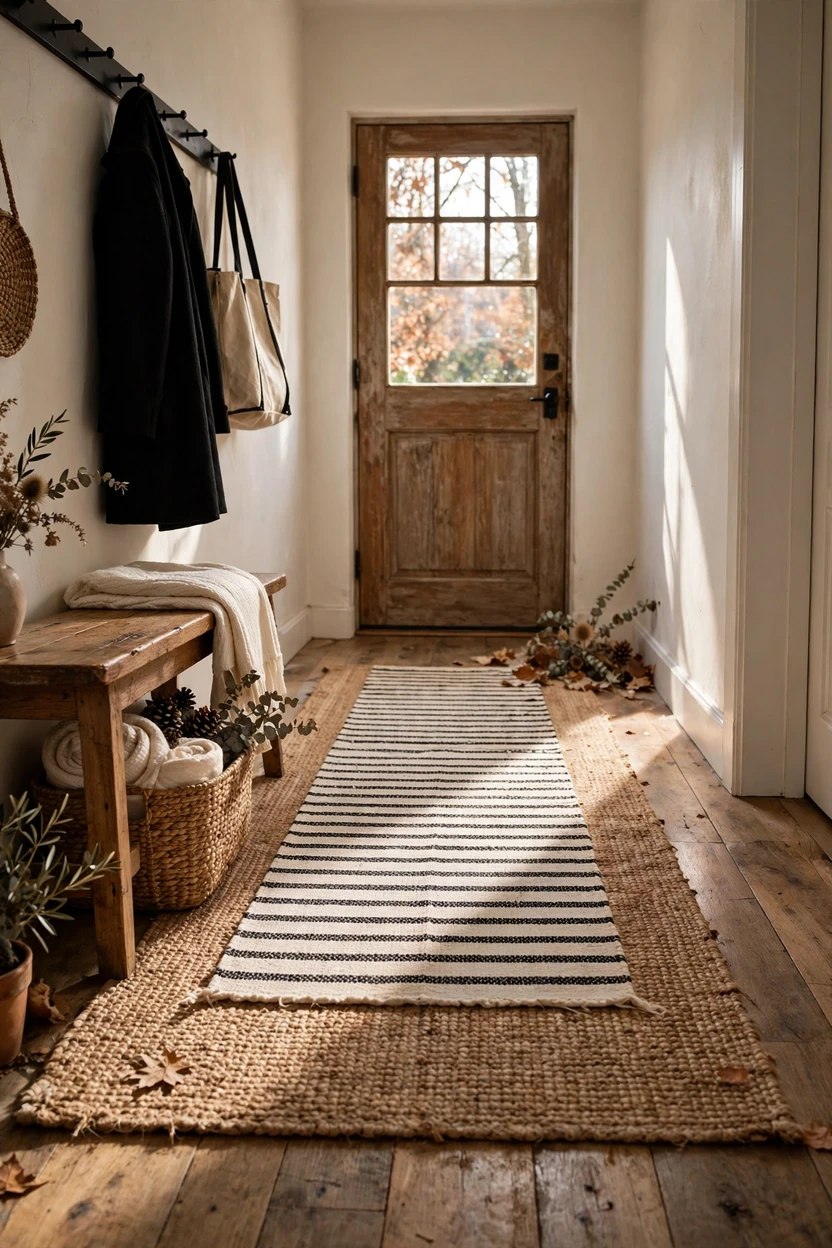
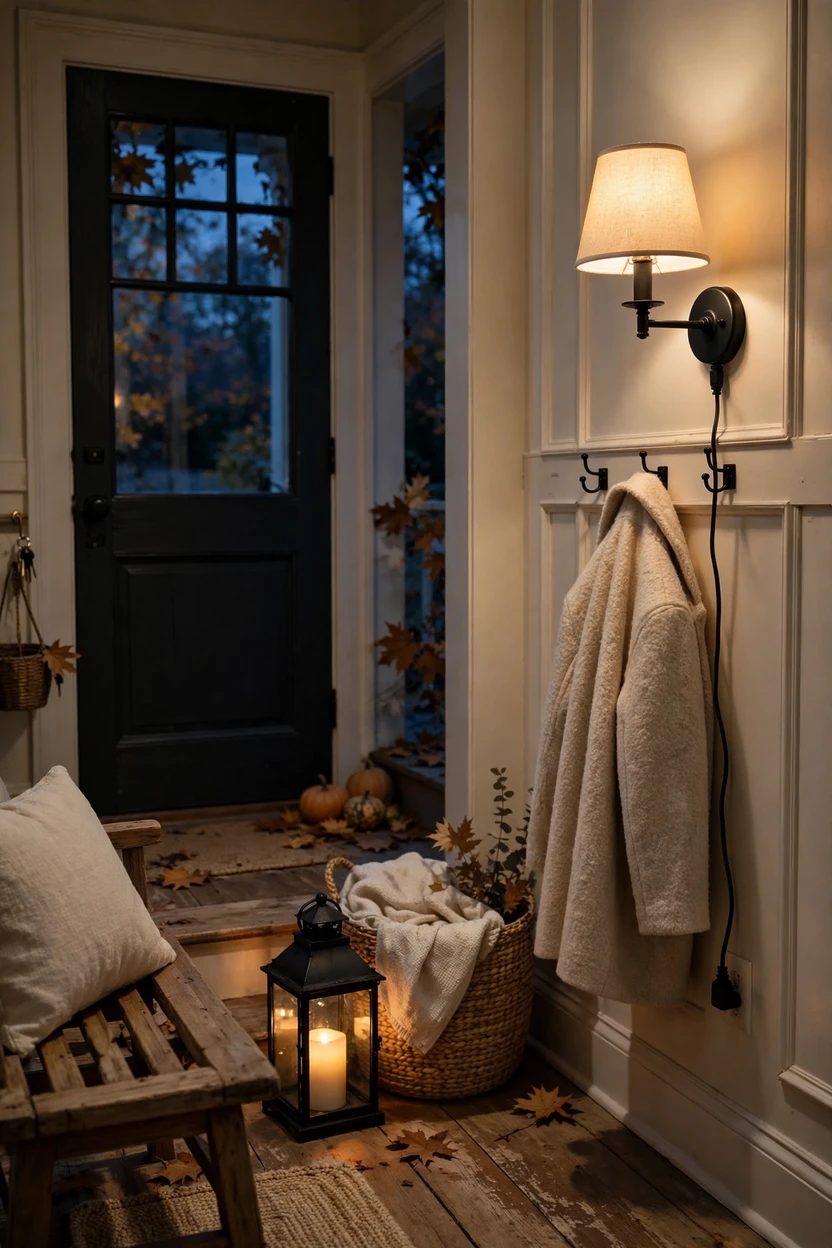
Light changes how an entry feels more than any other detail. Set a black iron lantern on the floor or console with a flameless candle inside, or add a plug-in wall sconce with a cord cover so you don’t need an electrician. Use a warm bulb around 2700K, which makes wood and white walls glow instead of look flat. Place light at different heights, one low and one at eye level, to avoid a dark ceiling and bright floor. Flameless candles are the safer choice near coats and dried decor.
A Console Table With a Lamp and Tray
Cost: 0-150 | Effort: 20 minutes | Renter-friendly: Yes
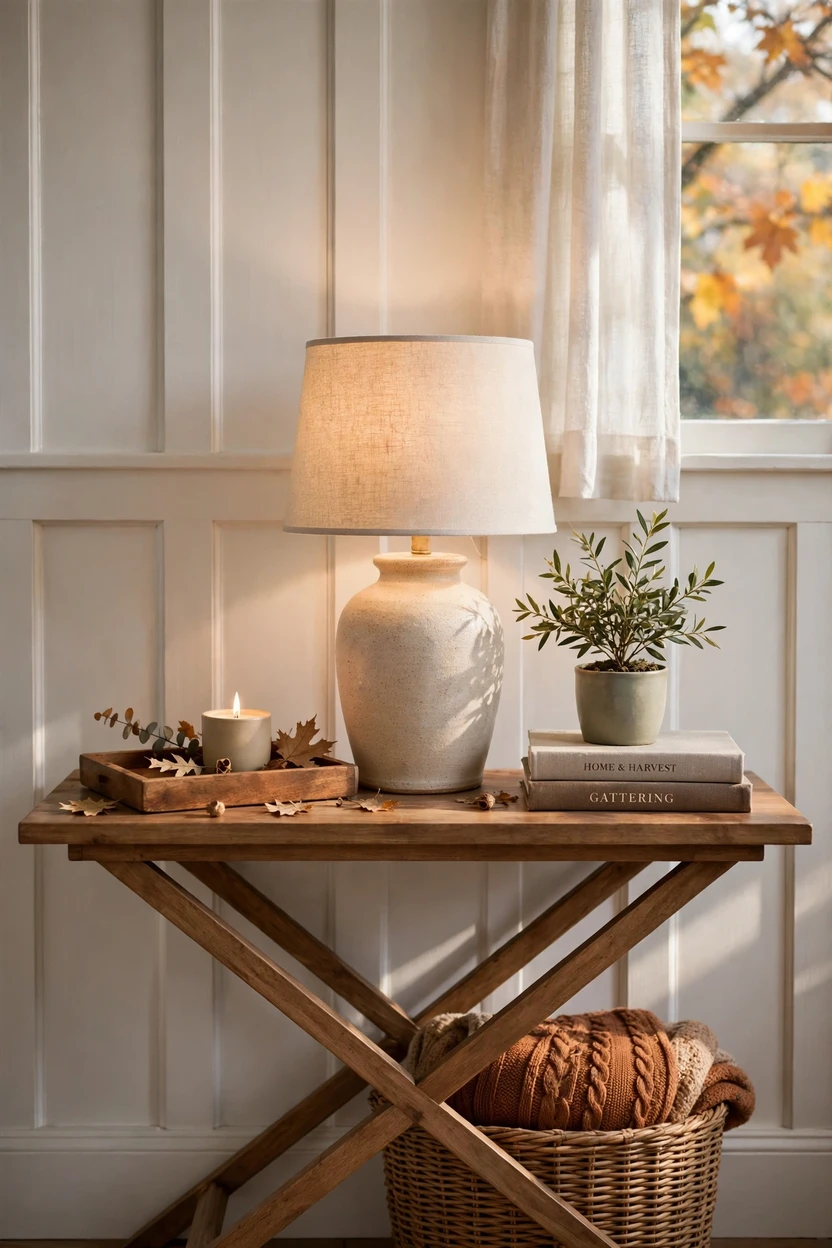
A console gives the entry a focal point, and it works best when it’s slim, about 10 to 14 inches deep, so you keep a clear path. Pick an X-frame or plain wood table in a warm tone, then style it with a lamp, a tray and one small plant. Keep about a third of the surface empty so keys and mail have a place to land. Choose a lamp with a linen or white shade for soft light that matches the wood. Thrift stores and secondhand sites often have solid wood consoles at low prices.
A Round, Wood-Framed Mirror
Cost: 20-80 | Effort: 20 minutes | Renter-friendly: Yes, with a leaning mirror or proper anchors
A mirror doubles the light and gives everyone a last check before they leave. Choose a round shape to soften the straight lines of board and batten, with a frame in rope, natural wood or black iron. Hang it with the center around eye level, roughly 57 to 60 inches from the floor, and secure it to a stud or with rated anchors. If you can’t drill, lean a large floor mirror against the wall instead. Place it across from a window or lamp so it reflects light, not clutter.

A Dough Bowl Catch-All
Cost: free to $40 | Effort: 5 minutes | Renter-friendly: Yes
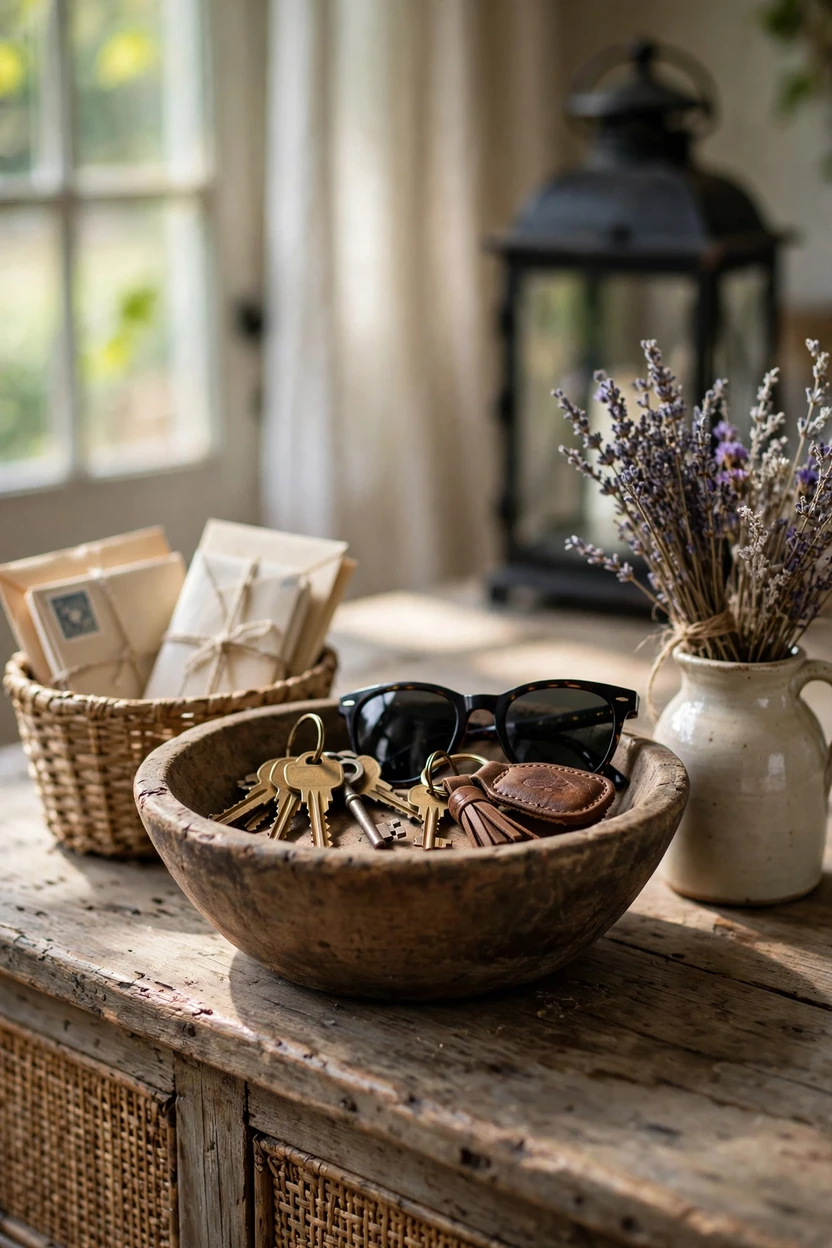
A wooden dough bowl on the console gives keys, sunglasses and loose change a home that looks pretty. Its rounded shape and aged wood suit farmhouse style, and it works as a catch-all you already might own from the kitchen. Keep mail in a small basket or letter holder nearby, and sort it daily so the pile never grows. A wooden tray works the same way if you don’t have a bowl. Add one small thing for scent or color, like dried lavender, so it still looks styled.
A Bench With Baskets Underneath
Cost: 0-150 | Effort: 20 minutes | Renter-friendly: Yes
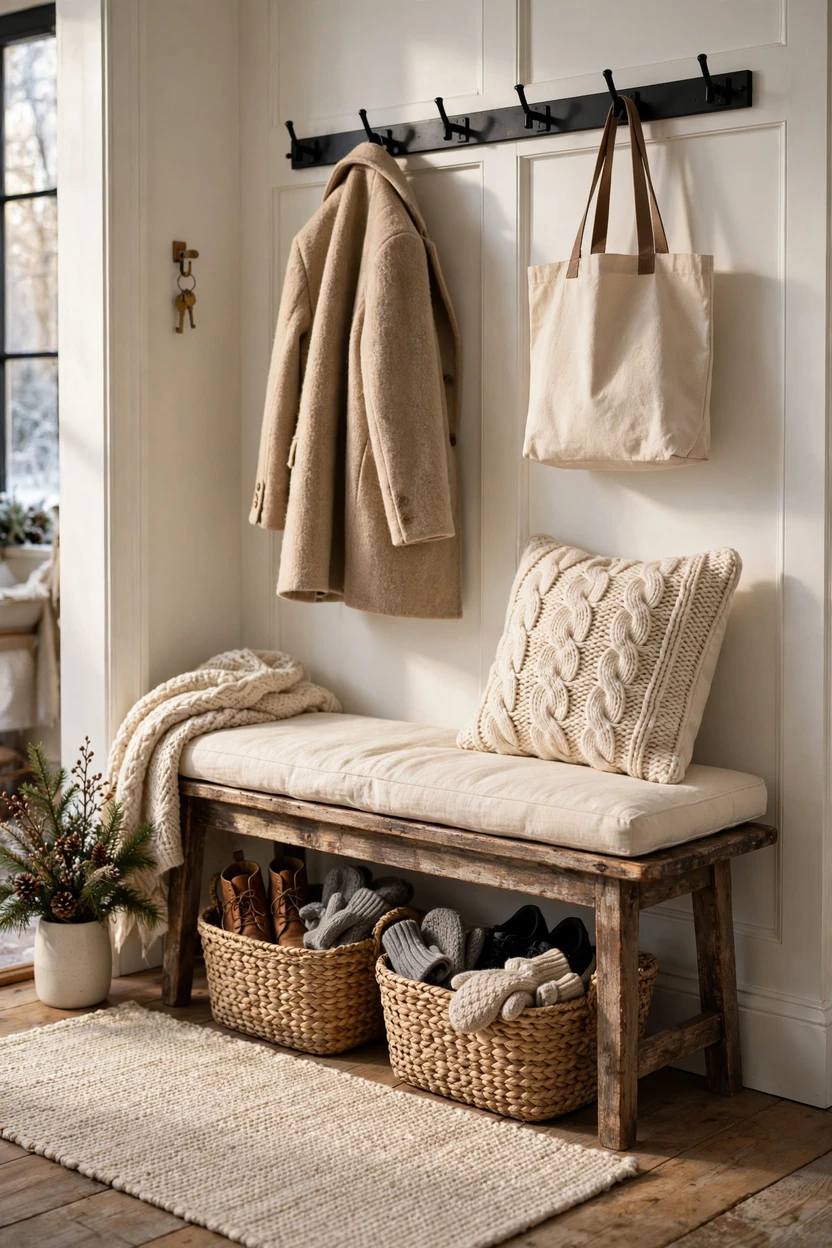
A bench gives everyone a place to sit and pull on boots, and it carries the farmhouse look without any extra decor. Pick a wood bench around 17 to 19 inches high, and slide two or three woven baskets under it for shoes, hats and gloves. Add a linen cushion and one textured pillow for comfort and softness. Thrifted spindle benches, pews and old kitchen benches all fit in well. Leave about 36 inches of clear walking space in front so the door and the path still work.
A Shaker Peg Rail
Cost: 15-45 | Effort: 30 minutes | Renter-friendly: Yes, with careful patching or light-duty hooks
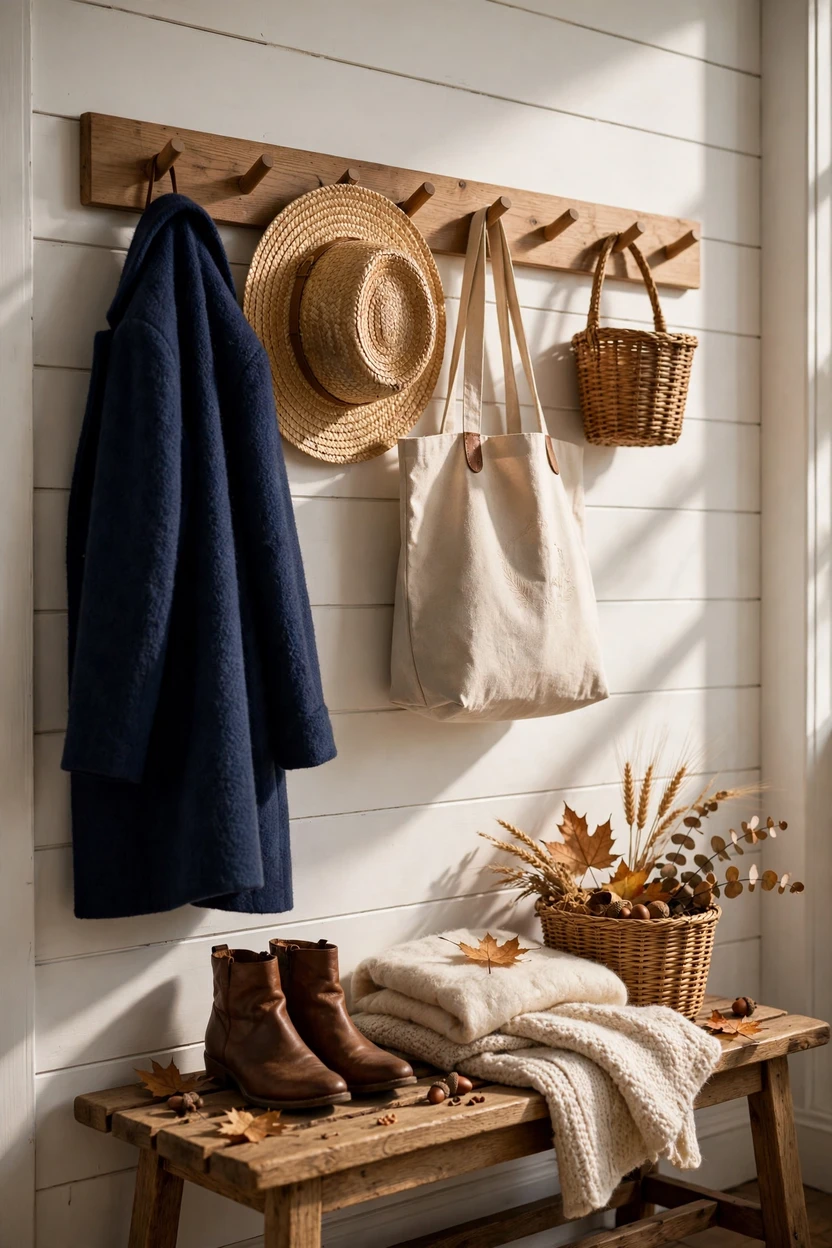
A board with Shaker pegs sits high enough to keep bags off the floor, and it’s about as farmhouse as hardware gets. Mount it with the top at around 60 to 66 inches for adults, and add a lower row at 40 to 48 inches if kids live in the house. Space the pegs about 6 to 8 inches apart, and anchor the rail into studs if it will hold heavy winter coats. Limit each peg to one item so the rail stays neat. Hang a woven basket on one peg for hats and gloves.
A Key Hook and Leash Station
Cost: 10-30 | Effort: 15 minutes | Renter-friendly: Yes
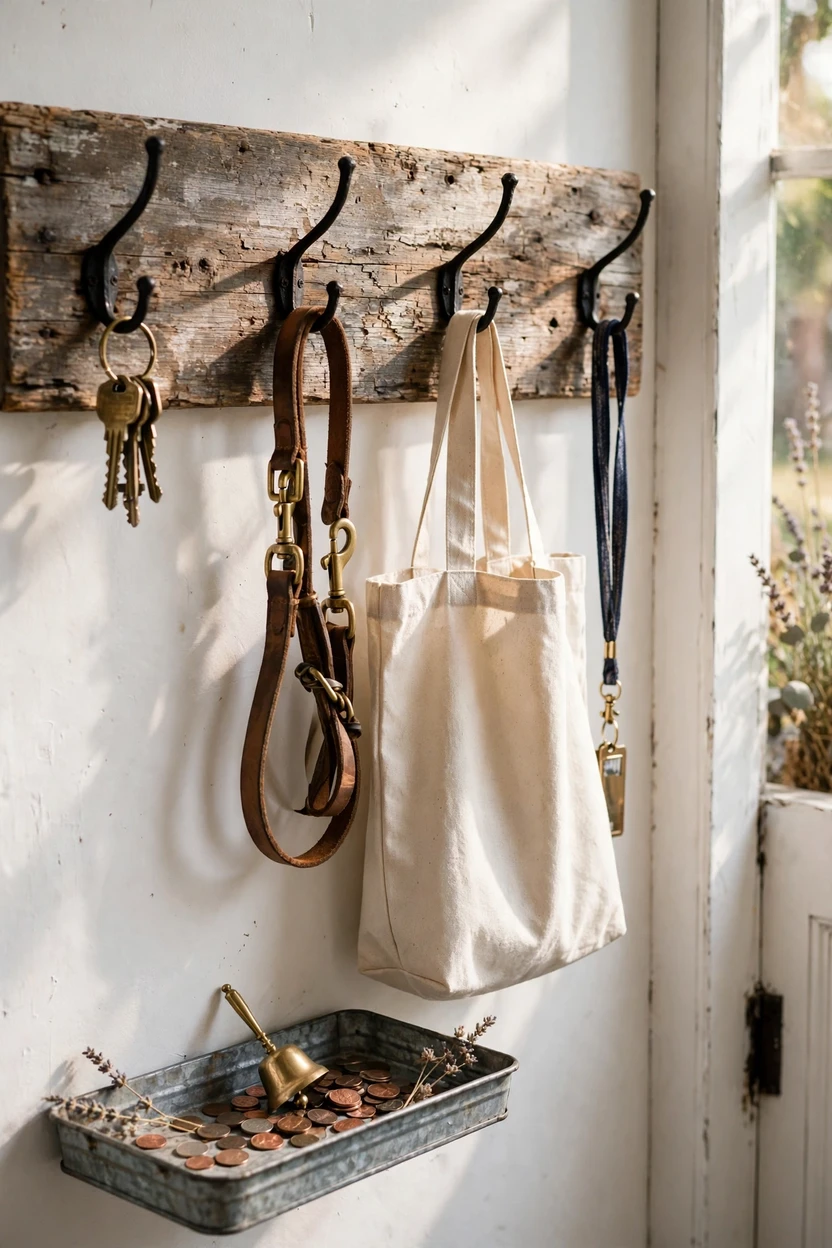
A small wood plank with three or four hooks by the door keeps the daily grab-and-go items in one place. Hang keys, a dog leash, a tote and a lanyard so no one hunts for them in the morning. Mount it on the side of the door where you reach first, at a height that’s easy for everyone. Add a tiny tray underneath for coins or a pet waste bag holder. A plain hook plank looks better than a printed sign, and it works harder.
A Boot Tray and Shoe Storage
Cost: 15-80 | Effort: 15 minutes | Renter-friendly: Yes
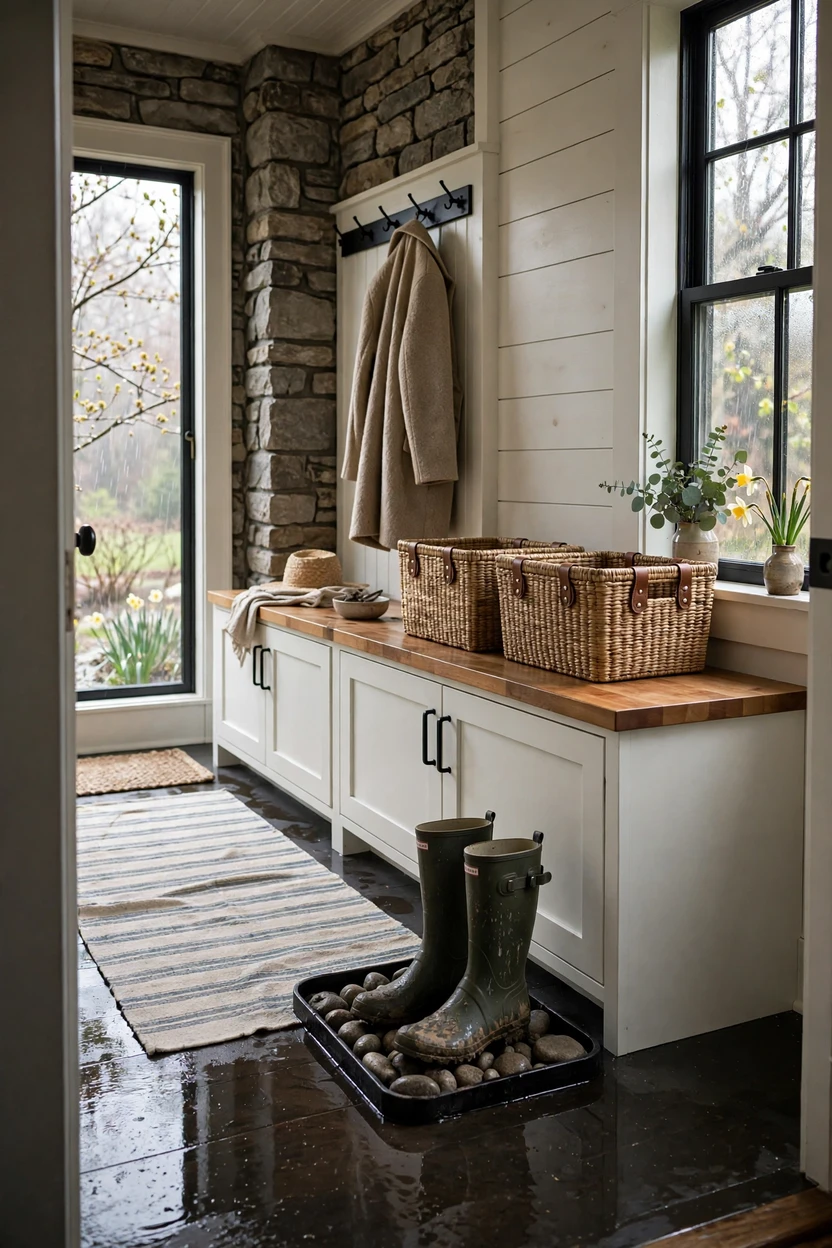
Mud and wet shoes can undo the prettiest entry in a day. Set a boot tray by the door, or line a shallow metal pan with river stones so water drains below the soles. For pairs that stay, use a closed cabinet, a lidded bench or lined baskets so shoes aren’t on view. Limit the entry to two pairs per person, and rotate the rest seasonally to a closet. Wipe the tray weekly so it doesn’t smell.
A Galvanized Bucket or Milk Can Umbrella Stand
Cost: 10-40 | Effort: 5 minutes | Renter-friendly: Yes
Galvanized metal is a farmhouse classic, and an old bucket or milk can makes a great umbrella stand. Place it in a corner near the door, and put a plastic saucer or pie tin inside the bottom to catch drips. On dry days, fill it with dried wheat, cotton stems or a few long branches. Hardware stores, thrift shops and flea markets often have them cheap. Choose a piece with a little patina, because shiny new metal can look flat.

A Vintage Dresser or Sideboard
Cost: 50-250 | Effort: one weekend if painting | Renter-friendly: Yes, since it’s freestanding
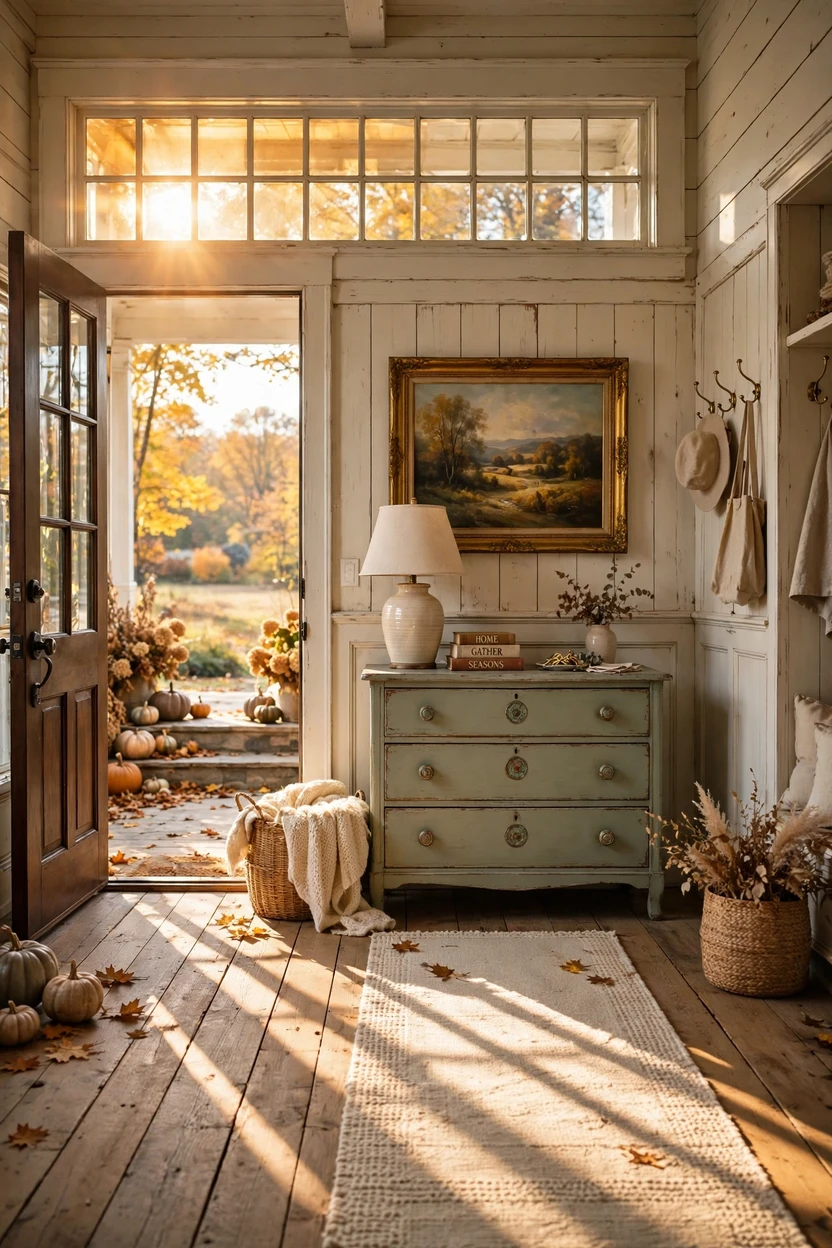
If you have a wider entry, a thrifted dresser holds much more than a console. Use the drawers for gloves, scarves, pet items and reusable bags, and keep the top styled with a lamp and a basket. Look for a piece around 14 to 18 inches deep so it doesn’t crowd the path. Paint it in a soft sage, cream or black, and swap the knobs for aged brass or black iron. Sand and prime first, and seal the top so it handles keys and wet umbrellas.
A Picture Ledge or Mini Gallery Wall
Cost: 15-60 | Effort: 30 minutes | Renter-friendly: Yes, with a ledge on removable strips for light frames
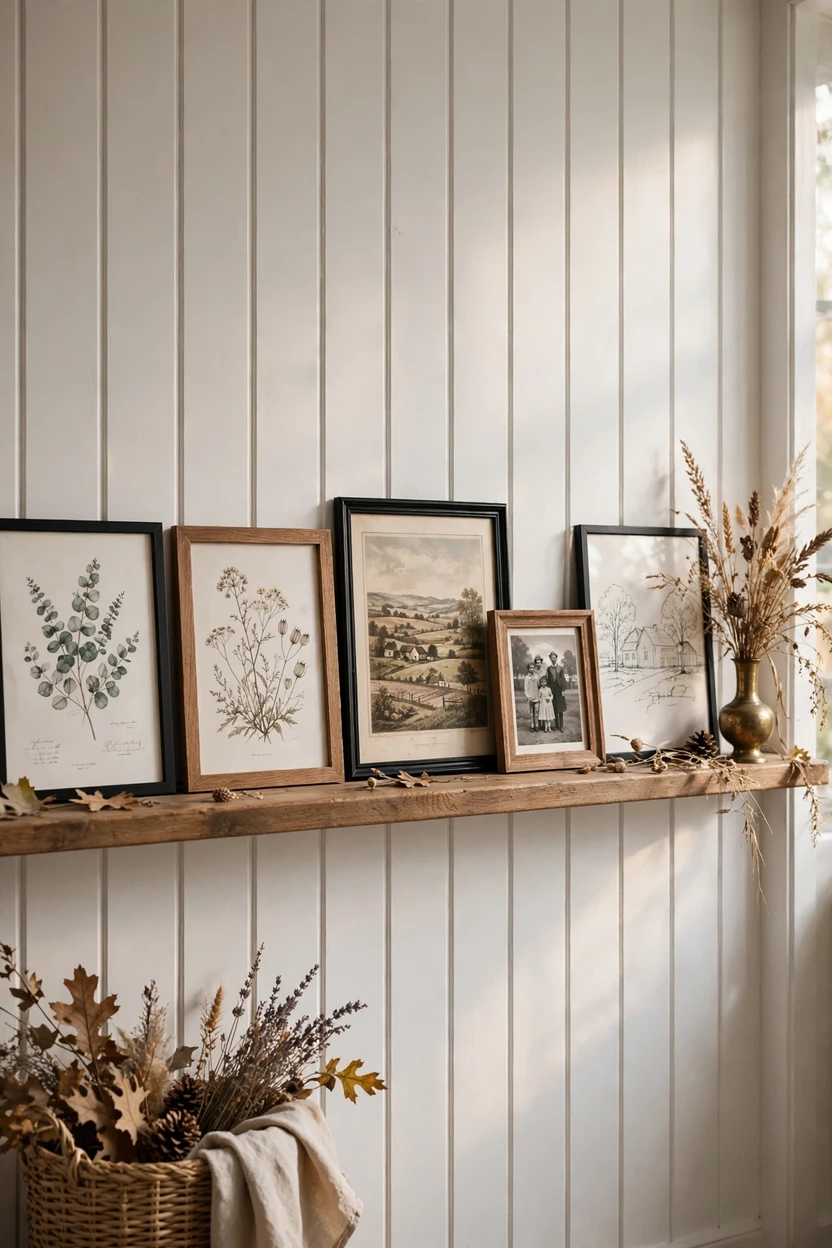
A picture ledge lets you swap art without making new holes. Fill it with a mix of frames: a botanical print, a vintage landscape, a family photo and a small mirror. Stick to two frame finishes, like black and natural wood, so the group feels collected. Many farmhouse entries lean hard on text signs, but real art and photos give a stronger personal touch. Lean the biggest frame in back and the smallest in front for depth.
Related: 16 Modern Farmhouse Dining Room Ideas That Just Work (Cozy + Practical)
Tall Greenery in a Basket or Crock
Cost: 10-50 | Effort: 10 minutes | Renter-friendly: Yes
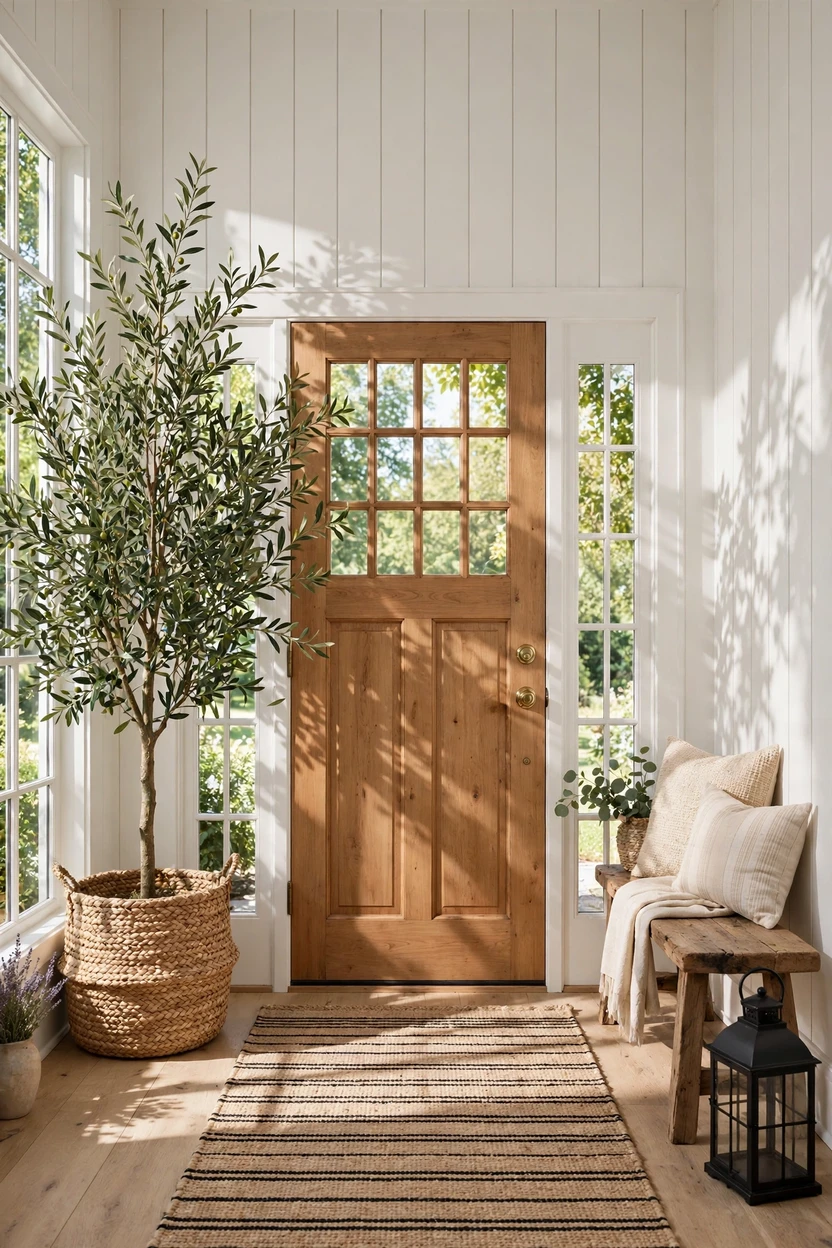
A tall plant brings life and height to a low, flat entry. Use an olive tree, a snake plant or a good faux stem in a large woven basket or a stoneware crock. Entries are often dim, so pick a plant that tolerates low light, or choose a quality faux version. Check pet safety first, because plants like pothos and snake plant are toxic to cats and dogs. For a no-plant option, fill a crock with dried wheat or cotton stems.
A Welcome Scent
Cost: 5-30 | Effort: 5 minutes | Renter-friendly: Yes
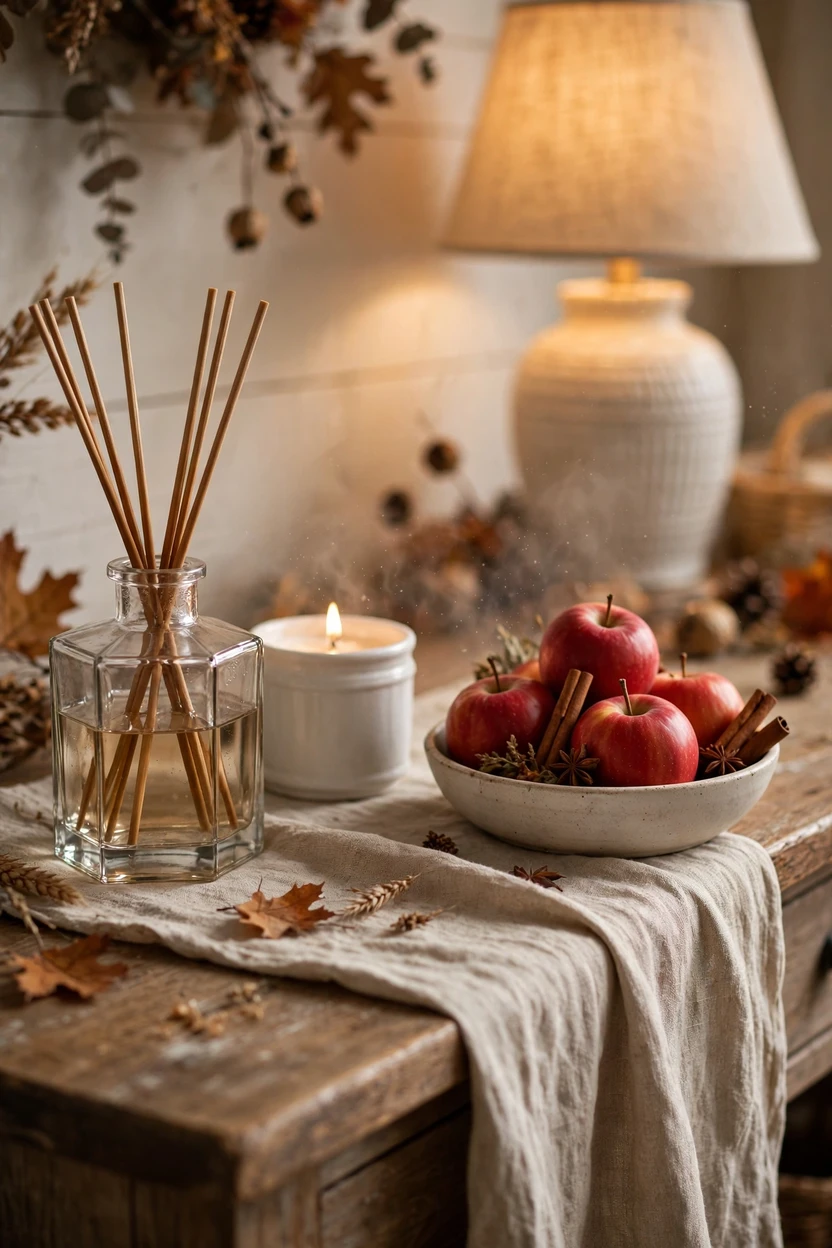
Scent is one of the first things guests notice, and it’s one of the cheapest upgrades. Pick one light option: a reed diffuser on the console, a candle with a clean linen or cedar scent, or a stovetop simmer pot with apple and cinnamon in fall. Keep it mild, since strong scents can bother guests with sensitivities. Never leave a candle burning unattended, and keep it away from coats, dried stems and paper. Place the scent near the door so it greets people right away.
A Guest Slipper Basket and Lint Roller
Cost: 15-40 | Effort: 10 minutes | Renter-friendly: Yes
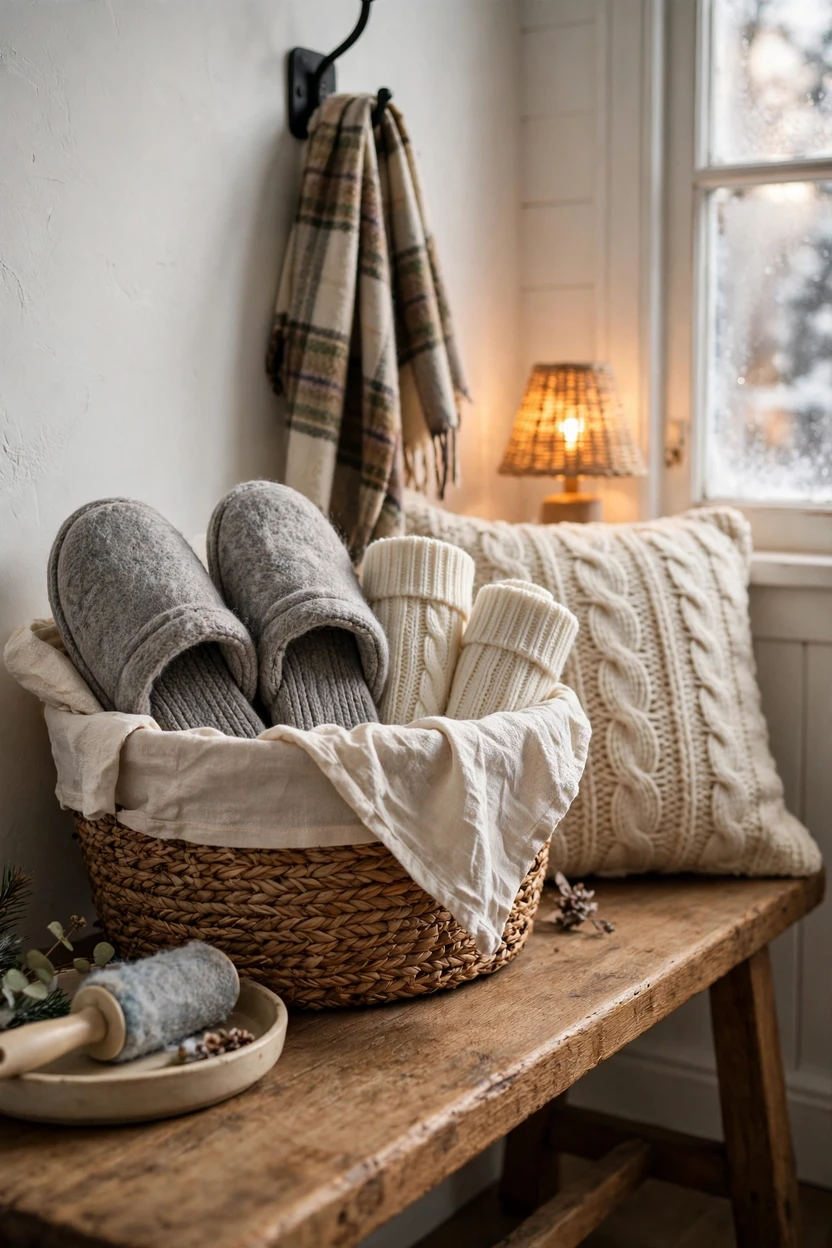
Hospitality shows in small details, and this one is easy to set up. Fill a basket with washable slippers or thick socks in a few sizes, and place it beside the bench with a cloth liner. Add a lint roller and a small tray for hats or gloves. If you ask guests to take their shoes off, this saves an awkward moment. Wash the slippers after each use so they’re fresh for the next visit.
Fit the Ideas to Your Entry Type
Not every home has a real foyer. Use this guide to pick the ideas that fit.
- No entryway at all (apartment or open plan): Define the zone with a runner, a wall mirror and a peg rail or floating hook board. Add a slim shoe bench if there’s room (ideas 5, 8, 11 and 13).
- Narrow entry or hallway: Choose a wall-hung shelf or a 10-inch console, a leaning mirror and a runner. Skip big benches (ideas 5, 7, 8 and 11).
- Small square entry: Use a bench with baskets and a peg rail. Keep the surface decor to one lamp and one bowl (ideas 10, 11 and 9).
- Large foyer: Use a dresser or large console, a gallery ledge, a tall plant and a bigger rug (ideas 15, 16, 17 and 5).
- Mudroom-style entry: Focus on a boot tray, closed storage, peg rails and a washable runner (ideas 13, 11, 12 and 5).
- Covered porch entry: Start outside with a painted door, a wreath, a lantern and a galvanized bucket (ideas 1, 2, 6 and 14).
Clear Path and Safety Checklist
A welcoming entry also has to be safe to walk through.
- Keep about 36 inches of clear walking space. Furniture should never block the door or the path in.
- Use a non-slip pad under every rug. Tuck cords and avoid curled edges that cause trips.
- Anchor heavy items. Mirrors, peg rails and shelves should go into studs or use rated anchors.
- Choose flameless candles near coats and dried decor. If you use real candles, never leave them unattended.
- Keep pet-toxic plants out of reach. Check each plant before you bring it home.
- Light the whole path. Use at least two light sources, so no one steps into a dark corner.
- Keep doors free to swing. Measure before you add a rug, a bench or a tall basket.
Styling Tips
- Repeat black three times. Hooks, a mirror frame and a lantern make the look feel planned.
- Use odd groups. Three baskets, three books or three pegs look more natural than pairs.
- Mix heights. Put something tall (a plant), something mid (a lamp) and something low (a bowl) on every surface.
- Layer textures. Pair smooth painted walls with rough wood, soft wool and woven fiber.
- Use fewer signs. One piece of text art is plenty. Choose real objects, art and plants for the rest.
- Keep one-third of each surface empty. Empty space makes the styled part look intentional.
- Match your wood tones. Mix two shades at most, like warm oak and a darker walnut, so the entry doesn’t feel scattered.
Practical Ways to Set It Up
The 30-Minute Entry Refresh
- Clear the floor. Move shoes, bags and boxes out of sight. A clear floor changes the look right away.
- Fix the light. Swap in a warm bulb and add a lantern or plug-in sconce (idea 6).
- Style one surface. Set a lamp, a bowl and a small plant on the console (ideas 7 and 9).
- Add a rug. Lay a washable runner with a non-slip pad (idea 5).
- Step outside. Walk in as a guest would, and edit anything that looks messy.
The Weekend Entry Makeover
- Saturday morning: paint the door and the entry walls, and let them dry (ideas 1 and 3).
- Saturday afternoon: install the peg rail, key hooks and mirror (ideas 11, 12 and 8).
- Sunday morning: add the bench, baskets, boot tray and umbrella bucket (ideas 10, 13 and 14).
- Sunday afternoon: style the console, hang the wreath and add scent (ideas 7, 2 and 18).
Where to Find Farmhouse Entry Pieces
- Your own home. Check closets, the garage and the kitchen for benches, baskets, crocks and trays.
- Thrift stores and flea markets. Look for solid wood consoles, spindle benches, galvanized metal and wood frames.
- Online marketplaces. Search for farmhouse bench, X-frame console, church pew, milk can, dough bowl and vintage dresser.
- Hardware stores. Good for peg rails, hooks, galvanized buckets and paint.
- Discount stores. Good for baskets, runners, lamps and simple frames.
Common Mistakes to Avoid
- Filling the space with signs. A wall of text signs can feel dated and cluttered. Use one, then add real objects.
- Buying furniture that’s too deep. A deep console or bench can block the path. Measure first and keep 36 inches clear.
- Skipping the light. A harsh, cool bulb ruins warm wood and white walls. Choose warm bulbs.
- Hanging hooks too low or too high. Adults need around 60 to 66 inches, and kids need a lower row.
- Using flimsy anchors. Heavy mirrors and loaded peg rails need studs or rated anchors.
- Hiding nothing. Open shoe piles break the whole look. Use baskets, trays or a cabinet.
- Forgetting the door. A faded or scuffed door and a bare porch weaken the first impression.
- Choosing a rug that slides or curls. Always use a non-slip pad and check that the door clears.
- Overdoing the theme. Roosters, windmills and mason jars all at once feel like a store display. Pick a few real pieces you love.
Small-Space Alternatives
A small entry can still wow guests. It just needs to be smarter.
- Go vertical. Use a peg rail, a wall shelf and a tall mirror to get storage and light without floor space.
- Choose a slim console. A table around 10 inches deep keeps the path open.
- Use a bench with a lid. It gives seating and hidden shoe storage in one footprint.
- Lean a mirror. A big floor mirror needs no drilling and makes the entry feel twice as wide.
- Limit the palette. Stick to white, wood and black so the space feels calm.
- Use the back of the door. Over-the-door hooks and a slim shoe organizer can hold a lot.
- Edit weekly. Move unused coats and shoes out of the entry to keep it clear.
Budget-Friendly Alternatives
- Use what you own. A kitchen bowl, a basket from the closet and a lamp from the bedroom can all style a console.
- Thrift furniture. Solid wood benches, consoles and dressers often cost less than new flat-pack pieces.
- Paint instead of replacing. A can of paint and new knobs can give a dated cabinet a farmhouse face.
- Make a peg rail. A wood board and a pack of Shaker pegs cost much less than a ready-made version.
- Try faux greenery. A good faux stem in a thrifted basket costs less than a large plant.
- Use discount-store baskets and trays. They look just as good when styled with natural wood.
- Spend on lighting and the rug. These two details make the biggest daily difference.
Pro Styling Recommendations
- Design from the door in. Stand where a guest would stand, and fix what you see first.
- Create one focal point. Pick the console, the bench wall or the mirror, and make that the star. Keep the rest calm.
- Layer light at three heights. Use a floor lantern, a table lamp and a wall sconce or mirror reflection.
- Plan for the seasons. Keep the base steady and swap the wreath, the bowl contents and the throw: pumpkins and mums in fall, evergreens in winter, tulips in spring, ferns in summer.
- Make function look good. Choose baskets, trays and hooks that you’d happily show.
- Photograph the entry. A quick phone photo shows what’s cluttered and what’s missing.
- Think about sound and smell. A soft rug, a light scent and a quiet door close make the entry feel calm.
FAQs
Final Thoughts
A farmhouse entryway doesn’t need a big budget or a full renovation. It needs a warm light, a place to sit, a spot for keys and a few honest materials like wood, wool and iron.
Pick three ideas from this list and start there. Fix the light, clear the floor and style one surface. Then add a mirror, a peg rail or a painted door when you’re ready.
Save your favorite pins, walk in like a guest and let your entry say what your home feels like: warm, calm and glad you’re here.