20 Floating Shelf Ideas That Give Your Wall Something to Say
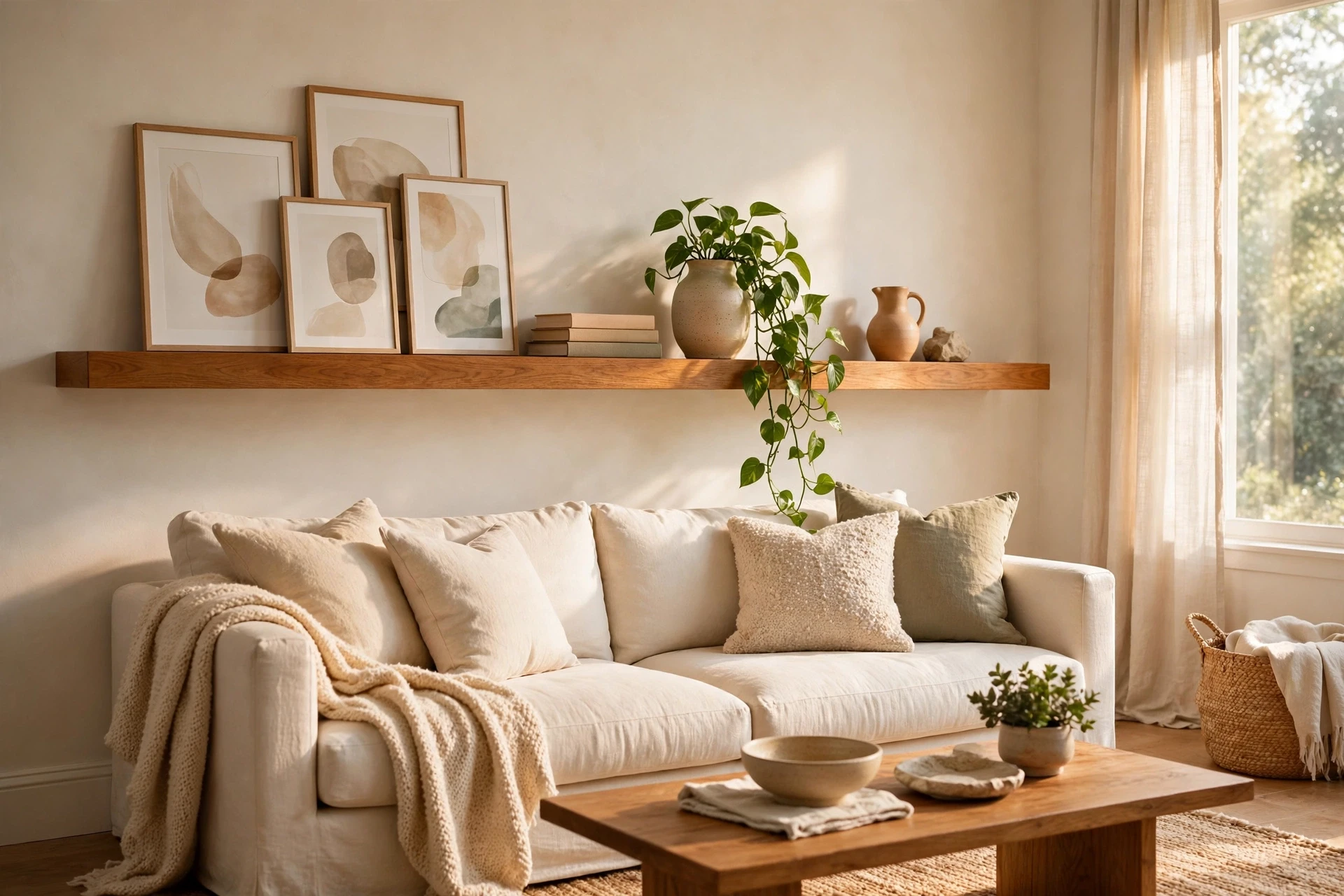
A blank wall can make a whole room feel unfinished, even when the sofa is right and the rug is right. A floating shelf fixes that gap without a new piece of furniture, because it gives your favorite things a place to live at eye level. Wood, glass, or painted white, it adds storage and a little story to the wall at the same time.
The trick is to style the shelf like a small scene instead of filling it like a cupboard. A few books, one tall vase, a trailing plant, and some breathing room will do more than a shelf packed edge to edge. These 20 ideas cover every room in the house, so you can start with one wall and see how far it takes you.
Quick Answer
A floating shelf is a wall-mounted shelf with hidden brackets, so it looks like it floats with no visible support underneath. The best floating shelf ideas match the shelf to the room: long wood shelves above a sofa, open shelves for dishes in the kitchen, a bedside shelf in place of a nightstand, and slim shelves above a toilet in the bathroom. Mount shelves into wall studs or with heavy-duty anchors, keep them at eye level, space stacked shelves 11 to 17 inches apart, and leave about a third of each shelf empty so the display reads as styled, not crowded.
1. A Long Wooden Shelf Above the Sofa
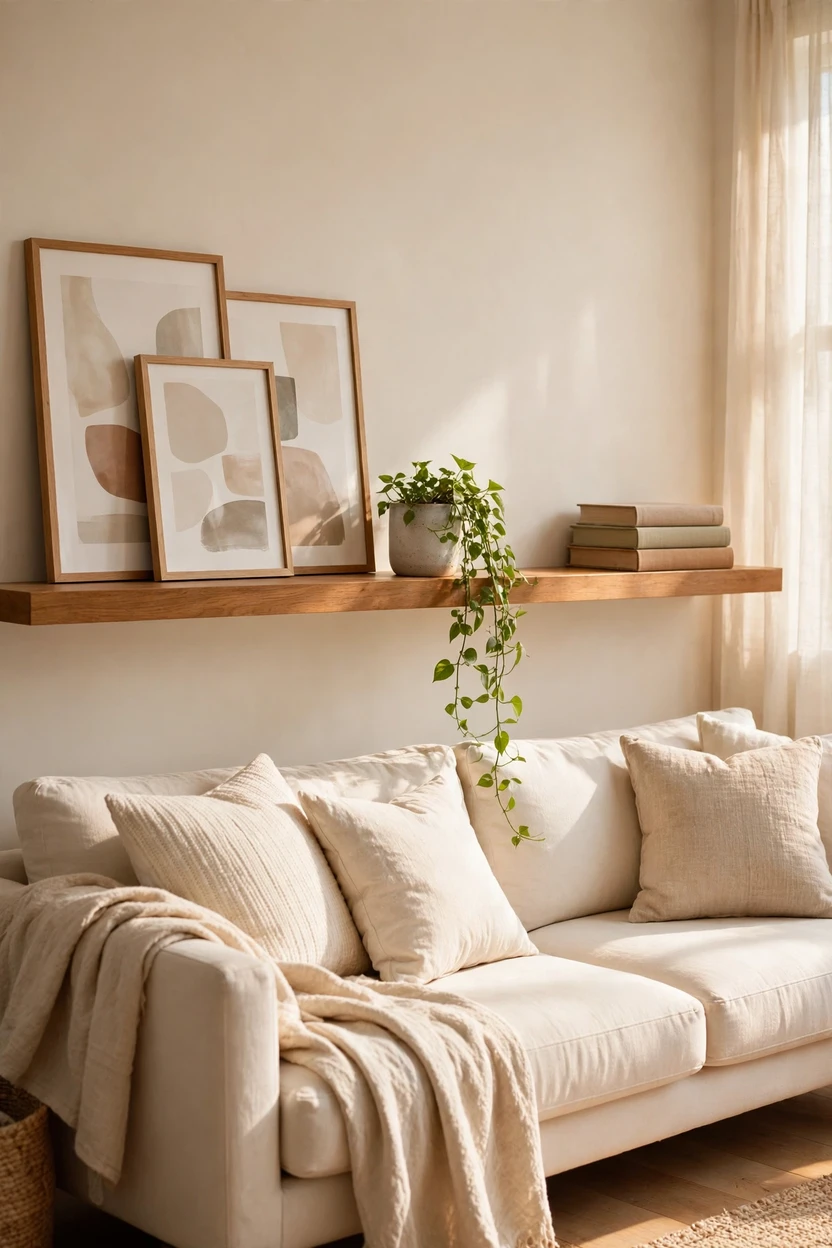
One long wood shelf above the sofa fills the biggest blank wall in most living rooms in a single move. Pick a shelf about two-thirds the width of the sofa and hang it 8 to 10 inches above the back cushions so it feels connected to the seating. Lean two framed prints against the wall at one end, stack three books flat at the other, and set a small trailing plant in the middle to soften the straight line. Warm oak suits cream and beige rooms, while walnut adds depth against pale walls and light sofas. Keep the middle of the shelf a little lighter than the ends, because that open space is what keeps the whole wall from looking crowded.
2. Matching Shelves Flanking the Fireplace
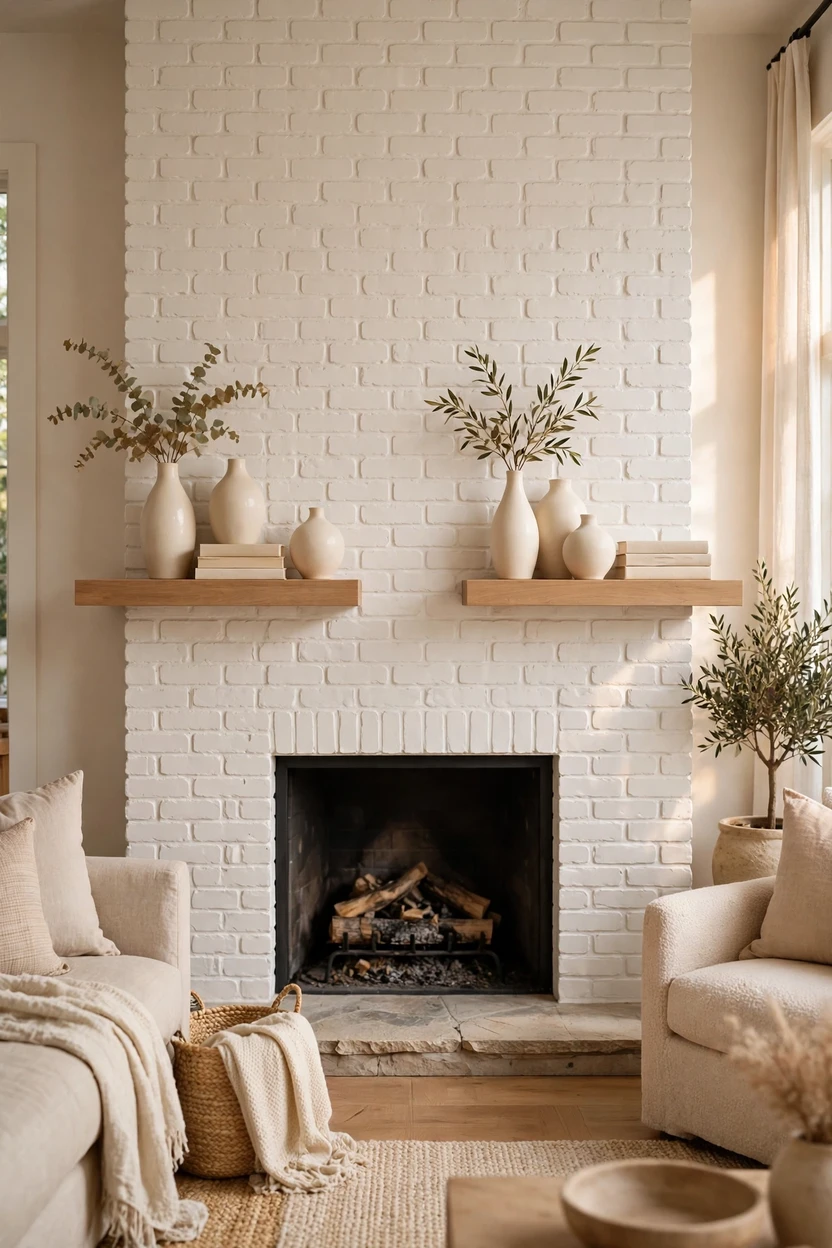
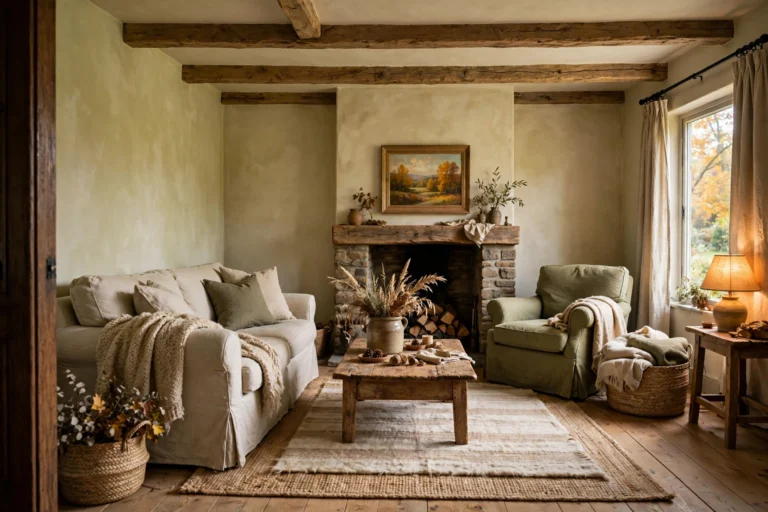
Two matching shelves on either side of a fireplace turn a bare wall into a balanced frame for the whole room. Hang them at the same height on both sides and style them with the same color family, such as cream ceramics on the left and warm wood tones on the right. A tall vase on one side and a stack of books on the other keeps the two sides from looking like mirror copies of each other. Leave the top shelf on each side a little simpler than the lower one, since the eye naturally rests higher up. This setup works best with slim shelves that sit close to the wall, so the fireplace keeps its place as the star of the room.
3. Open Kitchen Shelves for Everyday Dishes
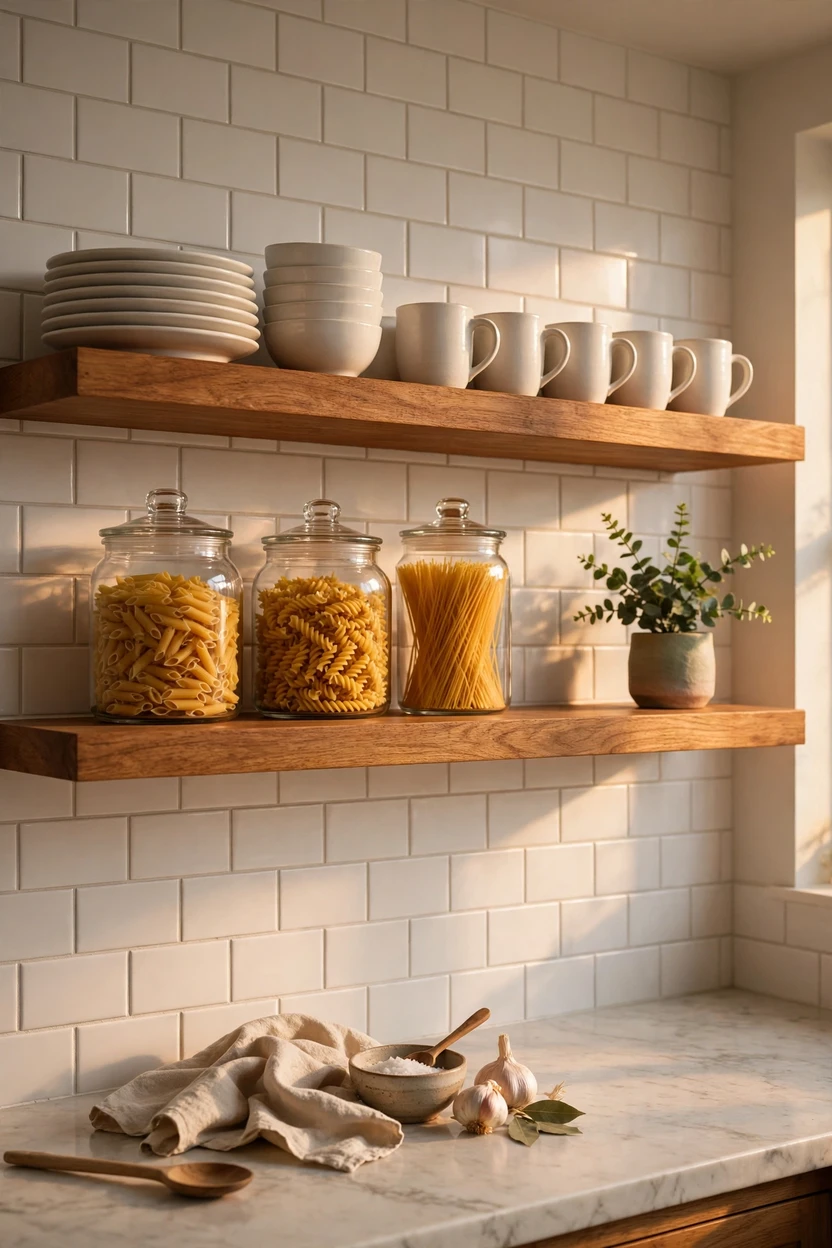
Open shelves in the kitchen put your prettiest dishes to work instead of hiding them behind cabinet doors. Stack white plates and bowls in short piles, line up mugs by color, and keep a few glass jars of pasta or oats where you can reach them while you cook. Wood shelves warm up white or cream kitchens, and they look their best against a tiled backsplash that shows through between the plates. Only display the dishes you actually use, because a shelf full of pieces that never move will start to collect dust and look tired. Two shelves are usually enough for one wall, and a small plant at the end keeps the whole row from feeling like a shop display.
4. A Coffee Station Shelf Above the Counter
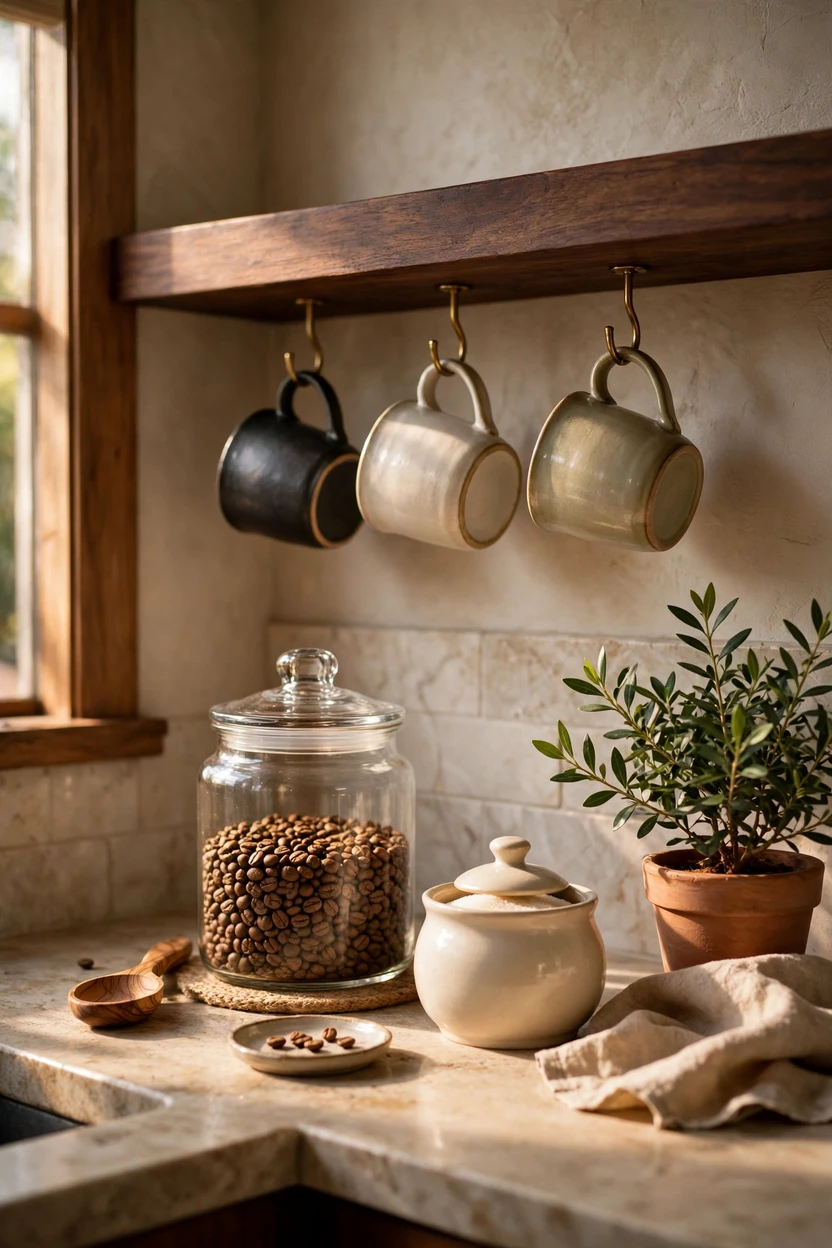
A shelf above your coffee maker turns a plain corner of the kitchen into a little cafe of your own. Hang one shelf about 15 inches above the counter so mugs can hang from hooks below it and the machine still has room to breathe. Set out your favorite mugs, a jar of beans, a small sugar bowl, and one tiny plant, and keep the rest of the counter clear. A dark wood shelf looks rich against pale walls, while a white shelf blends in and lets colorful mugs do the talking. Keep the layout simple enough to use every morning without moving things around, because a coffee station that fights you first thing in the morning will not last long.
5. A Bedside Shelf in Place of a Nightstand
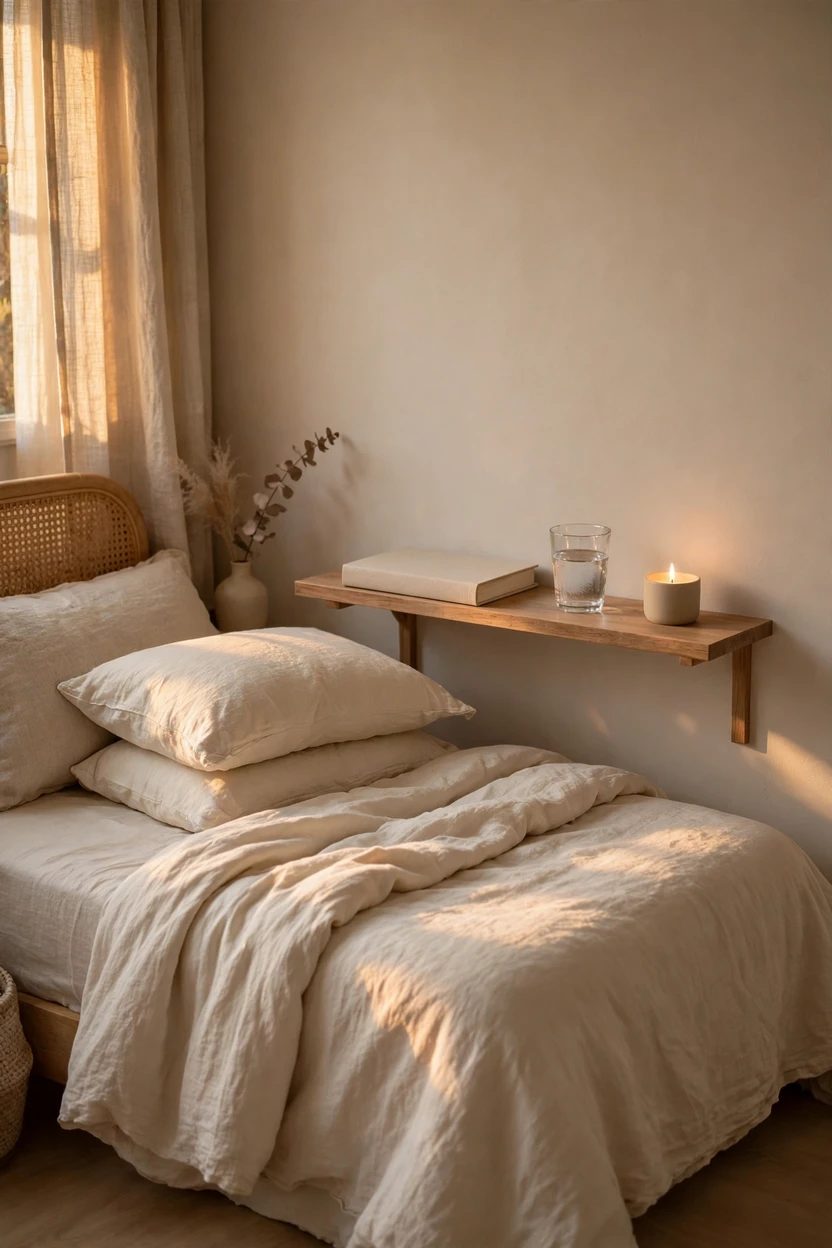
A small shelf beside the bed does the job of a nightstand without taking up any floor space at all. Mount it at mattress height so your phone, a glass of water, and a book sit within easy reach when you wake up. A slim wood shelf with a tiny lamp or a battery candle on top feels calm and uncluttered, and it leaves the floor clear for a basket or a pair of slippers. This idea suits small bedrooms best, where a full nightstand would crowd the walkway beside the bed. Fix it firmly into a stud, because a bedside shelf gets touched and bumped every single day.
6. A Gallery Ledge Above the Headboard
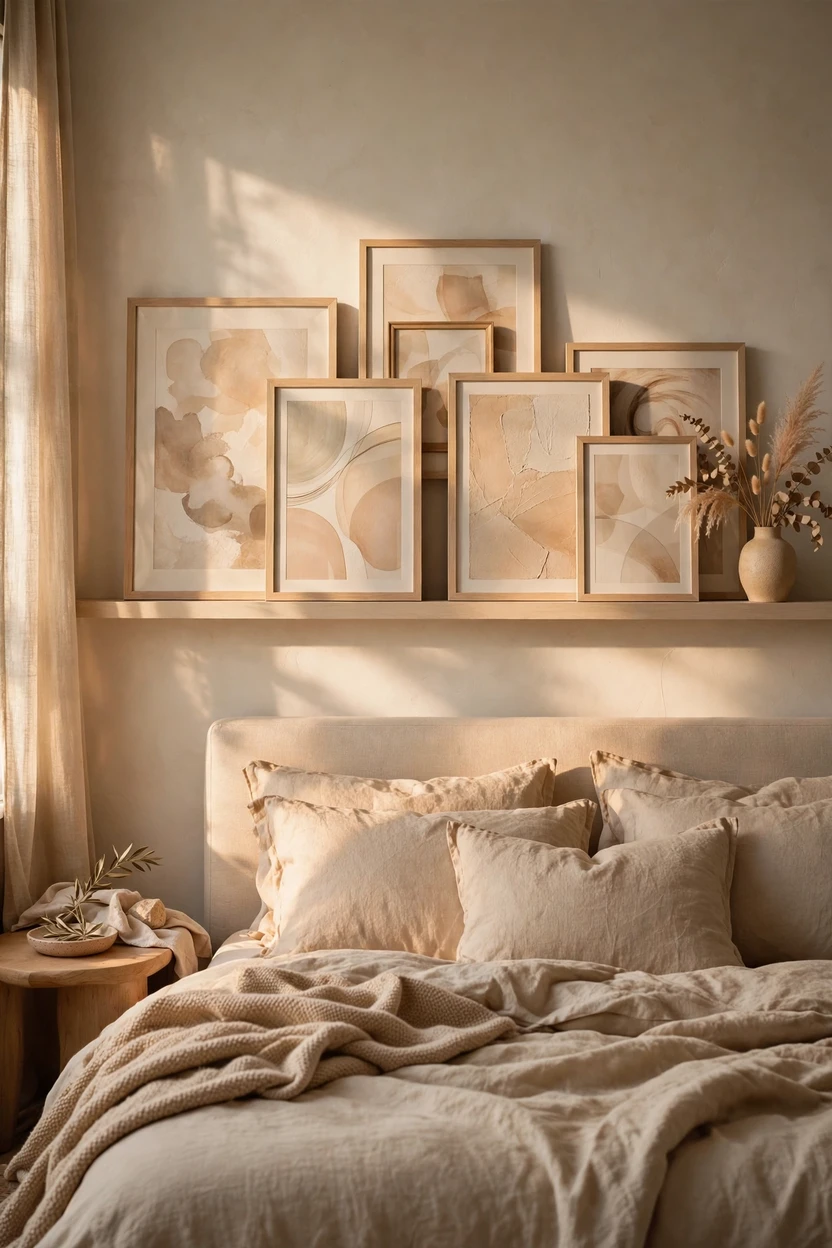
A long ledge above the headboard gives your bedroom a gallery wall you can change whenever the mood strikes. Lean framed photos and small art prints against the wall in a loose row, overlapping the frames slightly so the display feels collected rather than lined up. Mix one large frame with two smaller ones, and add a small vase of dried stems at one end for height and softness. A white or pale wood ledge keeps the look light, while a dark ledge adds weight above a light-colored bed. Swap the prints with the seasons or after a trip, because the ledge makes changing the art as easy as lifting one frame out and setting another in.
7. Bathroom Shelves Above the Toilet
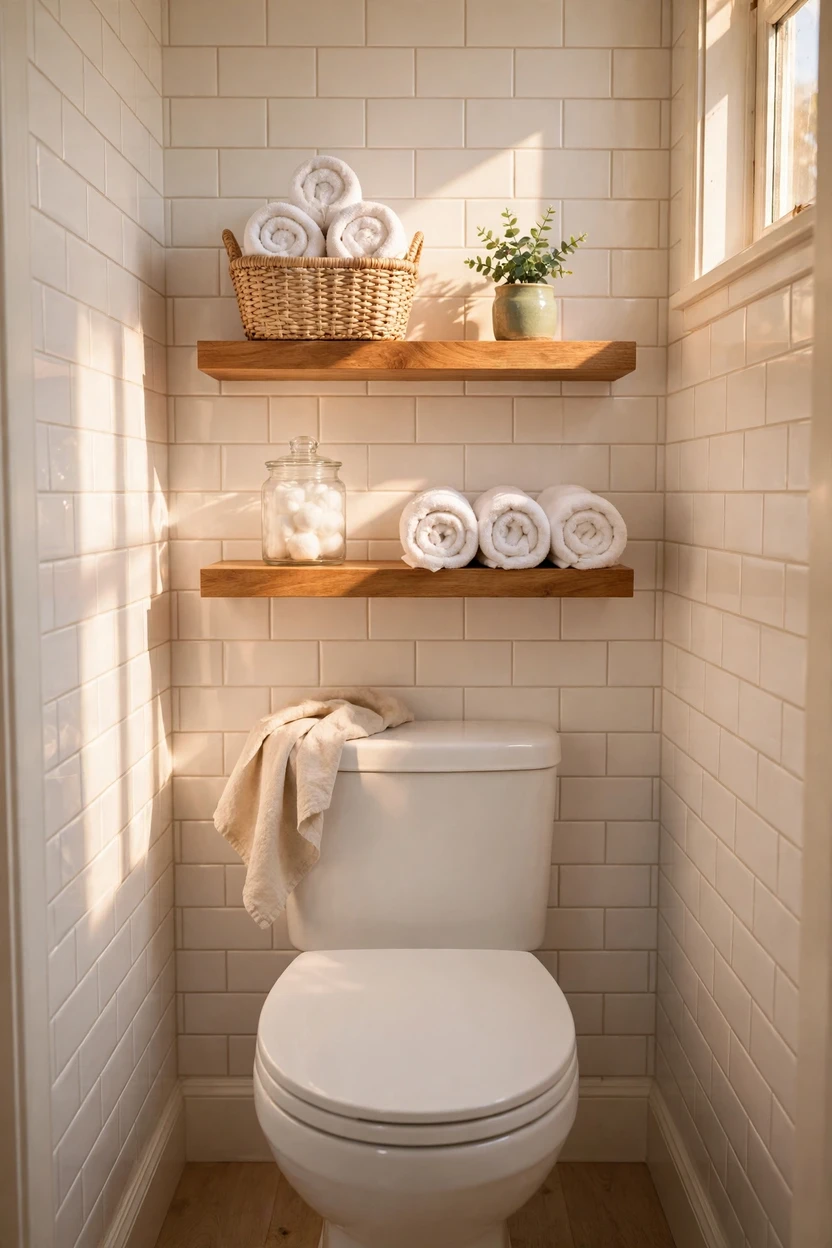
The wall above the toilet is often the most wasted space in a bathroom, and two short shelves fix it in an afternoon. Stack rolled hand towels in a neat row, add a small basket for spare rolls, and set a jar of cotton balls and a tiny plant on the top shelf. Wood shelves with a sealed finish hold up well in steam, and white shelves blend into pale tile so the room still feels open. Keep everyday items on the lower shelf where you can reach them, and save the top shelf for prettier things you touch less often. Measure twice before you drill, because the shelf needs to sit high enough that no one bumps their head when they stand up.
8. An Entryway Shelf with Hooks Below
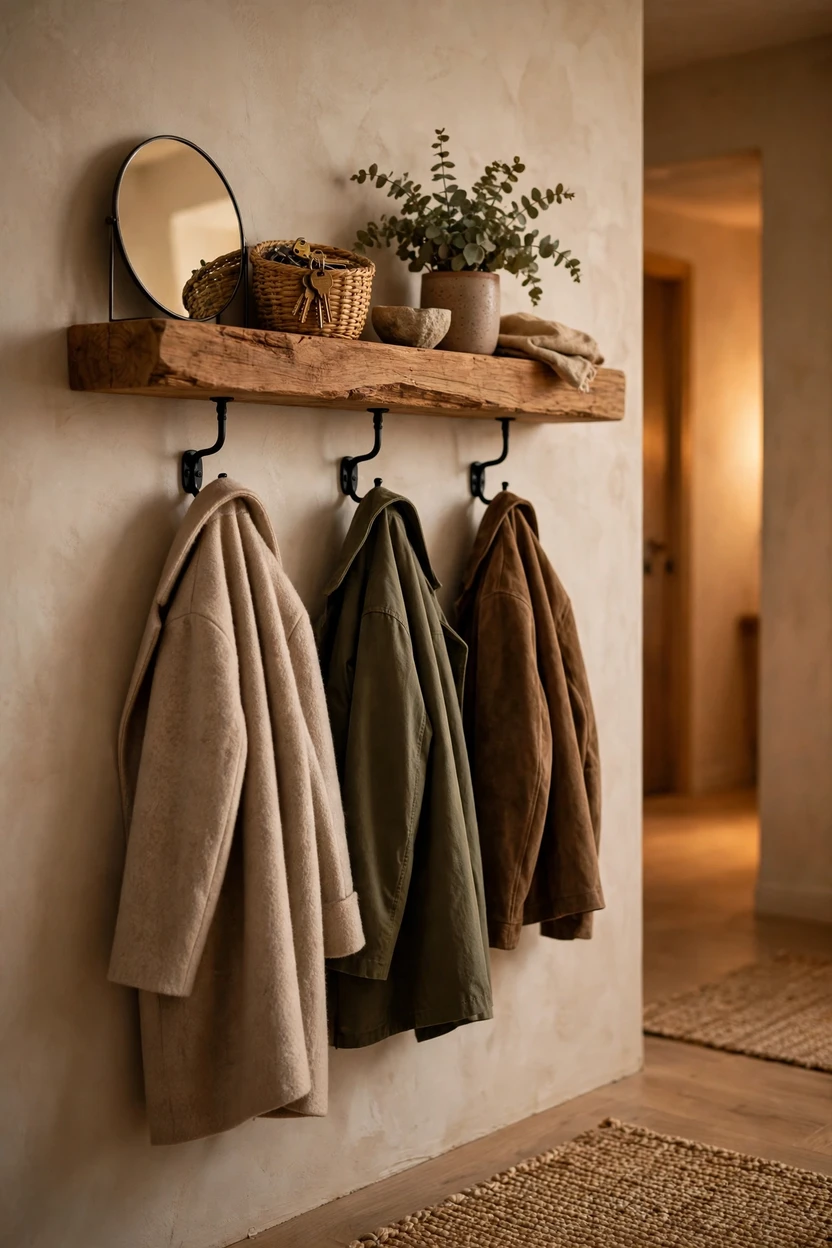
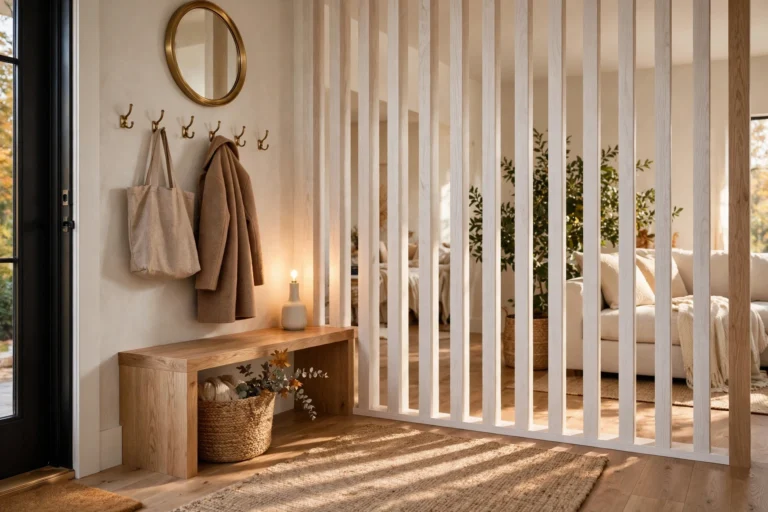
An entryway shelf with a row of hooks underneath gives coats, keys, and bags a home right by the door. Hang the shelf at shoulder height and fix three or four sturdy hooks below it, spaced wide enough that coats do not bunch up. Set a small mirror or a framed print on the shelf, add a basket for keys and mail, and keep one spot empty for whatever comes home with you that day. A chunky wood shelf suits a farmhouse entry, while a slim black metal shelf looks sharp in a modern hallway. This one change can stop the daily pile of coats on the nearest chair, because everything finally has a place to go.
9. A Stack of Shelves for a Reading Corner
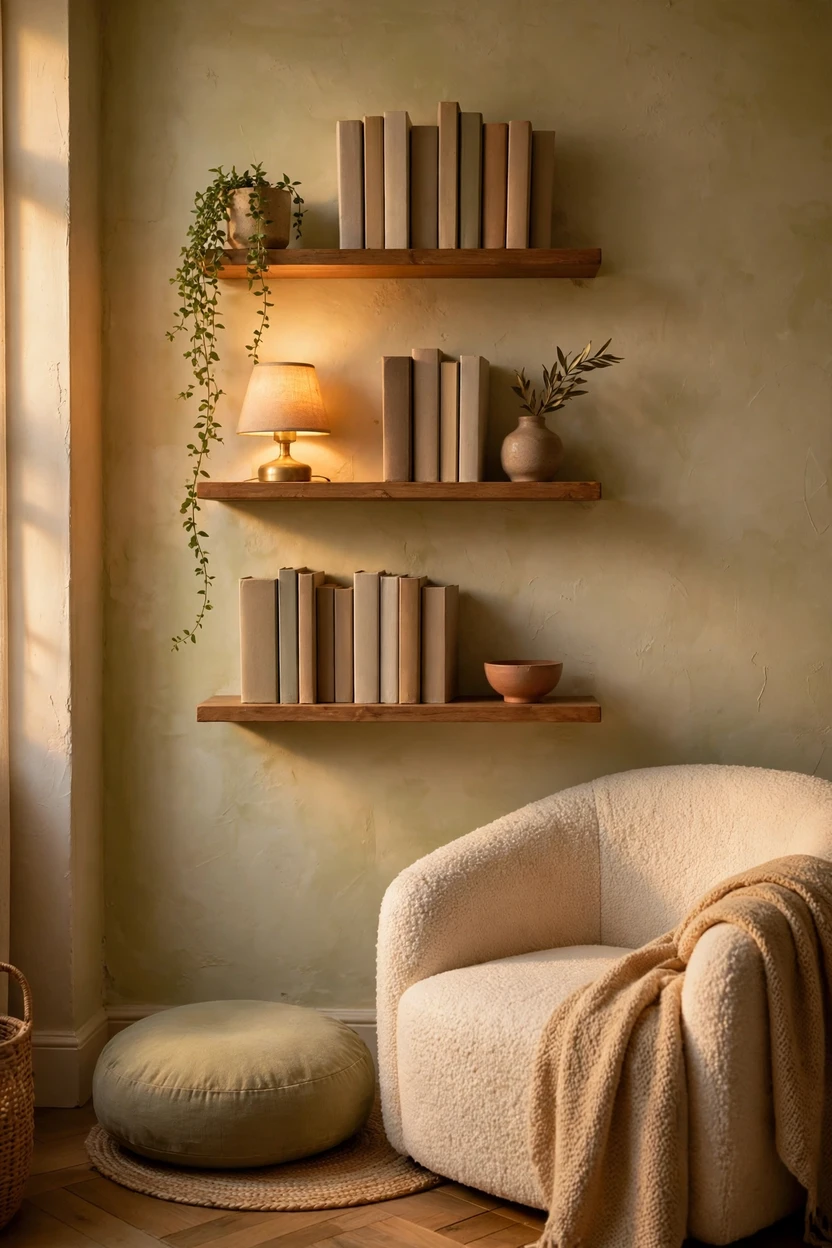
Three short shelves stacked in a reading corner hold your current books, a warm lamp, and a cup of tea within arm’s reach. Space them about 12 inches apart so books can stand upright on the lower shelves and a small plant can trail from the top one. Put the books you are reading now on the middle shelf, your favorite hardcovers on the bottom, and a framed photo or a small clock on the top. A soft wood tone keeps the corner feeling calm, and a warm-toned lamp on the middle shelf makes the whole nook glow in the evening. Add a floor cushion or a small armchair beside it, and the corner becomes the spot everyone in the house wants to sit in.
10. Picture Ledges as a Swap-Friendly Gallery Wall
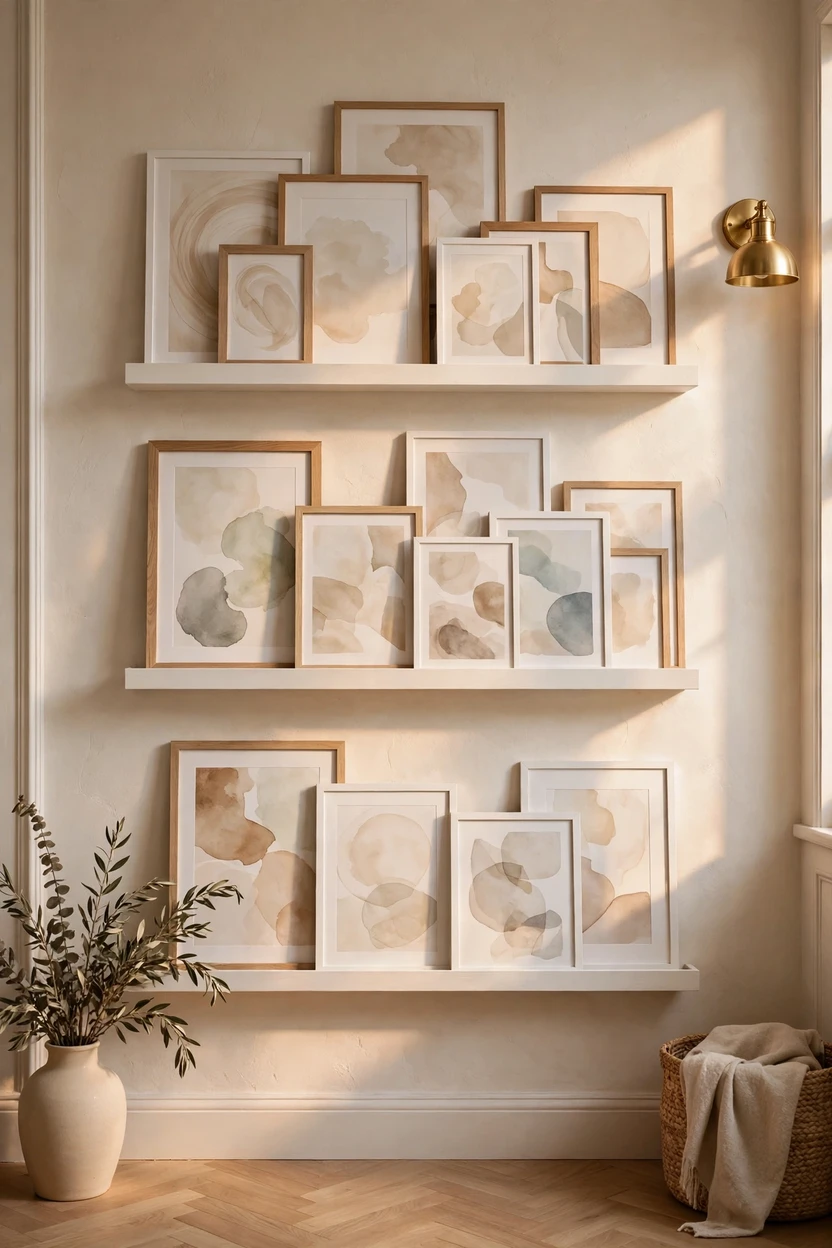
Picture ledges let you build a gallery wall without putting a dozen nail holes in the plaster. Hang two or three long, narrow ledges one above the other, then lean framed prints, postcards, and small canvases along them in a loose mix. Overlap the frames a little and vary the sizes, so the wall looks gathered over time instead of planned in one afternoon. A white ledge disappears against a white wall and lets the art shine, while a wood ledge adds warmth to a plain hallway or stair wall. Change one frame whenever you like, because the ledge holds the art without new holes, and the whole wall stays fresh with almost no effort.
11. Corner Shelves for a Dead Corner
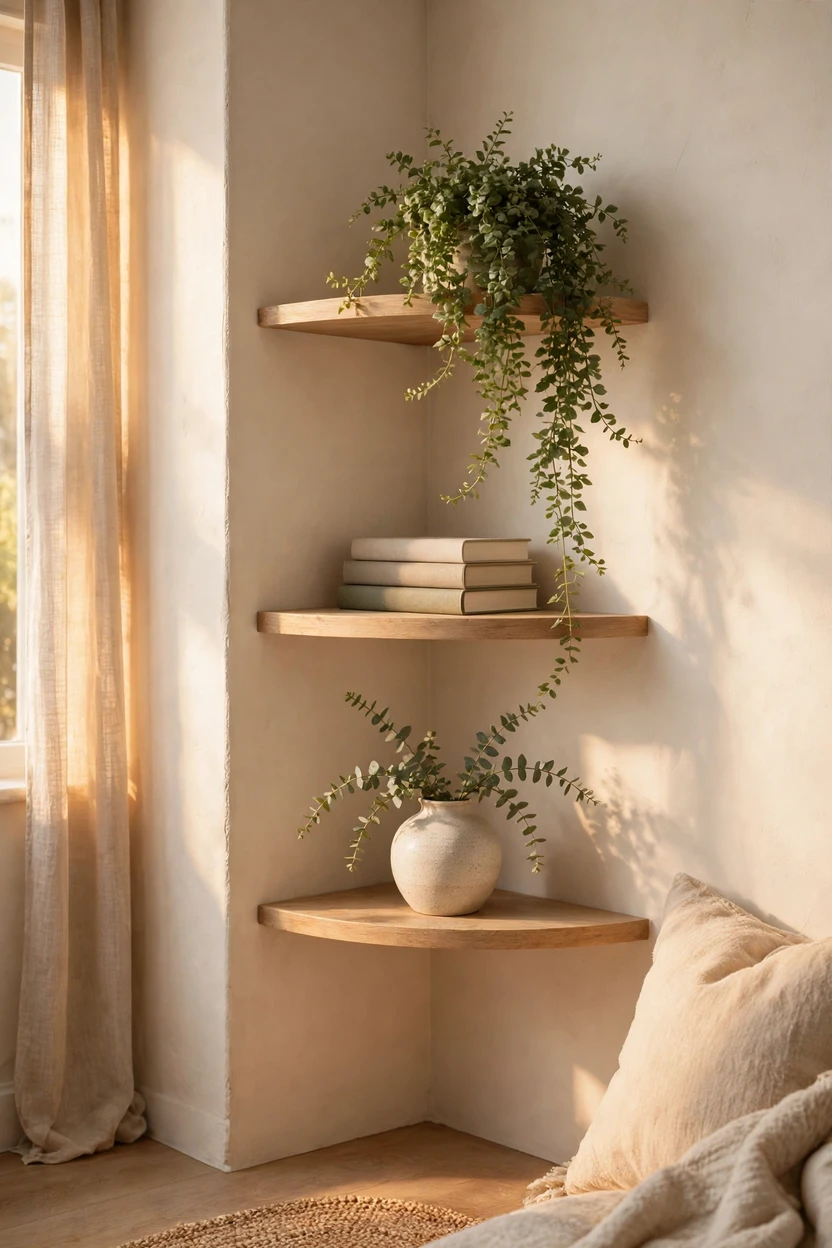
Every home has a corner that sits empty because nothing quite fits there, and small corner shelves were made for it. Mount two or three triangular shelves in a vertical stack, spaced about 12 inches apart, and use them for a trailing plant, a small stack of books, and one or two objects you love. The shelves take up no floor space and no walking space, so even a tight hallway corner or a bathroom corner can hold them. Light wood keeps a small corner feeling open, while a dark shelf adds a bold note to a pale wall. Keep the styling light, with one item per shelf, because a crowded corner shelf will make the whole corner feel smaller.
12. A Shelf with Warm Light Underneath
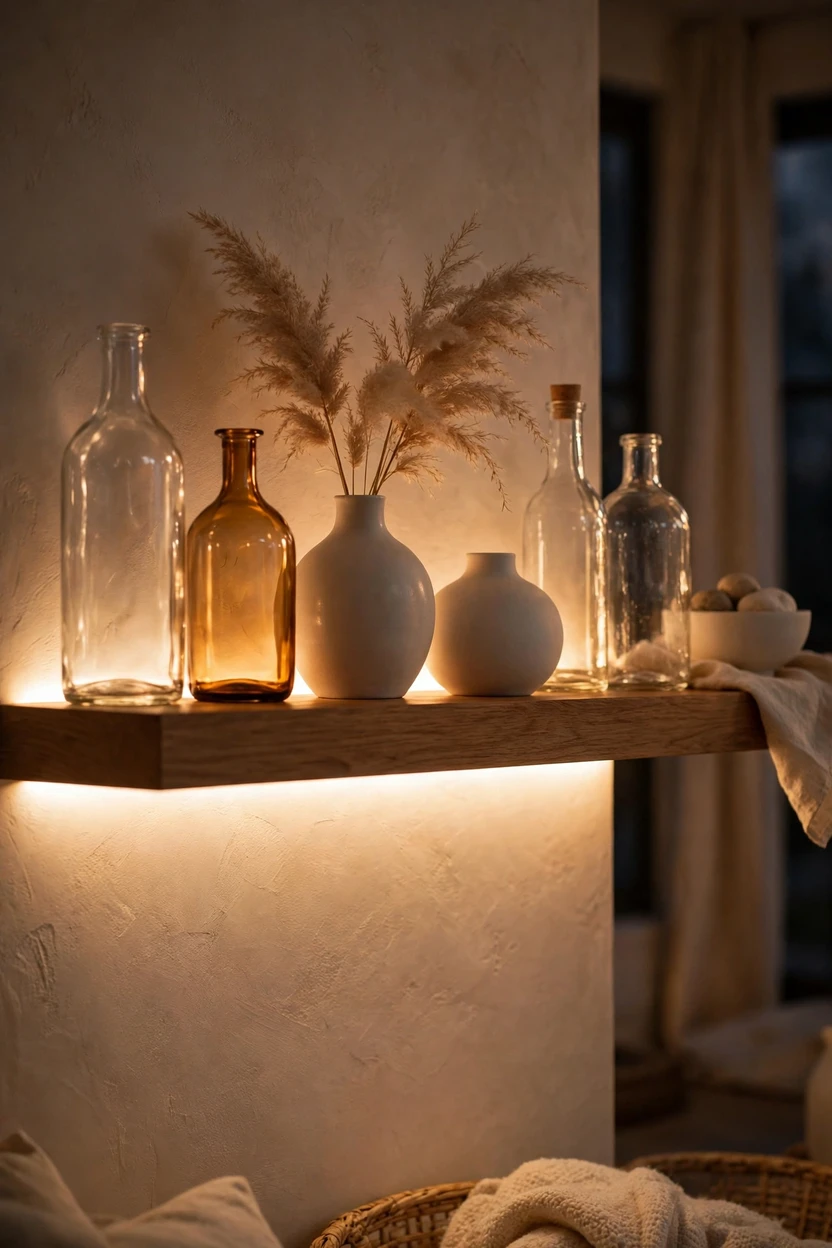
A warm LED strip fixed under a shelf turns the shelf into a soft light source after dark. Choose warm white light, around 2700K to 3000K, so the glow feels like lamplight instead of office light. Battery strips work well for renters and for shelves far from an outlet, while plug-in strips give a steadier glow for a main living room wall. Glass bottles, pale ceramics, and light-colored books catch the glow best, and the light also makes the wall color behind the shelf look richer. Fit the strip toward the front edge of the shelf so the light falls on the objects below, and add a dimmer if you can, because a soft glow suits evenings better than a bright one.
13. A Plant Shelf with Trailing Greenery
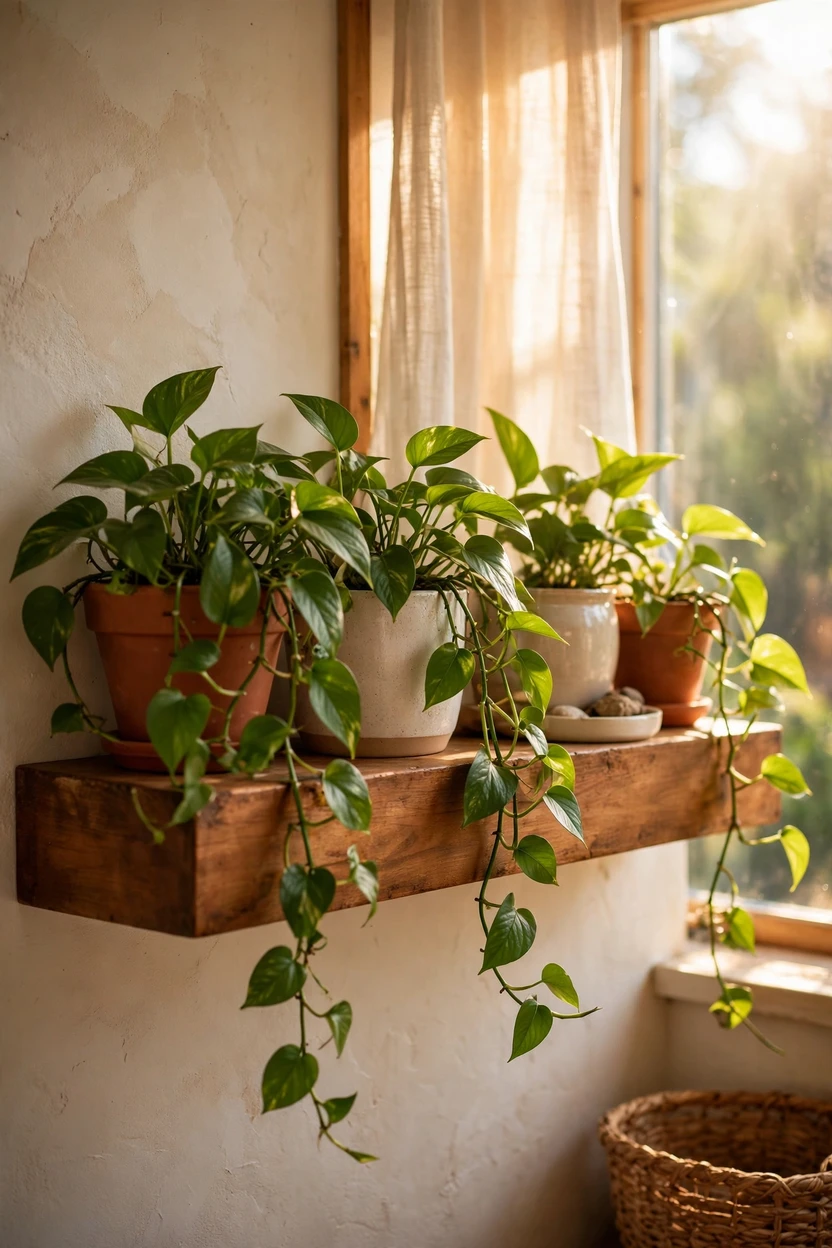
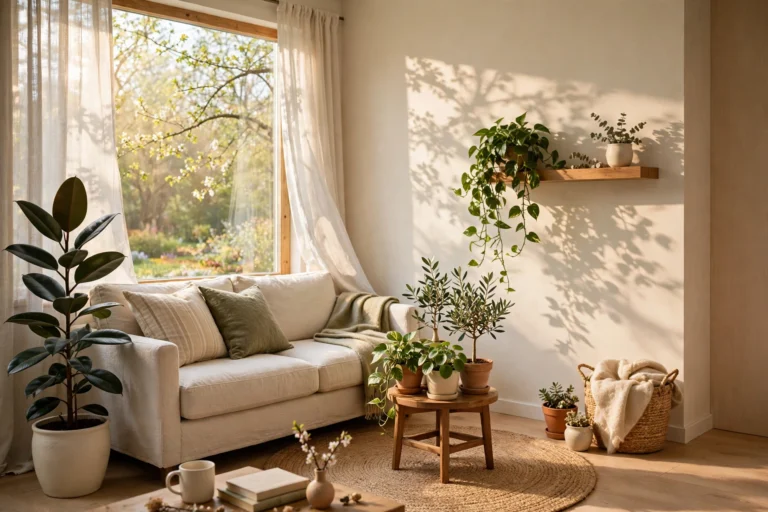
A shelf made for plants brings life to a wall that paint alone cannot. Hang it near a window where the plants get gentle light, and mix trailing pothos or string of pearls with one upright plant in a terracotta or ceramic pot. Let the vines spill over the front edge so the shelf looks soft instead of stiff, and use a small watering can that lives nearby so the plants actually get watered. Wood shelves suit green leaves best, because the warm grain and the green make each other look richer. Check the weight before you load it up, because wet soil is heavy, and keep the pots in trays so drips never mark the shelf or the wall.
14. Forward-Facing Book Ledges in a Kids’ Room
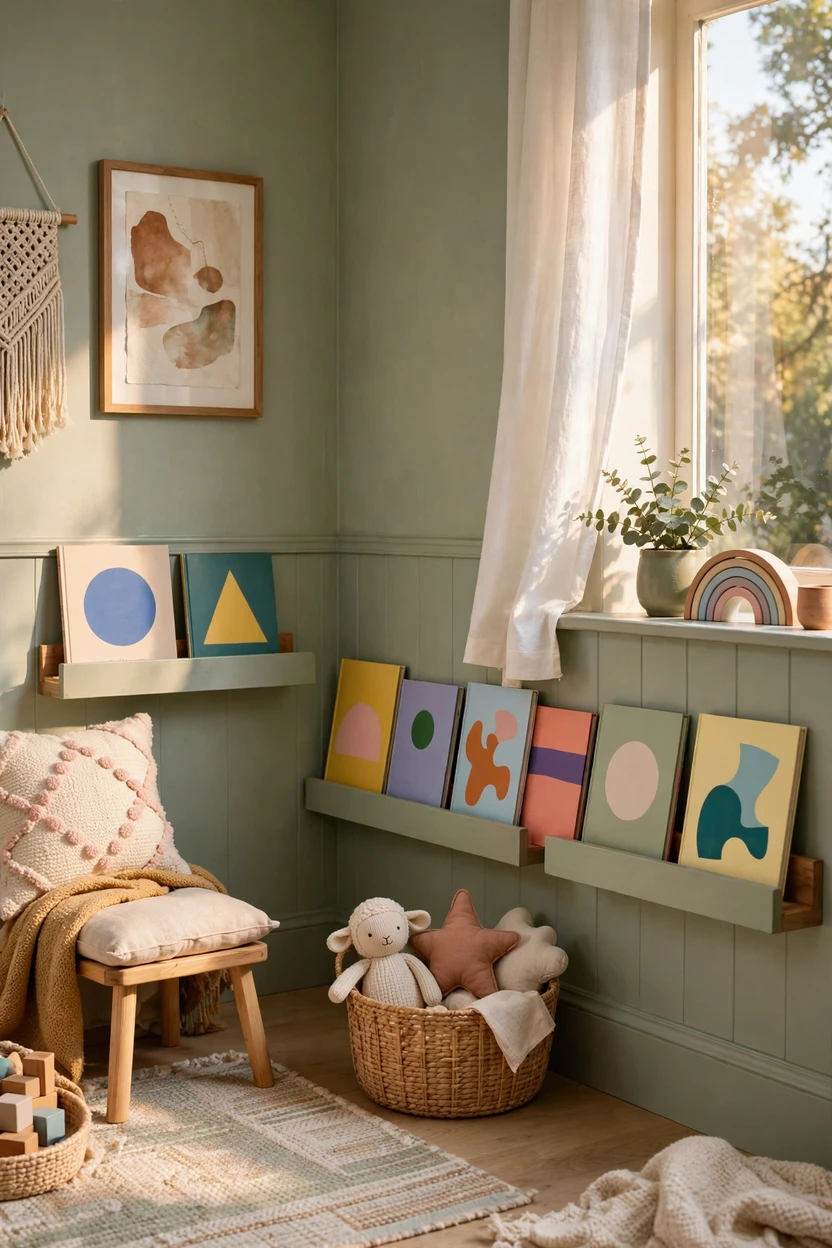
Forward-facing book ledges let a child see the book covers, which makes picking a bedtime story feel like choosing a treat. Mount two or three low ledges at your child’s eye level, with a small lip at the front so the books lean safely and never slide off. Fill them with a mix of picture books and early readers, spine colors mixed, and leave a little space at the end so new books have room to join. Paint the ledges the same color as the wall for a quiet look, or pick a soft sage or dusty blue to make the book wall the fun part of the room. Rotate the books every few weeks, because a fresh row of covers keeps little readers coming back to the shelf.
15. A Dining Room Display Shelf
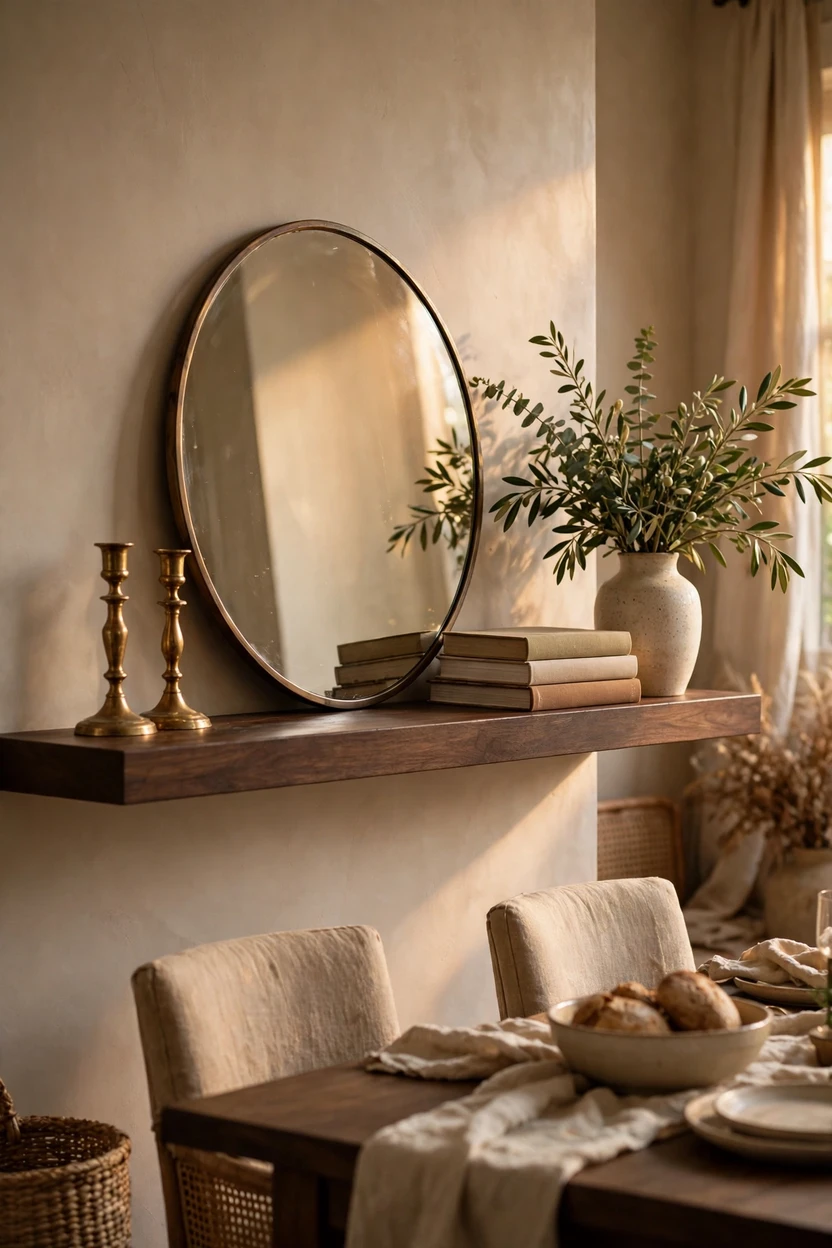
One long shelf in the dining room holds the pieces that make the table feel dressed even on an ordinary Tuesday. Lean a large framed print or a round mirror in the center, flank it with a pair of candlesticks on one side and a small stack of cookbooks on the other, and add a vase of fresh stems for height. Wood shelves bring warmth to a dining room with a pale table, while a black shelf adds contrast against cream walls. Keep the shelf high enough that seated guests can see it without ducking, and keep the display to five or six pieces so the wall reads as calm, not busy. Change the stems with the seasons and the shelf will feel new four times a year without any extra work.
16. A Shelf Above the Desk in a Home Office
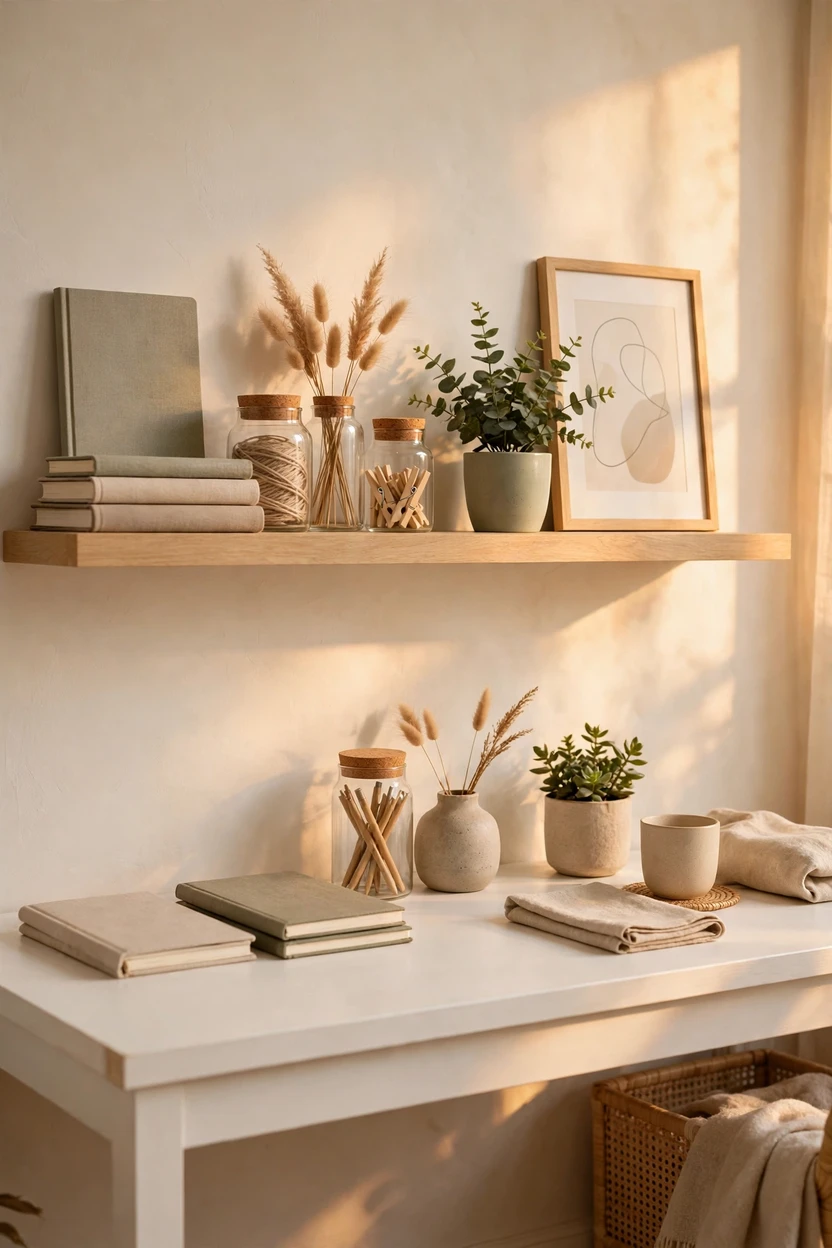
A shelf above the desk keeps notebooks, pens, and reference books off the work surface and still within reach. Mount it about 15 inches above the desk so your monitor or laptop has clear space below, and use a small basket or a row of jars for the bits that would otherwise pile up. Add one plant and one framed print to the shelf, because a desk that is all work and no warmth gets tiring by mid-afternoon. A light wood shelf suits a pale desk, while a dark shelf can anchor a white wall and give the work corner a clear edge. Keep the heaviest books at the ends of the shelf, where the brackets or the studs give the most support.
17. A Vanity Shelf with Jars and Rolled Towels
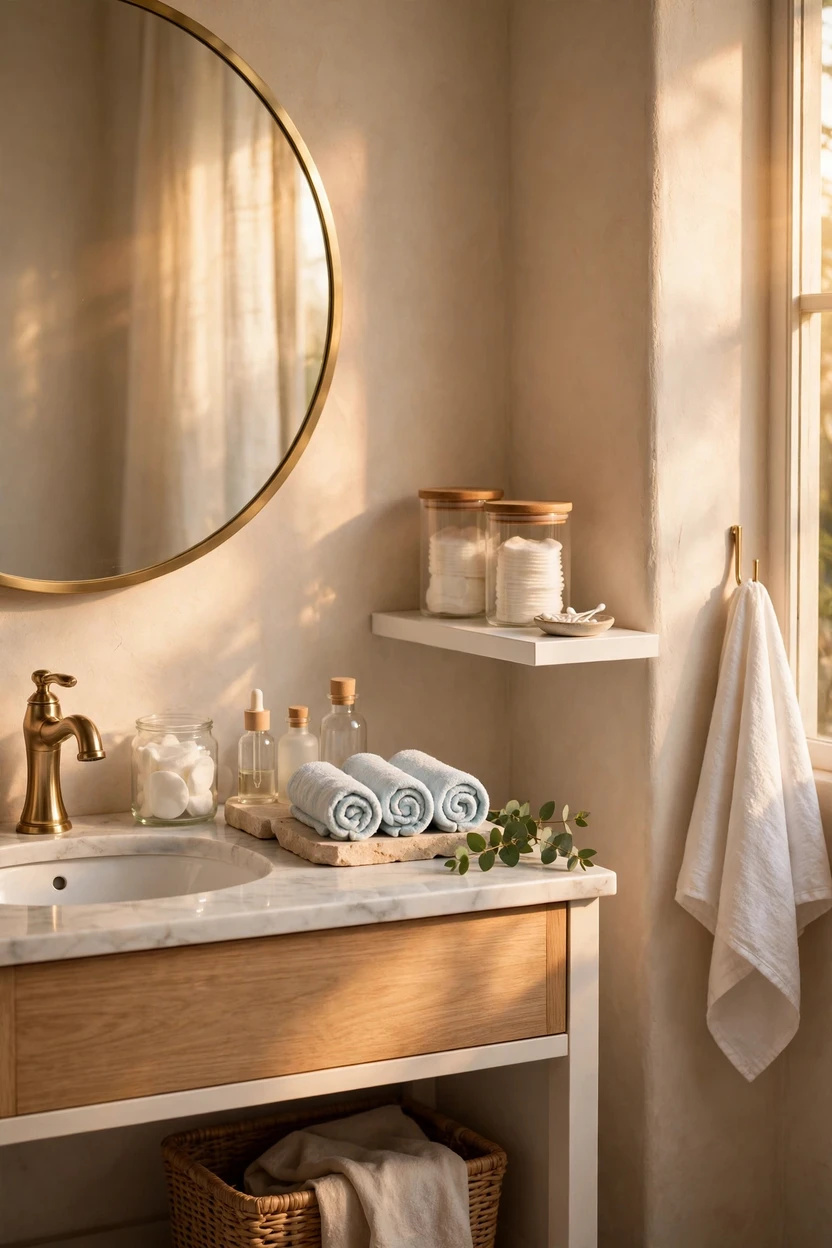
A slim shelf beside the bathroom mirror holds your daily routine where you can see it and reach it. Line up clear jars of cotton pads and hair ties, a small tray with your most-used bottles, and a stack of rolled washcloths in a soft color pulled from your towels. A white shelf blends into the mirror wall, while a wood shelf adds warmth to a cool white bathroom. Keep the shelf short, about 18 to 24 inches, so it never crowds the mirror or the light. Wipe it down once a week, because bathroom shelves collect dust and splashes fast, and a clean shelf makes the whole vanity look cared for.
18. One Single Shelf with One Big Piece
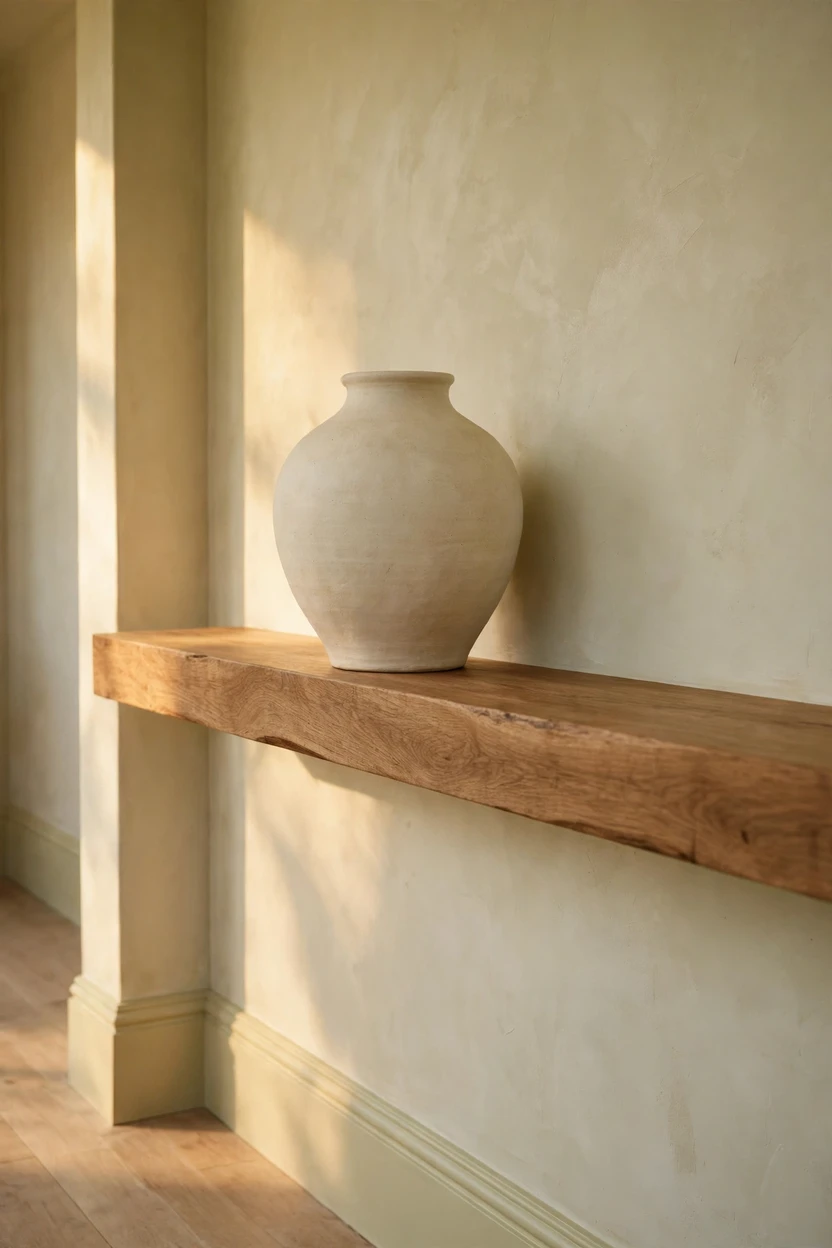
Sometimes one shelf and one bold piece say more than a whole wall of small objects. Hang a single long shelf at eye level and set one large vase, one oversized framed print, or one sculptural bowl on it, with nothing else beside it. The empty space around the piece is what gives it power, because the eye has nowhere else to go. A thick wood shelf suits a large ceramic vase, while a slim white shelf lets a dark framed print stand out against a pale wall. This idea works best on a narrow wall or in a hallway, where one strong note beats a busy display every time.
19. Staggered Shelves Up a Staircase Wall
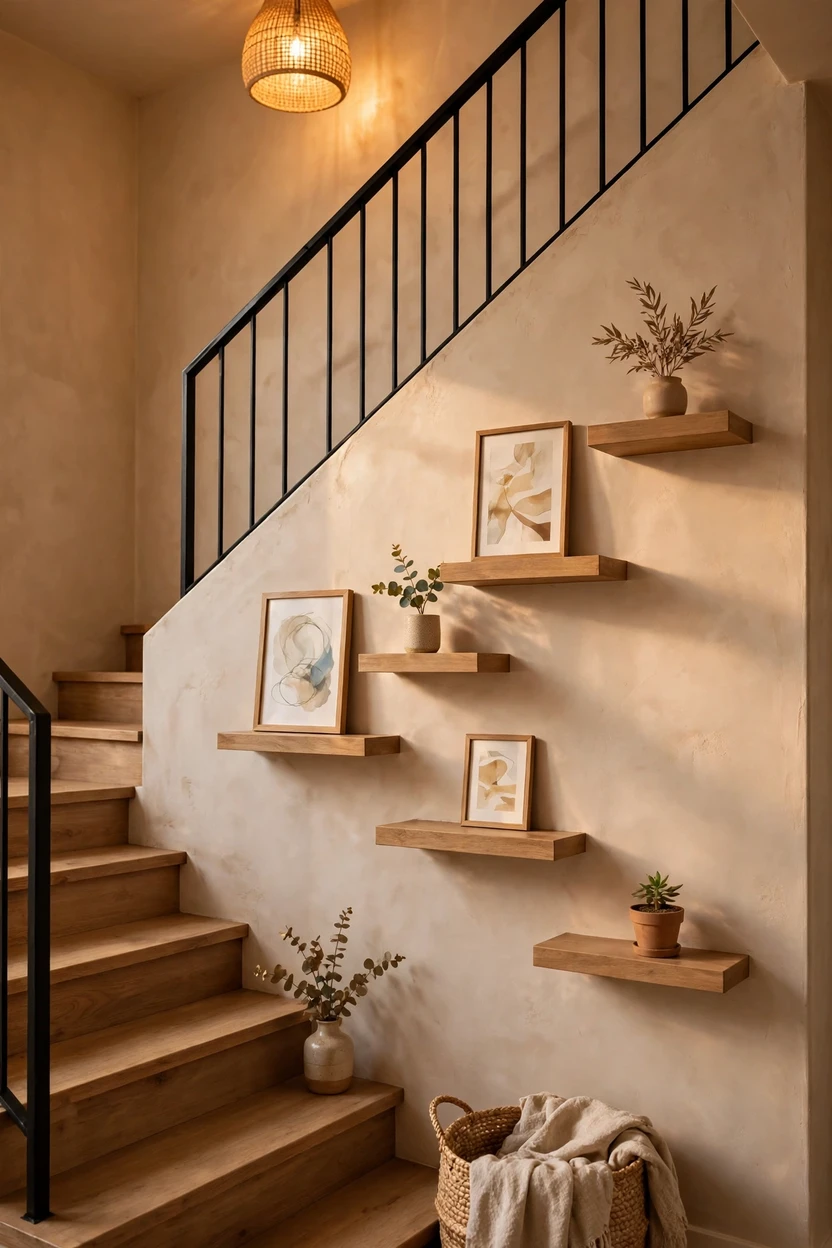
A staircase wall is long, tall, and almost always blank, which makes it a natural home for staggered shelves. Mount short shelves at different heights as they climb with the stairs, keeping each one level and spaced so the line of shelves follows the slope of the steps. Style each shelf with just one or two pieces, such as a small framed photo, a tiny plant, or a stack of two books, so the whole climb feels light. Use the same shelf finish all the way up, because a steady material ties the staggered line together. Measure from the stair nosing, not from the floor, so each shelf sits at a comfortable viewing height as you walk up.
20. Glass Shelves in a Small Bathroom
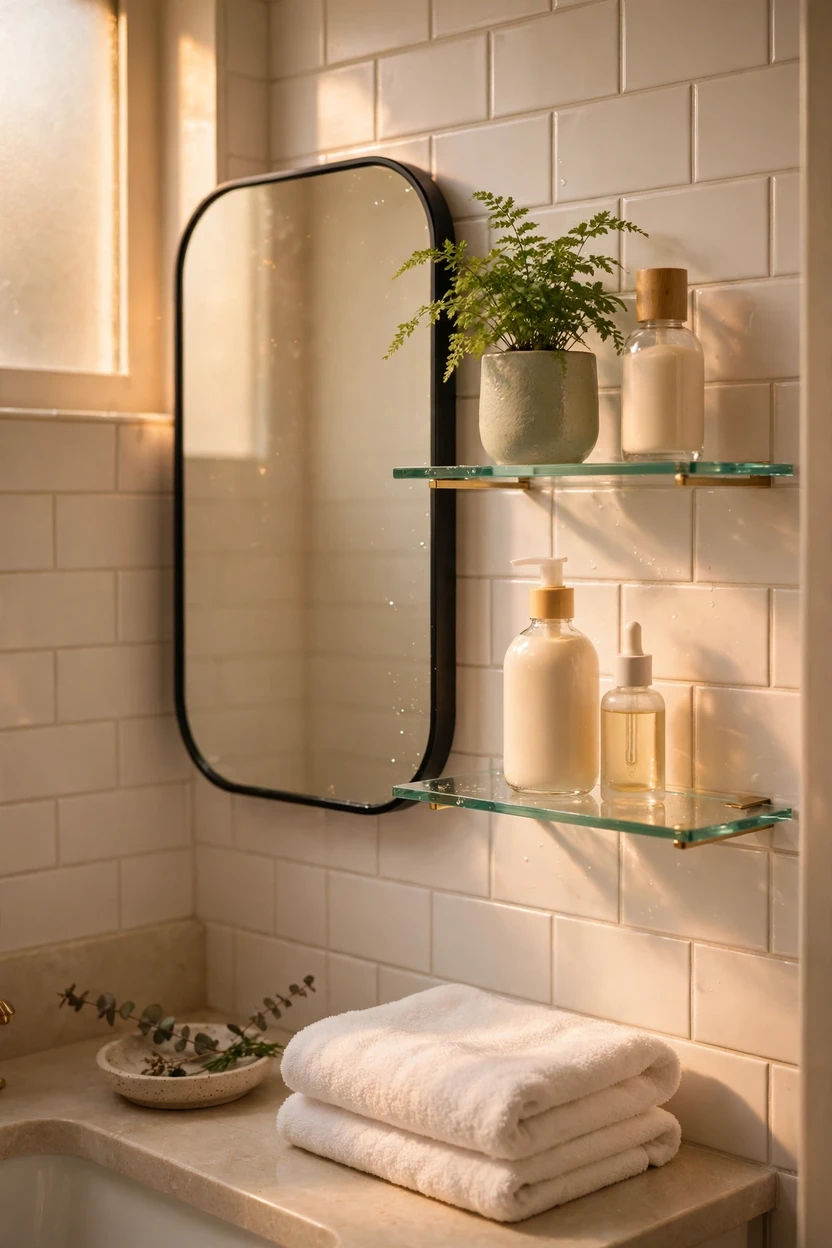
Glass shelves are the quiet answer for a small bathroom, because they hold what you need without adding visual weight. Mount two slim glass shelves beside the mirror or above the sink, and use them for a folded towel, a small plant that likes humidity, and your prettiest bottles. The clear glass lets the tile behind it show through, so the wall still reads as open and the room feels a little bigger. Keep the display to light items only, since glass suits creams, lotions, and small jars better than heavy books or baskets. Clean the glass once a week with a damp cloth, because water spots show fast on clear shelves, and a clean shelf keeps the whole bathroom looking bright.
Styling Tips
Start with the biggest piece first and build around it, because one anchor sets the scale for everything else on the shelf. Group items in threes or fives, mix tall and short pieces so the top edge of the shelf has a gentle up-and-down rhythm, and leave about a third of each shelf empty. Repeat one or two colors from the room on the shelf, such as the green of a plant echoing a cushion, or the brass of a frame matching a lamp base. Lean art against the wall instead of hanging it, and layer smaller pieces in front of larger ones so the shelf has depth. Step back and look from the doorway, because a shelf that looks good up close can still feel lopsided from across the room.
Practical Implementation Ideas
Measure the wall first and mark the studs, because a shelf loaded with books needs real support behind it. Use a level on every shelf, and drill pilot holes so the wood does not split and the plaster stays clean. For heavy loads, use hidden brackets rated for the weight and fix them into studs; for light decor on drywall, heavy-duty anchors will do. Hang shelves at eye level, about four to five feet from the floor, and space stacked shelves 11 to 17 inches apart so books and vases have room. Test the shelf with a firm tug before you style it, and keep the heaviest items near the ends where the brackets give the most support.
Common Mistakes to Avoid
The most common mistake is filling every inch of the shelf, which turns a display into clutter no matter how nice the pieces are. Another is hanging the shelf too high, so you have to stretch to reach it and the objects sit above the sight line. Mixing too many colors or too many small pieces at once also muddles the look, and so does placing heavy books on a shelf fixed with weak anchors. Avoid putting fresh flowers or paper items on a bathroom shelf that gets daily steam, and keep candles away from trailing plants that could droop onto a flame. Finally, do not hang a shelf over a door swing or a walkway where heads and shoulders will brush past it.
Small-Space Alternatives
A small room still has room for floating shelves, as long as the shelves stay slim and the styling stays light. Choose shelves 6 to 8 inches deep so they never jut into the walkway, and hang one or two instead of covering the whole wall. A single bedside shelf, a short shelf above the toilet, or two small corner shelves can add storage without making the room feel smaller. Paint the shelf the same color as the wall so it blends in, and keep just three or four pieces on it with plenty of space between them. Skip deep shelves and heavy books in a tiny room, because a shelf that sticks out too far will make the walls feel like they are closing in.
Budget-Friendly Alternatives
You can build a lovely shelf wall with very little money if you start with what you already own. A plain pine board, sanded smooth and stained with a dark walnut finish, looks close to a store-bought wood shelf for a fraction of the price. Thrift shops often have ceramic vases, old books with pretty covers, and small baskets for a few dollars, and a coat of paint can bring a tired frame back to life. Swap art prints for free printable designs or pages from an old calendar, and use jars from the kitchen for cotton balls and pens. Buy the brackets and the board separately instead of a ready-made set, and style with items from other rooms before you buy anything new.
Pro Styling Recommendations
Choose the shelf material to match the room’s mood: warm oak for a calm, lived-in feel, walnut for contrast against pale walls, white for a light and airy look, and black metal for a sharp modern edge. Mix textures on purpose, pairing smooth ceramic with rough wood, soft linen with clear glass, and matte books with a glossy vase. Repeat one material across the room, such as the same wood tone on the shelf and the picture frames, so the wall feels planned rather than random. Keep the top of a tall shelf simple and let the lower shelves carry the detail, since the eye reads a wall from the top down. Finally, photograph the shelf in daylight and at dusk, because a display that looks good in both lights is one that will hold up every day.
Conclusion
A floating shelf is one of the smallest changes you can make to a room, and one of the most useful. It holds your books, your plants, your favorite photos, and the little things that make a house feel like yours, all without taking up a single inch of floor. Start with one wall, one shelf, and a few pieces you already love, and let the rest of the room catch up. The best walls are not the fullest ones — they are the ones that say something about the people who live with them.