21 Earthy Cottage Decor Ideas for a Calm, Grounded Home (Cozy + Easy)

Picture a room that makes your shoulders drop. The walls look soft and a little cloudy, like old plaster. A linen curtain moves in the window, a clay pot holds a few dried stems, and a lamp glows low in the corner.
Nothing in that room is loud. Nothing is trying to impress you.
That quiet is the goal of earthy cottage decor. It isn’t about adding more cute things. It’s about low contrast, honest materials, soft light, and fewer, better objects.
These 21 earthy cottage decor ideas show you how to build that feeling, one layer at a time. You’ll get paint colors, limewash tips, rug and curtain sizes, lighting rules, and care notes for natural materials. Pick what suits your home, and let the rest wait.
Quick Answer: What Is Earthy Cottage Decor?
Earthy cottage decor uses warm, muted colors like oatmeal, clay, moss, and ochre, natural materials like linen, wool, wood, stone, and clay, and handmade or vintage pieces in relaxed layers. Unlike bright cottagecore, with its busy florals, it stays quiet and tonal. Unlike farmhouse, it leans softer and more organic, with less black-and-white contrast. The calm comes from low contrast, warm light, and a few well-chosen objects.
Table of Contents
21 Earthy Cottage Decor Ideas
A Warm Neutral Base Instead of Cool Gray
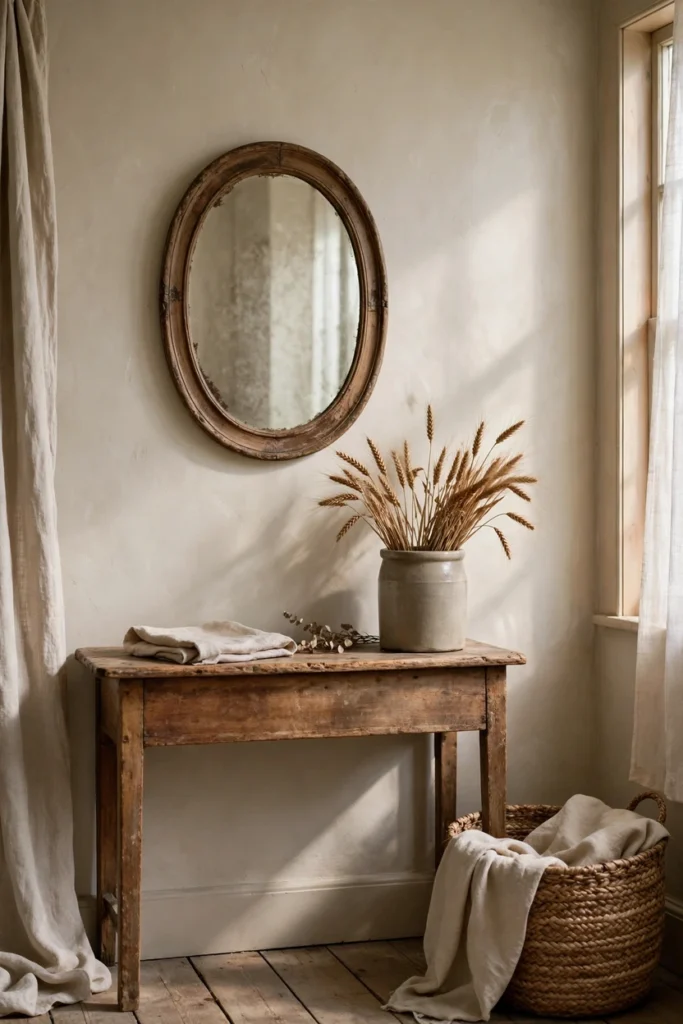
Warm neutrals set the calm tone, so start with the wall color. Creamy off-whites like Sherwin-Williams Shoji White, soft khakis like Universal Khaki, and mushroom-taupes like Farrow and Ball Elephant’s Breath feel warm without turning yellow. Cool grays often look flat next to wood and linen, which is one reason designers have shifted toward warmer tones. Test two or three samples on different walls and watch them in morning and evening light before you choose. Use a matte or eggshell finish so the color looks soft and not shiny.
Limewash Walls With Soft, Cloudy Movement
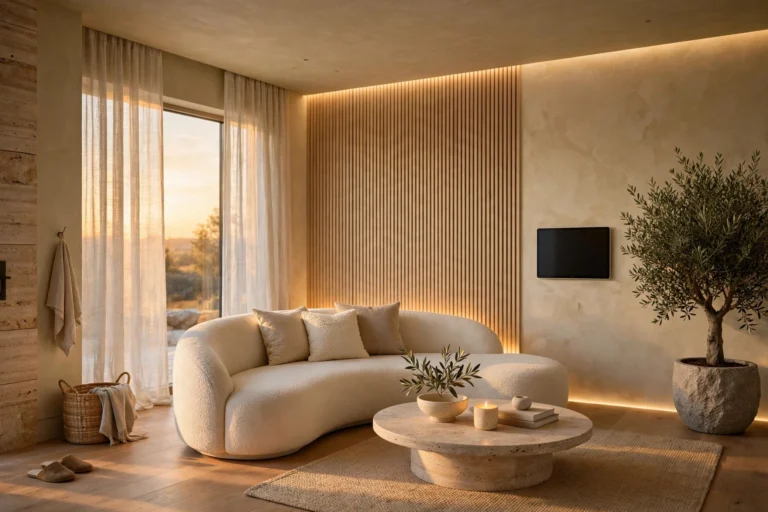
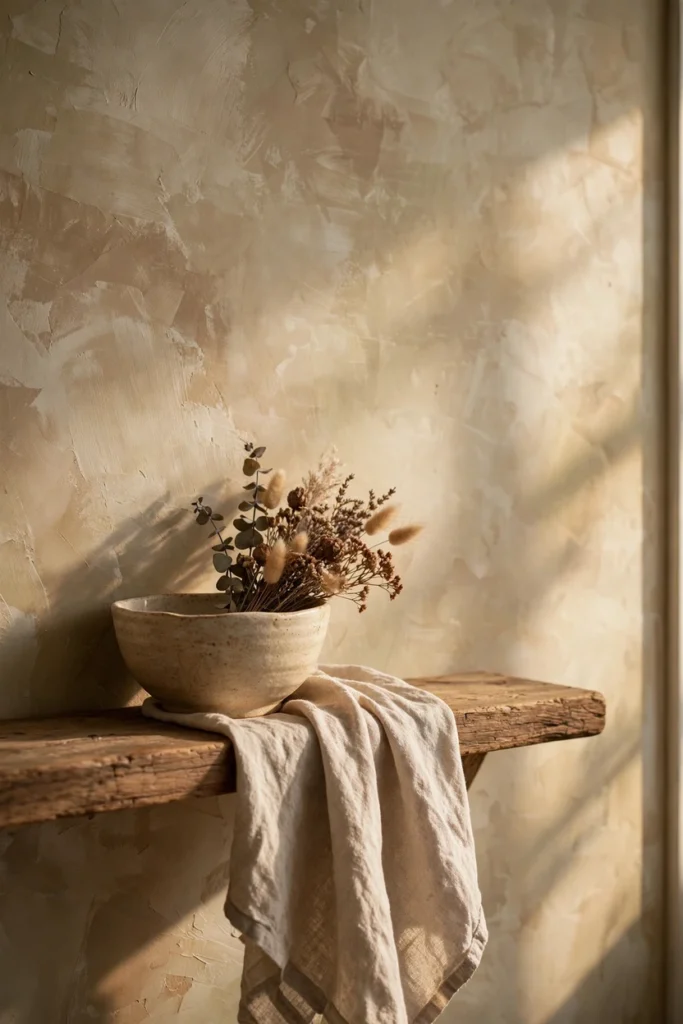
Limewash gives walls the faded, uneven look of an old cottage. It bonds best to porous surfaces like plaster, brick, or stone, and on regular drywall or painted walls it needs a compatible mineral primer first. Apply two or three thin coats with a wide natural-bristle brush in crisscross strokes, and let each coat dry fully. Limewash is thin and shows flaws, so patch and sand the wall before you start. Clean it with a damp cloth, since scrubbing can wear the finish, and if you want the look with less work, try a pre-mixed limewash-style paint.
A Moss or Olive Green Moment
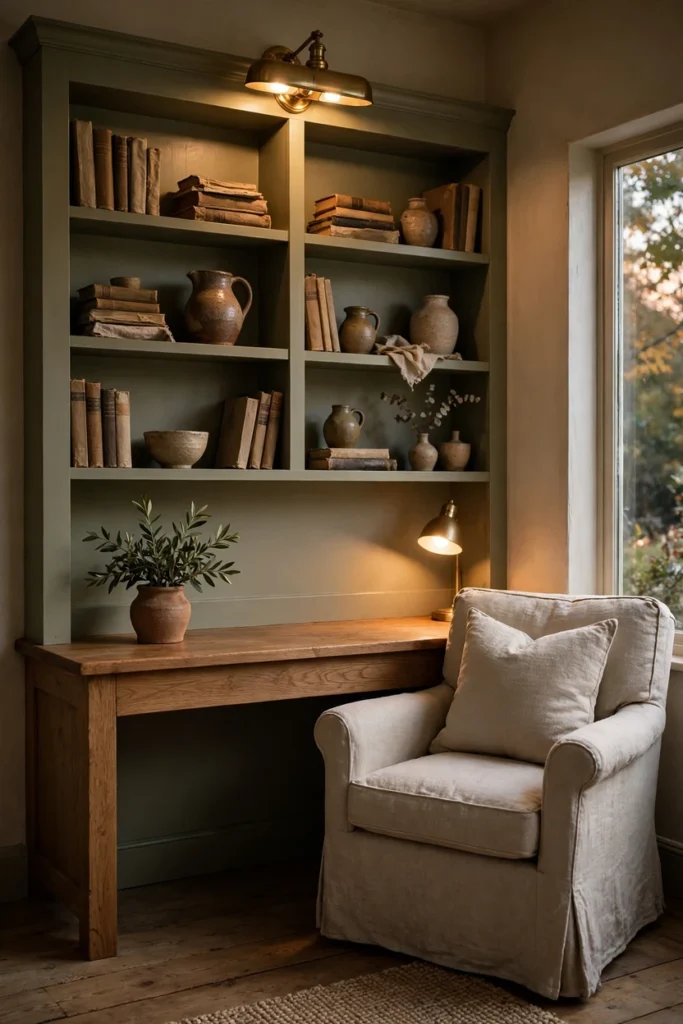
Green is the easiest earthy color to live with because it echoes the garden outside. Choose a dusty, gray-leaning olive or a muted sage, like Benjamin Moore Saybrook Sage, instead of a bright leafy green. Use it on one wall, built-in shelves, a kitchen island, or a door. Pair it with oatmeal linen, warm oak, and a touch of rust or ochre. Eggshell works well for deeper colors, and careful prep matters more with deep pigments.
Terracotta and Clay Accents
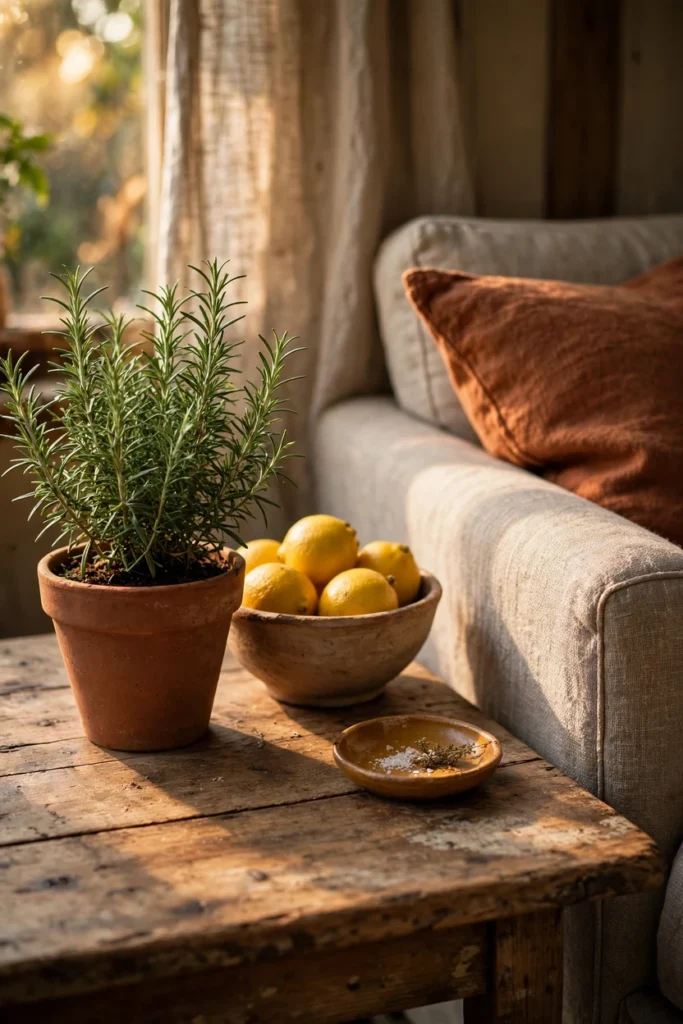
Terracotta brings the warmth of baked earth into a quiet room. Use it in small doses: a clay-colored pillow, a pot of rosemary in a terracotta planter, a rust throw, or one painted piece. Keep to two warm accent colors, and repeat each one at least twice in different places so they look planned. Add ochre or mustard sparingly, like a sunlit note in a cushion or a ceramic dish. Fired clay itself works as decor, such as a handmade bowl of lemons on a table.
Tonal Walls, Trim, and Curtains
A calm room has low contrast. Paint the walls, trim, and even the ceiling in the same color family, or choose curtains and a rug within one shade of the wall. Designers note that tonal spaces, where walls, millwork, and textiles share a color family, feel deeper and quieter than high-contrast schemes. Use different finishes for interest, like a matte wall with a satin trim. This also makes a small room feel larger because the eye doesn’t stop at every edge. Add contrast in only a few places, like a dark frame or a black iron lamp.

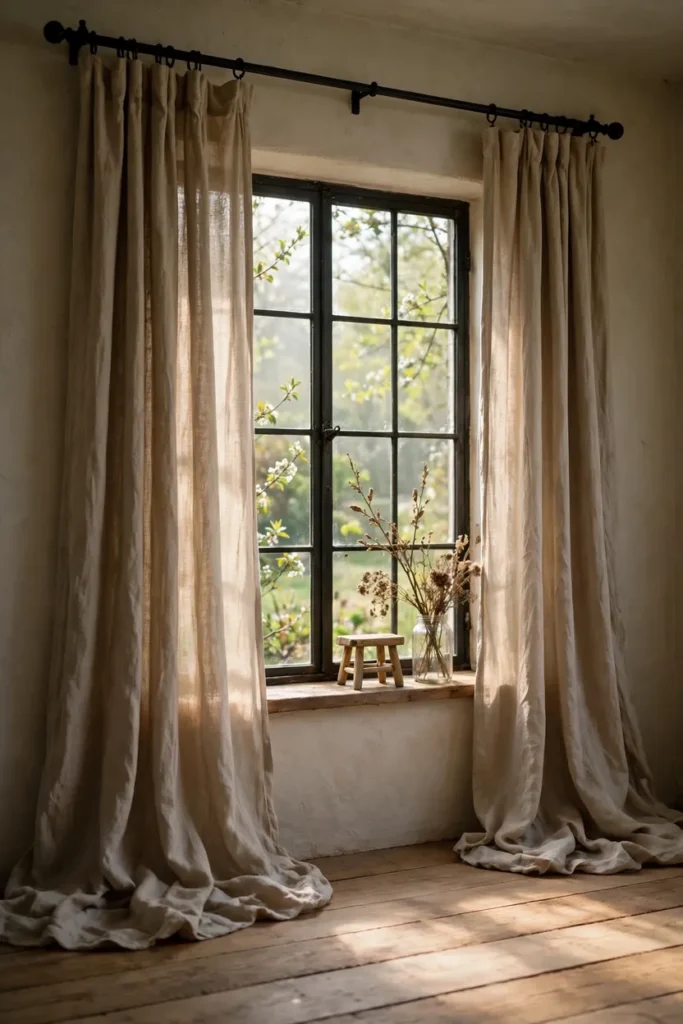
Linen Curtains That Filter Light
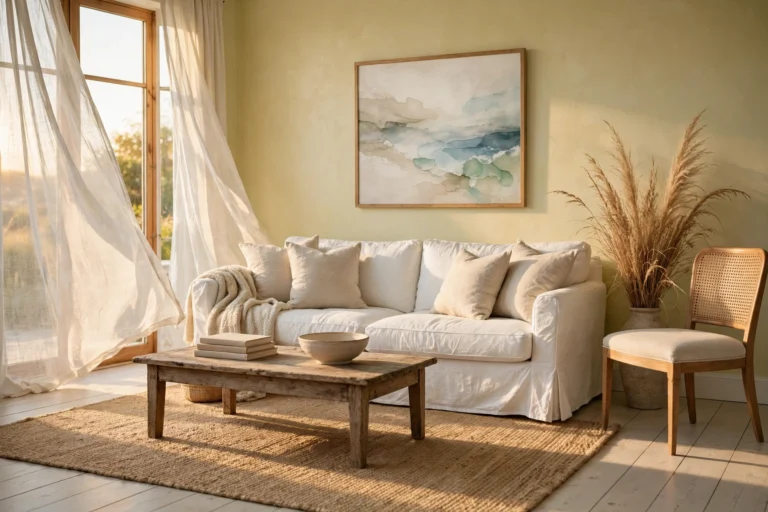
Linen curtains soften daylight into a warm, even glow. Hang the rod a few inches above the window frame and extend it 8 to 12 inches beyond the sides so the glass stays clear when the panels are open. Choose oatmeal, flax, or soft white in a medium weight so the fabric looks full and moves. Linen wrinkles, and that’s part of the charm, but wash it gently and line-dry it to keep it soft. Add a simple liner if you need privacy or sun blocking.
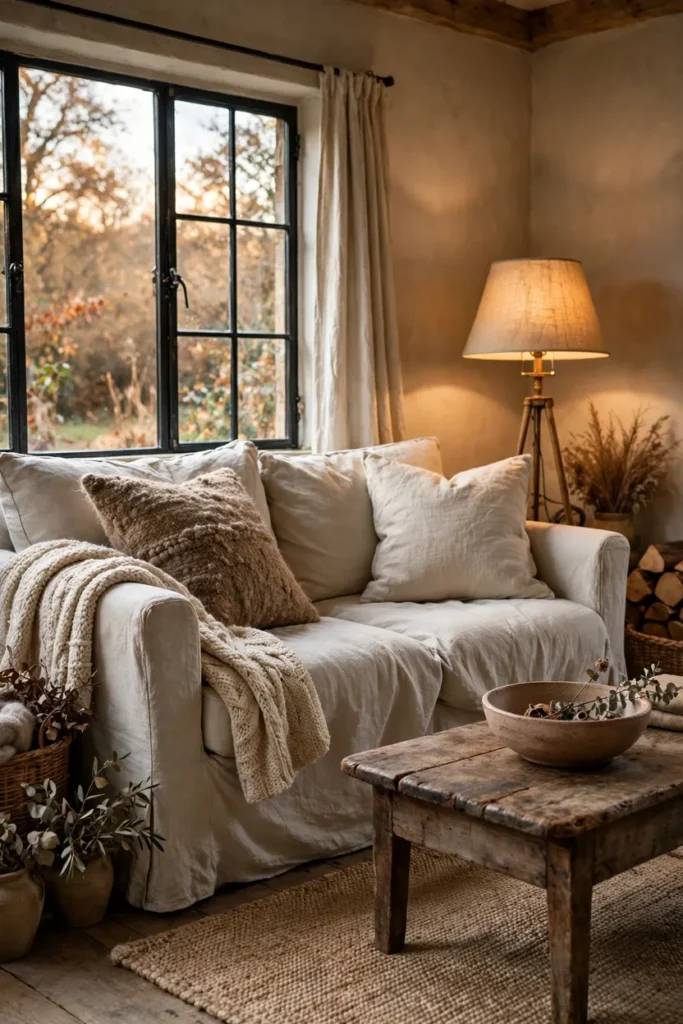
A Slipcovered Sofa in Washable Cotton or Linen
A slipcovered sofa looks relaxed and survives real life. Choose a washable cotton-linen blend in oatmeal, stone, or soft clay, and look for covers you can remove and launder. Loose cushions and a few wrinkles give it a lived-in feel, which is exactly what this style wants. Add two pillows in different textures, like nubby wool and plain linen, plus a throw folded over one arm. Leave about 30 to 36 inches of walkway around the sofa.
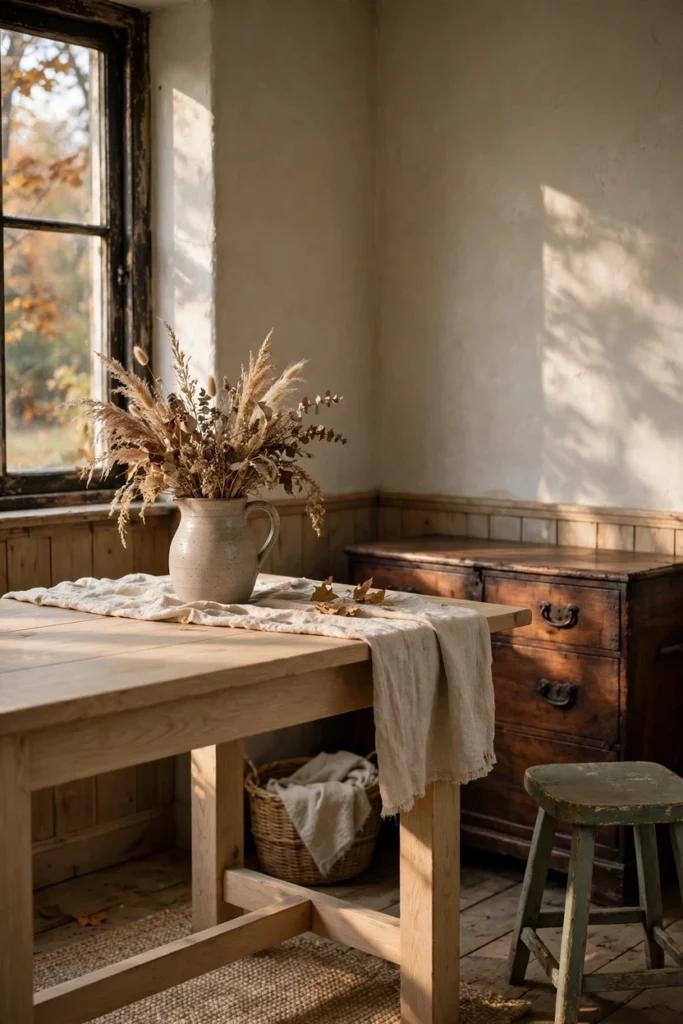
A Mix of Worn Wood Tones
Wood is the backbone of earthy cottage style, and mixing tones keeps it from looking like a store set. Combine pale pine or oak with deeper walnut and one aged, painted piece, and keep all the undertones warm. A worn farmhouse table, a vintage chest, and a plain wood stool can sit together happily. Choose matte oiled or waxed finishes over high gloss. Stay within three wood tones per room so the mix looks relaxed, not random.
Related: 20 Cottage Kitchen Ideas for a Timeless, Magical Feel
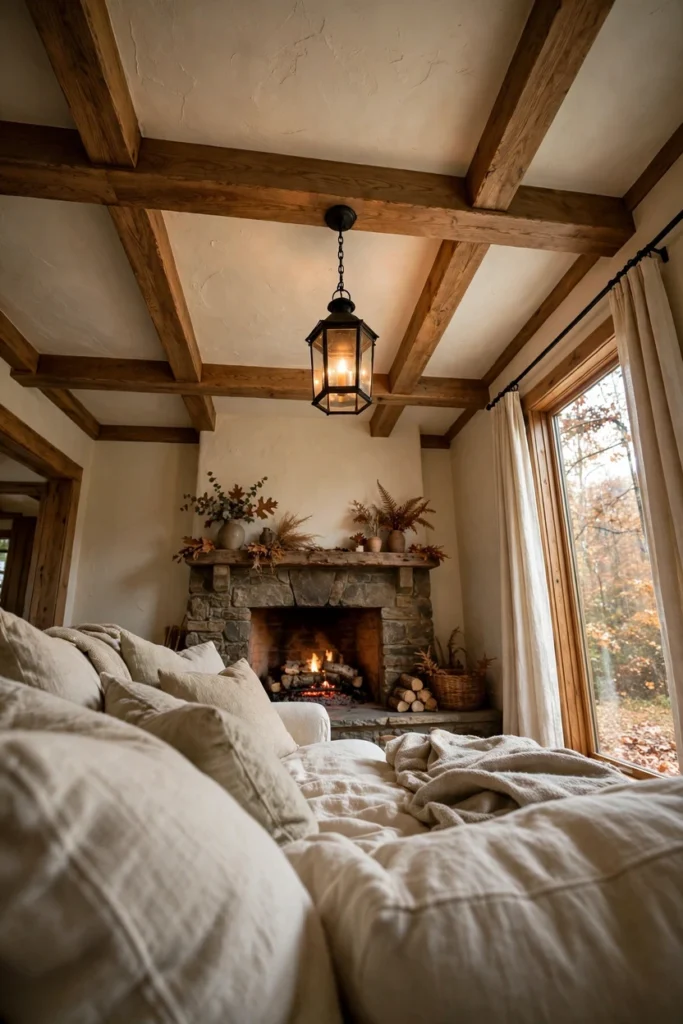
Wood Beams, Real or Faux
Beams add warmth overhead and make a room feel like a cottage. Real beams are heavy and often need structural advice, while hollow faux beams are lighter and easier to install. Stain them in warm oak or walnut, or paint them to match the ceiling for a softer look. Choose beams only if the ceiling is about 8 feet or higher, since they reduce headroom. Plan any ceiling fan or light fixture mounting into solid blocking before the beams go up.
Raw-Edge Shelves With a Living Plant
Floating shelves with a natural or live edge hold the collected look. Fill them with stoneware bowls, a wooden bowl, a few old books, and one trailing plant like pothos or a pot of herbs. Leave about a third of each shelf empty so the display can breathe. Mount the shelves into studs, because books and ceramics are heavy. Rotate a few pieces with the seasons so the shelf feels alive.

Stoneware Crocks With Dried Stems
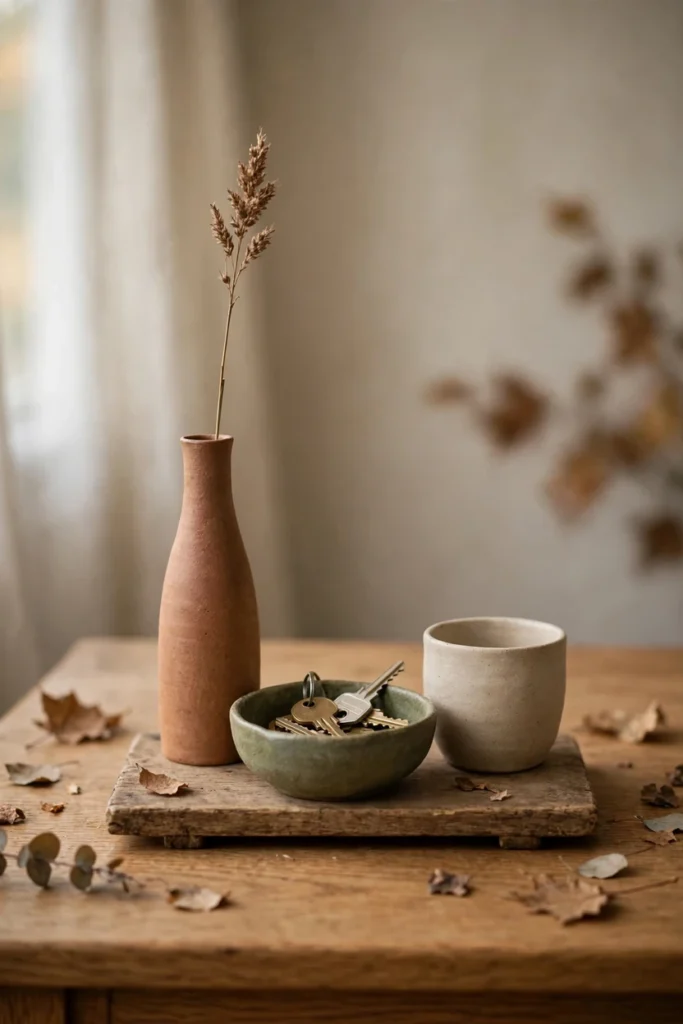
Dried stems last for months and need no water. Fill a stoneware crock or a handmade pitcher with lavender, wheat, bunny tail grass, or eucalyptus in a loose, uneven bunch. Place it on a table, a mantel, or a kitchen counter where it gets a little light but no damp. Keep dried arrangements away from candles and fireplaces, and replace them once they get dusty or musty. Group the crock with a wooden bowl and a small ceramic dish for a simple vignette.

Handmade Pottery in Groups of Three
Handmade pottery brings the human touch to a quiet room. Choose pieces in matte glazes, like oatmeal, moss, and clay, with slightly uneven edges. Group three pieces of different heights on a tray or table, and make one a bowl you actually use for fruit or keys. Look for local potters, craft markets, and thrift shops for unique finds. Skip matching sets, since small differences make the look feel collected.
Woven Baskets as Storage
Baskets hide clutter and add texture at the same time. Use large lidded baskets for throws, medium ones for toys or magazines, and small ones for remotes and chargers. Choose seagrass, jute, rattan, or wicker, and mix shapes while keeping the tones close. Line baskets that hold small items with a cotton liner so nothing snags. Keep one basket by the sofa for blankets and one by the door for shoes.

A Layered Jute and Wool Rug
A layered rug grounds a room and adds warmth underfoot. Start with a large jute rug as the base, then place a smaller wool or vintage rug on top. In a living room, make sure at least the front legs of the sofa and chairs sit on the rug, and many rooms suit an 8 by 10. Add a non-slip pad underneath so the layers stay put. Jute can feel rough on bare feet and can shed, so choose a softer weave if toes matter and vacuum often.

A Window Seat or Reading Nook
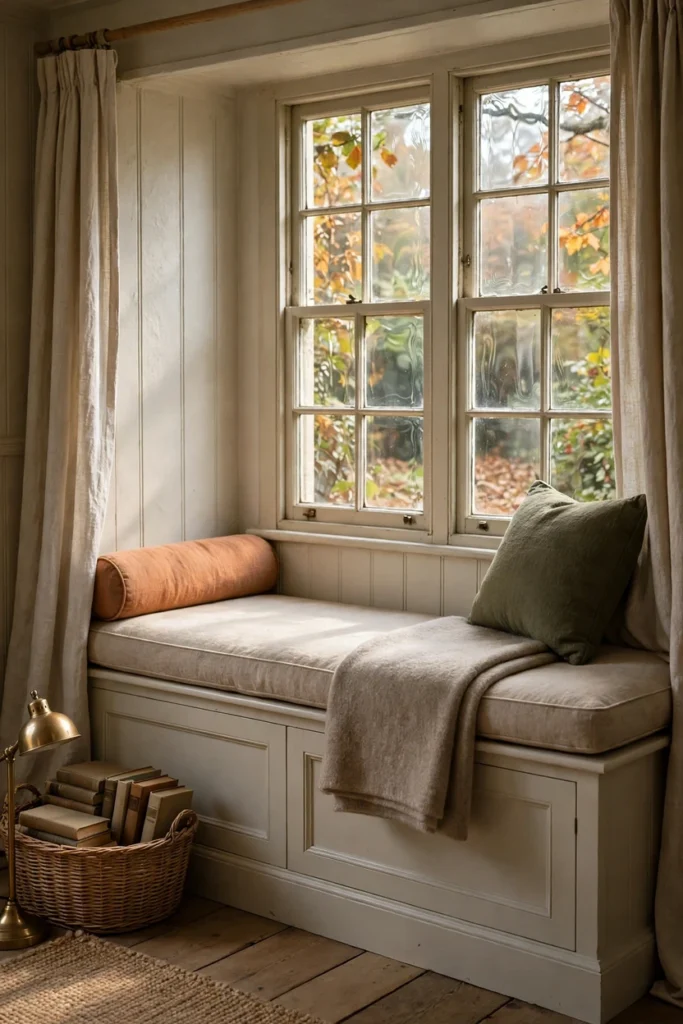
A small nook gives calm a physical place to live. Build a simple bench in a window with a thick cushion and storage underneath, or tuck an armchair, a small table, and a lamp into a corner. Add a wool throw and a basket of books. Choose a cushion about 3 to 4 inches thick in a washable cover, and keep the seat height around 17 to 19 inches so it feels like a chair. Keep the corner free of screens so it stays quiet.
A Hearth With Stone and Wood
A fireplace is the heart of a cottage, even a small one. Style the mantel with a worn wood beam or a stone surround, a mirror or landscape painting, and a few ceramics, keeping to about five objects. Keep flammable items like dried grasses and candles well away from the firebox, and use a screen whenever a fire is burning. No fireplace? Lean a large mirror on a console and add a lamp and a few ceramics to create the same focal point.

A Cottage Kitchen With Open Shelves and Butcher Block
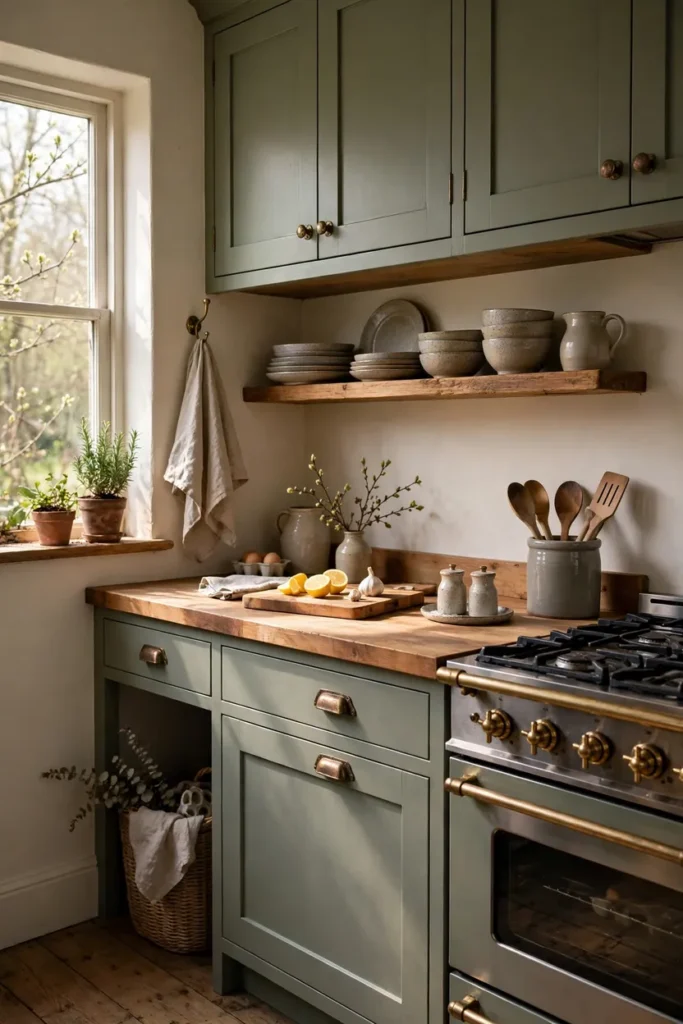
The kitchen is a natural home for stoneware and wood. Mix open shelves with closed cabinets so the dishes you use daily sit out and the rest stay hidden. Choose butcher block counters or an island top sealed with a food-safe oil, and re-oil it when it looks dry. Paint cabinets in muted green, warm white, or clay, and use aged brass or iron hardware. Hang a linen towel from a hook and keep a crock of wooden spoons near the stove.
A Welcoming Cottage Entryway
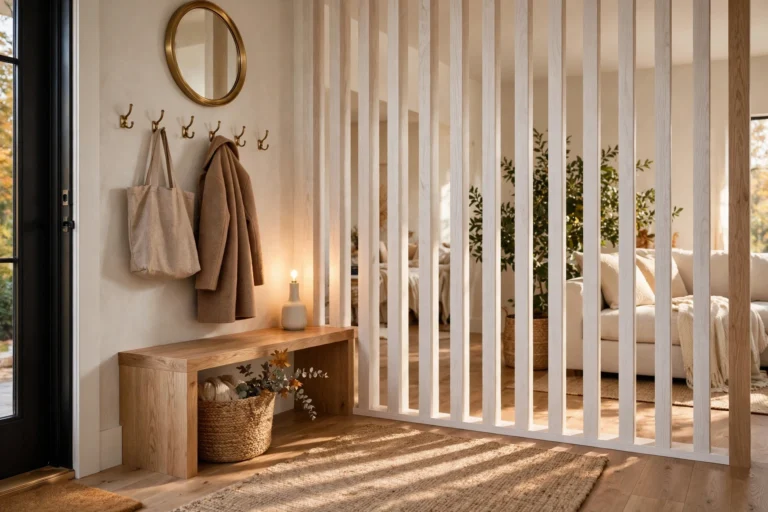
The entry sets the mood for the whole house. Use a wood bench with a basket underneath, a row of iron or wood hooks, a small mirror, and a washable runner. Add a tray for shoes and a bowl for keys. Hang dried stems or a simple wreath on the door. Keep only the current season’s coats on the hooks so the area never overflows.

An Earthy Cottage Bedroom
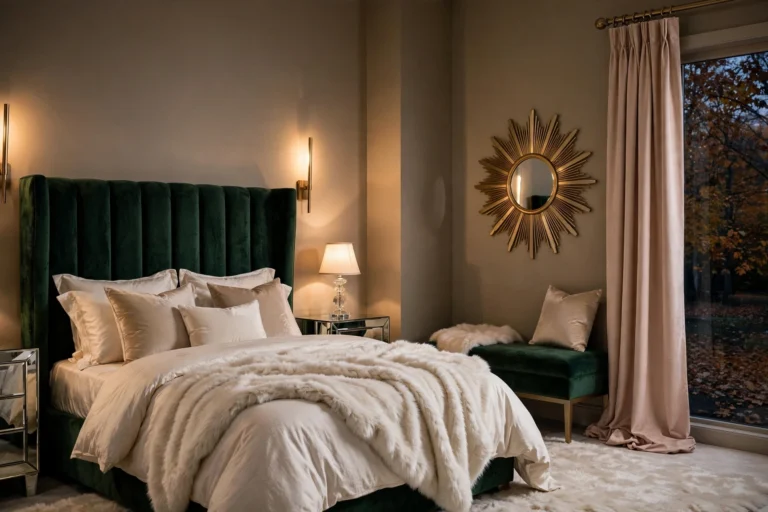
Bedrooms are where calm matters most. Use linen or cotton bedding in oat, clay, or moss, layered with a quilt and a wool throw. Add wood bedside tables, a simple wood or upholstered headboard, and a soft lamp on each side. Use curtains that block early light, and a rug on each side of the bed or one large rug under it. Keep the nightstands free of screens, with only a lamp, a book, and a glass of water.

Warm, Low Lighting With Linen Shades
Lighting makes or breaks a calm home. Use table and floor lamps with linen or paper shades and warm bulbs around 2700K, and put overhead lights on dimmers. Aim for three light sources at different heights in each room. Add a pair of beeswax or soy candles in ceramic holders, trim the wick to about a quarter inch, and never leave them burning unattended. Choose aged brass or iron fixtures for a worn, warm look.

Antique Landscapes and Vintage Finds
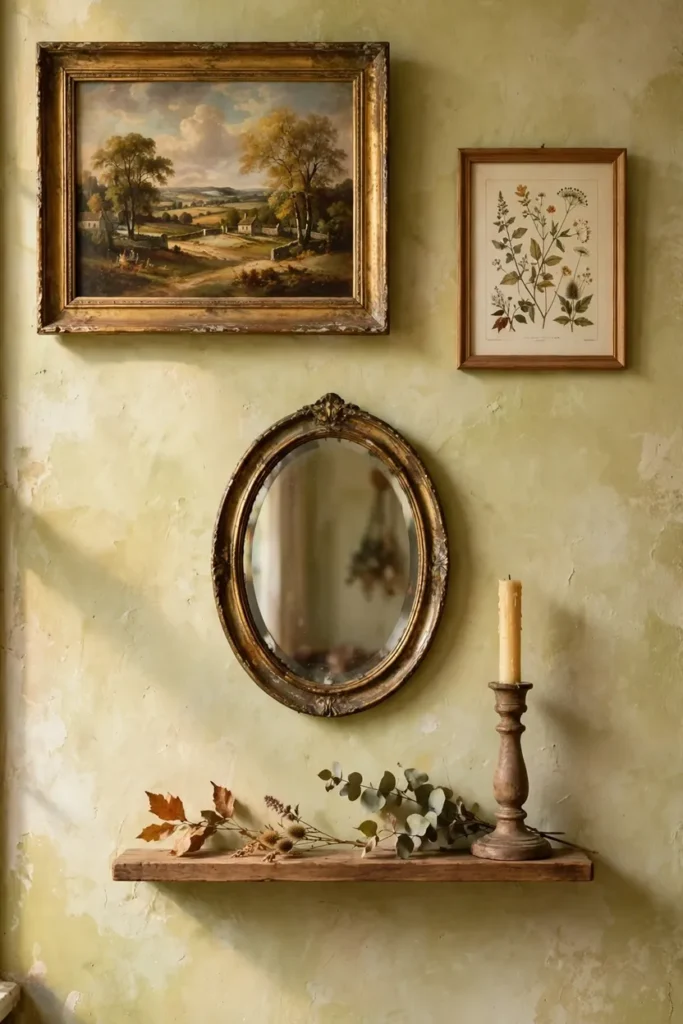
Art with age adds depth that new prints can’t match. Hang a vintage landscape or botanical print in a wood or aged brass frame, and group two or three pieces in a loose cluster. Mix in a thrifted mirror, a candlestick, and a wooden box for variety. Hang art with its center around 57 inches from the floor so it sits at eye level. Keep the number of pieces small so the walls stay quiet.
Styling Tips
Aim for low contrast. Keep walls, curtains, and big furniture within a close color range, and use a few darker accents for definition.
Layer three textures. Combine something smooth (ceramic), something soft (linen or wool), and something rough (jute or raw wood) in every room.
Group in odd numbers. Three bowls, three pillows, or three frames look natural.
Edit as you go. One in, one out. A calm home has fewer, better things.
Repeat materials. Use the same wood tone, metal, or clay color in at least two places per room.
Light in layers. Use lamps at different heights and dimmers on overhead lights.
Make something imperfect on purpose. A wrinkle in linen, a wobbly bowl, or a faded rug gives the room its warmth.
Earthy Cottage Palette Cheat Sheet
Base (60 percent): Warm off-white, oatmeal, mushroom, or soft khaki. Try Sherwin-Williams Shoji White, Universal Khaki, or Farrow and Ball Elephant’s Breath.
Secondary (30 percent): Muted sage, olive, or moss. Try Benjamin Moore Saybrook Sage, or a dusty green limewash.
Accent (10 percent): Clay, terracotta, rust, ochre, or a deep plum in small doses.
Finishes: Matte, eggshell, or limewash on walls. Satin on trim for subtle contrast.
Metals: Aged brass or blackened iron. Avoid shiny chrome.
Always test: Paint large samples and check them morning, afternoon, and evening.
Practical Implementation Ideas
You can build this look in layers. This order keeps things simple.
Clear and calm first. Remove what you don’t love or use. This is the fastest way to a calmer room.
Pick the palette. Choose a base, a secondary, and an accent, and test samples.
Paint or limewash. Apply the wall color and trim before adding furniture.
Soften the windows. Hang linen curtains high and wide.
Anchor with a rug and seating. Add a layered rug and a slipcovered sofa or armchair.
Add storage. Use baskets, a wood chest, or a bench with storage.
Layer light. Add lamps with linen shades and dimmers on overhead lights.
Finish with handmade pieces. Add pottery, dried stems, vintage art, and a plant.
Calm home checklist:
Walls in a warm, muted color with a matte finish
Curtains hung high in a soft fabric
At least three light sources in each main room
Warm bulbs around 2700K and dimmers on overhead lights
One natural material in every vignette: wood, clay, linen, wool, or stone
Surfaces with about a third empty space
Baskets or closed storage for daily clutter
Candles away from dried botanicals and fabrics
Common Mistakes to Avoid
Choosing beige with a cool undertone. It can look gray and flat. Test samples near wood and linen.
Skipping primer on limewash. On drywall or painted walls, limewash needs a compatible primer.
Matching everything. A matched set feels like a showroom. Mix wood tones and pottery.
Too many small objects. Clusters of tiny items create visual noise. Use fewer, larger pieces.
Cool white bulbs. They make warm walls look gray and tired.
Hanging curtains at the frame. Hang them higher and wider so windows look larger.
Dried flowers near flames. Keep them away from candles and fireplaces.
Letting natural materials dry out. Re-oil wood when it looks dry and shake out wool and linen.
Fake distressing. Real wear looks better than painted-on aging.
Small-Space Alternatives
Light, warm walls: Oatmeal or warm white walls keep a small room open.
Tonal everything: Painting trim and walls the same color makes the room feel larger.
Storage furniture: Use a bench with storage, a chest as a coffee table, or a wood trunk at the foot of the bed.
Wall-mounted shelves: Raw-edge shelves use vertical space.
Related: 17 Living Room Wall Art Layering Ideas for a Focal Point
Baskets over bulky cabinets: A few baskets hide clutter without the weight of large furniture.
Mirrors: An aged wood mirror opposite a window doubles daylight.
One large rug: A single big rug makes a small room feel bigger than several small ones.
Rental-Friendly Alternatives
Instead of limewash: Use a limewash-style paint, or a removable textured peel-and-stick finish on one wall, if your lease allows.
Instead of new curtains hardware: Use a tension rod or adhesive hooks for lightweight panels.
Instead of built-ins: Use freestanding shelves and a storage bench.
Instead of new light fixtures: Swap bulbs for warm 2700K and add plug-in sconces.
Instead of a fireplace: Use a large mirror on a console with lamps and ceramics.
Budget-Friendly Alternatives
Spend on what you touch and see daily, like bedding, curtains, and lighting. Save on decor and storage.
Instead of new pottery: Shop thrift stores, estate sales, and local markets for handmade pieces.
Instead of new baskets: Thrift baskets and add a cotton liner.
Instead of beams: Paint the ceiling a warm white and add one wood shelf at ceiling height.
Related: 15 Modern Ceiling Design Ideas That Do More Than Look Good
Instead of a new sofa: Add a washable slipcover to the one you have.
Instead of custom shelving: Use a pine board and simple black brackets, sanded and oiled.
Instead of designer art: Frame vintage book pages, fabric, or thrifted landscapes.
Instead of dried flower bouquets: Cut wheat, grasses, or branches from your own yard.
Instead of new rugs: Layer a small thrifted wool rug on a basic jute rug.
Pro Styling Recommendations
Choose the wall color last, not first. Pick fabrics and wood first, then match the paint to them.
Use texture as your pattern. A nubby wool, a smooth stoneware, and a rough jute look rich without needing prints.
Rotate seasonally. Swap throws, stems, and candles to keep the room fresh.
Make one thing handmade. A pot, a bowl, or a quilt tells a story.
Leave empty space. Empty surfaces help rooms feel calm.
Edit by touch. If an object isn’t useful or loved, let it go.
Photograph the room. A quick phone picture reveals clutter you’ve stopped noticing.
Frequently Asked Questions
1. What is earthy cottage decor? Earthy cottage decor uses warm, muted colors, natural materials like linen, wool, wood, and clay, and handmade or vintage pieces in relaxed layers. The look is quiet and low in contrast, so it feels calm and lived in.
2. How is earthy cottage different from cottagecore and farmhouse? Cottagecore tends to be more romantic, with florals and ruffles. Farmhouse often uses stronger black-and-white contrast and shiplap. Earthy cottage is softer and more tonal, with organic textures and muted colors.
3. What colors work best for earthy cottage decor? Warm off-whites, oatmeal, mushroom, and soft khaki make a calm base. Add moss or olive green, and small touches of clay, terracotta, ochre, or deep plum. Designers have also pointed to earthy greens and clay as current favorites.
4. How do I get the limewash look? Use real limewash on porous surfaces like plaster or brick, or use a mineral primer first on drywall. Apply two or three thin coats with a natural-bristle brush in crisscross strokes. Pre-mixed limewash-style paints are an easier option.
5. What materials define the style? Linen, wool, jute, wood, stone, clay, and aged brass or iron. Choose matte or oiled finishes and avoid shiny surfaces.
6. How do I make a small home feel earthy cottage? Use warm light walls, tonal paint on trim, a few baskets, a bench with storage, and one large rug. Choose fewer, larger objects and leave empty space on surfaces.
7. Can renters do earthy cottage decor? Yes. Use curtains, rugs, lamps, baskets, thrifted pottery, and removable hooks. Use a limewash-style or removable finish only if your lease allows.
8. How do I keep the look calm and not cluttered? Keep a third of every surface empty, use baskets for daily items, and stick to a small palette. Edit regularly and keep contrast low.
9. What lighting suits this style? Use warm bulbs around 2700K in lamps with linen or paper shades, plus dimmers on overhead lights. Aim for three light sources at different heights in each room.
10. How do I care for natural materials? Wash linen gently and line-dry it. Spot-clean wool and air it out. Oil wood when it looks dry. Dust dried stems gently and replace them when they get musty. Keep candles away from dried botanicals.
Earthy cottage decor uses warm, muted colors, natural materials like linen, wool, wood, and clay, and handmade or vintage pieces in relaxed layers. The look is quiet and low in contrast, so it feels calm and lived in.
Cottagecore tends to be more romantic, with florals and ruffles. Farmhouse often uses stronger black-and-white contrast and shiplap. Earthy cottage is softer and more tonal, with organic textures and muted colors.
Warm off-whites, oatmeal, mushroom, and soft khaki make a calm base. Add moss or olive green, and small touches of clay, terracotta, ochre, or deep plum. Designers have also pointed to earthy greens and clay as current favorites.
Use real limewash on porous surfaces like plaster or brick, or use a mineral primer first on drywall. Apply two or three thin coats with a natural-bristle brush in crisscross strokes. Pre-mixed limewash-style paints are an easier option.
Linen, wool, jute, wood, stone, clay, and aged brass or iron. Choose matte or oiled finishes and avoid shiny surfaces.
Use warm light walls, tonal paint on trim, a few baskets, a bench with storage, and one large rug. Choose fewer, larger objects and leave empty space on surfaces.
Yes. Use curtains, rugs, lamps, baskets, thrifted pottery, and removable hooks. Use a limewash-style or removable finish only if your lease allows.
Keep a third of every surface empty, use baskets for daily items, and stick to a small palette. Edit regularly and keep contrast low.
Use warm bulbs around 2700K in lamps with linen or paper shades, plus dimmers on overhead lights. Aim for three light sources at different heights in each room.
Wash linen gently and line-dry it. Spot-clean wool and air it out. Oil wood when it looks dry. Dust dried stems gently and replace them when they get musty. Keep candles away from dried botanicals.
Conclusion
An earthy cottage home isn’t finished the day you hang the last curtain. It settles in. The linen softens, the wood picks up a few marks, and the dried stems fade to a color you could never have bought.
You don’t have to try all 21 ideas. Start with the walls and the light, since they set the mood for everything else. Add one handmade piece you love, and then give the room a few weeks to show you what it needs.
Save this post, test two paint samples on the wall tonight, and swap one cool bulb for a warm one.