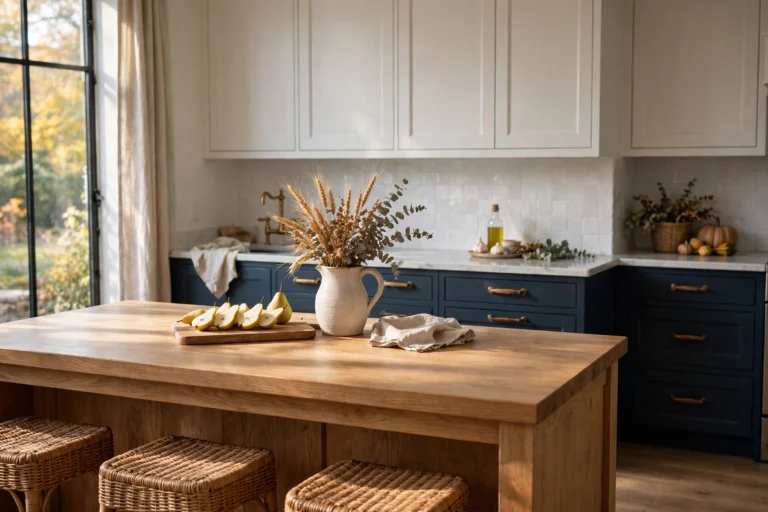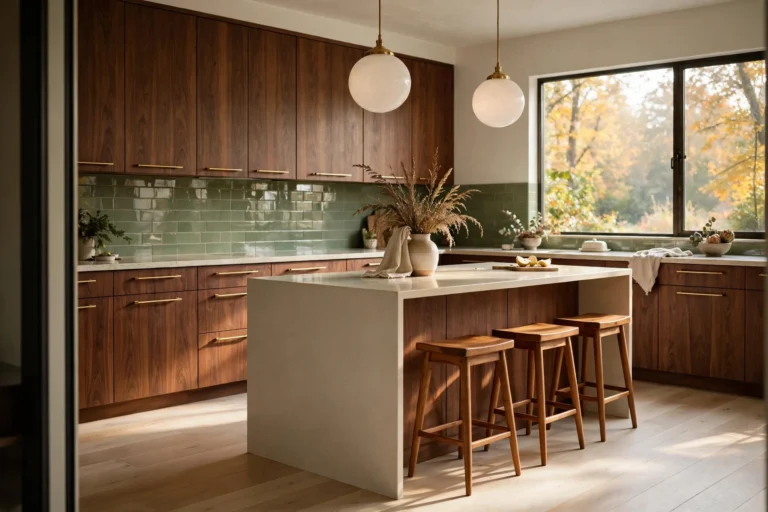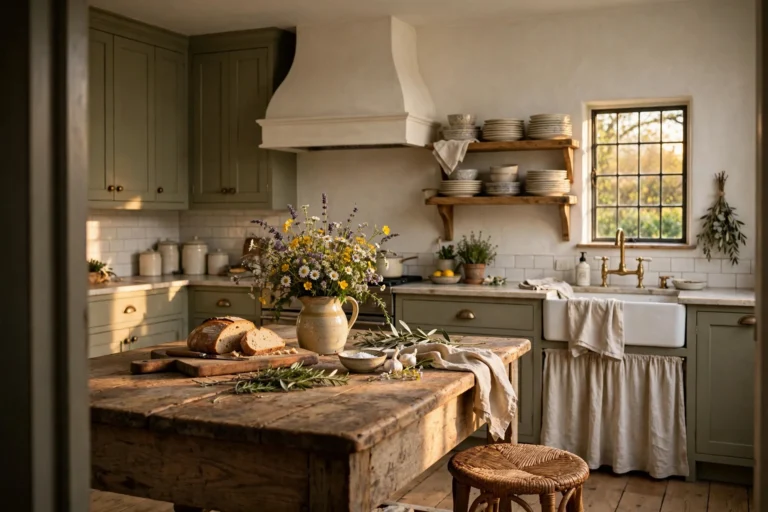
20 Cottage Kitchen Ideas for a Timeless, Magical Feel
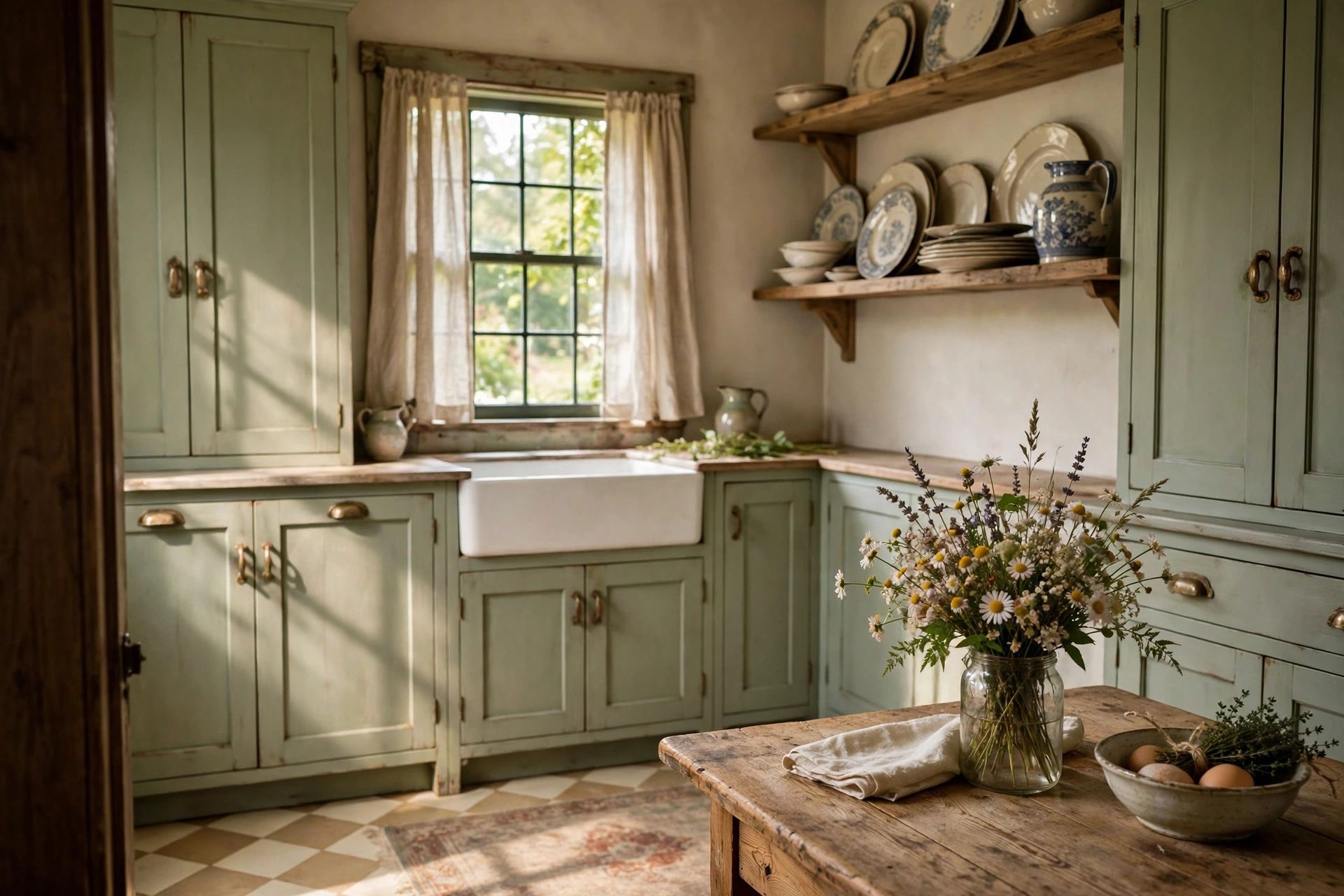
Picture a slow Saturday morning. The window is open a crack. A kettle ticks on the stove, and sunlight lands on a worn table with a jug of wildflowers and a plate of toast.
That small, lived-in feeling is what people mean when they search for cottage kitchen ideas. It has little to do with square footage or fancy appliances. It comes from soft color, old wood, shelves you can see into, and little details that make you want to stay.
The good news is you don’t need a stone cottage to get it. Below are 20 ideas, each with the reasoning behind it, plus fixes for small rooms and tight budgets.
Quick answer: What is a cottage kitchen? A cottage kitchen is a small, warm, lived-in kitchen built from soft colors (cream, sage, butter yellow, duck egg blue), natural materials like wood and stone, open or freestanding storage, and old-fashioned details such as a butler sink, café curtains, and mismatched crockery. It values comfort and charm over a sleek, matching look.
Cottage vs. farmhouse in one line: Cottage kitchens lean softer, more nostalgic, and more pastel. Farmhouse kitchens tend to be bolder and more work-ready, with big islands and industrial touches.
The 20 Cottage Kitchen Ideas
1. Paint the Cabinets a Soft Sage Green
Sage green makes a kitchen feel like it grew out of a garden. Choose a gray-leaning green with a little warmth, such as Benjamin Moore Cushing Green or Sherwin-Williams Clary Sage. Brush out a large sample board and check it by the window, then again at night, because green shifts a lot with the light. Pair it with cream walls, wood counters, and unlacquered brass pulls, which darken and soften with use. The mix works because green and wood both come from nature, so nothing in the room fights for attention.

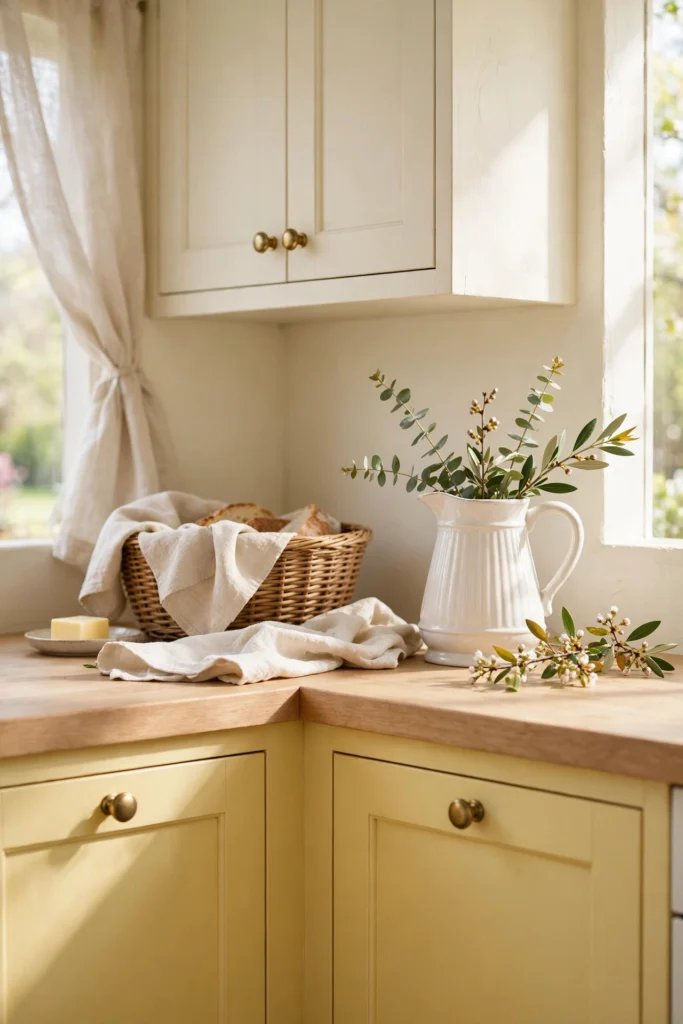
2. Try Butter Yellow and Cream Two-Tone Cabinets
Soft yellow brings sunshine into a kitchen on gray days. Paint the lower cabinets butter yellow and the uppers warm cream, so the color sits at hand height and the top half stays light. Shades close to Farrow & Ball Hay or Sherwin-Williams Butter Up give a creamy glow rather than a lemon-drop look. Add white ironstone, a woven bread basket, and a pale wood counter to keep the palette grown-up. Painting only the bottom half also keeps the cost and the work down.
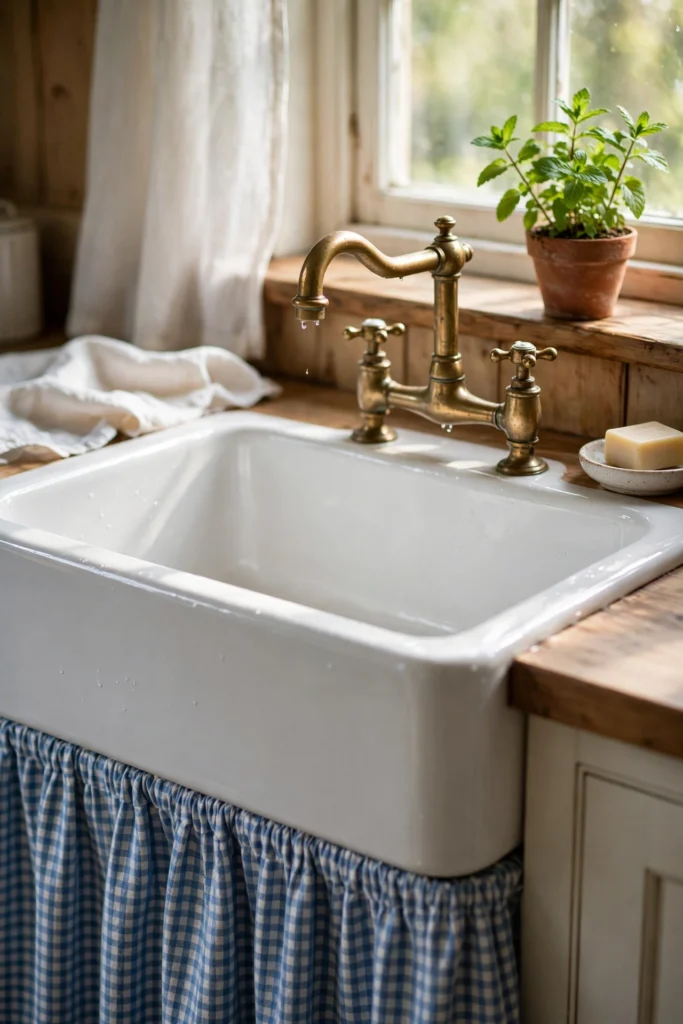
3. Install a Butler Sink With a Gathered Skirt
A deep white butler sink, also called a Belfast sink, is the piece many people picture first when they hear cottage kitchen. Its tall sides hold big pots and baking trays, so it earns its spot as well as its looks. Pair it with a bridge tap in aged brass or nickel for an old-school touch. For a softer finish, hang a gathered sink skirt in gingham or ticking from a tension rod to hide cleaning supplies below. Seal any wood counters beside the sink, and machine-wash the skirt every few weeks so it stays fresh.
Related: 15 Retro Kitchen Ideas That Look Pinterest Perfect
4. Style Open Shelves With Mismatched Crockery
Open shelves let a cottage kitchen show off the dishes you actually use. Choose plain wood boards, then fill them with ironstone plates, blue-and-white bowls, and a couple of jugs in different heights. Odd numbers look relaxed, so group items in threes and leave a little empty wall between groups. Keep shelves a few feet away from the stove so cooking grease doesn’t coat the dishes. Wipe everything down often, since open storage collects dust faster than a closed cupboard.

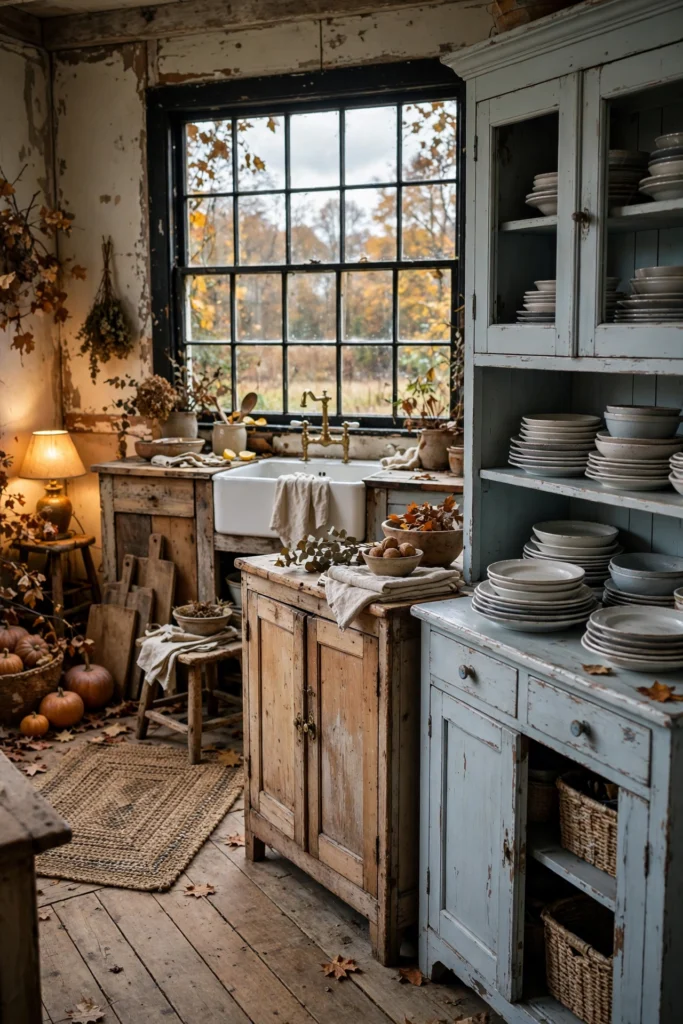
5. Build an Unfitted Kitchen With a Pine Hutch
An unfitted kitchen uses freestanding furniture in place of one long run of matching cabinets. Think of a pine hutch for dishes, a painted cupboard that doubles as a pantry, and a standalone work table. The room ends up feeling like it was collected over years, which is the heart of the cottage look. Measure carefully around plumbing and outlets before you buy anything. Anchor tall pieces to the wall with safety straps so they stay steady.
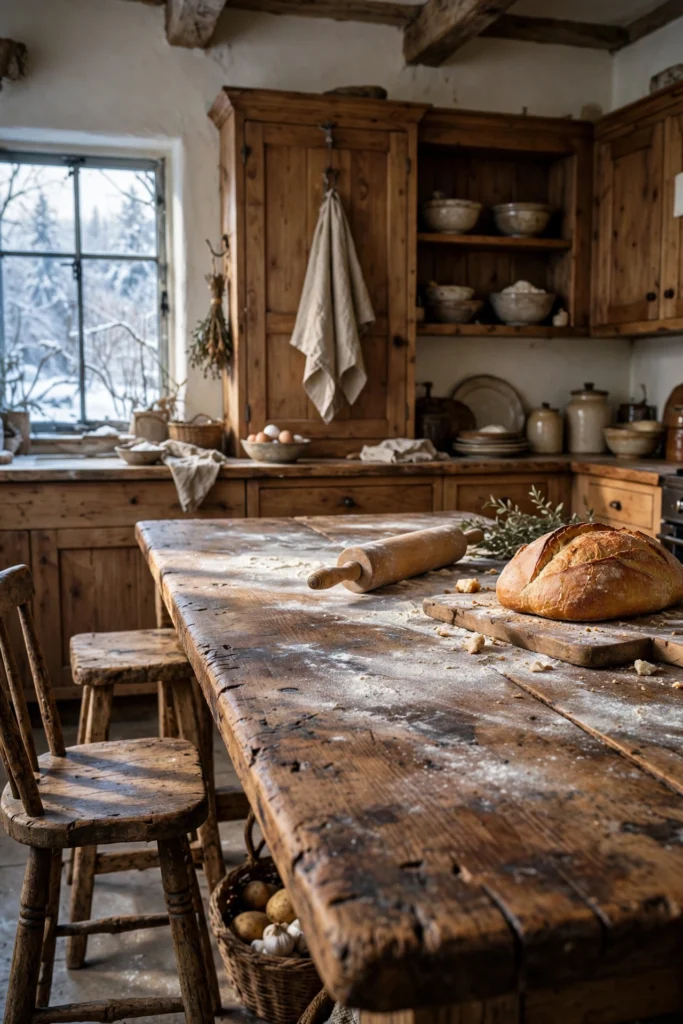
6. Use an Antique Farmhouse Table as Your Island
A worn wood table does the job of a built-in island with far more personality. Search for terms like farmhouse work table, baker’s table, or draper’s table. Most dining tables sit near 30 inches high, so add a thick butcher block top or use it as a seated prep spot. Leave at least 36 inches of walkway around it, and 42 inches if two people cook together. A table also lets you slide stools underneath, which keeps a small room open.
7. Hang a Wall-Mounted Plate Rack
A wall-mounted plate rack replaces a set of upper cabinets with something prettier and more useful. Mount it over the sink or on a bare wall, and plates dry in place, which saves counter space and towel time. Wooden racks with simple dowels look right at home in a cottage, and a painted one can match your trim. Fix it into wall studs, since a stack of wet ceramic plates weighs more than it looks. Fill it with plain white or blue-and-white dishes so it looks calm even on busy days.
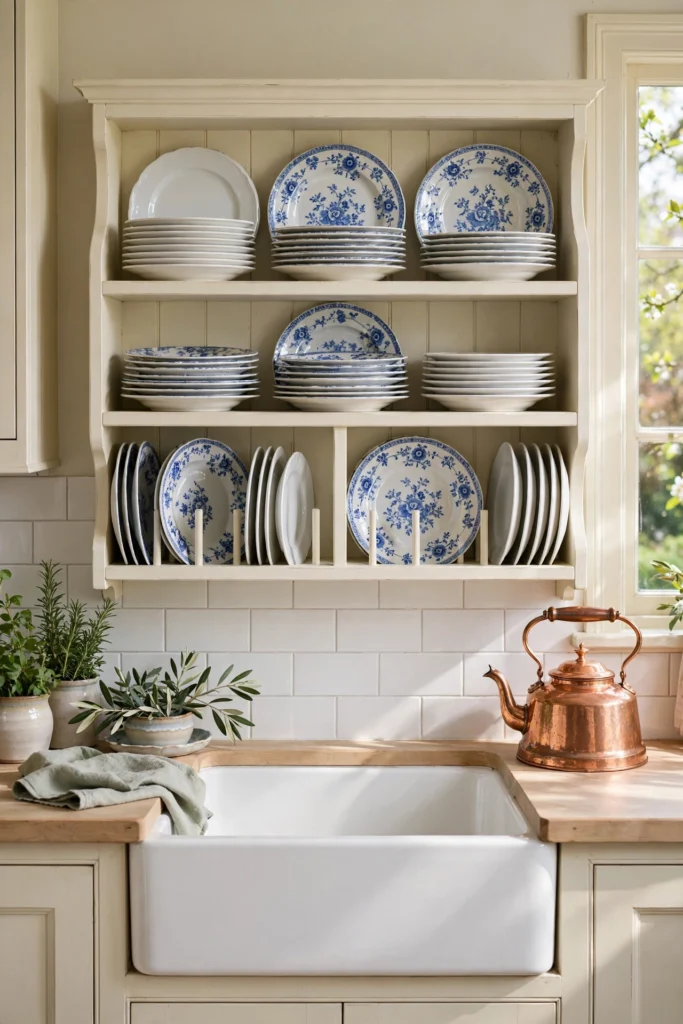
8. Add Beadboard to the Lower Walls
Beadboard is the old trick that gives flat walls a soft, cottage texture. Run it up the lower third of the wall, about 36 to 42 inches high, and finish the top with a slim wood cap. Paint it in satin or semi-gloss so splashes wipe clean, and match it to your cabinets for a calm look. It also hides slightly uneven walls, which are common in older homes. Thin beadboard sheets cost much less than tile, so the effect is easy to reach on a small budget.
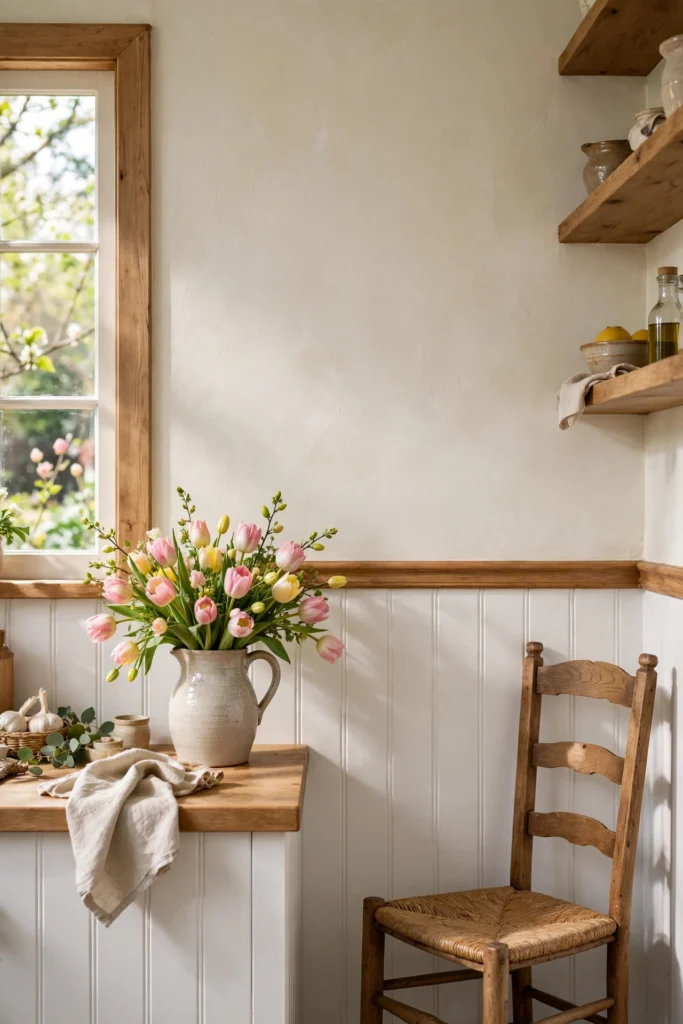
9. Choose Warm Wood Counters
Wood counters give a cottage kitchen its warm, worn-in feel. Butcher block has a soft grain that hides small scratches, and a regular rub of food-safe mineral oil keeps it healthy. Soapstone and honed marble are good alternatives, because their matte surfaces gain a gentle patina instead of showing wear. Shiny, glassy stone can feel cold next to open shelves and painted wood, so keep finishes soft. Seal the wood well near the sink, and wipe up standing water to protect the boards.

10. Lay a Checkerboard or Terracotta Floor
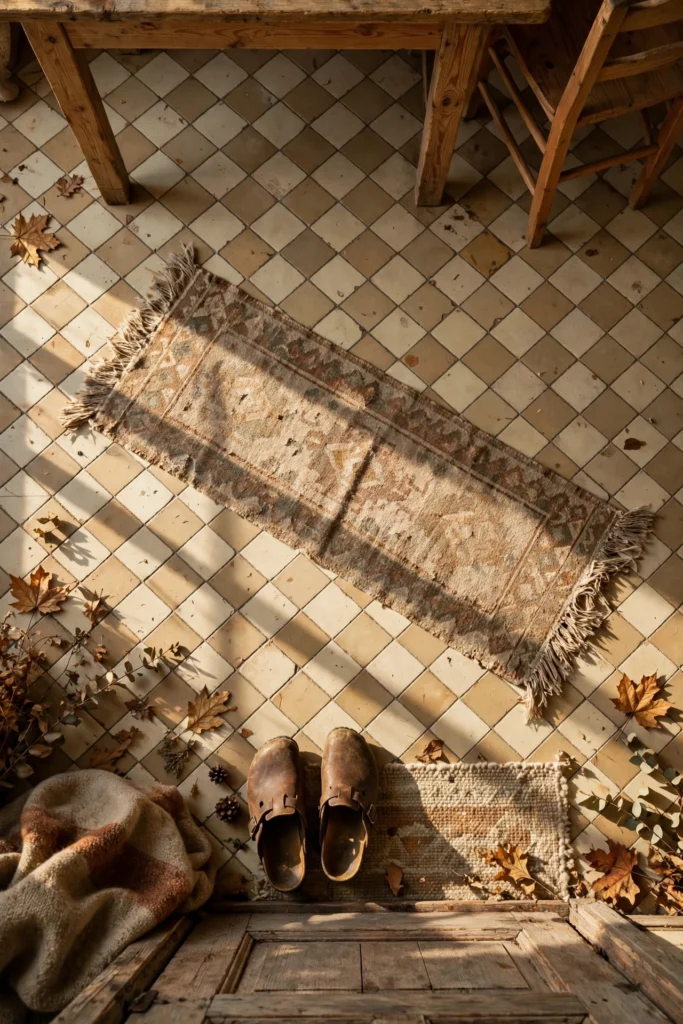
A checkerboard floor adds playful pattern in one move. Cream and tan reads softer than black and white, while classic black and white feels bolder. Many designers lay the squares on a diagonal because it draws the eye across the room and makes a narrow kitchen look wider. Terracotta tile and brick pavers in a herringbone pattern are warm options that suit stone cottages. If you rent, peel-and-stick vinyl squares give the same look without a big project.
11. Make a Range Cooker the Heart of the Room
A cream or deep green range cooker gives a kitchen a heart. Set it into an alcove, frame it with handmade tile, and hide the hood behind a plaster surround or a chunky wood beam. It then looks like a piece of furniture rather than a gadget, which is the whole point of the cottage look. Before buying, check your gas or electric hookup and your ventilation needs, because these decide what fits. A freestanding 30-inch range in a retro style is a smaller, cheaper way to get the same warmth.

12. Hang Café Curtains in Gingham or Ticking
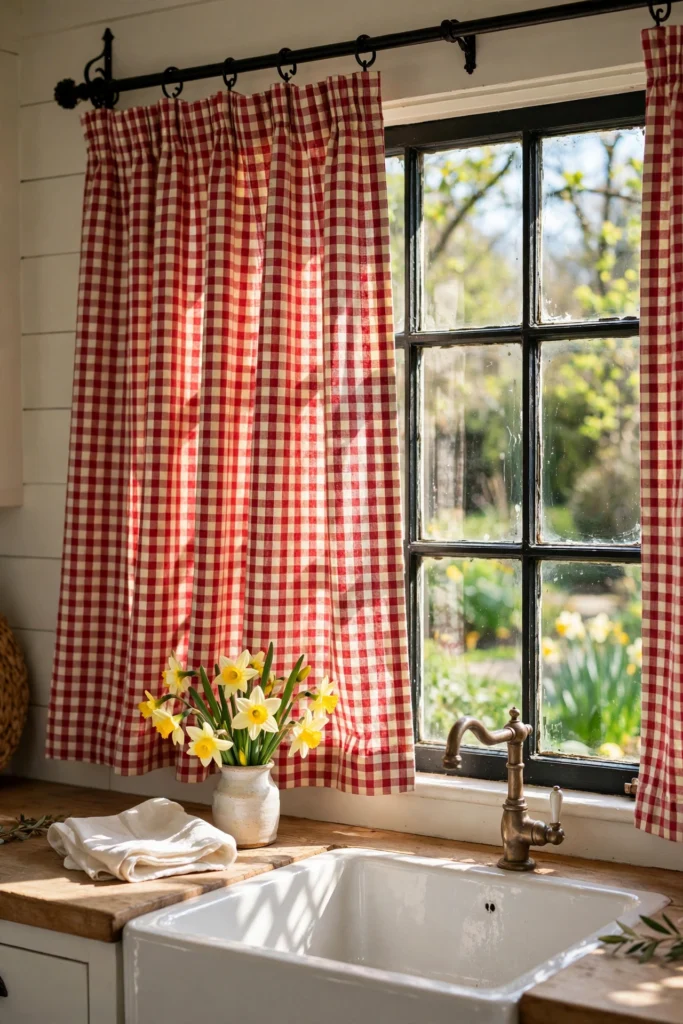
Café curtains cover only the lower half of the window, so sunlight still pours in at the top. That gives privacy at street level without making a small kitchen feel closed in. Gingham, ticking stripe, and ditsy floral are the classic cottage fabrics, and washable cotton or linen suits a room with steam and splashes. Mount the rod about halfway up the glass and choose a gathered header for a soft, ruffled look. Stick to one pattern per window so the fabric feels sweet, not busy.
13. Keep Exposed Beams and Soft Plaster Walls
Exposed beams and soft plaster walls tell the eye that a room is old and well loved. If you already have beams, leave them bare or wash them lightly with a pale stain. If you don’t, lightweight faux beams can be fixed up in an afternoon. Limewash paint adds a cloudy, hand-brushed texture that flat paint cannot match. In a low-ceilinged room, paint the ceiling a warm white so the beams stand out without making the space feel heavy.

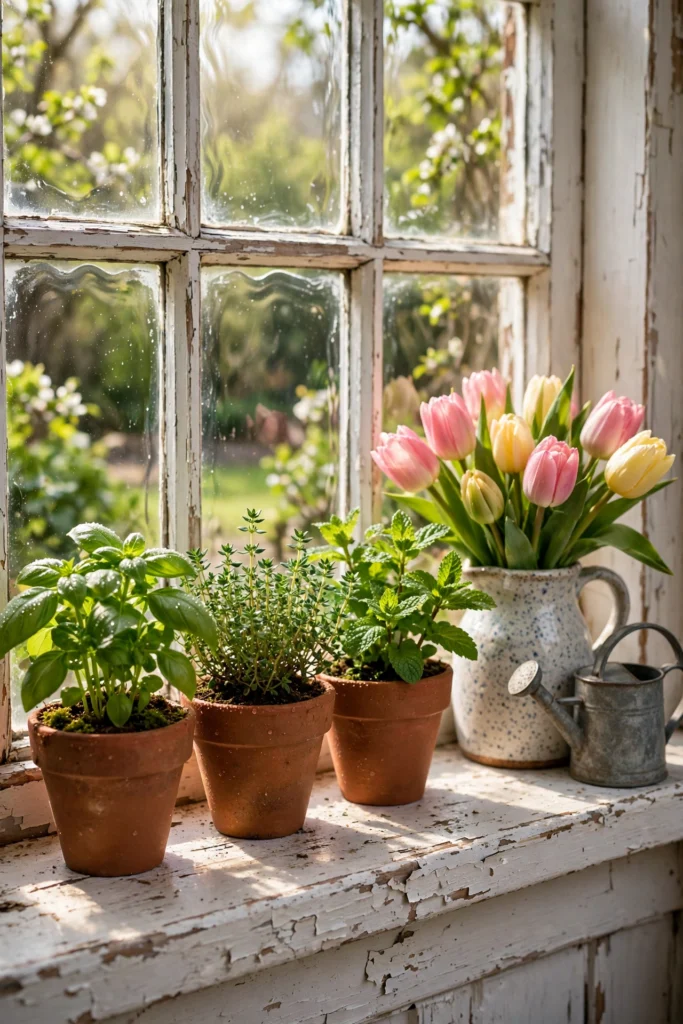
14. Grow Herbs on a Deep Window Sill
A deep window sill can become your small kitchen garden. Line up terracotta pots of basil, thyme, mint, and parsley, and set a jug of wildflowers beside them. Most herbs want about six hours of light, so this works best on a south or west-facing window. Pots on a long tray catch drips and make watering simple. Swap the flowers with the seasons, such as tulips in spring, dahlias in late summer, and dried grasses in winter.
15. Tuck in a Window Seat Breakfast Nook
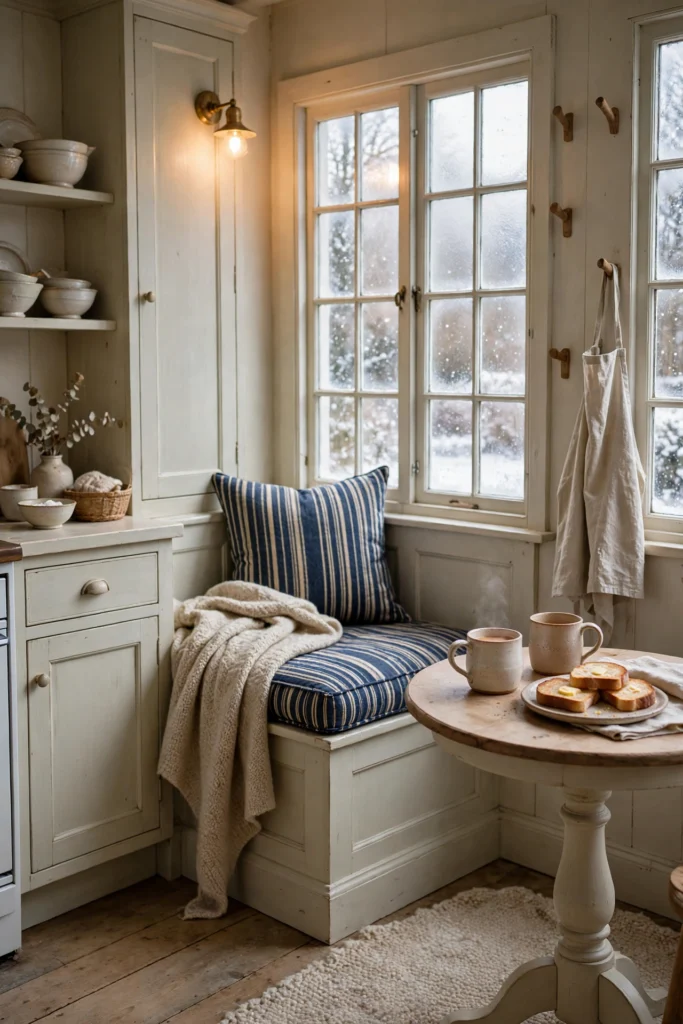
A window seat gives a small kitchen a place to sit, not just stand. Build a simple bench along a wall or inside a bay, with lift-up lids for storage under the cushion. Aim for a seat height of about 18 inches and cover the cushion in washable striped or checked fabric. A small round table keeps traffic moving better than a square one. Add a row of wooden pegs nearby for aprons, baskets, and tea towels.
Related: 17 Outdoor Kitchen Layout Ideas Architects Swear By
16. Tile the Backsplash With Handmade Ceramic
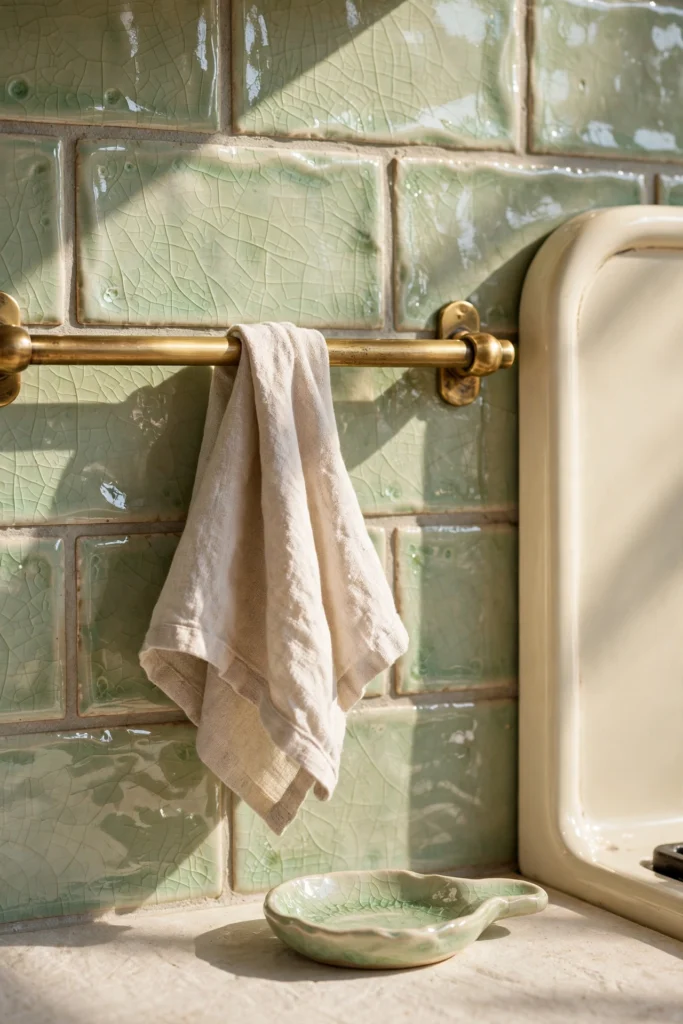
Handmade ceramic tile has uneven edges and a glossy glaze that catches light like water. Soft cream, pale blue, and sage green keep the look calm, and a warm gray or matching grout softens the lines. You don’t need to tile the whole wall, because a short run behind the sink or stove saves money and still adds plenty of character. Handmade tile varies in shade, so order about ten percent extra and mix the boxes as you lay it. The slight wobble in the surface is what makes it look made by hand, so don’t chase flat, laser-straight edges.
17. Add an Iron Pot Rail for Copper and Cast Iron
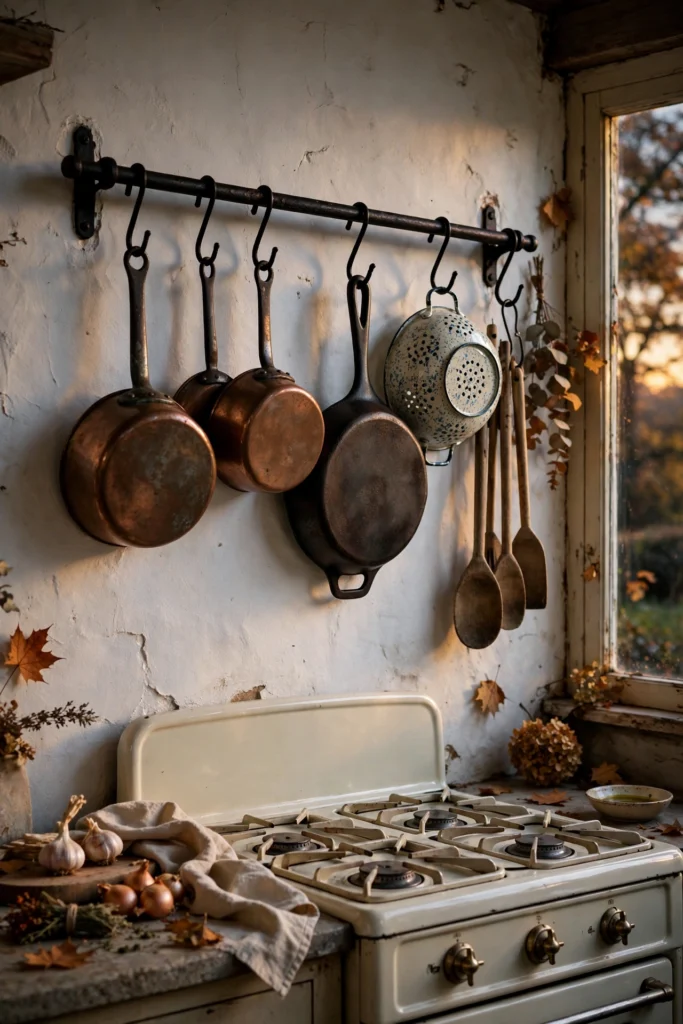
A simple iron rail with S-hooks keeps your favorite pots within reach and your cabinets free for other things. Hang copper pans, an enamel colander, and a cast iron skillet, and the rail doubles as wall art. Fix it into studs, since full pans are heavy, and place it near the stove so tools sit within arm’s reach. Limit yourself to six or eight pieces, or the wall starts to look like a shop. Copper darkens over time, which adds to the old-kitchen charm.
18. Layer Warm, Old-Style Lighting
Lighting does a lot of the work in a cottage kitchen. Hang opal glass or schoolhouse pendants about 30 to 36 inches above a table or counter, so light falls softly on the surface without glare. Use warm 2700K bulbs, which give a candle-like glow, and add a dimmer for evenings. Put a small plug-in lamp on a counter or shelf for a gentle second layer. Brass picture lights over open shelves finish the effect and make your dishes glow after dark.

19. Try a Dark Cottagecore Palette
Dark cottagecore trades pastel for plum, ink green, and blackened blue. Matte cabinets in aubergine or deep green look rich next to whitewashed walls and warm wood. Brass hardware, candlesticks, and fresh flowers keep the mood soft rather than heavy. Dark paint needs good light, so keep window dressing minimal and layer lamps for the evenings. Pinterest searches for dark cottagecore kitchens have climbed fast, so this is a look many people are already saving.

20. Create a Cottage Larder Nook
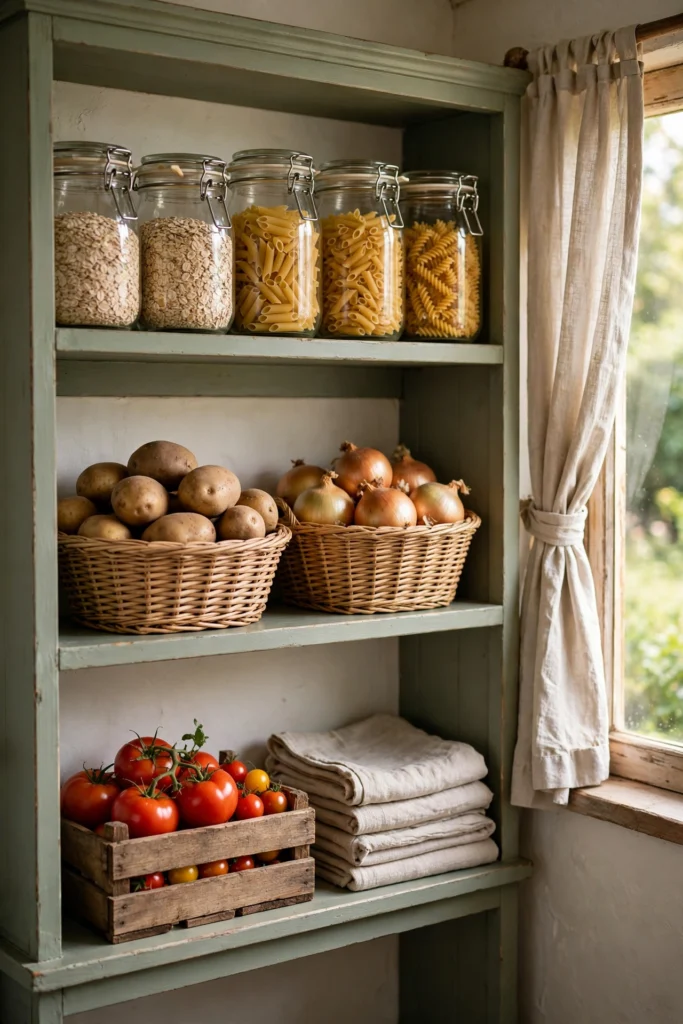
A cottage larder turns plain food storage into a pretty display. Fill deep shelves with glass jars of flour, oats, and pasta, and add handwritten paper labels. Keep onions and potatoes in separate woven baskets with good airflow, since they spoil faster when stored together. Shelves about 12 inches deep let you see everything at a glance, so nothing hides at the back. A pantry curtain on a rod can stand in for a door, which suits a small space or a tight budget.
Cottage Kitchen Styling Tips
- Pick a three-color palette. One soft base (cream), one cabinet color (sage or butter yellow), and one accent (blue-and-white or brass) keep a collected room from looking messy.
- Layer texture before color. Wood, linen, glazed ceramic, wicker, and aged metal give depth even in a mostly neutral kitchen.
- Mix, don’t match. Different plates look best when one color repeats, like cream or blue.
- Use one big pattern and one small one. A wide gingham curtain with a tiny floral tea towel feels layered. Four equal patterns feel loud.
- Edit your counters. Keep three to five things out, such as a bread bin, a crock of spoons, and a jug of flowers. Put the rest away.
- Add something alive. Herbs, fruit in a bowl, and cut flowers do more for a cottage mood than any sign or slogan.
- Soften hard lines with fabric. A runner, tea towels, and a sink skirt calm all the straight edges in a kitchen.
- Let some wear show. Slightly dented copper and a scratched table add charm. Over-polished surfaces fight the look.
Practical Implementation Ideas
You can build a cottage kitchen in layers, so each weekend adds something without blowing the budget. Here is an order that keeps the work simple.
- Measure and declutter. Clear counters, note the width of walls and windows, and take photos of the room in morning and evening light.
- Test colors. Paint large sample boards and move them around the room for two or three days before you decide.
- Paint and swap hardware. Degrease the cabinets, lightly sand, apply a bonding primer, then use a cabinet-grade enamel. Let it cure fully before heavy use. Add brass or porcelain pulls.
- Change the lighting. Replace harsh bulbs with warm 2700K ones, add a pendant or a plug-in lamp, and put a dimmer on the main light if you can.
- Add soft layers. Hang café curtains, lay a runner, and swap in cotton tea towels.
- Open one wall. Remove a few uppers for shelves or a plate rack, and style them with the dishes you use every day.
- Save the big jobs for last. Floors, tile, a new sink, and a range cooker cost more and take longer, so tackle them once the room’s mood is clear.
Common Mistakes to Avoid
- Going too matchy. A full set of identical dishes and decor can make the room feel like a showroom.
- Turning it into a costume. Too many roosters, signs, and farm slogans date a kitchen fast. Let materials do the talking.
- Skipping paint samples. Green, yellow, and gray can change a lot from room to room. Test first.
- Overloading open shelves. If you can’t see the wood, there is too much on the shelf.
- Choosing cold, glossy finishes. High-shine surfaces fight a soft cottage mood.
- Hanging shelves too near the stove. Cooking grease and steam coat the dishes quickly.
- Blocking the path between sink, stove, and fridge. A pretty island is no help if two people can’t pass.
- Forgetting about light. One overhead bulb flattens everything, even a beautiful room.
- Using too many patterns at once. Pick one star pattern and let the rest stay plain.
Small-Space Cottage Kitchen Alternatives
- Swap one wall of uppers for a shelf. It makes the walls feel taller and the room less boxed in.
- Roll in a slim cart instead of an island. A 16 to 20 inch wide cart gives you prep space and tucks away when you’re done.
- Paint walls and ceiling the same warm cream. When the edges blur, a low room feels bigger.
- Use a drop-leaf table. It folds down to a narrow strip and opens for dinner.
- Use vertical space. A pot rail, a plate rack, and hooks inside cabinet doors free up counters.
- Fit a slim shelf in the gap beside the fridge. Even 4 to 6 inches deep is enough for spices and small tins.
- Hang one large mirror or a glass-front cupboard. Either one bounces light around a small room.
- Choose one hero piece. A bold range cooker or a bright sink skirt does more than ten small accents.
Budget-Friendly Cottage Kitchen Alternatives
| Splurge look | Budget swap |
|---|---|
| New custom painted cabinets | Repaint your existing doors with cabinet-grade enamel and add new pulls |
| Handmade tile backsplash | A short run of tile behind the stove only, or peel-and-stick tile |
| Butler sink | Your current sink with a gathered fabric skirt |
| Antique dresser | A thrifted pine cabinet, sanded and painted |
| Range cooker | A retro-style freestanding range, or a vintage stove from a resale shop |
| Real wood beams | Lightweight faux beams stained to match |
| Checkerboard floor tile | Peel-and-stick vinyl squares laid on the diagonal |
| Designer pendant lights | A plug-in lantern or a schoolhouse-style pendant |
| Solid wood island | A thrifted farmhouse table or a baker’s table |
A paint-and-hardware refresh often costs a few hundred dollars, while a full remodel can run into the tens of thousands. Starting small lets you live with the look before you commit.
Pro Styling Recommendations
- Start with the biggest surface. Decide cabinets and floor first, then choose everything else to suit them.
- Test paint in three spots, at three times of day. Morning, midday, and evening light all show a different color.
- Repeat each color at least three times. If blue appears on a bowl, a curtain, and a rug, the room feels planned even when pieces are mixed.
- Limit metals to two. Brass with black iron works well. Add a third and the room can look busy.
- Buy old for furniture, new for function. Antique tables and cupboards add charm, while sinks, taps, and appliances should be new enough to work well.
- Pick fewer, bigger pieces. One oversized mirror or pendant feels calmer than a crowd of small ones.
- Leave one calm zone. Keep a section of counter or wall clear so the eye has somewhere to rest.
A cottage kitchen is a cozy, lived-in kitchen with soft colors, natural wood, open or freestanding storage, and vintage-style details like a butler sink, café curtains, and mixed crockery. The style is also called cottagecore when it leans into florals, plants, and nostalgia.
Soft sage green, butter yellow, warm cream, duck egg blue, and dusty rose are the classic picks. Deep plum and ink green also work for a dark cottagecore mood. Test samples in your own light before you commit.
Cottage kitchens are softer and more nostalgic, with pastels, florals, and small-scale charm. Farmhouse kitchens tend to be bolder and more practical, with large islands, apron sinks, and a mix of rustic and industrial pieces.
Yes. Paint the cabinets a soft color, swap in aged brass hardware, add café curtains and open shelves, and bring in a worn wood table. These changes work in any home because they rely on color, texture, and objects instead of architecture.
Shaker-style doors with a simple five-piece frame are the safest choice. Beadboard doors, inset cabinets, and freestanding painted furniture also fit. Choose a matte or satin finish over high gloss.
Wide wood planks, terracotta tile, brick pavers, and cream-and-tan checkerboard all suit the look. Pick something durable and easy to clean, then soften it with a runner rug that can be washed or shaken out.
Paint walls and ceiling in the same light color, replace some upper cabinets with open shelves, use a slim cart instead of an island, and add a large mirror or glass-front cupboard. Hang café curtains so light still enters from the top of the window.
No. Many cottage kitchens skip uppers in favor of open shelves, a plate rack, or a freestanding hutch. This keeps walls airy and puts everyday dishes in easy reach.
Butcher block, soapstone, and honed marble suit the style because their soft finishes gain character over time. Avoid very shiny, polished surfaces, which can feel cold next to painted wood.
A light refresh with paint, hardware, curtains, and lighting often costs a few hundred dollars. Adding tile, new counters, or a range cooker raises the cost, and a full remodel can reach the tens of thousands. Start with the changes you can see from the doorway.
Yes. Interest in cottagecore, grandma-core, and dark cottagecore kitchens keeps growing on Pinterest, and designers are again choosing sage green and soft yellow for cabinets.
Conclusion
A cottage kitchen is never finished in a weekend, and that is part of its charm. Start with one change you can spot from the doorway, like sage cabinets or a pair of gingham curtains, and live with it for a while. Add the next piece only when the first one feels like home.
Related: 16 Boho Kitchen Ideas That Feel Collected, Not Costume
In a few years, the dent in the copper pot and the ring on the pine table will tell the story of every meal. That’s the magic these ideas are really after. Save your favorites, pick one to try this weekend, and let the room grow slowly around you.