20 Farmhouse Cottage Kitchen Ideas for a Warm, Fresh Look

Picture your kitchen at six in the evening. The window is open a crack. Something is simmering on the stove. Warm light slides across a wooden counter, a loaf of bread rests on a board, and the cabinets are the soft green of a garden sage plant.
Nothing looks staged. Yet everything looks chosen.
That feeling is what people are saving by the thousands. Pinterest’s spring trend report shows searches for dark cottagecore kitchens up 915 percent, grandma core kitchens up 545 percent, and aubergine kitchens up 495 percent. Designers are saying the same thing in their own words: the bright white modern farmhouse kitchen is making room for deeper color, warmer wood, and a lived-in feel.
The good news is that you don’t need an old stone cottage or a giant budget. You need a few smart choices about color, texture, and light. The 20 farmhouse cottage kitchen ideas below show you which choices matter most, and why they work.
Quick Answer: What Is a Farmhouse Cottage Kitchen?
A farmhouse cottage kitchen blends the practical bones of a farmhouse with the soft, collected charm of a cottage. Farmhouse brings the apron-front sink, shaker cabinets, and a big worktable. Cottage adds muted color, vintage pieces, fabric, and small-scale details. Together they make a kitchen that feels warm, useful, and a little nostalgic.
Farmhouse vs. Cottage vs. Modern Cottage
- Farmhouse kitchen: Practical and sturdy. Shaker doors, a deep sink, wood surfaces, and a large table or island.
- Cottage kitchen: Cozy and decorative. Painted cabinets, glass fronts, curtains, open shelves, and pieces that look collected over time.
- Modern cottage kitchen: The new middle ground. Clean cabinet lines, richer paint colors, handmade tile, and fewer themed accessories.
Table of Contents
The 20 Farmhouse Cottage Kitchen Ideas
Paint Your Shaker Cabinets a Muted Olive Green
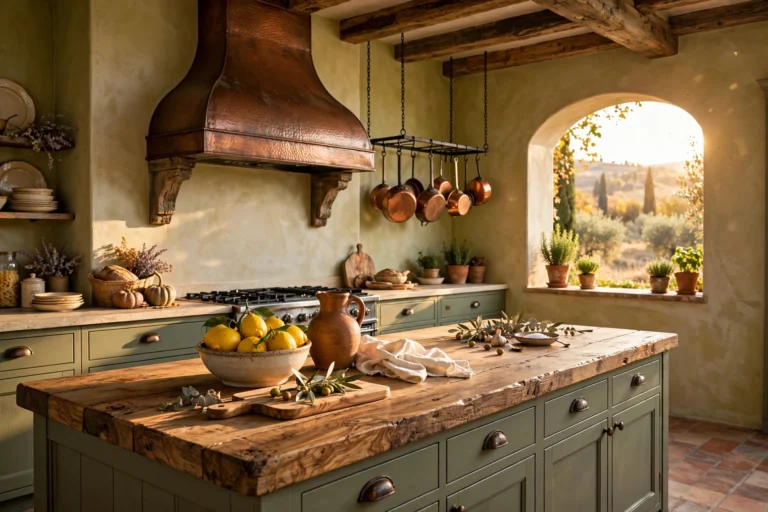
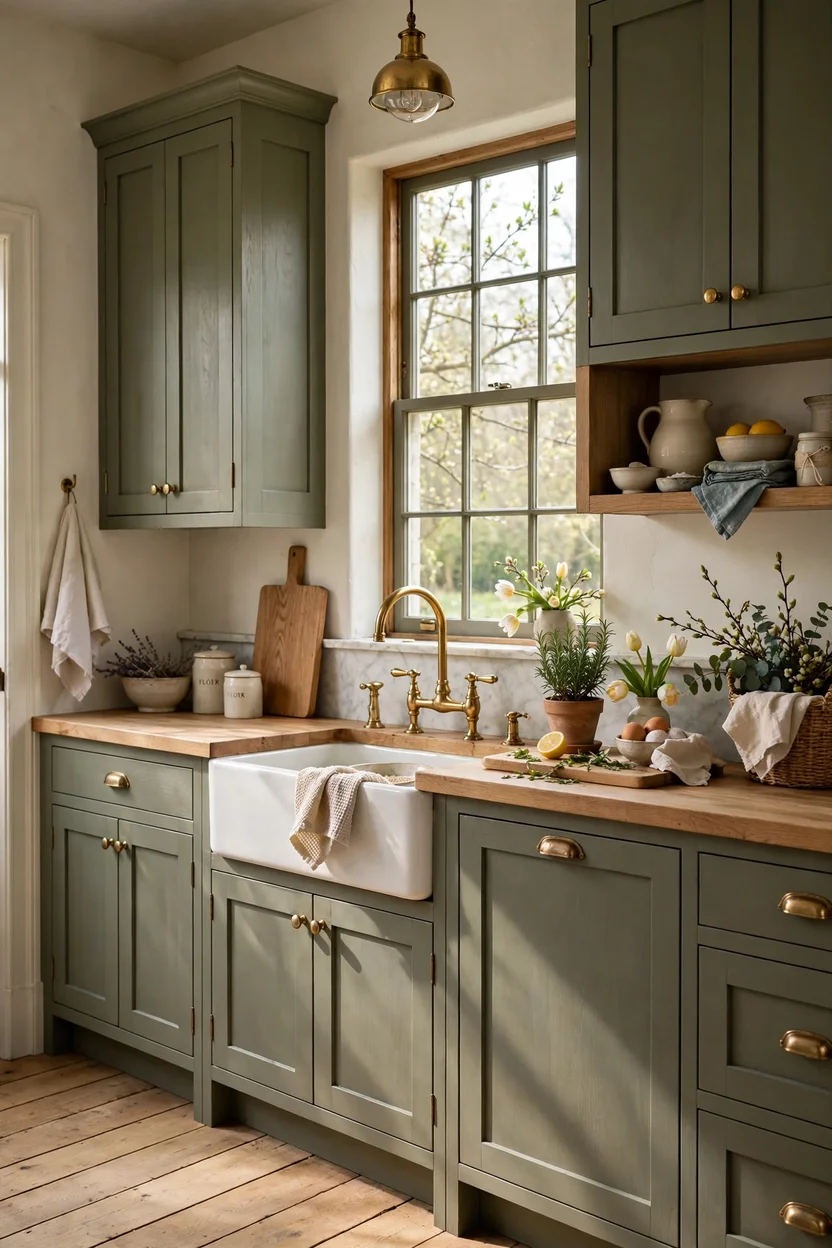
Olive and sage greens are the quickest way to make a farmhouse kitchen look current. Choose a shade with a little gray in it, so it reads like dried garden leaves and not like mint ice cream. Shaker doors are the right canvas because the flat center panel shows off the color without any fuss. Pair the green with creamy walls and oak or walnut accents, and the room feels soft instead of heavy. Pick a matte or eggshell finish, since it hides fingerprints better than gloss in a room you touch all day.
Color Drench the Walls and Trim in Warm Putty
Color drenching means painting walls, trim, and sometimes cabinets in one shade or close cousins of it. In a cottage kitchen, a warm putty or butter cream works best because it feels like sunlight on plaster. The single color blurs the lines between cabinets, walls, and window frames, so a small room looks calmer and a little bigger. Add texture with a wood bowl, a stoneware crock, and a linen towel so the room doesn’t look flat. Test your color on two walls and check it at morning, noon, and night before you buy gallons.
Related: 16 Mud Kitchen Ideas for the Ultimate Sensory Play Setup

Try Oxblood Lower Cabinets for a Dark Cottagecore Mood
Dark cottagecore is the look behind Pinterest’s biggest kitchen search jump this year. The trick is balance: deep burgundy or oxblood on the lower cabinets, then cream or pale plaster walls above so the room still breathes. Black hardware, a brick alcove, or a wood countertop adds depth without fuss. Keep upper shelves open or glass-front so the dark color doesn’t close in on you. Add one bunch of fresh flowers, and the whole space feels romantic instead of moody.

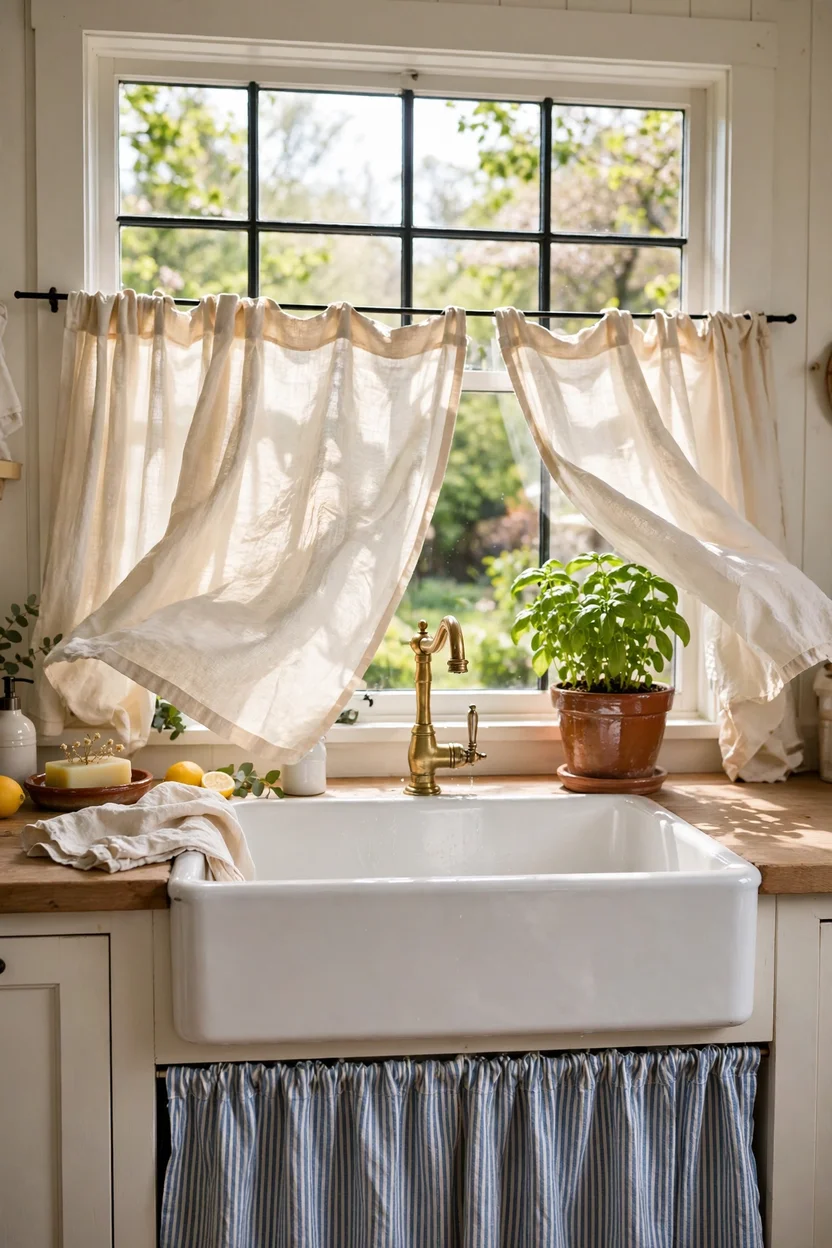
Add an Apron-Front Sink With a Linen Skirt
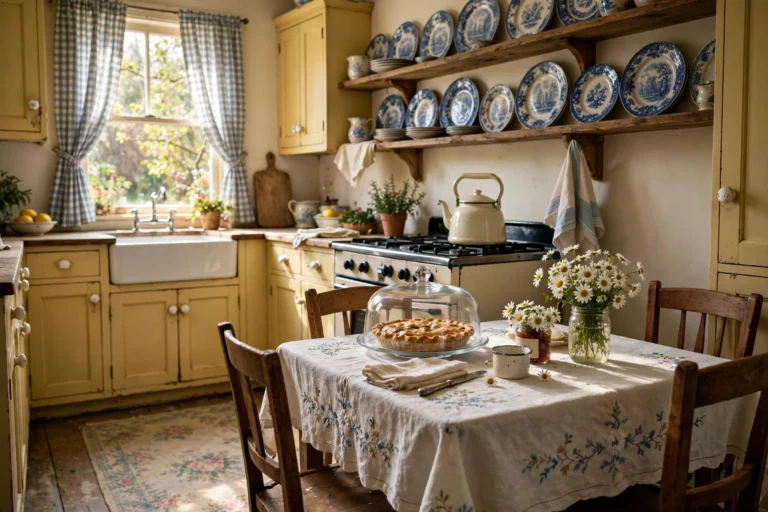
The deep apron-front sink is the heart of a farmhouse kitchen, and a fabric skirt turns it into a cottage detail. The soft gathered cloth hides cleaning supplies and breaks up all the hard, square lines of cabinets and counters. Use washable linen or cotton in a small stripe, ticking, or plain oat color so it stays easy to wash. Hang it on a tension rod or hook-and-loop tape so you can take it down for laundry. A bridge or gooseneck faucet in brushed nickel or aged brass finishes the look and makes filling big pots easier.

Swap Some Uppers for Open Oak Shelves and a Plate Rack
Open shelves make a kitchen feel lived in because you can see the dishes you actually use. Choose thick oak or pine boards with simple iron or wood brackets, and keep each shelf to two or three types of items. White ironstone, glass jars, and a few wooden bowls look calm together. A wall-mounted plate rack adds a classic farmhouse detail and doubles as a drying spot near the sink. Leave a little empty space on each shelf, since crowded shelves are the fastest way to lose the cottage charm.

Bring in a Freestanding Hutch for an Unfitted Look
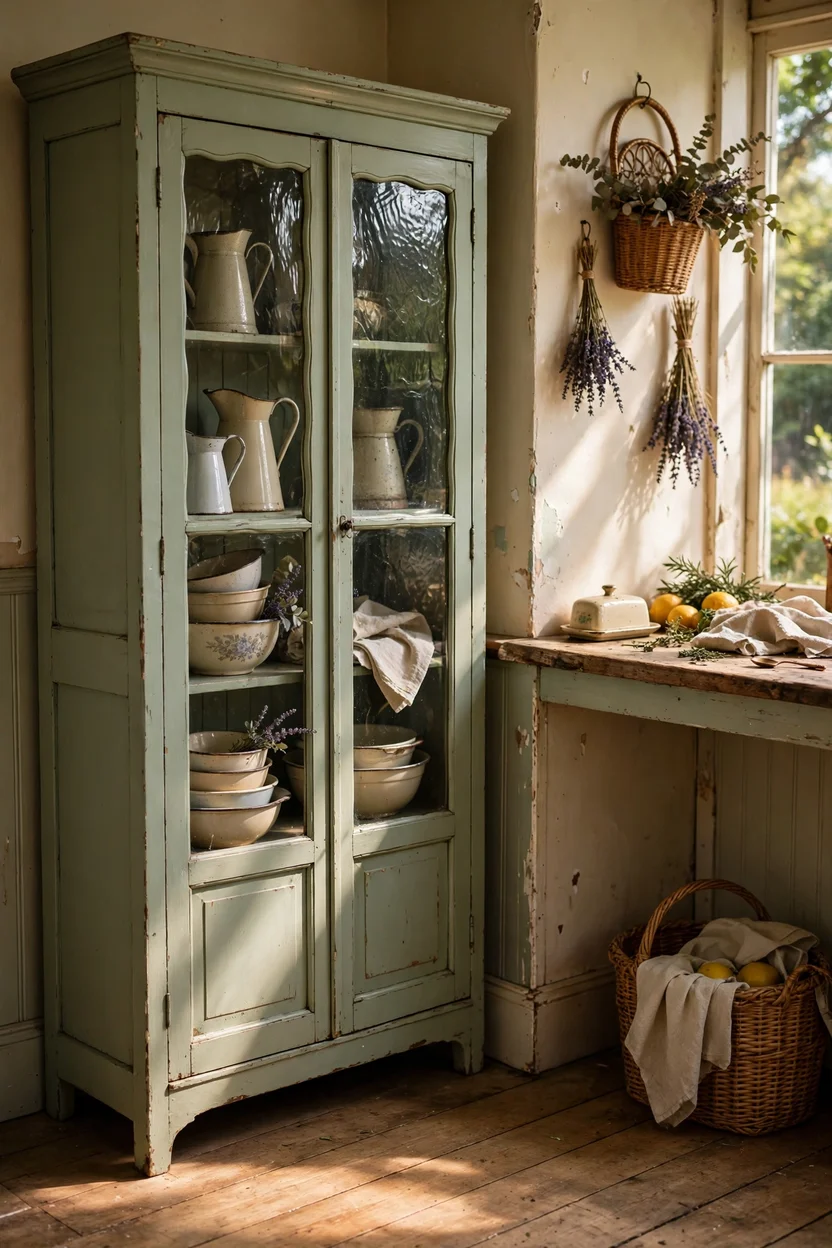
An unfitted kitchen mixes built-in cabinets with freestanding furniture, which is how old farmhouse kitchens really grew. A tall painted hutch or dresser gives you closed storage, display space, and instant character in one piece. Choose a color that sits close to your cabinets, but not exactly the same, so it looks collected over time. Leave a little gap behind it for airflow and cord access if you use it for small appliances. This is also one of the best ways to add storage to a rental kitchen with no extra cabinets.
Try Glass-Front Upper Cabinets
Glass fronts let light bounce through the kitchen and make the walls feel less heavy. Pick a slim shaker frame with clear or lightly wavy glass for the most cottage feel. Stick to the cabinets near the window or range, and keep the rest solid so you still have hidden storage for messy items. Inside, line up matching glasses and white plates so the view stays calm. A small puck light inside each cabinet makes the display glow after dark.

Choose Aged Brass Cup Pulls and Wooden Knobs
Hardware is the cheapest place to make a cottage farmhouse kitchen feel finished. Cup pulls on drawers and round wooden knobs on doors is a classic mix that looks like it has been there for decades. Aged or unlacquered brass will darken and soften with use, which fits the lived-in mood. Black iron works well on deep green or oxblood cabinets. Measure your current hole spacing first, so new pulls drop in without drilling.
Related: 15 Retro Kitchen Ideas That Look Pinterest Perfect

Lay Handmade-Look Tile in Blue or Green
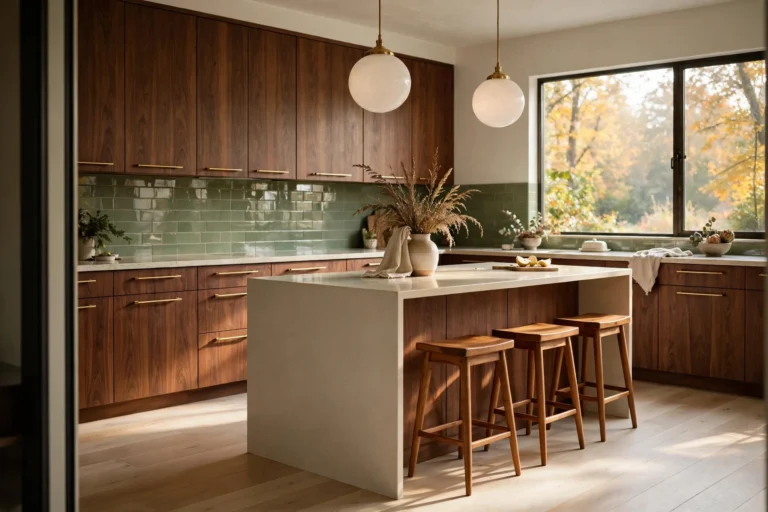
Handmade-look tile, like zellige, has small dips and uneven edges that catch light in different ways. That gives a backsplash a soft, glowing surface that flat tile can’t copy. Blue and green tiles pair well with warm wood and cream walls, and Pinterest searches for blue zellige and warm wood kitchens are both climbing. Choose a color with some variation in each tile so the wall looks hand-finished. Use a slightly darker grout or a warm white one, and seal it so splashes wipe away easily.

Choose Warm Wood Butcher Block Counters
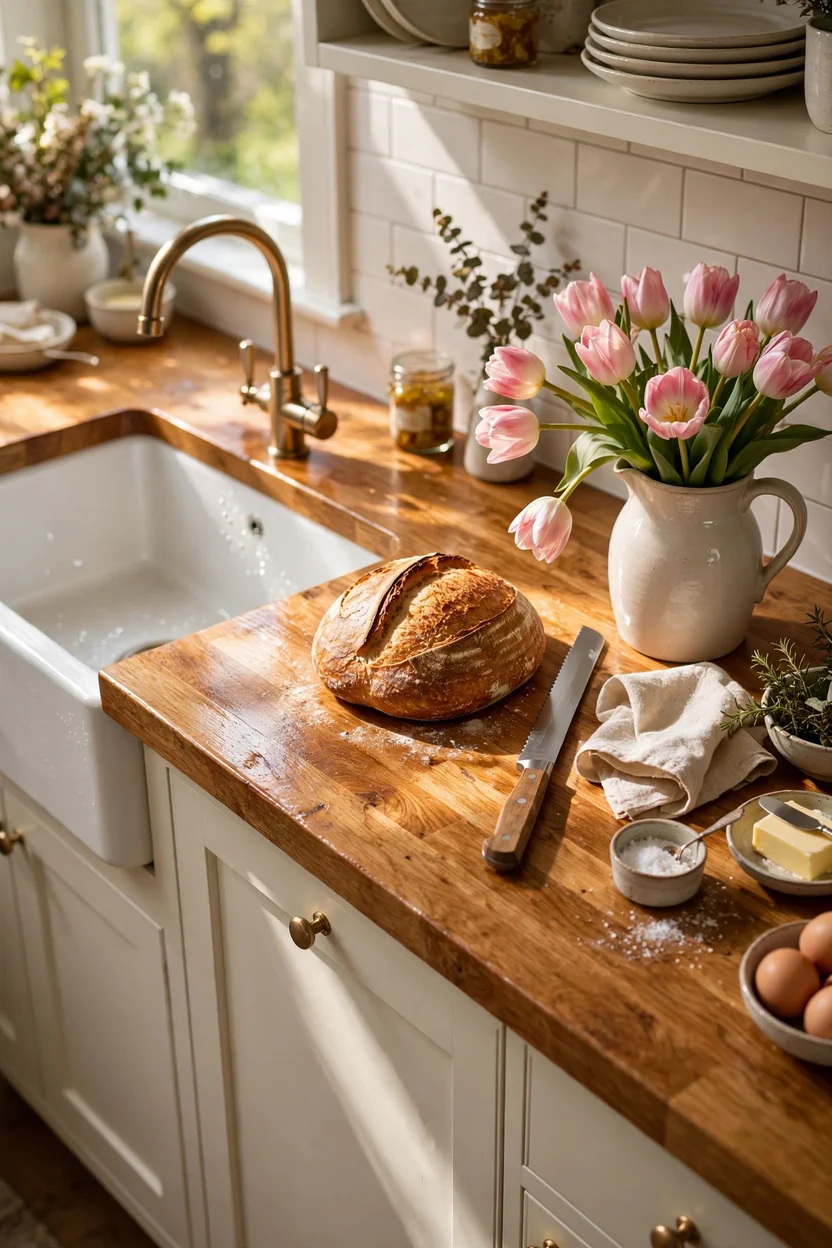
Wood counters make a kitchen feel softer and warmer than stone, and they suit farmhouse and cottage styles equally well. Oak, maple, and walnut each have a different tone, so match the wood to your floors or shelves. Seal the surface with food-safe oil and re-oil it a few times a year, especially around the sink. Light scratches add to the character, and you can sand them out if they bother you. Use wood on the island or one run of cabinets and pair it with a different surface elsewhere if you want fewer maintenance chores.
Anchor the Room With a Freestanding Island With Turned Legs
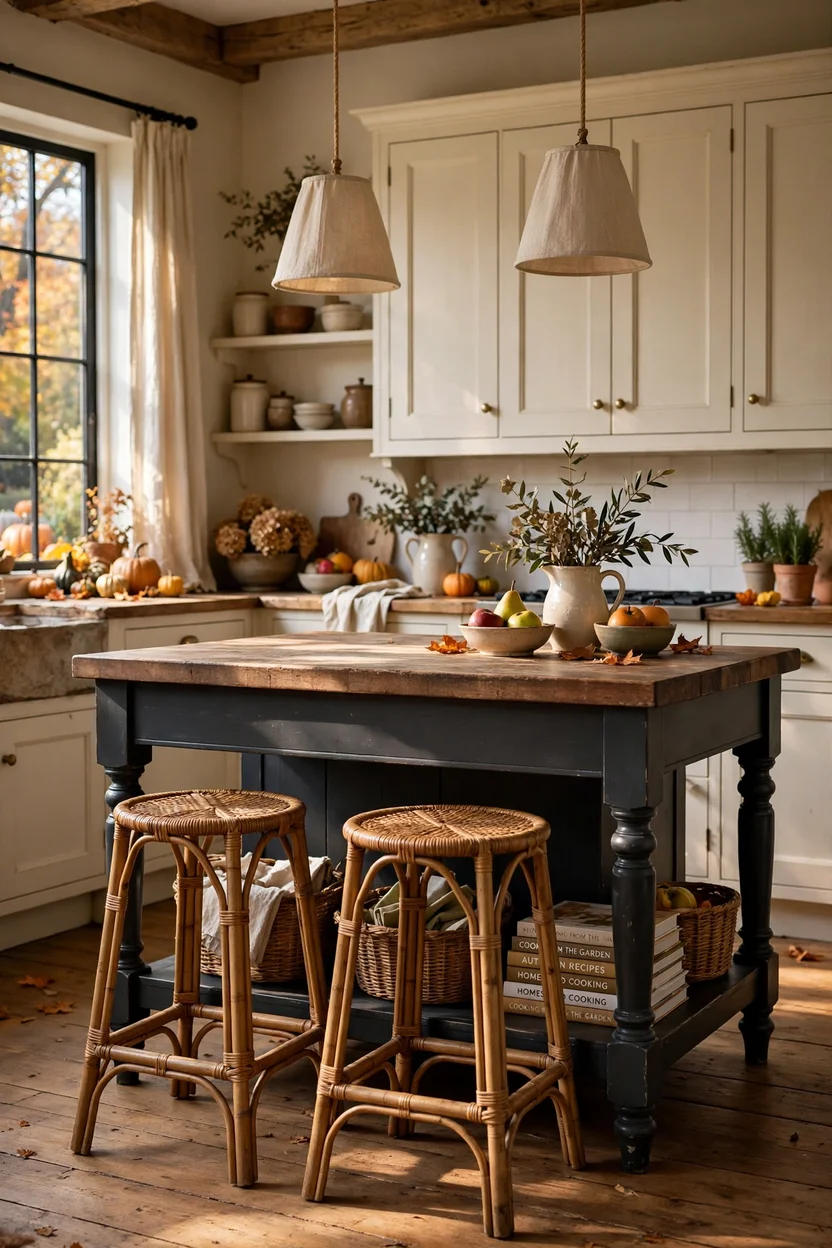
A freestanding island or worktable looks like furniture, not cabinetry, and that is exactly the cottage point. Turned legs, a lower shelf, and a thick wood top give you prep space, seating, and storage in one piece. Choose a color that nudges away from your main cabinets, such as charcoal against cream or soft green against white. Leave at least 36 inches of walkway around all sides so two people can pass while the oven is open. If space is tight, pick a slim table-style island on casters that you can roll aside.
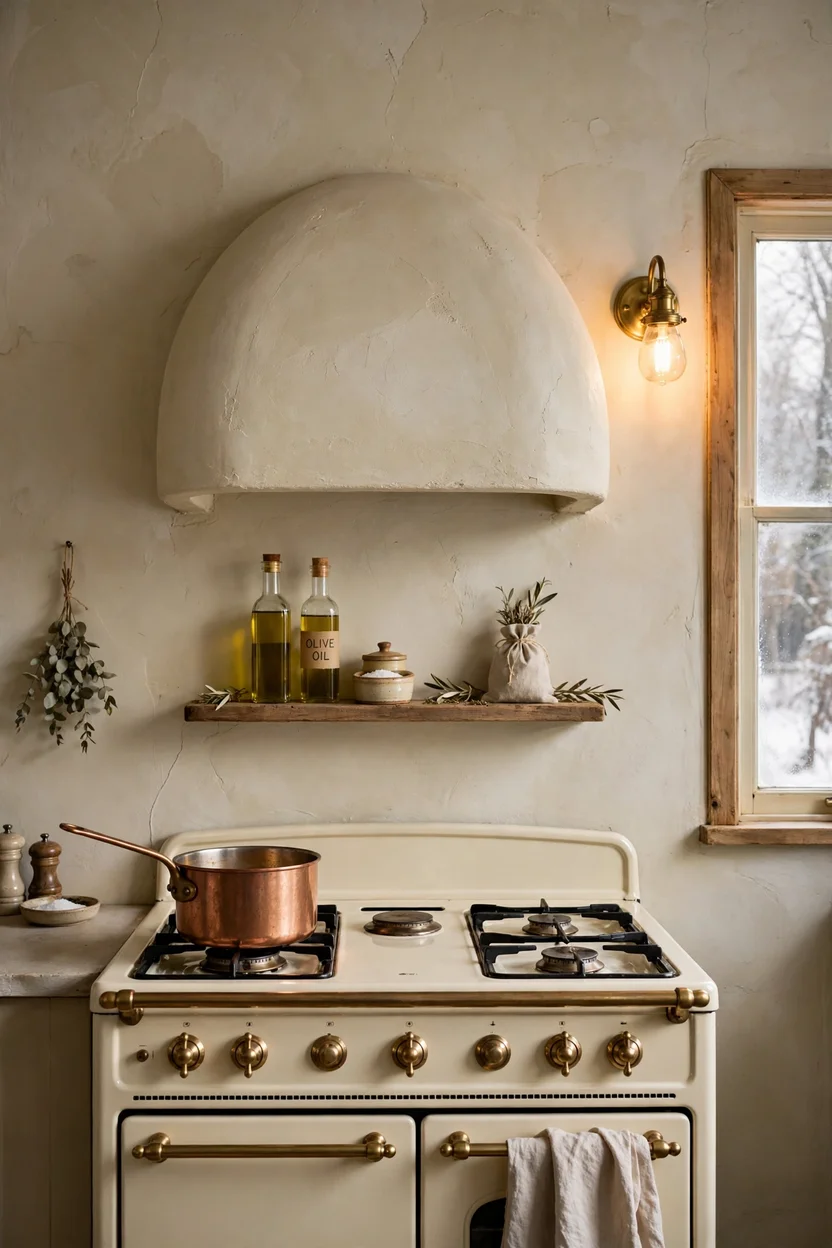
Set a Vintage-Style Range Under a Plaster Hood
The stove is the natural focal point of a cottage kitchen, so give it a little drama. A range in cream, black, or soft green looks right at home, and a rounded plaster-look hood above it adds the quiet, old-world texture the style needs. Plaster is smooth but slightly uneven, so it looks handmade even when it is a modern product. Keep the shelf beside the range for oils, salt, and wooden spoons you reach for daily. If a full range is out of budget, a simple painted hood cover on your current vent can give a similar shape.
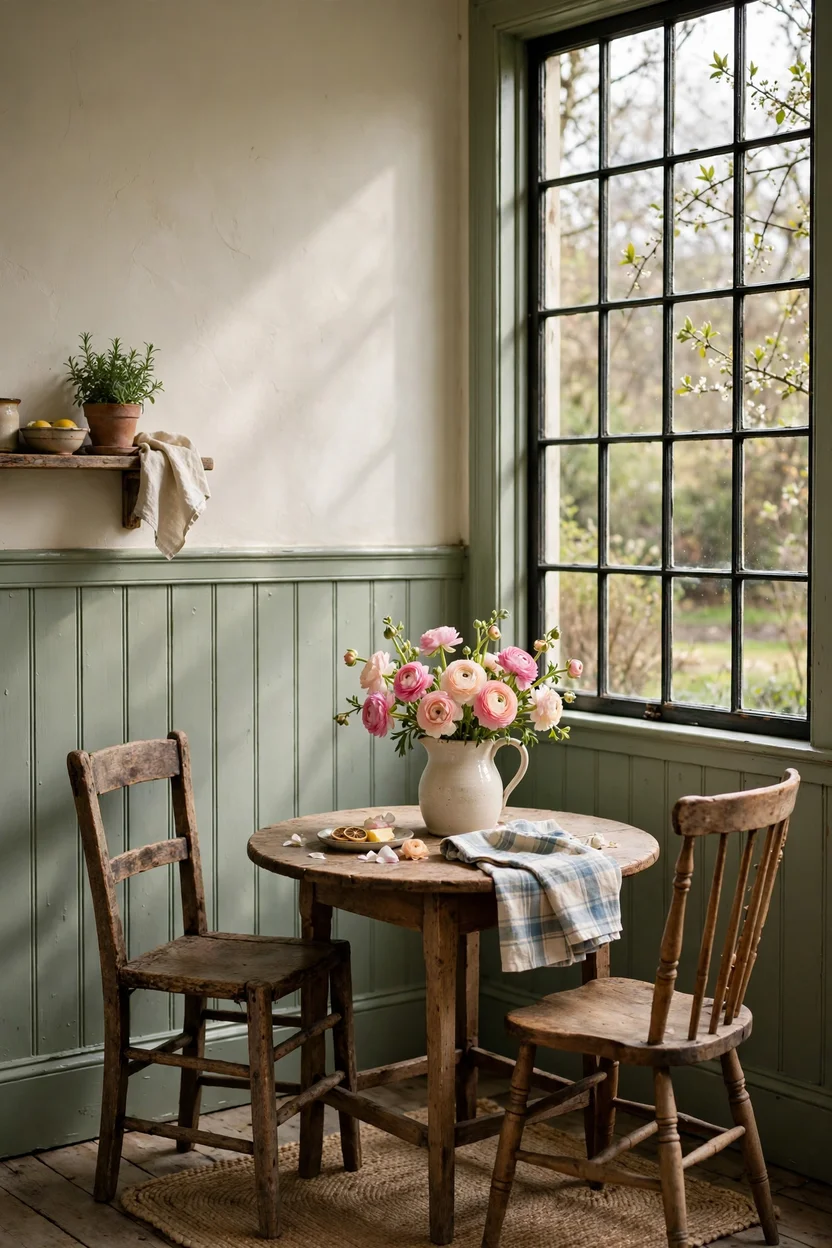
Add Beadboard and Painted Wall Paneling
Beadboard and simple wall paneling bring cottage texture without a single extra accessory. The thin vertical lines catch shadow and make plain walls look finished. Use it on the lower third of the wall, behind the dining nook, or on the side of an island. Paint it in a deeper tone than the wall above, or match it to the cabinets for a calm, wrapped-in feel. Sheets of beadboard panels cost far less than tile and install with construction adhesive and a few nails.
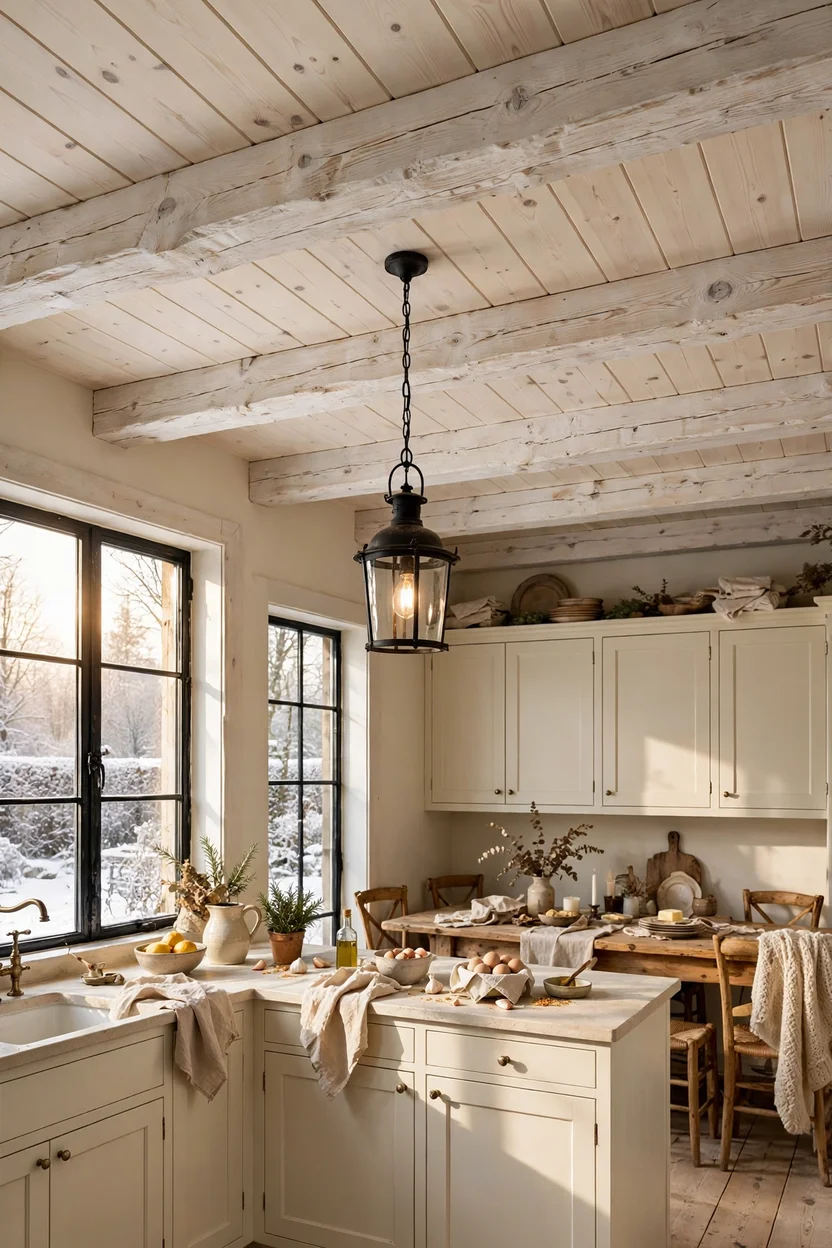
Look Up: Wood Beams or a Wood-Clad Ceiling
The ceiling is the fifth wall, and wood on it adds instant warmth. Real beams give strong farmhouse character, while lightweight faux beams or wood planks are easier in an apartment or a low room. Choose a medium oak or a soft whitewashed tone, not a very dark stain, so the room still feels airy. Run planks in the same direction as the longest wall to make the space feel longer. Use lighter beams and brighter bulbs in rooms with ceilings under eight feet.
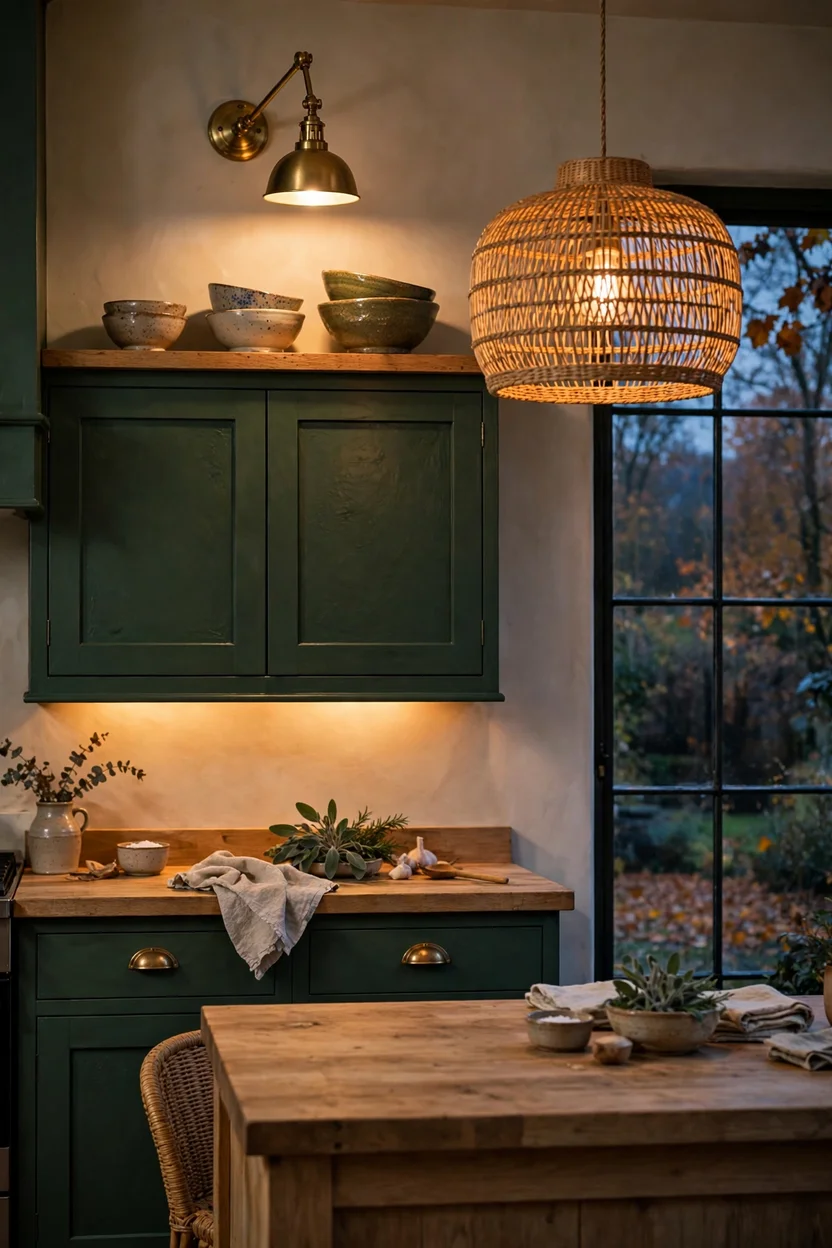
Layer Lighting With Sconces Above Shelves and One Soft Pendant
One bright ceiling light makes a cottage kitchen look flat. Layer three types instead: a pendant over the island, small sconces above open shelves, and under-cabinet strips on the counters. Swing-arm sconces with linen or metal shades are perfect above narrow shelves and look pretty even when they are off. Aim for warm white bulbs around 2700K so wood and paint colors stay cozy in the evening. Put every layer on its own dimmer, and you can switch the room from cooking mode to dinner mode in seconds.
Hang Café Curtains and Cabinet Curtains
Fabric is the quickest way to soften a hard kitchen. Café curtains cover only the lower half of a window, so you keep light and privacy at the same time. Cabinet curtains, hung on a thin rod behind a small gap, replace doors on open lower cabinets or under-sink storage. Choose small gingham, ticking stripe, or plain linen in an oat or soft blue tone. Sew a simple rod pocket, or use clip rings so you can wash the fabric whenever it picks up cooking smells.
Lay a Checkerboard or Terracotta Floor
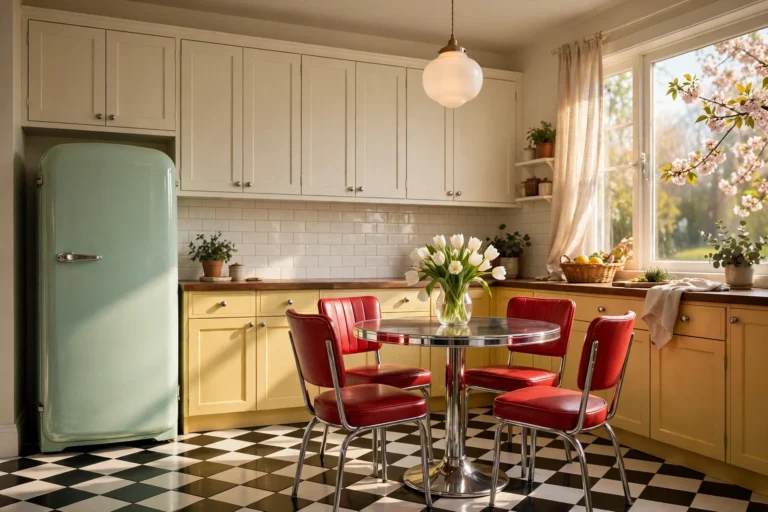
The floor sets the personality of the whole kitchen. A black-and-cream checkerboard feels playful and old-fashioned, while terracotta tile adds warm, earthy color that suits green and cream cabinets. Choose a honed or matte finish, since glossy tile shows every drip and footprint. Cream and a muted tan checkerboard, instead of stark black and white, keeps the look softer in a small room. If you can’t replace flooring, peel-and-stick tile or a painted checkerboard on old wood can give the same effect for far less.

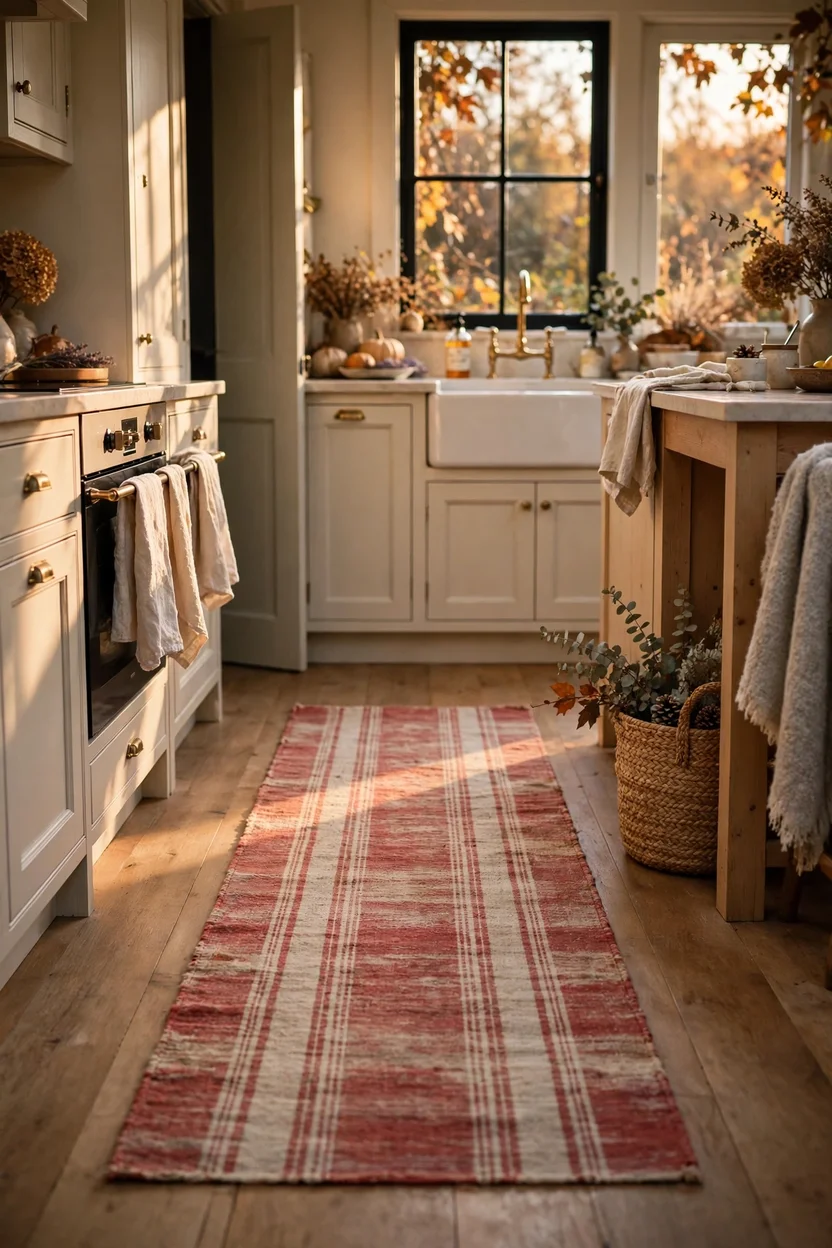
Lay a Worn Runner and Woven Textiles
A faded runner in front of the sink or stove adds color, comfort, and quiet for your feet. Choose a low-pile, washable style in a muted red, blue, or oatmeal stripe, and add a non-slip pad underneath. Pair it with a linen towel, a woven basket, and a few wood stools to bring in more texture. The slightly worn look is intentional, so don’t worry about stains and creases. Wash the rug on schedule, since kitchens collect more crumbs than any other room.
Related: 17 Farmhouse Sink Ideas That Reimagine a Classic
Style a Countertop Vignette That Works Hard
Countertop decor is one of the fastest-growing searches in kitchens, and the rule is simple: only display what you use. Group a stoneware crock of utensils, a wood board, a small bowl of lemons, and a jar of salt on a tray or board so the pile looks intentional. Use odd numbers and different heights, with one tall item such as a jug of flowers or a pepper mill. Keep one open stretch of counter clear for cooking. Rotate seasonal pieces, like pears in fall and tulips in spring, to keep the look fresh.

Add a Potting-Shed Herb Shelf at the Window
A small shelf of herbs brings green, scent, and a little garden energy into the room. Mount a deep wood shelf or use a window ledge, and line up terracotta pots of basil, thyme, and mint with saucers underneath. Choose plants that match your light, so rosemary and thyme for sunny windows and mint or parsley for softer light. Add a small watering can and a vintage garden trowel as a cottage-style detail. Fresh herbs also make cooking easier, which is the best reason to keep them near the stove.

Styling Tips
- Pick one hero. Choose a single star, like the green cabinets or the plaster hood, and let everything else support it.
- Follow the 60-30-10 rule. About 60 percent main color, 30 percent wood and secondary color, 10 percent accent like brass or a bold towel.
- Mix old and new. A thrifted bowl next to a new faucet looks collected. A full set of matching vintage-look items looks themed.
- Repeat materials. If you use brass on the cabinets, echo it once in a lamp or a pot rack so the room feels connected.
- Use odd numbers. Groups of three or five look relaxed. Pairs look formal.
- Leave breathing room. Every shelf and counter needs a little empty space, so the room feels calm and the pieces get noticed.
- Soften every hard edge. Add one fabric, one plant, and one wood piece near the sink, stove, and table.
Practical Implementation Ideas
You don’t have to do all 20 ideas at once. Work in this order, and the room will look better after every step.
- Start with color. Paint is the biggest change for the lowest cost. Sample three shades on large boards and look at them for a full day.
- Swap the hardware. Match the hole spacing, then replace pulls and knobs in one afternoon.
- Fix the lighting. Add sconces, a new pendant, and warm bulbs before you buy any decor.
- Add one big wood piece. A shelf, island, or table gives the room its farmhouse backbone.
- Layer in fabric. Curtains, a runner, and linen towels bring the cottage softness.
- Style last. Once the big pieces are in, add the crocks, boards, and flowers.
Before you start, walk the room and note which ideas fit your space, your cooking habits, and your budget. A kitchen you cook in every day needs clear counters and easy cleaning more than any trend.
Common Mistakes to Avoid
- Treating farmhouse as a shopping list. Rooster signs, wall words, and matching chicken sets can make the room feel like a theme store. Pick two or three pieces with real meaning instead.
- Painting everything dark in a dim room. Deep colors work best with good natural light or strong lamps. In a small, dark kitchen, use a dark lower cabinet and keep walls light.
- Skipping task lighting. Pretty pendants can’t replace bright light over the prep area. Add under-cabinet strips.
- Overfilling open shelves. More than three item types per shelf looks busy, and everything gets dusty fast.
- Choosing glossy everything. Shiny surfaces feel modern and cold. Mix matte paint, honed stone, oiled wood, and aged metal.
- Ignoring scale. A huge island in a tiny kitchen blocks movement. Measure walkways before you buy.
- Forgetting upkeep. Wood counters need oil, and open shelves need dusting. Pick the features you will actually maintain.
- Matching every finish. A little disagreement between brass, black iron, and wood makes a kitchen feel collected.
Small-Space Alternatives
Small kitchens can carry this style well, because cottages were small to begin with.
- Use one color. Paint walls, trim, and cabinets in one shade to blur edges and make the room look bigger.
- Pick slim furniture. A narrow table on casters or a 20-inch-deep cart gives you prep space without blocking the walkway.
- Go up. Run a single oak shelf at eye level or add a tall hutch to use vertical space.
- Choose café curtains. They keep light flowing while still covering the lower half of the window.
- Use a rail. A wall-mounted rail with hooks holds pots, mugs, and towels and frees up drawers.
- Limit decor. In a tiny kitchen, three well-chosen items beat ten small ones.
- Choose glass fronts only where it counts. Try one glass-front cabinet near the window for light and display.
Budget-Friendly Alternatives
- Paint, don’t replace. A quality cabinet paint and a weekend can change an entire kitchen for the price of a few cans.
- Swap pulls and knobs. Small hardware changes make a big difference for a small spend.
- Make your own sink skirt. A yard or two of linen or cotton and a tension rod does the job.
- Thrift your display. Estate sales and thrift shops hold ironstone, enamelware, wooden bowls, and baskets for a few dollars each.
- Use plywood for shelves. A thick pine or oak board with plain brackets costs far less than custom shelving.
- Try peel-and-stick tile. It gives a handmade look on a backsplash or floor for a small cost, and you can remove it later.
- Do paneling in one spot. Beadboard behind the table or on the island side gives big charm with a small amount of material.
- Buy one splurge. Put your money into the item you’ll see and touch daily, such as the faucet or the range.
Pro Styling Recommendations
- Test colors in real light. Paint a large board and move it around the room. Morning, midday, and night light change every shade.
- Choose warm bulbs. Warm white bulbs around 2700K keep wood, cream, and green looking rich after dark.
- Layer three light sources. Use ceiling, wall, and task light, each on a dimmer.
- Plan walkways first. Keep about 36 to 42 inches of clear space around islands and tables so cooking stays comfortable.
- Seal wood counters and rugs well. Oil wood regularly and choose washable textiles near the sink and stove.
- Match undertones. If your wood is yellow-orange, choose creams and greens with warm undertones. Cool grays can clash.
- Edit before you add. After you style a space, remove one item. If the room feels better, leave it out.
- Hire a pro for the big stuff. Gas lines, vent hoods, and major electrical work need a licensed contractor and local code checks.
Frequently Asked Questions
Conclusion
The new farmhouse cottage kitchen isn’t about copying a catalog. It’s about a room that feels like someone lives there, cooks there, and has a story to tell.
Start small. Paint one wall of cabinets, swap the pulls, and hang a pair of sconces. Then add a wood shelf, a linen skirt under the sink, and a bowl of lemons on the counter. Each step makes the room feel a little warmer.
Save the ideas you love, skip the ones that don’t fit, and let your kitchen grow slowly. The best cottage kitchens never look finished in a day.