23 Tuscan Kitchen Ideas That Capture Italian Charm
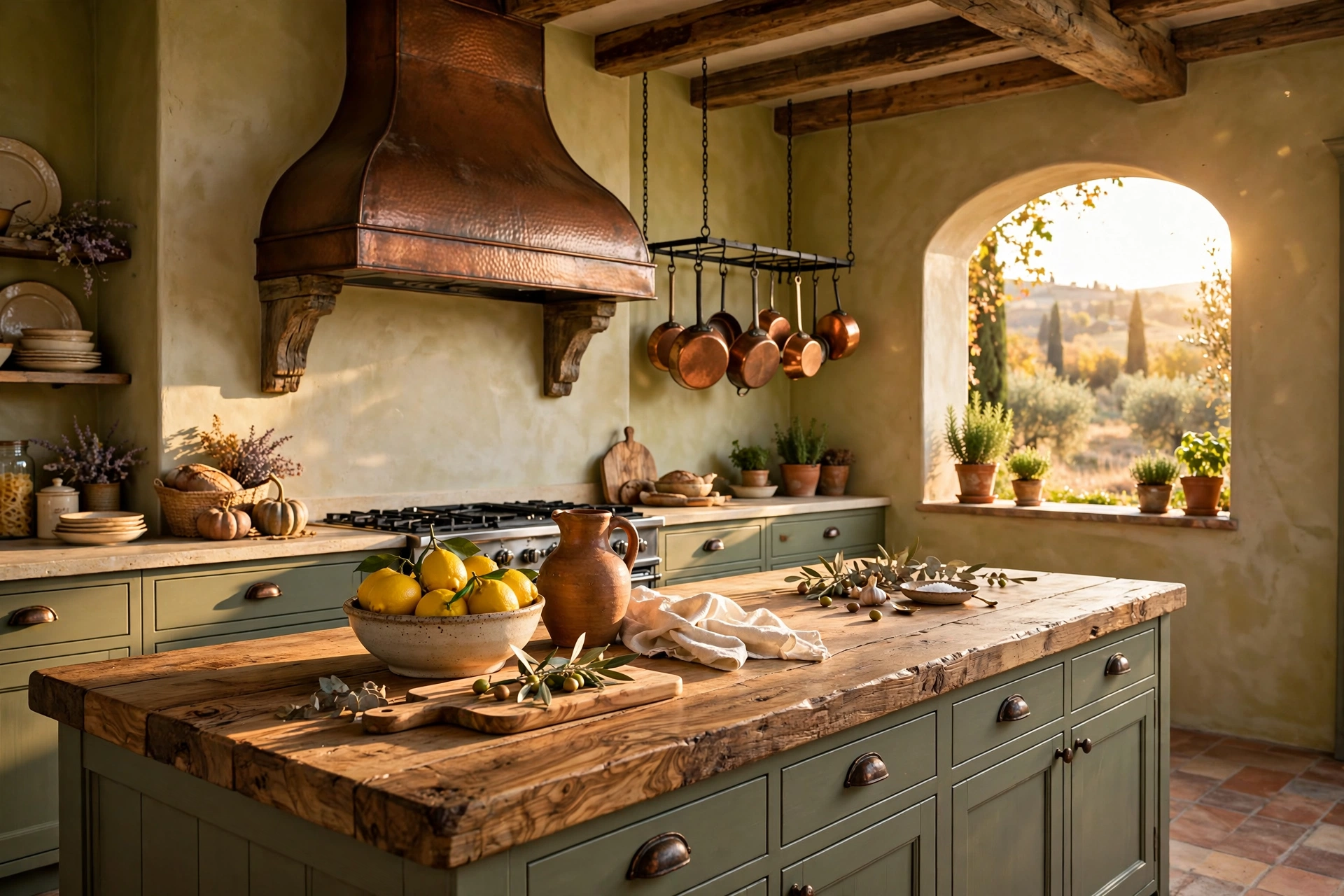
Picture a kitchen that smells like warm bread and basil.
Sunlight lands on a wide wood table. A copper pot hangs above the island. The walls look soft, like they’ve been there for a hundred years.
That’s the heart of a Tuscan kitchen. It isn’t about grapes on the wall or a rooster on every shelf. It’s about real materials, warm color, and a space made for cooking and sitting down together.
The old version of this style had a heavy, dark look. The new version is lighter, simpler, and easier to live with.
Here are 23 ways to bring that Italian charm home, with cost and effort tags so you can pick what fits.
Table of Contents
Quick Answer: What Is a Tuscan Kitchen?
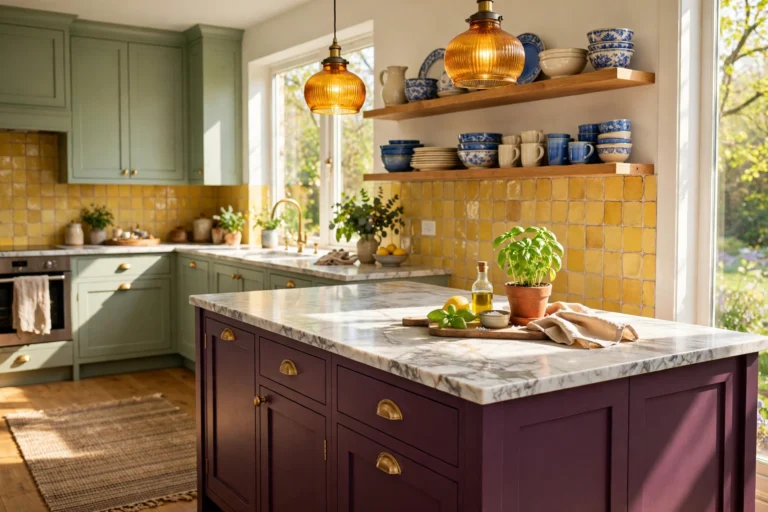
A Tuscan kitchen is a warm, rustic kitchen inspired by farmhouses and villas in Tuscany, Italy. It uses earthy colors, natural materials like terracotta, stone, wood, and plaster, and iron or copper details. The look is simple, lived-in, and built around cooking and gathering.
What to Keep and What to Skip
Keep:
- Terracotta, stone, and wood
- Textured plaster-style walls
- Copper, iron, and aged brass
- A big table or island for gathering
- Fresh herbs, olive branches, and real pottery
Skip or update:
- Glossy dark granite
- Heavy, ornate cabinet carving
- Fake grapes, plastic fruit, and cork collections
- Too many Italian-themed items in one room
- Dark, heavy colors on every surface
The 23 Ideas
1. Terracotta Floors With Real Variation
Budget: –$ | Effort: Big project
Terracotta tile is the base note of a Tuscan kitchen. Its warm orange-brown tone looks like sun-baked earth, and it hides crumbs better than pale floors. Choose tiles with soft shade shifts and slightly uneven edges, since a flat, even look feels more like a catalog than a villa. Unglazed tile needs sealing, so plan that into your upkeep. If a new floor isn’t possible, a terracotta-toned rug or peel-and-stick terracotta-look tile gives a softer version.
Related: 15 Retro Kitchen Ideas That Look Pinterest Perfect

2. Exposed Wood Beams Overhead
Budget: $$ | Effort: Weekend to big project
Ceiling beams give a kitchen instant age and warmth. Real reclaimed beams are heavy and need a pro to install, but lightweight hollow or foam faux beams look close and weigh far less. Pick a medium warm brown stain, not black, so the room stays bright. Run the beams in the direction of the longest wall to make the room feel longer. In a low-ceiling kitchen, use one or two slim beams, so the ceiling doesn’t feel pressed down.

3. Limewash or Venetian Plaster Walls
Budget: –$ | Effort: Weekend
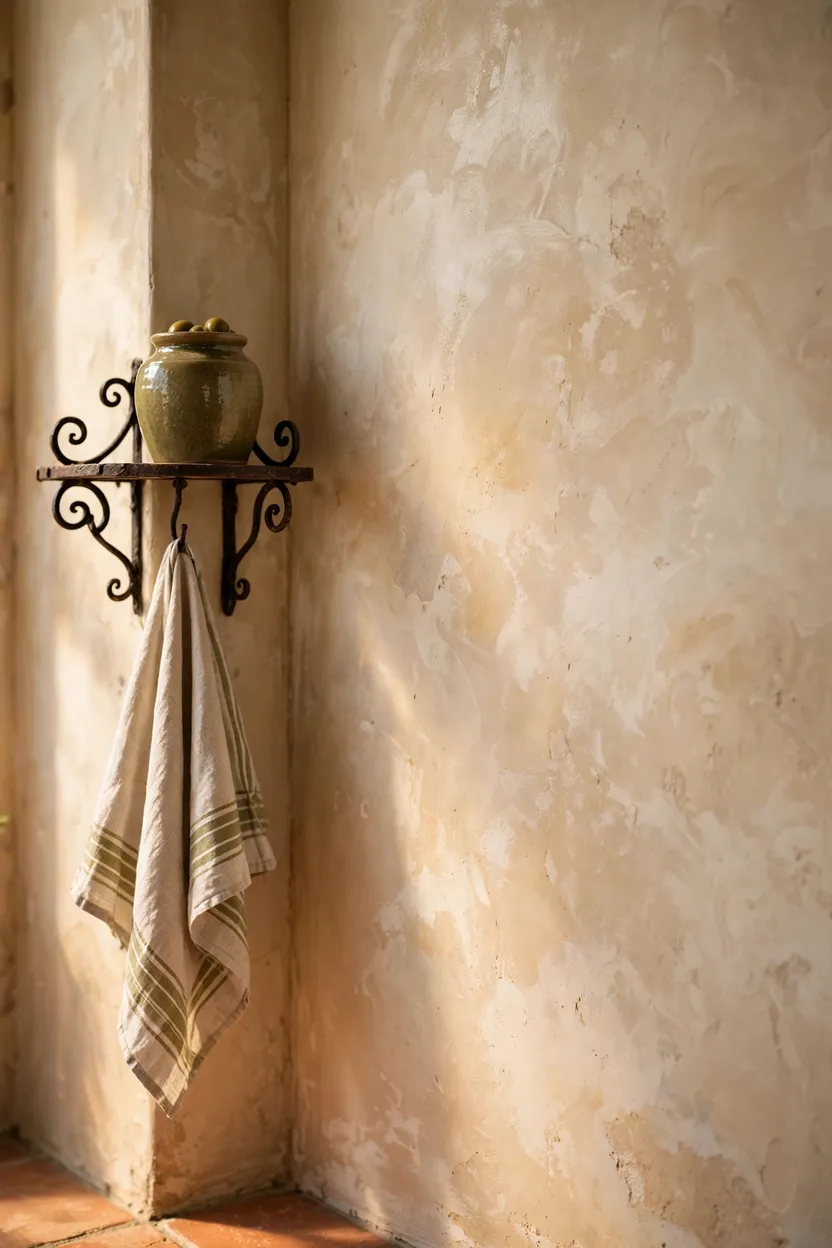
Soft, cloudy walls do more for the Tuscan feel than any decor piece. Limewash and plaster-style paint leave gentle brush marks and color shifts that look hand-applied. Stay with warm sand, pale ochre, soft clay, or muted olive. Apply in loose crisscross strokes and let some areas fade lighter. The texture also hides small bumps in older walls, and renters can try removable textured wallpaper for a close look.
4. A Plaster or Hammered Copper Range Hood
Budget: $$$ | Effort: Big project
The range hood is the main focal point in many Tuscan kitchens. Two classic looks work well: a smooth plaster hood with soft curves, or a hammered copper hood that darkens and softens with age. Add aged wood or stone corbels for visual weight. Match the hood width to your range and ask an installer to check the ventilation rating, since a pretty hood still needs to move air. If a custom hood is too much, paint a simple box hood in the same tone as the wall plaster.

5. An Arched Cooking Alcove
Budget: $$$ | Effort: Big project
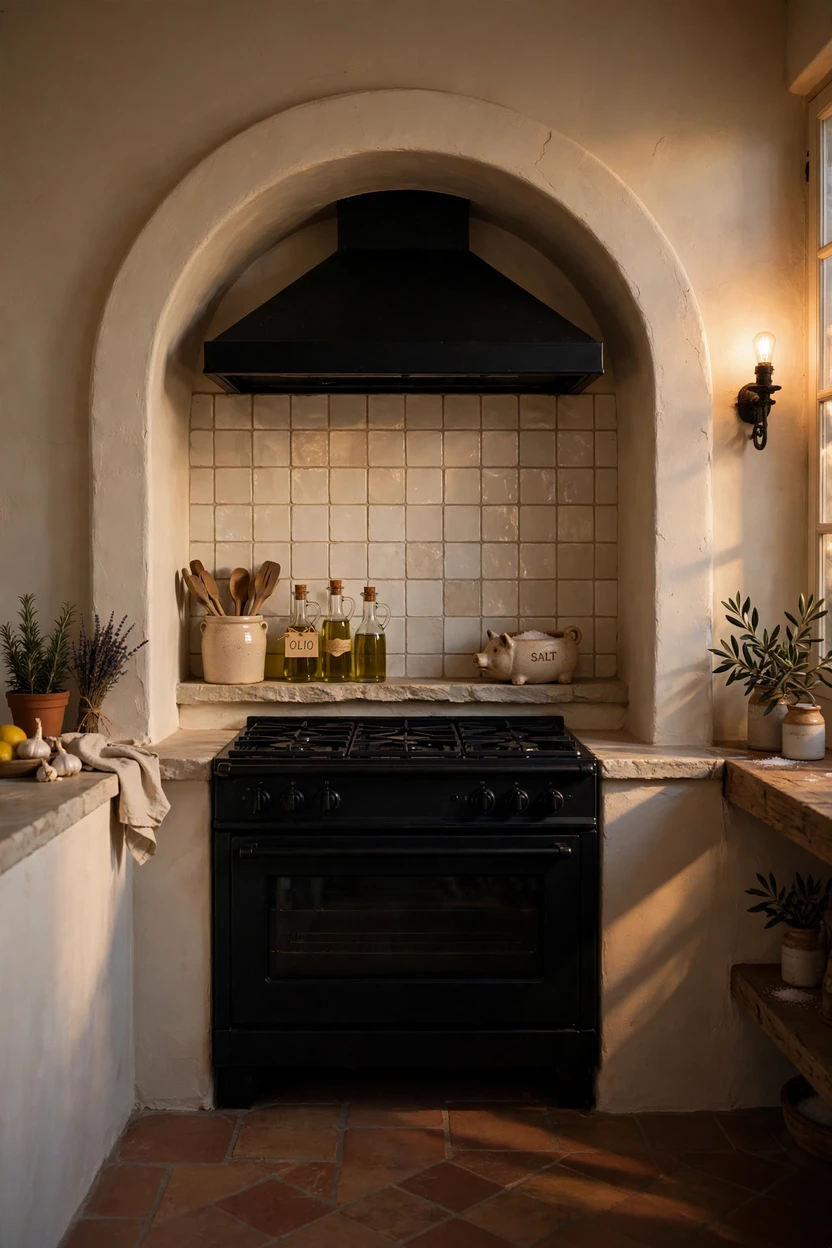
An arch around the cooktop brings old Italian architecture into the room. A stone or plaster arch frames the range like a small stage, and a recessed ledge holds oils, salt, and wooden spoons. Keep the arch simple and round, not pointed, so it feels farmhouse and not fancy. If building isn’t an option, paint an arch outline around the stove in a slightly deeper wall tone. It gives the same shape for the cost of a quart of paint.
6. Handmade Tile Backsplash
Budget: $$ | Effort: Weekend to big project
Handmade tile gives a backsplash the soft, uneven shine that machine-made tile can’t copy. Zellige and hand-painted ceramic tile both catch light in different ways across the wall. Use warm cream, sage, or terracotta, and save a patterned section for behind the stove if you want to control cost. Pick a warm grout color, since stark white lines can feel too crisp against uneven tile. For renters, peel-and-stick tiles in similar tones are a lighter option.

7. A Deep Farmhouse Apron Sink
Budget: –$ | Effort: Weekend
A deep apron sink is the workhorse of a rustic Italian kitchen. White fireclay feels clean and classic, while copper adds a warm glow and develops a patina over time. Pair it with an unlacquered brass or bronze bridge faucet to stay in the old-world mood. Fireclay can chip, so a basin grid protects the bottom. Copper needs gentle cleaning, and its color will shift, which is part of the charm.

8. Olive, Sage, or Warm Cream Cabinets
Budget: –$ | Effort: Weekend
Paint is the fastest way to make a kitchen feel more Tuscan. Choose a chalky or matte cabinet finish in olive, sage, or warm cream, and add oil-rubbed bronze pulls. A two-tone look works well too: olive on the lower cabinets, cream on top. Use a cabinet-grade paint and prep the surface well, since kitchens take wear. The soft color keeps the style fresh and avoids the heavy dark wood of older versions.

9. A Soft Blue Island
Budget: –$ | Effort: Weekend
A dusty blue island brings in a Mediterranean touch, like old shutters on a village street. Pale blue is showing up in modern Tuscan kitchens because it cools the heavy earth tones. Use it on one piece only, like the island, so the room stays warm. Pair it with cream walls, terracotta, and brass knobs. The blue stands out against all that earthy color.

10. Open Shelving With Italian Pottery
Budget: $ | Effort: Easy
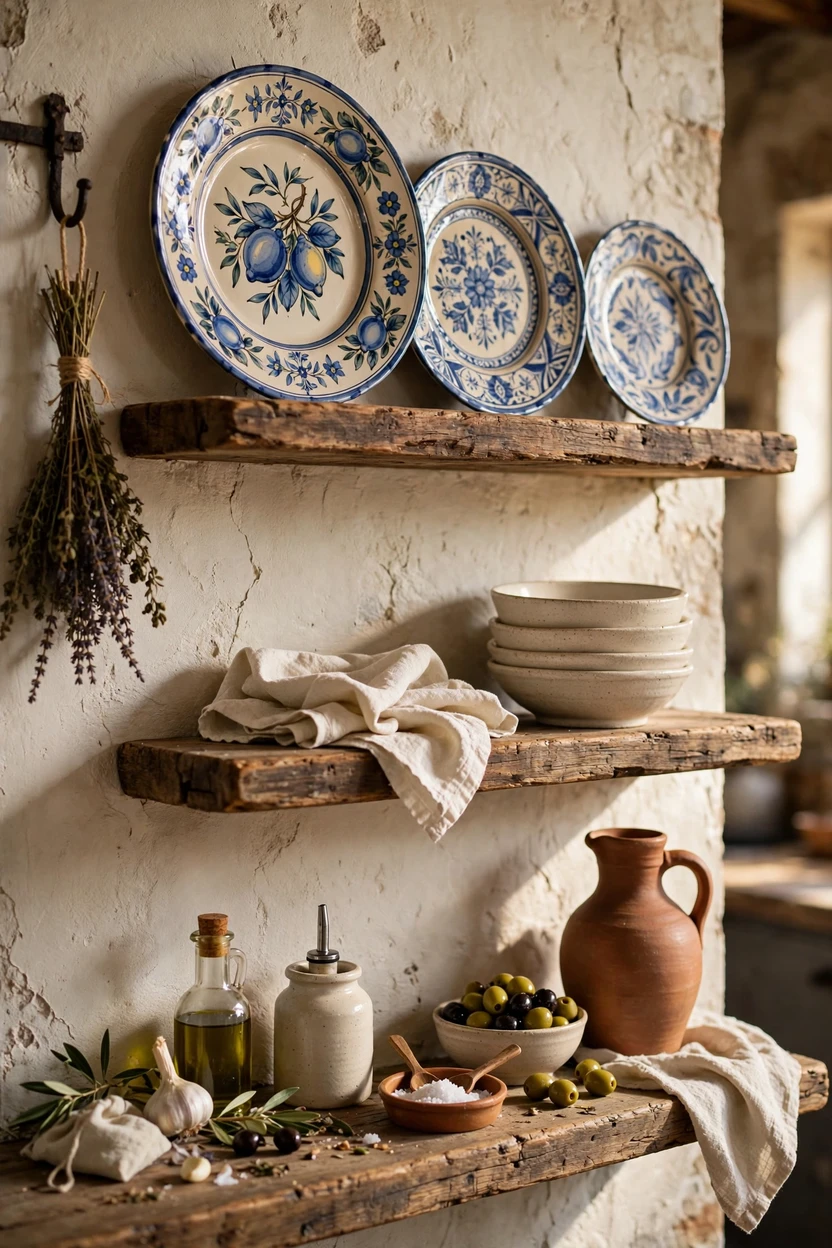
Open shelves make a Tuscan kitchen feel lived in, since everyday dishes stay in view. Use thick aged wood boards and fill them with cream bowls, hand-painted plates, and an olive oil jug. Group items in threes, and leave gaps so the shelf can breathe. Keep the shelves away from the stove, since cooking grease collects fast. Reach for these dishes daily, so the display stays real.
11. A Wrought Iron Pot Rack
Budget: $$ | Effort: Moderate
An iron pot rack puts cookware on display, and it’s a classic Italian kitchen habit. Hang copper pots, a cast iron pan, and a colander you actually use. Anchor the rack into ceiling joists, since full pots are heavy. Hang it high enough that no one bumps their head, which usually means around seven feet or more. Hang only what you reach for, and the rack stays both pretty and useful.
Related: 17 Outdoor Kitchen Layout Ideas Architects Swear By

12. Lantern and Iron Pendant Lighting
Budget: $$ | Effort: Weekend
Lighting sets the evening mood in a Tuscan kitchen. Hang iron lantern pendants over the island, add small sconces by the prep area, and use warm under-cabinet lights. Choose warm bulbs, around 2700K, and put them on dimmers. Swap heavy chandeliers for lighter lanterns with seeded glass, so the look feels current. Thrift stores and flea markets are good places to find old iron fixtures.

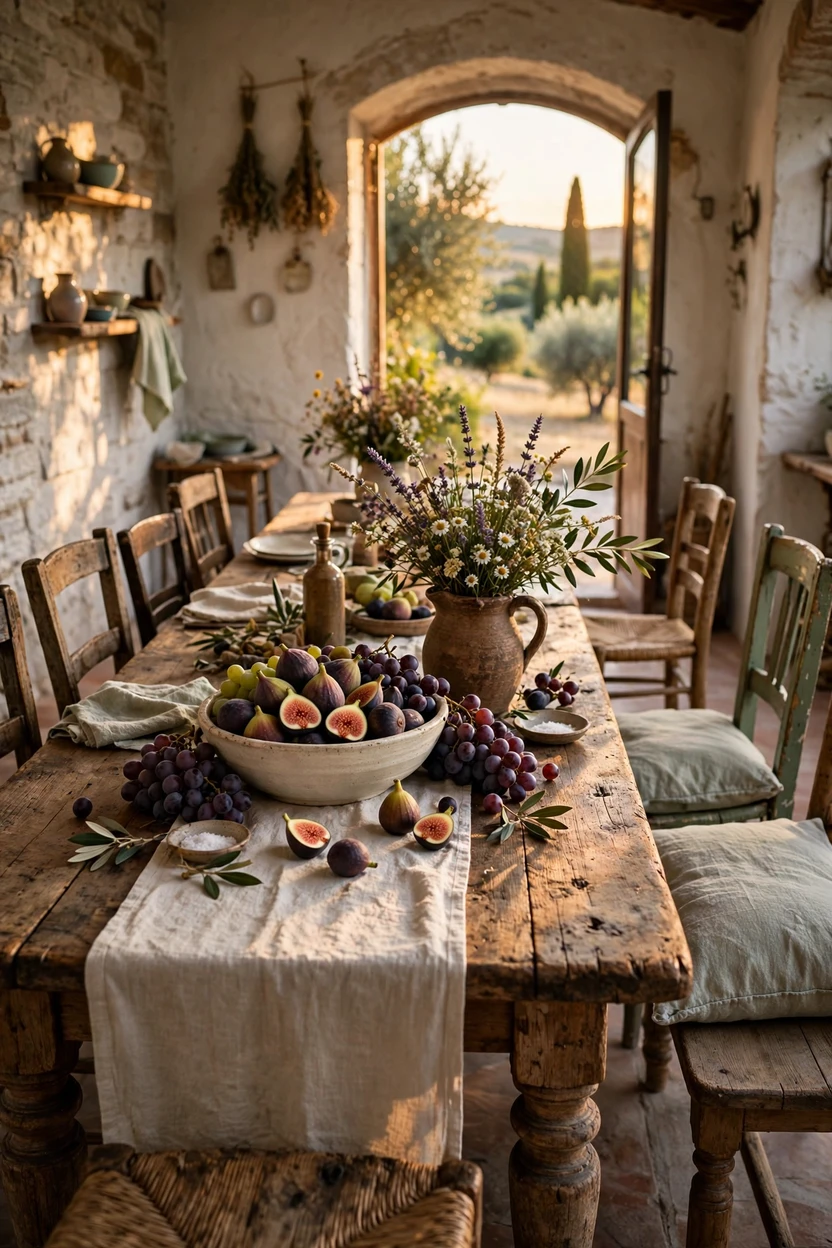
13. A Big Farmhouse Table or Rustic Island
Budget: –$ | Effort: Easy to moderate
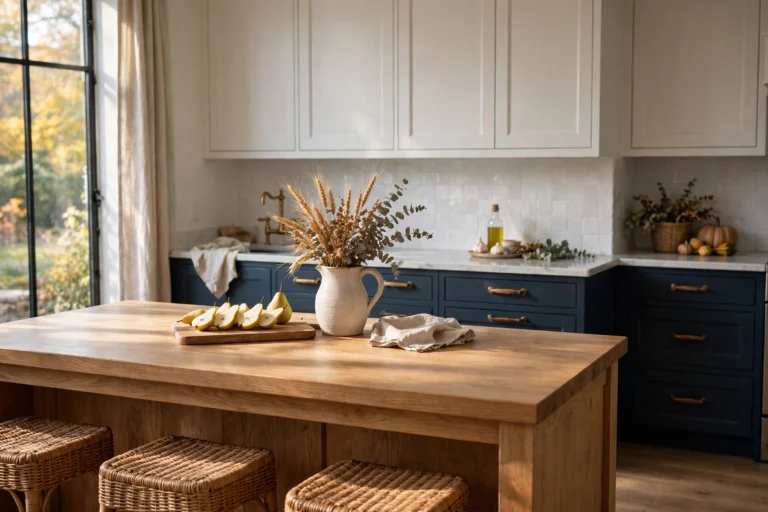
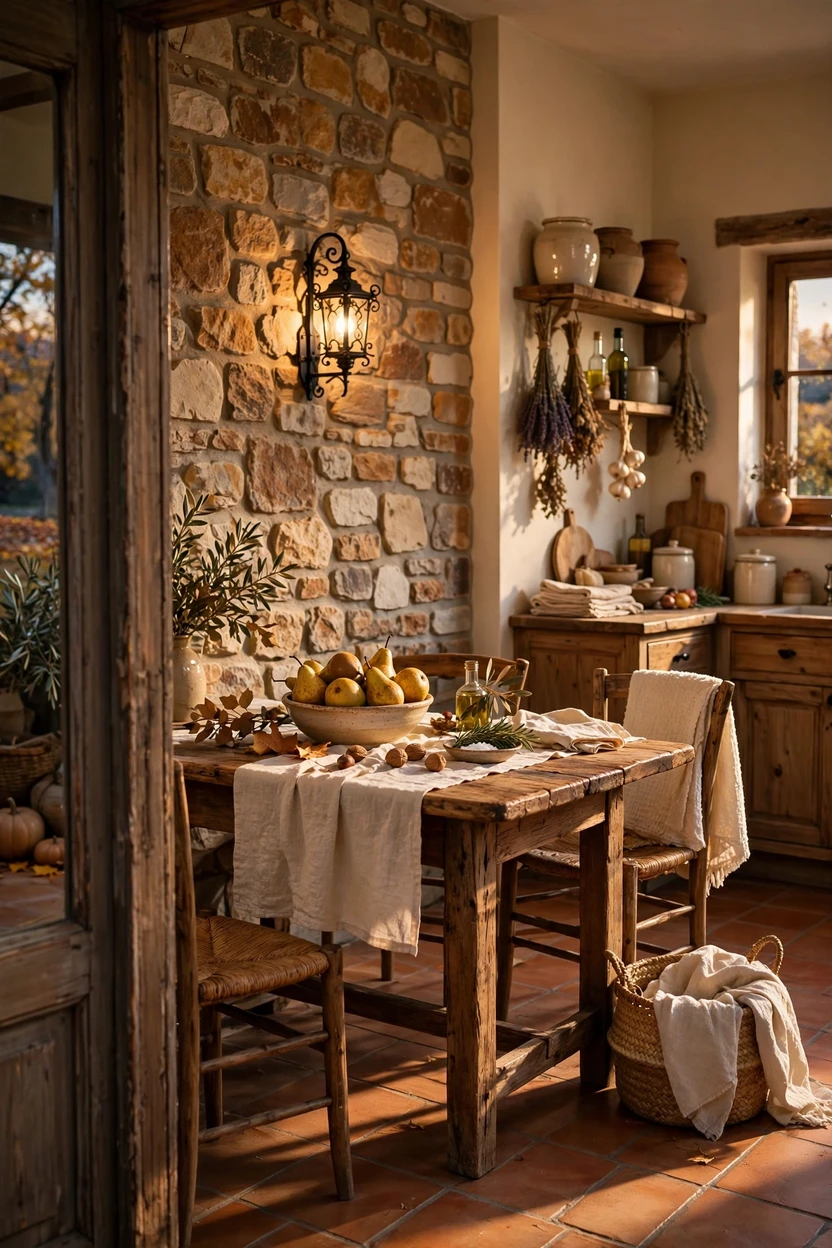
A big table is the heart of a Tuscan kitchen. Pick a thick plank top with turned legs and a worn finish, and let it show nicks and rings. Leave at least 36 inches of walking space around it. Mix the chairs, like two woven stools and a wooden bench, so the table looks gathered over time. Add a linen runner and a big bowl of fruit, and it’s ready for dinner.
14. Honed Natural Stone Countertops
Budget: $$$ | Effort: Big project
Countertops decide whether your kitchen looks fresh or dated. Honed marble, soft limestone, and quartzite have a matte, quiet look, while glossy dark granite pulls the style back to its older version. Quartzite offers the marble look with more durability. Seal the stone, and accept that natural stone will build a gentle patina. If stone isn’t in budget, a honed porcelain slab in a stone pattern is a practical option.

15. Light-Filled Windows With Linen Sheers
Budget: $ | Effort: Easy
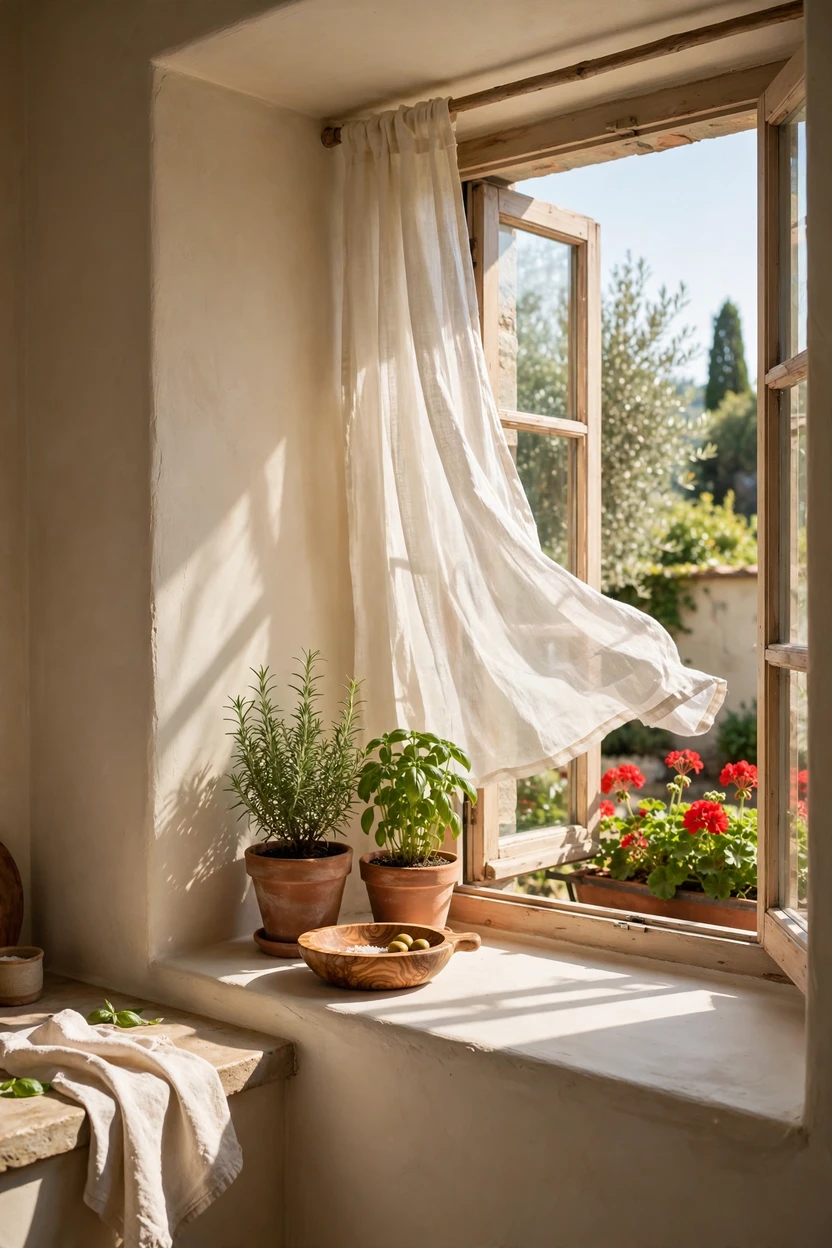
Natural light makes warm Tuscan colors glow. Leave the window bare, or hang a simple linen sheer that lets daylight pass. Add a deep sill and put a few plates or herb pots on it. If you have the space outside, a window box with rosemary or geraniums finishes the picture from the street side. Keep the glass clean, since this look depends on light.
16. A Terracotta Herb Nook
Budget: $ | Effort: Easy
Fresh herbs are the easiest way to add Tuscan life to a kitchen. Set basil, rosemary, thyme, and oregano in terracotta pots on a sunny sill or a narrow shelf. Most herbs want several hours of light a day, so pick your brightest spot. Use saucers to protect the surface below, and add small tags so you can tell them apart. You get decor and dinner ingredients from the same corner.

17. Olive Branches and Olive Wood Boards
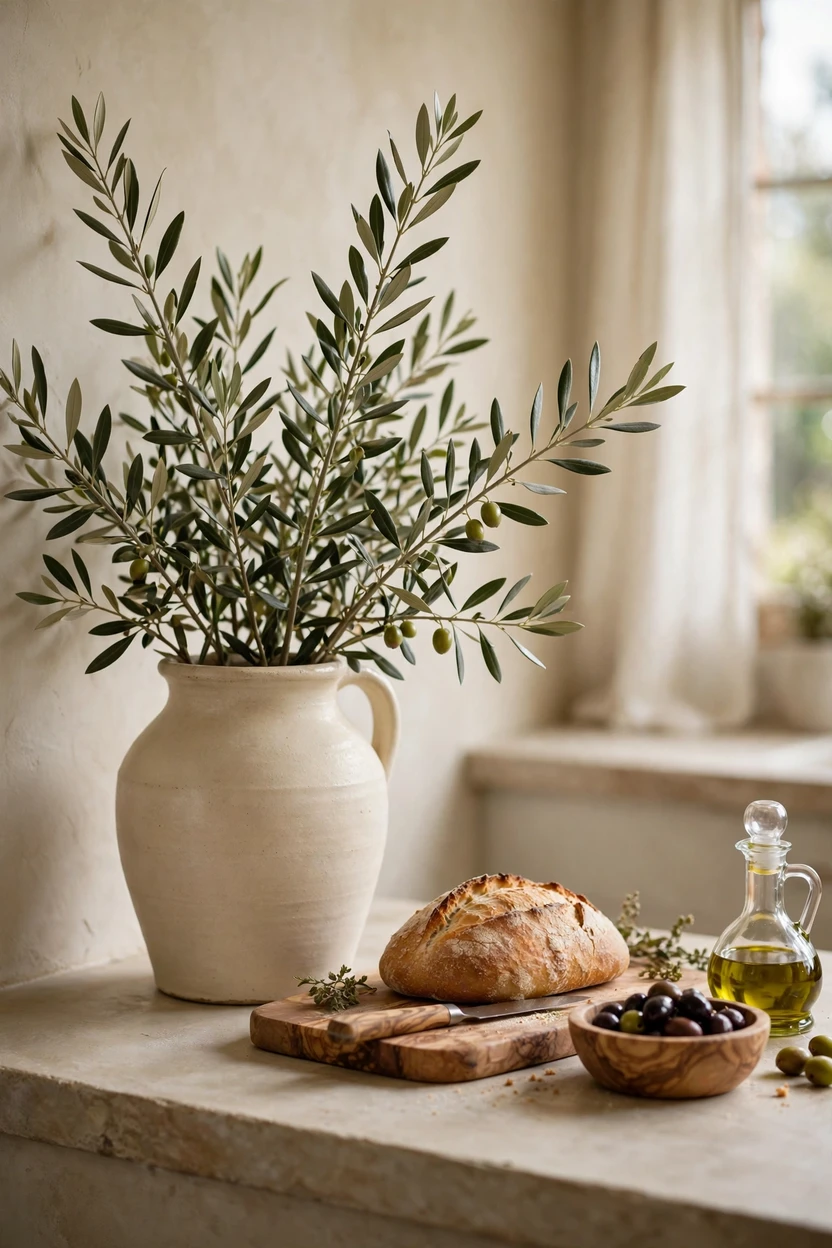
Budget: $ | Effort: Easy
Olive branches set the Italian mood with almost no effort. Put a few tall stems in a big ceramic jug or iron urn and let them lean. Add an olive wood cutting board and serving bowls, since the grain has a warm, swirling look. Skip plastic fruit and fake grapes, and choose real objects instead. Oil your wood board with food-safe oil now and then, so it keeps its glow.
18. A Wine Nook or Iron Wine Rack
Budget: $$ | Effort: Easy to moderate
A small wine corner adds Tuscan hospitality to the room. Use a recessed niche, an iron rack, or a wooden crate set on its side. Keep it away from the stove and sunny windows, since heat is hard on bottles. Hang a few glasses under a shelf and add a candle in an iron holder. It feels welcoming, and it works best with a small stool nearby.

19. A Hand-Painted Plate Wall
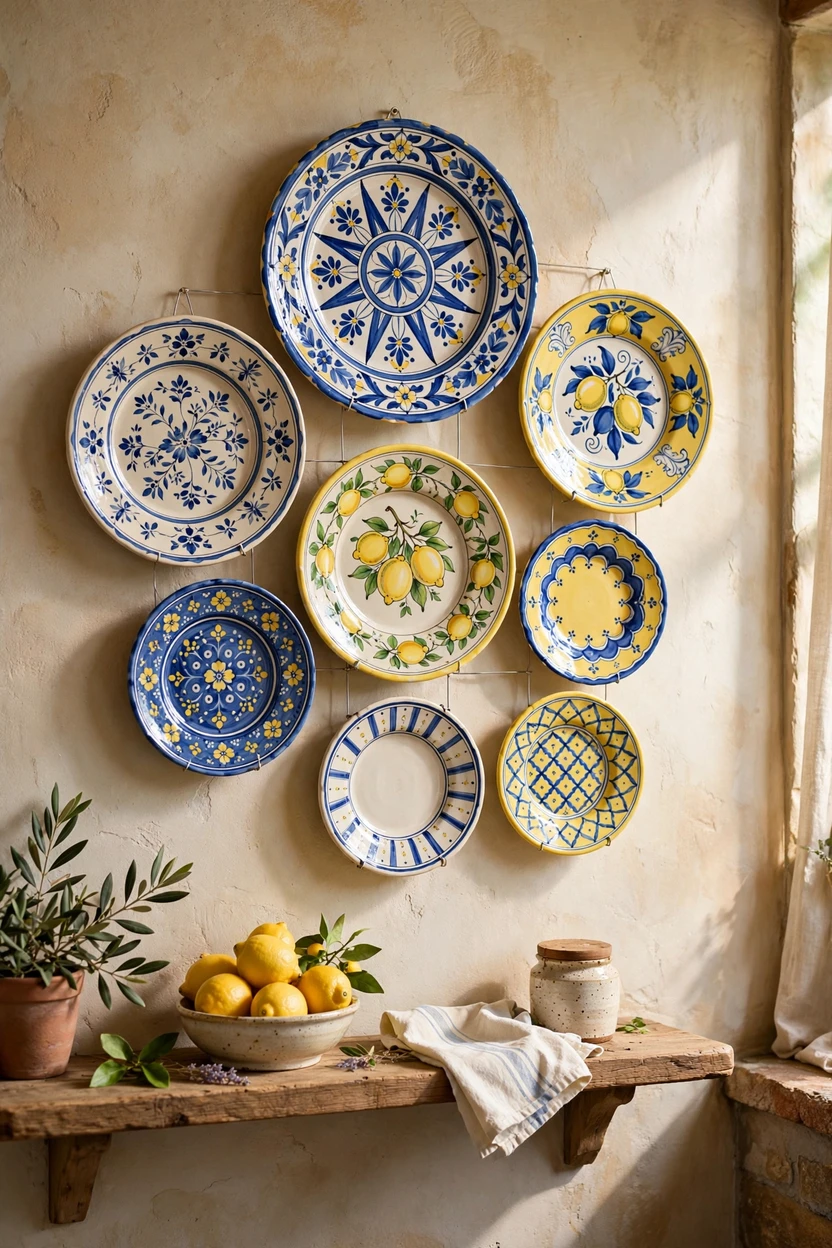
Budget: $ | Effort: Easy
Plates on a wall give a plain section of plaster some personality. Use Italian-style ceramic plates in cream, blue, and yellow, and mix sizes in a loose cluster. Use proper plate hangers, not tape, so nothing falls. Choose an odd number of plates and start from the middle. Keep the display away from the stove, where grease can settle on the glaze.
20. A Stone or Brick Accent Wall
Budget: –$ | Effort: Weekend to big project
A wall of stone or brick gives a kitchen weight and age. Thin stone veneer is easier to install than full stone, and it comes in warm sand and gray tones. Use it on one wall, like behind the table or around the stove, so the room doesn’t turn heavy. A light limewash over brick softens the color and keeps it from looking red. It pairs well with wood, linen, and copper.
21. A Working-Kitchen Counter Vignette
Budget: $ | Effort: Easy
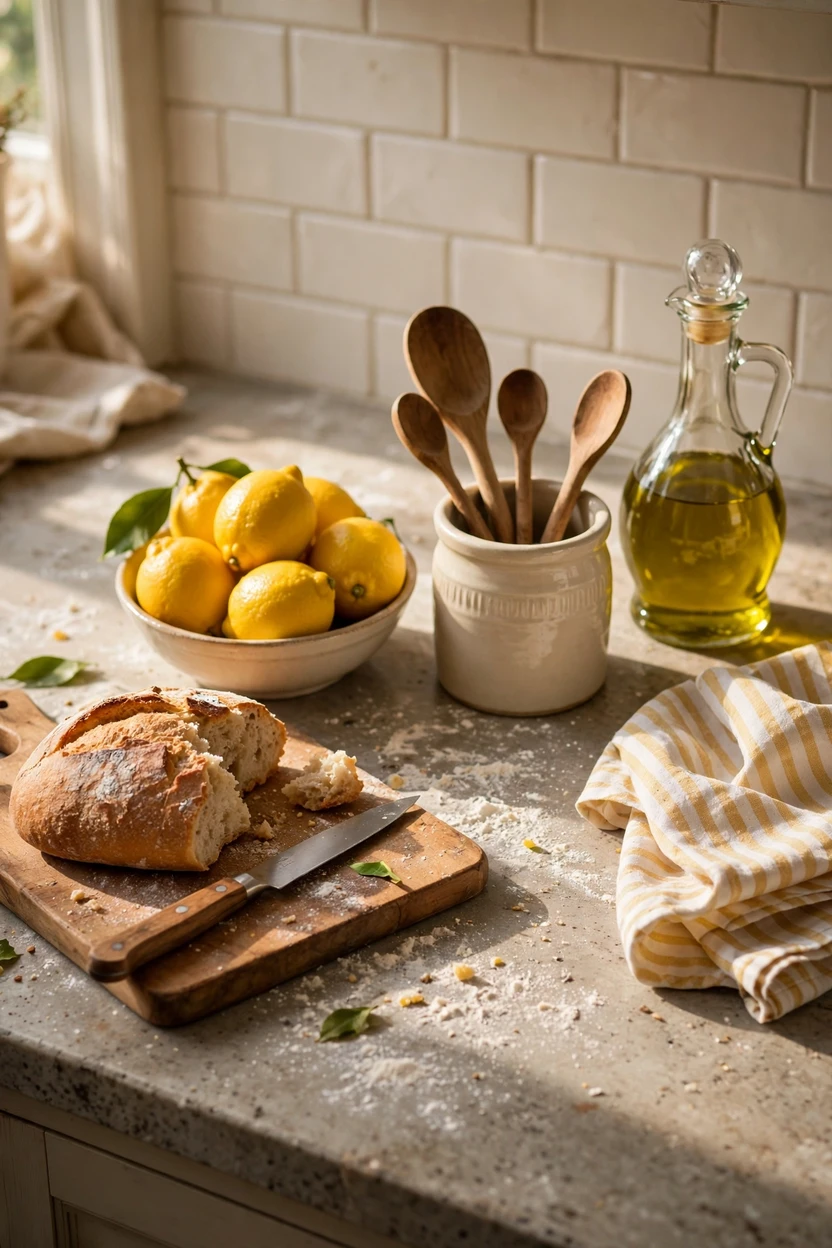
Real Tuscan kitchens look used, so style your counter with things you’ll actually grab. Set a wood board with bread, a bowl of lemons, a ceramic crock of wooden spoons, and a small oil cruet. Group them in two or three clusters and leave the rest of the counter clear. Move things around as you cook, and the vignette stays fresh. This is the easiest way to get a magazine moment with everyday items.
22. Linen Textiles and a Woven Runner
Budget: $ | Effort: Easy
Textiles are the cheapest way to add Tuscan color. Use striped linen towels, a woven runner in rust or olive, and cotton cushions with ties on the chairs. They add texture and soften hard surfaces like stone and tile. Everything is washable, which suits a working kitchen. For renters, these are the best way to bring the palette in without touching the walls.
Related: 16 Boho Kitchen Ideas That Feel Collected, Not Costume

23. A Larder-Style Pantry With Glass Jars
Budget: –$ | Effort: Weekend
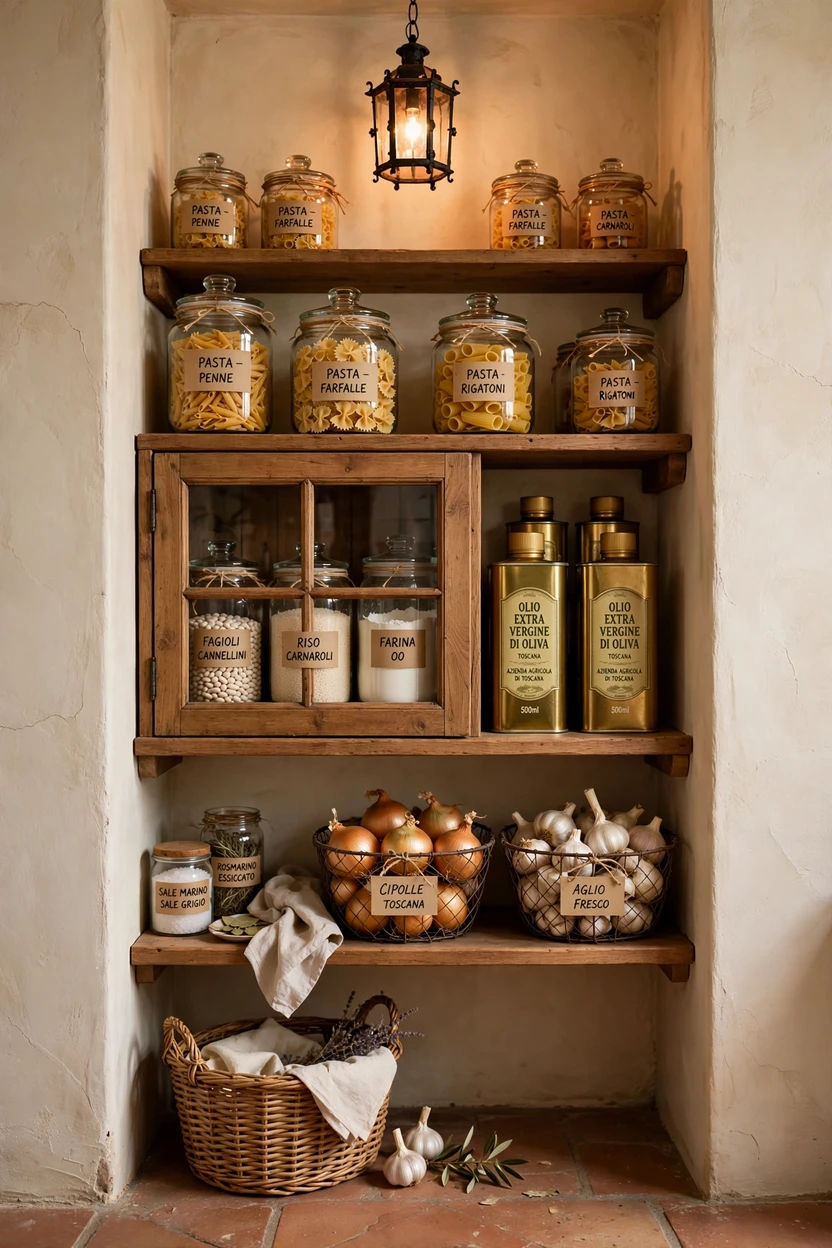
A Tuscan pantry is part storage, part display. Use glass-front cabinets or open shelves and fill them with jars of pasta, beans, rice, and flour. Add tins of olive oil, wire baskets for onions and garlic, and handwritten labels. Keep the pantry away from direct sun and heat, so food lasts longer. It looks pretty and makes cooking faster, since everything is easy to see.
Styling Tips
- Pick three anchor features. For example: terracotta floor, plaster walls, and a copper hood. Keep everything else simple.
- Mix finishes. Pair rough with smooth: raw wood with honed stone, matte plaster with a bit of shine from copper.
- Use a warm color base. Sand, cream, and clay work best, with olive, sage, or blue as one accent.
- Group by threes. Odd numbers look natural on shelves and counters.
- Add one living thing. Herbs, olive branches, or a lemon bowl bring the room to life.
- Let age show. Slight wear, patina, and mismatched pieces make the room feel real.
- Keep the counters clear. A few styled groups look better than a full spread.
Practical Implementation Ideas
A simple order of work for a Tuscan kitchen refresh:
- Start with color: paint walls in plaster or limewash and cabinets in a warm tone.
- Add lighting: swap in iron or lantern fixtures and warm bulbs.
- Update hardware: bronze or aged brass pulls and a new faucet.
- Add texture: a runner, linen towels, and wood boards.
- Layer in natural elements: herbs, olive branches, pottery.
- Save big projects (floors, beams, hood, backsplash) for last, and do one at a time.
Care notes: Seal terracotta and natural stone. Wipe spills on stone quickly. Clean copper gently. Anchor pot racks and heavy shelves into studs or joists. Have a pro check ventilation and any plumbing or gas work.
Common Mistakes to Avoid
- Going too themed. Skip fake grapes, plastic fruit, and roosters on every shelf.
- Using glossy dark granite. It pulls the look back to the heavy older style.
- Over-distressing wood. Too much wear can tip into farmhouse.
- Dark everything. Heavy brown cabinets, floors, and walls make a room feel small.
- Cold lighting. Bright white bulbs flatten warm colors.
- Skipping sealing. Terracotta and stone stain without it.
- Hanging too much on walls. Pick a few pieces and give them room.
Small-Space Alternatives
- Paint the walls in limewash or plaster-style paint. It adds depth without taking up space.
- Use one beam or a lightweight faux beam.
- Choose open shelving over bulky upper cabinets on one wall.
- Keep the palette to cream and one accent.
- Use a narrow wall rack for pots, not a big overhead rack.
- Set herb pots on the window sill and a wine rack on the wall.
- Use a small cast iron table or a rolling cart for extra prep space.
Budget-Friendly Alternatives
- Paint: chalky cabinet paint and limewash cost far less than new cabinets and walls.
- Textiles: linen towels, runners, and cushions add color for little money.
- Thrift: flea markets and secondhand shops are good for pottery, boards, and iron lighting.
- Fake it well: textured laminate that looks like aged wood and sealed concrete counters can stand in for pricey materials.
- DIY: faux beams, painted arches, and a painted box hood copy big features.
- Grow your own: herbs in terracotta pots cost a few dollars and look great.
Pro Styling Recommendations
- Think old plus new. Mix modern appliances with aged materials. The contrast looks fresh.
- Layer your lighting. Use overhead, task, and accent lights at different heights.
- Repeat materials. If copper shows up on the hood, add it once or twice more in small pieces.
- Control the palette. Three or four colors keep the room calm.
- Choose texture over pattern. Plaster, linen, and wood bring more charm than busy prints.
- Look from the door. Check the main view from the entry, and style that one first.
Frequently Asked Questions
Conclusion
The best Tuscan kitchens don’t try hard. They feel warm because the materials are real, the light is good, and people actually cook there.
Start with one or two ideas that fit your space and budget. Paint a wall, hang a pot rack, or put basil on the window sill. Then add slowly.
Let the room get a little worn and a little messy. That’s the Italian charm you’re after.