17 White Living Room Ideas That Prove Minimalism Feels Inviting
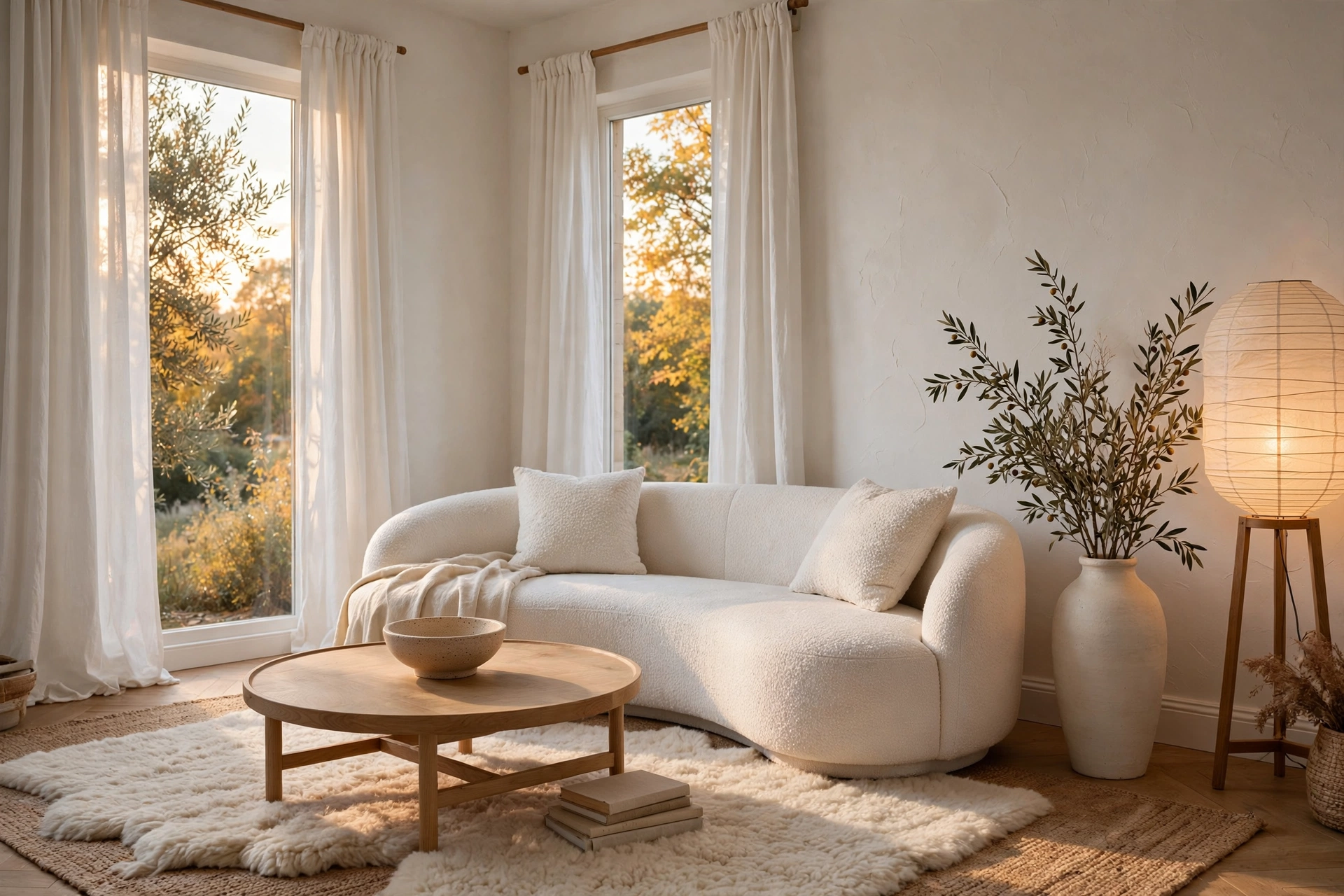
Picture a quiet Sunday afternoon. Sun slides across a cream wool rug. The walls are white, yet the room feels like a hug. Nothing is cluttered, and nothing feels cold.
That is the room most of us want when we say we like minimalism. Not a showroom. Not a waiting room. A calm space where you actually want to sit down with a cup of tea and stay a while.
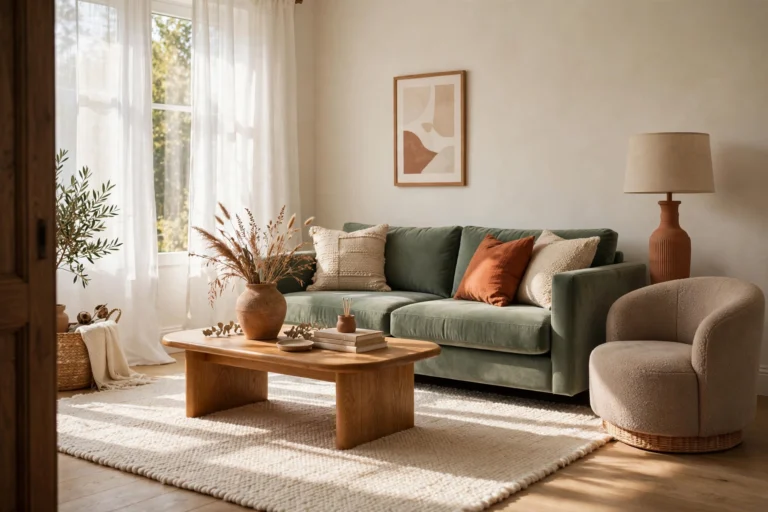
The trick is simple. A white living room feels cold when it has one shade, one texture, and one kind of light. It feels inviting when white is layered with warm undertones, soft fabrics, pale wood, and lamps at different heights.
Below are 17 ideas that do exactly that. Each one tells you what to buy or do, why it works, and how to keep the look clean. After the list, you will find sections on small spaces, budgets, common mistakes, and answers to the questions people ask most.
Quick answer: To make a white living room feel inviting, paint the walls a warm white with a creamy undertone, layer at least three textures (such as boucle, linen, and wool), add light wood, and use 2700K bulbs in lamps at different heights.
What You’ll Find Below
- Warm white walls with a creamy undertone
- A chalk-white boucle sofa with a curved back
- Five whites, one quiet palette
- Light oak for instant warmth
- A wool rug layered over jute
- Floor-length linen curtains
- One limewash or plaster-look wall
- Lighting in three layers
- One oversized ceramic vase
- A single large piece of art
- White alcove shelves styled with space
- A simple plaster-look fireplace
- Small touches of black
- Greenery in white planters
- A reading corner you want to sit in
- Round shapes and a low coffee table
- Seasonal swaps on a white base
Then: styling tips, practical steps, common mistakes, small-space and budget versions, pro recommendations, FAQs, and a wrap-up.
Table of Contents
17 White Living Room Ideas
1. Warm White Walls With a Creamy Undertone
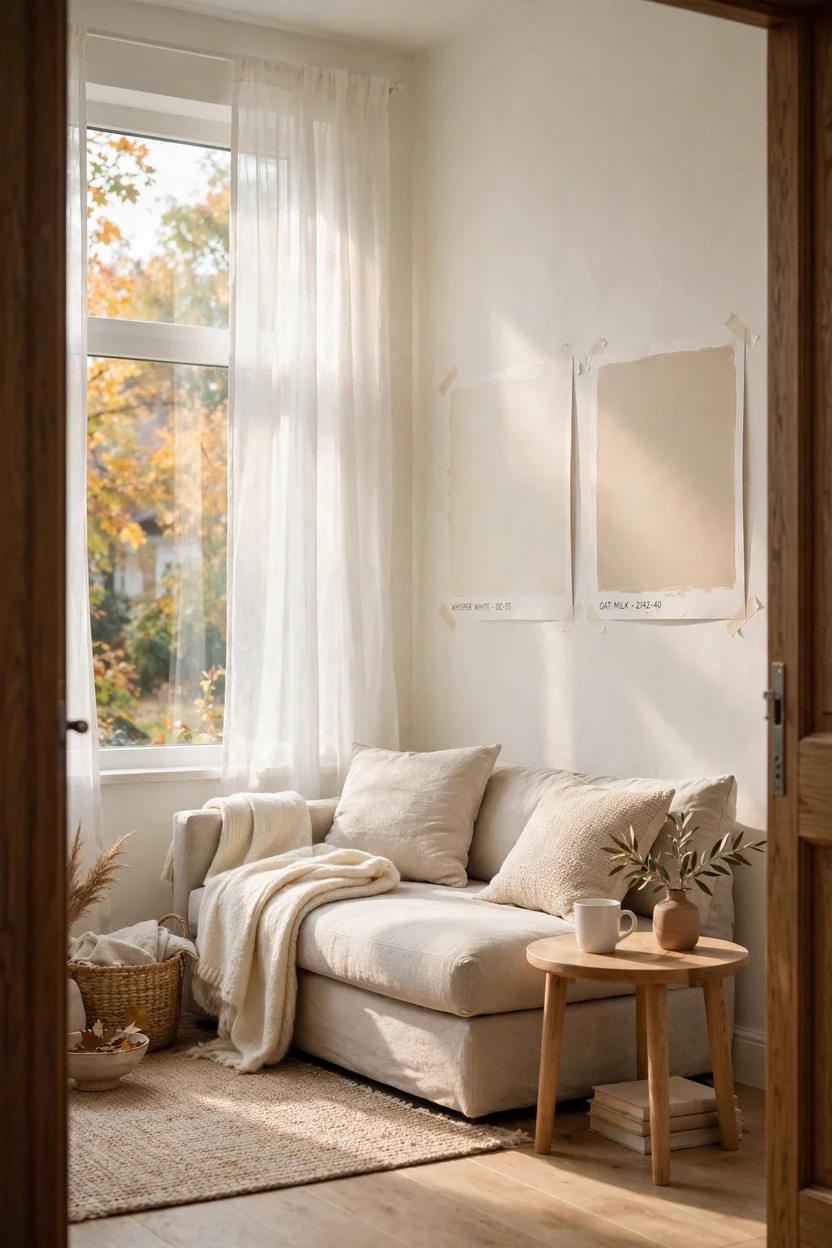
A white room feels cold when the paint leans blue or gray. Choose a warm white with a hint of cream instead, such as Benjamin Moore White Dove, Benjamin Moore Swiss Coffee, or Sherwin-Williams Alabaster. These shades still bounce plenty of light around, but they add a soft glow, so the walls look like fresh milk and not a clinic hallway. Paint two large swatches on different walls and check them in the morning, at noon, and at night. North-facing rooms pull colors cooler, and south-facing rooms push them warmer, so the same can of paint can look very different from house to house. Pick the one that still looks friendly under your lamps, because that is when most people actually use the living room.
2. A Chalk-White Boucle Sofa With a Curved Back
Your sofa is the biggest object in the room, so it sets the mood. A rounded, chalk-white boucle sofa softens all the straight lines of walls, windows, and doors. The looped fabric catches light in tiny bumps, so one color shows many soft shades, and that gives a minimalist room depth without adding more stuff. Look for a seat depth near 22 inches if you like to sit upright, or deeper if you like to curl up. If you have kids or pets, choose a performance boucle or a sofa with removable washable covers. Then keep the styling light: two pillows, one throw, and nothing else.
Related: 17 Black and White Bathroom Ideas That Look Great on Camera

3. Five Whites, One Quiet Palette
An all white room looks rich when the whites are different on purpose. Pick five: a warm wall white, a chalky sofa, an oat-colored rug, an ivory throw, and a bone-colored ceramic piece. Keep every one of them on the warm side so they sit together like a family, and let texture do the work. Mix matte paint, nubby wool, smooth linen, and one shiny glaze so your eye finds small changes everywhere it looks. This works because we read depth through light and texture, not only color. Group objects in odd numbers, like three bowls or five books, so the layout looks relaxed and not stiff.

4. Light Oak for Instant Warmth
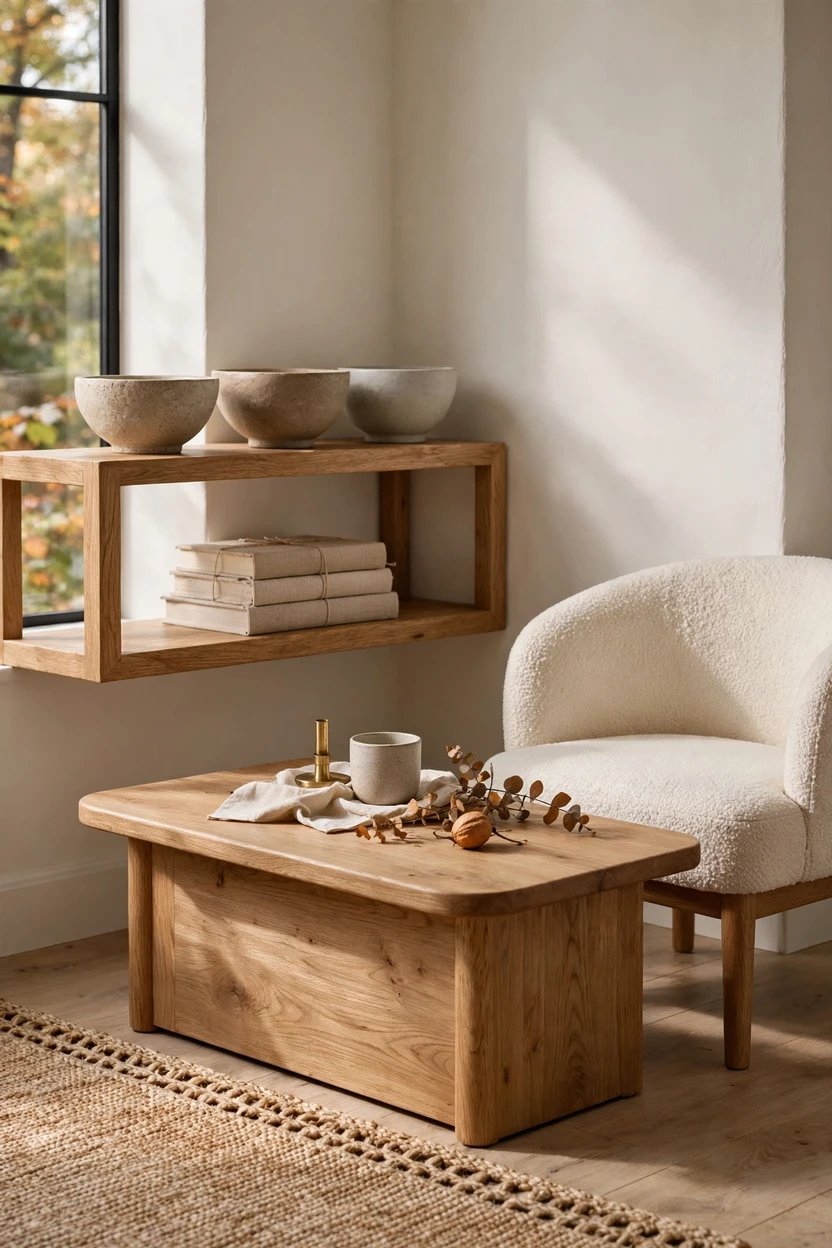
White needs a little yellow-brown to feel friendly, and light wood is the easiest way to add it. Choose a light oak, ash, or maple coffee table, a slim shelf, or picture frames, and repeat that same wood in at least three spots. This repeat makes the room look planned, even when you only own a few pieces. Stick to one or two wood tones, because mixing orange-red stains with pale Scandinavian woods can feel messy in a quiet room. Pale wood also hides small scratches and dust better than dark wood, which helps in a busy family home. Keep the surface bare except for one or two objects so the grain can be seen.
5. A Wool Rug Layered Over Jute
Hard floors make a room sound and feel cold, and a rug fixes both. Choose a cream wool or wool-blend rug, ideally 8 by 10 feet in an average living room, so at least the front legs of the sofa and chairs sit on it. Slide a flat jute rug underneath, with a few inches of jute showing on each side, to add a woven edge and a second texture. A low pile is easier to vacuum, and a thick rug pad keeps everything from slipping and adds cushion. This layered base grounds all the white above it and gives bare feet something soft to meet. In an open plan home, the rug also marks the living zone without a single wall.

6. Floor-Length Linen Curtains
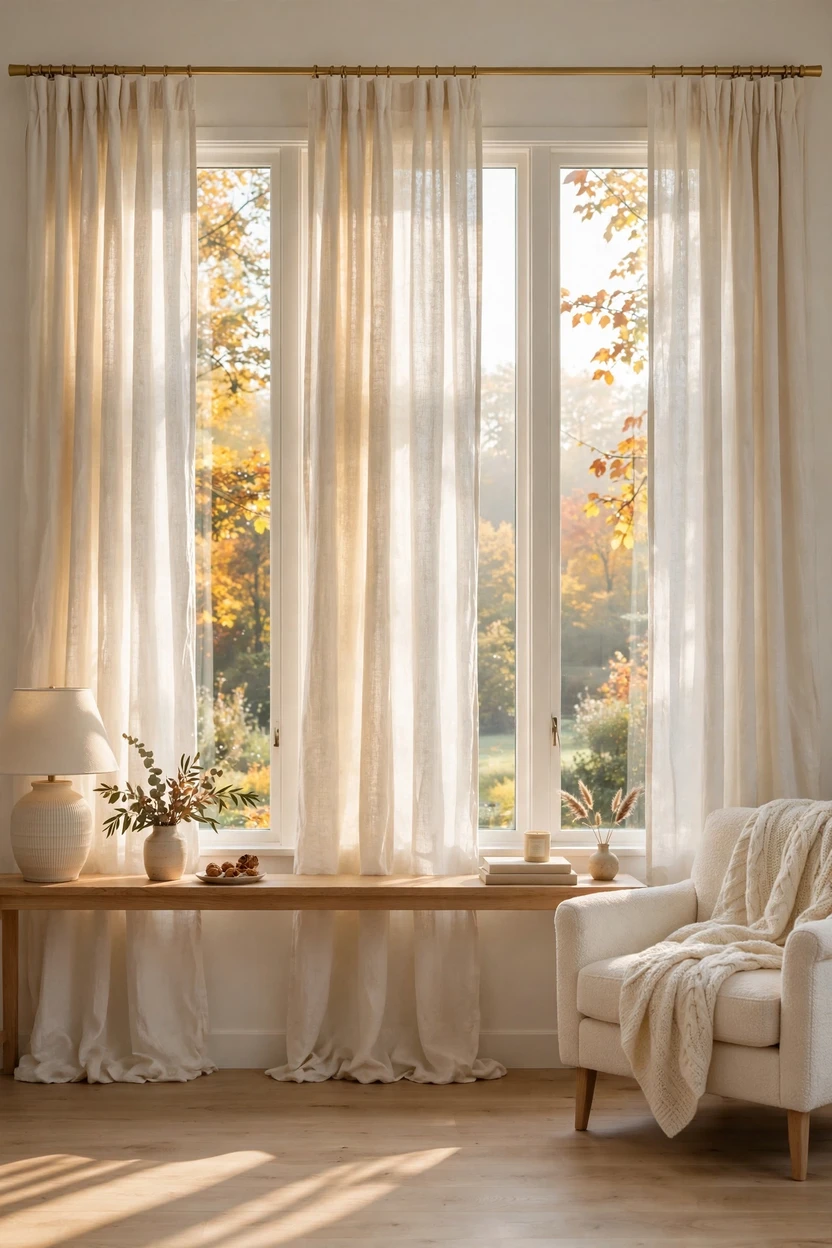
Curtains are the quickest way to soften a hard white box. Hang white or oat linen panels high, close to the ceiling, and wide, so they cover the wall around the window and not the glass itself. This makes the window look taller and lets the full pane of daylight in. Sheer or light-filtering linen scatters sunshine so glare turns gentle, and that is why white rooms with linen look calm instead of bright and harsh. Let the hem just touch the floor for a relaxed line. Linen wrinkles a little, and those small folds add the quiet texture a minimalist room needs.
7. One Limewash or Plaster-Look Wall
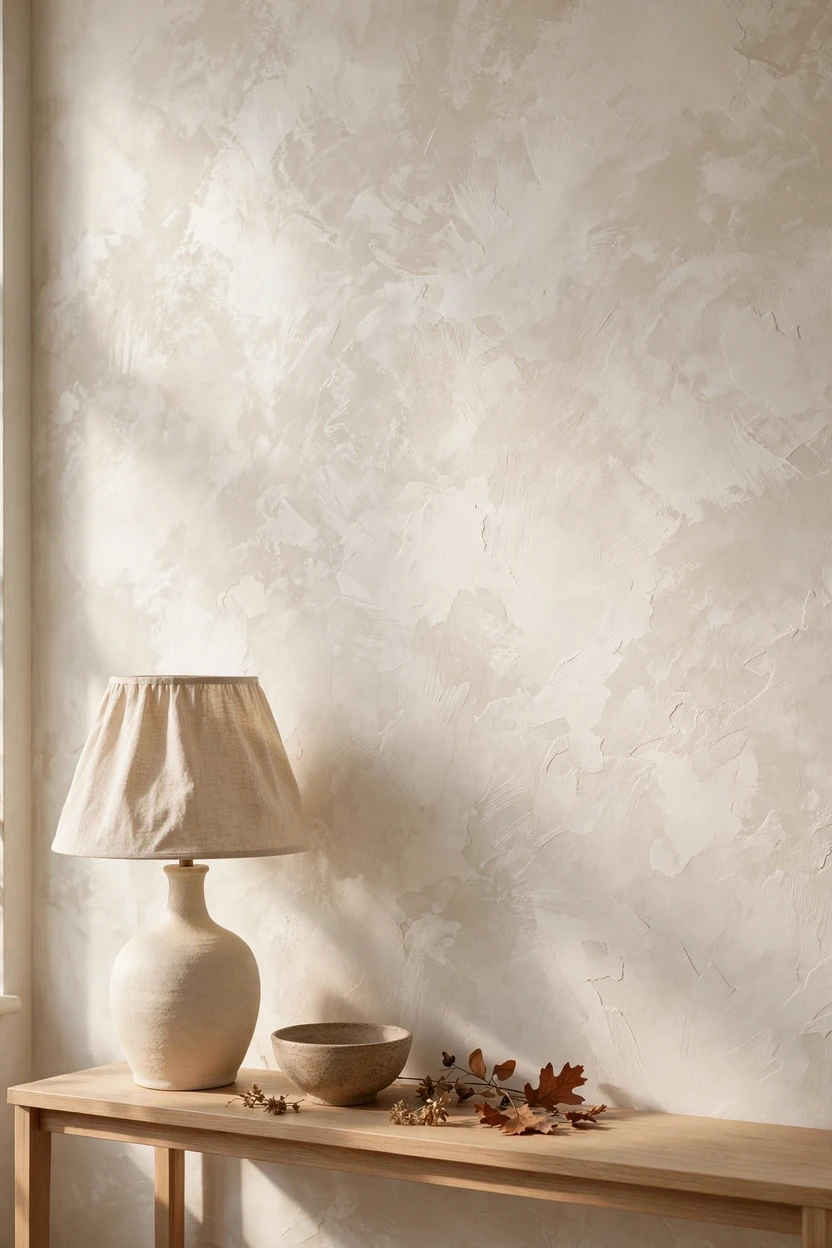
Plain flat paint can look blank, so give one wall some movement. Limewash and plaster-look paints dry to a soft, cloudy matte that shifts slightly through the day, so the wall feels like a gentle painting. Because the wall carries so much interest, the rest of the room can stay very simple. Choose the wall behind the sofa or fireplace, and test a sample board first, since application style changes the finish. Apply it with a wide brush in crisscross strokes for a natural look. Keep the color a warm white or soft cream so it stays calm.
8. Lighting in Three Layers
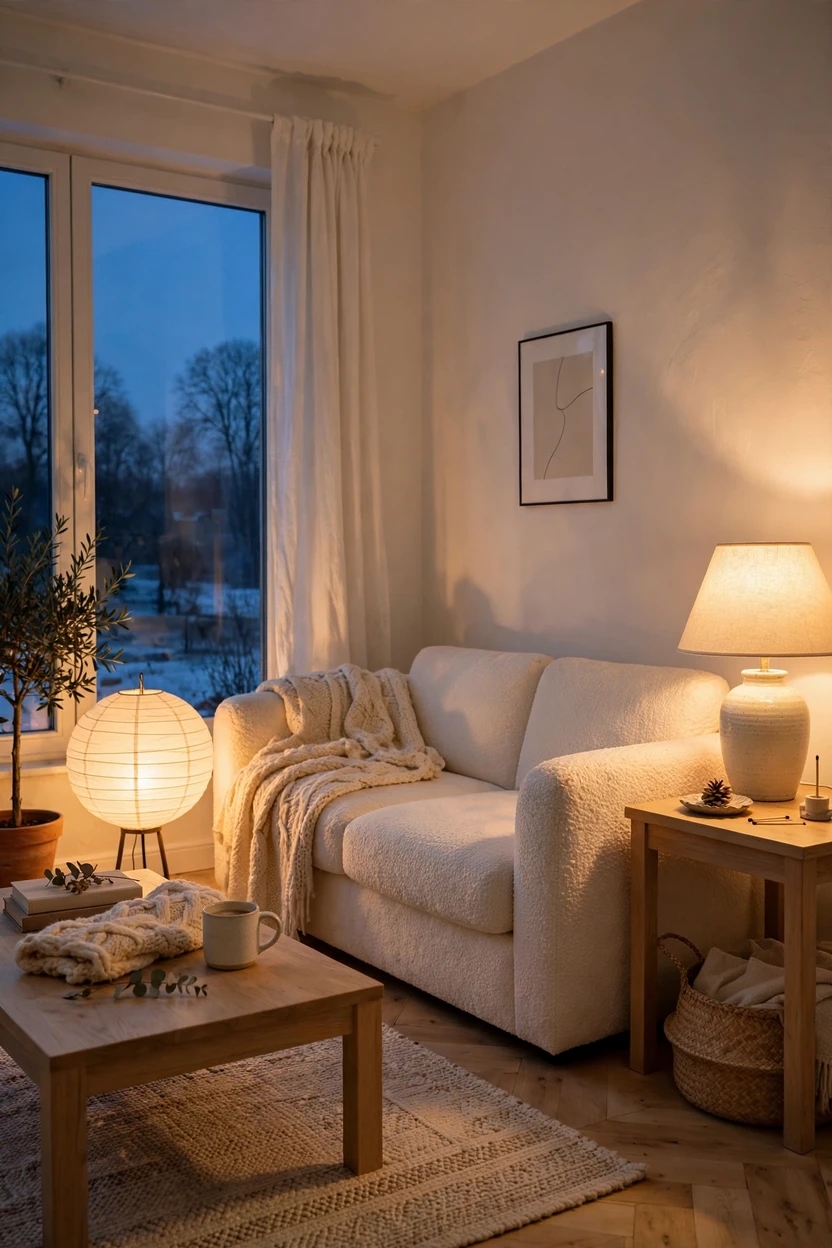
White walls act like a screen, so they show whatever color of light you throw at them. Cool bulbs around 4000K to 5000K can make white look gray and sharp, while warm bulbs at 2700K make the same wall glow like candlelight. Use three layers: one ceiling or overhead light on a dimmer, one floor lamp, and one table lamp or wall sconce. Place lamps at different heights so light pools instead of washing down from above. A paper lantern floor lamp is an easy, low-cost choice because it spreads a soft, even glow. At night, switch off the overhead and the room will feel twice as cozy.
Related: 17 Living Room Wall Art Layering Ideas for a Focal Point
9. One Oversized Ceramic Vase
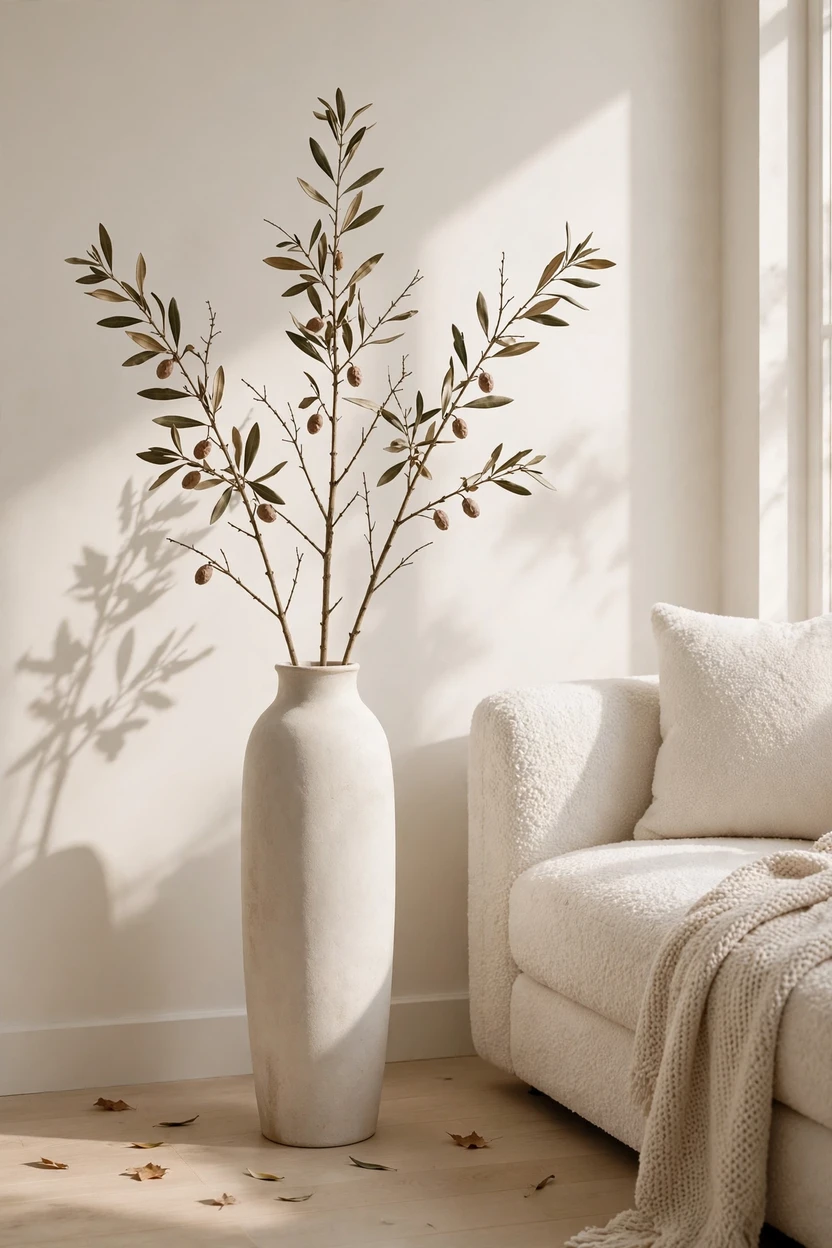
Minimalism works best when one object clearly leads. A tall matte ceramic vase in bone or stone, holding three dried olive branches or pampas stems, gives the room a sculptural focal point with real presence. Aim for a height of about 24 to 36 inches and place it on the floor beside the sofa or on a console. The empty space around it is part of the design, so resist the urge to add more nearby. Choose dried stems because they last for months and keep the look soft and natural. This one piece adds height, shadow, and a handmade feel.
10. A Single Large Piece of Art
White walls make a great gallery, but a minimalist room looks calmer with one big piece than with twelve small ones. Choose an abstract print or a soft line drawing in cream, sand, and stone, with a wide white mat and a thin oak frame. The piece should be about two-thirds the width of the sofa below it. Hang it so the center sits around 57 inches from the floor, which is the usual gallery eye level. A large frame gives your eye one place to rest, and the quiet colors keep the room from feeling empty.

11. White Alcove Shelves Styled With Space
Built-in shelves can look crowded fast, so style them with a simple rule: fill about 60 percent and leave 40 percent open. Paint the inside the same warm white as the wall so the shelves fade back and the objects stand out. Stack books flat, add one ceramic piece, one small framed print, and a lidded basket to hide remotes and chargers. Vary the heights so your eye moves up and down instead of straight across. The open gaps are not wasted space. They are the pauses that make the whole wall feel relaxed.

12. A Simple Plaster-Look Fireplace
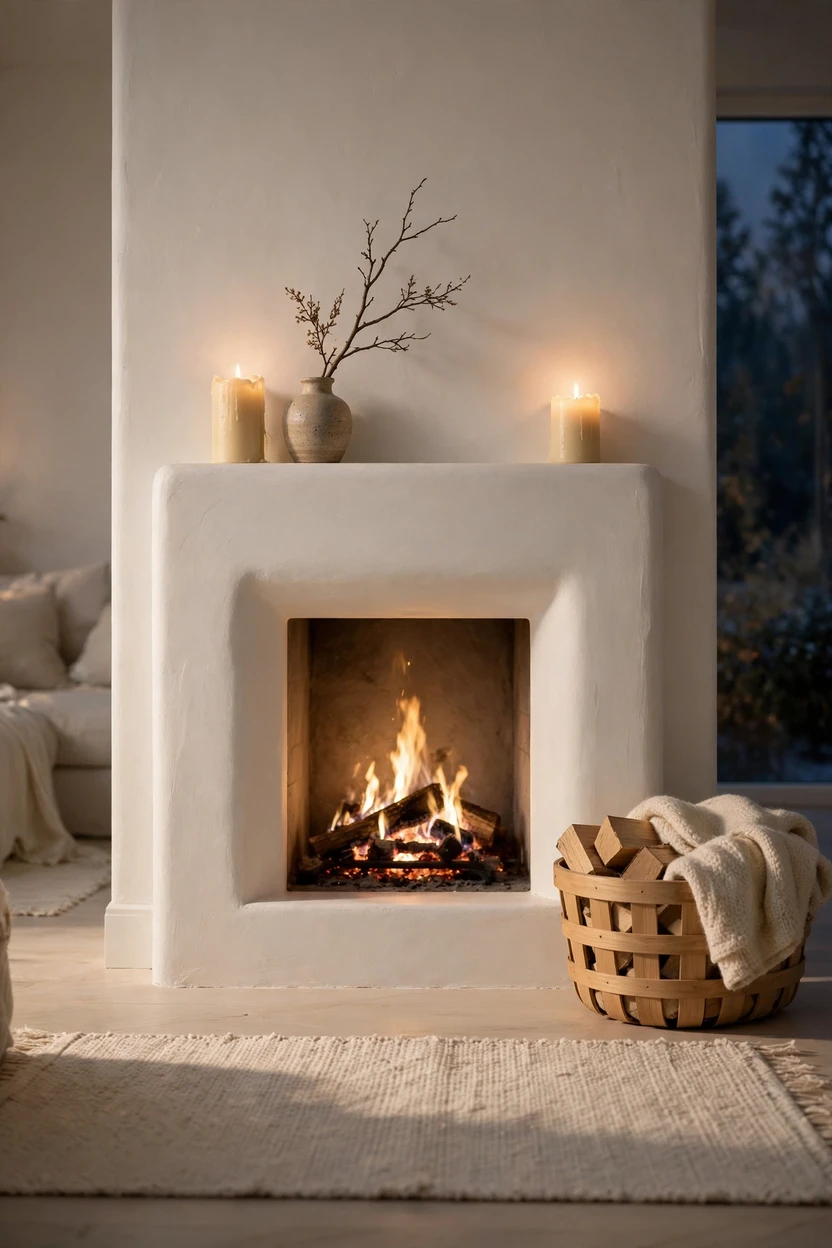
A fireplace is a natural center of a living room, and a clean white one feels calm and sturdy. If you have an old brick or tile surround, a smooth plaster-look finish or warm white paint made for masonry can quiet the whole thing. Keep the mantel almost bare: one long low piece of art leaning against the wall, a pair of candles, and one dried branch. Place candles and anything that can burn well away from the opening and use the fireplace only as your local safety rules allow. Even an unlit fireplace adds a warm focal point, and a real fire adds flickering light that white walls reflect beautifully.
13. Small Touches of Black
A few dark accents give a white room an outline, so the shapes read clearly and nothing looks washed out. Keep black to about five percent of the room: a thin metal picture frame, a matte lamp base, a small iron stool. Repeat the black in at least three places, spread around the room, so it looks like a choice and not an accident. Thin lines work better than big black blocks in a cozy space. This is the same logic as eyeliner. A little definition makes the whole face, or room, look more awake.

14. Greenery in White Planters
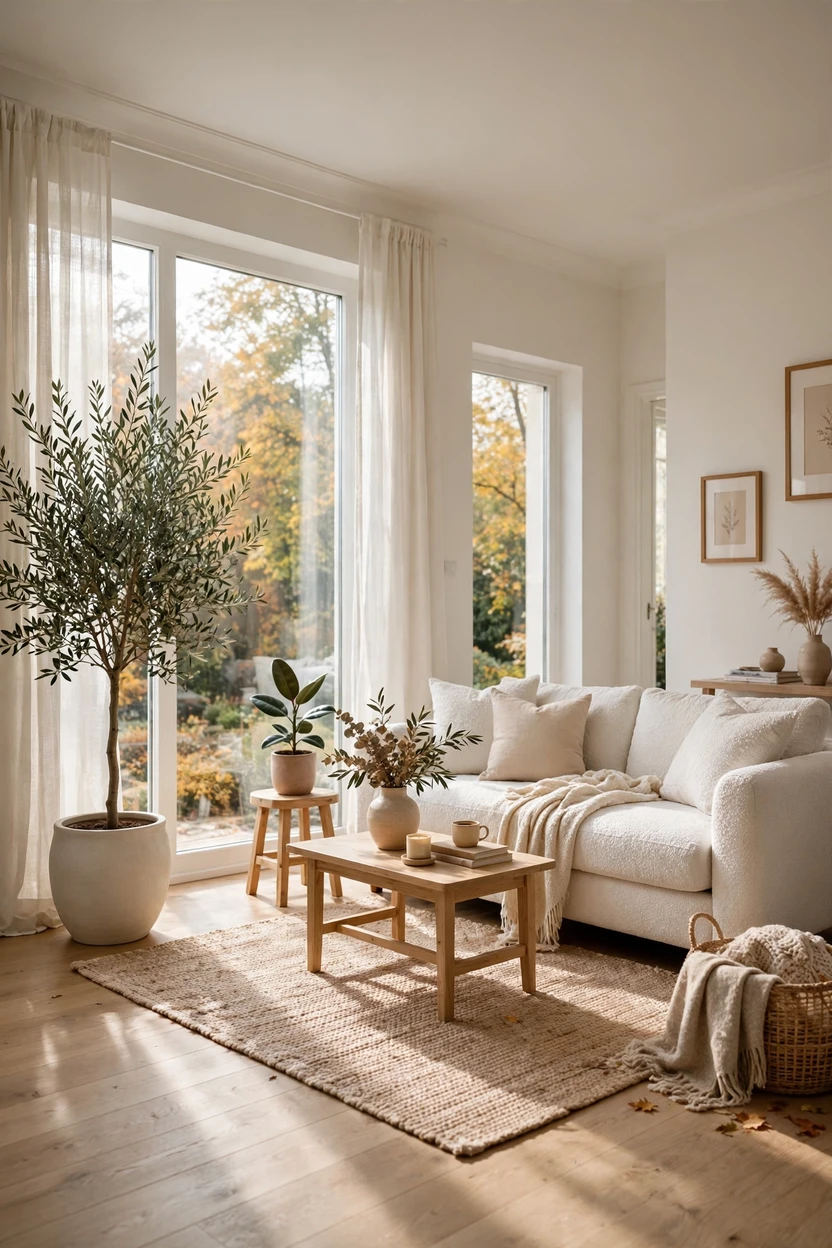
Live plants bring in the one color a white room is missing: soft, natural green. An olive tree, rubber plant, or tall snake plant adds height and a leafy shape that no object can copy. Use matte white or cream ceramic planters so the plant, not the pot, gets the attention. Place the largest plant near a bright window and check each plant’s light needs before buying, since a dark corner is the fastest way to lose one. One large plant and one small one are enough in a minimalist living room.
15. A Reading Corner You Want to Sit In
An empty corner can make a clean room feel unfinished. Fill it with a small, comfy linen armchair, a round oak stool as a side table, a floor lamp that bends over the seat, and a basket for one folded wool throw and two books. The corner gives guests and family a quiet spot that does not need the TV on. Keep everything in the same warm white family so it adds comfort without clutter. Even in a small room, one chair in a corner can add a lot of calm.

16. Round Shapes and a Low Coffee Table
Straight edges are common in minimalist rooms, so round shapes help balance them. A round light oak or travertine-look coffee table breaks up the boxy lines of the sofa and walls. It also has no sharp corners, which helps in homes with small children. Leave about 14 to 18 inches between the sofa and the table so you can reach a cup without leaning. Top it with a tray, one bowl, and a small stack of books, and keep the middle of the table open. A low, round table makes the space feel open and easy to move through.

17. Seasonal Swaps on a White Base
The best thing about a white base is how easily it changes with the calendar. Keep the sofa, walls, and rug the same, and swap only small things four times a year. In fall, add oat and rust tones, dried grasses, and a chunky knit throw. In winter, add candles, evergreen branches, and a heavier wool blanket. In spring, bring in tulips and lighter linen, and in summer, use jute, citrus, and white cotton. Store the extras in one basket so the room never fills up with things you are not using.
Related: 16 Fall Living Room Decor Ideas Hiding in Plain Sight (Use What You Already Own)

Styling Tips That Make Minimalism Feel Warm
- Use the 3-texture rule. Pick at least three: something nubby (boucle), something smooth (linen or ceramic), and something woven (jute or rattan).
- Stay on one side of the color wheel. Keep all whites warm so they blend instead of clashing.
- Pull furniture off the walls. Even a few inches of space behind a sofa or chair helps the room feel relaxed.
- Use odd numbers. Groups of three or five look natural. Pairs can feel stiff.
- Vary heights. Mix a tall vase, a low bowl, and a medium stack of books so your eye travels.
- Edit weekly. Keep one open surface in the room empty. A clear spot is part of the look.
- Repeat shapes. If you have one round table and one round mirror, add one more round thing, like a bowl or a pouf.
- Keep one cozy basket. Throws and extra pillows live in it, so the room can look clean in a minute.
Practical Ways to Put This Together
You do not need to do all 17 ideas at once. Work from the biggest change to the smallest, and the room will improve at every step.
- Test your white. Paint two large swatches and watch them for a full day before you buy gallons.
- Fix the light. Swap cool bulbs for 2700K ones and add one lamp at seat height.
- Add the rug. A large wool or wool-blend rug changes how the room sounds and feels.
- Soften the windows. Hang linen curtains high and wide, even if you keep the existing blinds behind them.
- Layer the seating. Add two pillows and one throw in different textures, all warm white.
- Bring in wood and green. One oak piece and one real plant do a lot of work.
- Choose one focal point. A big piece of art, a vase, or a fireplace. Pick one, not three.
- Edit last. Take away anything that does not help you sit, rest, or enjoy the room.
Quick fixes in under 30 minutes: change the bulbs, fold a throw over the sofa arm, move the lamp closer to your seat, remove half the items from your coffee table, and put a plant by the window.
Common Mistakes to Avoid
- Using cool bulbs. Bulbs at 4000K or higher turn warm white walls gray. Choose 2700K for lamps and living areas.
- Skipping the paint test. Whites change dramatically with light direction. Always check swatches on two walls.
- Going flat and shiny. High gloss and glass surfaces show every fingerprint and feel cold. Pick matte or soft finishes.
- Mixing cool and warm whites. A blue-white sofa next to a cream wall looks dingy. Hold up fabric next to the paint before you buy.
- Leaving corners bare. An empty corner reads as unfinished. Add one chair, one plant, or one lamp.
- Buying matching sets. Matching pillows and throws look stiff. Vary the texture and size.
- Hanging curtains at the window frame. Hang them near the ceiling and wide so the window looks bigger.
- Removing everything. Minimalism means fewer, better-loved things, not zero. Keep objects that mean something to you.
Small-Space Alternatives
A small living room can use white to its advantage, as long as it does not look flat. Paint the ceiling the same warm white as the walls so the room feels taller. Choose a sofa with raised legs, so you can see floor underneath, which makes the room feel bigger. Use one large mirror across from a window to bounce daylight deeper into the room. Swap a bulky coffee table for two small nesting tables you can move around. Keep the rug large enough to meet the sofa, since a tiny rug makes a small room look even smaller. Hang curtains high, and keep the pattern count to zero or one.
Budget-Friendly Alternatives
- Paint is the best low-cost change. A gallon of warm white costs far less than new furniture and changes the whole mood.
- Slipcover instead of replacing. A washable linen or cotton slipcover can turn an old sofa into a soft white one.
- Shop secondhand for wood and ceramics. Thrifted oak tables, stoneware bowls, and vases look great in a white room, and small flaws add charm.
- Use bulbs before buying lamps. A warm bulb in the lamp you already own gives an instant glow.
- Make your own art. Frame a fabric swatch, a pressed branch, or a large printed photo in a simple oak frame with a wide mat.
- Choose dried stems. One bundle of dried branches in a big vase lasts for months.
- Renters: Use plug-in sconces, rugs, curtains on tension rods, and peel-and-stick mirror frames so nothing needs drilling.
Pro Styling Recommendations
- Do the squint test. Stand across the room and squint. Whatever stands out too much is probably too bright, too busy, or too big.
- Photograph the room. A phone photo shows imbalance that your eyes miss, like too many things on the left or a bare wall.
- Check at three times of day. Morning, afternoon, and lamp-lit evening can each tell you something different about your white.
- Look for high-CRI bulbs. A color rendering index of 90 or more shows whites and wood tones more accurately.
- Keep paint finishes simple. Matte or eggshell walls hide small flaws and look calm. Use a bit more sheen on trim if you want it to stand out gently.
- Plan the walkway first. Leave about 30 to 36 inches for main paths so the room feels easy to move through.
- Add one handmade piece. A hand-thrown bowl or woven basket brings in the human touch that makes minimalism warm.
Frequently Asked Questions
Final Thoughts
A white living room is not cold by nature. It is cold when it has nothing for your eyes and hands to hold on to. Give it a creamy wall, a nubby sofa, a wool rug, a lamp that glows low, and one tall vase, and the same room begins to feel like a place you want to come home to.
You do not have to change everything this weekend. Start with the bulbs and the rug. Then add one texture at a time and watch how the room changes after each step.
Bring a cup of tea, sit down in the lamplight, and see how the room feels. That feeling is the whole point.