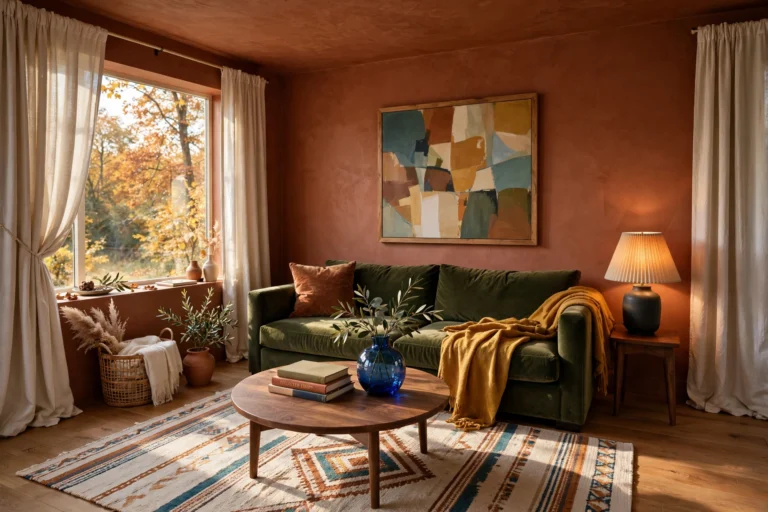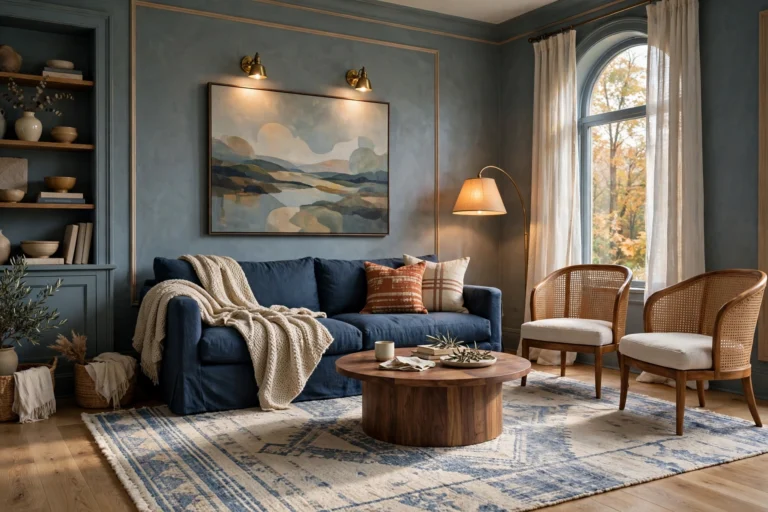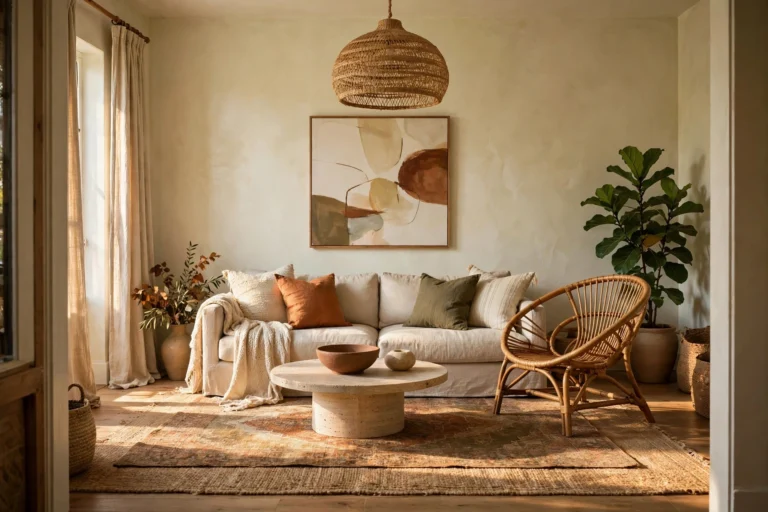
20 Mid-Century Modern Living Room Ideas That Feel Warm
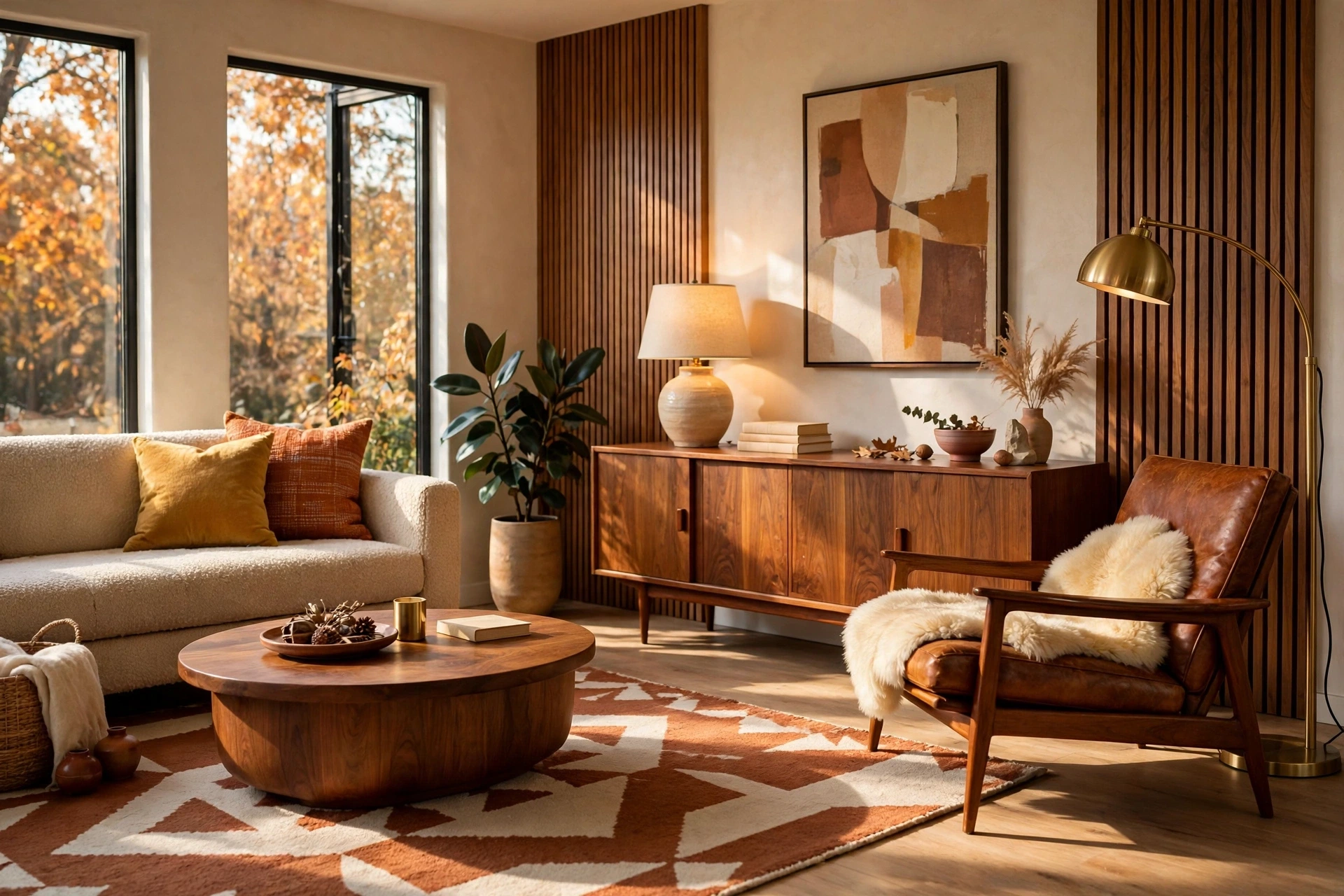
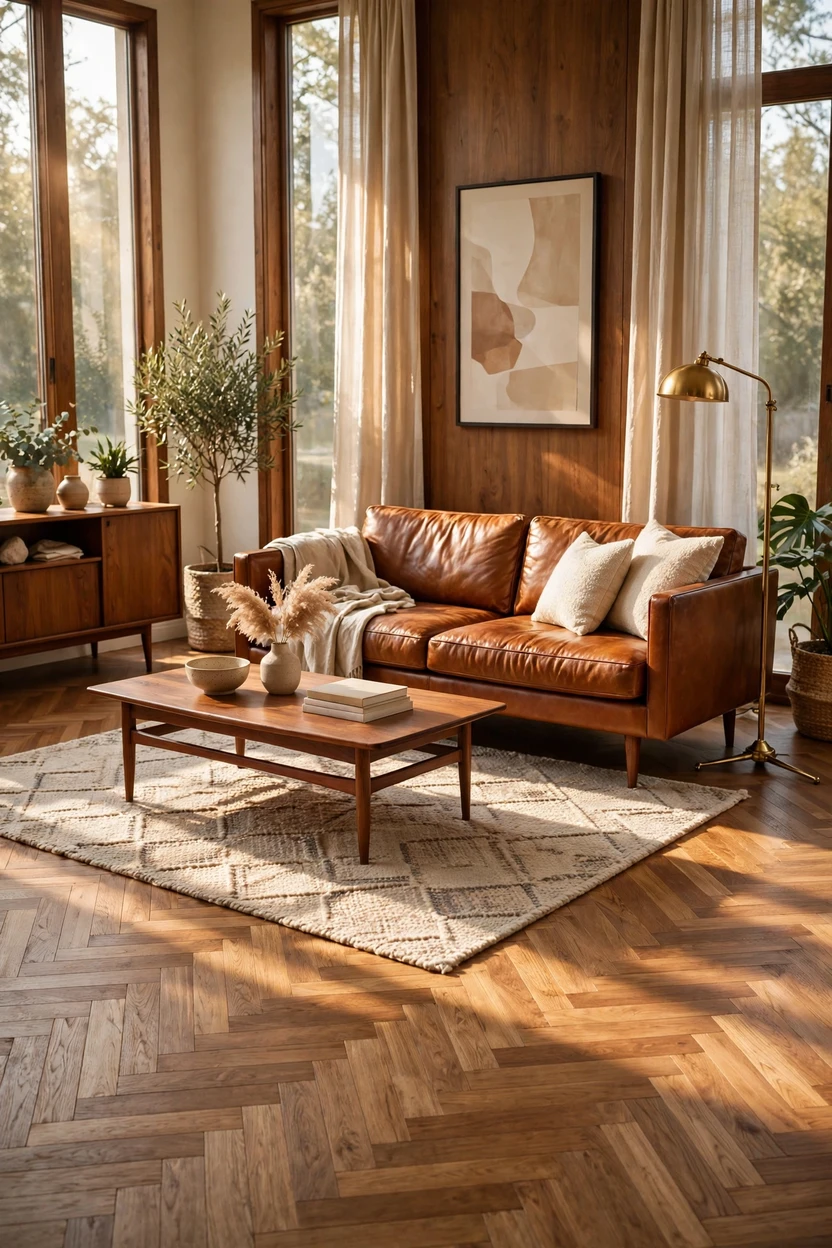
Late afternoon. The low sun slides across a walnut sideboard, and the whole wall turns honey brown. A lamp clicks on beside a rust leather chair. The room smells faintly of coffee and wool, and nobody wants to leave.
Now picture the other version. White walls, glass, hard edges, one overhead light. Every piece is correct, but the room feels like a furniture showroom.
That’s the trouble with mid-century modern. The shapes are beautiful, but the style can tip cold if you follow the clean-lines rule and forget the warm part.
The fix isn’t more stuff. It’s warmer wood, warmer white, warmer bulbs, softer textures, and light at the height where you actually sit.
Below are 20 mid-century modern living room ideas built for warmth. Each one tells you what to buy, how to style it, and why it feels warm. After the list, you’ll find a quick chart for fixing a cold room, a size cheat sheet, a paint and color guide, a build order, small-space and renter fixes, vintage shopping tips, and budget swaps.
Quick answer: how do you make a mid-century modern living room feel warm? Use walnut or teak wood, warm white or clay-tinted walls, warm bulbs (2700K to 3000K), and textured fabrics like boucle, wool, and leather. Put lamps at seated height instead of relying on the ceiling light. Skip cool white, cool gray, and overhead-only lighting.
Related: 18 Modern Farmhouse Living Room Ideas With Texture & Warmth
What is mid-century modern? A design style from roughly the mid-1940s to the late 1960s, known for clean lines, gentle curves, tapered legs, natural wood, and function-first furniture. Mid-century refers to the period, and mid-century modern refers to the style. People often shorten it to MCM.
Table of Contents
20 Mid-Century Modern Living Room Ideas That Feel Warm
A Walnut Credenza as the Anchor
Warmth lever: wood
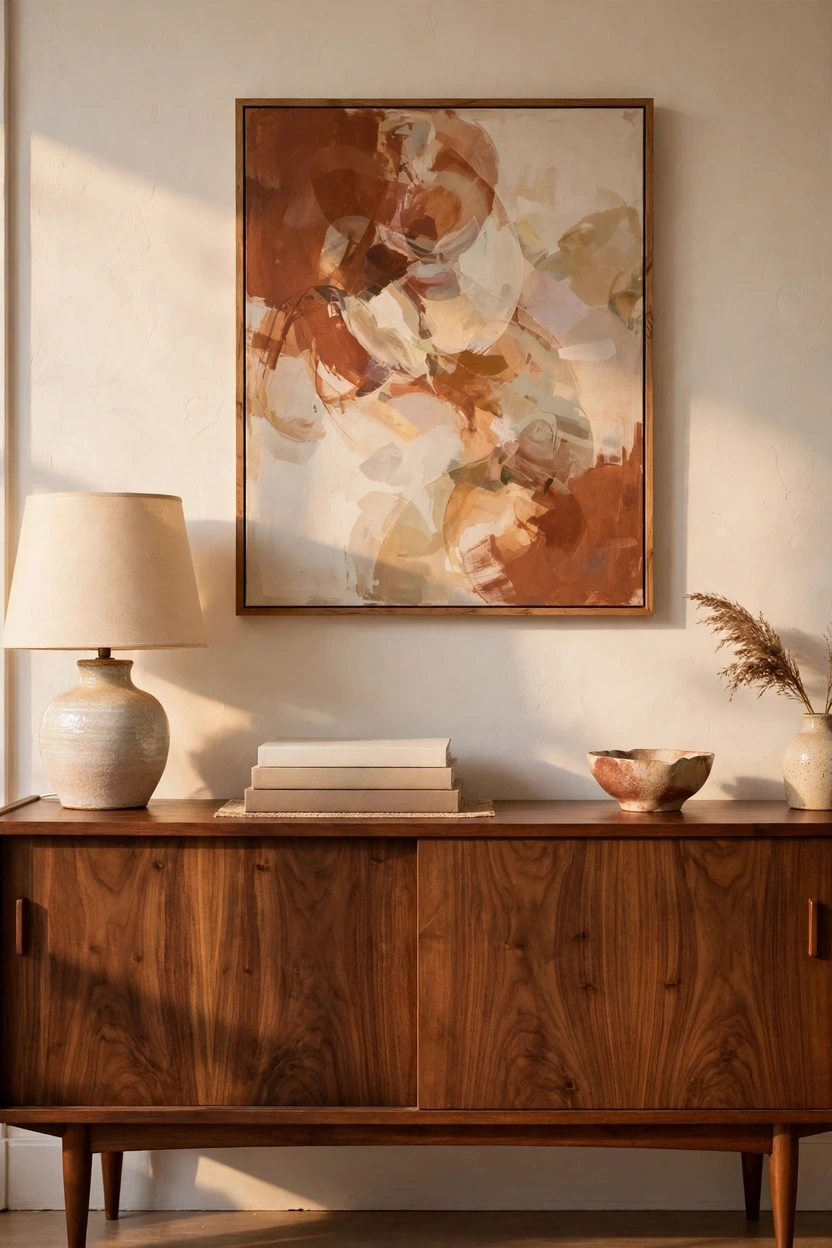
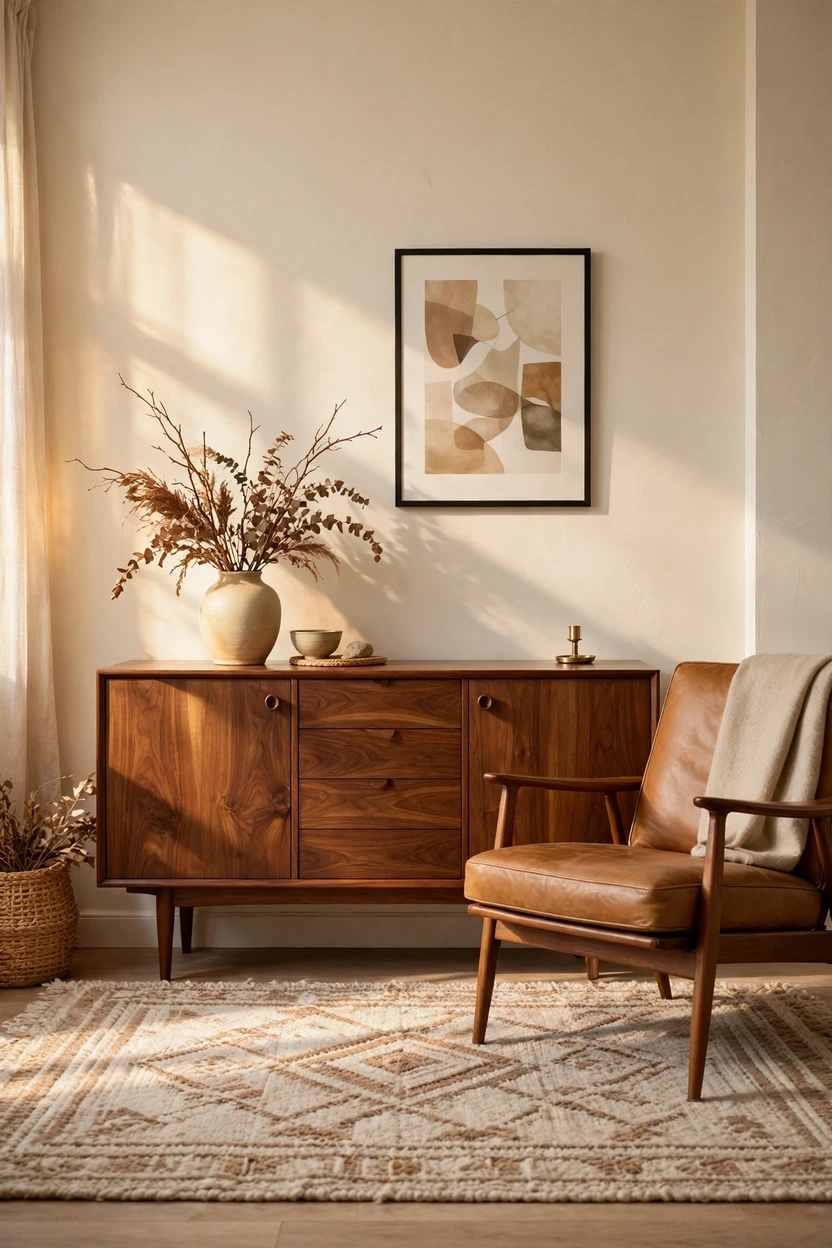
Start with one big piece of warm wood, and the rest of the room will follow. A walnut or teak credenza, usually 60 to 72 inches long, gives you low storage and a long horizontal line that suits the style. Look for slim tapered legs, simple sliding doors, and a finish with visible grain instead of flat orange stain. Style the top with a lamp, a ceramic vase, and a stack of books, and leave about a third of the surface clear. Walnut reads American mid-century, while teak leans Danish, and either one brings the golden-brown tones this style needs.
A Low Cognac Leather Sofa
Warmth lever: leather
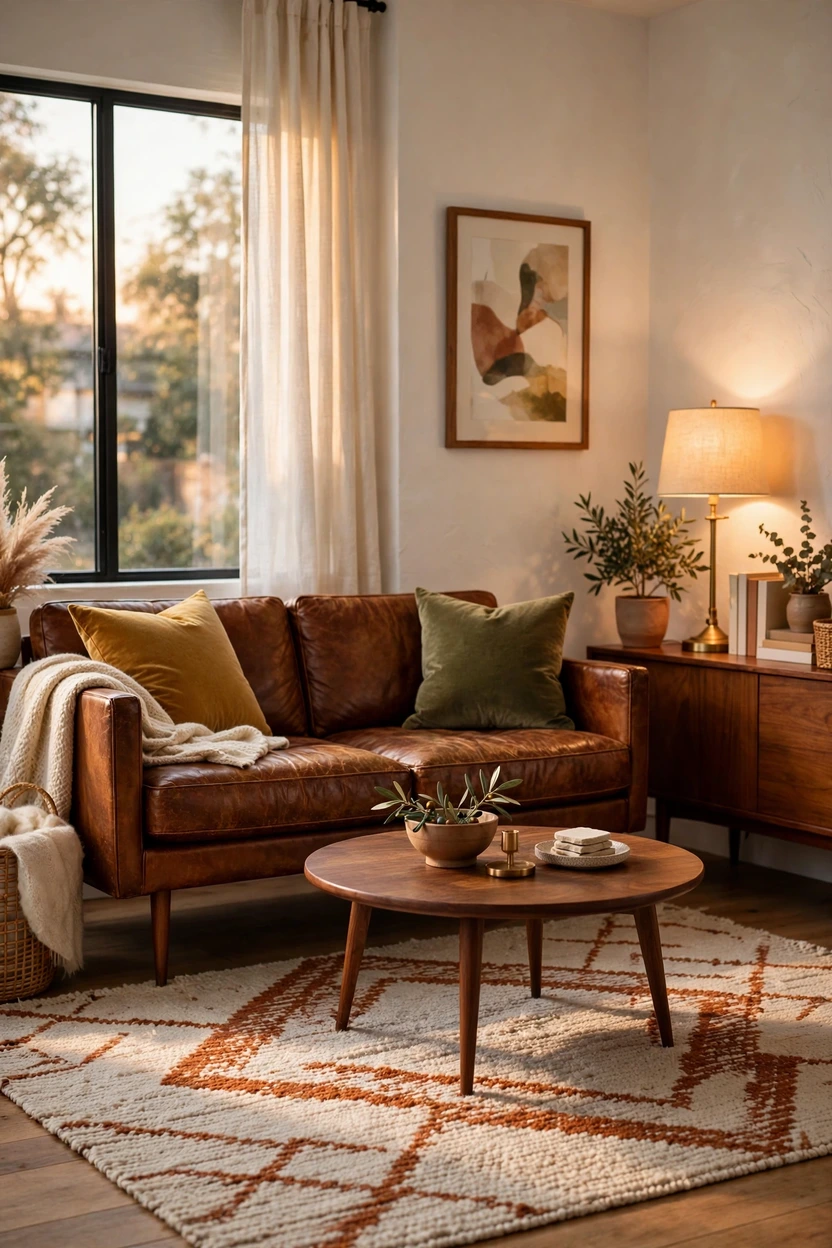
A low cognac leather sofa gives the room instant warmth, and the leather looks better with wear. Choose one with a seat height around 15 to 17 inches, slim arms, and wooden or brass legs. For most rooms, a sofa between 72 and 84 inches wide works, with about 14 to 18 inches between the sofa and the coffee table. Add a cream wool throw and a mustard or olive pillow to soften the lines. Leather and walnut share the same brown family, so they look like they belong together.
An Oat Boucle or Wool Sofa
Warmth lever: texture
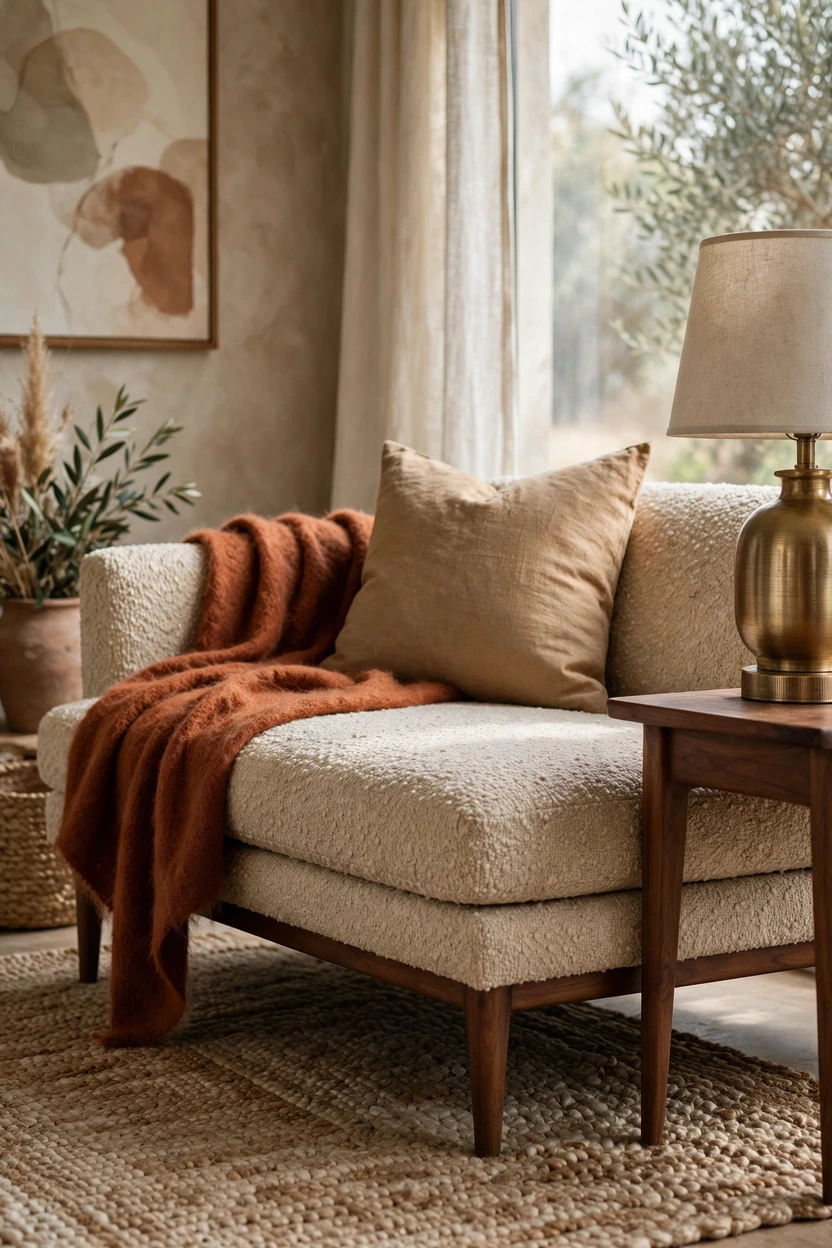
A textured sofa in oat, cream, or camel softens all the hard lines. Boucle, wool, and tweed add depth, and their loops catch light in a way flat fabric can’t. Pick a low-slung sofa with a tight back and tapered legs, and avoid overstuffed, high-backed styles. Choose a performance or treated fabric if you have kids or pets, since pale boucle shows marks. Pair it with walnut and brass for a calm, organic mid-century look.
A Sculptural Lounge Chair in Rust or Camel
Warmth lever: color and form
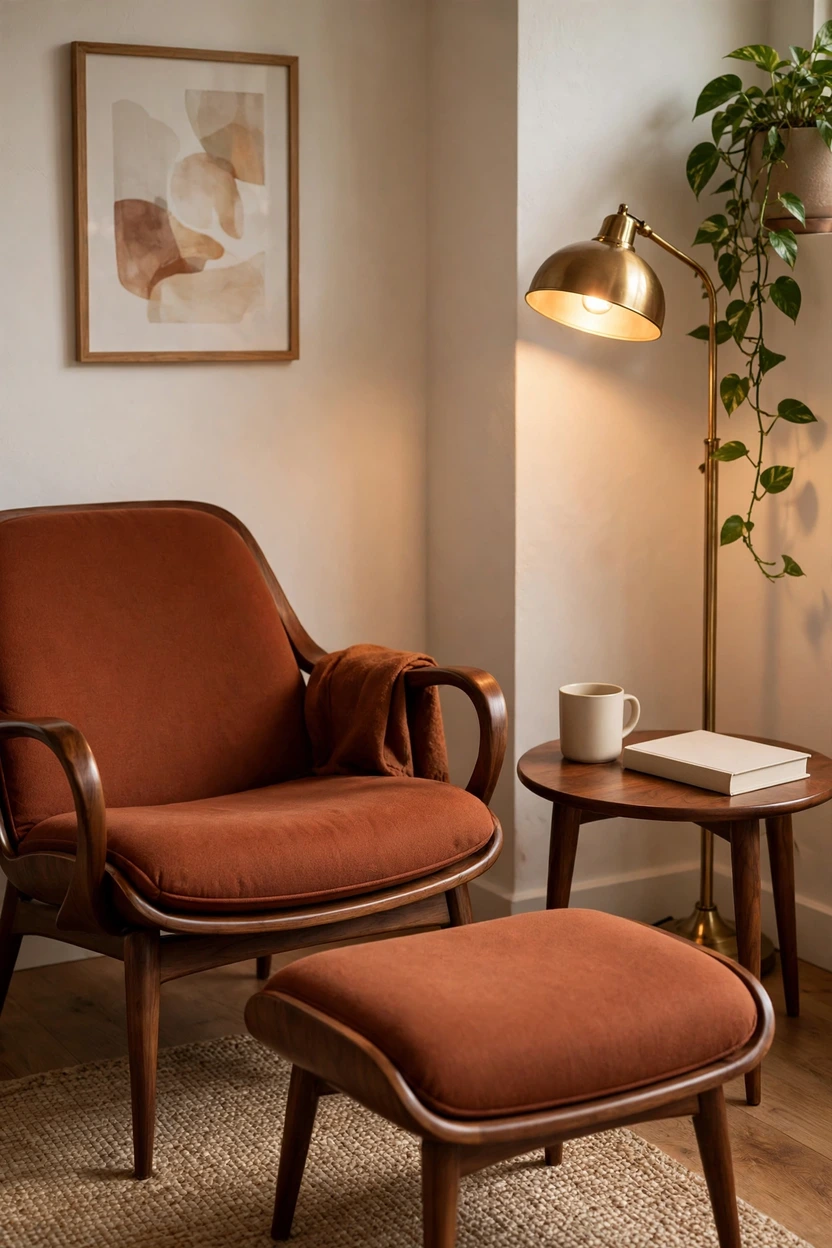
Every mid-century living room needs at least one great chair. Choose a lounge chair in rust, camel, or olive, such as an Eames-style molded chair or a Danish-style wood-framed armchair. Angle it toward the sofa at about 45 degrees so it joins the conversation. Add a small side table within arm’s reach and a lamp nearby. The chair’s curved shape gives a gentle counterpoint to straight lines, and its color brings in warmth.
Warm White Walls With a Clay Undertone
Warmth lever: paint
Pure white and cool gray fight with walnut and teak, so choose a warm white instead. Look for cream, oat, or white with a hint of clay or yellow, such as Benjamin Moore Swiss Coffee or Sherwin-Williams Alabaster. Test a large swatch next to your wood and view it in morning and evening light. Use a matte or eggshell finish so lamp light feels soft. Even a small shift from cool white to warm cream changes how every wood and fabric in the room reads.
Mustard and Burnt Orange, One at a Time
Warmth lever: accent color
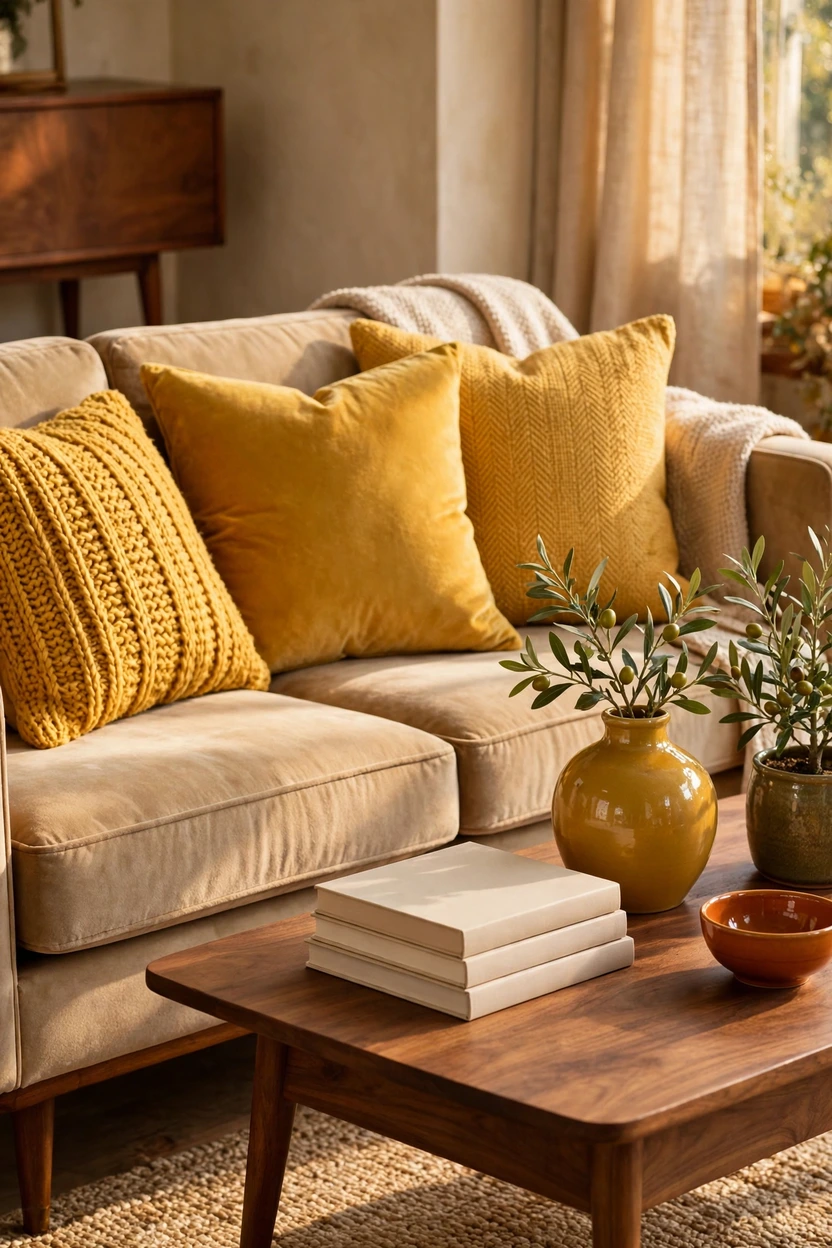
Mustard and burnt orange are mid-century classics, but they glow best when you choose one star. Pick one as the main accent, such as a set of mustard pillows or a burnt orange throw, and let the other appear once in a small way. Pair it with oat, walnut, and olive. Repeat the main color at least three times across the room, like a pillow, a vase, and a book spine, so it looks planned. Keeping to one main accent makes the room cozy, not themed.
An Olive or Deep Green Accent Wall
Warmth lever: earthy color
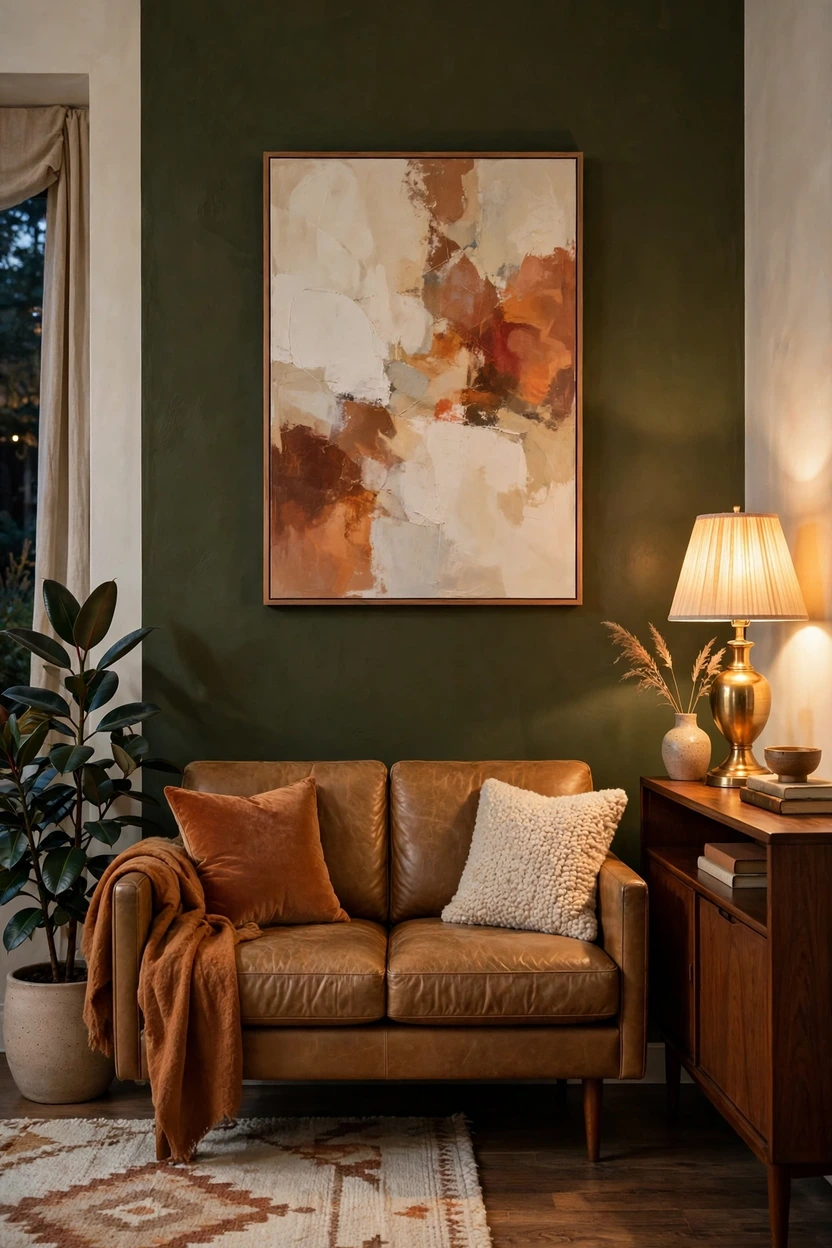
Green is a natural partner for walnut, and it gives the room a calm, earthy base. Paint one wall behind the sofa in olive, moss, or deep green, and keep the other walls warm white. Hang abstract art in cream and rust so it stands out. Plants in the same family blend in, so the room feels like a garden. Olive and avocado have been used in this style for decades, so the color feels right at home.
A Wood Slat or Paneled Feature Wall
Warmth lever: wood on the wall
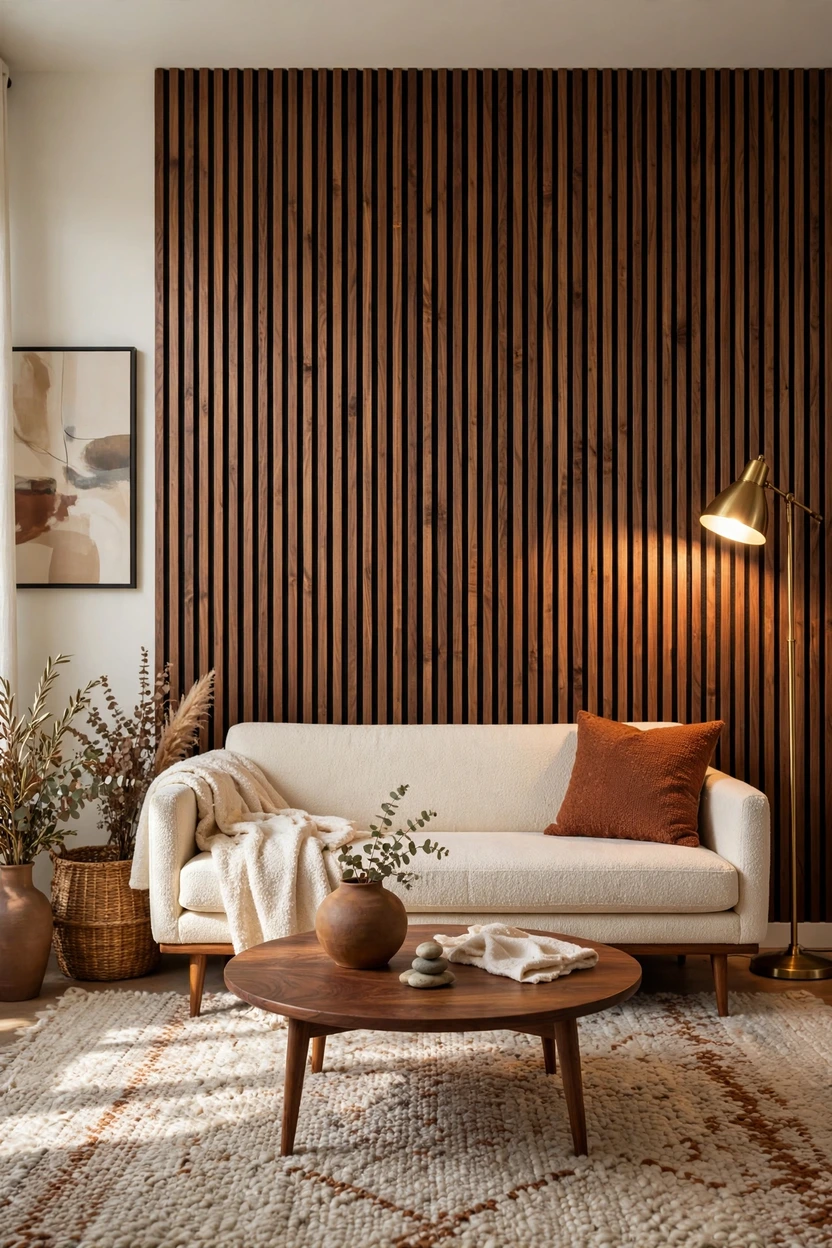
Wood on the wall warms a room more than wood on the floor. Add walnut veneer slats or horizontal wood paneling behind the TV or sofa. Horizontal lines can also make a room feel wider. Use real wood or high-quality veneer, and keep the finish matte so it doesn’t look orange. Choose slats with felt backing if you want to soften echo.
An Arc Floor Lamp Over the Sofa
Warmth lever: light at seated height
An arc floor lamp reaches over the seating area like a curved bridge, and it casts a warm pool of light right where you sit. Choose one with a marble or heavy base so it stays steady, and a shade that points down toward the sofa or coffee table. Use a warm bulb, 2700K to 3000K, and add a dimmer. Light at seated height feels cozier than light from the ceiling. Place the base behind the end of the sofa so the arc covers the cushions.

A Sculptural Pendant With Warm Bulbs
Warmth lever: light
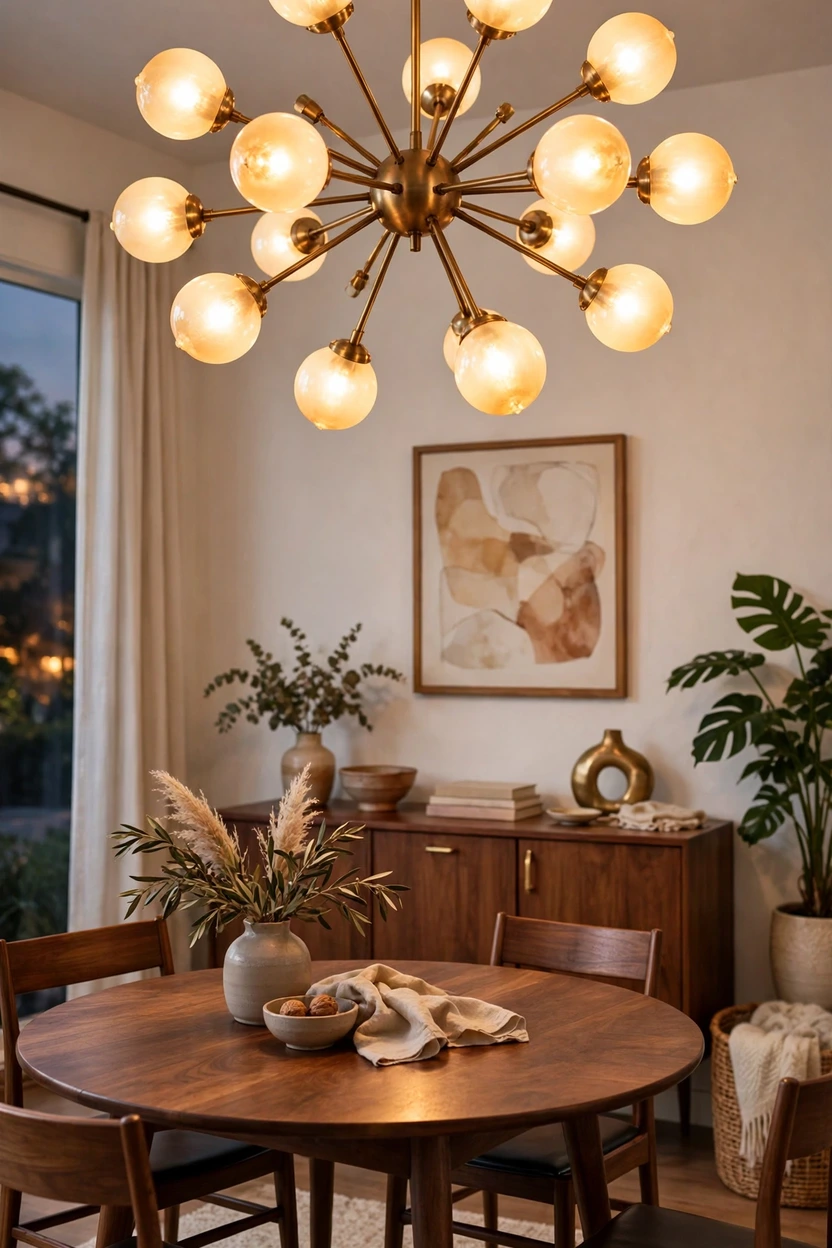
A pendant gives the ceiling a focal point. Try a globe, bubble, or Sputnik-style fixture in brass, opal glass, or white shades. Hang it 30 to 36 inches above a table, or about 7 feet from the floor over open floor space, so no one hits it. Use warm 2700K bulbs and put the fixture on a dimmer. Pair it with lamps so the pendant isn’t your only light source. A warm pendant adds glow without glare.
A Brick or Stone Fireplace Wall With a Teak Mantel
Warmth lever: texture and hearth
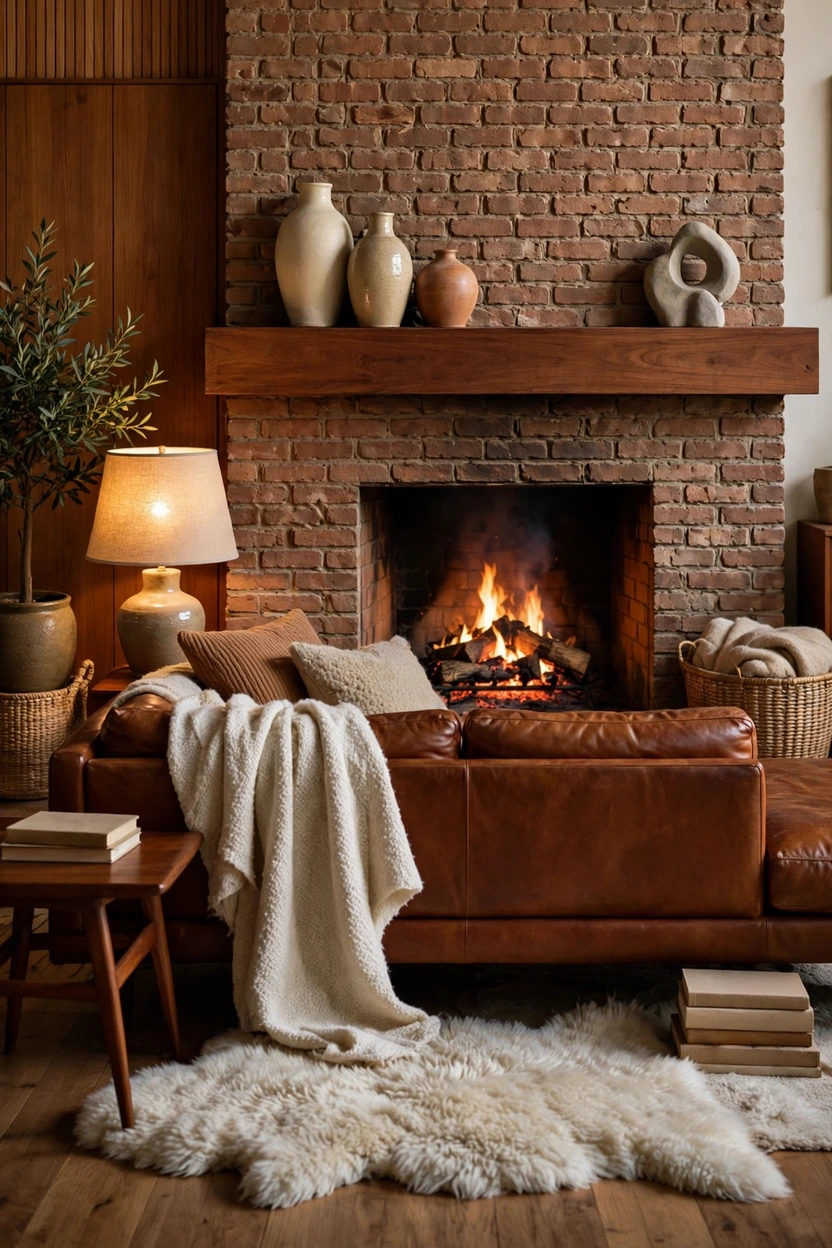
A fireplace wall in brick, stone, or travertine is a classic mid-century focal point. If you have one, leave original brick exposed, or whitewash it lightly to soften the color. Add a thick teak or walnut mantel and a few ceramics. If you don’t have a fireplace, a brick veneer or a stone-look surround can create the same anchor. Textured surfaces give the room a cozy, hearth-like center.
A Wool Geometric Rug
Warmth lever: underfoot texture
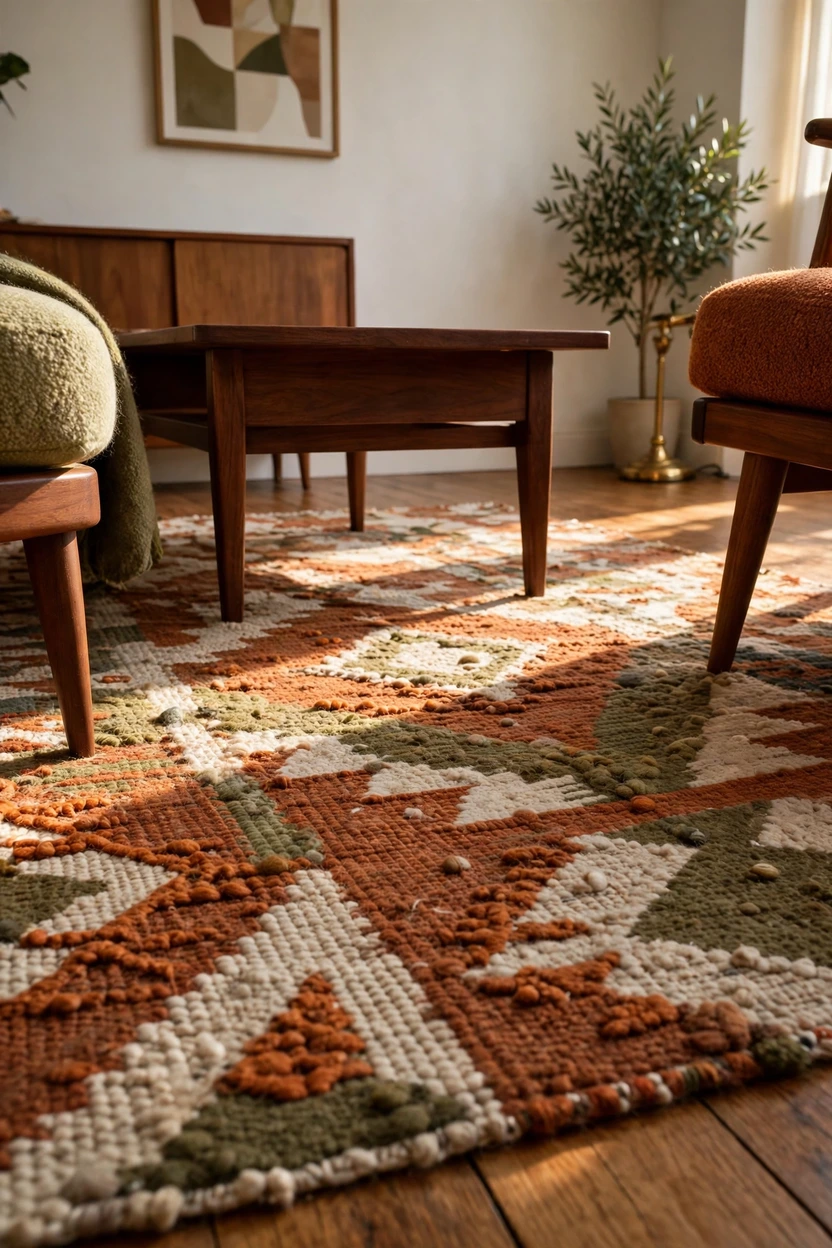
A wool rug in a geometric or abstract pattern grounds the seating area. In most living rooms, choose an 8 by 10 or 9 by 12 rug so at least the front legs of the sofa and chairs sit on it. Pick warm tones such as rust, cream, olive, and brown. Choose a medium pile for comfort. Wool is soft, durable, and naturally warm underfoot.
A Rounded Walnut Coffee Table
Warmth lever: shape and wood
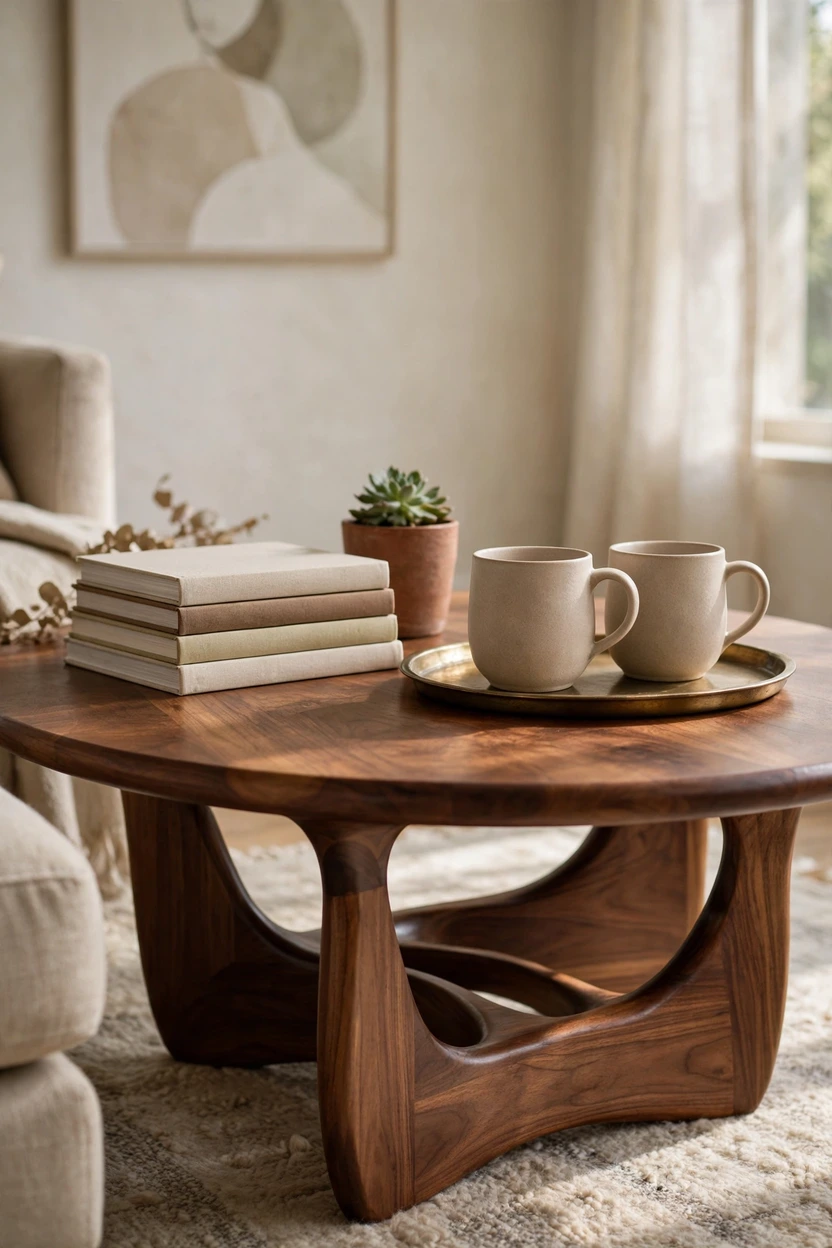
A coffee table with rounded edges feels softer and works better in tight spaces. Choose a walnut or teak table that’s roughly two-thirds the length of your sofa and about 16 to 18 inches high. Leave 14 to 18 inches between the table and the sofa for legroom. A sculptural base or a glass-and-wood combination keeps it from looking heavy. Keep the top mostly clear, with one tray, a book, and a small plant.
Plants in Tapered Ceramic Planters
Warmth lever: living green
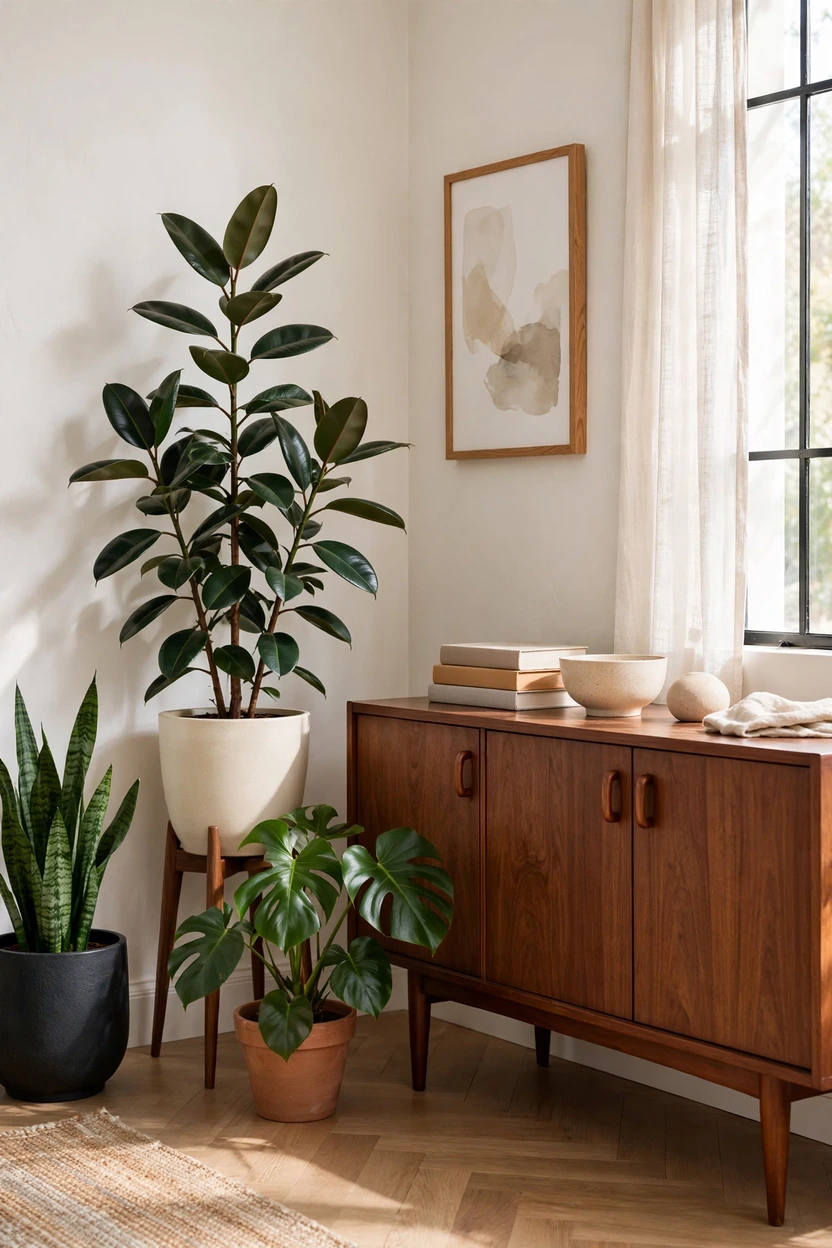
Plants add life and a natural curve to a clean-lined room. Use tapered ceramic planters on wooden plant stands to give the plants height. Rubber plants, monsteras, snake plants, and fiddle-leaf figs all suit the style. Place them near a window with good light. Cream, terracotta, and matte black pots look great against walnut.
A Gallery Wall of Abstract and Geometric Art
Warmth lever: art and color
Abstract art and geometric prints carry the mid-century spirit. Use thin wood or brass frames, and pick warm colors like rust, mustard, olive, and cream. Hang the center of the group about 57 inches from the floor and keep 2 to 3 inches between frames. Mix one large piece with two or three smaller ones. A well-lit gallery wall brings color and personality without clutter.

Sheepskin, Mohair, and Wool Layers
Warmth lever: soft layers
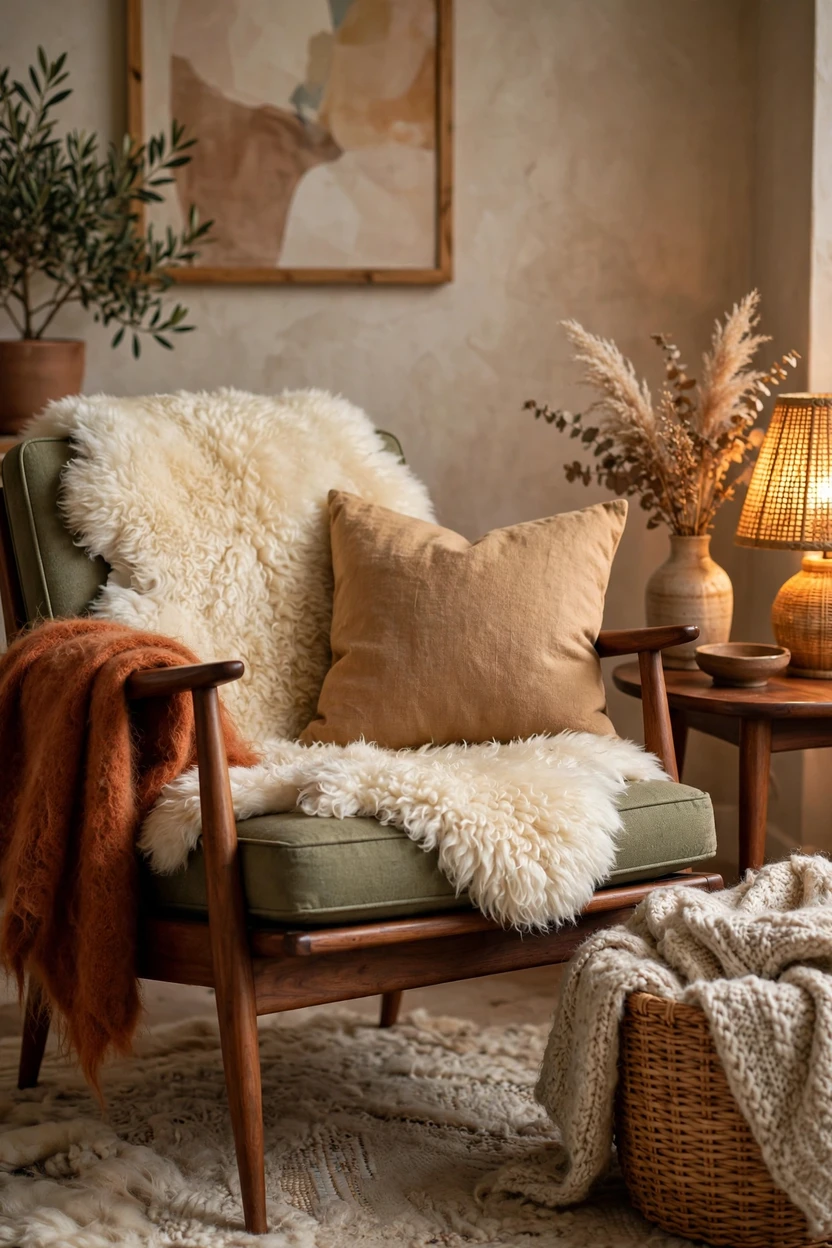
A few soft layers turn a sleek room into a comfortable one. Drape a cream sheepskin over a lounge chair, a mohair throw across the sofa arm, and a wool blanket in a basket. Choose natural fibers in cream, camel, and rust. Add two or three pillows in different textures, such as velvet, boucle, and linen. Texture is what separates a warm mid-century room from a plain beige one.
A Listening Corner
Warmth lever: personality
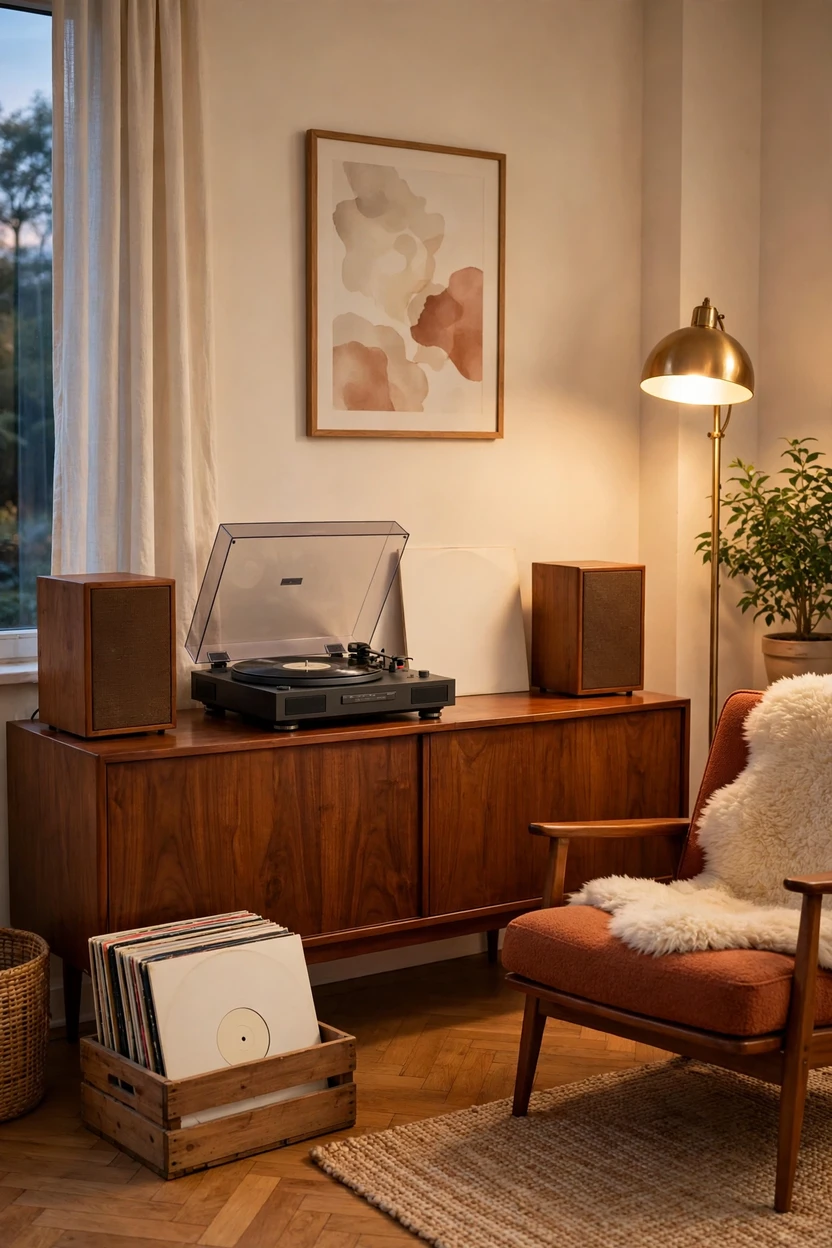
Mid-century living was built around music, and a listening corner brings that back with charm. Put a record player on a low walnut credenza, add small speakers, and keep records in a wood crate or shelf. Place a lounge chair nearby with a lamp at seated height. Keep the area simple and clear of clutter. A small ritual space makes the room feel lived in and warm.
A Conversation-First Layout
Warmth lever: arrangement
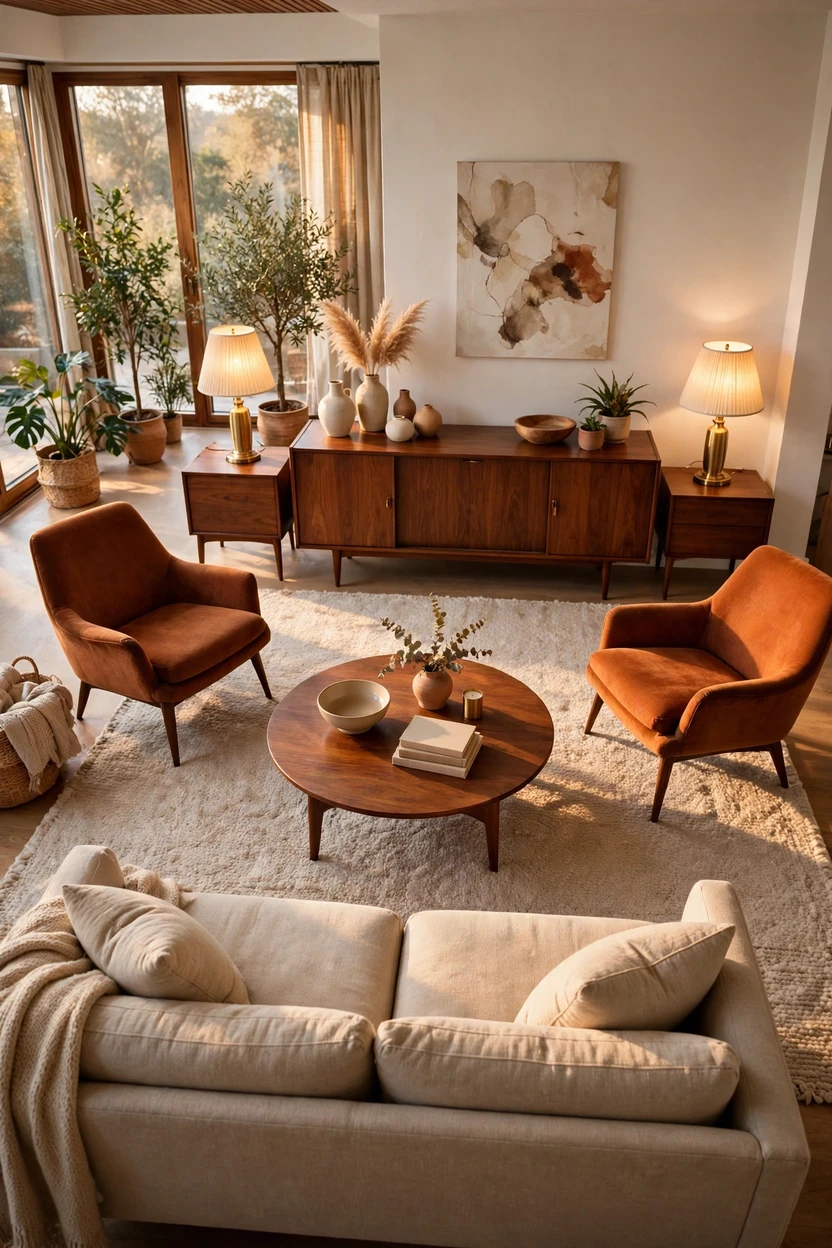
A room feels warmer when people face each other. Arrange the sofa and two chairs in a U or L shape around a coffee table, and keep about 7 to 10 feet between the main seats for easy conversation. If you have a TV, place it on a low credenza or inside a cabinet with doors so it doesn’t dominate. Leave walkways about 30 to 36 inches wide. A layout built for talking makes the room feel like home.
Herringbone or Warm Wood Floors
Warmth lever: floor
A wood floor with warm tones makes the whole room feel grounded. Herringbone and wide-plank oak or walnut both look great, and a warm finish is better than gray-washed wood. Avoid cold, glossy tile, which can undo a lot of warmth. If you rent and can’t change the floor, use a large warm rug. Warm wood floors tie together every other wood piece in the room.
Rattan and Terracotta for a Palm Springs Edge
Warmth lever: sunny desert tones
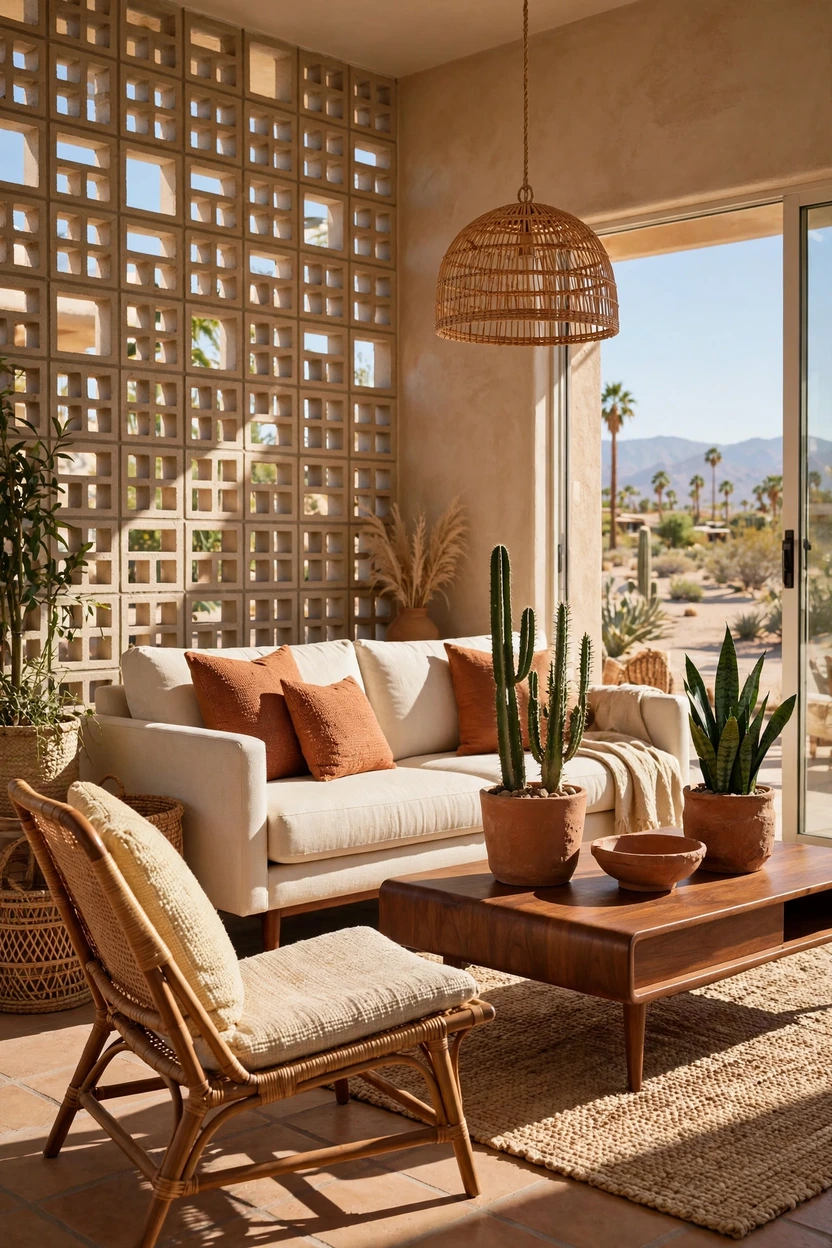
Palm Springs style adds sun-baked warmth to mid-century design. Bring in a rattan chair or pendant, terracotta pots, a breeze block detail, and warm cream walls. Keep colors desert-soft, like sand, terracotta, and sage. Add a few brass or white ceramic pieces. The result feels sunny, relaxed, and a little glamorous.
Why Your Mid-Century Room Feels Cold: Quick Fixes
| What you notice | Likely cause | Fix |
|---|---|---|
| Feels like a showroom | Overhead-only lighting | Add two or three lamps at seated height, with 2700K bulbs |
| Walls look slightly blue or gray | Cool white paint | Switch to cream, oat, or a white with a clay undertone |
| Wood looks flat or orange | Mismatched finishes or pale oak against cool walls | Keep to walnut and teak, and match the undertones |
| Room feels bare | Not enough texture | Add boucle, wool, sheepskin, and leather |
| Colors feel scattered | Too many accent colors | Pick one main accent and repeat it three times |
| Room echoes | Hard surfaces everywhere | Add a wool rug, curtains, and felt-backed slats |
| Floors feel icy | Glossy tile or pale vinyl | Add a large warm wool rug |
The Warmth Formula
Warmth in a mid-century room comes from six layers working together.
Warm wood. Walnut and teak, repeated three or more times.
Warm white. Cream, oat, or clay-tinted white walls.
Warm light. 2700K to 3000K bulbs, at seated height, on dimmers.
Warm texture. Boucle, wool, leather, mohair, and sheepskin.
Warm color. One main accent like mustard, rust, or olive.
Warm life. Plants, books, music, and objects with meaning.
Mid-Century Living Room Size Cheat Sheet
| Item | Typical size or distance | Note |
|---|---|---|
| Sofa width | 72 to 84 inches | Low seat, around 15 to 17 inches high |
| Sofa to coffee table | 14 to 18 inches | Enough legroom without a reach |
| Coffee table height | 16 to 18 inches | About two-thirds the sofa length |
| Rug | 8 by 10 or 9 by 12 | Front legs of seating on the rug |
| Credenza | 60 to 72 inches long | About 16 to 20 inches deep |
| Pendant over a table | 30 to 36 inches above it | Over open floor, about 7 feet clear |
| Art group center | About 57 inches from floor | Gaps of 2 to 3 inches between frames |
| Walkways | 30 to 36 inches wide | Keep main paths clear |
| Conversation distance | 7 to 10 feet between main seats | Easy talking without raising voices |
| Bulbs | 2700K to 3000K | Warm white, with dimmers |
These are common design guidelines, not strict rules. Measure your own room and adjust.
Warm Mid-Century Color Palette
| Role | Colors | Where to use it |
|---|---|---|
| Walls | Warm white, cream, oat, clay-tinted white | Most walls |
| Wood | Walnut, teak | Credenza, table, shelves, frames |
| Main accent | Mustard, burnt orange, or olive | Pillows, vase, one chair |
| Support | Camel, cognac, rust | Leather, throws, rugs |
| Metal | Brass, aged gold | Lamps, hardware, frames |
| Life | Green and terracotta | Plants and pots |
How to Build a Warm Mid-Century Living Room, Step by Step
Measure and plan the layout. Mark the room on paper, and arrange seating so people face each other.
Choose the anchor pieces. Pick a low sofa, one lounge chair, and a credenza.
Pick a warm wood family. Choose walnut or teak, and repeat it in at least three places.
Paint warm. Swatch a warm white or clay-tinted cream next to your wood, and view it morning and evening.
Add a rug. Choose an 8 by 10 or 9 by 12 wool rug in warm tones.
Layer the lighting. Add an arc or table lamp, a pendant, and a lamp near the chair. Swap in warm bulbs and dimmers.
Add texture. Layer boucle, wool, sheepskin, and leather.
Choose one accent color. Add it in three small places.
Hang art and place plants. Center the art about 57 inches from the floor, and group plants near windows.
Edit. Remove anything that doesn’t earn its spot, and leave open space.
Three effort levels:
One weekend: Swap bulbs for warm ones, add a lamp, a sheepskin, a wool throw, and a few pillows in one accent color.
Mid-range: Add a wool rug, a walnut coffee table, a credenza, and repaint in warm white.
Full makeover: Add a statement sofa, wood slat wall, new lighting, warm wood floors, and a fireplace refresh.
Styling Tips for a Warm Mid-Century Room
Repeat the wood. Use walnut or teak in at least three places, such as the credenza, coffee table, and picture frames. Repetition makes the room feel planned.
Mix woods with care. Walnut and teak can share a room. Painted white furniture works too if it’s intentional and repeated. Avoid pale or orange woods that clash.
Keep furniture low and legs visible. Tapered legs let you see the floor, which keeps the room open and airy.
Add one sculptural object. A ceramic vase, a bowl, or a brass piece gives the eye a place to rest.
Leave room to breathe. Mid-century rooms feel warm when they’re not crowded. Leave one surface or one wall clear.
Light three ways. Use a lamp at seated height, a pendant or sconce, and a soft accent light on art or shelves.
Mix eras on purpose. A vintage chair beside a modern sofa feels collected, not themed.
Related: 16 Modern Farmhouse Dining Room Ideas That Just Work (Cozy + Practical)
Common Mid-Century Living Room Mistakes to Avoid
Using cool white or gray walls. They fight with walnut and teak. Choose warm white or cream instead.
Relying on ceiling lights. Overhead-only light makes a room feel flat. Add lamps at seated height.
Using cool bulbs. Anything above 3000K can make wood look dull. Stick to 2700K to 3000K.
Buying a high, overstuffed sofa. It breaks the low, open look. Choose a low sofa with slim arms and visible legs.
Choosing a rug that’s too small. A small rug makes the room feel disconnected. Pick an 8 by 10 or 9 by 12 so furniture sits on it.
Using too many accent colors. Mustard, orange, teal, and green all at once feel loud. Pick one main accent.
Matching everything. A matching set looks like a showroom. Mix a few pieces and finishes.
Buying too-large tables. Big tables crowd the room. Keep the coffee table two-thirds the sofa length.
Skipping texture. A room of smooth surfaces feels cold. Add boucle, wool, and sheepskin.
Over-accessorizing. Too many objects make the room feel cluttered. Edit until each piece has room.
Small-Space Alternatives
Choose low furniture with exposed legs. Seeing the floor under a sofa and table makes a small room feel bigger.
Pick a glass or rounded coffee table. It keeps sight lines open and helps with tight walkways.
Use one lounge chair. One great chair is warmer and less crowded than two.
Go horizontal. Horizontal wood paneling or a long low credenza can make a narrow room feel wider.
Hang a mirror opposite a window. It doubles the light and makes the room feel deeper.
Mount shelves on the wall. Wall-hung shelves free up floor space and keep the room open.
Keep the palette tight. Warm white walls, one wood, and one accent color keep a small room calm.
Renter-Friendly Alternatives
Swap bulbs. Warm 2700K bulbs change the mood in minutes.
Use plug-in lighting. Floor lamps, table lamps, and plug-in sconces need no wiring.
Add a large rug. A wool rug hides cold or ugly flooring and adds warmth.
Try peel-and-stick wood slats. Test a small patch first, and check your lease.
Hang art with removable hooks. A gallery wall adds color without nails.
Choose one great chair. A lounge chair moves with you and makes the room feel complete.
Use curtains. Floor-length linen or wool curtains soften hard walls and windows.
How to Shop for Real Mid-Century Pieces
Look underneath. Many original pieces have a maker’s stamp, label, or paper tag under the seat, drawer, or table.
Check the joinery. Well-made pieces often have dovetail joints in drawers and solid, tight connections. Wobbly legs or loose joints can be costly to fix.
Veneer isn’t a flaw. Many original pieces used wood veneer over a solid frame, and good veneer can last for decades. Peeling or large chips are the concern.
Smell it. Smoke or musty smells can be hard to remove from wood and upholstery.
Budget for reupholstery. A great vintage chair may need new fabric or foam. Ask for a quote before you buy.
Refresh the finish. Many teak and walnut pieces can be cleaned and oiled to bring back the glow. Test in a hidden spot first.
Watch for look-alikes. Pieces labeled mid-century-inspired are often thinner or made from particleboard. They can still look good, but they won’t wear like the originals.
Know the shapes. Tapered legs, gentle curves, simple handles, and visible wood grain are common signs.
Budget-Friendly Alternatives
Start with bulbs, lamps, and textiles. They change the mood faster than anything else.
Thrift a credenza or side table. Secondhand shops and estate sales often have solid wood pieces at low prices.
Refinish instead of replacing. A good cleaning and oil can bring old wood back to life.
Swap the legs. New tapered wood legs can give a plain sofa or table a mid-century look.
Buy a wool rug secondhand. Used wool rugs hold up well and often cost far less than new.
Make your own art. Print abstract or geometric designs and frame them in thrifted wood frames.
Paint, don’t replace. A warm white on the walls changes how every piece reads.
Save for the anchors. A good sofa and a lounge chair are worth saving for. Add the rest over time.
Care Notes
Wood: Dust regularly, avoid harsh cleaners, and use a wood oil or wax made for your finish. Keep wood out of direct sun to prevent fading.
Leather: Wipe with a soft cloth and condition once or twice a year.
Boucle and wool: Vacuum gently and spot clean as the label says. Choose performance fabrics for homes with kids and pets.
Brass: Lacquered brass wipes clean. Unlacquered brass darkens with time, which many people like.
Pro Styling Recommendations
Use a 60-30-10 mix. About 60 percent warm neutrals, 30 percent wood and texture, and 10 percent accent color.
Anchor with three big pieces. A low sofa, a lounge chair, and a credenza set the tone for everything else.
Check the room at night. Sit in the room after dark. If it feels flat, add a lamp at seated height.
Match metals. Brass is the classic choice. Keep it to one or two metal tones.
Balance heights. Mix low furniture with one tall piece, like a plant, lamp, or bookcase.
Add a story. A record collection, a vintage bowl, or a family photo makes the room feel personal.
Edit every season. Remove one item from each surface and see how the room breathes.
Warm Mid-Century Modern Living Room FAQs
What is mid-century modern style?
Mid-century modern is a design style from roughly the mid-1940s to the late 1960s. It’s known for clean lines, gentle curves, tapered legs, natural wood, and furniture made to be useful as well as beautiful.
What’s the difference between mid-century and mid-century modern?
Mid-century refers to the time period, roughly the middle of the 20th century. Mid-century modern refers to the design style that came out of that era.
Related: 20 Modern Farmhouse Bathroom Ideas That Look Pinterest Perfect
How do I make a mid-century modern living room feel warm?
Use walnut or teak, warm white or clay-tinted walls, warm bulbs between 2700K and 3000K, and textured fabrics like boucle, wool, and leather. Put lamps at seated height and add one main accent color.
What colors work best in a mid-century modern living room?
Warm white, cream, and oat make a good base. Mustard, burnt orange, olive, rust, and teal work as accents, and brass adds warmth. Pick one main accent so the room doesn’t feel loud.
Can I mix walnut and teak?
Yes. They share warm undertones, so they work together well. Avoid mixing in pale or orange-toned woods unless you repeat them on purpose.
What lighting works best?
Layer a lamp at seated height, such as an arc or table lamp, with a sculptural pendant or sconce, and use warm bulbs on dimmers. Avoid relying on ceiling spotlights alone.
Where should the TV go in a mid-century modern living room?
Place it on a low credenza, or inside a cabinet with doors, so it doesn’t dominate the room. Keep it away from the main focal wall if you can, and arrange seating so people can face each other.
Can mid-century modern work in a small living room?
Yes. Low furniture with exposed legs, a glass or rounded coffee table, wall-mounted shelves, and horizontal paneling all help small rooms feel open.
Can renters do mid-century modern?
Yes. Use warm bulbs, plug-in lamps, a large rug, curtains, and one great chair. Peel-and-stick slats can add wood warmth if your lease allows.
Is mid-century modern still popular?
Yes. Recent design coverage points to warmer, more textured versions of the style, with natural wood, boucle, and softer color. The warm, organic take is what many people are choosing now.
How can I tell vintage from reproduction mid-century furniture?
Look for maker marks or labels under the piece, solid joinery, and real wood or good veneer. Reproductions often use particleboard and thin finishes. Neither is wrong, but they wear differently.
How much does it cost to furnish a mid-century modern living room?
It varies widely. A budget version with thrifted wood pieces, new bulbs, and a secondhand rug can cost far less than a room filled with new designer reproductions. A good sofa and lounge chair are usually the biggest costs, so add them over time.
One Last Look Before You Turn On the Lamp
You don’t need to start over. You need to warm up what you have.
Tonight, swap one cool bulb for a warm one. Move a lamp down to seat height. Drape a wool throw over the chair. Then notice how the room changes.
Mid-century modern was never meant to be cold. It was meant to be easy to live in, with good wood, good light, and room to talk. Save your favorite ideas, and tag me when your living room starts to glow. I’d love to see it.