21 Coastal Living Room Ideas That Feel Collected, Not Beachy (Calm, Layered & Livable)

Picture a living room that smells faintly of old books and clean linen. The sofa is soft and a little wrinkled. A big painting of gray water hangs over a worn wooden table. Nothing in the room says “beach,” but you can almost hear the sea.
That’s the kind of coastal room people want. It’s calm, warm, and a little bit lived in.
Here’s the problem. A lot of coastal decor looks like everyone else’s. The same blue stripe, the same rope, the same shell jar, the same matching rattan set. The room feels like a catalog page, not a home.
These 21 ideas show a different way. They use real materials, pieces with age, and one or two quiet nods to the sea. You’ll also get a “swap this for that” table, durability tips for sand and humidity, and ideas for small rooms, rentals, and tight budgets.
Table of Contents
Warm White Walls
Test: Material. Skip stark white and choose a warm white with a little sand or cream in it. It looks soft in daylight and doesn’t turn cold at night. Plaster or limewash adds slight movement, so the wall looks like light on a dune, not a flat sheet. Test big samples next to your sofa and floor, since warm whites can lean pink or yellow in some rooms. A soft white base lets older, darker pieces stand out.

A Washable Linen Sofa
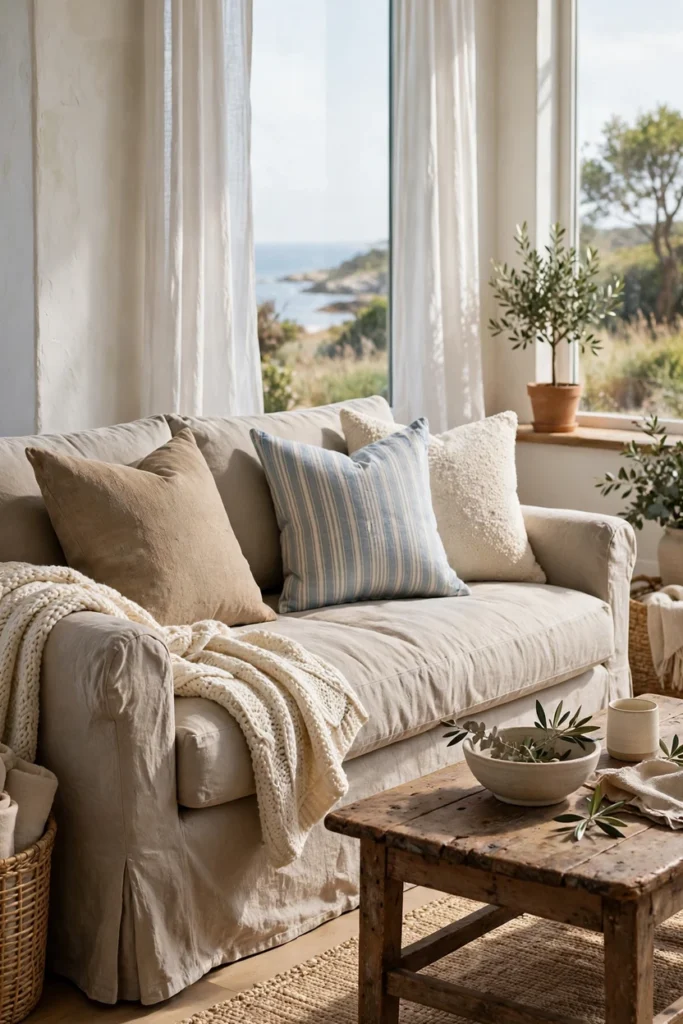
Test: Material. A big sofa in an oatmeal or flax slipcover is the base of the room. Slipcovers come off for washing, which matters in a house with sand, kids, or pets. Choose a deep seat and a relaxed arm, and let the fabric wrinkle on purpose. Add pillows in two or three textures, not a matching set. A soft neutral sofa keeps the room calm so older pieces can stand out.
One Vintage Rattan Chair
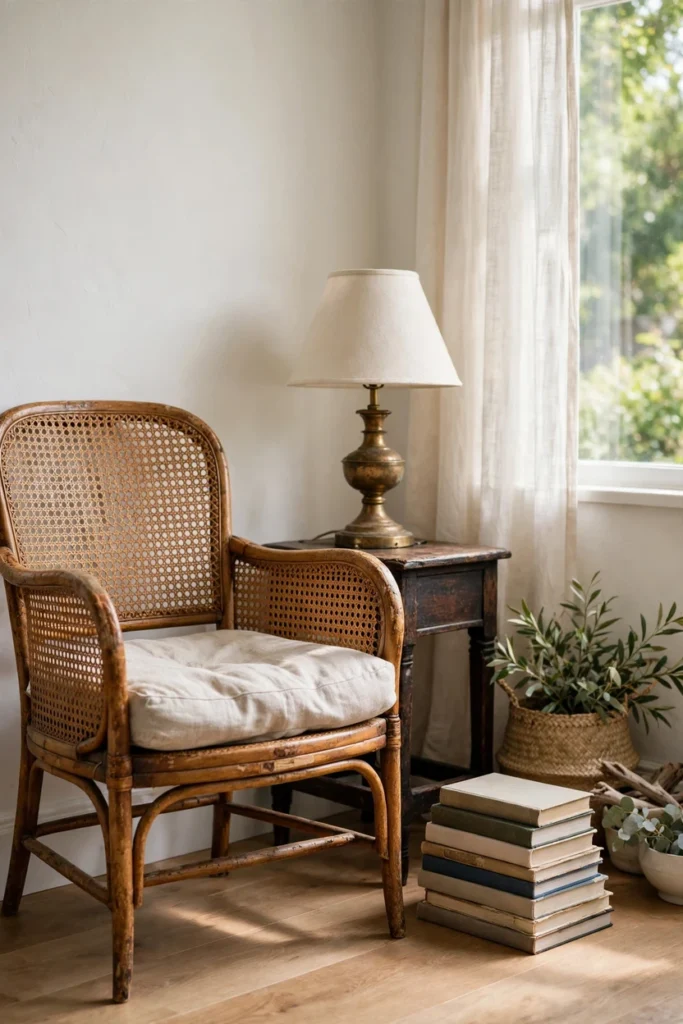
Test: Age. Use a single vintage cane or rattan chair, not a full matching set. Look for one with a worn finish and a bit of character, such as a peacock back or a bamboo frame. One chair adds texture without tipping into theme-room territory. Keep rattan out of strong direct sun and damp spots, which can dry or warp it. Add a linen cushion to keep it comfortable.
Mixed Wood Tones
Test: Age. A collected room mixes woods: a pale weathered oak coffee table, a darker antique side table, a honey-toned shelf. Repeat each tone at least twice so it feels intentional. Very dark woods can feel heavy in a light room, so use them as accents. Keep finishes matte or oiled rather than glossy. Mixed woods tell the eye the room grew over time.

A Large Seascape or Abstract Painting
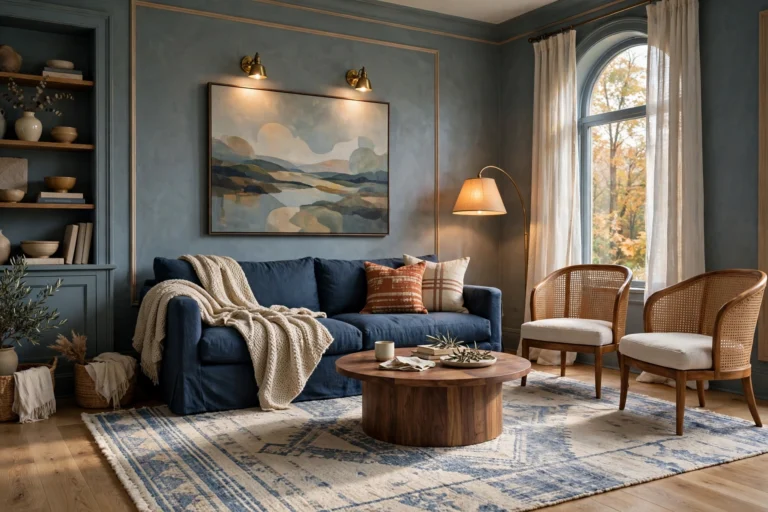
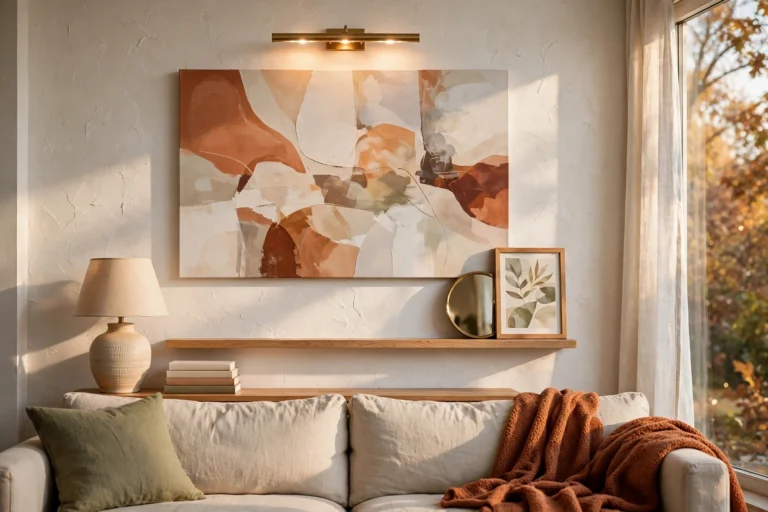
Test: Edit. One large piece of art does more than ten small signs. Choose a vintage oil seascape, a moody abstract in gray and sand, or a landscape with a horizon line. Hang it with the center around 57 to 60 inches from the floor, and a few inches above the sofa. Thrift stores and estate sales are good sources. A single painting gives the room a focal point without a theme.

A Gallery Wall of Antique Frames
Test: Age. Group framed botanicals, sketches, small oil paintings, and maps in mixed antique frames. Use gold, wood, and black frames so it looks gathered over years. Lay the layout on the floor first, then hang the largest pieces and fill in around them. Keep a steady gap of two to three inches between frames. Avoid matching mats and prints, which can look bought as a set.

A Sea-Glass Palette
Test: Edit. Swap bright blue for the soft colors you find in the sea: sage, mist, oatmeal, and a touch of pale green-gray. Use blue in one place only, like a vintage rug or a single pillow. A tonal palette feels calmer and avoids the “decorated by theme” look. Repeat each color at least twice across the room. Add warm wood so it doesn’t feel cold.

California Warm: Clay and Caramel
Test: Material. Coastal doesn’t have to be cool. Try clay, caramel, walnut, and cream for a sun-washed, dry-coast feel. Use a caramel leather chair, a terracotta pot, and a creamy plaster wall. Add one or two pale blue or sage accents so it still feels coastal. This palette suits cooler climates and rooms with less light.
Related: 20 Coastal Bedroom Ideas That Feel Pricier Than Farmhouse

A Moody Slate-Blue Nook
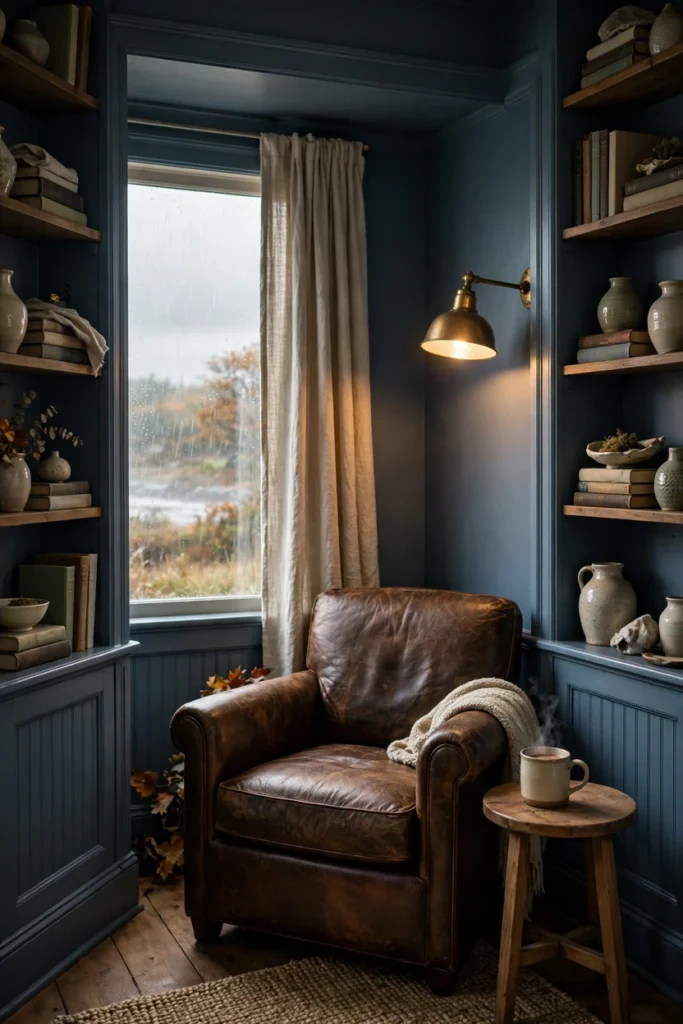
Test: Edit. A deep slate or storm-blue nook gives the room a calm, quiet side. Paint a reading corner or alcove, and keep the rest warm white. Pair it with brass lamps, a worn leather chair, and linen curtains. This feels more like a seaside cottage in winter than a beach rental. Test the color at different times of day.
A Layered Rug
Test: Material. Start with a large natural-fiber or flat-weave rug, then add a smaller vintage rug on top. A rug large enough for the front legs of the sofa and chairs makes the seating area feel unified, and an 8 by 10 is common in mid-sized rooms. Real jute can struggle in damp air, so choose a jute-look synthetic in humid homes. A worn vintage rug on top adds color without noise.

A Brass Lamp and an Aged Mirror
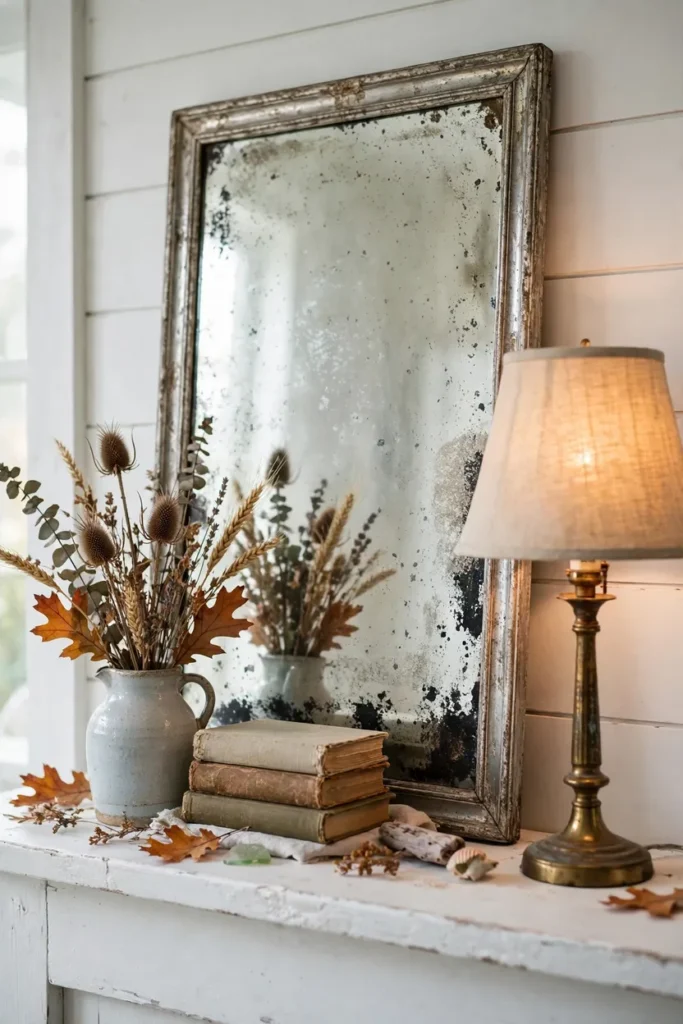
Test: Age. Patina is a strong coastal signal because sea air ages metal and glass. Look for an antique brass lamp and a mirror with a slightly spotted or foxed surface. Lean the mirror on a mantel or console for a relaxed look. The metal warms a pale room and the mirror bounces light. These two pieces often cost little secondhand.
Shells and Stoneware, Used Sparingly
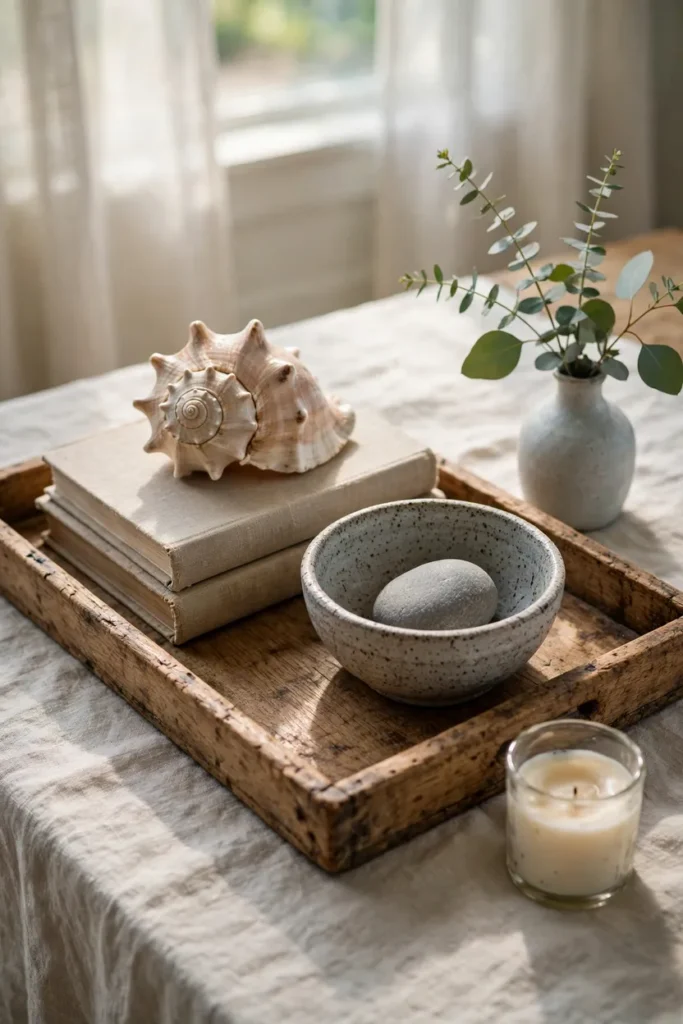
Test: Edit. Keep the sea references to one or two objects. Place one oversized shell on a stack of books, or a smooth stone in a handmade ceramic bowl. Group them on a tray with a candle. Choose objects you picked up or that mean something to you. One thing reads as personal, while a whole jar reads as a theme.
Collected Shelves
Test: Edit. Style open shelves with a mix of books, pottery, small art, and a plant. Group by color or material, vary heights, and leave empty space so each object can be seen. Stack some books flat and stand others up. Hide cables and remotes in a basket. A shelf with air around the objects looks collected, not stuffed.

Faded Ticking and Vintage Textiles
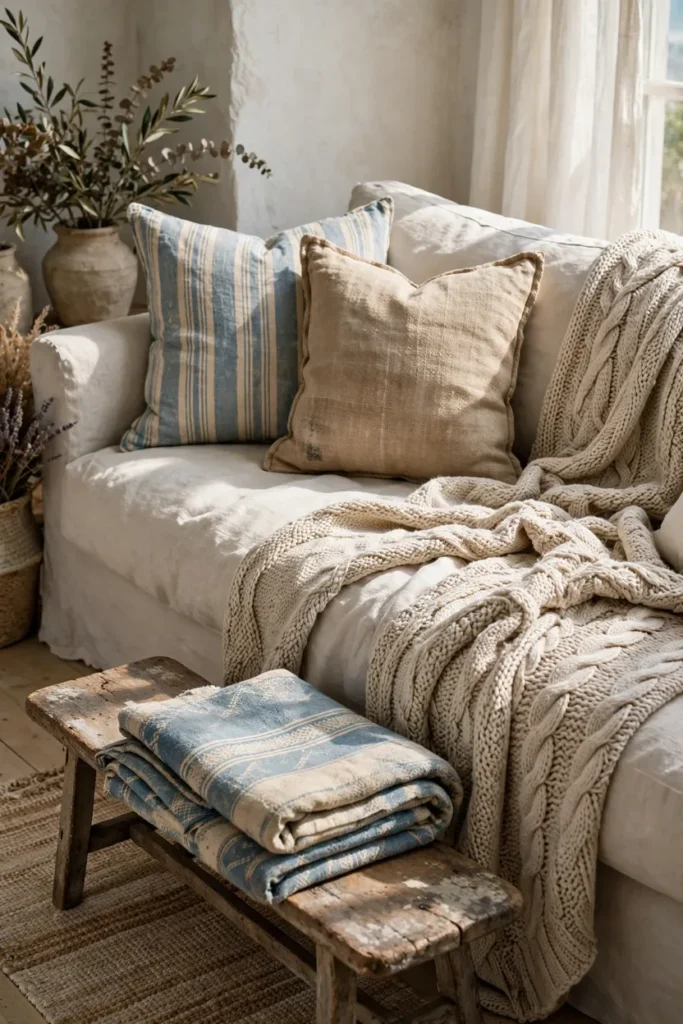
Test: Age. Use one stripe, not five. A faded ticking pillow, a washed striped throw, or an old grain-sack cushion adds history. Pair it with solids and texture so the stripe has room. Vintage textiles from flea markets or estate sales look worn in a good way. Wash gently, and keep delicate pieces out of strong sun.
Linen Curtains Hung High
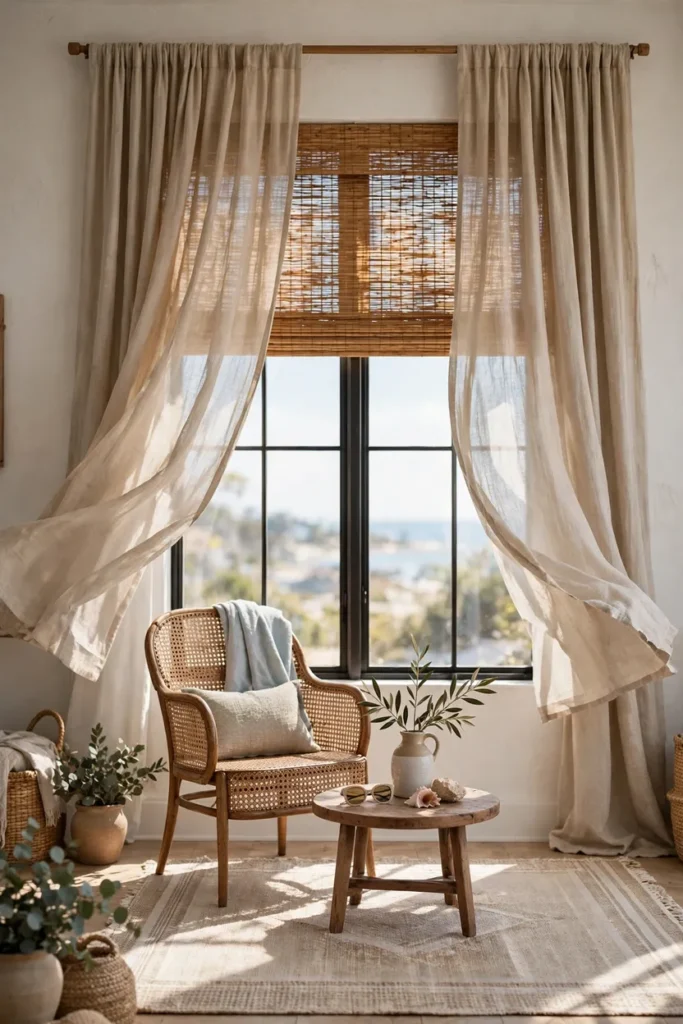
Test: Material. Hang full-length linen curtains close to the ceiling and wide past the window frame, so the window looks bigger. Choose a loose weave in white, flax, or oatmeal, and let it puddle a little or just touch the floor. Add a woven shade behind for privacy and sun control. Light linen moves with the breeze and softens echo. Linen can fade, so line it if the window gets strong sun.
A Plaster or Stone Fireplace
Test: Material. A plaster, limewash, or stone fireplace gives the room weight and texture. Style the mantel with one large mirror, a pair of mismatched candlesticks, and a bowl or branch. Keep the display low and loose. Weathered wood, driftwood, or a thick beam on the mantel ties in the seaside look. Follow safety rules for anything near an active fireplace.

A TV That Looks Planned
Test: Edit. A black rectangle can break a calm room. Hang it in a painted dark wall so it blends in, set it in a cabinet with doors, or place it inside a plaster or built-in surround. Add art and a lamp beside it so the TV is one part of a grouped wall. Keep the cabinet in a natural wood or a muted paint color. A TV that looks planned makes the whole room feel more adult and calm.
Related: 17 Living Room Wall Art Layering Ideas for a Focal Point

Woven Pendants and Layered Light
Test: Edit. Use a woven, paper, or capiz pendant for soft overhead light, then add lamps at sofa and chair height. Choose warm bulbs, around 2700K or lower, and a dimmer if you can. A pendant over a round table or ottoman makes a quiet focal point. Layered light makes a pale room feel warm at night. Avoid cool bulbs, which can turn white walls gray.

Olive Trees and Real Greenery
Test: Material. Real plants and branches feel more natural than printed palms. An olive tree in a clay pot, a bowl of lemons, or a vase of eucalyptus fits the Mediterranean side of coastal. Choose plants that suit your light, and check pet safety. Place one large plant at a corner and a few small ones at table height. Greenery adds the soft green-gray tone you see near the sea.

A Coffee Table Vignette
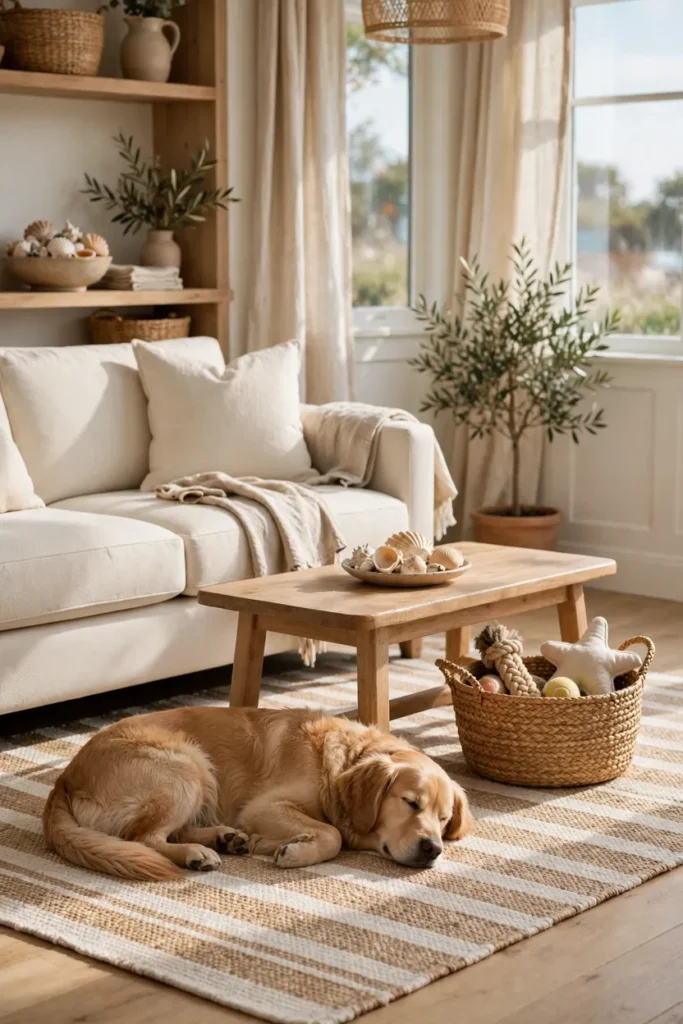
Test: Edit. Keep the coffee table to three layers: a tray, a stack of books, and something living, like flowers or a branch. Leave about a third of the surface empty for mugs and elbows. Place the table about 14 to 18 inches from the sofa so it’s easy to reach. Choose an oval or round shape in tight rooms. A simple table looks collected when it’s used.

Real-Life Fabrics and Washable Rugs
Test: Material. A collected room still has to survive daily life. Choose performance fabrics that resist stains, slipcovers that go in the wash, and a rug that handles sand and damp feet. In humid or salty places, wipe metal and wood, and keep rattan out of strong sun and moisture. Rotate rugs and cushions to even out fading. A room that holds up looks calm because you aren’t worried about it.
Styling Tips
The “collected, not beachy” test: Age, Material, Edit.
Age: at least a few pieces have history (vintage lamp, antique frame, worn rug).
Material: real textures like linen, oak, plaster, brass, and clay do the coastal work.
Edit: keep the sea references to one or two, and leave empty space.
Swap this for that:
| Cliché | Collected swap |
|---|---|
| Jar of seashells | One large shell on a stack of books |
| Navy-and-white stripes everywhere | One faded ticking pillow with solids |
| “Beach” or “Welcome” signs | One large vintage seascape or abstract painting |
| Rope on everything | One woven basket or one natural-fiber rug |
| Bright blue accents | Sea-glass tones: sage, mist, oatmeal, clay |
| Matching rattan set | One vintage rattan chair and mixed woods |
| Anchors and ship wheels | Aged brass lamp or a spotted antique mirror |
Palette cheat sheet:
| Palette | Mood | Pair with |
|---|---|---|
| Warm white + oatmeal + sage | Soft and airy | Oak, linen, brass |
| Cream + clay + caramel | Sun-washed California | Leather, terracotta, walnut |
| Warm white + slate blue | Moody seaside | Brass, worn leather, books |
| Sand + mist + faded blue | Classic, quiet | Weathered wood, ticking stripe |
- Repeat colors and woods at least twice.
- Mix three textures: soft, rough, and smooth.
- Use warm bulbs around 2700K for the evening glow.
- Hang curtains high, and keep rugs large enough for the front legs of seating.
Practical Implementation Ideas
A simple weekend plan:
- Clear the room and keep only what you use or love.
- Choose the base: warm white walls, a soft sofa, a large rug.
- Pick one hero: a big painting, a mirror, or a vintage chair.
- Add age: a brass lamp, an antique frame, or a worn rug.
- Layer textiles: one stripe, one knit, one linen.
- Add light: a woven pendant or lamps at different heights, with warm bulbs.
- Bring in green: one large plant and a vase of branches.
- Edit: remove one object from every surface.
Common Mistakes to Avoid
- Too many sea objects. Pick one or two and stop.
- Using blue everywhere. Use it once and add sage, sand, and clay.
- Buying a matching set. Mix pieces so the room looks gathered.
- Stark white walls. They can feel cold. Choose a warm white.
- Small rugs. They make the room feel unanchored.
- Hanging art too high. Center it around 57 to 60 inches from the floor.
- Using real jute in damp rooms. It can mildew. Choose a jute-look synthetic.
- Leaving rattan in direct sun or moisture. It can dry out or warp.
- Ignoring the TV. Make it part of a styled wall.
- Cool bulbs. They fight warm whites and wood.
Small-Space Alternatives
- Use one large painting instead of a crowded gallery.
- Choose a round coffee table or an ottoman with a tray.
- Pick a smaller, deep-seated sofa and a single armchair, not a full set.
- Hang curtains high to make the ceiling look taller.
- Use wall sconces or plug-in lamps to free table space.
- Keep the palette to three colors so the room stays calm.
- Use mirrors opposite windows to bounce light.
Budget-Friendly Alternatives
- Free: rearrange, edit surfaces, and use branches from the yard.
- Under $25: a thrifted frame, a ceramic bowl, a vase of eucalyptus.
- Under $75: a used brass lamp, a secondhand mirror, linen pillow covers.
- Thrift first: vintage chairs, side tables, frames, and baskets are common at secondhand shops.
- DIY: limewash or paint one wall, and frame your own prints.
- Buy in order: sofa and rug, then lighting, then accents.
- Renter-friendly options: use rugs, curtains on tension rods, plug-in sconces, leaned mirrors, freestanding shelves, and removable hooks. Skip paint unless your lease allows it.
Pro Styling Recommendations
- Choose one hero piece and let everything else support it.
- Mix old with new so nothing feels dated.
- Use warm metals like brass and aged bronze to balance cool colors.
- Group objects in odd numbers and vary heights.
- Aim for a 70% calm base, a 20% collected layer, and a 10% accent.
- Live in the room for a week before adding more.
FAQs
How do I make a coastal living room not look like a beach theme?
Keep the sea references to one or two objects, and build the look with natural materials and soft colors. Add vintage pieces, mixed woods, and one large painting.
What colors work best for a modern coastal living room?
Warm white, oatmeal, sand, sage, mist, and soft gray-blue work well. Clay and caramel give a warmer California feel. Use blue as an accent, not everywhere.
What is collected coastal style?
Collected coastal style mixes coastal materials and colors with vintage finds, antiques, and personal objects. It feels layered and lived in, not decorated as a set.
Does coastal decor have to include blue?
No. Sea-glass greens, sand, clay, caramel, and warm white all work. A single blue accent is enough.
Related: 15 Blue Living Room Ideas That Prove the Color Works
What furniture works best in a coastal living room?
A slipcovered sofa, a vintage cane or rattan chair, a weathered wood coffee table, and mixed-wood side tables work well. Choose washable fabrics and sturdy materials.
How do I style a TV in a coastal living room?
Hang it on a painted dark wall, set it in a cabinet with doors, or place it in a plaster or built-in surround. Add art and a lamp nearby so it looks like part of the display.
What fabrics handle sand, pets, and sun?
Performance fabrics and washable slipcovers hold up best. Choose washable rugs, and avoid delicate fibers like silk or viscose in strong sun.
Can I do coastal decor if I don’t live near the coast?
Yes. Use warm whites, natural textures, linen, and vintage pieces, and keep the sea references light. The style depends on mood, not location.
What size rug works best in a coastal living room?
Choose a rug large enough for at least the front legs of your sofa and chairs. An 8 by 10 is common in mid-sized rooms.
How do I protect coastal decor from humidity and salt air?
Wipe metal and wood regularly, use performance fabrics, and keep rattan out of strong sun and damp spots. In humid homes, choose a jute-look synthetic rug over real jute.
Conclusion
A coastal living room feels collected when it looks like someone has been living in it for years. The sofa is soft. The lamp has a bit of age. The painting hangs where you can see it from the couch.
You don’t need a shell jar or a sign. You need warm light, honest materials, and a few things you love.
Start with the walls and the sofa. Add one old piece, one big painting, and one plant. Then stop, and sit down with your coffee.