22 Cottagecore Living Room Ideas That Follow the Real Rules
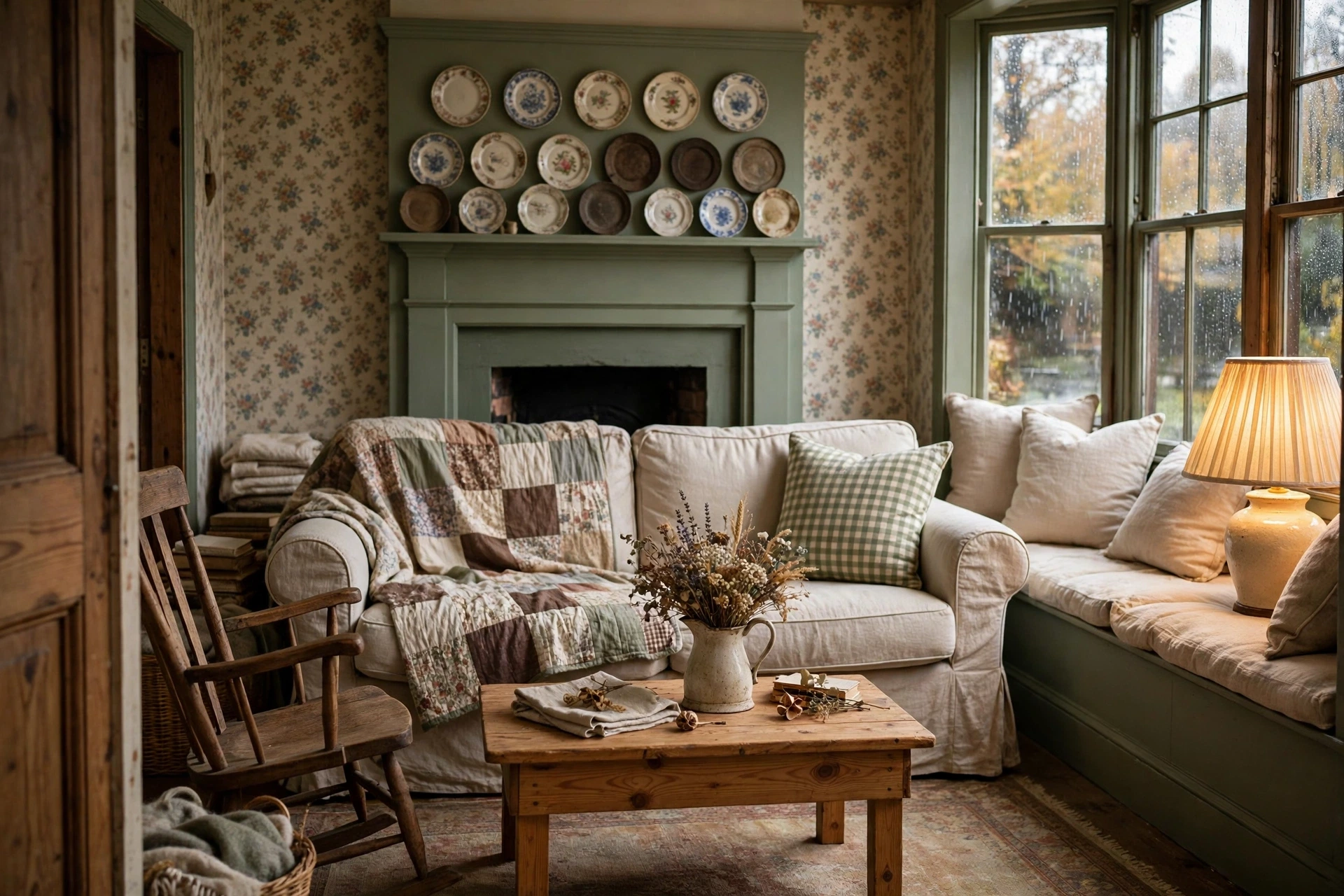
It is a rainy afternoon. A kettle is warming, a quilt is half off the sofa, and a jug of flowers is dropping petals on a worn wood table. The lamp is on, though it is only three o’clock. Nothing matches, and yet it all fits.
That is the feeling of a cottagecore living room. It looks easy, but it follows rules. Without them, the room slides into clutter, or into a themed set with too many ceramic hens.
This guide gives you 8 real rules and 22 ideas, with sizes, spacing and pattern tips, so your room feels gathered over time, comfortable to use and truly yours.
Quick Answer: What Is a Cottagecore Living Room?
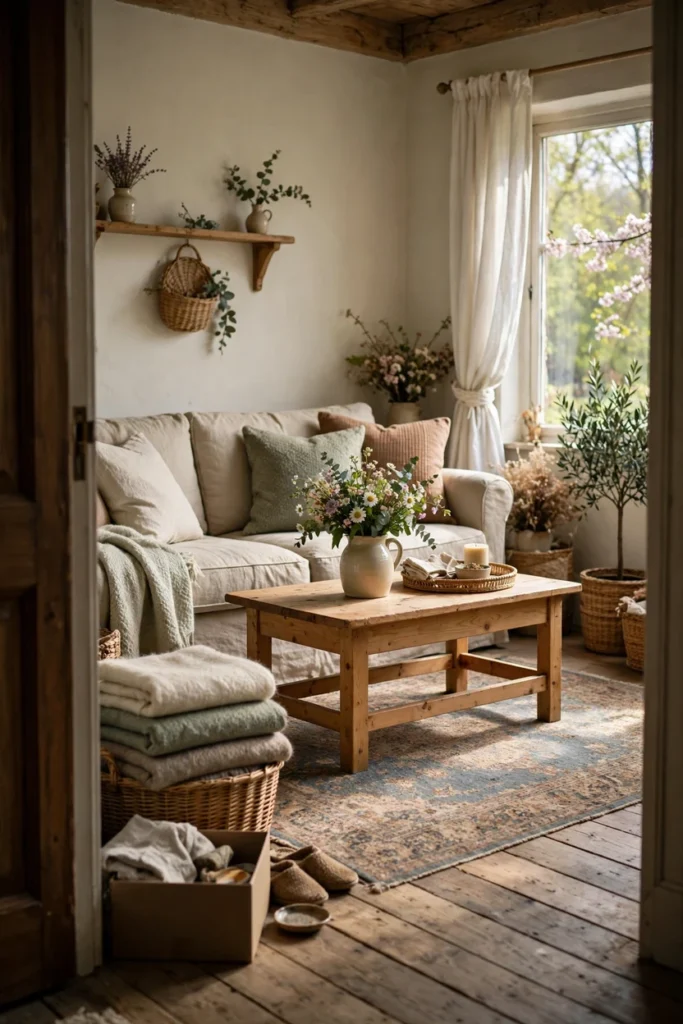
A cottagecore living room is a cozy, nature-inspired space that uses natural materials, soft garden colors, vintage and handmade pieces, and layered patterns to feel collected over time. Think linen slipcovers, floral or gingham textiles, pine and wicker furniture, dried flowers, plants and warm lamp light. The best versions stay comfortable and edited, with one pattern in the lead and breathing room around every group of objects.
The 8 Real Rules of Cottagecore
Natural first. Use wood, linen, cotton, wool, wicker, clay and stone before anything shiny or synthetic.
Old beats new. Include a few vintage, thrifted, inherited or handmade pieces. Patina can’t be bought in a flat pack.
One pattern leads. Pick one main floral, check or stripe, then add a medium and a small pattern in the same color family.
Anchor the small stuff. Delicate objects need a larger piece nearby, like a big mirror or a sturdy cabinet, so the room doesn’t feel busy.
Garden colors. Draw from cream, sage, butter yellow, dusty blue, rose and bark brown.
Warm, low light. Use lamps and candles at 2700K, not one bright ceiling light.
Bring the garden in. Live plants, dried flowers, branches and baskets tie the room to nature.
Everything works. Seats are comfortable, storage is easy to reach and surfaces can be used every day.
Table of Contents
22 Cottagecore Living Room Ideas
1. Start With a Slipcovered Sofa in Linen or Cotton
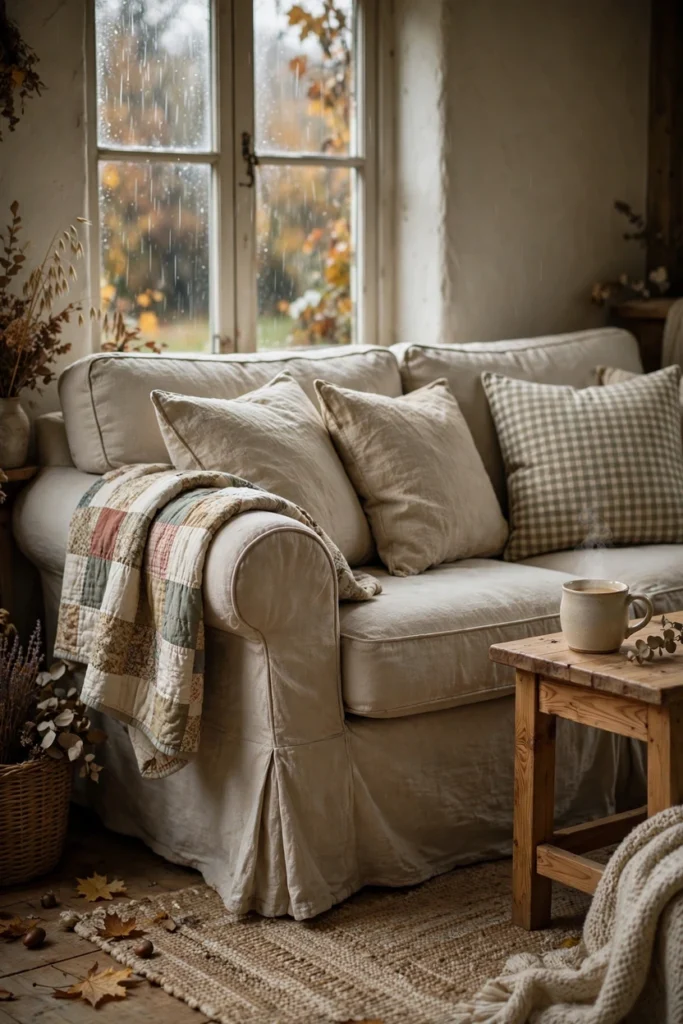
Rule: everything works. A slipcovered sofa in oat, ivory or soft gray looks relaxed and can go in the wash after muddy paws or spilled tea. Choose washable linen, linen blend or heavy cotton, and keep the seat deep enough to curl up in. A skirted base or a simple rolled arm feels cottage-like without fuss. Layer pillows on top, but keep the sofa itself plain so patterns have a calm background.
2. Paint the Walls in a Soft, Chalky Garden Color
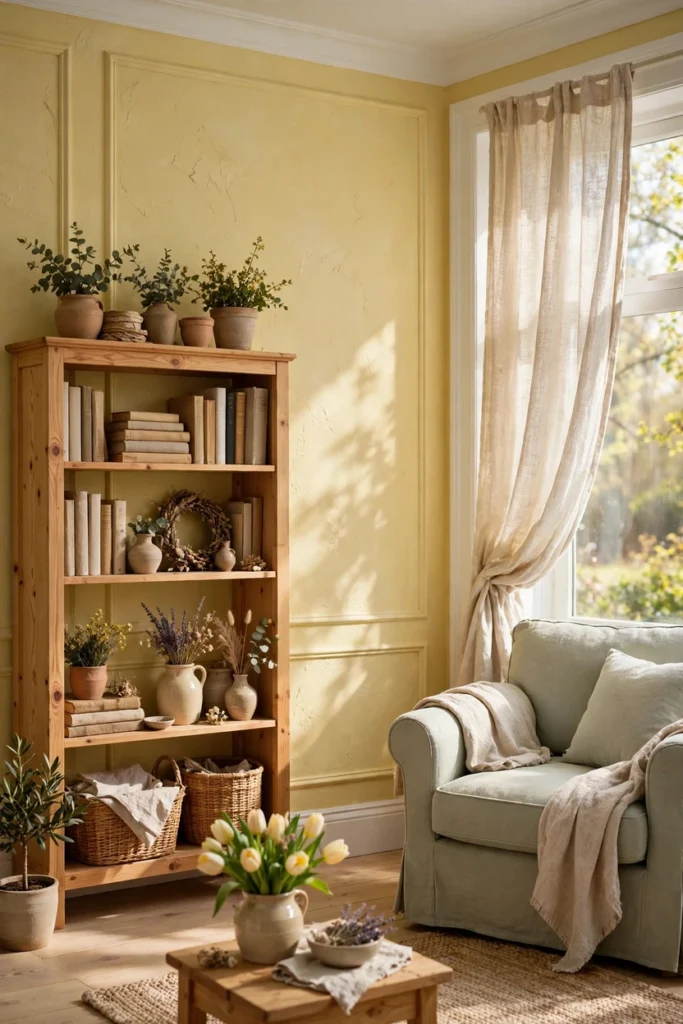
Rule: garden colors. Sage, butter yellow, warm cream and dusty blue all feel right in a cottage. Butter yellow is a big color, because it gives rooms a gentle glow without the sharpness of lemon. Use a matte or chalky finish, and pair the wall color with oatmeal, camel and soft white rather than stark black. Test a large sample in morning and evening light before you paint.
3. Add Small-Scale Floral Wallpaper to One Section
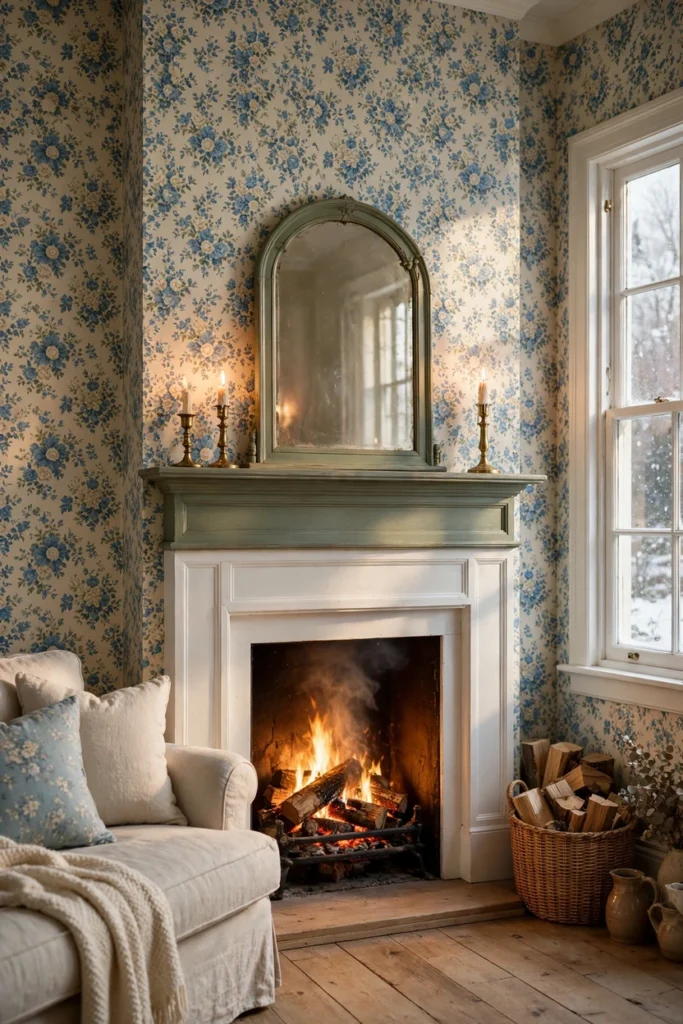
Rule: one pattern leads. A ditsy floral wallpaper on the walls beside a fireplace or inside an alcove gives a clear lead pattern without overwhelming the room. Choose a small or medium floral in colors that match your sofa or curtains. Paint the remaining walls a calm solid shade. Peel-and-stick wallpaper is a good option for renters, and one wallpapered section often costs less than papering the whole room.
4. Mix Pattern Scales: Large, Medium and Small
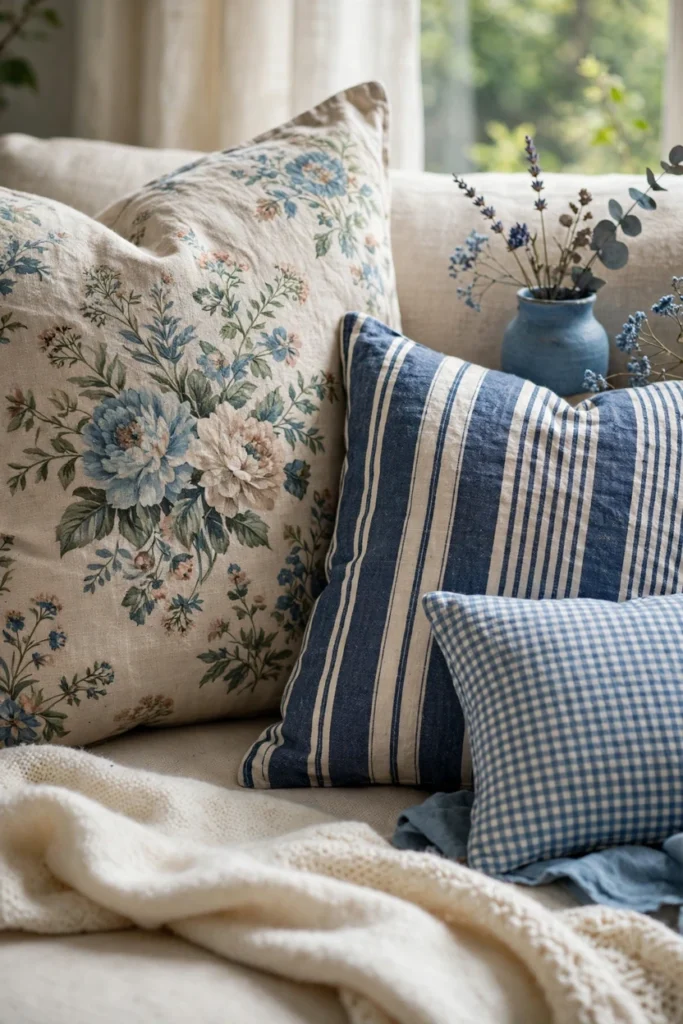
Rule: one pattern leads. Pick one large pattern, like a bold floral curtain, one medium pattern, like a ticking stripe, and one small pattern, like gingham or tiny checks. Repeat one color in all three, such as dusty blue, so the mix feels planned. Add two or three solids for rest. Different scales keep the eye moving without a fight.
5. Hang Linen Curtains High and Wide
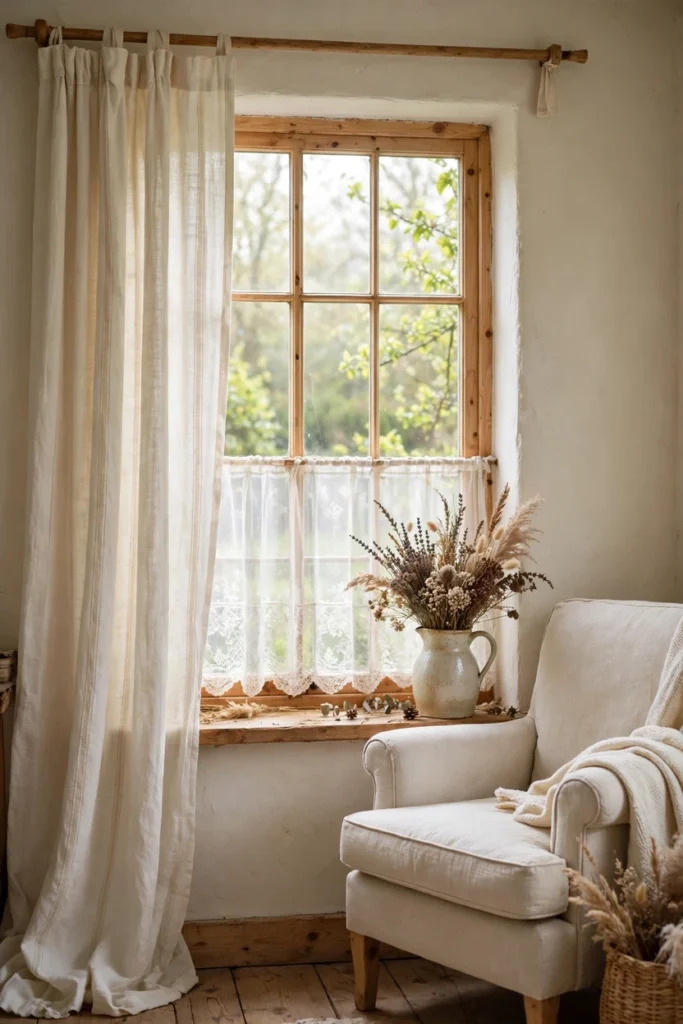
Rule: natural first. Floor-length linen or cotton curtains soften the room and filter light into a gentle glow. Hang the rod 4 to 6 inches above the window frame, and let the panels extend 8 to 12 inches past each side, so the window looks taller. A gauzy stripe or a lace edge adds cottage character, and a cafe curtain on the lower half gives privacy. Keep the colors soft and muted.
6. Lay a Faded, Vintage-Style Rug
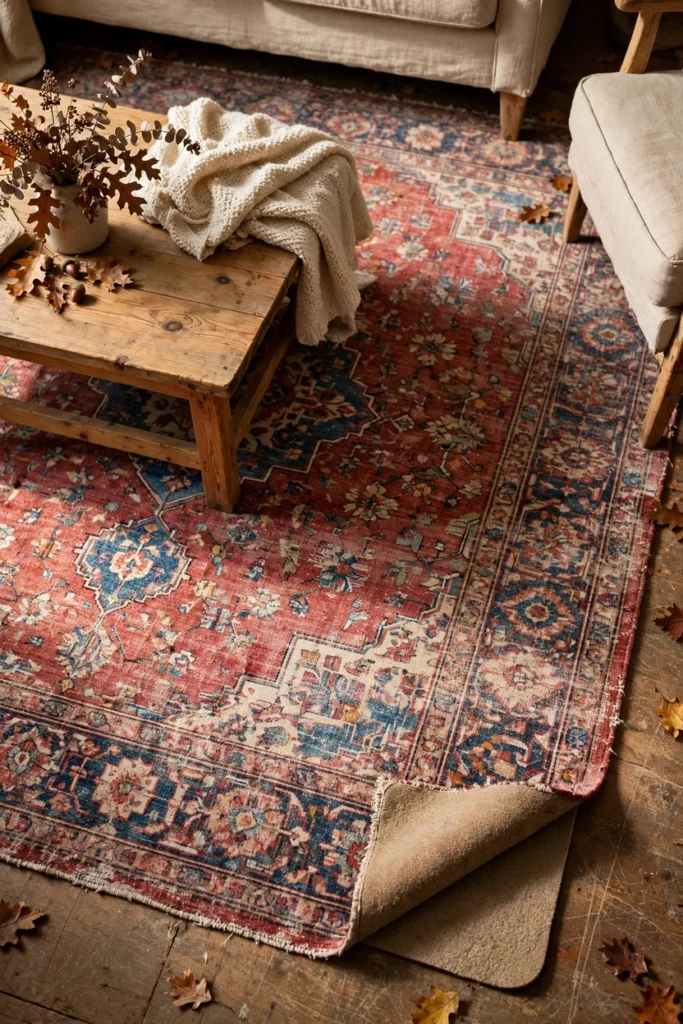
Rule: old beats new. A worn Persian, Turkish or kilim-style rug anchors the room and hides crumbs and pet hair. Choose a size where at least the front legs of the sofa and chairs sit on the rug, such as 8 by 10 feet in a larger room, or 5 by 8 feet in a small one. Pick a low-pile or flatweave style in muted red, blue or sage. Add a rug pad so it stays flat and feels thicker underfoot.
7. Add One Real Antique or Thrifted Wood Piece
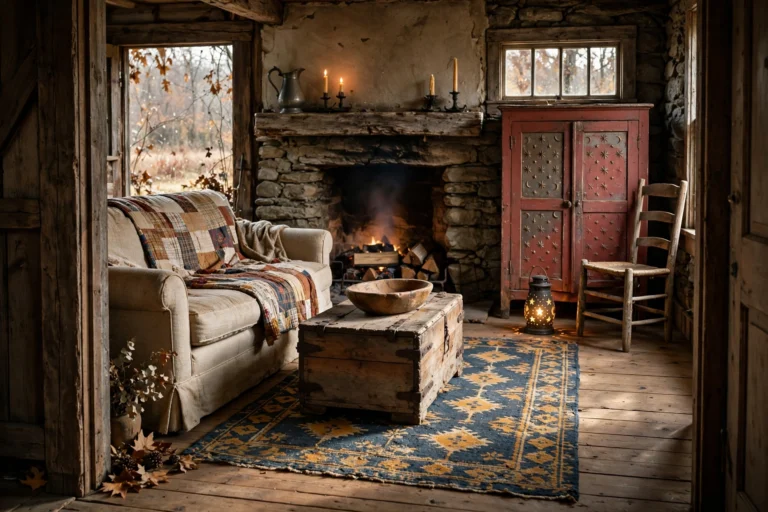
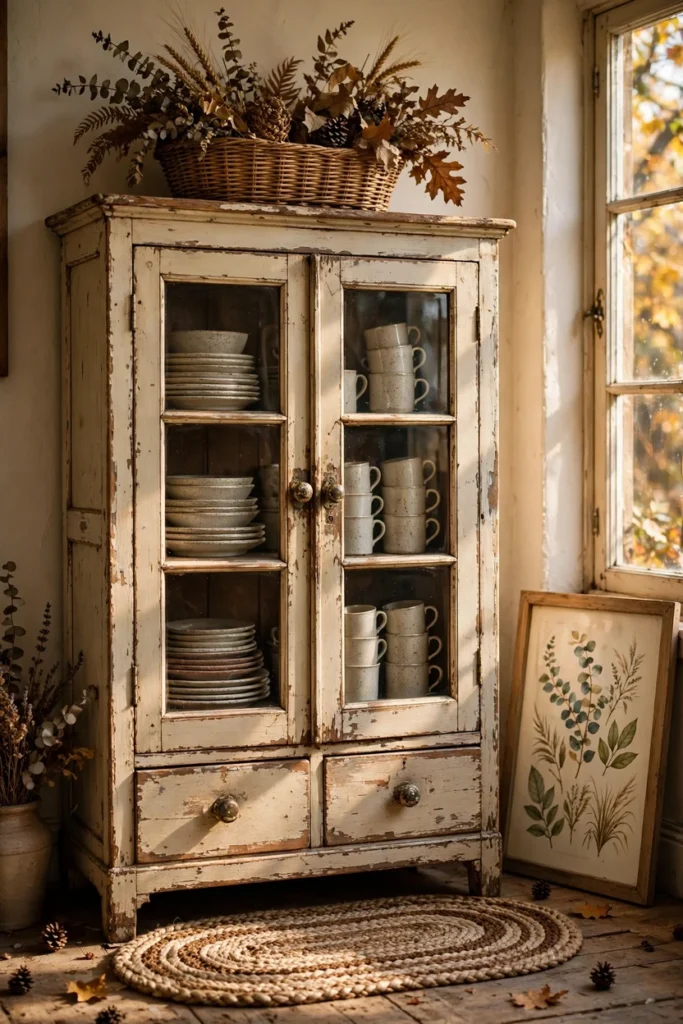
Rule: old beats new. One pine cabinet, a painted chest or a farmhouse table brings real history that a new piece can’t copy. Look in thrift shops, estate sales and family attics, and choose sound pieces with honest wear. A few scratches and a faded finish are a plus, so don’t hide them. Use it as a TV stand, a storage chest or a sideboard, so it works as well as it looks.
8. Style the Mantel With Leaning Art and Candles
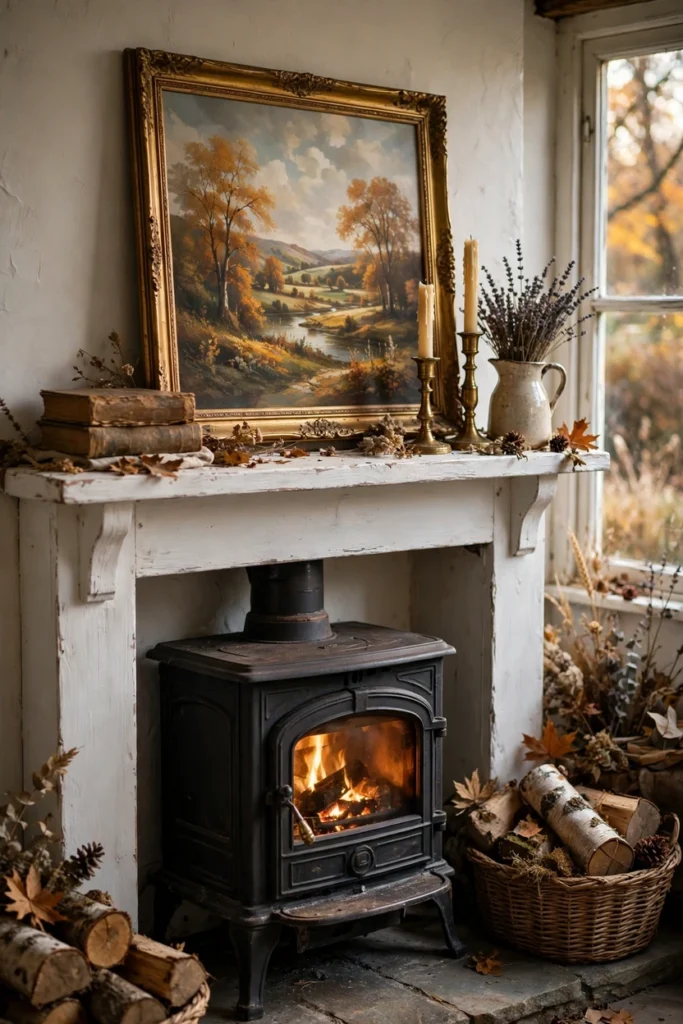
Rule: anchor the small stuff. Lean one large piece of art or a mirror at the back, then add smaller pieces in front: two candlesticks, a small vase of dried flowers and a stack of old books. Use odd numbers, and let the largest piece anchor the group. If you have a working fireplace or stove, keep flammable items well clear of the heat and the opening. Change the mantel with the seasons.
Related: 17 Living Room Wall Art Layering Ideas for a Focal Point
9. Hang a Plate Wall With Tonal China
Rule: anchor the small stuff. A plate display adds charm and its round shapes help the eye move around the room. Choose plates in a limited color range, such as blue and white or cream and sage, and mix sizes. Space them about 2 to 3 inches apart, and use plate hangers rated for the weight. Center the group at about 57 inches from the floor, or hang it above the mantel or the sofa.

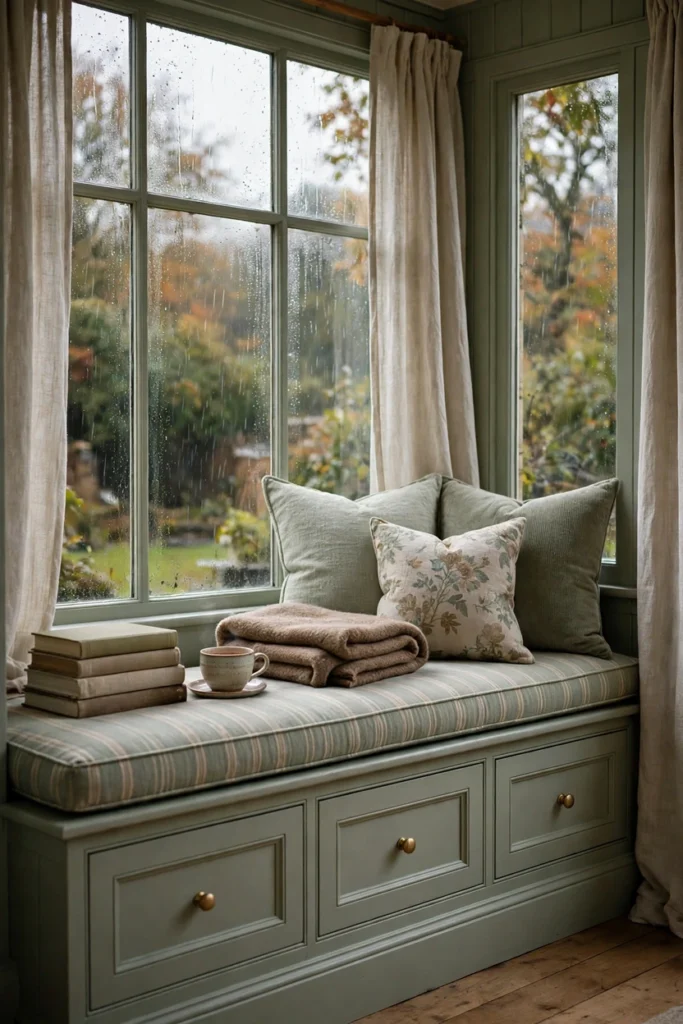
10. Build a Window Seat for Reading and Napping
Rule: everything works. A window seat is the coziest corner of a cottage. Aim for a height of 16 to 18 inches with the cushion on, a depth of 18 to 24 inches, and a length of at least 48 inches if you want to sit sideways. Use a cushion about 3 to 4 inches thick, and add pillows for the back. Drawers or a lift-up lid underneath give you hidden storage for blankets and books.
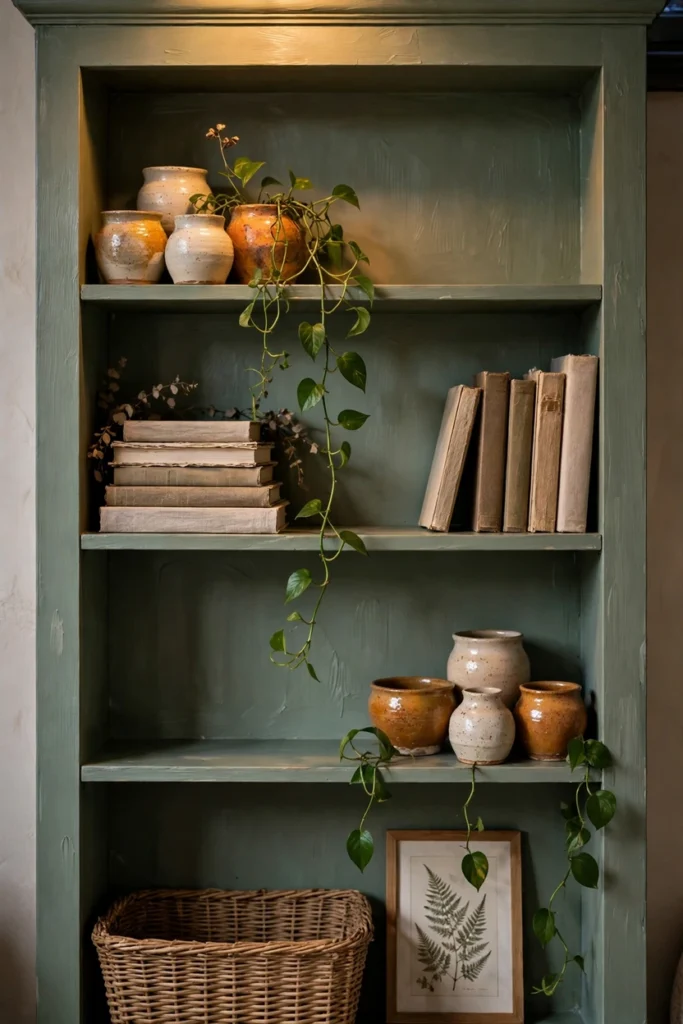
11. Style Open Shelves With Books, Pottery and Baskets
Rule: anchor the small stuff. Shelves should feel gathered, not stuffed. Stack some books flat, stand others upright, and add handmade pottery, a small plant and a basket. Group objects in threes by color, like cream, amber or green, and leave 20 to 30 percent of each shelf empty. A big basket or a framed print gives the small things something to lean on. Put heavy items low and delicate ones higher.
12. Use Baskets for Blankets, Logs and Magazines
Rule: everything works. Baskets are the most useful cottage accessory, because they hold the clutter and look good doing it. Put one large lidded basket by the sofa for throws, a low basket by the fireplace for logs and a small one for magazines. Choose wicker, seagrass or willow in a similar tone, and vary the shapes. One big basket is better than five tiny ones, which can look busy.

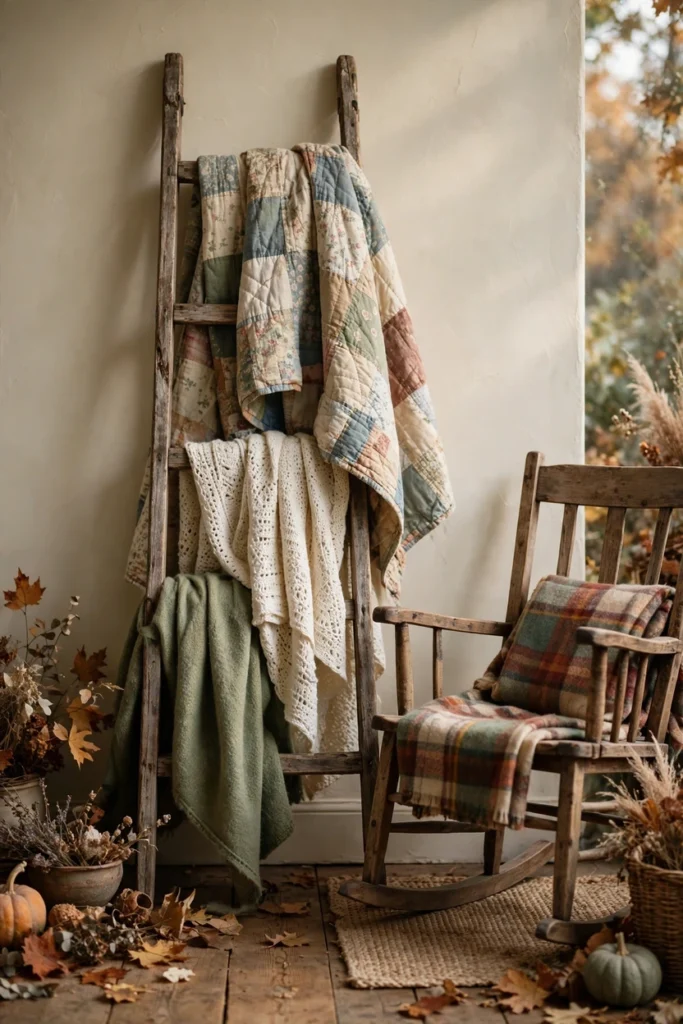
13. Layer Quilts and Throws on a Ladder or Chair Arm
Rule: old beats new. A patchwork quilt, a crocheted blanket and a wool throw give color and warmth, and they show off handmade work. Hang two or three on a wooden quilt ladder, or fold them over a chair arm. Mix one pattern, one solid and one textured piece. Wash old quilts gently by hand or on a delicate cycle, and keep them out of strong sun so the colors last.
14. Light With Lamps That Have Pleated Shades
Rule: warm, low light. Skip the single overhead light and place two or three lamps at different heights around the room. Pleated linen or cotton shades, ceramic bases and brass candlesticks suit the cottage mood. Use warm bulbs around 2700K, and choose a lamp whose shade bottom sits at eye level when you are seated. Add candles in the evening, and keep them away from curtains and never leave them burning when you leave the room.

15. Fill Jugs With Fresh and Dried Flowers
Rule: bring the garden in. An ironstone pitcher, a stoneware jug or an old jar holds a loose bunch of seasonal flowers with ease. Keep the arrangement a bit wild, and trim stems so they sit low enough for conversation. Dried lavender, grasses and hydrangeas last all year and are easy to hang from a beam or a shelf. If you have cats, skip lilies, which are toxic to them, and check any plant before bringing it home.

16. Group Plants in Clay Pots Near the Window
Rule: bring the garden in. Clay pots, old enamel buckets and a wooden plant stand give plants a cottage look. Put the plants where they get the light they need, and group them in odd numbers at different heights. Pothos, ferns, herbs and a snake plant are easy choices, and trailing plants soften shelves. Use saucers under each pot to protect wood from water rings.
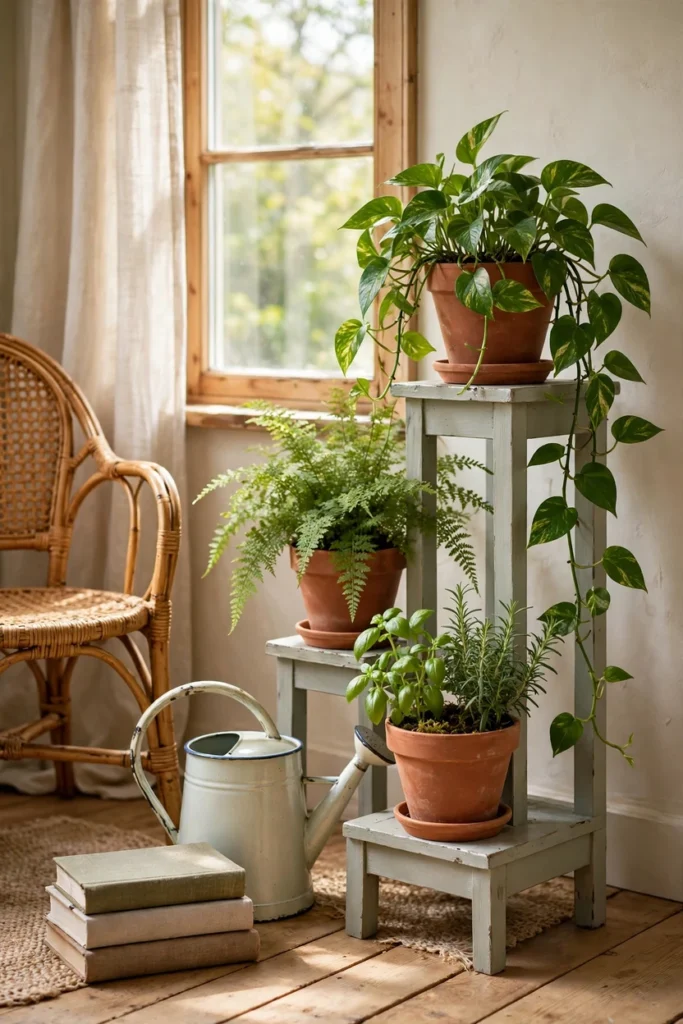
17. Add a Rocking Chair or a Wicker Armchair
Rule: everything works. A rocking chair or a wicker armchair adds a second seat and a cozy reading spot. Place it near a window or lamp with a small table beside it, and leave a couple of feet behind a rocker for its swing. Keep main walkways at least 30 to 36 inches wide so you can move through easily. A cushion in a small print and a folded throw complete the corner.
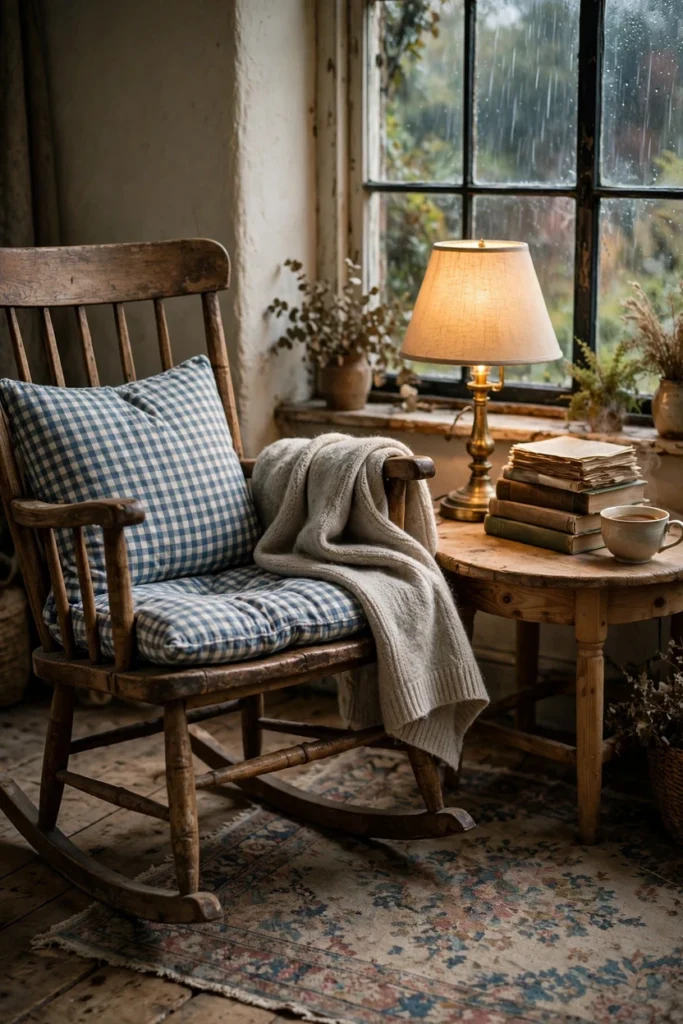
18. Set Up a Tea Tray Station
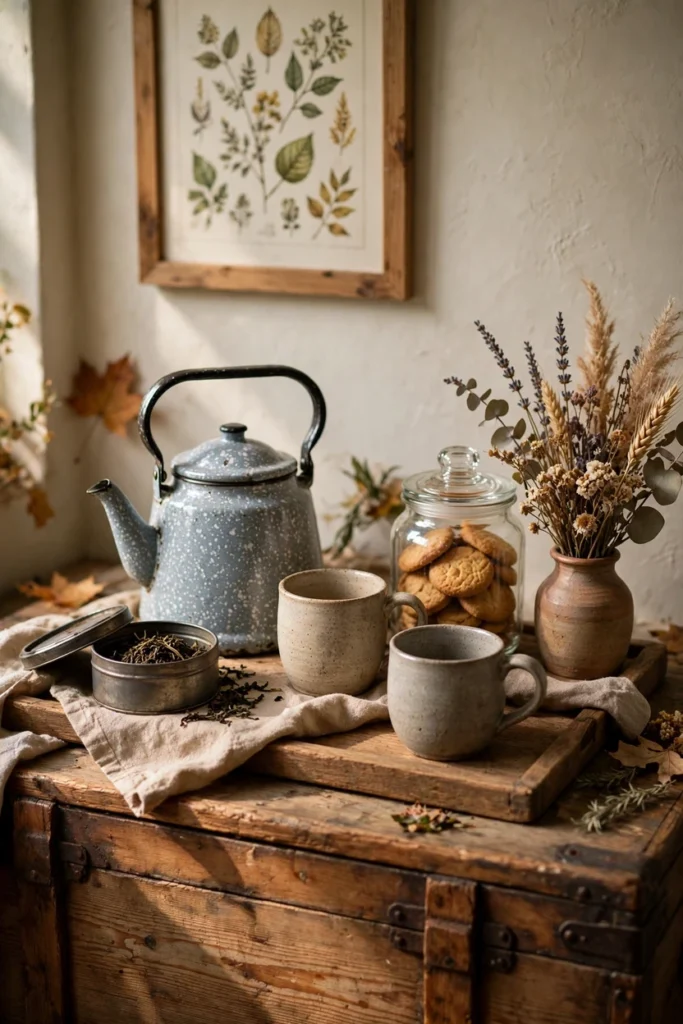
Rule: everything works. A tray with a kettle, two mugs and a tin of tea turns a corner of the room into a small ritual. Use a wooden or enamel tray on a small chest, a bar cart or a bureau. Choose enamelware, stoneware and glass jars over shiny new items. Keep it stocked, so it gets used every day.
19. Use Ticking Stripe, Gingham and Toile in Small Doses
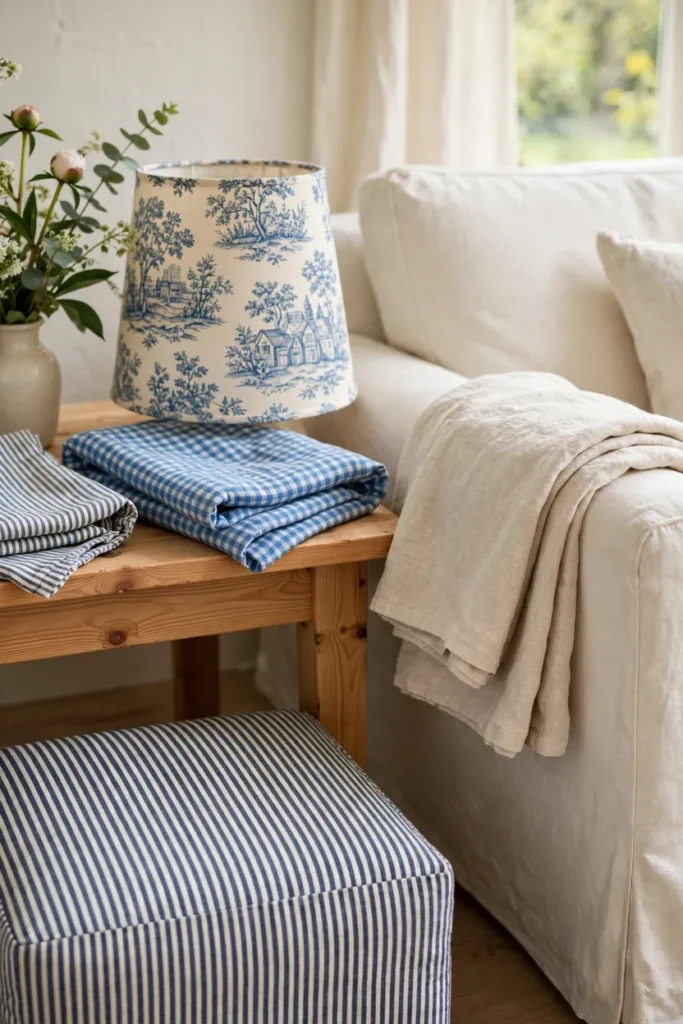
Rule: one pattern leads. Classic cottage fabrics look best in measured amounts. Cover an ottoman in ticking stripe, add a gingham cushion and use toile on a lampshade or a single pillow. Keep them in one color family, like blue and cream, so they feel related. If your sofa has a pattern, keep these accents solid or very small in scale.
20. Show Off Handmade Pieces Like Crochet, Embroidery and Pottery
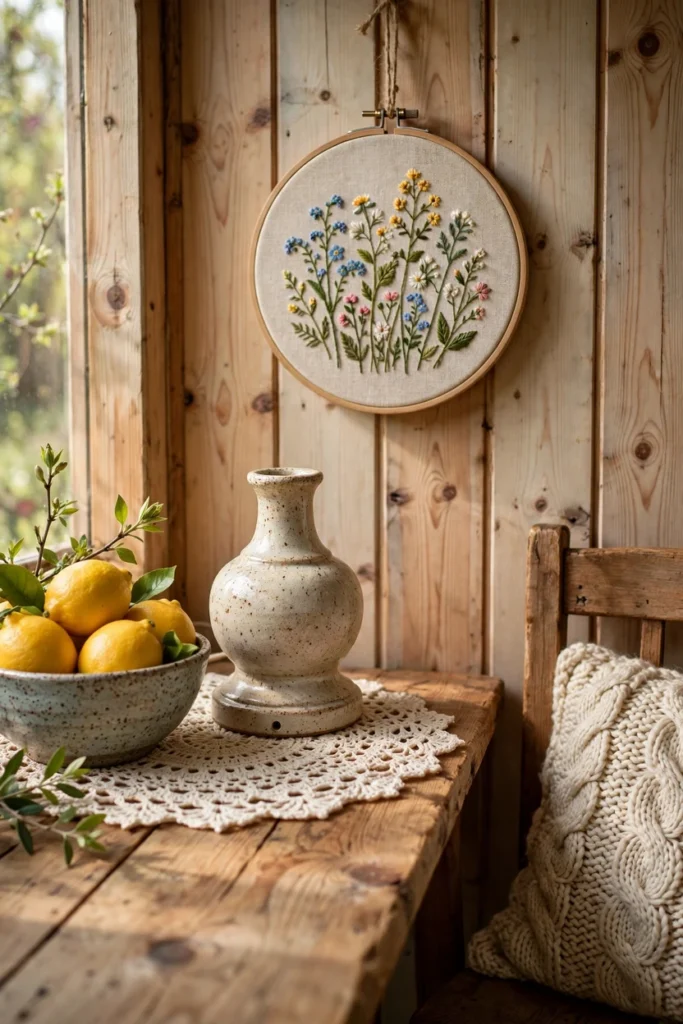
Rule: old beats new. Handmade items carry the soul of a cottage. Frame a small embroidery, set a hand-thrown bowl on the coffee table and lay a lace or crocheted doily under a lamp or a vase. Doilies are having a moment on Pinterest, with searches reported up about 105 percent. Buy from local makers and markets, or make your own, so the pieces have a story.
21. Go Dark and Moody for Evening Rooms
Rule: garden colors, at night. Dark cottagecore uses deep green, aubergine or chocolate brown walls with antique wood, candlelight and soft fabrics. Interest in dark cottagecore kitchens jumped about 915 percent in Pinterest’s spring report, and the look is moving into living rooms. Keep natural textures like wool, linen and wood so it stays soft, and use warm bulbs, so the room glows instead of looks heavy.

22. Edit Before Guests Arrive and Keep Walkways Clear
Rule: anchor the small stuff, and leave space. Before friends come over, take away one thing from each surface and gather loose items into baskets. Keep walkways 30 to 36 inches wide, and make sure the coffee table sits 14 to 18 inches from the sofa. A cottage should feel generous, but never crowded. This last edit often makes the biggest difference.
Styling Tips and a Cottage Numbers Cheat Sheet
Use these quick checks to keep the room balanced.
The pattern formula: one large, one medium, one small, all sharing one color.
The anchor rule: every group of small objects sits next to one larger piece.
The three-and-breathe rule: group small items in threes, and leave empty space around each group.
The lived-in test: can you put a mug down, curl up with a blanket and move through the room without bumping anything? If yes, it works.
Cottage Living Room Numbers Cheat Sheet
- Coffee table to sofa: 14 to 18 inches.
- Walkways: 30 to 36 inches wide.
- Rug size: at least the front legs of seating on the rug. Often 8 by 10 feet in a large room, 5 by 8 feet in a small one.
- Curtain rod: 4 to 6 inches above the window frame, panels 8 to 12 inches past each side.
- Art or plate group center: about 57 inches from the floor.
- Plate spacing: about 2 to 3 inches apart.
- Window seat: 16 to 18 inches high with the cushion, 18 to 24 inches deep and at least 48 inches long for sideways sitting.
- Window seat cushion: about 3 to 4 inches thick.
- Shelf empty space: 20 to 30 percent.
- Bulb color: warm white, around 2700K.
- Lamp shade: the bottom sits at eye level when you are seated.
Trends in Cottagecore
Butter yellow is moving from accents to walls, curtains and chairs, and soft sage, cream and dusty blue remain steady favorites. Lace doilies, handmade pieces, dark cottagecore palettes and a blend of cottagecore with grandmillennial style, with its chintz, pleated shades and skirted tables, are all popular. Modern cottagecore keeps the charm and edits the clutter, with cleaner lines and fewer patterns at once.
Related: 15 Blue Living Room Ideas That Prove the Color Works
Practical Ways to Put It Into Action
Plan this over a month, and shop slowly.
Week 1: Pick the lead. Choose one main pattern or color, such as a floral curtain or a sage wall, and measure the room.
Week 2: Build the base. Add the slipcovered sofa or cover, the rug and the curtains. Keep these calm.
Week 3: Add old and handmade pieces. Visit thrift shops, estate sales and markets, and look for one wood piece and a few textiles.
Week 4: Layer light and nature. Add lamps, plants, flowers and baskets, and style one mantel, shelf or table.
Ongoing: Change flowers and throws with the seasons, and edit when a surface feels full.
When buying vintage, test old paint for lead before sanding, have old lamps rewired and inspect secondhand upholstery for pests.
Common Mistakes to Avoid
- Buying the whole look new. Matching cottage sets feel like a costume. Add something old.
- Using too many small objects. Add a large anchor and leave space.
- Using too many equal patterns. Let one lead, and keep the others smaller.
- Over-distressing furniture. Fake wear looks forced. Look for the real thing, or leave new pieces plain.
- Skipping function. A pretty room with a hard sofa and no storage won’t be used.
- Using cool white light. Choose warm bulbs and lamps.
- Hanging curtains too low or narrow. Hang high and wide.
- Ignoring pets and kids. Choose washable fabrics and avoid toxic plants and unstable shelves.
- Leaving candles unattended. Keep flames away from fabric and never leave them burning.
- Forgetting to edit. Remove one item from each surface before guests arrive.
Small-Space Alternatives
- Wallpaper one small section, like the wall behind the sofa, instead of the whole room.
- Choose a small slipcovered loveseat or an apartment sofa.
- Use a nesting or round table, so you have more room to move.
- Hang a plate group or art instead of adding shelves that take floor space.
- Use wall hooks for baskets and a slim ladder for quilts.
- Keep a limited palette of three colors, and make one of them cream.
- Use a mirror opposite a window to double the light.
- Pick one window seat or one armchair, not both.
Budget-Friendly Alternatives
- Thrift your old pieces. Check thrift shops, estate sales, yard sales and online resale for wood furniture, china and quilts.
- Sew simple curtains. Linen or cotton panels on a plain rod cost much less than ready-made ones.
- Make a painted accent. A chalky paint on a small furniture piece or one wall adds a lot.
- Use peel-and-stick wallpaper in one section. It costs less than a full room.
- Make your own flower display. Cut stems from the garden or buy a small grocery bunch for a jug.
- Add plate hangers and thrifted plates. A plate wall can cost very little.
- Reuse jars and baskets. Use what you already own.
- Buy one splurge. Choose a good sofa or rug, and fill in the rest slowly.
A good rule: spend on the sofa and the rug, and thrift or make the rest.
Pro Styling Recommendations
- Shop for scale. Mix at least one large piece with your small objects.
- Choose a palette of five. For example, cream, sage, butter yellow, dusty blue and bark brown.
- Check the light. Look at paint, fabric and wallpaper samples at morning and evening.
- Layer by weight. Put heavy items low and delicate ones high.
- Repeat materials. Use wicker, pine and linen at least three times each.
- Photograph the room. A photo shows where it feels crowded.
- Respect safety. Keep clearances around any stove or fireplace, use candle holders and secure shelves.
- Rotate seasonally. Swap throws, flowers and a few objects four times a year.
FAQs
What is a cottagecore living room?
A cottagecore living room is a cozy, nature-inspired space with natural materials, soft garden colors, vintage and handmade pieces, and layered patterns. It feels collected over time, comfortable and warm.
How do I make my living room cottagecore?
Start with a slipcovered sofa, a soft wall color, linen curtains and a vintage-style rug. Add one real old wood piece, lamps with warm bulbs, flowers or plants, baskets and a few handmade items. Let one pattern lead.
What colors are used in cottagecore?
Cream, warm white, sage, butter yellow, dusty blue, soft rose, lavender and earthy browns. Draw from what grows in a garden, and keep the tones soft and slightly faded.
How do I mix patterns in a cottagecore living room?
Use one large pattern, one medium pattern and one small pattern, and repeat one color in all three. Add solids for rest. For example, a large floral curtain, a ticking stripe pillow and a small gingham cushion.
Does cottagecore have to be cluttered?
No. Group small items in threes, add one larger anchor piece and leave breathing room. Keep walkways clear and use baskets for storage.
Can I do cottagecore in a small living room?
Yes. Wallpaper one small section, use a loveseat, choose slim furniture and use wall-hung plates or art. Keep the palette limited and use a mirror to bounce light.
How do I do cottagecore on a budget?
Thrift wood furniture, quilts and china, sew simple curtains, use peel-and-stick wallpaper in one section and cut flowers from the garden. Spend on the sofa and rug first.
What is the difference between cottagecore and modern cottagecore?
Traditional cottagecore says yes to many florals, frills and collectibles. Modern cottagecore edits those, with cleaner lines, fewer patterns and more breathing room, but keeps natural materials and handmade details.
Related: 18 Modern Farmhouse Living Room Ideas With Texture & Warmth
How can I do cottagecore as a renter?
Use peel-and-stick wallpaper, curtains, rugs, lamps, leaning art, baskets and plants. These add the look without changing the walls or floors.
Is cottagecore still in style?
Yes. Butter yellow, doilies, handmade decor, dark cottagecore palettes and cottage-meets-grandmillennial looks are all showing up. The most current version is more edited and personal.
A cottagecore living room is a cozy, nature-inspired space with natural materials, soft garden colors, vintage and handmade pieces, and layered patterns. It feels collected over time, comfortable and warm.
Start with a slipcovered sofa, a soft wall color, linen curtains and a vintage-style rug. Add one real old wood piece, lamps with warm bulbs, flowers or plants, baskets and a few handmade items. Let one pattern lead.
Cream, warm white, sage, butter yellow, dusty blue, soft rose, lavender and earthy browns. Draw from what grows in a garden, and keep the tones soft and slightly faded.
Use one large pattern, one medium pattern and one small pattern, and repeat one color in all three. Add solids for rest. For example, a large floral curtain, a ticking stripe pillow and a small gingham cushion.
No. Group small items in threes, add one larger anchor piece and leave breathing room. Keep walkways clear and use baskets for storage.
Yes. Wallpaper one small section, use a loveseat, choose slim furniture and use wall-hung plates or art. Keep the palette limited and use a mirror to bounce light.
Thrift wood furniture, quilts and china, sew simple curtains, use peel-and-stick wallpaper in one section and cut flowers from the garden. Spend on the sofa and rug first.
Traditional cottagecore says yes to many florals, frills and collectibles. Modern cottagecore edits those, with cleaner lines, fewer patterns and more breathing room, but keeps natural materials and handmade details.
Use peel-and-stick wallpaper, curtains, rugs, lamps, leaning art, baskets and plants. These add the look without changing the walls or floors.
Yes. Butter yellow, doilies, handmade decor, dark cottagecore palettes and cottage-meets-grandmillennial looks are all showing up. The most current version is more edited and personal.
Final Thoughts
A cottagecore living room isn’t about owning the most flowers or the most teacups. It is about rules that keep the room gentle and useful: natural materials, one lead pattern, a few old things, warm light and space to breathe.
Start with a soft color, a comfortable seat and one thrifted piece you love. Then add layers slowly, edit often and let the room grow with you. In time, it will feel like it has always been yours.