18 Primitive Living Room Ideas Designed With Intention
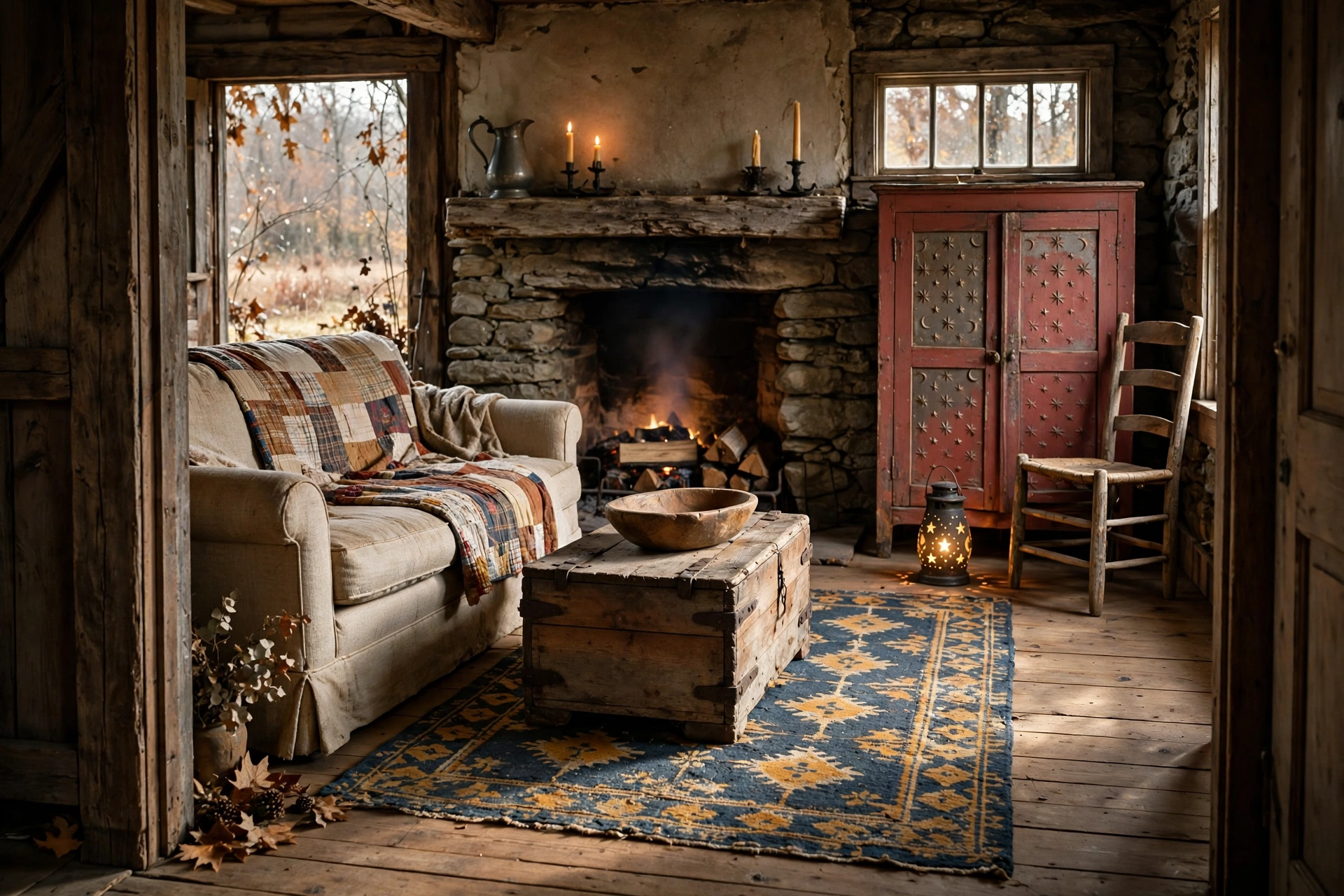
Picture a living room where every object has a job. A scarred pine chest holds the winter blankets and doubles as a coffee table. A dough bowl, worn smooth by a hundred years of hands, sits on top. At dusk the only light comes from a punched-tin lantern and a low fire.
That is a primitive living room done well. It is not a theme, and it is not a shelf of craft-store stars and signs. It is a room built from honest, handmade, useful things, placed with care.
This guide shares 18 primitive living room ideas designed with intention. Each one explains what to look for, why it works and how to fit it into a real home, including small spaces and rentals. You will also find color guidance, safety notes for old pieces and fireplaces, and a clear way to keep the room warm without letting it fill up with stuff.
Quick Answer: What Is a Primitive Living Room?
A primitive living room follows the early American folk tradition: handmade or hand-looking furniture, worn wood, muted historic colors, simple textiles and a few well-chosen antiques. Designed with intention means every piece is useful, honest in its material and earns its place, so the room feels collected instead of crowded.
Quick Terms to Know
Primitive decor: A folk-art style based on early American, pre-industrial homes, with rough, simple, handmade pieces in muted colors.
Rustic: A broader style that shows off natural wood and rough texture, but does not have to be handmade or old.
Folk art: Art and objects made by ordinary people for their own homes, such as samplers, painted boxes and carved figures.
Patina: The soft wear and color that develop on wood, metal and paint with years of use.
Milk paint: An old-style, chalky paint made from milk protein, lime and earth pigments, known for its flat, uneven finish.
Treenware: Small handmade wooden items such as spoons, scoops, bowls and trenchers.
The 18 Primitive Living Room Ideas
A Real or Faux Hearth as the Anchor
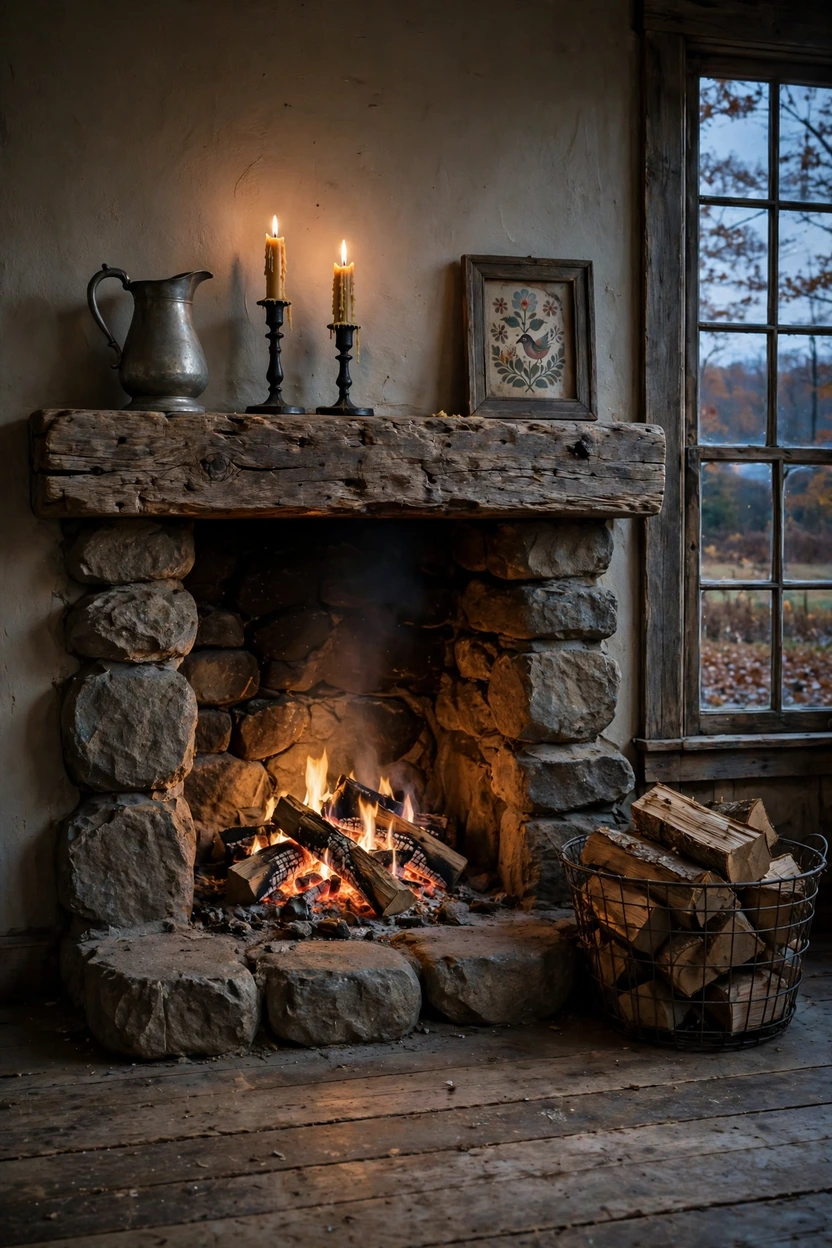
The hearth was the heart of early homes, so start there. A fieldstone or old brick fireplace gives the room a place to gather and a rough texture nothing else can match. If you don’t have one, a stone-look surround around an electric insert gives a similar pull, as long as your building rules and power setup allow it. Keep the mantel to a thick plank of weathered pine with just three things on it, like a pewter pitcher, two iron candlesticks and a small folk art panel. If you burn real fires, have the chimney inspected every year. A strong anchor gives every other piece in the room a direction to face.
Wide Pine Floors With a Worn Finish
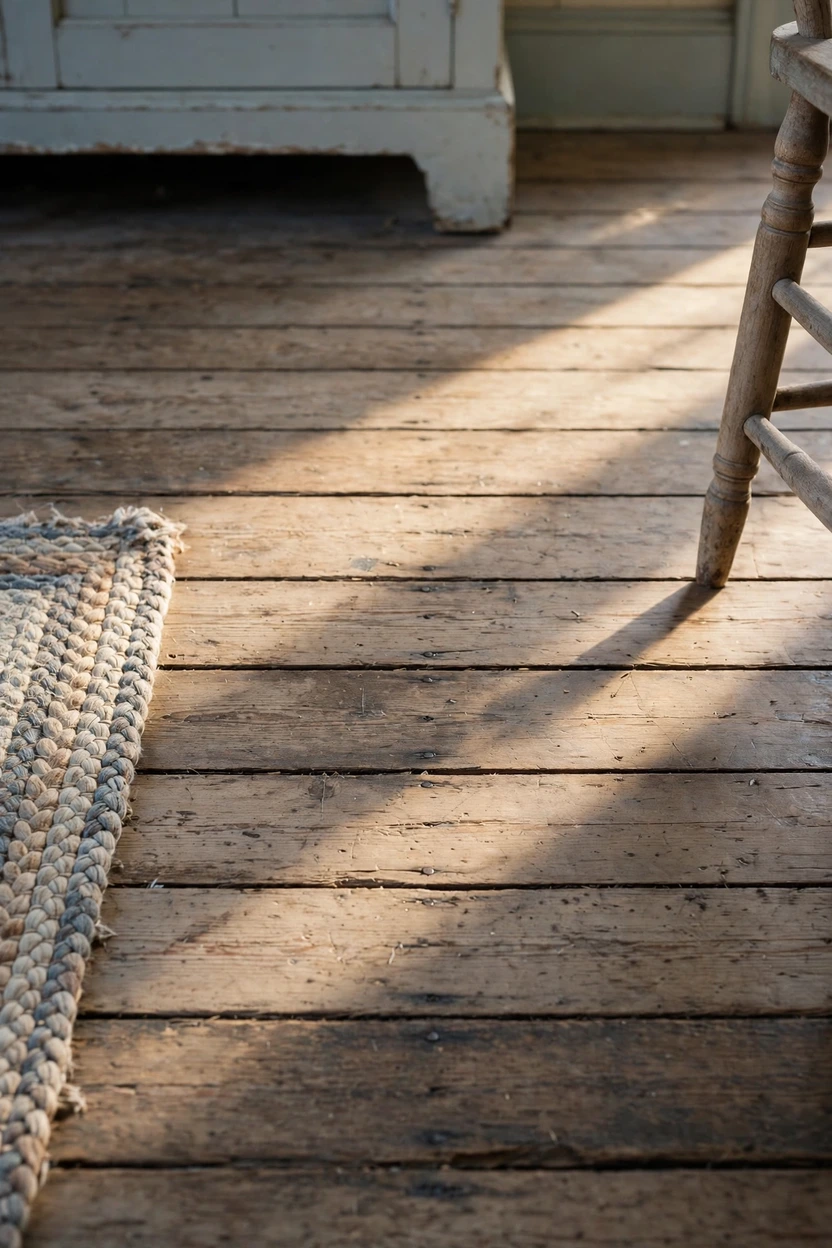
Old floors told the story of the house: wide pine planks, soft edges, a little dip near the door. You can capture that with real wide boards, a matte wood-look vinyl plank in a mid-brown tone, or a dark stain that lets the grain show. Pick boards five to eight inches wide if you can, since narrow strips read as modern. Avoid high gloss, because shine flattens the warmth. A worn, matte floor gives rugs and furniture legs a quiet place to sit and makes handmade pieces look at home.
A Muted Historic Color Palette
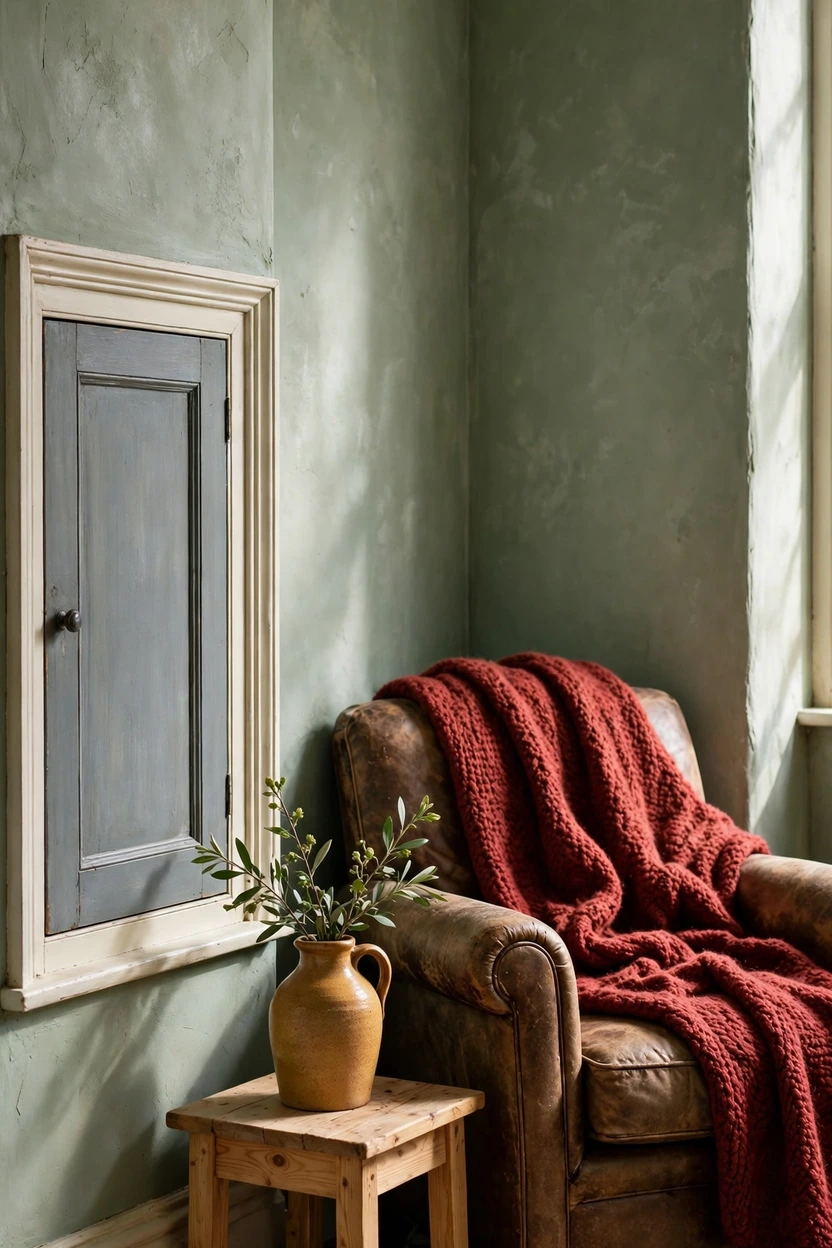
Early paints came from ground minerals, so the colors were soft and earthy: barn red, ochre, sage green, gray-blue, buff and cream. Pick one of these for the walls or the main cupboard, and keep the rest of the room in warm neutrals and dark wood. A matte or chalky finish works best, since shine looks out of place. Test a large swatch beside your wood tones, and look at it in morning and evening light before you commit. A tight palette is the first sign of intention, because the room reads as one thought instead of a sale table.
Hand-Hewn Beams, Real or Faux
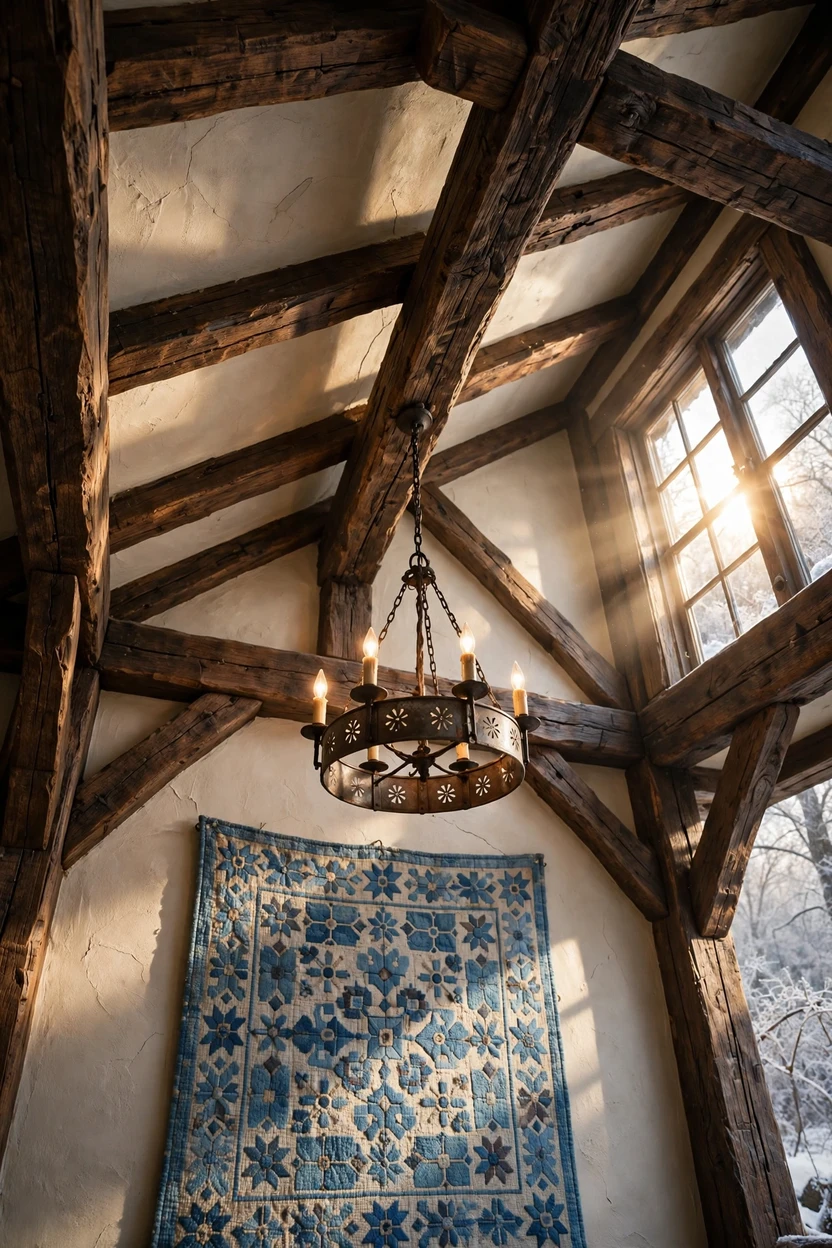
Heavy timber overhead tells the eye that a room is old and solid. If your home has beams, leave the wood bare or clean it gently, and skip glossy varnish. If it doesn’t, lightweight hollow faux beams in a hand-hewn look can be added with your landlord’s okay. Space them evenly and keep the ceiling between them warm white so the wood stands out. A beam also lowers the visual ceiling, which suits a small, snug room but not a very low one, so keep at least seven feet of clearance below.
A Painted Cupboard as the Hero Piece
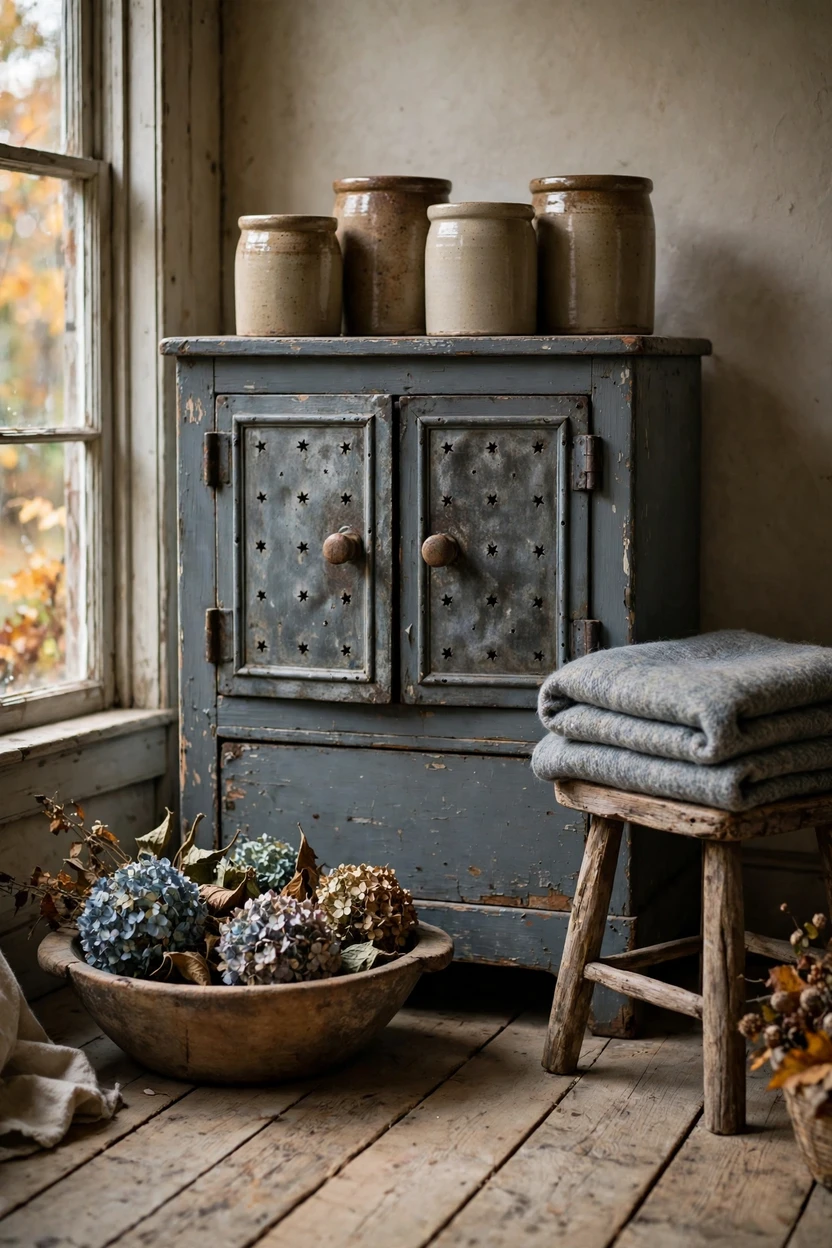
Choose one big storage piece and let it lead. A pine jelly cupboard, a pie safe with punched-tin panels or a corner cupboard in worn blue, red or green paint gives the room a face. Look for a depth of about 14 to 20 inches so it fits a living room wall without blocking the walkway. Inside, keep things simple and useful, like stacked crocks, linens, board games and books. Every other piece in the room should be quieter than this one, which is exactly how designers keep a busy style under control.
A Dough Box or Blanket Chest as a Coffee Table
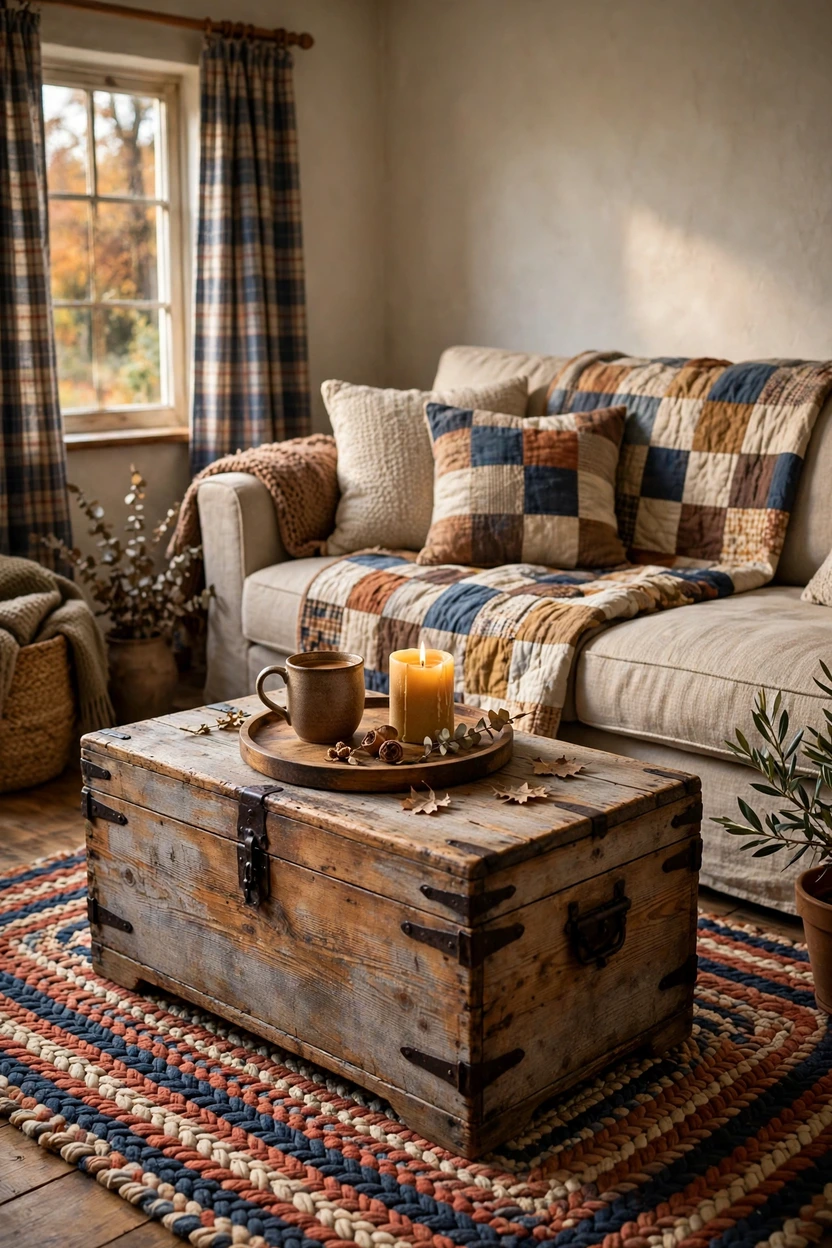
A low wooden chest does three jobs: it stores blankets, it holds a tray and it gives the room a story. A pine dough box, blanket chest or old trunk with iron hardware works well, ideally 16 to 20 inches high so it sits close to the sofa’s seat height. Leave 14 to 18 inches between it and the sofa so knees and mugs both fit. Top it with a wooden tray, one candle and one bowl. If the lid is rough or uneven, a flat tray keeps cups from tipping.
A Settle or Plank Bench for Extra Seating
A settle has a tall back and solid sides that block drafts, which is why people pulled it close to the fire. In a modern room, a settle or long plank bench by the hearth or under a window adds seating without adding bulk. Look for a width between 48 and 72 inches and add a thin wool or ticking-stripe cushion. It keeps the sofa from carrying the whole guest list. Place it at a right angle to the fire so it also guides the eye.

A Simple Sofa That Lets the Antiques Lead
Comfort matters, and nobody wants to sit on a plank all night. Choose a sofa with plain lines, low arms and a fabric in oatmeal, tan, ticking stripe or worn leather. Skip busy prints and glossy finishes, because the antiques should do the talking. Add one quilt or wool throw across the back for softness. This is the one modern-comfort piece in the room, and it makes the old pieces feel livable instead of staged.

Hooked, Braided and Rag Rugs
Handmade rugs add color and softness to hard floors. A hooked rug with a simple animal or geometric pattern, a braided oval or a rag rug in faded tones all fit the style. Use a 2 by 3 or 3 by 5 rug in front of the hearth, or layer a small hooked rug over a larger flat jute rug. In the main seating area, make sure at least the front legs of the sofa sit on the rug. Choose wool where you can, because it wears well and hides dirt.

Quilts as Wall Art and Throws
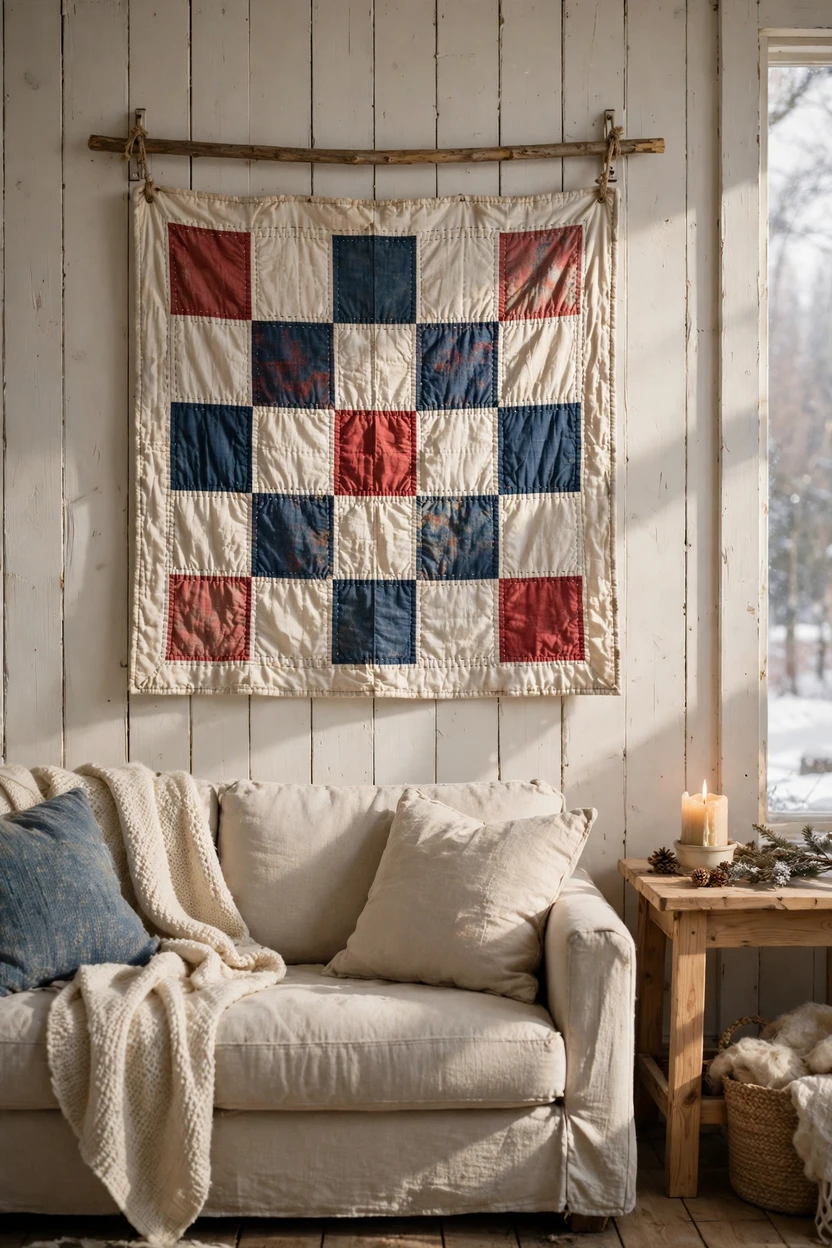
Quilts are folk art you can use. Hang one on a wall or over a quilt rack, and use a second as a throw so the room has both display and comfort. Choose faded reds, blues, creams and browns in simple patterns like nine-patch, stars or log cabin. Hang it from a wooden rod or quilt clips so you don’t punch holes through the fabric, and keep it out of direct sun so the colors last. One big quilt gives a wall the same pull as a painting and adds sound-softening texture.
Punched-Tin Lanterns, Iron Sconces and Safe Candlelight
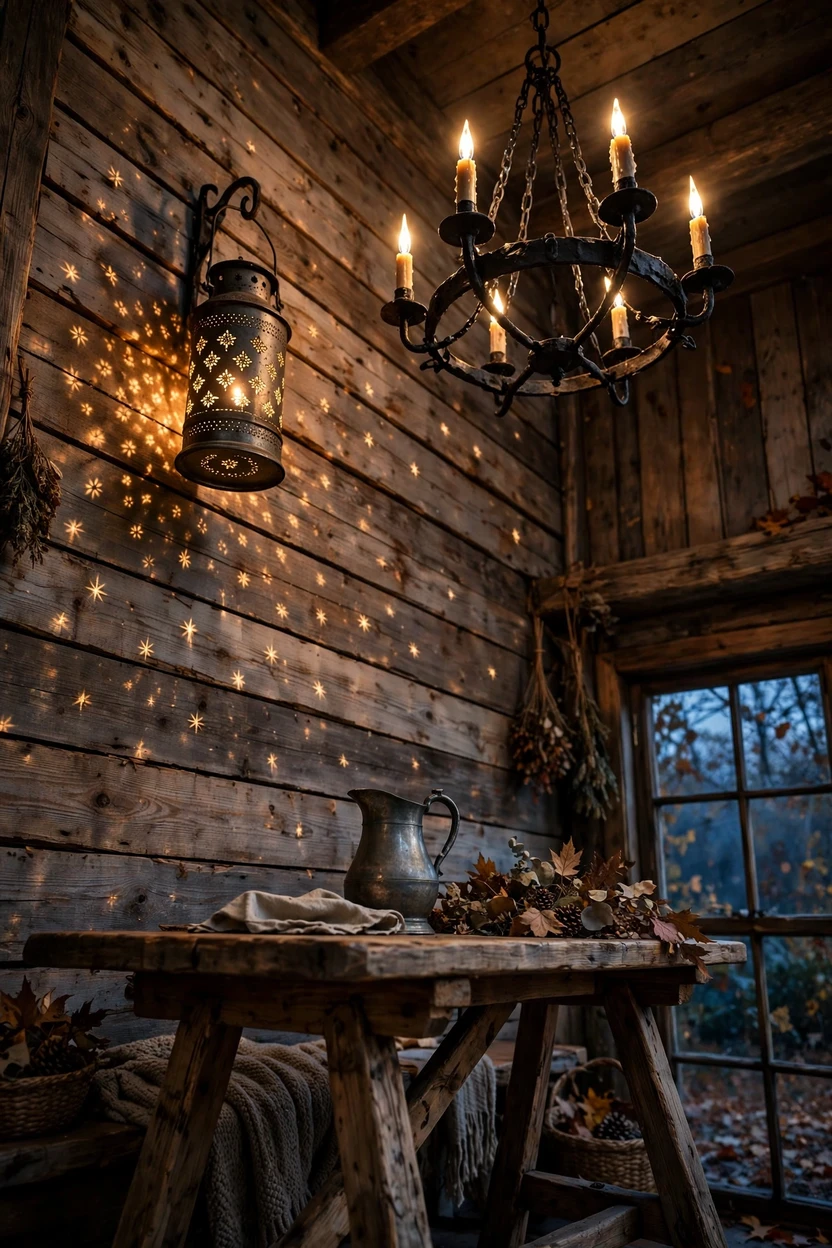
Early homes lit rooms with candles, so the light was low, warm and flickery. Echo that with a punched-tin lantern, a black iron chandelier or wall sconces with warm 2700K bulbs. Add real beeswax tapers only if you can keep them at least 12 inches from anything flammable and never leave them burning when you’re out of the room. In homes with kids, pets or strict leases, flickering LED tapers look almost the same. Hang chandeliers so the lowest point sits about seven feet off the floor in walkways, or 30 to 36 inches above a table. Warm, low light is what makes rough wood and old paint glow.
Dough Bowls and Treenware as Sculpture
A hand-carved dough bowl is both a tool and a sculpture. Set one on a table or chest, fill it with pinecones, wooden spoons or dried seed heads, or leave it empty so the carved shape shows. Look for a 20- to 30-inch size for a coffee table or console, and smaller bowls for shelves. Treenware, meaning small turned or carved wooden items like spoons, scoops and trenchers, adds the same worn charm in miniature. Group them in threes at different heights, since one object can feel lonely and five start to feel like a shop.

Folk Art, Samplers and Silhouettes on the Wall
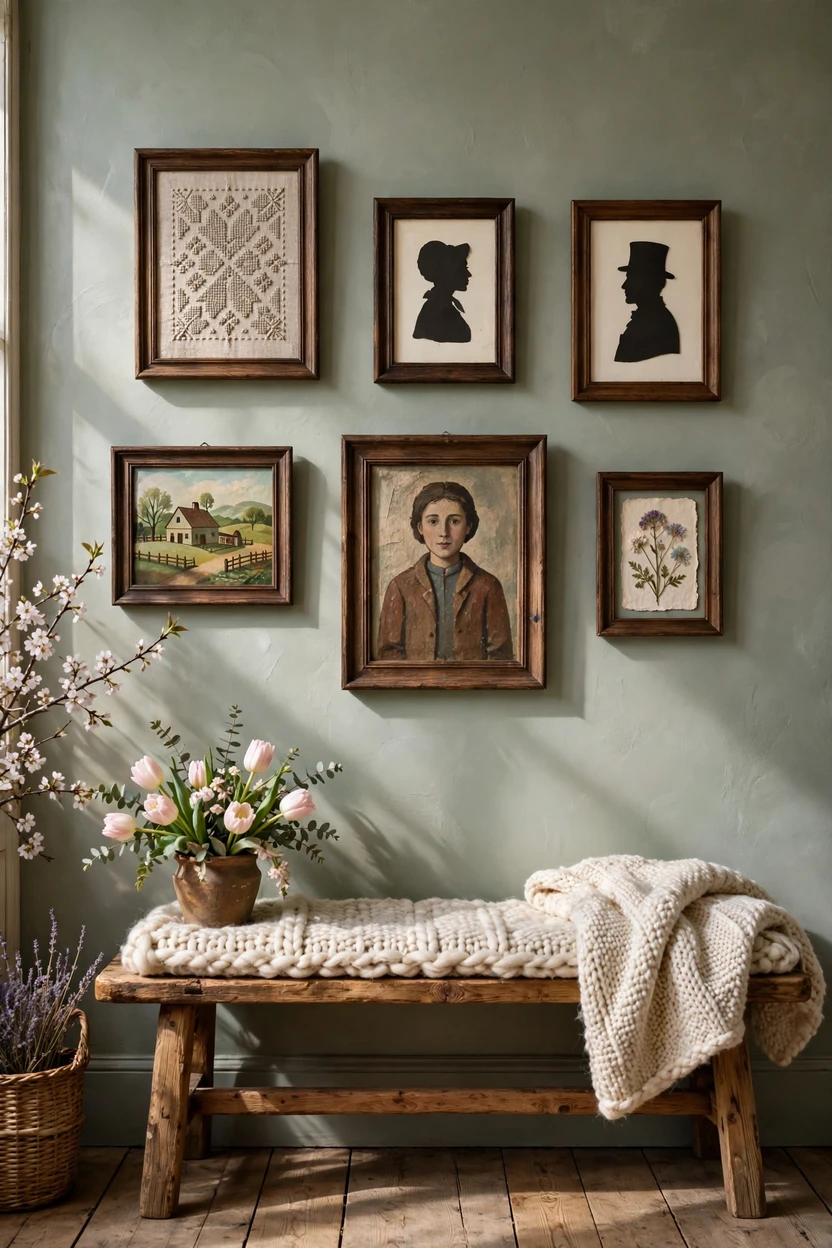
Folk art was made by ordinary people for their own homes, so it’s simple, a little crooked and full of heart. Look for a stitched sampler, a painted portrait, a silhouette or a naive landscape in a plain wood frame. Hang them in a tight group of three to five with two to three inches between frames, centered about 57 inches from the floor. Let one piece be larger than the rest so the eye has a place to start. Choose art that means something to you, such as a family name, a place or a craft, because the story is the point.
A Shelf of Crocks, Pewter and Redware
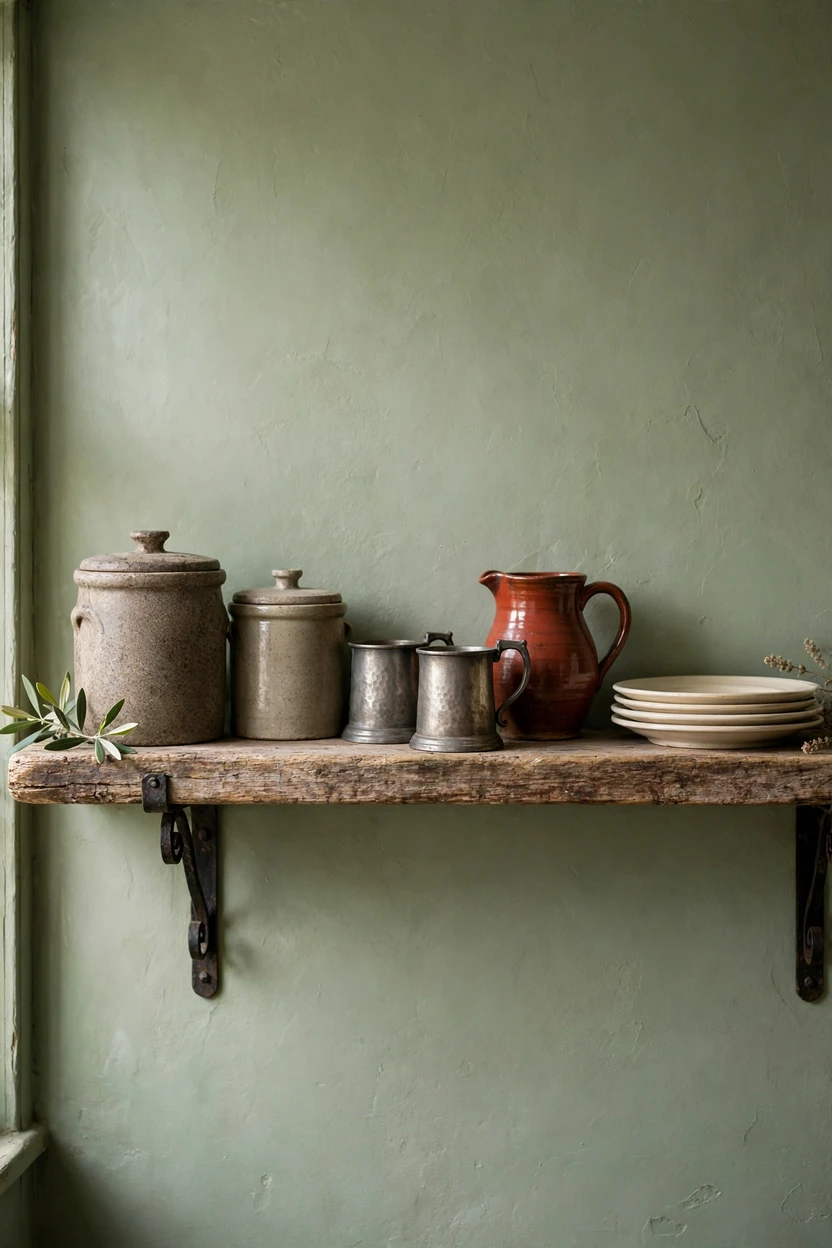
Open shelves let you show useful objects instead of hiding them. Fill one with stoneware crocks, pewter plates or mugs and redware pitchers, and keep the colors tight: gray, brown, soft red and cream. Use a plain wooden shelf on iron brackets or a wall-hung plate rack. Leave about one-third of the shelf empty so each object can be seen. Pewter and stoneware are heavy, so anchor brackets into studs, or set the display on a deep cupboard top instead.
Simple Window Dressing With Wood Rings
Early windows had plain fabric or wood shutters, not layers of drapes. Choose cotton or linen panels in ticking stripe, small plaid, check or solid natural, and hang them from an iron or wood rod with wooden rings. Mount the rod four to six inches above the window frame and extend it a few inches to each side so more light comes in. Pick a length that skims the sill or just touches the floor, never somewhere in between. Plain window treatments let daylight show off the wood, the paint and the quilt.

Working Pieces on Display: Baskets, Ladders and Crates
A primitive room respects useful things. Use a splint or wicker basket for logs or throws, a wooden ladder as a quilt rack and an old crate as a magazine bin. Tuck smaller items into larger ones, like blankets in a basket and books in a crate. These pieces cut clutter because each one has a job. If an object can’t hold, hang or carry something, it probably doesn’t belong.

Greenery and Dried Botanicals Gathered From Outside
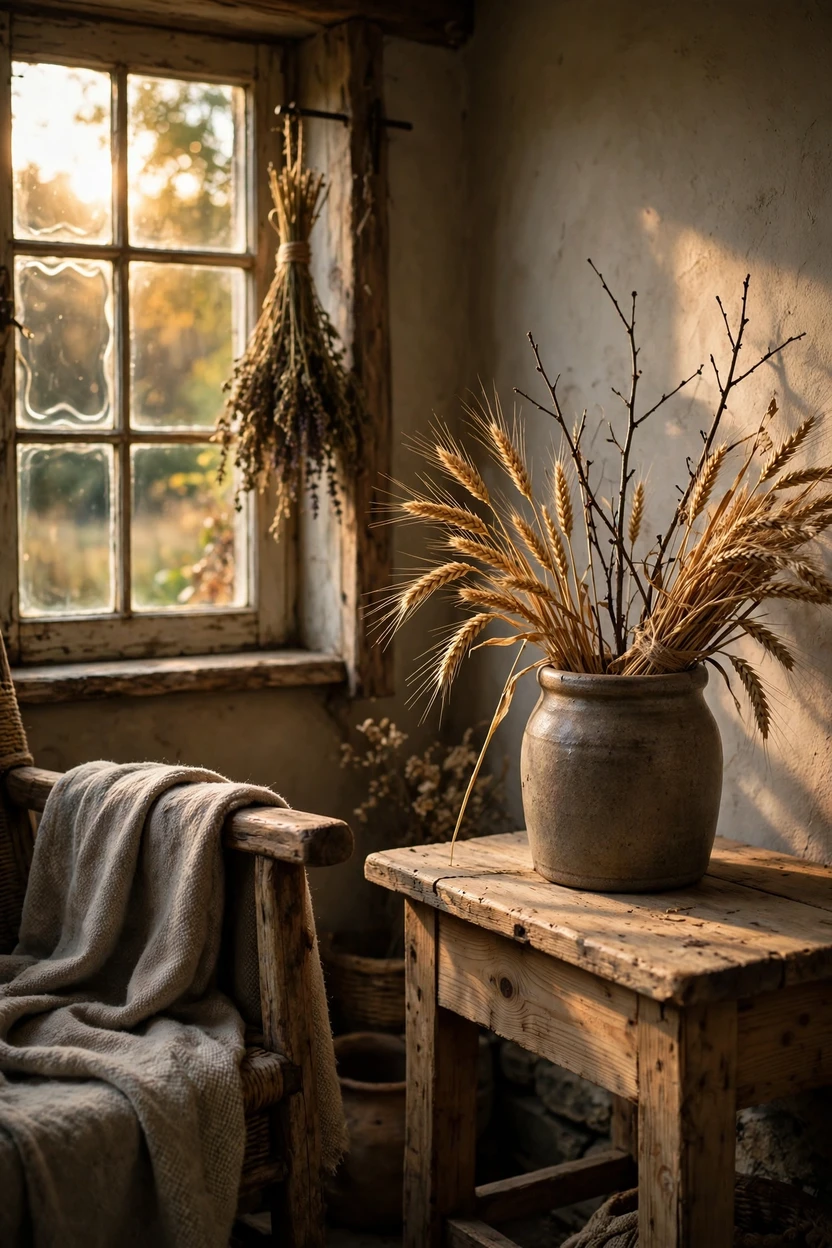
Early households brought in whatever grew nearby. Fill a crock with branches, dried grasses, wheat or hydrangea, and hang a bundle of herbs by the window. Keep the colors natural: tan, green, rust and cream. Swap them with the seasons so the room changes without new purchases. Avoid plastic stems and glittery picks, since fake shine breaks the honest feel.
A Modern Counterpoint in Small Doses
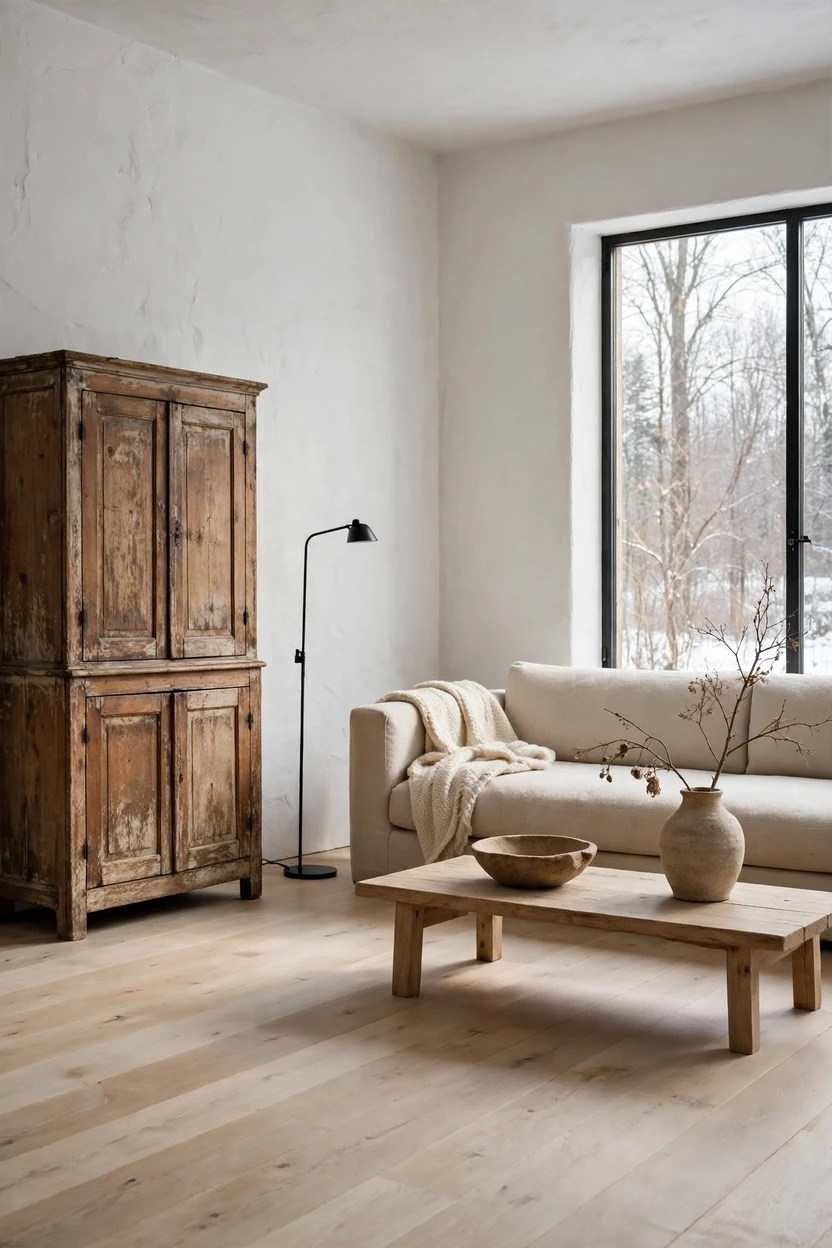
Primitive style looks freshest when one or two clean, modern pieces break up the old ones. Try an 80/20 mix of simple modern pieces to antiques, or flip it if you love the old things. A slim black metal floor lamp, a plain white drum shade or a streamlined sofa can sit beside a pine cupboard. Keep the lines simple and the colors in the same earthy range. The mix borrows a little of the wabi-sabi and Japandi mood, where worn, handmade objects sit calmly in quiet space.
Styling Tips
These habits tie all 18 ideas together, so the room feels planned instead of piled up.
Run the intention test. Before any piece comes in, ask three questions. Does it do a job? Is it honest in its material and make? Does it earn the space it takes?
Use a 60-30-10 color split. About 60 percent warm neutrals and plaster tones, 30 percent wood, and 10 percent one or two historic colors like barn red or gray-blue.
Keep one hero. Let the cupboard, the hearth or the quilt lead, and keep everything else quieter.
Group in threes. Three crocks, three frames or three bowls at different heights read as a collection, not a pile.
Leave one-third of every surface empty. Breathing room is what stops primitive from turning into clutter.
Repeat one material. Black iron, pewter or stoneware, repeated in three places, ties a room together.
Mix finishes carefully. Keep woods in the same warm family, and let one piece in old paint carry the color.
Light low and warm. Use table lamps, sconces and 2700K bulbs at different heights instead of one bright overhead.
Practical Implementation Ideas
You don’t have to buy everything at once. This order works for most homes.
Edit first. Remove anything shiny, plastic or purely decorative. Keep what is useful, handmade or meaningful.
Set the palette. Choose one wall or cupboard color from the muted historic range and test a sample for a few days.
Find the anchor. Pick your hero: a hearth, a painted cupboard or a quilt wall.
Add working furniture. Bring in a chest coffee table, a bench and a simple sofa one at a time.
Layer light, then textiles. Add lamps and lanterns, then rugs, quilts and curtains.
Finish with a few objects. Add a dough bowl, a crock and one piece of folk art. Stop earlier than you think.
Safety notes for old pieces and open flames:
Antique paint: Painted furniture made before 1978 in the US may contain lead paint. Don’t sand it. Use a lead test kit, seal flaking paint with a clear sealer and keep it away from anything children or pets might chew.
Wood pests: Check old wood for tiny round holes or fine powder, which can mean wood-boring beetles. Inspect pieces before bringing them inside.
Fireplaces: Have a working chimney inspected and cleaned every year. Use a sturdy screen.
Candles: Keep flames at least 12 inches from anything that can burn, never leave them unattended and consider flameless candles for kids, pets and rentals.
Common Mistakes to Avoid
Going full craft store. Too many stars, signs and “gather” words turn a folk style into a theme. Choose a few real pieces instead.
Matching everything. A single catalog set looks flat. Primitive rooms look collected over time.
Distressing too evenly. Real wear shows on edges, handles and tops. A sanded pattern across the whole piece looks fake.
Using too many colors. Barn red, mustard, blue and green all at full strength is too busy. Choose one lead.
Forgetting comfort. A room full of hard wood needs a soft sofa, a rug and a throw.
Hanging lanterns too low. Keep the bottom about seven feet up in walkways.
Choosing tiny rugs. A postage-stamp rug makes the room feel unfinished. Anchor the seating area.
Overusing burlap and plastic greenery. They read cheap next to real wood and wool.
Ignoring natural light. Dark wood and muted walls need daylight, so keep windows plain and clean.
Treating antiques like a museum. Use them. A dough bowl that holds something and a chest that stores something feel alive.
Small-Space Alternatives
Tiny living room: Use a loveseat, one chest coffee table and a single painted cupboard. Skip the extra chairs.
No fireplace: Use a small console as a mock hearth, with a mirror or quilt above it and lanterns on top.
Low ceilings: Skip beams and add a plank-style wall on one side, plus long vertical curtains.
Narrow room: Use a slim bench instead of an armchair and keep the center path 30 to 36 inches wide.
Little wall space: Lean a ladder with a quilt in a corner instead of hanging a gallery.
Open-plan apartment: Use a rug and a painted cupboard to mark the primitive zone and keep the rest simple.
Rental: Stick to freestanding pieces, plug-in lighting, rugs, removable art strips and plants.
Small shelf budget: Group three crocks and one pewter piece on a single board, not a full wall.
Budget-Friendly Alternatives
Prices vary by region, so treat these as a guide to where to start.
Low cost, big effect:
Thrifted stoneware crocks, wooden bowls and baskets.
Warm 2700K bulbs and a punched-tin lantern.
Plain cotton or linen curtains with wooden rings.
A thrift-store quilt, or a wool blanket hung like one.
Dried branches, wheat and grasses gathered outdoors.
Mid-range:
A solid pine bench or chest from an estate sale, farm auction or antique mall.
A hooked or braided rug in wool.
A used cupboard refinished in milk paint, with wax over the top.
LED taper candles in black iron holders.
Splurge when it counts:
One real antique cupboard or dough bowl with honest wear.
A quality sofa, since it carries daily comfort.
A professional chimney inspection if you plan to burn real fires.
Age it yourself: On a new wood piece, try a light stain, then a wash of diluted milk paint, then light sanding on edges and corners only. Finish with wax. Always test on a hidden spot first.
Pro Styling Recommendations
Buy honest wear. Look for dents on corners, smooth patches where hands rest and uneven paint. Real wear is hard to copy.
Choose proportion over quantity. One large dough bowl does more than six tiny ones.
Balance heavy with light. Pair a chunky chest with a slim lamp and a tall cupboard with a low bench.
Create a quiet wall. Leave at least one wall plain so the eye can rest.
Photograph the room. A phone photo shows clutter and uneven weight that you miss in person.
Edit with the seasons. Swap greenery and textiles four times a year instead of adding more objects.
Keep the story. Label or note where pieces came from. A family quilt or a flea-market bowl adds meaning that no store can sell.
FAQs
What is a primitive living room?
It’s a living room styled after early American folk homes, with handmade or hand-looking furniture, worn wood, muted historic colors, simple textiles and a small number of antiques. The look values usefulness and honesty over polish.
What is the difference between primitive, rustic and farmhouse decor?
Primitive focuses on handmade, folk-art, pre-industrial pieces with a worn, painted look. Rustic celebrates raw natural wood and rough texture and doesn’t have to be handmade or old. Farmhouse is a broader, cozier country style that often borrows from both.
What colors are used in primitive decor?
The classic range is muted: barn red, ochre or mustard, sage green, gray-blue, buff, cream and dark brown. Keep one color as the lead and let the others appear in small touches.
How do I make a small living room feel primitive?
Choose a few strong pieces: a pine chest as a coffee table, a bench, one painted cupboard and a hooked rug. Keep surfaces clear and the palette tight so the room doesn’t feel crowded.
Can I mix modern and primitive styles?
Yes. A common approach is 80 percent simple modern pieces and 20 percent antiques, or the reverse. Keep lines clean and colors earthy so the two styles sit together calmly.
Is primitive decor still in style?
Yes, in a calmer form. Current takes lean toward fewer, more authentic pieces, natural materials and handmade character, often mixed with wabi-sabi and modern minimal rooms.
What furniture is typical in a primitive living room?
Common pieces include pine cupboards, pie safes, blanket chests, dough boxes, settle benches, trestle tables, Windsor and ladder-back chairs and simple sofas with plain lines.
Is primitive decor expensive?
It doesn’t have to be. Thrift stores, estate sales and farm auctions are good sources, and you can age new pieces with stain, milk paint and light sanding. Spend on one real anchor piece and save on the rest.
Is primitive decor the same as tribal or primal decor?
No. In home decor, primitive usually means early American folk style. Tribal or primal decor draws on specific cultural art traditions from around the world, and the word primitive is often avoided for those. If you love those traditions, look for pieces made by the people they come from and credit the source.
Is it safe to use antique painted furniture around kids and pets?
Furniture made before 1978 may have lead-based paint. Test it with a kit, avoid sanding, seal flaking areas and keep it out of chewing reach. If a piece tests positive, ask a qualified professional about the safest way to handle it.
How do I keep a primitive living room from looking cluttered?
Limit yourself to one hero piece, group objects in threes, leave a third of each surface empty and make sure every item has a job.
Conclusion
A primitive living room isn’t about owning more old things. It’s about choosing the right few and letting them work.
Start small. Move the quilt to the wall. Let the chest hold the blankets. Put a warm bulb in the lamp and light one real or flameless candle. Then stop and look at the room.
If it feels calmer, you’re on the right track. The best primitive rooms aren’t finished in a weekend. They grow slowly, one useful and honest piece at a time.