22 Moody Living Room Ideas With Contrast and Warm Light

Picture it. Dusk outside, deep green walls inside, and a low lamp throwing a pool of gold across a cream sofa. A fire flickers. A brass picture light glows on a big painting. The room feels like it is holding you.
Now picture the other kind of moody room. Dark paint, one bright ceiling bulb, and a TV glowing in the corner. The walls are dramatic, but the room feels like a cave.
The difference is not the color. It is contrast and light. A moody room works when dark surfaces have light things to play against, and when the lighting comes from low, warm sources instead of one harsh fixture overhead.
That is what the 22 ideas below are built around: depth you can see and warmth you can feel.
Quick answer: A moody living room uses deep wall colors, rich textures, strong contrast, and layered warm light. To keep it cozy and not gloomy, use the Deep-Light-Glow formula: a deep base on the walls, light contrast pieces such as a cream sofa or pale rug, and a glow of three to five warm light sources at different heights, all on dimmers.
Below are 22 ideas with the lamp heights, bulb temperatures, and paint tips most inspiration pages skip, so your room feels dramatic and still works for real life.
Table of Contents
The 22 Moody Living Room Ideas
Deep Forest Green Walls With Warm Wood
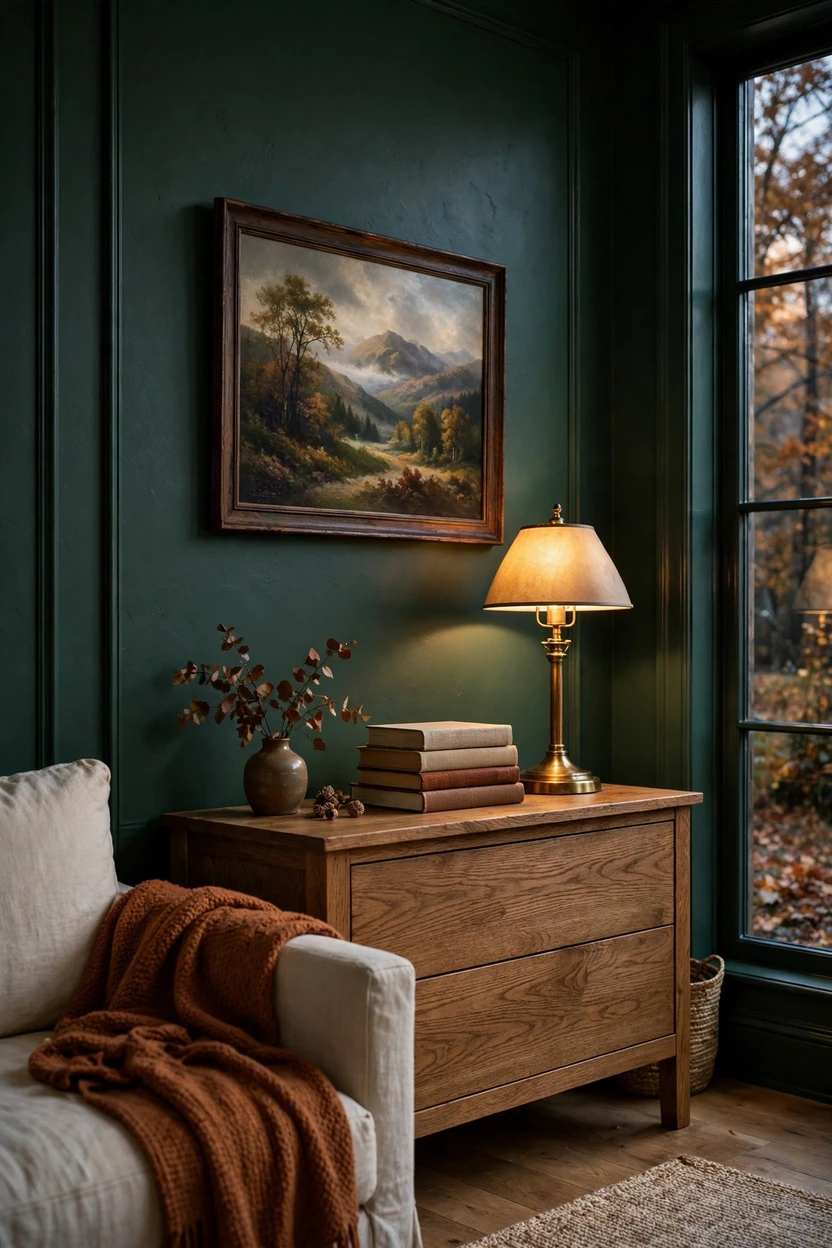
Forest green is the friendliest dark color, because it feels like a garden at dusk. Choose a green with a warm, slightly brown undertone, and pair it with oak or walnut furniture and brass accents. Test large samples on two walls and look at them in morning, afternoon, and lamp light before you decide. Painting the trim and ceiling the same green makes the room feel wrapped, while a soft white ceiling keeps it a bit lighter. Add a cream throw or pale lampshade so the green has something light to push against.
Navy Paneled Walls
Navy with paneling gives a room the structure of a library and the calm of a night sky. Use picture-frame molding or board-and-batten painted in the same navy, so the shadows between the panels add depth. Navy can read nearly black after dark, which is part of the charm, so add warm lamps to bring out the blue. Pair it with cream upholstery, a wood table, and brass hardware. A satin or eggshell finish on the molding catches light better than a flat matte.

Charcoal Walls With a Cream Sofa
Contrast is what makes charcoal look chic and not flat. A cream or oatmeal sofa against a charcoal wall gives your eye a clear light shape to rest on. Keep the dark in one big surface, and bring in light colors in the sofa, a rug, and a lampshade so the contrast repeats. A matte charcoal makes a soft backdrop, and a small glossy item such as a ceramic lamp adds a sparkle. Check that the charcoal has a warm undertone, since cool gray can feel cold under 2700K bulbs.
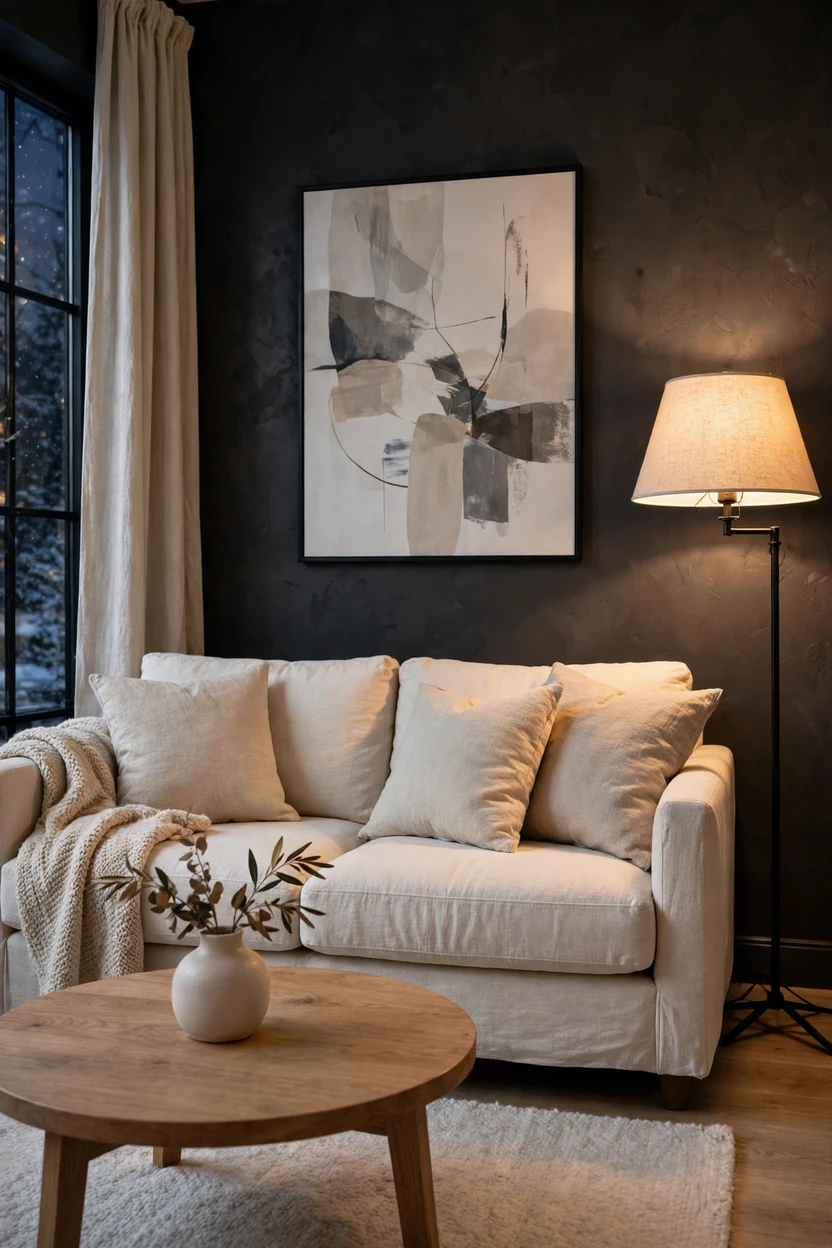
A Color-Drenched Room
Painting the walls, trim, doors, and ceiling the same deep color makes a room look like it was carved from one block. With no lines to break the eye, the room feels calm and the furniture seems to float. Use the same shade in a slightly different sheen, such as matte on walls and satin on trim, so the shape of the molding still shows. Pick a color with enough warmth to look good at night, and add contrast with a pale sofa, a light rug, and wood. Sample a large board and live with it for a few days first.
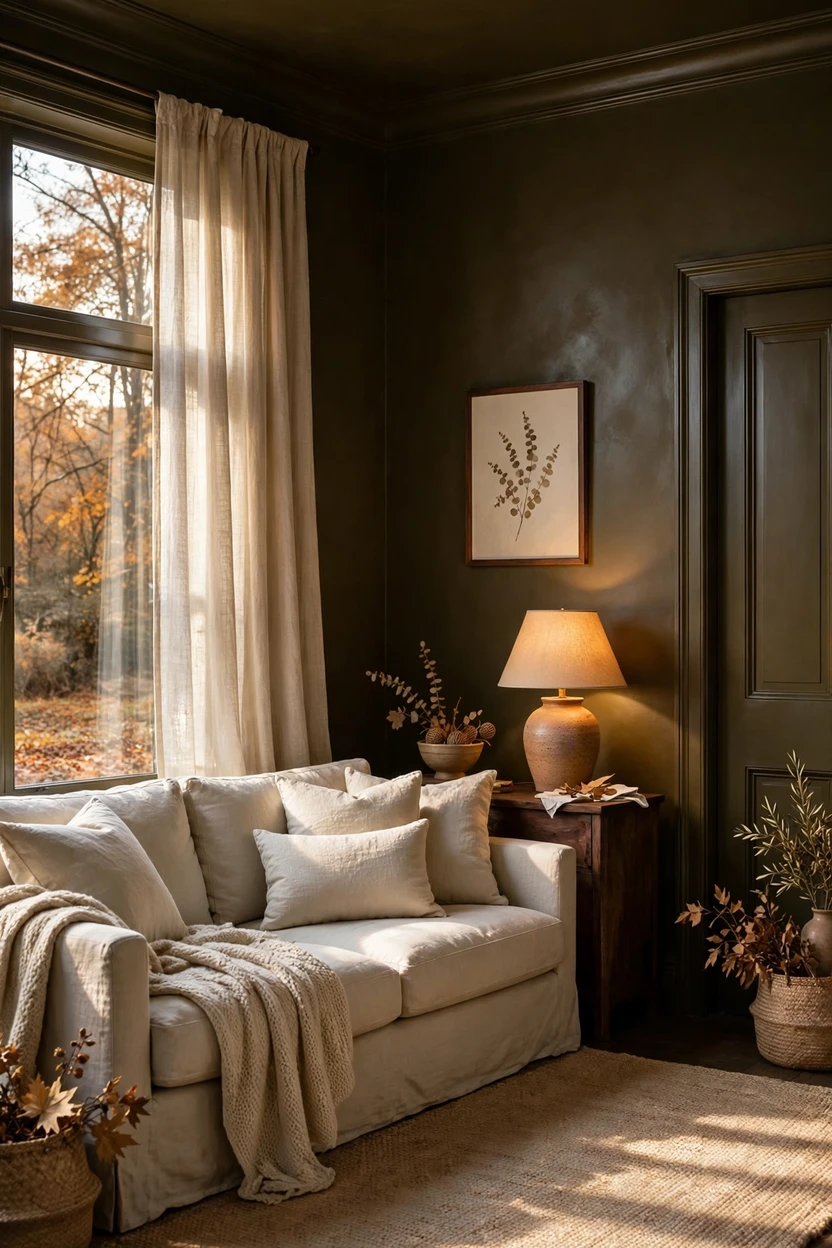
Burnt Clay Walls for a Warm Moody Look
Not every moody room is cool and dark. Burnt clay, deep terracotta, or cocoa walls feel like a warm hug, and they glow under lamplight. Pair them with cream linen, rust velvet, and dark wood, and keep metals in brass or bronze. Warm colors can feel heavy if every surface is the same tone, so add one lighter piece, such as a pale rug or a white ceramic lamp. This look works well in north-facing rooms, since the clay tone fights the cool light.

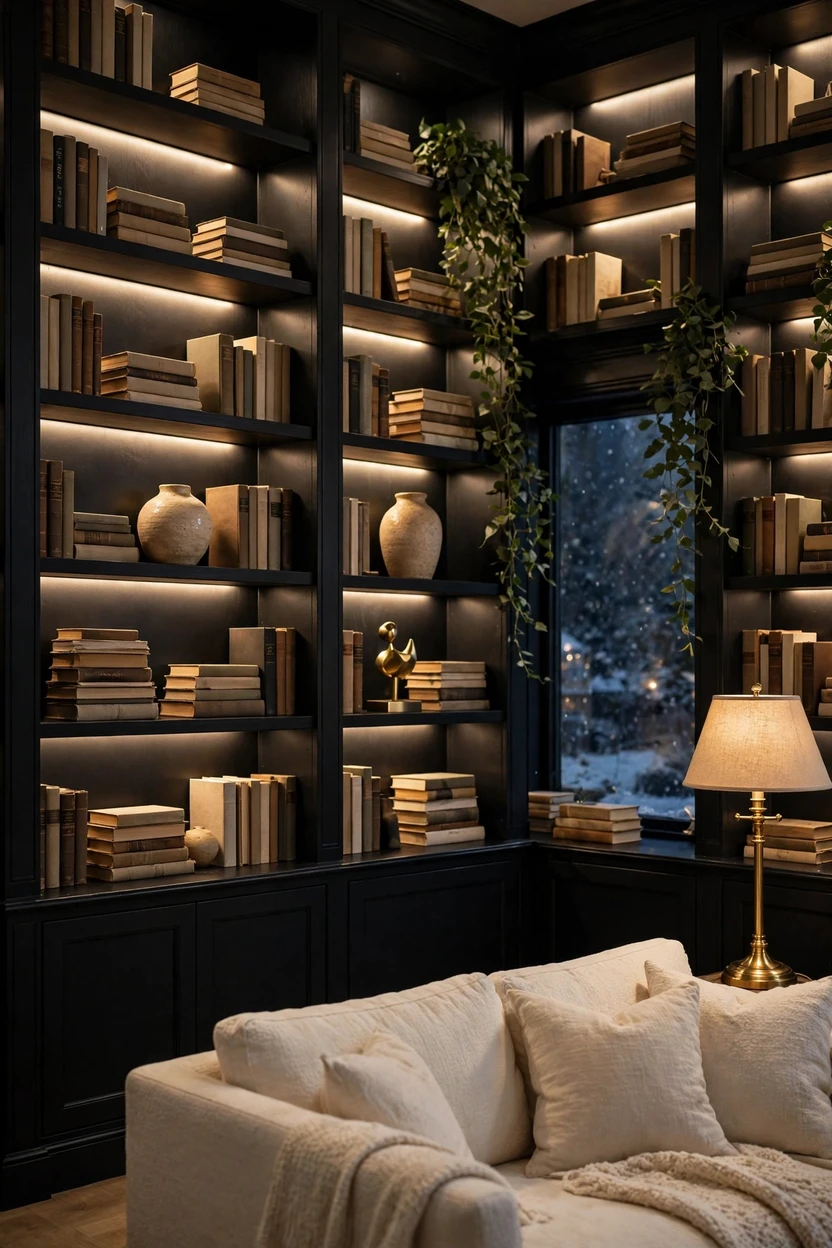
Black Built-Ins With Lit Shelves
Dark shelving gives a living room a library feel and shows off whatever you put on it. Paint built-in bookcases black or a deep green, then add a warm LED strip under each shelf so the objects glow. Use 2700K strips, and keep the styling simple: books in stacks, a few ceramics, and a plant. Leave some empty space on each shelf so the light has room to fall. A black frame around the TV or a closed cabinet below keeps the clutter out of sight.
A Jewel-Tone Velvet Sofa
Velvet is the texture that makes dark rooms feel rich. Its pile catches light and changes shade from different angles, so an emerald, plum, or rust sofa looks alive under lamplight. Keep the walls a deep neutral or a related dark tone, and add a few lighter cushions to break the color. Choose a performance velvet if you have kids or pets, since it resists stains and wear. Pair it with a dark wood table and a pale rug, so the sofa is the star.

A Cognac Leather Armchair
Warm leather is the best friend of a dark room. A cognac or tan armchair stands out against green, navy, or charcoal, and it picks up the glow of a nearby lamp. Choose full-grain or good-quality leather that develops patina, since scuffs and softness are part of the charm. Place it at an angle to the sofa with a small side table and a lamp. A leather chair also adds a masculine counterpoint to velvet and linen, so the room is balanced.

Lamps at Three Heights
Light that comes from one height flattens a room. Place a table lamp with the bottom of its shade near seated eye level, a floor lamp beside a chair, and a small lamp low on a shelf or console. This creates pools of light at different levels, so the room looks layered and your eye moves around. Aim for three to five light sources in total, spread in a loose triangle around the seating. Keep every lamp on the same warm bulb color so the pools blend.

Dimmers and Dim-to-Warm Bulbs
The quiet hero of a moody room is a dimmer. Use warm bulbs around 2700K for overhead light and 2200K to 2700K in lamps, with a color rendering index of 90 or higher so wood, leather, and fabrics look rich. Dim-to-warm LED bulbs get warmer as you turn them down, which feels like candlelight. Check that your bulbs are dimmable and match your dimmer type, so they do not flicker. Set simple scenes: brighter for guests, low for reading, and very low for movies.

A Picture Light Over One Big Painting
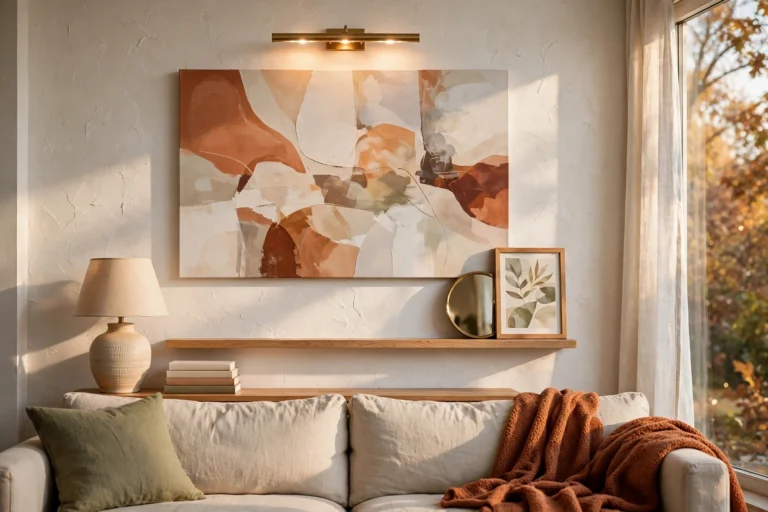
A single lit painting gives a dark wall a focal point and a gallery feel. Hang one large piece, with its center around 57 inches from the floor, and mount a slim brass picture light above it. Choose a light about half to three-quarters the width of the frame so the glow spreads evenly. Use a warm 2700K bulb and a battery or plug-in model if you do not want to run wires. At night, this one light can be enough to make the whole wall feel special.

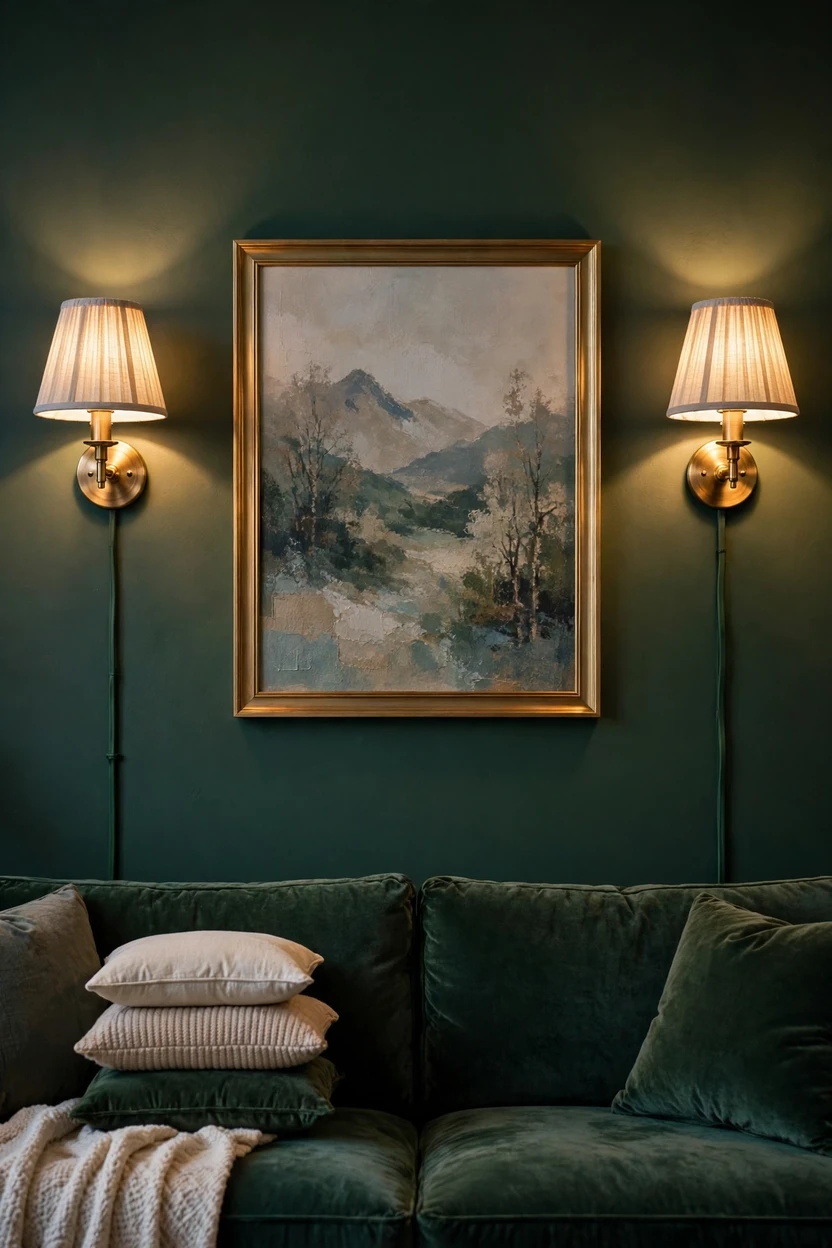
Plug-In Sconces on Both Sides
Wall lights free the surfaces and add a layer of glow at the right height. Place a pair of sconces on each side of the sofa or art, with the center around 60 to 66 inches from the floor, and keep them evenly spaced. Plug-in sconces are ideal for rentals, and a cord cover painted the same color as the wall hides the wire. Choose fabric or opal glass shades so the light is soft and not glaring. Put them on a smart plug or a dimmer so they warm the room on their own at dusk.
Fireplace Glow and Candlelight
Flickering light makes a moody room feel alive. Paint the fireplace surround a deep color or leave it in dark stone, and use heat-rated paint on any surface near the firebox. Add a few pillar candles or tapers on the mantel, and keep real flames at least 12 inches from anything that can burn. Never leave a candle alone, and use LED candles when you want the look without the risk. Keep the mantel styling simple, with a mirror or art, two candlesticks, and a plant.

Fabric-Shade Lamps That Glow
The shade decides what kind of light you get. A linen, pleated, or parchment shade diffuses the bulb into a soft, even glow, and an opaque shade throws a pool of light up and down. Choose shades that fully cover the bulb so you never see the glare. A lamp with a ceramic or stone base adds a light, textured shape against a dark wall. Place at least two lamps in view of the sofa so the glow is balanced.

Dark Wood With Pale Stone
Contrast within the furniture keeps a dark room from feeling heavy. Pair a dark walnut or stained oak coffee table with a pale travertine or marble tray, or choose a table with a light stone top and a dark wood base. The light surface catches the lamp glow like a small spotlight on the table. Keep the tabletop simple, with a tray, a candle, and one book. Choose honed stone, since polished stone can show glare.
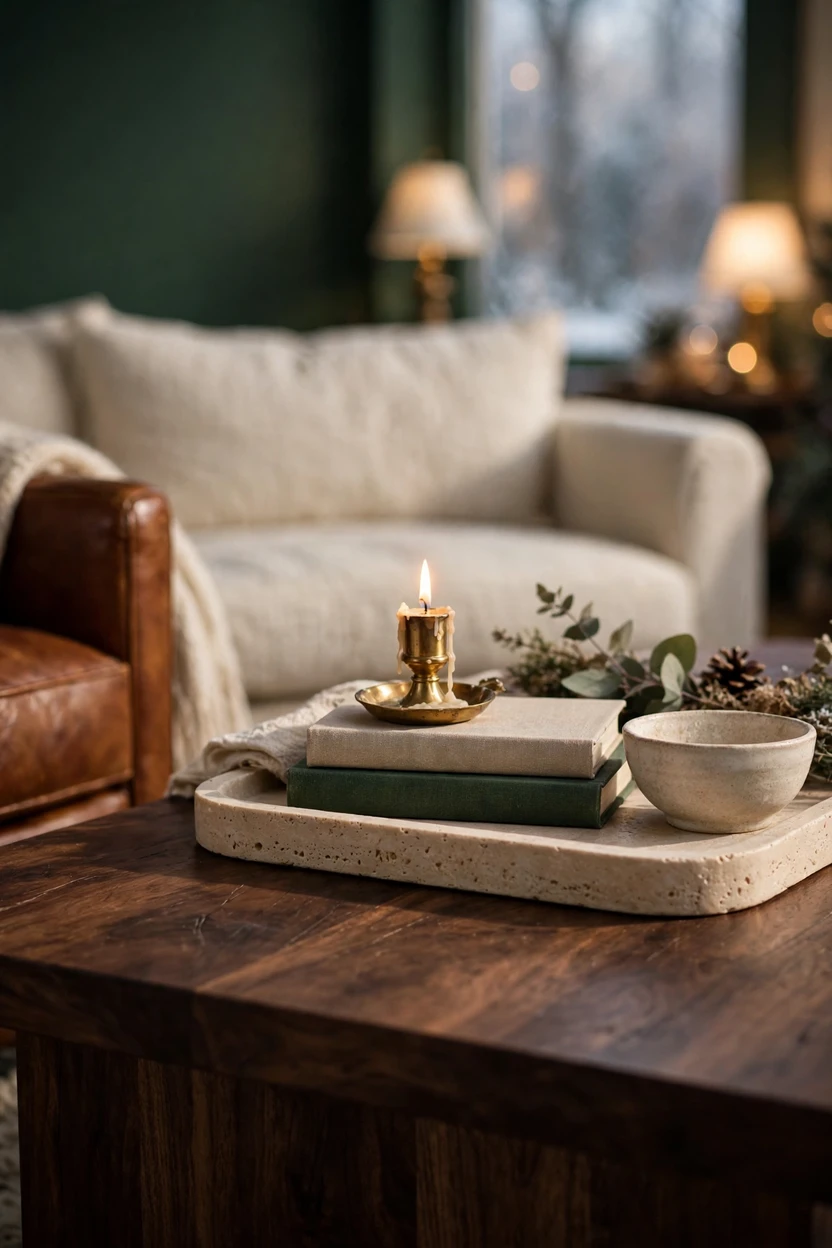
A Mirror That Catches the Lamp
A mirror is a light amplifier in a dark room. Place a large mirror where it reflects a lamp, a window, or a candlelit mantel, so it doubles the glow and adds depth. An antique or foxed mirror with soft, aged glass looks moodier than a bright, crisp one. Hang it opposite or beside a light source, and avoid reflecting a bare ceiling bulb. A tall leaning mirror is an easy no-drill option for renters.
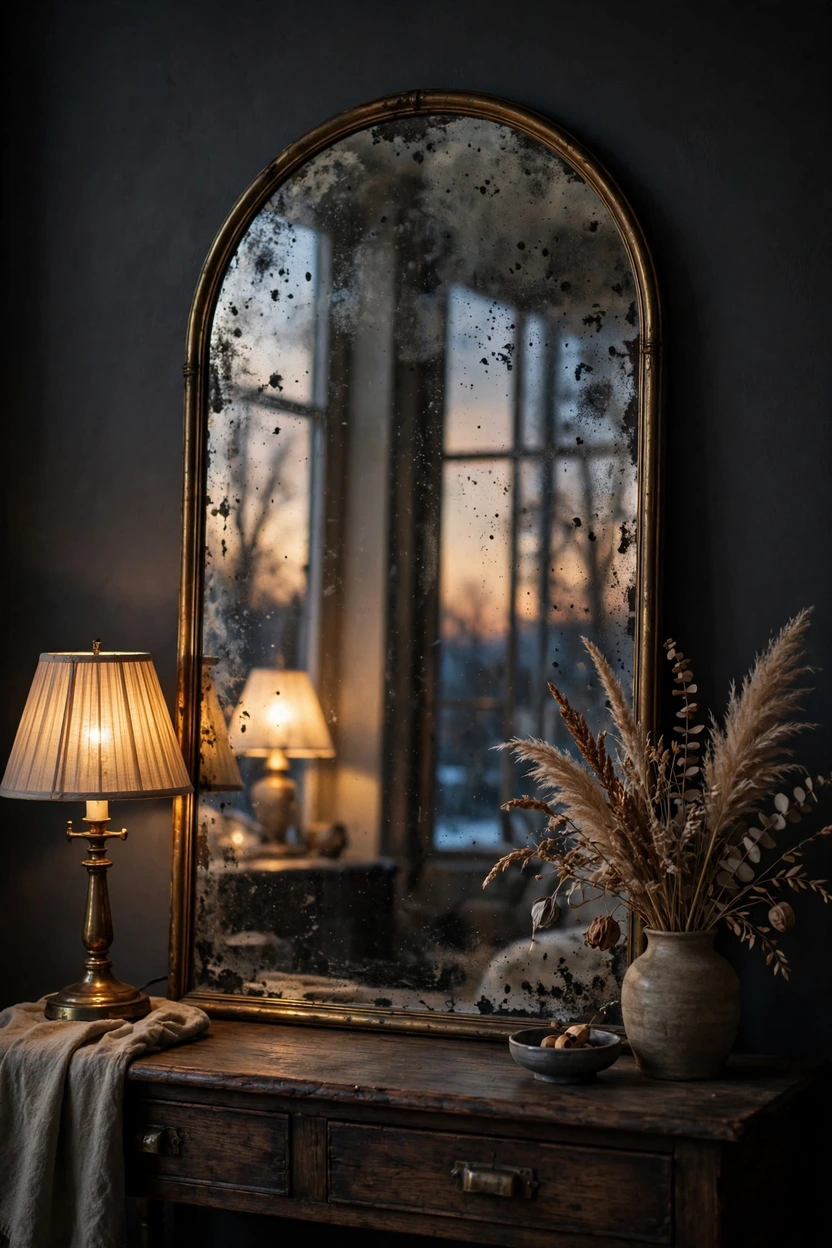
Brass and Aged Metal Accents
Warm metals sparkle against dark walls. Choose unlacquered brass, bronze, or antique gold in lamps, picture lights, frames, and small objects, and repeat the metal in at least three places. Use metals sparingly so the glow looks rich and not flashy. Aged or brushed finishes look softer than mirror-bright ones in low light. Keep other metals, such as black iron, to one or two small pieces.
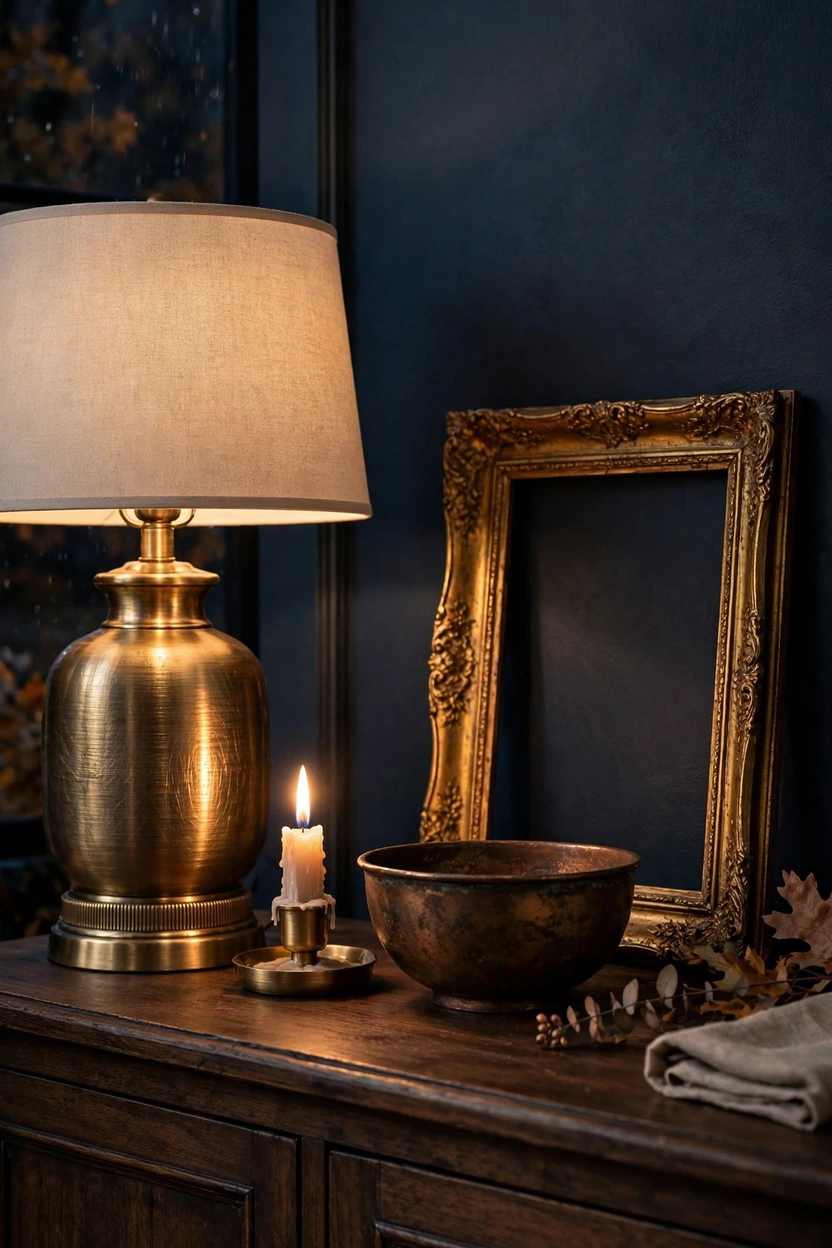
A Large Pale Rug
The floor is the lightest surface in a moody room, so use it. A large wool rug in cream, oat, or a pale pattern gives the dark walls and furniture something light to stand on. Choose a rug size such as 8 by 10 feet for a typical sofa group, so at least the front legs of all the seating sit on it. A low pile and a non-slip pad keep it flat and easy to clean. Choose a subtle pattern, such as a faded stripe or a muted vintage design, so the rug adds contrast without noise.

A Dark Wallpaper Accent
Wallpaper lets you add mood without painting the whole room. A dark botanical, moody floral, or soft texture wallpaper behind the sofa or fireplace creates a rich backdrop. Peel-and-stick versions are friendly for renters and come off cleanly in most cases. Choose a large-scale pattern for impact, and keep the other walls a solid shade pulled from the pattern. Test a sample next to your lamps, since dark prints change a lot under warm light.

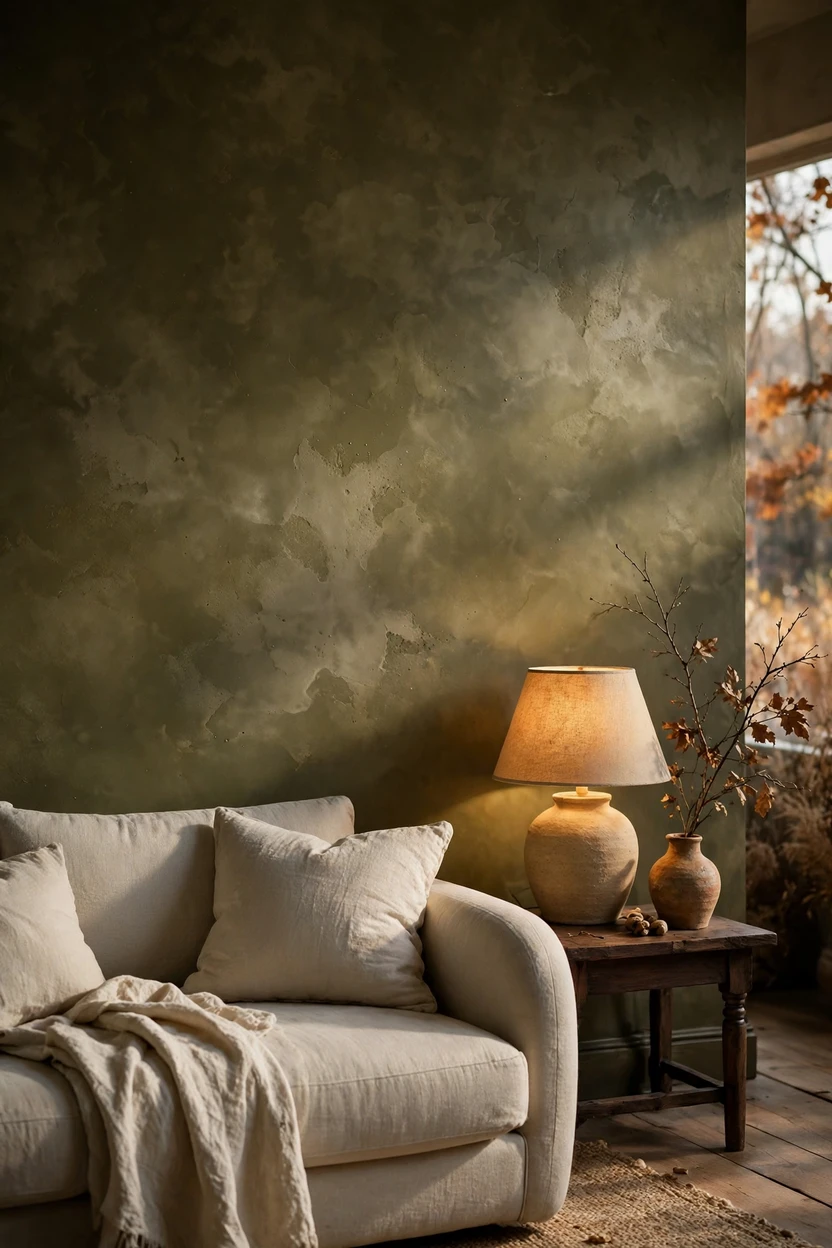
Textured Plaster or Limewash in a Deep Tone
A deep color with a cloudy texture looks richer than flat paint. Limewash or a plaster-look finish in deep green, brown, or charcoal shifts softly across the day and glows in lamp light. The texture catches shadows, so the walls feel alive even when the room is quiet. Choose a matte finish and sample it on a large board, since the effect changes with light direction. Keep the furniture simple so the wall gets the attention.
Heavy Velvet Curtains Hung High
Curtains soften a dark room and make the windows feel grand. Hang the rod near the ceiling and extend it 8 to 12 inches past each side of the window, so the panels frame the glass and let in as much light as possible. Choose a lined velvet or heavy linen in rust, deep green, or the same tone as the wall, and let it just touch the floor. Heavy fabric also absorbs sound, which makes the room feel quieter. Open the curtains fully by day so the room does not stay dim.

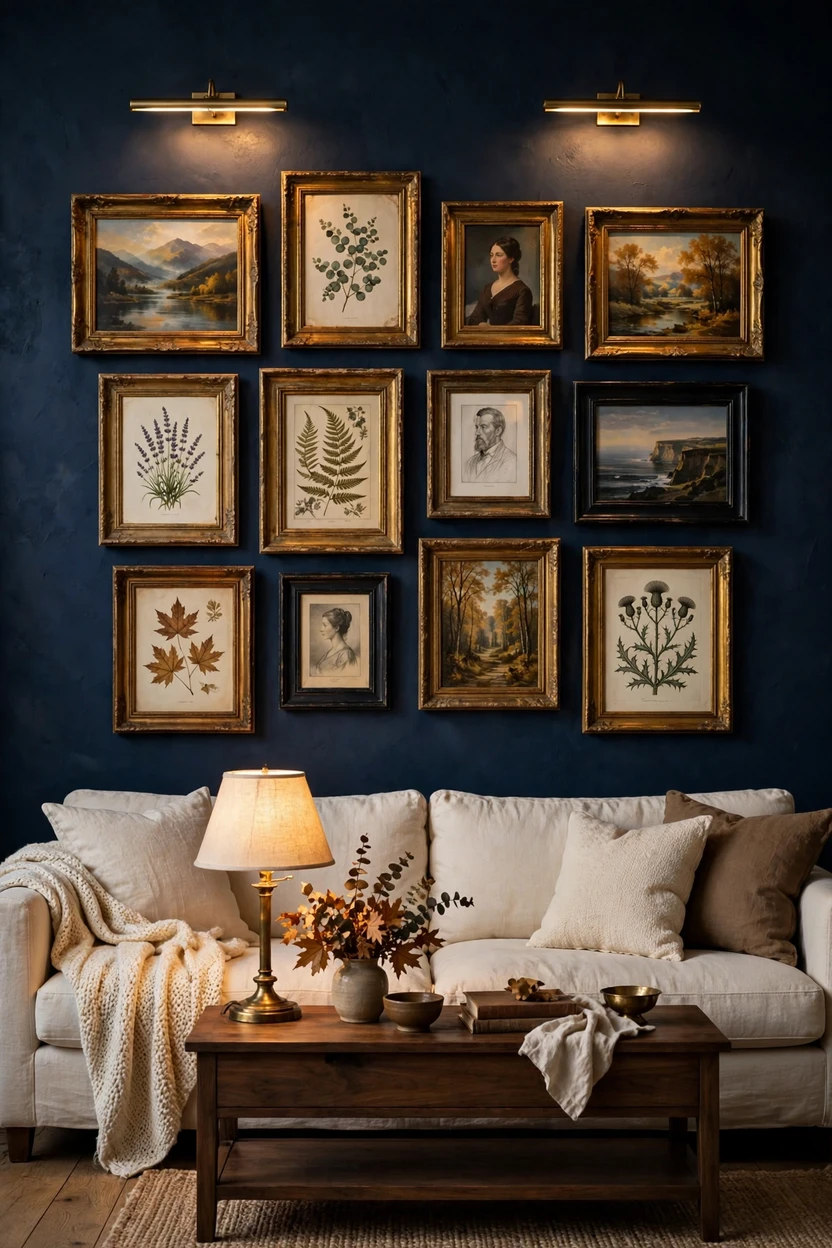
A Dark Gallery Wall With Antique Frames
A dark wall is the best backdrop for art, because the frames and canvases seem to glow. Mix antique gold frames with a few black ones, and keep the spacing around 2 to 3 inches between pieces. Center the whole group around 57 inches from the floor, and keep to a loose rectangle so it looks planned. Add one or two picture lights if you want the art to shine at night. Use art you love, including thrifted pieces, since the mix is what gives the wall its character.
Styling Tips
Use the Deep-Light-Glow formula. A deep base on the walls, light pieces for contrast, and a glow of warm light at different heights.
Contrast in three ways. Light against dark, matte against shine, and warm against cool. A moody room uses all three.
Keep one big light surface. A cream sofa, a pale rug, or a stone table gives dark walls something to play against.
Layer your textures. Velvet, leather, wool, linen, and aged brass catch light differently, which makes dark colors look rich.
Light at three heights. Table, floor, and low shelf lamps create pools of glow so the room has depth.
Keep every bulb the same warmth. Mixing a warm lamp with a cool overhead light makes a room feel disjointed.
Bring in something living. A plant, dried stems, or a branch softens the dark and adds life.
Leave some blank wall. A dark wall with empty space looks calm and gives art room to shine.
Practical Implementation Ideas
Build the room in the order below, and light comes last but matters most.
Check your daylight. Note which way the room faces and how much natural light it gets. A north-facing room reads cooler, so choose colors with warm undertones.
Sample big. Paint large boards or poster sheets and move them around the room for a few days. Look at them in the morning, in the afternoon, and by lamplight.
Choose the deep color. Green, navy, charcoal, or clay. Decide whether to drench the trim and ceiling or keep them lighter.
Pick the light contrast. A cream sofa, a pale rug, or a stone table. This is what keeps the room from feeling heavy.
Add texture. Velvet, leather, wool, and wood. Mix matte and shine.
Build the light in layers. Start with the main light on a dimmer, then add table and floor lamps, then accent light such as a picture light or shelf strip.
Match the bulbs. Use dimmable warm bulbs around 2700K overhead and 2200K to 2700K in lamps, with a high color rendering index.
Edit and live in it. Turn the lights on at dusk and adjust lamp positions until the room glows evenly.
Common Mistakes to Avoid
Relying on one overhead light. It flattens the room and kills the mood. Use lamps at different heights and keep the main light dimmed.
Mixing bulb colors. A cool bulb beside a warm one looks messy. Keep every bulb in the warm range.
No light pieces to balance the dark. All dark and no contrast makes a cave. Add a cream sofa, pale rug, or stone surface.
Skipping the paint test. Dark colors shift a lot between daylight and lamp light. Sample first.
Painting only one wall with no plan. A single dark wall in a bright room can look patchy. Pair it with lamps and echo the color elsewhere.
Real flames too close to fabric. Keep candles at least 12 inches from anything that can burn and never leave them alone.
Forgetting the TV. A black screen is a big dark rectangle. Hide it in a cabinet or put it on a dark wall.
Heavy curtains kept closed. Daylight is your friend. Hang curtains wide so the window can let in light.
Small-Space Alternatives
Drench the walls and ceiling. One deep color on everything makes a small room feel wrapped, not boxed in.
Add one pale piece. A light sofa or rug keeps the room from feeling closed.
Use wall lights. Sconces free up floor and table space and add glow at eye level.
Hang a mirror near a lamp. It doubles the light and adds depth.
Choose slim furniture. Furniture on legs shows more floor and keeps the room feeling open.
Keep the palette tight. One deep color, one pale color, one metal.
Budget-Friendly Alternatives
Paint first. A deep green or navy paint transforms the room for the cost of a few cans.
Thrift lamps. Brass and ceramic lamps from secondhand shops look great with a new linen shade.
Buy a leather chair secondhand. Good leather ages well and costs far less used.
Use plug-in sconces and picture lights. They cost far less than wiring and move with you.
Make velvet cushions. A few new velvet covers add texture without replacing the sofa.
Find antique frames. Thrifted frames with fresh art make a gallery wall for very little.
Swap the bulbs. Warm dimmable bulbs and a plug-in dimmer change the mood tonight.
Pro Styling Recommendations
Think in layers of light. Start with ambient light on a dimmer, add task light at seated height, then add accent light last.
Pick high-quality bulbs. Choose a color rendering index of 90 or higher so wood, leather, and fabric look rich and true.
Check dimmer compatibility. Make sure LED bulbs are dimmable and match the dimmer type, so they do not flicker.
Respect the room’s light. In a north-facing room, choose deep colors with warm undertones and use sheen on trim. In a south-facing room, deep colors will glow more during the day.
Choose your sheen with care. Matte makes deep colors look velvety, while a touch of sheen on trim and molding shows the shape of the room.
Plan for safety. Use heat-rated paint near a fireplace, keep candles at safe distances, and do not overload outlets with plug-in lights.
Test at night. Look at the room after dark before you finish. Move lamps until there are no harsh spots or empty corners.
FAQs
What is a moody living room?
A moody living room uses deep wall colors, rich textures, strong contrast, and layered warm light to feel cozy, dramatic, and intimate.
What colors work best for a moody living room?
Forest green, navy, charcoal, burnt clay, chocolate brown, and deep teal. Pair them with cream, warm wood, leather, and brass for contrast.
How do I keep a dark living room from feeling gloomy?
Use the Deep-Light-Glow formula: a deep base, light contrast pieces such as a cream sofa and pale rug, and warm lamps at different heights on dimmers. Hang curtains wide to let in daylight.
What lighting is best for a moody living room?
Layered warm light. Use a dimmable overhead light, table and floor lamps, and an accent such as a picture light, all in the warm range.
What bulb temperature should I use?
Around 2700K for overhead light and 2200K to 2700K for lamps. Choose a color rendering index of 90 or higher and dimmable bulbs.
Can a small living room be moody?
Yes. Painting walls and ceiling one deep color can make a small room feel wrapped and cozy. Add a light piece and wall lights so it does not feel closed in.
Can I paint a north-facing room dark?
Yes, with care. Choose a deep color with a warm undertone, sample it in the room, and plan strong lamp lighting. The cool daylight can make blues and grays look colder.
Should I paint the ceiling the same color?
Painting the ceiling and trim the same deep color gives a wrapped, color-drenched look. A lighter ceiling keeps the room a bit brighter. Pick based on how much light the room gets.
Can I do a moody living room in a rental?
Yes. Use peel-and-stick wallpaper, plug-in sconces, a pale rug, velvet cushions, a leaning mirror, and warm dimmable bulbs. Skip anything that needs drilling or permanent paint.
How do I do a moody living room on a budget?
Paint the walls, thrift lamps and a leather chair, use plug-in lights, add velvet cushions, and buy warm dimmable bulbs. Light and contrast matter more than expensive furniture.
Conclusion
A moody room is not a dark room. It is a room with depth, where light and shadow have a conversation.
Start with the deep color you can live with. Add one big light piece to balance it. Then spend your time and budget on the glow: lamps at three heights, warm bulbs, and a dimmer that lets you set the mood.
When the room is right, it will pull you in at dusk. The walls fall back, the lamps come forward, and the whole room feels like it is holding you. That is moody, and it is warm.