21 Minimalist Living Room Ideas With Real Design Tricks for a Warm, Calm Home
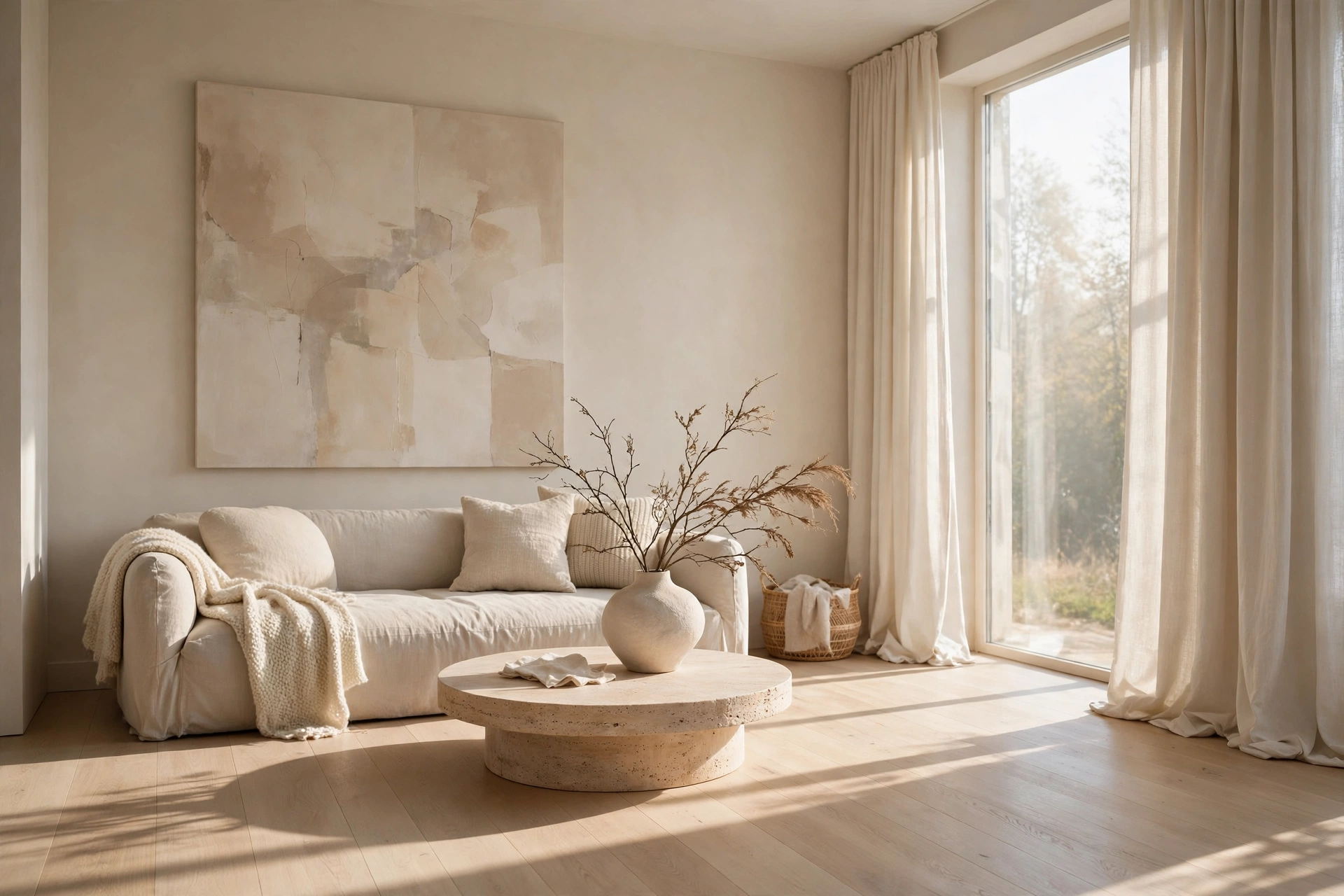
Picture this. You walk in after a long day. The couch is clear. The light is soft. Nothing is shouting for your attention, and your shoulders drop without you noticing.
That is what a good minimalist living room does. It doesn’t mean bare walls or a sad white box. It means every piece earns its spot, and the room has space to breathe.
The trouble is that “keep it simple” is not much help when you’re staring at a sofa, a TV and too many baskets. So this list gives you real rules. You’ll find exact heights, simple color ratios, lighting tips and layout moves that you can test today. Some cost nothing. Some are worth saving for. All of them help your living room look calm, warm and lived in.
Table of Contents
The 21 Ideas
Pick Warm White Walls and Test the Undertone
Cool white and blue-leaning gray can make a minimalist room feel like a waiting room. Choose a white with a hint of cream, sand or soft greige instead. Paint a big sample, about two feet square, and look at it in the morning and at night, because light changes everything. If the sample turns pink or yellow at night, try a calmer shade. Warm walls give a quiet room its glow without adding a single object.
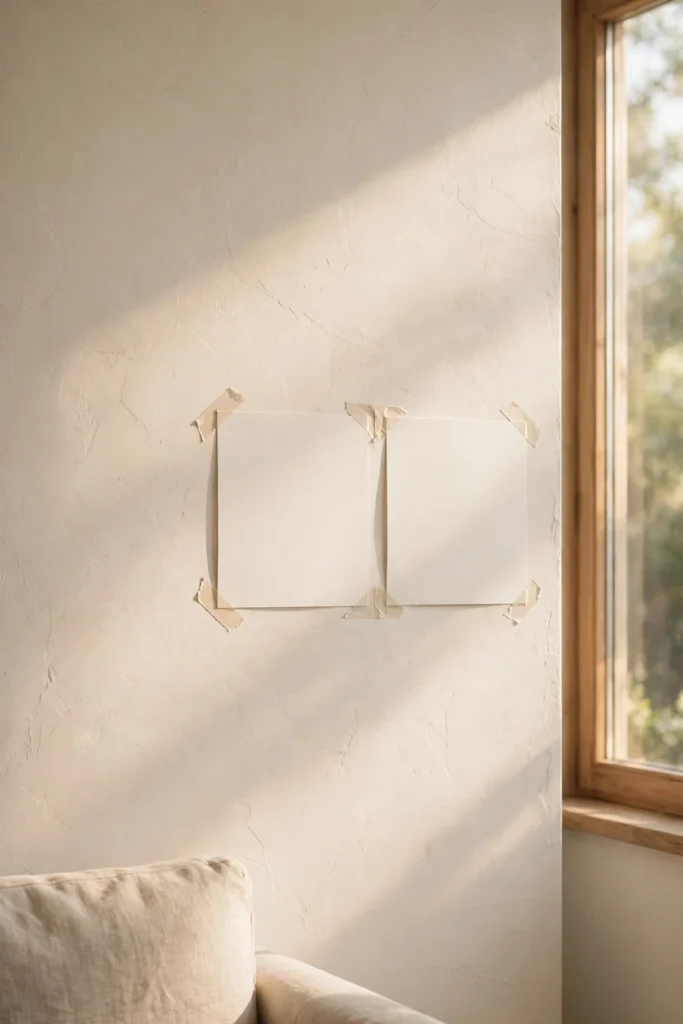
Stick to Three Colors Using the 60-30-10 Rule
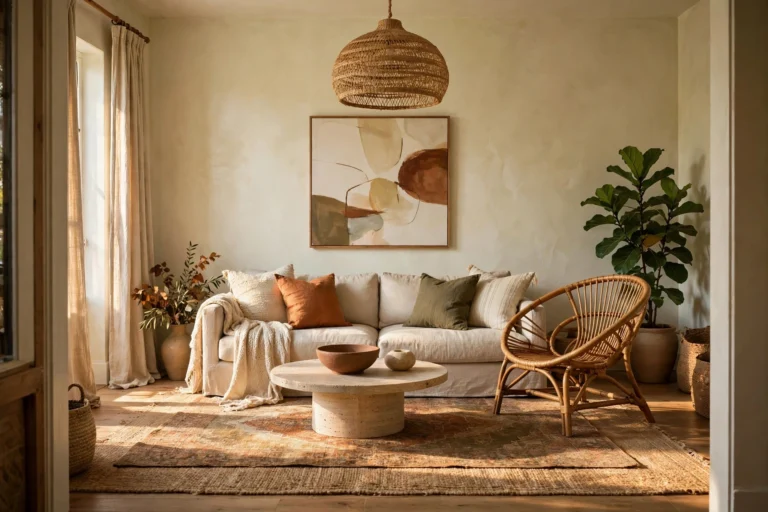
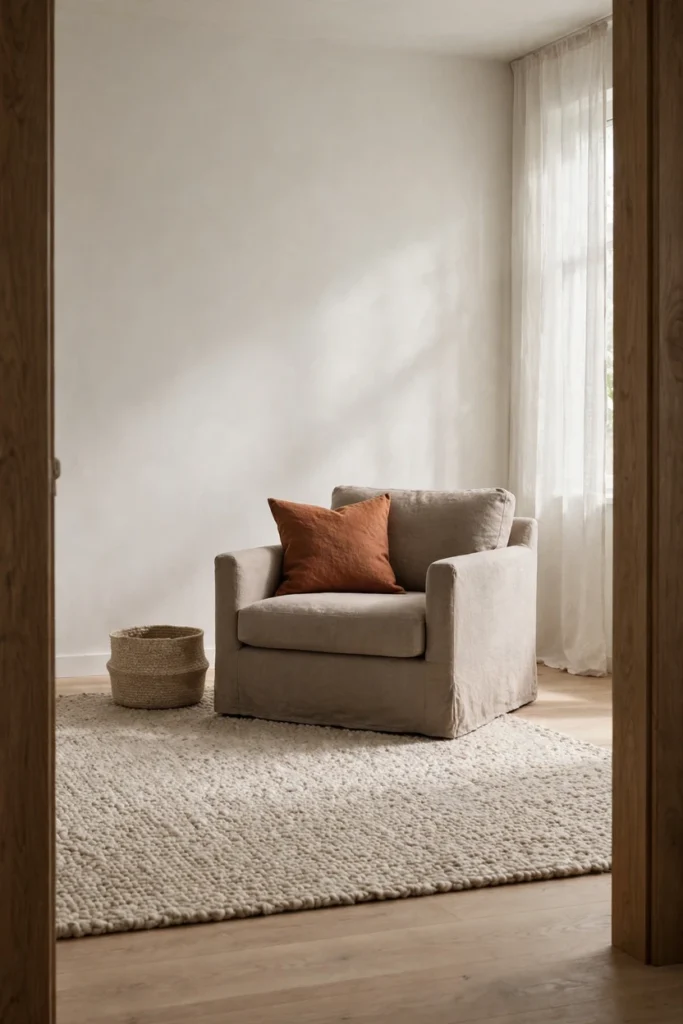
Pick one main neutral for about 60 percent of the room, mostly walls and the big sofa. Add a second tone for about 30 percent, like the rug, curtains or an armchair. Keep the last 10 percent for small hits of color in a pillow, a vase or a book spine. Three or four colors total is plenty for one room. The ratio is the trick: it keeps the eye resting, even when one color is a bold one.
Choose a Low-Profile Sofa With Clean Lines
A sofa with a low back and slim arms makes the ceiling feel higher. Boxy and tall pieces fill a room fast, while low ones leave air above them. Look for linen blends, washed cotton or a performance fabric in oatmeal, stone or warm gray. Skip heavy tufting and extra trim, because detail adds visual noise. If you only upgrade one thing, make it this, since the sofa sets the tone for everything around it.
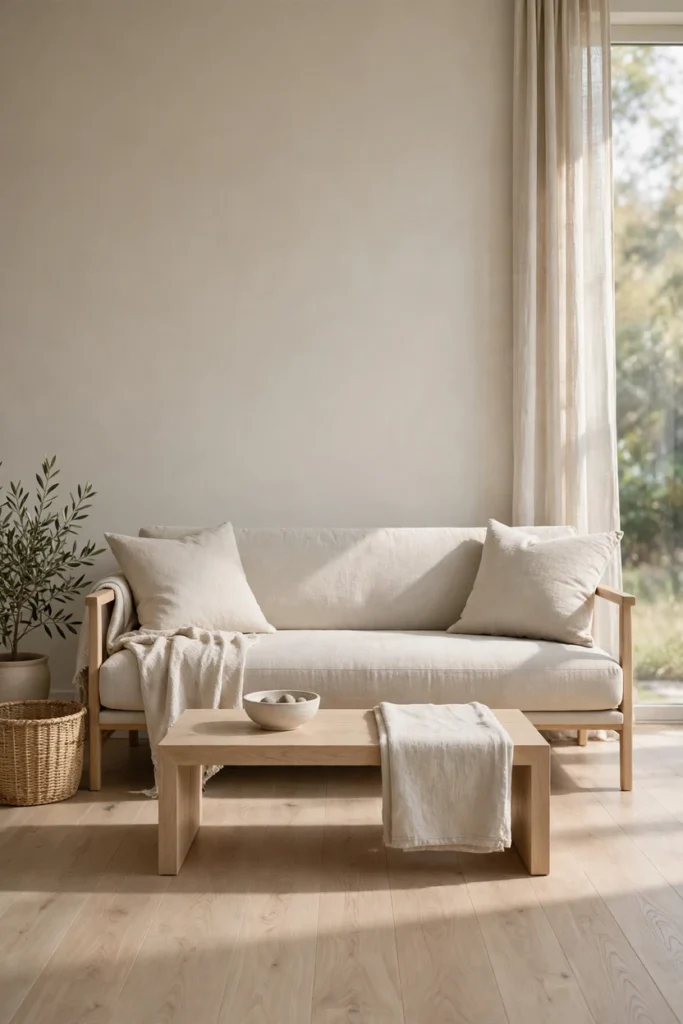
Float the Sofa and Let the Room Breathe
Pushing every piece against the wall can make the middle of the room feel empty and awkward. Pull the sofa a few inches off the wall, or all the way into the room if the space allows. The open space around it is called negative space, and it is what makes furniture look intentional. It also lets traffic move easily. A sofa that floats feels like a design decision, not a leftover.
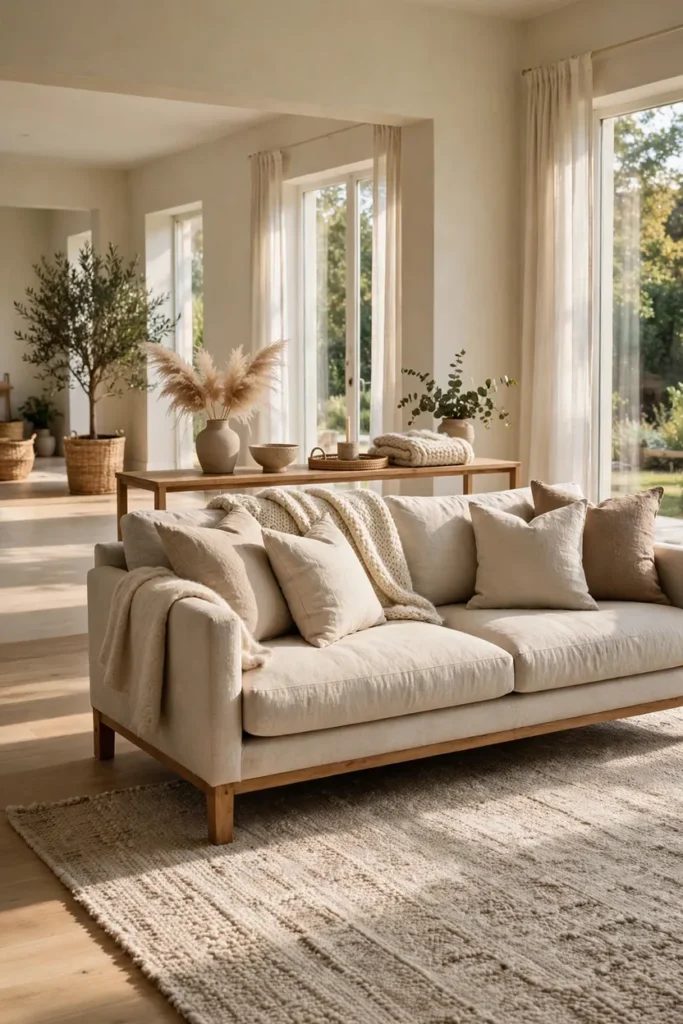
Follow the 30% Bare Surface Rule
Try leaving about a third of every flat surface empty. On a console, that might mean one lamp, one bowl and open space around them. On a coffee table, it might be a tray, a candle and nothing else. The empty part is what makes the styled part look special. Group items in odd numbers, and vary heights so the small group doesn’t look flat.
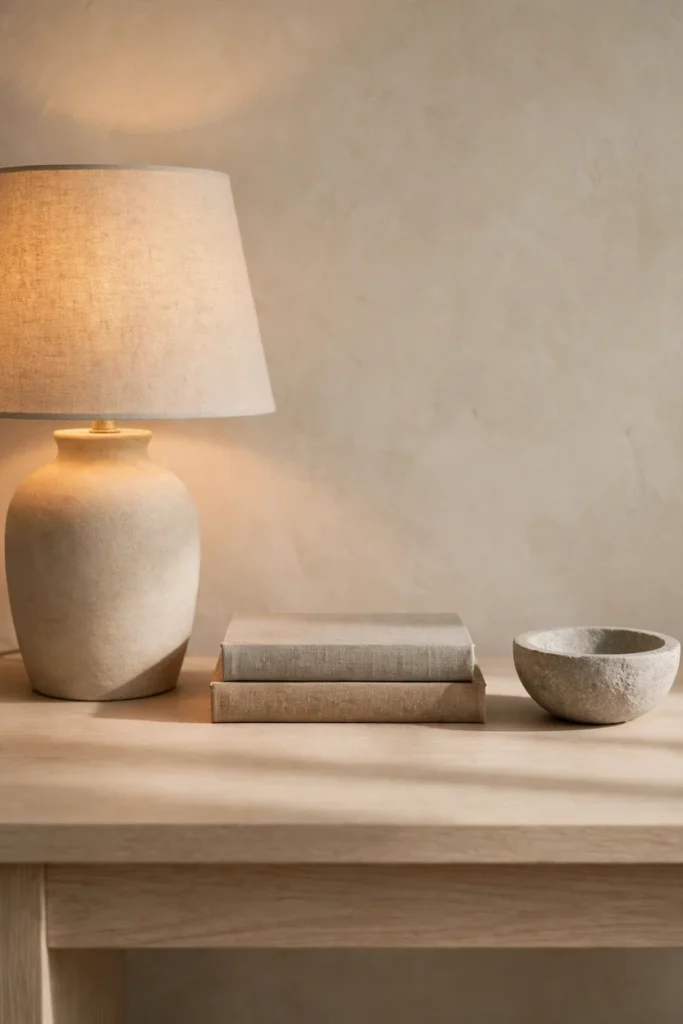
Use One Big Rug That Anchors the Seating
A small rug can break a room into pieces and make it look cluttered. Pick one large rug so at least the front legs of the sofa and chairs sit on it. A low-pile wool or flatweave in sand, oat or soft gray works well. Choose a quiet pattern or none at all. The rug is the quiet “floor frame” that holds the whole seating area together.
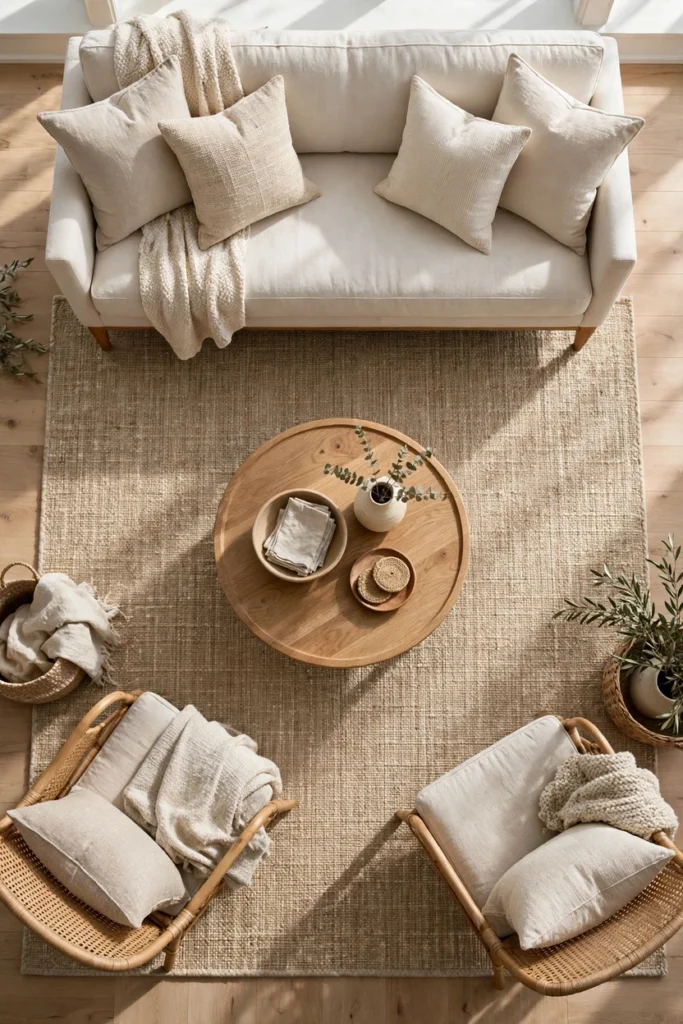
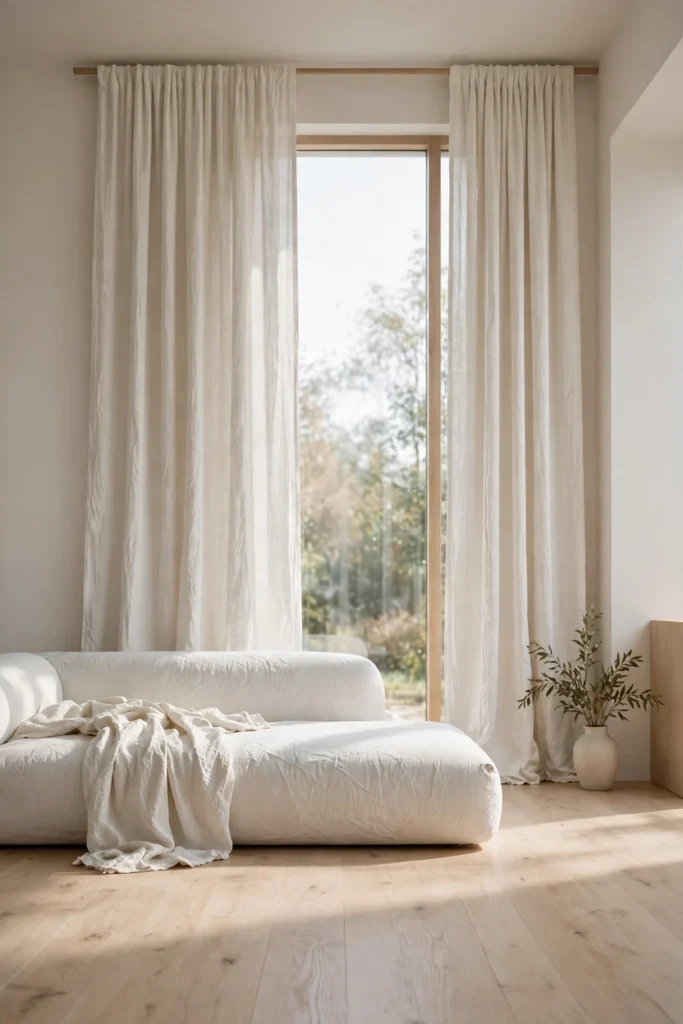
Hang Curtains High and Let Them Reach the Floor
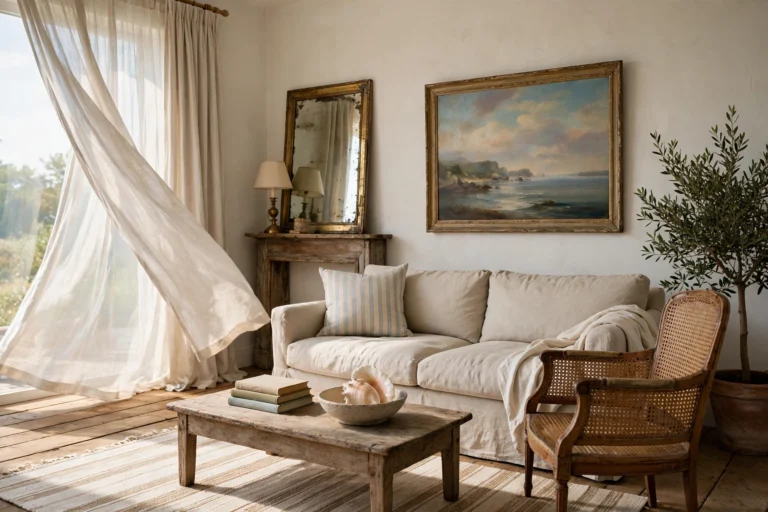
Mount the rod close to the ceiling, or at least well above the window frame. Let the panels fall to about an inch above the floor. This simple move makes the ceiling look taller and the window look bigger. Linen or a light cotton in white, ivory or sand lets daylight in softly. Keep them plain and full, and skip valances or fussy ties.
Swap the Gallery Wall for One Large Piece of Art
A cluster of tiny frames can look busy fast. One big piece gives the wall a clear focus and fills space with calm. Center it at about eye level, roughly 57 inches from the floor to the middle of the piece, and hang it above the sofa with a hand-width gap. Pick abstract art, a soft landscape or a large textile in colors from your palette. Leave the wall around it empty so it can do its job.
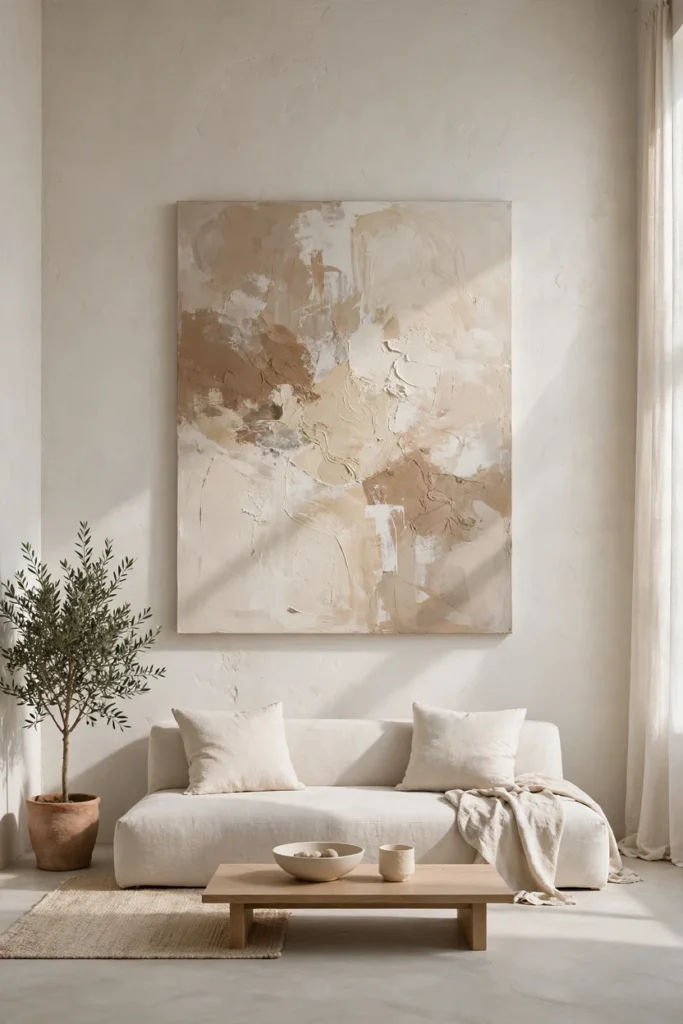
Pick a Coffee Table With Hidden Storage
Remotes, blankets, coasters and magazines are what ruin a clear surface. A coffee table with a drawer, a lift-top or a shelf below gives all of it a home. A storage ottoman with a tray on top works the same way and is softer around kids. Choose a table about two-thirds the length of your sofa, and leave around 16 to 18 inches between the two. Clear tabletop, tidy room.
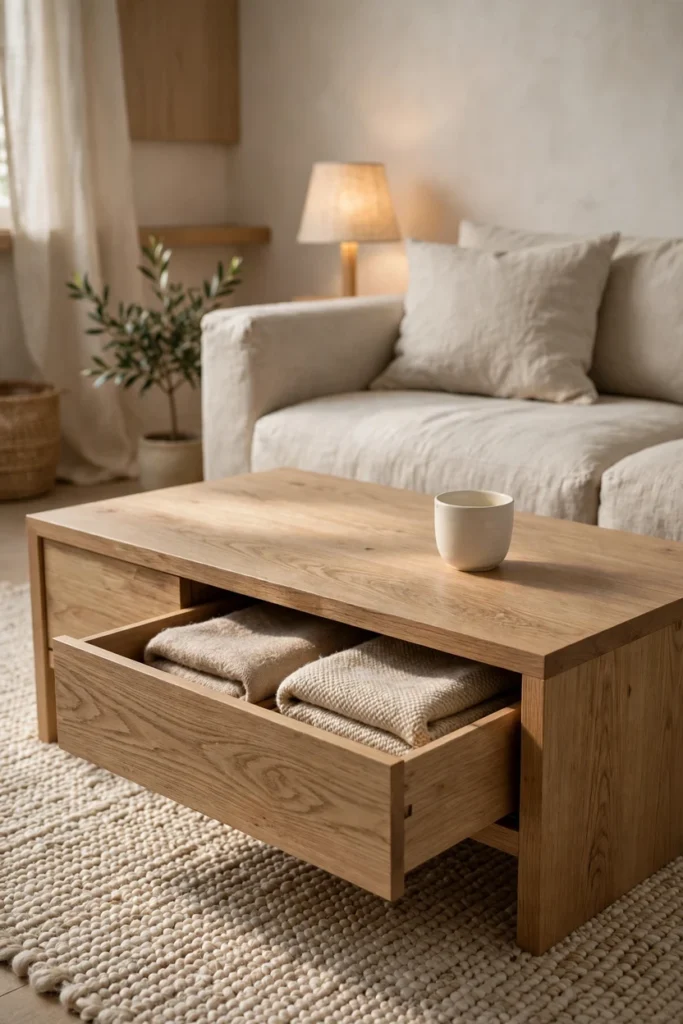
Make the TV Quiet, Not the Star
A big black screen can steal the room, even when it’s off. Tuck it into a closed cabinet, a closet with doors or a built-in unit with flat panels. If it has to stay out, mount it low and paint the wall behind it a deeper warm tone so the screen blends in. Art-style TV modes and matte frames also help. If you rarely watch in the living room, consider moving it to another room completely.
Related: 17 Living Room Wall Art Layering Ideas for a Focal Point
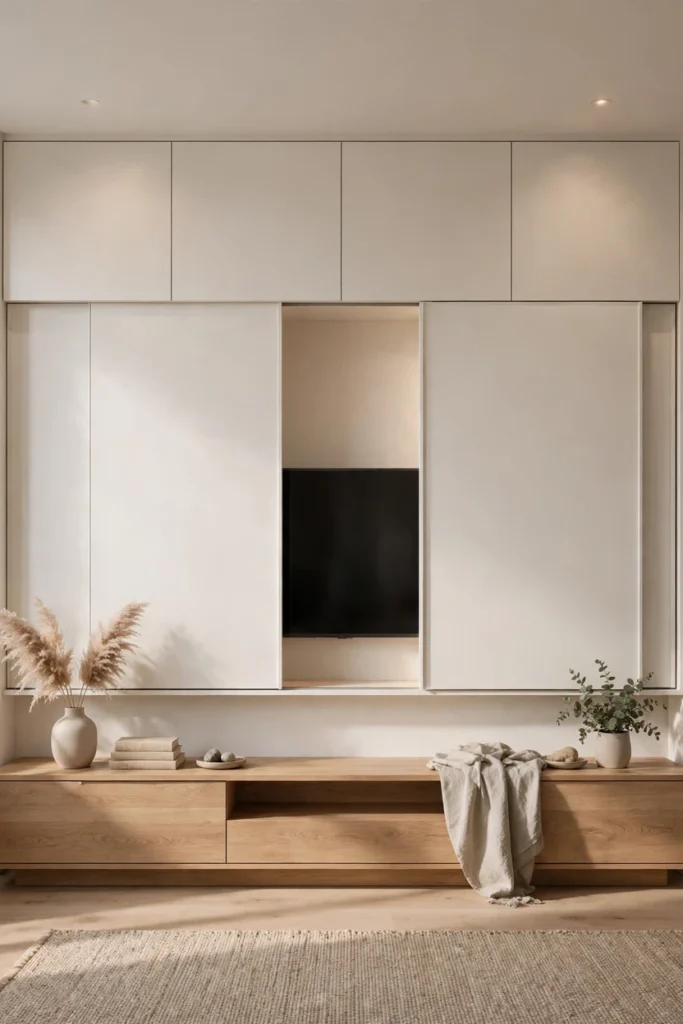
Layer Warm Light at Three Heights
One ceiling light makes a room look flat. Add a floor lamp, a table lamp and a small light at eye level or below, such as a wall sconce or a low lamp on a console. Use bulbs around 2700K, which glow warm and gold. An arched floor lamp over the sofa adds a soft curve against straight furniture. Dim the lamps in the evening and the whole room relaxes.
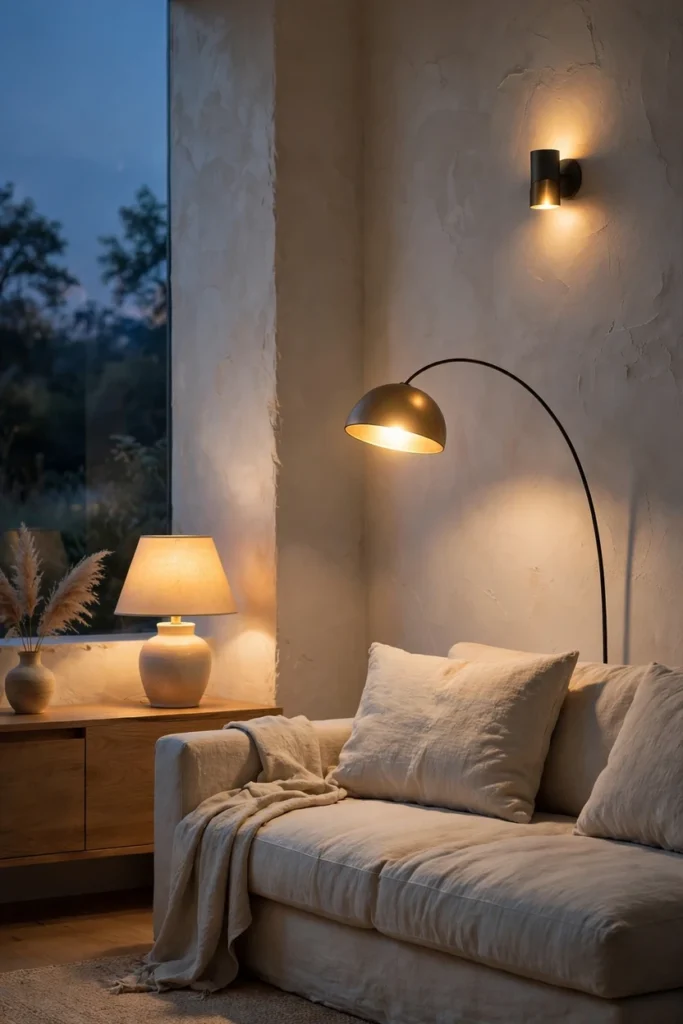
Choose Texture Over Pattern
A room with no pattern can still feel rich when the textures change. Mix boucle, linen, wool, jute, leather, stone and smooth wood. Keep the colors close, and let touch do the work. Three or four textures is enough, so don’t add more just because you can. This is the easiest fix for a minimalist room that feels flat or cold.
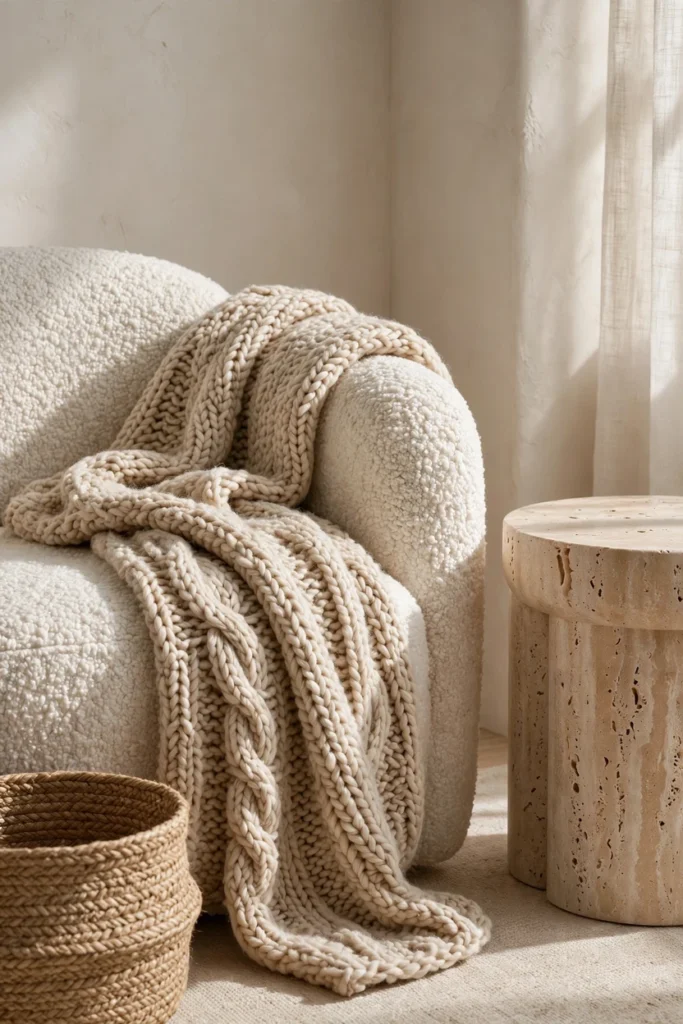
Soften Straight Lines With Curves
Minimalist rooms are full of straight edges, and a few curves make them gentler. Try a round coffee table, a curved sofa, an arched mirror or a rounded side chair. You only need one or two, because too many will look playful instead of calm. Curves also help in small rooms, since you’re less likely to bump a corner. Keep the shapes simple so they stay quiet.

Stay With One Main Wood Tone
Too many wood shades in a small space can look messy. Pick one, like light oak, warm walnut or ash, and repeat it on the coffee table, shelf and a frame. You can add one lighter or darker piece, but keep the undertone the same. Pale woods make a room feel open, and mid-tone woods make it feel grounded. Repeat the same wood and the room reads as planned.
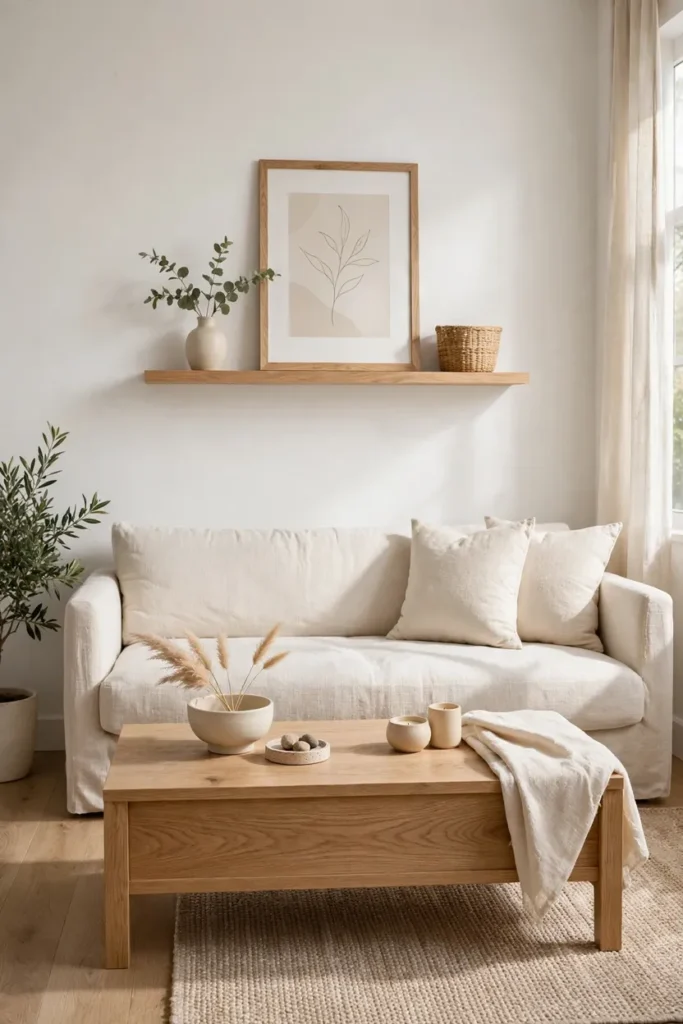
Place a Mirror Where It Catches Light
A mirror opposite or beside a window bounces daylight deeper into the room and makes it feel wider. Choose a large one with a thin or no frame, and lean it on the floor or hang it low for a relaxed look. Avoid placing it where it only reflects clutter or a blank corner. A round or arched shape adds a gentle curve at the same time. It’s one of the most useful items you can add to a small space.
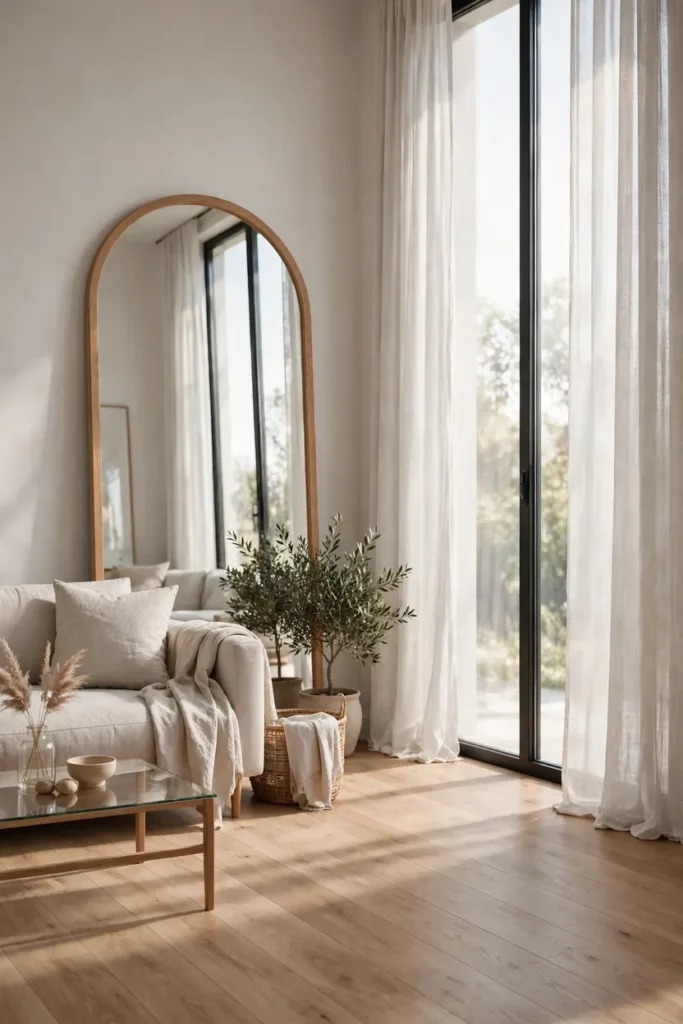
Add One Sculptural Plant or Branch
A single large plant, like an olive tree, a fiddle leaf fig or a tall bunch of dried branches, does more than five small ones. Place it in a plain pot in stone, clay or ceramic. Put it where it can catch a little light and have breathing room around it. Greenery brings softness and life to a quiet palette. If you don’t have a green thumb, a good dried arrangement is just as calming.
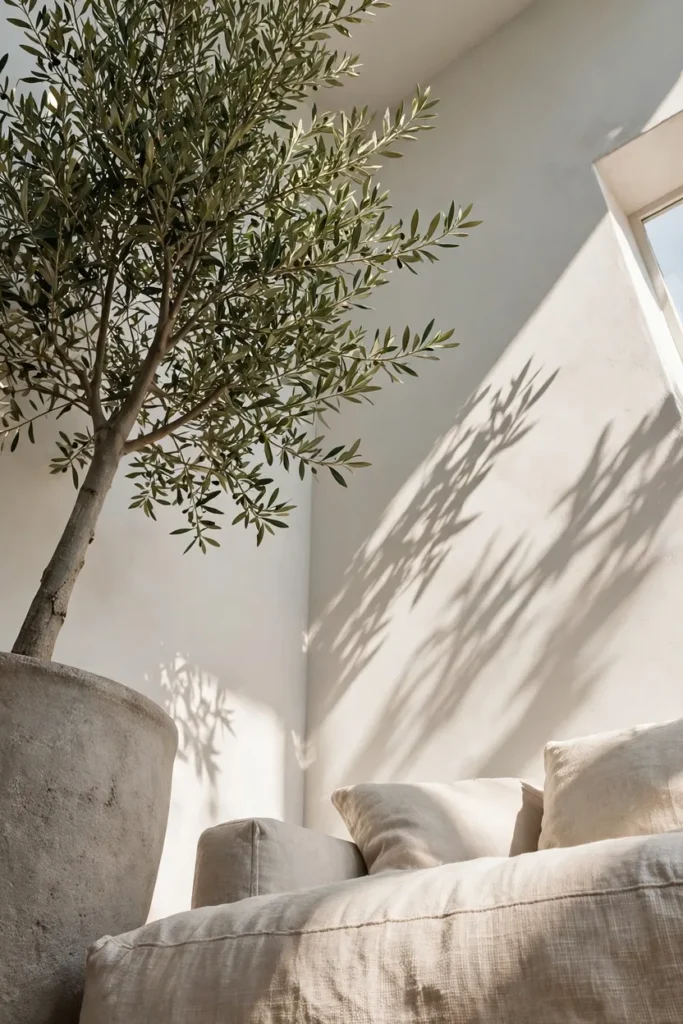
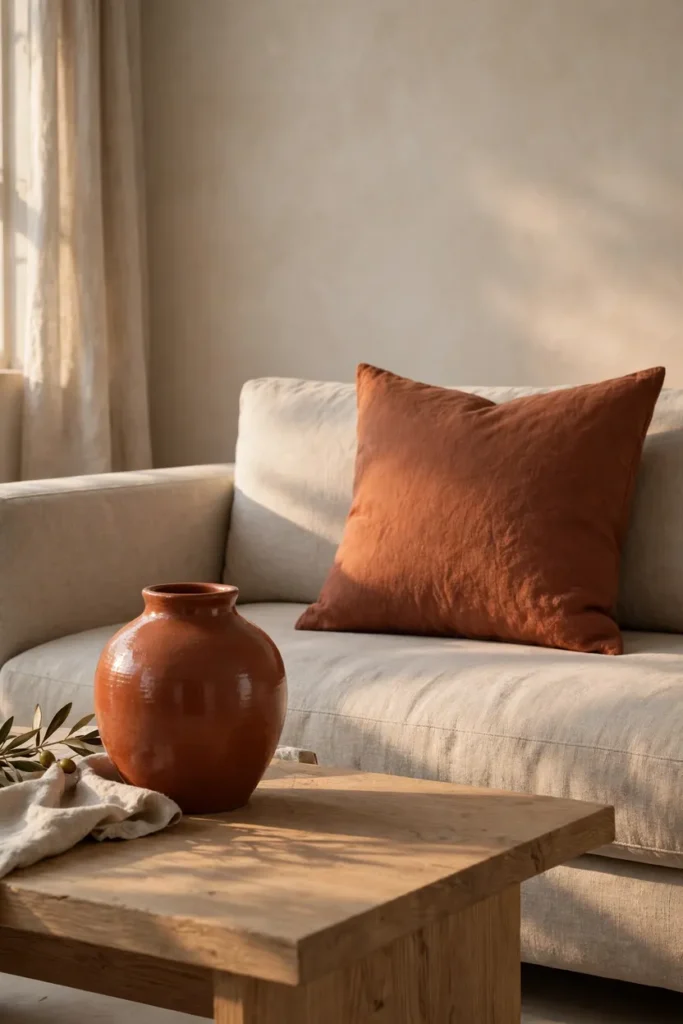
Use Accent Color in Small Doses
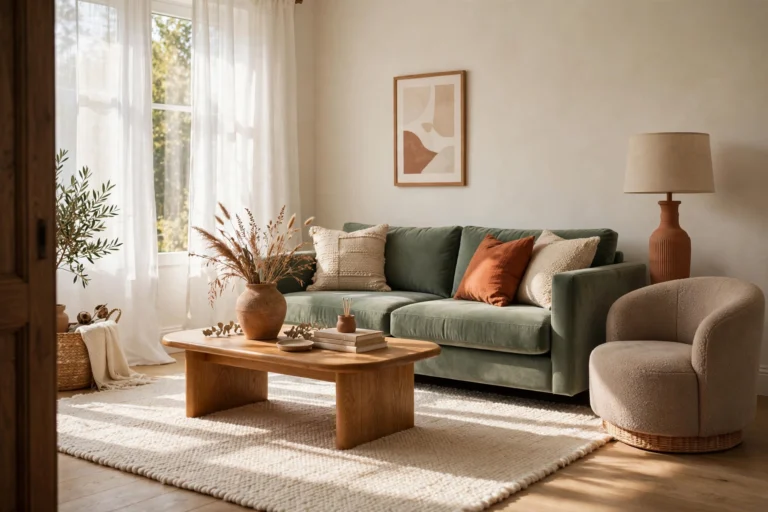
A quiet room can handle one punch of color. Try a single clay-red pillow, a deep green vase or a rust throw. Keep it to about 10 percent of what you see, and repeat that color once or twice in the room so it feels connected. Move it by season by swapping the pillow cover or the vase, not the furniture. This keeps the room fresh without adding more stuff.
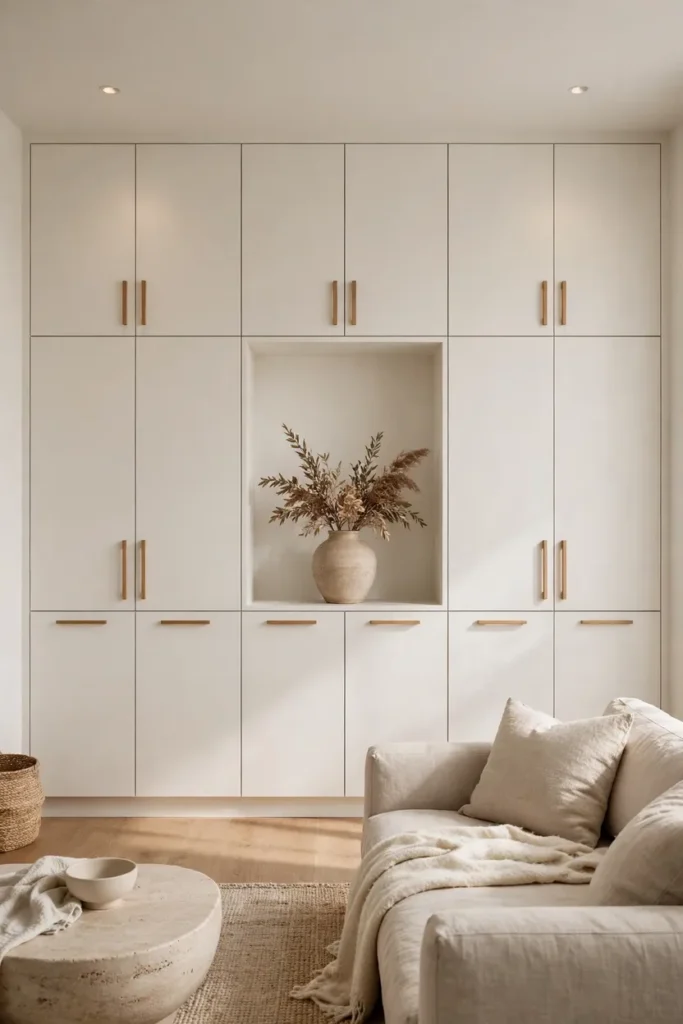
Choose Flat-Front Closed Storage
Open shelves look good only when they stay styled. Flat-front cabinets with push-latch doors hide the real life: games, cords, papers and chargers. Paint them the same color as the wall and they nearly disappear. Add a slim handle or a finger pull in wood for warmth. Closed storage is the quiet reason many minimalist rooms stay neat.
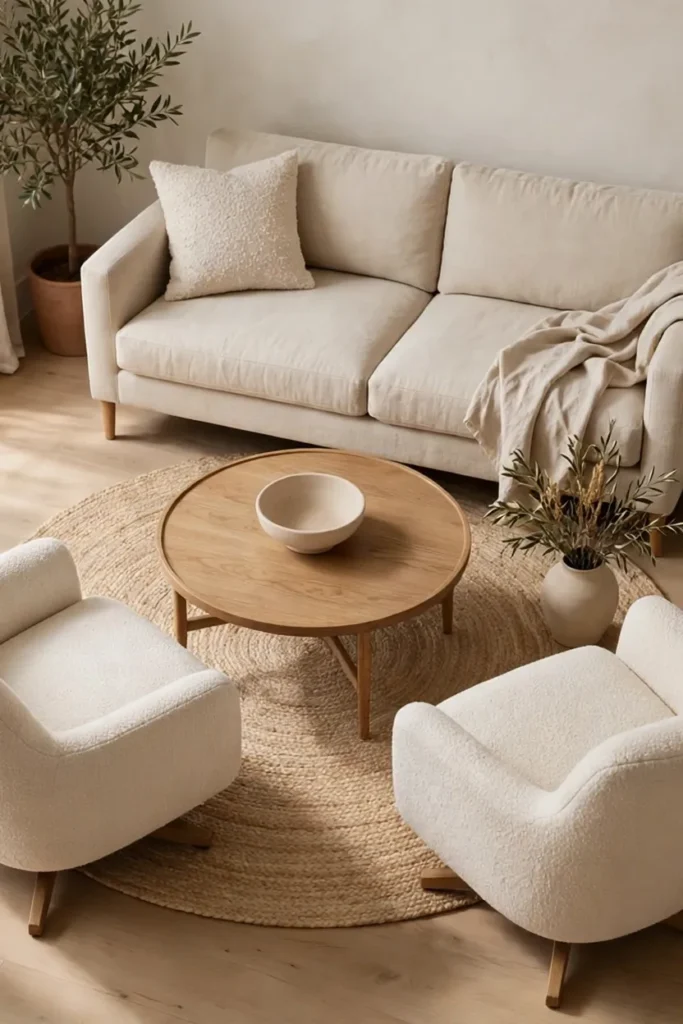
Build a Two-Chair Conversation Corner
You don’t need a big sectional to seat people well. A sofa plus two matching swivel or lounge chairs makes a flexible circle that’s easy to rearrange. Two chairs take less visual space than one huge piece, and they can be moved to face the window or the TV. Choose chairs with slim legs so you can see the floor under them. Keep them about 4 to 6 feet apart so people can talk without leaning.
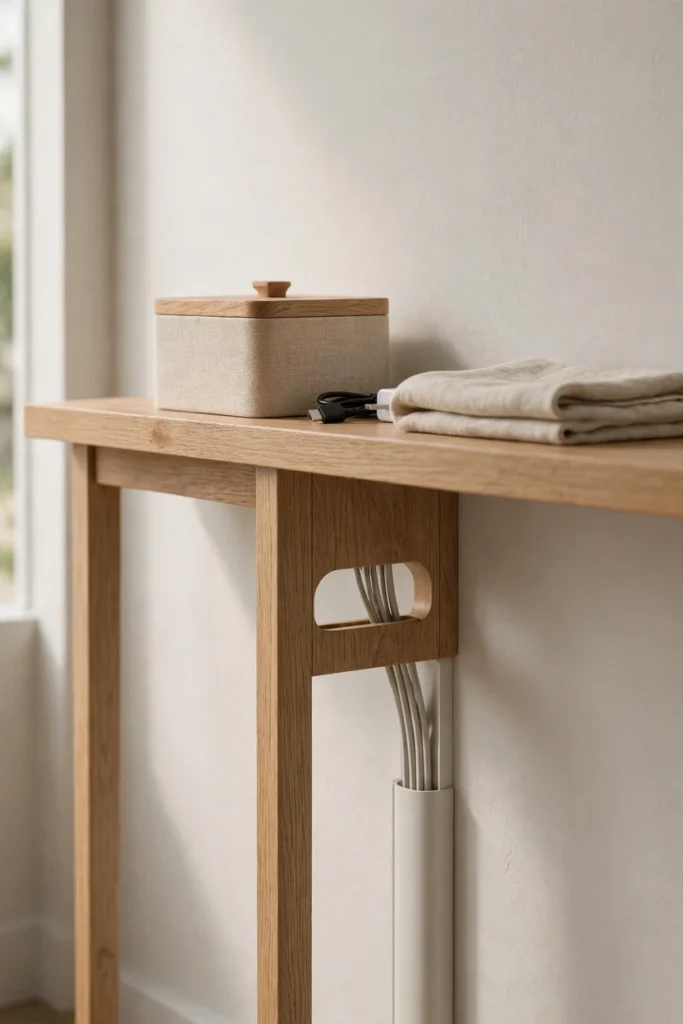
Hide Cables, Chargers and Outlet Clutter
Loose cords can ruin a clean room faster than anything else. Run cables inside the wall if you own, or use paintable cord covers that match the wall color if you rent. Tuck power strips behind furniture, and use a cabinet or box for chargers. Choose a console with a back cutout so wires can pass through. Look at your room from the doorway and fix whatever your eye lands on first.
Live by the One-In, One-Out Rule
Minimalism doesn’t end when the shopping does. Each time something new comes in, something else leaves. This keeps the room from slowly filling up again. It also makes you ask whether the new thing truly earns its spot. Keep a small basket or box for items that need a decision, and clear it every month.
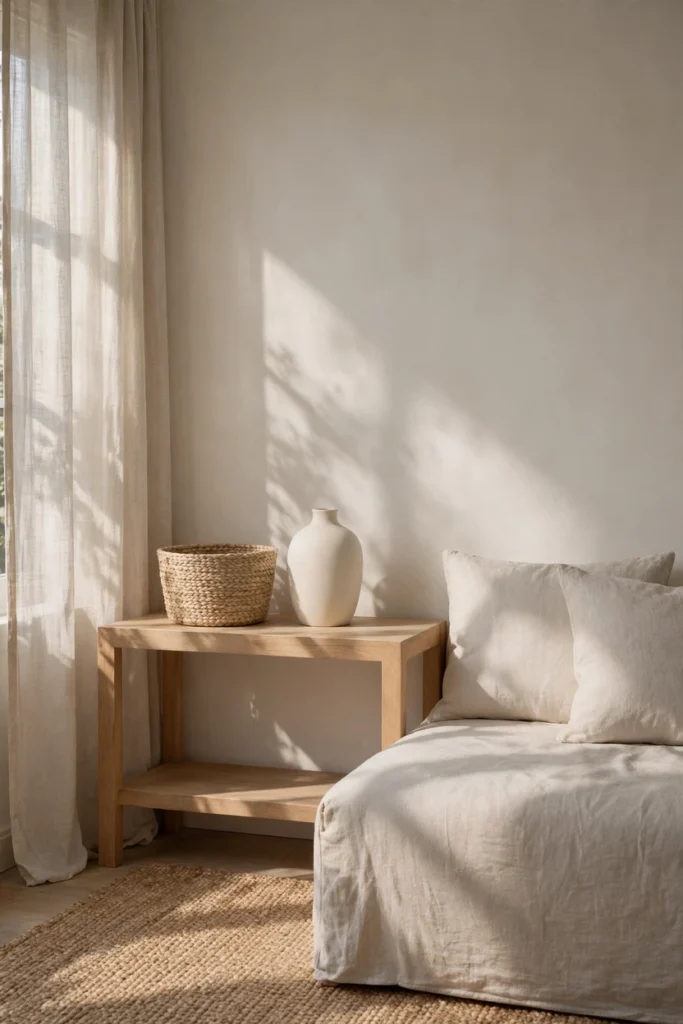
Styling Tips
- Test any new piece by placing it in the room for a day before you commit.
- Style in threes: one tall, one low, one soft.
- Match metal finishes. Pick brushed brass, black or nickel, and stay with it.
- Fold throws loosely instead of arranging them in perfect squares.
- Photograph the room on your phone. Your camera notices clutter your eye skips.
Practical Implementation Ideas
- Start with a clear-out. Remove everything from surfaces, then add back only what you love or use daily.
- Fix the big things first: wall color, sofa, rug, curtains, lighting.
- Measure before buying. Sketch the layout with painter’s tape on the floor.
- Add warmth last. Wood, textiles and lamps come once the base is calm.
- Review monthly. Take ten minutes to reset and remove anything that crept back.
Common Mistakes to Avoid
- Choosing cold white or gray that makes the room feel clinical.
- Buying “minimalist” decor just to fill space.
- Using a rug that’s too small.
- Hanging curtains right at the window frame.
- Putting too many tiny items on the coffee table.
- Skipping texture, which leaves the room flat.
- Relying on only one overhead light.
- Forgetting the cords.
Small-Space Alternatives
- Use a loveseat plus one chair instead of a full sofa.
- Pick furniture with exposed legs so you can see more floor.
- Use wall-mounted shelves and lamps to free up surfaces.
- Choose a nesting table set that tucks away when guests leave.
- Keep colors close so the room reads as one calm block.
- Pick a mirror that is tall rather than small and decorative.
Budget-Friendly Alternatives
- Paint is the cheapest big change you can make.
- Swap bulbs to a warm 2700K for an instant mood shift.
- Hang inexpensive linen-look curtains high and long.
- Use a large piece of fabric or a framed print as oversized art.
- Buy secondhand wood furniture and sand or oil it to match.
- Buy one great rug and skip the extra decor.
- Use baskets and lidded boxes as storage until you can afford built-ins.
Pro Styling Recommendations
- Keep the sofa the largest, calmest object in the room.
- Let one feature lead: the art, the fireplace or the window.
- Repeat shapes and finishes at least twice so the room feels connected.
- Use matte surfaces more than shiny ones for a quieter look.
- Choose natural materials that age well, like wool, linen, oak and stone.
- If something feels off, take one item away before adding another.
FAQs
What is a minimalist living room?
A minimalist living room uses few, well-chosen pieces, clean lines, a calm color palette and plenty of open space. Everything in the room has a purpose or brings real joy.
How do I make a minimalist living room feel cozy?
Use warm white or cream walls, soft lighting around 2700K, layered textures like linen, wool and boucle, and natural wood. Add a throw and a rug so the room is inviting, not stark.
Related: 17 White Living Room Ideas That Prove Minimalism Feels Inviting
What colors work best in a minimalist living room?
Warm whites, cream, sand, oatmeal, taupe, soft greige and gentle earth tones work best. Use the 60-30-10 rule: about 60 percent main neutral, 30 percent secondary and 10 percent accent.
How many items should be in a minimalist living room?
There’s no fixed number. A good guide is to keep about a third of every surface empty and let each item have its own space.
How do I do minimalism in a small living room?
Choose a low sofa, furniture with visible legs, wall-mounted lighting and closed storage. Hang curtains high, add a large mirror and keep colors close together.
Can I have a TV in a minimalist living room?
Yes. Hide it in a cabinet or closet, mount it low against a darker wall, or use an art-style mode when it’s off. Hide cables as well.
What is the difference between minimalist and warm minimalist?
Warm minimalist keeps the clean lines and open space but adds warm undertones, natural wood, soft curves and cozy textures. It feels calm, not cold.
How do I decorate a minimalist living room on a budget?
Start with paint, warm bulbs, long curtains and a large rug. Shop secondhand for wood pieces and use one big piece of art instead of many small ones.
Can renters create a minimalist living room?
Yes. Focus on removable changes like curtains, rugs, lamps, textiles, art and furniture layout. Use paintable cord covers and peel-and-stick options where allowed.
Is minimalism the same as Japandi?
They overlap, but they aren’t the same. Japandi blends Japanese restraint with Scandinavian warmth, using low furniture, pale wood and natural textures. Minimalism is the wider idea of fewer, better things.
Related: 18 Japandi Living Room Ideas Worth Copying (With Real Sizes)
Conclusion
A minimalist living room isn’t about owning less for the sake of it. It’s about choosing the few things that make you feel good, then giving them room to shine. Pick two or three tricks from this list and try them this week. Maybe raise the curtains, swap the bulbs and clear the coffee table. You’ll feel the difference the moment you sit down.