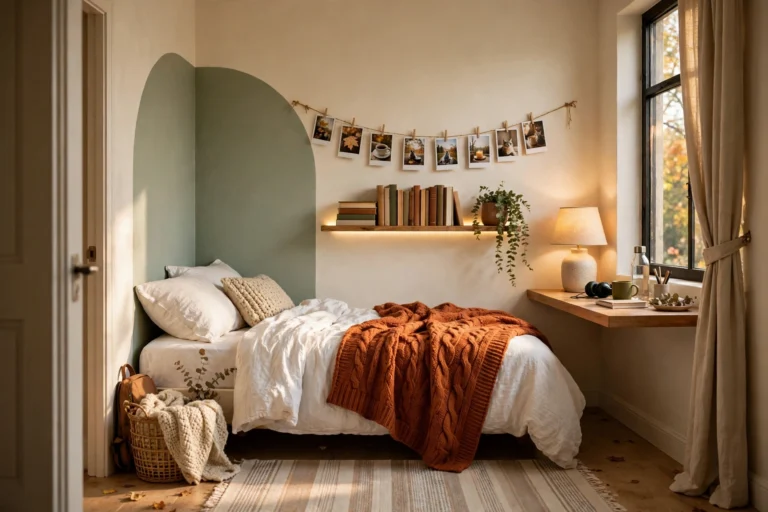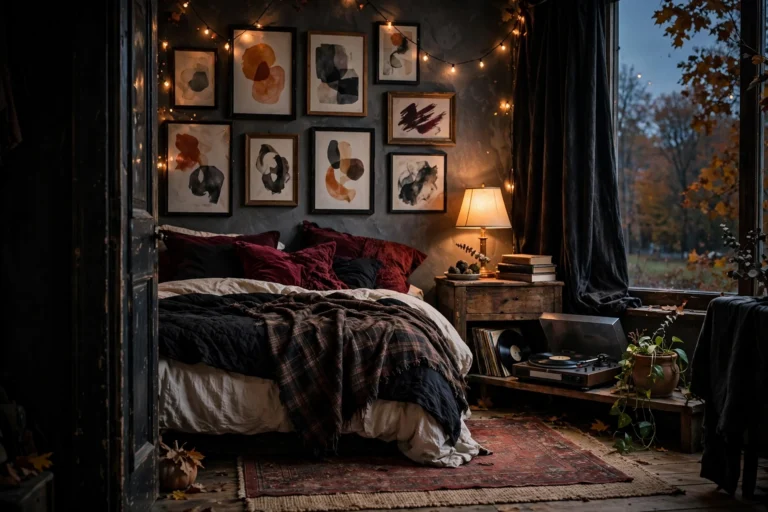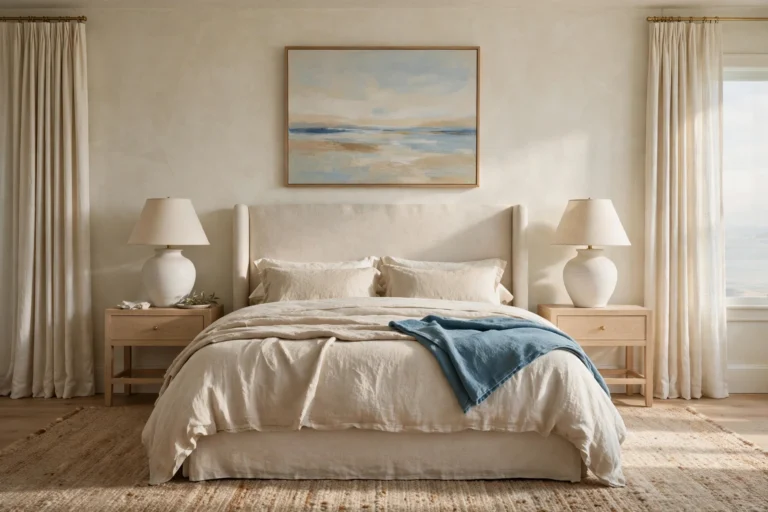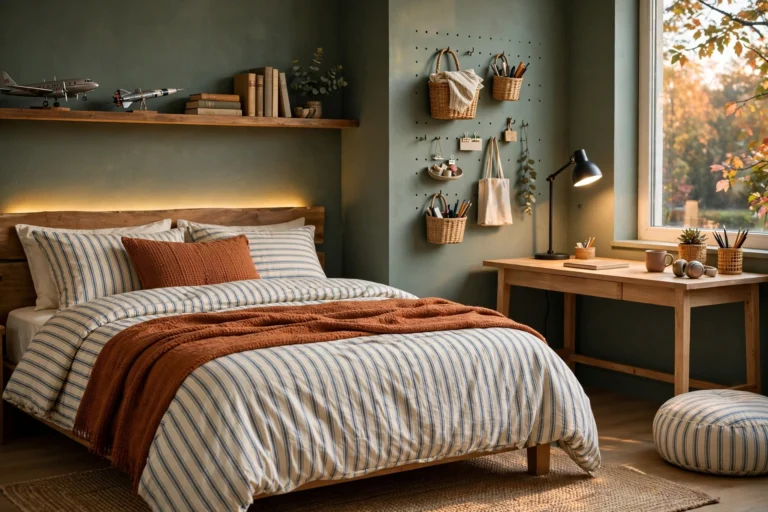
15 Minimalist Bedroom Ideas That Feel Warm and Personal
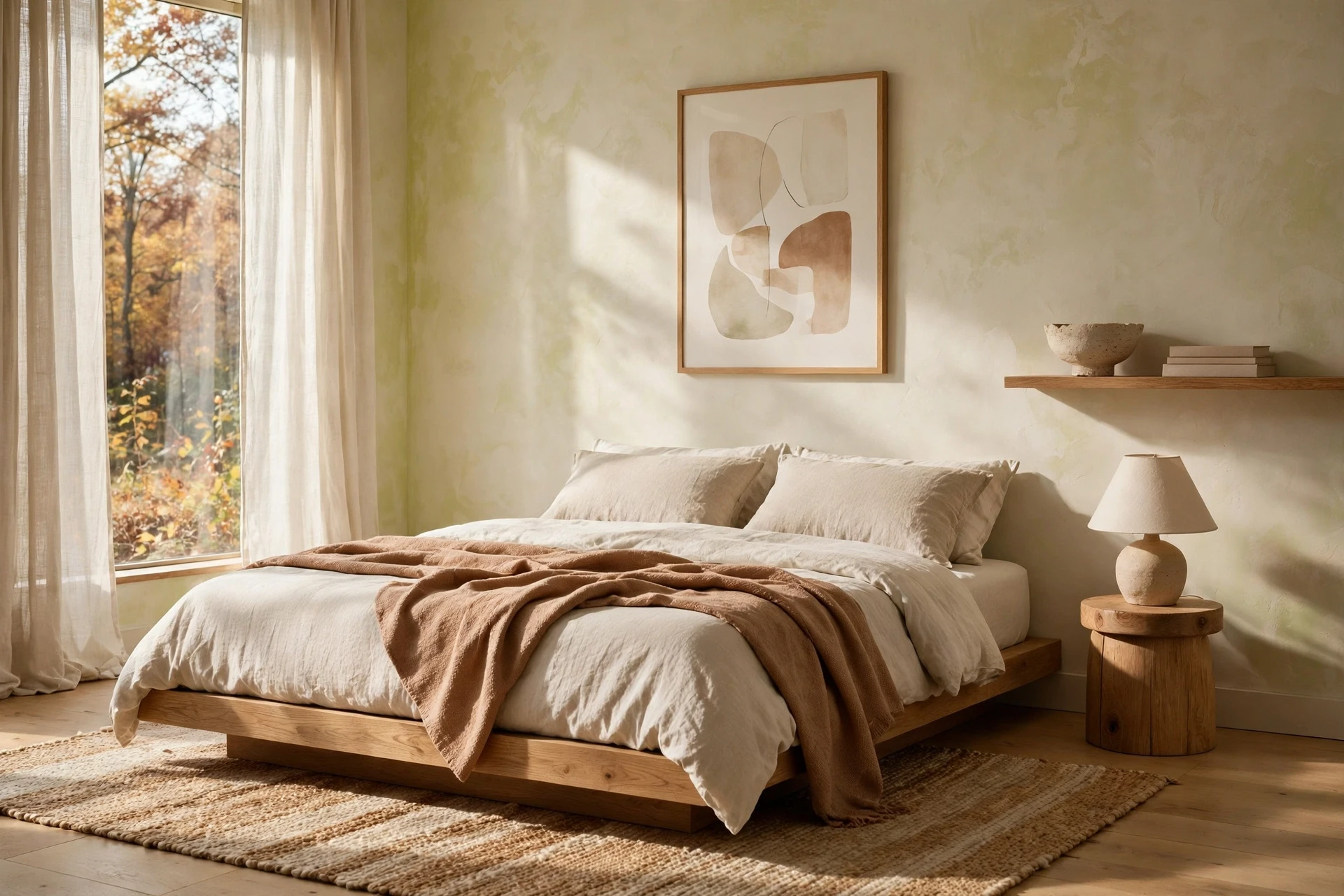
Open your bedroom door and pause for a second.
Does the room feel like yours, or does it feel like a display? Many minimalist bedrooms look calm in photos but feel empty in real life, because everything that made the room personal got edited away.
Real minimalism isn’t about owning the least. It’s about keeping what you actually love and giving it room to breathe.
These 15 ideas show how to do that. You’ll get warm paint and bedding combinations, texture pairings, lighting tips, and storage that hides the daily mess. You’ll also get a simple edit method, real measurements, and fixes for small rooms and renters.
Table of Contents
The 15 Minimalist Bedroom Ideas
Warm White Walls With Soft Texture
A minimalist bedroom lives or dies by its walls, because there’s less decor to hide behind. Choose a warm white like Benjamin Moore Swiss Coffee or Sherwin-Williams Alabaster, and consider a limewash or plaster finish for gentle, cloudy variation. That small shift in color catches light through the day, so the wall feels alive without a single object on it. Matte finishes also hide small flaws and look softer than glossy ones. Make it yours: hold two swatches next to your favorite wood piece and your bedding, then pick the one that makes them both look best.
Related: 21 Alt Bedroom Ideas That Feel Truly Lived In (Moody, Cozy & Personal)

A Low Platform Bed in Natural Wood
A low bed keeps your sightlines open, because your eye travels over it to the wall instead of stopping at a tall headboard. Choose oak, ash, or walnut in a matte finish with simple joinery, and let the grain do the decorating. Platform beds often sit lower than standard beds, so check that the mattress height is comfortable for getting in and out. Leave at least 24 to 36 inches on the sides you walk past, with 30 being comfortable. Make it yours: pick the wood tone that matches the floors, or one wood piece you already love.

One Keep Shelf for the Things You Love
Instead of scattering objects around the room, give them one home. Mount a single floating shelf or picture ledge, and place five to seven things on it that you truly love: a ceramic bowl, a small stack of books, a framed photo, a shell. Leave gaps between items, and vary the heights so it looks relaxed. Rotate one or two things each season so the shelf stays fresh. Make it yours: if you can’t say why something is on the shelf, it goes back in a box.

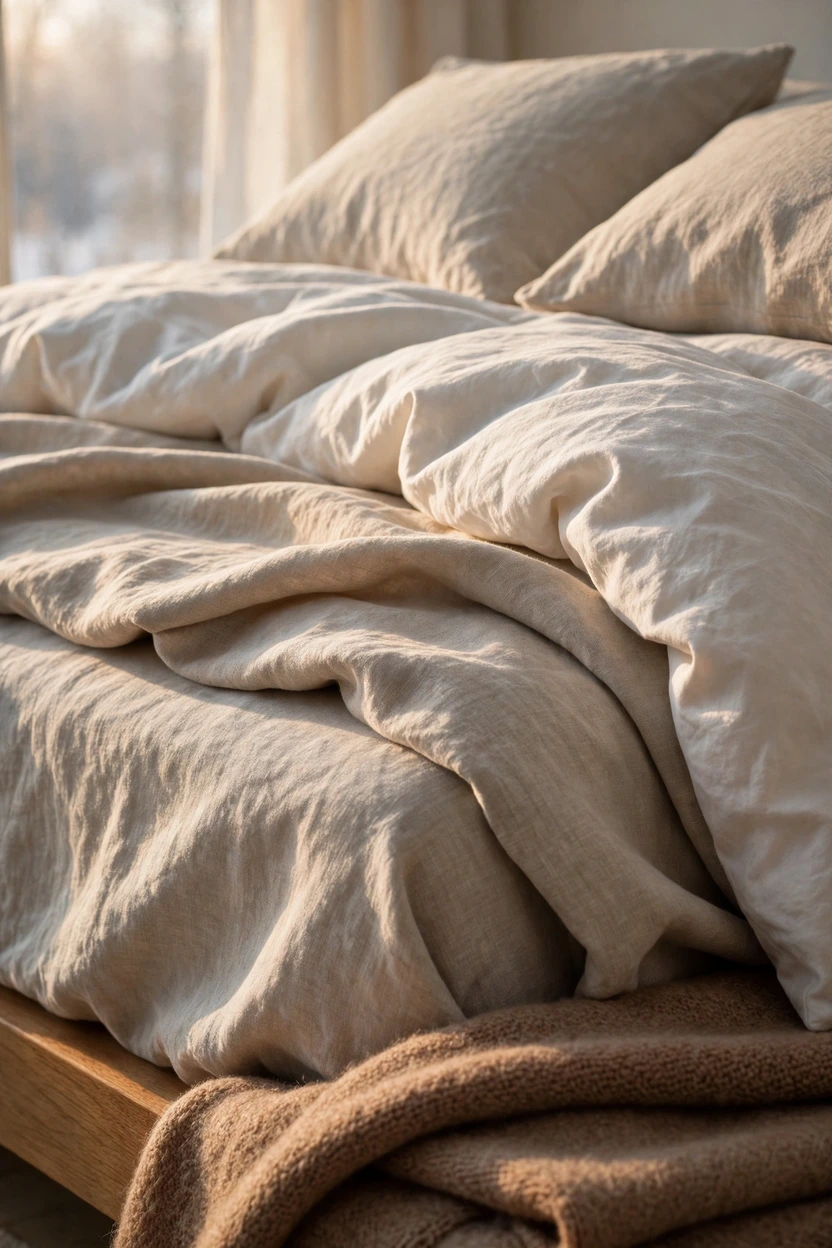
Tone-on-Tone Linen With One Personal Color
Build the bed in layers of oatmeal, sand, and warm white so it looks soft without any pattern. Linen is breathable and gets softer with each wash, and a little wrinkling suits the relaxed mood. Keep to two sleeping pillows per person and one or two accent pillows at most. Then add one color you love in a single throw or pillow, like clay, sage, or ink blue. Make it yours: choose the accent from the color you reach for most in your closet.
A Floating Nightstand or Simple Stool
A floating shelf or a simple stool beside the bed takes up less visual space than a bulky nightstand. The top should sit within about 2 to 4 inches of your mattress top, so you can reach your glass or glasses without stretching. A width of 16 to 20 inches is usually enough for a lamp, a book, and a small dish. Mounting a shelf to the wall also makes it easy to clean the floor. Make it yours: keep only what you actually reach for at night, and let everything else go in a drawer.

Wall-Mounted Warm Lighting
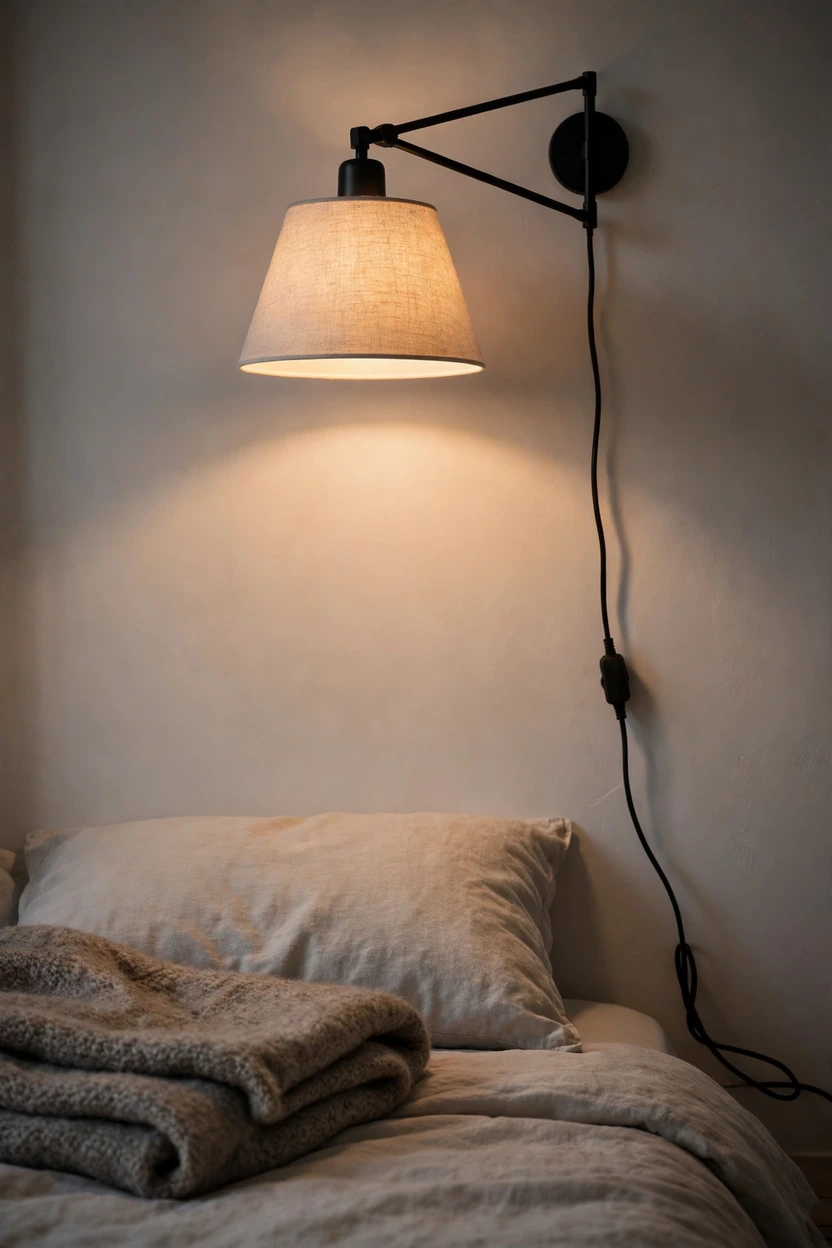
Wall lights keep surfaces clear and give a soft evening glow. Use a plug-in sconce or small pendant with a linen shade or paper lantern, and warm 2700K bulbs on a dimmer. Mount it at about 55 to 60 inches from the floor, then adjust so the bulb sits just above your shoulder when you sit up. Cover the cord with a wall-colored cord cover so it disappears. Make it yours: choose a shade shape you love, since lighting is one of the few places a single object can carry personality.
One Big Piece of Art That’s Yours
One large piece reads as a choice, while many small pieces read as clutter. Use your own photograph, a print from a trip, a framed fabric scrap, or a child’s drawing in a simple oak frame with a wide white mat. Hang it so the center sits about 57 inches from the floor, or about 6 to 10 inches above the headboard. Keep plenty of blank wall around it so it can breathe. Make it yours: choose something with a story you’d tell a guest.

Hidden Storage for the Daily Mess
The calmest rooms hide the daily mess. Use under-bed drawers, a closed wardrobe at least 24 inches deep, and a low dresser with plain fronts. Keep about 36 inches clear in front of dressers and closets so drawers open easily. Add a hamper inside the closet or behind a door so laundry stays out of sight. Make it yours: give each category of stuff one home, such as shoes in one drawer and books by the bed in one basket, and don’t let anything live on the floor.

Texture Instead of Objects
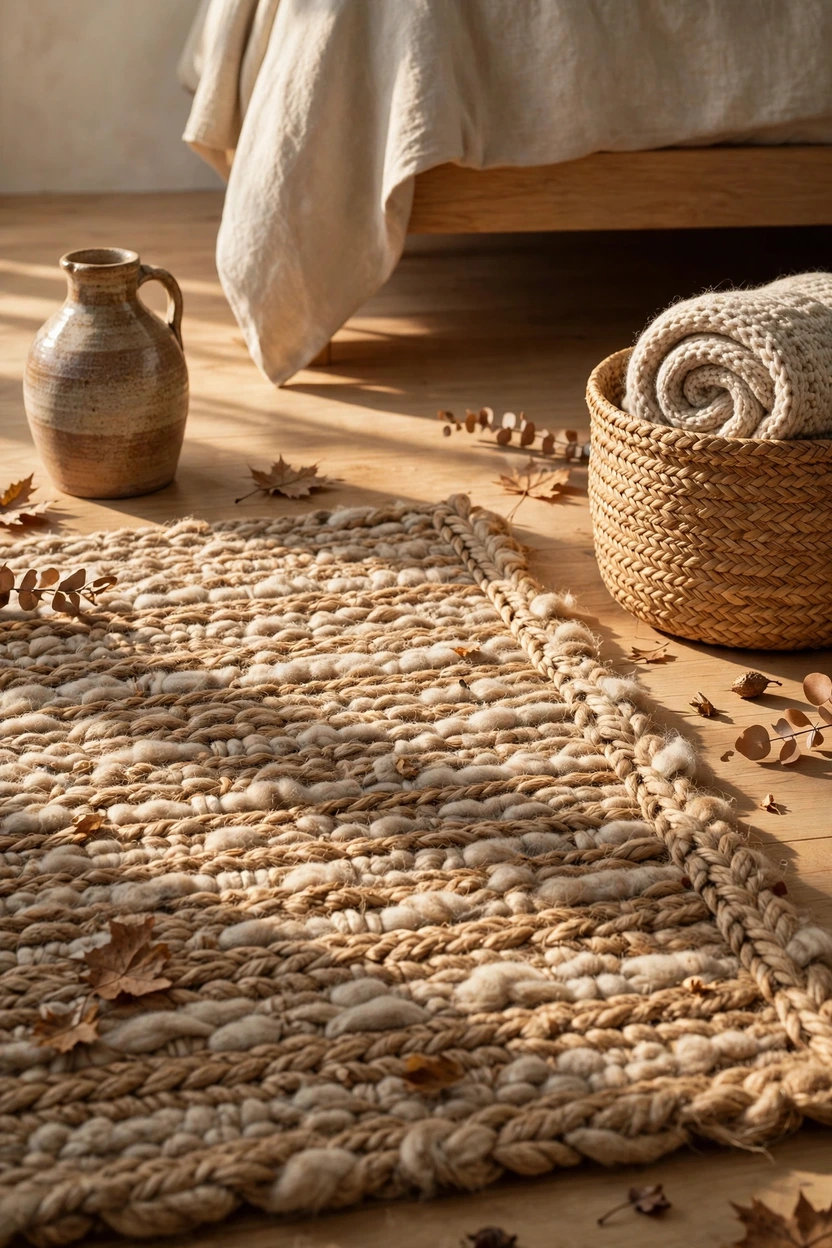
Texture is what keeps a minimal room from feeling empty. Pair a wool or jute rug with a linen duvet and a woven basket, and add one handmade ceramic piece. The rug should extend about 18 to 24 inches past the sides of the bed so your feet land on something soft. Choose two or three textures and repeat them, instead of adding many different materials. Make it yours: pick textures you enjoy touching, because you’ll use them every day.
One Color Moment
If white feels flat to you, give the room one calm color moment. Paint only the wall behind the bed in a muted clay, deep sage like Benjamin Moore Saybrook Sage, or ink blue like Benjamin Moore Hale Navy, and keep the other walls warm white. Keep the bedding in neutral tones so the wall is the only strong color. A single wall of color feels deliberate, while color everywhere starts to feel busy. Make it yours: choose a color you’d actually wear, then test the sample at night.

Sheer Curtains and Clear Windowsills
Light is one of the cheapest decor items in a minimalist room. Hang sheer linen curtains on a plain rod close to the ceiling, and leave the windowsill clear so nothing blocks the glow. Sheer panels filter harsh sun and still give privacy, and a lined layer can be added behind them for darker mornings. If your view is lovely, leave the window bare and let it be the art. Make it yours: frame what you like looking at, whether that’s a tree, a rooftop, or the sky.

A Single Reading Chair or Hobby Corner
A small corner can keep your interests visible without crowding the room. Use one chair and one lamp, or a small table for a hobby you do often, such as sketching or yoga. Keep a basket nearby to hold supplies so the area clears in seconds. In a small room, remove seating before you reduce walking space, and keep at least 30 inches for the walkway. Make it yours: choose the one hobby you do most and give it a spot.
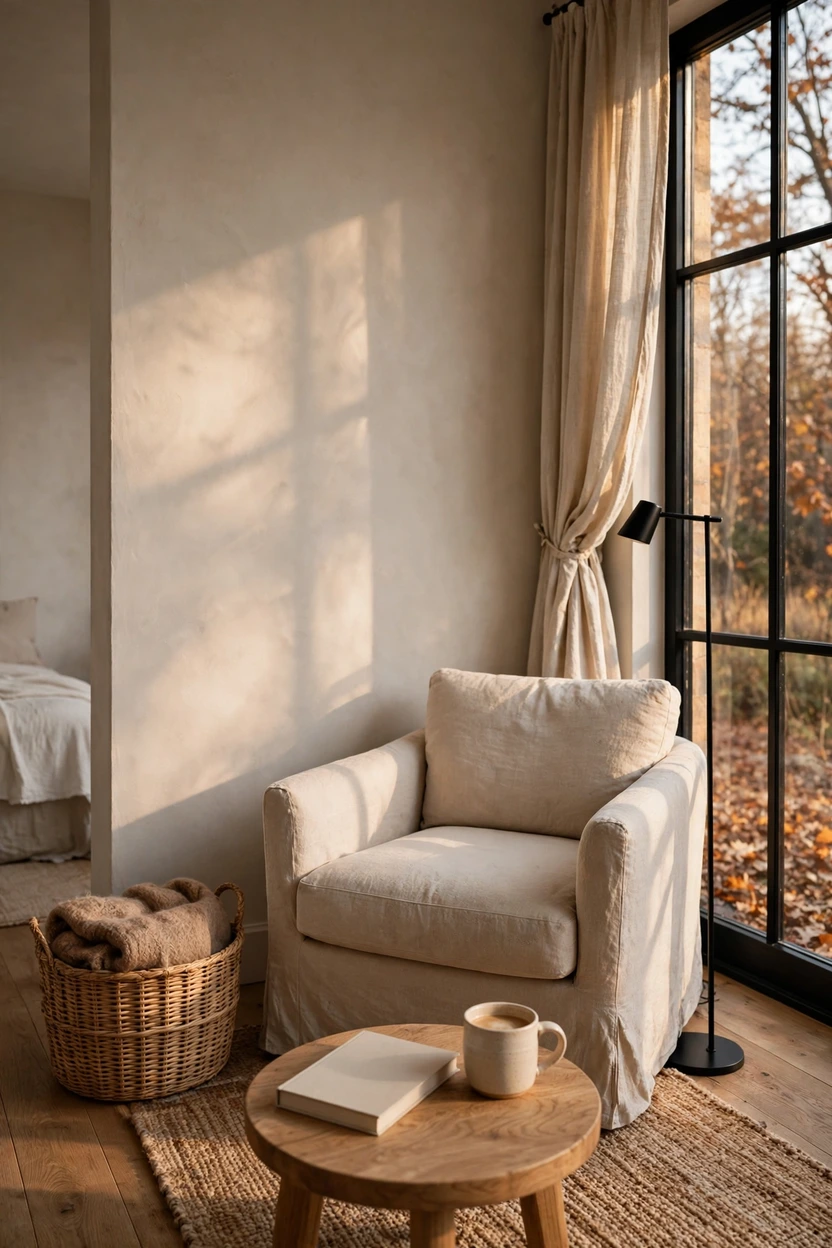
One Sculptural Plant or Branch
One tall living or dried element can soften clean lines better than a cluster of small items. Place an olive branch, dried branches, or a snake plant in a handmade ceramic vessel near the window. Choose something around a third of the wall height so it adds presence without crowding. Keep the pot simple, in a matte glaze that matches your palette. Make it yours: pick a vessel you love, since it will be the thing you notice most.

Black Accents for Crisp Lines
If you like clean, graphic rooms, add two or three black accents to define shapes. A matte black bed frame, lamp, or thin picture frame gives the eye places to rest. Pair black with warm wood and soft linen so the room stays cozy instead of harsh. Keep other colors in the same warm family so the black looks intentional. Make it yours: choose black pieces that you’d keep for years, since they’ll stand out most.

A Dresser Top With One Tray
A clear dresser top looks calm, and one tray keeps small items together. Place a tray with a ring dish, a perfume bottle, and a small ceramic piece, and leave the rest of the surface bare. Store everything else in the drawers so the top stays quiet. Choose a tray in wood, stone, or matte metal that matches the rest of the room. Make it yours: the tray should hold what you actually use every day, like your watch, your favorite scent, and your ring dish.

Styling Tips
Limit each surface to about three things, then add one more only if it makes you smile.
Stay in a warm palette of whites, sand, oatmeal, and wood, then add one personal color.
Vary heights on shelves and tops so the room feels relaxed, not stiff.
Repeat one material, like oak or linen, at least three times.
Use odd numbers in groups. Three feels easier on the eye than two or four.
Leave empty space on purpose. Empty walls and surfaces are part of the design.
Keep lighting low and warm in the evening.
Practical Implementation Plan
Do the three-pile edit. Sort the room into keep, move, and let go. Keep what you love or use daily, move what belongs in another room, and let go of the rest.
Set the layout. Place the bed first, then the nightstands, then the dresser.
Fix the walls. Paint or add texture before buying new decor.
Layer the bed. Choose three tones of linen and one accent.
Add lighting. Swap to warm bulbs and put them on dimmers.
Place your keep shelf and one big piece of art.
Hide the rest. Use drawers, baskets, and closed storage.
One-in, one-out habit: when something new comes in, something old goes out. A five-minute reset at night keeps the room calm.
Bedroom numbers to keep handy
Related: 19 Leopard Print Bedroom Ideas for the Aesthetic Undecided
| Item | Guideline |
|---|---|
| Space on sides of bed | 24 to 36 inches (30 is comfortable) |
| Space at foot of bed | At least 24 to 30 inches |
| Space in front of dresser or closet | About 36 inches |
| Nightstand height | Within 2 to 4 inches of mattress top |
| Nightstand width | About 16 to 24 inches |
| Wardrobe depth | At least 24 inches |
| Rug overhang | About 18 to 24 inches past the bed sides |
| Art height | Center at about 57 inches, or 6 to 10 inches above headboard |
| Bulb color | Warm, about 2700K, on a dimmer |
Common Mistakes to Avoid
Removing everything personal. The room can feel like a showroom instead of home.
Using only cool white and gray. These can feel cold without warm wood or textiles.
Skipping texture. Without it, a minimal room can look flat.
Buying new things to look minimal. Edit what you own before you shop.
Too many small decor items. Group them on one shelf or tray.
Cool bulbs. They make warm whites look harsh.
Forgetting storage. If everything has no home, clutter returns quickly.
Small-Space Alternatives
Use a low bed with drawers underneath to replace a dresser.
Swap nightstands for wall-mounted shelves.
Replace floor lamps with wall sconces.
Choose a tall, narrow chest instead of a wide dresser.
Remove seating before you reduce walking space.
If a queen bed leaves under 24 inches on a side, consider a full-size bed.
Paint walls and trim the same warm white to blur the room’s edges.
Budget-Friendly Alternatives
Prices vary, so treat these as rough guidance.
Edit first: decluttering costs nothing and often does the most.
Paint: a sample pot is enough for a single color wall.
Bedding: start with one linen or washed cotton duvet cover in a warm tone.
Lighting: a plug-in sconce and a warm bulb cost far less than rewiring.
Storage: use secondhand baskets and bins with lids.
Art: print your own photograph and use an inexpensive wood frame with a wide mat.
Pro Styling Recommendations
Test the three-item rule. If a surface looks busy, remove one item.
Photograph the room in black and white. If it looks flat, add a darker piece or more texture.
Choose one hero. Make one thing the star, like the bed, the art, or the lamp.
Repeat colors. Use your accent color in at least three small places.
Change one thing seasonally. Swap a throw or the shelf items, instead of buying new things.
Check sight lines from the doorway. The first view should look calm.
FAQs
What is a minimalist bedroom?
A minimalist bedroom keeps only what you need and love, with clean lines, simple colors, and a lot of open space. It focuses on calm and comfort.
How do I make a minimalist bedroom feel cozy, not cold?
Use warm whites, natural wood, and layered textures like linen, wool, and jute. Add warm lighting and one or two personal items.
How many items should I keep on my nightstand?
Three is a good starting point: a lamp, something to read, and a drink or small dish. Add a fourth only if it brings you joy.
Do I need white walls for a minimalist bedroom?
No. Warm whites, soft beiges, sage, clay, and deep blue can all work if you keep the rest simple.
Related: 18 Blue and Yellow Bedroom Ideas for Cozy, Calm Contrast
Can I keep books and sentimental items?
Yes. Choose a keep shelf or a single basket for them, and rotate items so the display stays fresh.
How do I do minimalism in a small bedroom?
Use a low bed, wall-mounted lights, hidden storage, and a light color palette. Keep floor space open and walkways clear.
What’s the difference between minimalist and Japandi?
Minimalist focuses on fewer items and clean lines. Japandi blends Japanese minimalism with Scandinavian warmth, using natural wood, soft textures, and warm neutrals.
How much space should I leave around the bed?
Leave 24 to 36 inches on the sides you walk past, with about 30 being comfortable. Allow at least 24 to 30 inches at the foot.
How can I do this on a budget?
Start by editing what you own, then add paint, one set of bedding, and warm lighting. Secondhand baskets and frames save a lot.
How do I keep a minimalist bedroom tidy?
Give everything a home, use closed storage, and do a five-minute reset each night. Follow a one-in, one-out habit.
Conclusion
A minimalist bedroom isn’t about proving how little you own. It’s about making room for what matters.
Start with one edit tonight. Clear one surface, keep only the things you love, and see how the room feels. Then add warmth with texture, soft light, and one piece that’s truly yours.
A calm room that looks like you will always feel better than one that looks like a catalog.