16 Nature-Inspired Table Centerpiece Ideas (No Florist Needed)

Imagine a long table at the end of a busy week. A low bowl of green branches sits in the middle, a few candles glow beside it, and the whole room smells faintly like pine. Nobody paid a florist. You picked most of it up on a walk.
Nature already does the hard part of decorating. It gives you texture, soft color, odd shapes, and a mood that feels calm. A good natural centerpiece just takes those pieces and puts them in a simple container, in the right size, in the right place on the table.
This list has 16 ideas that use branches, moss, herbs, fruit, pinecones, grasses, stones, and wood. Most cost very little, and many are free. Each one comes with the reason it works, so you can adjust it for your own table, season, and budget.
Quick answer: To make a nature-inspired centerpiece without a florist, put foraged greenery, branches, moss, or dried grasses in a low container, add candles or stones for height variety, and keep the whole piece under 12 inches tall and about one-third the width of the table.
Four Rules Before You Start
- Watch the height. A centerpiece that sits between 12 and 24 inches tall lands right at eye level when people are seated, so it blocks faces. Keep yours under 12 inches, or go above 24 inches on a very slim base.
- Watch the width. A good rule is about one-third of the table’s width. On a 60-inch table, that is around 20 inches. Keep the main piece in a narrow strip so plates, glasses, and serving dishes still fit.
- Forage with care. Ask before you cut on private land, follow local rules in parks and on beaches, and never take from protected areas. Shake out every branch and cone, and look closely for bugs. Check that plants are safe around pets and kids, since some common plants, such as yew, holly berries, and lilies, can be harmful.
- Keep flames away from dry materials. Dry leaves, grasses, and branches can catch fire. Use glass holders, keep flames several inches from anything dry, and never leave candles burning when you are not in the room. Battery candles are a safe backup.
What You’ll Find Below
- Foraged branches in a low, wide bowl
- A moss and river stone runner
- A wooden bowl of pinecones, acorns, and moss
- A bark tray with pillar candles at three heights
- Log slices and tealights
- Citrus and leaves in a footed bowl
- Terracotta herb pots down the table
- Dried grasses and seed heads in a stoneware jar
- Driftwood, shells, and sea glass
- A eucalyptus garland runner
- Pumpkins, gourds, and sage in mixed heights
- A trio of single-stem bud vases
- Ornamental cabbage and kale in a rustic planter
- A glass cloche woodland scene
- Moss mats and leaf place cards
- A garland hung above a narrow table
Then: styling tips, practical steps, common mistakes, small-table and budget versions, pro recommendations, FAQs, and a wrap-up.
Table of Contents
16 Nature-Inspired Centerpiece Ideas
1. Foraged Branches in a Low, Wide Bowl
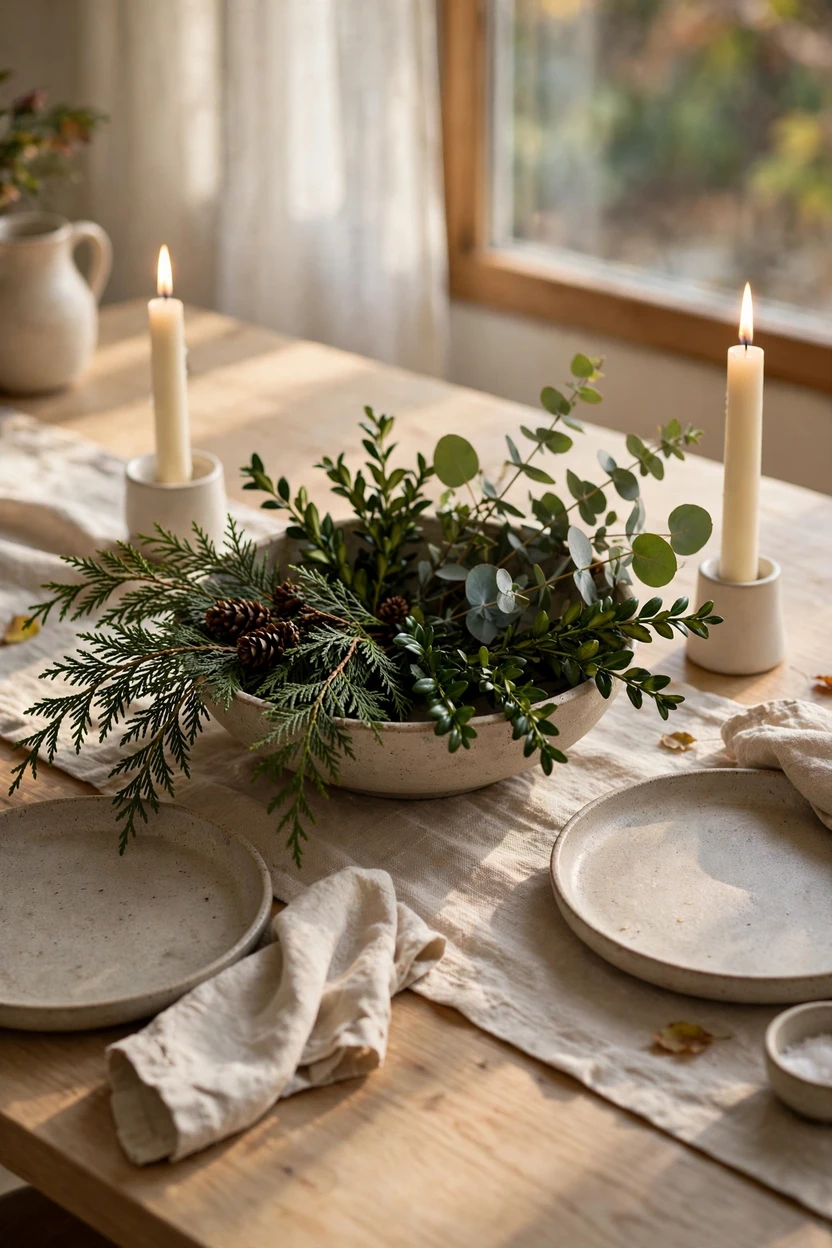
A wide, shallow bowl gives you the look of a big arrangement without the height. Use a stoneware bowl, a wooden bowl, or a low planter, and start with the longest branches, laying them so they reach out in different directions. Fill in with shorter cuttings of cedar, boxwood, pine, or eucalyptus, and let one branch sweep off to the side so the shape feels natural and not like a round ball. A crumpled ball of chicken wire or a grid of clear tape across the top helps stems stay where you put them. Stop when the highest point is under 12 inches, because the whole point is to see the people across from you.
2. A Moss and River Stone Runner
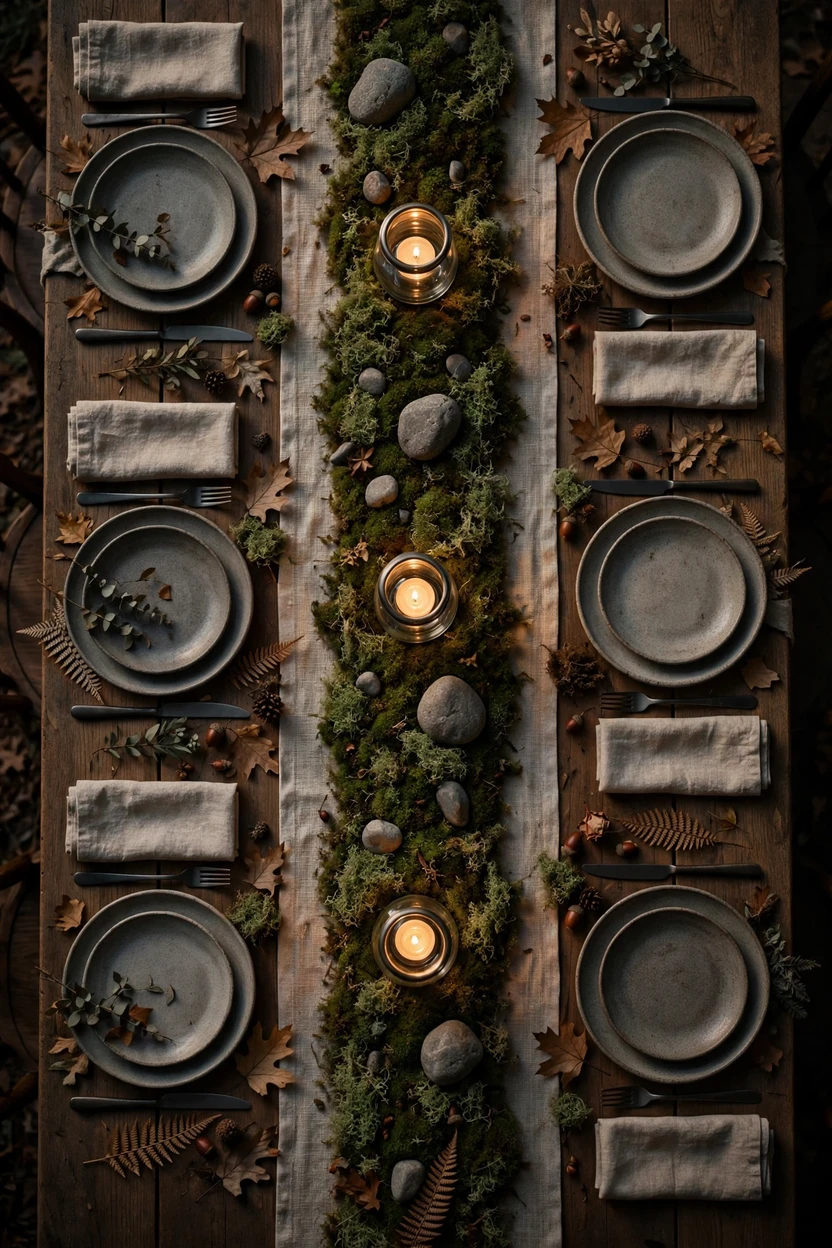
A strip of fresh moss down the middle of the table looks like a tiny forest floor. Lay a thin tray, a piece of parchment, or a plastic liner under the moss first so moisture never touches your wood. Press sheet moss into a band about 6 to 8 inches wide, then set smooth river stones and three glass lanterns along it. Craft store moss is a kinder choice than pulling it from the wild, since moss grows very slowly. Mist it lightly each morning, and after a week or two you can set it outside to rest.
Related: 22 Fall Table Decor Ideas Worth a Second Look
3. A Wooden Bowl of Pinecones, Acorns, and Moss
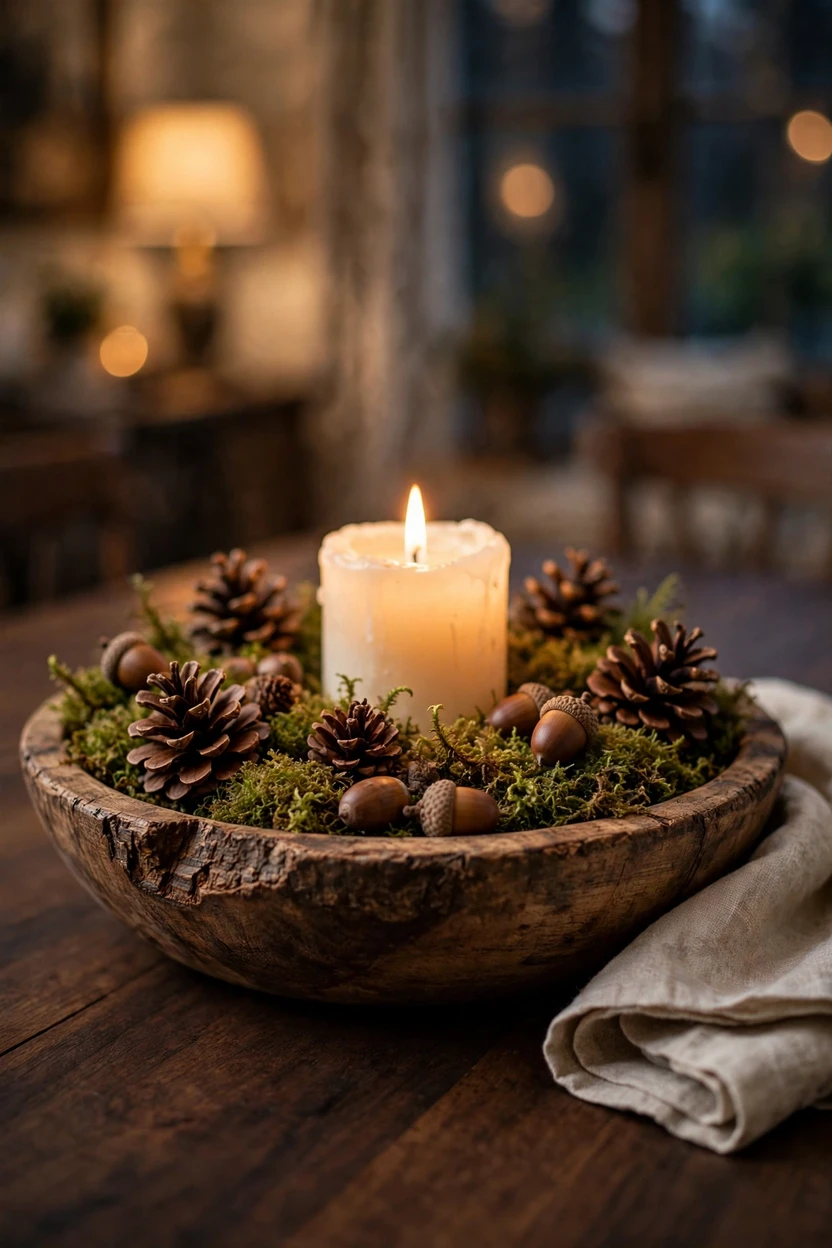
One big wooden bowl full of woodland finds is about as simple as a centerpiece gets. Pack the base with moss so it looks soft, then pile in pinecones of different sizes and tuck a few acorns and caps between them. Before you bring cones inside, bake them on a foil-lined tray at a low oven temperature, around 200 degrees F, for about 30 to 45 minutes to chase out bugs and melt surface sap. Place a battery candle in the middle so the bowl glows without any flame near dry materials. A bowl like this works for fall, winter, and even spring, since the pieces are all natural neutrals.
4. A Bark Tray With Pillar Candles at Three Heights
A wooden tray with a natural bark edge works like a little stage for your candles. Choose three chunky pillar candles in cream or ivory at different heights, such as 3, 5, and 7 inches, and group them off-center so the tray has a loose, relaxed look. Fill the gaps with small sprigs of evergreen or dried leaves, keeping them well away from the wicks. The tray keeps wax drips off your table and lets you carry the whole centerpiece to the sideboard when it is time to serve. This idea gives a calm, Scandinavian feel and is easy to repeat down a long table.

5. Log Slices and Tealights
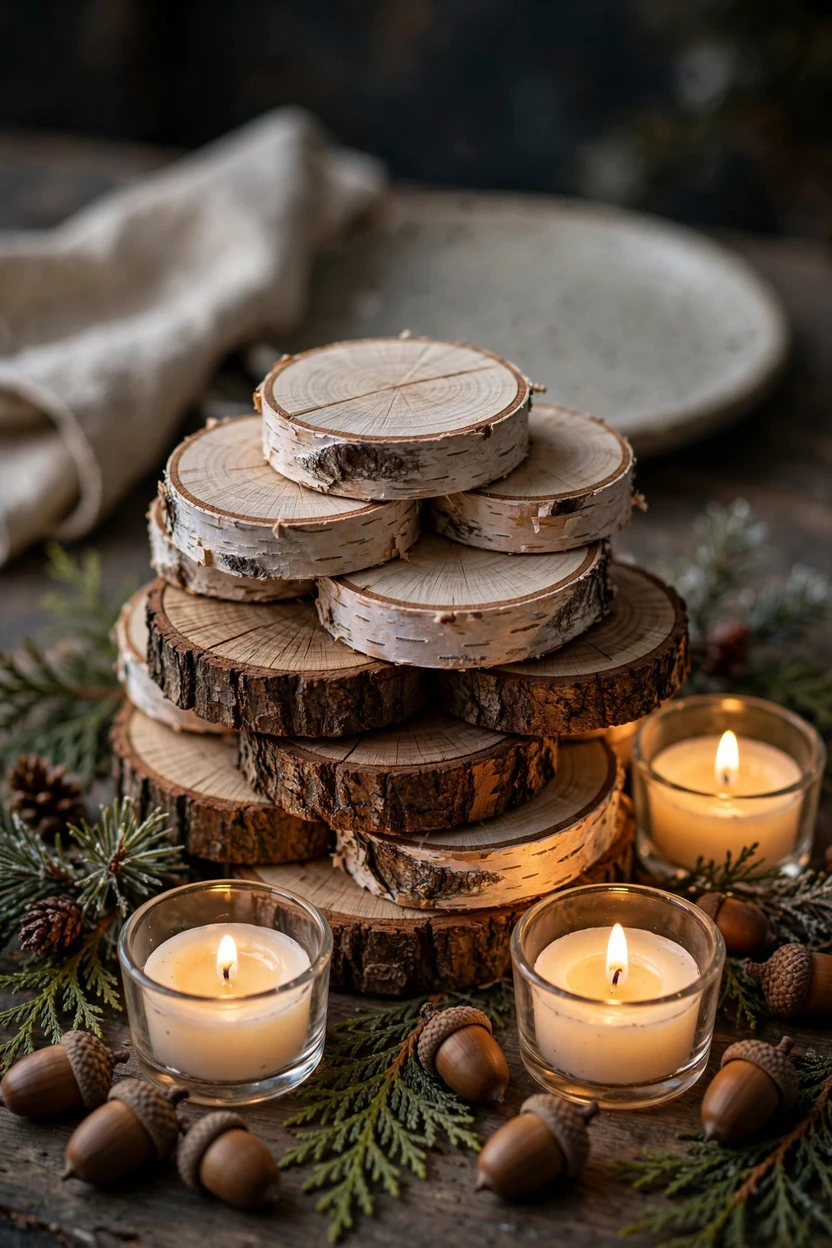
Stack two or three wood slices of different widths and thicknesses in the middle of the table to make a low, earthy base. Set small tealights in glass cups on top, and scatter a few acorns or pine sprigs around the edges. Buy dried slices from a craft store or lumber yard, since fresh-cut ones can crack and leak sap. Sand the edges lightly, and place a thin cork or felt pad under each to protect your table. The rings in the wood add pattern, so you do not need any other decoration.
6. Citrus and Leaves in a Footed Bowl
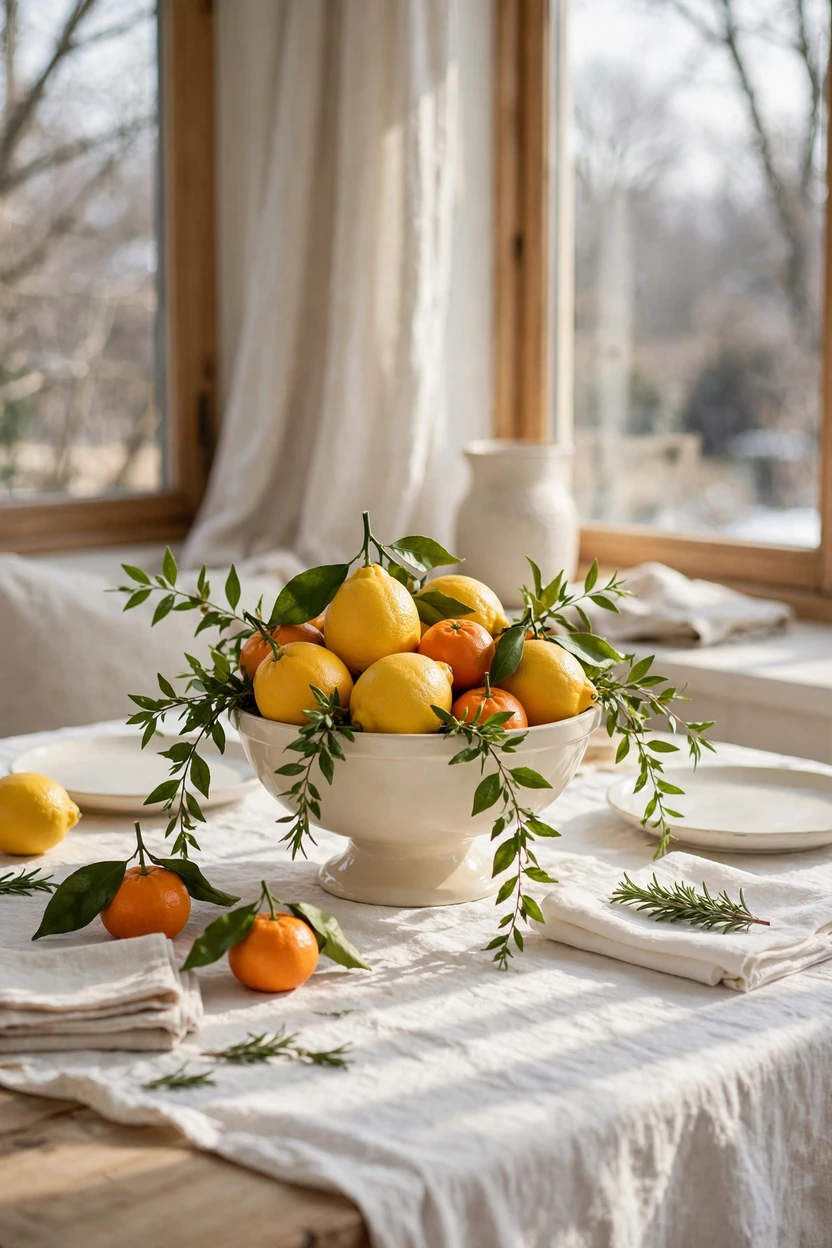
Fruit makes a centerpiece you can enjoy twice: first as decor, then as dessert or breakfast. Line a footed bowl with leafy branches so the leaves spill over the rim, then set lemons, oranges, or small mandarins with their leaves still attached in the middle. The foot lifts the fruit a few inches, giving it height without a tall stem. Firm citrus, apples, and pears hold up for a week or two in a cool room. Choose just one or two colors of fruit for a calm look, and add a sprig of rosemary for a fresh scent.
7. Terracotta Herb Pots Down the Table
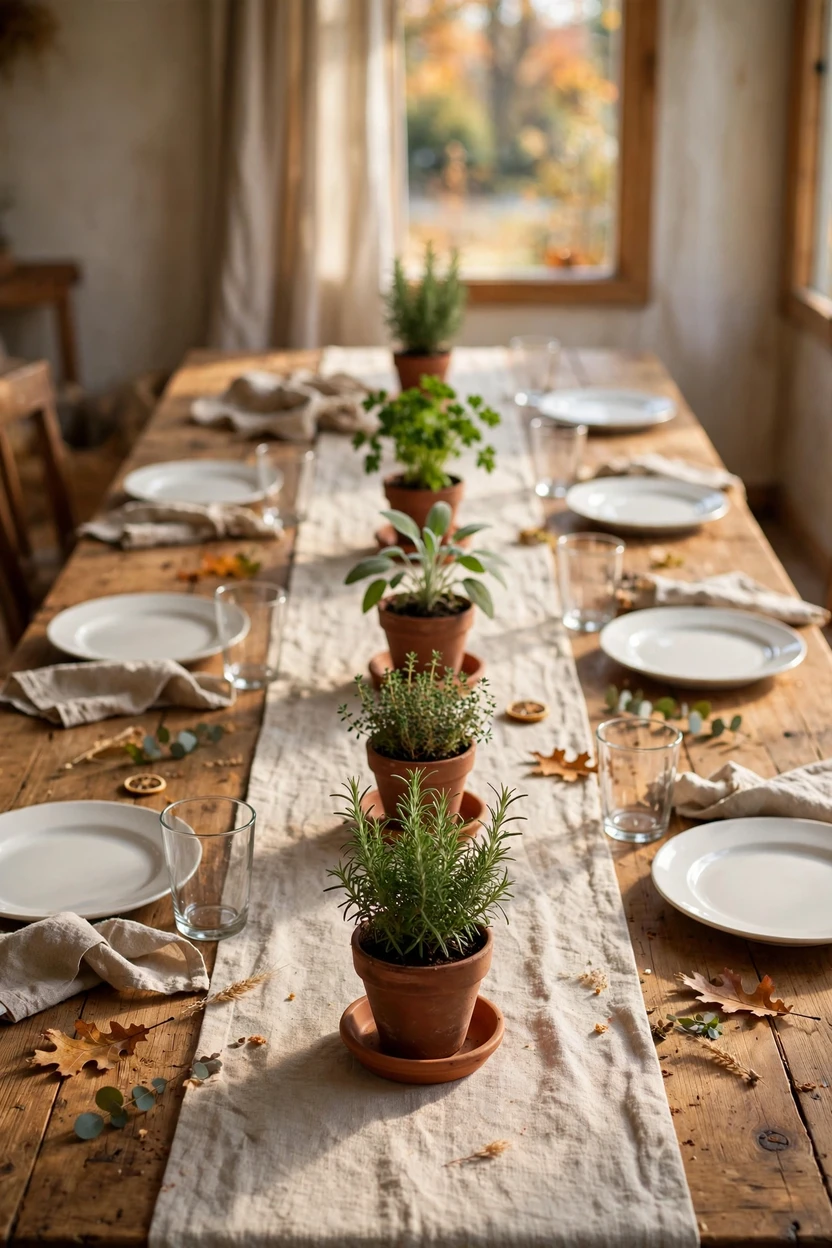
A row of herb pots gives you greenery, scent, and something guests can use. Pick three to five small terracotta pots of rosemary, thyme, sage, and parsley, and vary the sizes so the line has a gentle rhythm. Set each pot on a saucer to protect the table, and space them every 12 to 18 inches down the center. Choose mild herbs for the dinner table, since strong scents can compete with the food. After the party, move the pots to a sunny kitchen window and keep using them.
8. Dried Grasses and Seed Heads in a Stoneware Jar
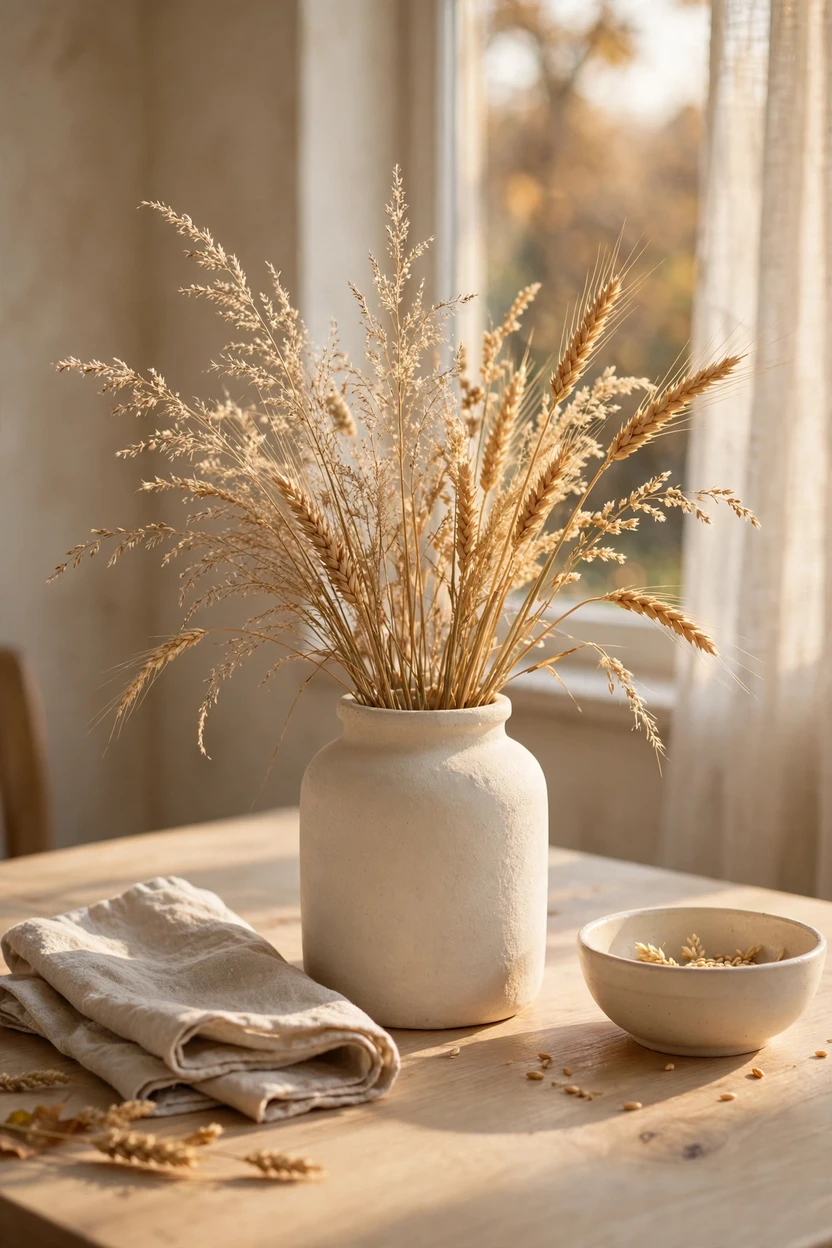
Dried grasses are the easiest way to get a flower-like look with no water and no wilting. Use wheat, oats, bunny tails, or soft plume grasses, and gather them loosely in a matte stoneware jar or wide-mouth crock. Trim the stems so the whole arrangement stays under 12 inches from table to tip. Keep the color range narrow, such as cream, tan, and soft gold, so it looks calm. Dried stems can last for months, which makes this a good pick for a table you do not want to restyle every week.
9. Driftwood, Shells, and Sea Glass
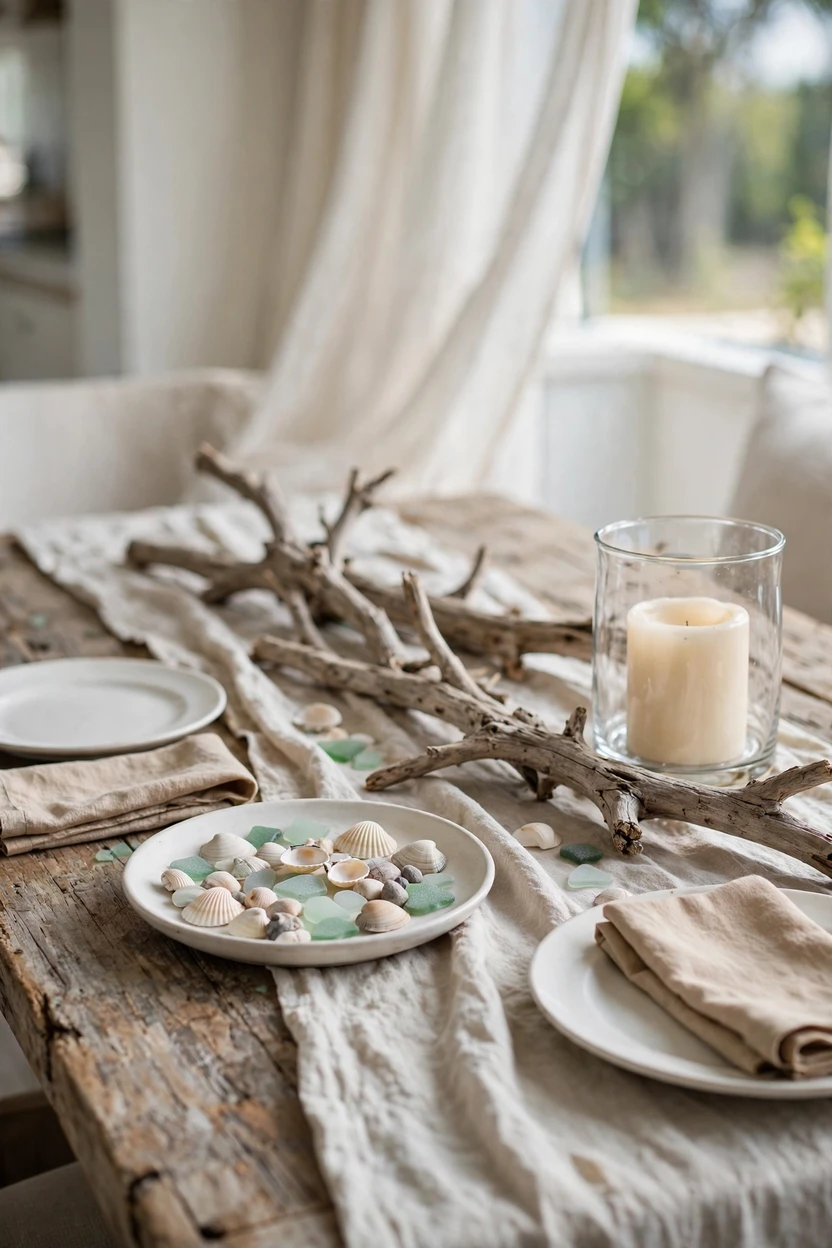
A coastal centerpiece needs only a few quiet pieces. Lay one long, weathered piece of driftwood down the middle of the table like a sculpture, then place a shallow dish of shells and sea glass beside it. Add a glass hurricane with a single pillar candle for a soft glow at the center. Stay with sand, white, and pale blue-green so the colors look calm together. Before you collect, check local rules, since many beaches and parks limit what you can take. Pieces you already own from past trips are a good place to start.
Related: 21 Coastal Living Room Ideas That Feel Collected, Not Beachy (Calm, Layered & Livable)
10. A Eucalyptus Garland Runner
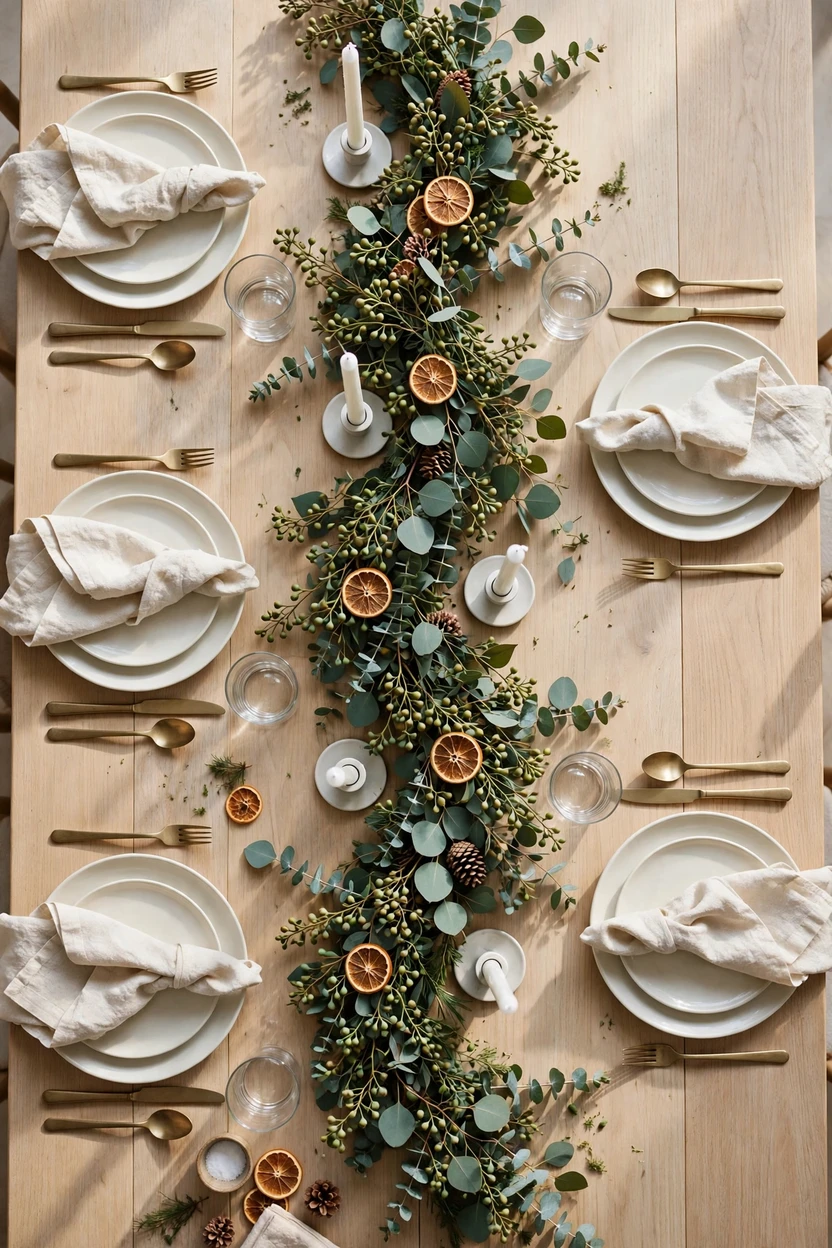
A garland of eucalyptus laid straight down the table works like a living runner. Overlap the stems end to end so there are no gaps, mixing two types, such as silver dollar and seeded eucalyptus, for variety. Tuck a few pinecones, dried orange slices, or small gourds in along the length, and keep the whole band under 4 to 6 inches high. Eucalyptus smells fresh and holds its shape for a week or more in a cool room. Use battery candles here, since eucalyptus leaves hold oils that can burn, and note that it is harmful to cats and dogs if eaten.
11. Pumpkins, Gourds, and Sage in Mixed Heights
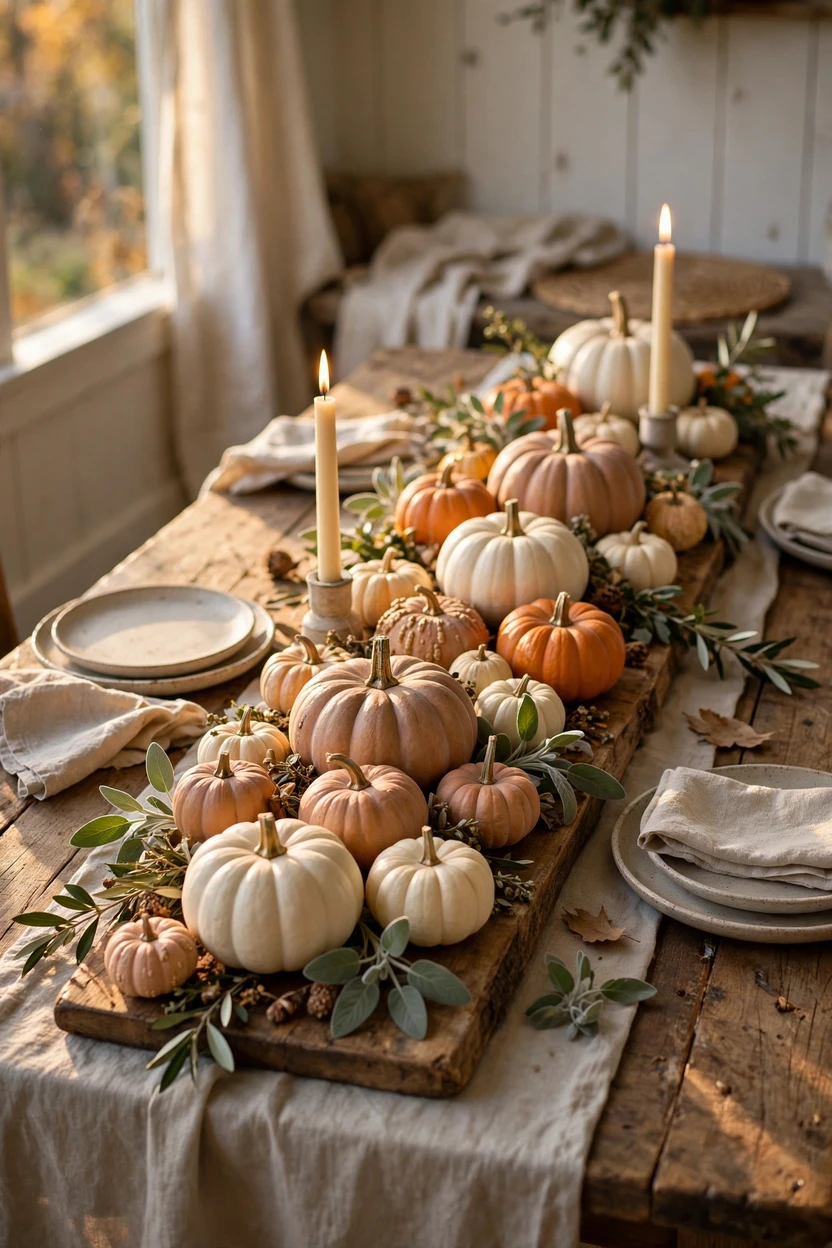
A harvest table does not need carving or paint. Group three to five pumpkins and gourds in odd numbers, mixing white, tan, and soft orange so the colors do not shout. Set them on a long wooden board or cutting board, and tuck sage leaves and small branches between them. Vary the sizes so one tall piece, one medium, and one small create a gentle rise and fall. Wipe the bottoms before they go on your table, and keep the whole group under 12 inches tall. Most last for weeks, and you can move them to the porch after the party.
12. A Trio of Single-Stem Bud Vases
Three tiny vases can look more considered than one big bouquet. Use small bottles, jars, or glass bud vases, and put just one stem in each: a branch of berries, a sprig of ornamental grass, a single garden bloom, or one grocery store stem. Vary the heights between 6 and 10 inches, and space them about 6 to 8 inches apart so there is air around each. Repeat the three-vase set at each end of a long table, or set one at every place for guests to take home. Because each vase needs only one stem, you can stretch a single bunch a long way, which keeps costs low.

13. Ornamental Cabbage and Kale in a Rustic Planter
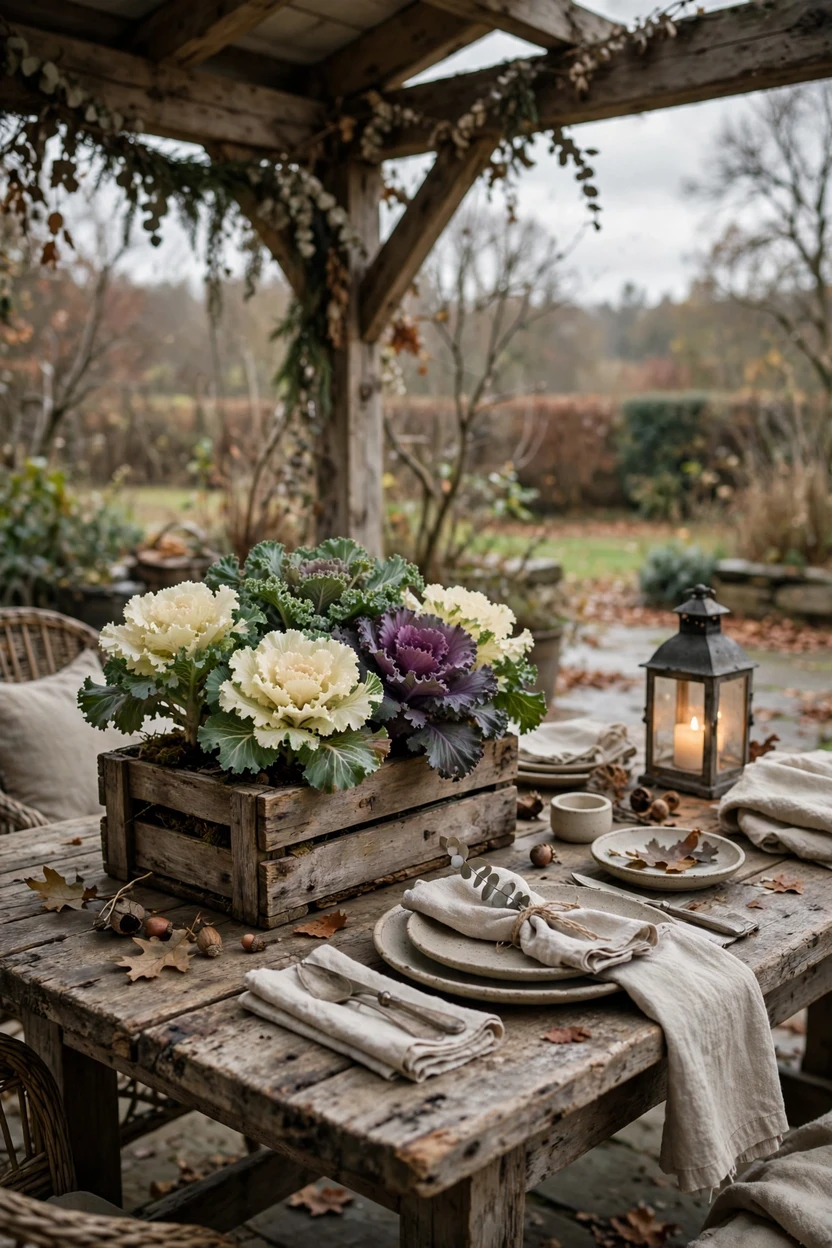
Ornamental cabbage and kale look like ruffled roses in cream, green, and plum. Plant two or three heads in a wooden crate, a galvanized trough, or a low terracotta planter, and set it on the table for a cool-season centerpiece. These plants are cool-weather types and hold up well for weeks in a chilly dining room or on a covered patio table. Choose a container no taller than 5 to 6 inches so the leaves are the star. After the party, plant them outside in the garden if the weather allows.
14. A Glass Cloche Woodland Scene
A glass cloche turns a handful of natural pieces into a display. Place a small plate or wooden slice on the table, cover it with a thin layer of moss, and add a few smooth stones, a curl of bark, and a tiny sprig of fern or evergreen. Set the cloche over it, or leave it open for air. Skip real bird nests and feathers, since many wild ones are protected by law, and use craft versions or leave them outdoors. Because the cloche is about 8 to 12 inches tall, it adds a focal point without blocking the view across the table.

15. Moss Mats and Leaf Place Cards
Sometimes the best centerpiece reaches out to every seat. Cut small squares of sheet moss and set one under each charger or plate, with a linen napkin between the moss and the dish so food never touches it. Write each guest’s name on a sturdy leaf, such as magnolia, with a paint pen, and tuck it into the napkin. This repeats the green of the centerpiece around the whole table and makes the setting feel planned. It works well alongside a low bowl or bark tray in the center.

16. A Garland Hung Above a Narrow Table
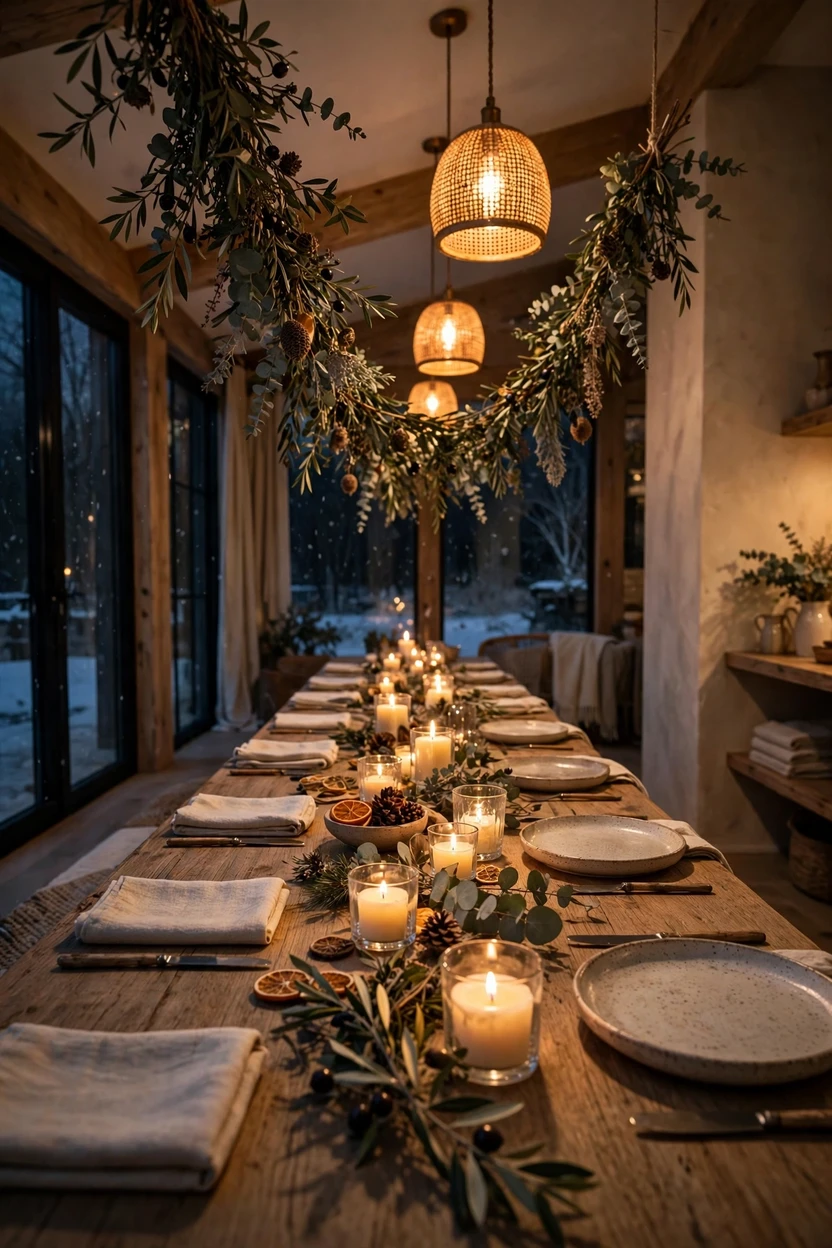
Long, skinny tables do not leave much room for a centerpiece, so lift the decor up. Hang a light garland of dried eucalyptus or olive branches from a secure ceiling hook or across an existing light fixture. Keep the lowest point at least 30 inches above the tabletop so sightlines stay clear, and keep dried greens away from hot bulbs by using LED bulbs. This leaves the table surface open for plates and platters, with only a few small candles on top. The mid-air garland also draws your eye upward and makes the room feel taller.
Related: 20 Mid-Century Modern Living Room Ideas That Feel Warm
Styling Tips for Natural Centerpieces
- Use odd numbers. Three candles, five pinecones, or three vases look more natural than pairs.
- Stay in one color family. Greens, creams, and tans blend. Add one accent, like plum cabbage or orange fruit, at most.
- Choose a single main material. Branches or grasses or moss. Mixing too many elements makes the table look cluttered.
- Vary the heights. Combine low, medium, and slightly taller pieces, while staying under 12 inches overall.
- Add texture. Pair rough bark with smooth stoneware and soft linen.
- Repeat the centerpiece’s materials. Put a sprig in each napkin or use a leaf as a place card to tie the table together.
- Use a tray. A tray groups small items so they look planned, and it makes cleanup quick.
- Add scent with care. Herbs and citrus smell fresh, but avoid heavy candles that compete with dinner.
Practical Ways to Put It Together
You can finish most of these in under an hour. Work in this order to save time.
- Measure your table. Divide the width by three to find the width limit for your main piece.
- Choose a low container. A bowl, tray, or planter between 2 and 5 inches tall keeps things in range.
- Gather your materials. Collect branches, cones, moss, or herbs, and check each piece for bugs.
- Build the base first. Lay moss, branches, or a runner down the center before adding smaller items.
- Add height variation. Place candles, a taller branch, or a footed bowl so the eye moves up and down.
- Check the sightline. Sit in a chair and look across the table. If you cannot see the face opposite you, lower the piece.
- Add light. Place candles or battery lights last, away from dry materials.
- Test the serving plan. Make sure platters and dishes still fit around the piece.
Quick 10-minute version: Set a bark tray or wooden bowl in the center, add three candles, tuck in a few sprigs from the yard, and step back.
Season-by-Season Swap Guide
Keep one bowl and one tray, then change what goes in them.
- Spring: moss, bud vases with single stems, pots of herbs, pale branches with buds, speckled eggs for an Easter table.
- Summer: citrus in a footed bowl, driftwood and shells, potted herbs, long grasses, white linen.
- Fall: pumpkins and gourds, sage, pinecones, acorns, dried grasses, ornamental cabbage.
- Winter: cedar, pine, and eucalyptus branches, bark tray with candles, log slices, dried orange slices, white berries.
How Long Natural Materials Last (Rough Guide)
- Fresh cut greenery in water: often about a week, longer in a cool room away from heat.
- Sheet moss: one to two weeks with light misting.
- Citrus, apples, and pears: one to two weeks in a cool room.
- Whole pumpkins and gourds: several weeks, sometimes months, if uncut and kept dry.
- Dried grasses, pinecones, and wood slices: months, or years if stored dry.
- Ornamental cabbage and kale: several weeks in cool temperatures.
Common Mistakes to Avoid
- Going too tall. Anything between 12 and 24 inches blocks faces. Check the sightline from a seat.
- Filling the whole table. Leave space for plates, glasses, and platters. Keep the piece in a narrow center strip.
- Mixing too many materials. One main material, plus one or two supporting pieces, looks calmer.
- Putting flames near dry greens. Use glass holders, keep a few inches of space, and switch to battery candles for dried grasses and eucalyptus.
- Skipping the bug check. Shake out branches and bake pinecones before they come indoors.
- Forgetting the table. Wet moss, pots, and fresh-cut wood can mark a wood table. Use trays, saucers, or liners.
- Choosing heavy scents. Strong candles and fragrant flowers can overpower food.
- Ignoring pets. Some common plants, including lilies, yew, and eucalyptus, are harmful to pets if eaten.
Small-Table Alternatives
On a small or round table, think in miniature. Use a single bark tray about 8 to 10 inches wide, or one bowl of pinecones and moss. A trio of bud vases takes up less room than a single bouquet, and one pot of rosemary can be a centerpiece on its own. For a table that seats four, keep the main piece around 10 to 14 inches wide and under 8 inches tall. If you share meals family style, shift the decor to a small tray near one end or place it on a side table so platters have room.
Budget-Friendly Alternatives
- Start with your yard. Branches, cones, leaves, and greens from your own property cost nothing.
- Use what you own. Bowls, jars, trays, and candle holders from your kitchen work better than new ones.
- Buy one bunch, make three pieces. One grocery store bunch of eucalyptus or herbs can fill several small vases.
- Thrift your containers. Footed bowls, crocks, and wooden trays are common at secondhand shops.
- Choose dried over fresh. Dried grasses and pinecones last for months and can be reused next year.
- Buy fruit you will eat. Citrus and apples make a centerpiece first and a snack second.
- Store smart. Keep dried items in a box so you can reuse them each season.
Pro Styling Recommendations
- Test it with plates down. A centerpiece that looks good on a bare table can feel cramped once plates and glasses go on.
- Use the squint test. Stand back and squint. If one thing jumps out too much, shrink it or move it.
- Add candlelight in layers. A few small flames at different heights feel warmer than one tall candle.
- Light the table. If you have a pendant, a dimmer and a warm bulb make natural textures look richer.
- Repeat in threes. Echo the centerpiece with small touches elsewhere, like a sprig on a napkin or a bowl on the sideboard.
- Match the mood to the meal. A quiet moss and candle table suits a slow dinner. A looser bowl of branches suits a casual lunch.
- Take a photo. A quick picture shows balance and gaps that are hard to spot in person.
Frequently Asked Questions
Final Thoughts
A good centerpiece does not need a bouquet. It needs a low shape, a little texture, and something that glows. A bowl of branches, a tray of candles, or a row of herb pots can do all three.
Start with one idea and one container you already own. Walk outside for ten minutes and see what you can gather. Then sit down at the table and check the view across it, because that is where a good centerpiece proves itself.
If you can see everyone at the table, and the room smells a little like pine or rosemary, you are done.