16 Fireplace Design Ideas: Color, Space, and Flame Guide
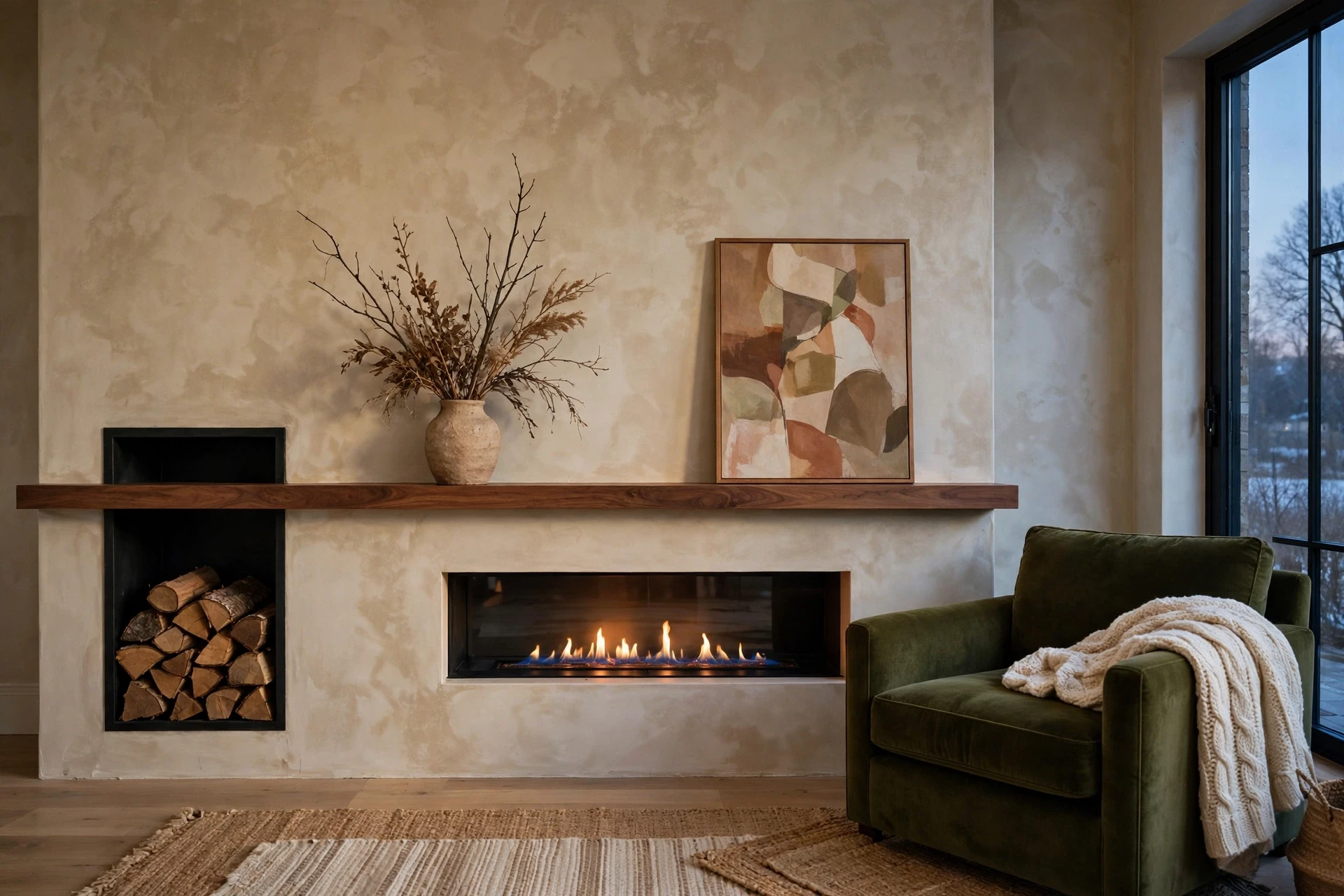
Picture a winter evening just after sunset. The windows have gone blue. In the middle of the room, a low flame moves behind glass, and the wall around it glows a deep, mossy green. Your feet are up. The whole house feels like it exhaled.
That’s what a good fireplace does. It doesn’t just give heat. It tells the room where to look and how to feel.
Fireplace makers and designers say the same thing: the fireplace is shifting from a heat source to the main design feature of the room. Trend reports point to deeper wall colors like green, oxblood, and plum, soft finishes like limewash and plaster, and fireplace walls used as places for art and collected objects.
But it’s easy to get stuck. Do you choose the paint first? The shape? The fuel? This guide solves that by splitting the job into three parts: color, space, and flame. Work through them in order, and every other choice gets easier.
Quick Answer: How Do You Design a Fireplace?
Start with color, because it sets the mood and decides how the fireplace sits in the room. Next, plan the space: the size of the surround, the mantel height, and what goes beside and above it. Last, choose the flame, which means wood, gas, or electric, since the fuel type controls the clearances, the vent needs, and the look of the firebox. Always confirm clearances with your fireplace manual and local building code.
Fireplace Terms in 30 Seconds
Firebox: The opening where the fire burns.
Surround: The material around the firebox, like stone, tile, plaster, or brick.
Mantel (or mantle): The shelf or beam above the fireplace.
Hearth: The floor area in front of the fireplace, often stone or tile.
Insert: A unit that fits inside an existing firebox, such as a gas or electric insert.
Linear fireplace: A long, low, rectangular fireplace, often gas or electric.
The Color + Space + Flame Planner
Color: Pick a palette that fits the room: light and soft, moody and deep, or two-tone.
Space: Match the scale of the fireplace to the wall and ceiling height, and plan storage and seating around it.
Flame: Choose wood, gas, or electric, then confirm clearances and venting.
Table of Contents
The 16 Fireplace Design Ideas
Part 1: Color
Limewash Brick in Warm White or Greige
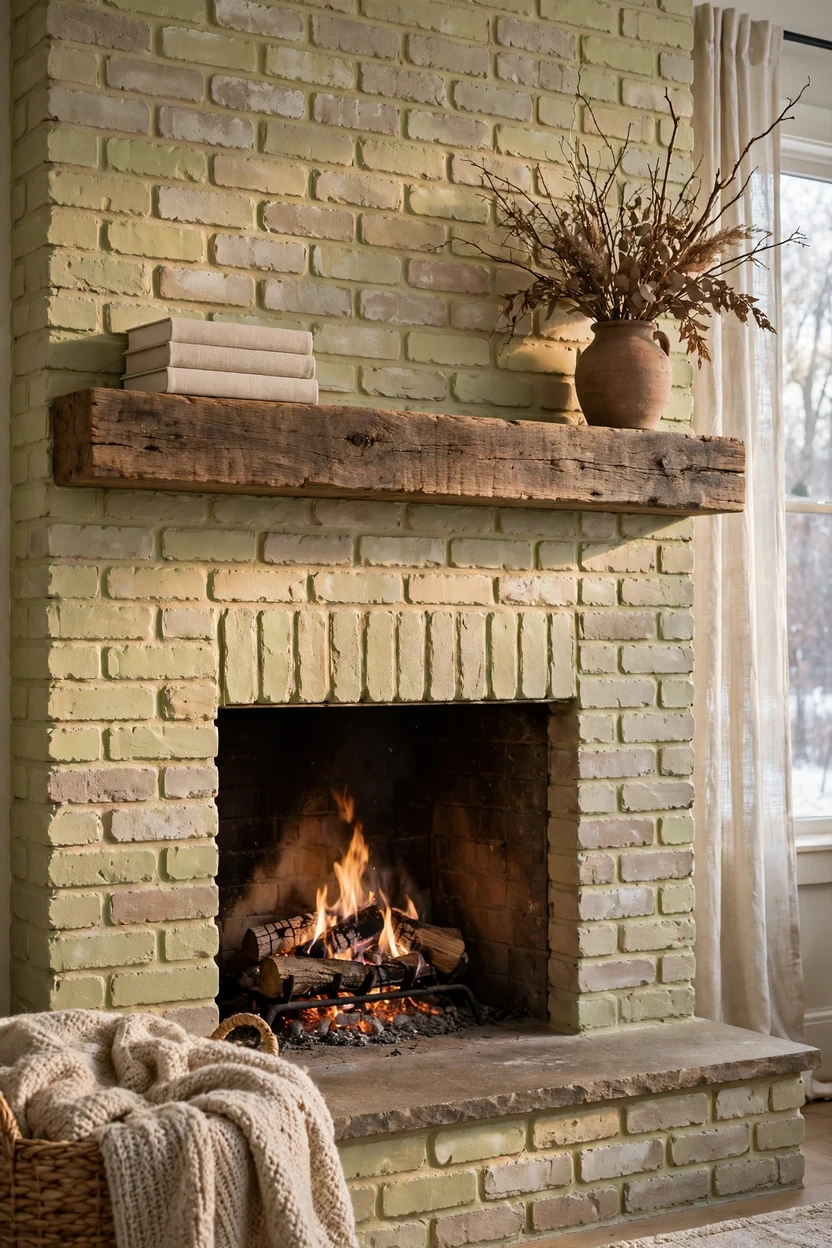
Limewash is the easiest way to rescue an old brick fireplace that feels dated or orange. Unlike thick paint, it soaks into the brick and leaves a soft, cloudy finish where the texture still shows through. Choose a warm white, cream, or greige with a hint of beige, since cool gray can feel flat next to wood and flame. Limewash only sticks to bare, porous brick, so painted or sealed brick needs a different approach. Apply it only to the outside of the fireplace, never inside the firebox where the logs burn.
Color-Drench the Fireplace Wall in Deep Green or Oxblood
Color drenching means painting the wall, trim, and even the surround in one deep shade. Rich colors like forest green, oxblood, plum, ochre, and tobacco brown are showing up on fireplace walls because they make the flame look warmer and the room feel wrapped. Choose a matte or limewash finish, since glossy dark paint shows every flaw. Balance the depth with a light rug, cream upholstery, and pale curtains so the room still breathes. Test the color at night, since firelight and lamps change how dark shades read.

Pair a Light Surround With a Walnut Mantel
Two-tone fireplaces create a focal point without any extra decoration. A pale plaster, white stone, or soft limestone surround looks calm and clean, while a rich walnut or espresso mantel shelf adds warmth and a strong horizontal line. The contrast makes the mantel feel like furniture instead of an afterthought. Choose a honed or matte finish for the surround, since shiny stone looks cold beside wood. Keep the styling simple, with one large piece of art, one vase, and a small stack of books.

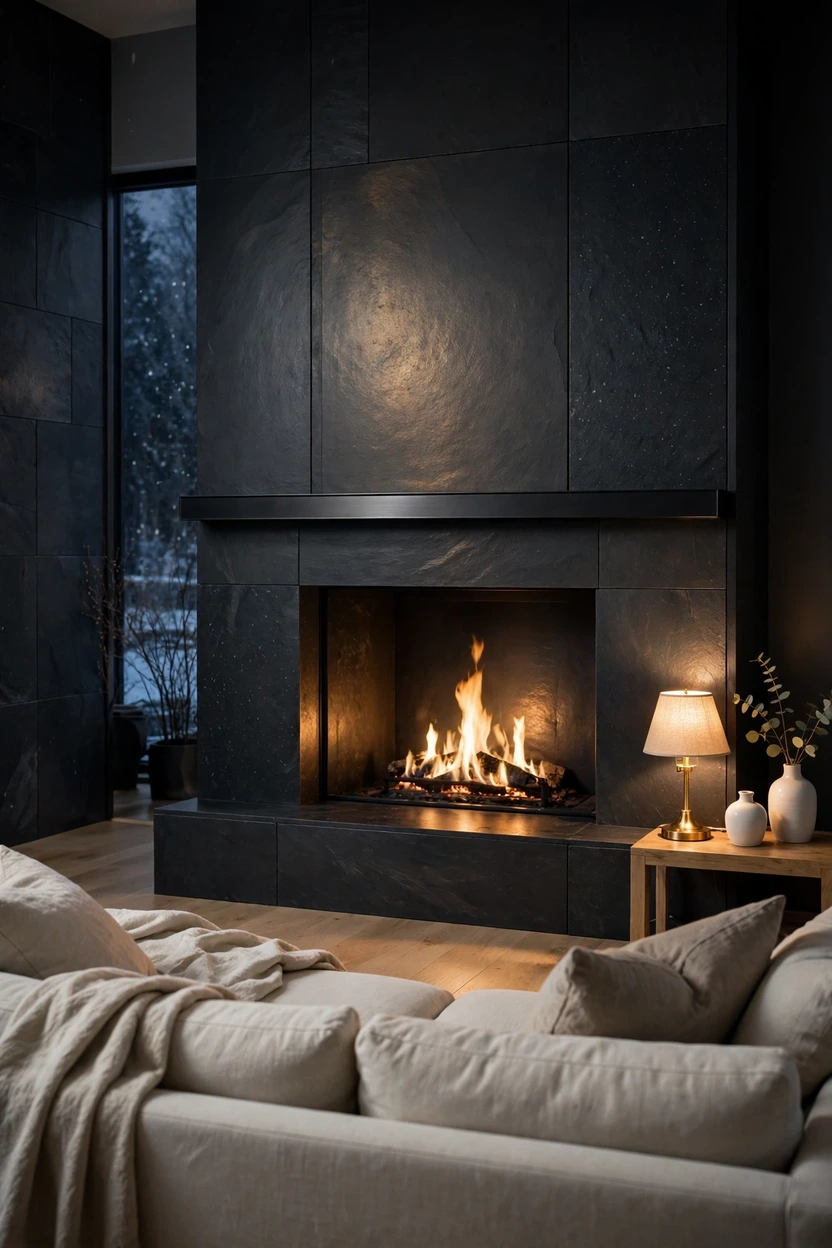
Go Moody With a Charcoal or Black Surround
Dark stone, slate, or black-painted surrounds make a fireplace feel dramatic and modern. The flame stands out against the dark background, and a matte black or charcoal finish hides soot and wear well. Pair the dark surround with lighter walls, pale wood, and cream textiles so the room stays open. Keep the mantel styling light and simple, because a dark surround already has plenty of presence. Add a warm lamp nearby, so the fireplace wall doesn’t turn into a void when the fire is off.
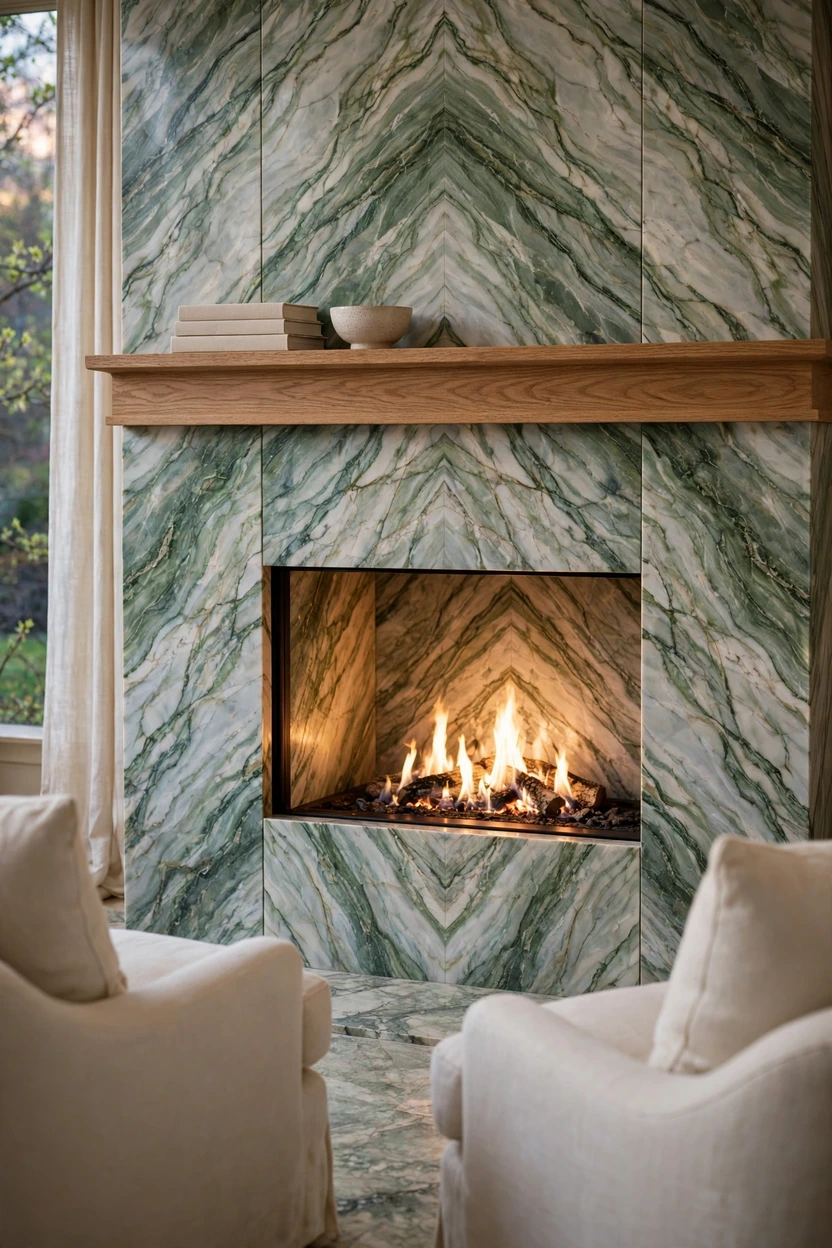
Use Veined Stone or Handmade Tile for Quiet Color
Color doesn’t have to come from paint. A marble, quartzite, or limestone slab with green, burgundy, or warm gray veining adds natural pattern, and handmade zellige or glazed tile adds shimmering depth. Both look best in simple shapes, like a clean rectangle or a slim slab, so the material gets the spotlight. Choose a tile with slight variation so the surface looks hand-finished and catches firelight. Check that the material is rated for the heat near the firebox, and ask your installer about the right setting and grout.
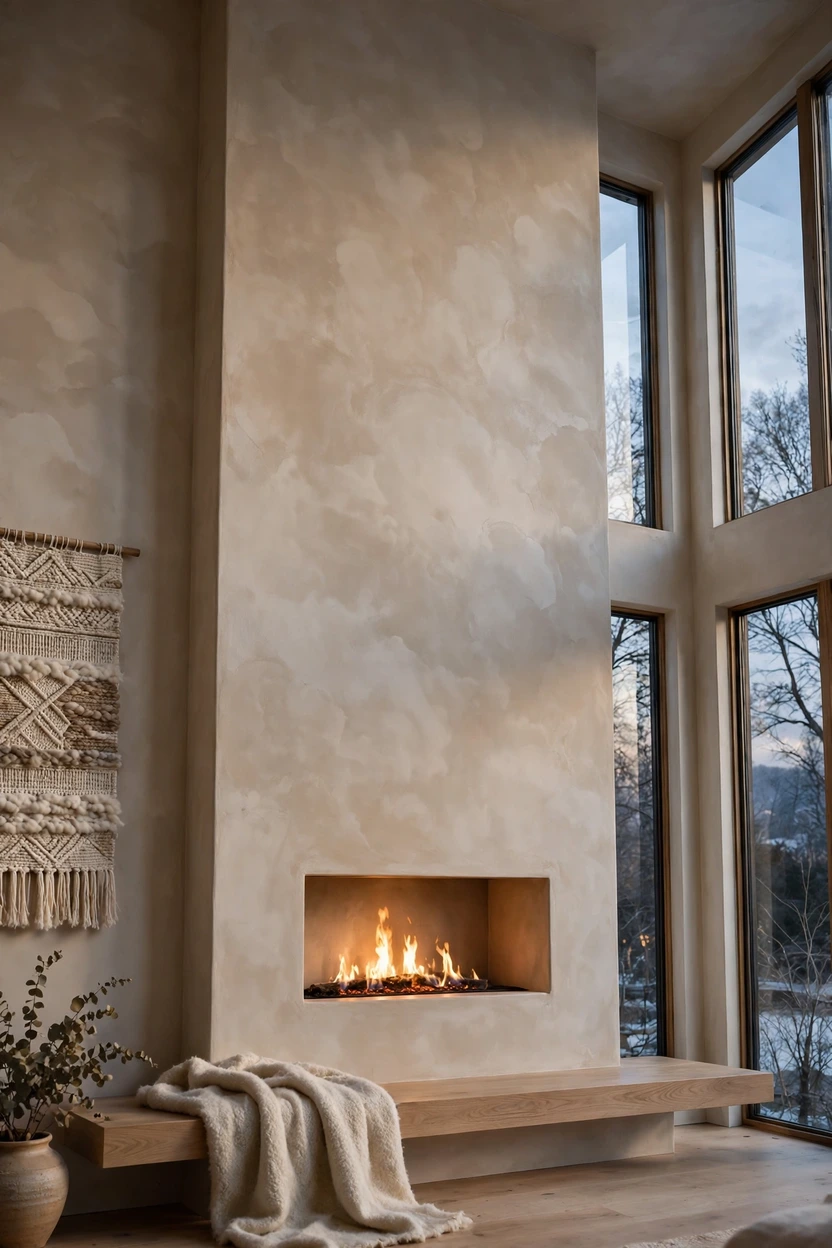
Part 2: Space
Build a Floor-to-Ceiling Fireplace Wall
Running the surround all the way to the ceiling makes a room feel taller and gives the wall a strong architectural presence. Stone, plaster, or large-format tile work well, and a single continuous material looks calmer than many small pieces. This approach also gives you a clean place to hang a TV, art, or lighting without fighting the mantel. Choose a slightly textured finish so the wall feels warm, not cold. Make sure any combustible materials near the opening follow your fireplace manufacturer’s clearance rules.
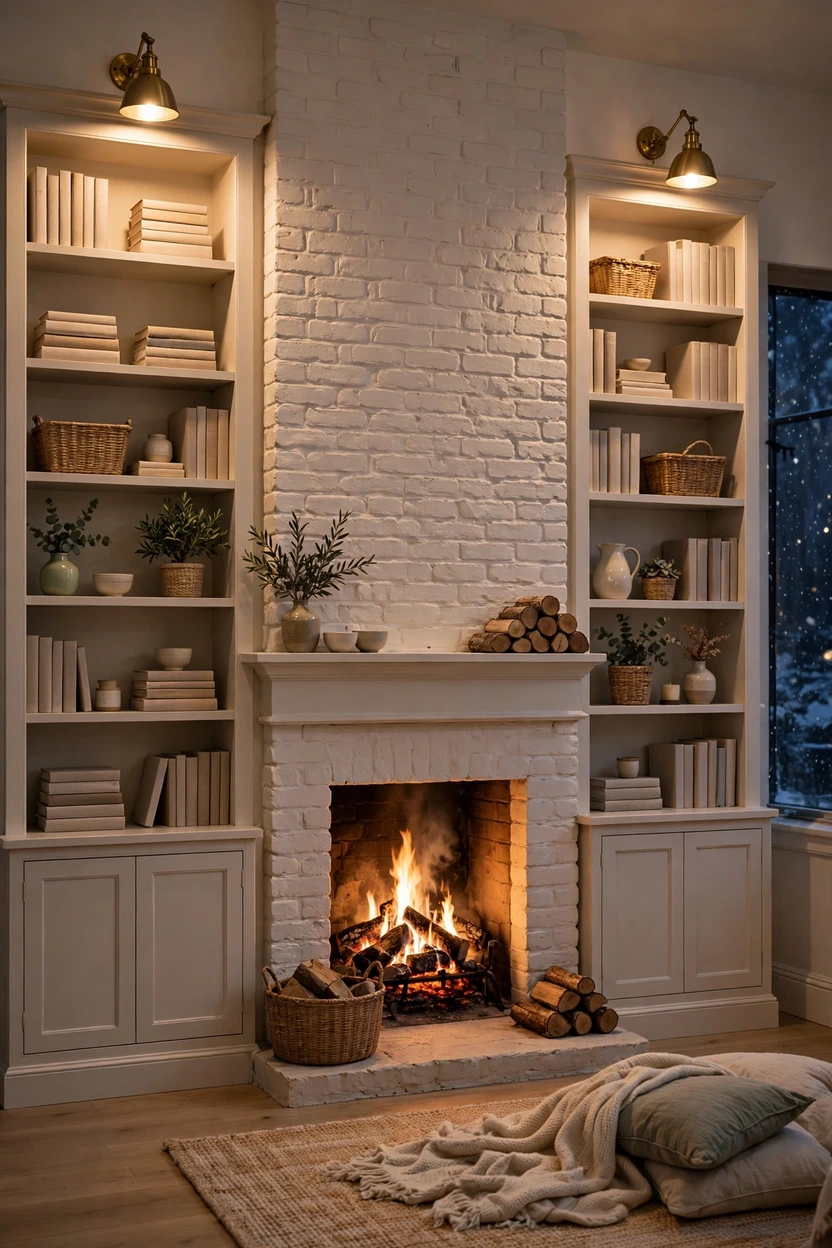
Add Built-In Shelves on Both Sides
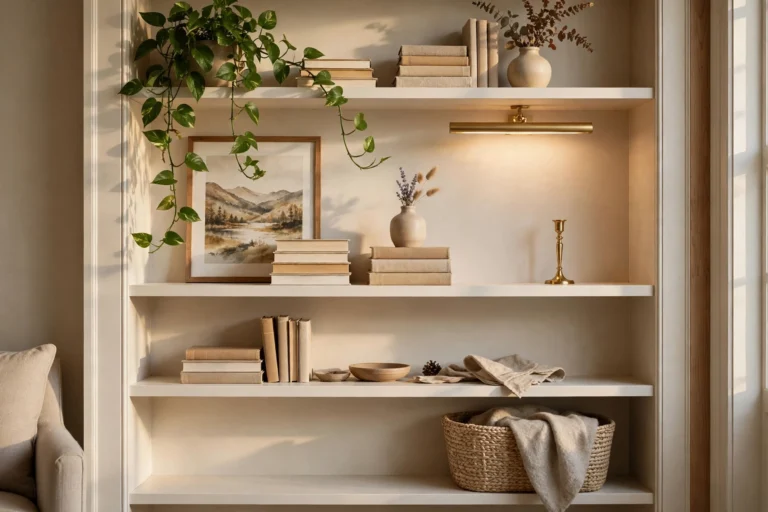
Built-ins turn a fireplace into a full wall of storage and display. Shelves on both sides add symmetry and frame the firebox like a picture. Keep the depth around 12 to 16 inches so books and baskets fit, and use closed cabinets below for bulky items. Paint the built-ins in the same tone as the walls for a calm look, or in a deeper shade for contrast. Add small picture lights or LED strips, since shelves glow beautifully next to firelight.
Soften the Room With an Arched or Curved Plaster Surround
An arch adds a gentle shape to a room that’s mostly straight lines, and it makes the fireplace feel like a small architectural niche. Plaster, limewash, and stone all work well, and a matte, hand-troweled finish looks calm and tactile. Keep the arch wide enough to suit the firebox and the wall, since a tiny arch on a big wall looks lost. Pair it with a simple hearth and a slim shelf or no mantel at all, so the curve stays clean. A curved surround also helps small rooms, because there are no sharp corners to bump into.
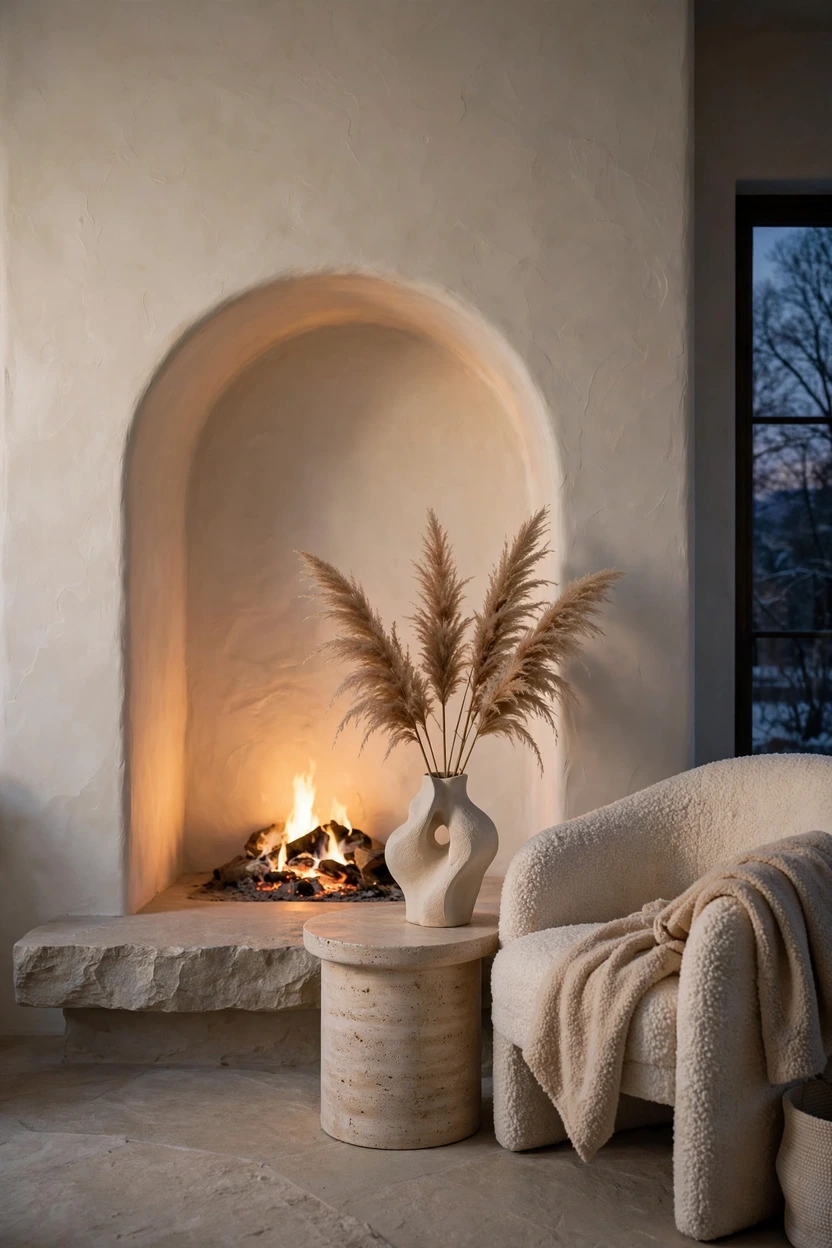
Fit a Slim Linear Fireplace Into a Small Room
A long, shallow fireplace gives you flame without eating up floor space. A linear unit, often electric or gas, can sit flush in a wall, under a window, or in a niche, and it only needs a few inches of depth. Place it at about seat height, so the flame is visible from the sofa. Choose a simple, painted surround in the wall color, so the fire feels like part of the architecture. If you plan to mount a TV above it, check the heat rating and the viewing height first, since TVs placed too high can strain your neck.

Style the Fireplace Wall Like a Gallery
The wall above and around the fireplace is prime space for art and objects. Lean one large piece on the mantel, or hang a single oversized artwork centered above it, and layer in a small ceramic, a candle, and a stack of books. Use odd numbers of items and mix heights, so the display looks collected, not staged. If there’s a TV, consider a frame-style display or place it beside the fireplace, since mounting it high above a firebox can make the setup feel awkward. Keep a few inches of empty mantel on each side so the arrangement can breathe.

Use a Double-Sided Fireplace as a Room Divider
A see-through fireplace can split an open space into two zones while keeping light and flame visible from both sides. It works well between a living area and a dining or reading area, and it adds a glow in two rooms with one unit. Plan the structure early, since this style needs a proper chimney, vent, and framing, and it should be installed by a licensed professional. Keep the surrounds on both sides the same material so the piece reads like a single sculpture. A low bench or sofa back on one side makes the divider feel natural.
Related: 17 Modern Entry Divider Ideas: Slats, Glass, Screens & More

Part 3: Flame
Place a Freestanding Wood-Burning Stove
A freestanding stove gives you real flame, real heat, and a strong sculptural shape. Mid-century and modern designs in matte black, cream, or deep green are popular, and they can sit in a corner or stand in front of a plain wall with a stone or tile heat shield. A wood-burning stove needs a proper flue, a non-combustible hearth, and minimum distances from walls and furniture, so follow the manufacturer’s manual and local code. Choose a simple floor pad in slate, tile, or stone, and keep a neat wood stack close by. Have the chimney inspected and cleaned regularly.

Choose a Linear Gas Fire With a Stone or Glass Bed
A gas fireplace gives you a clean, controllable flame at the push of a button. You can choose the look of the burner bed, from realistic logs to smooth river stones, ceramic pebbles, or fire glass. Stones and logs look warm and natural, while glass looks sleek and modern. Gas fireplaces vary in vent type, heat output, and mantel clearance, so check the manufacturer’s installation guide and have a licensed installer set it up. Pair it with simple materials like plaster, stone, or large tile so the flame stays the star.
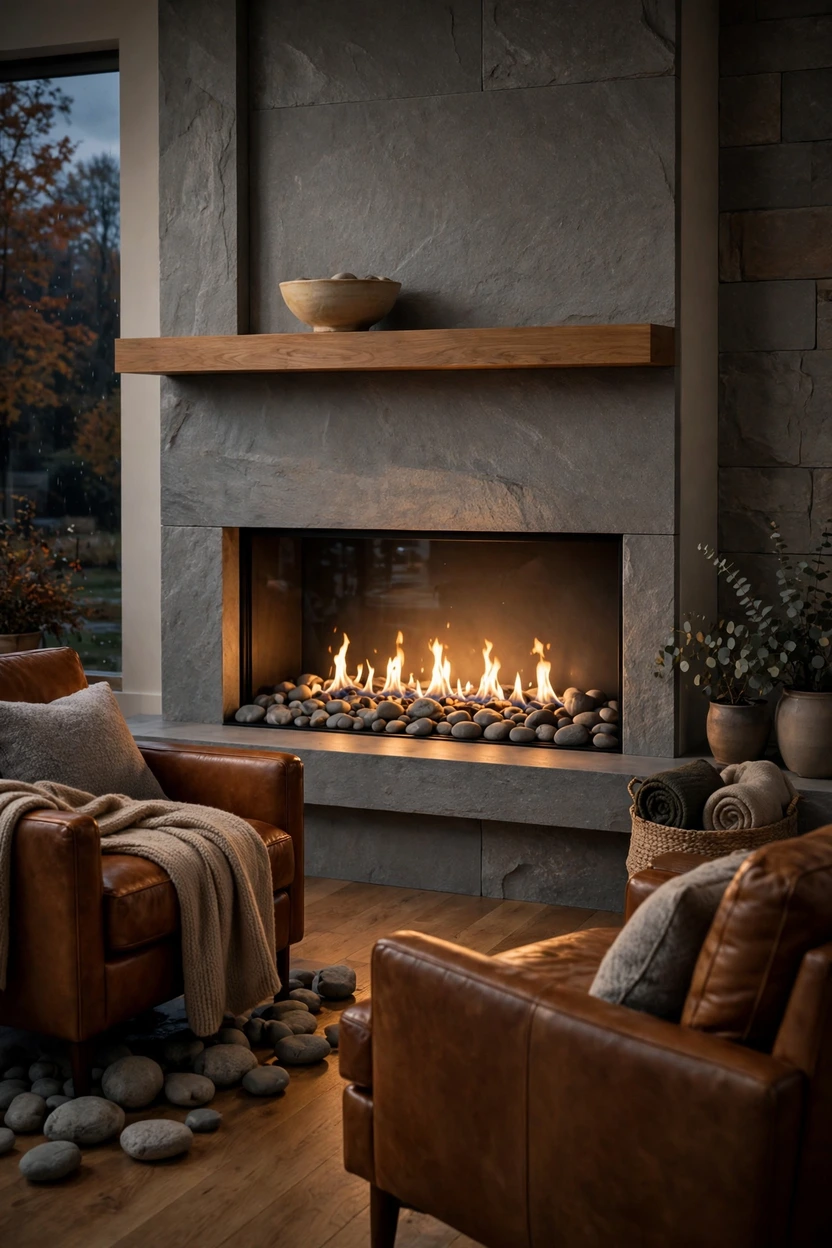
Add an Electric Fireplace Insert for Renters
Electric fireplaces are the easiest way to get a glowing hearth without a chimney, gas line, or construction. Many plug into a regular outlet, offer adjustable flame colors, and give off modest heat, so they suit apartments, bedrooms, and rentals. You can place one inside an existing firebox, build it into a freestanding surround, or mount a slim unit on the wall. Look for realistic flame effects and check the heat rating, since small units warm a room only a little. Even with electric, follow the manufacturer’s rules about clearance and cords.

Make a Log Niche Part of the Design
Stacked firewood adds natural pattern, warm color, and a sense of readiness beside any fireplace. Build a recessed niche next to the surround, or use a simple iron rack or open shelf, and stack the logs neatly with the ends facing out. Even if your fireplace is gas or electric, a small stack of birch or oak logs adds texture to the wall. Keep stored wood away from the firebox and follow clearance advice. Use only dry, seasoned wood, and keep a few kindling pieces in a basket for a casual look.

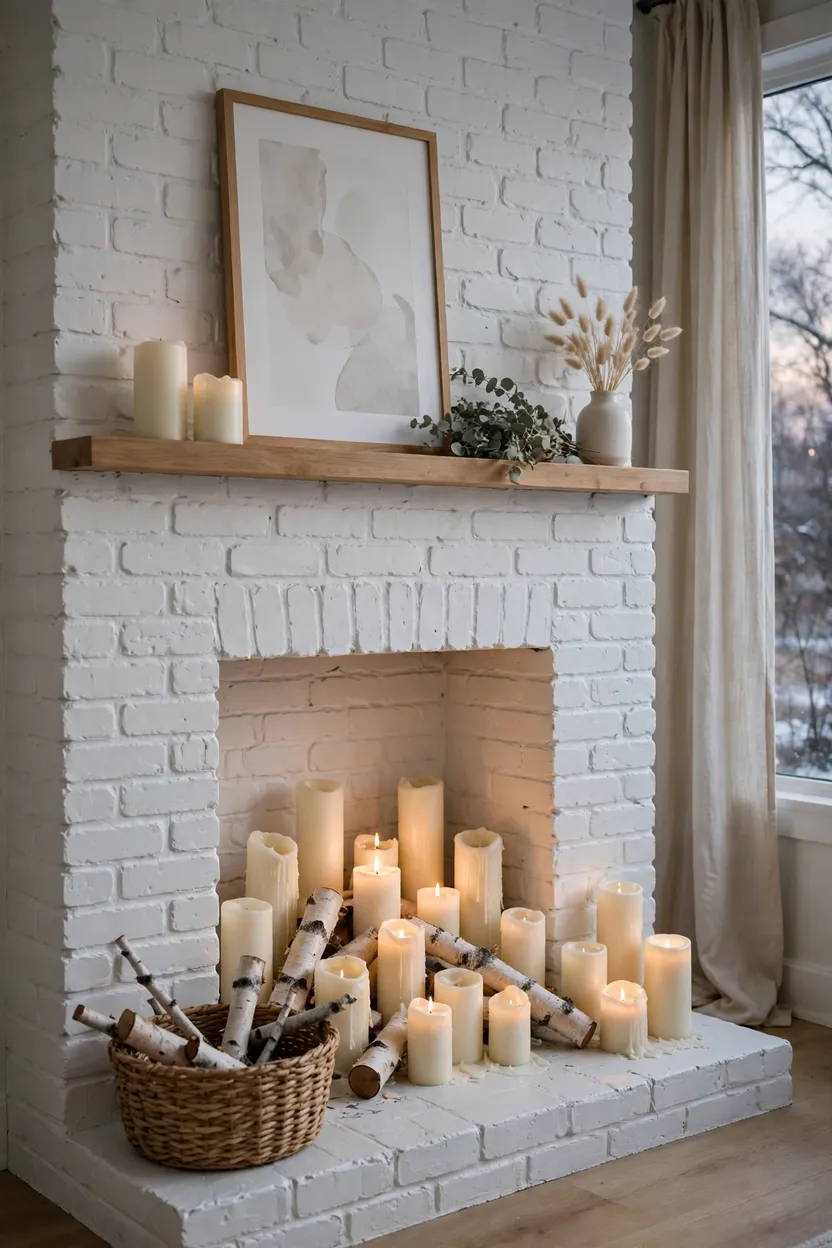
Light a Candle-Filled Non-Working Fireplace
If your fireplace is sealed or no longer used, you can still give it a flickering glow. Fill the firebox with pillar candles in different heights, or use flameless LED candles if you prefer, and add a few birch logs or a woven basket for texture. Never use real flames if the flue is blocked or the firebox is not safe to use, and keep candles away from anything flammable. Add a screen or a plain painted back panel to make the opening look finished. This is a budget-friendly way to keep the focal point alive without a chimney repair.
Styling Tips
Use the three-part mantel formula. Combine something tall (art or a vase), something medium (a stack of books with a small object), and something low (a bowl, candle, or tray).
Lean, don’t always hang. Art leaned on the mantel looks relaxed and lets you swap pieces easily.
Group in odd numbers. Three or five items look collected, while pairs look formal.
Leave a few inches clear on each end. This frames the arrangement and keeps the mantel from looking crowded.
Repeat the room’s colors. Echo one color from the rug or sofa in the vase or art so the fireplace ties into the space.
Mix matte and shiny. A matte surround with one brass or glass piece adds sparkle without clutter.
Add a low light nearby. A small lamp or picture light keeps the wall glowing when the fire is off.
Use texture around the hearth. A wool throw, a woven basket, and a stack of logs soften a hard surface.
Style seasonally. Swap branches, greenery, and candles through the year, and keep the base styling calm.
Practical Implementation Ideas
You don’t have to rebuild everything. Work in this order, and each choice makes the next one easier.
Check the basics. Confirm what type of fireplace you have, whether it works, and who can inspect it. Have wood-burning units and chimneys checked by a qualified professional.
Pick the color. Choose a palette that suits the room, such as limewash, deep color, or two-tone, and test samples on the wall in daylight and at night.
Plan the space. Measure the wall, ceiling height, and seating distance, and decide whether you want built-ins, a TV, or art above the fireplace.
Choose the flame. Decide between wood, gas, and electric based on your home, budget, and venting options, and read the manufacturer’s clearance guide.
Set the mantel. Confirm the height and depth against safety clearances, then style it using the three-part formula.
Add light and texture. Include a lamp, a rug, a throw, and a log or basket detail.
Finish with safety gear. Install working smoke and carbon monoxide alarms near the fireplace, and use a screen or guard if you have children or pets.
Before you start, ask your local building department what permits or inspections are needed, especially for gas lines, new chimneys, and structural changes.
Common Mistakes to Avoid
Choosing paint before checking safety. Clearances for mantels and nearby materials come first, because they decide what you can build.
Limewashing the inside of the firebox. Mineral finishes are for the outside of the fireplace only, not where the logs burn.
Painting over sealed brick with limewash. Limewash needs bare, porous brick, so painted brick needs a different finish.
Hanging a TV too high. A TV mounted far above the firebox can strain your neck and may sit in a heat zone.
Making the mantel too deep or too heavy. Deep wood shelves often need more clearance and can look bulky on a small fireplace.
Using a fireplace that’s too big or too small for the wall. Oversized surrounds crowd small rooms, and tiny ones get lost on a big wall.
Ignoring the room’s colors. A bold fireplace wall still needs a link to the rug, curtains, or sofa.
Crowding the mantel. Too many small items turn a focal point into clutter.
Forgetting upkeep. Wood stoves and chimneys need regular cleaning and inspection, and gas units need servicing.
Storing logs too close to the fire. Keep firewood at a safe distance from the firebox and follow clearance rules.
Small-Space Alternatives
Choose a slim linear unit. A shallow electric or gas fireplace saves floor space.
Use a floating mantel. A thin shelf adds a ledge for art without much bulk.
Related: 17 Living Room Wall Art Layering Ideas for a Focal Point
Paint the surround the wall color. A matching finish keeps a small room feeling open.
Lean one large artwork. One big piece looks cleaner than several small ones.
Place seating at an angle. Two chairs at an angle to the fireplace save room for walking.
Skip built-ins. Use a slim bookshelf or wall shelf nearby instead.
Use a corner fireplace. A corner unit can free up a full wall.
Use mirrors. A mirror placed across from a window brightens a small fireplace wall.
Budget-Friendly Alternatives
Limewash or repaint brick. A mineral paint refresh is far less costly than replacing the surround.
Add a new mantel shelf. A simple wood or non-combustible shelf changes the look quickly, once you’ve confirmed clearances.
Choose an electric insert. It avoids gas lines, vents, and major construction.
Swap the screen and tools. A new fireplace screen and a set of tools can freshen an old hearth.
Use peel-and-stick tile for non-heat zones. It can refresh the wall area away from the firebox, but check heat limits near the opening.
Style with thrifted pieces. Vases, trays, books, and baskets can be found secondhand.
Fill an unused firebox. Candles, birch logs, or a basket add charm for little cost.
Spend on safety first. Chimney inspection and alarms matter more than any decor.
Pro Styling Recommendations
Know your clearance before you decorate. Combustible mantels need a minimum distance above the firebox, and many sources cite around 12 inches as a starting point, rising with mantel depth. Your manufacturer’s manual and local code decide the real number.
Use common mantel heights as a guide. Many mantels sit around 54 inches from the floor, but ceiling height, safety, and TV placement can change that.
Plan seating distance. Keep furniture back from the hearth and follow the manufacturer’s safe distances, especially for wood-burning and gas units.
Check the TV rules. If a TV is going above the fireplace, confirm the heat limit and choose a viewing height that suits the seating.
Light the wall. Use picture lights, sconces, or a lamp so the fireplace looks warm even when it’s off.
Match finish to fuel. Real wood fires suit rustic and plaster finishes, gas suits clean stone and tile, and electric suits painted or wood surrounds.
Test color at night. Firelight and lamps shift dark colors, so sample at the time of day you use the room most.
Hire licensed pros. Gas lines, flues, and structural work need licensed installers and local permits.
Frequently Asked Questions
What are the best fireplace design ideas for a living room?
Popular ideas include a limewashed brick or plaster surround, a deep color-drenched wall, a two-tone surround with a wood mantel, a floor-to-ceiling stone or plaster wall, and built-in shelves on both sides. Choose based on your room size, ceiling height, and fuel type.
How do I choose a fireplace color?
Start with the mood you want. Soft limewash and warm white feel calm, deep green or oxblood feel cozy and dramatic, and charcoal feels modern. Test samples at different times of day, and make sure one color from the fireplace repeats in the room.
Should I choose wood, gas, or electric?
Wood gives real heat and crackle but needs a chimney and upkeep. Gas gives a clean, controllable flame and needs a vent and gas line. Electric is the easiest to install and suits apartments, but it gives less heat. Choose based on your home, budget, and local rules.
How high should a fireplace mantel be?
Many mantels sit about 54 inches from the floor, but the right height depends on fireplace type, mantel depth, ceiling height, and safety clearances. Check your fireplace manual and local code before you install.
How far above the fireplace should a wood mantel be?
Guidance often starts around 12 inches above the firebox opening for combustible mantels and increases with mantel depth, but exact rules vary by fireplace type and location. Follow the manufacturer’s instructions and your local building code.
Can I put a TV above a fireplace?
Yes, in some cases, but check the heat rating and viewing height first. If the TV would sit too high, consider placing it beside the fireplace or choosing a different layout.
Can I limewash a brick fireplace?
Yes, if the brick is bare and porous. Limewash won’t stick well to brick that’s already painted or sealed, and it should be used only on the outside of the fireplace, never inside the firebox.
How can I update a fireplace on a budget?
Limewash or repaint the surround, change the mantel shelf, add a new screen and tools, style the mantel, and fill an unused firebox with candles or logs. Always keep safety clearances in mind.
What are the best fireplace ideas for small rooms?
Use a slim linear electric or gas unit, a floating mantel, a surround painted the wall color, and one large piece of art. A corner fireplace or a wall-mounted unit can also save space.
Can I have a fireplace in a bedroom or bathroom?
Yes, many people add gas or electric fireplaces to bedrooms and even bathrooms. Make sure the unit is rated for the room, vented correctly if needed, and installed by a licensed professional.
Conclusion
The best fireplace isn’t the biggest or the most expensive one. It’s the one that fits the room and feels right when you sit in front of it.
Start with color, so the wall sets the mood. Then plan the space, so the size and shelves suit the room. Finally, choose the flame that fits your home and your safety needs.
Save the ideas that suit your space, skip the rest, and take your time. A good fireplace gets better every winter.
Popular ideas include a limewashed brick or plaster surround, a deep color-drenched wall, a two-tone surround with a wood mantel, a floor-to-ceiling stone or plaster wall, and built-in shelves on both sides. Choose based on your room size, ceiling height, and fuel type.
Start with the mood you want. Soft limewash and warm white feel calm, deep green or oxblood feel cozy and dramatic, and charcoal feels modern. Test samples at different times of day, and make sure one color from the fireplace repeats in the room.
Related: 20 Mid-Century Modern Living Room Ideas That Feel Warm
Wood gives real heat and crackle but needs a chimney and upkeep. Gas gives a clean, controllable flame and needs a vent and gas line. Electric is the easiest to install and suits apartments, but it gives less heat. Choose based on your home, budget, and local rules.
Many mantels sit about 54 inches from the floor, but the right height depends on fireplace type, mantel depth, ceiling height, and safety clearances. Check your fireplace manual and local code before you install.
Guidance often starts around 12 inches above the firebox opening for combustible mantels and increases with mantel depth, but exact rules vary by fireplace type and location. Follow the manufacturer’s instructions and your local building code.
Yes, in some cases, but check the heat rating and viewing height first. If the TV would sit too high, consider placing it beside the fireplace or choosing a different layout.
Yes, if the brick is bare and porous. Limewash won’t stick well to brick that’s already painted or sealed, and it should be used only on the outside of the fireplace, never inside the firebox.
Limewash or repaint the surround, change the mantel shelf, add a new screen and tools, style the mantel, and fill an unused firebox with candles or logs. Always keep safety clearances in mind.
Use a slim linear electric or gas unit, a floating mantel, a surround painted the wall color, and one large piece of art. A corner fireplace or a wall-mounted unit can also save space.
Yes, many people add gas or electric fireplaces to bedrooms and even bathrooms. Make sure the unit is rated for the room, vented correctly if needed, and installed by a licensed professional.