19 Lemon Centerpiece Ideas That Look Designer-Level
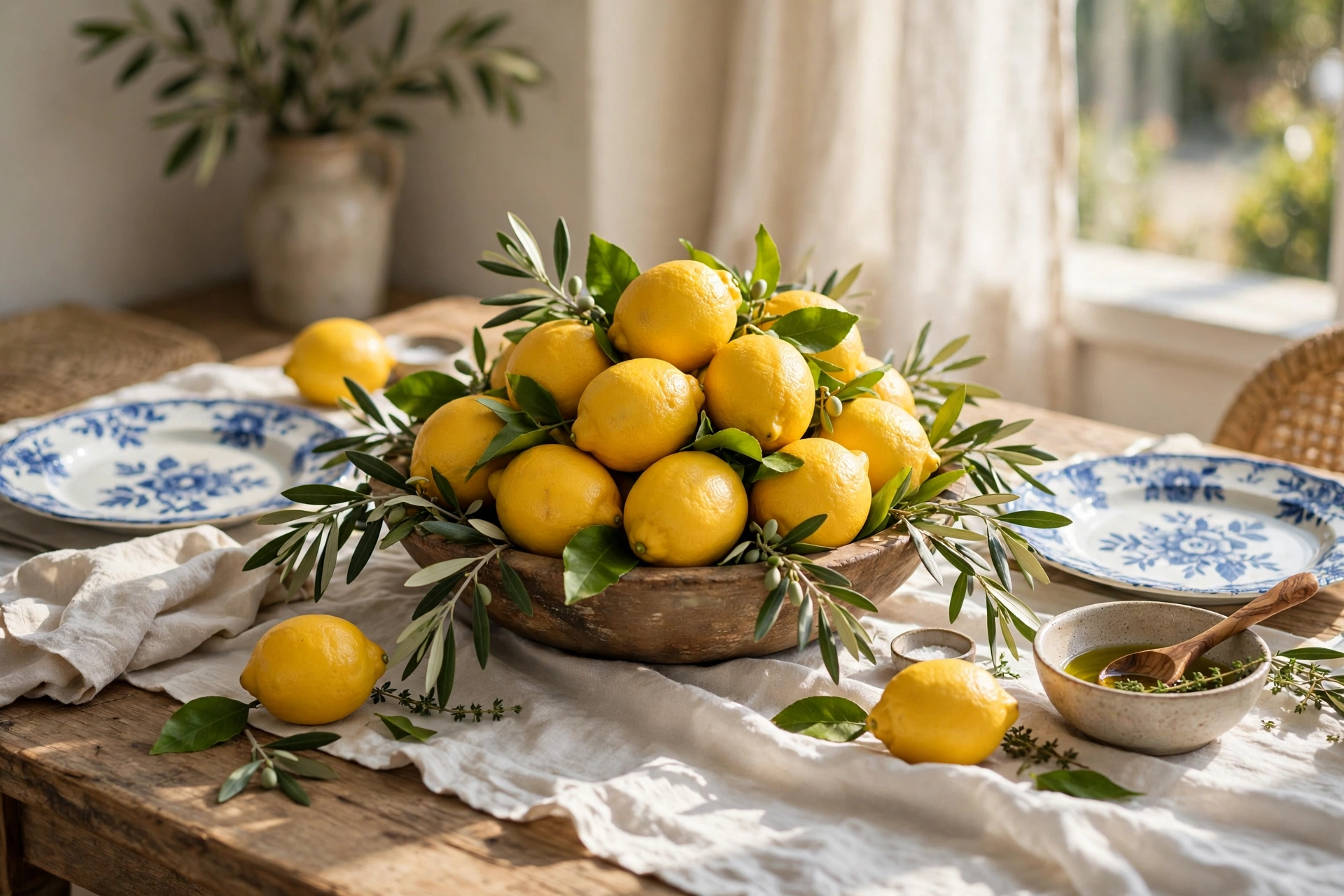
A bowl of lemons can change a table in a minute. The yellow is bright, the scent is clean, and the fruit costs far less than a big bunch of cut flowers. Lemons suit a summer lunch, a spring brunch, a wedding table, and a plain weeknight dinner, all with the same easy charm.
The ideas below cover glass vases, wooden bowls, garden herbs, candles, and coastal touches, so you can pick the one that fits your table, your budget, and the mood you want. Most use fruit from the grocery store, a vase or bowl you already own, and a few green stems. Start with the look that makes you smile, then add one small detail at a time.
Quick Answer
A lemon centerpiece is a table display built around fresh lemons, often with greenery, flowers, candles, or a simple bowl or vase. The best pick depends on your table size, the meal, and how formal the day feels. For most dining tables, a low bowl or a clear vase of whole lemons works best, because guests can see over it and the fruit stays fresh for days. Keep the display low for seated meals, under about 14 inches tall, or use tall stems that start above eye level. Swap out any soft lemons, keep cut fruit out of strong sun, and store the fruit in the fridge after a long, warm day.
1. A Clear Glass Vase Filled with Whole Lemons
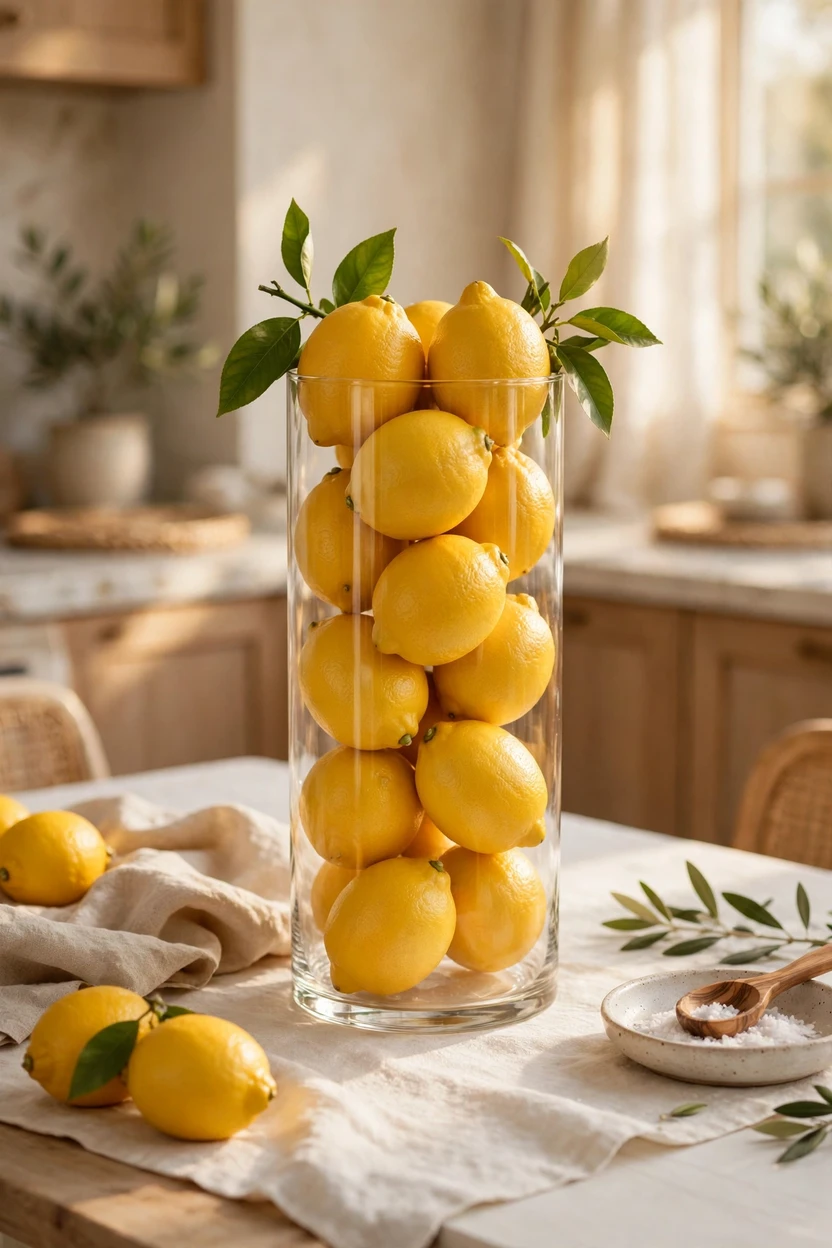
A tall, clear glass vase filled with whole lemons is the easiest place to start, and it still looks smart on a dressed table. Pick lemons that are firm, bright, and close in size so the pile looks neat instead of lumpy. Fill the vase to the top, then tuck a few lemon leaves or short sprigs of green between the fruit near the rim. The glass lets the yellow show through from every seat, which keeps the table light and open. Set the vase on a plain white or pale wood surface so the color does the talking.
2. A Wooden Dough Bowl Piled High with Lemons and Leaves
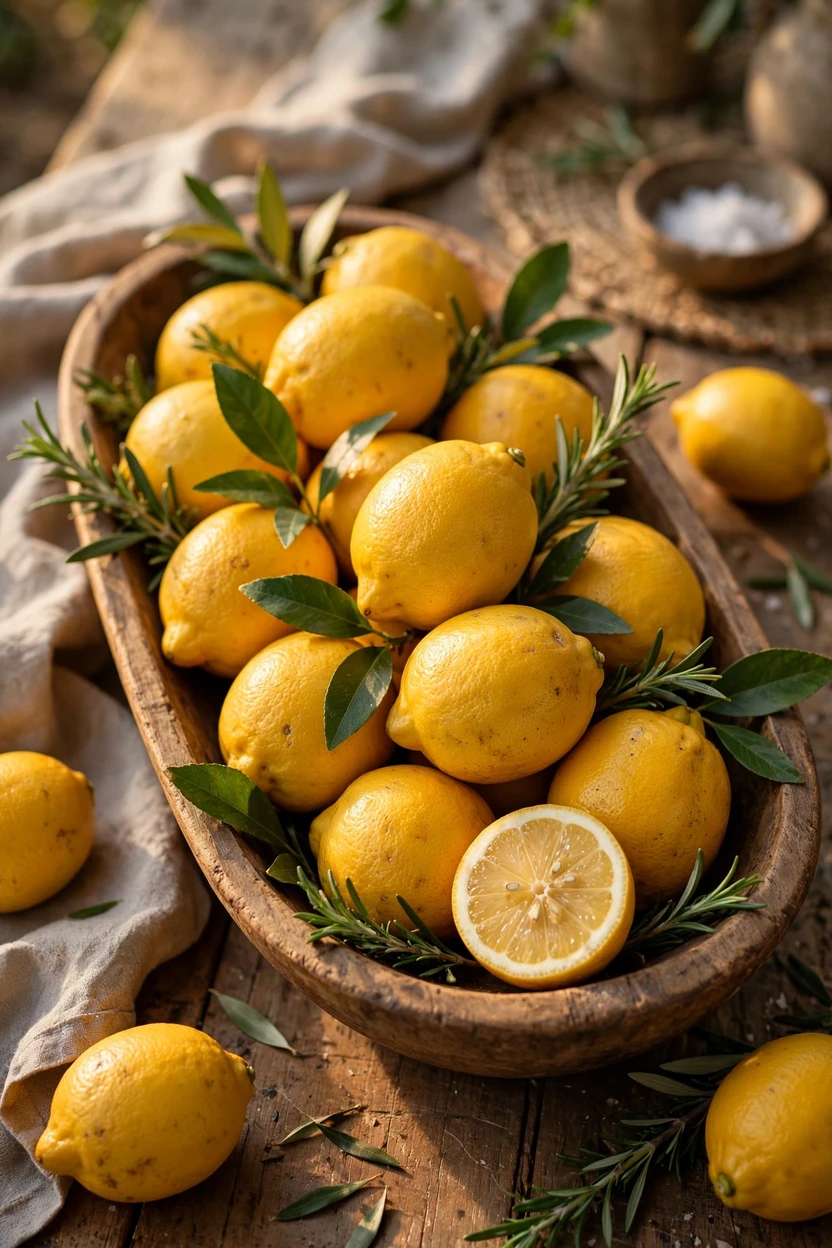
A long wooden dough bowl piled with lemons brings a warm, farmhouse feel to the middle of the table. Choose a bowl with low sides so guests can still see across it while they talk. Fill it with whole lemons, then add a few green leaves, small sprigs of rosemary, and one or two halved lemons cut side up for texture. The rough wood next to the smooth, bright fruit gives the display a lived-in look that suits both weeknight dinners and weekend lunches. Keep the bowl near the center and leave space at each end for serving dishes and water glasses.
3. Lemon Slices Pressed Inside a Double Glass Vase
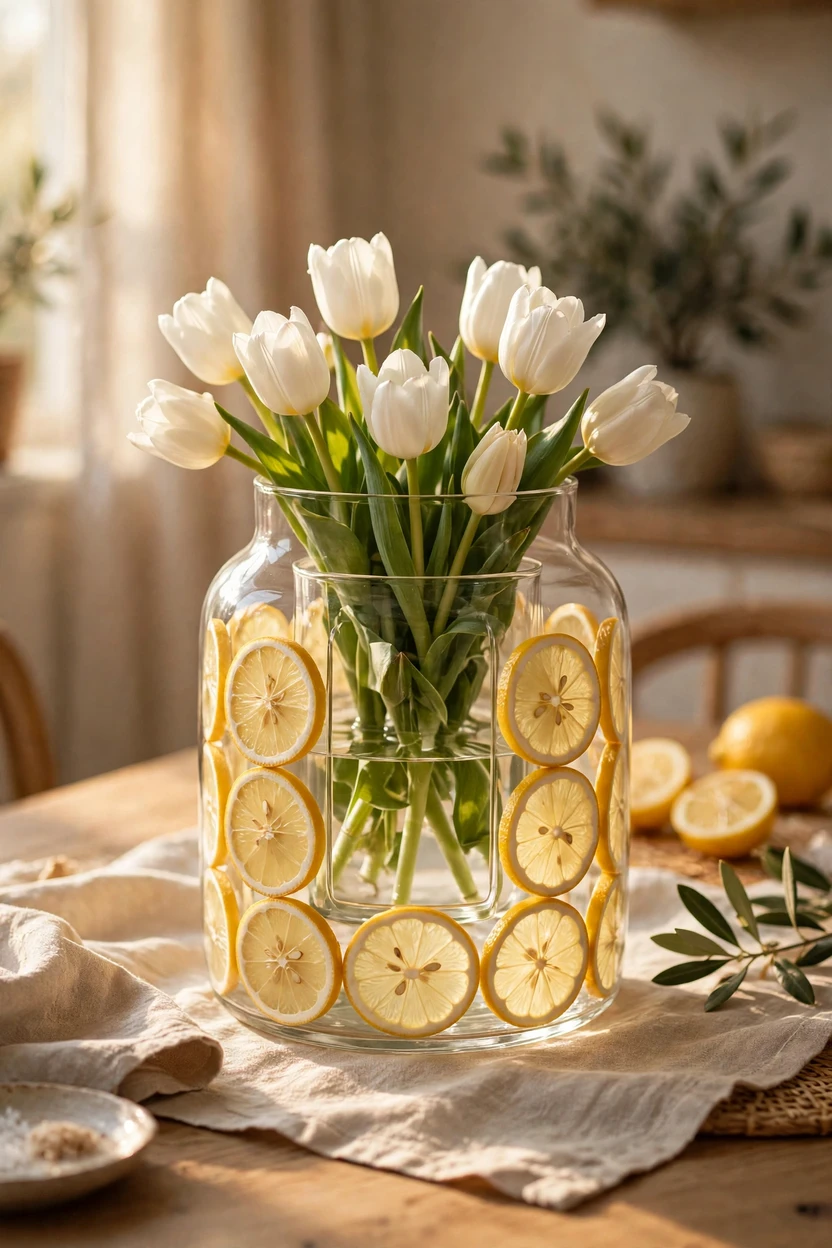
This trick uses two glass vases, one tucked inside the other, to hold lemon slices flat against the glass. Cut lemons into thin, even rounds and slide them into the gap between the two vases. Pour a little water into that gap to hold the slices in place and make the yellow look richer. Fill the inner vase with fresh water and add white tulips, daisies, or short green stems for height. The result reads like a piece of glass art, yet it takes only a few minutes to put together.
4. A Shallow Bowl with Floating Candles and Lemon Slices
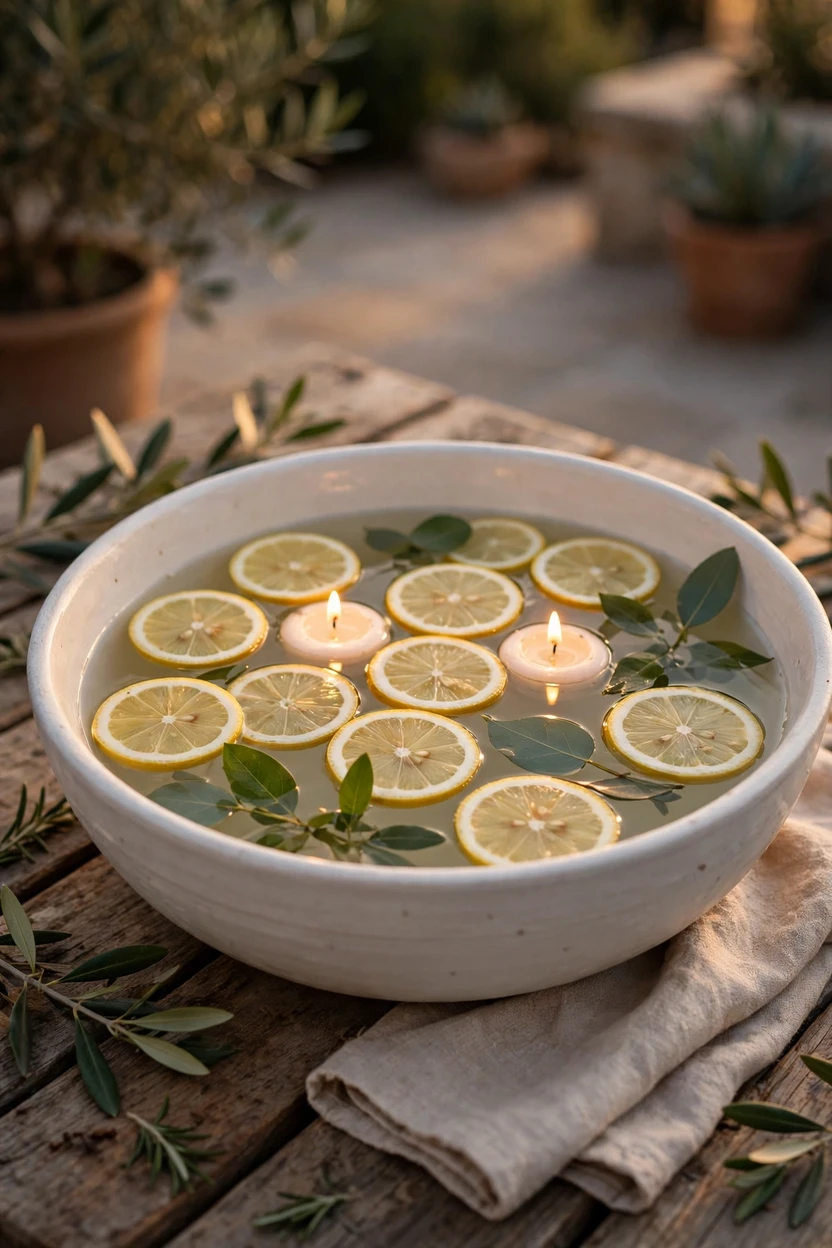
A wide, shallow bowl of water with lemon slices and floating candles suits slow evenings on the patio or at the dining table. Slice two or three lemons into thin rounds and lay them flat in the water so they drift near the surface. Add two or three small floating candles and a few green leaves for a soft, natural edge. Light the candles just before guests sit down so the glow moves across the water and the yellow. Keep the bowl low and wide so it stays steady and no one has to reach over a tall flame.
5. A Small Potted Lemon Tree on the Table
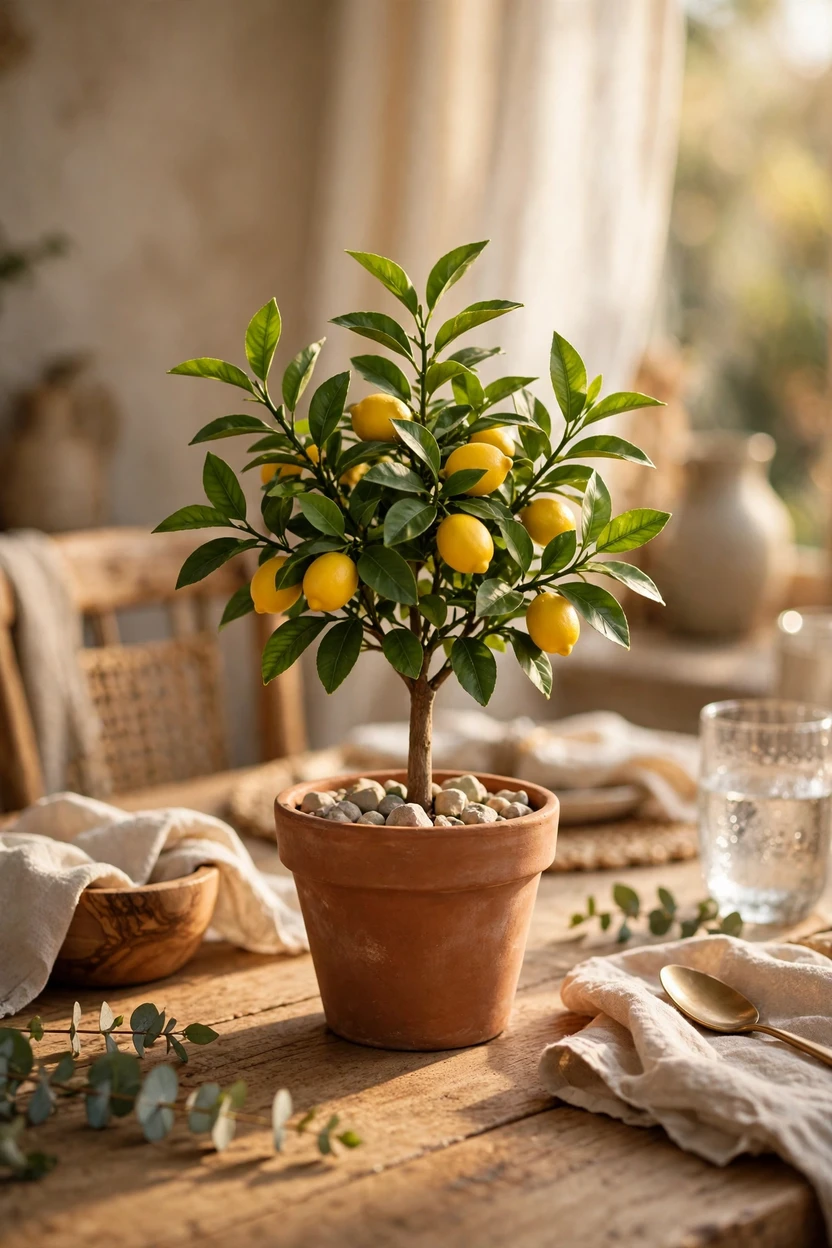
A small potted lemon tree turns the table into a little garden, with fruit, leaves, and scent all in one pot. Pick a tree that is short enough for guests to see over, and set it in a plain clay, white ceramic, or woven pot that matches your table. Add a thin layer of pale stones or moss on top of the soil to hide the pot rim and keep the look tidy. The tree works for spring lunches, summer dinners, and even a small wedding table, because it feels alive without needing cut flowers. Water it lightly the day before so the soil is damp, not wet, when guests arrive.
6. A Blue-and-White Mediterranean Bowl of Lemons
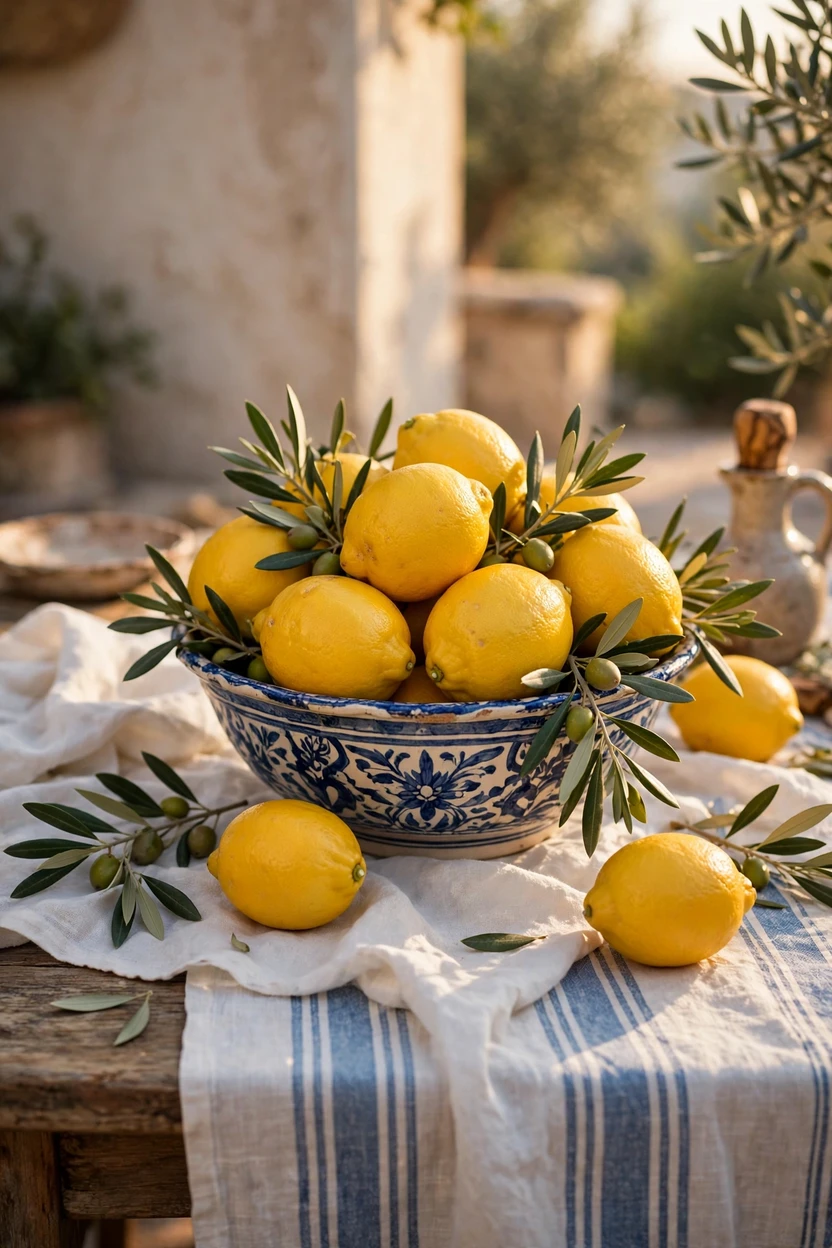
Blue and white pottery next to bright lemons gives a table the feel of a seaside village without trying too hard. Use a blue-patterned bowl, a striped runner, or a set of blue-and-white plates as your base. Pile whole lemons in the bowl and add a few olive sprigs or lemon leaves for a touch of green. The cool blue tones make the yellow look even brighter, while the white keeps the whole table calm and clean. This look suits fish dinners, long summer lunches, and any table with light wood or white linen.
7. A Long Lemon and Olive Leaf Runner Down the Table
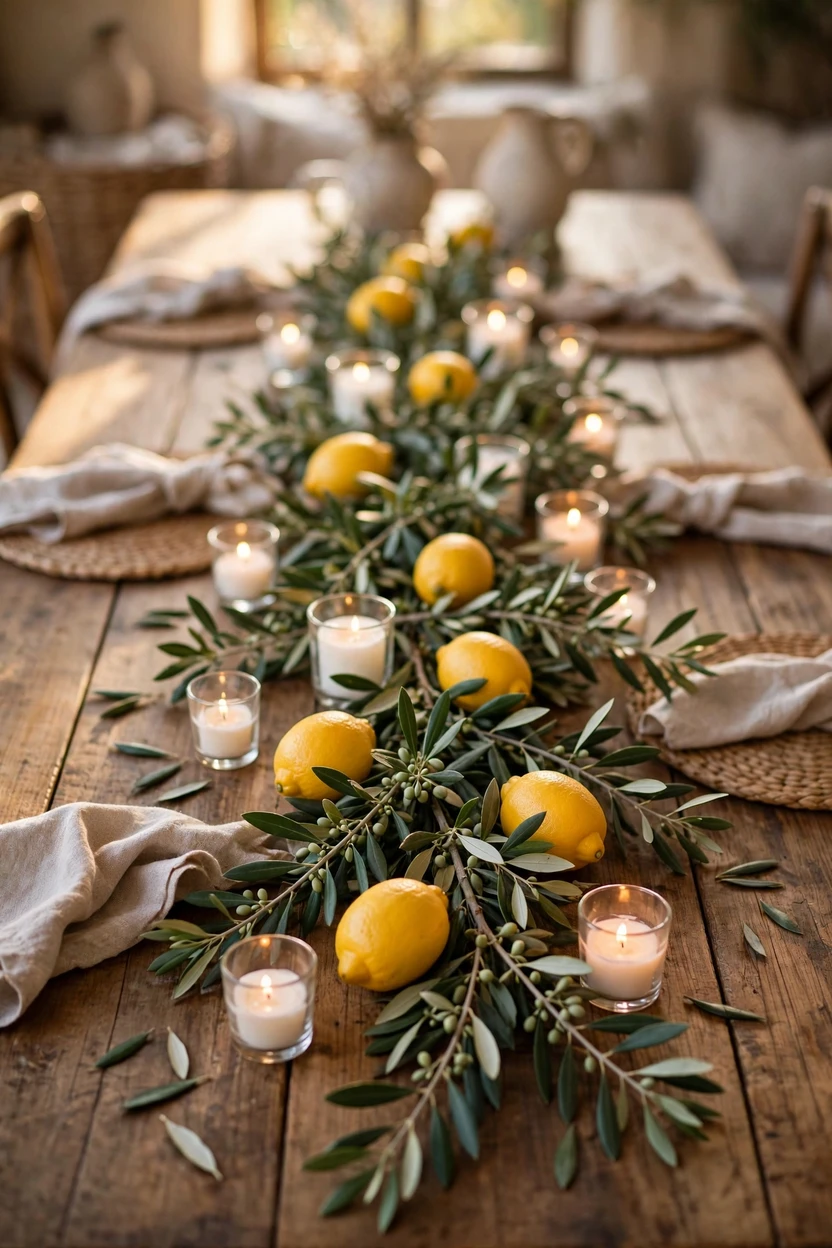
Instead of one tall piece in the middle, lay a low runner of olive leaves straight down the center of the table. Space whole lemons along the leaves, about a hand apart, and tuck in a few sprigs of rosemary where the gaps look bare. Add small white candles in glass holders between the lemons so the runner glows after dark. This flat style keeps every guest able to see and talk across the table, which matters at a long dinner. It also works well on a bare wood table, where the green and yellow stand out on their own.
8. Lemons and Fresh Herbs in a Rustic Wooden Tray
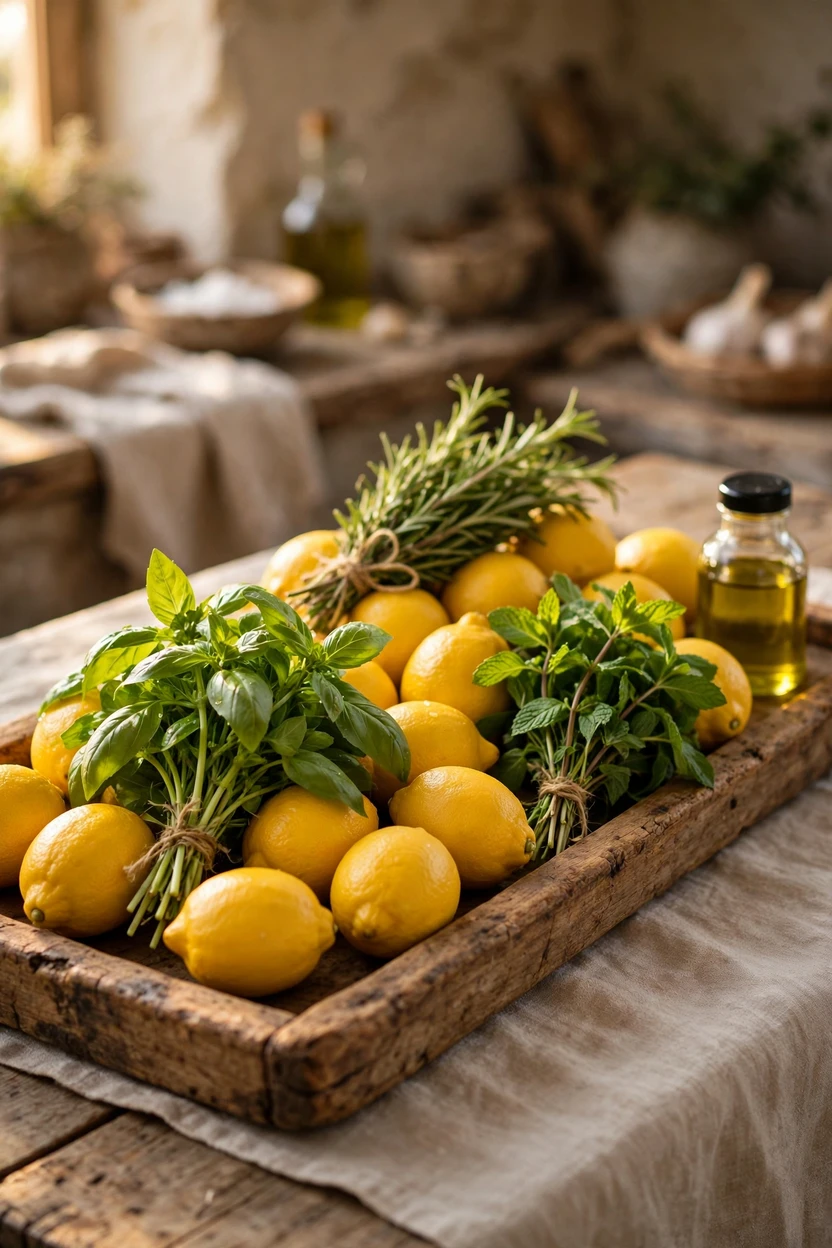
A long wooden tray filled with lemons and fresh herbs feels relaxed, useful, and full of scent. Line the tray with lemons first, then tuck bunches of basil, mint, and rosemary between the fruit so the green fills the gaps. Add a small jar of olive oil or a tiny vase of white flowers at one end for a kitchen-garden touch. Guests can smell the herbs as they sit down, and the tray keeps everything in one neat row. When dinner ends, lift the whole tray away in one move and the table is clear again.
9. A White Pitcher of Lemons with Sunflowers
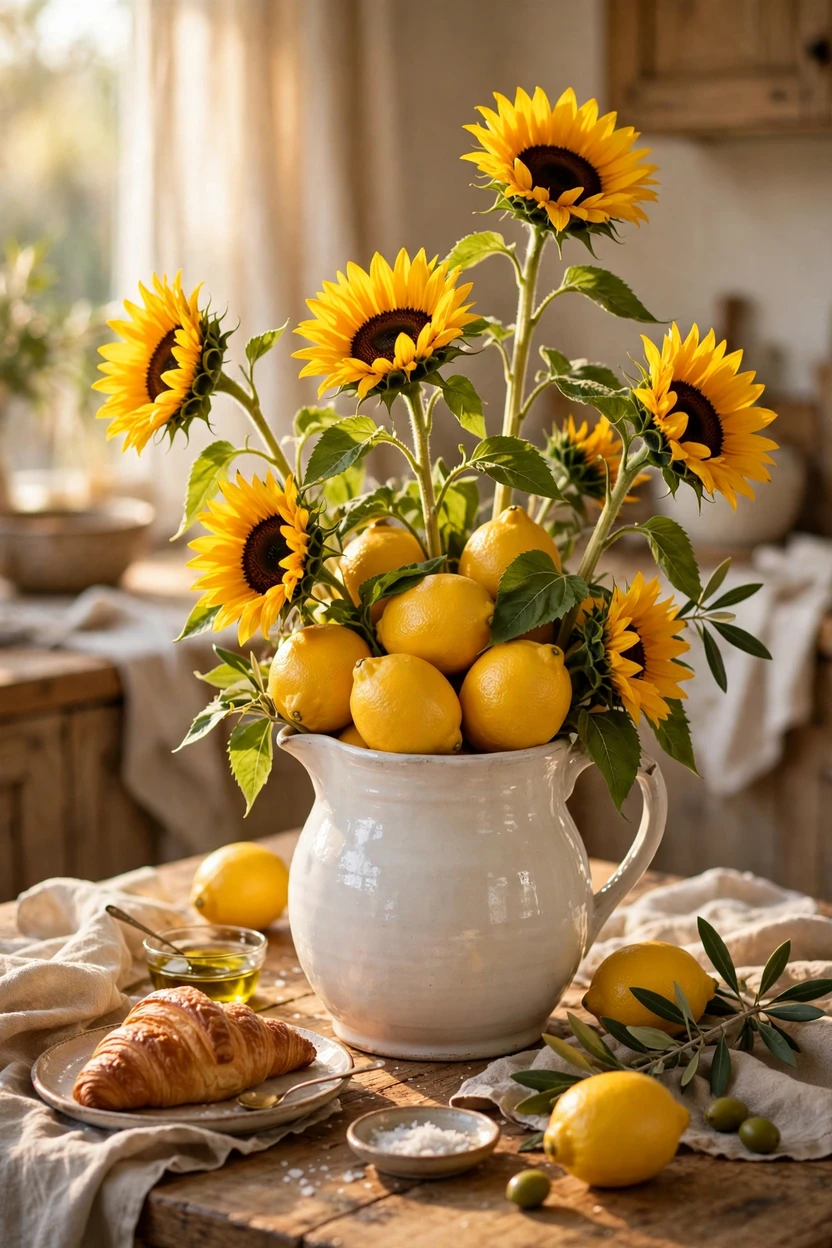
A white pitcher filled with lemons and sunflowers is a cheerful pick for brunch, a garden lunch, or a casual family dinner. Fill the pitcher with whole lemons first so the stems have something firm to rest against. Add sunflowers at different heights, with a few lemon leaves or green stems filling the spaces between them. The yellow flowers and yellow fruit blend into one sunny block of color, while the white pitcher keeps the look clean. Set it slightly off-center if your table is small, so plates and glasses still have room.
10. A Tiered Tray Layered with Lemons and Greenery
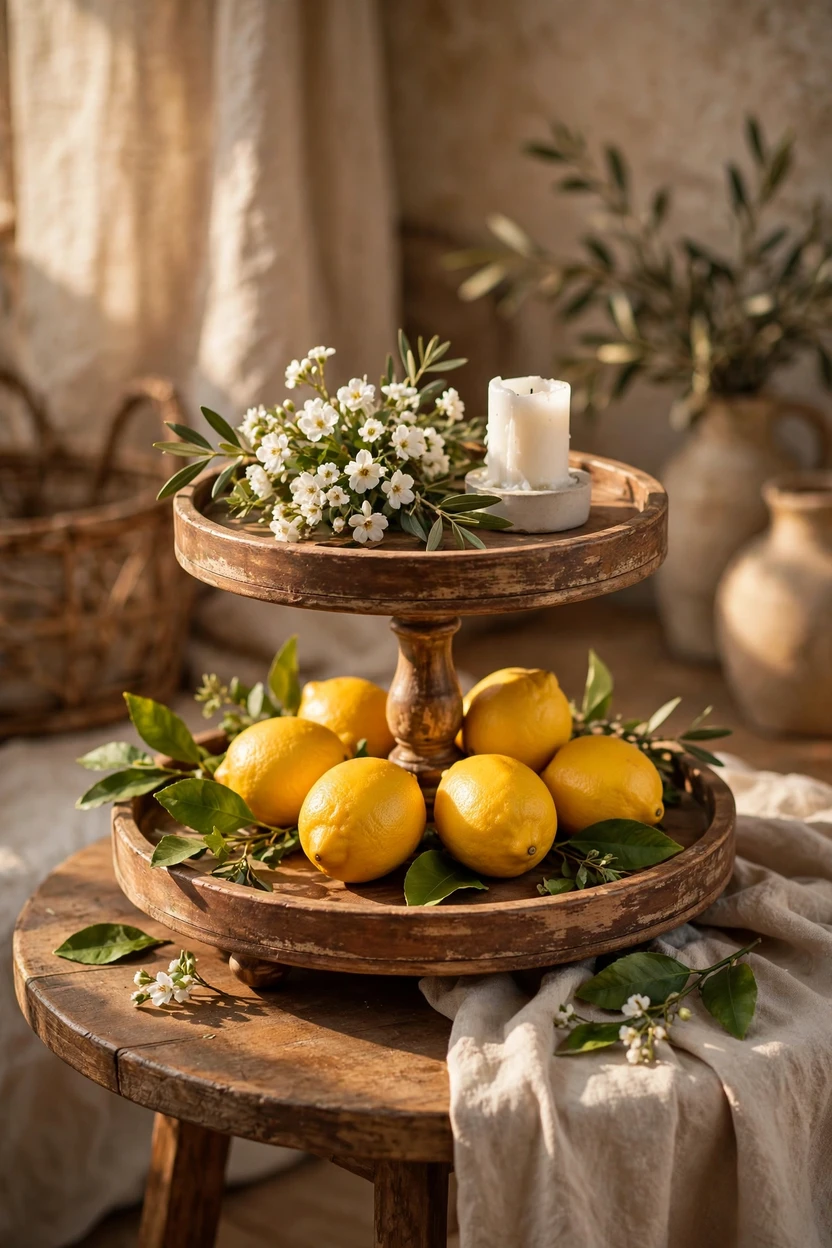
A tiered tray lets you build height without blocking the view, because each level stays small. Put a cluster of lemons and green leaves on the bottom tier, then add a few small white flowers or a short candle on the top tier. Keep the tallest item under the eye line of a seated guest so no one has to lean around it. The tray suits a kitchen island, a side table, or a small round dining table where one big piece would feel too heavy. Change one tier with the season, such as swapping in limes or white blooms, and the tray feels new again.
11. Lemons and Lavender in Small Glass Jars
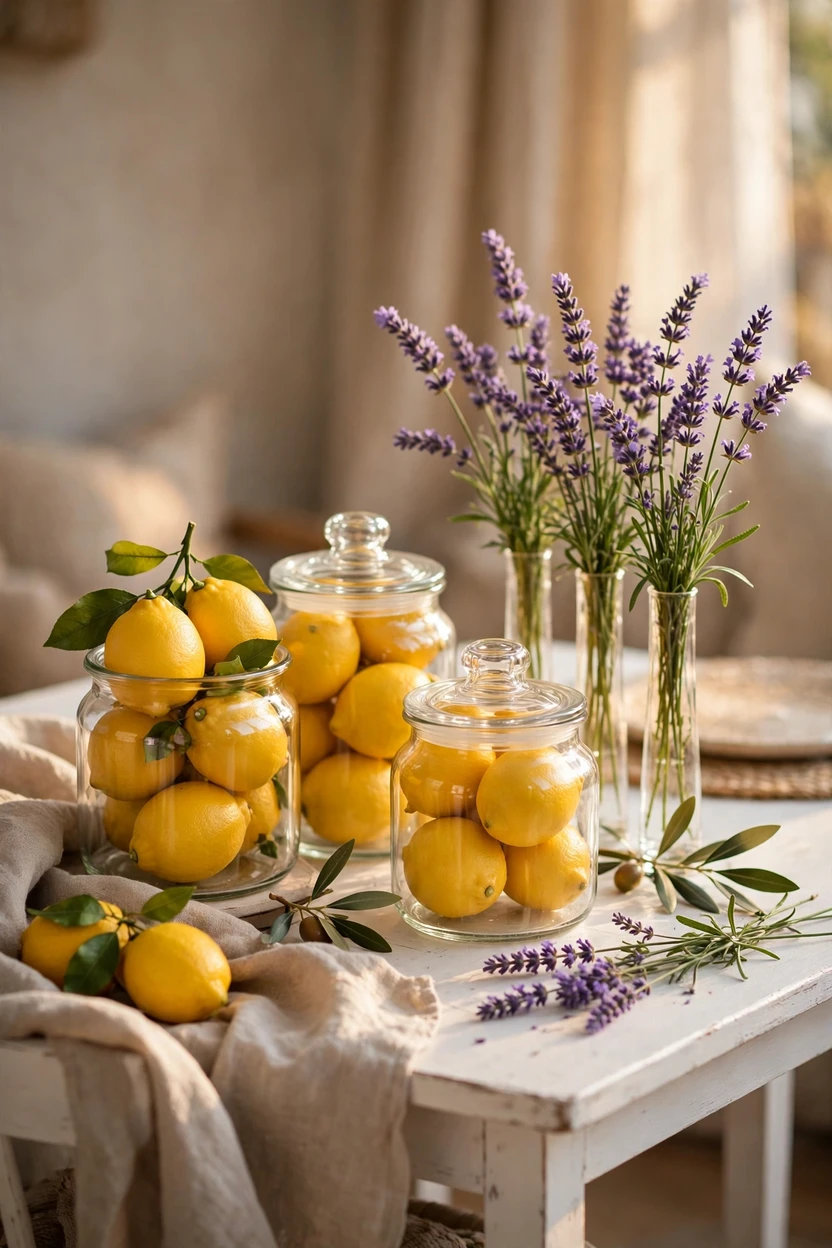
Lemons and lavender sound like an odd pair, yet the soft purple and bright yellow sit nicely side by side. Fill two or three small glass jars with whole lemons, then place a short bunch of fresh or dried lavender in a slim vase beside each jar. The scent is gentle and clean, which suits a spring lunch or a quiet afternoon tea. Keep the jars low and the lavender short so the table still feels open. This idea works best on a small table, where a few jars can fill the center without crowding the plates.
12. A Coastal Basket of Lemons with Shells and Driftwood
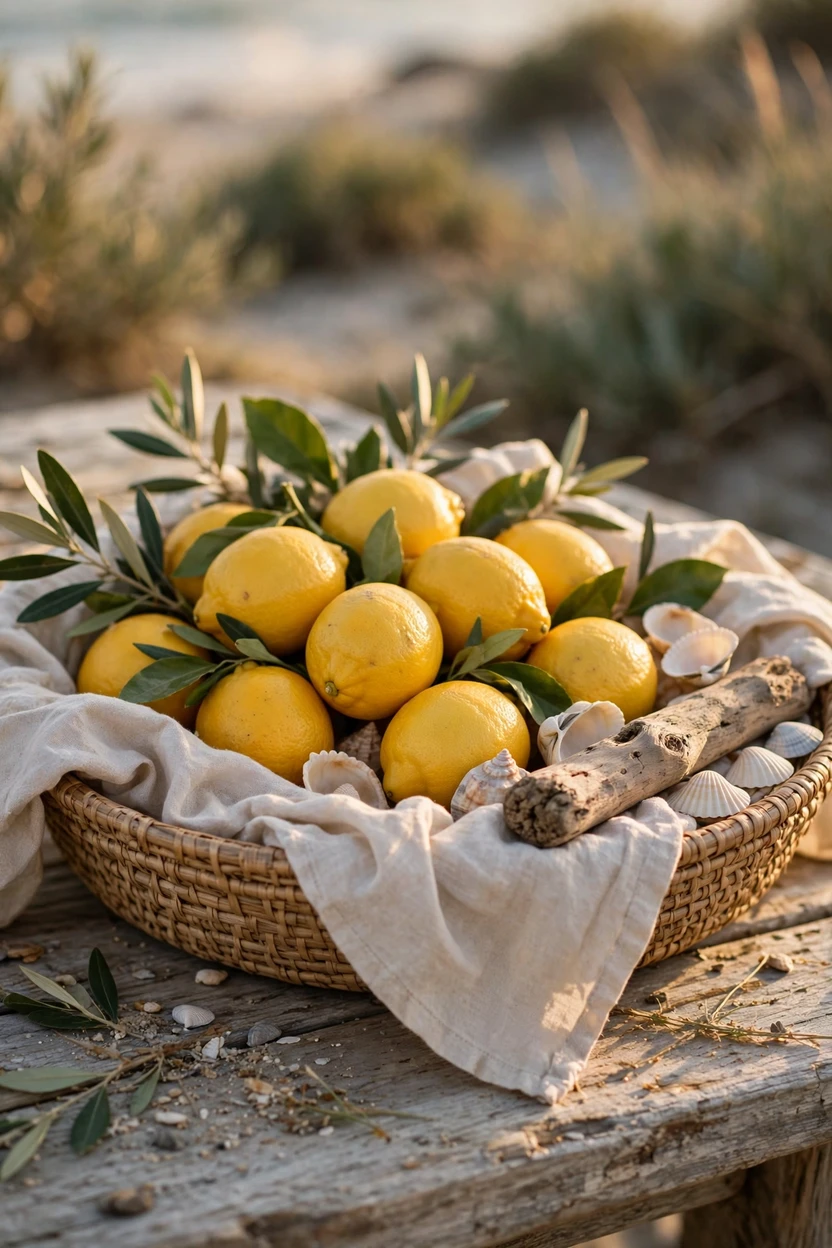
A woven basket of lemons with pale shells and a piece of driftwood brings a beach-house mood to the table. Line the basket with a plain linen cloth, then pile in whole lemons and a few lemon leaves. Tuck two or three smooth shells and a short piece of driftwood along one edge for texture. The mix of rough basket, smooth fruit, and pale shells feels light and easy, like a day by the sea. Keep the basket low and wide so it reads as a table piece, not a storage basket, and skip the shells if young children will be at the table.
13. A Lemon and Eucalyptus Runner for a Farmhouse Table
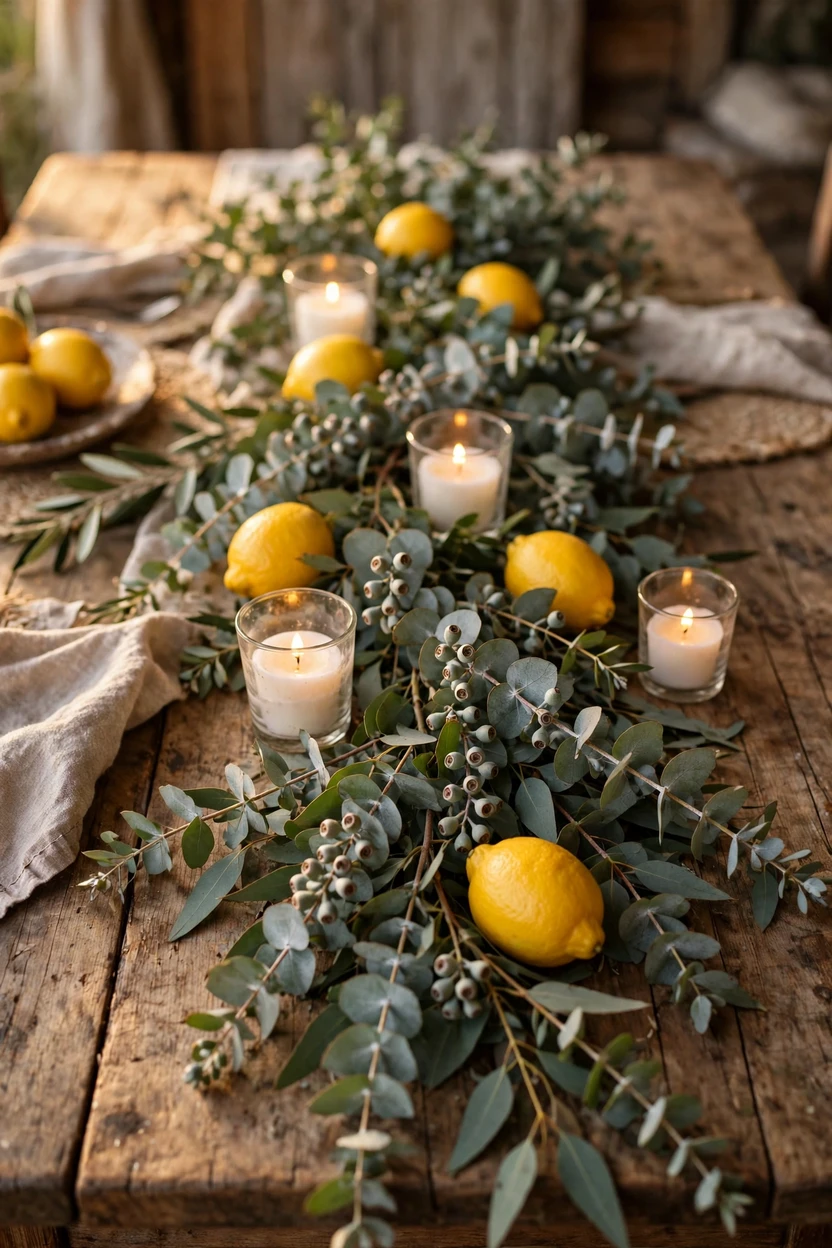
Seeded eucalyptus and lemons make a soft, farmhouse runner that feels full without needing flowers. Lay long stems of eucalyptus down the center of the table, with the silvery leaves facing up. Nestle whole lemons into the leaves at regular gaps, and add a few white candles in plain glass holders. The cool green tones calm the bright yellow, so the table feels fresh rather than loud. This runner suits a long wood table best, where the leaves can trail a little past each end.
14. A Tall Glass Cylinder with Lemon Slices and White Flowers
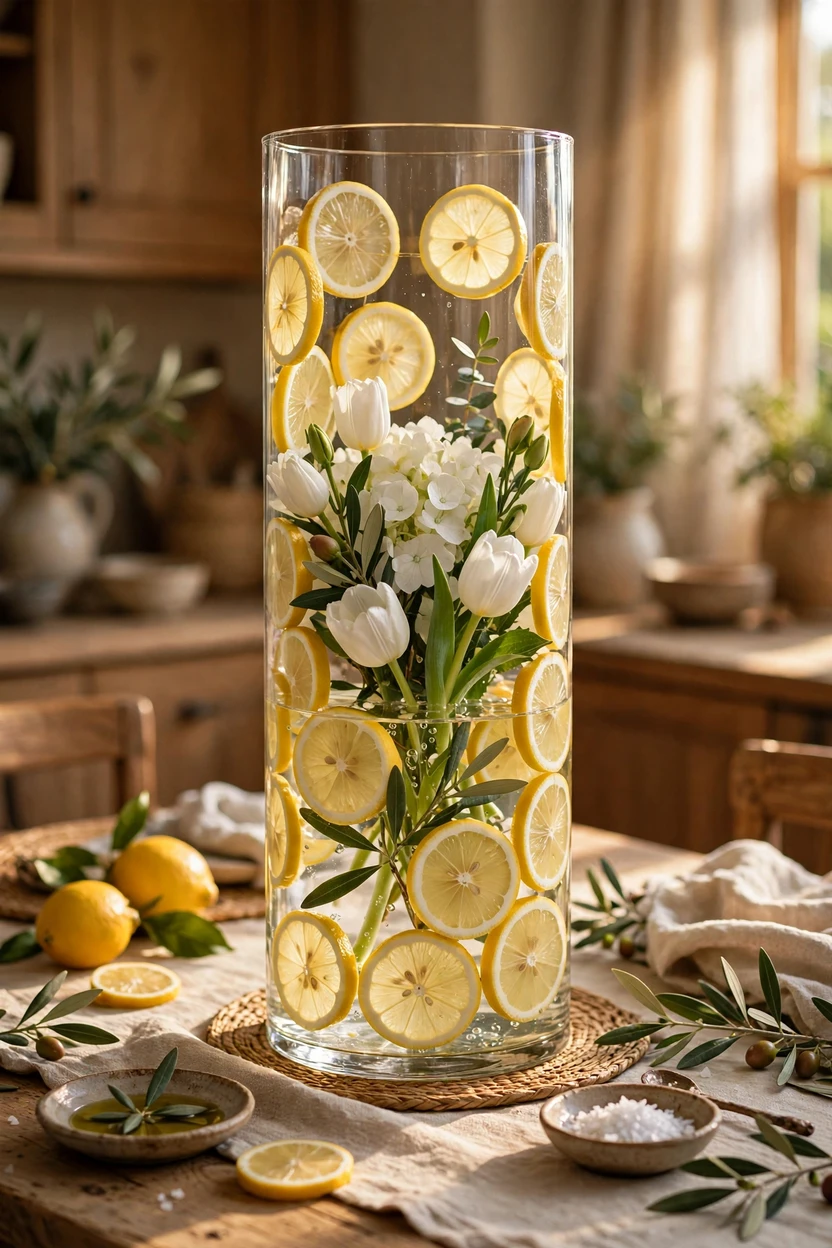
A tall glass cylinder with lemon slices and white flowers brings height to the table without hiding anyone. Line the inside of the glass with thin lemon rounds, then fill the center with water and white hydrangeas, tulips, or lilies. The lemon rings frame the white blooms like a bright border, and the clear glass keeps the whole piece light. Keep the flowers trimmed so the tallest bloom sits just above the rim. This piece suits a dinner party or a bridal shower, where a taller centerpiece adds a sense of occasion.
15. A Lemon Topiary in a Terracotta Pot
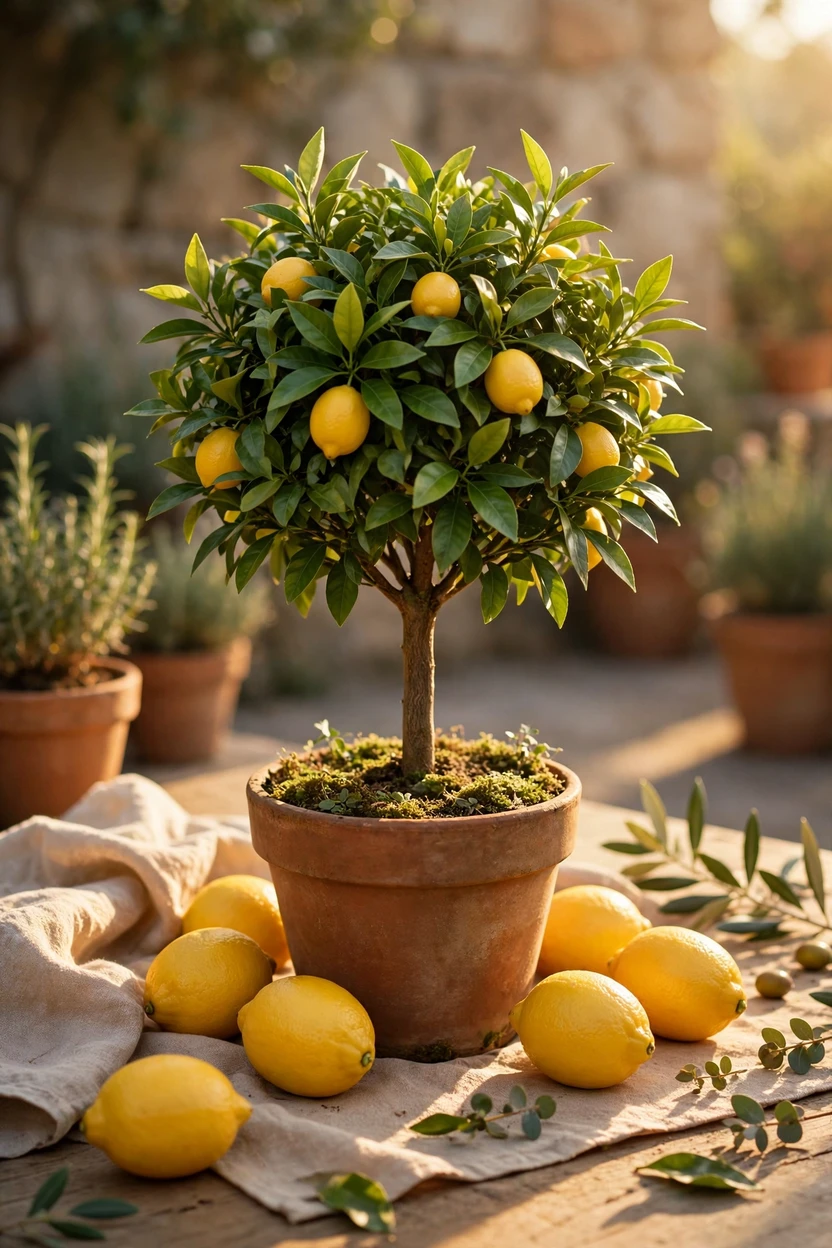
A lemon topiary in a terracotta pot adds shape and a classic garden feel to a table. Choose a small, round topiary with a short trunk, and set it in a plain clay pot with a little moss on top of the soil. Place a few whole lemons around the base of the pot to tie the green ball to the table. The warm clay color next to the green leaves and yellow fruit feels grounded and calm. This idea works on a dining table, a kitchen island, or a covered porch table, and the pot can move outside after the meal.
16. Lemons in a Silver Pedestal Bowl with Candles Around It
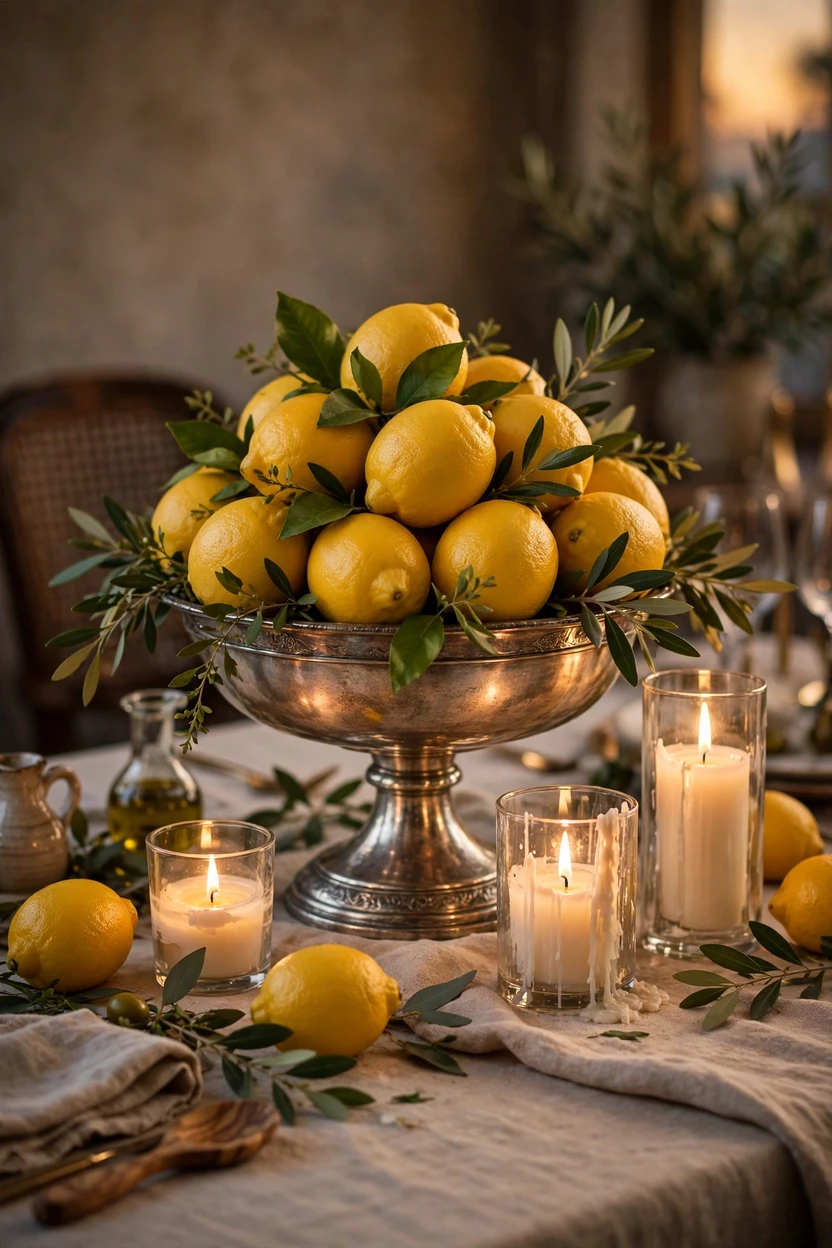
A silver pedestal bowl piled with lemons looks dressy enough for a celebration, yet it uses only fruit and a bowl you may already own. Pile the lemons high in the bowl, then tuck a few green leaves between them near the rim. Set three candles of different heights around the base, in plain glass or silver holders, and light them just before dinner. The metal shine, the yellow fruit, and the candle glow give the table a warm, formal feel. Keep the bowl in the center and the candles close enough to read as one group, not scattered pieces.
17. A Wedding-Ready Lemon and White Rose Centerpiece
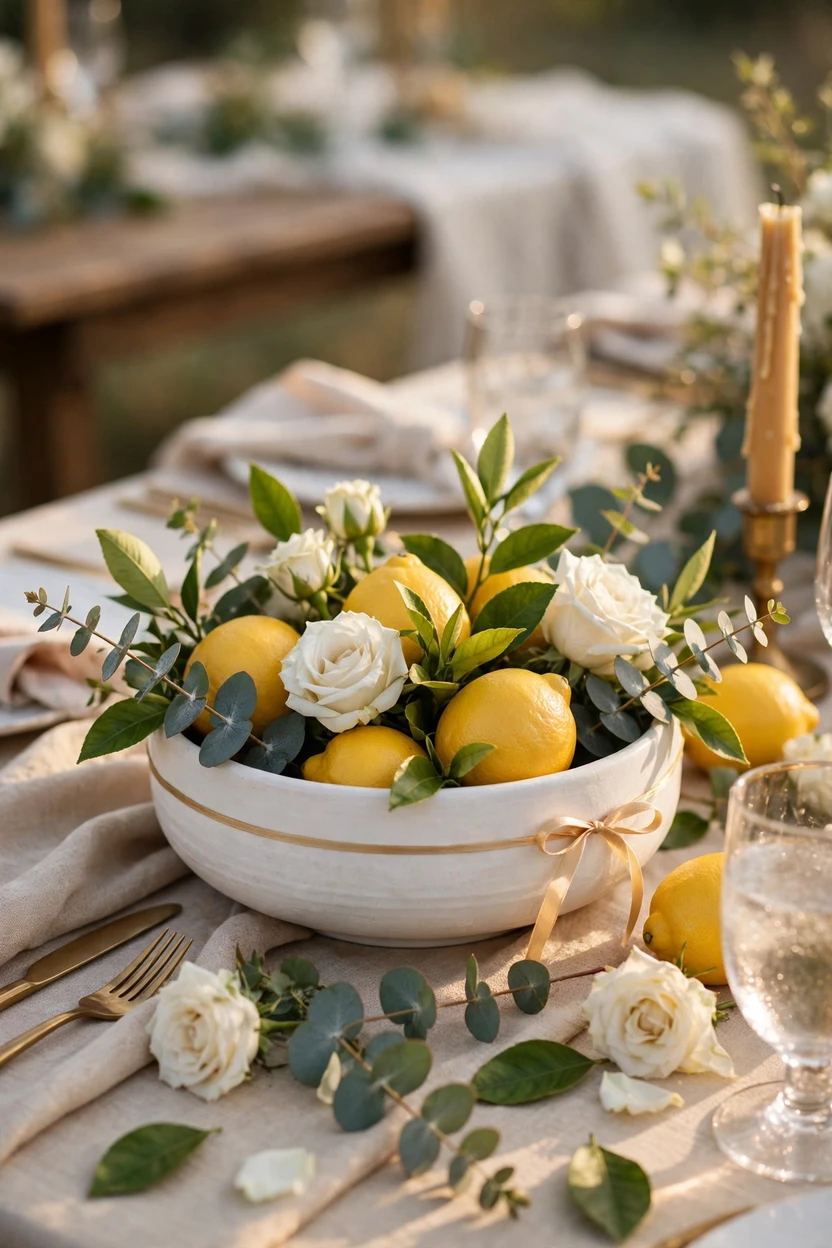
For a wedding table, pair lemons with white roses and soft green leaves for a look that feels fresh and romantic. Use a low, wide bowl or a short glass vase so the flowers sit close to the table and guests can talk over them. Mix whole lemons with white roses, a few lemon leaves, and short sprigs of eucalyptus for a full, garden feel. Add a thin gold or pale yellow ribbon around the vase if you want a dressier touch. The white blooms keep the yellow from feeling too bold, which suits both indoor receptions and garden weddings.
18. A Kitchen Island Lemon Display with a Cutting Board and Herbs
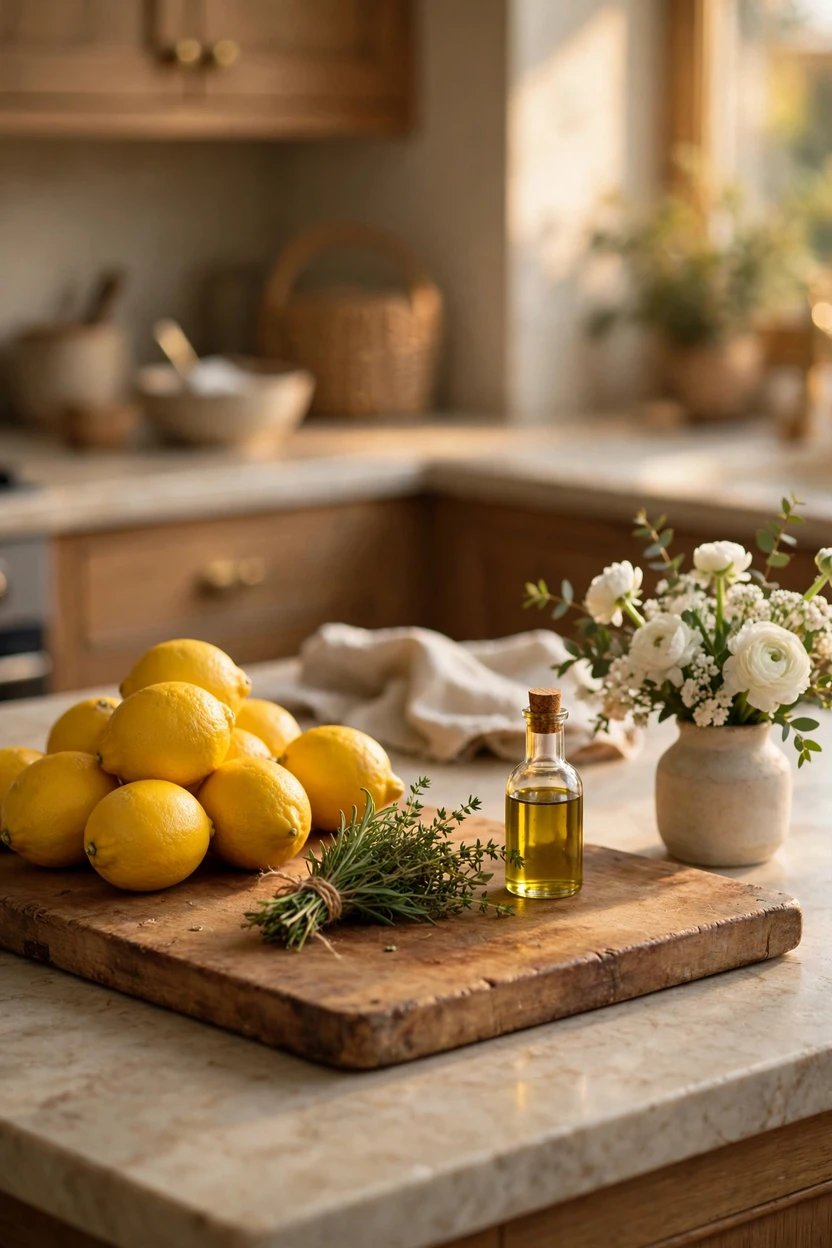
On a kitchen island, a lemon display can look useful as well as pretty, so build it around a wooden cutting board. Set the board in the center, then pile whole lemons on one end and add a small bunch of herbs, a tiny olive oil bottle, and a short vase of white flowers. The board keeps the fruit in one place and protects the counter from damp leaves. This setup suits everyday use, because you can take a lemon straight from the display when you cook. Refresh the fruit once a week and wipe the board clean so the display stays fresh.
19. Faux Lemons in a Woven Basket for Everyday Tables
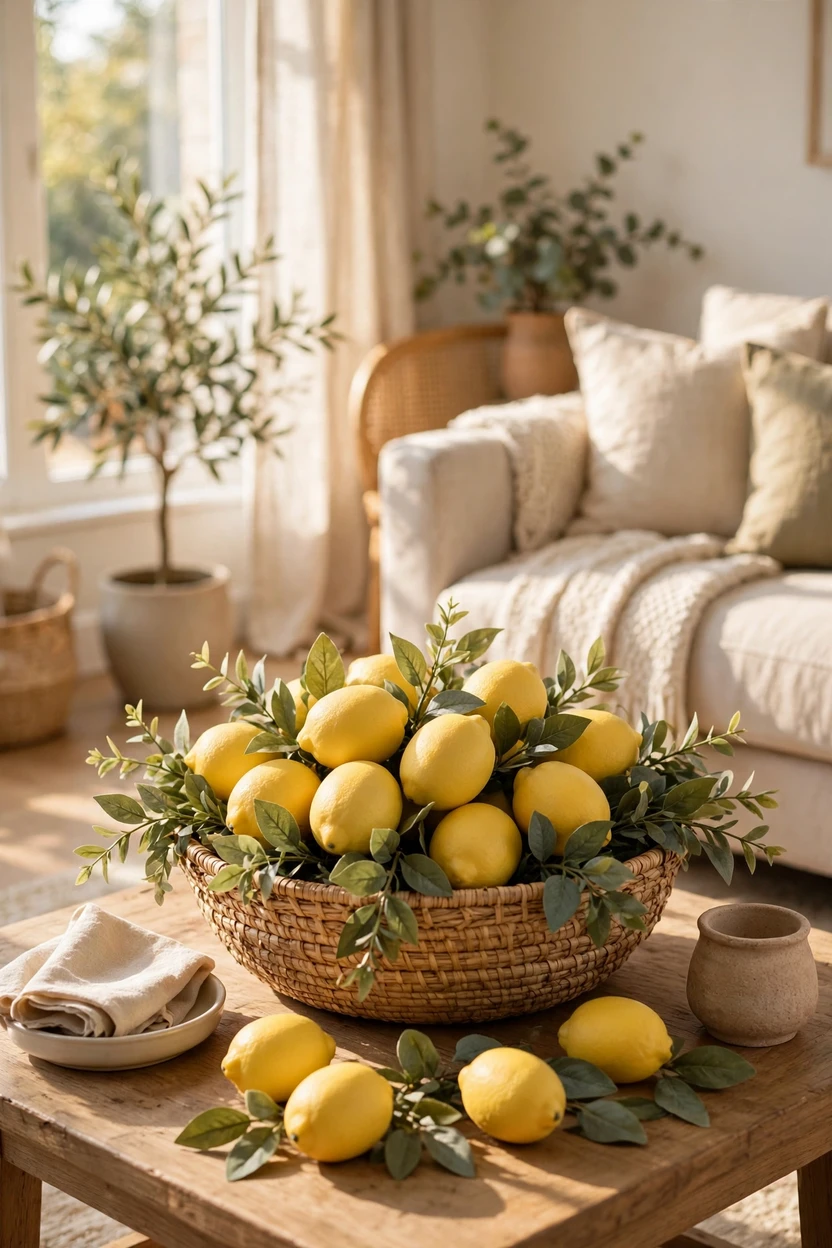
Faux lemons in a woven basket give you the sunny look every day, with no worry about fruit going soft. Pick faux lemons that feel heavy for their size and have a matte, slightly uneven skin, because shiny plastic gives the trick away. Pile them in a low basket with a few faux green leaves, and set the basket on a side table, a coffee table, or a kitchen counter. The basket needs no water, no sun, and no weekly swaps, which makes it a good pick for a busy home. Dust the fruit now and then, and mix in one or two real lemons near the front if you want the scent too.
Styling Tips
Pick one main piece and let the rest of the table support it, not fight it. Repeat one color or material from the centerpiece in the napkins, the plates, or the candle holders, such as the same blue, the same wood tone, or the same green leaf. Keep the palette to three colors at most, with yellow as the bright note, white as the calm base, and one green or blue as the third. Step back and look at the table from the doorway, because a display that looks full up close can look small from across the room. Warm candlelight suits almost every idea here, while harsh overhead light can wash the yellow out.
Practical Implementation Ideas
Start by measuring your table and checking how much room the plates and glasses need, because space decides which ideas are safe for you. Build the centerpiece on a tray or a board when you can, so you can lift it away in one move for serving or cleaning. Keep cut lemons in water or in the fridge until just before guests arrive, and wipe the rims of glass vases so no water marks show. For outdoor tables, weigh down light runners and trays with a few extra lemons or small stones so a breeze does not shift them. Test the setup by sitting at the table: look across it, reach for a glass, and move anything that blocks your view or your arm.
Common Mistakes to Avoid
The most common mistake is piling on too many pieces at once, which makes the table look busy instead of bright. Another is picking a display that is too tall, so guests have to lean around it to talk, or too wide, so plates have nowhere to sit. Cut lemons left in strong sun go soft and dull fast, and real candles should never sit close to dry leaves or paper. Avoid mixing too many fruit colors at once, because lemons with oranges, limes, and grapefruit in one bowl can look muddled from across the room. Check the fruit the day of the meal, and swap out any lemon that feels soft, looks dull, or has a dark spot.
Small-Space Alternatives
A small table or a tight apartment still has room for lemons, as long as the piece stays low and narrow. A single glass jar of lemons, a short tray of herbs and fruit, or a slim runner of eucalyptus and lemons all take up little width. A small potted tree in a tiny pot can sit at one end of the table, rather than in the center, and still give the whole table its color. Skip the wide dough bowl, the big pedestal bowl, and the long runner on a small round table, because wide pieces can crowd the plates. If you have no dining table at all, set a small basket of lemons on a kitchen counter or a side table, and keep the eating area to one jar and a candle.
Budget-Friendly Alternatives
You can build a bright lemon table with very little money by using what you already have. A plain glass jar, a cereal bowl, or a baking dish can hold lemons just as well as a new vase, and a wooden cutting board makes a fine base. Buy lemons in a bag rather than one by one, and pick up green stems from the garden or a grocery bunch of herbs you will cook with later. Faux lemons from a craft store cost little, last for years, and can be mixed with a few real ones for scent. One good linen runner or a plain white cloth, reused across many meals, often does more than a basket of new small pieces.
Pro Styling Recommendations
Choose your centerpiece first, then match the table to it in small steps. If the bowl is blue and white, add blue napkins or a blue candle holder nearby; if the tray is wood, repeat the wood in a cutting board or a set of wooden serving spoons. Mix textures on purpose: pair smooth glass with rough wood, soft linen with glossy fruit, or matte clay with bright leaves. Keep the center of a long table to one idea, and save extra pieces for the sideboard or the kitchen counter instead. Finally, take a photo from the doorway at dusk with the candles lit, because that is how most guests will first see the table, and adjust anything that looks dark, lopsided, or lost in shadow.
Conclusion
Lemons ask for very little and give a table so much: color, scent, and a fresh, sunny mood that suits almost any meal. A glass vase, a wooden bowl, a tray of herbs, or a small potted tree can each make an ordinary table feel cared for and ready for guests. Pick one idea that fits your table, your budget, and the day you have planned, build it with care, and let the rest of the table stay simple. The best tables are not the busiest ones — they are the ones that make people want to sit down and stay a while.