
18 Dorm Room Ideas That Actually Support Your Daily Life
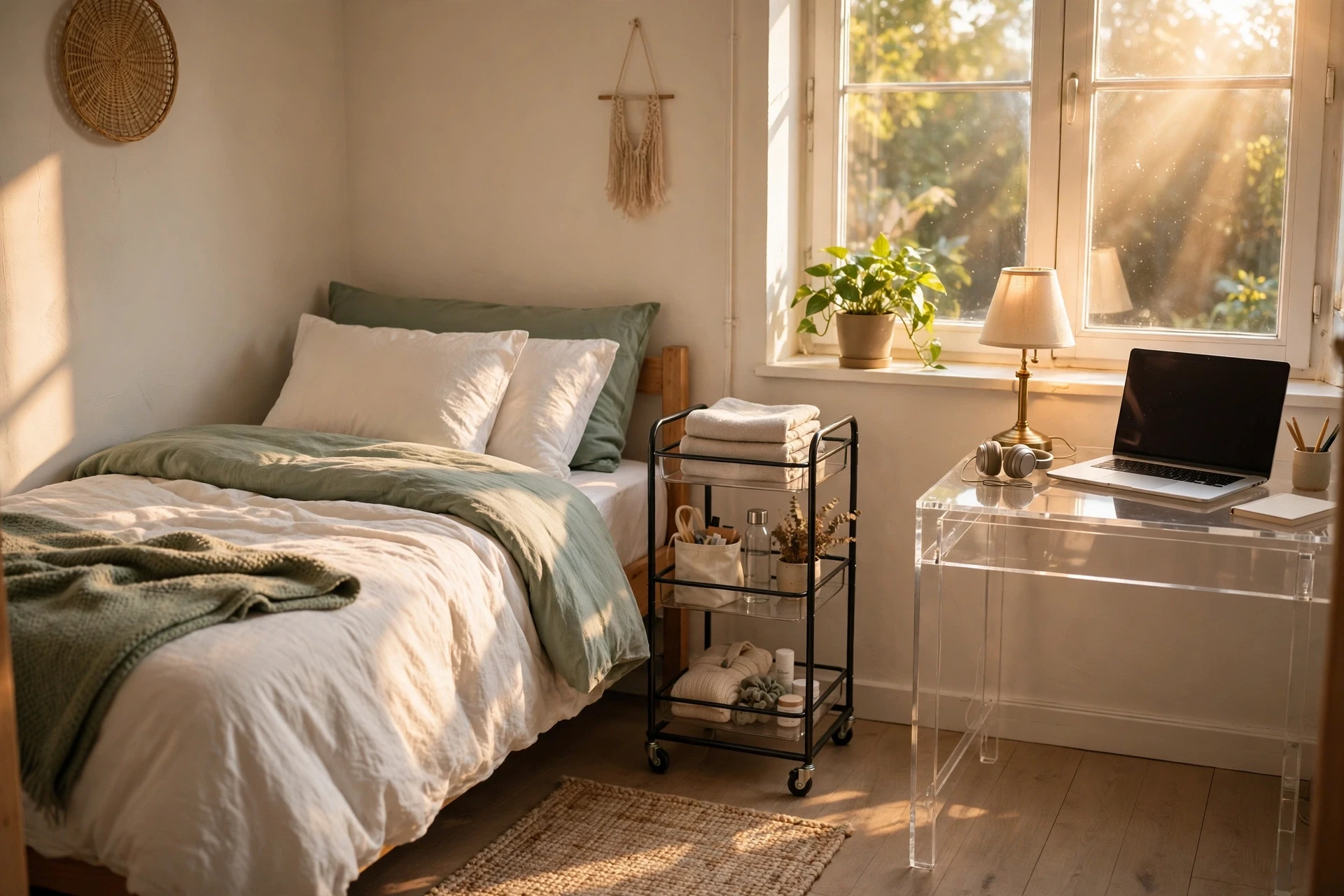
A dorm room has to do a lot in very little space. It is a bedroom, a study spot, a closet, a snack corner, and a place to unwind after a long day, all squeezed into one small square. That is why the best setups start with how you live, not just how the room looks in a photo.
These ideas focus on the small choices that make mornings smoother, nights quieter, and study time less stressful. Each one uses simple, renter-friendly pieces that come down cleanly at move-out, and most cost far less than a full room redo. Pick the few that match your routine, and let the rest wait until you know how you really use the room.
Quick Answer
A good dorm room setup gives sleep, study, and storage their own clear spots, even in a shared room of about 100 to 200 square feet. Start with a raised or lofted bed for storage underneath, a mattress topper and soft bedding for better sleep, and a clear desk zone with a lamp and a place for chargers. Add under-bed bins, an over-door organizer, a laundry system with one fixed spot, and a small privacy screen or curtain for shared rooms. Use removable hooks and no-drill pieces only, check your housing rules before you loft a bed or add a shelf, and keep one open patch of floor so the room stays easy to move through.
1. A Raised Bed with Storage Underneath
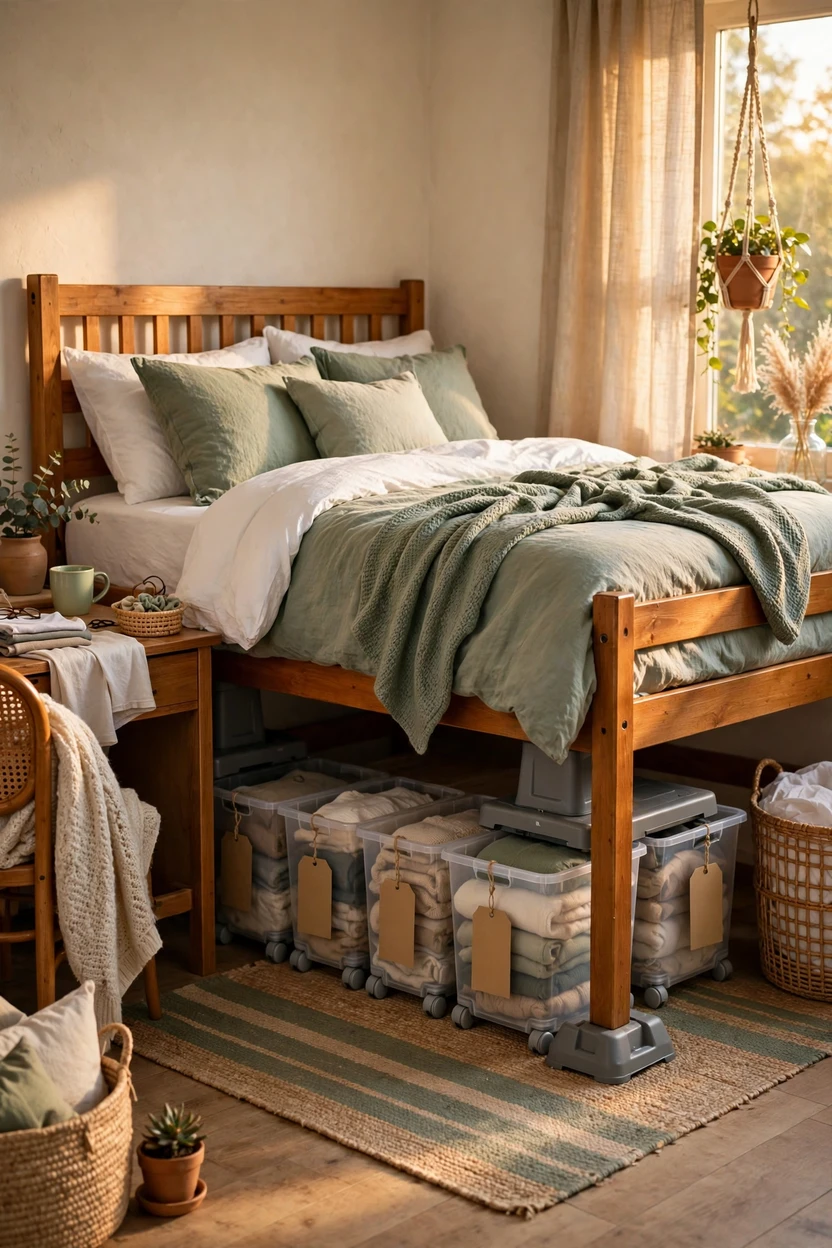
Raising the bed is the single biggest space win in a small dorm, because it turns dead floor space into a whole storage zone. Use bed risers if your school allows them, or a loft kit from housing, and slide flat rolling bins underneath for extra bedding, off-season clothes, and shoes. Label each bin on the end you can see, so you can pull the right one out without dragging them all into the middle of the room. Keep daily clothes in the dresser and weekly or seasonal things under the bed, so the bins do not need to open every morning. Check the height before you buy anything, because a bin that is too tall will jam, and a bed that is too high will make getting in and out a chore.
2. A Mattress Topper and Soft, Washable Bedding
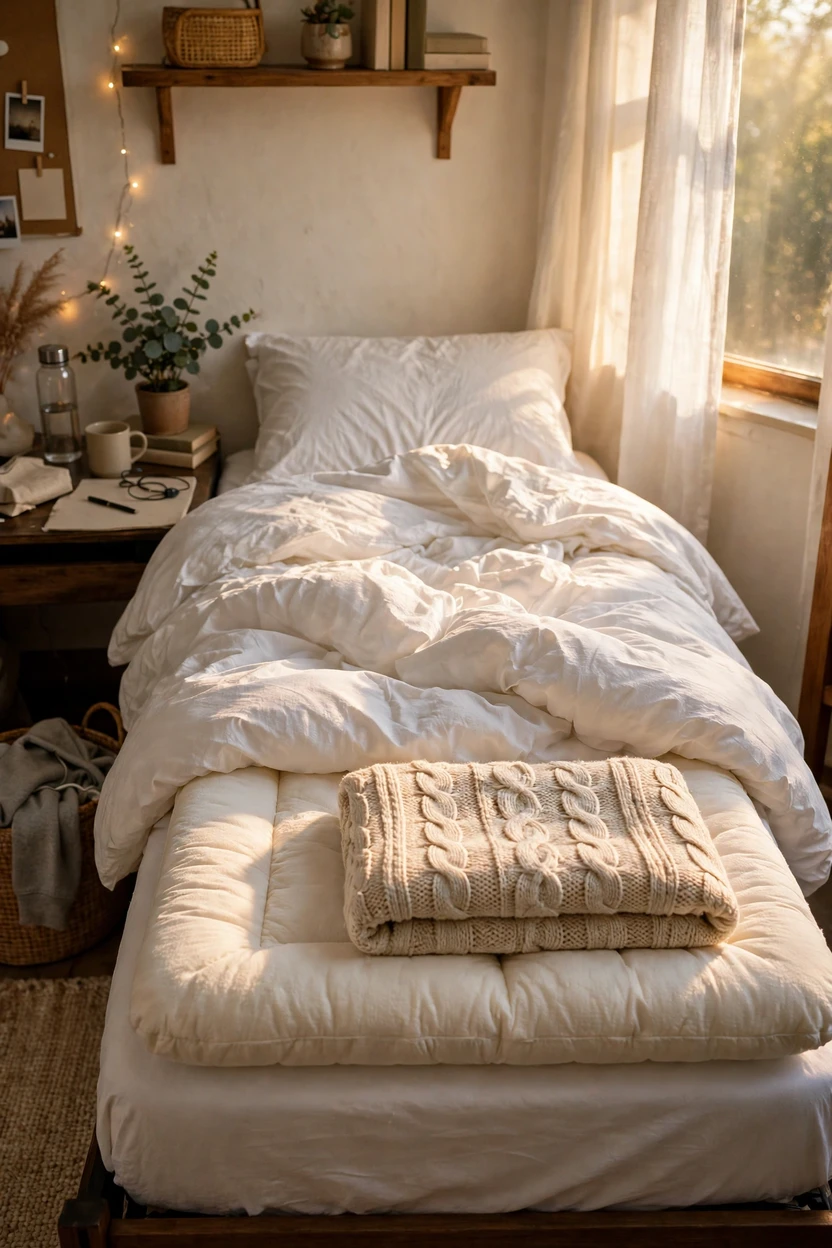
Dorm mattresses are often thin and firm, so a soft topper can change how well you sleep in one night. Choose a two- or three-inch foam topper with a washable cover, then add cotton or bamboo-blend sheets that feel cool and breathe through warm nights. Pick a duvet or comforter you can wash in a shared laundry machine, and keep a second sheet set folded in an under-bed bin for laundry day. A soft throw at the foot of the bed adds warmth on cold nights and folds away in seconds when you make the bed. Good sleep starts with a bed that feels like yours, and bedding is the fastest way to get there.
3. A Bed Canopy or Curtain for Sleep and Privacy
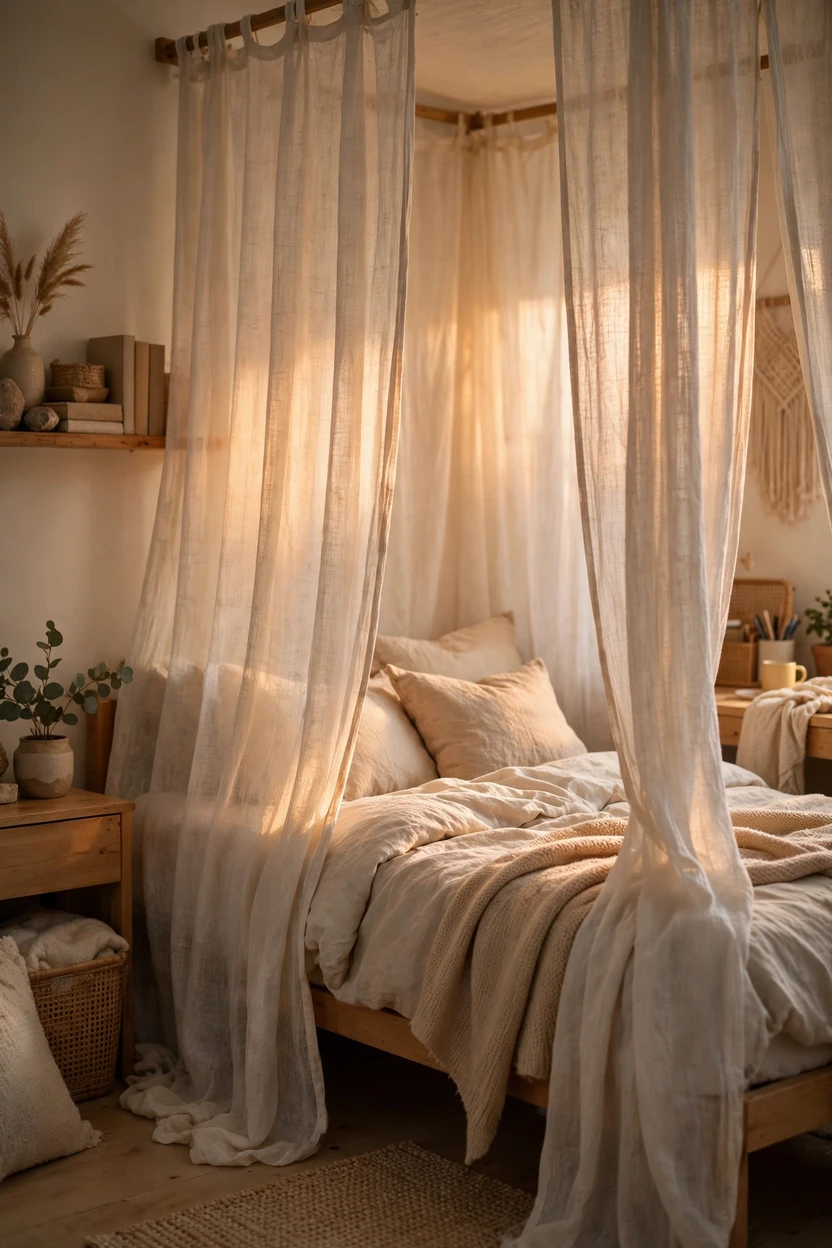
A simple curtain around the bed gives you a dark, quiet pocket to sleep in, even when a roommate is still up studying. Hang a light curtain from a tension rod or a ceiling track that uses removable hooks, and choose a soft cotton or linen-look fabric in a calm color like warm white, sage, or dusty blue. The curtain blocks lamp light and softens sound a little, which helps you fall asleep faster and stay asleep through late-night typing. Keep the fabric clear of the floor so it does not drag, and tie it back during the day so the bed still gets fresh air. This one change can make a shared room feel like two rooms, without a single nail in the wall.
4. A Clear Desk Zone That Means Work Time

Your desk works best when it has one clear job, so treat it as a work zone and keep the bed for rest. Push the desk near the window if you can, because daylight helps you stay alert, and add a small adjustable lamp for evening study. Keep only a laptop, a notebook, a pen cup, and a water bottle on the surface, and move everything else into a drawer or a wall pocket. A desk mat in a soft color marks the work area and protects the surface from scratches and coffee rings. When you sit down and the desk is clear, starting work feels easier, and when you leave it, your brain gets a real break.
5. A Rolling Cart as a Bedside Table and Snack Spot
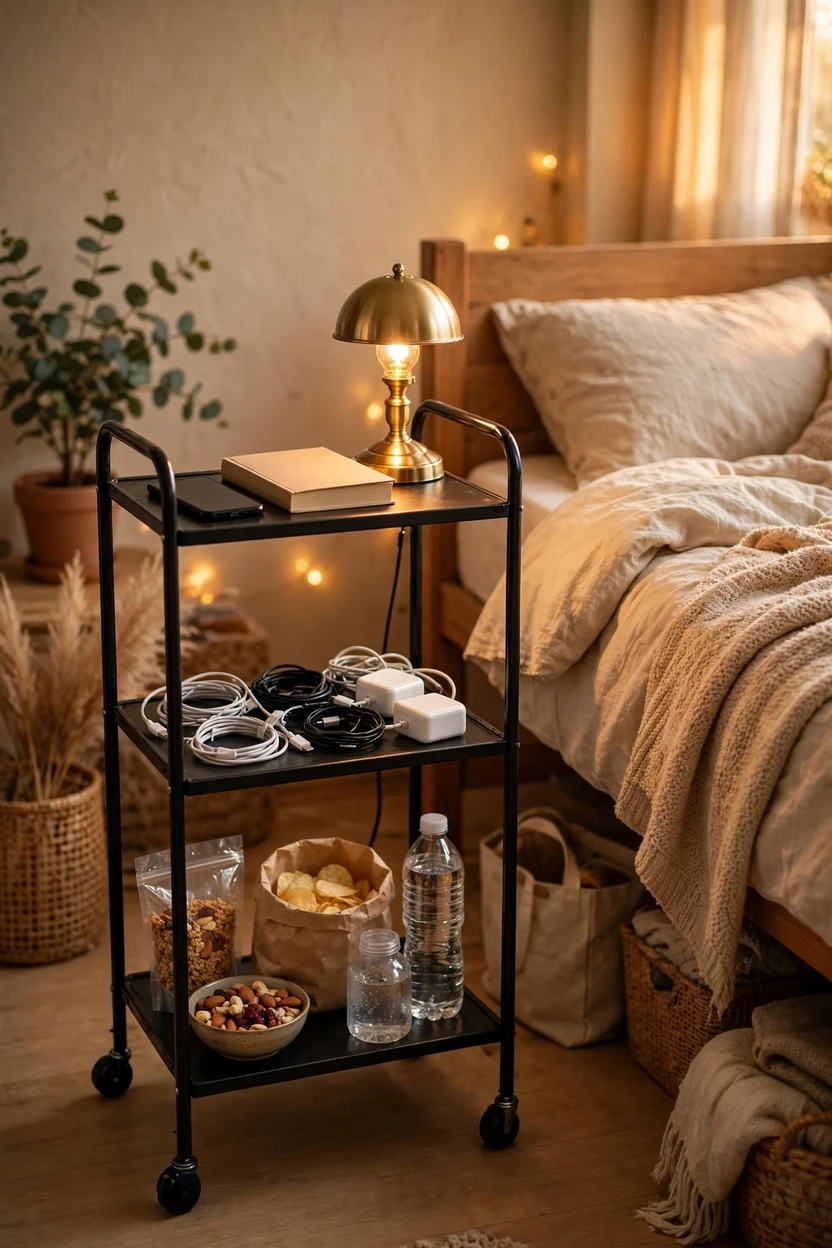
A narrow rolling cart does the job of a nightstand, a snack shelf, and a small storage tower, all in one slim piece. Roll it beside the bed and use the top shelf for a phone, a book, and a small lamp, the middle shelf for chargers and lip balm, and the bottom shelf for snacks and a water bottle. Choose a cart with casters that lock, so it stays put at night and rolls out of the way when you need floor space. A white, wood-tone, or soft sage cart blends with most bedding and keeps the corner looking calm instead of crowded. At the end of the term, you can roll the whole cart out the door, which beats taking apart a heavy piece of furniture.
6. Flat Under-Bed Bins with Labels You Can Read
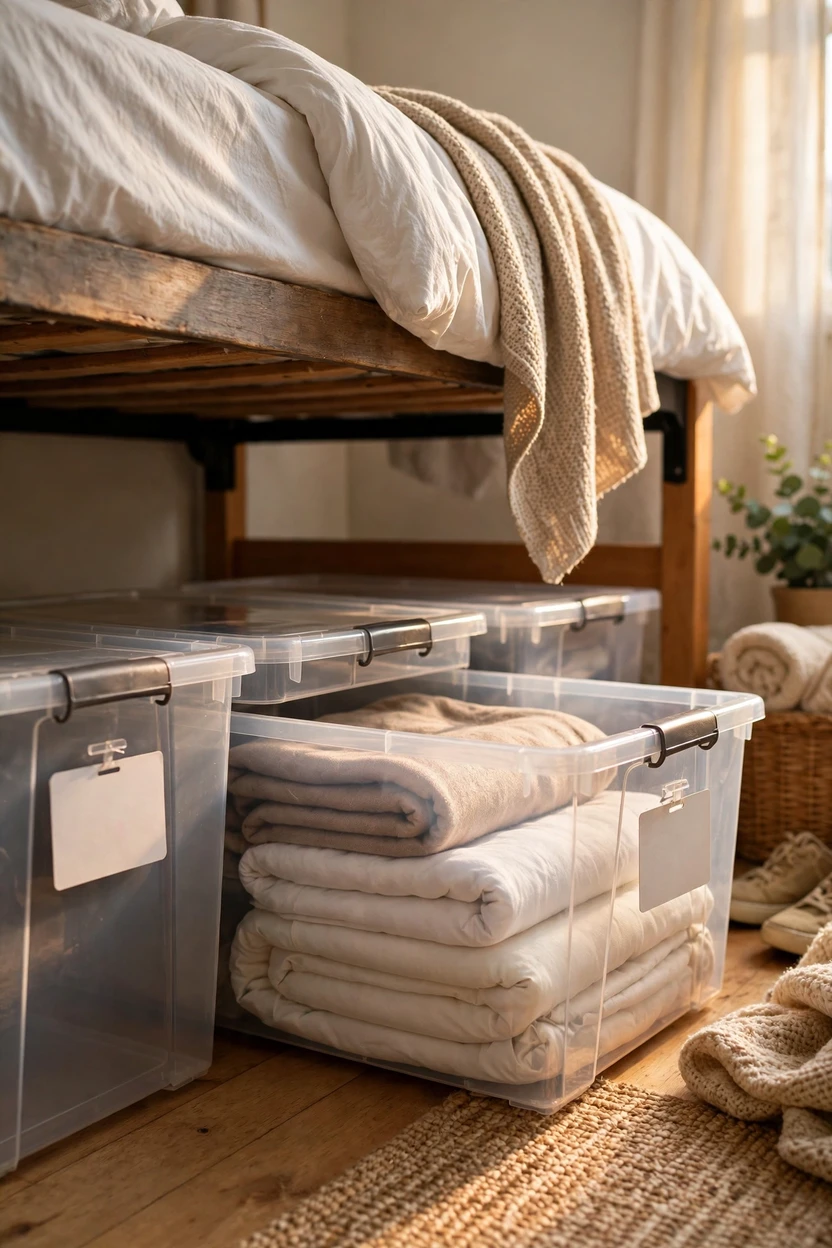
Flat bins under the bed hold the things you need each week but not each day, and they keep the floor clear. Pick clear or light-colored bins with lids, so dust stays out and you can see what is inside without opening every box. Sort by use, with one bin for extra bedding, one for off-season clothes, and one for shoes or spare school supplies. Add a small label on the short end, and slide the bins in with the labels facing out, so grabbing the right one takes seconds. Wipe the bins down before move-in, and leave a little gap at the front so you can pull them out without scraping the floor.
7. An Over-Door Organizer for Shoes and Supplies
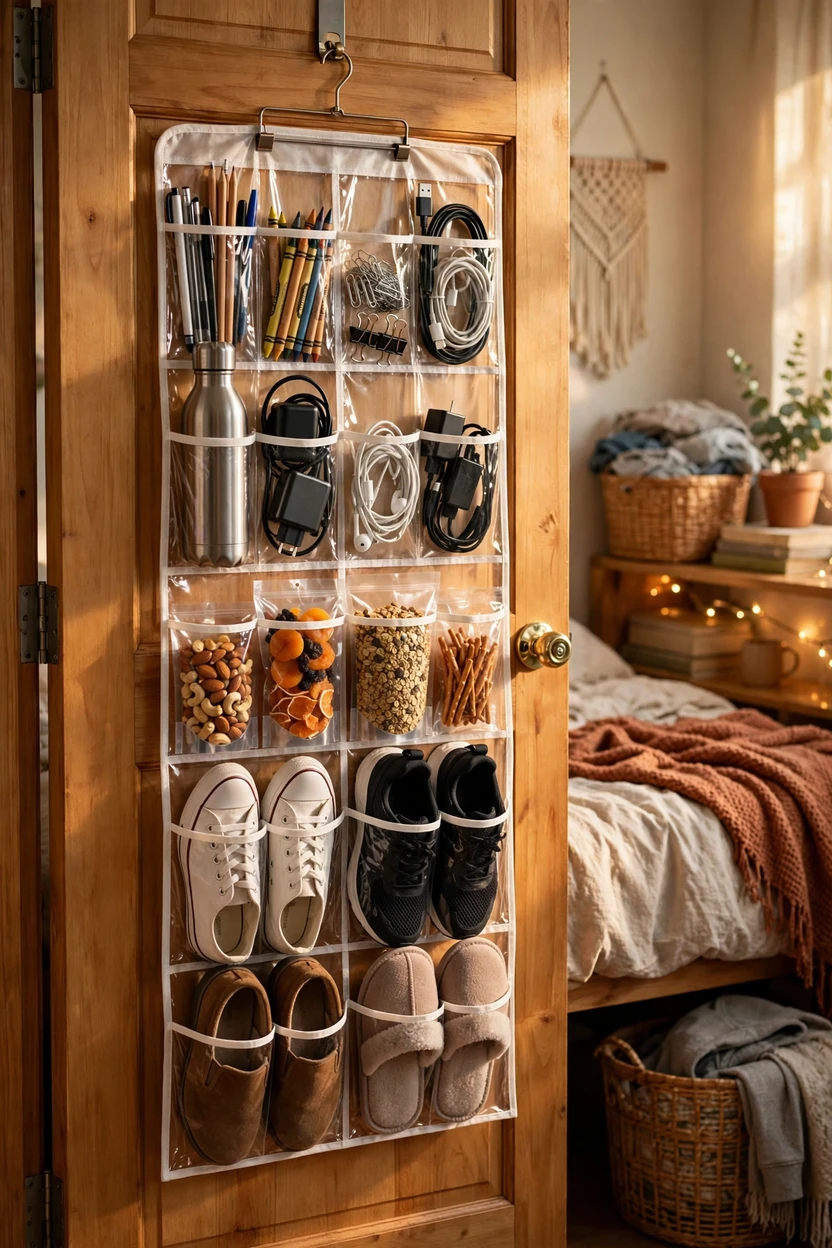
The back of your room door is free storage, and a pocket organizer turns it into a tidy wall of small things. Hang clear or fabric pockets over the door, no tools needed, and use the top rows for school supplies, chargers, and snacks, and the lower rows for shoes or cleaning cloths. Keep the pockets light so the door still closes and swings without dragging, and avoid hanging anything heavy near the handle. A slim shoe organizer on the closet door works the same way for shoes, hair tools, and small bottles. This spot is easy to reach every day, which means the things you use most stop landing on the floor or the desk.
8. A Tall Closet Setup with Slim Hangers and Hanging Shelves
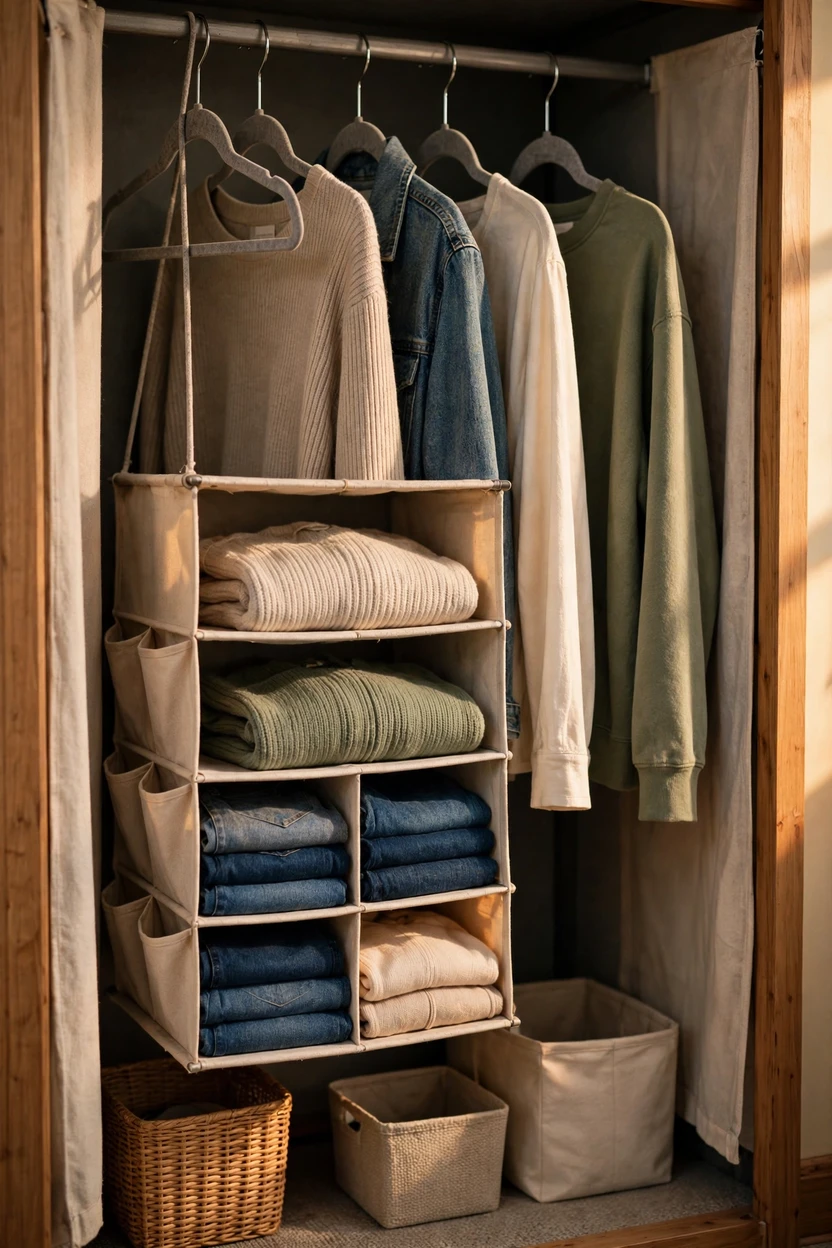
Dorm closets are small but tall, so the height is the part most students waste. Swap bulky hangers for slim felt hangers, which take up less rail space and stop clothes from sliding off onto the floor. Add a hanging shelf unit with four or five cloth cubbies for folded sweaters, jeans, and gym clothes, and use the top shelf for hats or bags you use less often. Put a small stack of bins on the closet floor for shoes, and hang a hook inside the door for tomorrow’s outfit. Sorting clothes by type and keeping the rail at eye level means getting dressed takes less time and the closet stays tidy for longer.
9. One Fixed Charging Station for Every Device
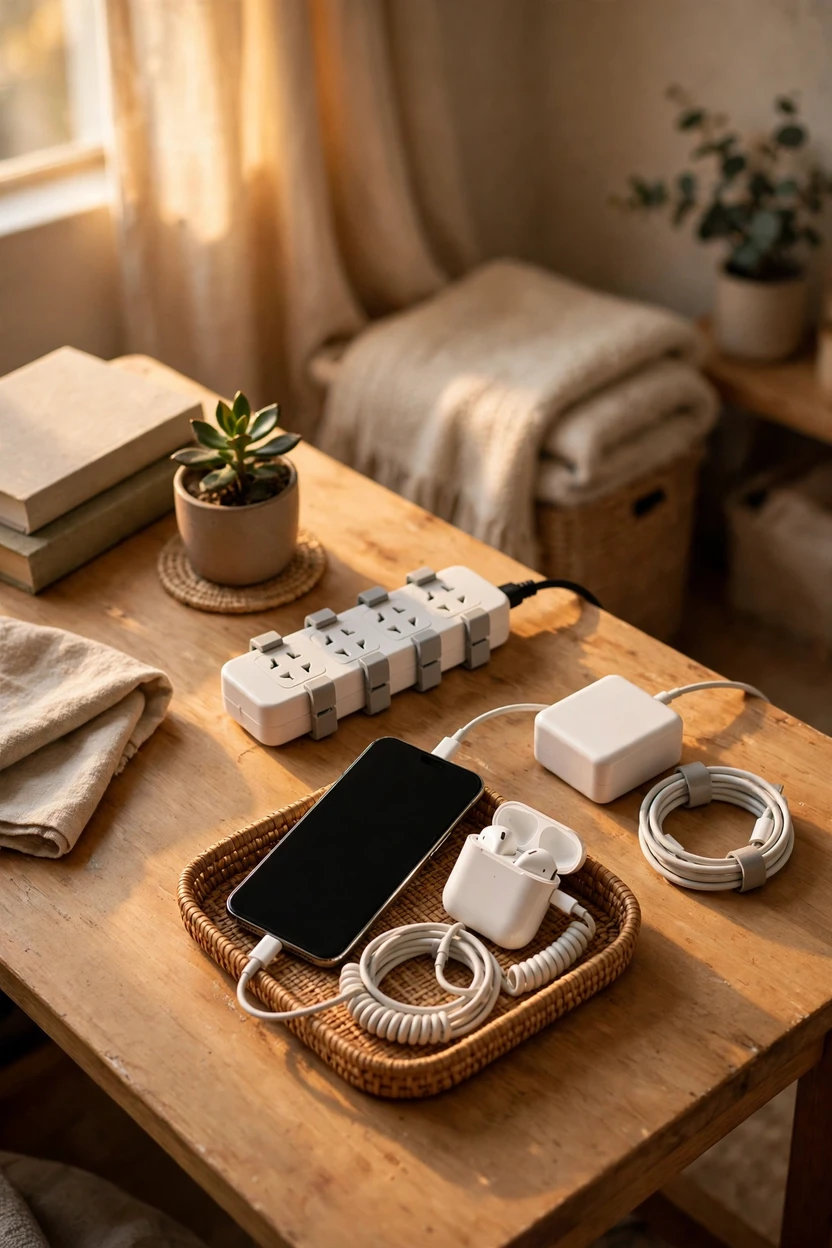
Loose chargers and cables make a small room look messy fast, and they are easy to trip over in the dark. Set up one charging spot on the desk or the rolling cart, with a short power strip, a small tray, and a cable clip for each cord. Keep the phone charger, laptop charger, and earbud case in the same tray, so nothing wanders to the bed or the floor. Label each cord with a small tag or a strip of colored tape, which helps when you and your roommate have the same white cables. Plug in devices at the same time each night, and the station becomes a habit that keeps cords off the floor and devices ready for class.
10. A Small Snack and Drink Corner by the Mini Fridge
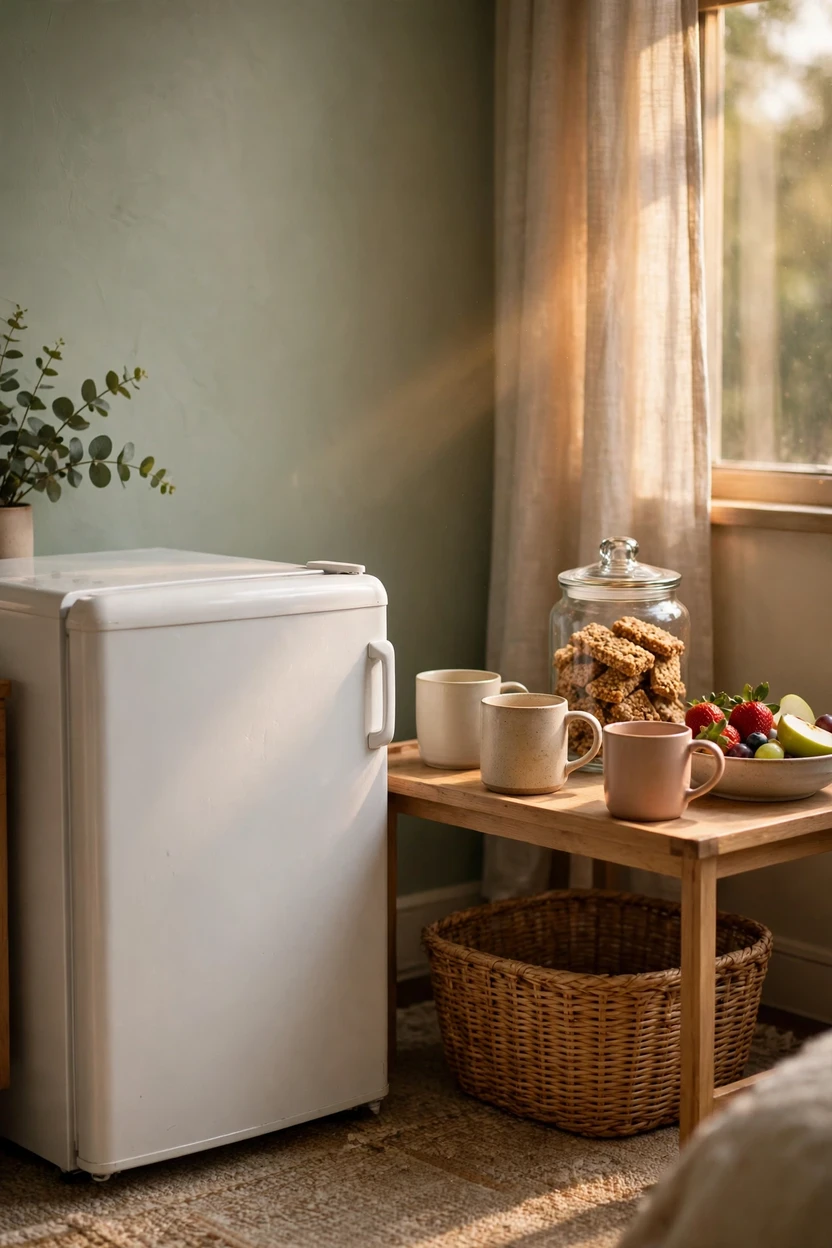
A tiny snack corner saves late-night trips across campus and keeps food out of the study zone. Place the mini fridge against a wall near the desk or bed, and set a small tray or a second rolling cart beside it for mugs, tea, granola bars, and fruit. Keep a small bin for trash and recycling right next to it, so wrappers and cups do not pile up on the desk. Stock only a few items at a time, and use clear jars or small baskets so you can see what needs restocking. A calm snack spot also helps you take a real break, instead of eating over your keyboard while you study.
11. A Laundry System with One Fixed Spot and a Set Day
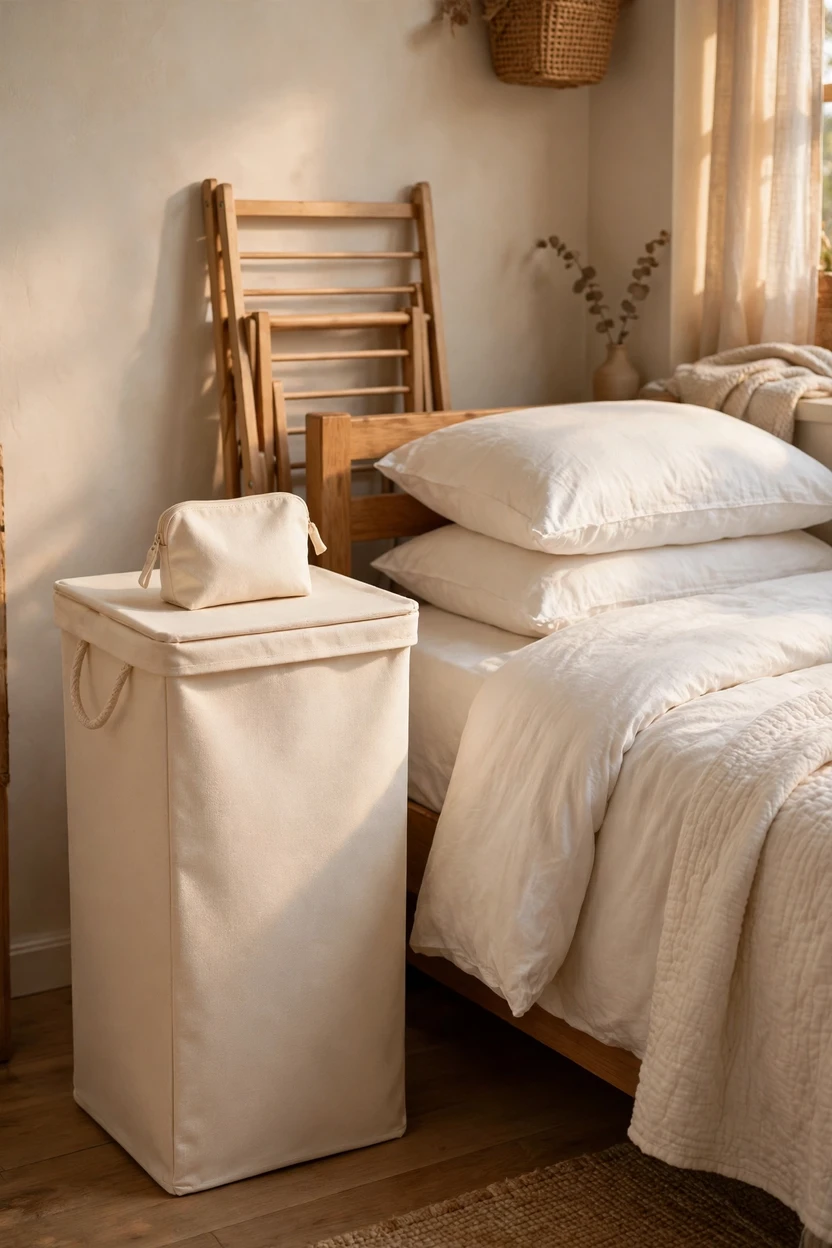
Laundry piles make a tiny room feel smaller, so give dirty clothes one home and one routine. Choose a slim hamper or a canvas laundry bag that fits in the closet or beside the bed, and use it for everything, no stray piles on chairs or the floor. Pick one laundry day, or wash when the hamper is about three-quarters full, and keep detergent pods, a small stain stick, and coins or a laundry card in a zip pouch inside the hamper lid. A small folding drying rack that leans against the wall works for damp sweaters and swim gear, then folds flat when you are done. A set day and a set spot turn laundry from a constant mess into a short weekly task.
12. A Privacy Screen or Curtain for Shared Rooms
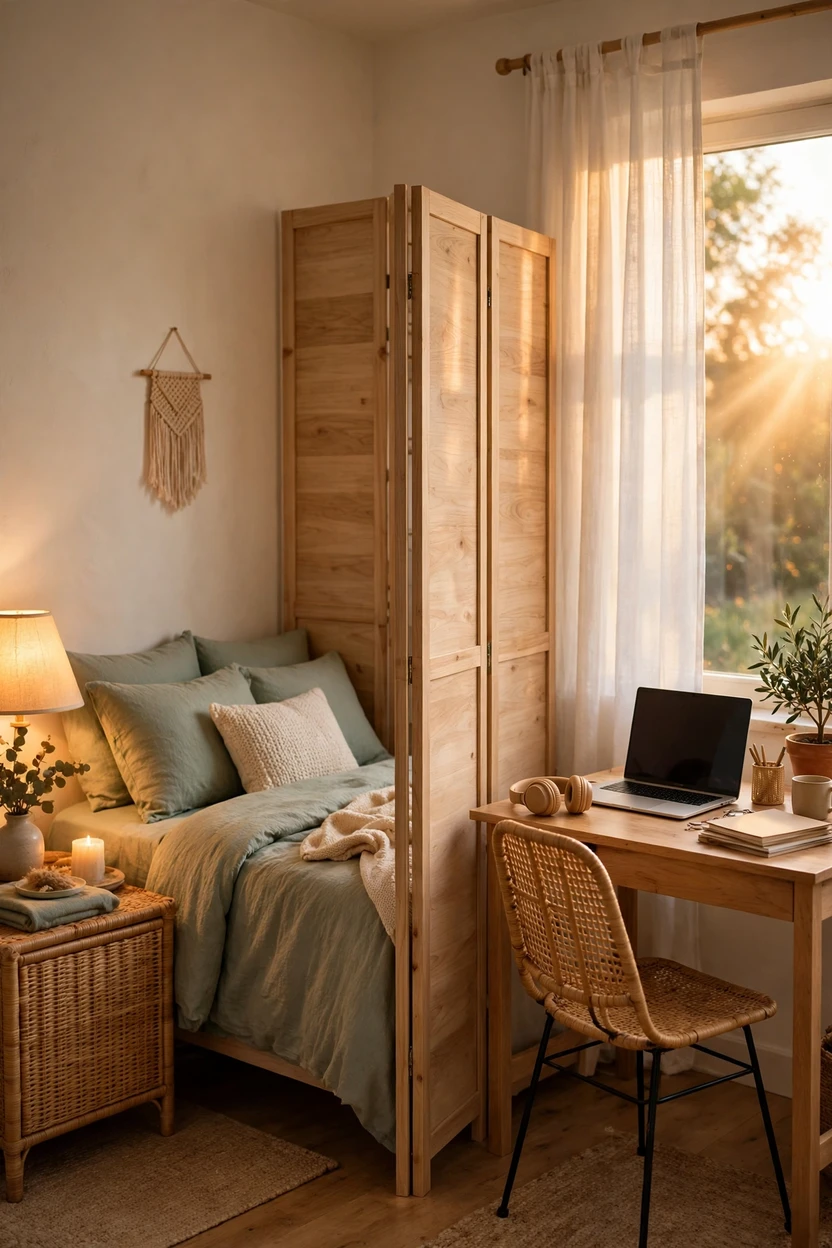
Sharing a room does not mean giving up all privacy, and a light screen can mark a clear boundary. Use a folding screen, a tall bookshelf, or a curtain hung from a tension rod to separate the sleep side from the study side. Choose a light fabric or a wood-tone screen that lets a little light through, so the room does not feel boxed in. Keep the screen low enough to step around easily, and agree with your roommate on where it sits, so it feels fair to both sides. A clear boundary also helps with quiet hours, because each person can see at a glance when the other side is resting or working.
13. Layered Lighting for Study, Wind-Down, and Sleep
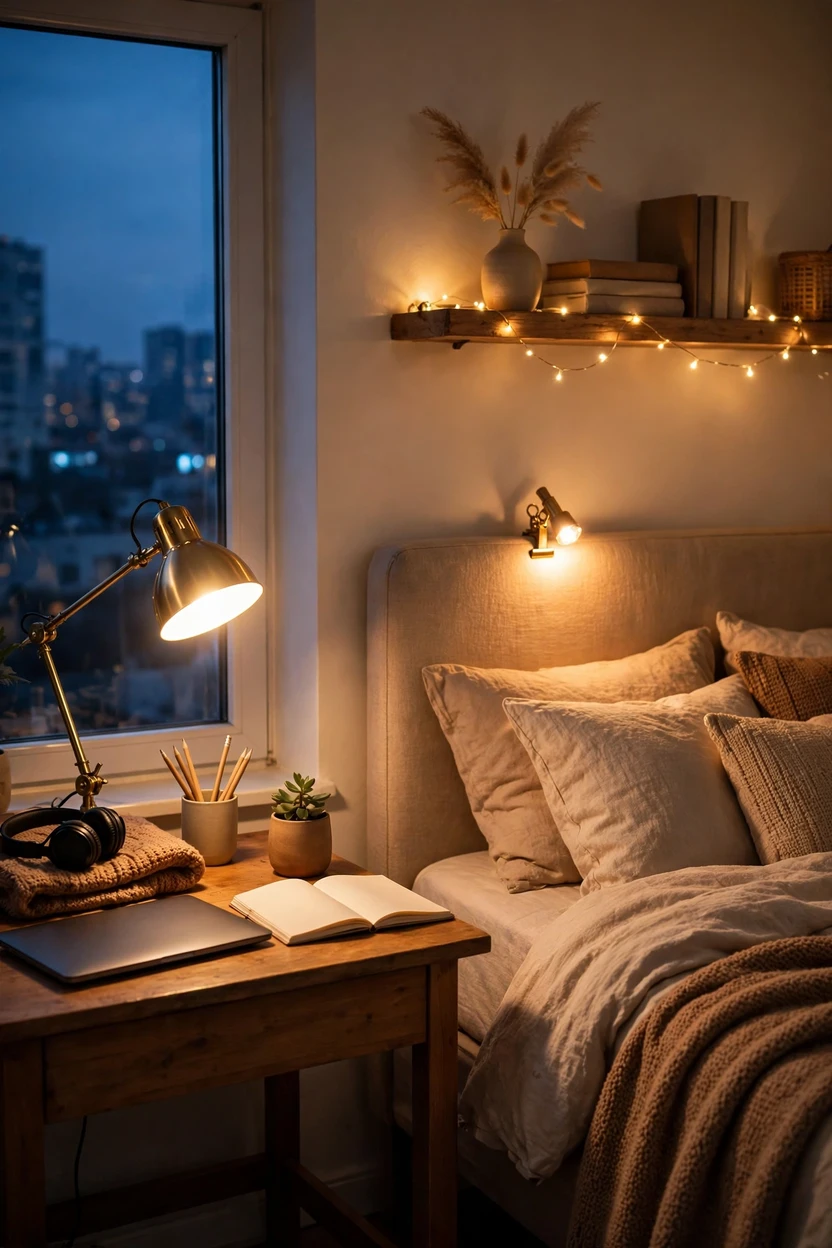
One harsh ceiling light cannot do every job in a dorm, so layer three small lights instead. Use a bright desk lamp with an adjustable arm for reading and writing, a warm clip light on the bed for evening reading, and a short string of warm fairy lights or a small salt lamp for a soft glow before sleep. Switch the desk lamp off when study time ends, and let the warm light signal that the day is winding down. Keep cords tucked behind furniture with clips, and use battery lights where outlets are scarce. Good light at the right time helps you focus in the evening and rest better at night.
14. A Small Entry Landing Spot by the Door
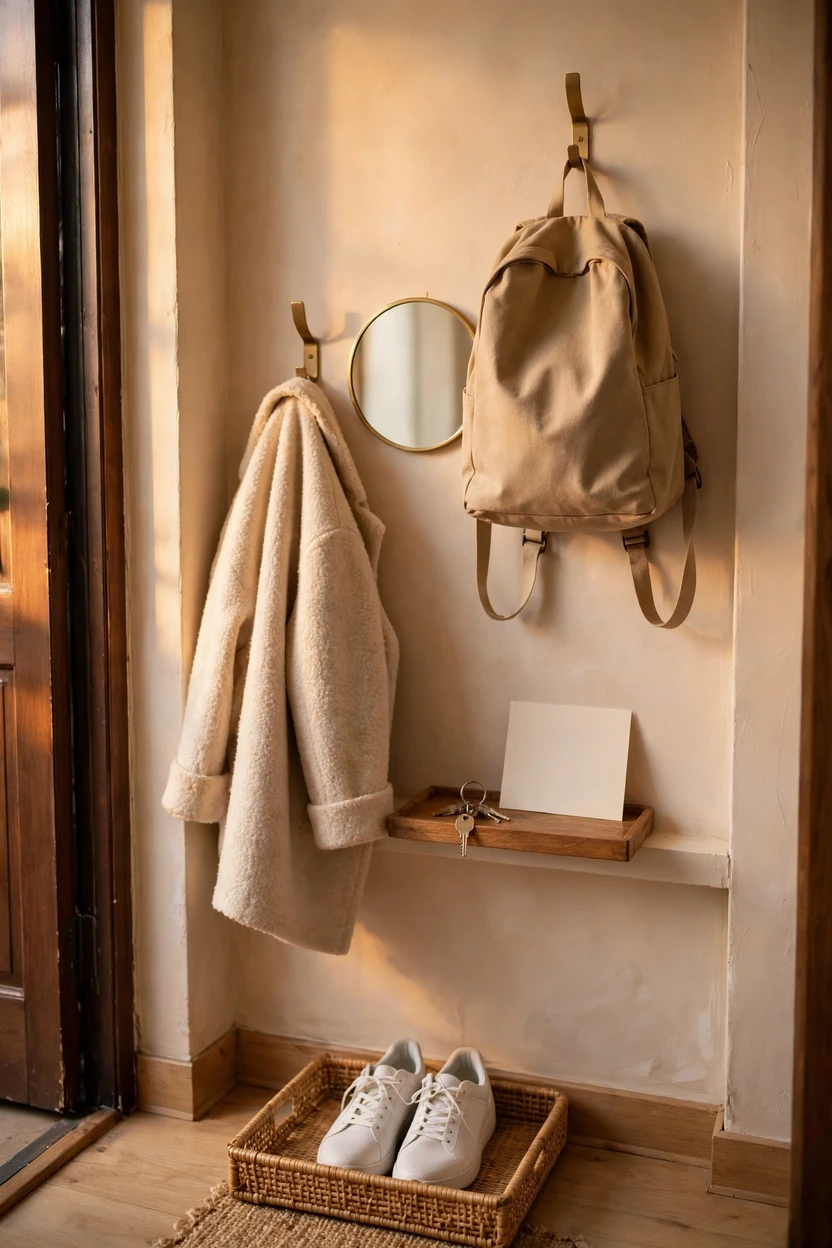
A tiny landing spot by the door stops keys, bags, and shoes from spreading across the whole room. Hang two or three removable hooks at shoulder height for a backpack, a coat, and a tote bag, and set a small tray below them for keys, student cards, and sunglasses. Add a slim shoe tray or a low rack just inside the door, so shoes stay in one line and wet soles do not mark the rug. Keep a small mirror nearby if you like a quick check before class, and hang it with a removable strip. Walking in and dropping everything in one place takes ten seconds, and it saves ten minutes of hunting for keys in the morning.
15. A Ready-to-Go Shower Caddy and Bathroom Tote
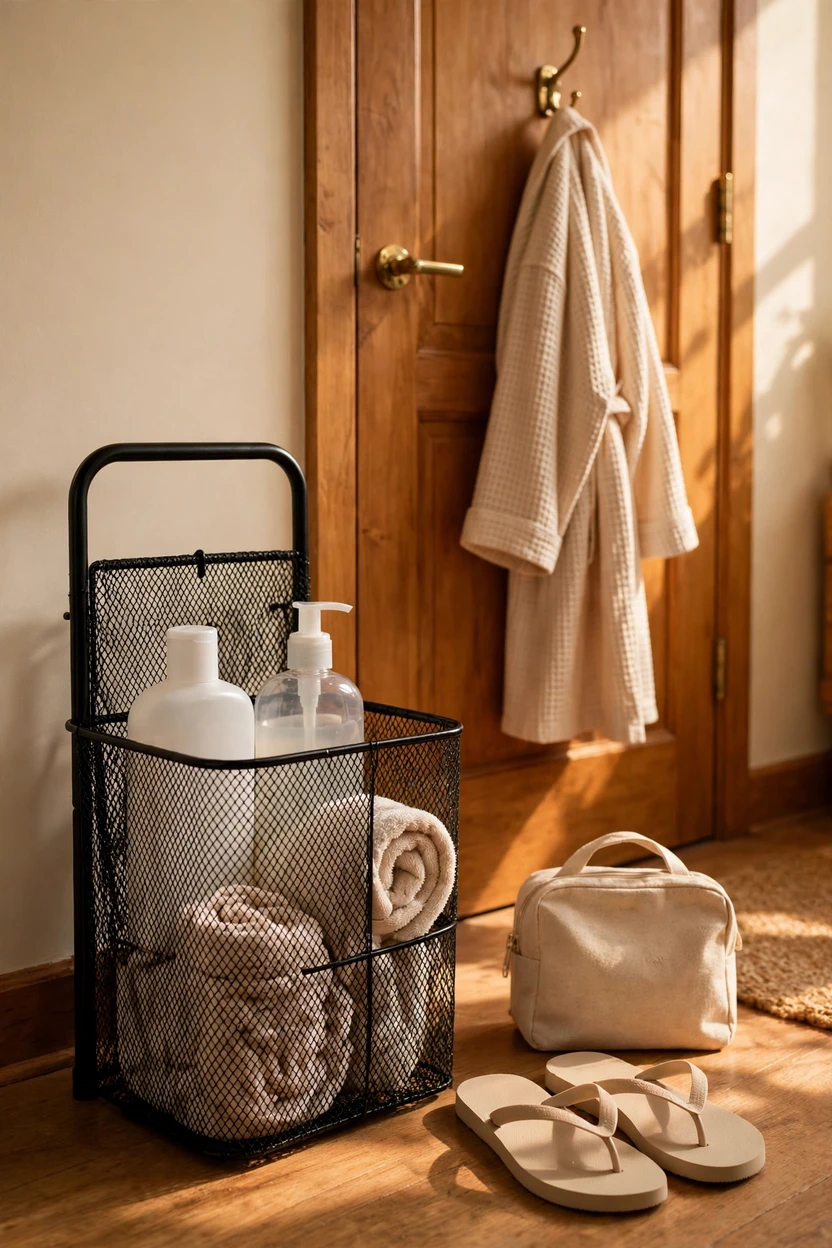
Shared bathrooms run on routine, so keep a shower caddy packed and ready by the door. Use a mesh or plastic caddy with a handle, and fill it with shampoo, conditioner, body wash, a razor, and a small towel, so you can grab it and go. Keep a second small tote for toothbrush, face wash, and skin care, and store both on a shelf or a hook inside the closet. Hang a robe or a towel on a hook near the door, and keep flip-flops in the caddy for shower days. A packed caddy means no last-minute gathering, no forgotten bottles, and a faster start to the morning.
16. A Five-Minute Reset Caddy for Daily Tidying
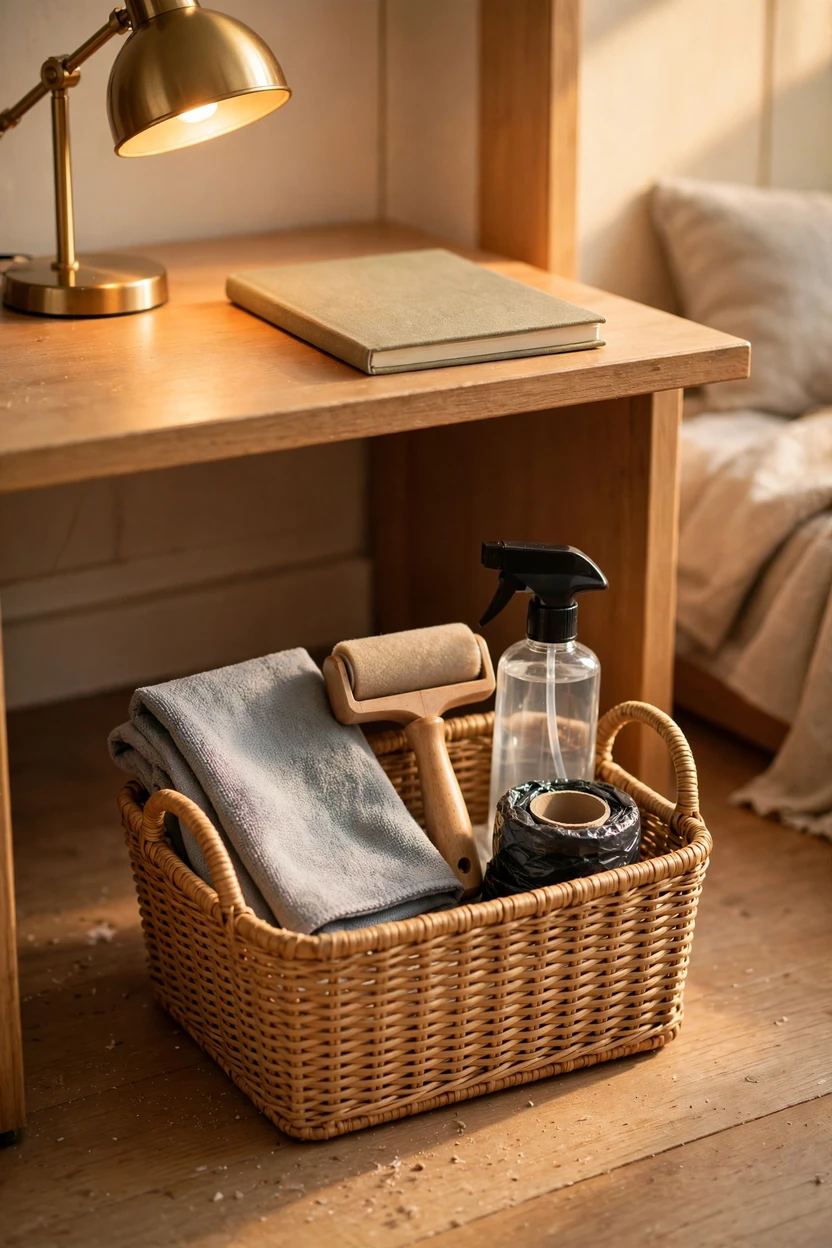
A small room stays tidy only if tidying is quick, so keep a reset caddy with everything in one place. Fill a small basket with a dust cloth, a lint roller, a small trash bag, a surface spray, and a few paper towels, and store it under the desk or on a closet shelf. Set a timer for five minutes each evening, and use it to clear the desk, make the bed, toss trash, and put stray clothes in the hamper. Wipe the desk and the snack corner, shake out the small rug, and open the window for a few minutes if the weather allows. A short daily reset keeps the room fresh without a long weekend clean, and it makes Monday mornings feel calmer.
17. A Lap Desk and Focus Kit for Study Anywhere
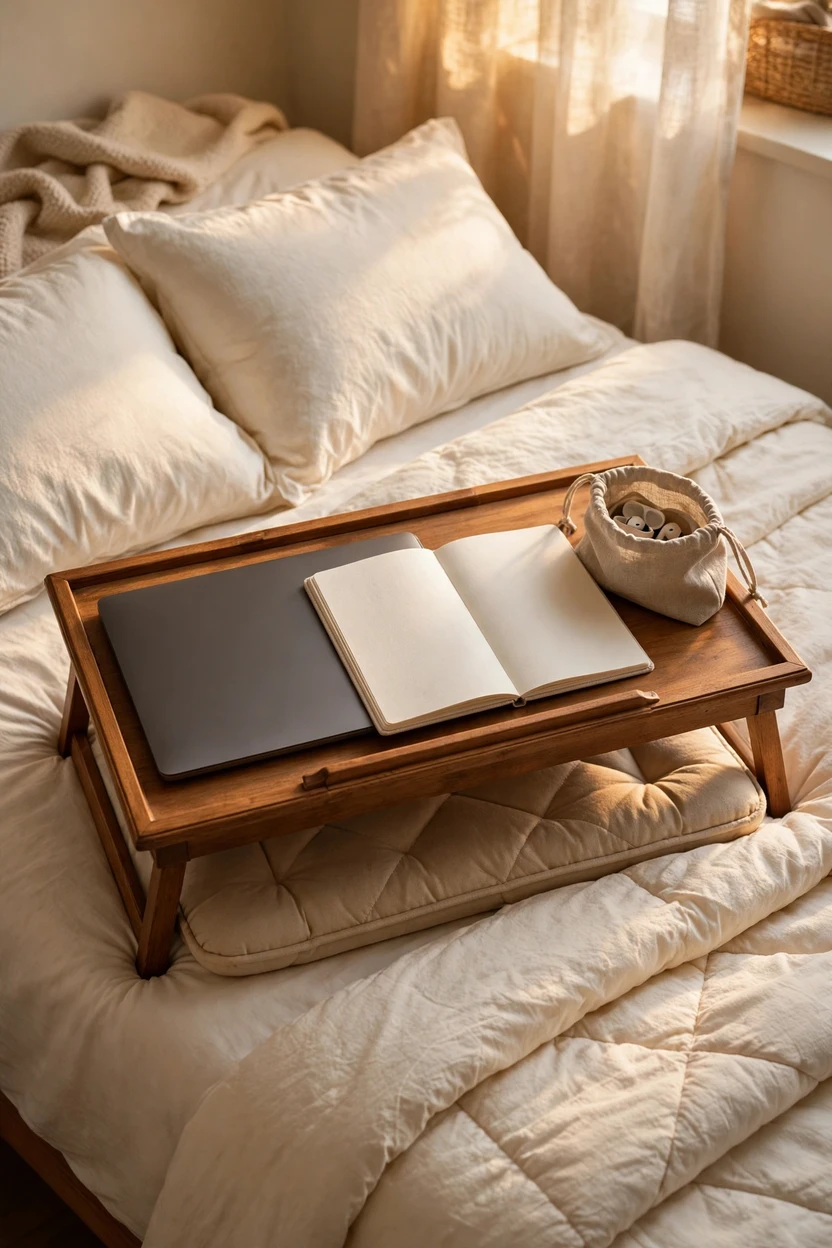
Some study sessions work better away from the main desk, and a lap desk makes that easy. Choose a light lap desk with a flat top, a small lip to stop pens from rolling, and a soft cushion base that sits well on the bed or the floor. Pair it with a focus kit in a small pouch: noise-canceling earbuds, a timer, a pen, and a short to-do card for the session. Sit on the bed with the lap desk for reading, or on the floor with a cushion for a change of scene, and keep the main desk clear for writing. A change of spot can help you refocus, and the kit means you can start in under a minute wherever you sit.
18. A Routine Board and Photo Wall That Keeps You on Track
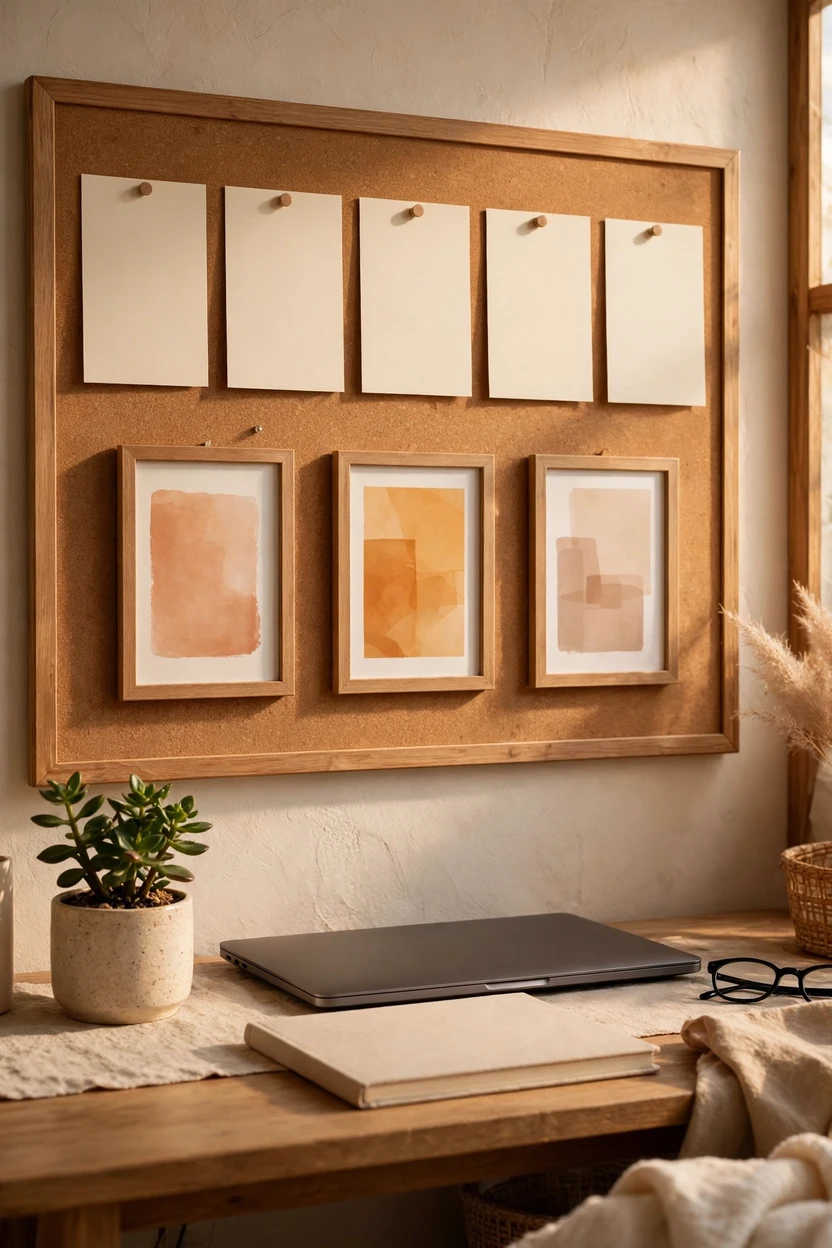
A small board by the desk can hold your week together without taking up desk space. Use a cork board, a pegboard, or a fabric board hung with removable strips, and pin a weekly class list, due dates, and a short to-do list where you can see them each morning. Add a few photos, a postcard, and one small plant or a dried flower stem, so the board feels warm and personal, not just a list of tasks. Move the to-do card each night, and swap photos when the term changes, so the board stays fresh. Seeing the day laid out in one spot helps you plan better, and the photos make the room feel like home.
Styling Tips
Pick two calm colors and one warm accent, such as soft white and sage with a touch of warm wood, and repeat them in bedding, the rug, and the storage bins. Keep the bed as the softest spot in the room, with layered bedding and a throw, and keep the desk as the clearest spot, with only the tools you need. Use warm light in the evening and bright light at the desk, and let one small plant or a vase of dried stems add life without taking up floor space. Step back to the door and check the room: if you can see the floor and the desk is clear, the room will feel calm even when the closet is full.
Practical Implementation Ideas
Measure the room before you buy anything, and read your housing guide for rules on lofting, hooks, and power strips. Start with the bed and the desk, because sleep and study matter most, then add storage one piece at a time. Buy bins and carts in the same color family, so the room looks planned even when the pieces come from different shops. Test each piece for a week, and move anything that blocks the door, the closet, or the path to the bathroom. Keep receipts and boxes for the first two weeks, so anything that does not fit can go back without a fuss.
Common Mistakes to Avoid
The most common mistake is buying decor before you know how you use the room, which leaves you with pretty pieces and no place for laundry or chargers. Another is piling everything on the desk, so there is no clear space to open a laptop or a notebook. Avoid heavy wall pieces that need nails, because most dorms allow only removable hooks, and a fall can damage the wall and your things. Do not block the door, the window, or the closet with a screen or a tall shelf, and keep cords off the floor where you walk at night. Finally, skip the urge to fill every wall and shelf at once, because a little open space makes a small room feel larger and easier to live in.
Small-Space Alternatives
In a very small or single room, choose pieces that fold, roll, or stack, and skip anything that needs a fixed spot on the floor. Use a bed riser and flat bins instead of a loft, a wall pocket instead of a shelf, and a rolling cart instead of a nightstand. Hang the routine board on the closet door, keep the laundry hamper inside the closet, and use a clip light instead of a floor lamp. A small rug by the bed adds warmth without covering the whole floor, and a curtain around the bed gives privacy without a screen. Keep one clear path from the door to the bed and the desk, and let the rest of the room stay open.
Budget-Friendly Alternatives
You can set up a dorm that works well without spending a lot, by starting with what you already own. Use a laundry bag you have at home, a small basket for the reset caddy, and a tray from the kitchen for the charging station. Shop thrift stores and campus sale groups for a rolling cart, a small lamp, and a folding screen, and check them for damage before you buy. Buy slim hangers, bins, and hooks in a pack, which costs less per piece than buying them one at a time. Swap decor with a roommate or a friend at the end of the term, and keep the pieces that still work for next year.
Pro Styling Recommendations
Set the sleep zone first, then the study zone, then storage, because that order matches how you spend your day. Match the cart, bins, and hooks in one soft color family, and let bedding carry the pattern, so storage stays quiet and the bed stays the focal point. Mix textures on purpose: soft cotton bedding, a woven rug, smooth wood on the cart, and a matte lamp base. Keep the top of the desk clear, the bed made each morning, and the entry hooks free of extra bags, because those three spots set the tone for the whole room. Take a photo from the door at night with the warm lights on, and move anything that looks dark, crowded, or hard to reach.
Conclusion
A dorm room works best when every piece has a job and every job has a spot. A raised bed, a clear desk, a fixed laundry day, and a quiet corner for sleep can turn a small shared room into a place that supports your whole day. Start with sleep and study, add storage as you learn your routine, and keep the pieces light, removable, and easy to move. The room will still be small, but it will feel calm, tidy, and truly yours.