15 Retro Kitchen Ideas That Look Pinterest Perfect

Picture a Sunday morning. Sunlight lands on a black and white floor. A mint-green fridge hums in the corner, a red toaster pops, and your coffee sits on a round table with shiny chrome legs.
That little scene is why retro kitchens keep landing on Pinterest boards. They feel happy. They feel like a hug from the past, only with a fridge that keeps your milk cold.
People are searching for this look, too. Pinterest’s trend reports show a move away from all-white kitchens toward color, character and nostalgia. In its spring report, searches for grandmacore kitchens jumped more than 500 percent.
Quick Answers First
What is a retro kitchen? A retro kitchen borrows its look from the 1950s, 60s and 70s. Think rounded appliances, checkerboard floors, pastel or earthy paint, chrome trim and bold patterns. A modern retro kitchen keeps those details but runs on today’s appliances and layouts.
Retro vs. vintage: Retro means a piece styled after a past era, and it can be brand new. Vintage means the item is truly old, often defined as 20 years or more.
Fastest way to get the look: Pick one color, one anchor piece (a fridge, a floor or a light) and a handful of small accessories. Stop there and live with it for a week before adding more.
Below you’ll find 15 retro kitchen ideas you can copy, plus the how-to behind each one: what to buy, where to put it and what to skip. There are fixes for small kitchens, rentals and tight budgets, too.
Table of Contents
15 Retro Kitchen Ideas
Let a Mint Retro Fridge Steal the Show
Start with one big, rounded appliance and let it carry the whole look. A mint, butter-yellow or powder-blue fridge with a chrome handle says 1950s the second you walk in, even if your cabinets are plain white. The curved edges soften all the straight lines around it, and that softness is what makes the room feel friendly. Keep the walls creamy and the counters light so the color reads as a choice, not a clash. Before you buy, check the width and the door swing, because rounded doors often need extra clearance beside a wall.

Lay a Black and White Checkerboard Floor
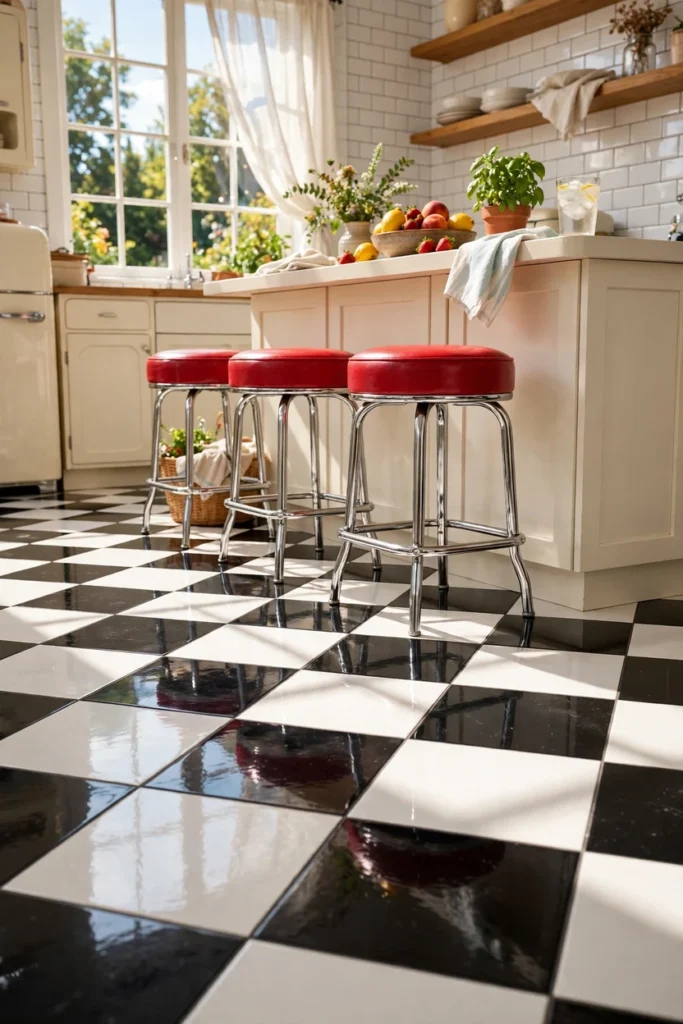
Nothing says diner faster than a checkerboard floor. Set the squares on a diagonal and the pattern pulls your eye across the room, which makes a narrow kitchen feel wider. Large vinyl or peel-and-stick tiles are the easy, budget-friendly route, while ceramic or linoleum lasts longer. Keep the cabinets a solid color so the floor is the only pattern asking for attention. If your home is older, have the current flooring tested before you pull it up, since some old vinyl and its glue can contain asbestos.
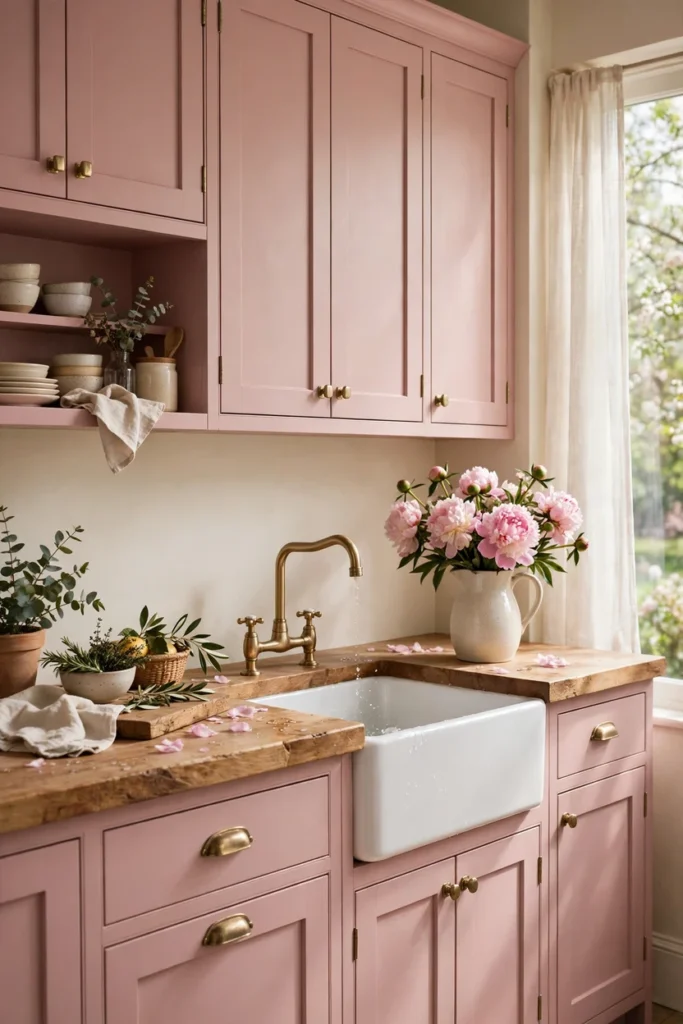
Paint Cabinets a Soft Blush Pink
Pink kitchens made a loud comeback, and Pinterest has flagged pink retro kitchens as a rising search. The trick for a grown-up version is dusty blush, not bubblegum. Pair it with butcher block counters, because the warm wood keeps the pink from feeling sugary. Keep the walls white or cream and repeat one metal, like brass or chrome, on every pull. Test your paint on a big swatch and check it in the morning and the evening, because pink shifts a lot with the light.
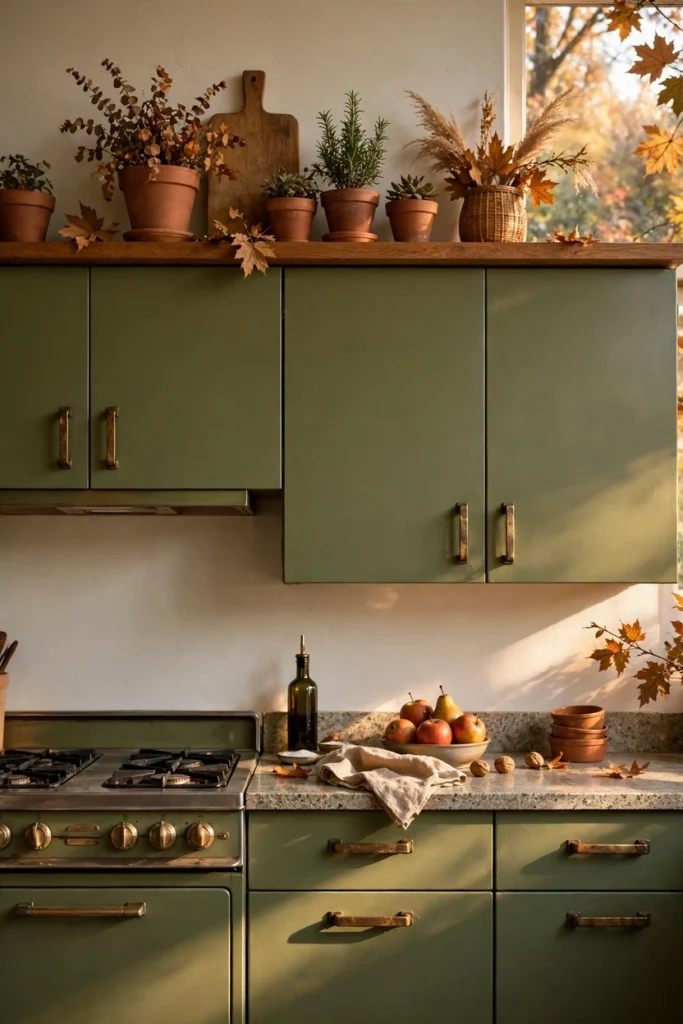
Try Avocado Green Cabinets With Brass Pulls
Avocado green was the 1970s kitchen color, and it’s climbing back up color searches. Choose an olive-leaning shade with a touch of gray in it so it reads like a deep neutral, not a time capsule. Warm white walls, oak shelves and brass pulls make it feel rich and calm. Satin or semi-gloss paint wipes clean after dinner splatters. If you’re sanding old painted cabinets in a home built before 1978, test for lead paint first and follow safe-work steps.
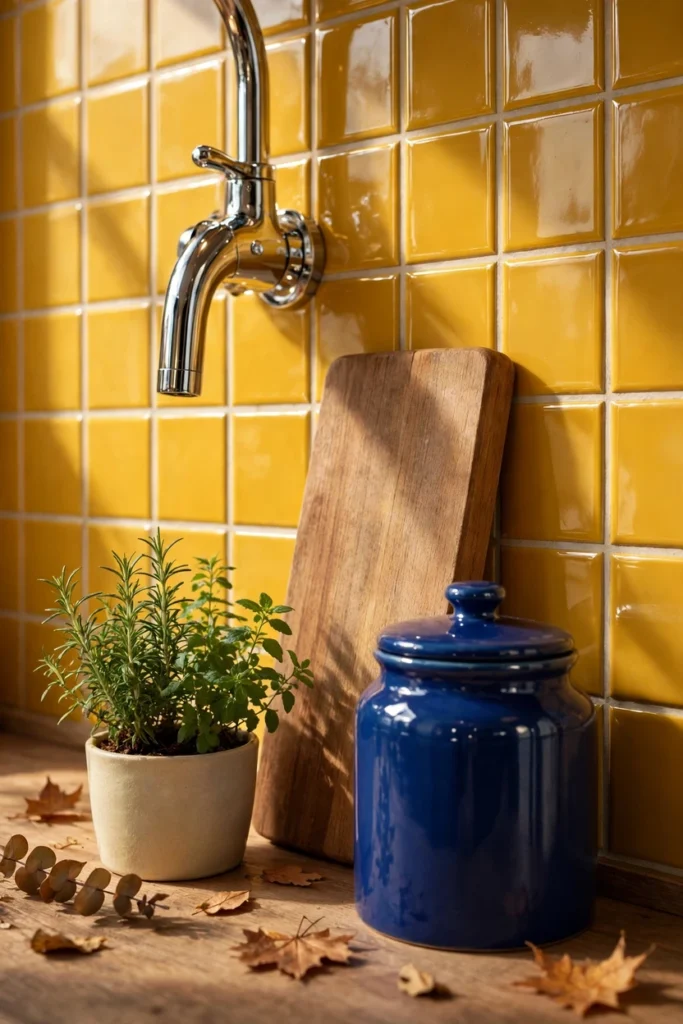
Tile the Backsplash in Mustard or Harvest Gold
A glossy mustard backsplash brings the whole 70s sunshine mood into one small area. A backsplash is only a few feet of wall, so it costs far less than new cabinets, and many DIYers can finish one over a weekend. Square 4-inch tiles feel the most authentic, while a thin rectangle in a stacked layout looks a little more modern. Pick a warm white or soft cream grout so the lines stay gentle. Add wood shelves and a chrome faucet nearby, and the yellow will look planned instead of loud.
Build a Diner Booth in a Corner
A corner booth turns a dead kitchen corner into the coziest seat in the house. Use a fixed bench in red, teal or butter-yellow vinyl, then pull in a round pedestal table so nobody bangs a knee on a table leg. A seat height near 18 inches matches regular chairs, and the space under the seat can hold baking pans, platters or holiday dishes. Pinterest also reported rising searches for leather banquettes this year, so the idea fits what people are saving right now. Wipe-clean vinyl handles kids, spills and messy pancake mornings.
Related: 17 Outdoor Kitchen Layout Ideas Architects Swear By

Add a Chrome Dinette Set
A chrome-legged table with a laminate top and a set of vinyl chairs is the quickest way to bring the 1950s into your kitchen. Estate sales, thrift stores and online marketplaces are good hunting spots for real vintage sets. Check the chrome for rust bubbles, wiggle each chair to feel for wobble, and look under the table for solid brackets. Torn seats are an easy fix with a staple gun and new vinyl. If you’d rather buy new, many shops sell retro-style sets with the same boomerang or speckle patterns.

Hang Globe and Sputnik Pendants
Lighting is the cheapest big change in a retro kitchen. A frosted glass globe says 1960s, and a starburst Sputnik fixture says mid-century. Hang island pendants so the bottom sits about 30 to 36 inches above the counter, which keeps the light low and cozy without blocking sight lines. Warm bulbs around 2700K make food and faces look friendlier. Brass, chrome and opal glass all work, as long as you repeat one of them somewhere else in the room.

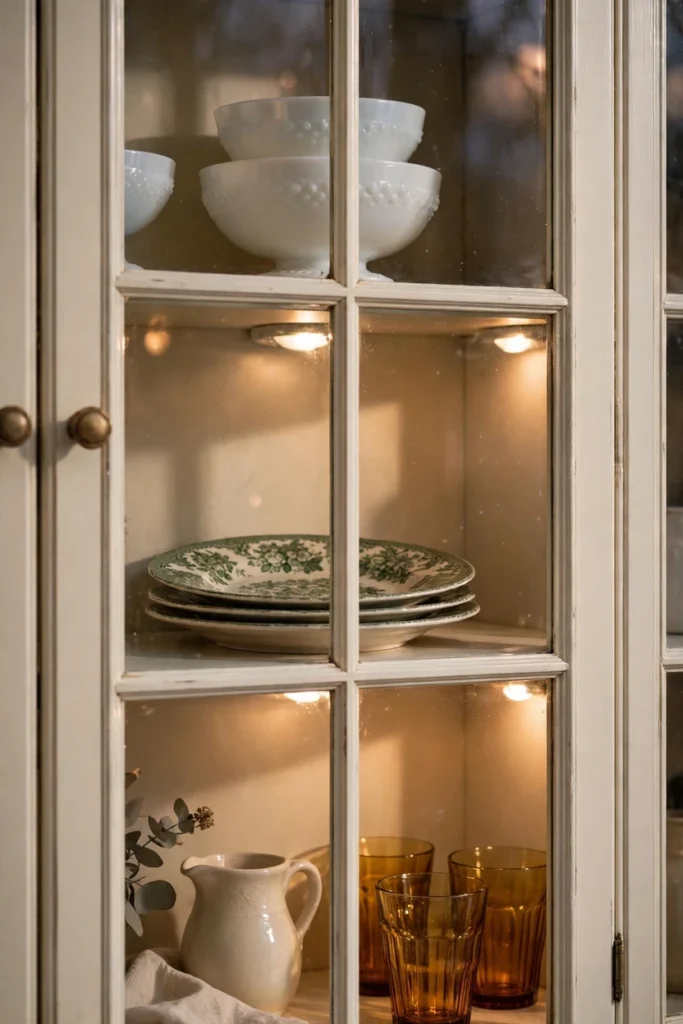
Show Off Dishes Behind Glass-Front Cabinets
Glass-front cabinets are an old kitchen trick that’s back in style. They let you display milk glass, patterned bowls and colorful plates the way many mid-century kitchens did. Group by color, like all the greens on one shelf, so the display feels calm. Add a small puck light inside and the glass glows at night. Leave a little empty space on each shelf, because a stuffed cabinet starts to look like a yard sale.
Put Retro Appliances on the Counter
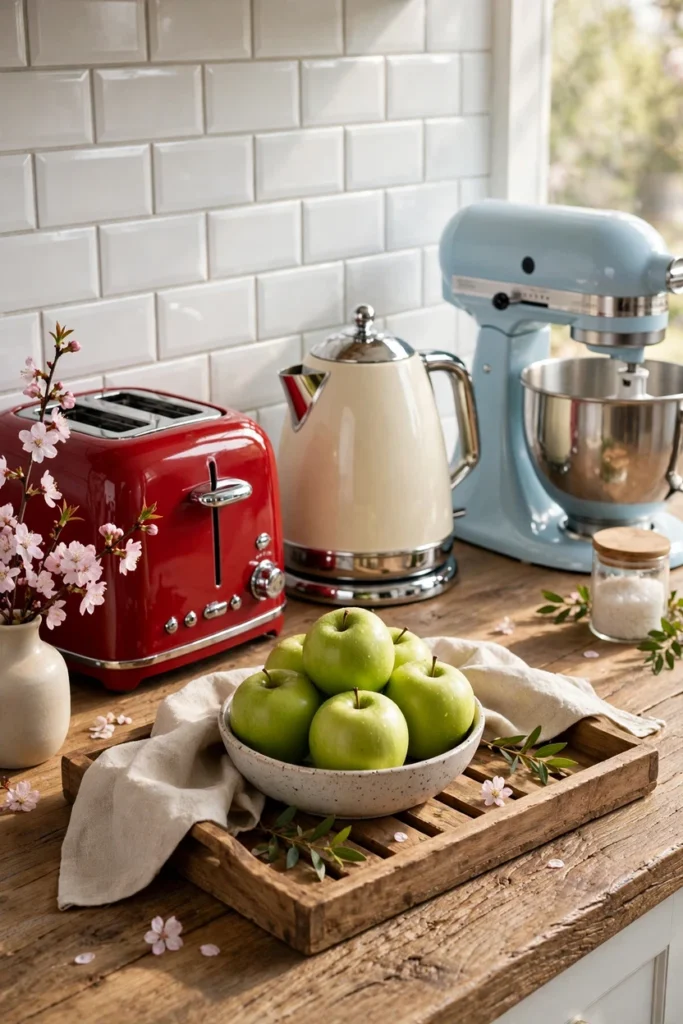
Small appliances are the lowest-risk retro move. A toaster, kettle or stand mixer in cherry red, cream or pastel blue adds color right where you see it every day. Pinterest’s spring report showed a strong jump in searches for kitchen countertop decor, so people clearly want counters that look styled, not bare. Pick rounded shapes and analog dials, and stick to two colors so the counter doesn’t get busy. Park them on a wood tray or a stone slab, and store everything else.
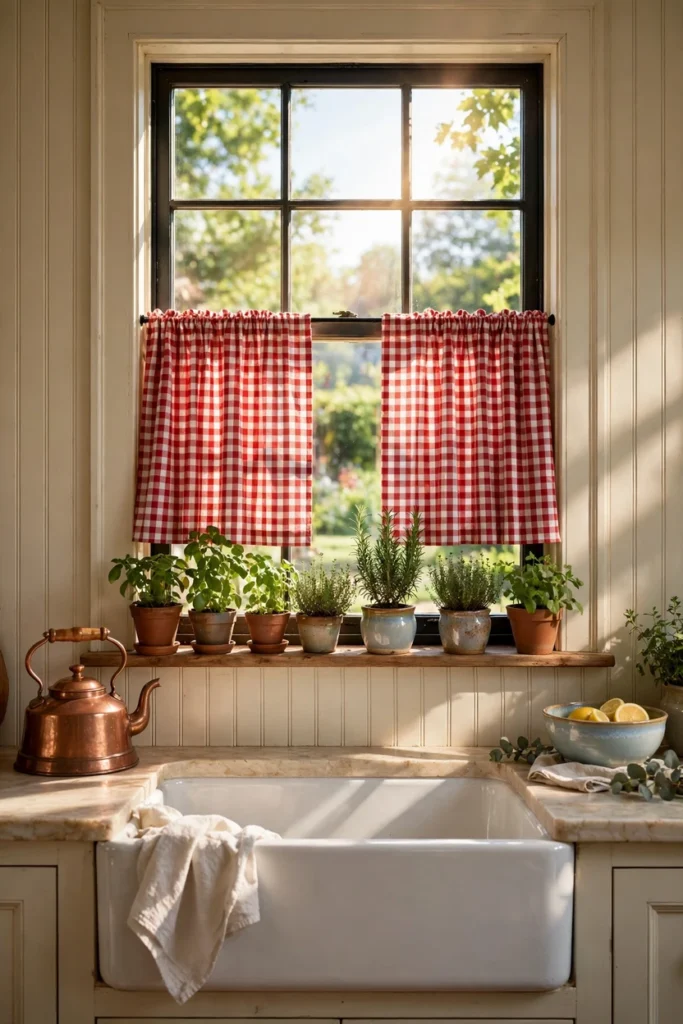
Hang Gingham Café Curtains
Gingham says farmhouse and 1950s at the same time. Café curtains cover only the lower half of the window, so you get privacy while the top stays open to sunshine. They hang on a simple rod or tension rod, which makes them friendly to renters. Choose a small check in red, sage or baby blue, and keep the rest of the window area plain. Add a matching tablecloth or a set of napkins, then stop.
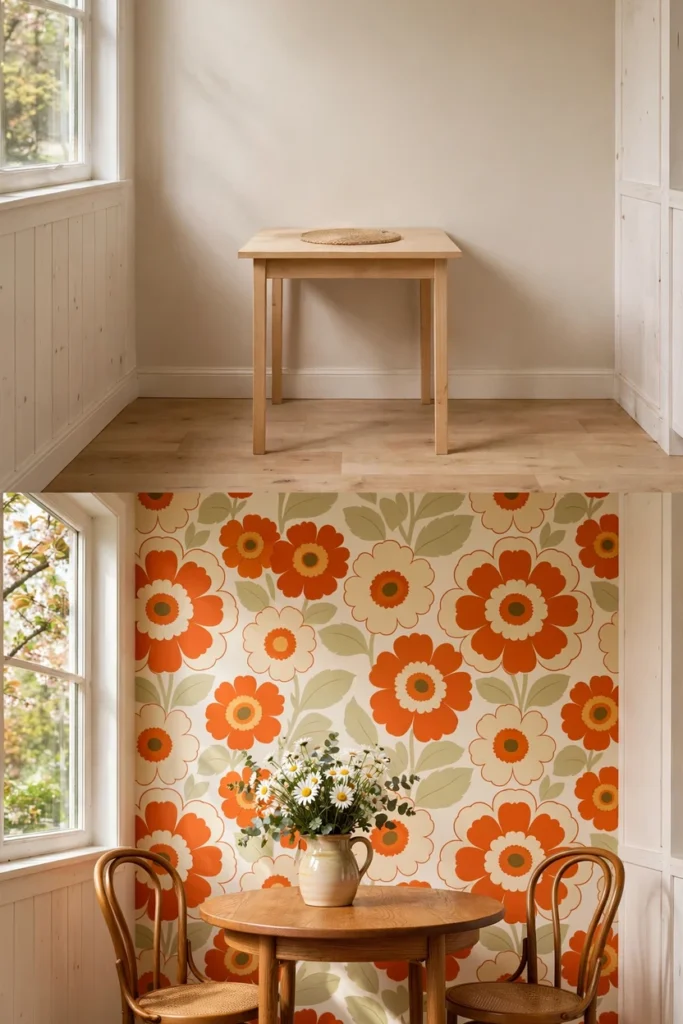
Put Retro Wallpaper on One Wall
Bold wallpaper on one wall gives you the big graphic 70s punch without taking over the room. Large orange flowers, mushrooms, circles or wavy stripes all work. Use peel-and-stick if you rent, and order an extra 10 to 15 percent so patterns match at the seams. Keep it away from the stove, where heat and splatter can ruin it, and put it behind the table or on a pantry wall. Smooth walls hold wallpaper best, while textured walls often make the edges lift.
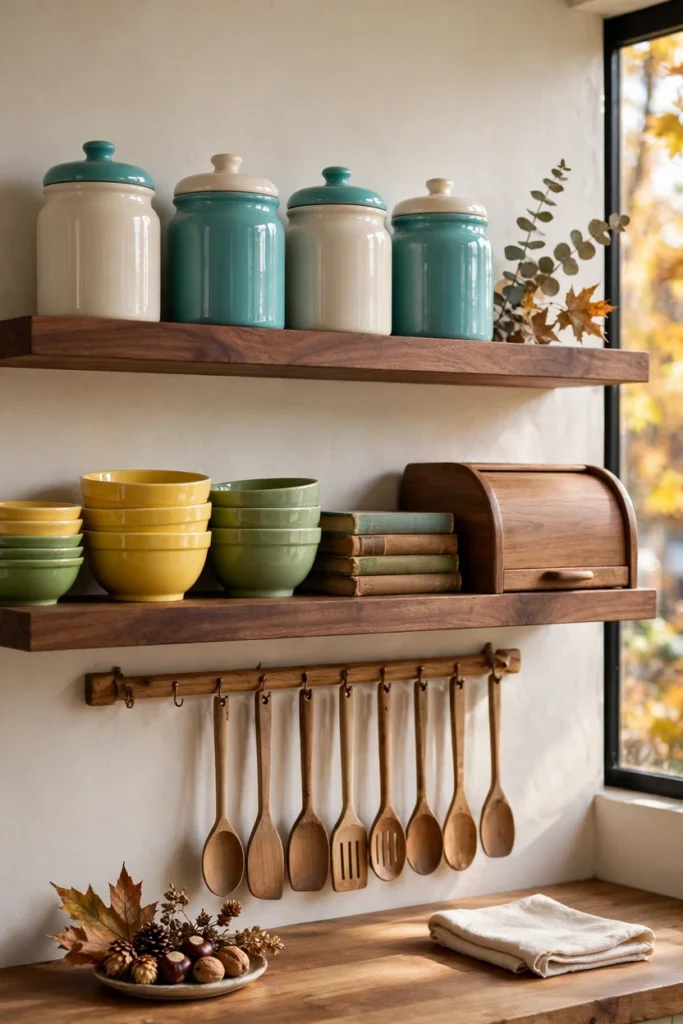
Style Open Shelves With Canisters and Melamine
Open shelves are where small retro finds shine. Color-matched canisters, melamine bowls, a wooden bread box and a row of old cookbooks give a shelf a lived-in look. Use thick wood boards in a warm tone so the shelf looks sturdy. Keep daily items within easy reach and the showpieces away from the stove, since cooking grease settles on anything near the range. Groups of three or five objects look relaxed, while even numbers tend to look stiff.
Warm Up With Wood Slab Doors and Burnt Orange
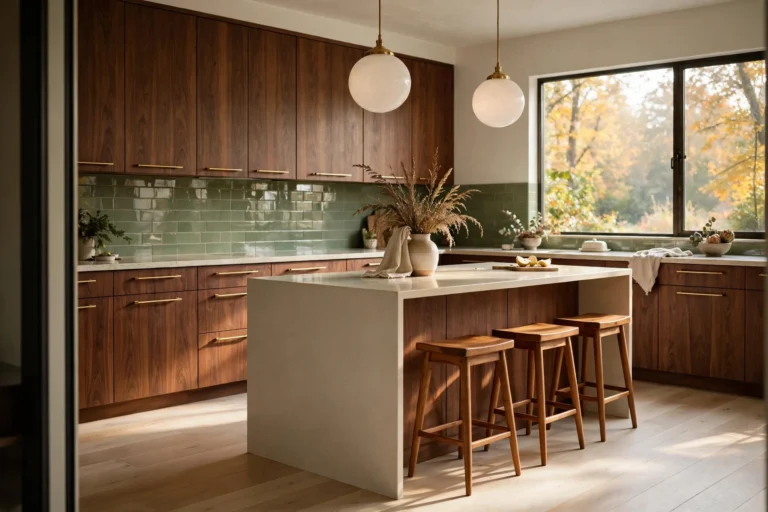
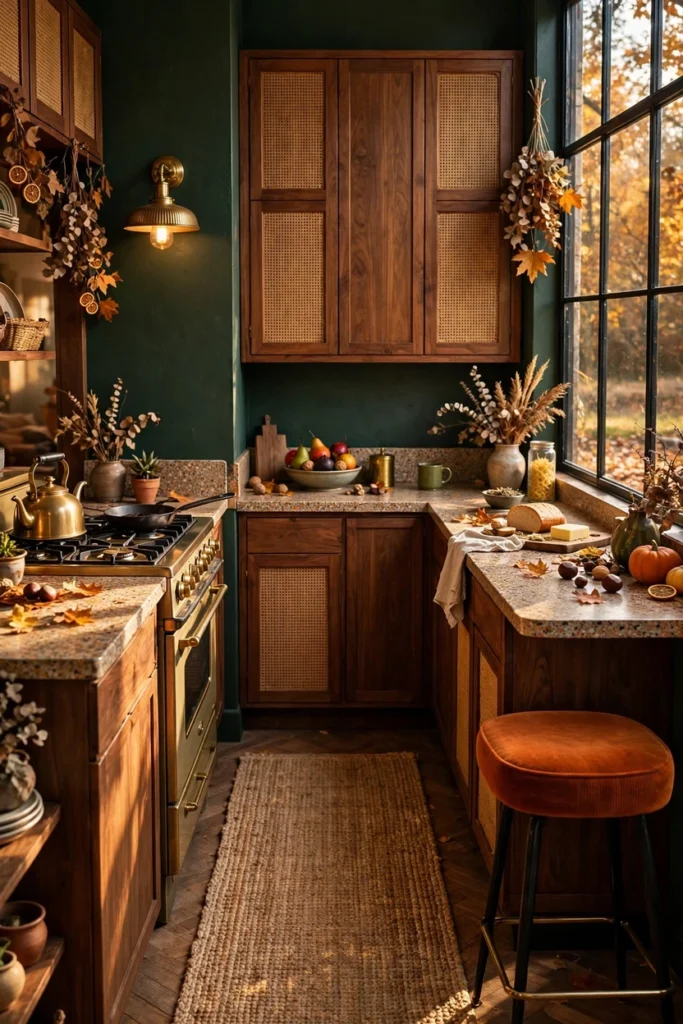
A warm wood kitchen with flat slab doors is the cozy side of 70s style. Walnut or oak veneer with a simple cane insert adds real texture, and Pinterest’s spring report showed searches for warm wood kitchens climbing. Add burnt orange in small hits, like a stool, a runner or a ceramic jar. Let the wood carry most of the room so the orange feels like an accent, not a paint job. A deep brown or forest green wall color makes the whole space feel snug.
Create a Grandmacore Corner
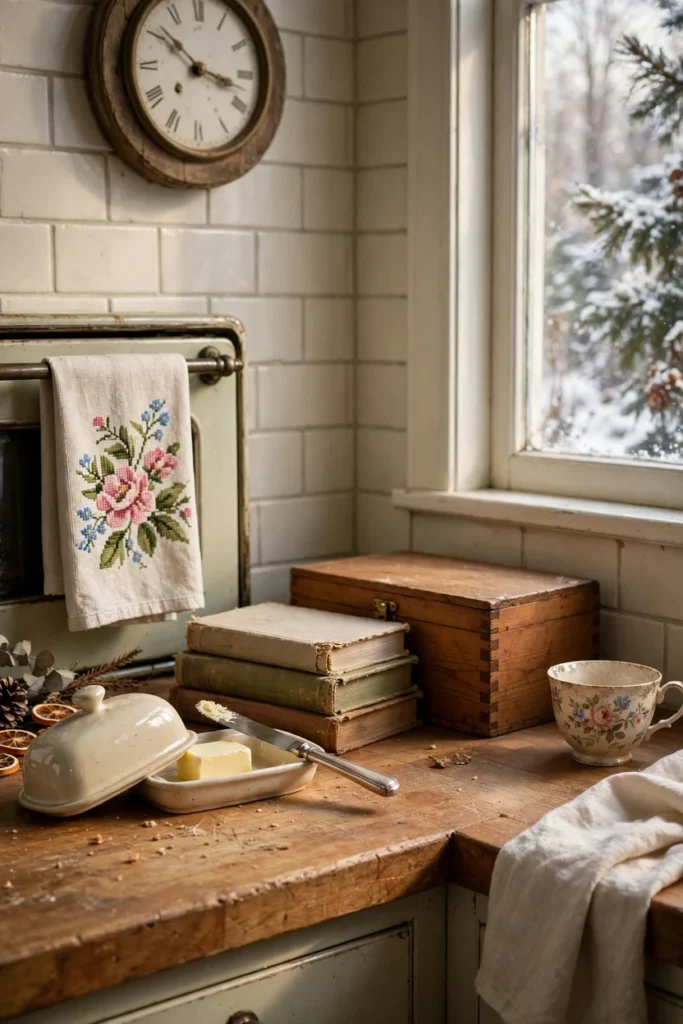
Grandmacore kitchens are about warmth and memory, not matching sets. Pinterest’s spring report showed searches for grandmacore kitchens jumping more than 500 percent. Start with a butter dish, a cross-stitched towel, a recipe box and a short shelf of cookbooks. Hunt through thrift shops and family cupboards for pieces that mean something to you. Stop before it feels like a theme restaurant, since five or six honest objects beat thirty cute ones.
Styling Tips
Pick one era to lead. The 1950s means pastels and chrome. The 1970s means earthy color and wood. You can mix them, but let one decade run the show.
Use the three-color rule. Choose a main color, a partner and a small accent. Cream or white counts as the quiet backdrop.
Repeat one metal. If your faucet is chrome, echo it in the stools or the light. If it’s brass, repeat that on the pulls and a frame.
Add texture. Wood, glass, vinyl and woven cane keep color from feeling flat.
Go round. Curved handles, round tables and globe lights soften a kitchen the way rounded fridges do.
Let the neutrals rest. Cream, white and wood give bold color room to breathe.
Finish with something fresh. A vase of tulips or a bowl of lemons makes the whole room look alive.
Practical Implementation Ideas
A retro kitchen goes smoother when you work in a smart order.
Measure and photograph the room. Note fridge width, door swing, window sizes and the length of each wall.
Start from what stays. Counters, floors and big appliances are hard to change, so pick colors that suit them.
Do paint and lighting first. They are fast, cheap and change the mood right away.
Move to floors or backsplash next. Peel-and-stick options make this step easy for first-timers.
Add furniture and appliances. Buy the anchor piece before the extras so everything matches it.
Finish with accessories. Dishes, towels, clocks and plants come last, because they’re the easiest to move around.
Live with each stage for a few days before moving to the next. Your eye will tell you when something needs to go.
Common Mistakes to Avoid
Going too literal. A kitchen that looks like a museum or a theme diner gets old fast. Use retro as an accent, not a costume.
Related: 16 Boho Kitchen Ideas That Feel Collected, Not Costume
Stacking patterns. Checkerboard floors, wallpaper and gingham all in one room fight each other. Give each pattern its own space or pick two.
Forgetting function. Old appliances can waste energy and old wiring can be risky, so have vintage stoves and fridges checked before you plug them in.
Skipping paint prep. Cabinets need cleaning, light sanding and a bonding primer, or the paint will chip.
Choosing only glossy finishes. Mix gloss, satin and matte so the room has depth and doesn’t glare.
Buying every cute thing. Edit. A few meaningful pieces look richer than a crowded counter.
Ignoring bulb color. Cold white bulbs make pastel colors look sickly. Warm bulbs make them glow.
Small-Space Alternatives
Choose one anchor. In a small kitchen, a mint fridge or a bold floor is plenty.
Shrink the pattern. Use 6-inch checkerboard tiles instead of big squares so the floor doesn’t feel chopped up.
Go light. Butter yellow, pale mint and cream bounce light around and keep the room open.
Swap the table. A round bistro table or a drop-leaf table takes less space than a standard dinette.
Use the walls. Wall shelves, a magnetic knife strip and a hanging rail free up counter space.
Pick slim appliances. A narrow retro kettle and a two-slice toaster give the look without the bulk.
Budget-Friendly Alternatives
Low spend (a weekend):
Swap cabinet knobs and pulls for chrome or brass.
Hang gingham café curtains.
Thrift milk glass, Pyrex-style dishes and old canisters.
Add a retro-style kitchen clock or a vintage tin.
Related: 19 Rustic Farmhouse Kitchen Ideas That Stay Timeless
Medium spend:
Paint cabinets in blush, mint, avocado or butter yellow.
Lay peel-and-stick checkerboard tile.
Replace one light with a globe or Sputnik pendant.
Add a colorful kettle and toaster.
Higher spend:
Buy a retro-style fridge or range.
Install glossy mustard or mint tile.
Add a built-in banquette with vinyl seating.
Replace cabinet fronts with warm wood slab doors.
Start in the first group and move up only if you still want more.
Pro Styling Recommendations
Use a modern base with retro accents. Think of it as roughly 80 percent clean and current, 20 percent retro. It keeps the room fresh.
Test colors at three times of day. Morning, midday and evening light change paint dramatically.
Mix finishes on purpose. Satin cabinets, glossy tile and matte walls give a layered, real-room feel.
Check your palette in black and white. Take a quick photo and turn the color off. If everything looks the same gray, add a darker or lighter piece.
Layer your lighting. Combine a ceiling or pendant light, under-cabinet light and a small lamp on the counter.
Add one odd, personal object. A funny salt shaker, an old clock or a family recipe card keeps the room from looking staged.
Shoot your own photos for Pinterest. Use vertical frames, morning light and a tidy counter, and leave breathing room at the top for text.
FAQs
- What is a retro kitchen? A retro kitchen is styled after the 1950s, 60s or 70s, with rounded appliances, bold or pastel color, checkerboard floors and chrome or brass details. It can use brand-new pieces. The goal is the mood of the past with the comfort of today.
- What colors make a kitchen look retro? For a 1950s feel, think mint, butter yellow, baby blue, cherry red and soft pink. For a 1970s feel, think avocado green, mustard, burnt orange and chocolate brown. Pair either group with cream or white so the color has space to stand out.
- What is the difference between retro, vintage and mid-century kitchens? Retro is a style inspired by a past era, and the pieces can be new. Vintage means genuinely old, often 20 years or more. Mid-century describes the design period from roughly the 1940s to the 1960s, known for clean lines, wood and simple shapes.
- Are retro kitchens still in style? Yes. Pinterest’s reports show strong growth in searches for nostalgic, colorful and grandmacore kitchens, and kitchen industry designers have pointed to retro-inspired colors and appliances. Most experts suggest a modern-retro mix instead of a full time warp.
- How can I make a modern kitchen look retro without remodeling? Start with small, easy changes. Swap the hardware, paint the cabinets, hang gingham café curtains, change one light and add a colorful kettle or toaster. Two or three of these changes can shift the whole mood.
- How do I get a retro kitchen in a rental? Use peel-and-stick tile, removable wallpaper, tension-rod curtains, freestanding furniture and small appliances. Read your lease first, and keep any original fixtures so you can reinstall them when you move out.
- What flooring works best in a retro kitchen? Checkerboard vinyl, linoleum and ceramic tile all fit the look. Vinyl is the budget pick, linoleum is durable and made from natural materials, and ceramic lasts the longest but usually costs the most. In an older home, test the existing floor before removing it.
- Are retro-style appliances worth the money? They can be, if you love the look and plan to keep them. Some cost more than standard models and have different interior layouts, so check size, features and warranty. Small appliances like a kettle or toaster are a cheaper way to test the style.
- How do I keep a retro kitchen from looking dated? Keep retro to about a fifth of the room and let the rest stay simple. Avoid matching sets, mix in modern pieces and choose items you will actually use. A kitchen that works well day to day never feels like a costume.
- What are the best retro colors for a small kitchen? Light shades work best: butter yellow, pale mint, soft blue and cream. They reflect light and keep the room open. Save bolder color for one item, like a stool or a toaster.
- Can I mix 1950s and 1970s styles in one kitchen? Yes, if one decade leads. For example, use a 1970s warm wood and green palette with one 1950s chrome dinette. Keep the colors in the same warm or cool family so the mix looks planned.
Conclusion
A good retro kitchen doesn’t copy the past. It borrows the best bits: the color that makes you smile, the round shapes that feel friendly, and the small objects that remind you of someone’s house you loved.
You don’t need a full remodel to start. Tonight, hold a paint swatch up to your cabinets, measure the wall where a fridge could go, or save three thrift finds to your phone. Tomorrow, try one change and see how the room feels.
Save this post to your retro kitchen board so you can come back when you’re ready for the next step.