15 Grandmacore Kitchen Ideas That Just Feel Right

You know the smell before you open the door. Warm butter. A little cinnamon. Something sweet cooling on a rack.
The kitchen is small, and every surface has something on it: a worn cookie jar, a kettle with a dented lid, a vase of garden flowers in a jam jar. Nothing matches. Nothing is new. And still, you’d stay for hours.
That’s the feeling grandmacore tries to bring back. It isn’t about buying a theme. It’s about making a kitchen that feels used, loved and a little bit sentimental.
Below are 15 grandmacore kitchen ideas with real details on color, pattern, materials and cost. Pick the ones that make you smile, skip the rest, and let your kitchen grow into itself.
Table of Contents
What Is a Grandmacore Kitchen?
Quick answer: A grandmacore kitchen is a warm, nostalgic kitchen styled like a grandmother’s home. It uses soft colors, florals, vintage dishes, handmade linens and cozy details, and it looks collected over time, not bought in one shopping trip.
Related: 15 Retro Kitchen Ideas That Look Pinterest Perfect
The heart of it is comfort. Think a small table by the window, a kettle on the stove, aprons on a hook and a cookie jar with real cookies in it. People often say these rooms feel “busy but loved.” That’s the goal.
Grandmacore is trending because many people want homes that feel personal and lived in, not flat and showroom-clean. It also fits a bigger wave of nostalgia for thrifted, inherited and handmade things.
Grandmacore vs Grandmillennial vs Cottagecore
These three styles overlap, and people mix the words up. Here’s a quick way to tell them apart.
- Grandmacore: Cozy and sentimental. Focus on what a grandmother’s home actually felt like: knitted throws, old dishes, handwritten recipes and floral cloths.
- Grandmillennial: More polished. It mixes traditional pieces like chintz, skirted tables and antique wood with modern touches. Think tailored and layered.
- Cottagecore: Romantic and rural. It leans toward fresh flowers, natural materials, soft pastels and a slow-living, countryside feel.
All three love pattern, wood, ceramics and handmade things. If you want the coziest and most personal version, grandmacore is the one to follow. If you like a more tailored look, borrow ideas from grandmillennial. If you want a garden mood, add cottagecore touches like fresh flowers and herbs.
The Simple Rules for a Kitchen That Feels Right
- Use a soft, warm palette. Butter yellow, sage green, cream, blush, cherry red and blue-and-white are the classics. Pick two or three and repeat them.
- Mix patterns by size. Pair one larger print, like a floral curtain, with a smaller one, like gingham. Keep the colors close.
- Let things be mismatched on purpose. Plates, mugs and chairs can differ, as long as they share a color or a material.
- Add something old. Even one thrifted or inherited piece gives the room a story.
- Use what you use. Every cookie jar, kettle and tablecloth should earn its spot by working.
- Add scent and sound. A pot of tea, a loaf in the oven or a ticking clock makes the room feel alive.
- Edit. Leave small gaps between objects so the room feels cozy, not crowded.
Quick Budget Cheat Sheet
Prices are rough US estimates. Thrifting and using what you own lowers them.
- Free to $15: cookbook and recipe display (7), tea towels and aprons (13), cookie jar and canisters (6), mismatched dishes from thrift stores (4)
- Under $40: café curtains (3), tablecloth and table setup (8), tea corner (5), lamp and clock (14), cake dome and flowers (15)
- Under $80: blue-and-white plate wall (11), wall rail and hanging pots (12), runner (9), peel-and-stick wallpaper (10)
- Paint-level project (40-120): butter yellow cabinets (1), sage green cabinets with brass hardware (2)
15 Grandmacore Kitchen Ideas
1. Butter Yellow and Cream Cabinets
Cost: 40-120 | Effort: one weekend | Renter-friendly: With landlord approval, or use yellow accessories
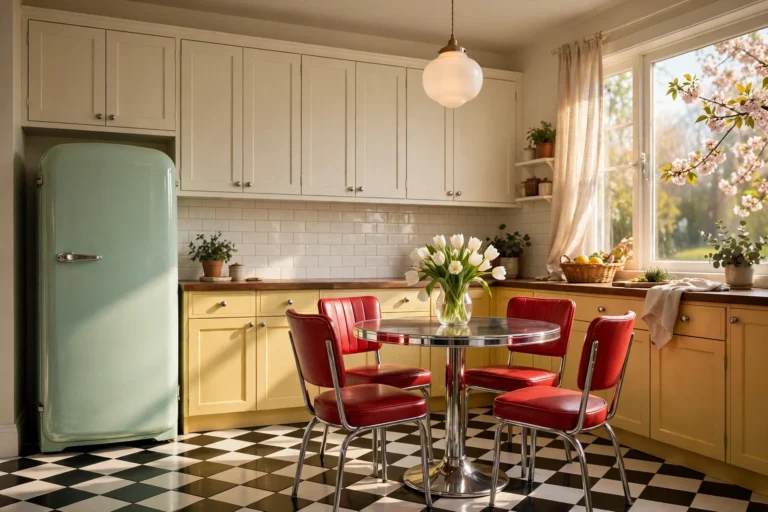
Butter yellow is the color most people picture when they think of grandma’s kitchen. Paint the cabinets, or just the lower ones, a soft yellow with a warm cream base, then keep the walls and trim creamy white so the yellow reads sunny, not neon. The color bounces light around, which helps a small or north-facing kitchen feel brighter. Pair it with white ceramic or aged brass knobs and wood counters for a lived-in look. If you can’t paint, bring the shade in with a yellow enamel kettle, a tea towel or a checked cloth on the table.

2. Sage Green Cabinets With Brass Hardware
Cost: 40-150 | Effort: one weekend | Renter-friendly: Swap hardware only, keep the originals
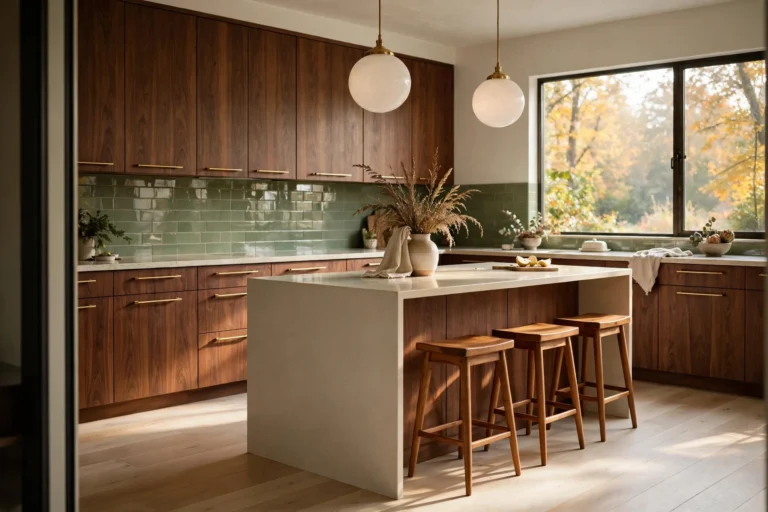
Sage green gives the room a quiet, garden-like calm. Choose a sage with a little gray in it so it feels soft and aged instead of minty. Add aged brass pulls, a cream backsplash and a wood table, and the whole room starts to look like an heirloom. A white ironstone pitcher on the counter ties the green and the cream together. Paint a large sample and check it in the morning and at night, because green can look cooler under evening light.

3. Gingham and Floral Café Curtains
Cost: 15-35 | Effort: 15 minutes | Renter-friendly: Yes, with a tension rod
Café curtains cover only the lower half of the window, so they hide a view of a fence or wall while still letting light in. Choose gingham, tiny florals or eyelet cotton in cream, red, blue or sage. Hang them on a tension rod, and look for a scalloped edge or a strip of rickrack for extra charm. Match one color in the curtain to something nearby, like a dish towel or a mug, so the pattern feels chosen. Measure with a little extra length, since cotton can shrink in the wash.

4. Mismatched Dishes in a Glass-Front Cabinet or on a Shelf
Cost: 10-60 from thrift stores | Effort: 30 minutes | Renter-friendly: Yes
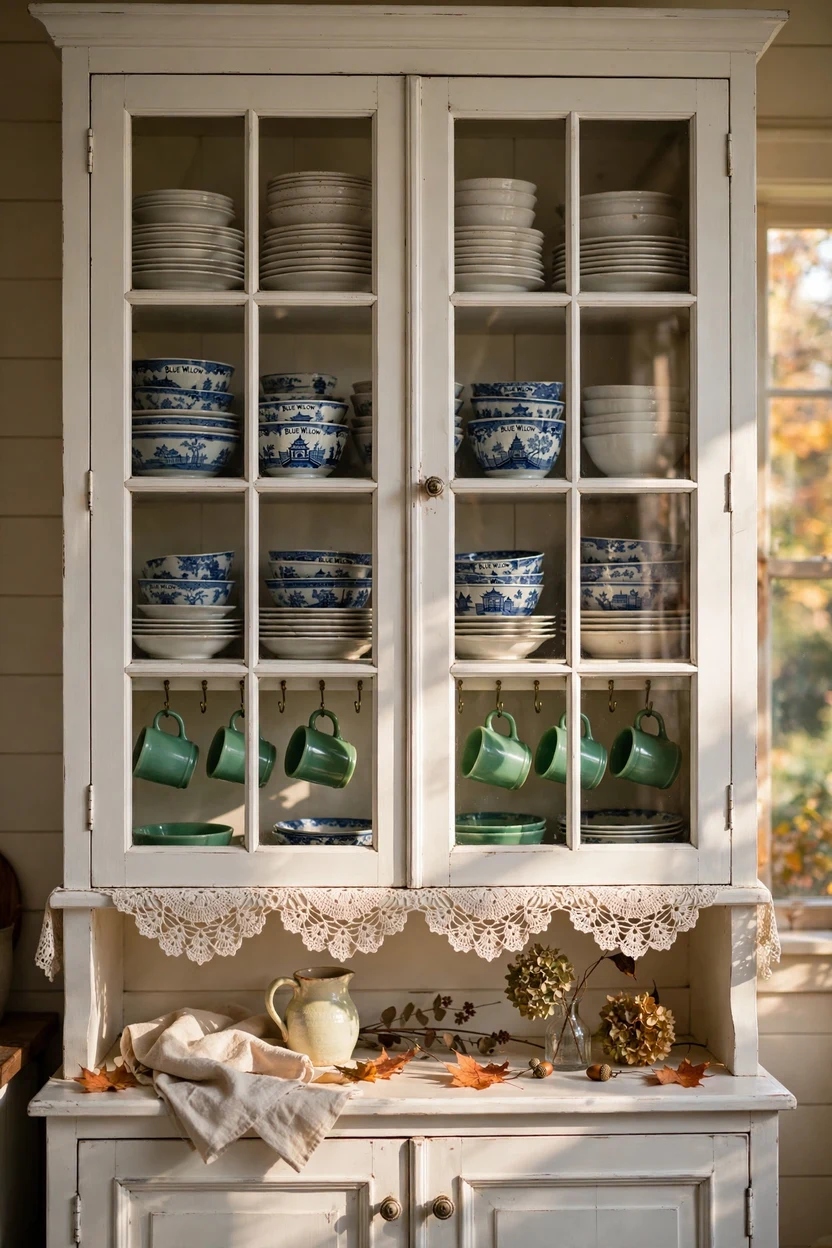
Grandma never bought one matching set, and that’s the charm. Stack plates by color family, like white ironstone, blue transferware and pale green glass, and set cups on hooks or small saucers up front. Use glass-front doors or one open shelf, and keep the pieces you actually use within reach. Many designers say crowded open shelving looks busy, so group by color and leave a little air between stacks. Estate sales and thrift shops are your best sources, and Blue Willow, ironstone and jadeite-green Fire-King are classic things to look for.
5. A Tea Corner by the Window
Cost: 15-60 | Effort: 20 minutes | Renter-friendly: Yes
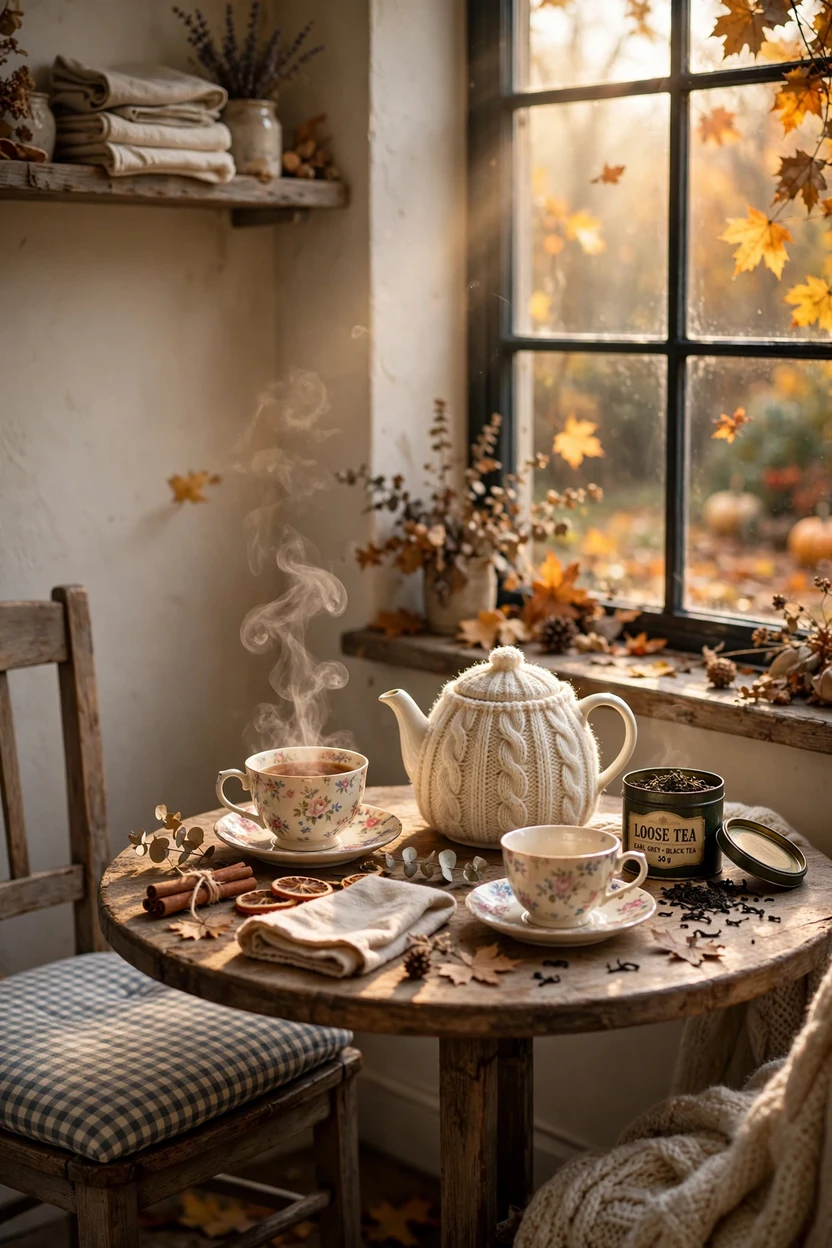
A small tea corner makes a kitchen feel like a place to sit, not just cook. Put a kettle on the stove, a teapot and tin of loose tea on a tray, and a few mismatched cups with saucers on a shelf nearby. If there’s room, add a small café table and one chair with a tied-on cushion beside the window. A quilted tea cozy or a crocheted trivet brings in soft texture and a handmade look. Use the corner every day, because cozy decor only works when it’s lived in.
Related: 17 Outdoor Kitchen Layout Ideas Architects Swear By
6. A Cookie Jar, Canisters and Enamelware on the Counter
Cost: 10-40 | Effort: 10 minutes | Renter-friendly: Yes
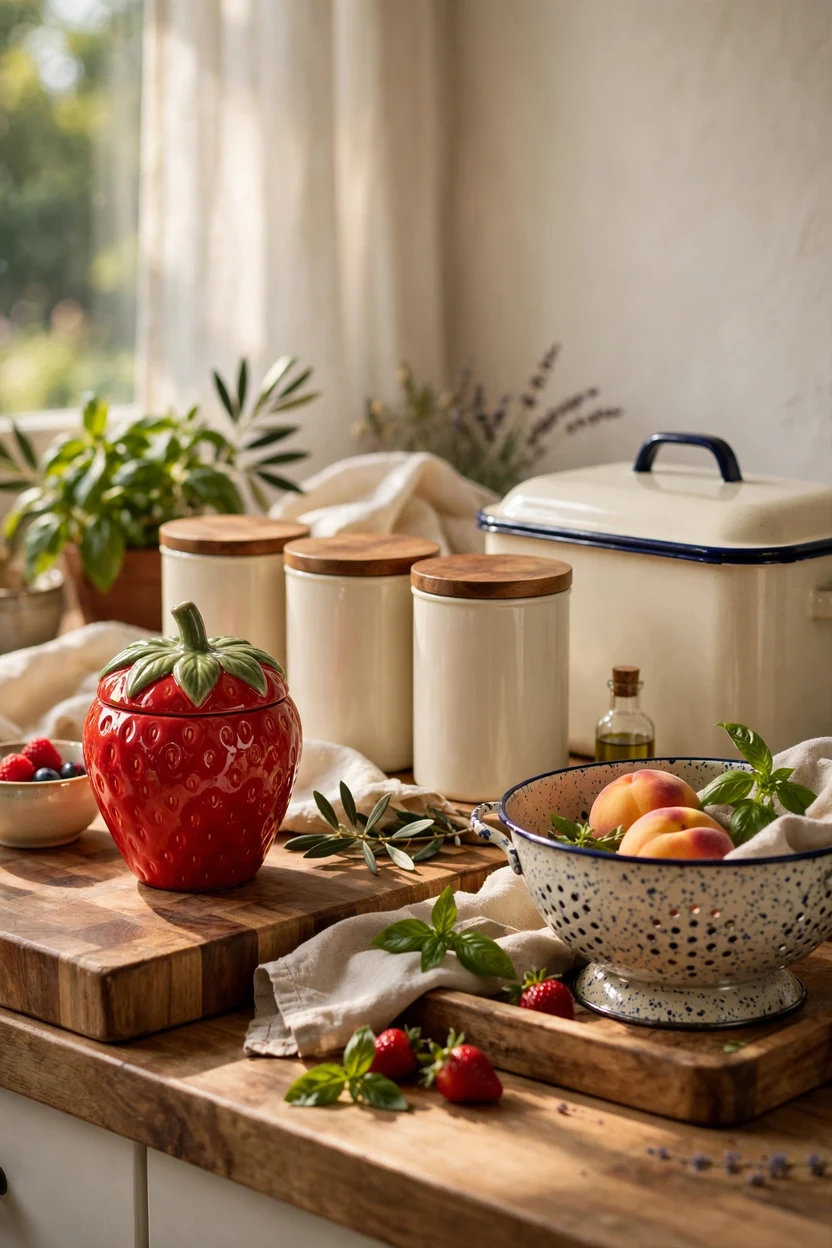
Fill a ceramic cookie jar with real cookies, set flour, sugar and tea canisters in one color family, and add a speckled enamel bread bin or colander. These pieces are decor and storage at once, so they tidy the counter instead of crowding it. Cream enamelware with a navy or red rim looks classic and goes with almost any cabinet color. Pick three to five objects, set them on a tray and leave the rest of the counter free. Refill the jar every few days, since stale cookies make sad decor.
7. A Cookbook Shelf and a Framed Recipe Card
Cost: free to $20 | Effort: 15 minutes | Renter-friendly: Yes
Stack well-used cookbooks with cracked spines on a shelf or the counter, and add a small wooden recipe box. Frame one handwritten recipe card, yours or a family copy, and hang it near the stove. Handwriting is personal in a way nothing from a store can match. Use a copy for the framed version, so the original stays safe in the box. Tuck a bowl of lemons or a small plant beside the books to keep the shelf from looking stiff.

8. An Embroidered Tablecloth and Mismatched Chairs
Cost: 15-60 | Effort: 20 minutes | Renter-friendly: Yes
A table with a tablecloth says “sit down.” Choose cotton or linen with embroidery, a small floral print or a gingham check, and let it hang about 8 to 12 inches over the edge. Add mismatched wooden chairs with tied-on seat cushions, and place a pitcher of flowers in the center. Thrift stores and estate sales often sell hand-embroidered linens for just a few dollars. Wash them gently and test any stain remover on a hidden corner first.

9. A Worn-In Runner or Checkerboard Floor
Cost: 20-150 | Effort: 15 minutes for a runner, a weekend for tile | Renter-friendly: Runner yes, tile with care
Bare, modern floors feel cold, so lay a patterned runner in faded reds, blues or florals along the main walkway. Low-pile, machine-washable runners copy the vintage look and survive spills. For a bigger step, black-and-cream checkerboard vinyl tile gives a classic diner or farmhouse feel. Removable peel-and-stick versions can work in some rentals, but test one tile in a corner first. Always use a non-slip pad under a rug.

10. Floral or Toile Wallpaper on One Wall
Cost: 30-120 | Effort: one weekend | Renter-friendly: Often, with peel-and-stick
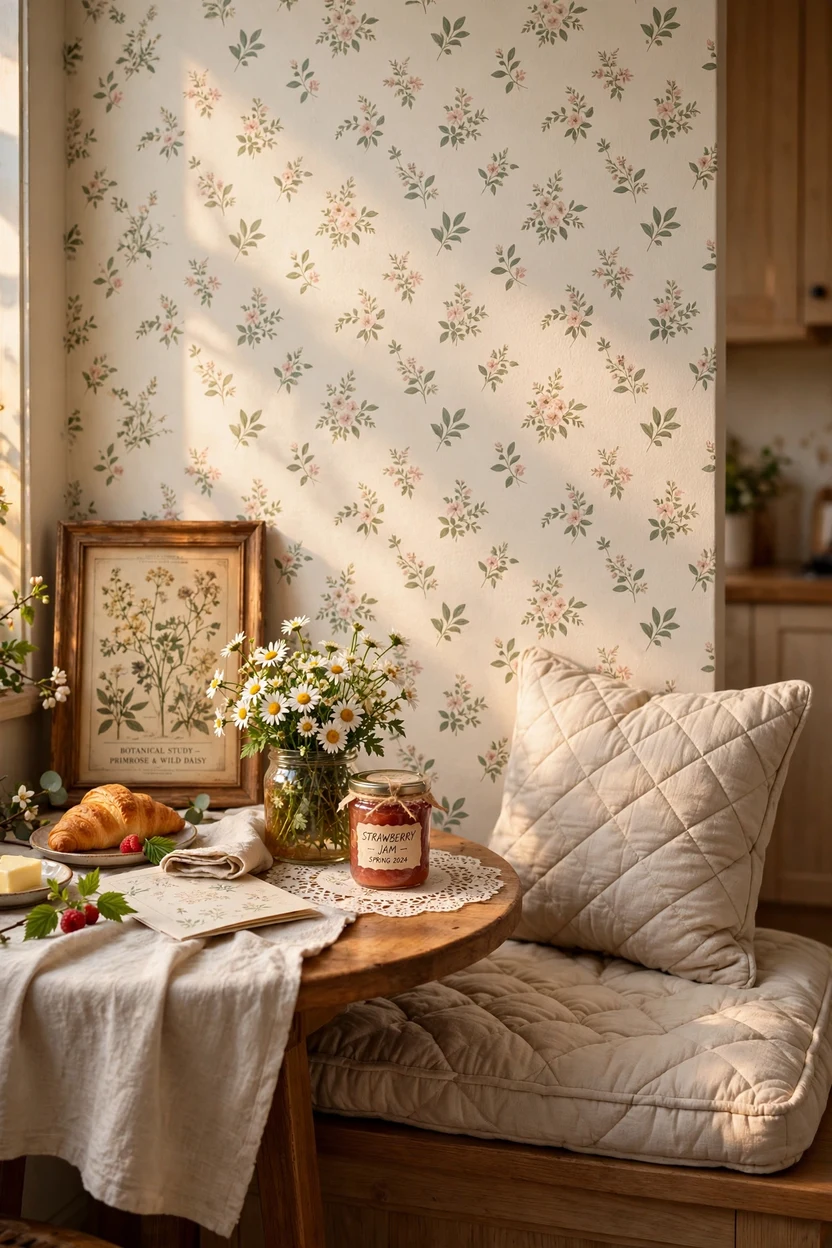
One wall in a small floral, toile or faded stripe brings back the pattern that old kitchens always had. Pick a print with a cream or pale background, because dark, busy patterns can crowd a small room. Peel-and-stick paper works on clean, smooth walls, and it’s a good choice for renters. Put it behind the table or in a nook, not directly behind the cooktop where grease and heat reach it. Match one color in the print to your curtains or towels so the room feels tied together.
11. Blue-and-White Plates and Tile Touches
Cost: 15-80 | Effort: 30 minutes | Renter-friendly: Yes
Blue-and-white says “old kitchen” faster than almost any other pairing. Hang a group of blue-and-white plates on the wall using plate hangers, or lean a few decorative tiles against the backsplash. Peel-and-stick tile decals can add a small patterned panel near the sink, away from direct stove splashes. Group the plates in odd numbers, and mix sizes for a collected look. Choose plates that share the same shade of blue, since mixed blues can look accidental.

12. Hanging Copper Pots, Cast Iron and a Wall Rail
Cost: 20-80 | Effort: 30 minutes | Renter-friendly: With a rail that fits your wall rules
Hang pots and pans from a wall rail with S-hooks to free up your cabinets and counters. Copper and cast iron both age well, so used pieces look right at home. A cast iron skillet gains a dark patina over time, and a dented copper pan looks like it has stories to tell. Anchor the rail into studs, since a full set of pans is heavy, and keep the heaviest pieces nearest the brackets. Keep the rail out of head-height traffic zones so no one bumps into a pot.

13. Aprons on Pegs and Fruit-Print Tea Towels
Cost: 10-25 | Effort: 10 minutes | Renter-friendly: Yes, with a removable hook rail
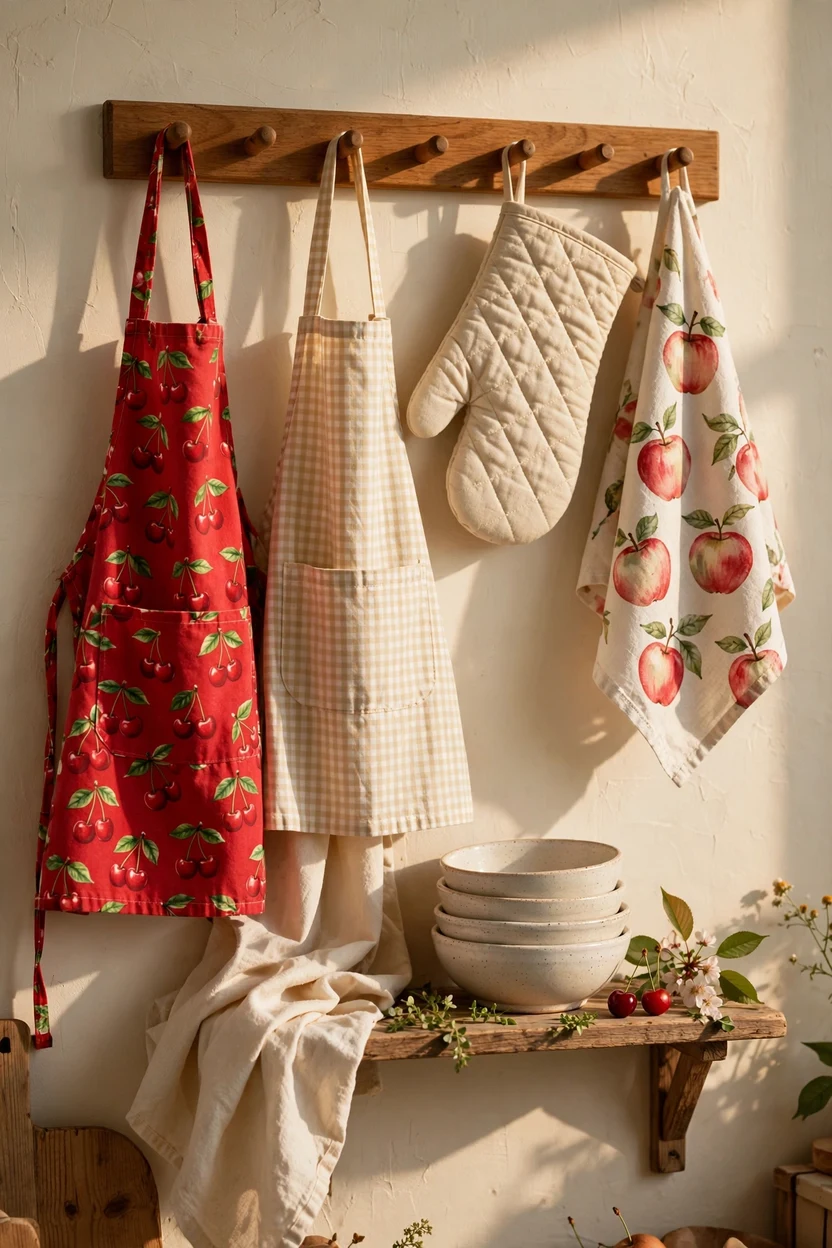
A wooden peg rail by the door holds aprons, oven mitts and a tea towel within easy reach. Apples, cherries, strawberries, lemons and roosters are the classic grandmacore motifs. Pick one or two prints, not all of them, so the display looks chosen instead of themed. Hang aprons you really use, because a worn, floury apron looks better than a brand-new one. Repeat a color from the prints in a mug or a bowl nearby.
14. A Fabric-Shade Lamp and a Vintage Clock
Cost: 15-60 | Effort: 10 minutes | Renter-friendly: Yes
Grandmacore kitchens glow instead of blaze. Set a small lamp with a pleated or fabric shade on the counter or a shelf, and use a warm bulb around 2700K for evening light. A round wall clock with a soft tick adds a steady rhythm to the room. A vintage radio looks charming too, but use it for display unless a professional has checked the wiring. Old cords can wear out, so never plug in an antique appliance without checking it first.
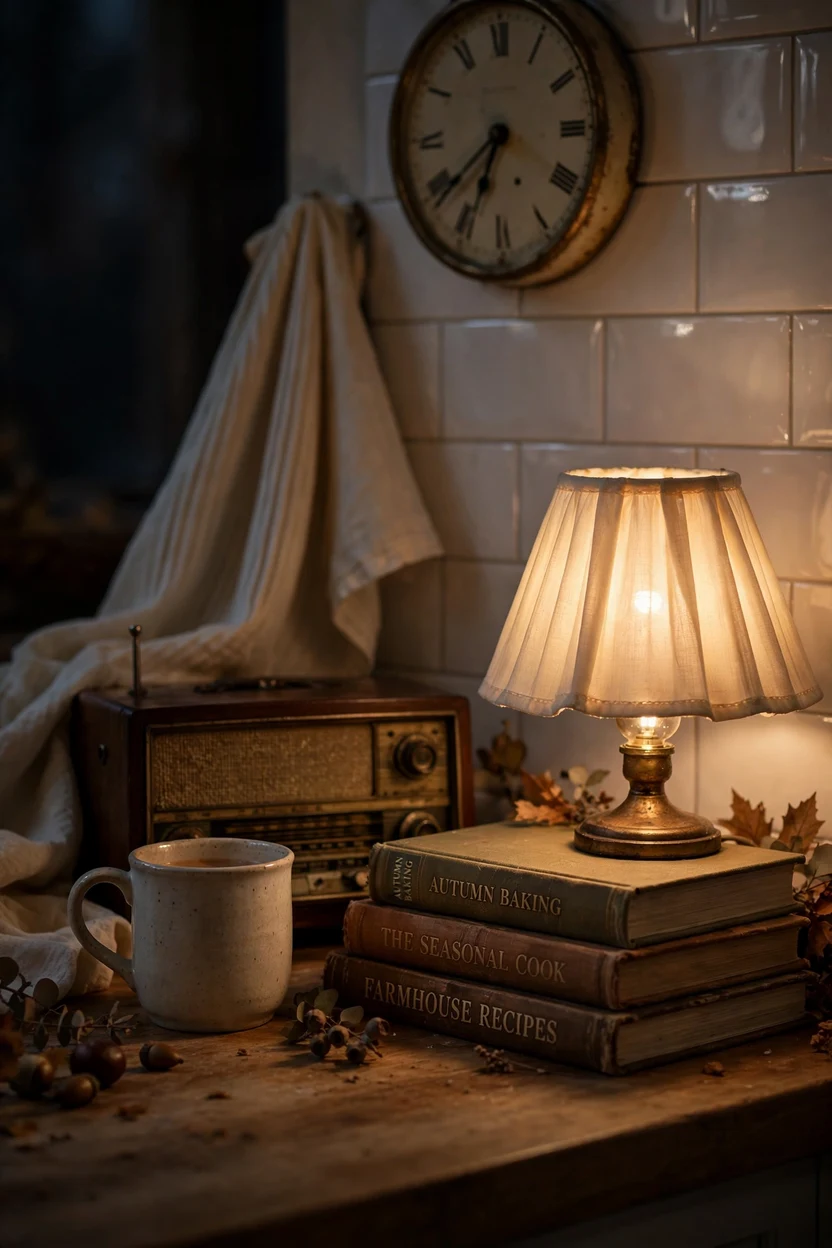
15. A Cake Stand With a Glass Dome and a Pitcher of Flowers
Cost: 15-40 | Effort: 10 minutes | Renter-friendly: Yes
Set a cake stand with a glass dome on the counter, and keep something real under it, like a pie, banana bread or a plate of cookies. Beside it, place a pitcher or jam jar of grocery-store flowers or garden stems. Mixing food and flowers is the signature of the style, because it shows the kitchen is used and loved. Choose small, loose flowers like daisies, snapdragons or sweet peas, and change the water every couple of days. Keep the bouquet away from food prep spots so petals don’t end up in the dough.

Can You Do Grandmacore in a Modern Kitchen?
Yes. The bones of the kitchen matter less than the layers you add on top. White cabinets, quartz counters and stainless appliances can all work as a calm base.
Related: 16 Boho Kitchen Ideas That Feel Collected, Not Costume
Here’s how to warm up a modern kitchen:
- Add texture first. Wood boards, wicker baskets, linen towels and a woven runner soften hard surfaces.
- Bring in pattern in one or two places. Try gingham curtains and a floral runner, and keep everything else solid.
- Swap hardware. Aged brass, white ceramic or glass knobs give flat cabinets a vintage face.
- Use warm light. Replace cool bulbs with warm ones and add a small lamp.
- Hide the gloss. If cabinets look cold and shiny, break up the surface with art, plates and hanging pots.
- Add one old thing. A thrifted kettle, a cutting board or a framed recipe card gives a new kitchen a history.
- Keep the counters mostly clear. A modern base lets a few collected pieces look intentional.
Vintage Safety Checklist
Old pieces add charm, but some need extra care.
- Vintage dishes and glazes. Some older ceramics and painted decorations may contain lead. If you’re not sure, display the piece instead of eating or drinking from it, and consider a lead test kit.
- Pyrex and glass bakeware. Avoid sudden temperature changes, like moving a dish from the freezer to a hot oven. Check for chips and cracks before use.
- Chipped enamelware. If the enamel is cracked or the metal underneath is showing, use it for display only.
- Copper. Many vintage copper pots are best for display. Use copper for cooking only if it’s lined and in good condition.
- Cast iron. Clean and season it, and avoid soaking it for long. Rust can be scrubbed away and re-seasoned.
- Antique electrics. Radios, lamps and appliances may have worn cords. Have them checked or rewired before plugging in.
- Heavy wall displays. Anchor rails and plate hangers into studs or use the right wall anchors.
Styling Tips
- Group in threes or fives. Odd groups of items look natural.
- Mix heights. Put something tall, something mid and something low in every grouping.
- Repeat a color. Echo your curtain’s blue in a plate, a mug and a rug.
- Use trays. A tray makes a small group read as one neat idea.
- Layer old with new. Pair a thrifted plate with a simple modern bowl so the room doesn’t feel stuck in the past.
- Keep surfaces breathing. Leave at least half of each counter clear for cooking.
- Add something living. Flowers, herbs or fruit make the room feel fresh.
Practical Ways to Set It Up
The 30-Minute Starter
- Clear the counters. Put everything away except what you use daily.
- Add one cloth. Drape a tablecloth or runner on the table.
- Gather your own pieces. Find a kettle, a pitcher or a few mugs you already own and group them on a tray.
- Add flowers. A jam jar of stems works fine.
- Warm the light. Swap in a warm bulb or add a small lamp.
The Weekend Project
- Saturday morning: hang café curtains, set up the peg rail and add the runner (ideas 3, 13 and 9).
- Saturday afternoon: thrift for dishes, linens, canisters and a cake stand (ideas 4, 6, 8 and 15).
- Sunday morning: set up the tea corner and the cookbook display (ideas 5 and 7).
- Sunday afternoon: bake something, add flowers and enjoy it (idea 15).
Where to Find Grandmacore Kitchen Pieces
- Your own family. Ask relatives for old linens, dishes and recipe cards. Stories are the best decor.
- Estate sales. Usually the best prices on full sets of dishes, tablecloths and kitchenware.
- Thrift stores and flea markets. Look for enamelware, ironstone, glass, baskets and cast iron.
- Online marketplaces. Search terms like Blue Willow, Fire-King, ironstone, enamel bread bin or embroidered tablecloth.
- Discount stores. Good for tea towels, tension rods, simple jars and trays.
Common Mistakes to Avoid
- Buying a full set of themed decor. A room full of “Live, Laugh, Bake” signs looks like a costume. Choose real, useful objects instead.
- Using too many prints at once. Floral, gingham, toile and stripes all in one corner gets noisy. Pick two scales and a few matching colors.
- Treating clutter as the goal. Collected is cozy, but messy is not. Edit, dust and leave air between pieces.
- Skipping the lighting. Cool, bright bulbs flatten warm colors. Choose warm bulbs and a lamp.
- Ignoring safety on old items. Check dishes, cords and cookware before using vintage pieces for real.
- Choosing colors that clash. Keep to two or three shades, and repeat them around the room.
- Forgetting function. A kitchen is still a work space. Keep prep areas clear and tools easy to reach.
- Overlooking the floor. A cold, bare floor breaks the cozy feeling. Add a runner or rug.
Small-Space Alternatives
Small kitchens are often the coziest ones. You just need fewer pieces, placed well.
- Pick one hero. Choose a single bold piece, like a floral runner, a yellow kettle or a blue-and-white plate wall, and let it lead.
- Go up. Use a peg rail, a wall shelf and hanging pots so counters stay clear.
- Use a tray. One tray with a teapot, two cups and a small vase makes a complete scene in a small footprint.
- Hang café curtains. They add pattern and privacy without eating up space.
- Choose a slim table. A drop-leaf or folding table with two chairs makes a nook in a tight corner.
- Use the windowsill. A few herbs or a small vase of flowers adds life with no extra surface.
- Edit in rotation. Display a few special dishes at a time and store the rest.
Budget-Friendly Alternatives
- Ask family first. Relatives often have extra linens, dishes and cookbooks they’d love to pass on.
- Shop estate sales late in the day. Prices often drop on the last day.
- Buy singles, not sets. One teacup or plate at a time keeps the cost low and the look mixed.
- Make it yourself. Sew a simple café curtain from a tablecloth or gingham fabric, or hem a tea towel.
- Use spray paint on thrifted metal. A can of cream or yellow can unify mismatched canisters.
- Mix thrift and discount. Pair a thrifted pitcher with a discount-store tea towel.
- Save the splurge for what you’ll use daily. Spend on a good kettle, a comfortable cushion or a quality lamp.
Pro Styling Recommendations
- Start with a color story. Pick two or three colors, like butter yellow, cream and blue, and use them in everything you buy or move around.
- Pair pattern with solid. For every pattern you add, balance it with a plain surface nearby.
- Use the rule of three scales. Combine one large print, one medium print and one tiny print for visual depth without chaos.
- Shop with a list. Estate sales are tempting. Know your colors, sizes and needs before you go.
- Make a “hello” zone. Put the prettiest scene, like the tea corner or the flower pitcher, where you see it first when you walk in.
- Photograph your kitchen. A phone photo shows if the room is too crowded or if a color is off.
- Rotate with the seasons. Swap flowers, towels and one or two dishes through the year so the kitchen stays fresh without a full redo.
Frequently Asked Questions
Final Thoughts
A grandmacore kitchen isn’t a look you finish. It’s one you grow into. A gingham curtain this month, a thrifted teacup next month, a recipe card in a frame when you find the right one.
Start with a single idea that made you smile. Add a pot of tea, a loaf in the oven or a jar of flowers, and let the kitchen do what it does best: bring people together.
Save your favorite pins, call your grandmother (or ask for her recipe), and make your kitchen feel just right.