17 Front Porch Flower Pot Ideas: Easy, Pretty, Year-Round
Picture pulling up to a house at dusk. The porch light is on, two tall pots frame the door, and soft white flowers catch the glow. A vine spills over each rim, and you can almost smell the herbs. You haven’t even knocked, and you already feel welcome.
Now picture the other porch. One small pot, a few tired plants, and a dry crack down the side. Same house, same door, very different first impression.
The gap is not money or a green thumb. It is size, shape, and a simple plan. Below are 17 front porch flower pot ideas, and each one comes with the design logic, the plant logic, and the measurement to use, so you can build a porch that looks full all year.
Quick answer: what makes front porch flower pots look good? Front porch pots look good when they are big enough for the door, planted with a tall plant, fillers, and trailing plants, and repeated in a simple pattern such as a matched pair. Choose plants that match your light, and use pots with drainage holes.
Quick answer: how big should front door planters be? For a standard door about 80 inches tall, start with pots about 18 inches wide and 24 to 30 inches tall. A pot that is too small makes the door look bare and dries out fast.
Quick answer: how do I keep porch pots looking good all year? Keep a tough evergreen or grass in the middle of each pot, and swap the flowers around it each season. Avoid terracotta in freezing climates, since it can crack.
17 Front Porch Flower Pot Ideas
1. A Matched Pair Flanking the Door
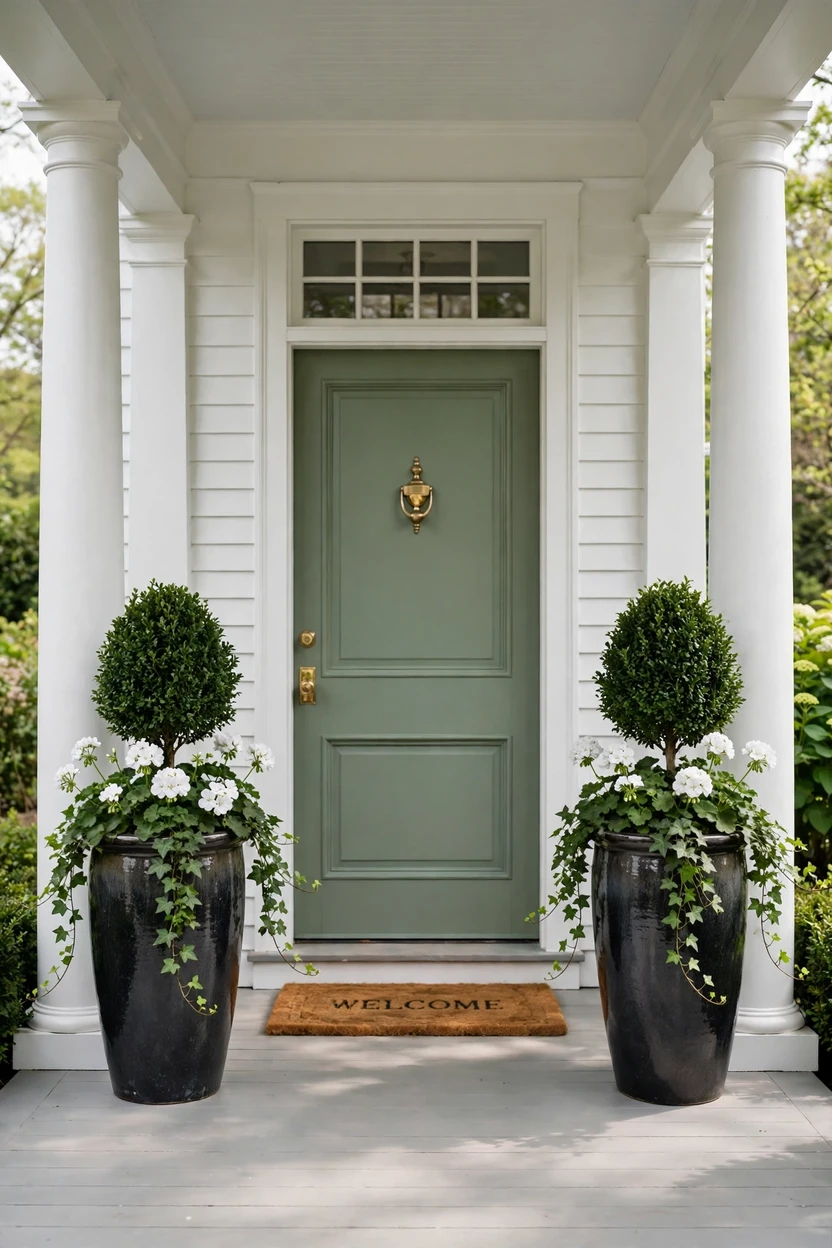
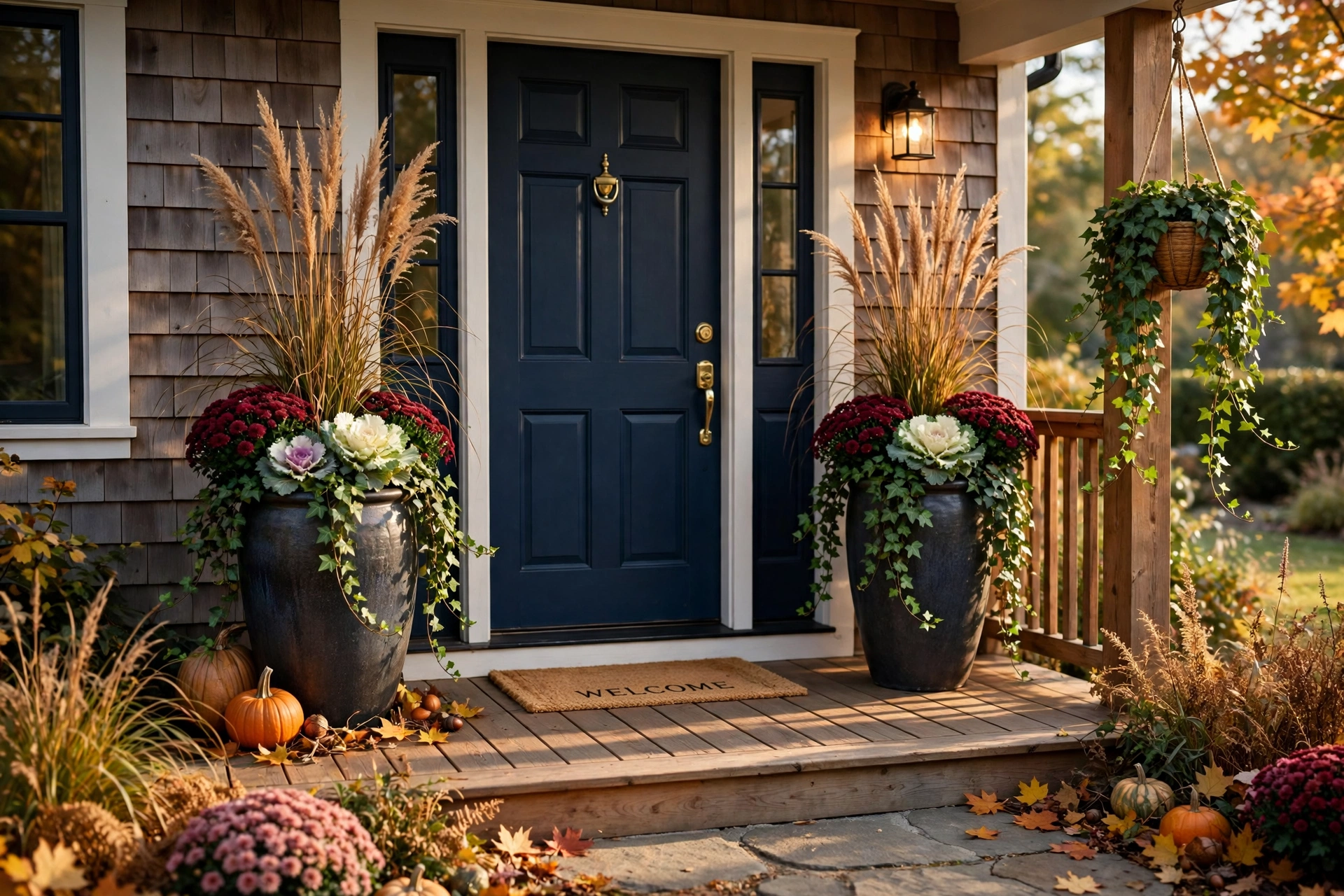
Two identical pots, one on each side of the door, create instant balance and point visitors toward the entry. For a standard door about 80 inches tall, start with pots about 18 inches wide and 24 to 30 inches tall. Plant each with one tall plant in the center, and aim for it to rise about one and a half times the pot’s height above the rim. Keep the pair within the width of the entry, leave the door swing clear, and keep at least 36 inches of walking space. Using the same plants in both pots keeps the look calm and formal.
2. One Tall Pot for a Narrow Stoop

A small stoop does not have room for two big pots, and one tall pot can look better than two squeezed ones. Choose a pot about 12 to 14 inches wide and 30 to 36 inches tall, and place it on the side away from the door swing. A larger pot holds more soil and water than several small ones, so it dries out more slowly. Plant a tall grass or a small evergreen in the middle, and let ivy or sweet potato vine spill down the front. Add a doormat in a matching color to finish the corner.
3. The Thriller, Filler, Spiller Recipe

This simple formula makes any pot look full: one tall thriller, a few mounded fillers, and some trailing spillers. Use a pot at least 12 inches wide, though 18 to 24 inches gives the roots and the look more room. Plant one thriller in the center, two to four fillers around it, and two or three spillers along the edge. A sunny porch example is purple fountain grass, red geraniums, and sweet potato vine. Water often and feed on schedule, since crowded plants use up soil quickly.
4. Boxwood and Ivy Evergreen Pots

Evergreen pots keep the porch neat when flowers fade. A boxwood topiary in the center, white begonias or impatiens around it, and English ivy trailing over the rim make a classic, tidy combo that does well in shade. Trim the boxwood lightly with clean shears to keep the shape clean. The glossy green leaves look fresh in every season, so the pot never looks empty. This idea suits a traditional house, a brick facade, or any entry that needs calm structure.
5. A Shade Pot With Ferns, Coleus, and Begonias
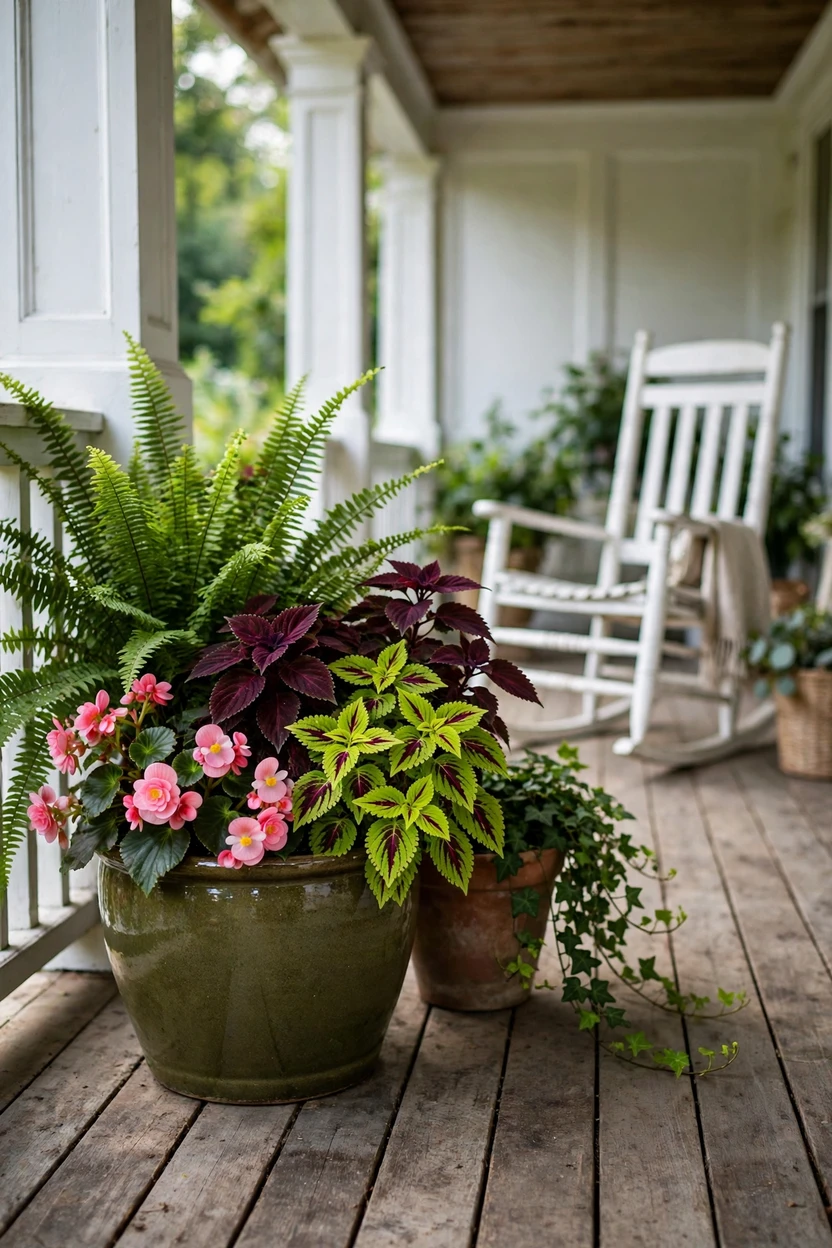
Shady porches can still be lush. Ferns are some of the easiest plants for partial to full shade, coleus brings bold leaf color, and begonias add a steady touch of bloom. Check the soil often, because a porch roof can keep rain off the pot and leave it dry. Choose a pot with drainage holes, and let the top inch of soil dry before you water again. A mix of green, burgundy, and lime foliage looks rich even without many flowers.
6. All-White Flower Pots
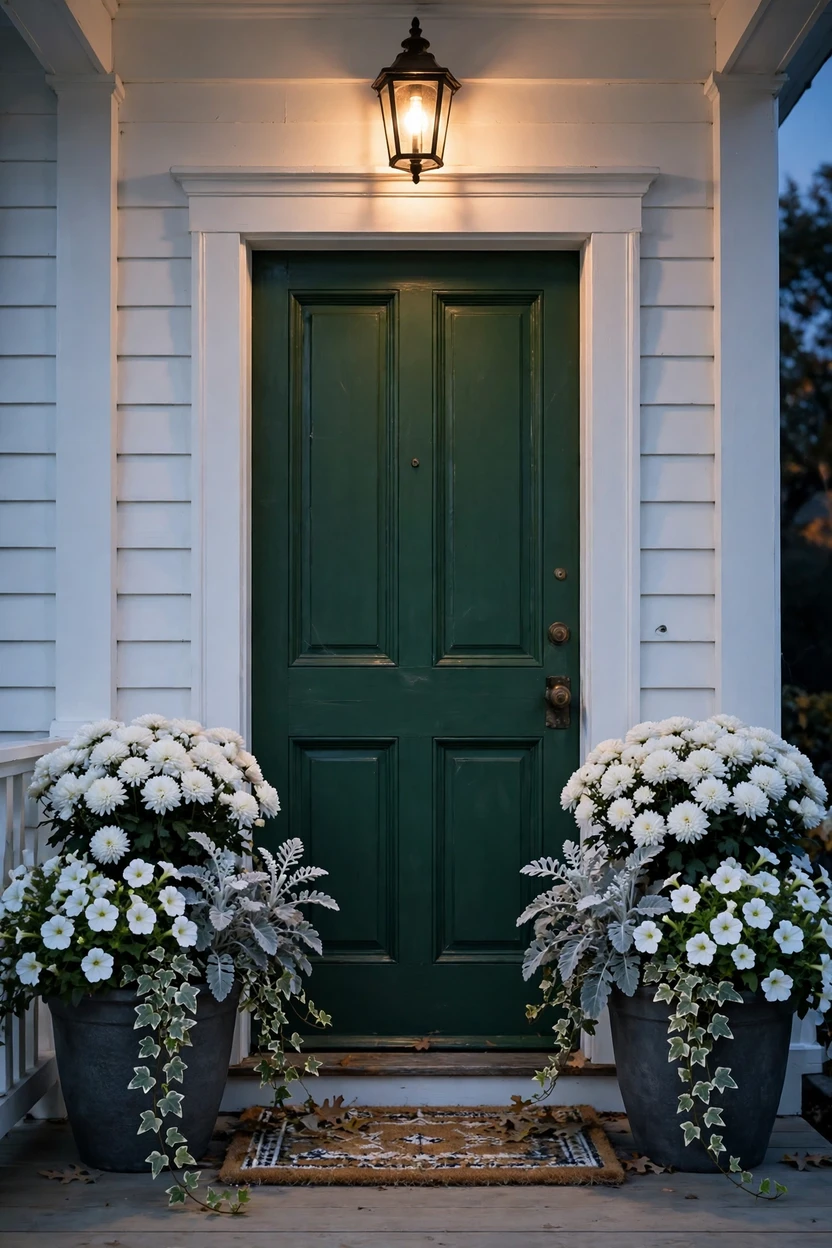
White flowers show up well at dusk and in low light, so they look good from the street at any hour. Mix white geraniums, white petunias, or white mums with silver foliage such as dusty miller for a soft, layered look. White goes with any house color, which makes this a safe choice if you are unsure. Remove faded blooms often, since brown petals stand out on white flowers. Use a dark pot to give the white a crisp background.
7. Pots That Play Off the Door Color
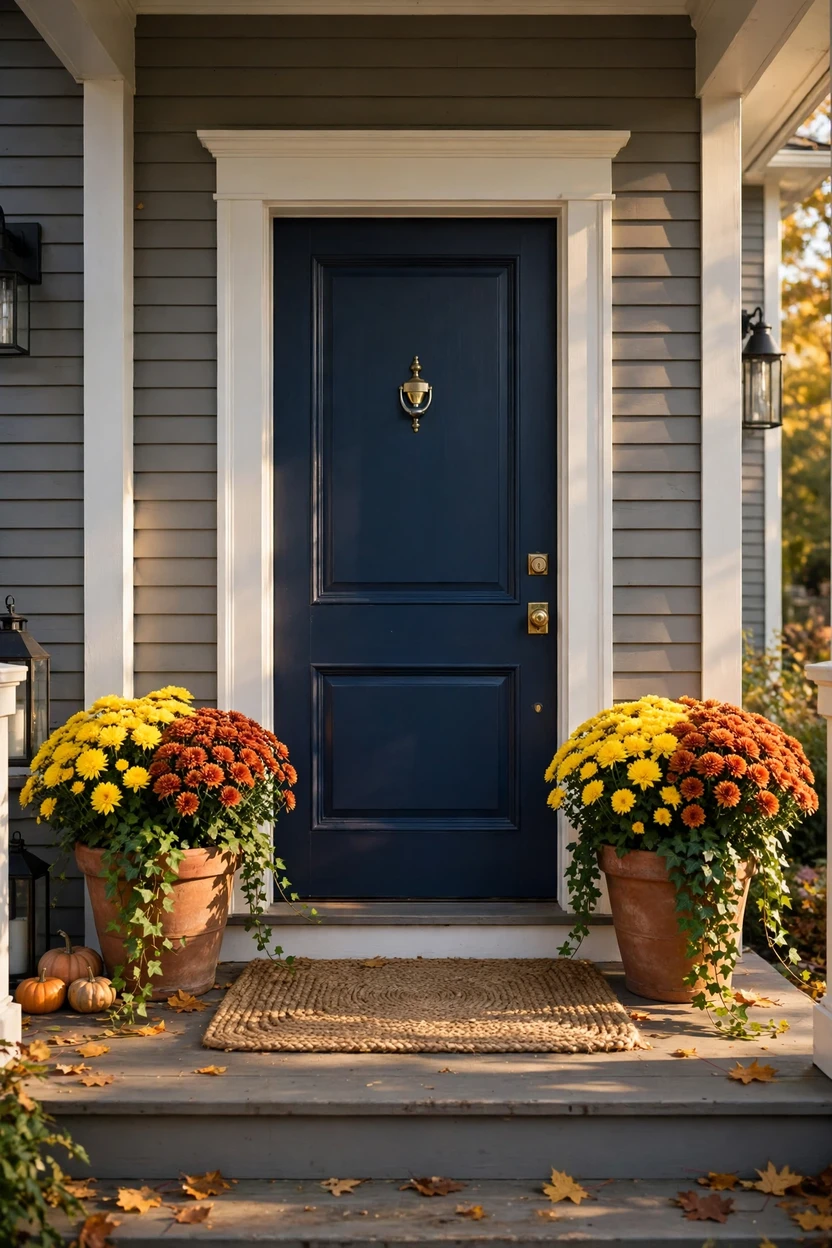
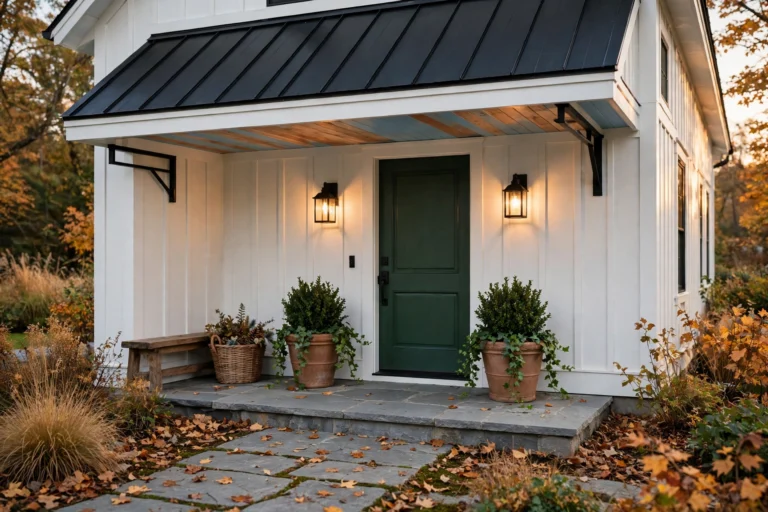
The pot color can tie the door to the rest of the house. Terracotta pots look rich beside a navy door, pale stone pots calm a black door, and cream pots glow against a sage door. Pick one color from the house, such as the trim, brick, or shutters, and repeat it in the pots. Choose flower colors that echo the door instead of matching it exactly, so the look feels planned but not flat. This one move can make a plain porch look styled in an afternoon.
8. A Terracotta Trio in Odd Numbers
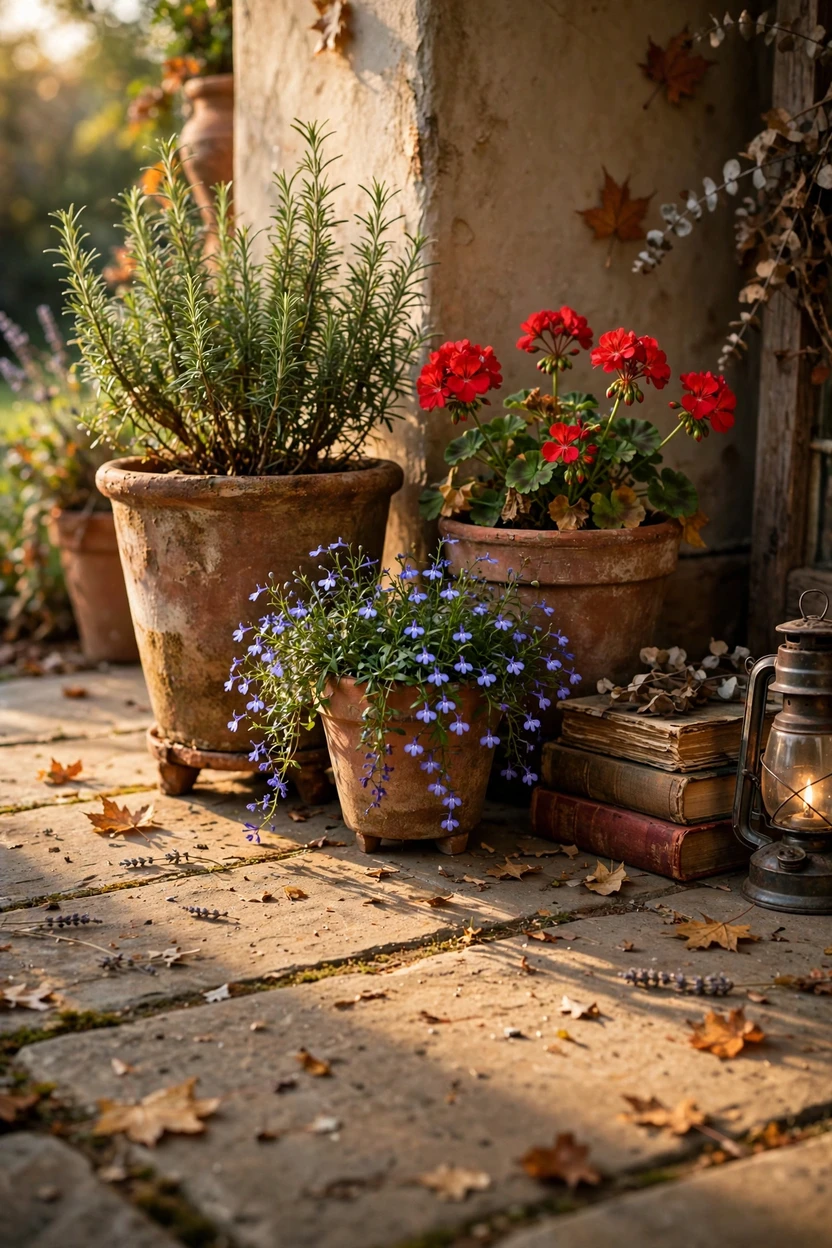
Three pots in different heights make a relaxed, collected group. Place them on one side of the door, with the tallest at the back and the smallest in front. Terracotta breathes, so the soil dries faster and the plants need more frequent watering. In cold climates, terracotta can crack in a freeze, so choose frost-proof pots or bring them in for winter. Lift each pot on small pot feet so water drains freely and the porch floor stays clean.
9. Black Urns With Wild Color
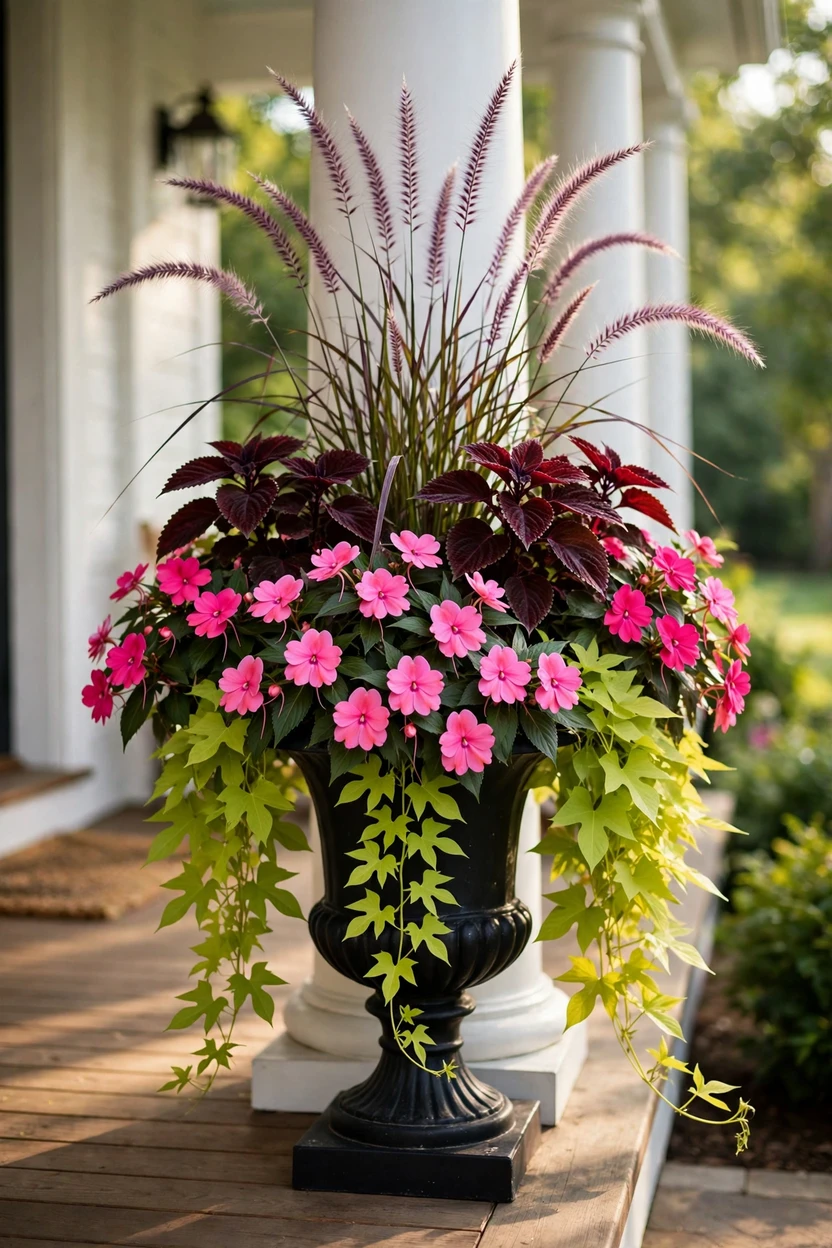
A black urn gives the porch a strong shape, which lets bright flowers look loose and wild without looking messy. Choose a heavy cast metal or a fiberglass urn with a pedestal base, and plant a mix of hot pink, deep burgundy, and dark foliage for rich contrast. A tall plant in the center and trailing stems at the edge help the shape read from the street. Larger urns also hold moisture longer, which means fewer watering days. Make sure the pot has drainage holes, since urns can hold water at the bottom.
10. Hanging Baskets at the Porch Edge
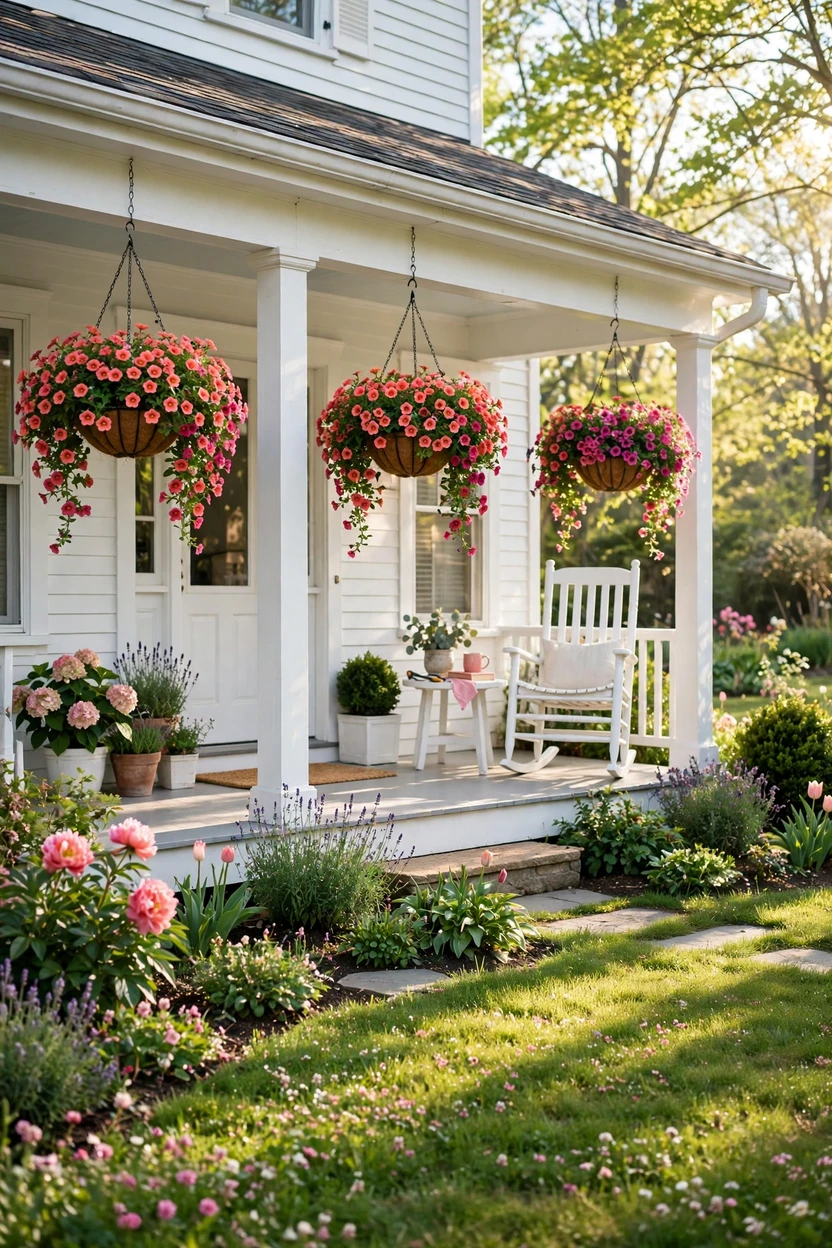
Hanging baskets add color at eye level and frame the porch from the street. Hang them from porch beams or sturdy hooks that are anchored into solid wood, since a watered basket can weigh 20 pounds or more. Keep them high enough that tall guests can walk under without ducking. Baskets dry out quickly, so check them daily in hot weather. Repeat one trailing plant, such as ivy or calibrachoa, across all baskets so the porch feels unified.
11. A Window Box That Echoes the Pots

A window box next to the door can repeat the pot plants and tie the whole front together. Use the same thriller or the same trailing plant in the box that you used in the pots. Choose a box about 8 to 10 inches deep so roots have room and the soil does not dry out in a day. Mount the box securely into studs or a sturdy bracket, and add drainage holes or a removable liner. Keep the colors tight, with two or three shades, so the box and pots read as one set.
12. Fall Mums, Kale, and Grasses

Mums are a fall favorite, but they have a short season, so pair them with plants that last longer. Combine ornamental kale and pansies as fillers, a tall grass as the thriller, and trailing ivy as the spiller. Plants like kale and pansies usually handle a light frost, which keeps the pot looking good for weeks. If you want a calmer look, pick white mums, dusty miller, and pale ornamental cabbage. Tuck a pumpkin or two at the base for a seasonal touch.
13. A Fall-to-Winter Swap Pot
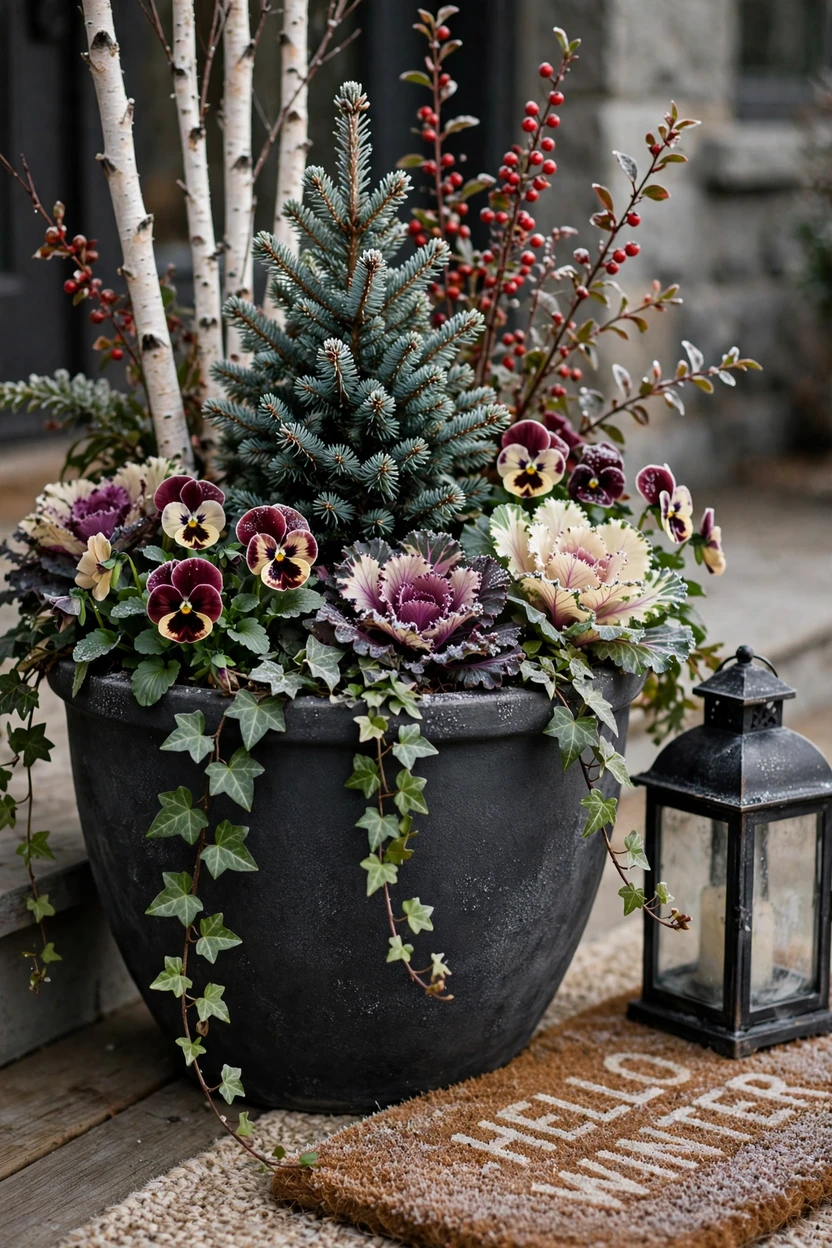
You can keep one pot looking good from fall into winter by keeping the center plant and changing what grows around it. Choose a dwarf evergreen or an ornamental grass as the thriller, and leave it in place. When the mums fade, pull them out and tuck in pansies, ornamental kale, or a few birch stems and berried holly. This saves money and effort because you only replace the fillers. Choose a frost-proof pot so the swap works in cold weather.
14. A Winter Greens Pot With Birch and Berries

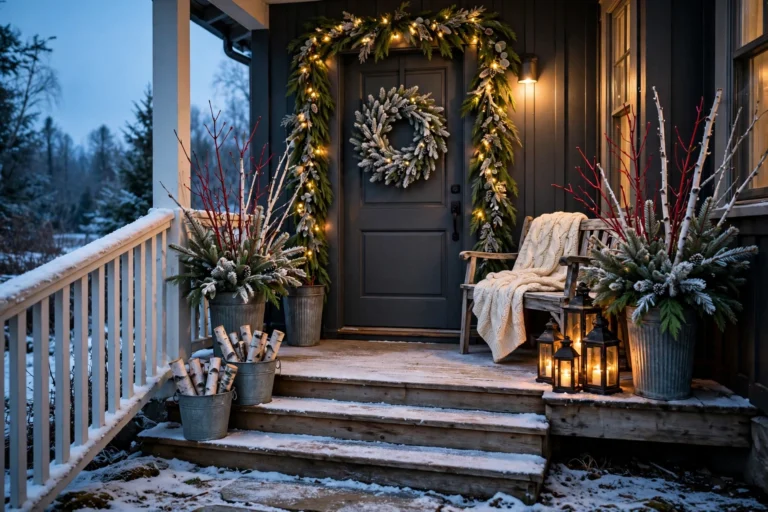
Winter pots do not need flowers to look rich. Fill a large frost-proof pot with evergreen branches, white birch stems, berried holly, and a few pinecones, and add a trailing ivy or heather at the edge. Push the stems deep into moist soil, and the cold will help hold them in place. Keep berried plants such as holly out of reach of pets, since they can upset stomachs if chewed. Add a string of warm lights for evenings, and this pot can last through the new year.
15. Herbs by the Door

Herbs make a small porch feel alive, and they smell lovely when someone brushes past. Rosemary, thyme, sage, and lavender all do best in at least six hours of sun and well-drained soil. Plant them in a medium pot, and trim often so they stay full and neat. Choose herbs your family will use, so the pot works as both decor and a mini kitchen garden. A woven basket or a stone trough keeps the look relaxed and natural.
16. Pots Stepping Up the Stairs
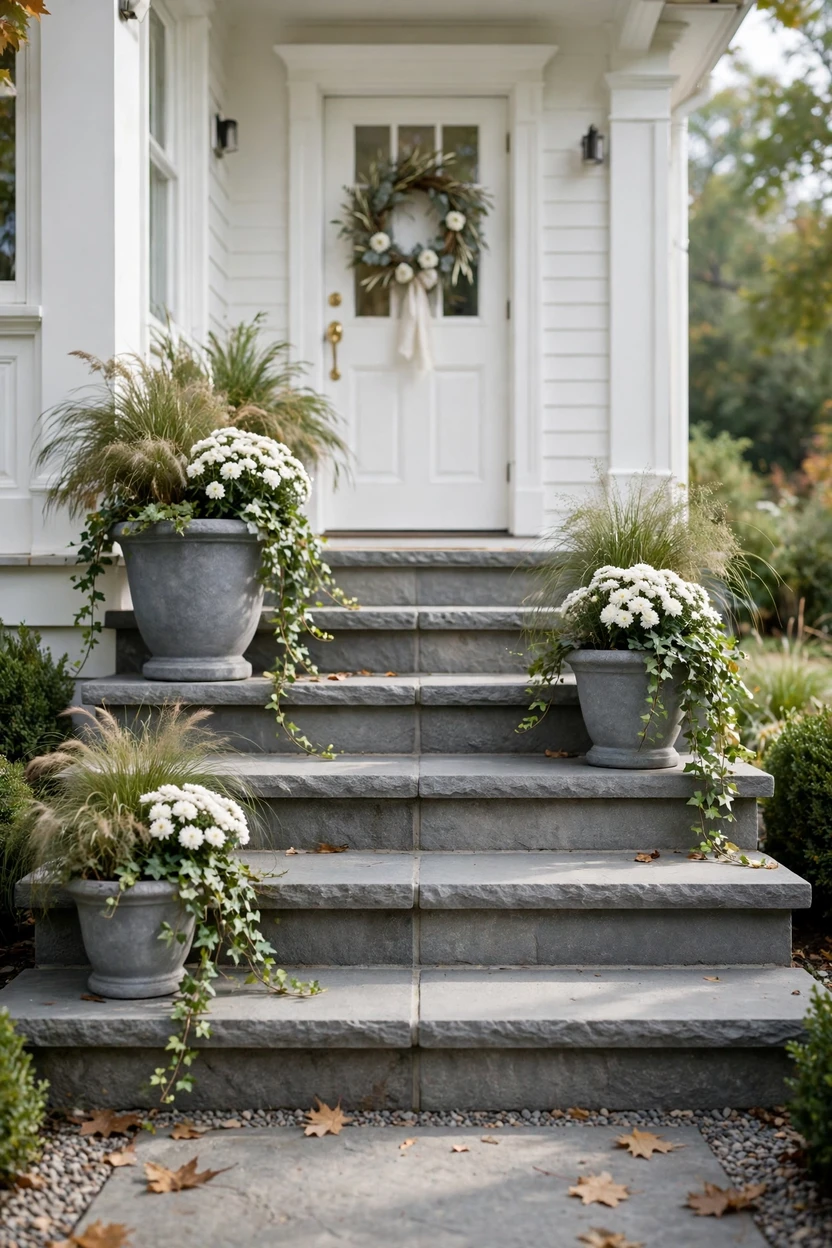
Pots on porch steps lead the eye up toward the door and add a welcoming rhythm. Place them along the edge of each step, not in the walking path, and keep at least 36 inches of clear space for people to walk. Use three sizes and repeat the same plants, so the line feels intentional. Choose heavy pots so they cannot tip in wind or if bumped, and make sure the steps are level. Skip tiny pots on narrow steps, since they are easy to knock over.
17. Pots That Glow at Night

A porch is seen at dusk as often as in daylight, so plan for the evening. Add a solar lantern beside each pot, or wrap a thin strand of warm lights around the plants. Choose a warm bulb around 2700K in your porch light, since cool white makes plants look gray. White and silver plants reflect light well, which makes pots look full after dark. Keep cords tucked and weatherproof, and test lights before the season starts.
Styling Tips That Keep a Porch Looking Planned
- Repeat one plant. Use the same trailing plant or grass in every pot, and the porch looks unified.
- Use odd numbers for groups. Groups of three look relaxed and natural.
- Use two or three colors. Pick flower colors from your door, trim, or brick.
- Vary the heights. Use a tall pot, a medium pot, and a low pot for rhythm.
- Add a doormat. A mat in a matching tone makes the pots feel like part of the entry.
- Add one seasonal accent. A pumpkin, a wreath, or a lantern is enough.
- Edit weekly. Remove dead blooms and tired leaves to keep the look fresh.
Practical Implementation Ideas
A one-weekend porch pot plan
- Friday night: Measure your door and porch, and note how many hours of sun the porch gets.
- Saturday morning: Pick pots with drainage holes, and choose plants for your light.
- Saturday afternoon: Fill the pots with fresh potting mix and plant one thriller, fillers, and spillers in each.
- Sunday: Set the pots on pot feet, water well, and add a doormat, a lantern, and one seasonal accent.
Measurements to keep handy
- Door pots: about 18 inches wide and 24 to 30 inches tall for an 80-inch door
- Narrow stoop pot: about 12 to 14 inches wide and 30 to 36 inches tall
- Minimum pot width for mixed plantings: 12 inches, and 18 to 24 inches is better
- Plant height: about one and a half times the pot height above the rim
- Planting count per pot: 1 thriller, 2 to 4 fillers, 2 to 3 spillers
- Walkway clearance: at least 36 inches
- Window box depth: about 8 to 10 inches
- Herb sun: at least 6 hours
Common Mistakes to Avoid
- Choosing pots that are too small. Undersized pots make a door look bare and dry out fast.
- Skipping drainage holes. Water pools at the bottom and roots rot.
- Using terracotta in freezing weather. It can crack when water freezes inside it.
- Blocking the door swing or walkway. Keep at least 36 inches clear.
- Ignoring the porch roof. Rain may not reach the pots, so check the soil often.
- Mixing too many colors. Two or three shades look planned.
- Using plants that need sun in deep shade. Match the plant to the light.
- Forgetting pet safety. Check plants like holly and lilies if you have cats or dogs.
Small-Space Alternatives
- Use one tall, narrow pot beside the door instead of a pair.
- Hang a basket from a bracket on a porch wall or beam.
- Add a wall-mounted planter or a railing box if floor space is tight.
- Use a stacked planter stand to hold three small pots in one footprint.
- Choose herbs in a trough so the pot is useful and pretty.
- Keep the palette to two colors and repeat them.
Budget-Friendly Alternatives
- Plant in plain pots. Simple pots in black or gray look polished and cost less than fancy ones.
- Use a big pot for your tall plant. One large pot lasts longer than many small ones.
- Buy small plants in spring. Starter plants cost less and fill in over a few weeks.
- Grow from cuttings. Ivy, coleus, and sweet potato vine root easily from cuttings.
- Reuse your center plant. Keep the evergreen or grass in place and only replace the fillers.
- Paint an old pot. A coat of outdoor paint can refresh a worn pot.
- Shop end-of-season sales. Pots and plants are often discounted in fall.
Pro Styling Recommendations
- Stand at the street and look at your porch from 20 feet away before you finalize anything.
- Size the pots to the door first and the plants second.
- Keep one thriller per pot, and repeat the same one across the porch.
- Use pot feet so water can drain and the floor stays clean.
- Fertilize on a schedule, since container plants use nutrients quickly.
- Photograph the porch each season and keep notes on what worked.
FAQs
Conclusion
A great porch does not need a big budget or a perfect garden. It needs pots that match the size of your door, plants that suit your light, and a simple plan you can repeat.
Start with one change you can finish this weekend. Swap a tiny pot for a larger one, add a trailing plant, or place a lantern beside the door. Then walk to the street, turn around, and look at your home the way a guest would.