20 Grunge Apartment Ideas That Feel Moody, Not Messy
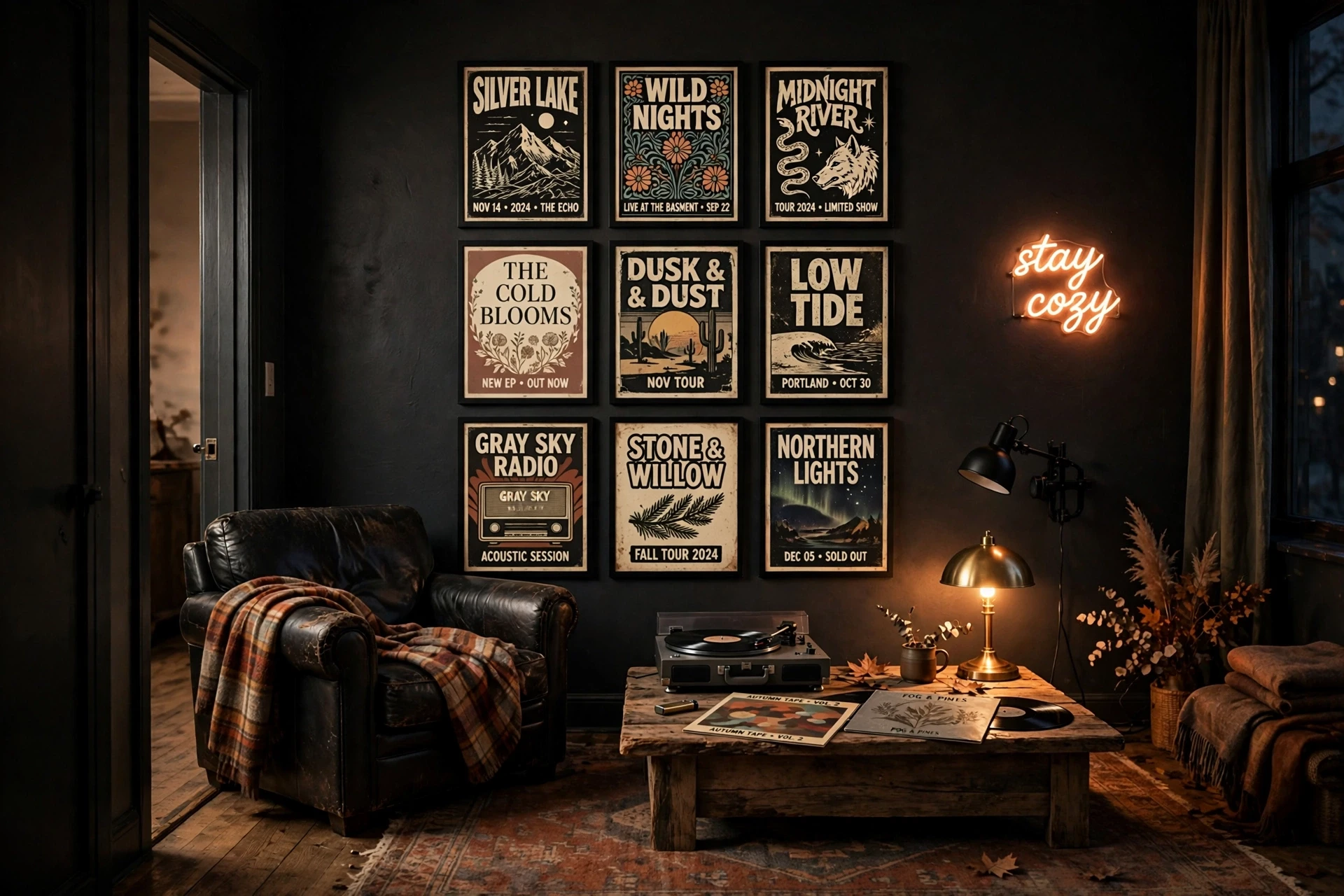
Picture a small apartment at dusk. The walls are a soft charcoal. A worn leather chair holds a plaid throw. One lamp pools amber light over a short stack of records. Nothing is shiny, and nothing is messy, yet the room feels lived in, and you want to sit down.
That is grown-up grunge. It started in the early 1990s in Seattle, where bands and fans pushed back against polish and excess. At home, the style has a bad reputation: dark, dusty, and stuck in a teenage bedroom. It doesn’t have to be.
Quick answer: Grunge apartment decor is a dark, worn, textured style built from charcoal, black, leather, metal, flannel, and vintage finds. It stays livable when you follow five quiet rules.
- Worn, not dirty: Wear is a texture. Everything is still clean.
- Dark, but warm: Charcoal, brown, and olive with warm light, not cold black.
- One loud thing per room: One poster wall, one neon sign, or one bold rug. Never all three.
- Layer texture, not clutter: Leather, wool, wood, and metal fill a room better than piles of stuff.
- Low light, never dark: Several low, warm lamps, instead of one harsh ceiling bulb.
Each idea below follows at least one rule. You’ll also find renter-friendly swaps, small-space fixes, budget thrift tips, and safety notes for things like old paint and cords.
Table of Contents
The 20 Grunge Apartment Ideas
1. Paint One Wall Charcoal (or Go Removable)
Quiet rule: Dark, but warm
Start with one charcoal wall behind the sofa or bed, since a single dark wall gives the room depth without closing it in. Pick a charcoal with a hint of brown or green, so it feels warm in lamplight instead of cold and flat. Use a matte or eggshell finish, which hides wall bumps and keeps the color soft. Test a large swatch first and look at it in morning and evening light. If your lease says no paint, hang a large fabric panel or use removable wallpaper in a matte charcoal texture.
2. Add One Broken-In Leather Seat
Quiet rule: Worn, not dirty
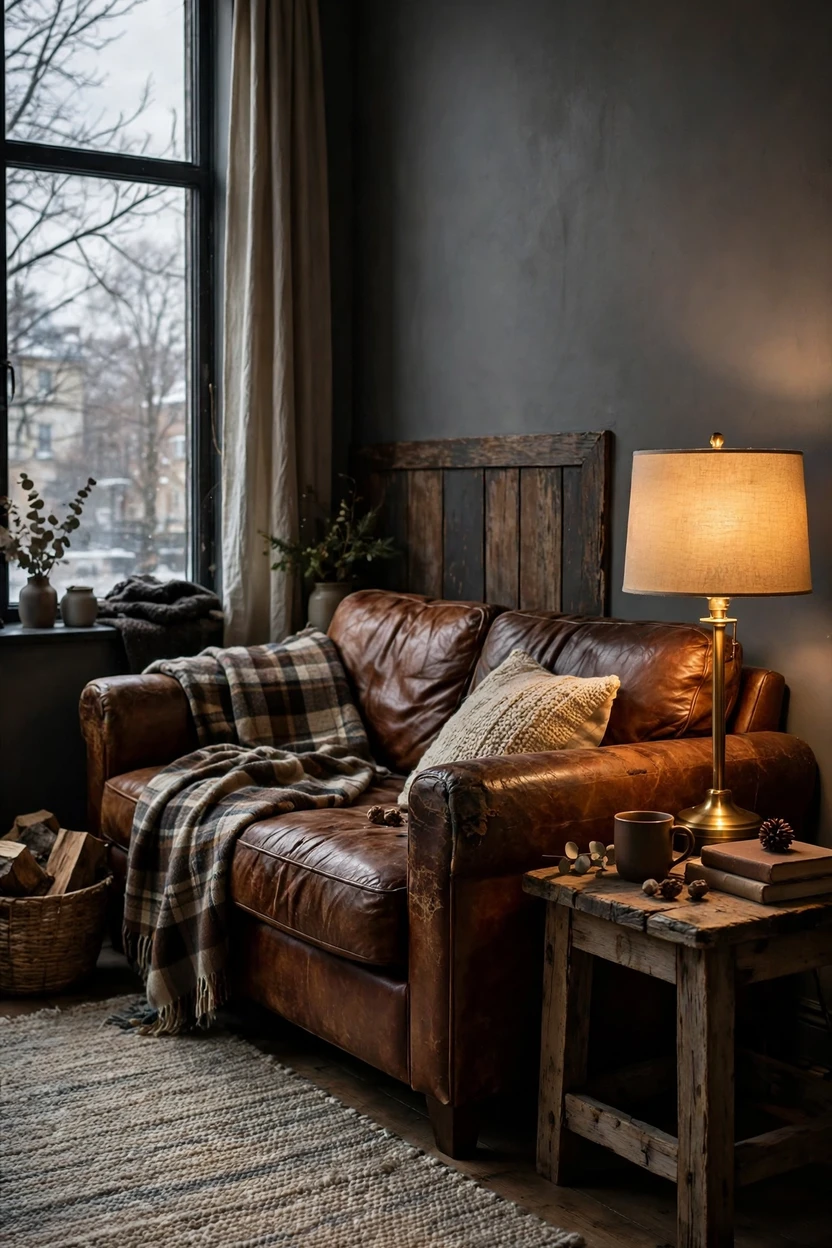
A leather chair or sofa with a few creases is the quickest way to get grunge character, because the wear is real. Look secondhand for black, espresso, or cognac leather with soft arms and an old shape. Condition it once or twice a year so the surface stays supple, not cracked. Pair it with a plaid or wool throw to soften the look. Clean it with a gentle leather cleaner, since a worn look should never mean a grimy one.
3. Layer Flannel and Wool on the Bed
Quiet rule: Layer texture, not clutter
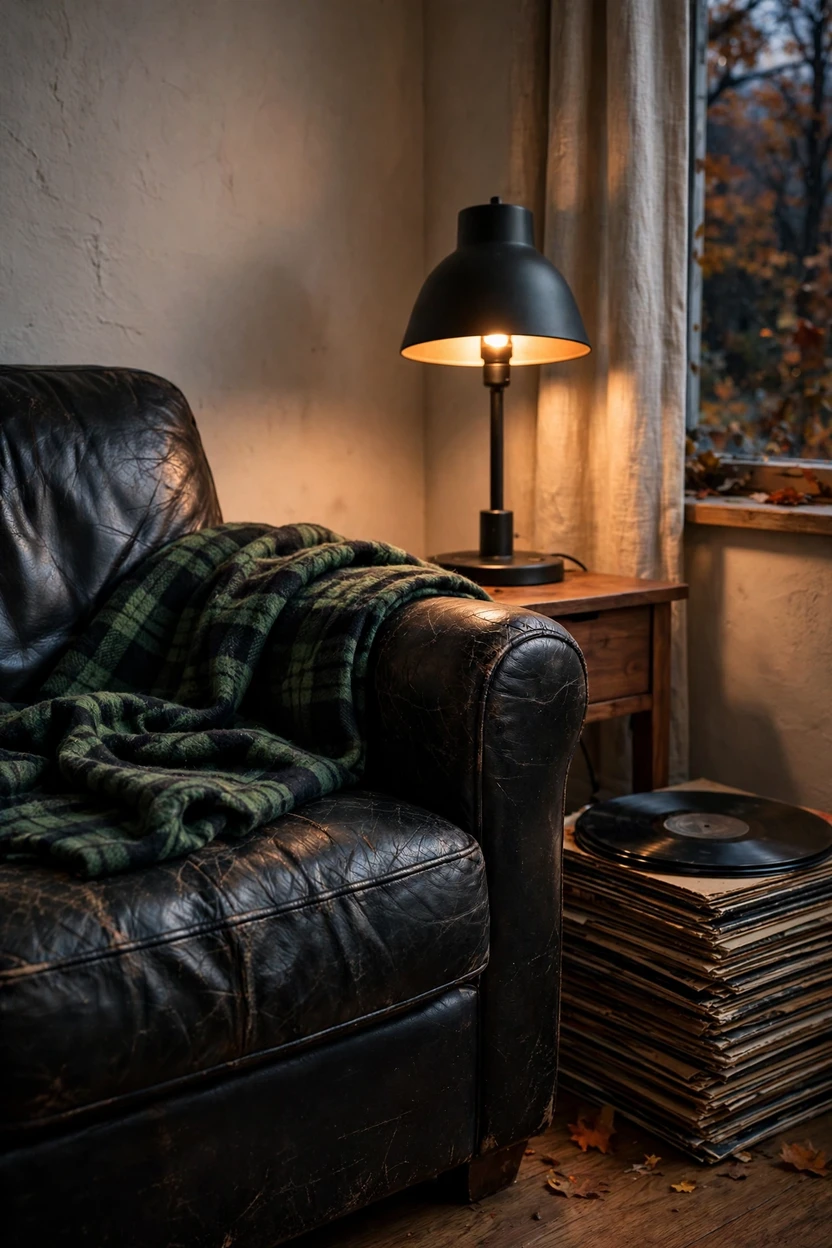
Flannel is the grunge fabric, and a bed is the easiest place to use it. Start with washed flannel sheets in charcoal, forest green, or a muted plaid, then add a chunky wool or knit throw at the foot. Keep to two colors plus black so the bed feels calm, not busy. Add two pillows in a different texture, like linen or velvet, to break up the plaid. Wash the set often, because soft, worn fabric should still smell clean.

4. Hang Band Posters in One Tight Grid
Quiet rule: One loud thing per room
Posters and gig flyers are classic grunge decor, but they look messy when taped up at random. Choose six to nine pieces and frame them in matching black frames with white or off-white mats. Hang them in a grid with about two inches between frames, and center the group at eye level. Use removable hooks, or lean larger frames on a shelf, if you can’t drill. Let this wall be your one loud thing, and keep the rest of the room quiet.

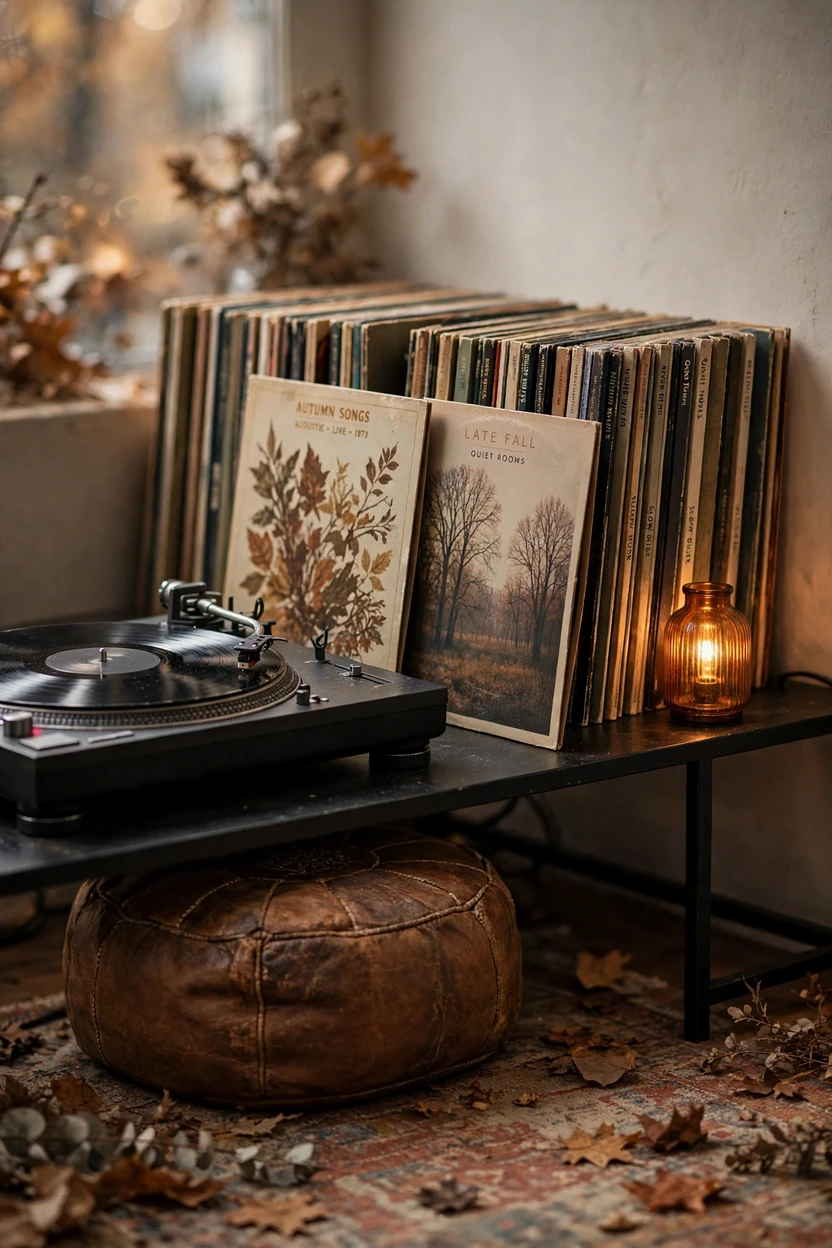
5. Build a Vinyl Record Corner
Quiet rule: Layer texture, not clutter
Records bring music, color, and texture into a room without extra decor. Set a low shelf or crate stack beside a turntable, and display two or three covers upright like art. Keep the collection to what fits, since overflowing stacks look like clutter. Place the setup away from heat and direct sun, which can warp vinyl. Add one small lamp nearby, and the corner becomes your room’s warm center.
6. Use Reclaimed Wood for One Rough Table
Quiet rule: Worn, not dirty
One piece of weathered wood adds the rugged note that dark rooms need. Look for a reclaimed coffee table, a scarred bench, or a workshop-style side table with real scratches. Sand loose splinters and seal the top with a clear, matte finish, so it’s safe for hands and mugs. If an old painted piece looks chipped, don’t sand or scrape it before you check for lead, since paint in older buildings may contain it. Choose one wood piece per room, so the texture reads as a choice.

7. Bring in Concrete-Look Surfaces
Quiet rule: Layer texture, not clutter
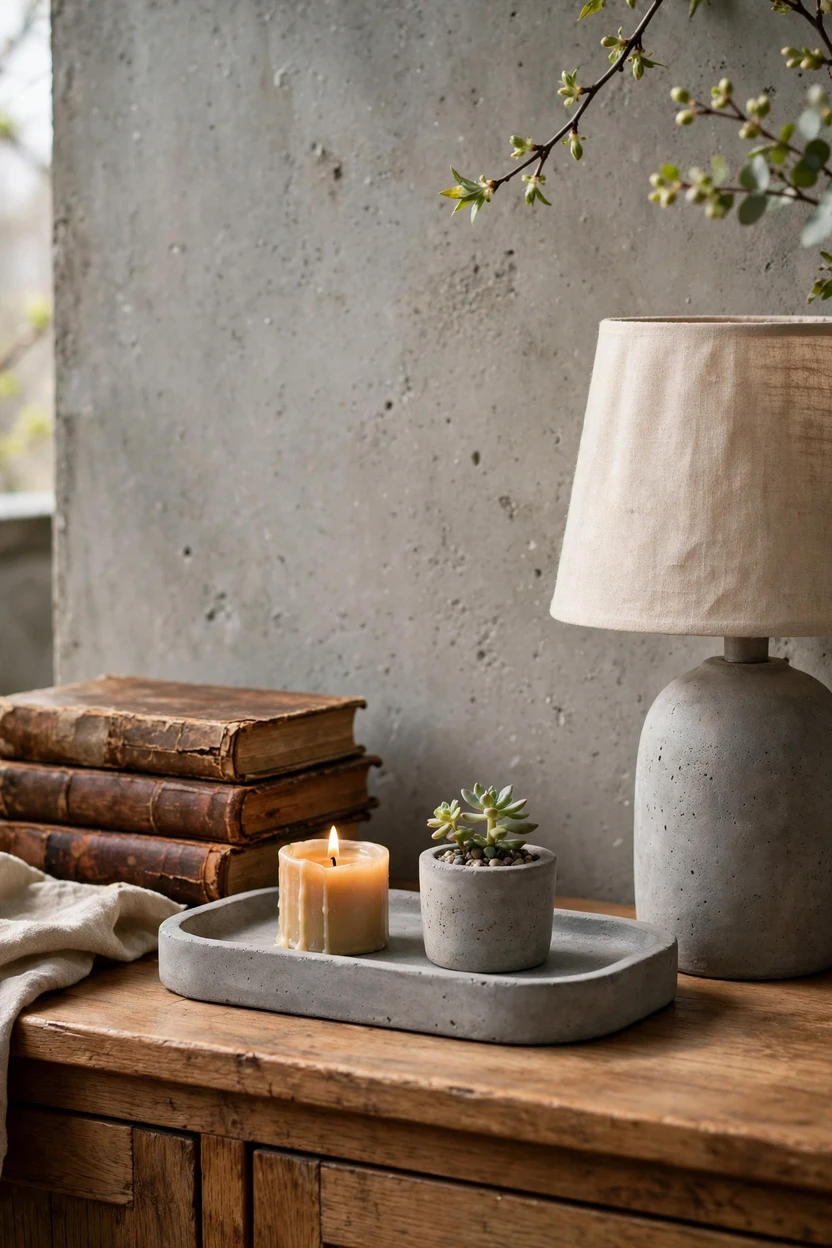
Concrete and plaster finishes give a grunge room a cool, raw backdrop. In an apartment, use light objects like a concrete-look tray, planter, or lamp base, or a peel-and-stick concrete-look tile on a small backsplash. Mix it with warm leather and wood, so the room doesn’t feel like a parking garage. Keep the shade mid-gray, which looks more natural than very dark or very pale. If you rent, choose pieces that sit on surfaces instead of attaching to them.
8. Hang an Industrial Pendant or Clamp Lamp
Quiet rule: Low light, never dark
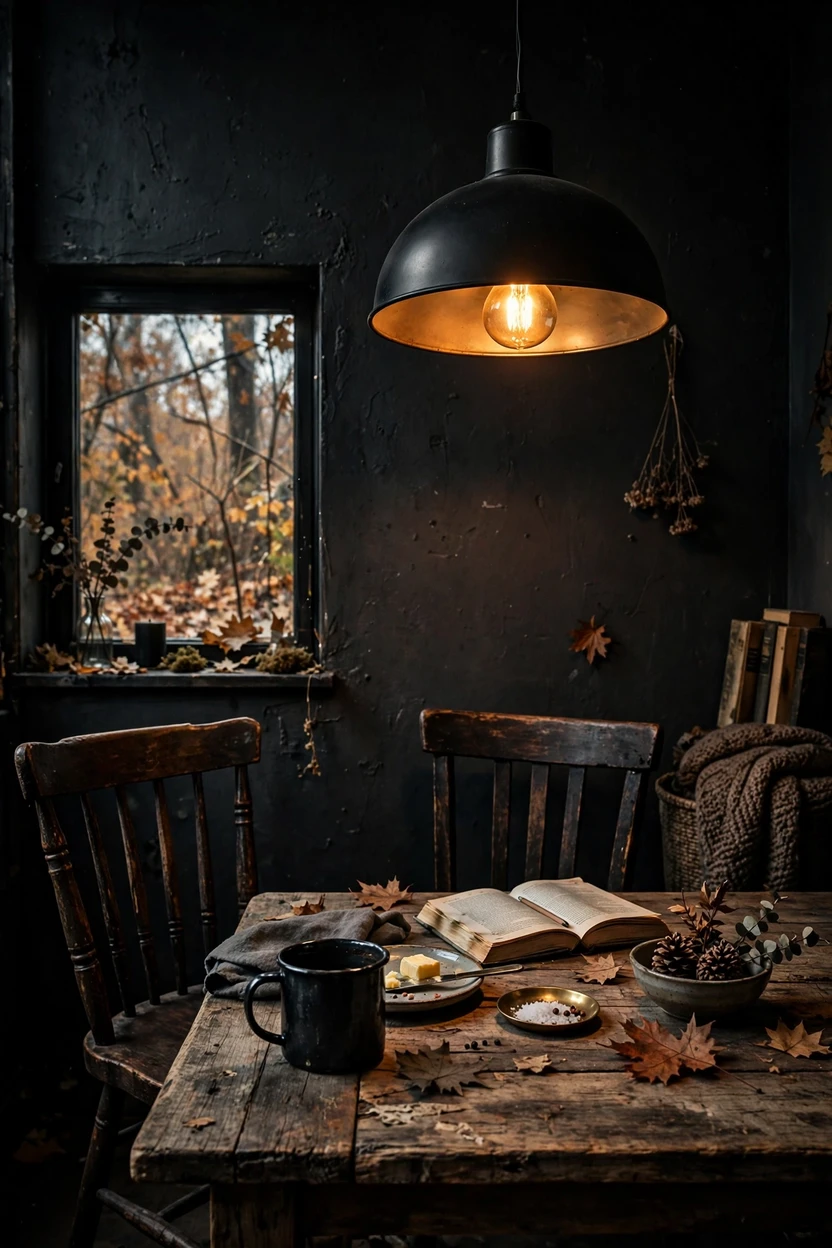
Metal lighting is the grunge shortcut, and a matte black fixture suits a dark room well. Choose a dome pendant, a caged bulb, or a clamp lamp, and put it over a table or reading chair instead of the room’s center. Use a warm bulb around 2200 to 2700K, so the metal looks moody, not harsh. If you can’t change the ceiling light, use a plug-in swag lamp with a cord clip. Dim it whenever possible to keep the glow soft.
9. Swap One Overhead Light for Three Low Lamps
Quiet rule: Low light, never dark
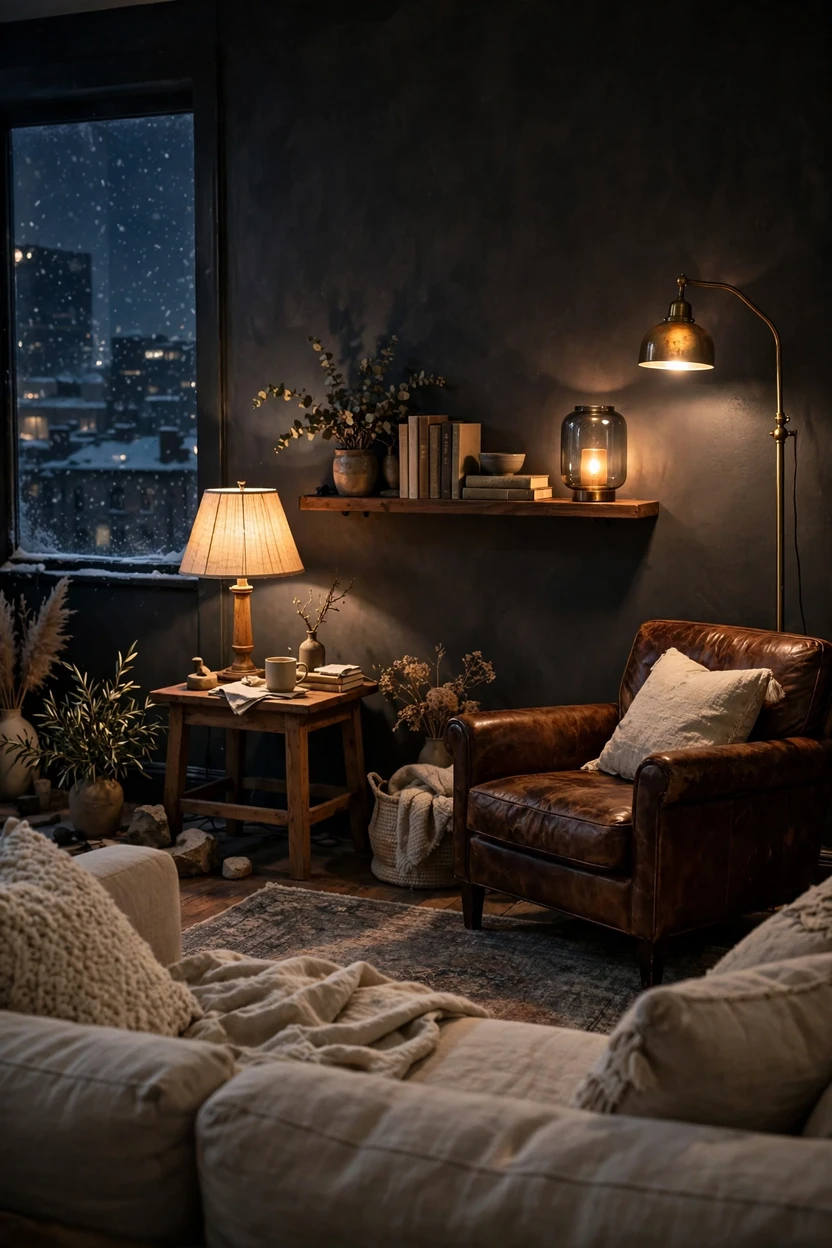
Dark rooms look best when light comes from low, warm pools instead of one bright ceiling bulb. Place one lamp at a seat, one on a shelf, and one by the bed or sofa, all at different heights. Choose shades in linen, parchment, or smoked glass for a soft amber glow. Plug them into one smart plug or a switch strip, so you can turn them on together. This lighting plan is also the best safeguard against a dark room feeling gloomy.
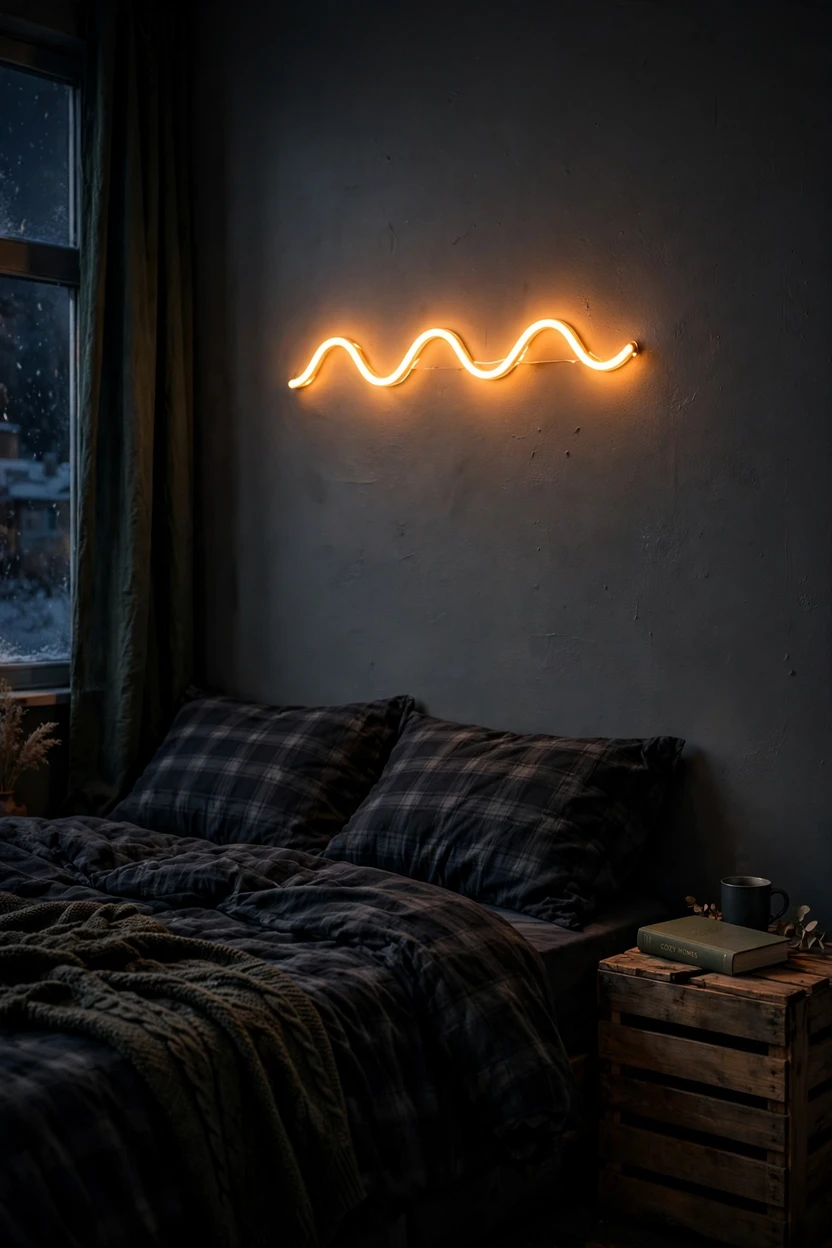
10. Make a Neon Sign Your One Loud Thing
Quiet rule: One loud thing per room
A small LED neon sign adds a punk edge and doubles as a night light. Choose a warm amber, soft pink, or white glow, and a short word or simple shape you’ll still like in a year. Hang it where you can see it from the sofa or bed, and keep it on a dimmer or a timer. Check that the cord and plug suit the sign, and keep it away from curtains and bedding. Keep every other decor item calm, so the sign gets the spotlight.
11. Cover a Wall With a Big Tapestry
Quiet rule: Layer texture, not clutter
A large woven or printed tapestry gives a rental wall a soft, worn backdrop without a drill. Choose a muted design in charcoal, rust, olive, or faded black, and skip busy cartoon prints. Hang it from a wooden dowel on two removable hooks, or use a curtain rod across the top. Pull the edges straight so it looks planned instead of draped. A tapestry also dampens echo in a small apartment, which keeps a dark room feeling calm.

12. Add Black Metal Shelving
Quiet rule: Layer texture, not clutter
Black metal shelves hold the industrial note and give you real storage. A freestanding ladder shelf or a pipe-style unit fits a rental, since it leans on the wall or stands alone. Fill about two thirds of the shelves with books, baskets, and a few records, and leave the rest empty. Put heavier items low so the unit feels stable, and anchor tall pieces to wall studs with anti-tip hardware where your lease allows. Group objects by texture, like glass, ceramic, and wood, so the shelf reads as styled instead of stuffed.

13. Mix Thrifted Chairs in Dark Tones
Quiet rule: Worn, not dirty
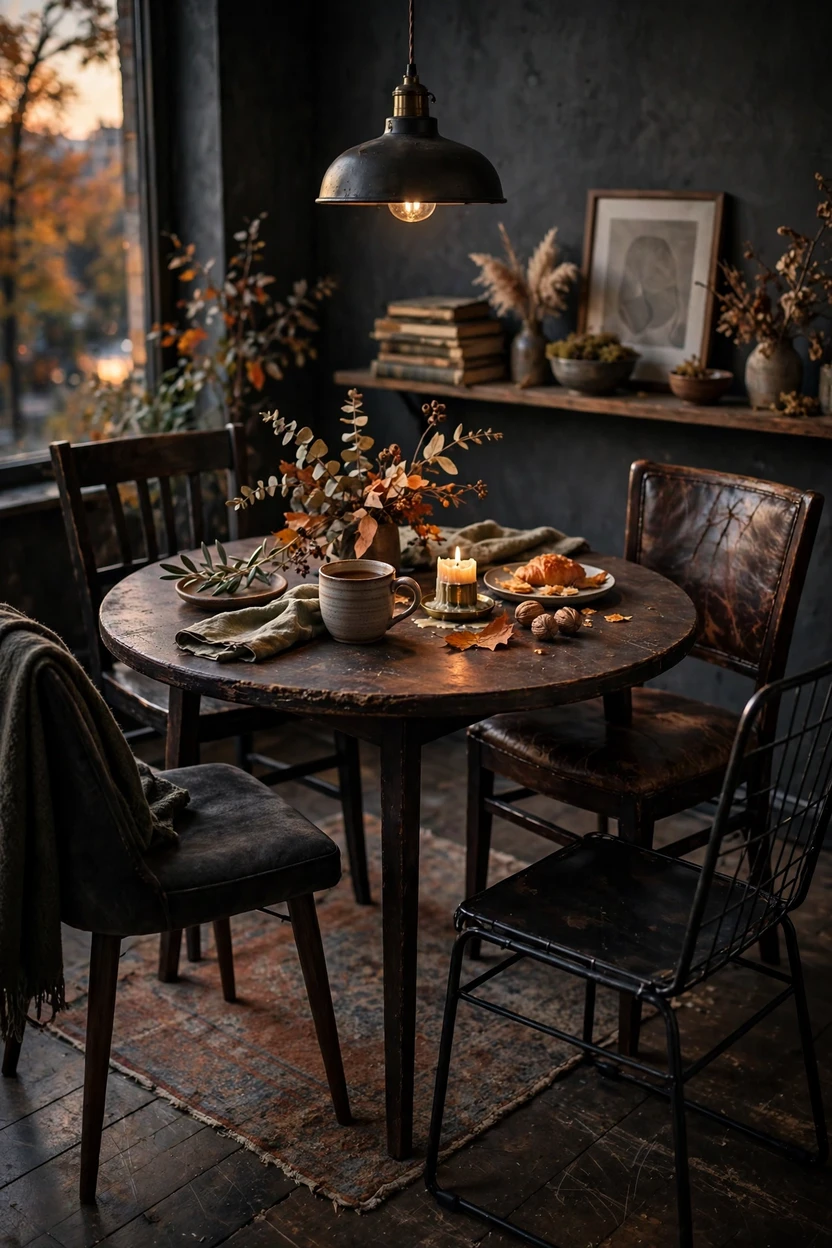
Mismatched chairs feel collected and cost very little, especially at a thrift shop. Look for dark wood, black metal, or old leather seats in different shapes, and keep the color family tight so they still feel related. Check each chair for wobbles, and tighten screws or glue joints before use. Add a cushion in wool or velvet if the seat is hard. Mix two or three designs around a table, and the room will look chosen, not chaotic.
14. Lay a Faded Vintage Rug
Quiet rule: Dark, but warm
A worn rug with faded reds, rusts, and grays adds warmth to a cool, dark room. Look for a vintage kilim, a Persian-style rug, or a washed wool piece that has softened with age. Choose a size that lets the front legs of your sofa and chairs rest on it, often 5 by 8 or 8 by 10 feet. Add a non-slip pad underneath so it stays flat and doesn’t trip anyone. Keep it clean with regular vacuuming, since faded should never mean dusty.

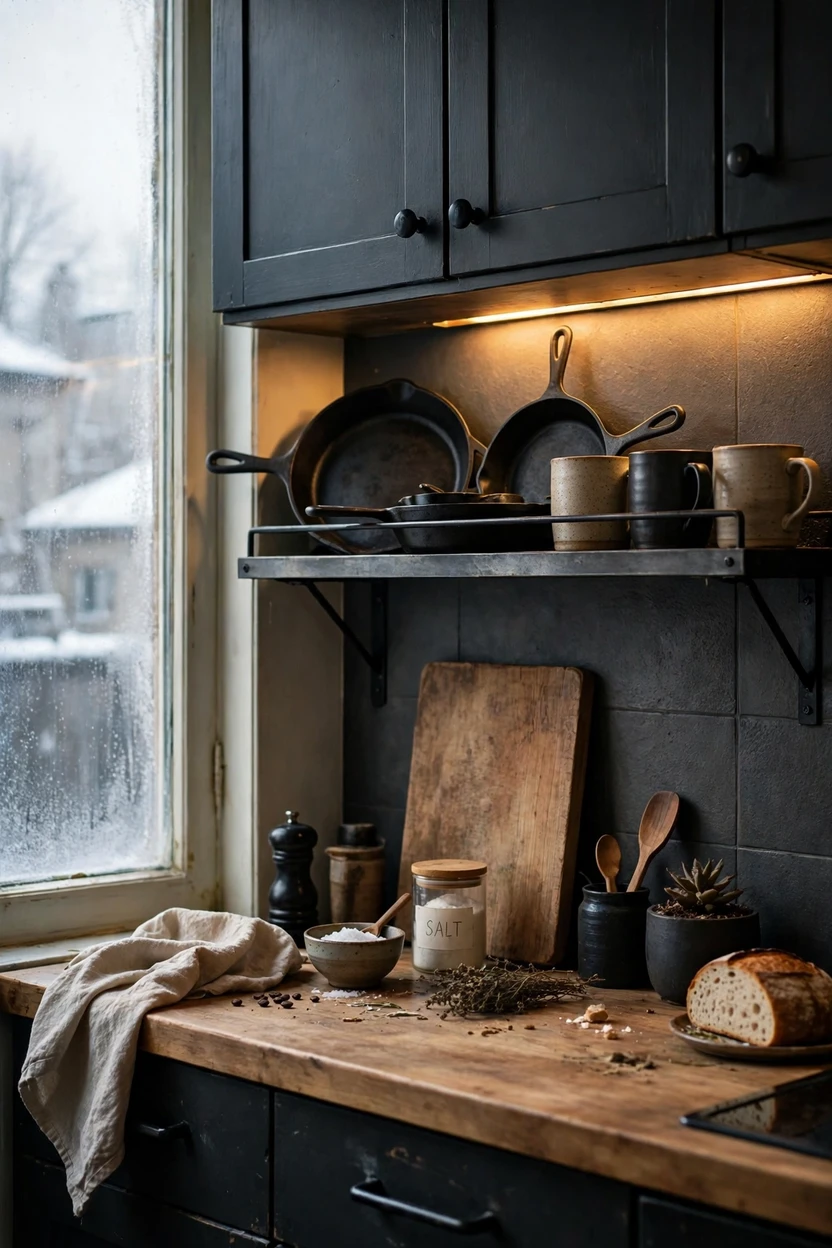
15. Swap Kitchen Hardware to Matte Black
Quiet rule: Dark, but warm
A kitchen can join the look with one small change: matte black knobs and pulls. Swapping hardware is renter-friendly, since you can keep the originals in a labeled bag. Add a steel shelf or a wire rack for pots, and a wooden cutting board on the counter for warmth. Keep counters mostly clear, with just a few useful items on display. A dark, quiet kitchen looks best when it’s very clean, so wipe metal and wood often.
16. Style a Dark, Soft Bathroom
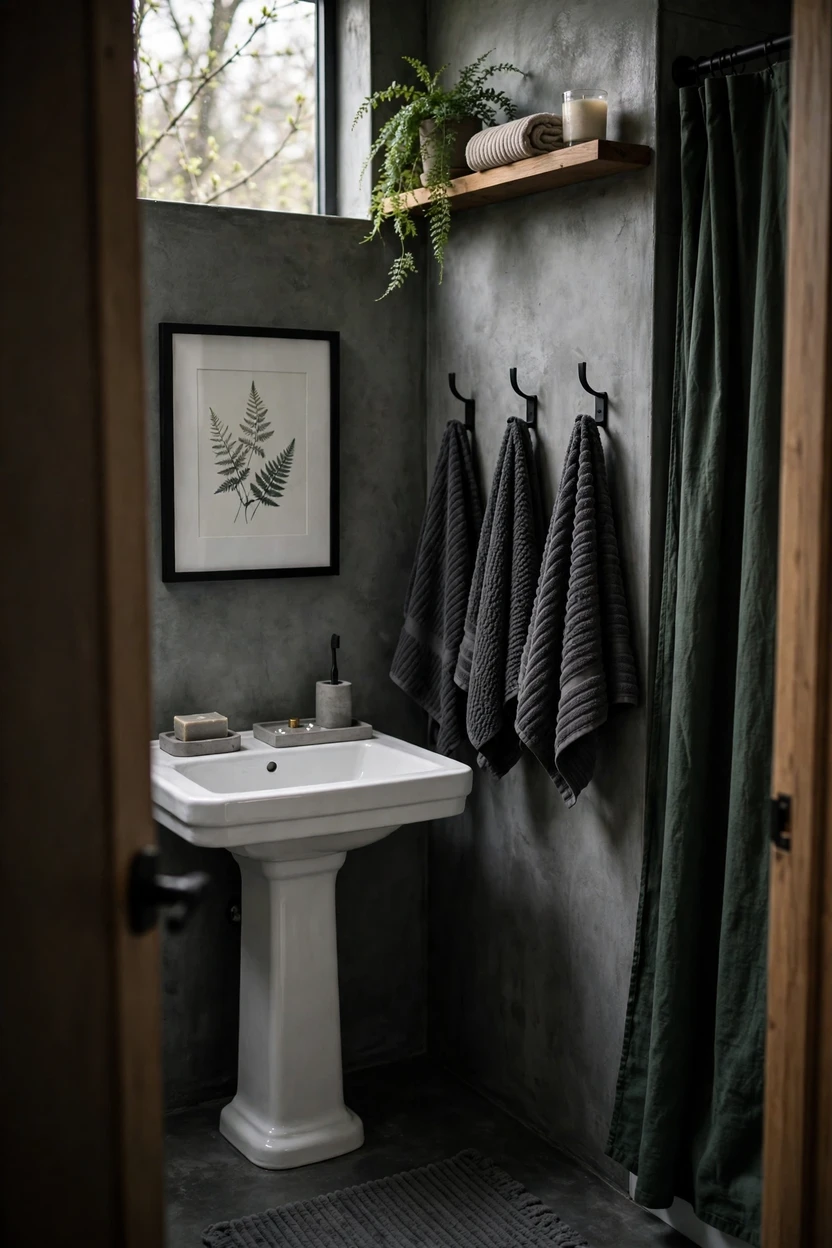
Quiet rule: Worn, not dirty
A bathroom can be grunge without feeling damp or heavy. Choose ribbed or waffle towels in charcoal, moss, or bone, and hang them on simple metal hooks. Add a concrete-look soap dish, a black-framed print, and a small plant that likes humidity. Use a dark shower curtain with a good liner, and run the fan to prevent mildew. Wash towels and mats often, because texture looks great only when it’s fresh.
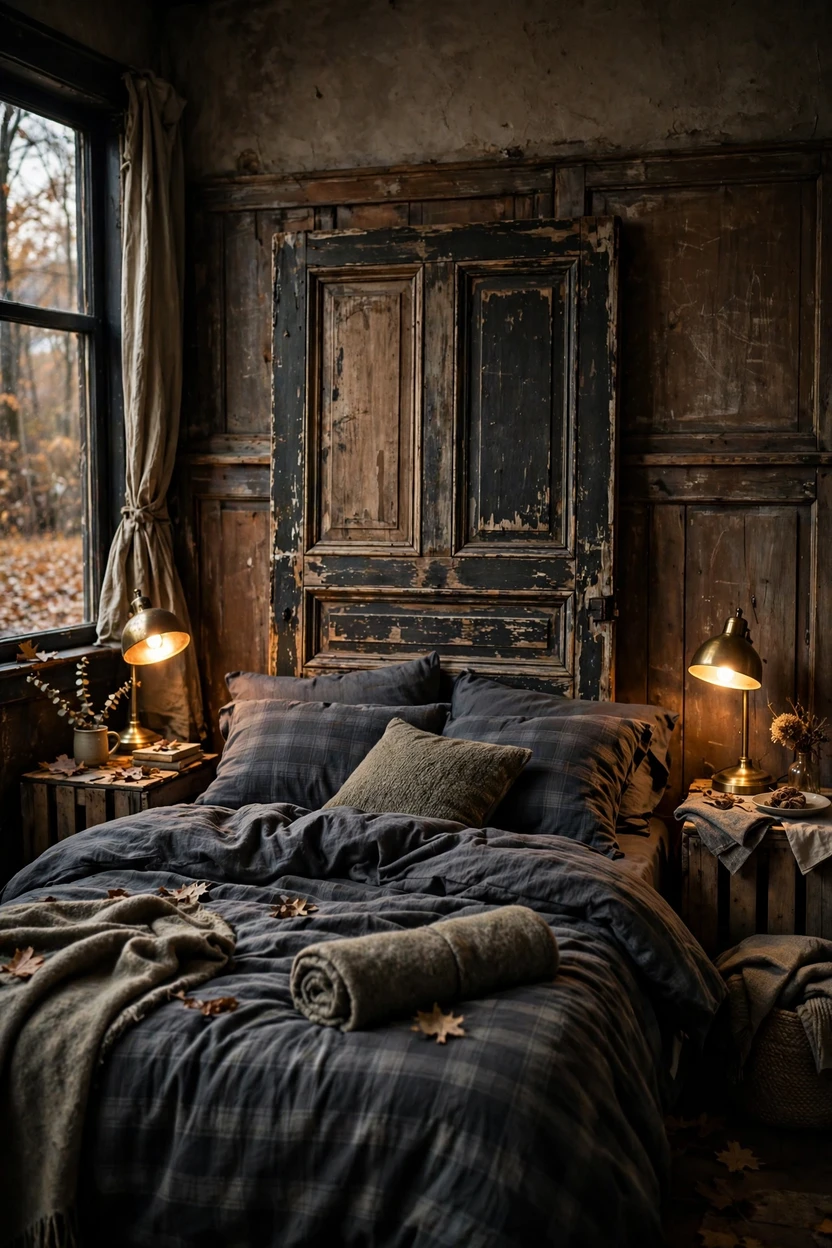
17. Make a Salvaged Door Headboard
Quiet rule: Worn, not dirty
An old wooden door makes a strong headboard with real age. Lean it against the wall behind the bed, or mount it into studs if your lease allows. Clean it well, seal any rough areas, and check for lead before sanding old paint. Use a matte clear coat, which keeps the worn surface and protects your pillows. Add a small brass lamp on each side, and the bed becomes a calm, rugged center.
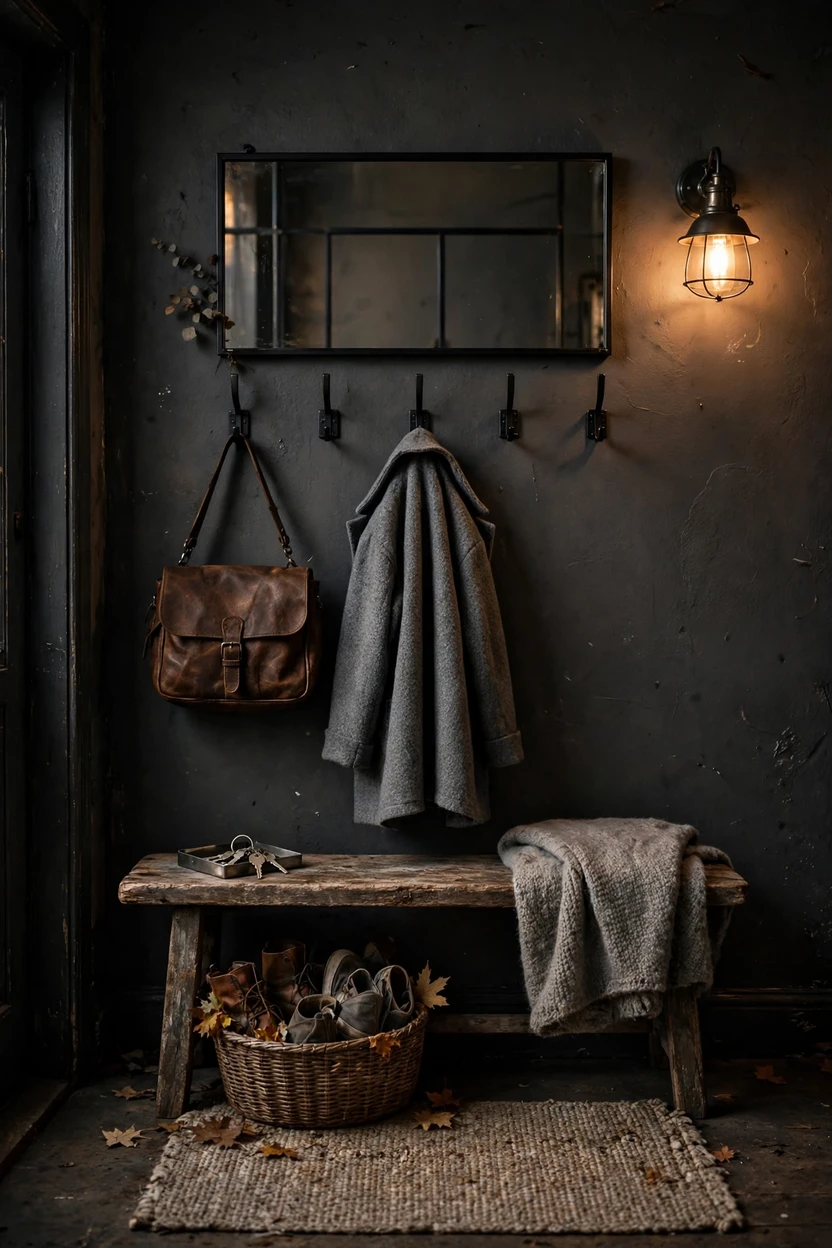
18. Build an Entry Drop Zone With Metal Hooks
Quiet rule: Layer texture, not clutter
The entry sets the mood and keeps clutter from spreading. Hang a row of black metal hooks or a wall-mounted rail for coats and bags, and put a scarred bench or small console below. Add a tray for keys and a basket for shoes, so everything has a place. Use a small mirror in a thin black frame to bounce light. If you rent, choose removable hooks rated for the weight you’ll hang.
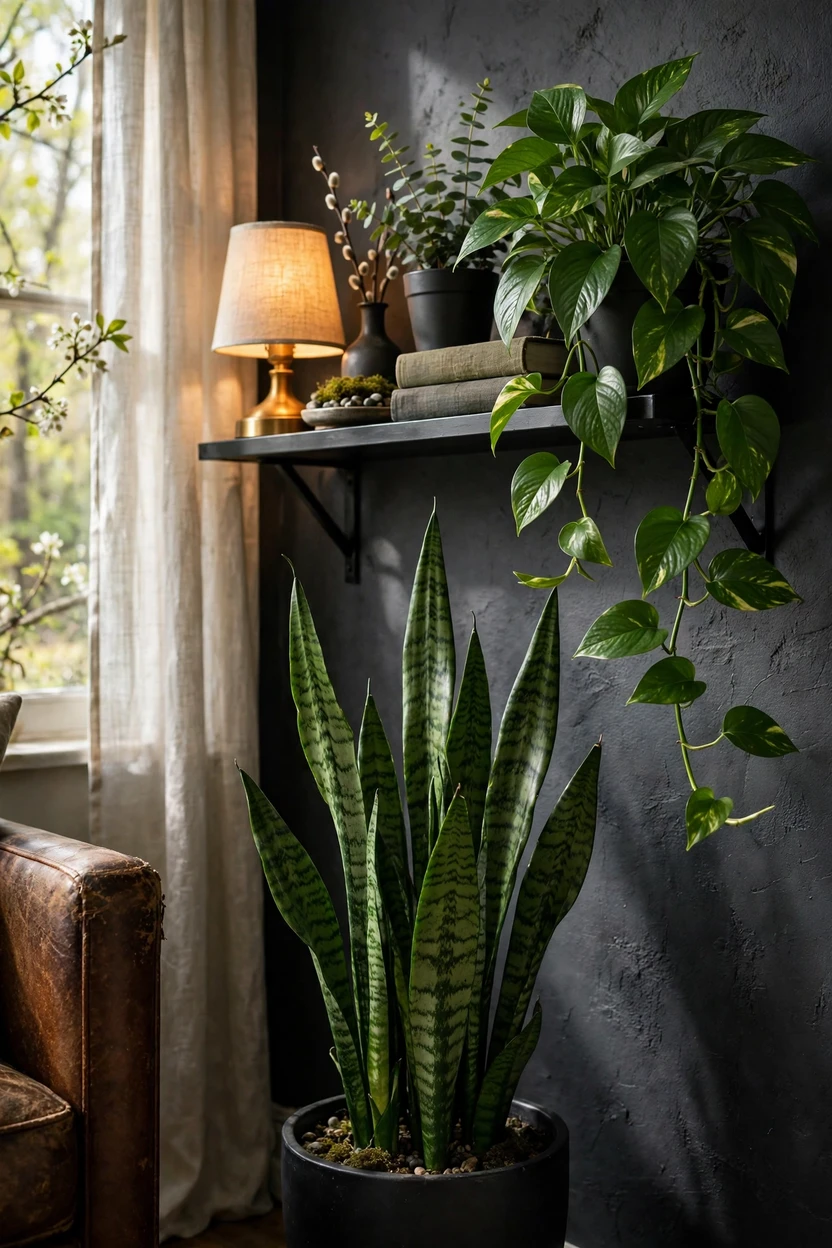
19. Add Dark Foliage Plants
Quiet rule: Dark, but warm
Plants keep a dark room from feeling dead. Choose plants with deep green leaves, like a ZZ plant, a snake plant, or trailing pothos, since they do well in lower light. Put them in matte black, gray, or terracotta pots, and avoid shiny, bright containers. Group one tall plant with one trailing plant near a window or lamp. Check pet safety if you have a cat or dog, as some common houseplants can be harmful.
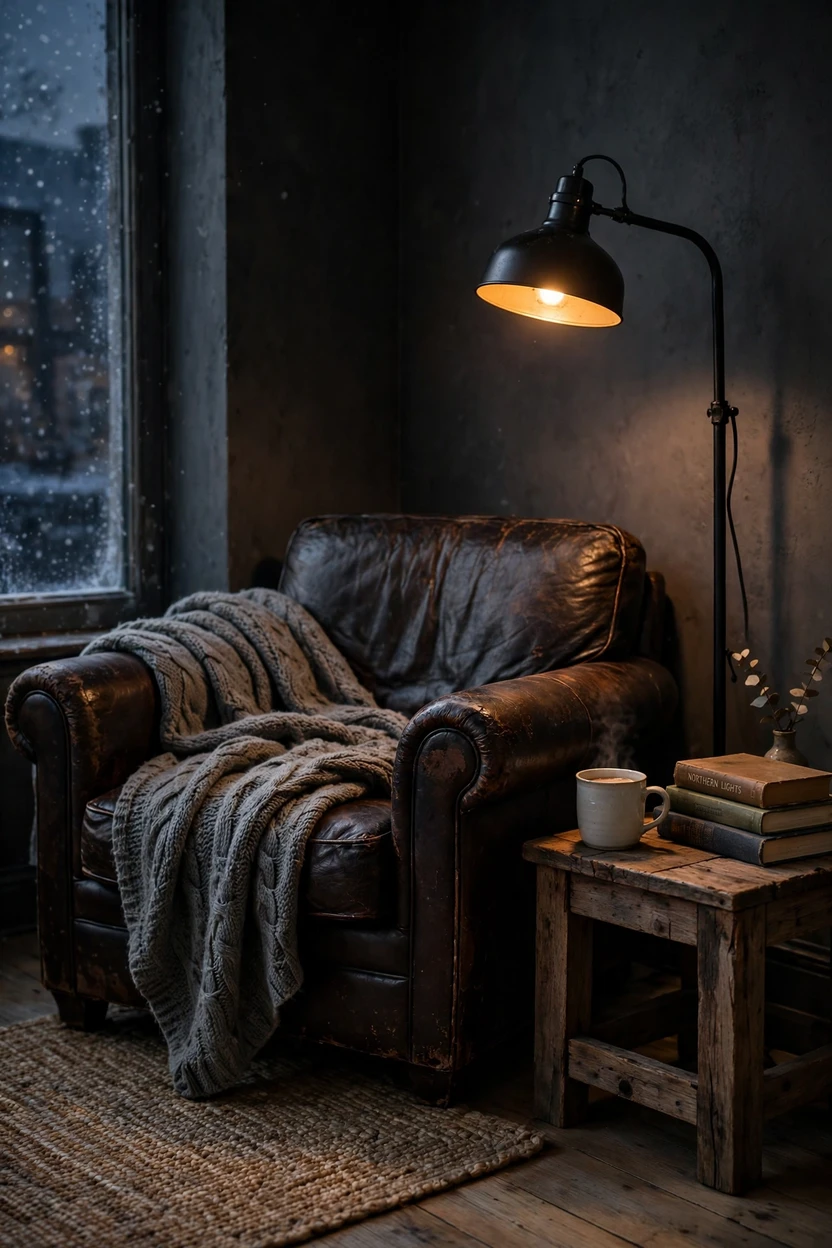
20. Create a Quiet Reading Nook
Quiet rule: Low light, never dark
Every grunge apartment needs a place to soften, and a reading nook does it best. Set a worn leather or velvet chair in a corner with a floor lamp, a wool throw, and a small side table for a mug. Pick a warm bulb and a shade that points light down at the page. Keep the nook clear of extra decor, so it feels like a retreat. Add one personal object, like a favorite record or a book stack, and the corner feels yours.
Styling Tips
These tips keep dark style looking planned.
- Stick to a tight palette. Use charcoal, black, one warm earth tone like rust, brown, or olive, and one soft light color for balance.
- Pair matte with soft. Matte paint, worn leather, and wool look rich together. Avoid shiny, brand-new finishes.
- Repeat black three times. Picture frames, a lamp, and hardware tie the room together.
- Balance dark with light. A cream pillow, a pale rug edge, or a white mug keeps the room from feeling heavy.
- Group in odd numbers. Three objects on a shelf or table look natural. Four looks fussy.
- Leave surfaces partly bare. Gaps make the objects you do show feel chosen.
- Add one clean scent. Cedar, vetiver, or a smoky tea candle (used safely) supports the mood without clutter.
Practical Implementation Ideas
A good order makes the project calm and low risk.
- Pick your rules. Write the five quiet rules on a sticky note, and test every purchase against them.
- Check your lease. Know what you can paint, drill, or hang before you buy.
- Declutter first. Grunge looks edgy on clear surfaces and messy on crowded ones.
- Start with light. Swap bulbs to warm white, add lamps at different heights, and see how the room feels before you add anything else.
- Add one dark anchor. Pick a charcoal wall, a leather chair, or a dark rug. Live with it for a week.
- Thrift in layers. Hunt for leather, wood, rugs, and chairs one weekend at a time, and clean everything when it comes home.
- Do a safety pass. Check cords and outlets, keep neon and lamps clear of fabric, and use flameless candles near bedding and curtains.
- Do a clean pass. Vacuum rugs, condition leather, and wash textiles. Worn should look cared for.
Common Mistakes to Avoid
- Painting every wall black. Without strong light, a small apartment can feel like a cave. Start with one wall.
- Mistaking dirty for grunge. Dust, stains, and smells are not a look. Wear is on purpose and clean is non-negotiable.
- Using cool white bulbs. They make dark rooms look harsh and flat. Choose warm bulbs around 2200 to 2700K.
- Too many loud things. Posters, neon, a loud tapestry, and graffiti together feel chaotic. Pick one.
- Buying fake-distressed furniture. New pieces that are made to look beat up often look flat. Real wear has depth.
- Sanding old paint without testing. Paint in older buildings may contain lead. Test first, and ask a pro if you’re unsure.
- Overloading outlets. Neon signs, lamps, and speakers add up. Use a surge protector and don’t daisy-chain cords.
- Using weak hooks for heavy items. Check the weight rating on adhesive hooks, and use screws only where your lease allows.
- Skipping a place to rest. A dark room needs one soft, warm seat or the style feels cold.
Small-Space Alternatives
Small apartments can handle dark style when light does the heavy lifting.
- Pick one dark wall only. Choose the wall behind the bed or sofa, and keep the rest light or warm white.
- Use lamps instead of ceiling lights. Low, warm pools of light make a small room feel deeper, not smaller.
- Go vertical. A tall black metal shelf or a grid of framed posters uses wall space and keeps the floor open.
- Add a mirror. Lean a large mirror with a thin black frame opposite a lamp, and it will bounce the glow around.
- Skip the big dark rug. A smaller faded rug in warm tones keeps the floor from swallowing the room.
- Zone a studio. Use a rug, a lamp, and one chair to mark the sitting area, and a headboard or a bookshelf to mark the sleeping area.
Budget-Friendly Alternatives
Grunge is a good fit for a budget, since worn pieces cost less.
- Thrift for the big pieces. Check secondhand shops, estate sales, and online marketplaces for leather chairs, wood tables, and rugs.
- Paint one thing. One wall or one cabinet in charcoal does more than a pile of decor.
- Frame your own art. Buy mismatched frames, spray them matte black, and add white mats.
- Make your own tapestry. Heavy cotton, canvas, or an old wool blanket on a dowel works well.
- Reuse crates and boards. Wooden crates and old boards become nightstands, shelves, and a record display.
- Renter-friendly picks: removable hooks, a fabric wall panel, plug-in sconces, leaning mirrors, freestanding shelves, and lamps you can take with you.
Pro Styling Recommendations
- Do the squint test. Squint at the room. If one thing jumps out, it should be your one loud thing. If three things jump out, edit.
- Photograph the room at night. A phone photo shows glare, dark holes, and clutter fast.
- Use dimmers or smart bulbs. They let you change the mood from bright cleanup mode to a soft evening glow.
- Vary heights. Mix a low chair, a mid-height table, and a tall shelf or lamp, so the dark palette still has shape.
- Mix matte, soft, and a little shine. A bit of brass, glass, or polished wood keeps the room from looking flat.
- Keep a care routine. Condition the leather, wipe the wood, vacuum the rug, and wash the textiles. A little upkeep keeps the style looking intentional.
- Keep your lease notes. Save a photo of the wall and any items you remove, so you can restore them when you move.
FAQs
What is grunge decor?
Grunge decor is a dark, worn, textured home style drawn from the early 1990s music scene in Seattle. It uses charcoal, black, leather, metal, flannel, and vintage finds. The best versions look lived in, not messy.
How do I do grunge in a small apartment?
Choose one dark wall, add several low warm lamps, and pick one loud piece, like a poster grid or a neon sign. Use slim, tall storage and keep the floor open. Light and restraint keep a small room from feeling smaller.
Is grunge decor still in style?
Designers have pointed to a comeback of edgy, dark, textured rooms, and trends lean toward moody colors, lived-in layers, and imperfection. The key is warmth and restraint, so the look feels personal instead of costume-like.
What colors work for grunge decor?
Charcoal, black, and gray form the base. Add warm earth tones like brown, rust, and olive, plus deep green or faded plaid. Keep one soft light color, like cream, to stop the room from feeling heavy.
How do I keep grunge from looking messy?
Follow the five quiet rules: worn but clean, dark but warm, one loud thing per room, texture over clutter, and low light that is never dark. Edit surfaces and leave some blank space.
Can I do grunge decor in a rental?
Yes. Use removable hooks, fabric wall panels, freestanding shelves, lamps, rugs, thrifted furniture, and swap-able hardware. If you want to paint, ask your landlord first, and consider removable wallpaper as a backup.
What lighting is best for a grunge room?
Use warm bulbs around 2200 to 2700K and several low lamps at different heights. Add a matte black pendant or clamp lamp for the industrial note, and use dimmers where you can.
What furniture fits the grunge style?
Worn leather chairs, reclaimed wood tables, black metal shelves, and mismatched thrifted chairs all fit. Choose real wear over new pieces made to look old, and keep the shapes simple.
Is it safe to use thrifted and old pieces?
Usually, with a few checks. Clean everything, tighten loose joints, and look for signs of pests. If a piece has old painted finishes and you plan to sand or scrape it, test for lead first, especially if it comes from an older building.
How do I make grunge feel cozy?
Add soft textiles like flannel, wool, and velvet, and use warm lamps instead of bright overheads. Make one comfortable seat, like a leather chair in a reading nook, and keep it clear of extra decor.
Conclusion
Grunge at home was never about mess. It was about honesty: worn things, real materials, and rooms that don’t pretend. The quiet rules just keep that spirit livable.
Start with light and one dark anchor. Add a lamp, a leather chair, and a charcoal wall, and then wait. If the room feels like a place you want to come home to, add one loud thing and stop.