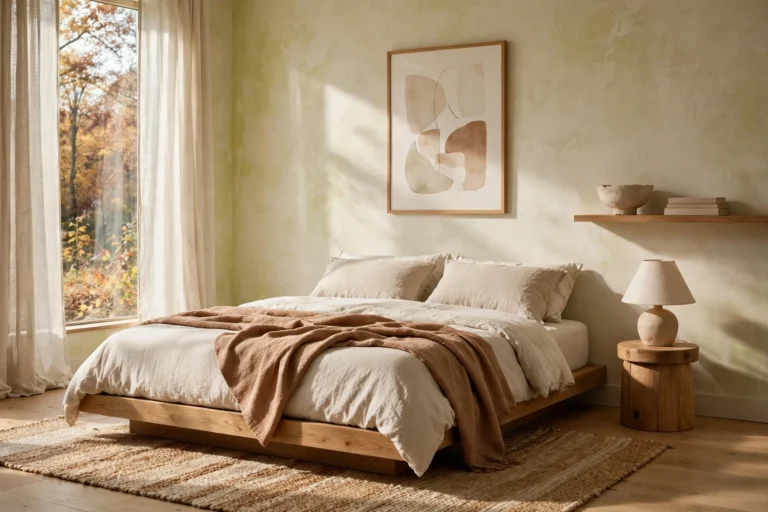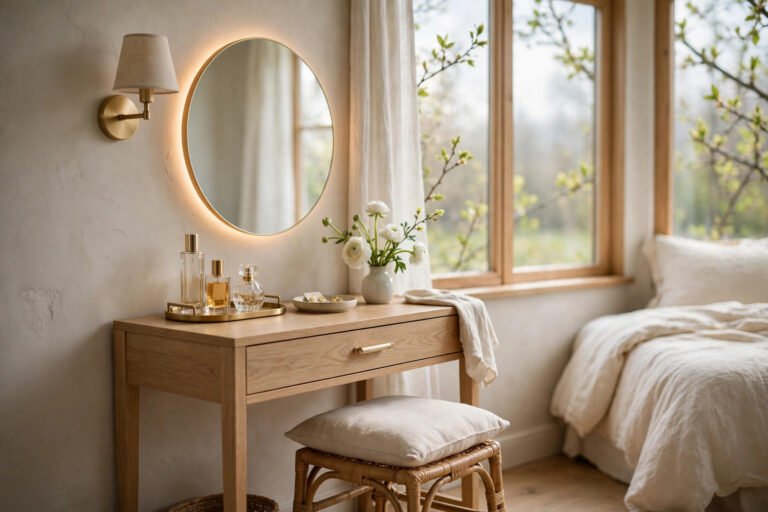
17 Dark Elegant Bedroom Ideas That Feel Cozy, Not Heavy
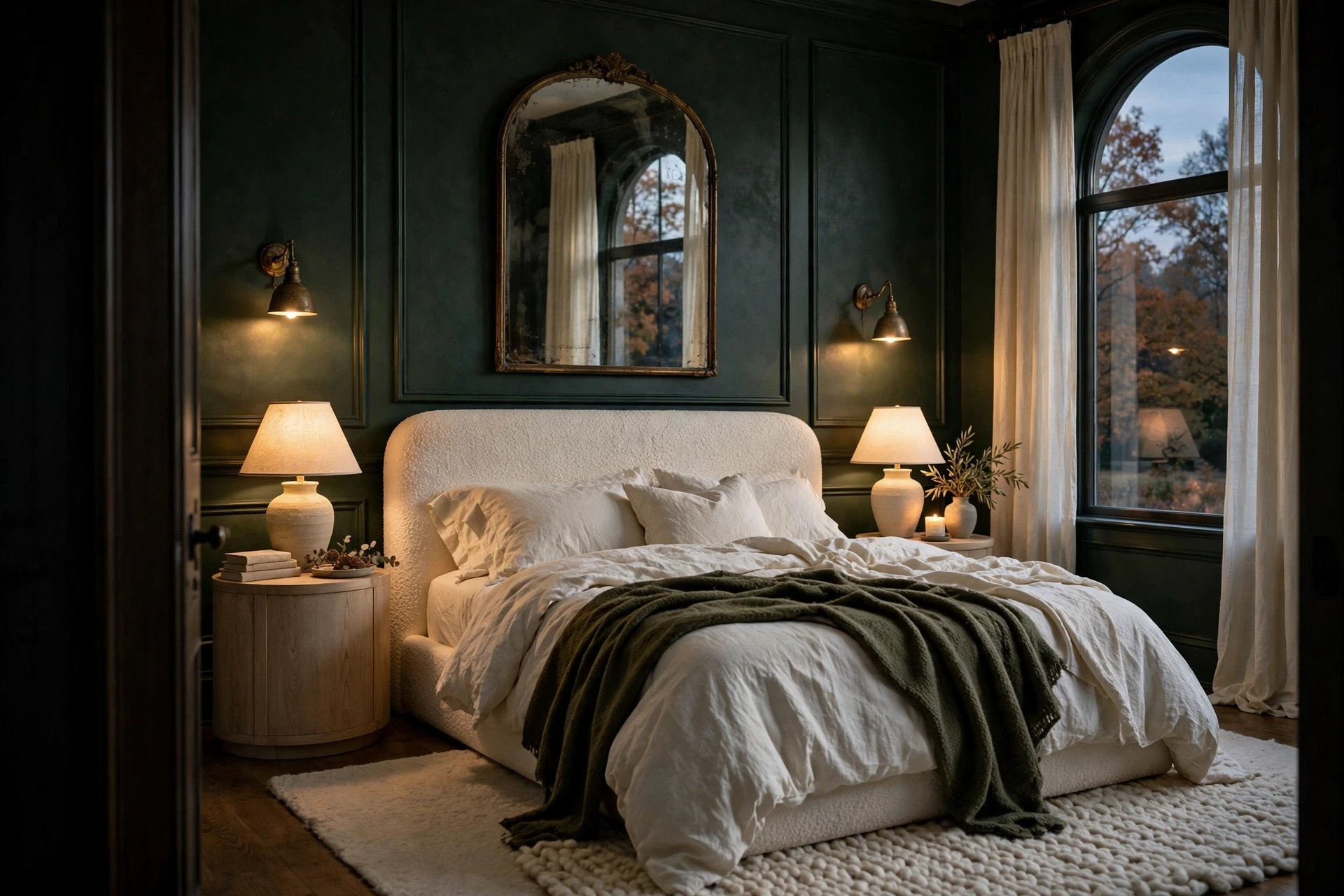
You have seen the photos. A bedroom in deep green or ink navy, glowing like a candle, with a bed that looks like a cloud. It feels rich and calm.
Then the worry sets in. What if it feels like a cave? What if you wake up on a gray morning and the walls look flat and sad?
That worry is fair, and it has a fix. A dark bedroom feels heavy when it has no contrast, no warm light and no texture. Add those three things, and the same deep wall color feels like a soft blanket around the room.
These 17 ideas show you how, with real numbers and simple choices you can test in your own space.
Quick answer: How do you make a dark bedroom feel cozy, not heavy? Choose a deep color with a warm undertone, then add contrast with cream or white bedding, a pale rug and light wood. Layer warm 2700K light at eye level, add a mirror across from a window, and mix textures like velvet, linen and wool. Keep surfaces edited so the dark walls feel calm, not crowded.
Table of Contents
17 Dark Elegant Bedroom Ideas That Feel Cozy, Not Heavy
1. Choose a Deep Color with a Warm Undertone
A deep color with a warm undertone looks rich, while a flat blue-black can look cold and dull. Think forest green with a trace of olive, aubergine, mocha brown, wine red or a soft charcoal with a brown-gray base. Warm undertones glow under 2700K evening bulbs, so the walls look velvety and not inky. Before you buy, hold a big sample against your bedding and wood tones and look at it under the bulbs you really use. Navy and charcoal still work, but pick versions that lean slightly warm or green.

2. Match the Depth to Your Window Light
A paint color has a number called LRV, or light reflectance value, from 0 for black to 100 for white. Very deep colors, with an LRV under about 15, absorb almost all light and need strong lamps to look warm. A mid-dark shade with an LRV around 20 to 35 gives you the moody feel while still bouncing a little daylight. As a rule of thumb, a north-facing room gets cool light, so choose a warm undertone and a slightly lighter depth. A south-facing room can carry a deeper color because it gets more daylight. Always check the LRV on the swatch, and test a two-foot patch in morning and evening light.
3. Drench the Walls, Trim and Doors in One Color
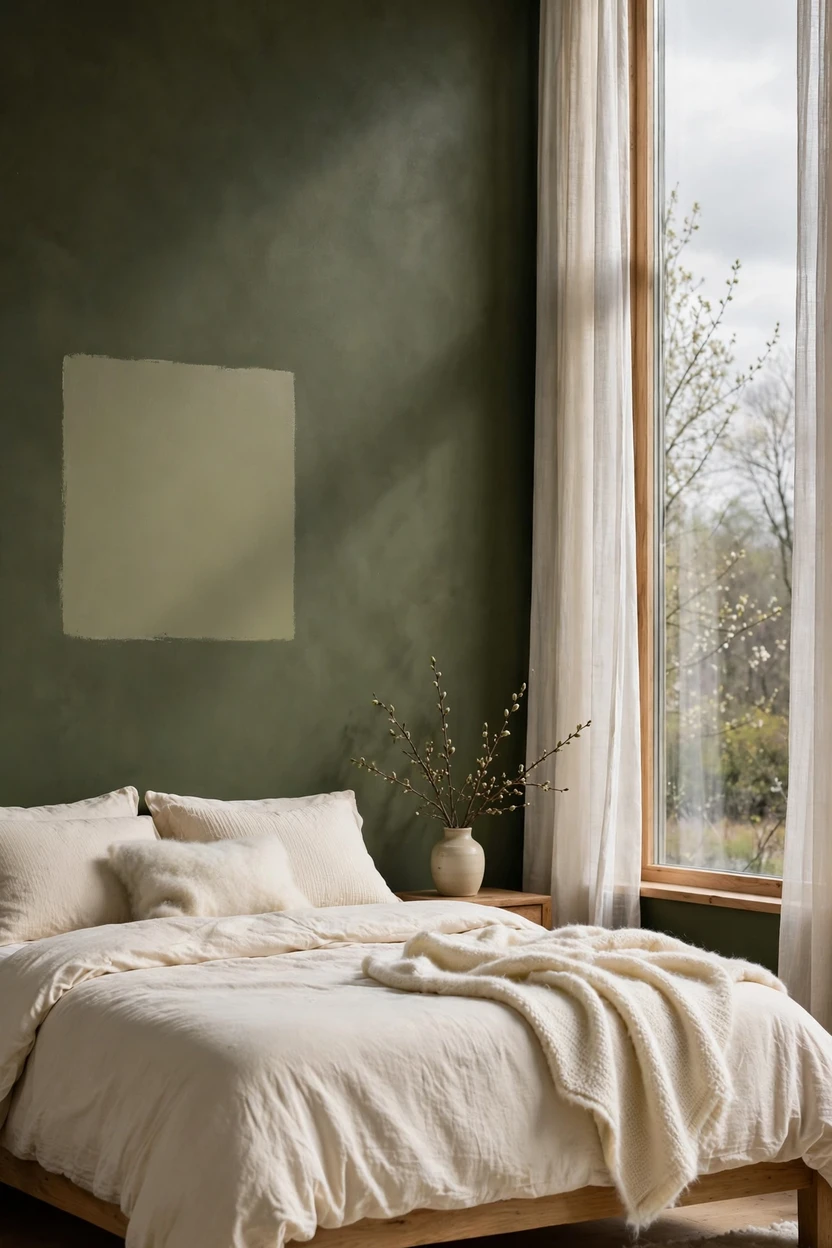
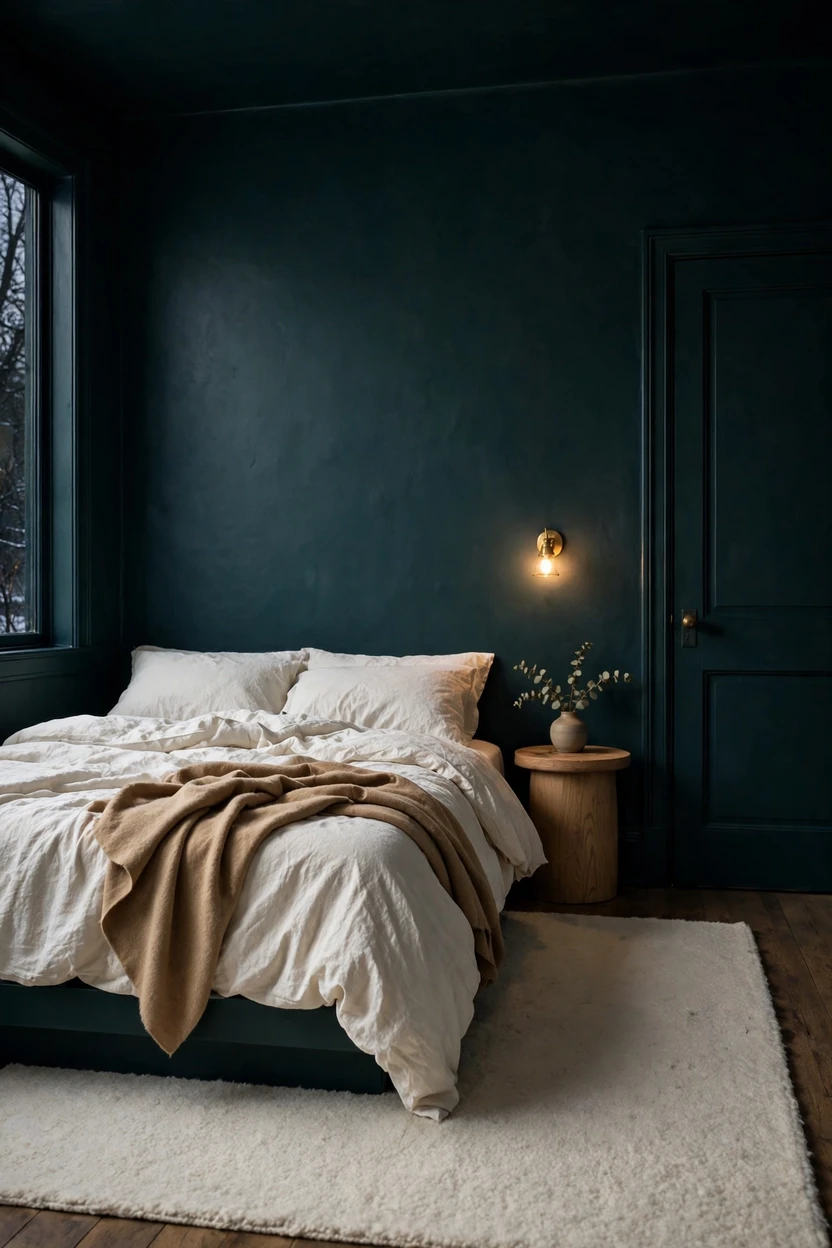
Painting walls, trim, baseboards and doors the same deep color erases the hard lines that chop a room into pieces. The room reads like one soft shape, and the corners fade away. This can make a small bedroom feel less boxed in, because your eye has no edge to stop on. Use a matte or eggshell finish, since matte looks velvety and hides wall flaws, while eggshell reflects a little more light. Keep the bedding, rug and curtains lighter, so the color feels like a backdrop and not a wall of weight.
4. Choose the Ceiling on Purpose
A bright white ceiling over dark walls can look like a lid pressed down on the room. You have three good options. Paint the ceiling the same deep color for a wrapped feel, paint it half a shade lighter for a softer finish, or use a warm off-white instead of stark white for a lighter feel. As a simple rule, rooms with 8-foot ceilings look best with the same color or a half-shade lighter, and higher ceilings can carry a deeper shade. Use a flat finish on ceilings to hide flaws and avoid glare.

5. Start with One Dark Wall Behind the Bed
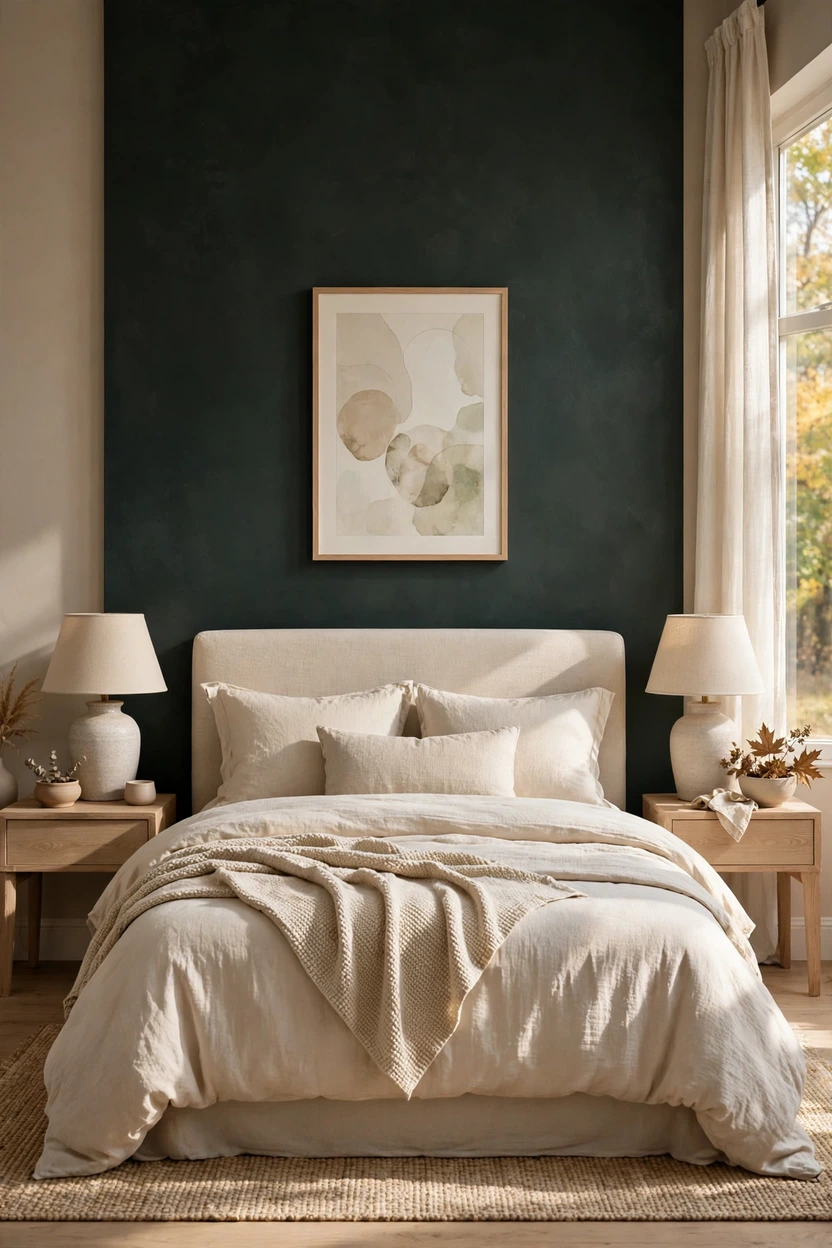
If you are not ready for four deep walls, start with the wall behind the bed. This wall frames the bed and is the first one you see from the door. Keep the other walls a warm mid-tone, like greige or soft oat, so the contrast feels gentle and not harsh. End the dark paint at an inside corner for a clean edge. This idea also works for renters with a removable wallpaper or a large painted panel, and you can expand to more walls later.
6. Add Paneling or Molding in the Same Dark Color
Paneling and molding bring elegance without adding a single object. Picture-frame molding, board and batten or flat wall panels all create gentle shadow lines that give a dark wall depth. Paint the panels in the same color as the wall, so the pattern comes from light and shadow and not from color. Run the paneling the full height behind the bed, or to about 48 inches around the room for a classic look. The shadows help the wall feel rich and layered, which is the opposite of flat and heavy.
7. Set a Pale Headboard Against the Dark Wall
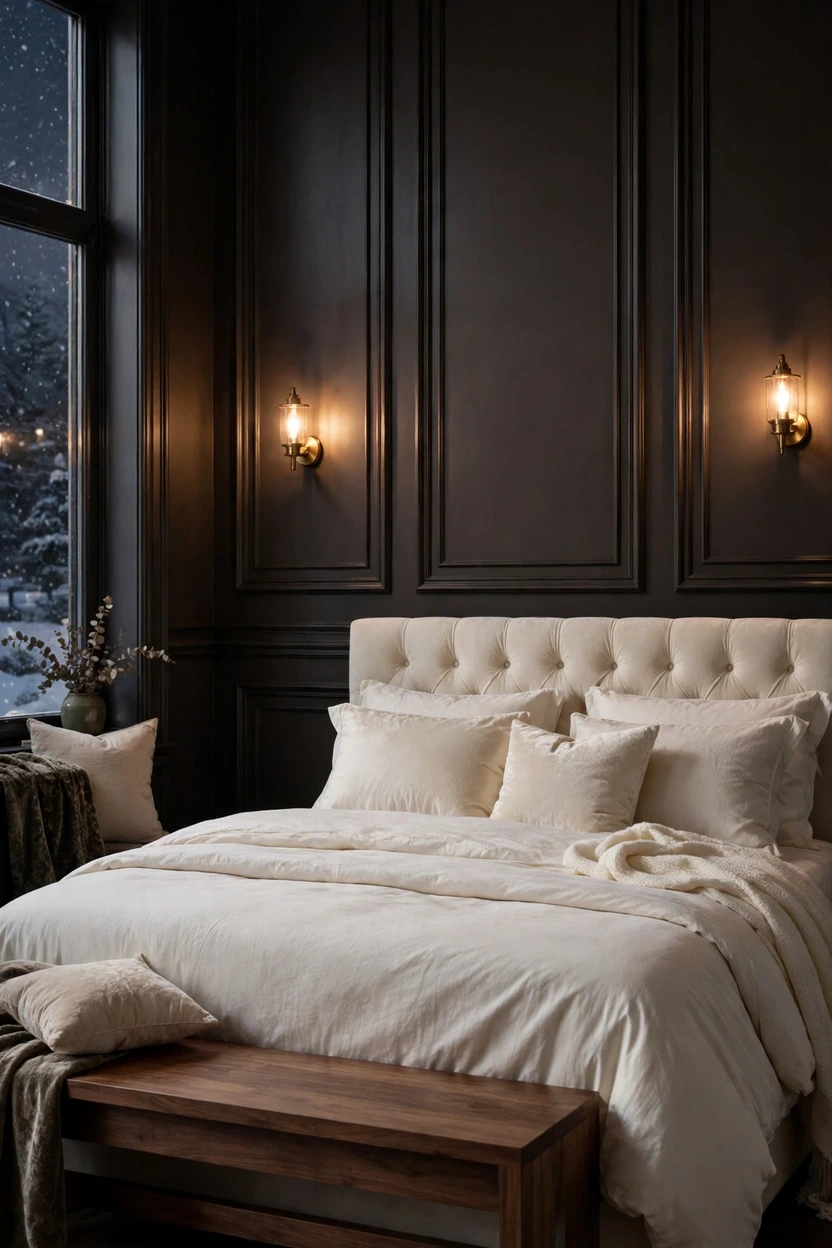
A cream, oat or soft taupe headboard pops against a deep wall and becomes the clear focus of the room. Choose one that is a few inches wider than the mattress and tall enough to rise well above the pillows. Boucle, linen and soft velvet all catch the light in a gentle way. Pale wood legs or a pale wood frame add to the lift. This one choice does a lot of work, because the largest light shape in the room sits right where your eye lands.
8. Layer Crisp Cream and White Bedding
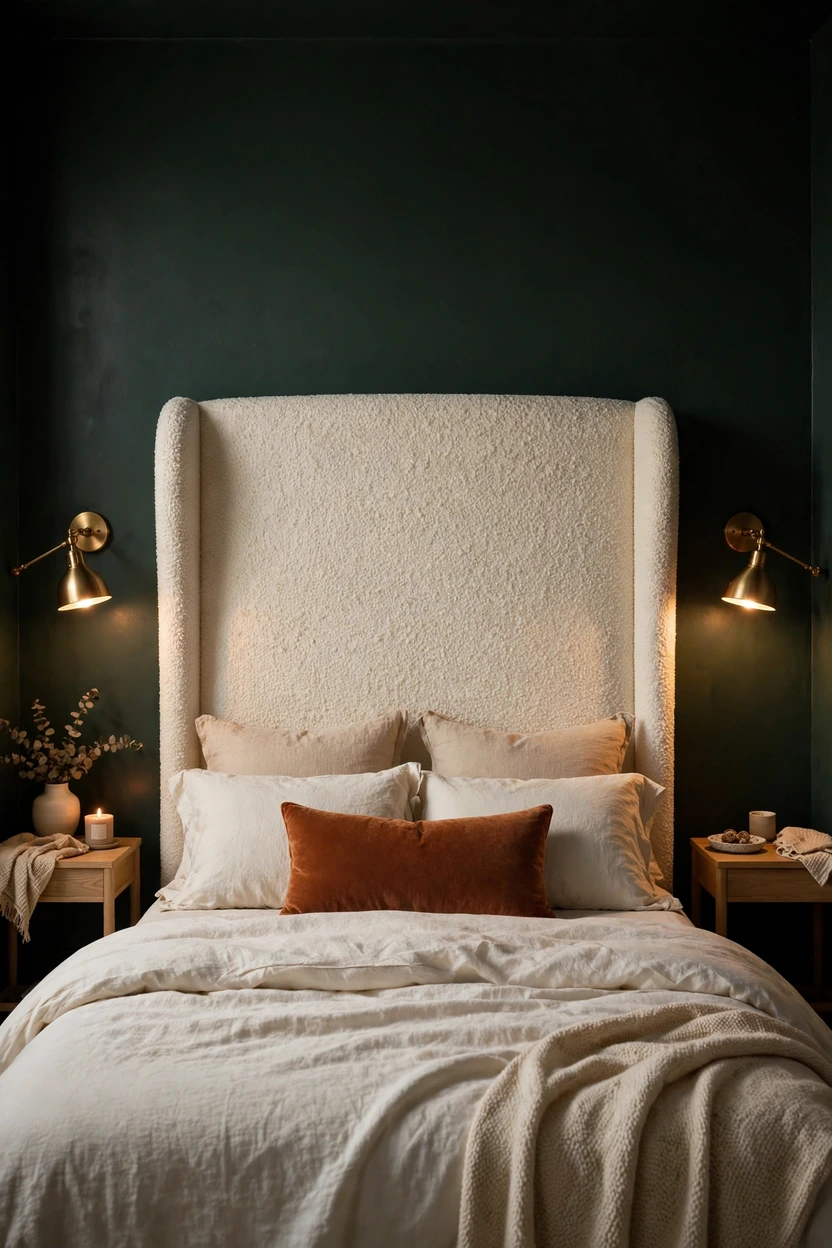
Light bedding gives your eyes a place to rest against dark walls. Build the bed with a white or ivory fitted sheet and flat sheet, a cream coverlet, and a duvet folded to the foot. Add two sleeping pillows, two larger euro pillows and one small lumbar pillow in a deeper tone, such as wine, olive or camel. Choose linen or percale for a crisp, natural look. Skip stark blue-white if your walls are warm, since a creamy white looks softer next to deep color.

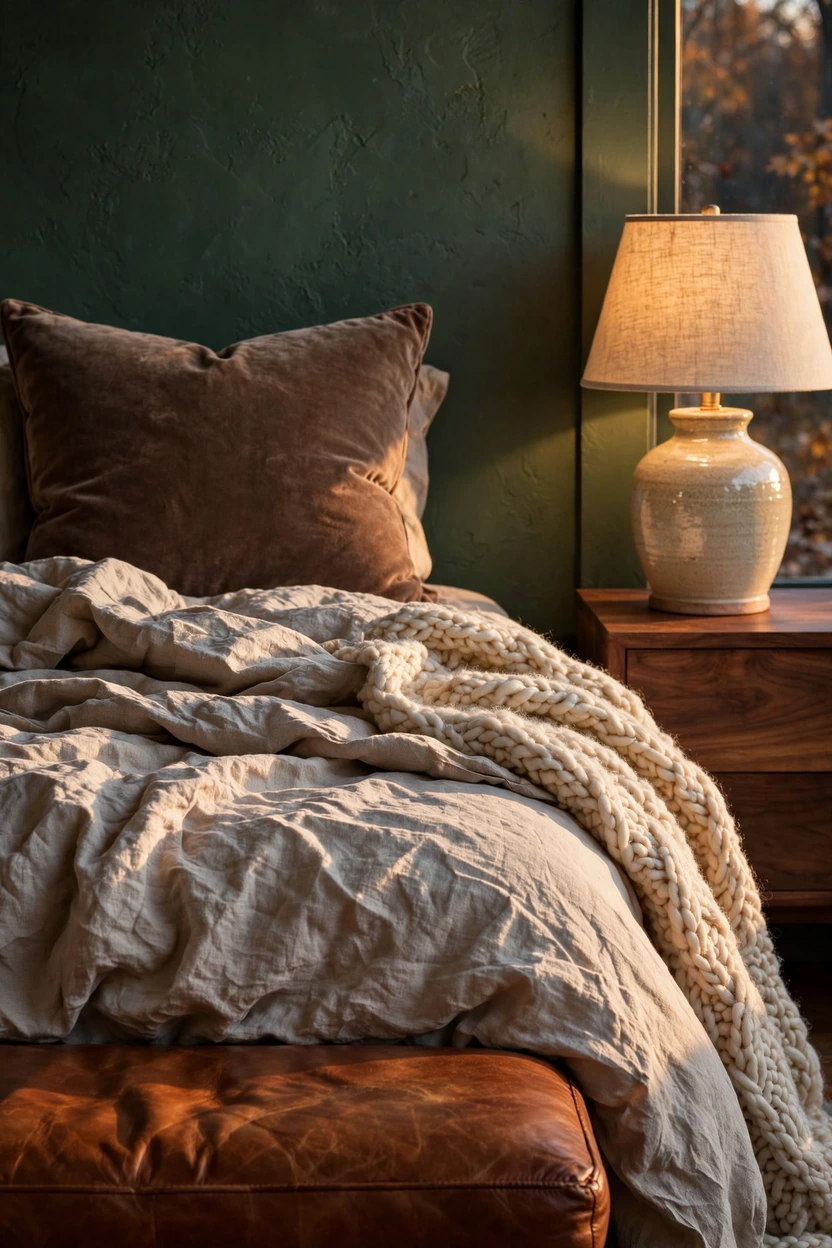
9. Mix Velvet, Linen, Wool and Leather
Texture is what keeps dark color from looking flat. A matte wall soaks up light, so the soft pieces in front of it need to catch and hold shadows. Try a velvet pillow, a linen duvet, a chunky wool throw and a leather bench or chair. Aim for one smooth, one nubby and one woven surface in the room, and let a touch of sheen, like a glazed ceramic lamp, add sparkle. The mix of textures gives your eyes plenty to enjoy, which is the opposite of heavy.
10. Build Warm Layers of Light
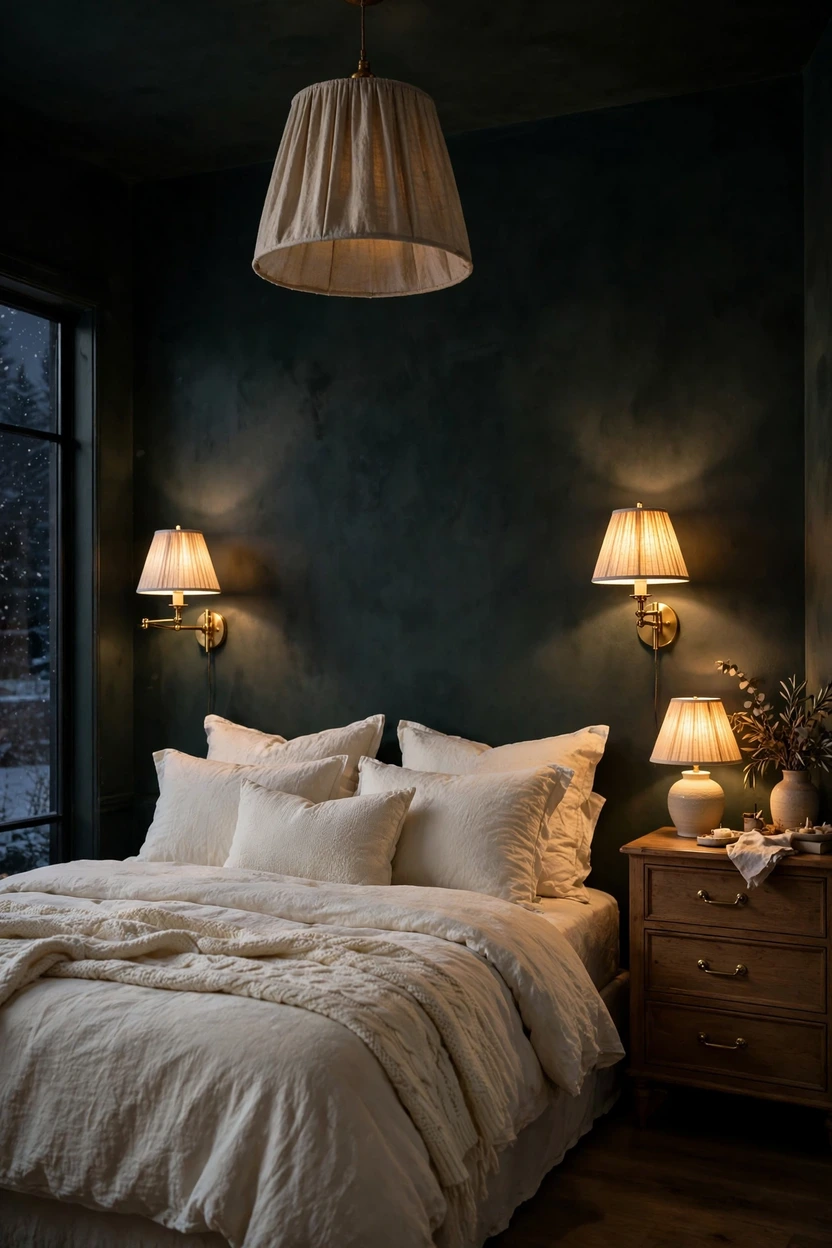
Dark walls drink light, so one bright ceiling fixture will only make a harsh pool and leave the corners gloomy. Plan at least two light sources at eye level, such as wall sconces or lamps on each side of the bed, and add a soft overhead light on a dimmer. Use warm 2700K bulbs and fabric shades that spread the glow. Cool bulbs can turn deep blues and greens strange, so check the label before you screw them in. A small lamp on the dresser or a low glow near the floor gives the room a calm layer for nights.
11. Use Aged Brass and Bronze
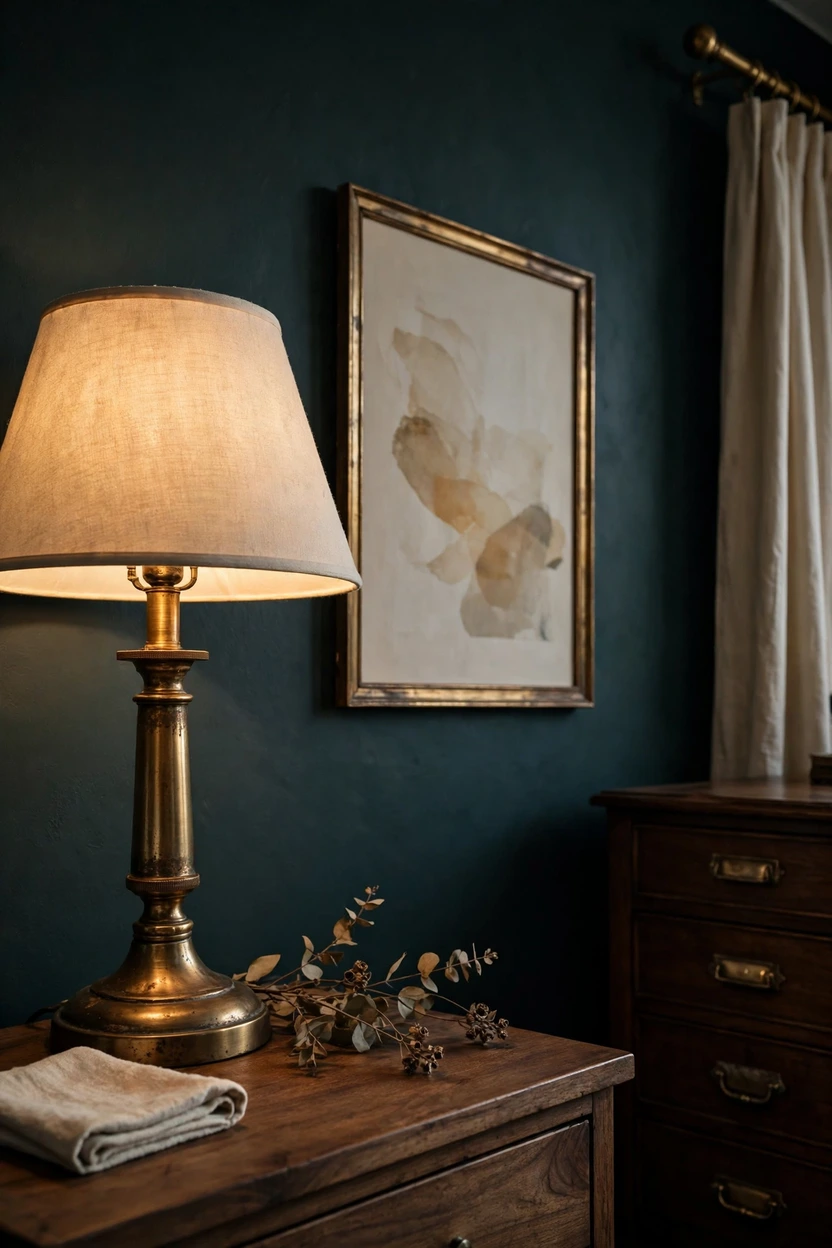
Warm metals bring a glow to dark walls that shiny chrome cannot match. Pick aged brass, antique bronze or soft gold for lamps, picture frames, curtain rods and drawer pulls, and keep to one metal for a calm look. Repeat it in at least three places, so it feels planned. The metal catches lamplight and adds tiny bright points around the room. A dull, brushed finish looks more elegant than a mirror shine and hides fingerprints.
12. Hang a Mirror Where It Catches Light
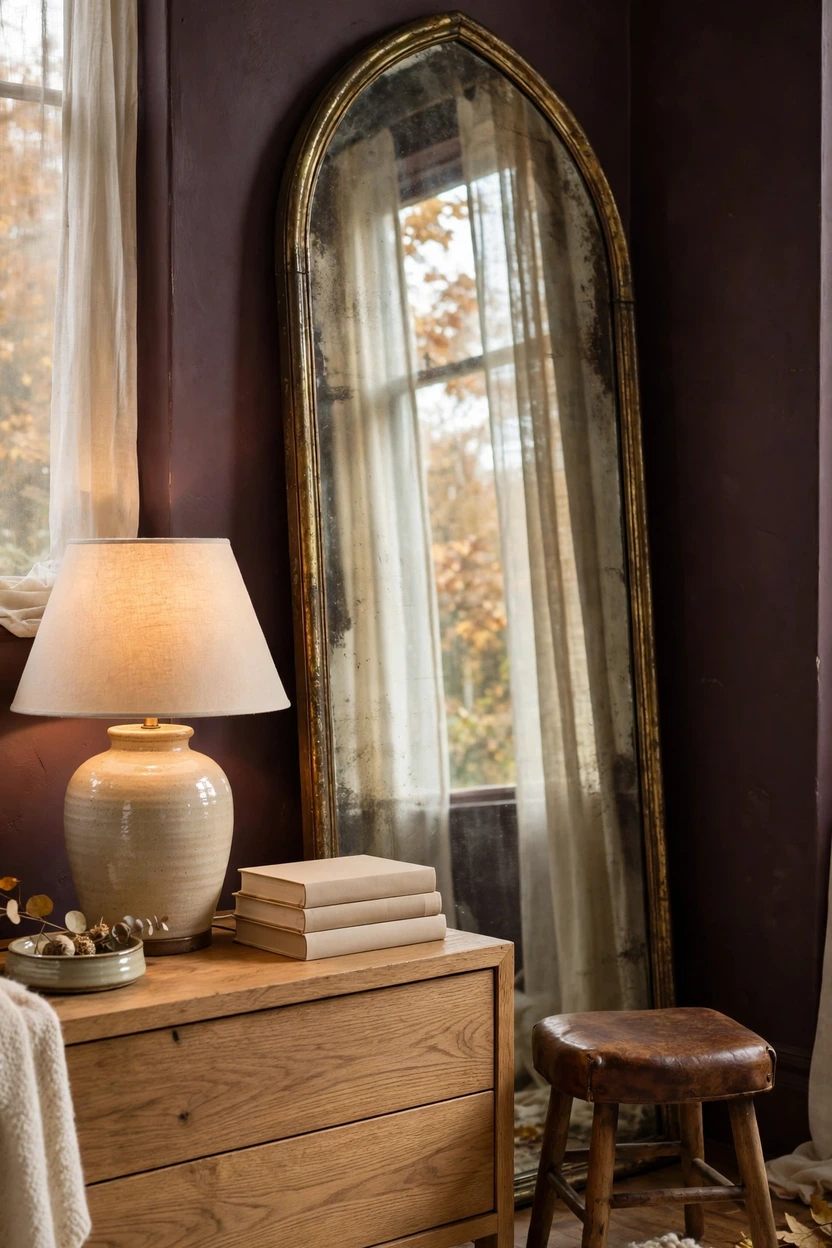
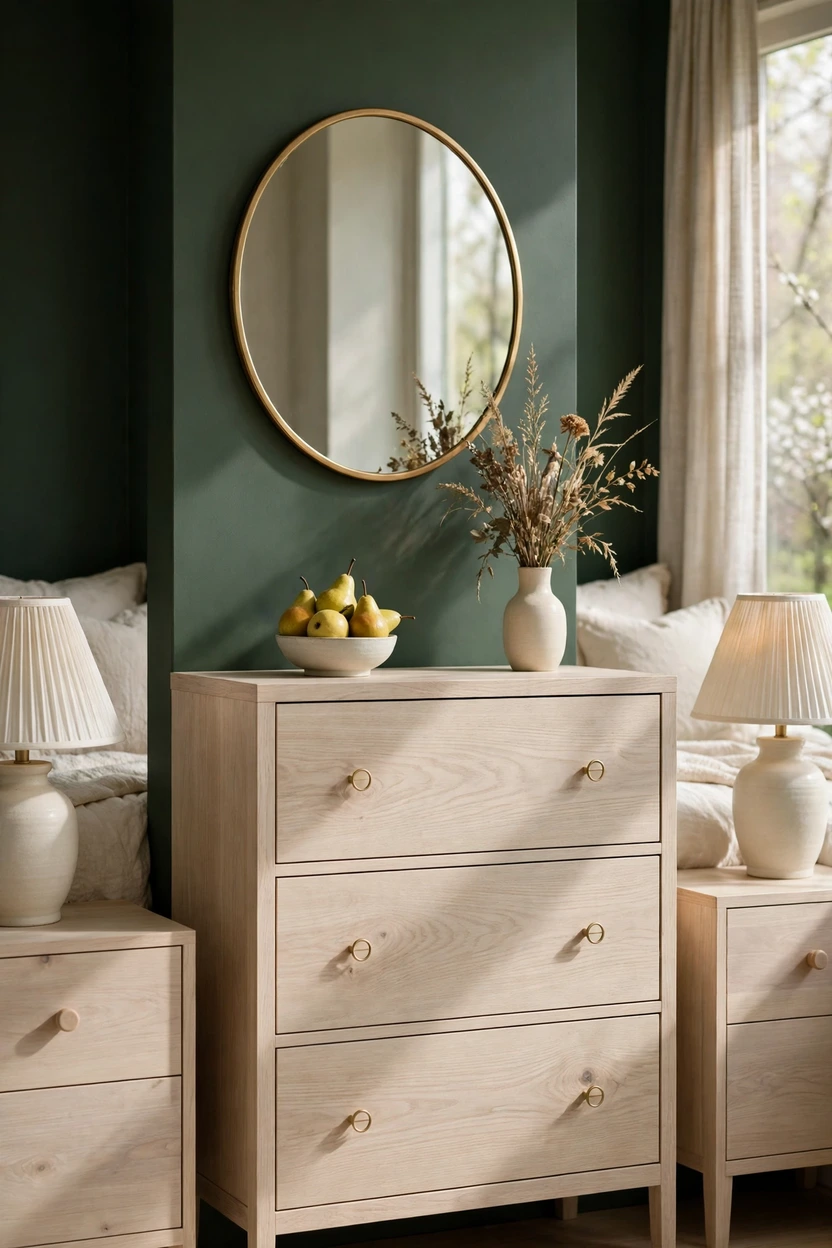
A mirror bounces light back into the room, so deep walls feel lighter without losing their color. Place a large mirror across from the window, or next to a lamp, where it can reflect something pretty. An arched or antiqued mirror in a thin brass or dark wood frame adds softness and age. If you do not like seeing the bed reflected at night, angle the mirror toward the window or the wardrobe. Lean a floor mirror against the wall if you cannot drill.
13. Add Pale Oak or Warm Wood Furniture
A dark room needs a few lighter pieces to breathe. Choose a pale oak dresser, light ash nightstands or a warm walnut bench, and let them stand out against the deep walls. You do not need to match everything, but keep the undertones friendly, warm with warm and cool with cool. One light wood piece in every zone of the room is a good goal. The grain of real wood also adds a natural break from solid color.
14. Keep the Window Soft and Light
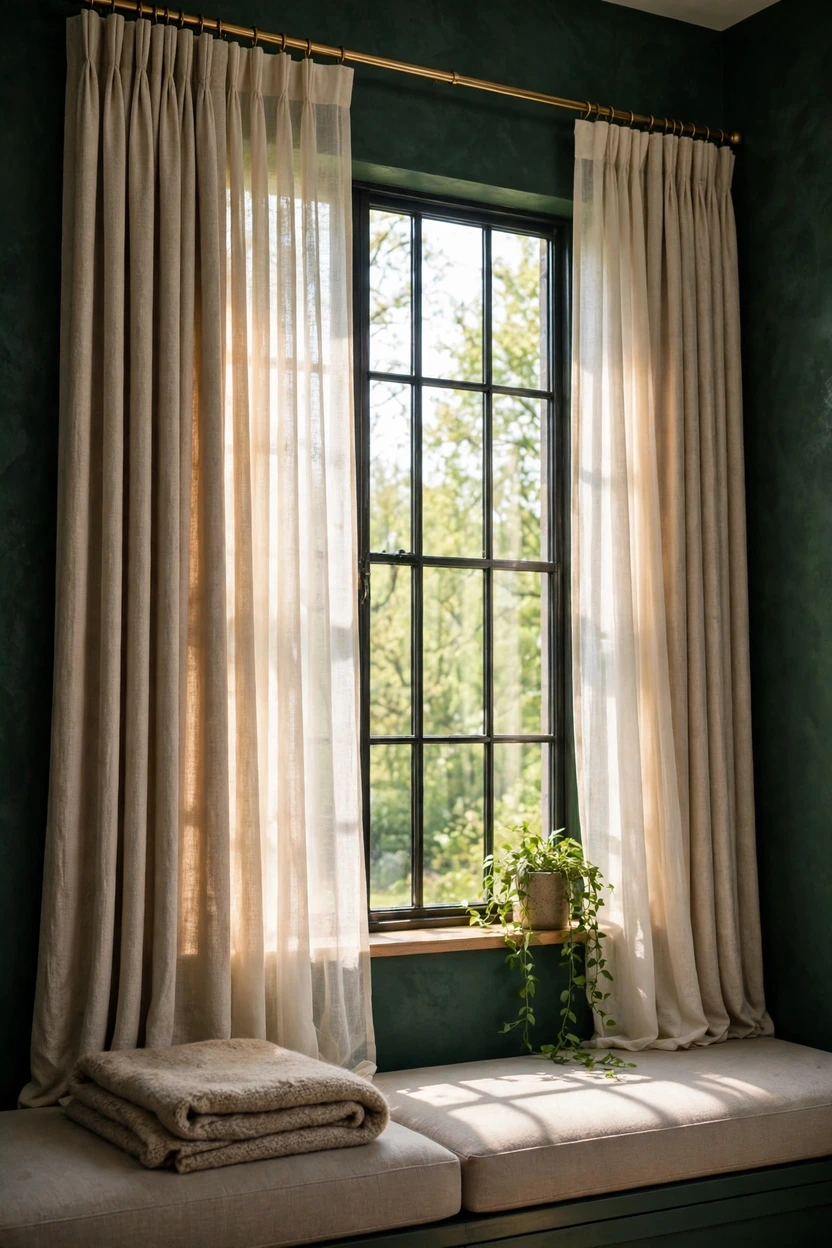
Let the window be the lightest spot in the room. Hang a sheer cream or oat panel for daylight and a lined or blackout panel in a warm tone for night. Mount the rod about 4 to 6 inches above the window frame, and extend it 8 to 12 inches past each side so the glass stays clear. Keep the curtains lighter than the walls, so the window glows during the day. The blackout layer also blocks streetlights, which helps a dark bedroom do its main job at night.
Related: 15 Minimalist Bedroom Ideas That Feel Warm and Personal
15. Ground the Bed with a Big, Light Rug
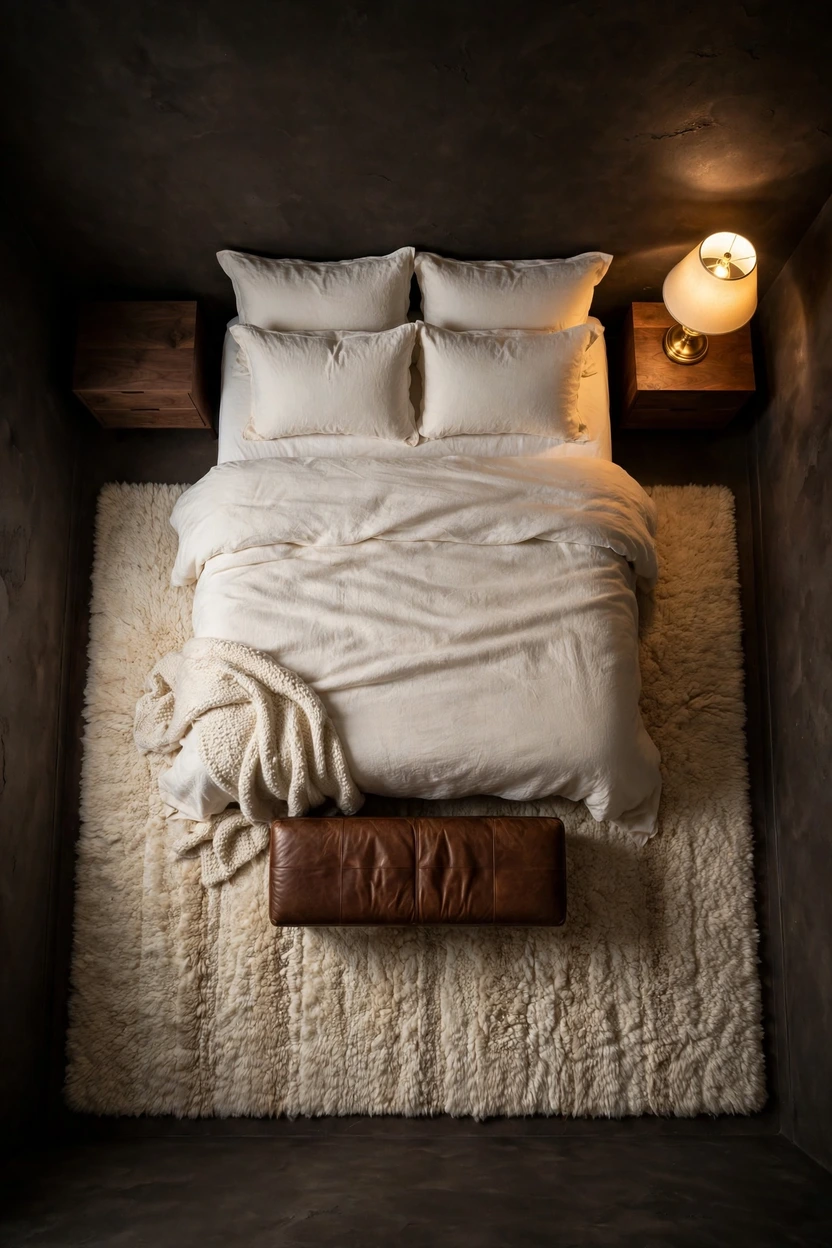
A light rug lifts the whole floor and gives the bed a soft landing. Use an 8 by 10 under a queen bed and a 9 by 12 under a king, and let 18 to 24 inches of rug show at the sides and foot where the room allows. Choose cream, oat or a soft pattern with low contrast, in wool or a wool blend. A pale rug helps spread light around the room and makes dark furniture feel less heavy. Slide it under the lower two-thirds of the bed.
16. Try a Soft Dark Wallpaper
A dark wallpaper with muted botanicals, a soft grasscloth texture or a faint trellis adds depth and softness that paint alone cannot. Choose a large, open pattern for the wall behind the bed, or a small quiet print for all four walls. Dark florals in dusty colors, like sage on navy or cream on aubergine, read as romantic and not busy. Keep the bedding calm, since the wall already carries the pattern. Removable peel-and-stick versions work well for renters, as long as the wall is smooth and clean.

17. Finish with Greenery and a Low Glow
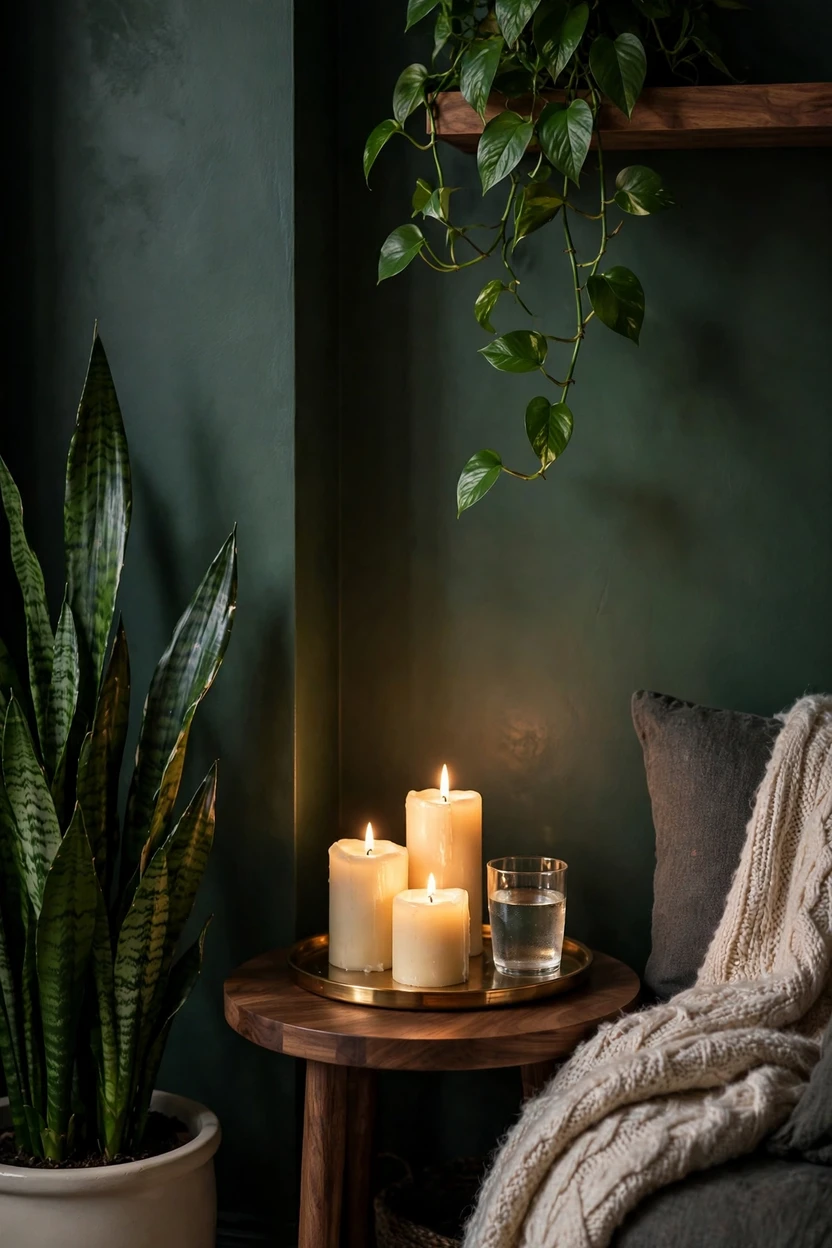
One or two living things make a deep room feel alive. A snake plant, a ZZ plant or a trailing pothos handles low light, and a branch of olive or dried stems in a ceramic vase works in the darkest corner. Add a low glow with a small lamp or a few candles on a tray, and use flameless candles if you might fall asleep with them on. A soft scent from a diffuser or a linen spray rounds out the mood. These small touches turn a dark room into a place you want to stay in.
Styling Tips
- Follow the contrast, light and texture rule. Every dark room needs something pale, something glowing and something tactile.
- Keep one metal. Aged brass or bronze looks calmer than a mix of finishes.
- Use odd numbers. Group items in threes at different heights on the dresser or nightstand.
- Choose art with breathing room. Look for pieces with pale mats or light areas, so the wall does not swallow them.
- Repeat one color from the wall. A pillow or a vase in the wall color links the room together.
- Keep surfaces edited. Fewer objects look richer against deep walls.
- Add one living thing. A plant or fresh stems add life and color.
- Hang lamps low enough to glow. Light that sits near the bed feels warm, while high light feels cold.
The Not-Heavy Formula
Think of the room as three layers that work together:
- Contrast: Cream or white bedding, a pale headboard, a light rug and a few pale wood pieces.
- Glow: Two eye-level lights, warm 2700K bulbs, a dimmer, a mirror across from the window and warm metals.
- Texture: Velvet, linen, wool, leather, wood grain and a bit of sheen from glazed ceramics.
If the room still feels heavy, one of these layers is missing. Start by adding light, then contrast, then texture.
Dark Bedroom Cheat Sheet
- Paint depth: LRV under about 15 is very dark. LRV around 20 to 35 is moody but still reflects some light.
- Finish: Matte or eggshell on walls. Matte hides flaws, and eggshell reflects a little more light.
- Ceiling: Same color, a half-shade lighter or a warm off-white. Avoid stark white against deep walls.
- Bulbs: 2700K warm white, on dimmers.
- Eye-level lights: At least two, such as sconces or lamps.
- Rug: 8 by 10 under a queen, 9 by 12 under a king, with 18 to 24 inches showing at the sides and foot.
- Curtain rod: 4 to 6 inches above the window frame and 8 to 12 inches wider on each side.
- Test patch: Two feet square, on two walls, checked in morning and evening.
Practical Implementation Ideas
A dark room rewards a careful plan, because it is harder to change your mind later. Follow this order.
- Check the light. Note which way your window faces and how bright the room is on a gray day.
- Pick three finalists. Choose three deep colors with warm undertones, and look up the LRV of each.
- Test big samples. Paint two-foot patches on two walls. Look at them in the morning, in the afternoon and with your evening bulbs.
- Prep the walls. Fill holes, sand, clean and prime. Ask for a tinted primer, which helps deep colors cover in fewer coats.
- Plan the ceiling and trim. Decide whether to drench, lighten the ceiling or use a warm off-white before you buy paint.
- Paint in two coats. Deep colors often need two full coats, so allow dry time between them.
- Fix the lighting before the decor. Add sconces or lamps, swap bulbs to 2700K and add a dimmer.
- Add contrast and texture. Bring in the headboard, bedding, rug and wood pieces last, once you can see the real color.
Common Mistakes to Avoid
- Skipping the test patch. A color that looks soft on a screen can look very different at night. Always sample it.
- Using only one bright overhead light. It makes harsh shadows and leaves corners dim.
- Choosing cool bulbs. Cold white bulbs can make deep blues and greens look dull or strange.
- Leaving the ceiling stark white. A bright lid can make the room feel boxed in and heavy.
- Making everything dark. If the bed, rug, curtains and furniture are all deep, there is nowhere for the eye to rest.
- Choosing shiny chrome. It feels cold next to rich color. Pick aged brass or bronze.
- Forgetting texture. A matte wall with smooth furniture looks flat. Add layers.
- Crowding the surfaces. Too many objects against deep walls looks messy, not rich.
Small-Space Alternatives
- Drench everything: Paint the walls, trim, door and ceiling one deep color so the small room has no hard edges.
- Go up with sconces: Wall-mounted lights free the nightstand and keep the floor open.
- Choose slim nightstands: A 16 to 18 inch table or a floating shelf saves space on each side of the bed.
- Pick a tall, flat headboard: It gives presence without adding depth.
- Use one big mirror: Place it across from the window to bounce light around.
- Stay with a light rug: A cream rug makes a small floor feel larger.
- Hang curtains high: Put the rod near the ceiling to draw the eye up.
- Try one dark wall first: Paint only the bed wall if the room gets very little daylight.
Budget-Friendly Alternatives
- Paint one wall. One gallon of deep paint for the bed wall costs far less than a full-room project.
- Use removable wallpaper. Peel-and-stick dark wallpaper on the headboard wall works for renters and is easy to remove.
- Swap the bulbs. Warm 2700K bulbs and a plug-in dimmer cost very little and change the room right away.
- Thrift the metals. Secondhand brass lamps, frames and mirrors add warmth for a few dollars.
- Make a headboard. Wrap a plywood board in batting and cream linen, then mount it to the wall.
- Borrow light from what you own. Move a pale throw, a cream pillow and a light rug in from other rooms.
- Add texture with fabric. A wool throw and a velvet pillow cost less than new furniture.
- Add a plant. One plant in a nice pot adds life for a small cost.
Pro Styling Recommendations
- Plan the doorway view. Stand in the door at night and see what you notice first. Make that spot the glow of the bed wall.
- Balance visual weight. If the walls are very deep, keep the bedding, rug and window light. If the walls are mid-dark, you can add richer bedding.
- Mix finishes. Pair matte walls with a touch of sheen, like glazed ceramic, satin curtains or brass.
- Use symmetry to look calm. A matching pair of lamps or sconces makes a dark room feel ordered.
- Layer the same color in different shades. Tone-on-tone bedding and pillows look quieter than many colors.
- Think about the morning. Check how the room looks on a cloudy day, and add a light source if it feels dull.
- Pair the room with sleep habits. Wall color alone will not fix sleep, but deep walls, blackout curtains and low warm light create a calm setting for nighttime.
FAQs
Do dark colors make a bedroom feel smaller?
Not always. Deep colors blur the corners, so the room can feel less boxed in, especially when you drench the walls, trim and ceiling. They do absorb light, so you need warm lamps, a mirror and pale bedding to keep the room feeling open.
What is the best dark color for a bedroom?
There is no single best color. Forest green, ink navy, charcoal with a warm base, aubergine and mocha brown all work well. Choose a shade with a warm undertone, check its LRV, and test a large sample in your own light.
Should I paint the bedroom ceiling dark?
Related: 22 Luxury Bedroom Ideas That Skip the Trends (Built to Last)
It depends on your room. A ceiling in the same deep color feels wrapped and cozy, which suits rooms with 8-foot ceilings and lamps. A half-shade lighter or a warm off-white feels softer. Avoid stark white against deep walls, since it can look like a lid.
What paint finish is best for dark bedroom walls?
Matte or eggshell. Matte looks velvety and hides wall flaws, while eggshell reflects a little more light and is easier to wipe. Use flat paint on the ceiling to reduce glare.
What color bedding looks best with dark walls?
Cream, ivory and soft white look crisp and warm against deep colors. Add one deeper accent, like olive, wine or camel, in a throw or a pillow. Linen and percale keep the look natural and breathable.
What lighting is best for a dark bedroom?
Use at least two eye-level lights, such as sconces or lamps beside the bed, plus a soft overhead light on a dimmer. Choose warm 2700K bulbs and fabric shades. Avoid one bright ceiling light, which leaves corners dark.
Can a small bedroom be dark?
Yes. Drench the walls, trim and ceiling in one color so there are no hard edges, and use wall-mounted lights, a big mirror and a pale rug. Keep the furniture slim and the surfaces clear.
Is a dark bedroom good for sleep?
A dark, quiet, low-light room supports good sleep habits, but wall color alone will not change how you sleep. Pair deep walls with blackout curtains, warm dim lamps in the evening and a comfortable bed for the best effect.
Is it hard to repaint a dark bedroom later?
Related: 21 Alt Bedroom Ideas That Feel Truly Lived In (Moody, Cozy & Personal)
It takes more work than painting over a light color, but it is manageable. Use a good primer, and expect to apply two coats of the new color. Removable wallpaper or a single dark wall makes later changes easier.
What furniture goes with dark bedroom walls?
Pale oak, light ash and warm walnut all look good against deep walls. Cream upholstered pieces and leather in warm tones add contrast and richness. Mix at least one light piece with darker ones so the room does not feel heavy.
Conclusion
A dark bedroom is not a heavy room. A dark bedroom with no light is.
Give your deep walls a warm undertone, a soft ceiling plan and a few pale pieces to rest the eye. Add lamps at eye level, a mirror that catches the window and layers you want to touch. Then the color stops feeling like a wall and starts feeling like a blanket.
Start small this weekend. Paint a big test patch, change the bulbs to warm white and look at the room again after dark. If it makes you want to curl up, you have found your color.