21 Alt Bedroom Ideas That Feel Truly Lived In (Moody, Cozy & Personal)

Picture a dim bedroom after work. The lamp is already on. A worn plaid throw is half off the bed, a stack of books leans on the nightstand, and a record is still spinning down on the shelf.
That’s what “lived in” looks like. It isn’t messy. It’s a room where every object has a reason to be there.
Here’s the trouble with most alt bedroom lists. They show you the dark walls and the posters, then stop. They never say how to make the room comfortable, where the laundry goes, or how to keep a black wall from feeling like a cave.
These 21 ideas fix that. They keep the edge and add comfort: dark colors that behave, lights that feel warm, textiles you’ll actually use, and objects with a story. You’ll also get renter tips, small-room tricks, and a simple test for whether a room feels truly lived in.
Table of Contents
Soft Charcoal or Black Wall
Test: Soft. Paint the wall behind the bed a soft charcoal or a black with a gentle undertone, and the whole room gains depth. Choose a flat or eggshell finish, since higher sheens show every wall flaw up close. Look at the undertone: brown or green undertones feel warm, and blue ones feel cool and crisp. Test large samples on two walls and check them at noon and at night. One dark wall with lighter bedding keeps the room moody but still comfortable.

Deep Forest Green with Warm Wood
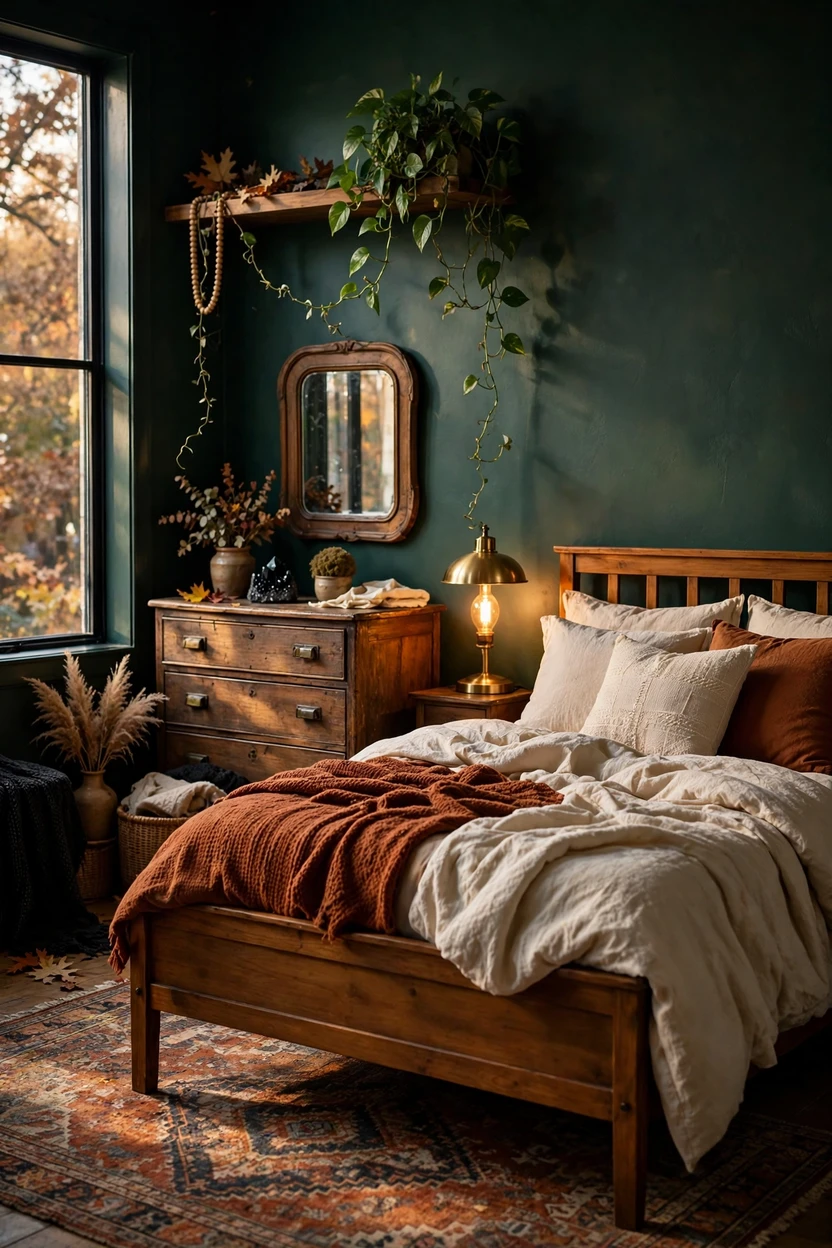
Test: Soft. Dark green feels like a quiet forest at night, so it’s a good alt color for people who want moody without black. Pair it with caramel wood, brass lamps, and cream or rust bedding to keep the room warm. Choose a green with a hint of gray or black so it doesn’t look bright in the day. This color works best when the room gets at least some daylight. Add a trailing plant to echo the walls.
A Painted Dark Ceiling
Test: Soft. Treat the ceiling as the fifth wall. Painting it deep charcoal, navy, or forest green gives the room a cocoon feel, especially when lamps cast soft light on it. Matching the ceiling to the walls blurs the corners and makes the room feel wrapped. Use a flat ceiling paint, and keep trim a shade lighter if you want some contrast. It’s a bold step, so start with the ceiling only above the bed.

A Mixed Poster and Print Wall
Test: Story. Hang a mix of posters, prints, postcards, and small framed pieces that mean something to you. Use a few frame styles, such as black, wood, and thrifted gold, to avoid a showroom look. Lay everything on the floor first, then hang the largest pieces and fill in around them. Keep about two to three inches between pieces so the wall reads as one group. Use damage-free hanging if you rent, and avoid heavy glass over the bed.

A Record Player Corner
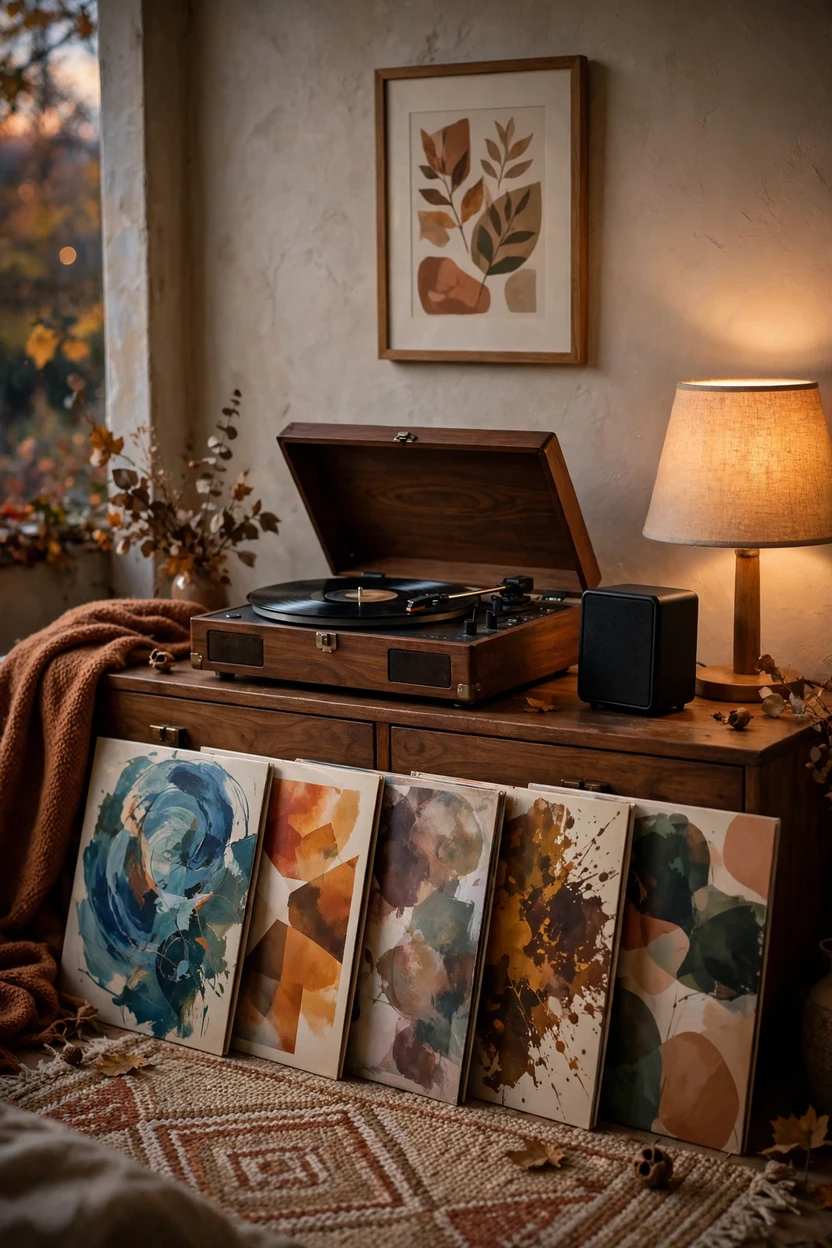
Test: Story. A small music corner makes the room feel like someone lives there. Place a record player on a low dresser or shelf, with a few albums leaning in front and a speaker nearby. Keep the cords tied and a power strip out of sight. Display only the albums you love, with the cover facing out, and rotate them. It works well in alt bedrooms because it adds sound, texture, and a daily habit.
A Large Tapestry Focal Point
Test: Soft. A large woven or printed tapestry gives the bed wall texture and color without paint. Choose a dark floral, celestial, or abstract pattern that fits your palette, and hang it as a headboard-sized panel. Fabric also softens echo and warms a cold wall. Keep it clear of lamps, heaters, and hot bulbs, and use a light rod or removable hooks. It’s an easy renter-friendly focal point.

Layered Dark Bedding
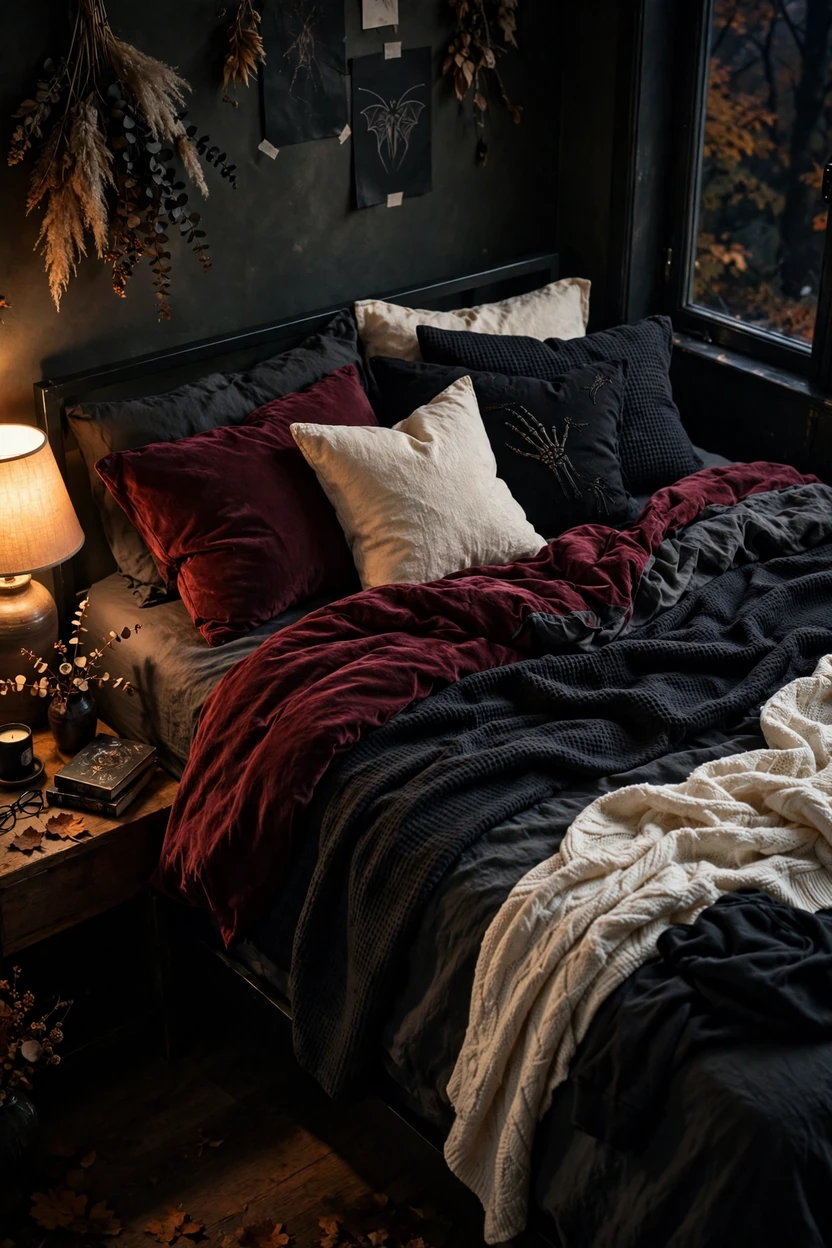
Test: Soft. Build the bed in layers: dark sheets, a duvet in burgundy, black, or charcoal, then a textured quilt or throw in a second shade. Add three to five pillows in mixed sizes, with one in cream to catch the light. Mix materials like linen, velvet, flannel, and knit so the bed looks rich up close. A bed that looks slept in invites you to get into it. Wash and refresh the top layers often so it stays soft.
Worn-In Quilts, Plaids, and Prints
Test: Story. Lived-in rooms hold textiles that already have some wear. A vintage quilt, a faded plaid flannel throw, or a leopard-print pillow adds history that new items can’t. Choose pieces from thrift stores, flea markets, or your own family. Keep a color thread, such as rust, forest green, or cream, so patterns don’t fight. One or two bold prints are plenty. The softness of used fabric also makes the bed more comfortable.
Related: 19 Leopard Print Bedroom Ideas for the Aesthetic Undecided

Thrifted, Mismatched Furniture
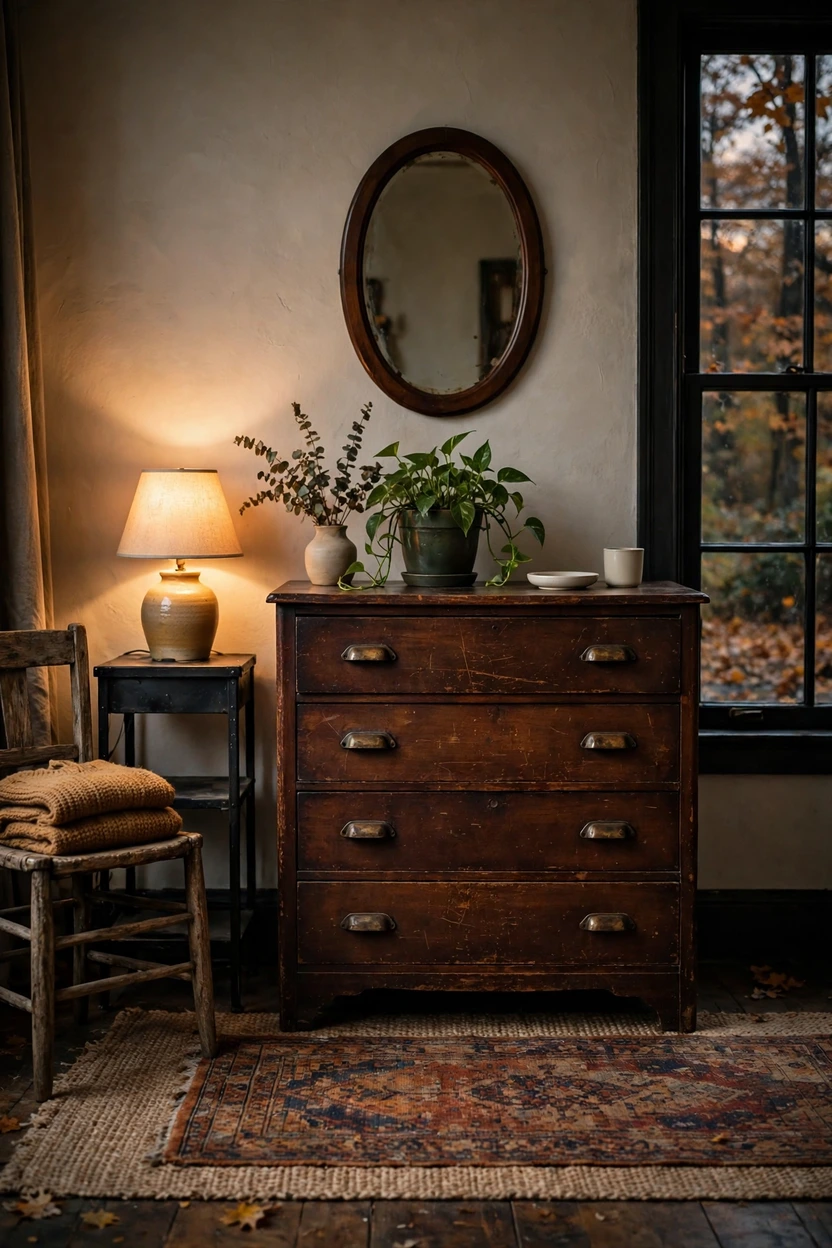
Test: Story. Pick a nightstand, dresser, and chair that don’t match but share a tone, like dark wood or black metal. An old dresser with a few scratches shows time and holds a lot. Sand and oil rough spots rather than hiding every mark. Mixed pieces tell the eye that the room grew over time. Check drawers, joints, and finish before you buy secondhand.
A Draped Canopy
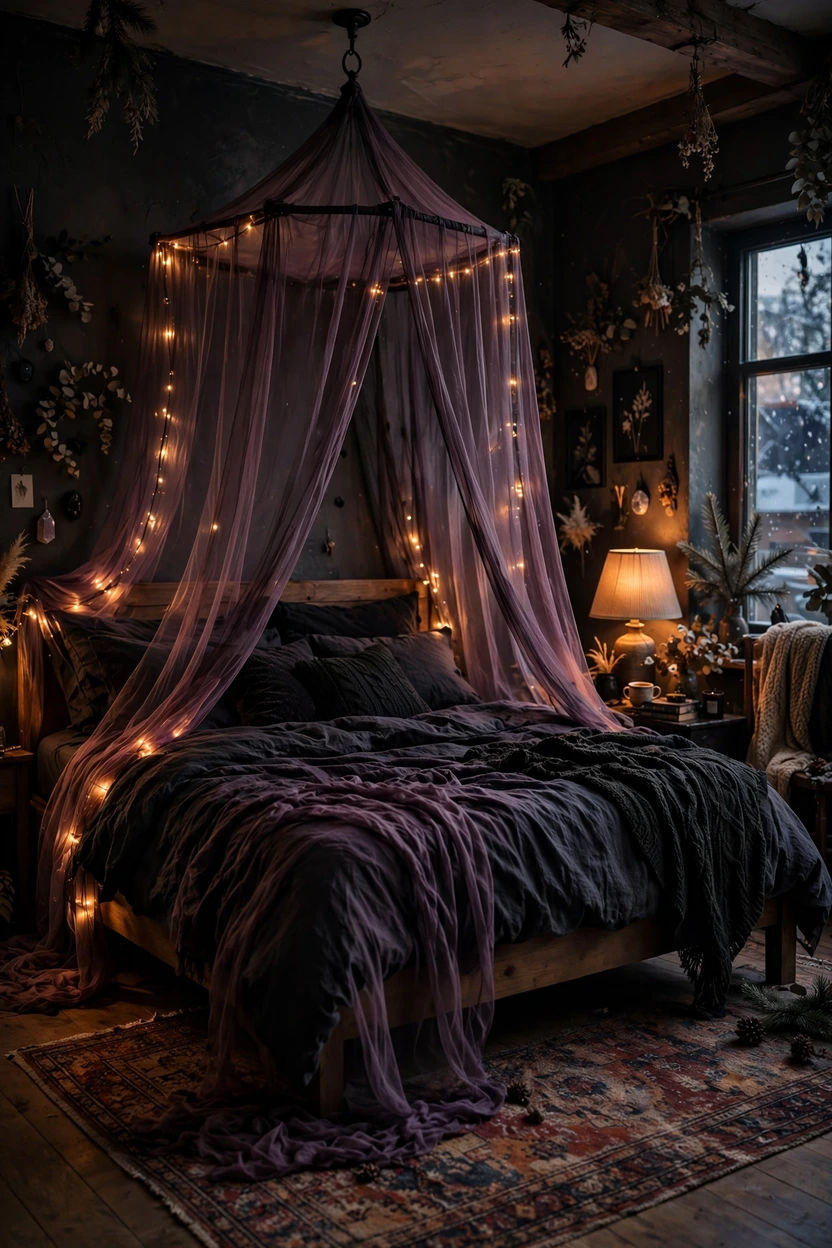
Test: Soft. A canopy of sheer black, plum, or deep green fabric turns the bed into a hideaway. Hang it from a ceiling hook or a simple frame, and let it fall in loose folds. Keep fabric well away from candles, hot bulbs, and heaters. Use LED lights if you thread lights through it. Choose a light fabric so it doesn’t feel heavy over your head.
Layered Lamps and String Lights
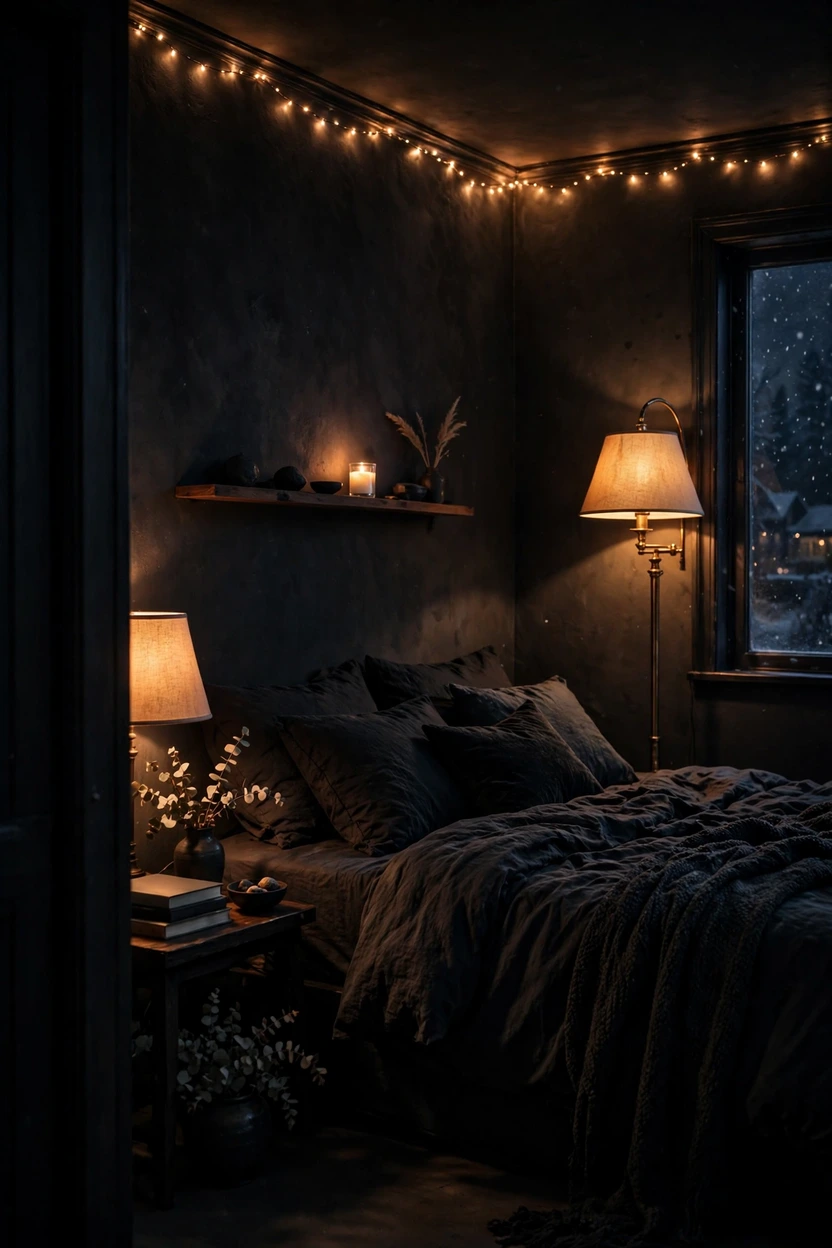
Test: Soft. Skip the harsh overhead light and use two or three warm sources at different heights, such as a bedside lamp, a floor lamp, and string lights near the ceiling. Choose warm white bulbs, about 2700K or lower, and use a dimmer if you can. Fabric shades soften the glow and avoid glare. Layered light makes dark walls feel deep, not flat. Use outdoor-rated or indoor-rated lights as labeled, and don’t overload outlets.
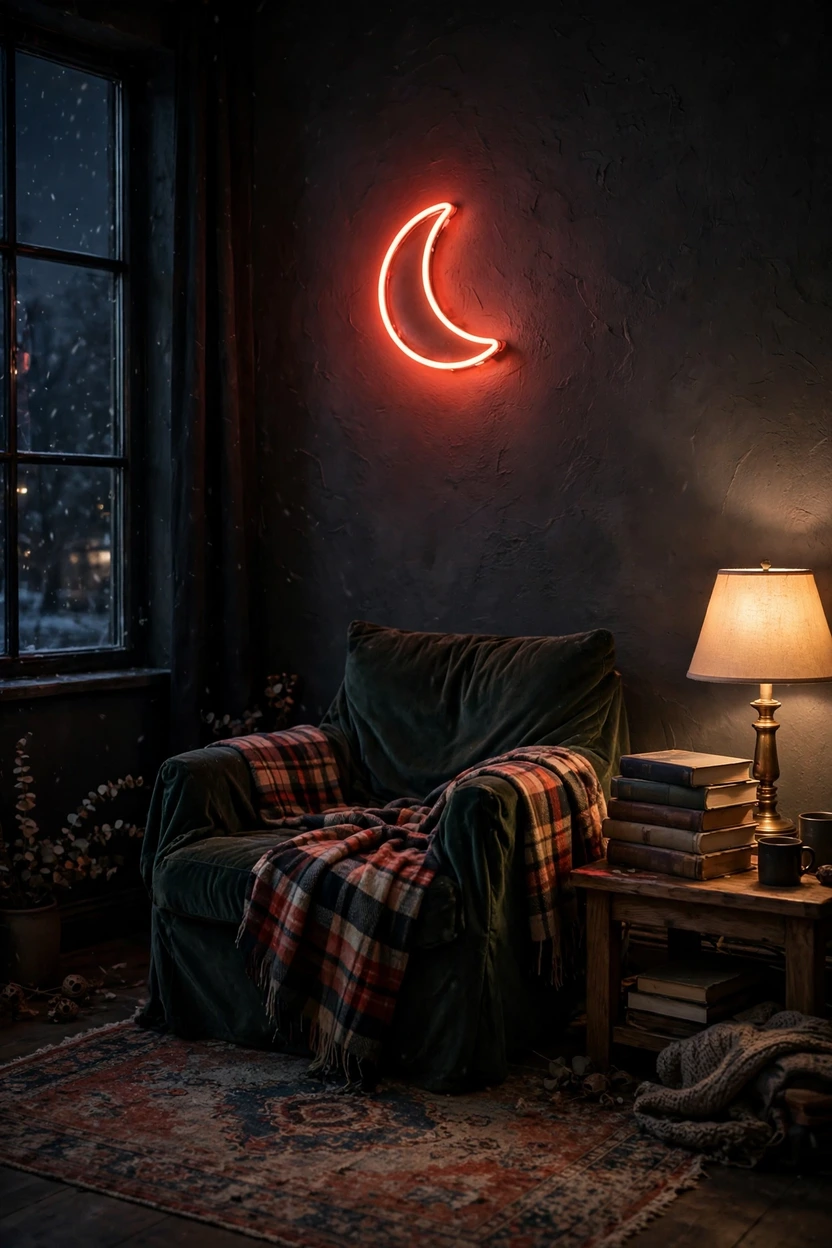
One Neon or LED Glow Corner
Test: Story. A single neon sign or LED light adds personality when used once. Place it near a reading chair, record shelf, or headboard, not around the whole room. Choose a color that fits your palette, like warm white, soft red, or dim purple. Pick a quiet shape, such as a moon, a word, or a simple line. Keep the power adapter ventilated and use listed products. One glow looks chosen, while five looks like a party.
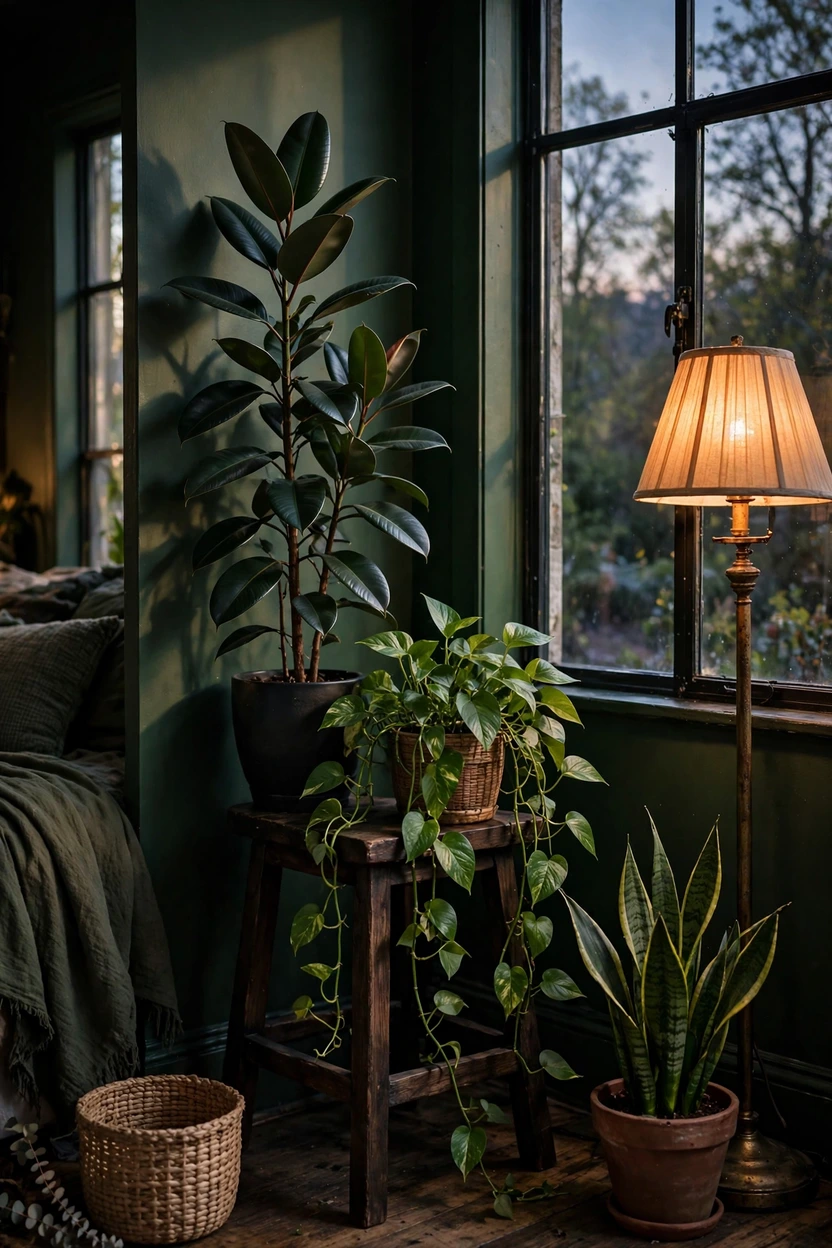
A Dark Botanical Corner
Test: Story. Plants bring life and soften dark colors. Choose sturdy low-light types like pothos, ZZ plant, snake plant, or a rubber plant with deep green leaves. Group three at different heights in a corner, in matte black, clay, or thrifted pots. Check that any plant is safe if you have cats or dogs. Dust leaves and rotate pots so they stay healthy.
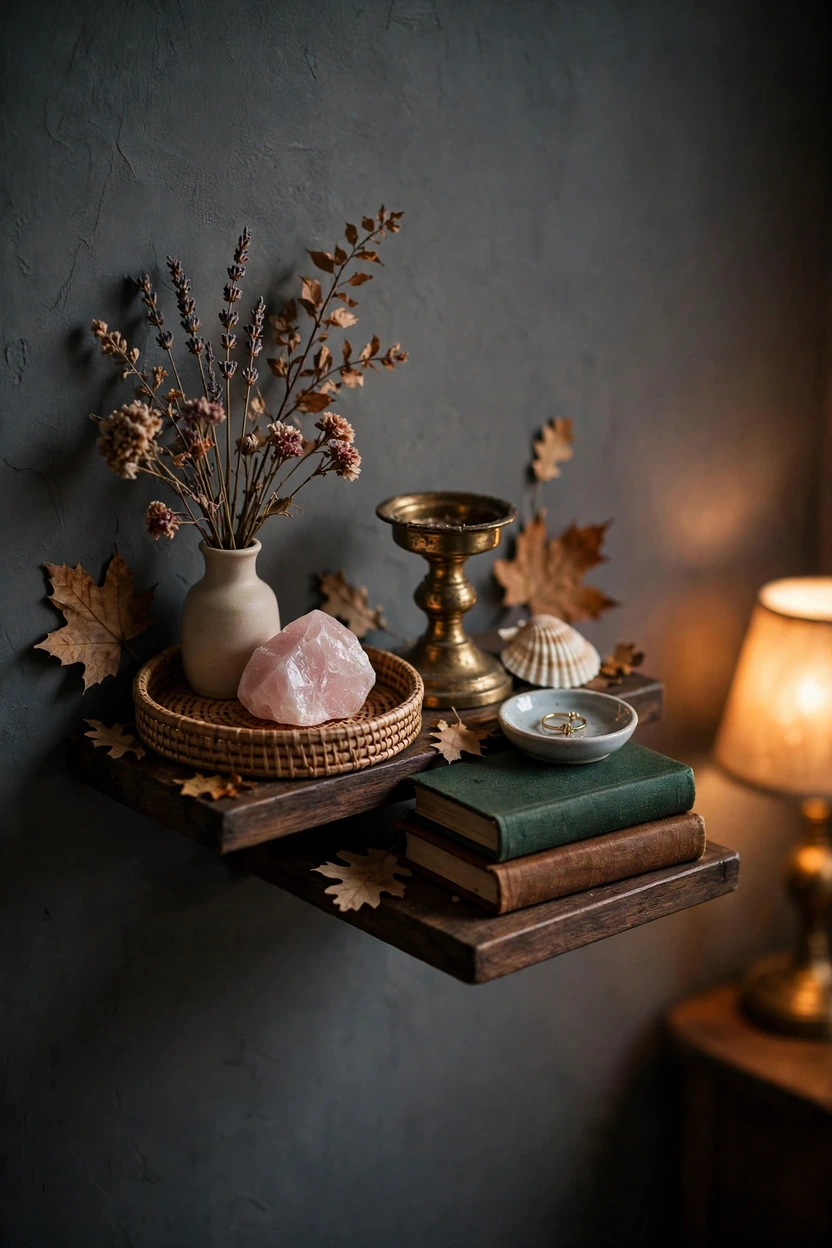
Crystals, Candles, and Found Objects
Test: Story. A small shelf of meaningful finds makes a room personal: a crystal, a seashell, a dried flower, a vintage candle holder, a ceramic dish. Group them on a tray so they look arranged, not scattered. Choose objects you actually picked up or were given. Use flameless candles near fabric, or keep real flames in sturdy holders away from anything that can burn. Rotate items now and then.
A Reading Nook with Stacked Books
Test: Soft. Place a comfortable chair, a floor lamp, and a small table in one corner. Stack books in different heights, some horizontal and some vertical, beside the chair and on the floor. Add a throw and a cushion so you want to stay. A nook gives the room a second use besides sleep. Keep the lamp bright enough to read, with a warm bulb.

A Creative Hobby Corner
Test: Story. If you paint, sew, write, play guitar, or make jewelry, give the hobby a visible spot. A small desk, a wall hook for a guitar, or a shelf for supplies shows the room is used. Keep tools in baskets or jars so the corner looks organized. Hang finished pieces nearby so the wall changes as you work. This is one of the clearest signs of a lived-in space.

Open Shelves for Collections
Test: Story and Storage. Open shelves let collections show, but they need rules. Group objects by color or material, vary heights, and leave empty space so each piece can be seen. Keep the most-used items at hand height and put sentimental pieces at eye level. Use baskets for cables and odds and ends. A shelf that looks full but breathing feels collected, not crowded.

Mirrors in Odd Frames
Test: Story. Mirrors help a dark room by bouncing light around. Look for thrifted mirrors in carved wood, brass, or black metal, and lean a large one against the wall or hang a small cluster. Place a mirror opposite a window or lamp for the most light. Odd shapes, like arches and ovals, add character. Make sure mirrors are secured, especially over a bed.

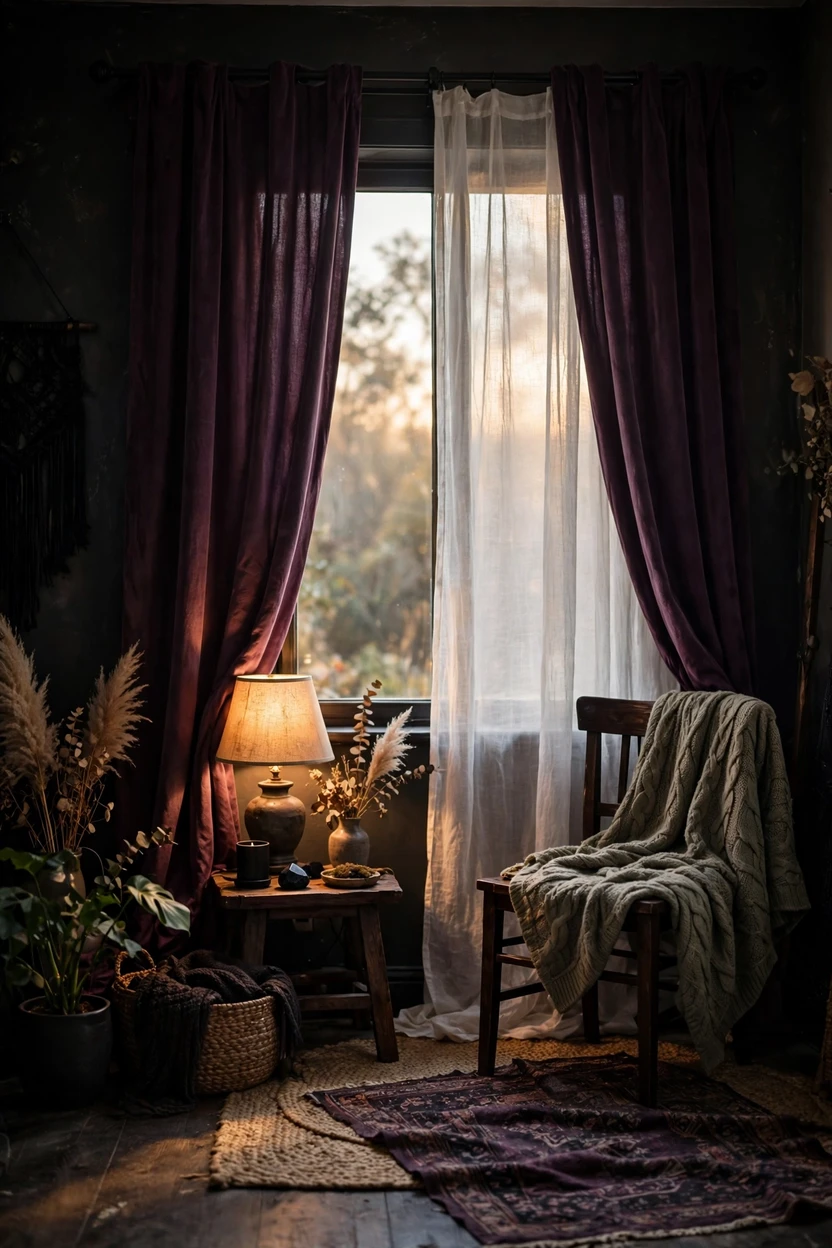
Heavy Curtains for Sleep and Mood
Test: Soft. Thick velvet or lined curtains frame the window and block light for sleep. Hang them high and wide so the window looks larger and the fabric falls to the floor. Dark colors like plum, forest green, and black blend with the walls. Fabric also reduces echo and keeps heat in. Add a sheer layer if you want daytime light with privacy.
Layered Vintage Rugs
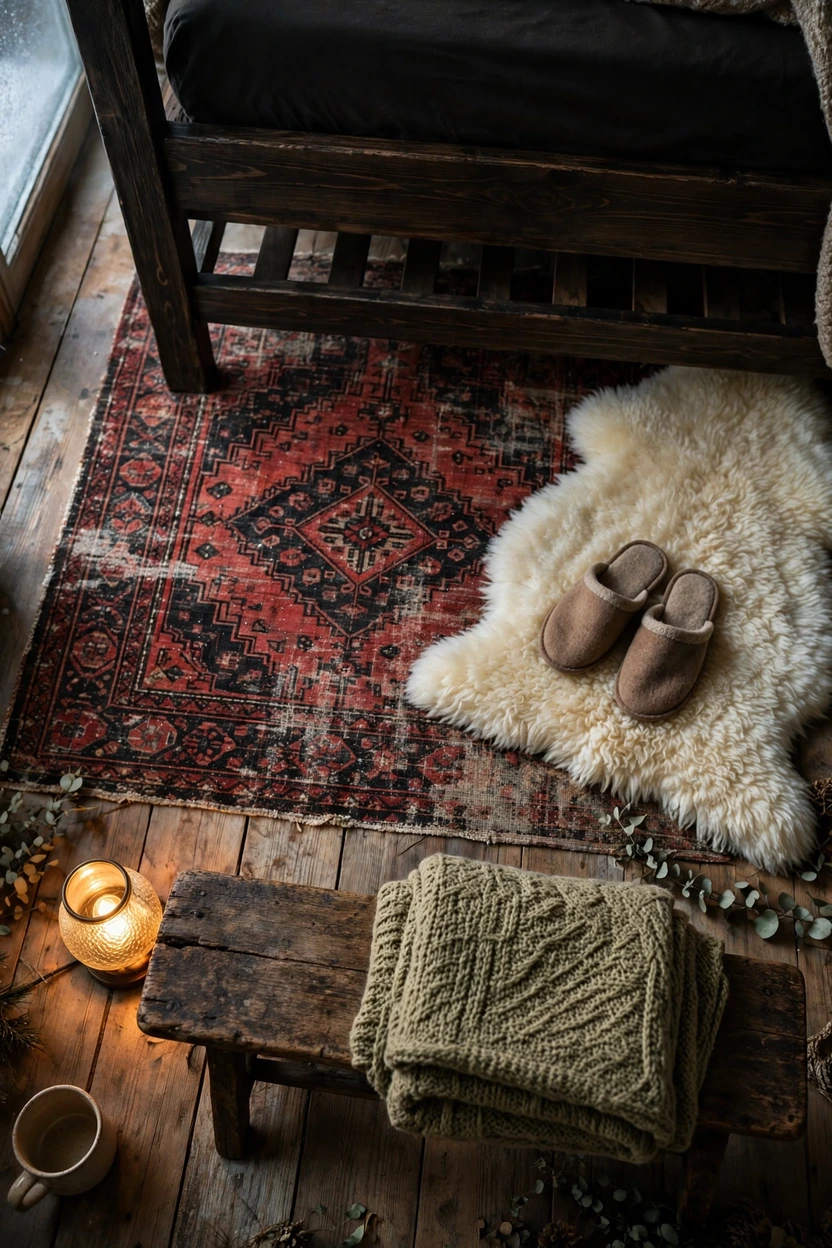
Test: Soft. Lay a large vintage or flat-weave rug under the bed, then add a sheepskin or small rug where your feet land. Worn colors suit alt rooms and hide wear. Pick a rug at least large enough for the front two-thirds of the bed. A non-slip pad keeps layers from shifting. The first step out of bed should feel soft.
The Real-Life Landing Strip
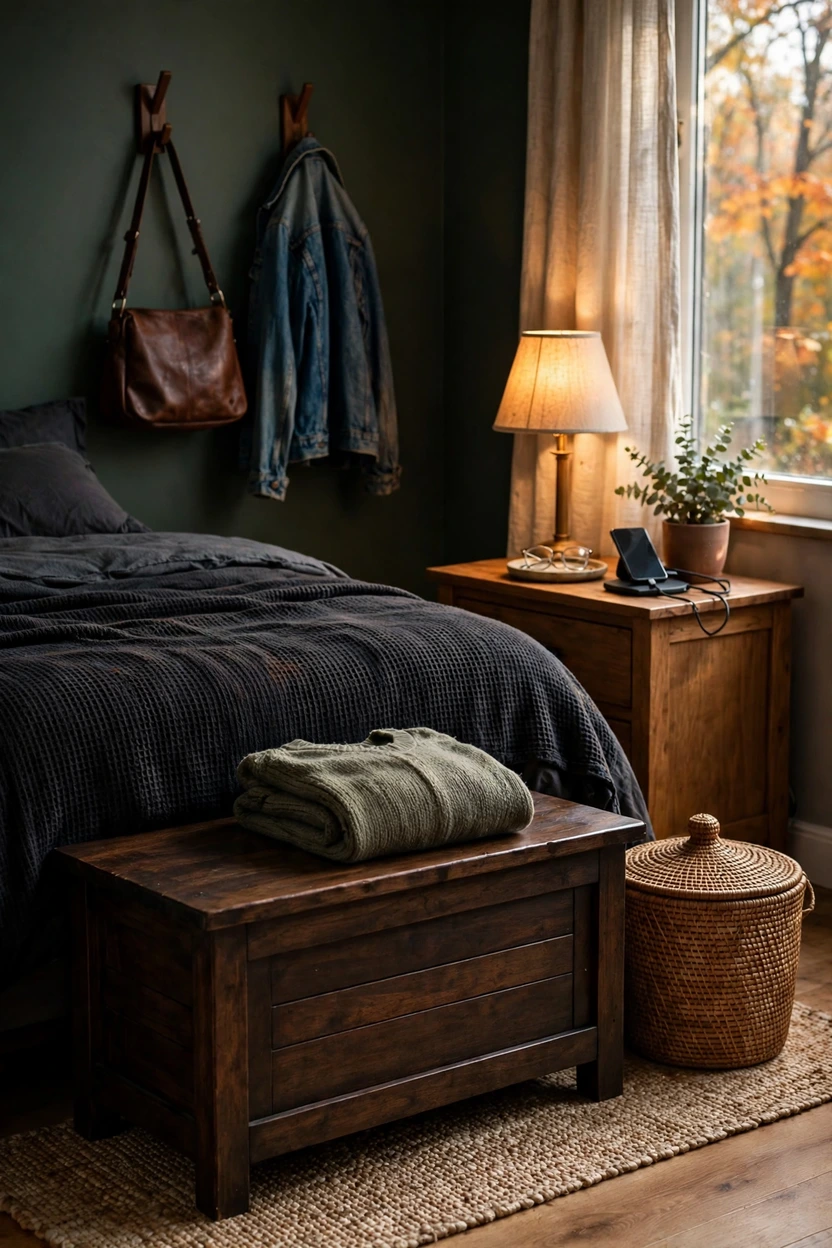
Test: Storage. A room can’t feel lived in if there’s nowhere to put your life. Add a bench with storage or a lidded basket for laundry, wall hooks for bags and jackets, and a small tray on the nightstand for a phone, glasses, and chargers. Hide cords in a box or behind furniture. When daily items have a home, the room stays calm even when it’s used. This is the secret that keeps “lived in” from turning into “messy.”
Styling Tips
The “lived-in” test: Soft, Story, Storage.
Soft: you can sink into it (bedding, rugs, curtains, lamps).
Story: objects mean something to you (thrifted finds, art, collections).
Storage: everyday things have a home, so the room stays calm.
Palette cheat sheet:
| Palette | Undertone to look for | Pair with |
|---|---|---|
| Charcoal + burgundy + cream | Warm brown-leaning charcoal | Walnut wood, brass |
| Forest green + caramel wood + brass | Green with a hint of gray | Rust, cream, plants |
| Soft black + cream + red | Black with a touch of warmth | Vintage rugs, plaid |
| Plum + warm gray + gold | Gray-leaning plum | Velvet, antique mirrors |
| Navy + cream + copper | Warm navy | Leather, wool, aged brass |
Repeat one color three times so the room feels related.
Mix three textures at least: soft, rough, and shiny.
Group like with like: books by height, frames by color, plants in threes.
Leave empty space near objects you love.
Practical Implementation Ideas
A simple weekend plan:
- Pick the mood and one color rule.
- Test paint samples on two walls, and check them in morning and night light.
- Paint the bed wall (or ceiling) first, and let it dry fully.
- Build the bed layers: sheets, duvet, throw, and pillows.
- Add light: lamps, warm bulbs, and a dimmer or smart plug.
- Hang the wall pieces and set the shelves.
- Add soft pieces: rugs, curtains, and a chair or nook.
- Set up storage: hooks, basket, bench, and cable box.
- Edit: remove one thing that doesn’t earn its place.
Common Mistakes to Avoid
- Painting without testing. Dark colors shift a lot with light.
- Using a glossy finish on walls. It shows flaws. Choose flat or eggshell.
- Relying on overhead light. Use lamps at different heights.
- Making the whole room dark with no soft contrast. Add cream, wood, and plants.
- Covering every wall in posters. Leave blank space to rest the eye.
- Hanging fabric near hot bulbs or flames. Keep clear distance.
- Skipping storage. Without it, “lived in” becomes clutter.
- Buying everything at once. The best rooms grow over time.
- Overloading outlets with lights and neon. Use a surge-protected strip and check labels.
Small-Space Alternatives
- Paint one wall or the ceiling dark and keep the rest softer.
- Use a large mirror opposite the window to bounce light.
- Choose under-bed storage and a wall shelf instead of a dresser.
- Hang lamps on the wall with plug-in sconces to free the nightstand.
- Pick fewer, larger art pieces in a tight room.
- Use vertical space: hooks, tall shelves, and hanging plants.
- Keep the bed lighter than the walls so it stays the focus.
Budget-Friendly Alternatives
- Free: rearrange furniture, group objects, and shop your own closet for textiles.
- Under $25: flameless candles, a thrifted frame, a clay pot, or a used lamp.
- Under $75: a quart of paint for one wall, warm bulbs, a secondhand rug, or a tapestry.
- Thrift first: quilts, mirrors, dressers, and baskets are easy to find used.
- DIY: make a poster wall from prints, postcards, and magazine pages.
- Spend where you touch: bedding and lighting first.
Renter-friendly options:
- Use removable hooks and adhesive strips rated for the weight, and test one spot first.
- Choose peel-and-stick wallpaper or a large tapestry instead of paint.
- Use tension rods for curtains and plug-in sconces for light.
- Lean mirrors and art on dressers and shelves.
- Ask your landlord about painting before you start.
Pro Styling Recommendations
- Choose one hero (wall color, tapestry, or gallery wall) and keep other areas quiet.
- Use warm metals like brass or aged copper to warm dark colors.
- Hang art at eye level and group pieces as one shape.
- Repeat one thrifted piece type, like wood frames, across the room.
- Keep bedside lights at a height that doesn’t glare in your eyes.
- Sleep in the room for a week before adding more.
FAQs
What is an alt bedroom?
Related: 22 Luxury Bedroom Ideas That Skip the Trends (Built to Last)
An alt, or alternative, bedroom is a personal, moody space that mixes influences like grunge, punk, goth, dark academia, and vintage. It’s defined by atmosphere and personality, not one fixed style.
How do I make a dark bedroom feel cozy?
Use warm bulbs and several lamps, layered bedding, soft rugs, and natural materials like wood and plants. Add cream or warm accents so the dark color has contrast.
What colors work best for an alt bedroom?
Charcoal, soft black, forest green, burgundy, plum, navy, and cream all work. Choose colors with matching undertones, and repeat one color three times.
Can a small bedroom be painted dark?
Yes. Dark colors can make walls feel less defined. Choose a flat or eggshell finish, test samples, and add mirrors and lights.
What does “lived in” mean in decorating?
A lived-in room has comfort you can feel, objects with personal meaning, and a home for daily items. It looks used and loved without being messy.
How do I decorate an alt bedroom on a budget?
Related: 18 Blue and Yellow Bedroom Ideas for Cozy, Calm Contrast
Thrift furniture, quilts, mirrors, and frames, paint one wall or use a tapestry, and swap in warm bulbs. Start with bedding and lighting.
How can I decorate an alt bedroom as a renter?
Use damage-free hooks, a tapestry, peel-and-stick wallpaper, tension rods, plug-in sconces, rugs, and leaned art. Check your lease before painting.
How do I use string lights and neon safely?
Use listed products, avoid overloading outlets, keep adapters ventilated, and keep fabric away from hot bulbs. Use LED lights and flameless candles near fabric.
How do I mix grunge and dark academia in one room?
Pick one color rule and repeat it. Use grunge for textiles and posters, and dark academia for wood, books, and brass lamps.
What plants are good for an alt bedroom?
Pothos, snake plant, ZZ plant, and rubber plant handle low light. Check pet safety before buying.
Conclusion
An alt bedroom feels lived in when it’s easy to be in. The bed is soft, the light is warm, and the things on your shelves are yours. Even the laundry has a place to go.
You don’t need to copy a look. Start with one wall or one lamp. Add something with a story, then something that makes life easier.
Come back in a month and see what you use. Keep that, and let the rest go.