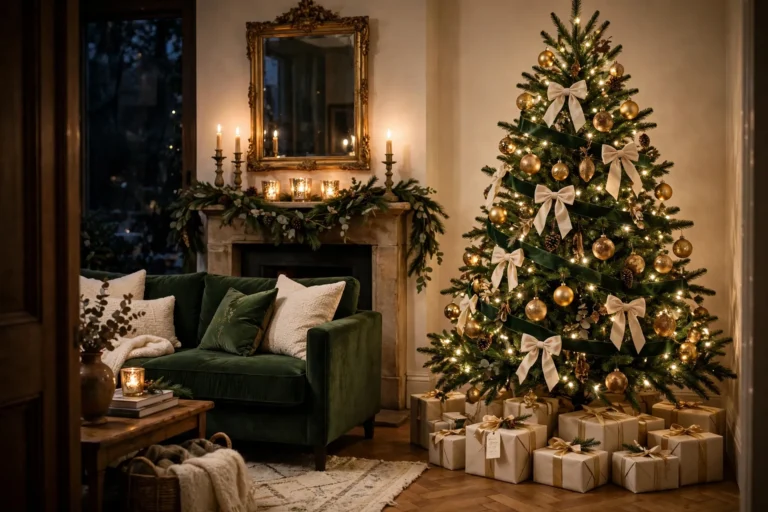
21 Show-Stopping Christmas Tree Ideas to Recreate
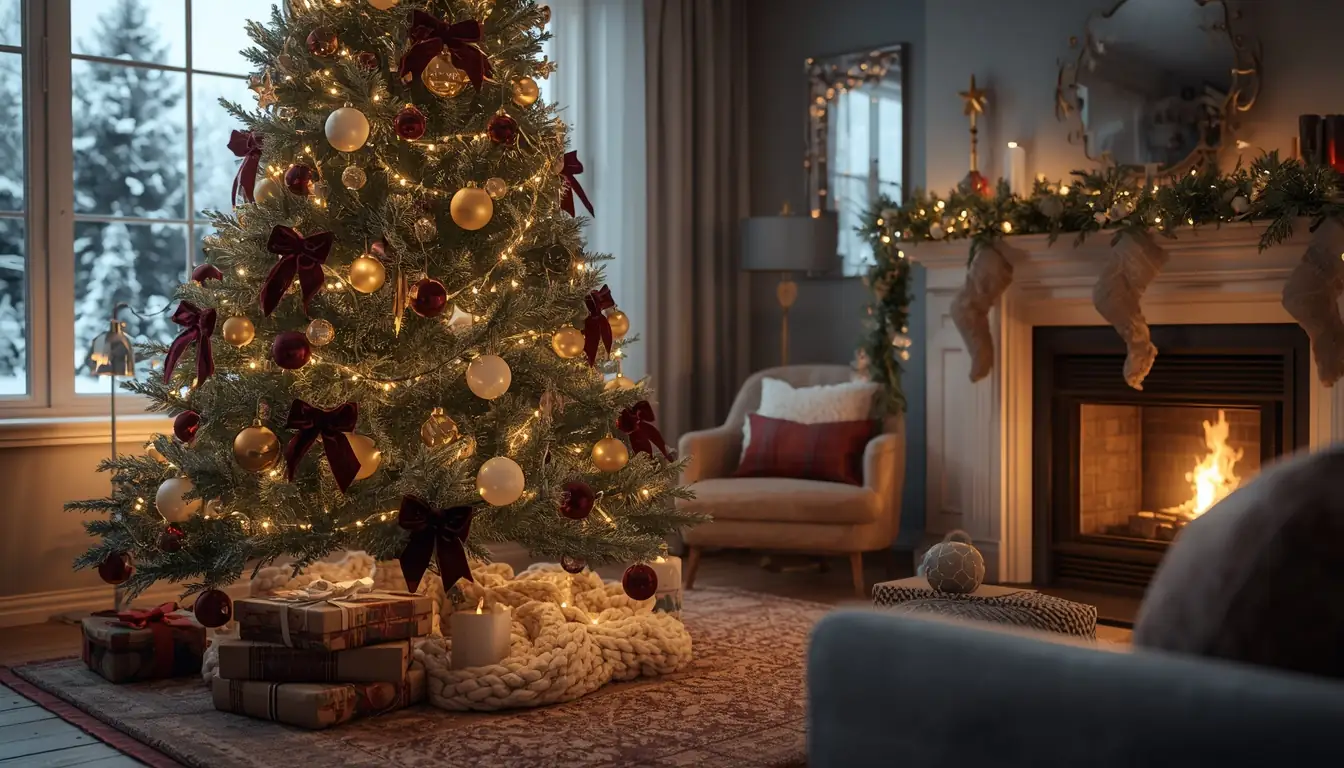
Picture the room on the first cold evening of December. The lamps are low, the lights on the tree are glowing, and everything on those branches looks like it belongs there.
That feeling is what most of us want from a Christmas tree. It just does not always happen. Maybe the ornaments feel random. Maybe the tree has gaps. Maybe the Pinterest photo you saved looks easy until you are holding a tangled box of lights.
This list fixes that. Each of the 21 ideas below tells you the colors, the materials, and the reason the look works. You can copy one tree exactly or borrow one trick, like a ribbon cascade or a light spiral, and drop it into your own style.
Quick Answer: How Do You Recreate Any Christmas Tree Look?
To recreate any Christmas tree look, pick two or three colors, string about 100 warm lights per foot of tree height, add ribbon or garland, hang large ornaments deep in the branches, place small ones near the tips, and finish with a topper and a skirt.
Table of Contents
How to Use This List
Each idea below has a color plan, a short shopping list in the paragraph, and the reason the look works. Pick the tree that matches your room, not the one that looks fanciest. You can also mix two ideas, like a ribbon cascade on a snowy tree.
All lighting advice assumes warm white LED lights unless noted. Check every strand before it goes on the tree, and unplug the tree when you leave the house or go to bed.
21 Christmas Tree Ideas to Recreate
1. Burgundy and Gold Velvet Tree

Start with a green tree and warm white lights, then build the color story around deep wine red instead of bright red. Hang matte burgundy balls in two sizes, add a few antique gold glass ornaments, and tuck in five or six velvet bows with gold-edged ribbon. Matte and shiny finishes next to each other give the tree depth, because the gold catches the light while the velvet soaks it up. Wine red and gold are close in warmth, so nothing fights, and the whole tree reads rich even when the ornaments come from a mixed box. A cream or dark green tree skirt keeps the base calm.
2. Plaid Heritage Tree
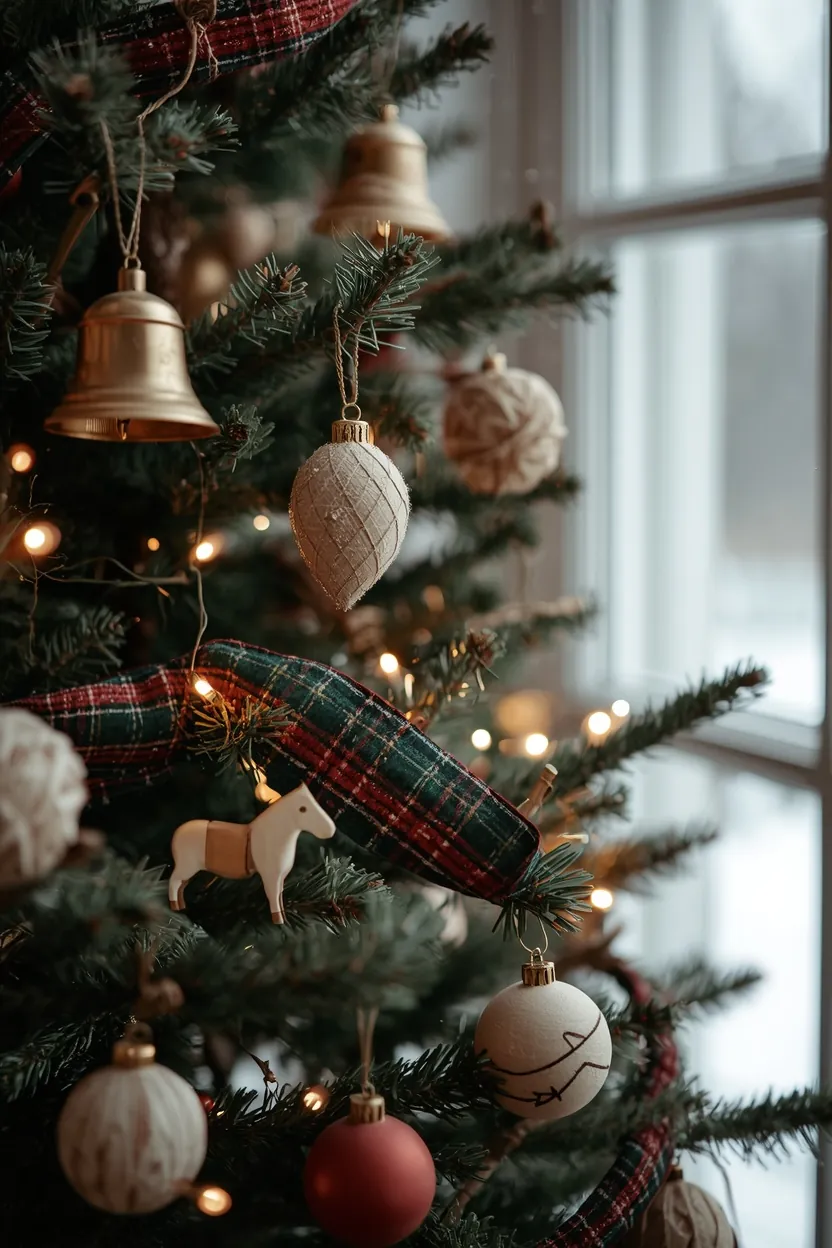
This is the old-money, country-house look people call Ralph Lauren Christmas. Choose one plaid ribbon in forest green, navy, or deep red, and repeat it everywhere so the pattern feels planned. Add brass bells, small leather-look straps, wooden toy horses or sleds, and plain glass balls in red and cream. A wool plaid or solid tree skirt finishes the base. The look works because one pattern stays in charge while everything else stays plain, which lets the texture shine without turning busy.
Related: 18 Christmas Wall Decor Ideas That Look Expensive for Less
3. Cherry Cola Tree

Cherry red, wine, and chocolate brown are one of the freshest color mixes for this season. Use glossy cherry red balls, burgundy velvet ribbon, and brown satin or velvet bows, then add small gold accents so the tree does not turn heavy. The brown quiets the red, which makes the whole tree feel grown-up and warm instead of loud. Keep the lights warm white so the reds stay deep, not orange. A dark red or caramel brown tree skirt picks up the palette from the floor.
4. Dark Academia Library Tree

Think candlelit study, worn books, and rainy afternoons. Use forest green, chocolate brown, burgundy, and antique gold. Hang small faux book ornaments or wrap mini notebooks in brown paper and twine, then add brass keys, dried roses, and velvet ribbon. Clip on LED taper candles instead of real flames, since real candles on a tree are a fire risk. This look works because every piece looks aged and a little imperfect, so the tree feels collected over years.
5. Enchanted Forest Tree

Build a fairy-tale woods palette of emerald, sapphire, deep plum, and antique gold. Add moons, stars, glass mushrooms, birds, and pinecones, and weave velvet ribbon through the branches in long, loose swoops. Lantern-style or warm white lights give the glow of a path at dusk. A snowy or realistic tree both work, but a lightly flocked tree makes the jewel colors pop. The reason it feels elegant instead of themed is the tight color range: every ornament belongs to the same four colors.
6. Ribbon Cascade Tree
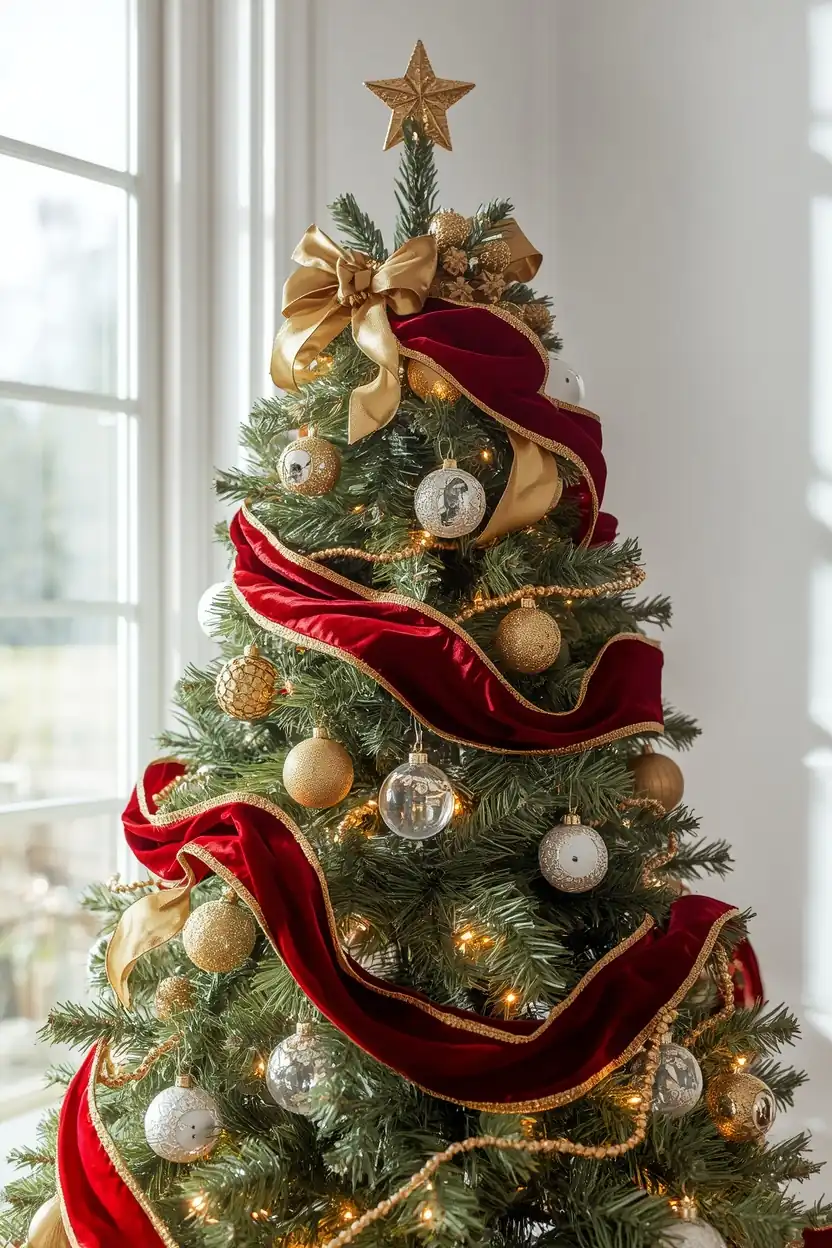
A ribbon cascade is the fastest way to make a tree look styled. Cut wired ribbon, about 2.5 to 4 inches wide, into long strips and tuck the top end under the topper. Let each strip fall down the tree in soft waves, pushing it in and out of the branches every foot or so. Measure one drop with string first so you buy the right amount, then repeat for six to eight drops. Wired ribbon holds its shape, and the vertical lines pull the eye up, which makes a short tree feel taller.
7. Oversized Bow Tree

Here the bows are the main decoration. Make eight to twelve big bows, six to nine inches wide, from wired ribbon in cream, burgundy, or soft gold. Attach each one with floral wire or a pipe cleaner and place them in a loose zigzag from top to bottom. Add a few plain balls in a matching color and nothing else. Large bows fill gaps fast, so this is a smart idea for a tree with thin spots, and it keeps costs low because ribbon is cheaper than a big box of ornaments.
8. Snowy Nordic Tree

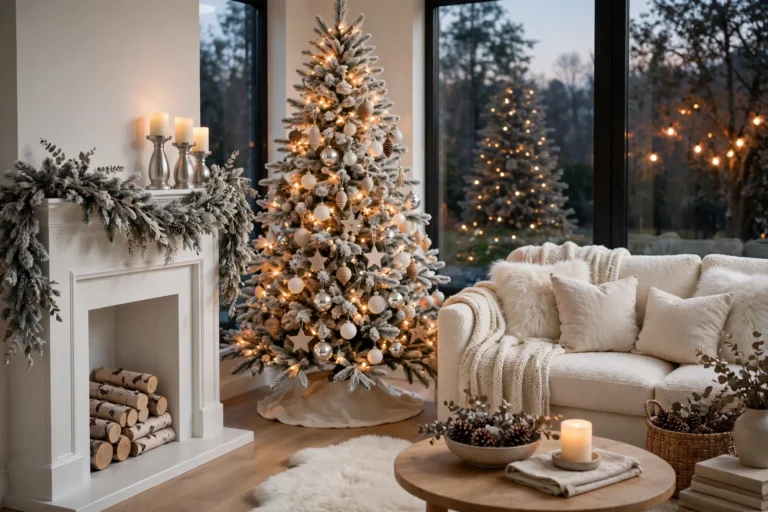
A flocked or frosted tree is the base, and the palette stays soft: white, silver, pearl, and pale ice blue. Add clear glass icicles, frosted balls, and a few matte silver stars, and keep the lights warm white so the snow does not look gray. Tone-on-tone color lets texture do the work, so mix glossy, frosted, and matte pieces in the same shade. Slim flocked trees suit rooms with limited floor space, and the pale branches reflect light into dark corners. Finish with a white faux fur or knit skirt.
9. Scandinavian Minimalist Tree
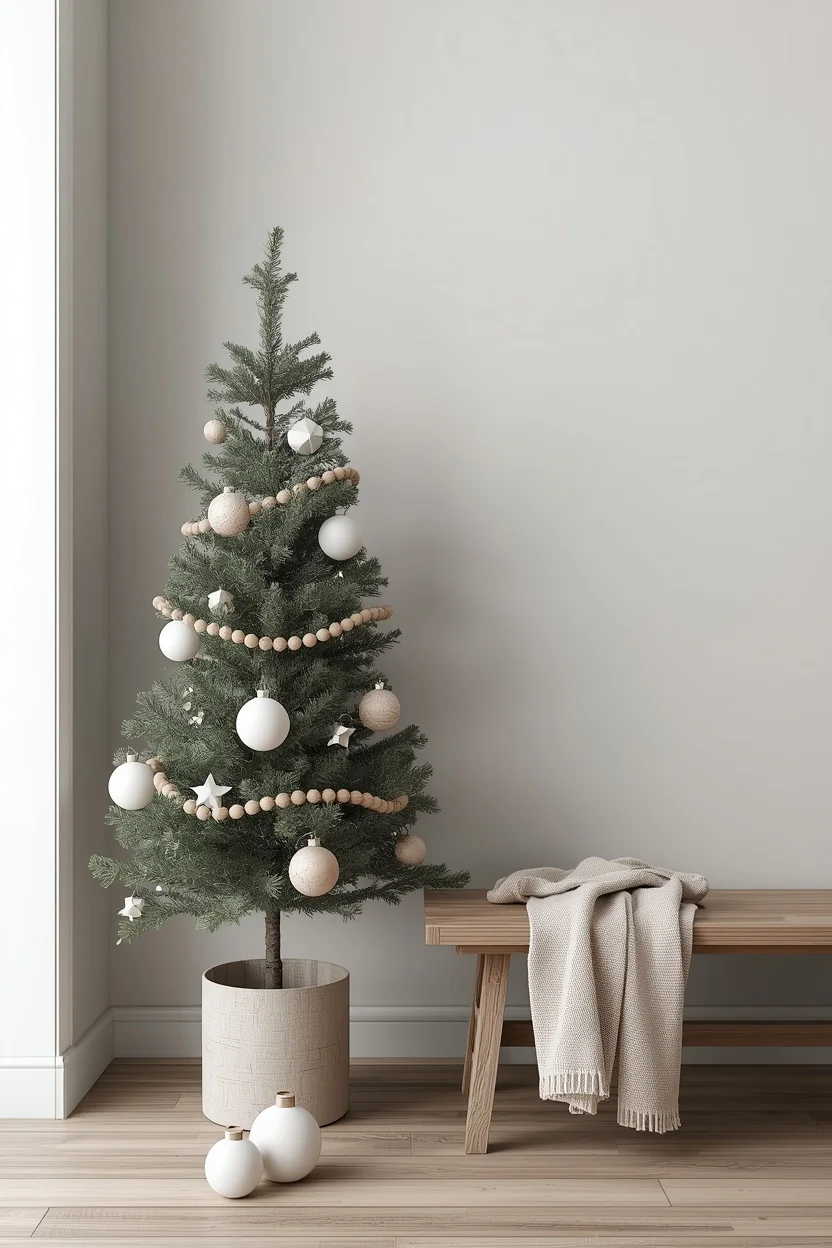
Less is the whole plan here. Use a slightly sparse tree, a wood bead garland, paper or straw stars, and about 25 to 35 well-chosen ornaments in white, natural wood, and one muted accent like sage or terracotta. Leave breathing space between pieces so each one is seen. Warm white lights, wrapped loosely, add the glow. Fewer ornaments make every piece count, and bare branches show off the shape of the tree itself.
10. Dried Orange and Pinecone Tree
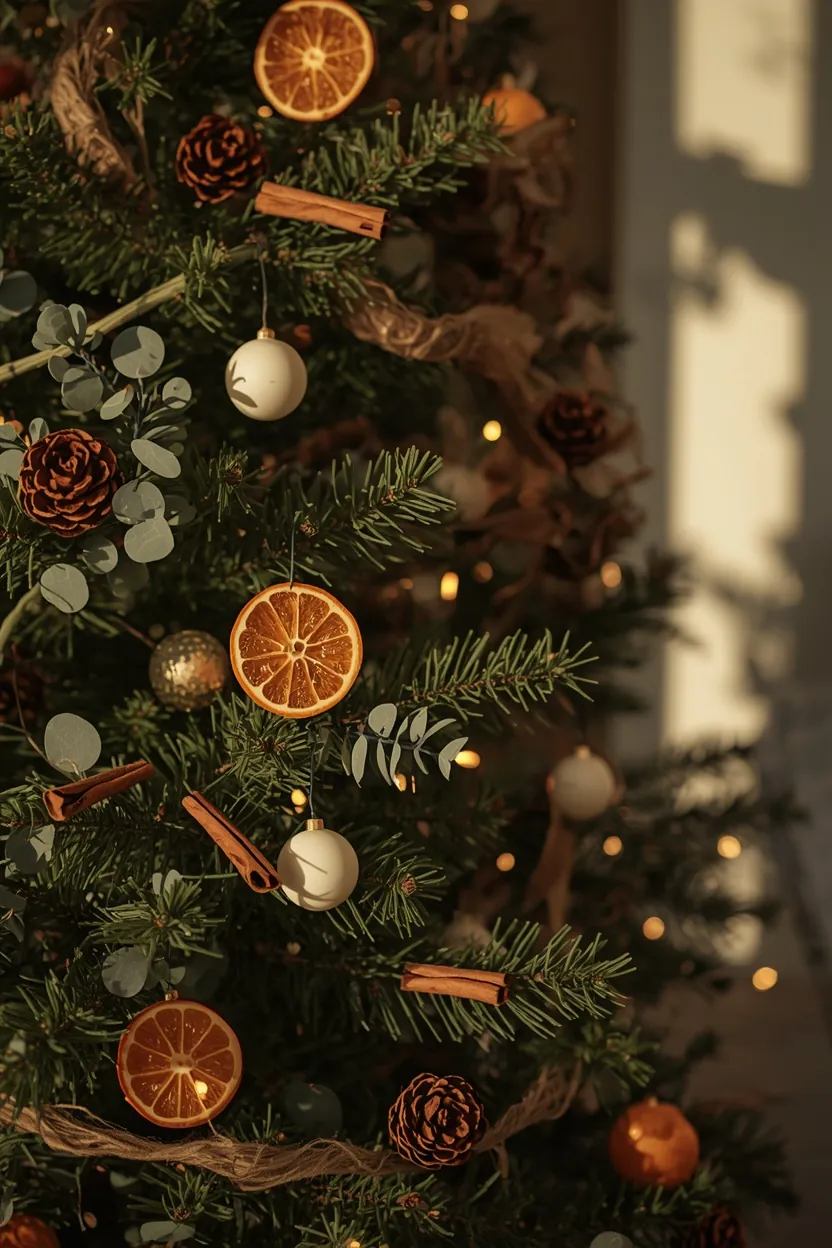
This natural tree costs very little and smells lovely. Slice oranges about a quarter inch thick, dry them in a low oven (around 200°F, for roughly two to four hours, flipping once), and thread each slice with twine. Mix them with pinecones, cinnamon sticks, eucalyptus stems, and plain wood or glass balls in cream. The warm orange pops against deep green needles without any extra color. Dried slices are very light, so they hang well even on thin branches, and the natural materials need no matching set.
Related: 23 Outdoor Christmas Light Ideas for Any House Style
11. Gingham Farmhouse Tree
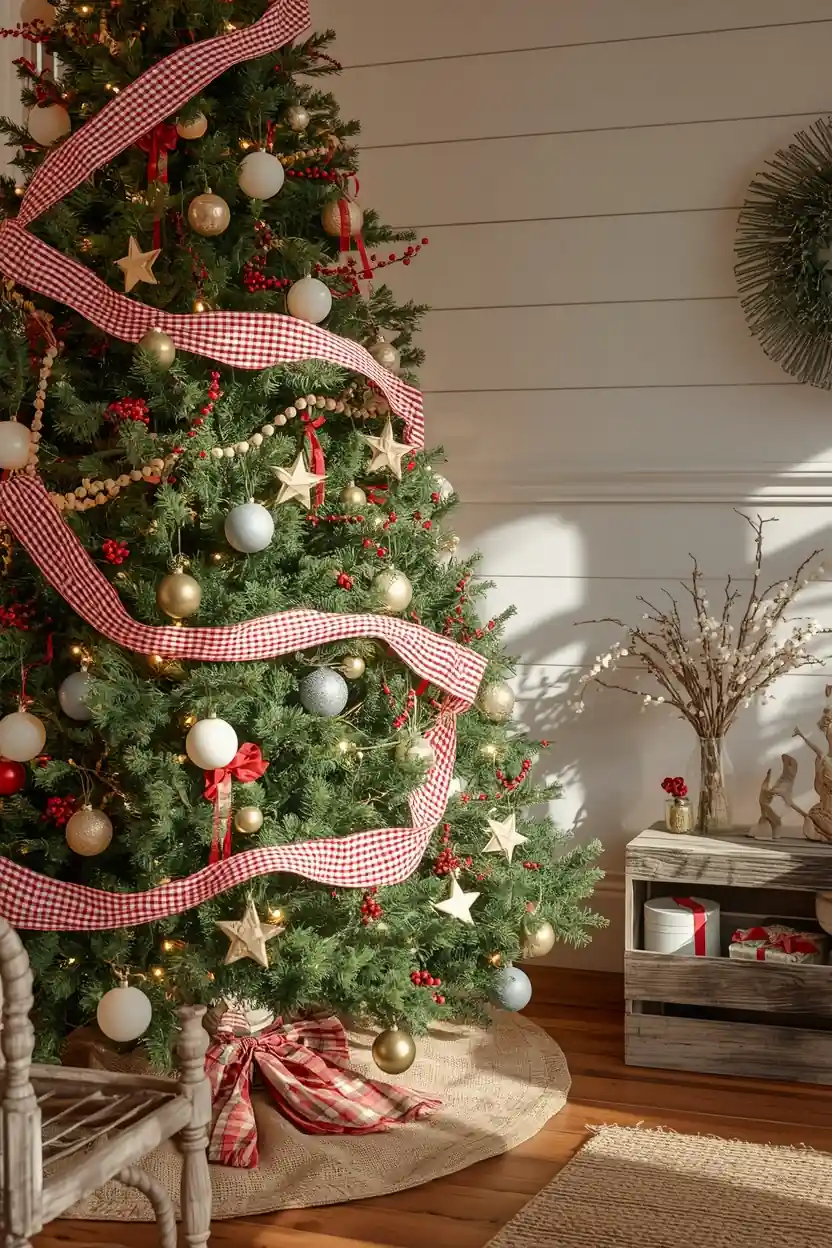
Pick red and white gingham ribbon as the star, then add wood bead garland, galvanized metal stars, red berry stems, and jute twine. A few enamel or tin ornaments make the look feel like it came from a country kitchen. Place the ribbon in loose, relaxed loops instead of straight lines. Gingham is a simple check, so it reads cheerful but never fussy, and the wood and metal pieces keep it grounded. A burlap or buffalo check skirt ties in at the base.
12. Vintage Shiny Brite Tree

This look borrows from mid-century glass ornaments: mercury glass, striped balls, and fat retro bulbs. Choose jewel tones like ruby, teal, and gold, then add bottle brush mini trees, a little tinsel, and large bulb-style LED lights. Hang the biggest glass balls near the trunk and the tiny ones at the tips. A mix of old and new pieces works fine as long as the colors repeat. Repeating three or four jewel shades gives a mixed collection the feel of a set.
13. Retro Rainbow Tree

This is the happy, 90s-style tree. Use multicolor lights, tinsel garland, and ornaments grouped by color so the tree reads as a gradient from top to bottom. Start with red at the top and finish with purple or blue at the base, or mix colors in loose pockets for a playful feel. Add chunky bulbs, a bright star, and a few novelty pieces. Grouping by color gives the eye a clear pattern, so it looks planned even when the ornaments are all different.
14. Blush and Pearl Tree

Soft pink, ivory, and pale gold make a gentle, romantic tree. Use a green tree for a classic base, or a pink one if you want a bolder look. Add pearl garland, blush satin bows, ivory glass balls, and a few champagne gold ornaments. Pearls reflect lights in a soft way, which gives the tree a glow instead of a sparkle. Keep the ribbon satin or velvet in one shade of pink so the palette stays quiet.
15. Black and Bronze Tree

A black tree is bold, and the right metals make it feel warm instead of spooky. Use bronze, copper, and antique gold ornaments, then add dark red or deep green ribbon and a few matte black balls for depth. Warm white or gold-toned lights make the metals glow against the dark branches. The strong contrast means even a small number of ornaments stand out, so you can decorate with less. A black or charcoal velvet skirt keeps the base moody.
16. Crystal and Icicle Tree

Clear crystals, glass icicles, and silver beads catch every bit of light, so this tree sparkles like frost. Hang long icicles on the outer tips, round crystal balls in the middle, and a few larger silver pieces deeper in. Warm white lights keep the glass from looking cold, while cool white lights give a more wintry feel. Using only clear and silver pieces means the tree is all about reflection, so even a modest set looks bright. Add a glass or crystal star on top.
17. Navy and Copper Tree
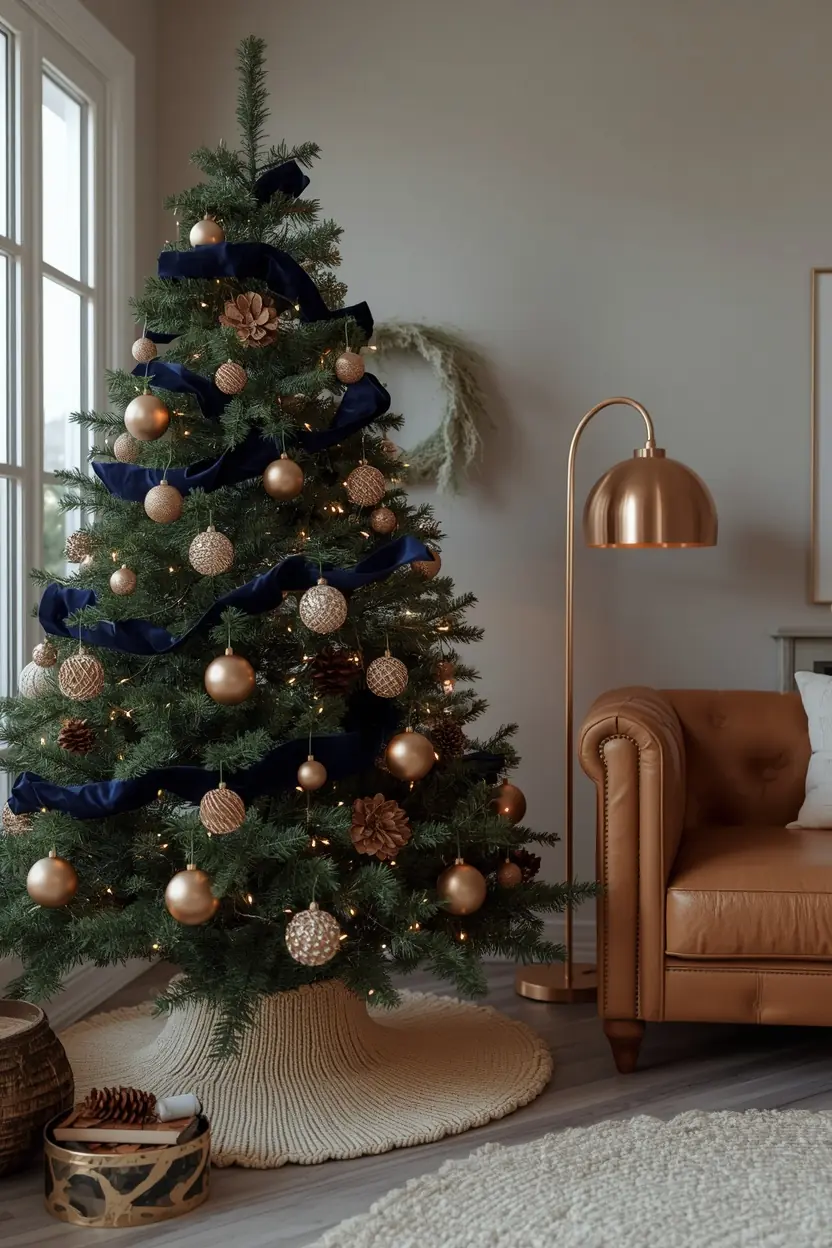
Blue and brown pairs are showing up in a lot of saved pins this season. Use deep navy velvet ribbon and matte navy balls, then warm them with copper ornaments, brown pinecones, and wood slices. Keep lights warm white so the copper reads rich and the navy stays deep. Blue and orange-brown sit across from each other on the color wheel, which makes each shade look stronger next to the other. A cream tree skirt gives the eye a rest.
18. Candy Cane and Gingerbread Tree

This is the fun one for families. Use red and white striped ribbon, peppermint-style glass balls, felt or salt-dough gingerbread shapes, and a few real candy canes on the outer branches. If you have pets, keep salt-dough pieces high or use felt instead. Add white lights and a red tree skirt. Stripes and warm brown cookies feel playful, and the red and white palette keeps it looking organized even when the ornaments are silly.
19. Family Memory Tree
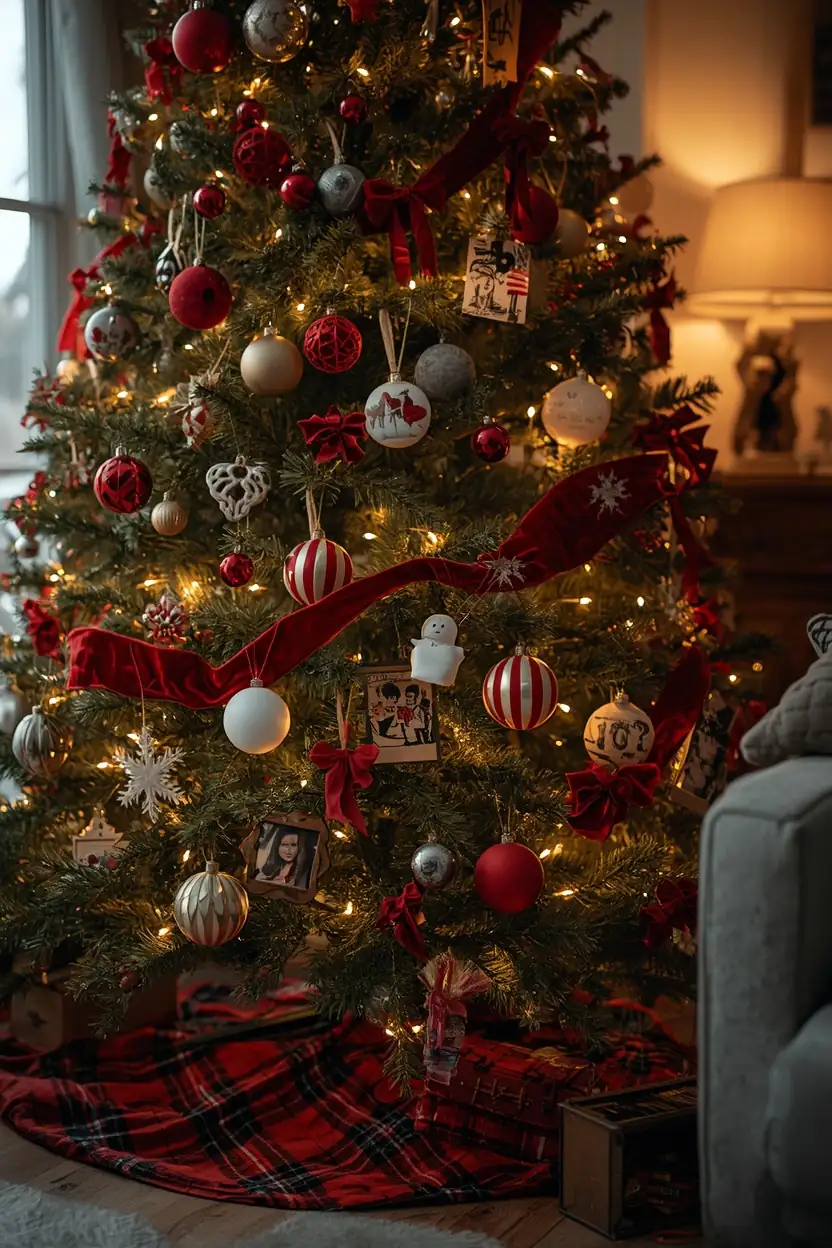
This tree is built from what you already own. Gather handmade ornaments, travel souvenirs, framed photo ornaments, and the old favorites from every year. To keep it from looking random, choose one ribbon and one light color and use them all over the tree, so the story has a thread. Write the year on the back of new ornaments with a paint pen. The repeated ribbon works like a frame around a messy gallery wall, and the pieces feel meaningful because they are real.
20. Coastal Sea Glass Tree

Pick a flocked tree or a plain green one and dress it in seafoam, aqua, sand, and white. Hang sea glass-colored balls, small shells, driftwood stars, and a rope or jute garland. White lights keep the look clean. The soft blue-green shades feel like water, and the natural pieces anchor the tree to the beach theme without using anything cartoonish. A woven basket collar makes a neat base.
21. Light Spiral Pencil Tree

This idea suits small rooms. Take a slim six-foot tree, begin at the bottom, and wrap the lights up in even loops, keeping about a hand’s width between each turn. Add small ornaments in a single color along the light line, then top with a simple star. The spiral adds shape and movement without adding bulk. A narrow tree takes up little floor space, and the clean lines keep the corner from feeling crowded.
Styling Tips That Work on Any Tree
- Fluff first. Pull every branch tip outward and bend it slightly up. This alone fills most gaps before a single ornament goes on.
- Light it in sections. About 100 lights per foot of height is the common starting point, and some people go up to 150 for a bright glow. Work from the trunk outward on each section.
- Size by depth. Put large ornaments deep near the trunk, medium ones in the middle, and small ones near the tips. This builds depth and keeps the tree from looking flat.
- Use two main colors and one accent. A small palette looks planned even when the pieces come from a mixed box.
- Repeat in threes. Hang similar ornaments in groups of three at different heights so the eye moves around the tree.
- Mix finishes. Pair matte, shiny, and glitter pieces in the same color family for richness.
- Match the topper to the tree. A large bow, star, or floral spray should feel like part of the palette, not an afterthought.
- Finish the base. A skirt, basket, or collar hides the stand and makes the tree look complete.
Practical Implementation Ideas
Decorate in the same order each time and the tree comes together faster. Here is a simple order that works for most looks above.
- Set the tree on a level spot, away from heaters, vents, and fireplaces.
- Fluff all the branches.
- Test every light strand before it goes on the tree.
- Add the lights, then step back and check for dark patches.
- Add ribbon or garland.
- Hang large ornaments, then medium, then small.
- Fill gaps with picks, bows, or stems.
- Add the topper.
- Finish with the skirt or collar.
Use this table as a starting point for lights and ornaments. Guides vary, so begin at the low end and add pieces until the gaps close.
Related: 16 Christmas Table Decoration Ideas That Feel Expensive, Not Busy
| Tree height | Lights (about 100 per foot) | Ornaments (light to full) |
|---|---|---|
| 5 ft | 500 | 30 to 75 |
| 6 ft | 600 | 37 to 90 |
| 7 ft | 700 | 43 to 105 |
| 8 ft | 800 | 50 to 120 |
For a real tree, check the water in the stand every day and keep it away from heat sources. Use LED lights, which run cooler than older incandescent strands.
Common Mistakes to Avoid
- Skipping the light test. Plug in every strand on the floor first. Finding a dead section after the tree is full is no fun.
- Using too few lights. A tree with sparse lighting looks flat at night, and the ornaments lose their shine. Aim for roughly 100 per foot.
- Hanging everything on the tips. When all the ornaments sit at the ends of the branches, the tree looks hollow. Set some deep inside.
- Mixing too many colors. More than three main colors makes a tree look random. Stay with two plus one accent.
- Cutting ribbon too short. Measure with string before you cut, and add extra for tucking in and out of the branches.
- Forgetting to fluff. Squashed branches leave gaps no ornament can hide.
- Putting the tree near heat. Keep it clear of vents, radiators, and the fireplace, especially if it is a real tree.
- Using real candles. Clip-on LED candles give the same look without the fire risk.
- Picking a topper at the last minute. A topper that is too small looks lost, and one that is too heavy bends the top branch.
- Leaving the base bare. Stand, cords, and plastic legs show without a skirt or collar.
Small-Space Alternatives
- Pencil or slim tree. A slim tree fits a corner or hallway. The light spiral in idea 21 and the minimal look in idea 9 both suit it.
- Half tree. A flat-backed tree sits flush against a wall and saves floor space. Try a ribbon cascade (idea 6) on it.
- Tabletop tree. Set a small tree on a console, a sideboard, or a stack of books. The snowy Nordic look (idea 8) reads well at this size.
- Go vertical. Long ribbon, tall toppers, and slim icicles draw the eye up, which makes the ceiling feel higher.
- Use a mirror. A mirror near the tree doubles the lights and makes the corner feel bigger.
- Keep the palette tiny. One color plus white lights stops a small tree from looking crowded.
Budget-Friendly Alternatives
- Free: Reuse what you own. Group old ornaments by color, add ribbon scraps, and cut paper stars from old book pages.
- Low cost: Buy plain shatterproof balls in a single color in bulk, then add ribbon. Dry your own orange slices. Gather pinecones, eucalyptus, or evergreen clippings from the yard.
- Thrift finds: Look for mercury glass, brass bells, and wooden ornaments at thrift shops and yard sales for the vintage looks in ideas 2, 4, and 12.
- Spend once: If you buy one thing, buy good wired ribbon. It makes bows and cascades look polished, and it can be reused for years.
- Shop the off-season: Ornaments and ribbon usually cost less right after the holiday, so keep a short list for next year.
Pro Styling Recommendations
- Take a phone photo. A camera flattens the tree, so holes and dark patches show up fast.
- Try the squint test. Step back and squint. If one area looks heavy or empty, move a few pieces.
- Choose warm white lights. Look for LEDs rated near 2700K for a soft, candlelit tone, unless you want the icy look of idea 16.
- Tuck, do not wrap, ribbon. Pushing ribbon into the branches in a loose wave looks more natural than wrapping it around like a stripe.
- Add stems for height changes. Floral picks, berry stems, and greenery sprigs break up the round shape of the ornaments.
- Turn off the overheads. Lamps and the tree lights alone make a room feel calm, and they show off the ornaments best.
- Match the tree to the room. Warm wood and neutral rooms suit ideas 1, 9, and 10. Dark or moody rooms suit ideas 4, 5, and 15.
FAQs
Final Thoughts
A good tree is rarely the one with the most ornaments. It is the one where every piece has a reason to be there, and the lights make the whole thing glow.
Pick one idea from this list and make a short plan: two colors, one accent, a ribbon method, and a light count. Then fluff, light, and hang in order. When you step back and your eye stops hunting for gaps, the tree is done.
Save your favorite looks to a Pinterest board now, so decorating day starts with a plan instead of a scroll.