19 Thanksgiving Buffet Table Ideas for Easy, Beautiful Serving
Picture this. Everyone is hungry. The turkey is resting, the gravy is hot, and somebody has already asked where the plates are.
You look at your table. It’s pretty. But the line is a tangle. The cranberry sauce is hiding behind the rolls, there’s only one serving spoon for three dishes, and the pumpkin centerpiece is blocking the potatoes.
Sound familiar?
A Thanksgiving buffet can be one of the easiest ways to host. Guests help themselves, you get out of the kitchen, and there’s room for seconds without anyone feeling awkward. But a buffet works best when the styling and the serving work together.
Below you’ll find 19 buffet table ideas that are pretty and practical. You’ll learn how to plan the flow, build height, keep food at safe temperatures, and add warm touches that don’t get in the way. Thanksgiving falls on November 26 this year, so you’ve got a few weeks to plan. Pick the ideas that fit your space and start there.
Quick Answer: How Do You Style a Thanksgiving Buffet Table for Easy Serving?
Set the buffet up as a one-way line that starts with plates and ends with napkins and cutlery. Group dishes by type, give each its own serving utensil, and label everything. Add height with risers, boards, and pumpkins, and keep the centerpiece low so guests can see the food. Use warming trays and ice to keep hot dishes at 140 degrees Fahrenheit or higher and cold dishes at 40 degrees or lower. Put drinks and desserts on separate tables to keep the line moving.
Food Safety Rules for a Thanksgiving Buffet
Styling matters, but safe food matters more. These widely used food safety guidelines are worth following at any buffet.
- Follow the two-hour rule. Perishable food shouldn’t sit out longer than two hours. If the room is above 90 degrees Fahrenheit, shorten that to one hour.
- Keep hot food hot. Aim for 140 degrees Fahrenheit or higher, using chafing dishes, warming trays, or slow cookers.
- Keep cold food cold. Aim for 40 degrees Fahrenheit or lower, using ice trays or bowls nestled in ice.
- Serve in smaller batches. Put out a portion and keep the rest warm in the oven or fridge. Replace empty dishes with fresh ones instead of topping off a half-empty dish.
- Cook the turkey safely. A whole turkey should reach 165 degrees Fahrenheit in the innermost part of the thigh and wing and the thickest part of the breast, measured with a food thermometer.
- Store leftovers quickly. Refrigerate leftovers within two hours, use shallow containers, and eat or freeze them within four days. Reheat to 165 degrees Fahrenheit.
- Keep flames away from food. Use flameless candles near the buffet, and keep real candles away from dishes, foil, and linens.
Which Table Should You Use for Your Buffet?
| Table type | Best for | Watch out for |
|---|---|---|
| Dining table | Smaller groups and tight spaces | Needs clear space on all sides for the line |
| Sideboard or buffet cabinet | Small gatherings, apartments | Limited length, so use risers and a separate dessert spot |
| Folding or utility table | Big crowds | Needs a floor-length cover and a stable setup |
| Kitchen island | Casual, kitchen-centered gatherings | Keep it away from active cooking and hot pans |
Thanksgiving Buffet Color Palettes
| Palette | Colors | Mood | Best for |
|---|---|---|---|
| Rustic harvest | Rust, olive, cream, natural wood | Warm and traditional | Farmhouse and cozy homes |
| Modern neutral | Cream, tan, black, brass | Calm and clean | Modern and minimalist homes |
| Cranberry and sage | Cranberry, sage, ivory, gold | Soft and elegant | Formal dining rooms |
Part One: Flow and Layout
1. A One-Way Line That Starts With Plates

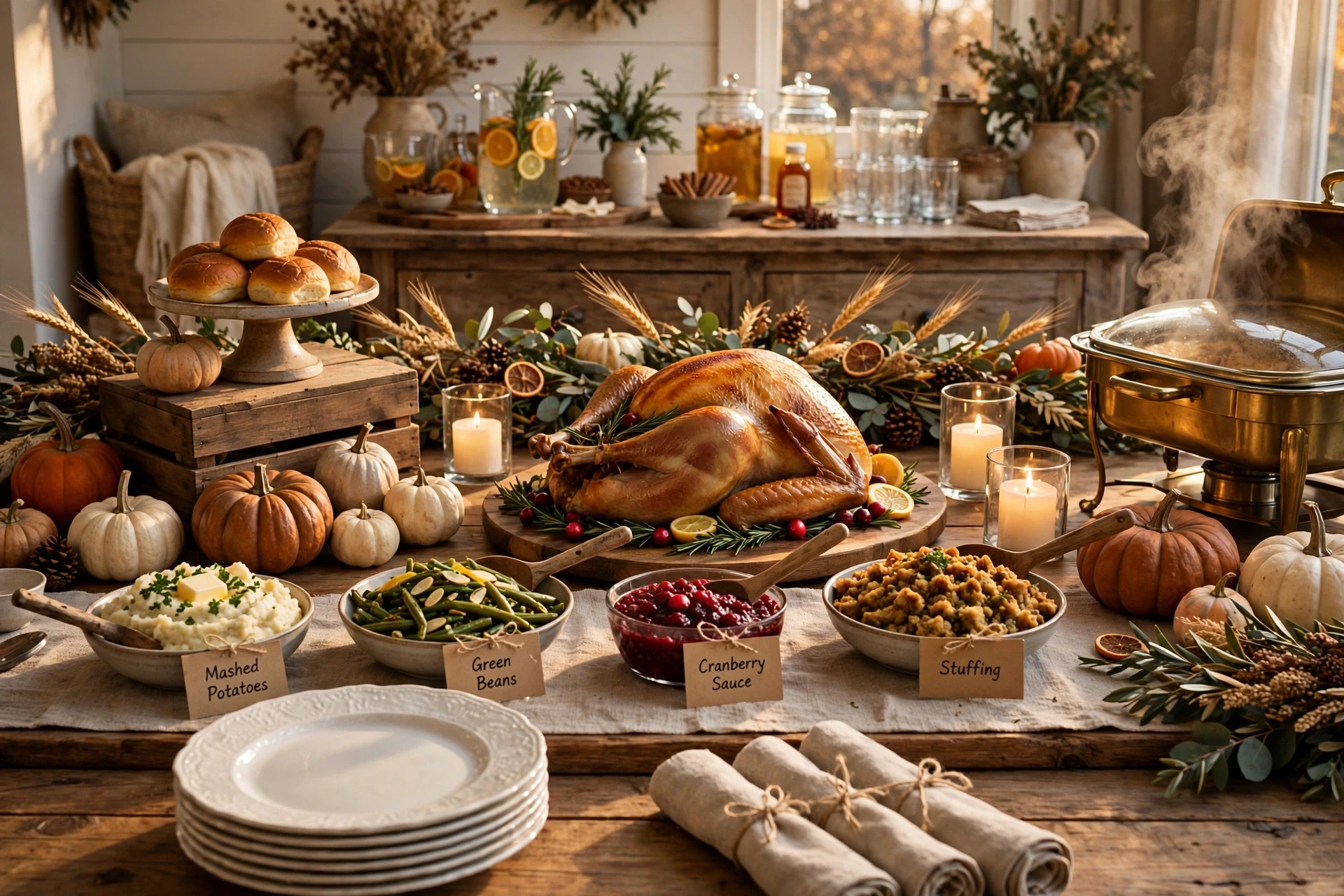
A buffet works best when it works like a line. Put the plates at the very start and the napkins and cutlery at the very end, so guests aren’t juggling forks while holding a full plate. Make sure the line moves in one direction, with clear space at both ends. Place the table where people can reach it from at least one open side, with room behind them to pass. A stack of sturdy plates and a small tray of extras makes the start of the line obvious. Stand back and picture a guest walking the route before the doorbell rings.
2. Group Dishes by Type
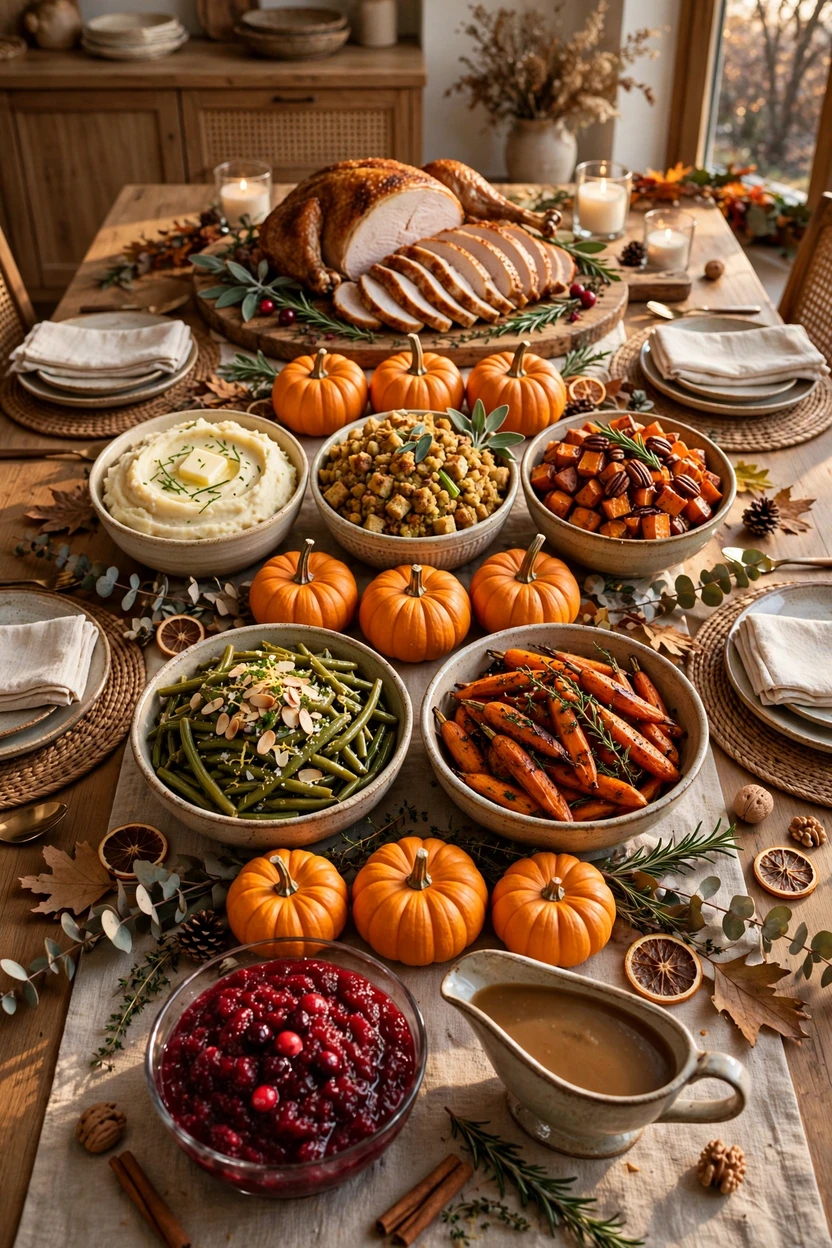
Guests think in categories, so set the food up that way. Start with the turkey or main protein, then place the starchy sides like mashed potatoes and stuffing, then the vegetables, then cranberry sauce and gravy. Keep similar dishes together so guests can scan the table fast. Place gravy near the potatoes and turkey, not at the end of the line. Rolls and butter can go on the dining table to keep the buffet from getting crowded. Grouping also helps you refill the right dishes quickly.
3. A Two-Sided Buffet for Big Crowds
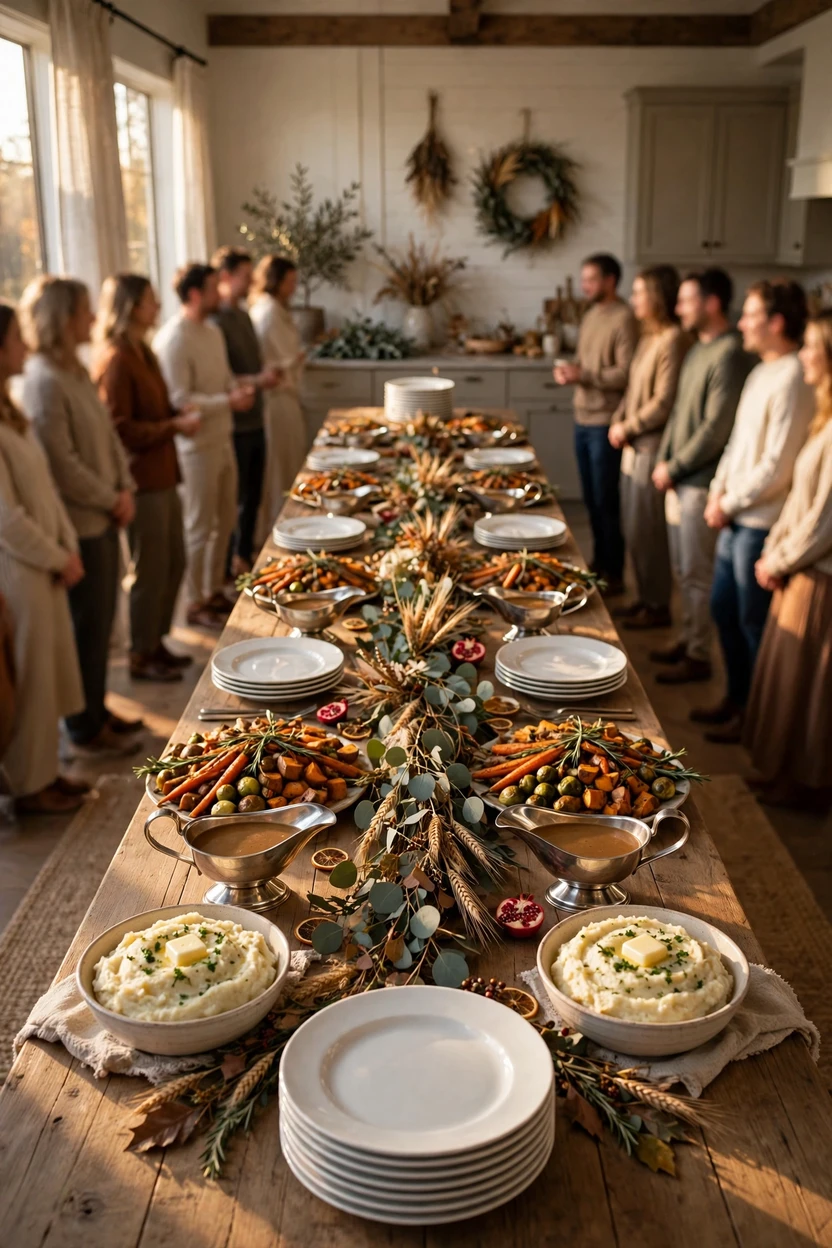
When you have more than about a dozen guests, one line can back up fast. Set the buffet in the middle of the room, or against a wall with room on both sides, and mirror the dishes on each side. That way two lines move at the same time. Use two of each main item, like two gravy boats and two bowls of potatoes, and keep the turkey at one end. Mark the start of each line with a stack of plates. If you can’t double everything, split the food so each side holds half of the sides.
4. A Separate Drink Station
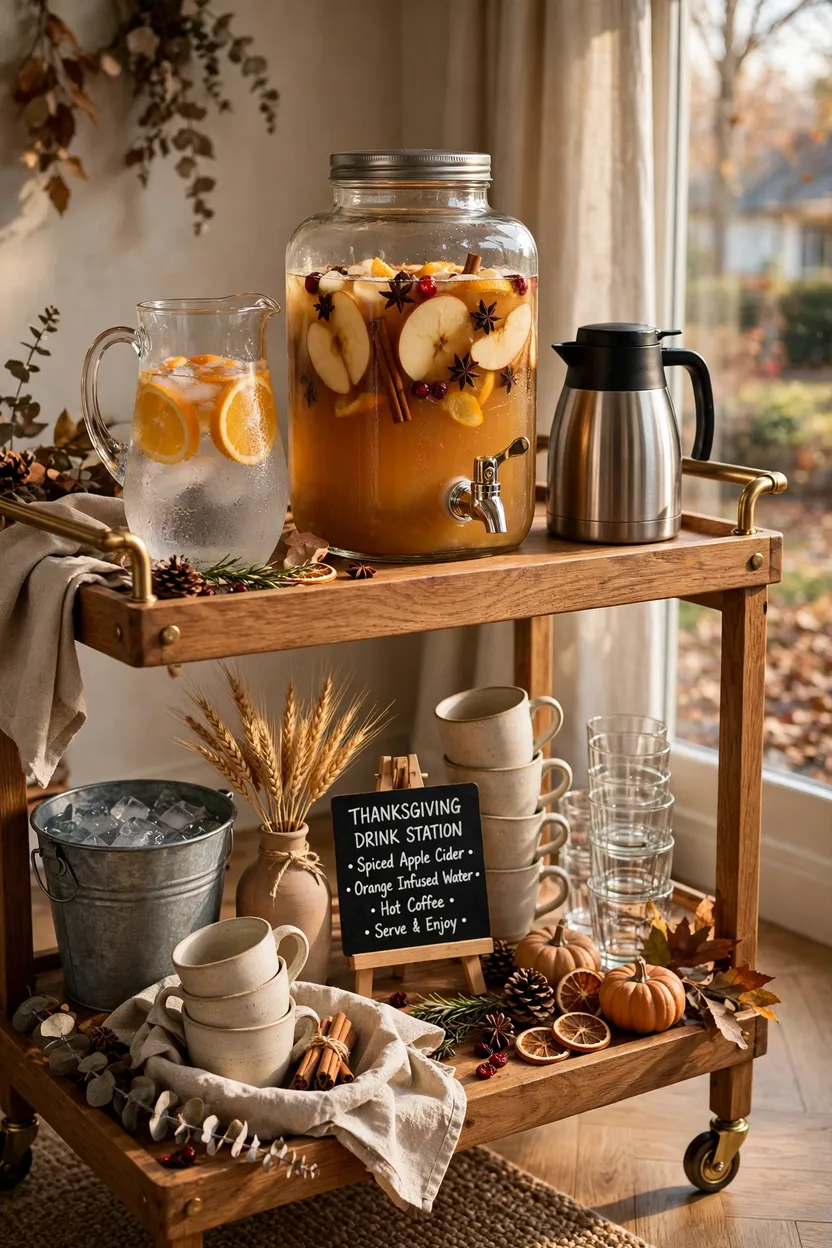
Drinks cause traffic jams when they sit next to the food. Move them to a separate spot, like a sideboard, a bar cart, or the end of a counter. Set out a pitcher of water, a pot of coffee, and a seasonal drink such as spiced cider, plus glasses, ice, and napkins. Add a small sign for each drink and a tray for used glasses. This also gives guests a reason to move around the room. If you serve wine or cocktails, keep them in a separate spot from the water and coffee.
5. A Separate Dessert and Pie Table

Dessert deserves its own spot, and it frees up room on the main buffet. Set a smaller table or sideboard with pies, a whipped cream bowl, small plates, forks, and a pie server. Use cake stands and wooden boards to give height, and add a sprig of rosemary or a few cinnamon sticks for scent. Cut a few slices ahead of time so guests can grab one easily. Keep the dessert table away from the savory food so the line doesn’t double back. Whipped cream and custard-style pies should stay chilled until serving.
Part Two: Height and Surfaces
6. Risers From Cake Stands and Crates

A flat table looks plain, and height fixes that fast. Use cake stands, wooden crates, upside-down bowls, and sturdy boxes under the linen to create two or three levels. Put the main dish at the center and the tallest riser behind it. Keep heavy items low and steady, and make sure every riser is stable before you set food on it. Pick risers in wood, ceramic, or brass to keep the look warm. Height also gives you more space for dishes without making the table feel crowded.
7. A Linen Base and a Wide Runner

Start with a tablecloth that reaches near the floor, or one that covers the table fully, then lay a wide runner down the center. Linen or cotton in cream, oatmeal, or soft rust is easy to find and easy to wash. A neutral base keeps the food as the star. Add a heat-safe pad or a trivet under every hot dish, since hot pans can scorch fabric and wood. Iron or steam the cloth ahead of time and smooth the creases, then tuck any loose edges so nothing catches on a hand or an arm.
8. Wood Boards and Trays as Zones

Boards and trays are the easiest way to organize a buffet and keep the table tidy. Place a large board under the turkey, a tray under the gravy boat, and a small board under the cranberry sauce. They protect the table, catch drips, and make each dish feel like part of a plan. Choose wood, galvanized metal, or white ceramic for a farmhouse look. A tray also makes it easy to pick up and move a whole group of items at cleanup. Keep a stack of napkins nearby for quick wipes.
9. Pumpkins and Gourds as Risers

Small pumpkins and gourds can do double duty as decor and as height. Set a flat pumpkin or a stack of two under a bowl to lift it, or tuck a few around the base of a platter. Choose a mix of cream, rust, and soft green, and keep a few real stems for texture. Use faux pumpkins for risers if you need them to hold a lot of weight or sit for several days. Wipe real pumpkins dry so no moisture seeps onto linen. Keep decorative pumpkins away from the serving area so food doesn’t touch them.
10. A Low Garland Down the Center

A centerpiece should add beauty without blocking the view. Run a low garland of eucalyptus, dried wheat, and a few berries down the back or center of the table, no more than a few inches high. This leaves clear sightlines so guests can see across the table and find what they want. Keep greenery from touching food, and tuck the stems under or behind dishes. Add a few small votives or flameless candles in glass holders along the garland for evening glow. Use faux greenery if the table will be set up for a long time.
Part Three: Serving Tools
11. One Utensil Per Dish
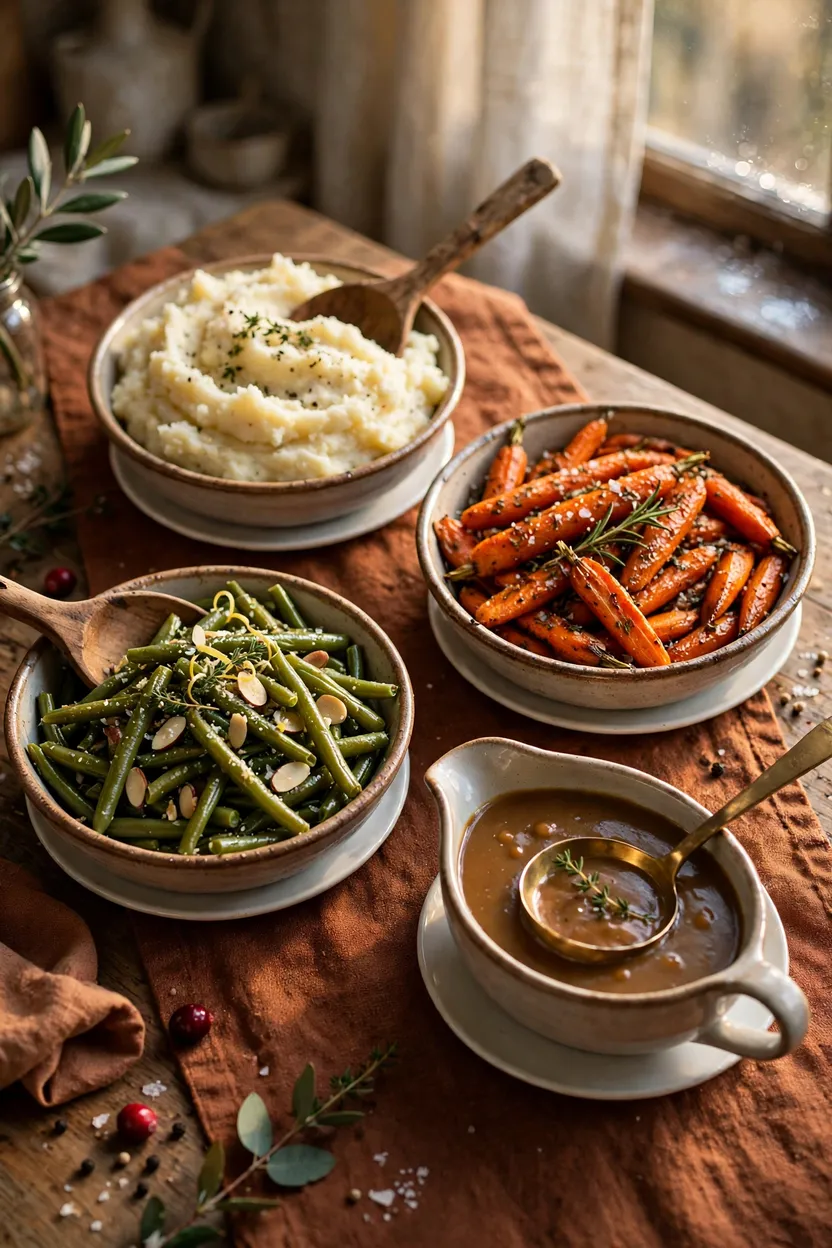
Shared utensils are a common mess, so give every dish its own. Use a big spoon for mashed potatoes, tongs for roasted vegetables, a slotted spoon for green beans, and a ladle for gravy. Match the handles in wood, brass, or black for a simple, pulled-together look. Rest each utensil on a small saucer so drips don’t land on the linen. Choose the right tool for the food, so guests can serve themselves without a struggle. Keep a few extra utensils in the kitchen to swap out during the meal.
12. Chafing Dishes, Slow Cookers, and Warming Trays

Hot food cools quickly on a buffet, so plan for heat. Use chafing dishes for the biggest dishes, slow cookers on the warm setting for mashed potatoes and stuffing, and warming trays for rolls and sides. Dress them up by hiding cords behind the table and covering slow cookers with a linen napkin around the base. Make sure cords don’t cross the walkway, and don’t place them where a guest could trip. Check that hot foods stay at 140 degrees Fahrenheit or higher. Use a food thermometer to be sure, and stir often for even heat.
13. Cold Dishes on Ice

Cold salads, relish trays, and dips need to stay chilled. Nestle a bowl inside a larger bowl or tray of ice, and replace the ice when it melts. For a pretty touch, set the ice tray inside a wooden crate or lined basket. Keep cold foods at 40 degrees Fahrenheit or lower, and put out small amounts at a time, replacing them with fresh bowls from the fridge. This also makes the table look neat and plentiful. Remember that cold dishes count in the two-hour rule too.
14. Labels With Allergy Notes
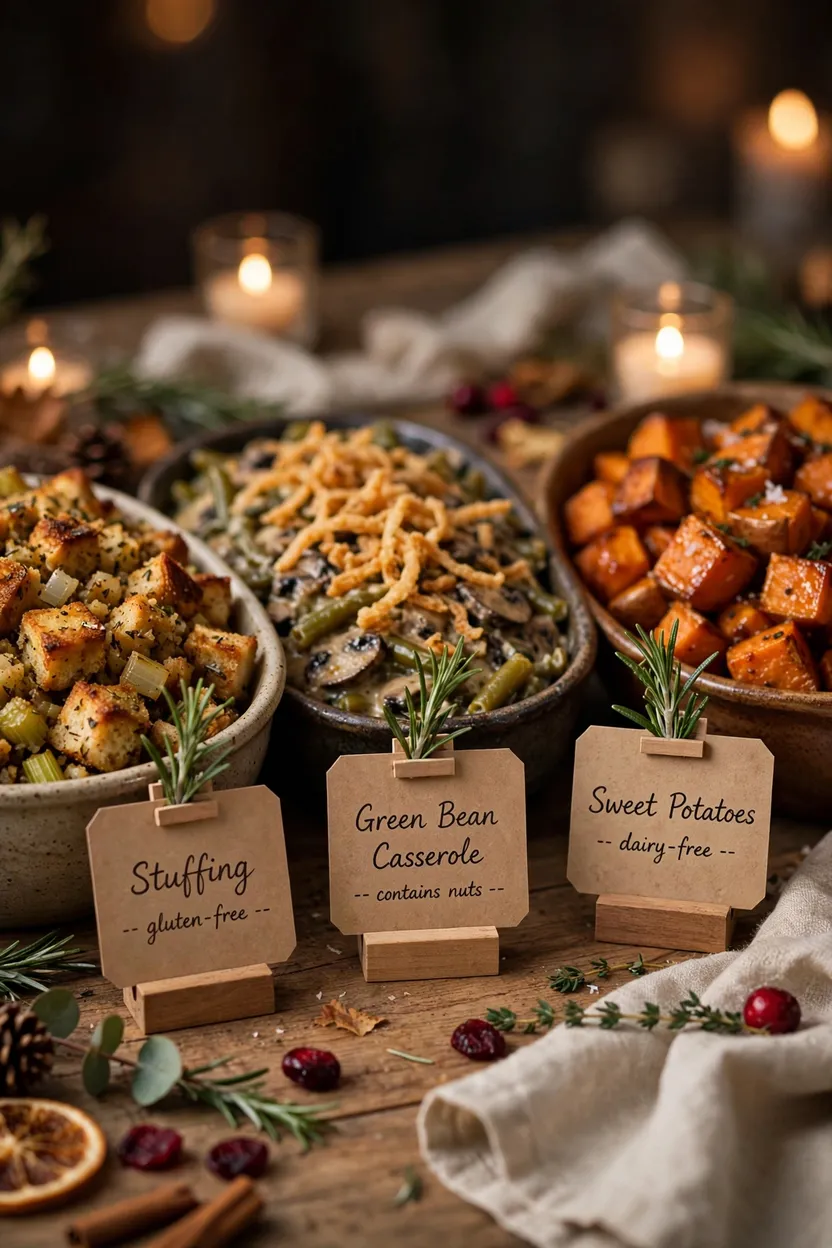
Labels help guests choose quickly and help people with allergies stay safe. Use small kraft tags, mini chalkboards, or folded cards, and write the dish name plus simple notes like gluten-free, contains nuts, dairy-free, or vegetarian. Place each label in front of its dish where it’s easy to read. Keep handwriting clear and large enough to see in low light. A tiny sprig of herb on each tag adds a pretty touch. If you’re unsure about an ingredient, say so, or keep the ingredient list on hand.
15. A Two-Platter Refill System

A full buffet looks inviting, but a half-empty one looks messy. Fill each dish only partway, and keep a second, matching platter warm in the oven or cold in the fridge. When the first dish runs low, swap it for the fresh one instead of adding new food on top of old. This keeps food fresher and safer, and it keeps the table looking neat. Set up a small cleanup tray in the kitchen for empty dishes. Assign a helper to watch the buffet and do refills.
Part Four: Atmosphere and Guests
16. Warm Lighting With Flameless Candles
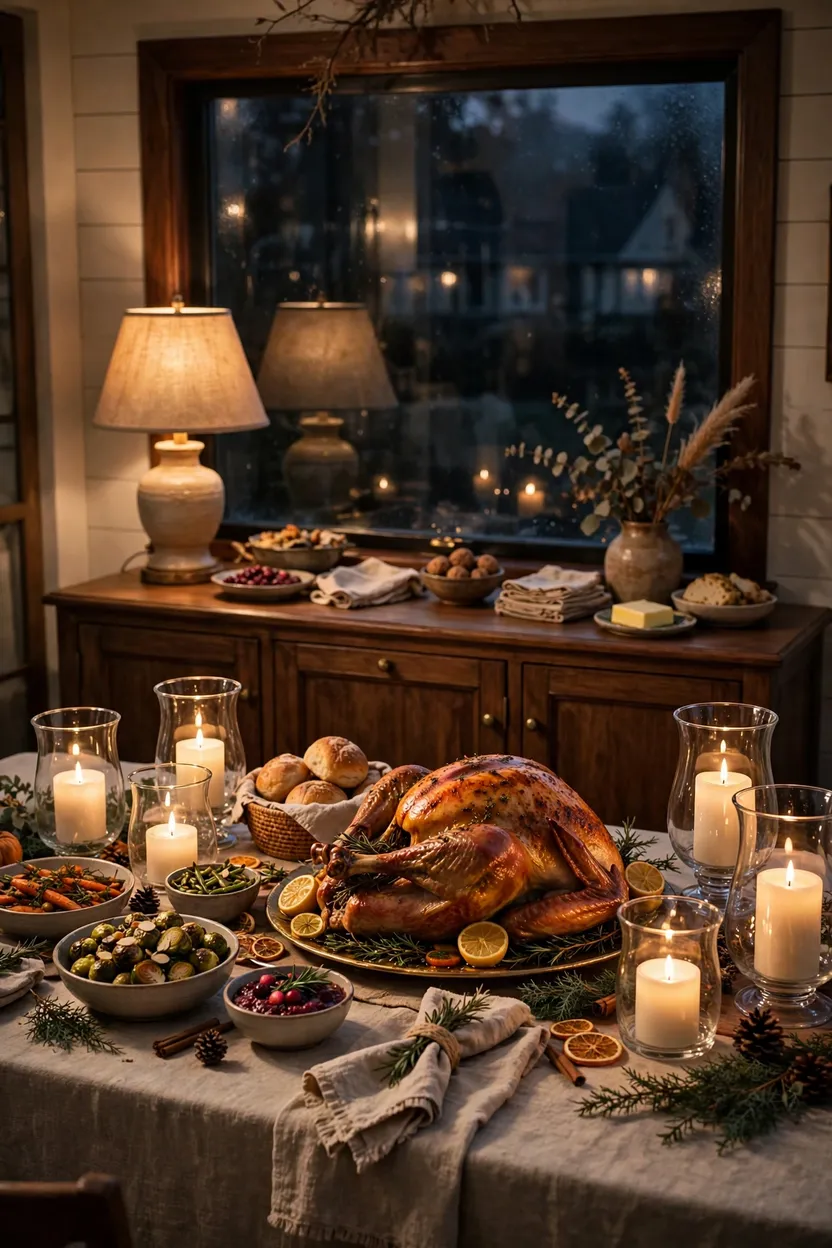
Warm light makes food look better and the room feel welcoming. Use flameless candles in glass holders along the table, and add a lamp or string lights nearby for a soft glow. Warm white bulbs in the 2700K range look best on turkey, bread, and pie. Keep real flames away from dishes, foil, linens, and greenery, especially near a busy buffet line. Dim the overhead light a little so the table glows. Make sure guests can still see what they’re serving and read the labels.
17. A Three-Color Autumn Palette

Too many colors can make the table feel busy, and the food already adds plenty. Pick three: for example, cream, rust, and olive for a rustic look, or cream, tan, and black with brass for a modern look. Use them across linens, napkins, pumpkins, and serveware. A repeating color tells the eye that the table is planned and calm. Let the food bring the bright tones, like orange squash and red cranberries. Keep patterns small and subtle so they don’t compete with the dishes.
18. A Kids’ Buffet Corner

Kids are happier when they can serve themselves, and a small corner keeps them from crowding the main line. Set a low table or the end of the buffet with kid-size plates, small tongs, and a few easy foods like rolls, fruit, mini turkey sliders, and mashed potatoes. Add a small sign, crayons, and a paper placemat they can color. Place it at a height they can reach, and keep hot dishes out of reach. Adults can keep an eye on this spot while enjoying the main table.
19. A To-Go Leftover Station
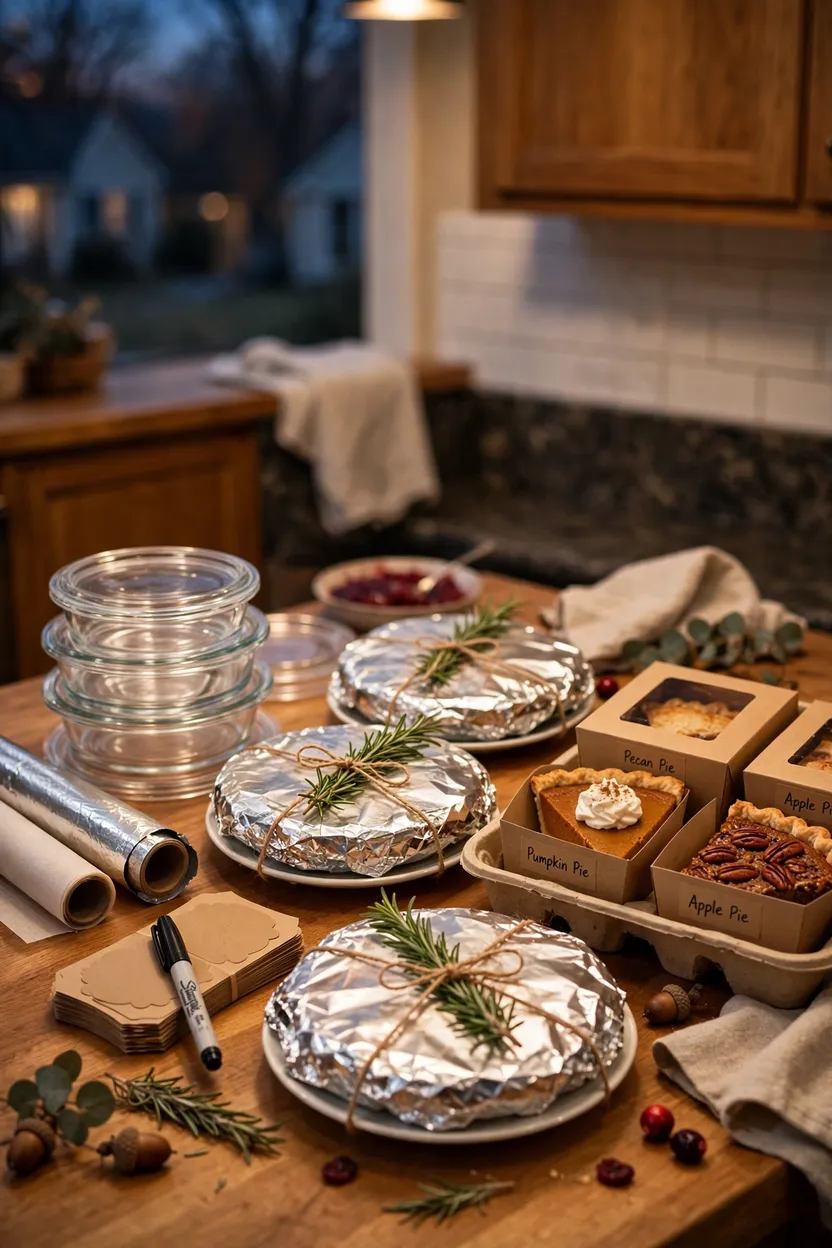
Ending the day well is part of hosting. Set out a few reusable containers, foil, and labels near the kitchen so guests can pack a plate to take home. Use shallow containers so food cools quickly, and put the date on each one. Remember to refrigerate leftovers within two hours. A small tray with a marker and a roll of masking tape makes labeling easy. Offer a little thank-you note or a sprig of rosemary tied to a container as a sweet send-off.
Styling Tips
- Plan the food first, then style. Know how many dishes you have, and set aside space for each before adding decor.
- Keep the center low. Anything above eye level blocks the view and slows the line.
- Use odd numbers. Three pumpkins or five risers look more natural than pairs.
- Repeat materials. Wood, linen, and brass tie the table together.
- Leave breathing room. Don’t crowd dishes. Gaps make it easier to serve and clean.
- Match serveware loosely. White dishes are easy to mix. A few vintage pieces add charm.
- Style for both daylight and candlelight. Check the table in the afternoon and again at dusk.
Your Thanksgiving Hosting Timeline
One week before
- Decide your menu and how many dishes need to stay hot or cold.
- Check your serving dishes, utensils, and linens, and make a list of what to borrow or buy.
- Clear space in the fridge and oven for backup dishes.
Two days before
- Iron or steam linens and set up the buffet table.
- Test warming trays, slow cookers, and extension cords.
- Write labels and gather riser pieces.
Thanksgiving morning
- Set out risers, boards, trays, and decor.
- Place plates, napkins, and cutlery in their spots.
- Set up the drink and dessert stations.
One hour before serving
- Fill warming dishes and place hot foods on the table last, as close to serving time as you can.
- Light flameless candles and dim the overhead lights.
- Walk the line once, as if you were a guest.
During and after dinner
- Watch the clock and keep track of how long food has been out.
- Refresh dishes with the backup platters.
- Refrigerate leftovers within two hours, and use shallow containers.
Common Mistakes to Avoid
- Putting plates at the end. Guests will have to carry a plate back to the start.
- Using one spoon for several dishes. It spreads flavors and spills. Give each dish its own utensil.
- Making the centerpiece too tall. It blocks sightlines and slows the line.
- Leaving food out too long. Perishable food shouldn’t sit out longer than two hours, or one hour in hot rooms.
- Topping off half-empty dishes. Replace them with fresh dishes instead.
- Crowding the table. Dishes need room for spoons and hands.
- Forgetting labels. Guests with allergies need to know what’s in each dish.
- Placing real candles near food. Use flameless candles and keep flames away from linens and greenery.
- Ignoring cords. Tape or hide them so no one trips.
- Skipping a drink table. Drinks at the buffet slow the line.
Small-Space Alternatives
- Use a sideboard or kitchen island. Serve the mains there, and move desserts to a small side table.
- Serve family-style for the mains. Put a few dishes on the dining table and the rest on the buffet.
- Go vertical. Use tiered stands and wall shelves to hold more without covering more table.
- Use the kitchen counter. Keep the buffet near the stove, and keep the line short.
- Stagger the food. Put out half the dishes first, and swap in the others after guests finish.
- Cut the decor. One small garland and a few pumpkins are enough in a tight space.
Budget-Friendly Alternatives
| Big idea | Lower-cost swap |
|---|---|
| Matching serveware | Mixed thrifted white dishes and your own bowls |
| Cake stands | Upside-down bowls or wooden crates under linen |
| Large chafing dishes | Slow cookers, warm ovens, and insulated carriers |
| Fresh floral garland | Dried wheat and eucalyptus from the grocery store |
| Custom labels | Kraft paper tags and a marker |
| New linens | A wide strip of butcher paper over a plain sheet |
| Real pumpkins | A bowl of apples, pears, or clementines |
Spend on things that make serving safe and easy, like extra serving utensils and a few heat-safe pads. Save on decor, since pumpkins, branches, and linens can come from home or the grocery store.
Pro Styling Recommendations
- Walk the line before guests arrive. Pick up a plate and move through the buffet like a guest. Fix anything that feels awkward.
- Name a buffet captain. Ask one helper to watch the table, swap empty dishes, and keep the line tidy.
- Photograph it early. Take your pictures before the first plate, while the table is full and neat.
- Check the table in two lights. Daylight and lamplight make food and linens look different. Adjust both.
- Group serving pieces by finish. If your spoons are wood, keep your boards and handles wood too. Match finishes for a calm look.
- Plan one hero dish. Place the turkey or a showpiece dish at the center or the start of the main section.
- Leave one empty spot. Keep a small clear space for guests to set down a plate or a glass while they serve.
Easy Swaps by Style
| Your style | Buffet styling twist |
|---|---|
| Farmhouse | Wood crates, galvanized trays, and dried wheat |
| Modern | Black serveware, white linen, and a single branch centerpiece |
| Boho | Woven trays, layered textiles, and pampas grass |
| Traditional | Brass utensils, a deep burgundy runner, and pewter candlesticks |
| Cozy cabin | Plaid napkins, pinecones, and warm wood boards |
Frequently Asked Questions
Conclusion
A good Thanksgiving buffet isn’t about having the fanciest dishes. It’s about making it easy for people to sit down and be together.
Start with the flow. Plates first, napkins last, one spoon per dish. Then add the details that make the table feel like a welcome: a few risers, a low green garland, a soft glow of candlelight. Keep the hot food hot and the cold food cold, and keep a backup dish ready so the table always looks full.
When the line moves and the room fills with the smell of roasted turkey and warm bread, you can finally take a breath. Fix yourself a plate, find a seat, and enjoy it with the people you made the table for.