19 Leopard Print Bedroom Ideas for the Aesthetic Undecided
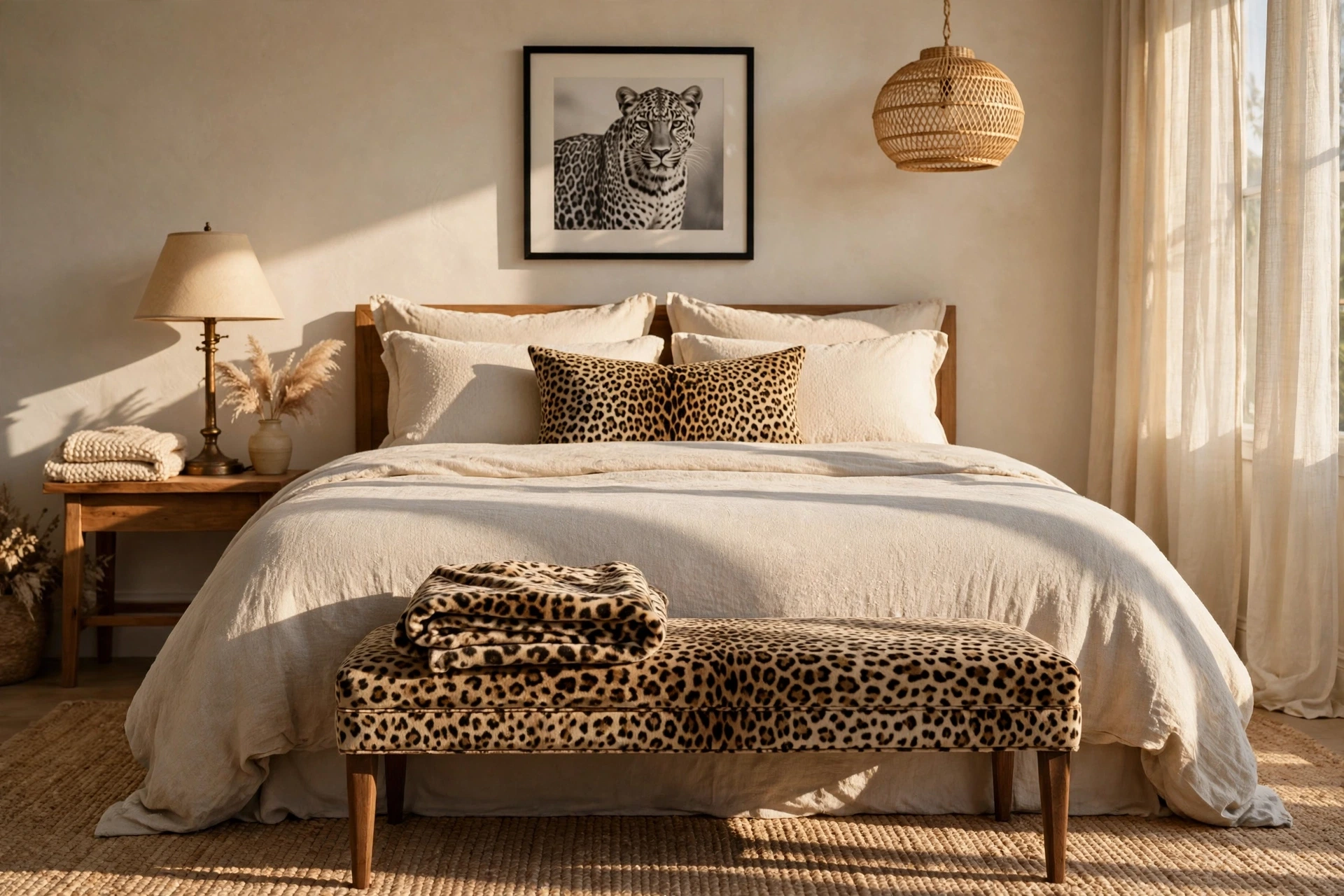
You have five Pinterest boards. One is soft and neutral. One is dark and moody. One is pink. One is full of brass and velvet. And somehow, leopard print keeps showing up on every one of them.
That’s not a coincidence. Leopard is one of the few prints that changes personality depending on what’s around it. Next to linen and rattan, it’s calm. Next to deep green walls, it’s moody. Next to red velvet, it’s bold. Next to blush pink, it’s sweet.
So you don’t have to choose your aesthetic before you buy your first leopard piece. You just have to choose your starting point.
Below are 19 leopard print bedroom ideas, one for each style and each level of commitment, from a single pillow to a wallpaper wall. After the list, you’ll find print rules that keep it from feeling busy, a pick-your-aesthetic chart, a leopard vs. cheetah explainer, care notes, a build order, small-space and renter fixes, and budget swaps.
Quick answer: how do you decorate a bedroom with leopard print? Treat it like a neutral. Pick one leopard piece, such as a throw, pillow, bench, or rug, keep the rest of the room in solids and textures, and pull the print’s browns and creams into other items. A good starting ratio is about 70 percent solid colors, 20 percent leopard, and 10 percent accent color.
Leopard vs. cheetah: Leopard print has rosettes, which are small clusters or rings. Cheetah print has solid spots. In home decor the two names are often used interchangeably, and the styling rules are the same.
Table of Contents
19 Leopard Print Bedroom Ideas
Soft Safari: Oatmeal Bedding With One Leopard Throw
Best for: soft neutral, cozy | Commitment: low
If you love calm rooms but want a little bite, start here. Layer oatmeal linen sheets, a cream duvet, and a chunky knit blanket, then drape one tan-and-black leopard throw across the foot of the bed. The throw’s browns and creams are already in the palette, so it reads like texture, not a statement. Choose a faux fur or soft velvet throw for a plush feel, and keep it to one piece. Because it’s a throw, you can fold it away in summer or move it to a chair if you tire of it.

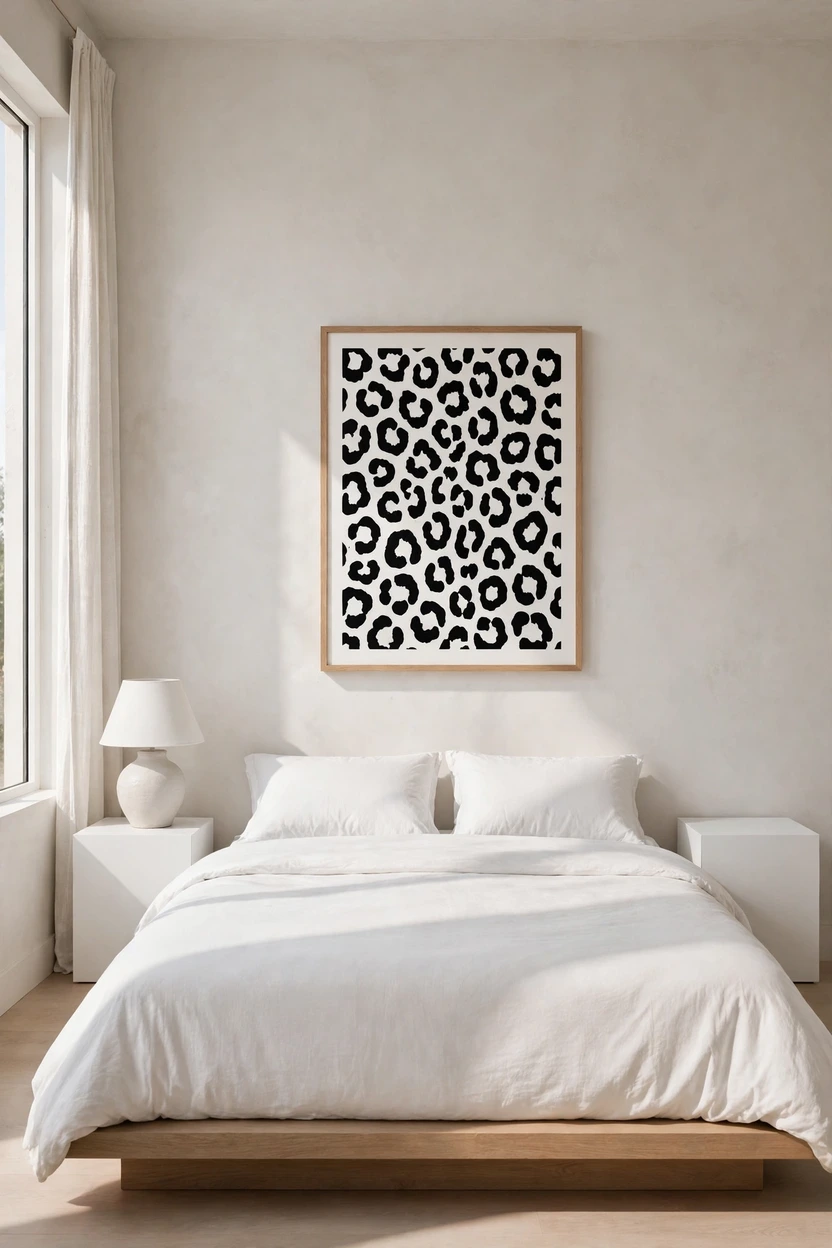
Quiet Minimal: Black-and-White Leopard Art
Best for: minimalist | Commitment: low
A single framed leopard print gives a minimal bedroom a pulse. Choose a simplified black-and-white graphic version in a thin black or oak frame, wide enough to cover about two-thirds of the headboard width. Keep the bedding white or gray and the nightstands plain. The print becomes the one thing your eye lands on, which suits people who dislike clutter. A graphic print in a calm room reads as art, not a theme.
Related: 21 Alt Bedroom Ideas That Feel Truly Lived In (Moody, Cozy & Personal)
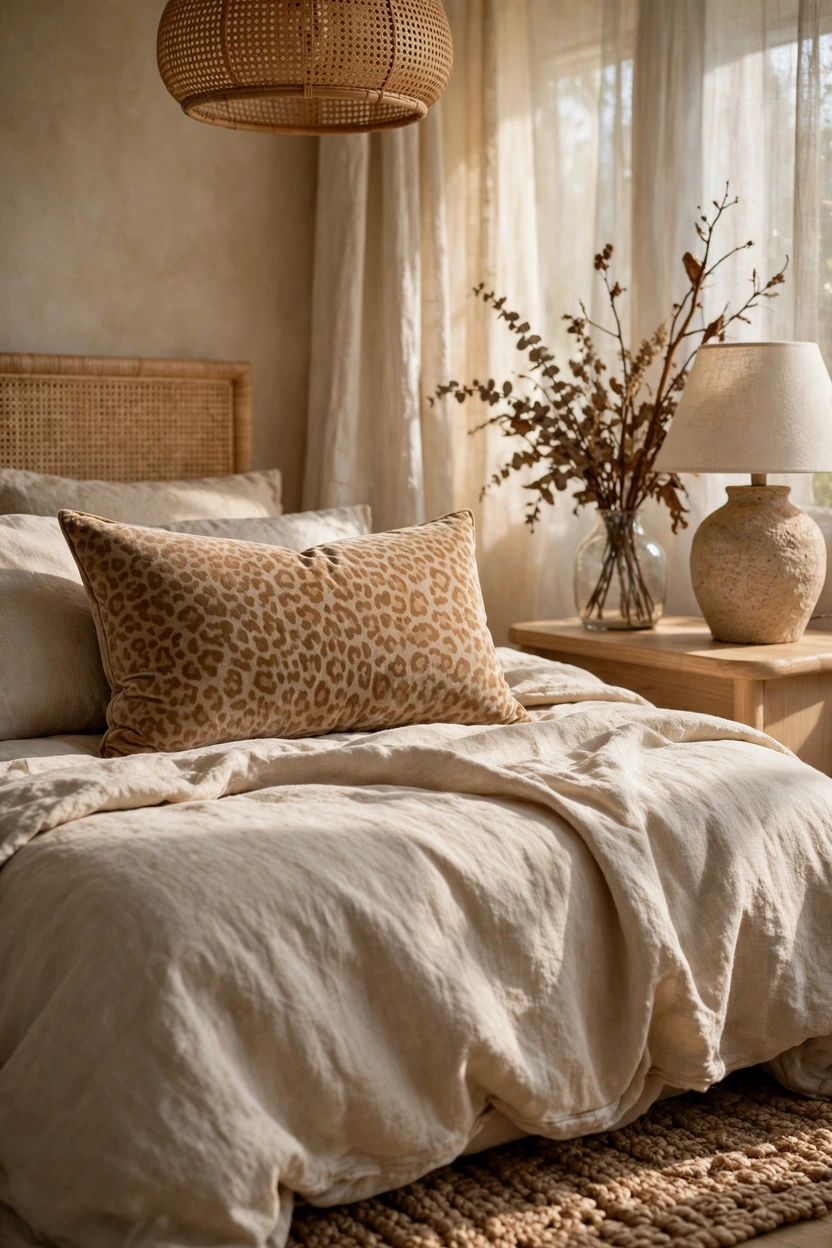
Organic Modern: A Leopard Lumbar Pillow With Linen and Rattan
Best for: organic modern, earthy | Commitment: low
Natural materials and leopard print come from the same earthy family. Place one leopard lumbar pillow on a linen duvet, add a rattan pendant and a jute rug, and let the pillow be the only print. Choose a tone-on-tone version in beige and taupe if you want it quieter. Keep the wood tones light and warm, and add a ceramic lamp with a rough, handmade finish. The mix feels grounded and calm, with just a touch of movement.
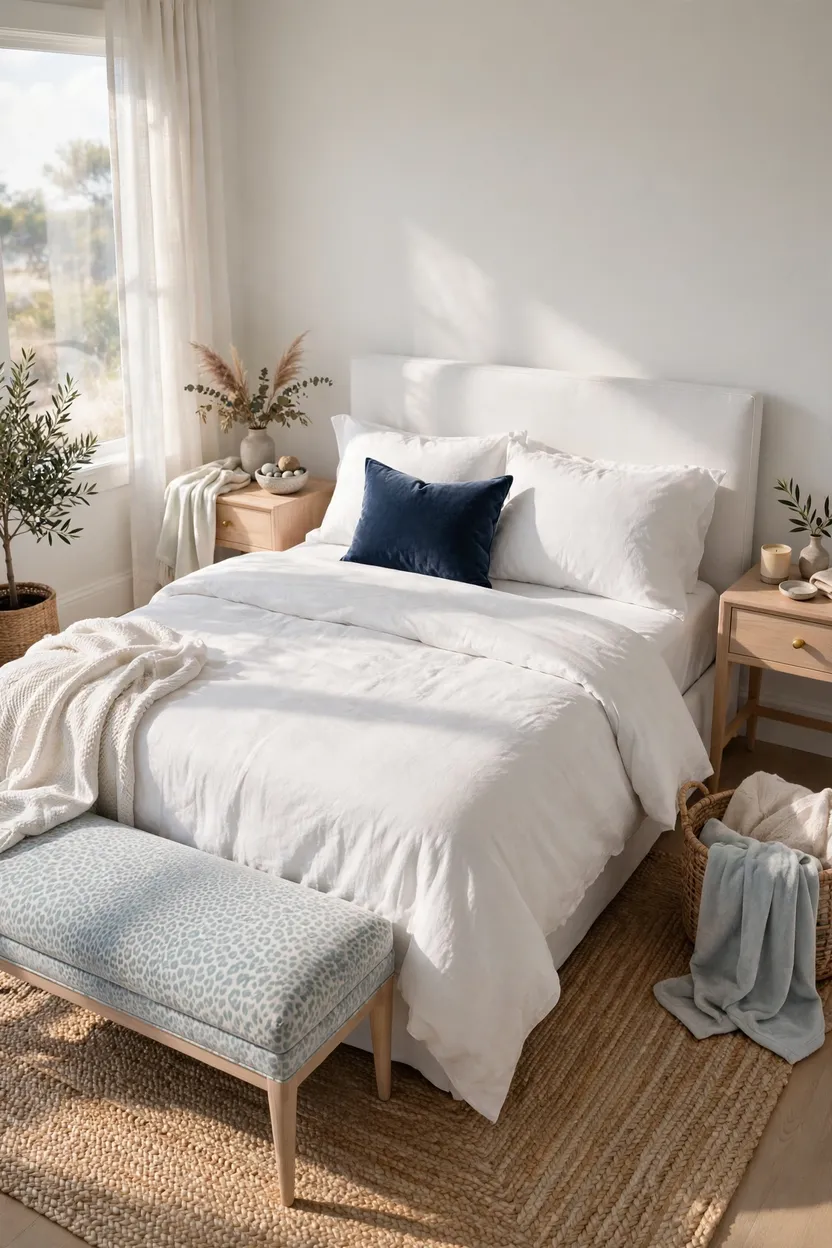
Serene Blue or Gray Leopard on a Bench
Best for: coastal, soft, serene | Commitment: medium
Leopard doesn’t have to be tan. A pale blue or soft gray leopard on a bench or bed base calms the print down. Designers have used pale blue leopard on a bed base to create a quiet, serene effect. Pair it with white bedding, pale wood, and a few navy accents. The soft color keeps the pattern’s irregular shapes without the jungle feel. Put it at the foot of the bed, where its size is easy to control.
Dark Academia: A Leopard Velvet Armchair
Best for: dark academia, moody | Commitment: medium
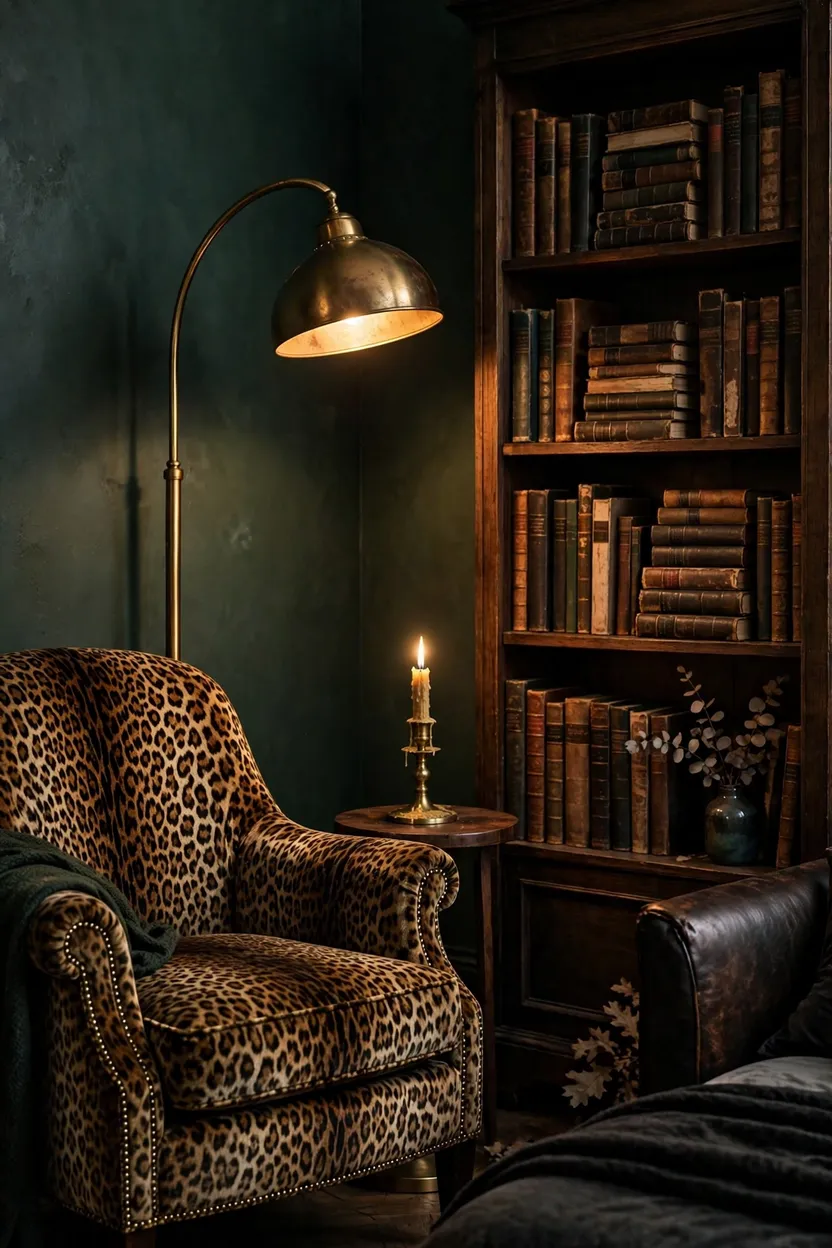
A leopard armchair in a dark corner brings warmth and wit to a moody room. Paint the walls deep green or oxblood, add dark wood furniture, and tuck a leopard velvet chair beside a floor lamp and a stack of books. The tan and black pattern echoes brass, leather, and old book spines. Pick velvet in a matte finish, which looks richer under lamplight than shiny vinyl. A reading chair like this makes the bedroom feel like a small library.
Dark Boho: A Leopard Rug Under the Bed
Best for: dark boho, layered | Commitment: medium
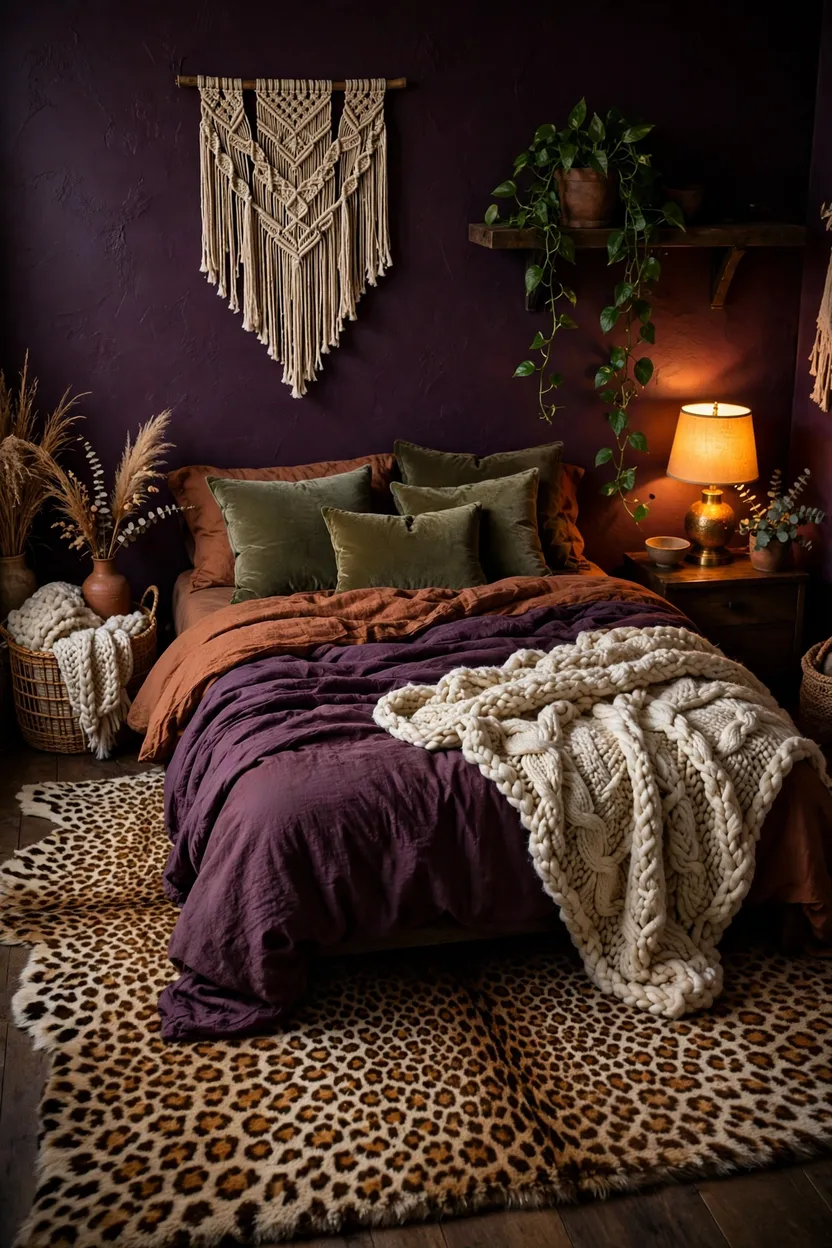
A leopard rug works as a neutral under the bed when the rest of the room is layered. Choose a rug that extends 18 to 24 inches beyond the sides of the bed, which usually means an 8 by 10 for a queen and a 9 by 12 for a king. Layer rust, plum, and olive textiles, then add a macramé hanging and a trailing pothos. Pick a leopard in warm, faded tones, and skip a second busy rug so the room has one clear pattern on the floor. In low lamplight, the print adds depth without competing with the boho layers.
Jungalow: Olive Leopard Wallpaper With Plants
Best for: jungalow, botanical | Commitment: high
Green-toned leopard wallpaper brings the print into a botanical room without the usual tan. Choose an olive and cream leopard for the wall behind the bed, and keep the other walls warm white. Add a rattan headboard, linen bedding, and plants like pothos and a rubber plant. Wallpaper has a pattern repeat, so check the repeat length and order a little extra so the pattern lines up. The green helps the leopard blend with the leaves, so the room feels like a jungle cabin, not a costume.

Glam: A Leopard Velvet Headboard
Best for: glam, Hollywood regency | Commitment: high
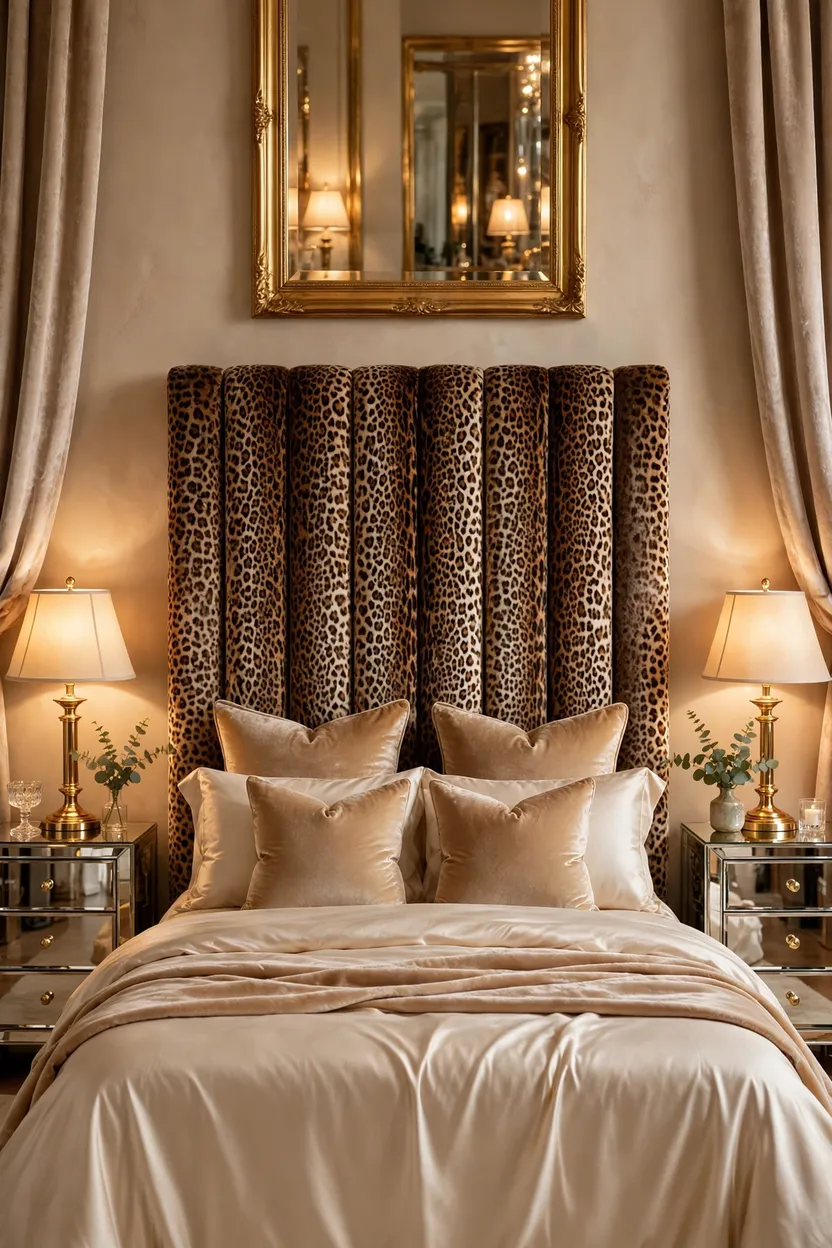
A tall leopard velvet headboard makes the bed the star of the room. Pair it with brass lamps, mirrored or black lacquer nightstands, and satin or velvet pillows in cream and champagne. Choose matte velvet, since glossy vinyl can look cheap and loses the soft feel of the print. Keep the walls warm and quiet so the headboard has room to shine. Velvet attracts pet hair, so keep a lint roller nearby.
Art Deco: Leopard With Black Lacquer and Gold
Best for: art deco, vintage glamour | Commitment: medium
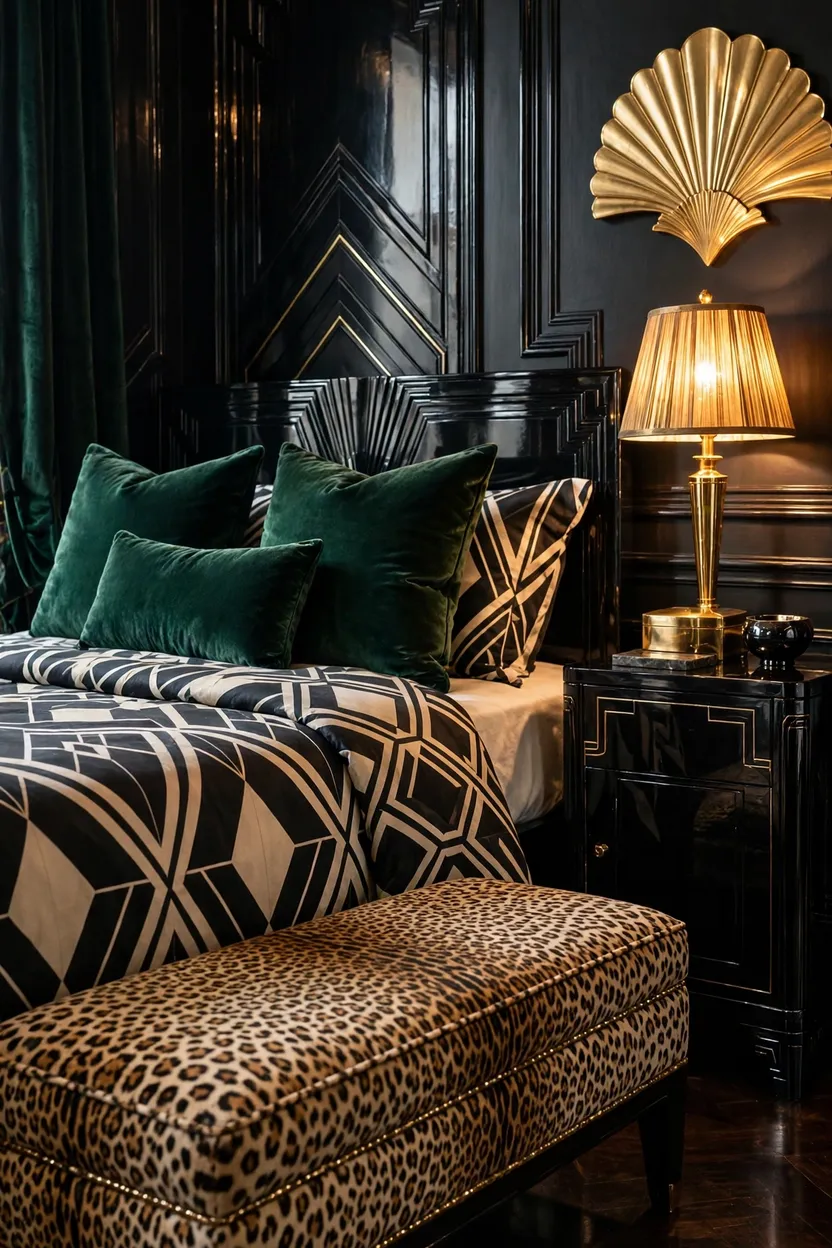
Leopard print and Art Deco are old friends. Pair a leopard bench or a pair of pillows with black lacquer furniture, gold accents, a fan-shaped mirror, and geometric bedding. The contrast between organic spots and sharp lines is what makes it work. Keep the palette to black, cream, gold, and one deep jewel tone like emerald. A small, tightly controlled amount of leopard here feels like glamour from an old film.
Red and Leopard: Bold and Flirty
Best for: bold, retro, Y2K | Commitment: medium
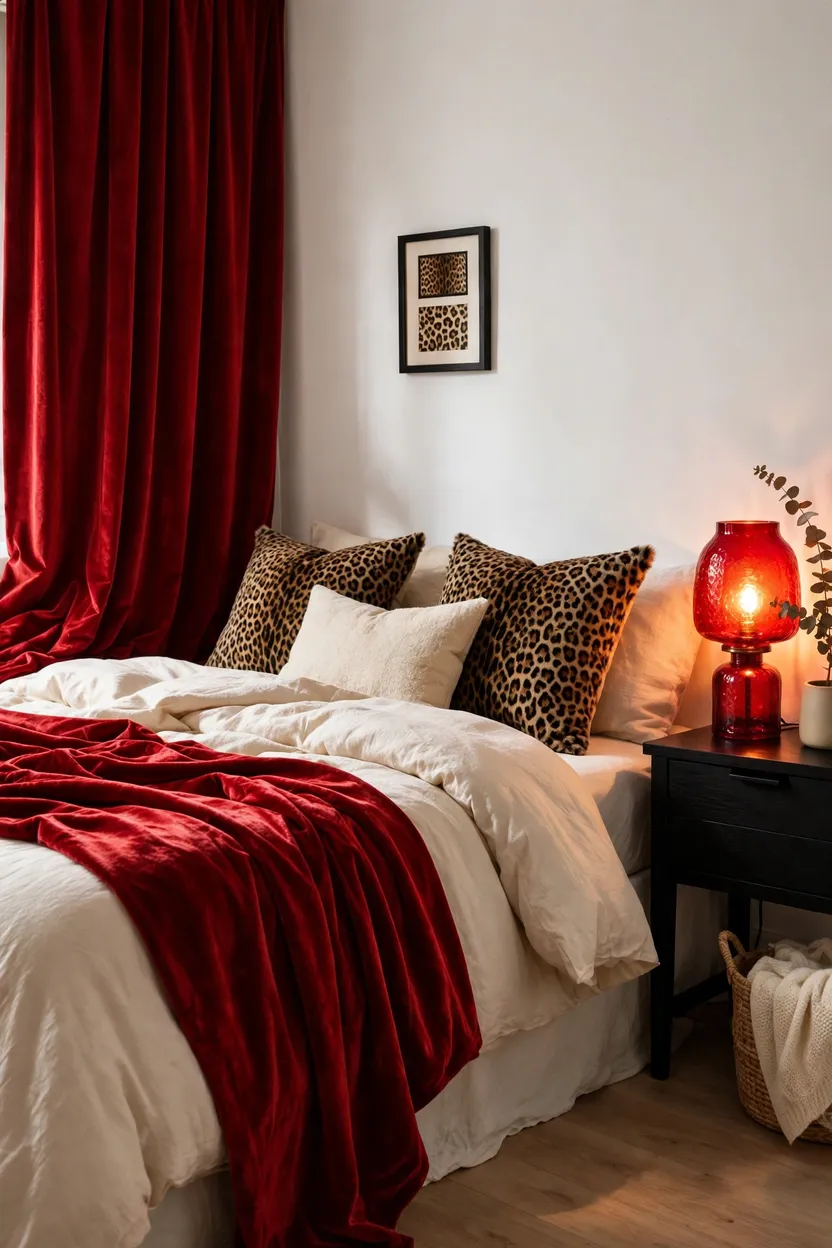
Red and leopard is the pairing people search for when they want something bold. Use red velvet curtains or a red throw, leopard pillows, and warm lamp light so the red glows. Keep the bedding and walls neutral so the two strong elements don’t fight. Limit red to two or three pieces, and let the leopard be the only pattern. Warm bulbs around 2700K make red look rich instead of harsh.
Pink Leopard Wallpaper for a Soft, Grown-Up Look
Best for: soft girly, coquette | Commitment: high
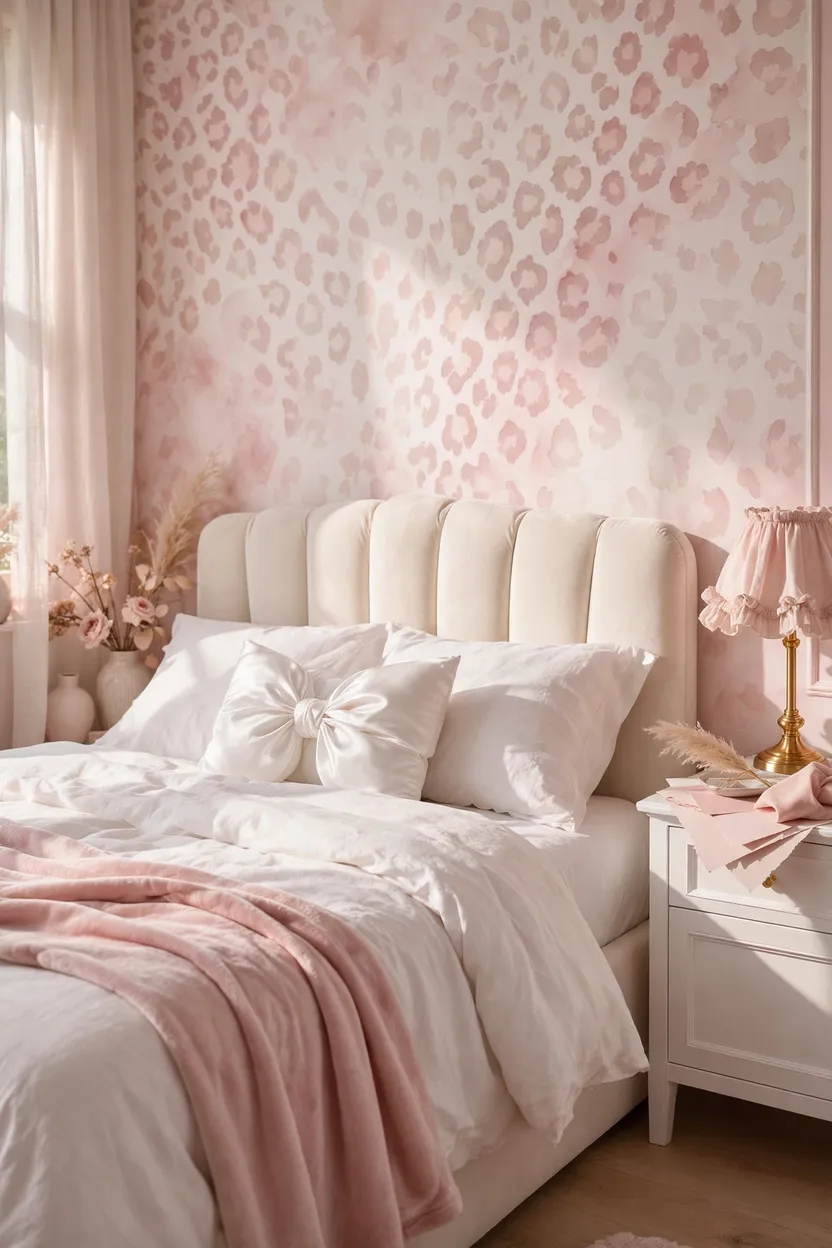
Pink leopard sounds loud, but a blush and cream version reads soft and almost neutral. Use it on one wall or behind the bed, and pair it with white bedding, a cream velvet headboard, and gold hardware. Pick a watercolor or tone-on-tone style so the spots blur. Add a bow, a ruffled lampshade, or a satin pillow for a coquette touch. Because the pink is pale, the room feels sweet, not childish.
Grandmillennial: A Leopard Runner With Florals
Best for: grandmillennial, traditional | Commitment: high
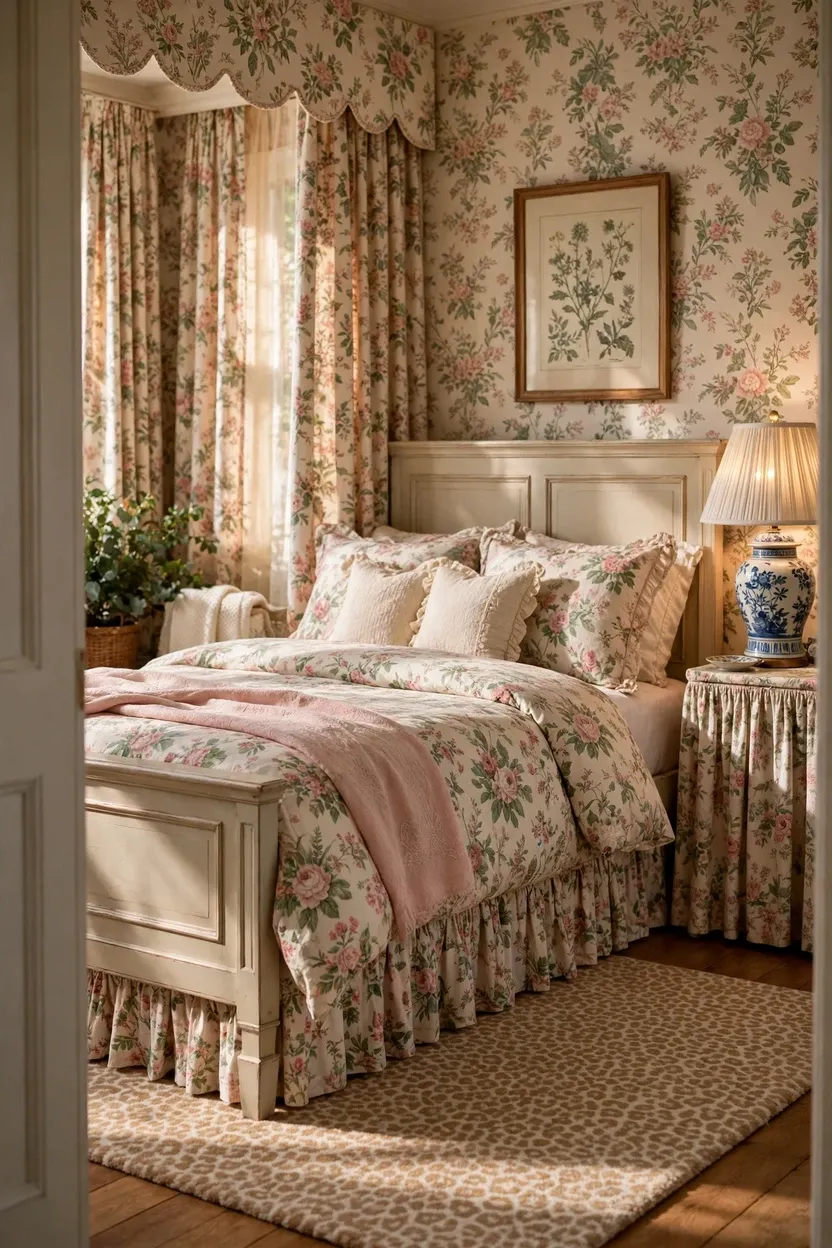
Leopard feels right at home with chintz, stripes, and antiques. Lay a leopard runner or fitted carpet at the foot of a traditional bed, with floral curtains, a skirted nightstand, and a painted wood bed. The French decorator Madeleine Castaing famously used leopard carpet wall to wall in her Paris home. Keep the leopard a calm tan and cream so the florals still shine. In a small room, choose a runner, not a full carpet.
Vintage: A Thrifted Bench With a Leopard Seat
Best for: vintage, cottage, thrifted | Commitment: medium
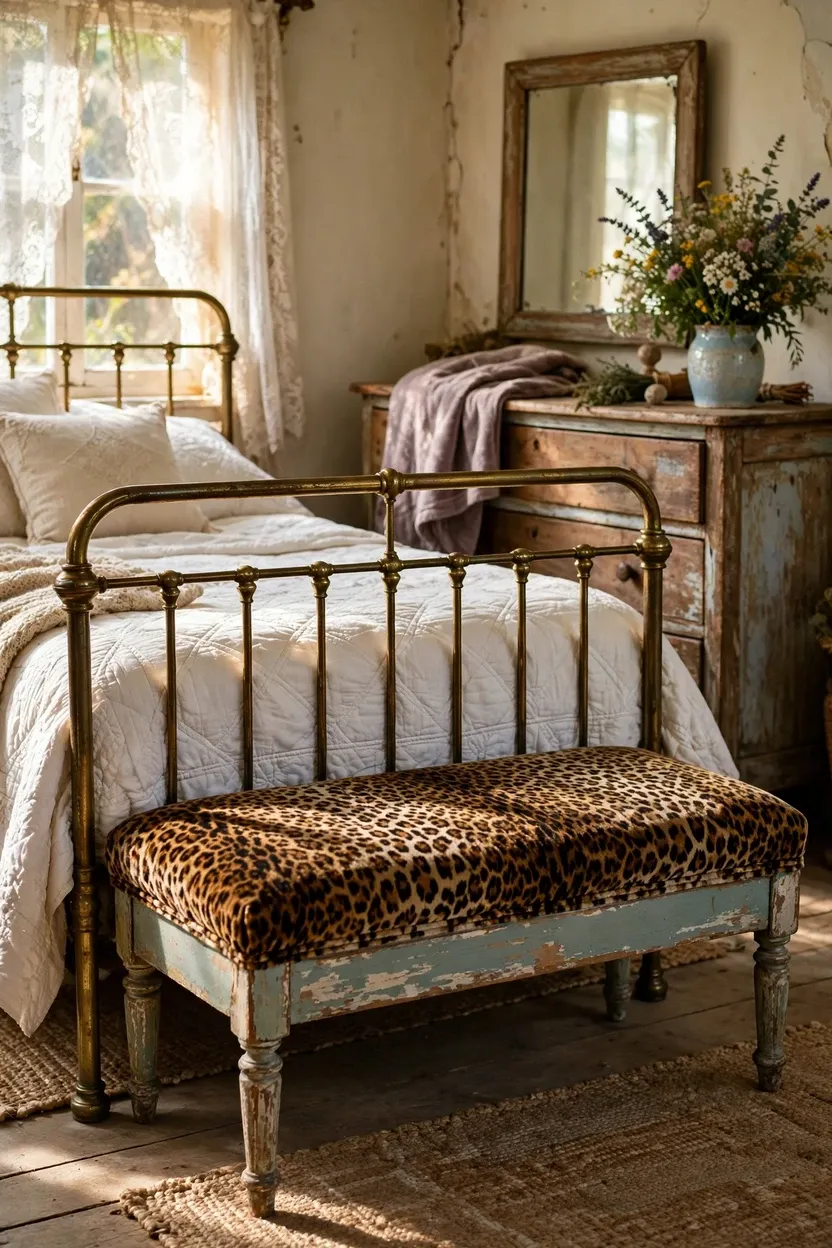
Leopard is a classic upholstery choice for old furniture. Find a thrifted piano bench, vanity stool, or small chair and re-cover the seat in leopard velvet or a tight weave. Place it at the foot of the bed with a folded throw. A small piece gives you the print for a small cost. Reupholstering a simple seat is an easy DIY: unscrew the seat, staple the new fabric tight underneath, and screw it back on.
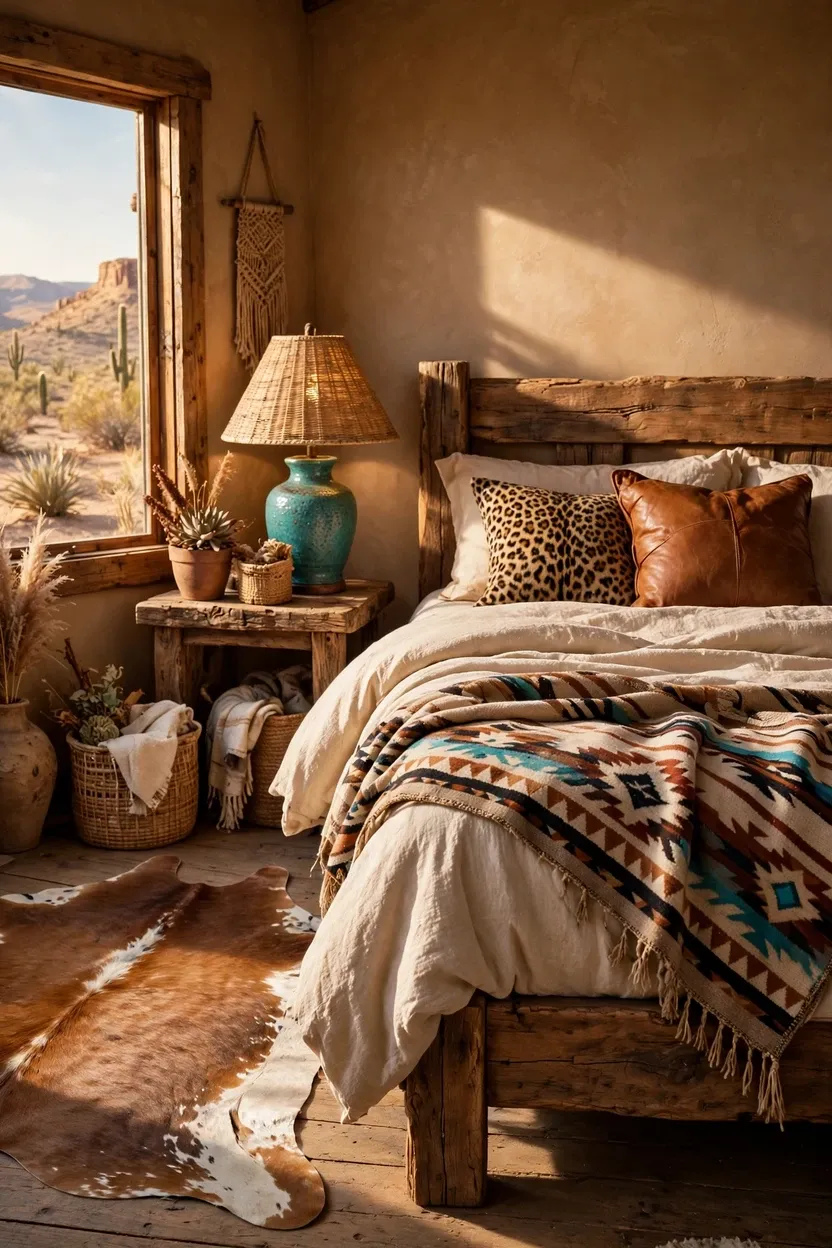
Western: Leopard With Cowhide and Leather
Best for: western, desert | Commitment: medium
Leopard works in a western room when you keep colors earthy. Add a cowhide rug, leather pillows, a turquoise accent, and a wood bed frame. Let the leopard be a single pillow or throw so the cowhide and leopard don’t compete. Keep the scales different, such as a large cowhide pattern with a small leopard pillow. Warm brass or iron lamps complete the look.
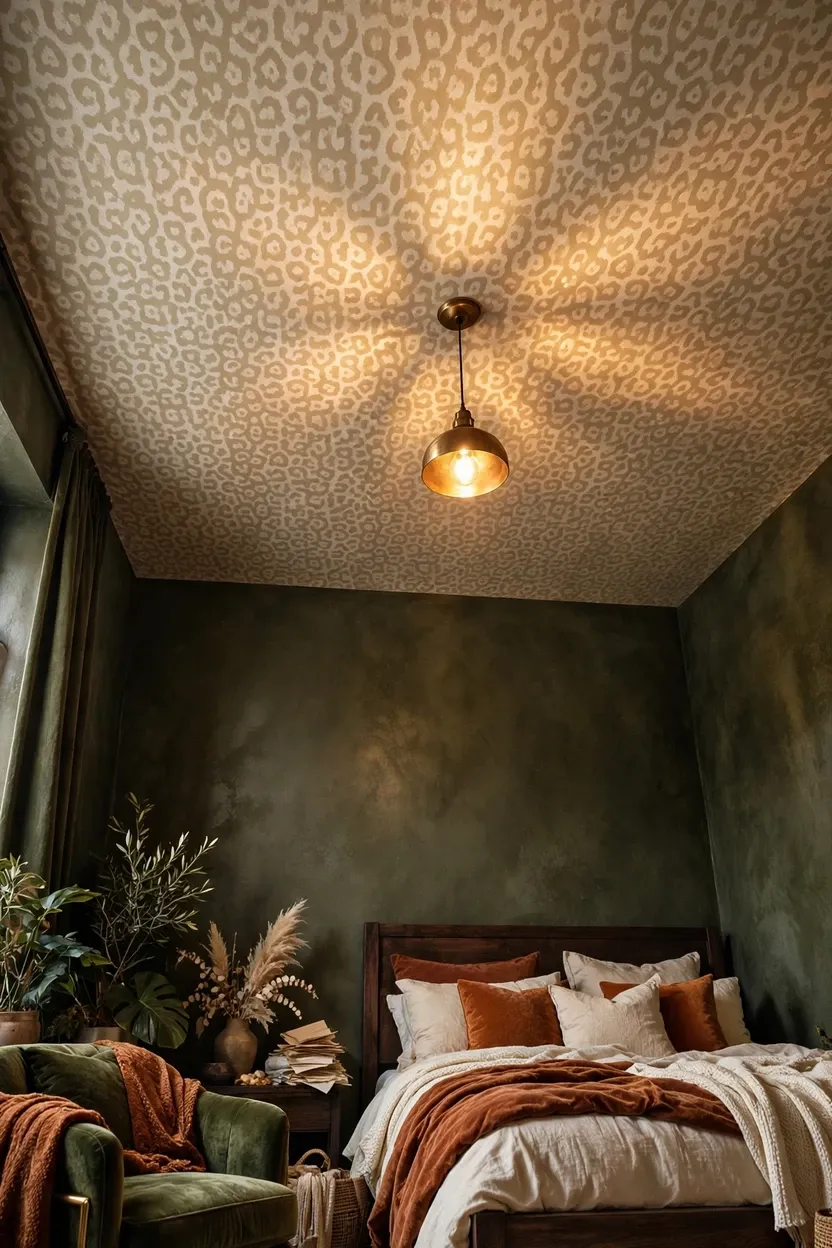
Maximalist: A Leopard Ceiling or Wall
Best for: maximalist | Commitment: high
For the bold, a leopard wallpaper wall or ceiling makes the room a conversation piece. Grazia’s roundup of animal print rooms held up a leopard ceiling as peak maximalism. Choose a tone-on-tone or muted version for the ceiling, and keep the walls solid. A smaller scale overhead keeps it from feeling heavy. Add a simple pendant and dark furniture to ground the effect.
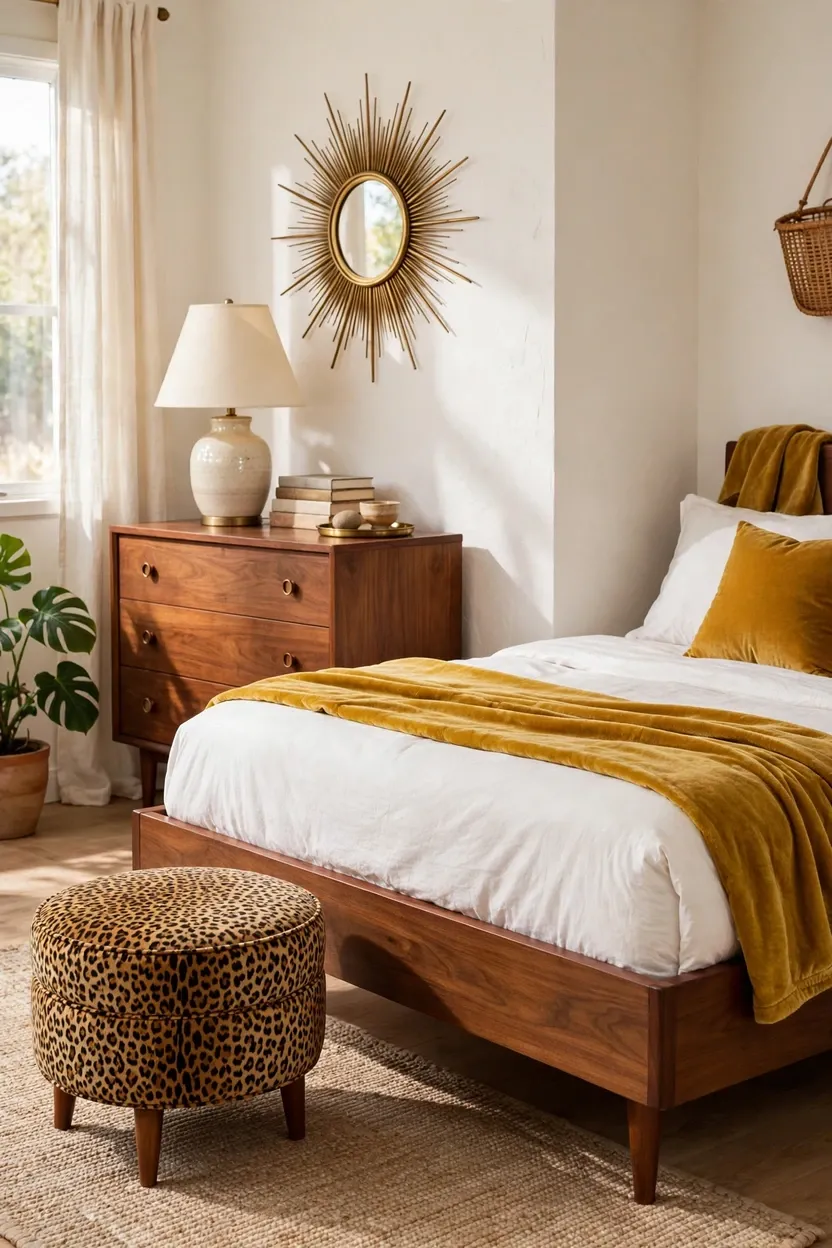
Mid-Century: A Leopard Ottoman With Walnut and Mustard
Best for: mid-century modern | Commitment: medium
A leopard ottoman or footstool is a quiet accent in a mid-century room. Pair it with walnut furniture, a mustard throw, and a sunburst mirror. Place it at the foot of the bed or in a corner. Choose a small, tight leopard scale that suits slim furniture. Brass and walnut make the print feel retro.
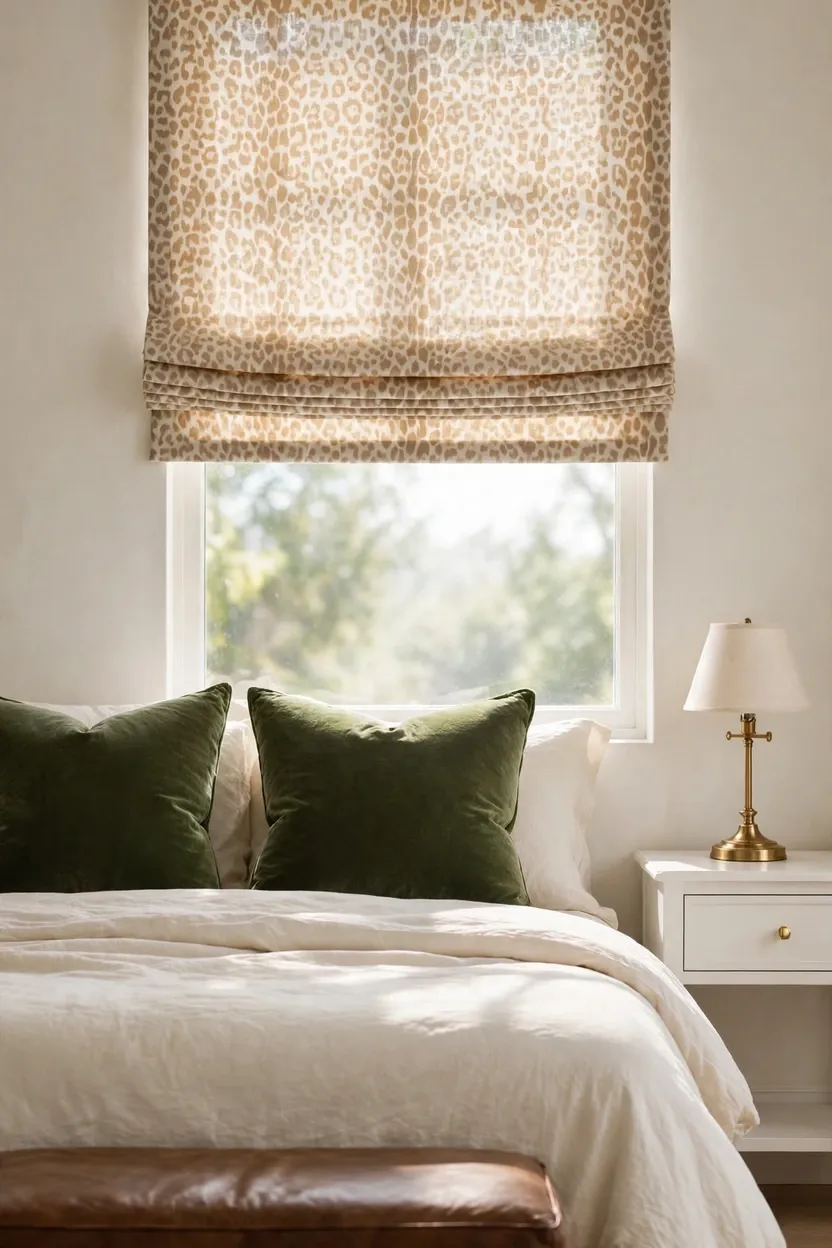
Leopard Curtains or a Roman Shade
Best for: traditional, cottage | Commitment: medium
If you want a subtle nod, choose curtain or shade fabric with a softly scaled leopard. A Roman shade keeps it neat and small, while lined curtains give you more drama. Add accessories in cream, moss green, and brown to complete the look. Line the fabric to protect it from sun fading and to block light. Curtains frame the print and are easy to swap later.
Peel-and-Stick Leopard for Renters and Dorms
Best for: renters, dorm rooms | Commitment: medium
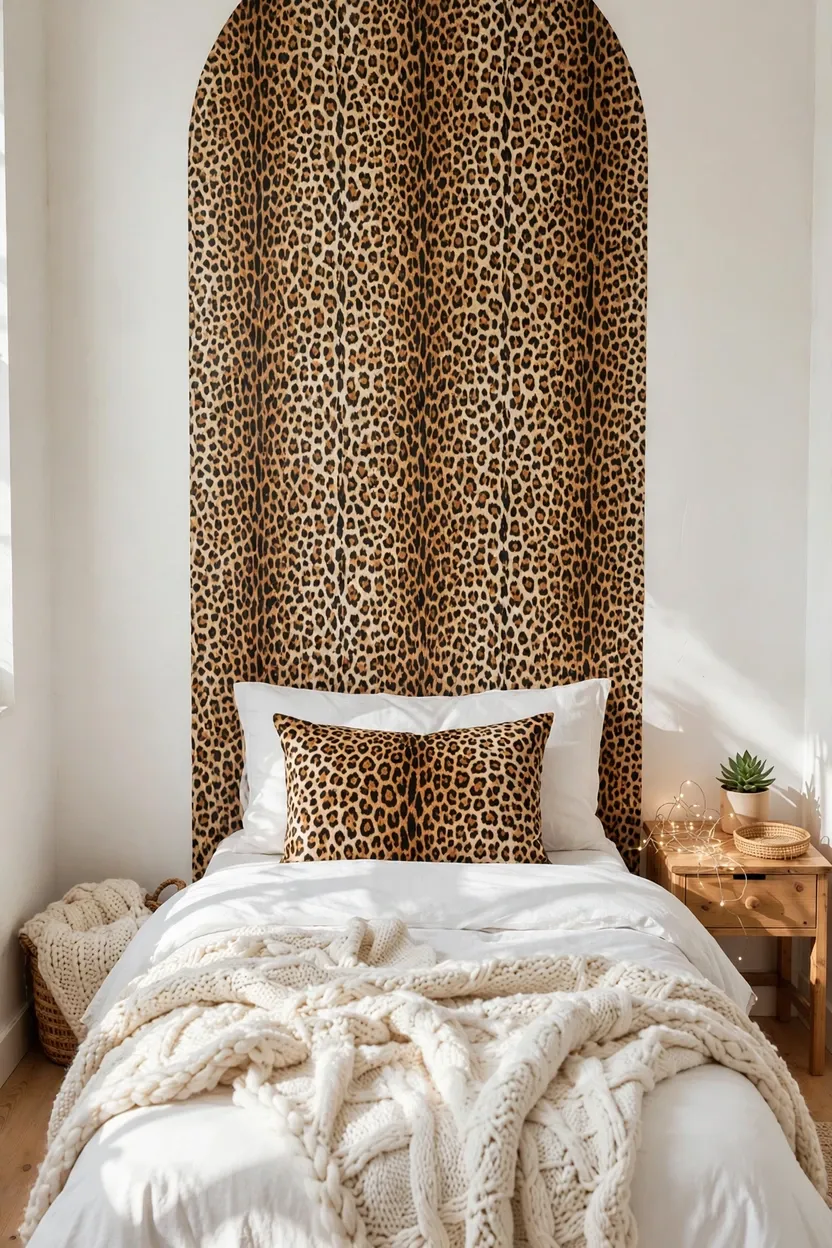
Rent or share a room? Use a peel-and-stick leopard wallpaper panel behind the bed to make a headboard shape. Cut it to a tall arch or rectangle, and finish the edges with thin trim. Test a small patch first, since textured walls and fresh paint can peel. Add a leopard pillow and a throw to echo it. When you move, it peels off.
Small Doses: Lampshades, Trim, Trays, and Ceramics
Best for: any aesthetic | Commitment: very low
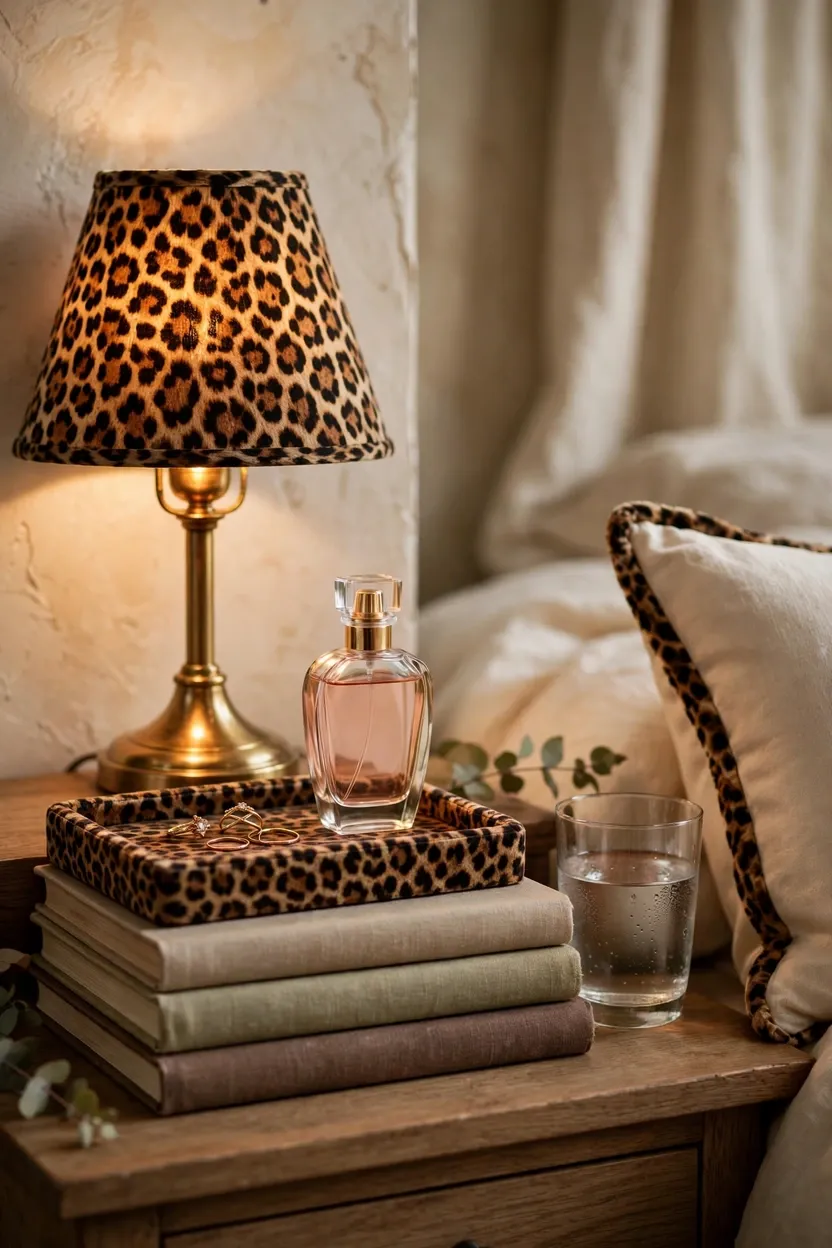
If you’re really undecided, try the tiniest doses. A leopard lampshade, a velvet trim on a pillow, a small leopard tray for rings, or a spotted ceramic lamp base adds the print without a big commitment. Choose one or two items, and keep them small. These pieces are cheap to swap or store. If you love them, you can level up to a rug or bench later.
Print Rules That Keep Leopard Looking Intentional
- Treat it like a neutral. Leopard’s browns, creams, and blacks sit next to most colors the way tan and gray do. That’s why designers often use it the way they’d use a plain neutral.
- Pick one hero and one echo. One big leopard piece, like a rug or headboard, plus one small echo, like a pillow, is plenty. Everything else stays solid or lightly textured.
- Use a rough 70-20-10 ratio. About 70 percent solids, 20 percent leopard, and 10 percent accent color or shape. It’s a starting point you can adjust.
- Vary the scale. Don’t pair two leopards at the same size or in the same colors. Put a large leopard next to small stripes or tiny florals, not another leopard of the same size.
- Choose matte over shiny. Velvet, wool, and linen soften the print. Glossy vinyl can look flat and cheap.
- Pull colors from the room. Choose a leopard whose tan, brown, or gray already appears in your bedding or rug, so it blends in.
- Try a different colorway. Black and white, blue, gray, pink, and olive leopards all feel fresh and less predictable than tan and black.
- Light it warm. Warm bulbs around 2700K make tan, gold, and brown look rich.
Pick Your Aesthetic: A Quick Chart
| If your style is… | Start with idea | Leopard colors | Pair with |
|---|---|---|---|
| Soft and neutral | 1, 3 | Tan, beige, taupe | Linen, rattan, jute |
| Minimal | 2 | Black and white | White bedding, plain wood |
| Coastal or serene | 4 | Pale blue, gray | White, navy, pale wood |
| Moody or dark academia | 5, 6 | Warm tan and black | Deep green, oxblood, leather |
| Boho or jungalow | 6, 7 | Rust, olive, faded tan | Kilim, macramé, plants |
| Glam or art deco | 8, 9 | Classic tan and black | Brass, gold, lacquer, velvet |
| Bold or retro | 10 | Classic with red | Red velvet, cream, warm lamps |
| Soft girly | 11 | Blush and cream | White, gold, satin |
| Traditional or vintage | 12, 13, 17 | Tan and cream | Florals, stripes, antiques |
| Western | 14 | Warm brown | Cowhide, leather, turquoise |
| Maximalist | 15 | Tone-on-tone | Deep colors, layered rugs |
| Mid-century | 16 | Small tight tan | Walnut, mustard, brass |
| Renting | 18, 19 | Any | Removable and small pieces |
The Commitment Ladder
Level 1, ten minutes: A throw, a pillow, a framed print, a lampshade, or a tray (ideas 1, 2, 3, 19).
Level 2, one weekend: A bench, ottoman, armchair, rug, curtains, or a re-covered thrifted seat (ideas 4, 5, 6, 10, 13, 14, 16, 17).
Level 3, a project: Wallpaper, a headboard, a carpet, or a ceiling (ideas 7, 8, 11, 12, 15).
If you’re undecided, start at Level 1 and live with it for a few weeks before you go higher.
Leopard vs. Cheetah vs. Jaguar
Leopard spots are rosettes, which look like small rings or clusters. Cheetah spots are solid dots. Jaguar rosettes are larger and have small dots inside them. In decor, the three names get mixed up all the time, and the styling rules above work for all of them. Choose based on the look you like, not the label.
Materials and Care
- Velvet: Rich and soft, but it attracts pet hair. Keep a lint roller or a rubber glove handy, and look for performance velvet if you have pets.
- Faux fur: A cozy choice for throws. Shake it out, spot clean as the label says, and keep it away from direct heat.
- Wool and synthetic rugs: Wool is durable but costs more. Synthetics are easier to clean. Use a non-slip pad under either.
- Wallpaper: Check the pattern repeat before you buy, and order extra so the pattern lines up. Vinyl-coated paper stands up better to wiping.
- Washable items: Follow the care label. Washing cold and drying on low heat helps prints last.
- Sun: Direct sun fades fabric over time. Line curtains and avoid putting a leopard piece in the brightest spot.
How to Add Leopard to Your Bedroom, Step by Step
- Pick your aesthetic. Use the chart above to choose one starting lane. If you can’t decide, pick the one whose pillows you’d actually buy today.
- Pick a commitment level. Start at Level 1 or 2 if you’re unsure.
- Check your room’s colors. Look at your bedding, rug, and wood tones, and choose a leopard that shares at least two of them.
- Choose a scale. Small and tight for slim furniture, large and loose for walls and rugs.
- Order a swatch. For fabric and wallpaper, get a sample and view it in your room at different times of day.
- Add one hero piece. Place it where the eye will land, such as the foot of the bed, behind the headboard, or in a reading corner.
- Add one echo. A pillow or lampshade ties the hero to the rest of the room.
- Balance with solids and texture. Keep everything else plain, and add linen, velvet, wood, or brass.
- Light it warm. Swap in warm bulbs and add a lamp near the leopard.
- Step back and edit. If the room feels busy, remove one pattern or item.
Three effort levels:
- One weekend: Add a leopard throw and pillow, swap in warm bulbs, and hang one framed print.
- Mid-range: Add a bench or rug, new curtains, and a re-covered thrifted seat.
- Full makeover: Add wallpaper, a custom headboard, and new lighting and bedding to match.
Common Leopard Print Bedroom Mistakes to Avoid
- Using too many leopards at once. A rug, a headboard, curtains, and three pillows all in leopard read as a costume. Choose one hero and one echo.
- Pairing the same scale and color. Two leopards of the same size and shade compete. Vary the scale, or pair leopard with stripes or small florals.
- Choosing harsh neon versions. Bright neon colorways can look flat and cheap. Natural tans, soft pinks, blues, and olives age better.
- Picking glossy vinyl. Shiny fake leather makes the print look plastic. Matte velvet, wool, and linen look richer.
- Covering every large surface. Leopard on the wall, ceiling, and floor leaves the eye nowhere to rest. Keep at least two big surfaces solid.
- Skipping a swatch. Colors shift in your light. Order a sample before you buy wallpaper, a headboard, or a rug.
- Ignoring the wallpaper repeat. Large repeats waste more paper, and patterns can misalign. Check the repeat and order extra.
- Buying a rug that’s too small. A rug that stops at the bed legs looks like a postage stamp. Let it extend 18 to 24 inches beyond the sides.
- Forgetting the lighting. Cool white bulbs make leopard look dull. Use warm bulbs and add a lamp near the print.
- Not checking your partner’s opinion. If someone sharing the room dislikes leopard, start with tone-on-tone, abstract, or small-dose pieces.
Small-Space Alternatives
- Go lumbar. A leopard lumbar pillow fits a small bed and adds the print without taking over.
- Use art, not fabric. A framed print gives you the look without adding bulk.
- Choose a slim bench. A narrow bench at the foot of the bed adds seating and print in one move.
- Try a lampshade. A leopard shade on a wall-mounted or small bedside lamp saves floor space.
- Pick tone-on-tone. Beige and taupe leopard blends in, so the room still feels open.
- Frame a headboard shape. A peel-and-stick panel in an arch or rectangle behind the bed gives you a headboard with no furniture.
- Keep walls light. Pale walls reflect light and give the print room to breathe.
- Add a mirror. A mirror opposite a lamp doubles the glow and makes the small room feel deeper.
Budget-Friendly Alternatives
- Start with a throw or pillow. They’re the cheapest way to try the print and the easiest to move.
- Thrift a bench or stool. Re-cover the seat with fabric by the yard, a staple gun, and a screwdriver.
- Sew your own covers. A pillow cover takes a small cut of fabric and a few straight seams.
- Buy a used rug. Secondhand rugs often cost far less than new ones.
- Frame printable art. Print a black-and-white leopard image and put it in a thrifted frame painted black or brass.
- Use peel-and-stick. A single panel gives you a feature wall without hiring a pro.
- Swap seasonally. Use leopard in cooler months and store it in warmer ones.
- Save for the big pieces. Wallpaper, a headboard, or carpet cost the most, so add them last, after you know you love the print.
Pro Styling Recommendations
- Choose a hero first. Decide which piece is the star, then build everything else around it.
- Keep undertones consistent. Pair warm tan leopards with warm whites and woods, and cool gray leopards with cool whites and pale woods.
- Limit metals to two. Brass with black iron, or gold with chrome, is plenty.
- Use the squint test. Stand in the doorway and squint. If the print dominates and nothing else shows, remove one piece.
- Mix textures near the print. Pair leopard velvet with linen, wool, and wood so it feels grounded.
- Echo with one small item. A lampshade or trim in the same color family links the room together.
- Swap with the seasons. Rotate the throw, pillows, and art to keep the room feeling fresh.
Leopard Print Bedroom FAQs
How do I decorate a bedroom with leopard print without it feeling tacky?
Treat it like a neutral and limit it to one hero piece and one small echo. Choose natural colors, matte fabrics, and warm lighting, and keep the rest of the room in solids and textures.
Is leopard print a neutral?
Many designers treat it as one, because its browns, creams, and blacks sit well with a wide range of colors and materials. It works best when you vary the scale and keep it from covering every surface.
Is leopard print still in style for bedrooms?
It moves in and out of fashion, but many designers see it as a classic when used as an accent. Recent trend coverage suggests starting small, with pillows, throws, or art, and building up if you like it.
What colors go with leopard print in a bedroom?
Related: 18 Blue and Yellow Bedroom Ideas for Cozy, Calm Contrast
Cream, oatmeal, olive, rust, navy, blush pink, and black all work. Brass and gold add warmth, and deep green or oxblood walls make it feel moody.
Can I mix leopard with other patterns?
Yes. Leopard pairs well with stripes, plaids, and small florals if the scales differ. Put a medium or large leopard with small prints, and don’t pair two leopards of the same size.
What’s the difference between leopard and cheetah print?
Leopard has rosettes, which look like rings or clusters, while cheetah has solid spots. In decor the names are often used interchangeably, and the styling rules are the same.
What’s the easiest way to try leopard print in a bedroom?
Start with a throw, a pillow, or a framed print. They cost little, take minutes, and are easy to move or store if you change your mind.
Can leopard print work in a small bedroom?
Yes. Use small doses, like a lumbar pillow, a lampshade, or a slim bench. Tone-on-tone versions and light walls keep the room feeling open.
Is leopard wallpaper practical in a bedroom?
Related: 20 Japandi Bedroom Ideas Everyone’s Copying (And How to Do Them Right)
Yes, if you check the pattern repeat, order extra, and choose vinyl-coated paper for easy cleaning. Peel-and-stick works for renters. Keep the rest of the room plain so the wall stands out.
How do I care for leopard velvet and faux fur?
Follow the care label. Use a lint roller or rubber glove on velvet to lift pet hair, shake out faux fur, and wash on cold with low heat when the label allows. Keep fabric out of direct sun to prevent fading.
What if my partner doesn’t like leopard print?
Start with a tone-on-tone or abstract version, use it in small doses, or place it where it’s less noticeable, like a bench or a lampshade. Pale blue or soft gray versions also feel calmer than classic tan and black.
Is leopard print suitable for all ages?
Yes. Muted tans, grays, and creams feel classic and calm, while brighter colorways and bold pairings, like red, suit a playful, younger look.
Treat it like a neutral and limit it to one hero piece and one small echo. Choose natural colors, matte fabrics, and warm lighting, and keep the rest of the room in solids and textures.
Many designers treat it as one, because its browns, creams, and blacks sit well with a wide range of colors and materials. It works best when you vary the scale and keep it from covering every surface.
It moves in and out of fashion, but many designers see it as a classic when used as an accent. Recent trend coverage suggests starting small, with pillows, throws, or art, and building up if you like it.
Cream, oatmeal, olive, rust, navy, blush pink, and black all work. Brass and gold add warmth, and deep green or oxblood walls make it feel moody.
Yes. Leopard pairs well with stripes, plaids, and small florals if the scales differ. Put a medium or large leopard with small prints, and don’t pair two leopards of the same size.
Leopard has rosettes, which look like rings or clusters, while cheetah has solid spots. In decor the names are often used interchangeably, and the styling rules are the same.
Start with a throw, a pillow, or a framed print. They cost little, take minutes, and are easy to move or store if you change your mind.
Yes. Use small doses, like a lumbar pillow, a lampshade, or a slim bench. Tone-on-tone versions and light walls keep the room feeling open.
Yes, if you check the pattern repeat, order extra, and choose vinyl-coated paper for easy cleaning. Peel-and-stick works for renters. Keep the rest of the room plain so the wall stands out.
Follow the care label. Use a lint roller or rubber glove on velvet to lift pet hair, shake out faux fur, and wash on cold with low heat when the label allows. Keep fabric out of direct sun to prevent fading.
Start with a tone-on-tone or abstract version, use it in small doses, or place it where it’s less noticeable, like a bench or a lampshade. Pale blue or soft gray versions also feel calmer than classic tan and black.
Yes. Muted tans, grays, and creams feel classic and calm, while brighter colorways and bold pairings, like red, suit a playful, younger look.
One Last Look Before You Pick a Lane
You don’t have to decide who you are before you buy a pillow. You just have to pick the lane that makes you smile the most today.
Start with the smallest piece that feels right: a throw, a framed print, a lampshade. Live with it for a few weeks. If it keeps making you happy, add the bench, the rug, or the wall.
A bedroom is allowed to change as you do. Leopard just happens to be a print that changes with you. Save your favorite ideas, and tag me when your room finds its lane. I’d love to see which one you chose.