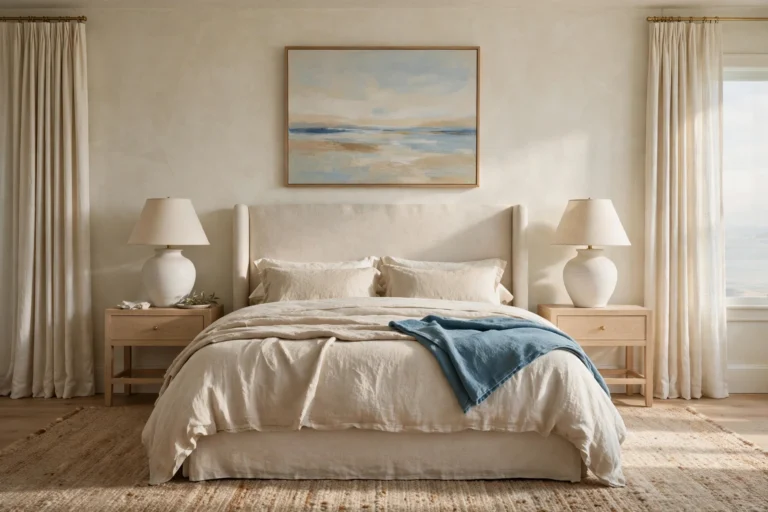
22 Master Bedroom Ideas for the Most Stylish Room in Your Home
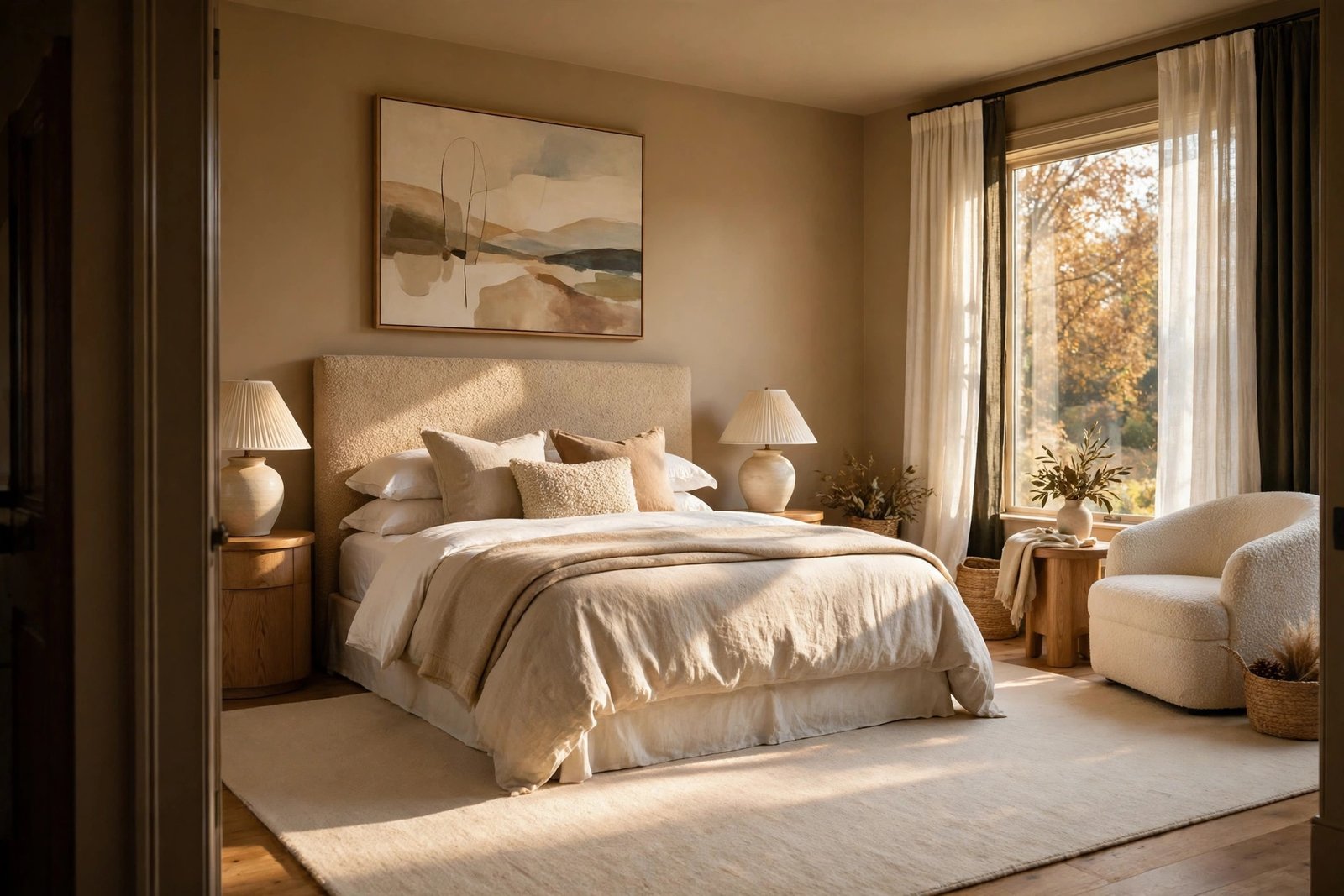
It is 10 p.m. You walk into your bedroom, and the first thing you see is the chair covered in clothes. The overhead light is too bright. The rug is too small. The room is where you sleep, yet it feels like an afterthought.
Here is what changes that. A stylish master bedroom is not about more furniture or higher prices. It comes down to a bed with presence, soft light at three levels, a rug and curtains in the right size, and a calm color family.
These 22 ideas are built on real numbers and real layouts. Some work in a large primary suite. Some fit a small master bedroom with one narrow window. Use the ones that suit your room, and leave the rest.
Quick answer: What makes a master bedroom feel stylish? Start with a bed that has presence, such as a tall upholstered headboard with layered bedding. Add soft, dimmable light at three levels, a rug that shows 18 to 24 inches past the bed, floor-length curtains, one calm color family and a place to sit. Keep surfaces edited so everything you show looks chosen.
Table of Contents
1. Anchor the Room with a Tall Upholstered Headboard
The bed takes up the most space in the room, so it should earn that space. A tall upholstered headboard in oat bouclé, performance linen or soft velvet rises well above the pillows and gives the whole wall a clear focus. Choose one a few inches wider than the mattress on each side, so the bed looks anchored and not tacked on. Pick a shade close to the wall color for a calm look, or one tone deeper for gentle contrast. Wingback and channel-tufted shapes add shadow and texture without adding a single extra object.

2. Drench the Room in a Warm Color
Start with the way your windows face, not with a paint chip. A north-facing room gets cool, bluish light, so a gray that looked soft in the store can feel flat on the wall. Lean toward mushroom, clay, oat or warm sage, which hold their warmth in low light. Then paint the walls, trim and even the ceiling in one color so the room feels wrapped. Use matte or eggshell, and test a two-foot patch on two walls in morning and evening light before you buy gallons.

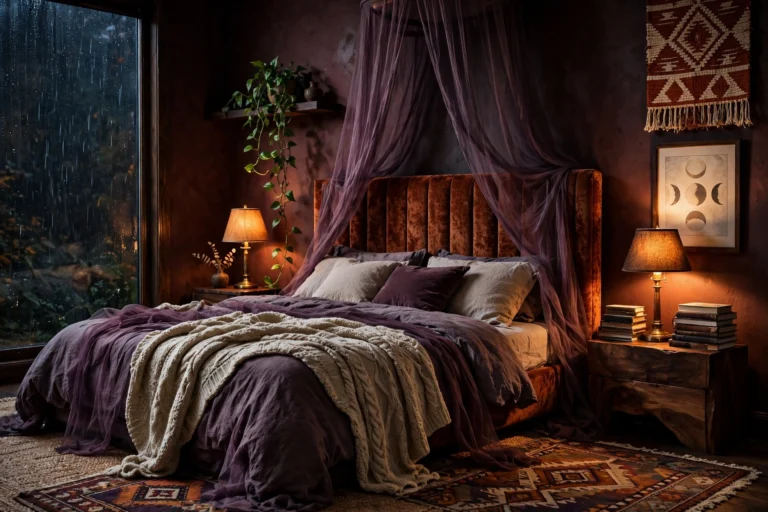
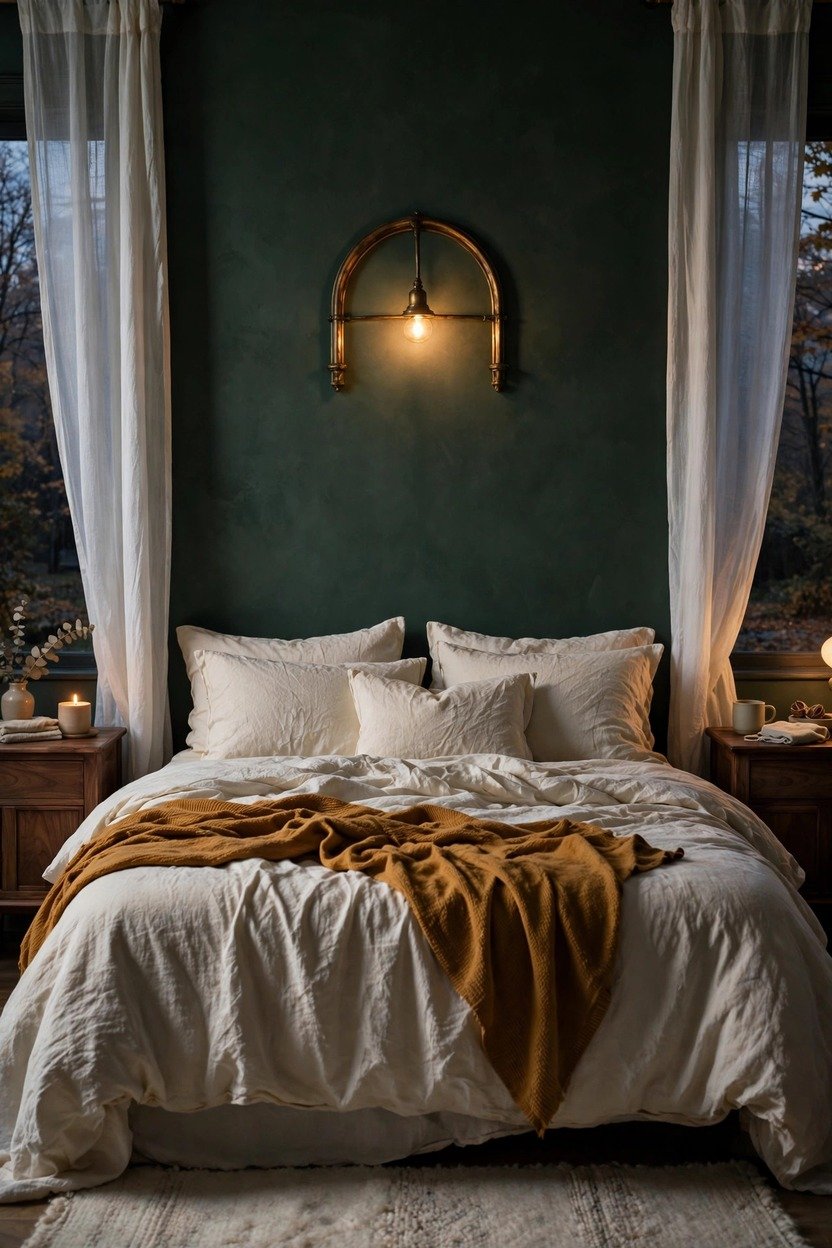
3. Go Deep and Moody on the Walls
Dark paint suits a room you use mostly at night, and the bedroom is exactly that. Deep green, ink navy, chocolate brown or soft charcoal blur the corners, so the room feels like a hug. Pair the color with warm 2700K bulbs, cream bedding and one metal, such as aged brass. Keep the finish matte so it hides wall flaws and glare. A lighter rug and pale curtains stop the room from feeling heavy during the day.
Related: 22 Luxury Bedroom Ideas That Skip the Trends (Built to Last)
4. Add Vertical Paneling Behind the Bed
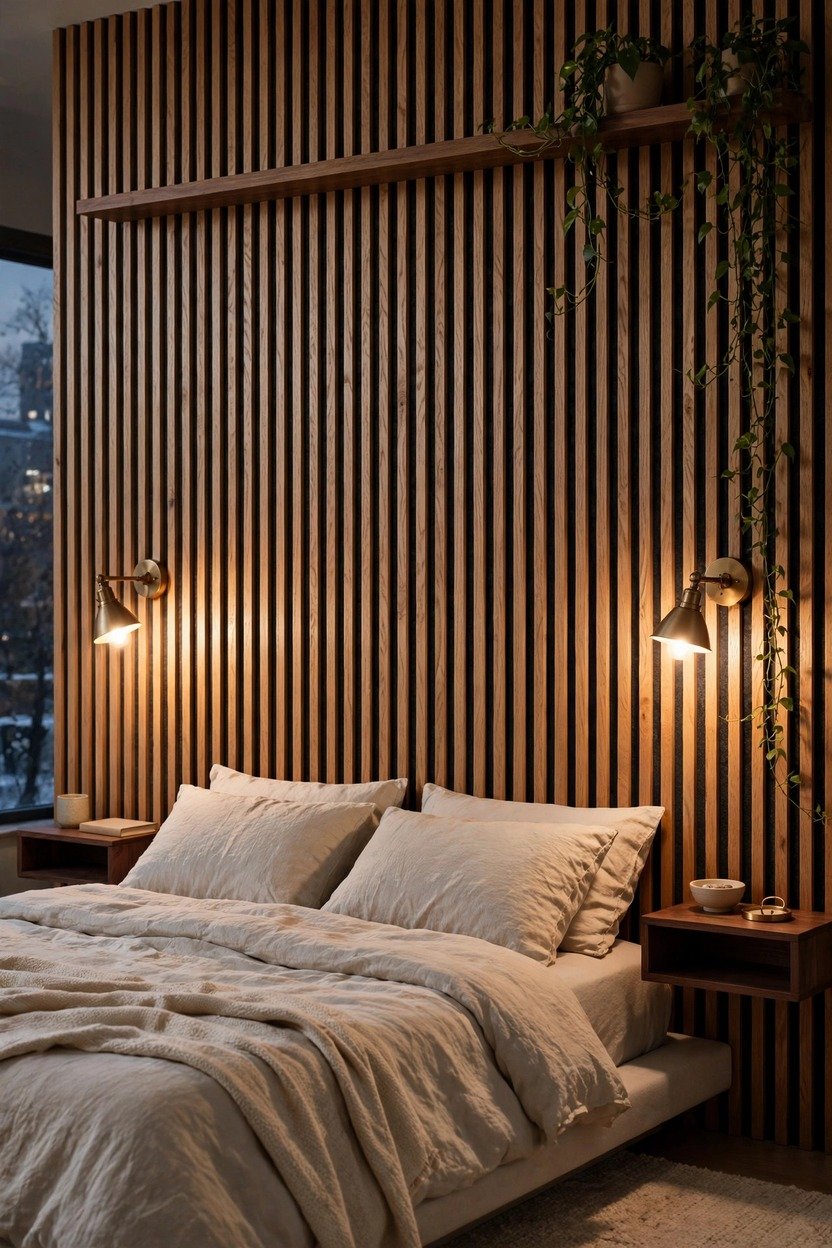
Slats, board and batten or flat vertical paneling add depth to a plain wall without adding any objects. Vertical lines pull the eye up, so an 8-foot ceiling feels taller. Paint the paneling the same color as the wall for a quiet look, or use oak veneer slats for warmth. Run it at least 12 to 24 inches past each side of the bed, or across the whole wall, because a short panel can look unfinished. Slat panels backed with acoustic felt also soften sound, which helps a room feel calmer.
5. Try Limewash or Plaster-Look Walls
Limewash and plaster-look paints give walls soft clouds of color that flat paint cannot copy. The finish shifts with the light, so it looks pale in the morning and richer at dusk. Choose a warm putty, sand or soft terracotta, and brush it on in crisscross strokes with a wide brush for movement. Use it on the wall behind the bed, or on all four walls for a calm, old-world feel. Small bumps and brush marks add charm, so this is a kind finish for older walls.
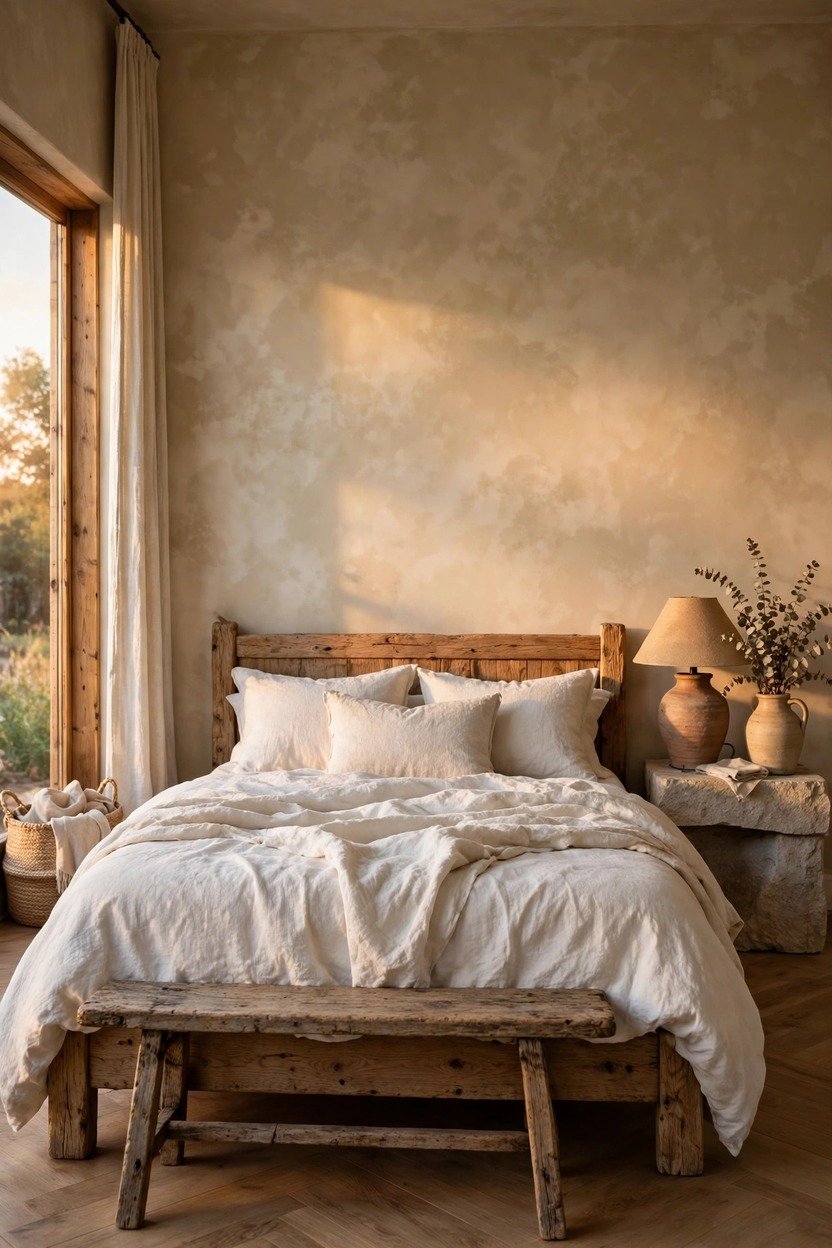
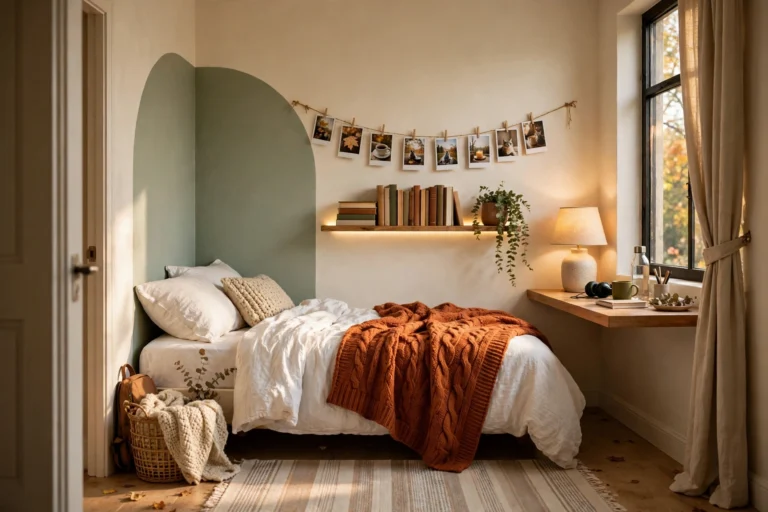
6. Layer the Bedding Like a Boutique Hotel
Symmetry and layers do most of the work in a hotel-style bed. Start with a fitted sheet and flat sheet, add a coverlet, then fold a duvet down toward the foot. Stack two sleeping pillows against the headboard, two larger euro pillows behind them and one small lumbar in front. Stay within two or three colors, such as white, sand and a deeper clay, and mix textures like linen, cotton percale and wool. Wash linen a few times first, since it softens and relaxes with every wash.
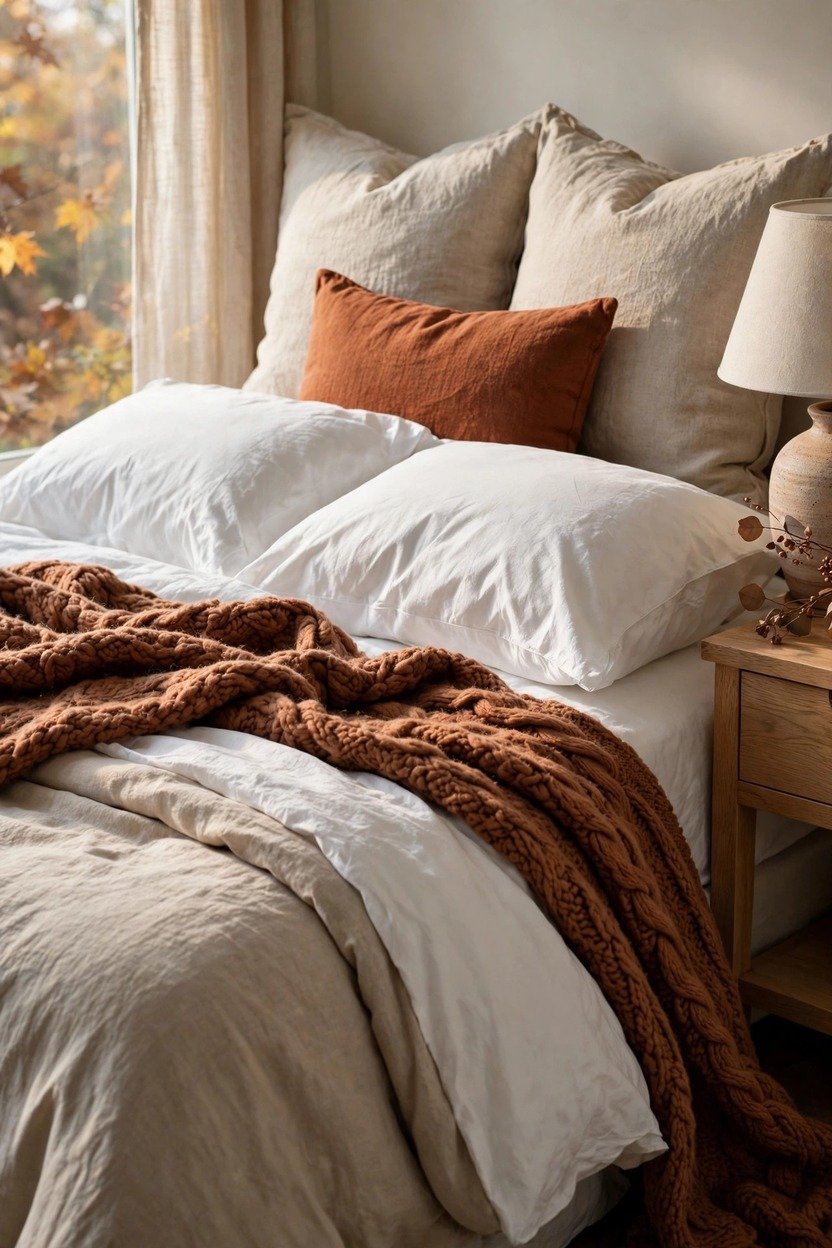
7. Size and Pair the Nightstands Well
A nightstand should sit about as high as the top of the mattress, give or take a few inches, so a glass of water is easy to reach. A matching pair makes a calm, balanced look. Two different pieces in similar height and wood tone look collected and relaxed. Pick drawers if you need to hide chargers, balm and glasses, and leave a few inches between the stand and the bed. In a narrow room, a slim 16 to 18 inch table or a floating shelf saves floor space.

8. Build Three Layers of Light
Great bedrooms use three layers of light: soft overhead, bedside reading light and a low glow. Wall sconces or swing-arm lamps free up the nightstand, while table lamps add shape and warmth. Put the overhead light on a dimmer, and use warm 2700K bulbs in the evening. An amber night light or a hidden strip near the floor helps with midnight trips without waking you fully. Fabric shades spread the light softly, so you see a glow and not a bright bulb.
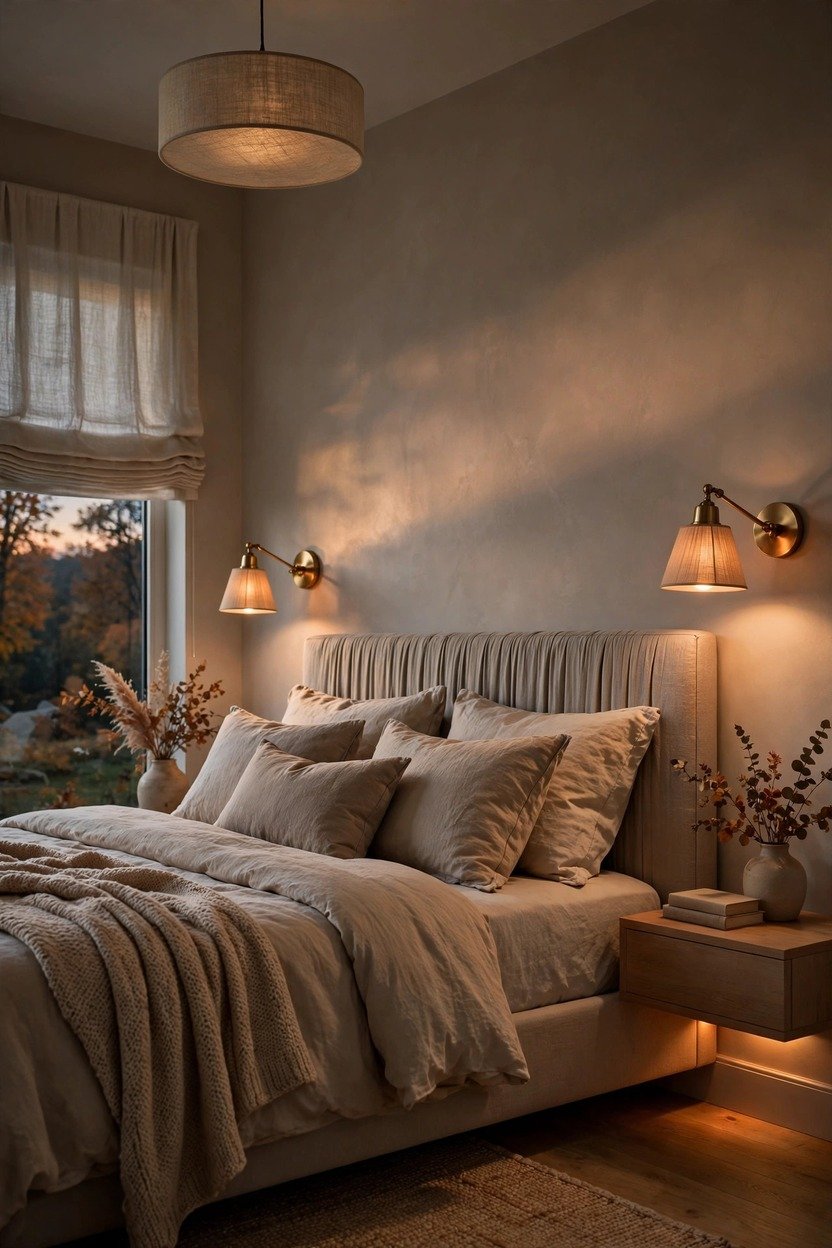
9. Choose a Rug That Is Big Enough
A rug that is too small is the fastest way to make a bedroom look unplanned. Most designers aim for 18 to 24 inches of rug showing at the sides and foot of the bed. A king bed is about 76 inches wide, so a 9 by 12 rug leaves roughly 16 inches per side, which works in most rooms, and a 10 by 14 gives more if the space allows. A queen bed usually looks right on an 8 by 10. Slide the rug under the lower two-thirds of the bed, and keep the nightstand legs either all on or all off the rug so nothing wobbles.

10. Hang Layered Curtains High and Wide
Layered curtains give you soft daylight and real darkness in the same window. Hang a sheer panel for the day and a blackout or room-darkening panel behind or beside it for night. Mount the rod about 4 to 6 inches above the window frame, or near the ceiling, and extend it 8 to 12 inches past the frame on each side. This makes the window look taller and leaves the glass uncovered in daylight. Let the panels just brush the floor, and choose warm white, oat or soft clay linen in a pleated header for a boutique look.

11. Make a Sitting Area by the Window
A chair by the window turns a bedroom into a retreat. Choose a comfortable accent chair, such as a swivel bouclé or a low linen armchair, and add a small side table and a floor lamp. A footprint of about 30 by 36 inches is enough for one chair, and two chairs fit in a bay or a larger room. Leave at least 30 inches of walkway between the chair and the bed. If you have no window space, a corner near the closet with a plant and a lamp works almost as well.

12. Add a Bench or Ottoman at the Foot of the Bed
A bench at the foot of the bed gives you a landing spot for shoes, a bag and the throw you pull off at night. Choose one slightly narrower than the bed, so the bed still reads as the star. Leave about 36 inches of clear walkway beyond the bench, so you can pass without turning sideways. An upholstered bench with hidden storage adds a hidden drawer for extra blankets, and a slim cane or wood bench suits a tight room. Match the tone of the bench to the headboard or to the wood of the nightstands.

13. Hang Oversized Art Above the Bed
One big piece of art above the bed looks calmer than a cluster of small ones. Aim for art about two-thirds the width of the headboard, and hang it about 6 inches above the top edge so it feels connected. A soft abstract, a quiet landscape or a framed textile all work well. Pull one or two colors from the bedding, such as clay or sage, so the wall looks planned. If you love small prints, hang a pair of tall vertical pieces with equal gaps on each side of the center.

14. Frame the Bed with a Canopy or Drapery
A canopy or four-poster frame pulls the eye up and gives the bed its own small room inside the room. Choose slim black steel, light oak or a simple painted frame, and leave it bare for a modern look or add linen panels for a soft one. If your ceiling is low, hang a curtain rod from the ceiling above the headboard and let two panels fall on each side of the bed. This gives the same romantic effect without a bulky frame. Keep the rest of the walls plain so the bed stays the main event.

15. Paint the Ceiling a Soft Color
When you lie in bed, the ceiling is the largest surface you see. Paint it a calm color, like pale clay, soft sky blue or warm gray, or match it to the walls for a wrapped feel. A flat matte finish hides flaws and keeps reflections low. Keep the light fixtures simple, since the color is doing the work. If you want even more drama, wallpaper the ceiling in a quiet small pattern and keep the walls solid.

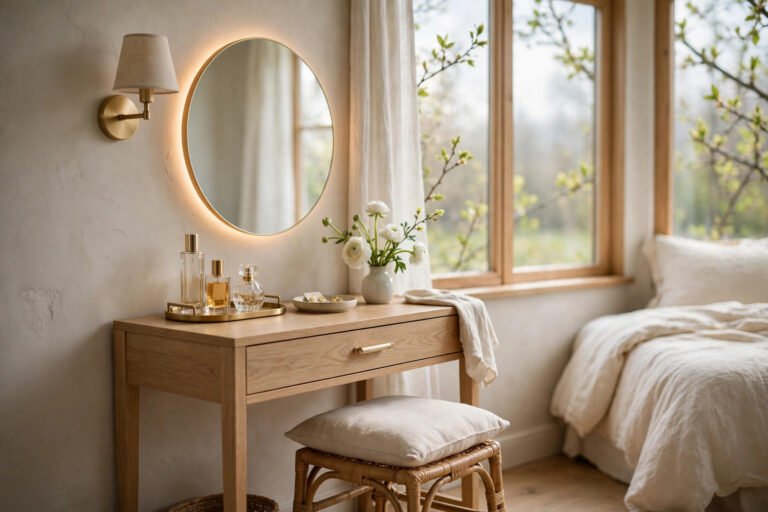
16. Use Mirrors for Light and Depth
A tall mirror leaned across from the window doubles daylight and makes the room feel deeper. Choose an arched or rounded shape in a thin wood or brass frame to soften the straight lines of the room. Over a dresser, a round mirror with a sconce on each side gives a styled, hotel feel. If you do not like seeing the bed reflected at night, angle the mirror toward the window or the wardrobe instead. Wipe it often, because a smudged mirror dulls the light it should be sending around the room.

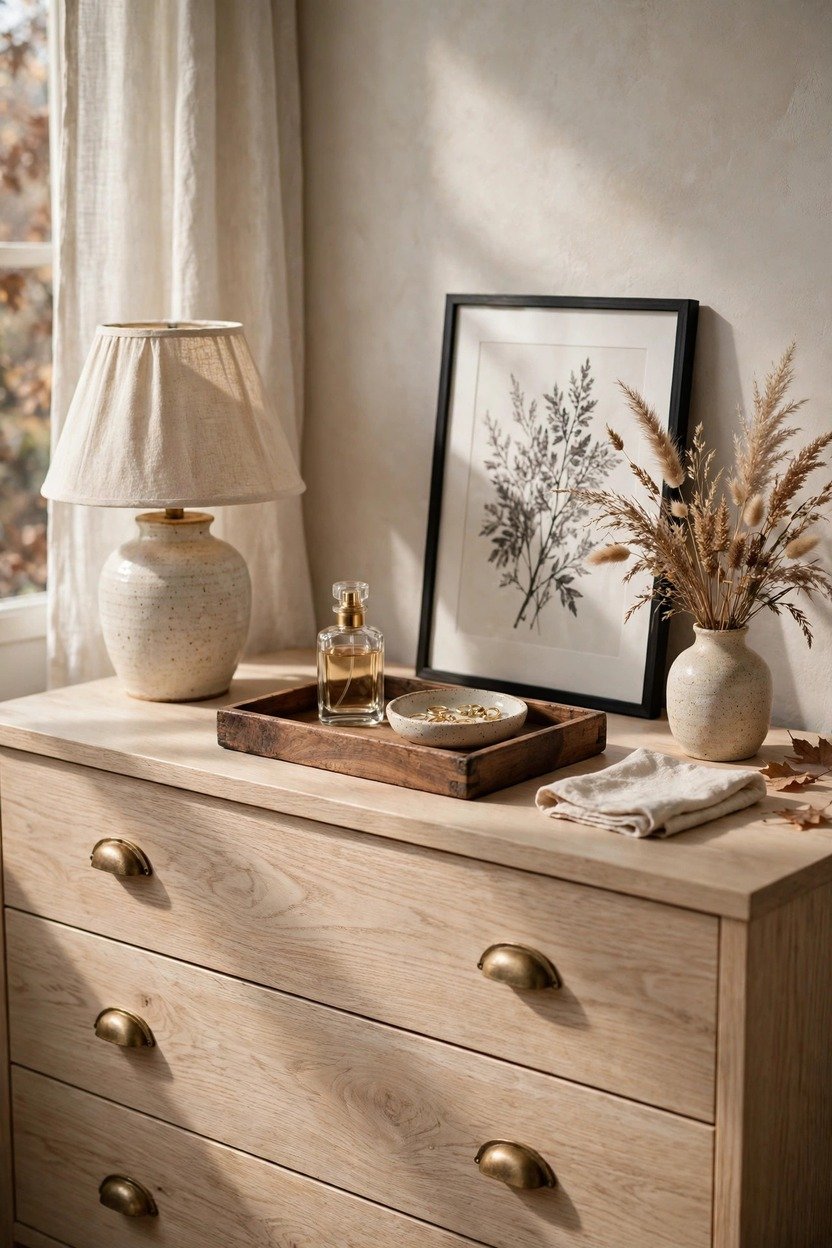
17. Edit the Dresser Top
A dresser top looks styled when you leave most of it empty. Place a lamp or a tall vase on one side, a tray for daily items in the middle and one small framed piece or a stack of books on the other side. This gives you three heights and plenty of open space. Keep about 36 inches clear in front of the dresser so you can pull the drawers fully out while standing. If the room is tight, hang a shallow wall shelf instead, and keep the same three-height rule.
18. Paint the Wardrobe Wall to Disappear
A built-in wardrobe painted the same color as the walls fades into the background and lets the bed take the lead. Choose flat-front doors or simple shaker doors, and add slim brass or matte black handles. Take the cabinets all the way to the ceiling, so there is no dusty gap on top and you gain storage for off-season items. Leave 24 to 30 inches in front of the closet for doors to open and for you to stand comfortably. In a small room, a mirrored panel on one door doubles as a full-length mirror.

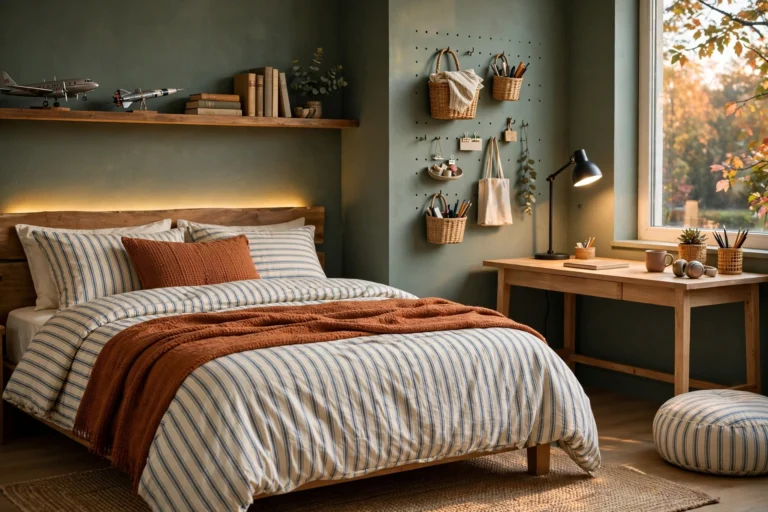
19. Layer Natural Materials
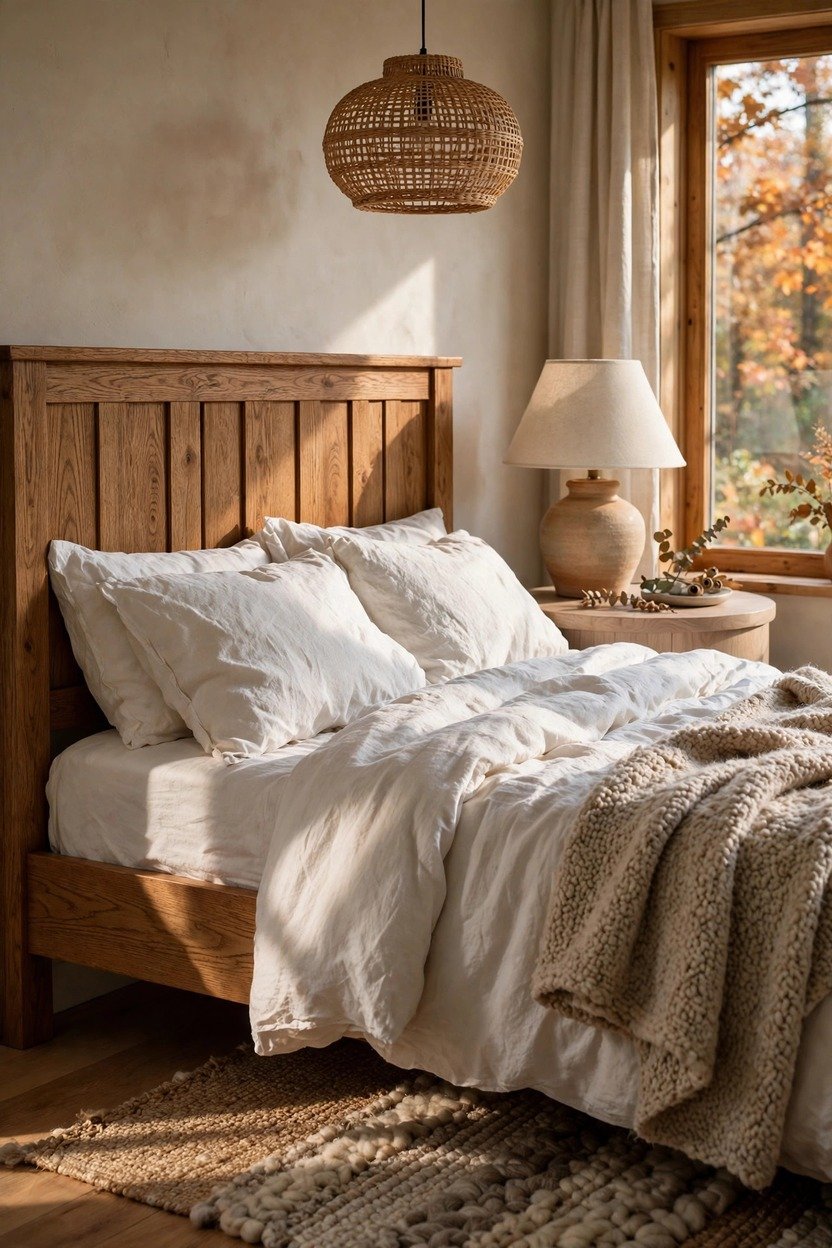
A bedroom feels warmer when you can see and feel real materials. Choose a solid oak or walnut bed frame, linen sheets, a wool throw and one piece of rattan, such as a chair or a lamp shade. Aim for three textures in the room: something smooth, something nubby and something woven. Stay within one wood tone family, such as light oak with pale ash, so the room does not feel mixed up. Natural materials also age gracefully, which means the room looks better after a few years of use.
20. Mix Vintage with Modern
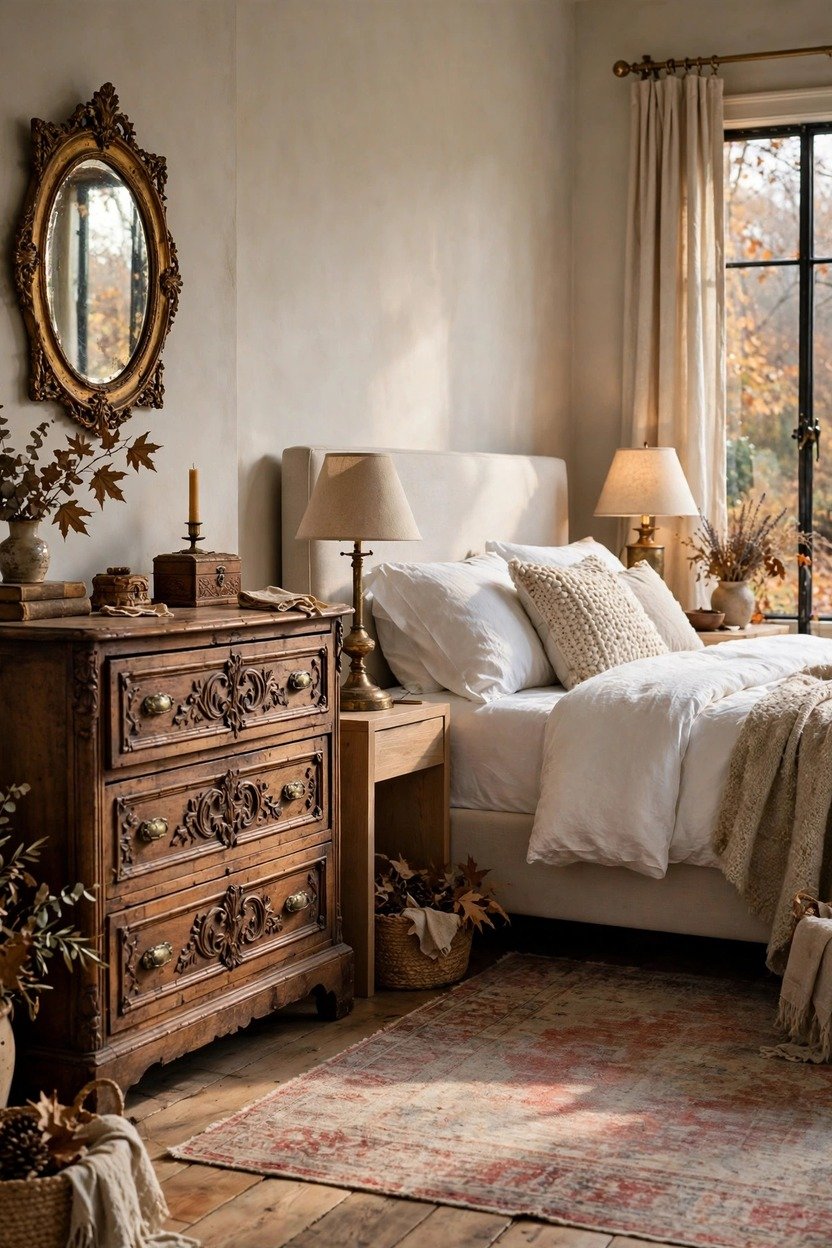
A vintage piece gives a bedroom a story, and a clean modern room gives that piece space to shine. Try an antique dresser, a pair of old brass lamps or a gilded mirror next to simple linen bedding and a plain upholstered bed. Aim for about one-third vintage and two-thirds new, so the room feels collected and not like a shop. Keep the lines around the old pieces simple and match the undertone of the wood, warm with warm and cool with cool. Flea markets and online resale sites are budget-friendly places to start.
21. Hide the Tech
Screens and cords can make a styled room look messy fast. Hide the TV in a closed cabinet, or skip it and keep the wall quiet. Add a drawer in the nightstand with a built-in charger, so phones rest out of sight and out of reach. Use cord covers painted to match the wall for anything that must stay visible. Keeping devices out of reach of the pillow also supports calmer evenings and better sleep.

22. Finish with a Plant and a Soft Scent
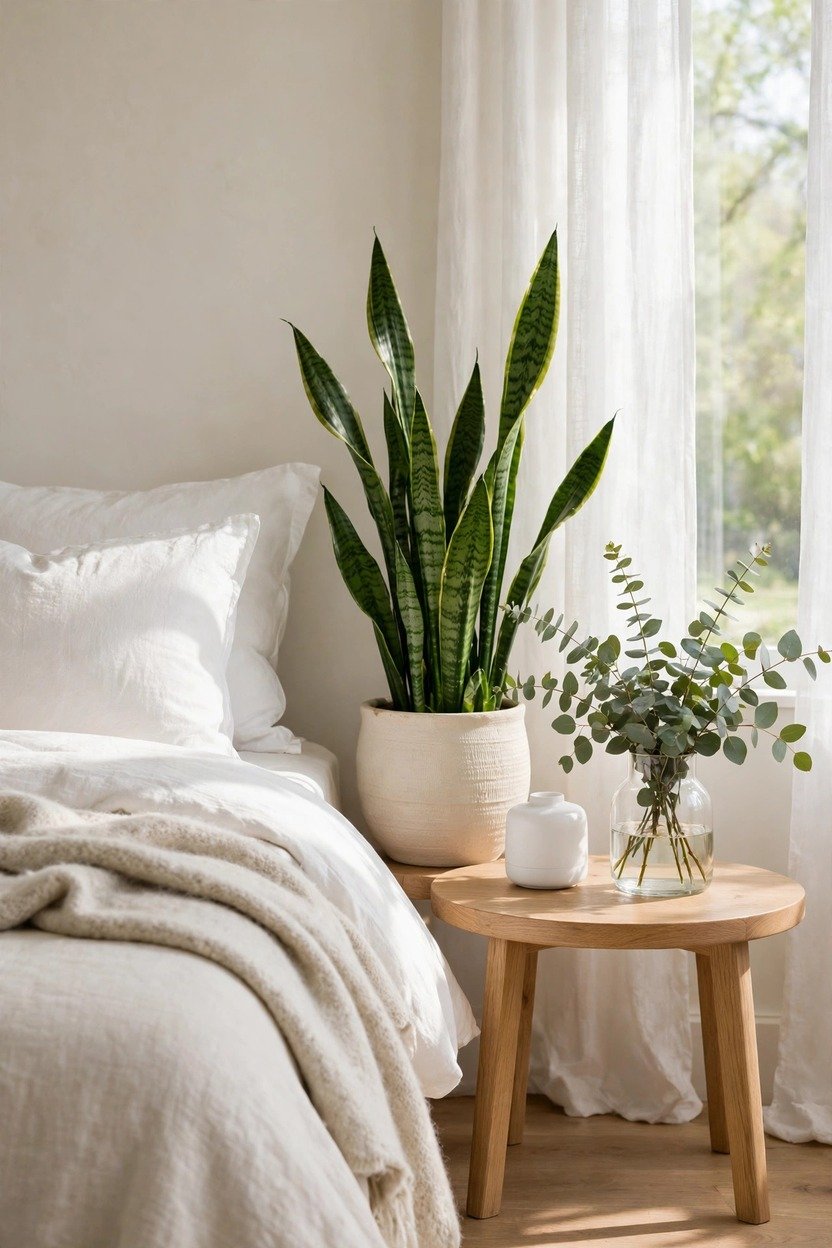
One living thing and one scent make a room feel finished. Place a tall plant in a corner, such as a snake plant, which handles low light, or a small olive tree near a bright window. Add a soft scent through a diffuser or a linen spray, and keep it light so it relaxes you and does not overwhelm. Fresh stems in a small vase on the nightstand also help. These small touches turn a well-styled room into one you want to be in.
Styling Tips
- Pick one color family. Choose two or three tones, such as sand, clay and cream, and repeat each at least twice.
- Repeat shapes. Round nightstands, a round mirror and a round pendant look connected.
- Mix one smooth, one nubby, one woven. This simple rule adds depth without adding clutter.
- Choose one metal. Brass, nickel or matte black looks calmer than a mix on lamps, hardware and frames.
- Use warm bulbs. 2700K bulbs make skin tones and fabrics look kind in the evening.
- Leave blank space. Empty surfaces make the pieces you show look chosen.
- Style in threes. Group items in odd numbers and different heights, like a lamp, a tray and a small plant.
- Keep the bed tidy. A made bed does more for the room than any decor piece.
Master Bedroom Measurement Cheat Sheet
- Walkways: at least 30 inches where you regularly pass.
- Around a queen bed: about 30 to 36 inches on the sides.
- Around a king bed: about 36 to 42 inches on the sides when space allows.
- Foot of the bed: about 36 inches, and a little more with a bench.
- In front of a dresser: about 36 inches.
- In front of a closet: 24 to 30 inches.
- Rug showing past the bed: 18 to 24 inches at the sides and foot.
- Nightstand height: about level with the top of the mattress.
- Curtain rod: 4 to 6 inches above the window frame, and 8 to 12 inches wider on each side.
- Art above the bed: about two-thirds the width of the headboard.
- Evening bulbs: 2700K, on a dimmer.
Practical Implementation Ideas
You do not have to redo the whole room at once. This order gets the biggest result first.
- Measure and map. Write down wall lengths, window positions and door swings, and sketch a simple floor plan.
- Clear the room. Remove anything that does not belong in a bedroom. This step is free and shows you what the room can look like.
- Fix the bed first. Choose or style the headboard and bedding. The bed is the largest visual piece, so it sets the tone.
- Set the layout. Check the clearances in the cheat sheet. Move the bed, nightstands and dresser before you buy anything new.
- Choose the rug and curtains. Order the right sizes and hang the curtains high and wide.
- Add three layers of light. Swap harsh bulbs for 2700K, add a dimmer and place lamps or sconces at the bed.
- Paint or add wall texture. Pick a color that suits the way your windows face, and test large patches.
- Finish with art, plants and scent. These small touches work best after the structure is right.
Common Mistakes to Avoid
- Buying a rug that is too small. A rug that sits only at the foot makes the bed look like it is floating. Measure and size up.
- Choosing a headboard that is too short. A low headboard leaves the wall bare and the bed looking small.
- Hanging curtains right at the window frame. This makes the window look shorter and lets light leak at the sides.
- Using only one bright overhead light. It flattens the room and makes it feel more like an office than a bedroom.
- Matching everything exactly. A full matching set looks stiff. Aim for a few matched pieces and a few different ones.
- Hanging art too high or too small. Small art floating high above the bed looks lost.
- Blocking walkways. If you must turn sideways to pass the bed, the room needs a smaller piece or a new layout.
- Leaving clutter on every surface. Too many objects on the dresser and nightstand cancel out the styling.
Small-Space Alternatives
- Float the nightstands: Wall-mounted shelves or narrow 16 to 18 inch tables save floor space on each side of the bed.
- Use wall-mounted sconces: They free up the nightstand top and add a warm glow.
- Choose a slim headboard: A tall, flat upholstered headboard gives presence without taking depth.
- Pick under-bed storage: Drawers or lift-up storage beds replace a bulky dresser.
- Go vertical: Take wardrobes to the ceiling and hang art higher on the wall.
- Skip the bench: Use a slim cane stool or a basket at the foot instead.
- Paint everything one color: Walls, trim and wardrobe doors in the same shade make a small room feel calm and larger.
- Add a mirror across from the window: It doubles daylight and adds depth.
Budget-Friendly Alternatives
- Paint first. One gallon of paint changes the room more than most furniture does.
- Swap the bulbs and add a dimmer. Warm 2700K bulbs and a simple plug-in dimmer cost very little.
- Layer inexpensive curtains. Hang a sheer and a blackout panel on one high, wide rod.
- Make a headboard. Wrap a plywood panel with batting and linen, and mount it to the wall.
- Edit what you own. Clear the dresser, the nightstands and the floor before buying anything new.
- Thrift the vintage layer. A secondhand lamp, mirror or small dresser adds character for less.
- Rent or borrow scale. If a 9 by 12 rug is out of budget, choose an 8 by 10 and keep the nightstands off the rug.
- Add one living plant. A single plant in a nice pot is a low-cost finishing touch.
Pro Styling Recommendations
- Plan the doorway view. Stand in the door and see what you notice first. Make that spot, usually the bed wall, the best one in the room.
- Think in layers. Light, bedding and window treatments should each have soft layers, and each layer should be adjustable.
- Match visual weight. A heavy dark bed frame needs a light rug and curtains. A pale bed can handle a bolder wall.
- Spend where you touch. Put more of the budget into the mattress, sheets and pillows than into small decor.
- Balance both sides. Even if the nightstands differ, make the heights and tones similar so the bed looks centered.
- Choose a calm focal point. One strong element, like a tall headboard or a deep wall color, works better than three competing ones.
- Test in real light. Check paint, fabric and bulbs in morning and evening before you commit.
FAQs
How do I make my master bedroom look more stylish?
Start with the bed. Add a tall headboard, layered bedding and a rug that shows 18 to 24 inches past the sides and foot. Then add soft, dimmable lighting, floor-length curtains and a calm color family. Edit the surfaces so everything you display looks chosen.
What color is best for a master bedroom?
Related: 21 Alt Bedroom Ideas That Feel Truly Lived In (Moody, Cozy & Personal)
Warm, low-contrast colors like mushroom, oat, clay, warm sage and soft greige feel restful in most rooms. Deep green, navy and charcoal also work well, especially if you use the room mostly at night. Test large samples in morning and evening light, and consider which way your windows face.
What size rug goes under a king bed?
A 9 by 12 rug is the most common choice and leaves about 16 inches on each side of a standard king bed. A 10 by 14 gives more room in a large bedroom, and an 8 by 10 can work in a smaller room. Place the rug under the lower two-thirds of the bed.
How much space do you need around a bed?
Plan on at least 30 inches where you walk. Around a queen bed, 30 to 36 inches on the sides is comfortable. Around a king bed, 36 to 42 inches feels best when the room allows. Leave about 36 inches at the foot, and a bit more if you add a bench.
How high should nightstands be?
Choose nightstands that sit about level with the top of the mattress, give or take a few inches. This keeps a lamp, a glass of water and a book within easy reach. Leave a small gap between the nightstand and the bed.
How should I hang bedroom curtains?
Mount the rod about 4 to 6 inches above the window frame, or close to the ceiling. Extend it 8 to 12 inches past the frame on each side. Let the panels reach the floor. Pair a sheer layer for daylight with a blackout layer for sleep.
What lighting is best for a master bedroom?
Use three layers: a dimmable overhead light, bedside lamps or sconces for reading, and a soft low glow for night. Choose warm 2700K bulbs for the evening, and avoid a single harsh ceiling light. Fabric shades spread the light and make the room feel calmer.
Is a master bedroom the same as a primary bedroom?
Yes. Both terms describe the main bedroom in a home, usually the largest one. Many designers and real estate listings now say primary bedroom or primary suite, while master bedroom is still widely searched and used. The design ideas are the same.
How can I make a small master bedroom feel bigger?
Paint the walls, trim and wardrobe one soft color, use wall-mounted sconces and slim nightstands, and hang curtains high and wide. Add a mirror across from the window, take storage to the ceiling and keep the floor and surfaces clear. A tall headboard adds presence without taking floor space.
How big should art above the bed be?
Choose art about two-thirds the width of the headboard or bed, and hang it about 6 inches above the top edge. One large piece usually looks calmer than many small ones. If you prefer smaller pieces, hang a pair of vertical prints with equal spacing.
Start with the bed. Add a tall headboard, layered bedding and a rug that shows 18 to 24 inches past the sides and foot. Then add soft, dimmable lighting, floor-length curtains and a calm color family. Edit the surfaces so everything you display looks chosen.
Warm, low-contrast colors like mushroom, oat, clay, warm sage and soft greige feel restful in most rooms. Deep green, navy and charcoal also work well, especially if you use the room mostly at night. Test large samples in morning and evening light, and consider which way your windows face.
A 9 by 12 rug is the most common choice and leaves about 16 inches on each side of a standard king bed. A 10 by 14 gives more room in a large bedroom, and an 8 by 10 can work in a smaller room. Place the rug under the lower two-thirds of the bed.
Related: 19 Leopard Print Bedroom Ideas for the Aesthetic Undecided
Plan on at least 30 inches where you walk. Around a queen bed, 30 to 36 inches on the sides is comfortable. Around a king bed, 36 to 42 inches feels best when the room allows. Leave about 36 inches at the foot, and a bit more if you add a bench.
Choose nightstands that sit about level with the top of the mattress, give or take a few inches. This keeps a lamp, a glass of water and a book within easy reach. Leave a small gap between the nightstand and the bed.
Mount the rod about 4 to 6 inches above the window frame, or close to the ceiling. Extend it 8 to 12 inches past the frame on each side. Let the panels reach the floor. Pair a sheer layer for daylight with a blackout layer for sleep.
Use three layers: a dimmable overhead light, bedside lamps or sconces for reading, and a soft low glow for night. Choose warm 2700K bulbs for the evening, and avoid a single harsh ceiling light. Fabric shades spread the light and make the room feel calmer.
Yes. Both terms describe the main bedroom in a home, usually the largest one. Many designers and real estate listings now say primary bedroom or primary suite, while master bedroom is still widely searched and used. The design ideas are the same.
Paint the walls, trim and wardrobe one soft color, use wall-mounted sconces and slim nightstands, and hang curtains high and wide. Add a mirror across from the window, take storage to the ceiling and keep the floor and surfaces clear. A tall headboard adds presence without taking floor space.
Choose art about two-thirds the width of the headboard or bed, and hang it about 6 inches above the top edge. One large piece usually looks calmer than many small ones. If you prefer smaller pieces, hang a pair of vertical prints with equal spacing.
Conclusion
A stylish master bedroom is not a room full of new things. It is a room where every choice has a reason.
The bed has presence. The light is soft. The rug is big enough for your feet to land on. The curtains block the street and let in the morning. Nothing is there just to fill a space.
Start with one change you can finish this weekend. Swap the bulbs, hang the curtains higher, size up the rug or clear the dresser. Then stand in the doorway at night and look at the room. If it makes you want to stay, you are on the right track.