18 Perfect Swimming Pool Coping and Tile Ideas (Beautiful and Practical)
Most pool coping and tile guides are really just photo galleries. Pretty travertine here, a mosaic accent there, with very little explanation of why one material might actually be the wrong choice for your specific pool.
Coping and tile aren’t purely decorative. Coping is a structural cap that protects the pool’s bond beam and determines how safe the edge feels underfoot, wet or dry. Waterline tile isn’t just a design accent, it hides the buildup line that forms at the pool’s water level and makes that area far easier to clean than exposed plaster or gunite ever would be. Choosing the right combination means thinking about your climate, whether the pool runs on salt or chlorine, how much heat the material will absorb in direct sun, and how it will hold up over a decade of pool parties, not just how it photographs on day one.
These 18 ideas cover the styles worth considering, from classic travertine to a sleek cantilever edge, and every single one comes with the practical context that actually determines whether it’s the right fit for your pool.
Table of Contents
Idea 1: Honed Travertine Coping With A Glass Mosaic Waterline
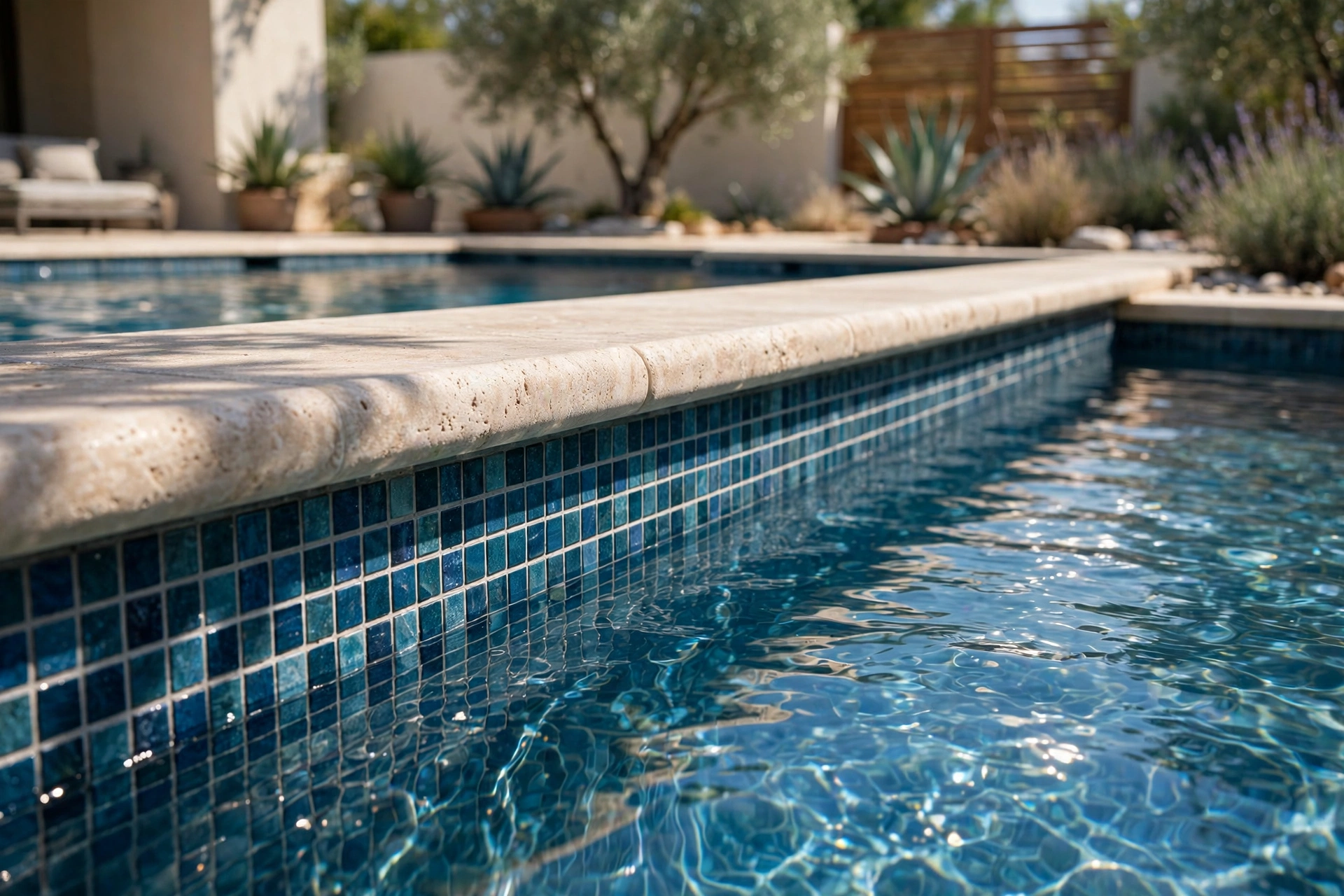
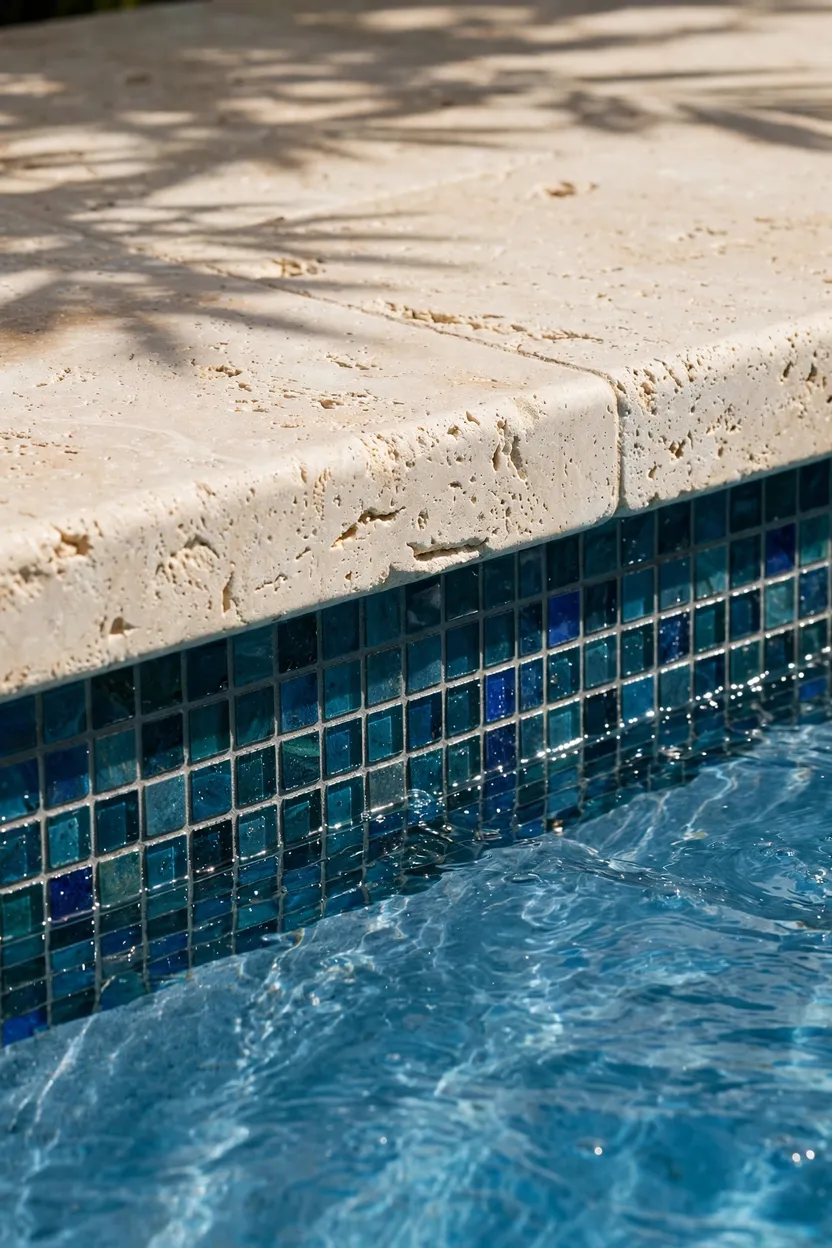
Travertine remains one of the most requested pool coping materials for good reason: its dense, naturally porous structure stays noticeably cooler underfoot than concrete or darker stone, even in direct summer sun, which matters more than almost any other single factor for a pool used daily in a hot climate. Honed travertine offers a smooth, polished finish that still retains enough natural texture for safe footing, while tumbled travertine leans more rustic with softer, aged edges. Pairing it with a glass mosaic waterline tile in a rich teal or cobalt tone creates a striking contrast between the warm, creamy coping and the deep, saturated color at the water’s edge, while also making the water itself appear more vivid. Because travertine is a natural stone, it does require periodic sealing to resist staining and maintain its slip resistance, which is worth factoring into the pool’s long-term maintenance plan rather than a one-time installation cost.
Idea 2: Bullnose Rolled-Edge Coping For A Softer Poolside Profile
Bullnose coping features a smoothly rounded, rolled edge that curves down toward the water rather than meeting it at a sharp right angle, creating a gentler, more forgiving profile for anyone gripping the pool’s edge or sitting along it. This rounded shape also reduces the risk of a sharp scrape or bruise for kids and swimmers moving in and out of the water quickly, which makes it a popular choice for family pools specifically for safety reasons rather than aesthetics alone. Because the curve requires a specific fabrication process, bullnose coping is typically available in natural stone, precast concrete, or porcelain, giving plenty of room to match it to nearly any surrounding design style. The rounded edge also tends to shed water more effectively back into the pool rather than pooling on the deck surface, which can reduce slip hazards just outside the water’s edge as well.

Idea 3: Cantilever Concrete Coping For A Seamless Modern Edge
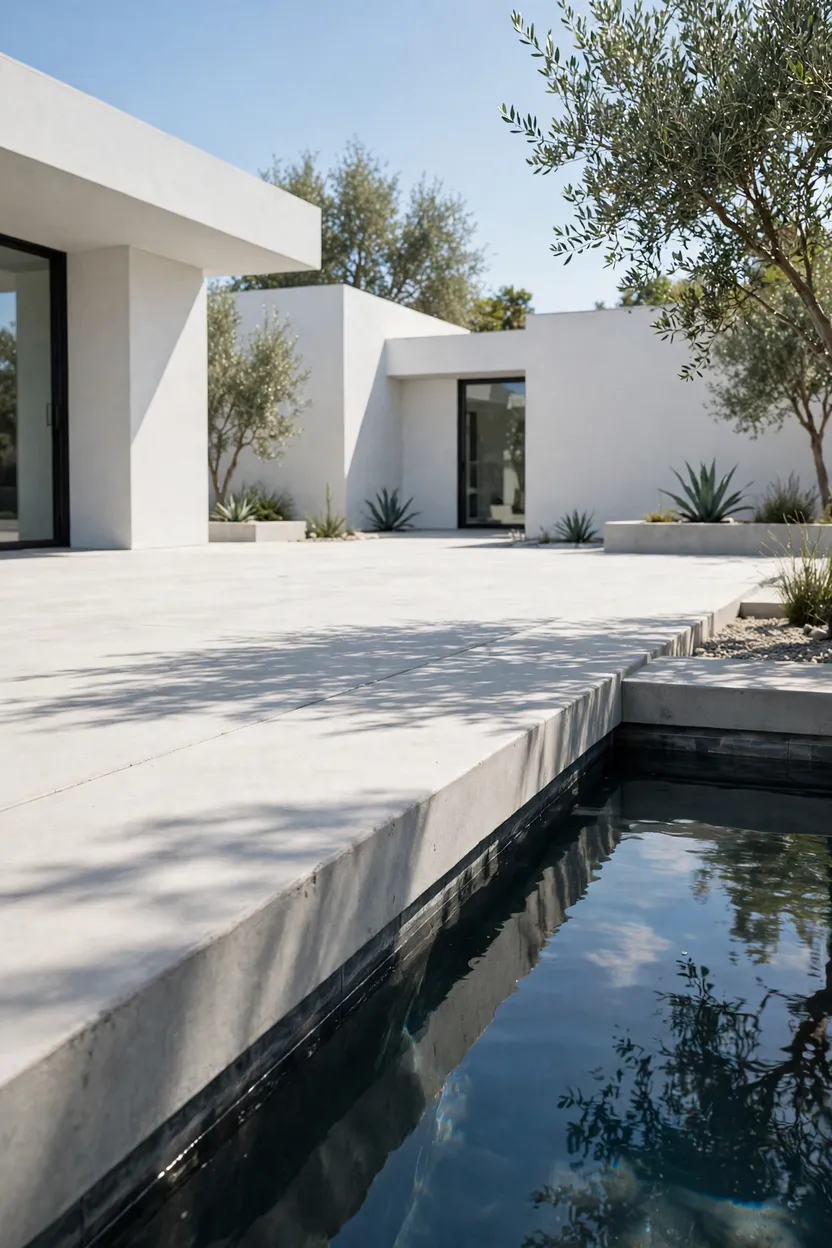
Cantilever coping is poured as a continuous extension of the pool deck itself, overhanging slightly at the water’s edge rather than using a separate, visually distinct coping material at all. This creates an especially clean, minimal look that suits modern architectural pools, since there’s no visible seam or color break between the deck and the pool’s rim. Because the coping and deck are one continuous concrete pour, this option also tends to be more budget-friendly than a separate natural stone or tile coping material, while still allowing for a broomed, stamped, or exposed aggregate texture to add both visual interest and slip resistance. The main trade-off is that cantilever coping typically shows cracks more visibly over time than a jointed coping system, since there are fewer expansion joints to absorb the concrete’s natural movement, making proper joint placement during installation especially important.
Idea 4: Classic Brick Coping For A Traditional Backyard Pool
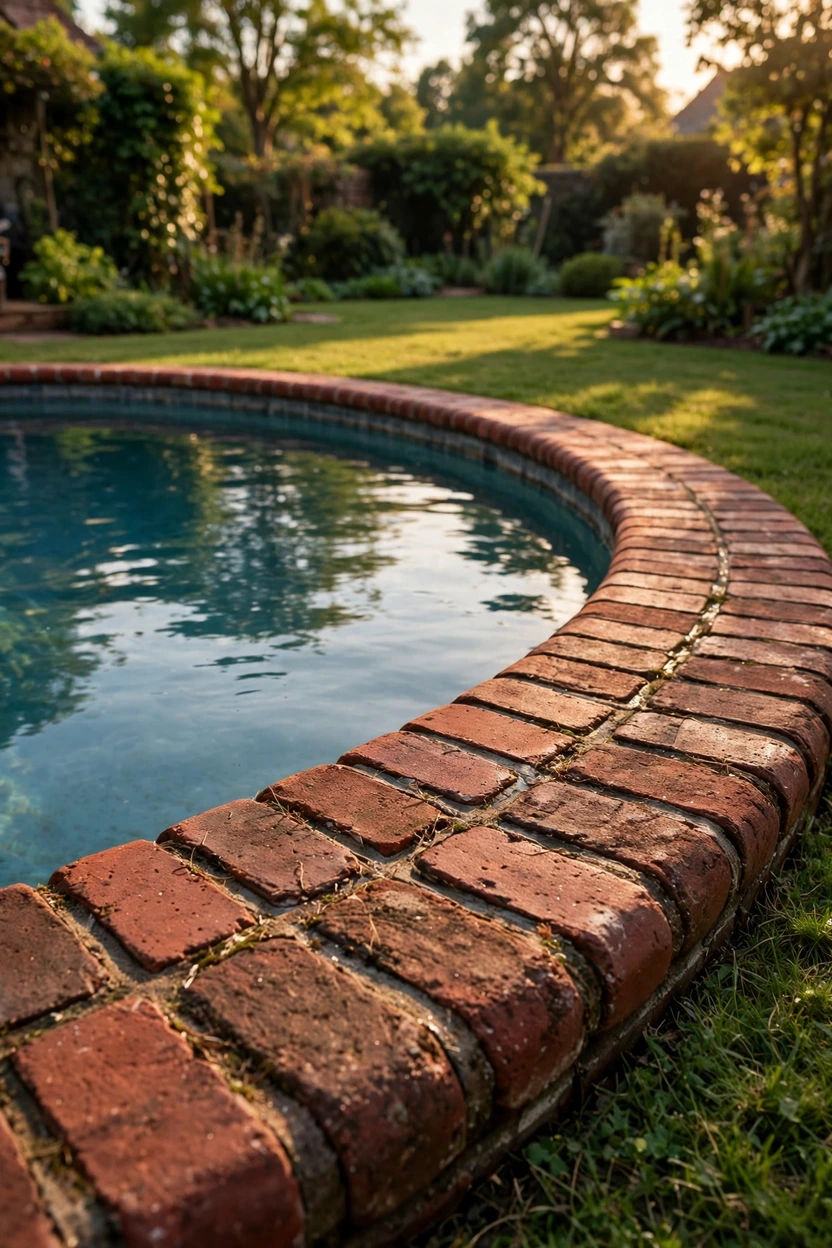
Brick coping brings a warm, familiar, slightly nostalgic feel to a pool, especially one set within a traditional or colonial-style backyard where matching brick already appears elsewhere in the landscaping or the home’s exterior. Individual bricks are typically set on their side, creating a rounded, tumbled edge along the water that’s both grippy and visually distinct from a smooth stone or tile coping. Because brick is a smaller, modular material, it’s also easier to repair in small sections if individual pieces crack or shift over time, rather than needing to replace a larger single slab of stone. The one consideration worth flagging is that brick’s more porous surface can absorb pool chemicals over time, particularly in a heavily chlorinated pool, so sealing periodically helps maintain both its color and its structural integrity.
Idea 5: Bluestone Coping For A Modern-Traditional Hybrid Look
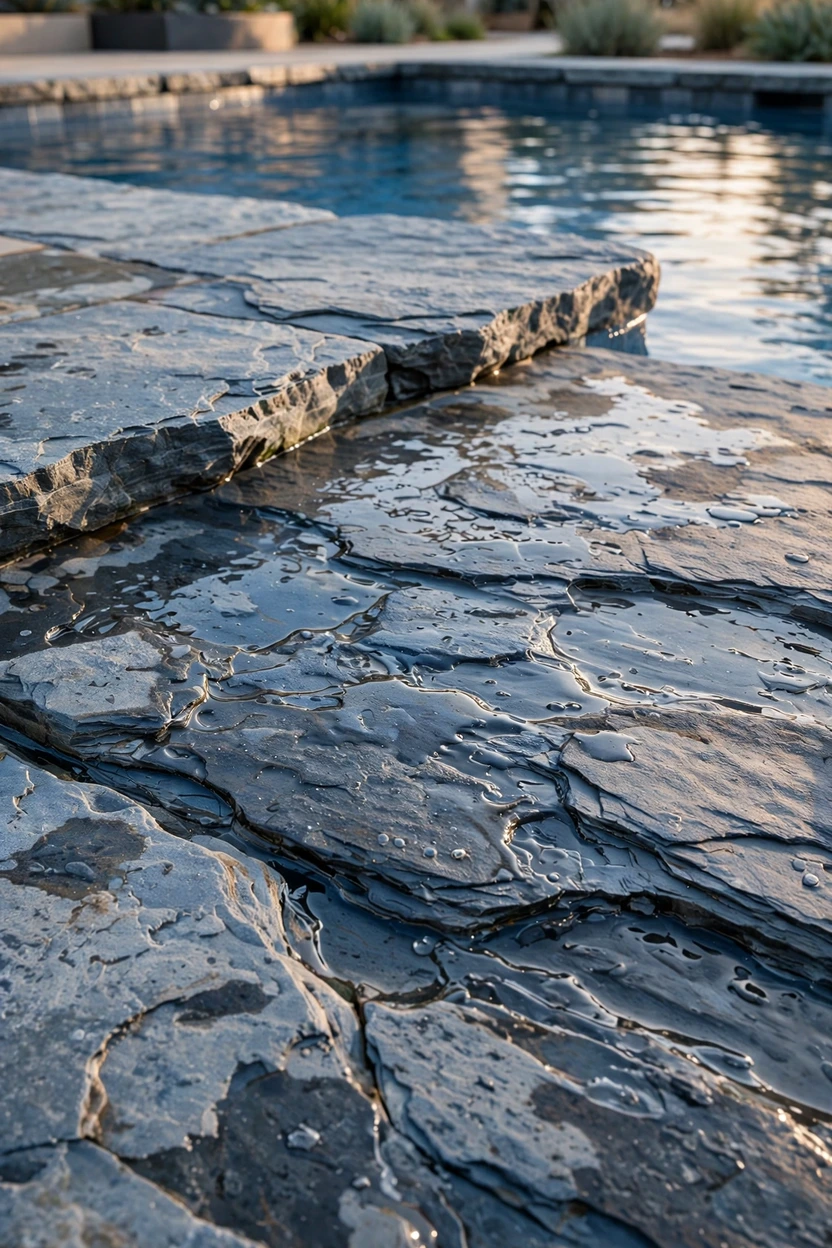
Bluestone occupies a distinctive middle ground in pool coping, rugged enough to feel grounded and natural, but refined enough to suit a more contemporary pool design as well. Its blue-gray tone deepens noticeably when wet, creating a visual shift throughout the day as the coping alternates between dry and splashed, which adds a subtle sense of movement to an otherwise static hardscape element. Natural cleft bluestone, split along its natural grain rather than mechanically sawn smooth, provides excellent grip underfoot even when wet, addressing one of the most important safety factors for any pool coping material. Because bluestone is a denser, darker stone, it does absorb more heat in direct sun than a lighter material like travertine, so a pool in a consistently hot, sunny climate may benefit from a honed or lighter-toned finish, or some shade structure nearby, to keep the surface comfortable for bare feet.
Idea 6: Hand-Painted Talavera Tile For A Mediterranean Pool
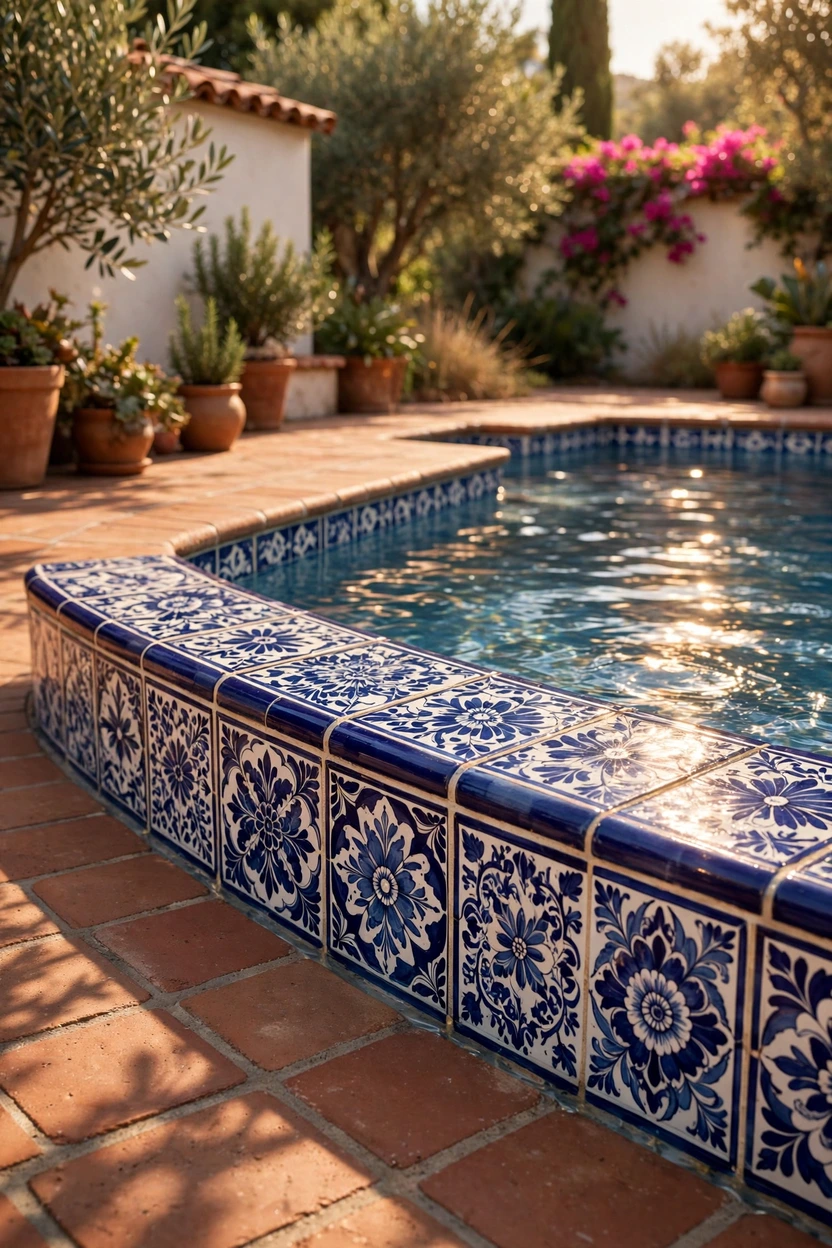
Hand-painted Talavera-style tile brings rich, saturated color and intricate floral or geometric detail to both the coping face and the waterline, giving a pool an unmistakably Mediterranean or Spanish colonial character. Because each tile is typically hand-painted, slight variations in color and pattern between pieces are part of the material’s charm rather than a flaw, giving the finished pool a layered, artisan-made feeling that a uniform, mass-produced tile simply can’t replicate. This style pairs naturally with a rounded bullnose coping edge and warm terracotta decking, reinforcing the traditional Spanish and Mexican architectural influences the tile itself draws from. Because these tiles are typically ceramic rather than porcelain, checking the manufacturer’s rating for pool and outdoor use is an important step, since not every decorative ceramic tile is built to withstand constant water exposure and freeze-thaw cycles in cooler climates.
Idea 7: Cobalt Glass Tile For A Deeper, Richer Water Color
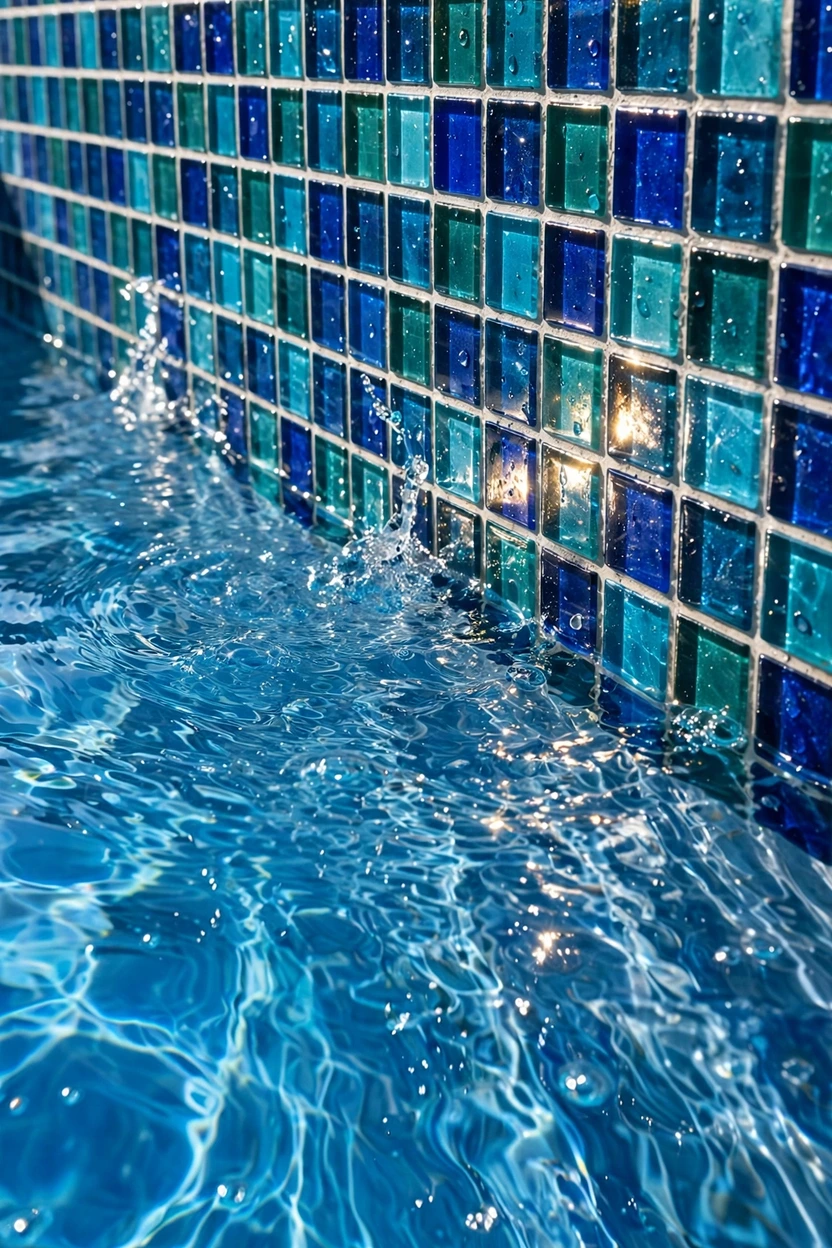
A waterline band in deep cobalt or teal glass tile is one of the most reliable ways to make pool water appear more vividly blue, regardless of the pool’s actual plaster color or depth, since glass tile reflects and refracts light differently than ceramic or stone. This effect tends to be especially noticeable in a smaller pool or spa, where the waterline tile makes up a larger proportion of the visible surface area compared to a large resort-style pool. Glass tile is also naturally more resistant to staining and chemical exposure than many natural stone options, since it doesn’t have the same porous surface that can absorb minerals or pool treatment chemicals over time. Because glass tile can be more slippery than a textured stone or ceramic surface, it’s typically used specifically at the waterline rather than for the full coping surface where bare feet will be walking.
Idea 8: Large-Format Porcelain Paver Coping For Low Maintenance
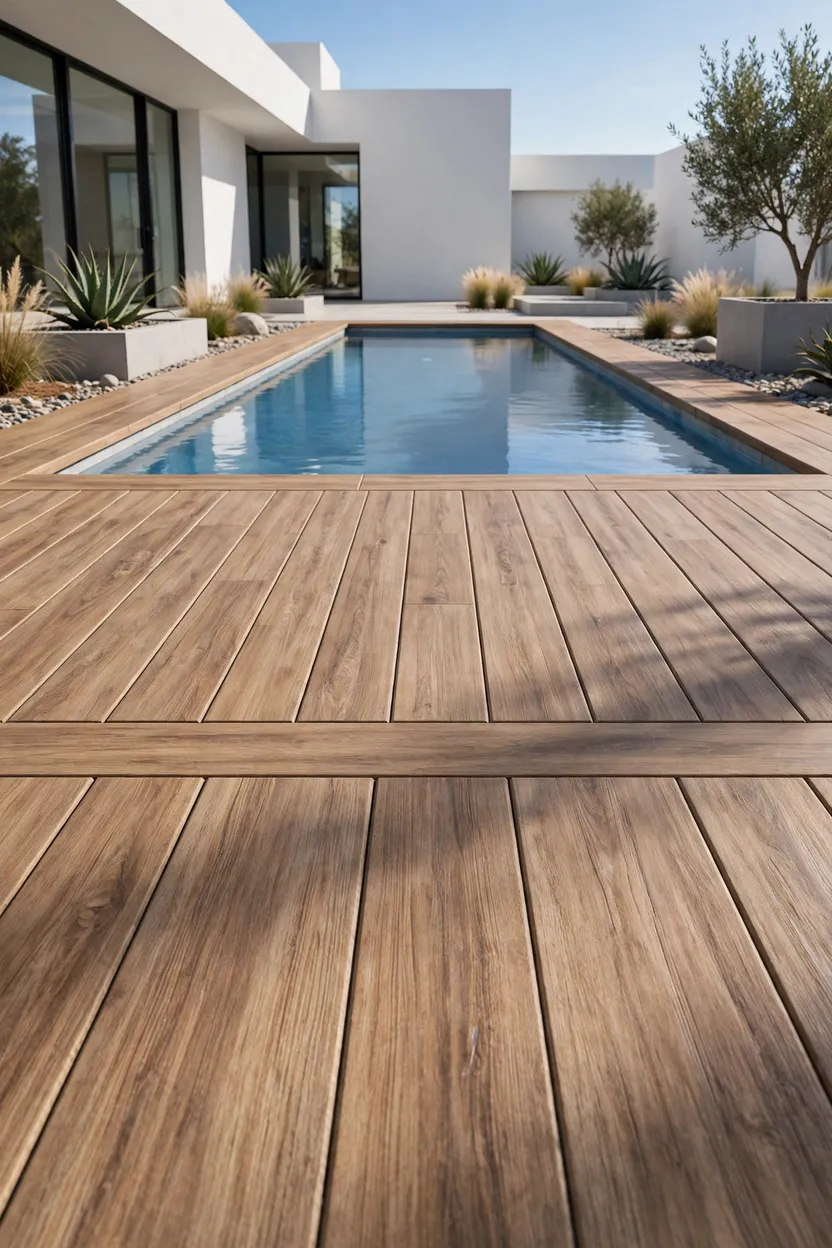
Large-format porcelain pavers have become an increasingly popular pool coping choice specifically because they combine the look of natural stone or wood with significantly less maintenance, since porcelain doesn’t require sealing and resists staining, scratching, and fading far better than most natural materials. Because these pavers are manufactured rather than quarried, they offer highly consistent color and sizing across an entire pool’s coping run, which matters for a clean, uniform look on a larger pool deck. Most porcelain pool coping options are also rated for UV resistance and freeze-thaw durability, making them a strong choice for pools in climates with genuine seasonal temperature swings rather than just consistent warm weather. The main trade-off compared to natural stone is a slightly less organic, more manufactured feeling underfoot and visually, though the color and texture options available today have narrowed that gap considerably.
Idea 9: Natural Cleft Flagstone Coping For A Rustic Pool
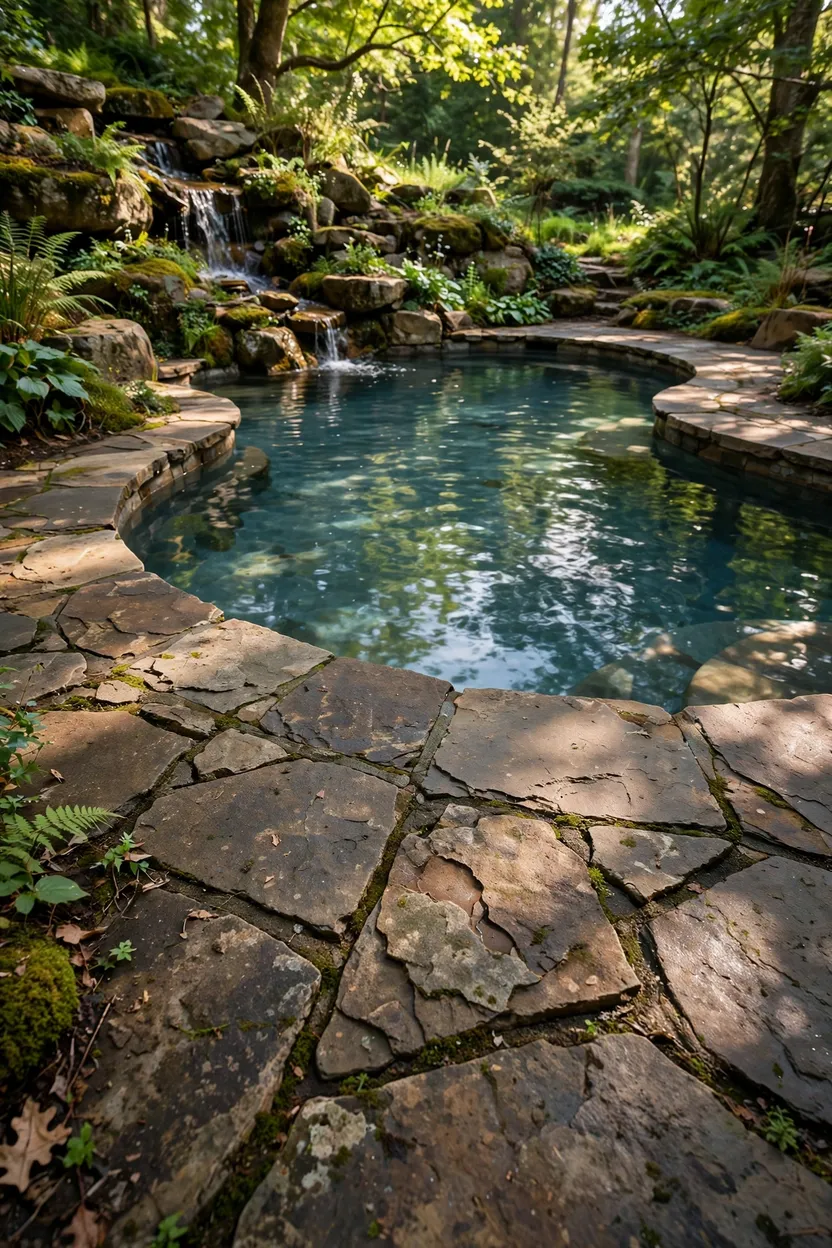
Irregularly shaped natural cleft flagstone, fitted together in a puzzle-piece pattern along the pool’s edge, gives a rustic, naturalistic pool the feeling of an organic stone outcropping rather than a manufactured hardscape feature. Because each piece is irregular rather than uniform, this coping style pairs especially well with a freeform pool shape, a natural stone waterfall feature, or heavy surrounding landscaping, rather than a strictly geometric, modern pool design. The natural texture of cleft stone also provides excellent slip resistance without any additional treatment, since the material’s split surface is inherently uneven and grippy underfoot. Because the joints between irregular pieces are wider and less uniform than a cut stone or tile pattern, proper grouting and sealing at installation matters even more here to prevent water infiltration beneath the coping over time.
Idea 10: Pebble And Aggregate Coping For A Lagoon-Style Pool
A pebble or exposed aggregate coping surface, made from smooth river rock or small stone chips set into a concrete or resin binder, is a common choice for a natural, lagoon-inspired pool that’s meant to blend into its surrounding landscape rather than stand out as an obvious built structure. This texture provides strong, natural slip resistance underfoot, since the rounded pebbles create countless small grip points across the entire surface, making it a genuinely practical option for a pool used frequently by kids or older adults. Because the color palette of pebble coping typically pulls from earthy tones, tan, gray, brown, it pairs naturally with a dark-plastered pool interior designed to mimic the look of a natural pond or lagoon. This coping style does tend to be rougher underfoot than a honed stone or smooth porcelain option, which is worth testing in person before committing, especially for anyone who spends significant time walking barefoot around the pool.

Idea 11: Stamped Concrete Coping For A Budget-Friendly Build
Stamped concrete coping offers one of the most budget-conscious ways to achieve the visual texture of natural stone, brick, or slate, using a single poured concrete surface pressed with a decorative pattern before it cures. Because the entire coping is formed from one continuous pour rather than individually set pieces, labor costs tend to run lower than a natural stone or tile installation, making this a popular choice for homeowners balancing style against a firmer construction budget. A quality acrylic sealer applied after stamping both enhances the color and adds a slight texture for slip resistance, though this sealer does typically need reapplication every few years to maintain both its look and its grip. While stamped concrete won’t have the exact color variation or cool-underfoot performance of genuine natural stone, modern stamping and staining techniques have narrowed that visual gap considerably compared to older concrete stamping methods.

Idea 12: Coral Stone Coping For A Tropical, Coastal Look
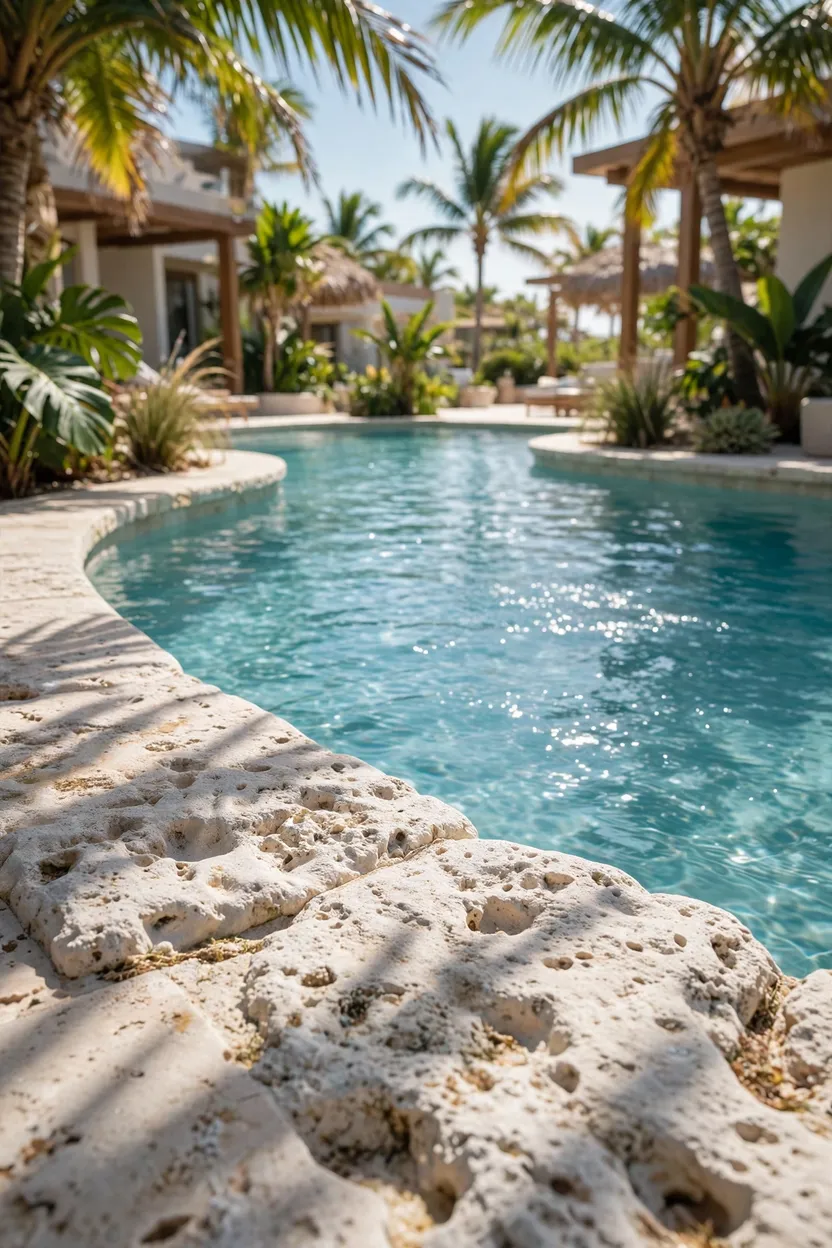
Coral stone, a naturally porous limestone formed from ancient coral reefs, brings a distinctly tropical, coastal character to a pool with its pale, sun-bleached tone and naturally pitted surface texture. Because of its high porosity, coral stone stays remarkably cool underfoot even in intense tropical sun, making it a genuinely practical choice for pools in consistently hot, humid climates rather than purely a stylistic one. The material’s natural texture also provides strong slip resistance without any additional finishing, since the coral’s original pitted surface creates countless small grip points across the entire coping. Coral stone’s porosity does mean it requires regular sealing to prevent staining, particularly in a pool exposed to sunscreen, tanning oils, and other common poolside products that can otherwise soak into the stone over time.
Idea 13: An Inset Mosaic Accent Band Within The Coping
Rather than covering the entire coping in mosaic tile, inserting a narrow decorative mosaic band directly within a larger run of stone or concrete coping adds a custom, personalized detail without the full cost or maintenance considerations of an all-mosaic surface. This works especially well as a focal point near steps, a tanning ledge, or the deep end, drawing the eye to a specific functional area of the pool while keeping the majority of the coping in a more neutral, durable material. Because the mosaic section is a smaller, contained area, it’s also easier and less expensive to repair or replace if individual tiles ever crack or discolor compared to redoing an entire coping run. This idea gives a pool a genuinely custom, one-of-a-kind detail while keeping the bulk of the installation in a lower-maintenance, budget-friendly material.

Idea 14: Matching Deck And Coping For A Seamless Infinity Look
Choosing the exact same material and color for both the pool deck and the coping, rather than a contrasting or complementary combination, creates a visually seamless transition that draws the eye outward toward the horizon, which is especially effective on an infinity-edge or vanishing-edge pool design. This approach works particularly well with large-format porcelain pavers or a continuous stamped concrete pour, both of which can extend uninterrupted from the deck straight through the coping without an obvious material change. Because there’s no strong visual break between the two surfaces, this look tends to make a smaller pool deck feel larger and more expansive than a coping treatment with a bold contrasting color or texture would. The trade-off is a loss of the visual definition a contrasting coping normally provides, marking clearly where the deck ends and the pool’s edge begins, which is worth considering carefully for safety in a pool used by young children or elderly swimmers.

Idea 15: Two-Tone Coping For Definition And Visibility
Choosing a coping color that visibly contrasts with the surrounding deck material creates a clear, easy-to-see boundary around the pool’s edge, which serves both a design and a genuine safety function, particularly for pools used by young children, older adults, or anyone with low vision. A pale travertine or light gray porcelain coping against a darker charcoal or brown deck, for example, creates immediate visual clarity about exactly where the pool begins, even from a distance or in low evening light. This contrast can be achieved through material choice alone or through color variation within the same material family, like a lighter honed finish paired with a darker, more textured deck surface nearby. Beyond safety, a clearly defined two-tone edge also tends to photograph and read as more intentional and architecturally considered than a coping and deck combination that blend together with no clear delineation.

Idea 16: A Raised Bond Beam With Stacked Stone Veneer
For a pool with a raised or partially raised edge, often used to accommodate a sloped yard or to create a built-in seating ledge, applying a stacked stone veneer to the vertical face of that raised bond beam adds significant visual weight and architectural interest beyond what a flat coping alone could achieve. This treatment works especially well paired with a natural stone or travertine coping cap on top, creating a cohesive material story that runs from the pool’s horizontal surfaces down through its vertical elements. Because stacked stone veneer is typically a thinner, lighter-weight product than full natural stone, it can usually be applied over an existing raised structure without requiring additional structural reinforcement. This idea works particularly well for a pool built into a slope or hillside, where the raised, stone-clad edge becomes a dramatic design feature in its own right rather than simply a structural necessity.

Idea 17: Textured, Non-Slip Coping For A Family Pool
For a pool used frequently by young children or anyone prioritizing safety above all else, choosing a coping material specifically for its slip resistance, rather than its polish or shine, should come before any other design consideration. A flamed or bush-hammered stone finish, or a textured, sandblasted porcelain option, provides significantly more grip underfoot when wet compared to a honed or polished surface, even if the smoother option initially looks more refined. Manufacturers typically rate outdoor and pool tile with a slip resistance rating, and choosing a product specifically rated for wet pool deck use, rather than a general outdoor tile rating, matters for genuine safety rather than just marketing language. This idea proves that the most practical choice for a busy family pool doesn’t have to sacrifice style, since textured stone and porcelain options today come in the same wide range of colors and looks as their smoother, more slippery counterparts.
Idea 18: Salt-Safe Coping And Tile For A Saltwater Pool
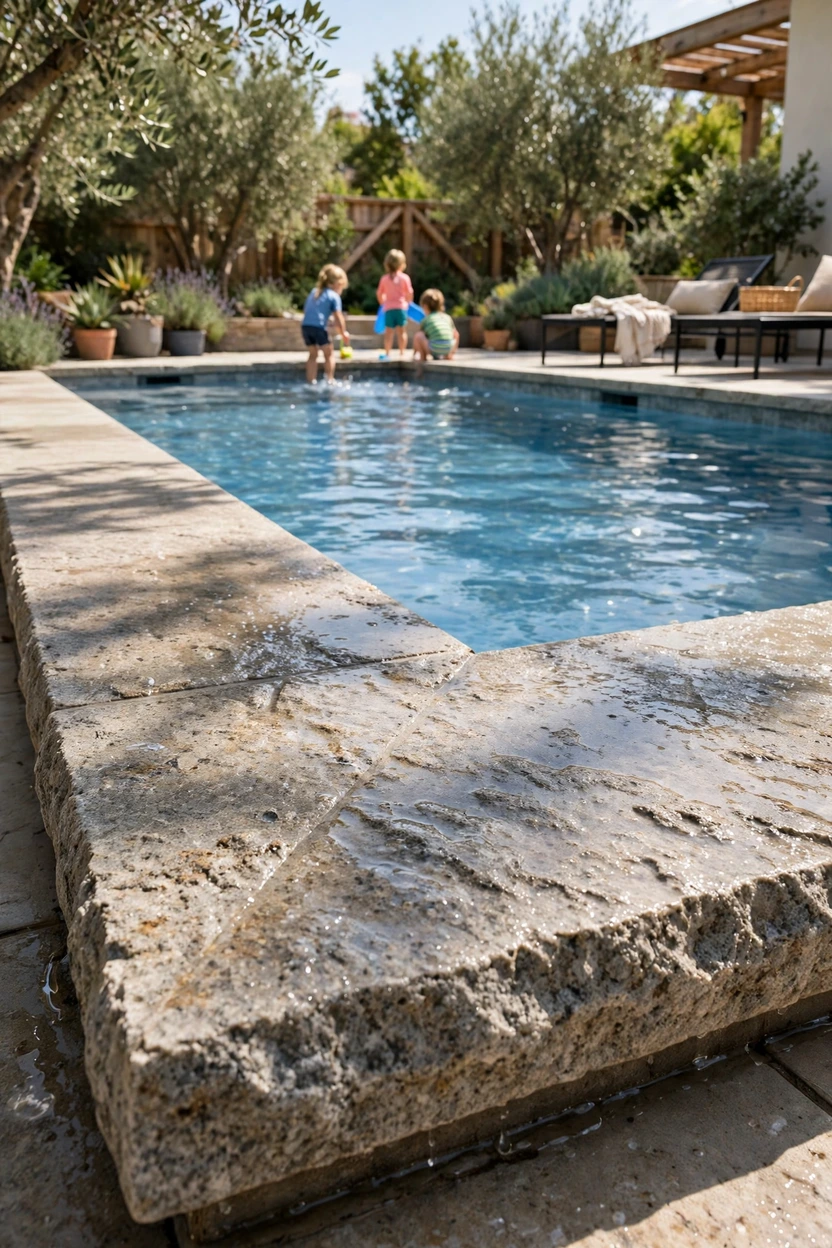
A saltwater pool system generates chlorine from dissolved salt, and while the water itself is gentler on skin and eyes than traditional chlorine, certain coping and tile materials are more vulnerable to salt-related corrosion, staining, and pitting over time than others. Porcelain, glass tile, and dense, sealed natural stones like granite generally hold up well against saltwater exposure, while softer, more porous materials or those with metallic glazes can degrade more quickly under consistent salt contact. Checking directly with a material’s manufacturer about saltwater pool compatibility before installation is a genuinely important step that many pool renovation guides skip entirely, since this single detail can significantly affect how long a beautiful coping choice actually lasts. This idea matters most for anyone specifically choosing or converting to a saltwater system, since a stunning coping and tile combination that deteriorates within a few years due to salt exposure isn’t a good long-term investment, regardless of how it looks on installation day.

Styling Tips
- Bring physical material samples poolside and check them at different times of day, since stone and tile color can shift dramatically between direct sun, shade, and evening light.
- Pair a busier waterline tile pattern with a simpler, more neutral coping material, and vice versa, so the pool’s edge has one clear visual focal point rather than competing details.
- Repeat the coping or tile material somewhere else in the landscape, a retaining wall, a fire feature, steps, to create a cohesive, intentional-feeling outdoor space rather than an isolated pool feature.
- Consider how the coping will look wet versus dry before finalizing a choice, since many natural stones darken noticeably once splashed, which can change the overall color story of the space.
- Choose grout color for waterline tile carefully, since a stark white grout against a dark tile can visually compete with the tile itself, while a color-matched grout lets the tile design read cleanly.
Practical Implementation Ideas
- Request the manufacturer’s slip resistance rating for any coping material under serious consideration, and specifically ask whether it’s rated for wet pool deck use rather than general outdoor use.
- Confirm saltwater compatibility directly with the material supplier if converting to or building a saltwater pool system, since this detail isn’t always obvious from a product’s general marketing material.
- Budget for periodic sealing maintenance on any natural stone coping from the start, since this ongoing cost is easy to overlook when comparing initial material prices.
- Test a coping material’s heat retention by leaving a sample in direct sun for several hours before installation, especially in a consistently hot, sunny climate.
- Plan expansion joints carefully with your contractor for any poured concrete coping, since proper joint placement significantly reduces the risk of unsightly cracking over time.
Common Mistakes To Avoid
- Choosing a coping material based purely on a photo without considering the local climate’s heat and freeze-thaw conditions.
- Selecting a beautifully polished, glossy coping finish without checking its actual slip resistance rating for wet conditions.
- Installing a decorative ceramic or ceramic-glazed tile not specifically rated for constant pool water exposure, which can lead to premature cracking or fading.
- Skipping a saltwater compatibility check when building or converting to a saltwater pool, only to discover material degradation within a few years.
- Choosing a coping and deck combination with no visual contrast at all in a pool used by young children, reducing the pool edge’s visibility as a safety boundary.
Small-Space Alternatives
- For a small plunge pool or spa, a full mosaic or Talavera tile treatment on the coping can be more achievable and cost-effective than on a large resort-style pool, since the total material quantity needed is much smaller.
- A single narrow inset mosaic accent band, rather than a full decorative coping treatment, can bring the same custom detail to a compact pool without overwhelming the smaller space.
- Matching deck and coping materials, as described in the seamless infinity look, can help a small pool deck feel more expansive and less visually cluttered.
- A lighter-toned coping material generally makes a small pool area feel larger and airier than a dark, heavy stone that can visually shrink a compact space.
Budget-Friendly Alternatives
- Stamped concrete coping offers a similar visual texture to natural stone or brick at a meaningfully lower material and labor cost.
- A single narrow mosaic accent band costs significantly less than covering the full coping in decorative tile while still delivering a custom, personalized look.
- Large-format porcelain pavers, while a higher upfront material cost than basic concrete, often save money over time by avoiding the recurring sealing costs natural stone requires.
- Choosing a simpler bullnose or flat-edge coping profile over an elaborate custom stone detail reduces both material waste and labor complexity during installation.
Pro Styling Recommendations
- Pool builders often recommend choosing coping before finalizing the pool’s interior plaster color, since the two materials need to work together visually and coping options are frequently more limited by structural and safety requirements.
- A lighter coping color paired with a darker pool interior tends to make the water appear deeper and more dramatic than a matching light-on-light combination.
- Investing in a higher-quality, properly rated slip-resistant material around a pool’s steps and shallow end specifically, even if the rest of the coping uses a different finish, addresses the areas where slips most commonly occur.
- Choosing a durable, low-maintenance coping material for a rental property or vacation home tends to be a better long-term decision than an aesthetically striking option that requires frequent attention.
- Reviewing a coping material’s warranty and expected lifespan against the pool’s own expected renovation cycle helps avoid replacing the coping far sooner, or later, than actually necessary.
Conclusion
The most beautiful pool coping and tile choice isn’t always the right one for your actual pool, and that’s the detail most inspiration galleries leave out entirely. A stunning bluestone edge means little if it’s too hot to walk on in your climate, and a gorgeous hand-painted tile means little if it wasn’t built to handle years of constant water exposure.
The pools that actually feel effortless years down the road are the ones where beauty and practicality were considered together from the start, the material that looks right, feels safe underfoot, and holds up to your specific water chemistry and climate. Start with how the pool will actually be used, then let that guide which of these 18 ideas fits best, rather than choosing on looks alone.