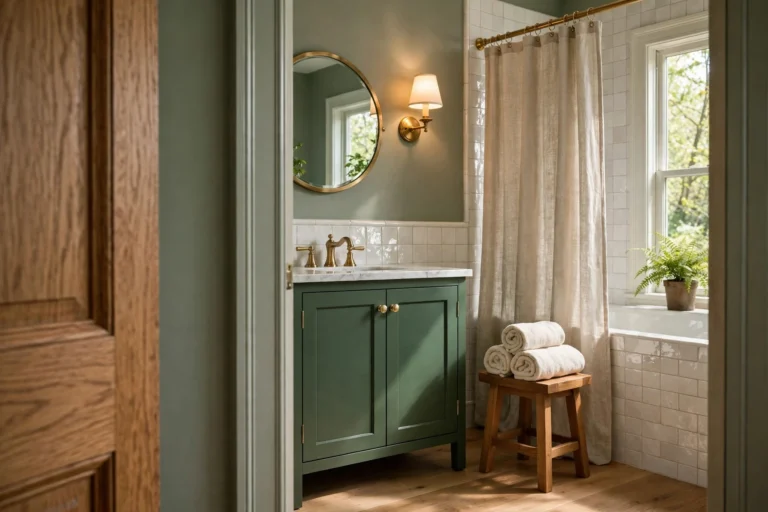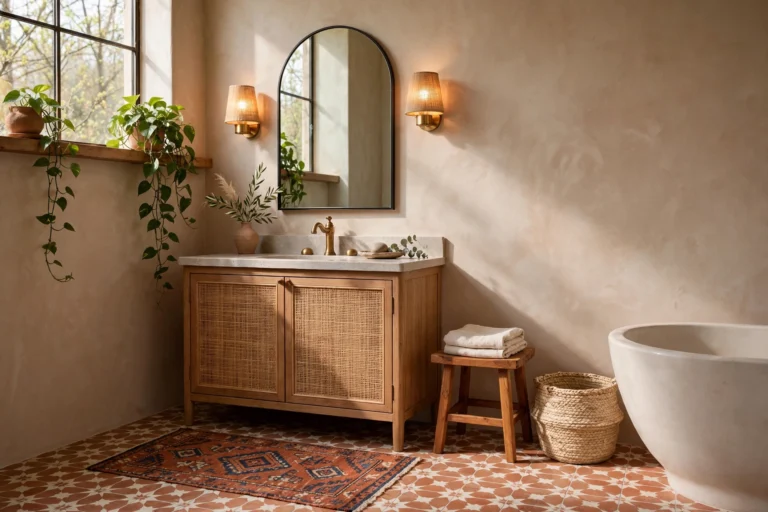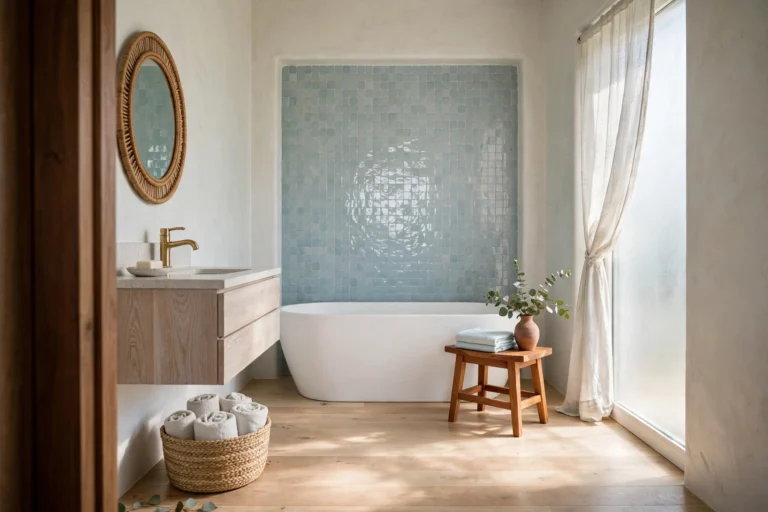
17 Japandi Bathroom Ideas for a Calm, Spa-Like Retreat
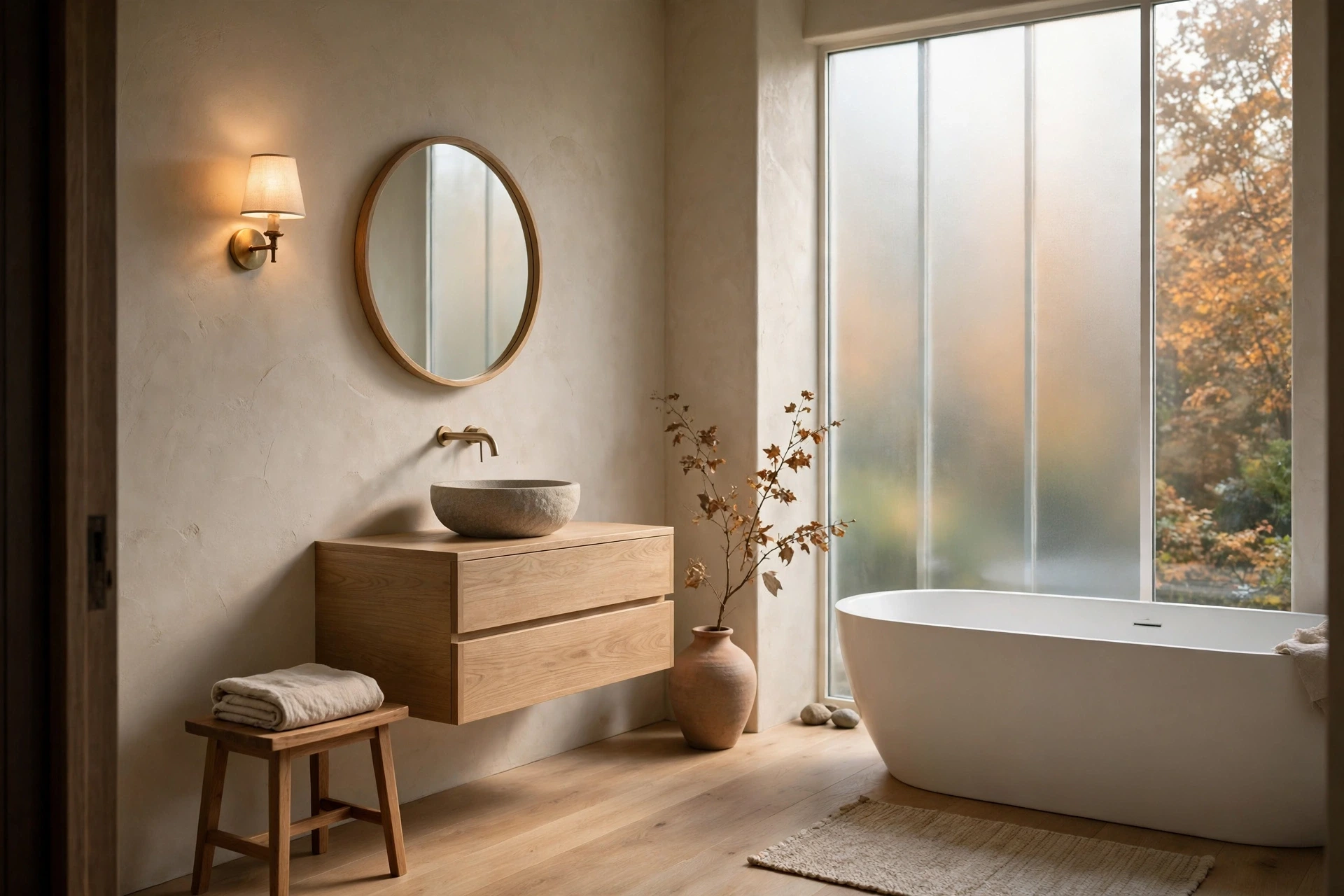
Picture the last ten minutes of your day. The bathroom light is low and warm. The floor is clear, the counter is quiet, and a deep tub fills with steam that smells faintly of cedar.
Nothing in the room asks for your attention. No shelf of half-used bottles. No cold white glare. No clutter to step around.
That feeling has a name: Japandi. It pairs the calm, simple forms of Japanese design with the cozy comfort of Scandinavian style. In a bathroom, that mix means natural wood, soft stone, muted colors, and light that glows instead of glares.
The 17 ideas below show you how to build that mood one piece at a time. You will find ideas for big rooms, small rooms, and tight budgets, plus the little details that make a space feel slow and soft. Save the ones that fit your home, and start with whichever feels easiest.
Quick answer: what is a Japandi bathroom? A Japandi bathroom blends Japanese minimalism with Scandinavian warmth. It uses natural materials like wood and stone, an earthy color palette, simple shapes, hidden storage, and warm light to create a calm, clutter-free room. It works in a small bathroom or a large one, and you can get the look with a full remodel or a few low-cost swaps.
Table of Contents
17 Japandi Bathroom Ideas
Start With a Warm, Earthy Color Palette
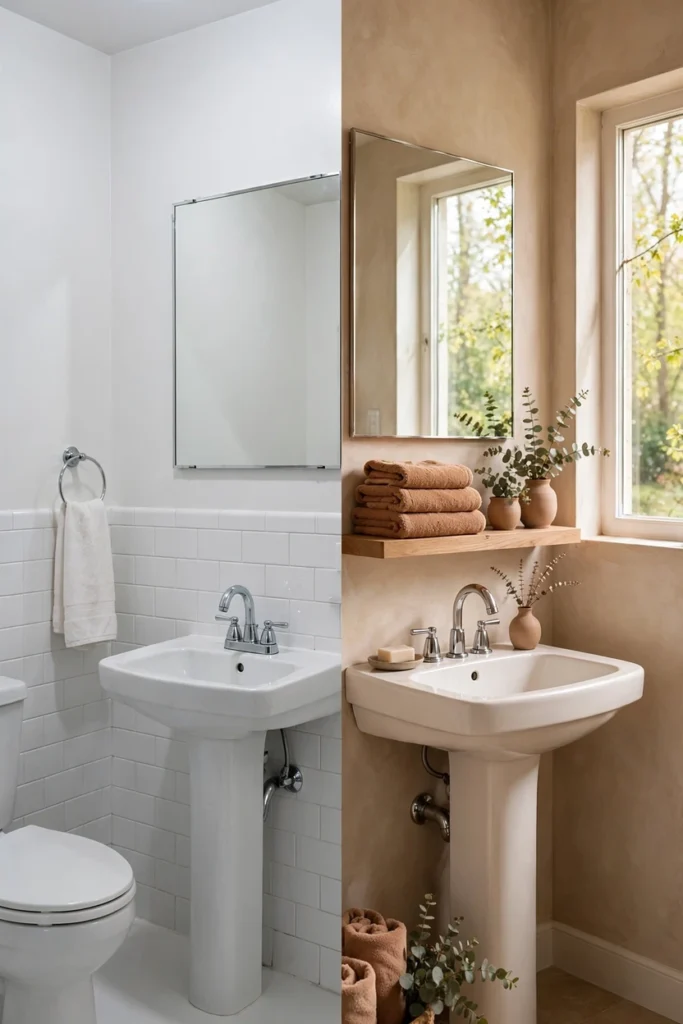
Color sets the mood before you add a single object. Japandi bathrooms lean on warm white, oat, sand, and soft greige, with one deeper note like charcoal or clay for contrast. These shades feel calm because they sit close together, so your eye has no reason to jump around. Pick a warm white with a hint of beige instead of a stark blue-white, which can look cold under bathroom bulbs. Stick to two or three tones across the walls, tile, and towels, and the room will feel planned even when every piece is simple.
Hang a Floating Oak Vanity
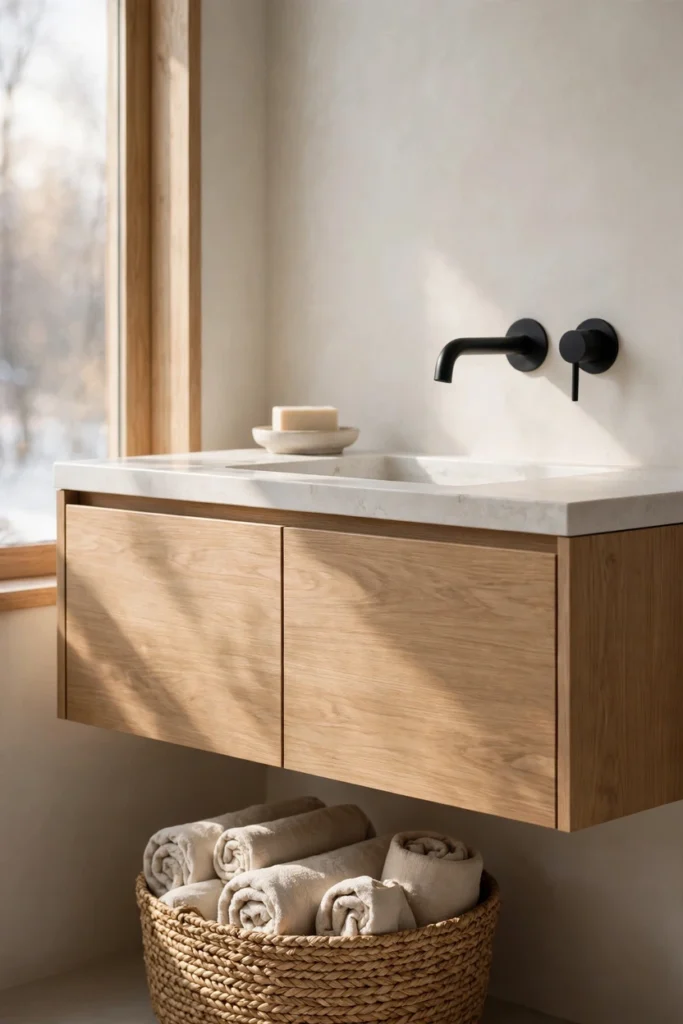
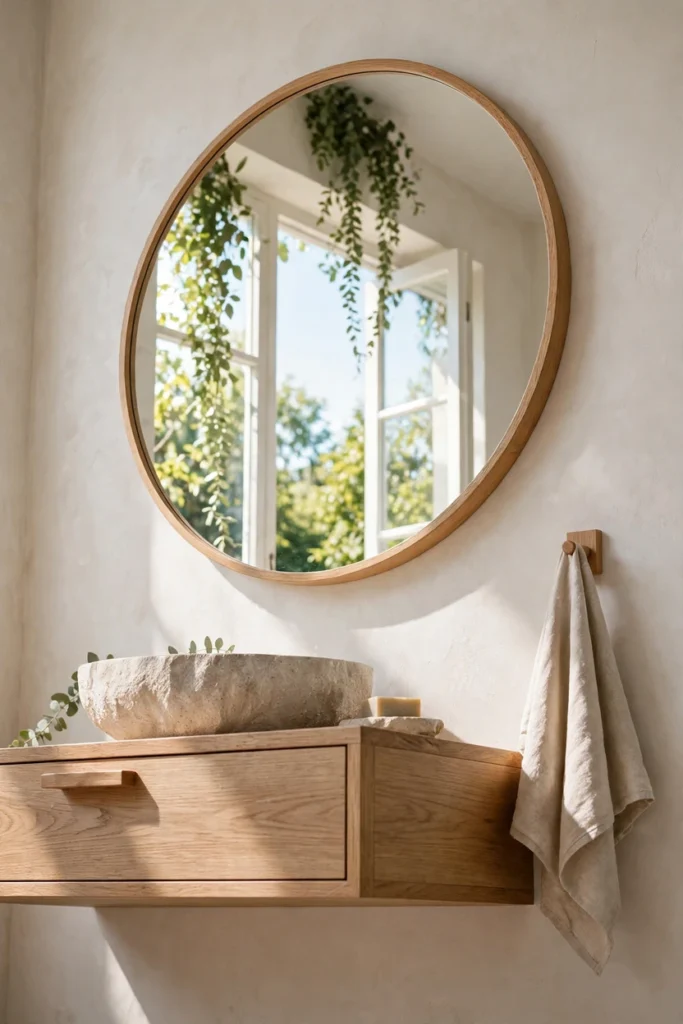
A wall-mounted vanity makes a bathroom feel lighter because you can see the floor underneath it. Choose light oak or ash with a straight grain and flat-front drawers, and skip heavy handles or carved trim. The open space below gives you a spot for a woven basket or a rolled towel. Pair the wood with a matte white or stone top so the grain stays the star of the room. Seal the surface with a water-resistant finish, since steam and splashes are hard on bare wood.
Set a Sculptural Stone Basin on the Counter
A stone or stone-look basin adds the quiet weight that Japandi rooms love. A round vessel sink in honed limestone, matte ceramic, or solid-surface material works like a small sculpture on the counter. Keep the space around it nearly empty, with just a soap dish and one small tray. A wall-mounted tap in matte black or brushed brass keeps the counter clear and looks tidy. Wipe stone with a soft cloth and a mild cleaner so the finish stays smooth and even.

Choose a Deep Soaking Tub Inspired by the Ofuro
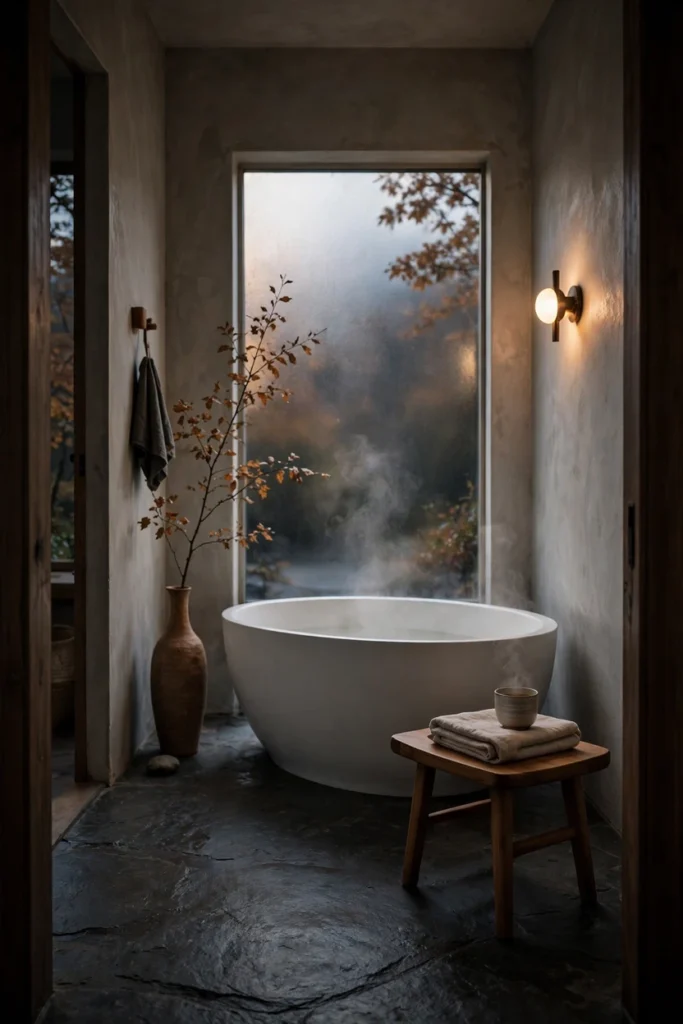
The Japanese soaking tub, called an ofuro, is short and deep, so you sit upright with water up to your shoulders. You can borrow the idea with a compact, deep freestanding tub in white or soft stone tone. In Japanese bathing culture, people wash first and soak after, so the tub stays a place for pure rest. Set it under a window if you can, with a wood stool or tray beside it for a book or a cup of tea. Measure your room first, because deep tubs are heavy and need strong floor support.
Add Teak to the Shower
Wood belongs in the shower as long as it is the right wood. Teak holds up well around water because it is dense and naturally oily, which is why it shows up on boats and outdoor furniture. A slim teak bench or slatted shower mat adds warmth to cool tile. Pair large matte wall tile with one accent panel, so the space feels calm instead of busy. Let the wood dry between uses and wipe it down now and then to keep it looking fresh.

Pick Tiles With Soft, Handmade Texture
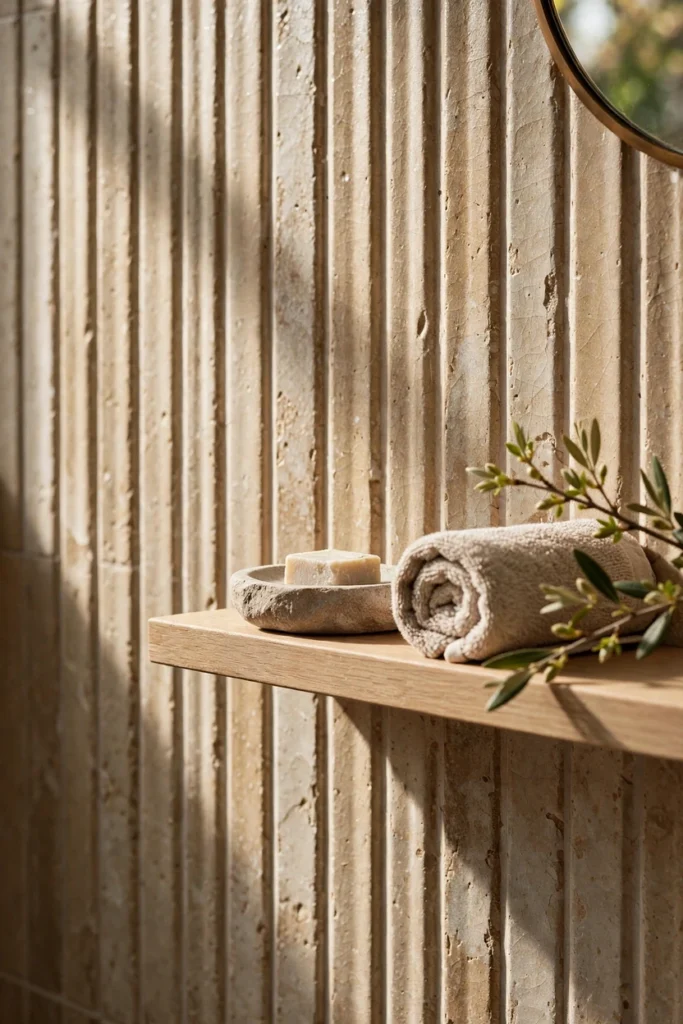
Tile is where Japandi gets its handmade feel. Ribbed tiles, matte finishes, and small hand-glazed squares catch the light and create gentle shadow lines. Keep the colors close together, like sand, oat, and soft gray, so the texture does the talking. Run the same tile up one wall and across the floor for a calm, wrapped look. Choose a slightly darker grout on the floor to hide dirt, and use a lighter grout on the walls so the surface looks smooth.
Hang a Round Mirror
A round mirror softens all the straight lines in a bathroom. Pick a thin frame in oak, or go frameless and hang it from a leather strap. Mount it a little lower than you think, so it lines up with your face and the top of the vanity. Two small round mirrors side by side also work for a shared sink. The curve echoes the round windows seen in traditional Japanese architecture, which gives the room a gentle focal point.
Layer Warm, Low Lighting
Harsh overhead light is the fastest way to ruin a calm bathroom. Aim for warm bulbs around 2700K, which give a soft glow close to candlelight. Layer your light with a ceiling fixture, a wall sconce by the mirror, and a small lantern-style lamp for the evenings. Paper-look or frosted glass shades spread light softly and avoid sharp shadows. Use only fixtures rated for damp or wet areas near the tub and shower, and ask a licensed electrician where each one can go.

Soften the Window With a Shoji-Style Screen
Traditional shoji screens use thin paper over a wood frame to let in light while keeping the view private. You can get the same effect with frosted window film, a slim wood-framed panel, or a plain bamboo roller shade. The light turns soft and even, and nobody can see in. Keep the frame in a light wood to match the vanity. If your bathroom has no window, a frosted glass shower screen with a thin black or wood frame carries the same idea.

Lay River Stones Underfoot
Smooth river stones add a quiet, outdoorsy feel. Use a pebble mat or a small pebble section in the shower floor, which feels nice underfoot and drains well. Mosaic pebble tile gives you the look in a flat, glued-down format that is easier to clean than loose stones. Keep the colors in the gray, tan, and cream range so the floor does not fight the walls. Test the texture barefoot first, since some pebble tile can feel rough on sensitive feet.

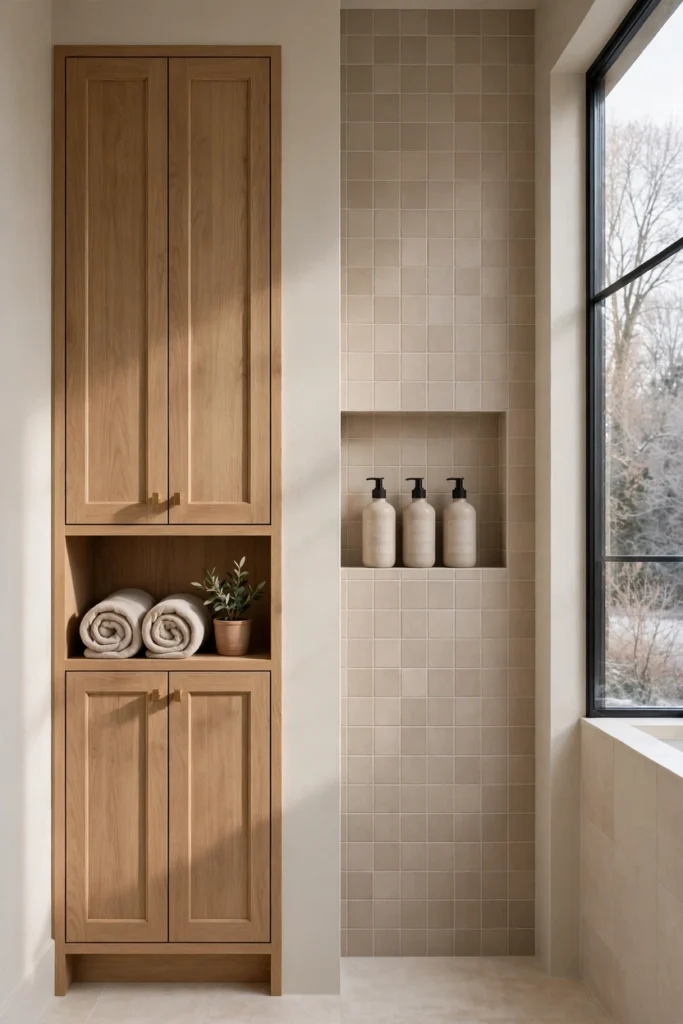
Hide the Clutter Behind Closed Storage
Japandi bathrooms look calm because you cannot see the bottles. Use a wall niche in the shower for daily items and a closed cabinet or drawer for everything else. Pour shampoo and soap into plain pump bottles in one color if you like the look. A tall, narrow oak cabinet takes up little floor space and holds towels and spare rolls. Leave at least one shelf nearly empty, because that empty space is part of the style.
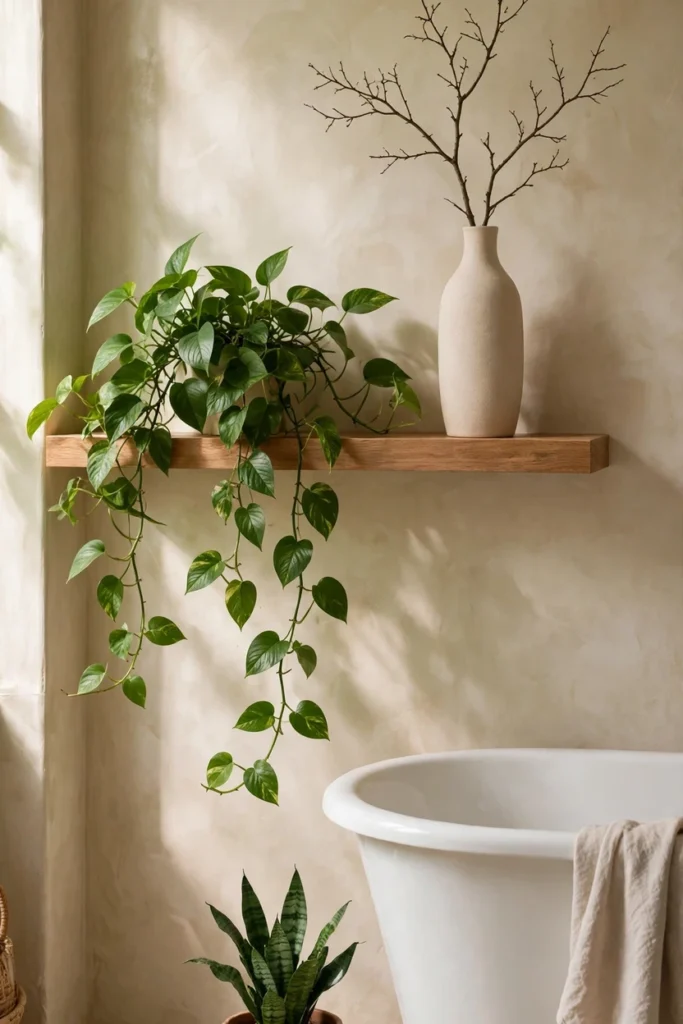
Bring in Living Green
Plants bring in the nature-indoors feeling that sits at the heart of Japandi. Pothos, snake plant, ZZ plant, and ferns do well in bathroom humidity, and some handle low light. A single branch in a tall vase, in the spirit of ikebana, can look as good as a full plant. Group plants in odd numbers and keep each one in a plain pot in clay, stone, or matte ceramic. Check the light first, because a windowless bathroom may need a small grow light or a plant you rotate in and out.
Go With a Wall-Hung Toilet
A wall-hung toilet hides the tank inside the wall and lets you see more floor. That open floor makes the room look larger and makes mopping much easier. The clean lines suit the Japandi love for simple forms. A bidet seat or slim bidet spray adds comfort and is common in Japanese bathrooms. Talk to a plumber early, since the in-wall frame needs space and strong support.

Choose Slim, Matte Fixtures
Small details decide whether a bathroom feels calm or fussy. Matte black adds a thin, graphic line against light wood and stone, while brushed brass adds a quiet warm glow. Choose one metal and repeat it on the tap, shower arm, towel bar, and hooks. Keep the shapes round or square and skip shiny chrome and ornate handles. Mixing two metals can work if one clearly leads, but one metal is the safest place to start.
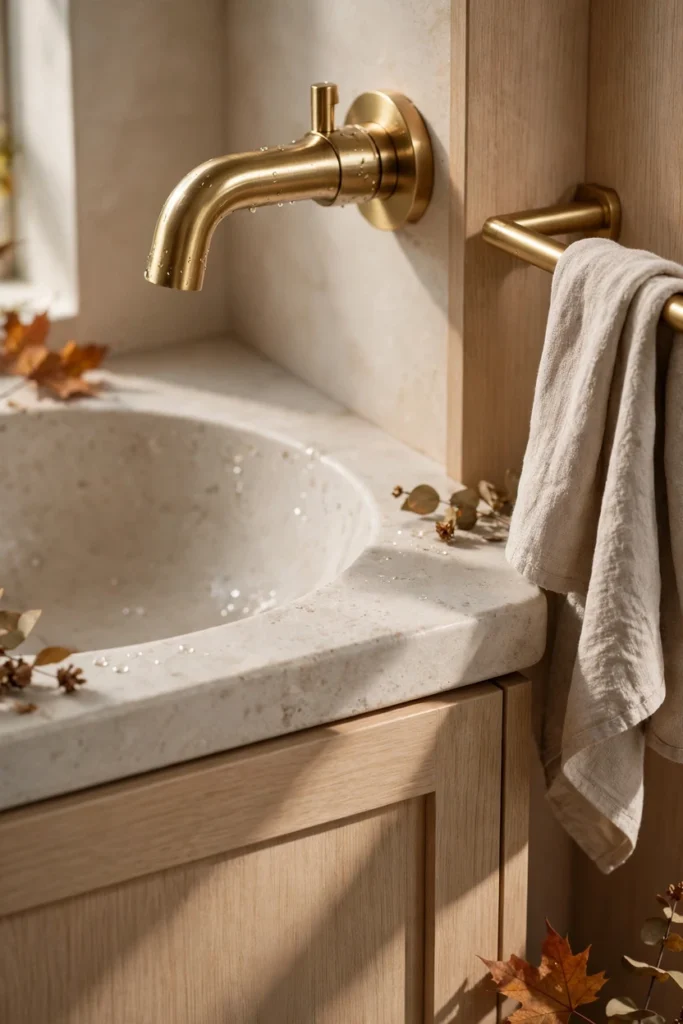
Stack Soft, Muted Towels
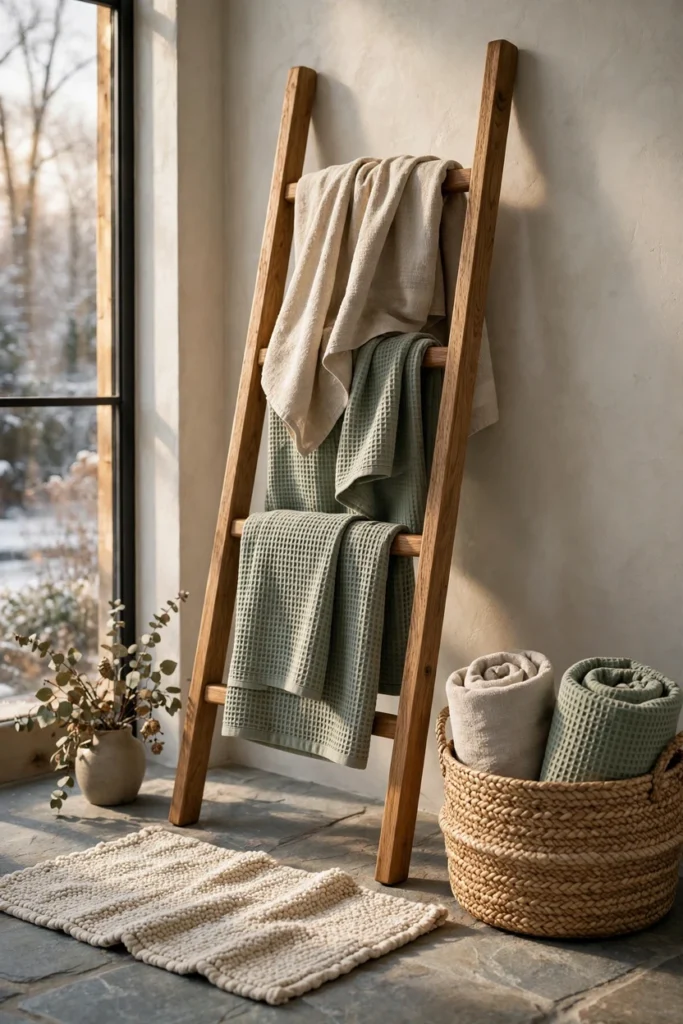
Textiles add the last layer of softness. Linen, waffle weave, and thick cotton in oat, stone, sage, or charcoal feel at home in a Japandi bathroom. Skip bright patterns and big logos. Roll two towels in a basket, or hang one on a wooden ladder or peg rail. Wash and dry them until they feel soft, because neat, fluffy towels say care without any extra decor.
Build a Scent and Touch Corner
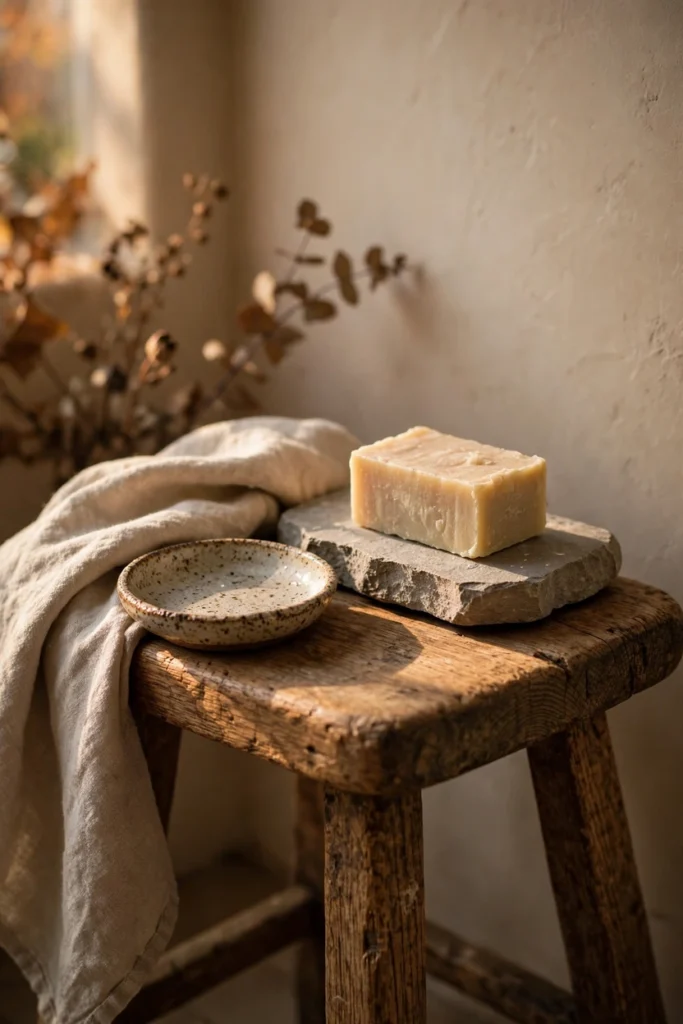
Japandi is about how a room feels, and that includes smell and touch. Try a hinoki or cedar wood block, a simple candle, or a small diffuser with a soft woodsy scent. Hinoki is a Japanese cypress known for a fresh, light, lemony aroma. Add a bamboo bath tray, a stone soap dish, and a folded washcloth to make bath time feel like a small ritual. Keep scents light, because a strong smell can spoil the calm.

Leave Room for Wabi-Sabi
Wabi-sabi is the Japanese idea of finding beauty in things that are simple, aged, or a little uneven. In a bathroom, that could be a handmade ceramic dish with a slightly wobbly edge, a wood stool with visible grain, or a speckled stone tray. Pair it with Scandinavian hygge, the cozy feeling that makes a room easy to relax in. A touch of imperfection keeps the space from looking like a showroom. Pick a few pieces you love instead of a full matching set.
Styling Tips
Color: Build on warm white, oat, sand, and greige. Add clay, soft olive, or charcoal in small doses for depth.
Materials: Use three main materials, not six. Wood, honed stone, and linen make a strong trio. Bamboo, rattan, and matte ceramic can join as supporting pieces.
Shapes: Pair soft curves, like a round mirror or oval tub, with straight lines, like a flat-front vanity.
Texture over pattern: Ribbed tile, woven baskets, and waffle towels add interest without busy prints.
Empty space: Leave about a third of every surface bare. The pause is part of the look.
Odd numbers: Group items in ones and threes. Two matching bottles look stiff, while three of mixed height look relaxed.
Practical Implementation Ideas
You do not need to do everything at once. This order keeps the work simple and the cost low.
Step 1: Clear and decide. Take everything off the counters and shelves. Keep only what you use every day, and pick your two or three main colors.
Step 2: Fix the light and the walls. Swap cold bulbs for warm ones. Paint in a moisture-resistant bathroom paint in a warm white or oat shade.
Step 3: Add soft layers. Bring in muted towels, a wood tray, a plant, and a plain soap dish. This step alone changes how the room feels.
Step 4: Upgrade the hardware. Replace the tap, hooks, and towel bar with slim matte pieces in one finish.
Step 5: Plan the bigger pieces. A floating vanity, round mirror, tile, or soaking tub come last, once you know the room feels right.
Plan in three zones. Keep the wet zone (tub and shower), the grooming zone (vanity and mirror), and a quiet zone (a stool, a plant, a window) clearly separate. This is what makes a Japandi bathroom feel organized instead of crowded.
Protect the wood. Run the exhaust fan during showers and for a while after. Seal wood with a water-resistant finish, wipe splashes, and let wood dry between uses.
Think about warmth underfoot. A heated floor or a heated towel rail adds comfort in cold months. Ask a licensed pro about wiring and installation.
Common Mistakes to Avoid
Choosing a cold, blue-white paint. It can look harsh and clinical. Pick a white with a warm beige or cream undertone.
Putting raw wood in the splash zone. Untreated wood soaks up water and can warp or stain. Use teak, or seal oak with a water-resistant finish.
Using bright, cool bulbs. Bulbs above 4000K feel like an office. Stay near 2700K for a spa glow.
Adding too many accessories. Japandi works because of space. If the counter feels full, take one thing away.
Mixing too many metals and finishes. Pick one metal and repeat it.
Skipping ventilation. Moisture is hard on wood, paint, and plants. A good fan protects everything else you add.
Choosing a tub for looks alone. Sit in a deep tub before you buy, and check that your floor can carry the weight.
Copying a photo too closely. A showroom look can feel stiff. Add one handmade or worn piece so the room feels like yours.
Small-Space Alternatives
Float the vanity. Seeing more floor makes a small room look bigger.
Swap the shower curtain for a glass panel. A clear or frosted panel with a thin frame keeps sightlines open.
Use large tiles. Fewer grout lines make the walls look calm and wide.
Build up, not out. A tall, narrow cabinet or a recessed niche stores a lot without eating floor space.
Choose a compact soaking tub. Some deep tubs are short in length, so they fit small rooms.
Use hooks and a ladder. Wall hooks and a leaning towel ladder free up the floor.
Hang a round mirror. The curve softens tight corners and bounces light around.
Budget-Friendly Alternatives
Paint and bulbs first. A warm white or oat paint and 2700K bulbs cost little and change the mood the most.
Swap textiles. New linen-look or waffle towels in muted shades make a big difference.
Decant your bottles. Plain pump bottles in one color hide product labels.
Add a wood tray or stool. A bamboo or oak piece brings warmth for the price of a nice dinner.
Try frosted window film. It gives a shoji-style glow and privacy for a small cost.
Update the hardware. A new tap handle, towel bar, or hooks in matte black or brushed brass can refresh the whole room.
Shop secondhand for ceramics. A handmade-looking dish or vase adds the wabi-sabi note for very little.
Rent-friendly picks: removable pieces like a pebble mat, plants, a strap-hung mirror, and freestanding shelves leave no marks.
Pro Styling Recommendations
Pick one focal point. Let the tub or the vanity lead, and keep everything else quiet.
Test the light at night. Stand in the room at the hour you bathe, because that is when the glow matters most.
Repeat one shape. If you have a round mirror, echo it with a round basket or round stool.
Edit every season. Swap a light linen towel for a thicker one in winter, and change the branch in the vase.
Keep one surface empty on purpose. An empty shelf or stretch of counter makes the rest of the room look intentional.
Match undertones. Hold wood, stone, and paint samples next to each other in daylight. If one looks pink and another looks yellow, keep looking.
Frequently Asked Questions
- What is a Japandi bathroom?
A Japandi bathroom mixes Japanese minimalism with Scandinavian coziness. Expect natural wood, stone, soft neutral colors, simple shapes, hidden storage, and warm light.
- What colors work best in a Japandi bathroom?
Warm white, oat, sand, greige, and clay make a strong base. Add charcoal or soft olive for depth, and keep the room to two or three main tones.
- Can I do Japandi style in a small bathroom?
Yes. The style suits small rooms because it favors clear floors and few objects. A floating vanity, large tiles, a glass shower panel, and a closed cabinet do most of the work.
- What wood is best for a Japandi bathroom?
Teak and oak with a water-resistant finish are common choices. Teak is dense and naturally oily, so it handles water well. Bamboo can also work when it is sealed. Avoid raw, untreated wood near the shower.
- What type of tub fits a Japandi bathroom?
A deep, compact freestanding tub with a plain oval or rectangular shape suits the style. White or soft stone tones keep it calm. The deep, upright soaking style is inspired by the Japanese ofuro.
- What lighting works in a Japandi bathroom?
Warm bulbs near 2700K, layered from a ceiling light, a wall sconce, and a small lamp. Frosted or paper-look shades soften the glow. Use fixtures rated for damp or wet areas near water, and ask a licensed electrician about placement.
- How do I keep wood from warping in a bathroom?
Choose water-friendly wood like teak, seal other woods with a water-resistant finish, and run the exhaust fan during and after showers. Wipe splashes and let the wood dry between uses.
- Is a Japandi bathroom expensive?
It does not have to be. Paint, warm bulbs, towels, trays, and plants are low-cost. Vanities, tubs, and tile cost more, so add those last or in stages.
- How is Japandi different from minimalist or Scandinavian style?
Minimalism strips a room back to the basics. Scandinavian style adds light, soft white tones, and cozy textures. Japandi adds Japanese ideas like natural materials, handmade pieces, and wabi-sabi, which gives it a slightly deeper, earthier feel.
- Can renters create a Japandi bathroom?
Yes. Use removable pieces like linen towels, a wood tray, plants, a pebble mat, warm bulbs, window film, and a mirror hung from a strap. None of these need permanent changes.
Conclusion
You do not need a full remodel to feel the shift. Tonight, swap one cold bulb for a warm one, clear the counter, and fold a towel on a wooden stool. That small reset can change how the room feels the next time you walk in.
A Japandi bathroom is built slowly, and each piece should earn its place. Start with light and color, add one natural material, and then let the room breathe. When you are ready for the next step, come back to this list and save the ideas that made you exhale.