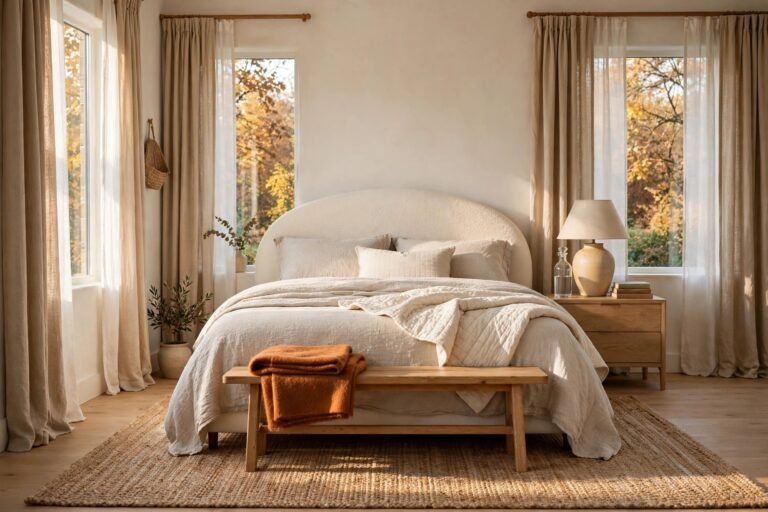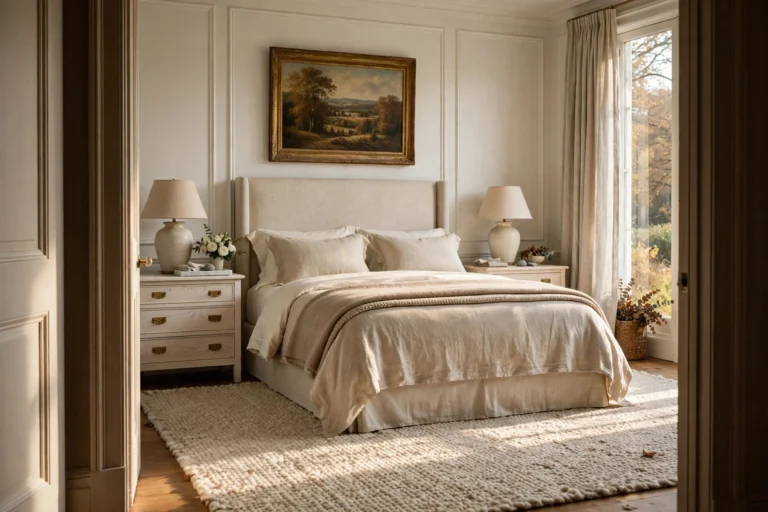
15 Cozy Farmhouse Bedroom Ideas for a Calm, Airy Room

Think about the last five minutes before sleep.
The lamp is low. The sheets feel cool and soft. A window is cracked open, and the room smells a little like clean cotton. Nothing in your sightline is shouting at you.
That’s the feeling a good farmhouse bedroom gives you. It isn’t about stacking shiplap, signs, and rustic props in one room. It’s about natural materials, a few honest textures, and space between things so the room can take a slow breath.
These 15 ideas follow that thinking. You’ll see paint colors, fabrics, lighting heights, and rug sizes you can use right away. You’ll also get fixes for small rooms and low ceilings, plus budget swaps if you’re working with very little.
Table of Contents
The 15 Cozy Farmhouse Bedroom Ideas
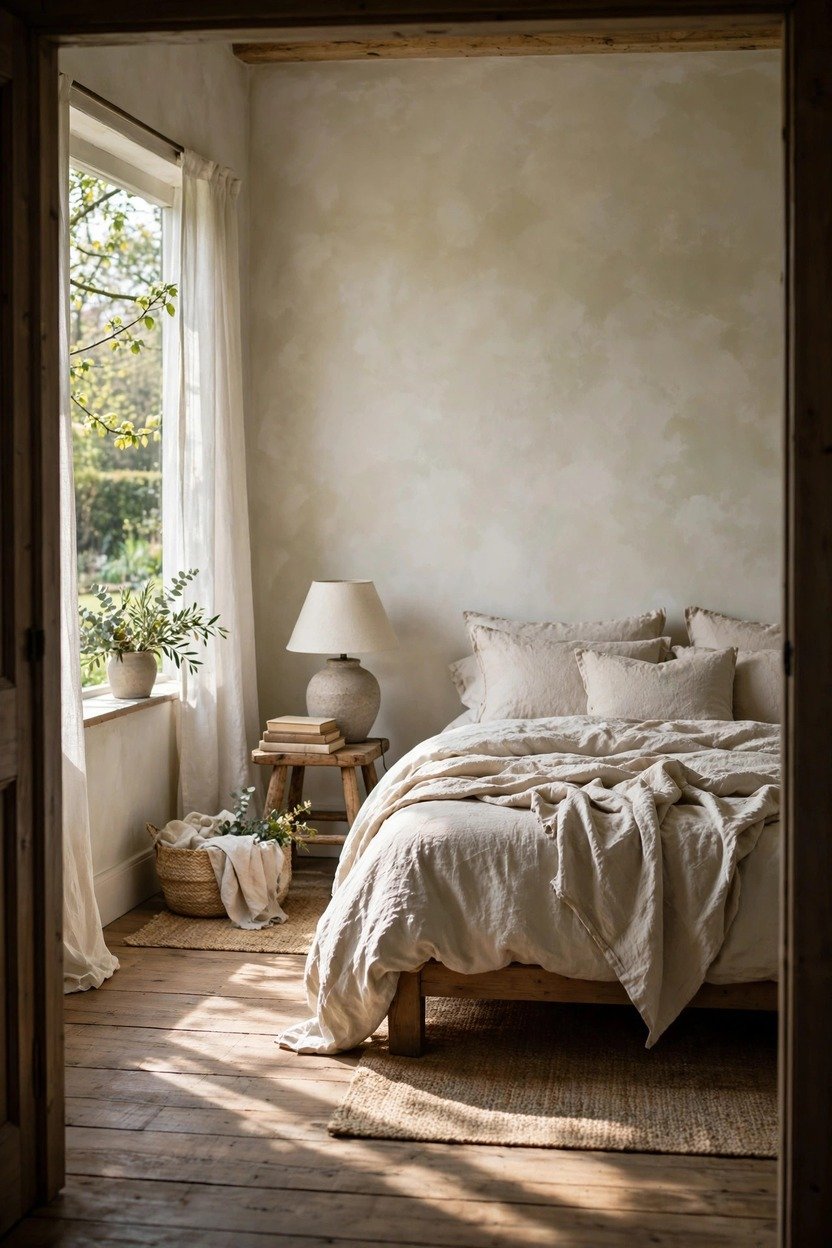
1. Limewashed Walls in Warm White
Start with the walls, because they decide how much light the room holds. A limewash or lightly textured plaster finish in a warm white, like Benjamin Moore White Dove or Sherwin-Williams Alabaster, gives the wall soft, cloudy movement instead of a flat sheet of color. That small variation catches window light at different angles, so the room looks calm at noon and glowy at dusk. Traditional lime-based paint lets moisture pass through, which fits the “breathe” idea, though it works best on plaster or brick and needs a special primer over regular drywall. Test two big swatches and check them morning and night, since warm whites can lean yellow under lamplight.
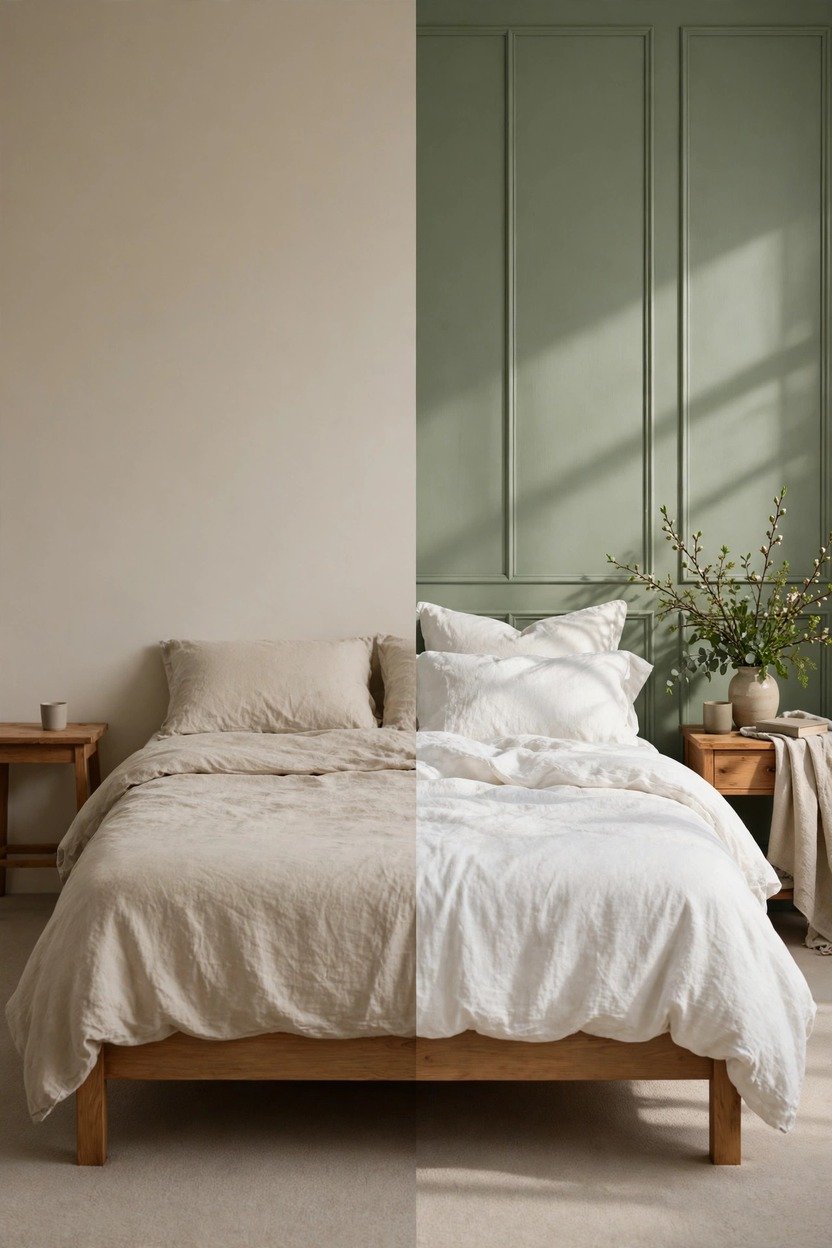
2. Sage Board and Batten Behind the Bed
A board and batten accent wall gives a plain bedroom a built-in look for very little money. Paint it a soft, gray-leaning green such as Benjamin Moore Saybrook Sage, and the wall reads as calm instead of loud. Space the vertical battens about 12 to 16 inches apart so the pattern feels even, and run them about two-thirds up the wall for a clean line. Painting boards, battens, and the wall space between them in one color keeps shadows doing the design work. White linen against green looks fresh, and the wood tones of a nightstand or headboard sit well against it.
Related: 22 Luxury Bedroom Ideas That Skip the Trends (Built to Last)
3. Exposed Beams, Real or Faux
Beams make a ceiling feel like part of the house’s story. If you have real timber, leave it warm and lightly stained, and paint the ceiling between the beams a soft white so the room doesn’t feel heavy. If you don’t, hollow box beams in wood or lightweight polyurethane are easy to install and look convincing when stained mid-oak or walnut. In a room with a low ceiling, use one or two slim beams running the same direction as the bed rather than a heavy grid. Keep the beam color a shade or two darker than your floor so the wood tones feel connected.

4. Layered Linen Bedding
Linen is the fabric that matches this whole idea. It’s breathable, it moves moisture away from skin, and it gets softer with every wash. Build the bed in three tones, like flax sheets, an oatmeal duvet cover, and cream pillow shams, so the bed looks rich without any pattern. Add one washed cotton quilt folded at the foot and a single ticking stripe pillowcase for a small farm feel. Let the wrinkles stay, because crisp hotel-style making fights the relaxed look this style wants.

5. Reclaimed Wood Plank Headboard
A wide plank headboard gives the bed an anchor without adding bulk. Choose reclaimed barn wood or new planks with a matte, hand-rubbed finish, and leave small nail holes and grain lines visible. Mount it to the wall at about the width of the bed, or a little wider, so it floats and keeps the floor clear. A low profile works best because it leaves wall space above for paint, light, or art. Seal the wood with a clear matte finish so it stays warm to the eye and doesn’t snag your linens.
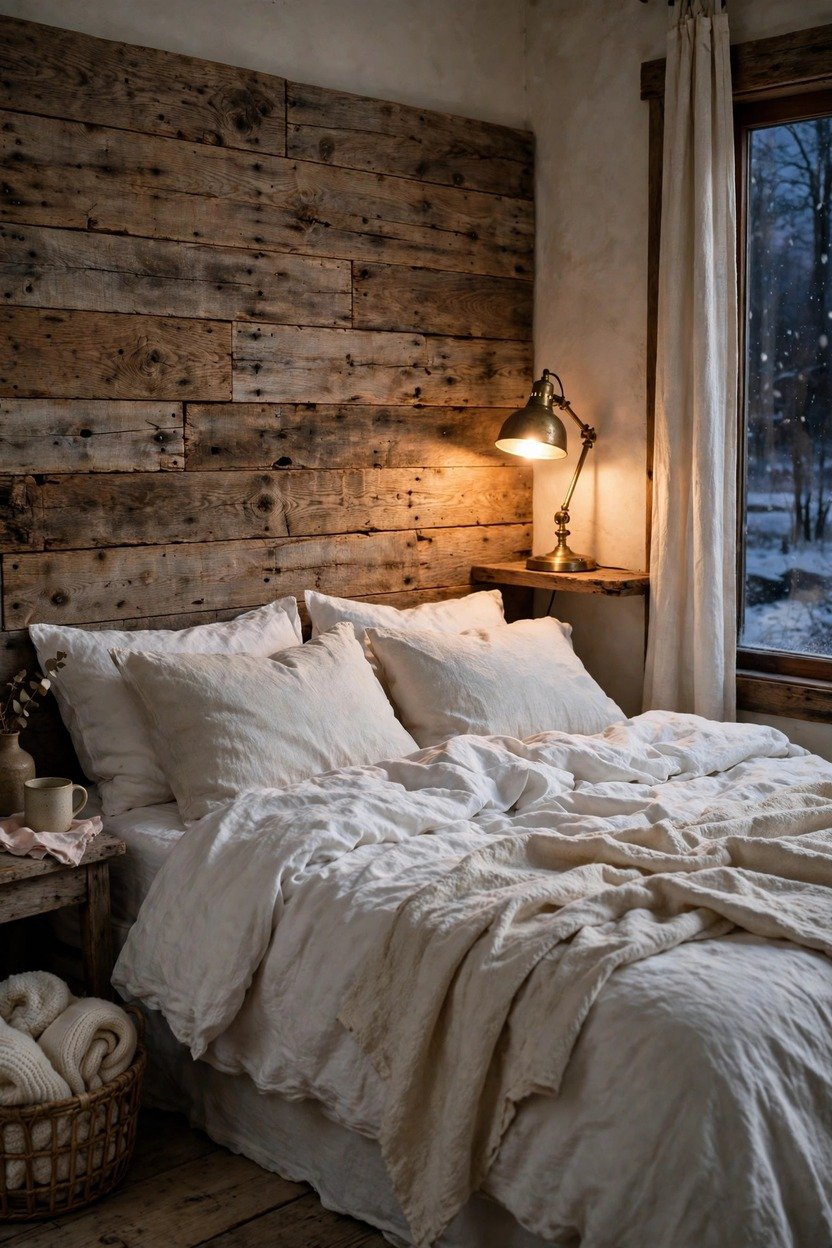
6. Black Iron Bed Frame
A slim black iron bed is one of the oldest farmhouse looks, and it gives you a lot of visual air. The thin rails let you see through to the wall and floor, so the room feels bigger than it would with a solid wood bed. Pick a matte black or aged finish and dress it in white and cream so the metal looks crisp instead of heavy. Leave the area under the frame mostly open, or slide in two low baskets for off-season blankets. If your ceilings are low, a frame with a lower headboard keeps the wall behind it calm.
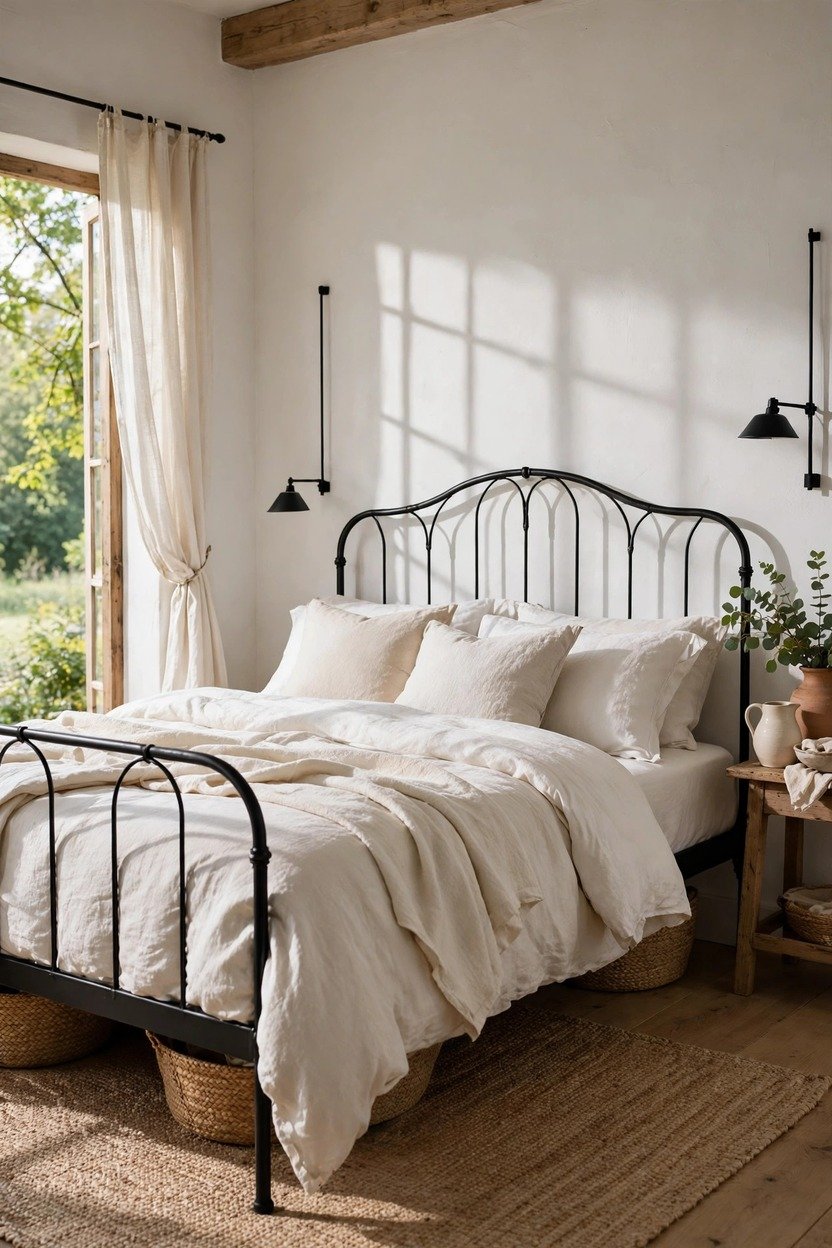
7. Linen Curtains Hung High
Curtains can change the shape of a room before you move a single piece of furniture. Hang the rod close to the ceiling, or at least four to six inches above the window frame, so the windows look taller. Choose panels about one and a half to two times the window width in flax or off-white linen, and let the hem just touch the floor. Linen lets light spread softly into the room instead of blocking it. If you need privacy, layer a thin sheer behind the panels and pull the linen shut only at night.
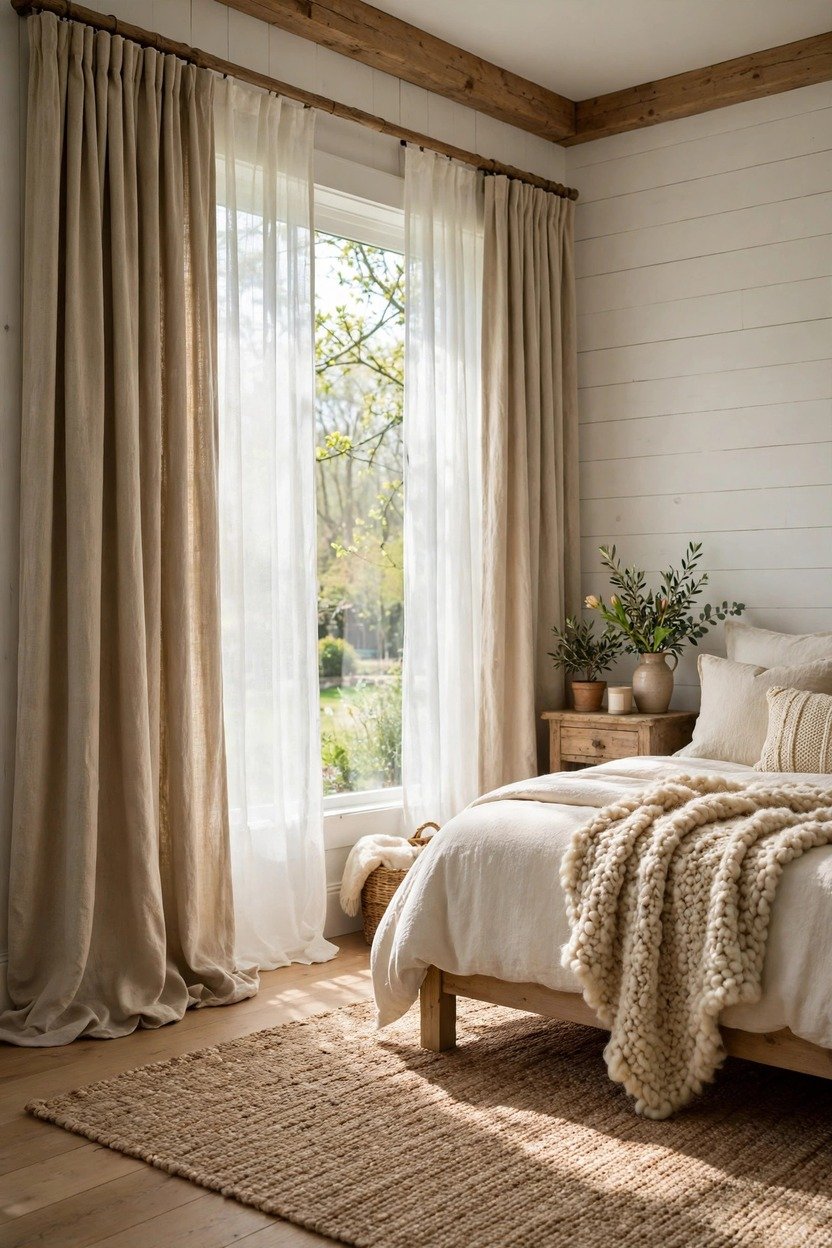
8. Window Seat Reading Nook
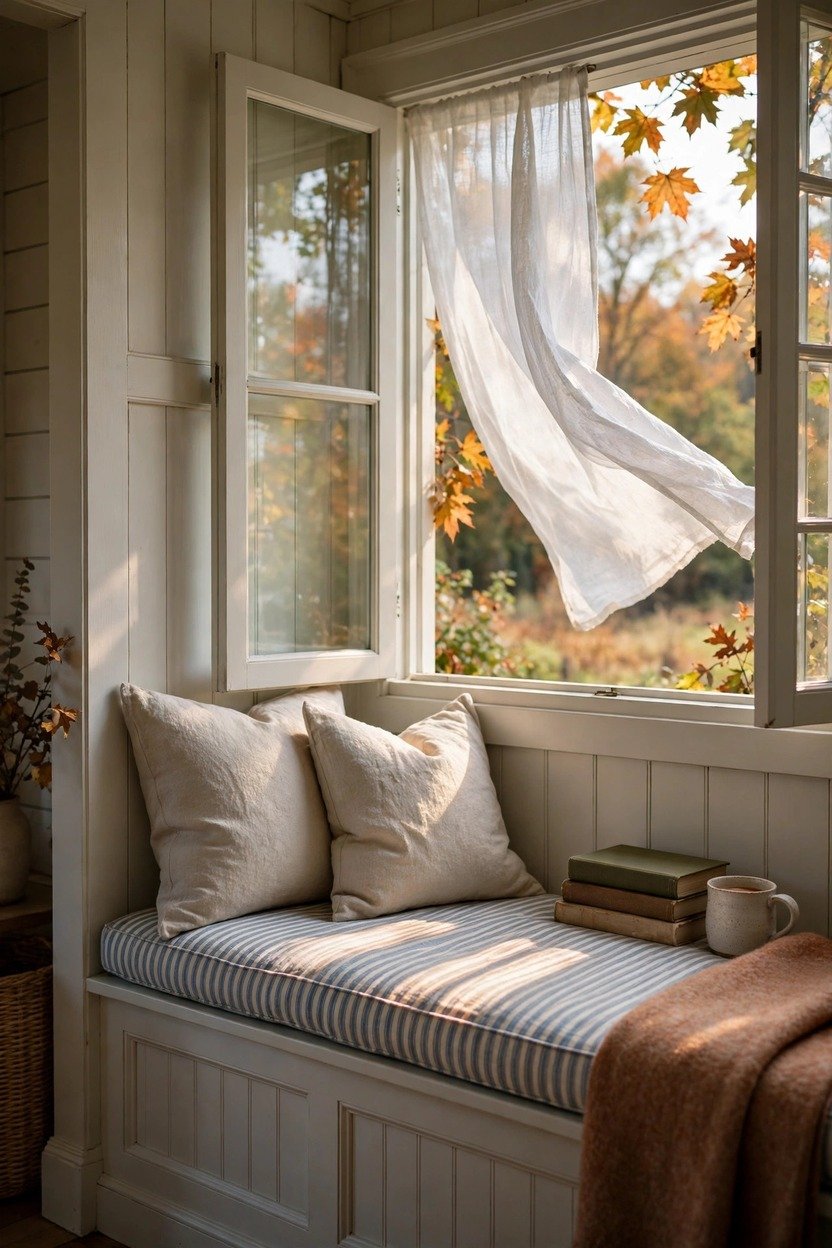
A window seat gives the room a second place to sit that isn’t the bed. A built-in with drawers underneath hides spare blankets, while a simple wooden bench with a long cushion does a similar job with no building. Use a ticking stripe or solid linen cushion with two pillows, and keep one wool throw nearby. Choose a window you can open so the nook gets fresh air as well as light. If you have no window seat at all, a slipcovered armchair with a small side table gives you the same feeling in less space.
9. Layered Jute and Wool Rugs
A well-sized rug ties the bed, the floor, and the walls together. For a queen bed, an 8 by 10 rug is the usual starting point, and for a king, 9 by 12 gives better balance. The rug should reach at least 18 to 24 inches past each side of the bed so your feet land on something soft. Start with a flatweave jute base for texture, then add a smaller wool rug or a sheepskin on one side if you want more softness. Keep rug colors close to the wall and bedding tones so the floor doesn’t compete with the bed.

10. Plug-In Swing-Arm Sconces
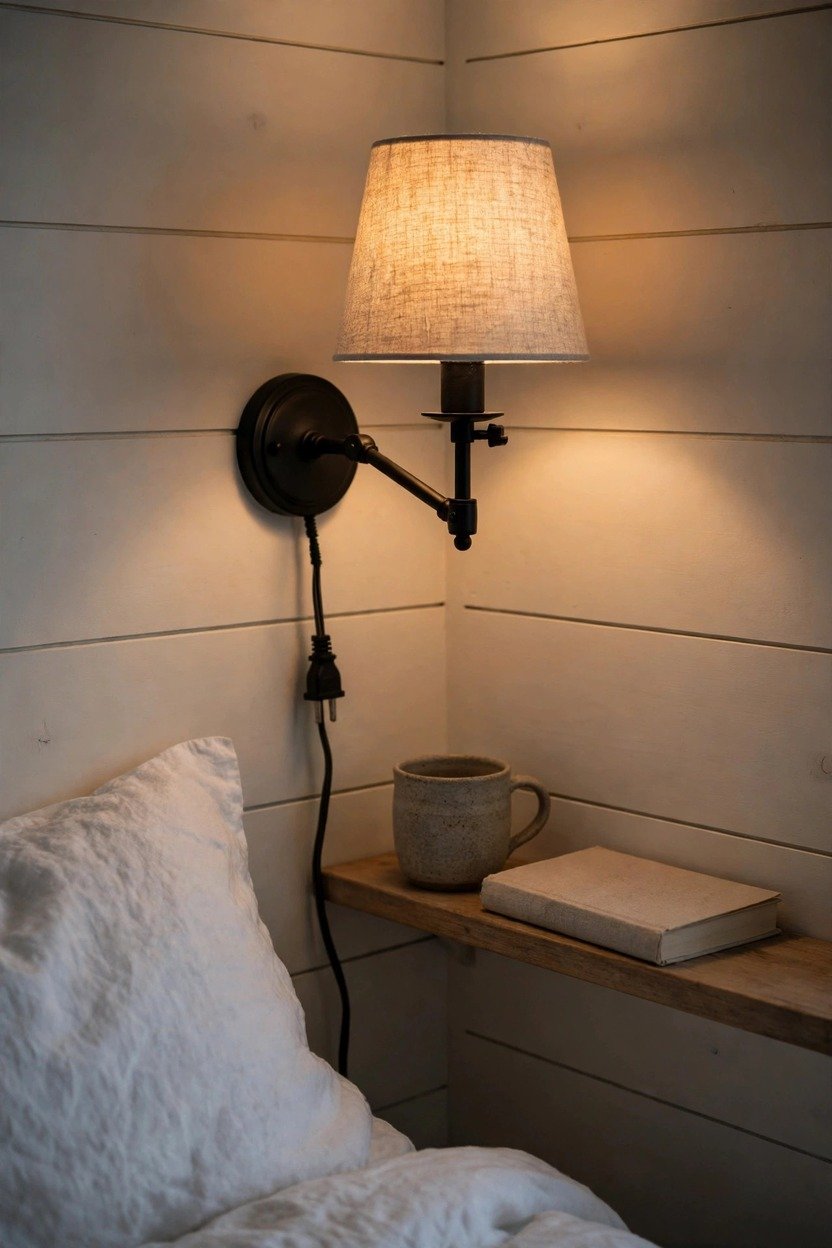
Wall sconces free up your nightstands and add warm light at exactly the right height. Choose plug-in swing-arm styles in matte black or aged brass so you don’t need an electrician. Mount them at about 60 inches from the floor, then adjust so the bulb sits just above your shoulder when you sit up to read. Use warm 2700K bulbs, and paint any cord covers the same color as the wall so they fade into it. Linen or metal shades both work, as long as the glow stays soft.
11. Mismatched Vintage Bedside Pieces
Matching nightstand sets can make a room feel like a showroom. Instead, use a small vintage dresser on one side and a worn wooden stool or tiny table on the other. Different heights add rhythm, and age marks add the “this has history” feel farmhouse style depends on. Keep the tops nearly empty, with one lamp or book, a glass of water, and a small dish. If you only have one old piece, put it where you use it most and leave the other side open.
Related: 21 Industrial Farmhouse Ideas That Explain the Obsession

12. Baskets and a Blanket Ladder
Storage is what lets a farmhouse bedroom stay calm. Use lidded woven baskets for things you don’t want to see, like extra pillows and travel bags, and one open basket at the foot of the bed for the throws you use daily. A leaning wooden blanket ladder is helpful, but limit it to two or three folded pieces so it doesn’t turn into a laundry rack. Choose baskets in natural seagrass, rattan, or jute so they match the rest of the textures. Fewer visible things means more empty wall and floor, and that empty space is what makes the room feel open.

13. Wood-Blade Ceiling Fan
A ceiling fan is the most literal way to let a bedroom breathe. Many sleep experts suggest a bedroom temperature of around 60 to 67°F, and moving air makes that easier to reach without turning on the AC. Choose a quiet DC motor fan with natural wood blades and a white or matte black body. If your ceiling is low, a flush-mount “hugger” style keeps the look tidy. Run it counterclockwise in summer to cool the room, and flip it to clockwise on low in winter to move warm air down gently.
Related: 21 Alt Bedroom Ideas That Feel Truly Lived In (Moody, Cozy & Personal)

14. Dried Stems and Easy Greenery
One tall stem can do more than a shelf full of small decor. Fill a stoneware jug with dried wheat, lavender, or pampas, and set it on the dresser against a plain wall. Add one easy plant, like a snake plant or a pothos, near the window where it gets light. Keep the scale right: the tallest piece should be roughly a third of the height of the wall behind it. Everything else on the surface stays small and simple.

15. One Big Piece of Art With Space Around It
Farmhouse walls don’t need to be full. Hang one oversized piece, like a wood-framed landscape print or a natural fiber wall hanging, above the bed and leave generous blank wall around it. Keep the bottom edge about six to eight inches above the headboard so the pieces read as one group. Skip word signs and mass-produced slogans, which many designers now call dated. Empty wall is not wasted space here; it’s what lets the art, and the room, take a breath.

Styling Tips
- Pick one main wall treatment, either board and batten, shiplap, or limewash. Using all three at once makes the room busy.
- Use the 60-30-10 idea: about 60% warm white or cream, 30% natural wood and linen tones, 10% an accent like sage or black iron.
- Stick to two or three wood tones in the room so nothing fights.
- Mix something rough (jute, wood) with something soft (linen, wool) in every corner.
- Choose odd numbers for groups: three items on a dresser looks easier on the eye than two or four.
- Make it work for the room’s job. A primary bedroom needs sleep comfort first, a guest bedroom needs a lamp, a clear surface, and a spot for a bag.
- Let some surfaces stay empty. Empty is part of the design.
Practical Implementation Plan
You don’t need to do everything at once. This order keeps costs and stress low.
- Clear the room first. Take out anything you don’t use daily. You’ll see what the room really needs.
- Paint or add the wall treatment. Walls set the mood, so do them before buying decor.
- Fix the lighting. Add plug-in sconces and swap bulbs to warm 2700K.
- Layer the bed. Start with sheets and a duvet in two or three natural tones, then add one quilt and one throw.
- Add curtains and a rug. Hang the rod high, and check the rug overhang.
- Add one old piece. A thrifted dresser or stool gives the room its history.
- Finish with two or three small touches. A jug of dried stems and one framed print are enough.
Quick board and batten method: mark stud locations, measure and mark a level line, cut MDF strips to height, glue and nail them into place, caulk the seams, fill nail holes, and paint everything in one color. Most small accent walls fit in a weekend.
Common Mistakes to Avoid
- Too many farmhouse props. Signs, roosters, and faux wheat in every corner make a room look like a theme.
- A rug that’s too small. A tiny rug floating under the bed makes the whole room feel unfinished.
- Cool white bulbs. Anything above 3000K can make warm woods look flat and harsh.
- Curtains hung right at the window frame. The window looks shorter and the room feels lower.
- Heavy dark walls in a small room with no light. If you love dark colors, use them on one wall only.
- Overstuffed shelves and surfaces. If every flat space is full, the room can’t rest.
- Relying on a sliding barn door. Many designers now say this is overdone. A plain pocket door or a simple paneled door often looks cleaner.
Small-Space Alternatives
- Use a wall-mounted plank headboard to avoid the bulk of a headboard and footboard.
- Swap nightstands for plug-in sconces and a narrow wall ledge.
- Choose a bed with open legs so you can see the floor.
- Use under-bed lidded baskets instead of a dresser.
- Paint walls and trim the same warm white to blur the room’s edges.
- Hang curtains high and wide so a small window feels bigger.
- Use a bench at the foot of the bed with storage inside, instead of a chair.
Budget-Friendly Alternatives
Prices vary by location and store, so treat these as rough ranges.
- Headboard: Build a simple plank headboard from basic lumber and stain, which many people finish for well under what a store-bought one costs.
- Wall treatment: One DIY board and batten wall with MDF strips, caulk, and paint often fits under about $150 for a standard accent wall.
- Furniture: Check thrift stores, estate sales, and online marketplaces for dressers and stools.
- Bedding: Start with one linen duvet cover and washed cotton sheets, and add pieces over time.
- Lighting: Plug-in sconces are usually far cheaper than rewiring.
- Decor: Use dried stems, a thrifted jug, and a single print instead of buying a set of accessories.
Pro Styling Recommendations
- Choose paint last by testing big swatches near your bedding and wood, since fabrics change how colors look.
- Keep metal finishes to two, like matte black and aged brass.
- Hang art or sconces with painter’s tape first so you can step back and check heights.
- Repeat one color at least three times in the room, such as sage in a pillow, a plant pot, and the wall.
- Take a photo of the room in black and white. If everything looks the same shade, add a darker or lighter piece for contrast.
- Wash linen and wool throws before styling so they sit naturally rather than stiffly.
FAQs
Conclusion
A cozy bedroom isn’t built from more things. It’s built from the right few, in textures that feel good against your skin and light that settles you down at night.
Pick one idea from this list and start there. Maybe it’s the curtains, or the sconces, or the linen on the bed. A room that breathes usually starts with one decision to take something away or add something simple.
Then step back, turn off the big light, and see how it feels.