16 Boho Kitchen Ideas That Feel Collected, Not Costume
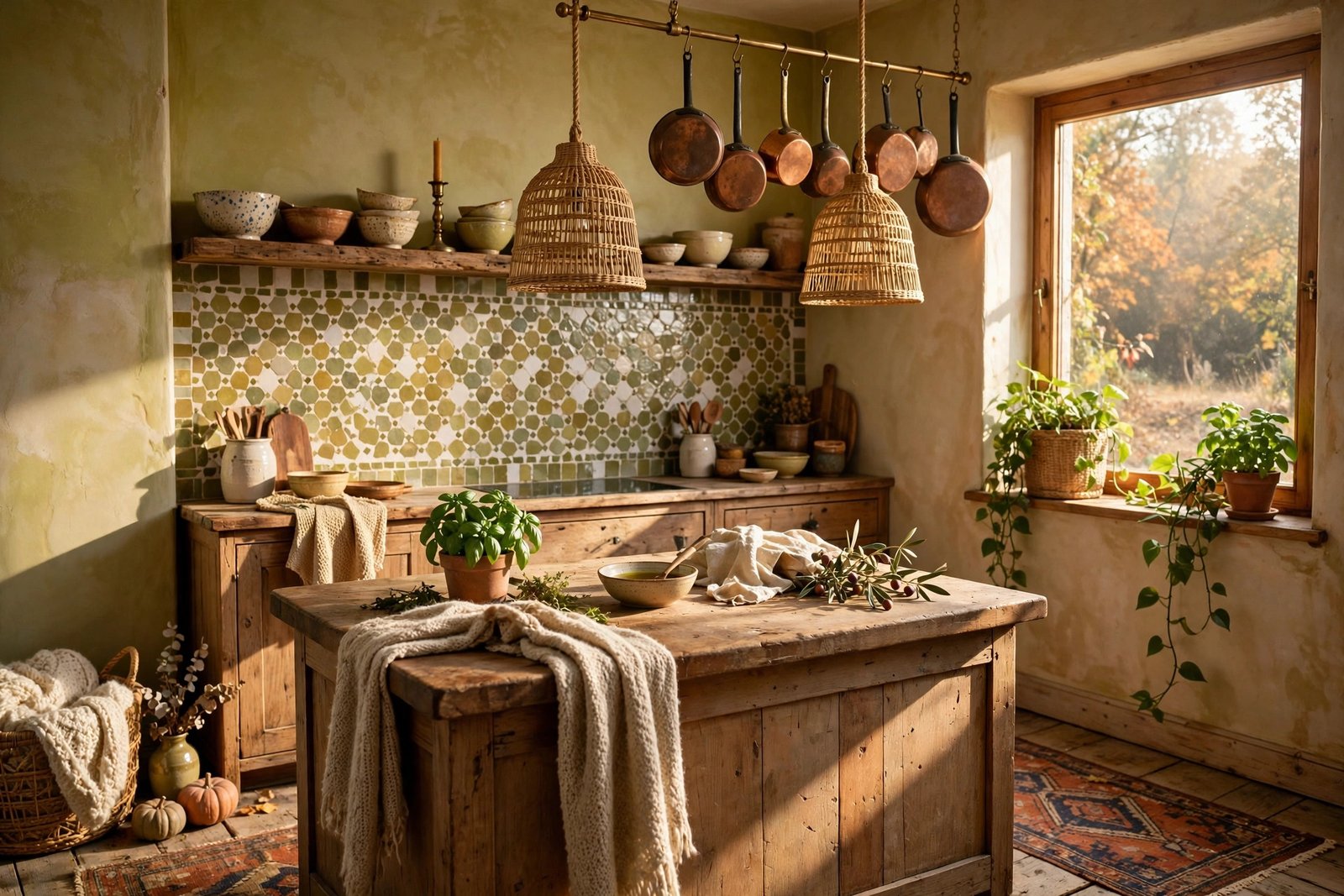
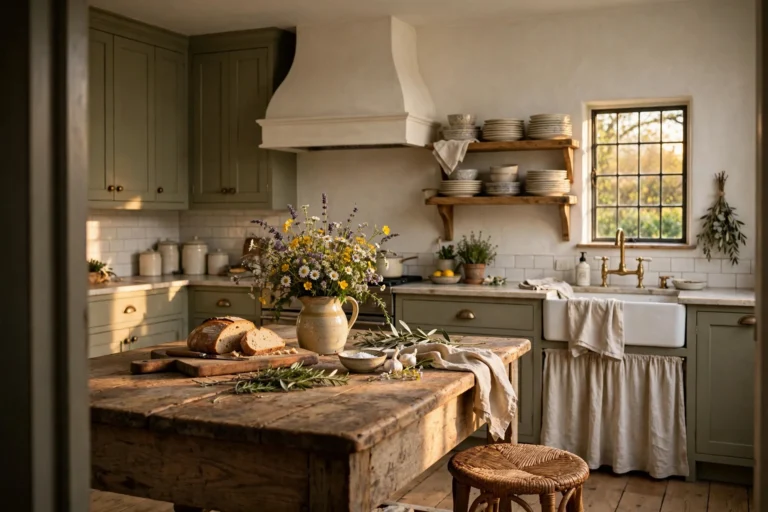
Picture a kitchen where nothing matches, yet everything belongs. A wide wooden bowl sits next to a speckled mug. A faded rug warms the floor by the stove. Basil leans toward the window, and the light falls on a shelf of plates that each has a story.
Now picture the other kind of boho kitchen. Rattan on every surface, a macrame piece nobody knows what to do with, and a shelf that is more clutter than collection. Same style label, very different feeling.
The gap is one idea: a boho kitchen feels traveled and loved when each piece has a reason to be there. It was handmade, or secondhand, or picked up on a trip, or simply used every day until it earned its spot. That is the look worth copying.
Quick answer: A boho kitchen is a relaxed, layered kitchen built from natural materials, handmade or vintage pieces, warm colors, patterns, plants, and soft light. To make it look collected and not themed, use the Collected Kitchen Formula: three earthy colors, two patterns, one handmade statement piece, and something living in every zone.
Below are 16 ideas with the sizes, materials, and care notes that most inspiration pages skip, so the kitchen looks good and still works when you are cooking dinner.
Table of Contents
The 16 Boho Kitchen Ideas
1. A Zellige-Style Backsplash in Uneven, Earthy Tones
Handmade tile gives a kitchen wall the look of a place with history. Zellige is a glazed Moroccan clay tile with slight color shifts and wavy edges, so light bounces around in a soft, uneven way. Choose olive, cream, clay, or faded blue, and keep the grout lines narrow so the wall reads as one surface. Real zellige is porous and needs sealing and gentle cleaning, and it can cost far more than standard tile, so many busy cooks pick a zellige-look porcelain instead. Either way, order a sample first and look at it next to your counter at night, since the glaze changes with the light.

2. Open Shelves of Mismatched Ceramics
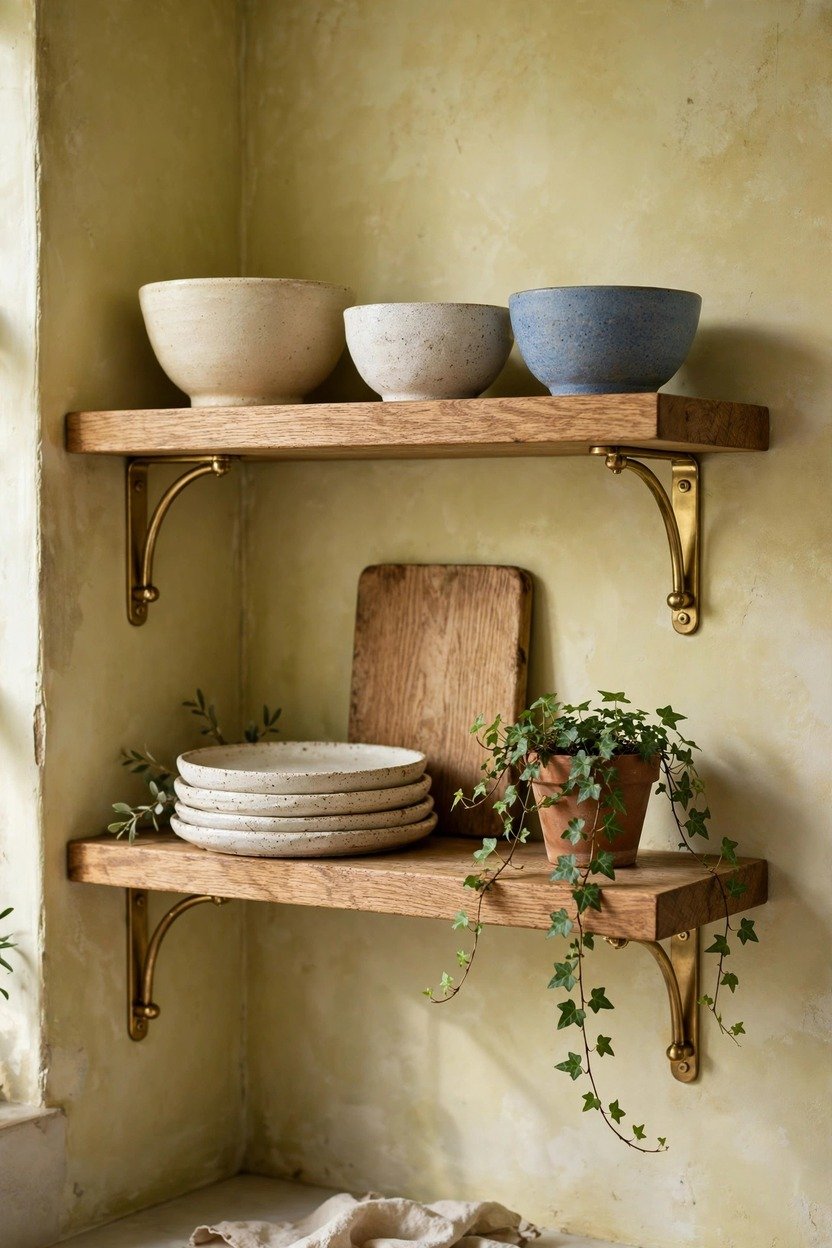
Open shelves are where a boho kitchen tells its story. Fill them with bowls, mugs, and plates you actually use, in a loose mix of cream, blue, and earthy glazes, instead of a matched set. Make the shelf 10 to 12 inches deep, which is enough for a dinner plate on its edge, and stack bowls in groups of three. Keep the shelf away from the cooktop, because grease sticks to open dishes and makes them dull. Leave a small empty gap between groups so the display feels easy to look at and not packed.
3. Rattan Pendants Hung at the Right Height
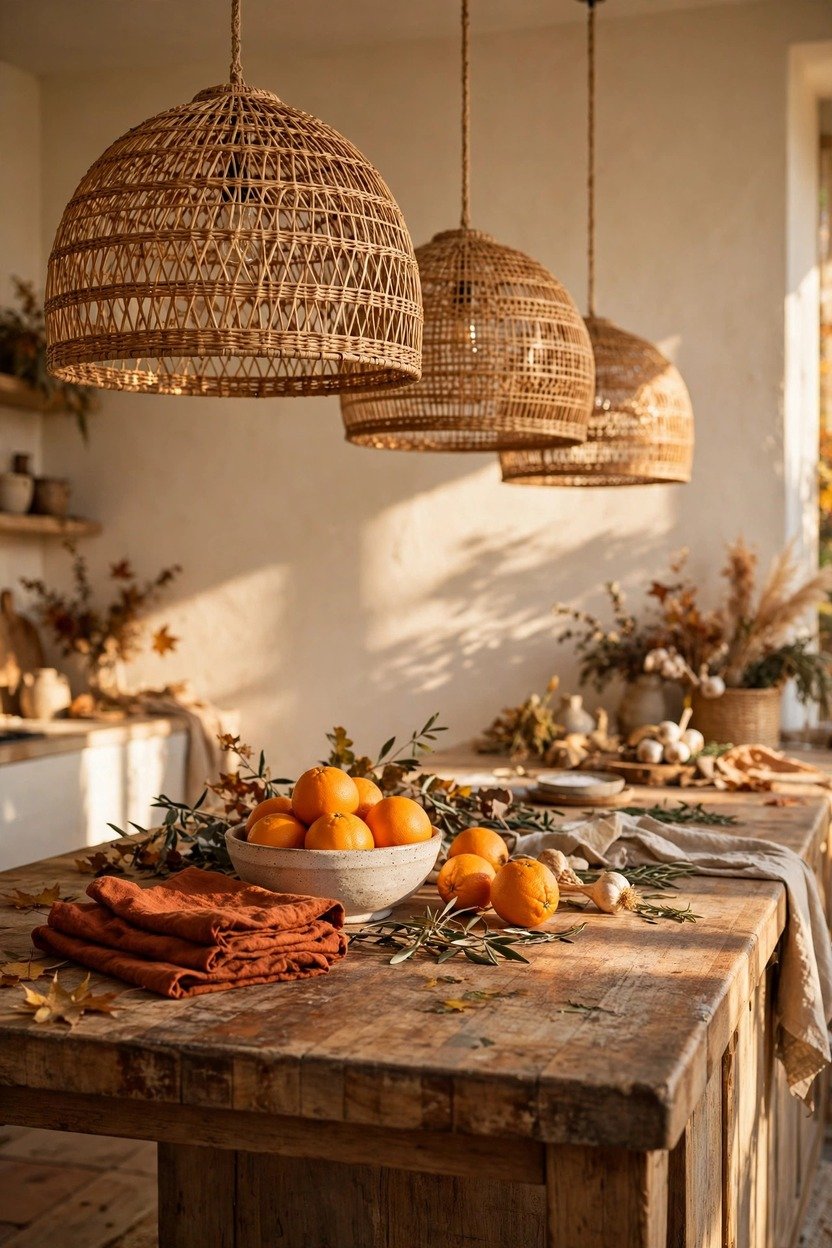
Woven pendants cast a soft pattern of light and bring the outdoors in. Over an island, hang them about 30 to 36 inches above the counter, so they frame the space and still leave a clear view across the room. Space two or three pendants evenly, and choose shades that look slightly small next to the island so they do not crowd it. Keep rattan away from the cooktop, since steam and grease can dull and loosen the weave. A dimmer lets the same light feel bright for prep and gentle for supper.
4. A Vintage-Style Runner That Can Go in the Wash
A runner is the quickest way to add pattern, warmth, and a travel feel to a hard floor. Choose a kilim or Turkish-style design in rust, indigo, and cream, because busy patterns hide crumbs and splashes. Most kitchen runners are 24 to 36 inches wide, and you should leave a few inches of bare floor between the rug and the cabinets so it looks placed. Use a thin rug pad so the edges lie flat, which keeps feet from catching. A washable version gives you the look of an old rug with none of the worry about grease and spills.

5. Limewashed or Plaster-Look Walls in Warm Clay
A soft, cloudy wall finish makes a kitchen look like it has been lived in for decades. Limewash or a plaster-look paint in warm clay, cream, or sand shows gentle brush movement that flat paint cannot copy. Use it on the walls around the shelves and window, and keep it out of the splash zone behind the sink and range, where tile or a wipeable paint works better. A matte finish hides small marks and makes brass and wood look richer next to it. Test a large sample board and look at it in morning and evening light before you commit.

6. A Butcher-Block Island That Shows Its Wear
A wood island top makes a boho kitchen feel warm and used in the best way. Knife marks, water rings, and a soft shine are part of the charm, so do not chase a flawless surface. Seal it with a food-safe mineral oil or a wood finish rated for food contact, and oil it again when it starts to look dry. Cut on a board when you can, and wipe spills quickly to protect the grain. Pair it with painted or dark base cabinets so the wood top looks like the star.

7. Two-Tone Cabinets in Olive or Sage With Wood
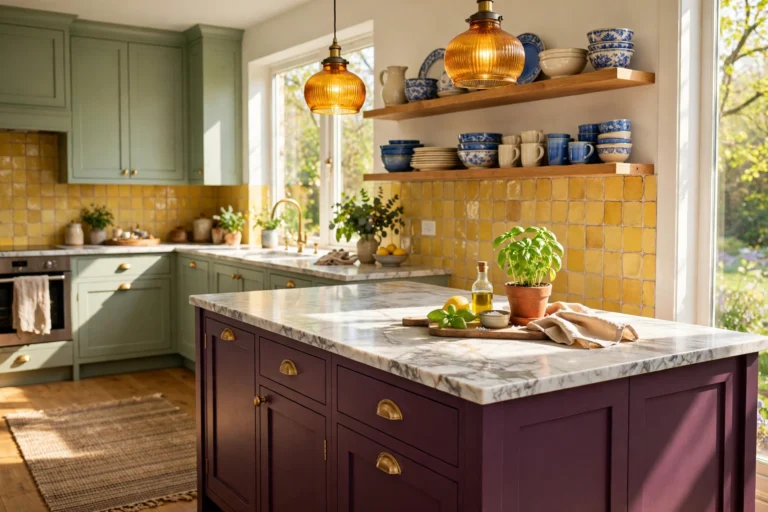
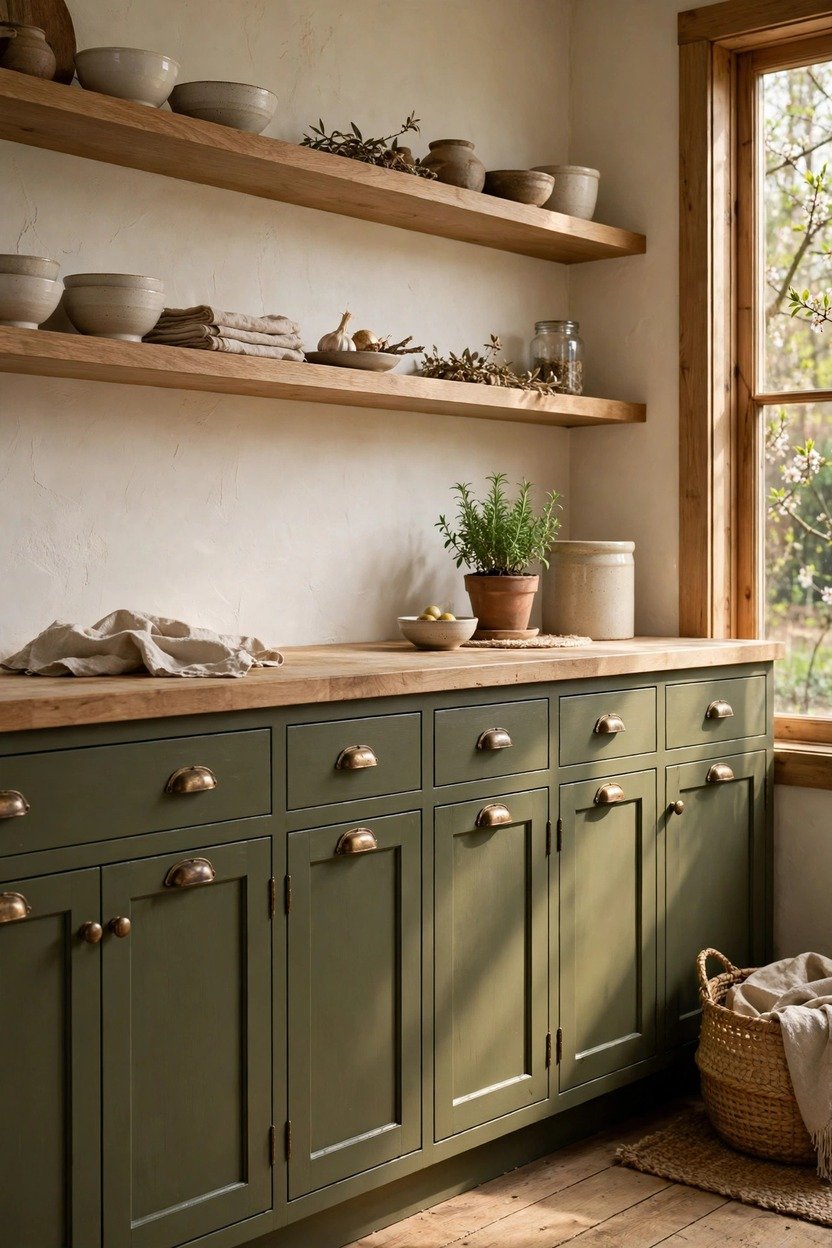
Mixing cabinet finishes makes a kitchen look added to over time, not delivered in one order. Paint the lower cabinets a deep olive or sage, then keep the upper cabinets or shelves in natural wood or a soft cream. Green is a strong fit for boho because it ties to plants and herbs. Use cabinet-grade enamel for a hard, wipeable finish, and sand and prime well so the paint holds. Repeat the green once more in a pot, a towel, or a tile so it looks intentional.
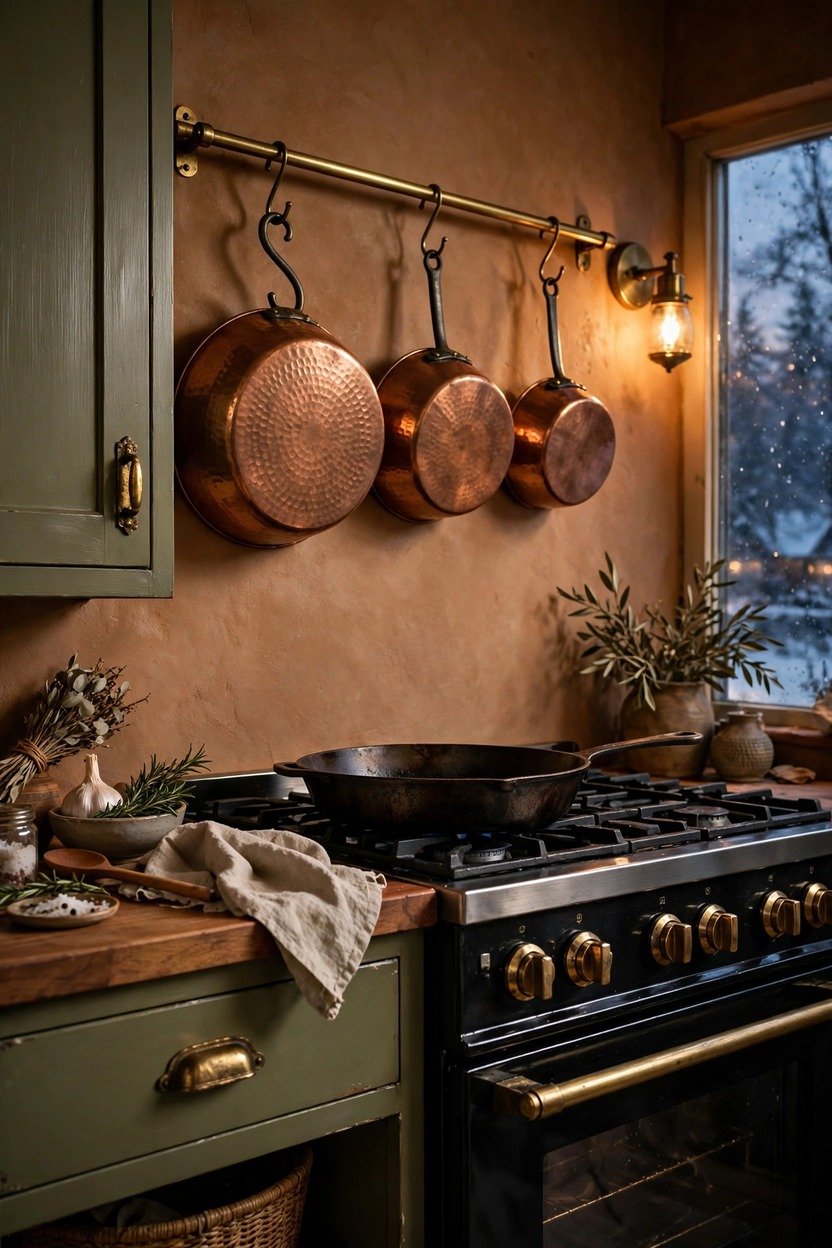
8. Brass Hardware and Hanging Copper
Metals that age well give a boho kitchen a sense of years. Choose unlacquered or antique brass pulls that darken with use, and hang a few copper pots on a rail or hooks where you can reach them. Mix the finishes lightly: brass on the cabinets, copper in the pans, and one dark iron piece for contrast. Keep what you hang to pans you actually cook with, so the display stays useful. A small dab of polish once in a while is fine, but a soft patina looks better than a mirror shine.
Related: 19 Boho Bathroom Ideas With Soul (And Real Moisture Rules)
9. Plants and Herbs in Every Zone
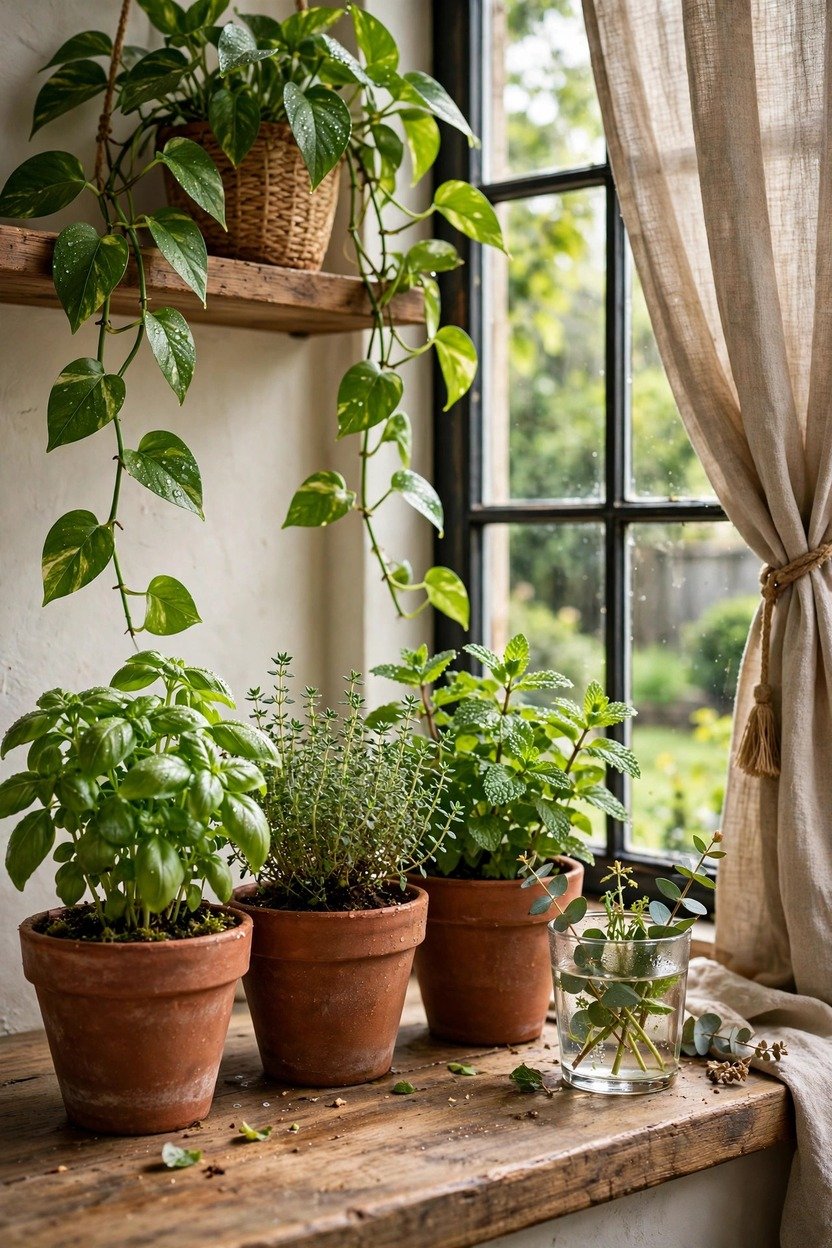
Green life is what keeps a boho kitchen from feeling heavy. Put a trailing plant such as pothos on a high shelf, a pot of basil or thyme on a sunny sill, and a small leafy stem in a bottle on the table. Pothos handles lower light, while most herbs want about six hours of sun. Group pots in odd numbers at different heights, and use clay or ceramic pots that match the other materials in the room. Set each pot on a saucer so water does not stain the wood.
10. Woven Baskets That Hide the Everyday Stuff
Baskets add texture and also solve the clutter problem that makes boho kitchens feel messy. Use a large lidded basket for potatoes and onions, a flat basket for fruit, and a few small ones on a shelf for towels or snacks. Hang a couple of woven plates or trays on a bare wall if you want pattern without adding anything to the counter. Keep baskets away from direct splashes, since water can warp them. Choose two or three weaves or shapes at most so the group looks planned.

11. A Travel Gallery Wall of Plates and Textiles
This is where the traveled feel really shows up. Hang a loose cluster of plates, a framed scarf or textile, a small painting, and a market print on one wall, and let them overlap in size and shape. Use plate hangers or small plate stands, and leave about 2 to 3 inches between pieces so the group reads as one shape. Center the whole cluster at roughly eye level, around 57 inches from the floor. Keep it away from the stove and sink, and stick to pieces you love, bought on a trip, found secondhand, or inherited, because that story is the point.

12. Block-Print Linens and a Cafe Curtain
Textiles are the easiest and cheapest layer, and they come with their own travel story. Choose cotton tea towels in a hand block-print or indigo pattern, and drape one over the oven door handle and one over a hook. Add a half-height cafe curtain on the window in plain or lightly printed linen, so you get privacy and still let the light in. Pick one large-scale pattern and one small one, then repeat a color from the tile or rug. Wash new cotton once before use to remove sizing and settle any shrinking.

13. Cane-Front Cabinet Doors
Woven cane inserts in cabinet doors give a boho kitchen texture without adding a single object. Place them in a few upper doors or a pantry cabinet, not in a long unbroken run, so the weave stays a feature. Set the cane into a simple shaker-style frame and paint the cabinet interior a warm color so the weave looks rich and not see-through. Cane webbing is also easy to fit into a freestanding hutch or sideboard if you rent. Keep it away from the cooktop and wipe it with a damp cloth to clear dust and grease.

14. A Breakfast Corner With Woven Stools
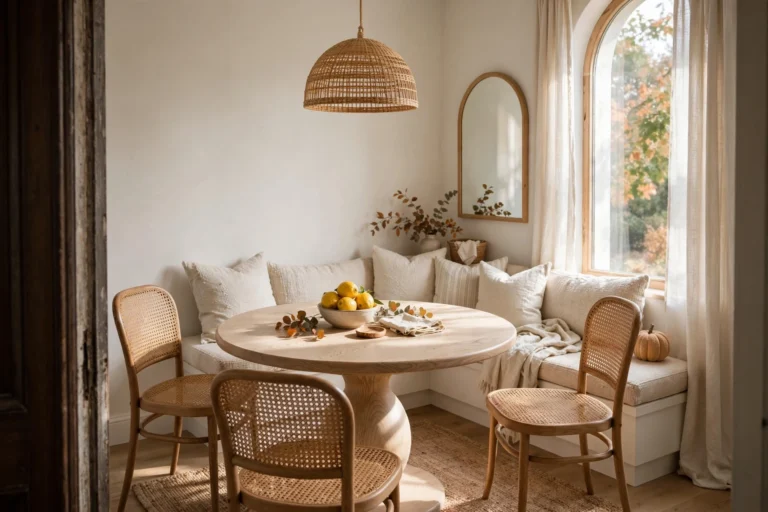
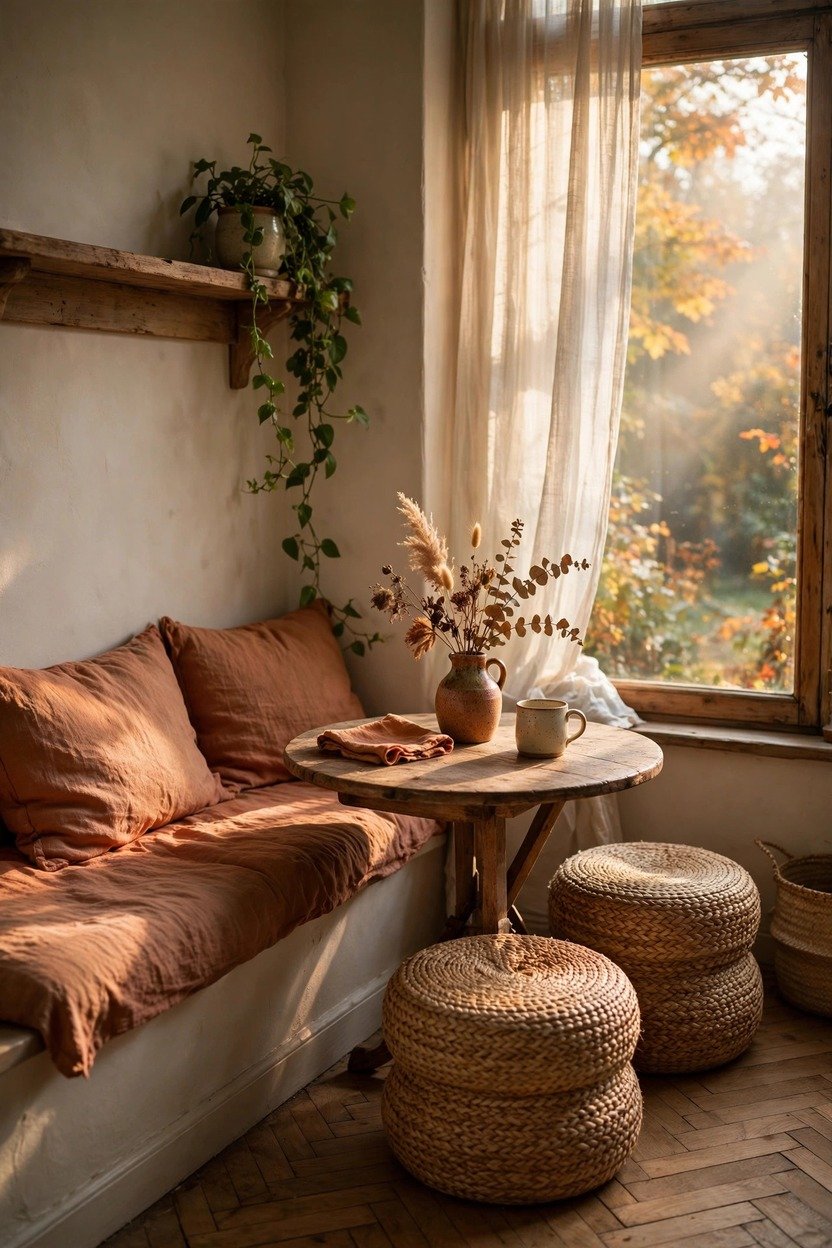
A small seating spot makes the kitchen feel like a place to stay and not only cook. Use a round bistro table about 30 to 36 inches wide, a bench or two, and a pair of woven stools that tuck in when not needed. For a 36-inch counter, choose stools with a seat height of 24 to 26 inches, and for a table, chairs around 18 inches. Add a thin seat cushion tied on with linen ties, so it is washable and easy to swap. Keep the table top short: a small vase, a mug, and a bowl are plenty.
15. A Pantry Display of Jars and Dried Herbs
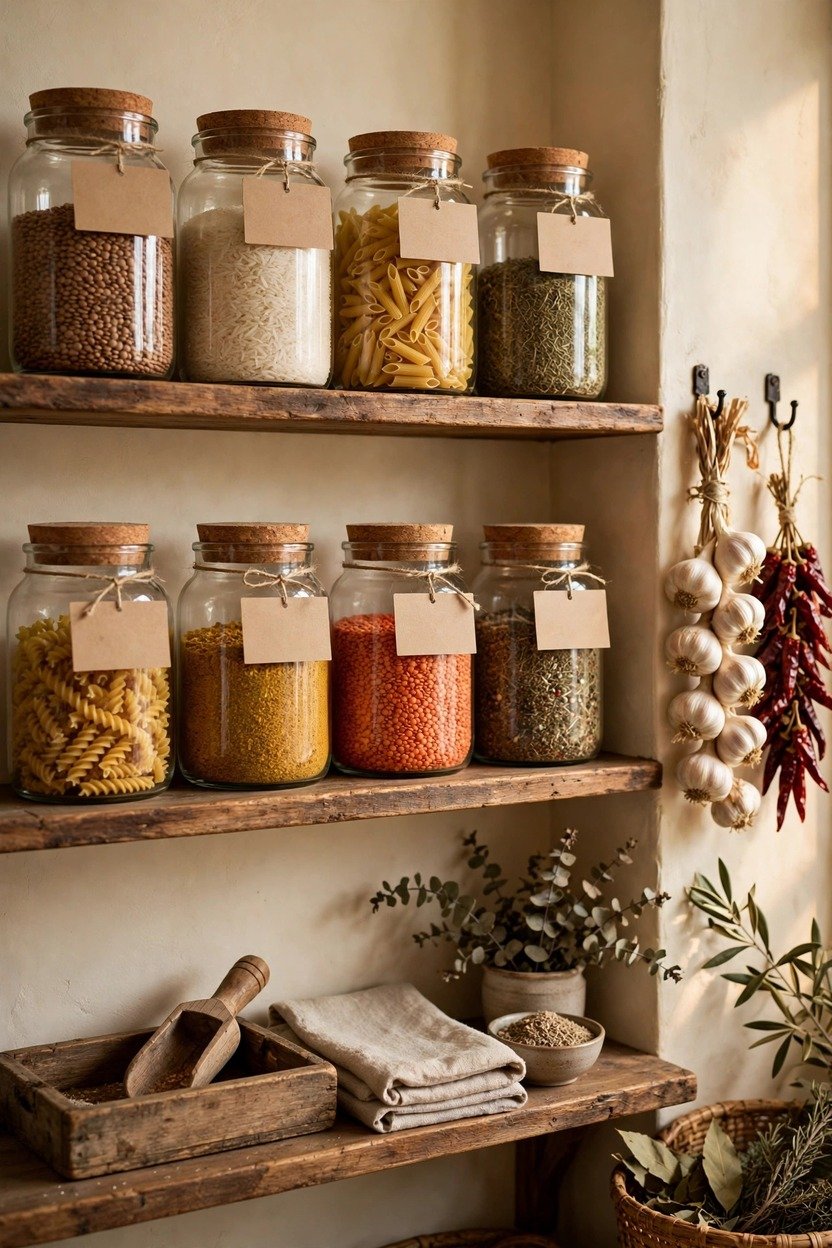
Food can be decor when it is stored well. Decant pasta, lentils, rice, and spices into clear glass jars with wooden or cork lids, and label them with small tags or chalk. Hang a bundle of dried herbs, chilies, or a braid of garlic in a spot with good airflow and away from steam. Keep jars out of direct sun to protect color and flavor, and keep a lid on anything that could attract moths or humidity. Group the jars on a tray or a deep shelf, so they look like a shop display and are easy to refill.
16. A Candlelit Evening Layer
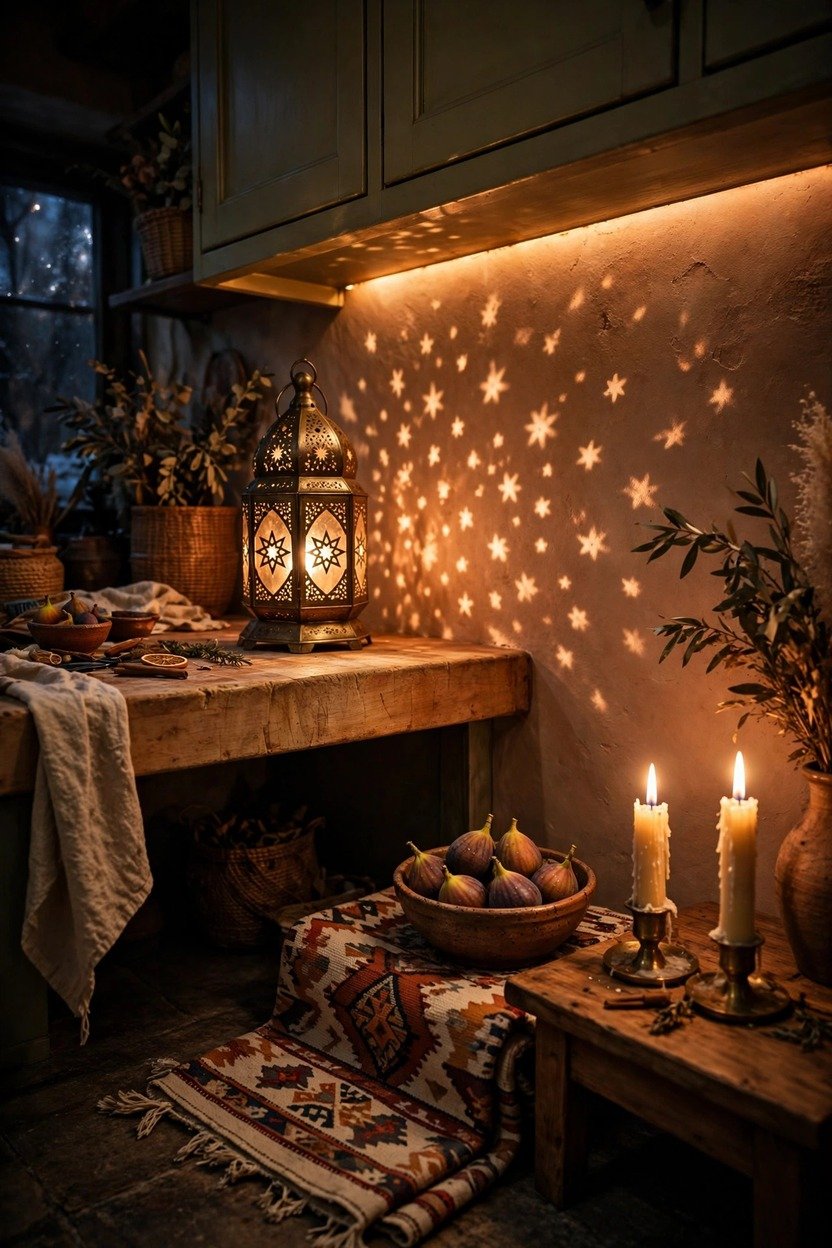
The best boho kitchens get better after dark. Add a pierced metal lantern on the counter, a pair of taper candles in brass holders on the table, and a warm strip light under the upper cabinets so the counter glows softly. The lantern throws small patterns of light on the wall, which adds the feel of a market-town evening without a single extra object on the wall. Keep real flames at least 12 inches from anything that can burn, and never leave them unattended. Flickering LED candles give the same look with no worry.
Styling Tips
Use the Collected Kitchen Formula. Three earthy colors, two patterns, one handmade statement piece, and something living in every zone. It gives you a plan without making the room look planned.
Repeat a color at least twice. If the tile has olive, put olive in a pot or towel too. Repetition keeps variety from turning into noise.
Vary heights and shapes. Tall jar, round bowl, flat tray. Groups of three look natural.
Leave one counter section empty. You need space to cook, and the empty spot makes the styled spots look better.
Mix old and new. A thrifted rug beside a new light. A hand-thrown bowl next to a plain white plate. The mix feels lived in.
Pick pieces with a reason. Handmade, secondhand, inherited, or used daily. If a piece has no story or job, skip it.
Let wood and metal age. Do not polish away every mark. Patina is part of the look.
Edit once a season. Remove what you did not touch in three months, and the kitchen stays easy to clean.
Practical Implementation Ideas
Tackle it in layers, from hard surfaces to small touches.
Audit what you own. Pull out the bowls, baskets, textiles, and art you already love. Build around those pieces first.
Choose your palette. Pick three earthy colors, such as clay, olive, and cream, plus one deep accent like indigo.
Pick one statement piece. A backsplash, a runner, a pendant, or the cabinet color. Do this one well and keep the rest simple.
Handle the hard surfaces. Paint, tile, and counters come first, since they are messy and hard to change later.
Add light. Layer a woven pendant, under-cabinet light, and a lantern or lamp. Use warm bulbs, around 2700K.
Bring in soft layers. Runner, towels, curtain, and cushions. Order washable pieces for the busy zones.
Add plants and herbs. Match the light you have to the plant, not the other way around.
Edit. Step back, remove one item per zone, and take a photo to check the balance.
Common Mistakes to Avoid
Buying a boho set in a box. A themed bundle looks like a costume. Collect pieces over time and let them differ.
Too many patterns at once. Use two scales and a solid. Three busy patterns fight each other.
Rattan or macrame by the stove. Steam, grease, and heat can damage woven pieces, and fiber near a flame is a risk. Keep them out of the cooking zone.
Open shelves next to the range. Grease clings to the dishes. Move display shelves to a dry wall.
A rug that slips or curls. Use a pad and a washable rug, and keep it off the toe-kick.
Skipping the practical parts. Pretty tile that stains or a counter that scratches will bother you daily. Pick materials that suit how you cook.
Covering every surface. A boho kitchen needs breathing room. Leave empty space around each group.
Fake distressing. Forced wear looks forced. Choose real vintage or leave the piece plain.
Small-Space Alternatives
Choose one statement. A single bold runner or a tile backsplash carries a small kitchen better than ten small items.
Related: 15 Retro Kitchen Ideas That Look Pinterest Perfect
Go vertical. A wall rail for copper pots, a high shelf for baskets, and hooks for mugs free the counter.
Use a narrow runner. A 24-inch runner fits a galley and adds pattern without crowding.
Hide the busy stuff. Baskets and lidded jars keep a small counter calm.
Hang the pendant, skip the island. One woven pendant over a small table or the sink area makes a clear focal point.
Bring plants to the window. A sill row of herbs uses the light and leaves counters open.
Budget-Friendly Alternatives
Paint a wall. A limewash-look paint in clay or cream gives a plaster feel for the price of a few cans.
Use peel-and-stick tile. A hand-made-look peel-and-stick tile can stand in for a backsplash while you save, especially in a rental.
Thrift the ceramics. Secondhand bowls, jugs, and plates mix well and cost very little.
Buy a vintage-style washable runner. You get the pattern without the price or the worry.
Add cane webbing. Glue it behind a cabinet frame or onto a thrifted sideboard for a high-end texture.
Swap the hardware. Antique-brass pulls change a plain cabinet in an afternoon.
Use plug-in light. A woven shade over a plug-in pendant kit gives the look without an electrician.
Pro Styling Recommendations
Treat real zellige as a project. It is handmade and porous, so plan for sealing the grout, gentle pH-neutral cleaners, and a skilled installer. Natural zellige often runs roughly $40 to $120 or more per square foot before installation. A zellige-look porcelain gives you the glow with less care.
Choose materials by how you cook. If you fry and sear often, put wipeable surfaces near the stove and keep woven pieces away.
Source with care. Learn what you are buying, such as kilim, block print, or zellige. Buy from makers and sellers who name where and how it was made.
Test the light first. Look at paint and tile samples in morning and evening light before committing.
Plan outlets and cords. Lanterns, plug-in pendants, and under-cabinet strips all need power. Hide cords in cord covers.
Keep a maintenance list. Oil the wood, reseal the grout on schedule, and wash the textiles. A collected kitchen stays lovely when it is cared for.
FAQs
What is a boho kitchen?
A boho kitchen is a relaxed, layered kitchen built from natural materials, handmade or vintage pieces, earthy colors, patterns, plants, and warm light. It is personal, not matched, and feels collected over time.
What colors work best in a boho kitchen?
Earthy shades such as clay, terracotta, olive, sage, cream, and warm wood, often with one deeper accent like indigo or rust. Repeat each color at least twice so the room feels connected.
How do I make a boho kitchen look collected and not messy?
Use a simple formula: three colors, two patterns, one handmade statement piece. Group items in threes, leave space around each group, and edit what you do not use.
Can you have a boho kitchen in a small space?
Related: 23 Boho Living Room Ideas That Look Designer-Made
Yes. Choose one statement, such as a runner or a backsplash, store clutter in baskets and jars, and use the window and walls for plants and hanging pots. Fewer, better pieces work best.
How high should rattan pendants hang over an island?
About 30 to 36 inches above the counter is a common range. Keep woven shades off the cooktop, since steam and grease can damage the weave.
Is zellige tile practical in a kitchen?
It can be, with care. Real zellige is handmade and porous, so it needs sealed grout and gentle cleaners. If you cook often and want less upkeep, a zellige-look porcelain is an easier choice.
What size runner should I use in a boho kitchen?
Most kitchen runners are 24 to 36 inches wide. Leave a few inches of bare floor between the rug and the cabinets, use a rug pad, and choose a washable one for busy areas.
How can I do boho in a rental kitchen?
Use a washable runner, open ceramic displays, plug-in lighting, peel-and-stick tile, textiles, and plants. Skip anything that needs drilling or permanent paint.
Are open shelves a good idea in a boho kitchen?
Yes, if they are away from the stove. Use dishes you use often, so the shelf stays clean, and make the shelf about 10 to 12 inches deep.
How do I clean woven and wooden pieces in the kitchen?
Wipe rattan and cane with a damp cloth, dry them right away, and keep them out of heavy steam. Oil butcher block with a food-safe oil, and wash cotton textiles in cold water.
Conclusion
A kitchen does not need to be a stage set to feel like it has been somewhere. It needs a few good things that mean something to you, a color that shows up more than once, and enough empty space to breathe.
Start with one piece you love. A runner, a bowl, a tile sample. Build outward in small steps, and let each new addition answer a question: is it useful, handmade, or loved?
When the room finally starts to feel like yours, you will see it in small ways. The basil leaning toward the light. The mug that always ends up in your hand. That is what traveled and loved looks like at home.