17 Farmhouse Sink Ideas That Reimagine a Classic
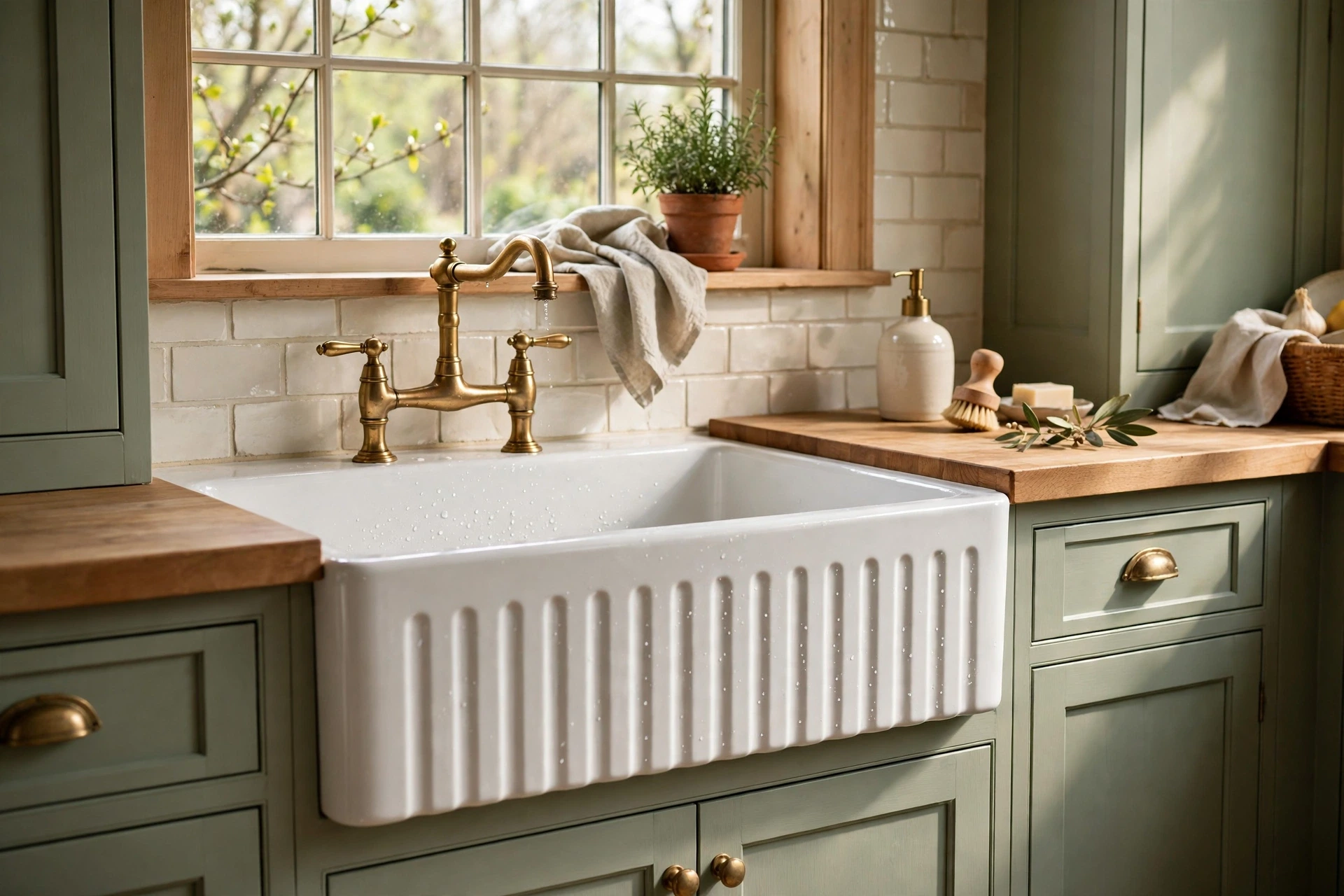
Picture a deep, wide sink under a bright window. A big stockpot fits inside without a fight. The front of the sink peeks out like a soft, rounded curve in the cabinet line.
That’s the farmhouse sink. It has been a kitchen favorite for a long time, and it’s easy to see why.
The problem is that most idea lists show you one white sink over and over. They don’t tell you the sink may weigh close to a hundred pounds, that your cabinet likely needs changes, or that the faucet often mounts behind it, not on it.
These 17 ideas fix that. Each one gives you a look and the details behind it: materials, faucets, sizes, and styling. Many are fresh takes on the classic, from fluted fronts to copper patina and wall-mounted faucets. There are also ideas for laundry rooms, bathrooms, and small kitchens.
Table of Contents
Then: a material cheat sheet, installation basics, mistakes, small-space and budget ideas, pro tips, and FAQs.
17 Farmhouse Sink Ideas
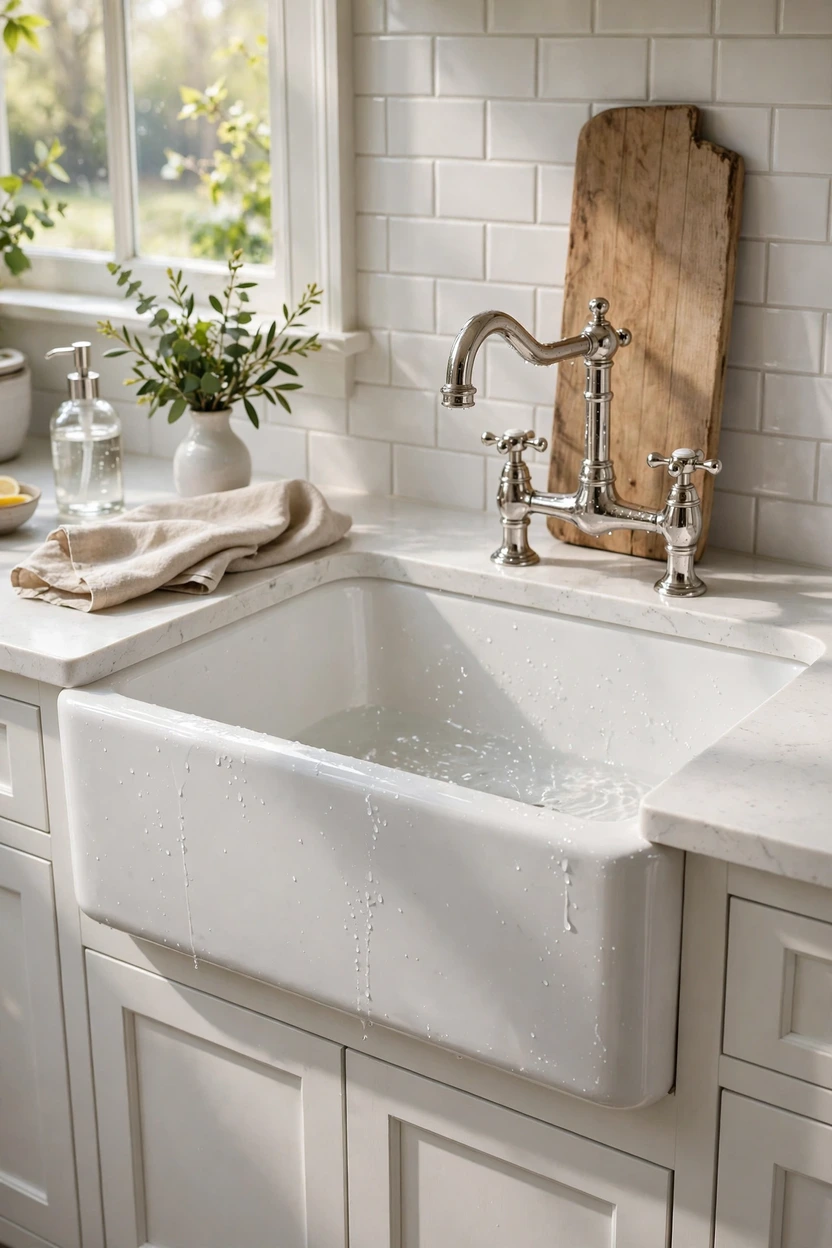
1. Classic White Fireclay, Done Right
A white fireclay apron-front sink in a single deep bowl is the starting point for the style. It’s made from clay fired at high heat and glazed, so the surface is hard, smooth, and easy to wipe. A 33-inch size suits many kitchens and fits a 36-inch sink base. Pair it with shaker cabinets and a simple bridge faucet to keep the look clean. This choice works because the sink looks bright and lasts for years, but plan for its weight, which can run roughly 70 to 100 pounds.
2. Fluted Apron Front
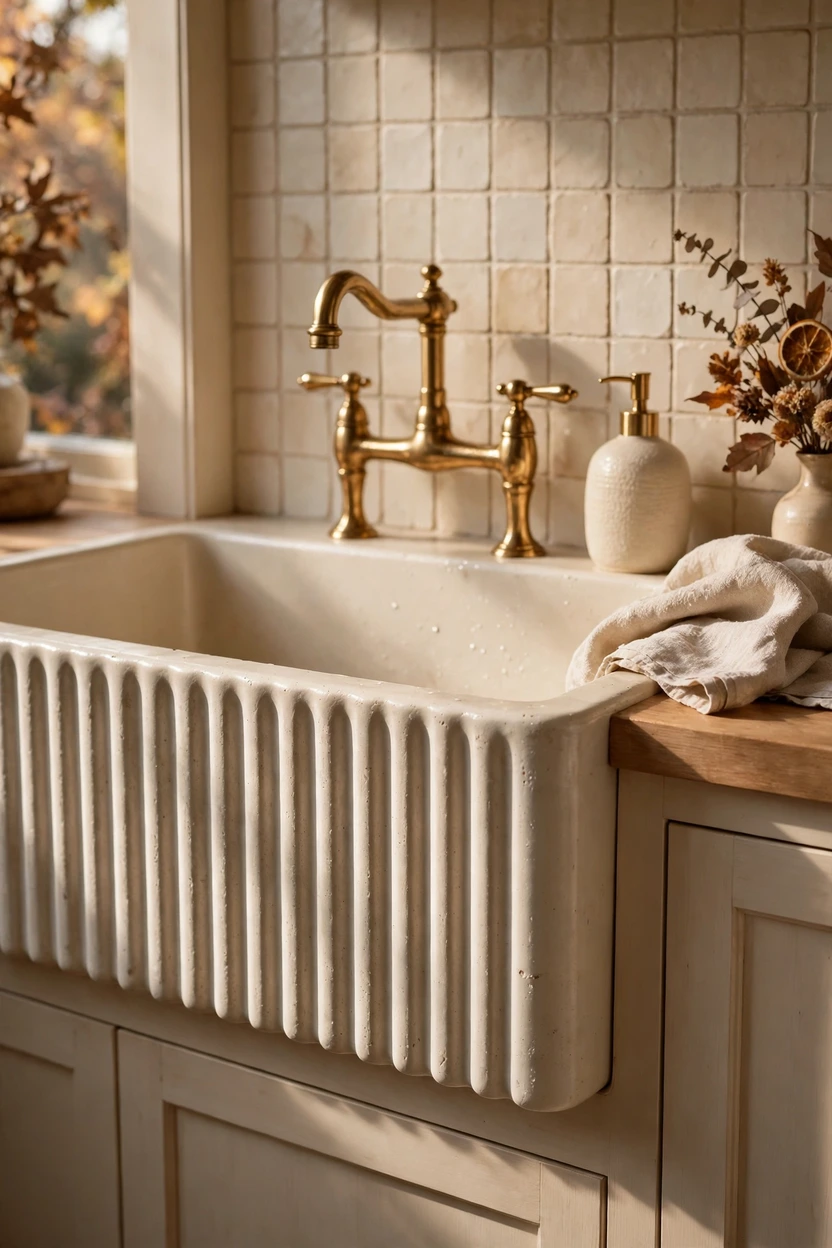
Choose a sink with a fluted front, and the apron picks up light and shadow all day. The vertical ridges add texture without adding color, so a white or cream sink still feels fresh. Echo the pattern in the room with fluted cabinet fronts or a ribbed vase to tie it in. Brass or antique-style faucets look especially warm against the grooves. Fluted aprons also hide small marks better than a flat, glossy front.
3. Matte Black or Dark Gray Sink
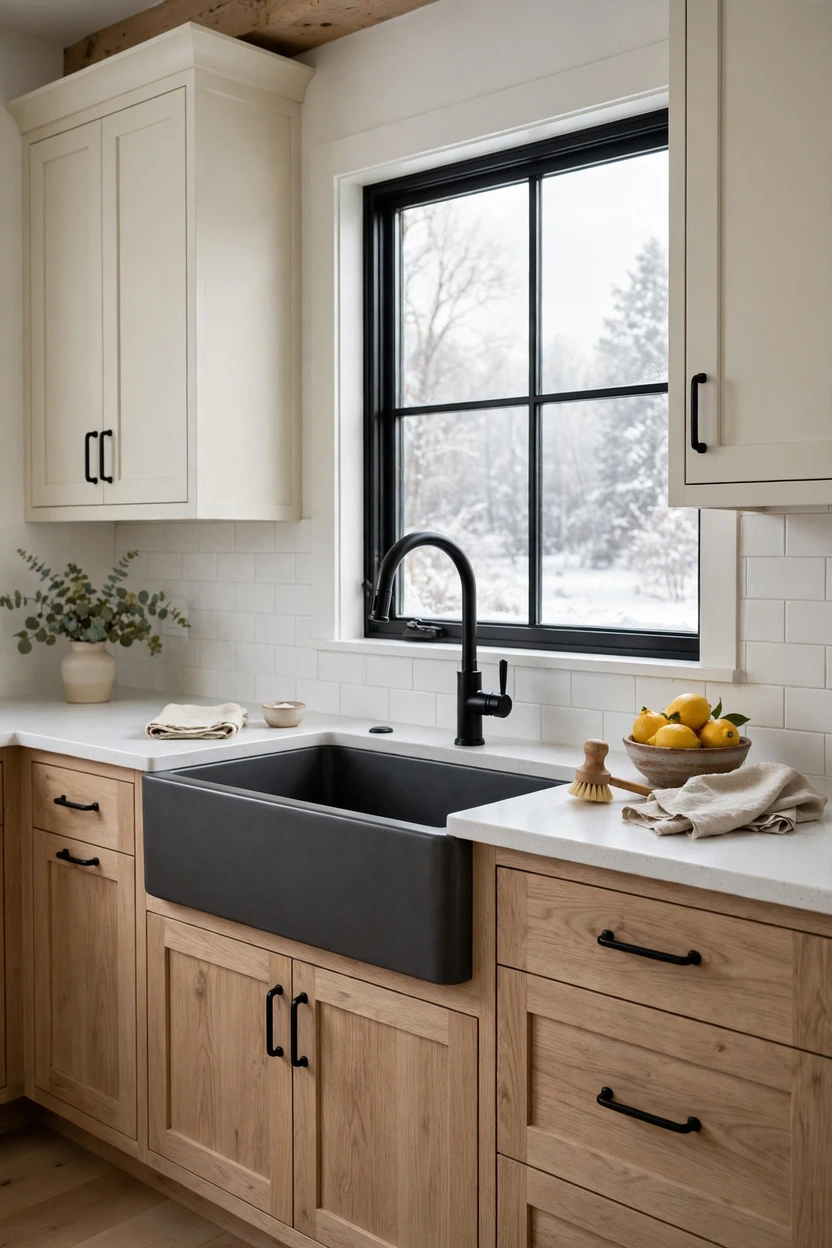
A dark farmhouse sink sets a strong contrast against white or light stone counters. It reads like a deliberate dark note, much like a black door on a white house. Choose granite composite, cast iron, or a matte-glazed fireclay for the finish. Pair it with a black or aged-brass faucet so the colors feel connected. Wipe water spots and soap film regularly, since dark surfaces show them more.
4. Hammered Copper with Patina
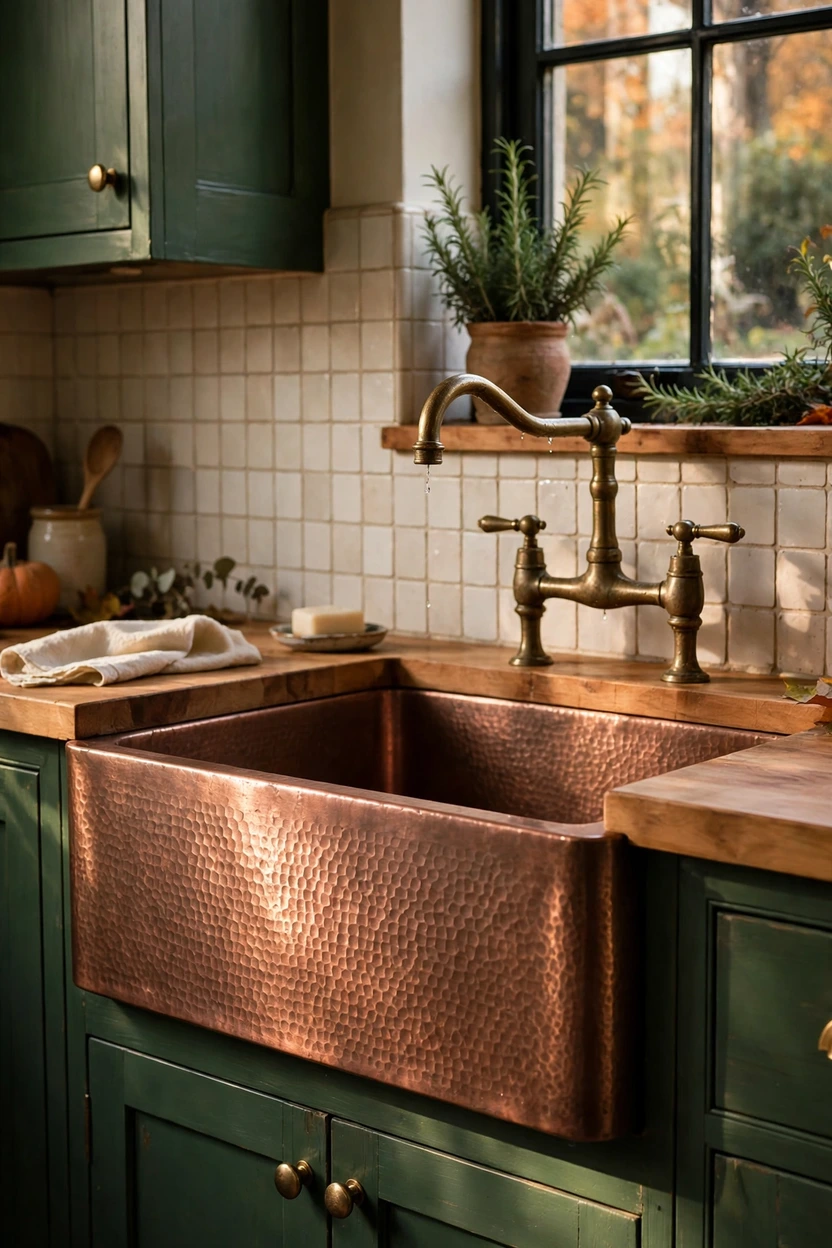
A hammered copper farmhouse sink shows soft dents that catch light, and the metal darkens with use. It suits warm cabinets in cream, deep green, or navy. The finish is a living one, so expect changes over time, and rinse and dry the sink after use to keep patina even. Copper costs more than stainless, and prices often start above $1,000, so many people use it as a focal point. Mix it with unlacquered brass or bronze hardware for a warm, matched look.
5. Stainless Steel Farmhouse Sink
A stainless apron-front sink gives the farmhouse shape at a lower price and lower weight than fireclay. It matches stainless appliances and handles hot pans and drops with no chip risk. Choose a thicker gauge, such as 16 gauge, for a sturdier feel and less noise. A brushed finish hides water spots and scratches better than a polished one. It’s a good choice for busy kitchens and for people who prefer a modern farmhouse feel.

6. Drainboard Farmhouse Sink
A farmhouse sink with an attached drainboard has a vintage look and real function. Wet dishes sit on the sloped ledge and drain right into the basin, so you can skip the bulky counter rack. Sizes often run longer, around 42 to 60 inches, so check the wall space. Many are cast iron with a glossy enamel finish, which is heavy and needs strong cabinet support. White, cream, or soft green cabinets suit this old-kitchen charm.
Related: 18 Modern Farmhouse Living Room Ideas With Texture & Warmth
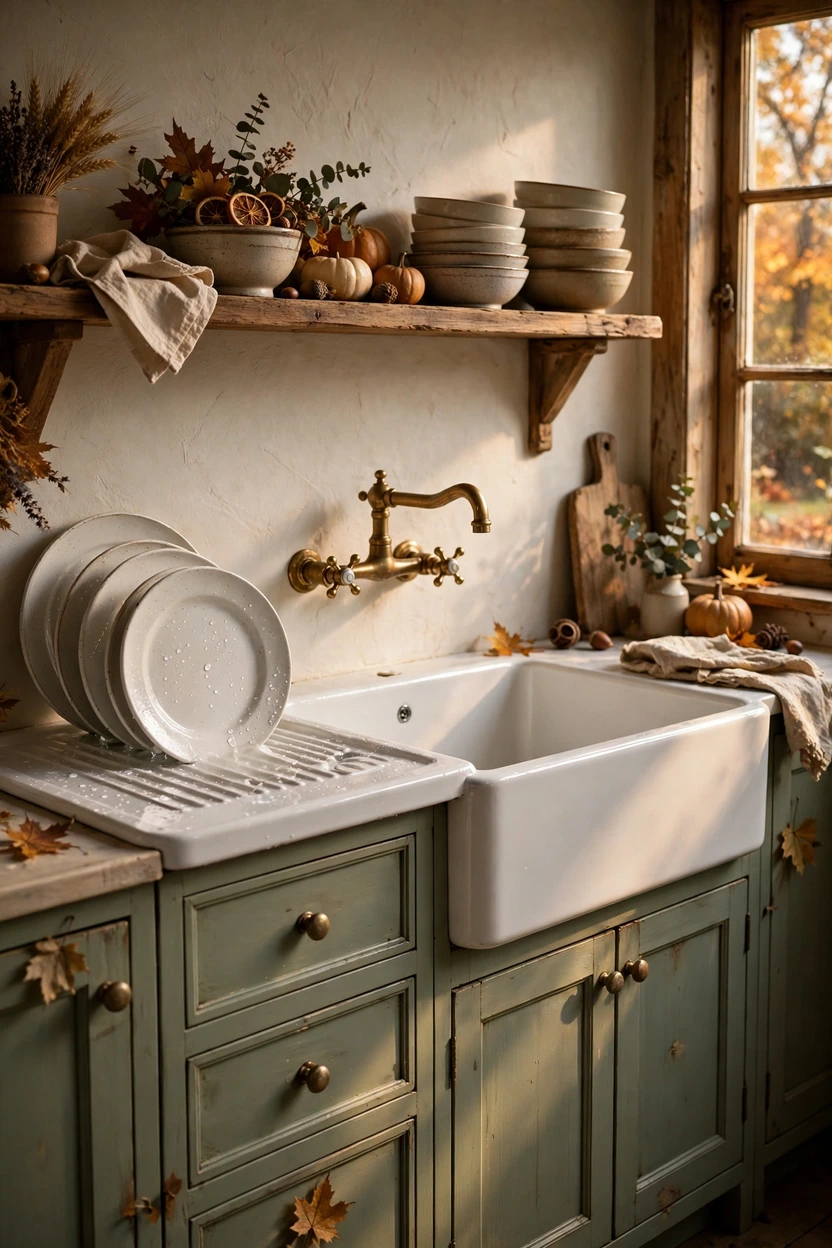
7. Workstation Farmhouse Sink
A workstation sink has ledges along the rim that hold a cutting board, colander, or drying rack right over the basin. It lets you rinse, chop, and drain in one spot. This turns a deep farmhouse sink into a mini prep station and saves counter space. Choose one with a standard apron shape so you keep the classic front. It suits cooks who use the sink all day.

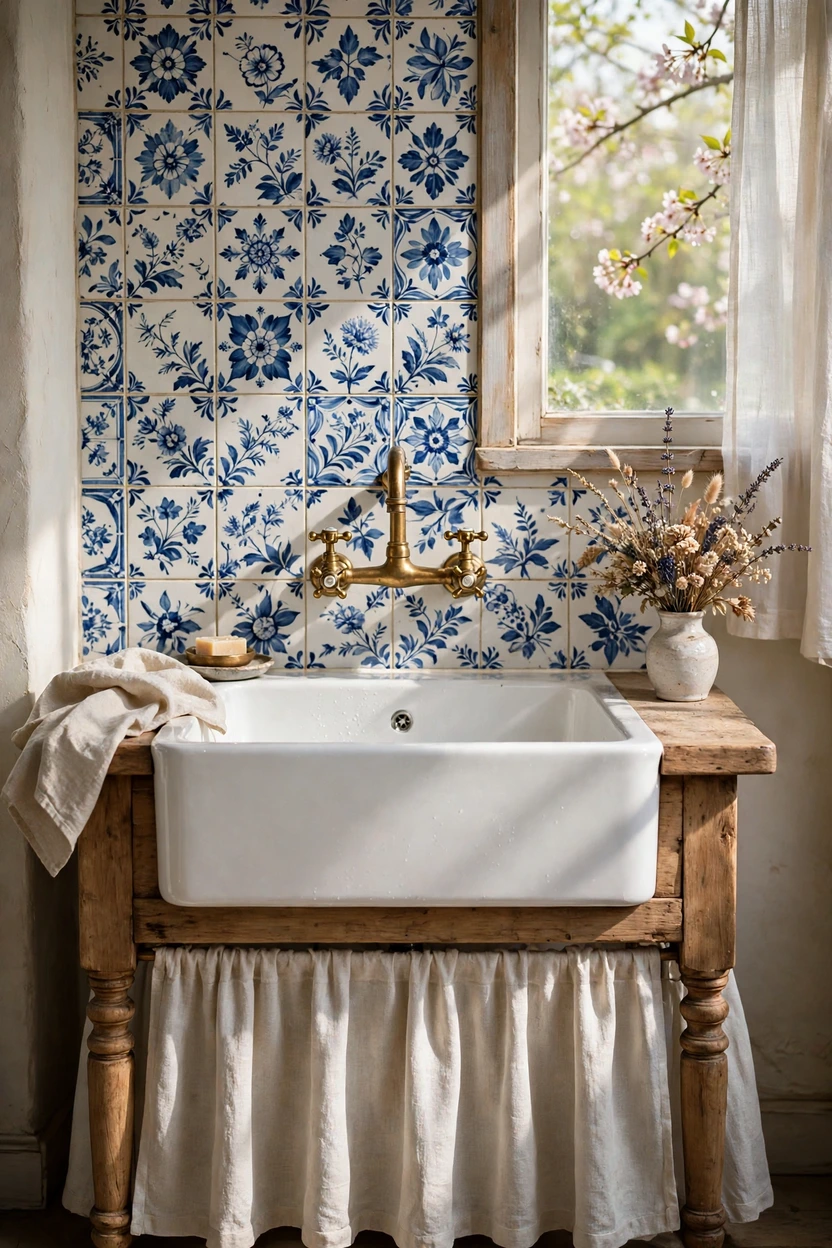
8. Wall-Mounted Faucet with Painted Tile
Most farmhouse sinks come without faucet holes, so a wall-mounted faucet is a natural fit. It also leaves the counter edge clean, so no soap film collects around the handles. Plan the spout reach so water lands near the middle of the basin. Pair it with hand-painted or blue-and-white tile for a cottage feel. This works well in unfitted or cottage-style kitchens with furniture-like bases.
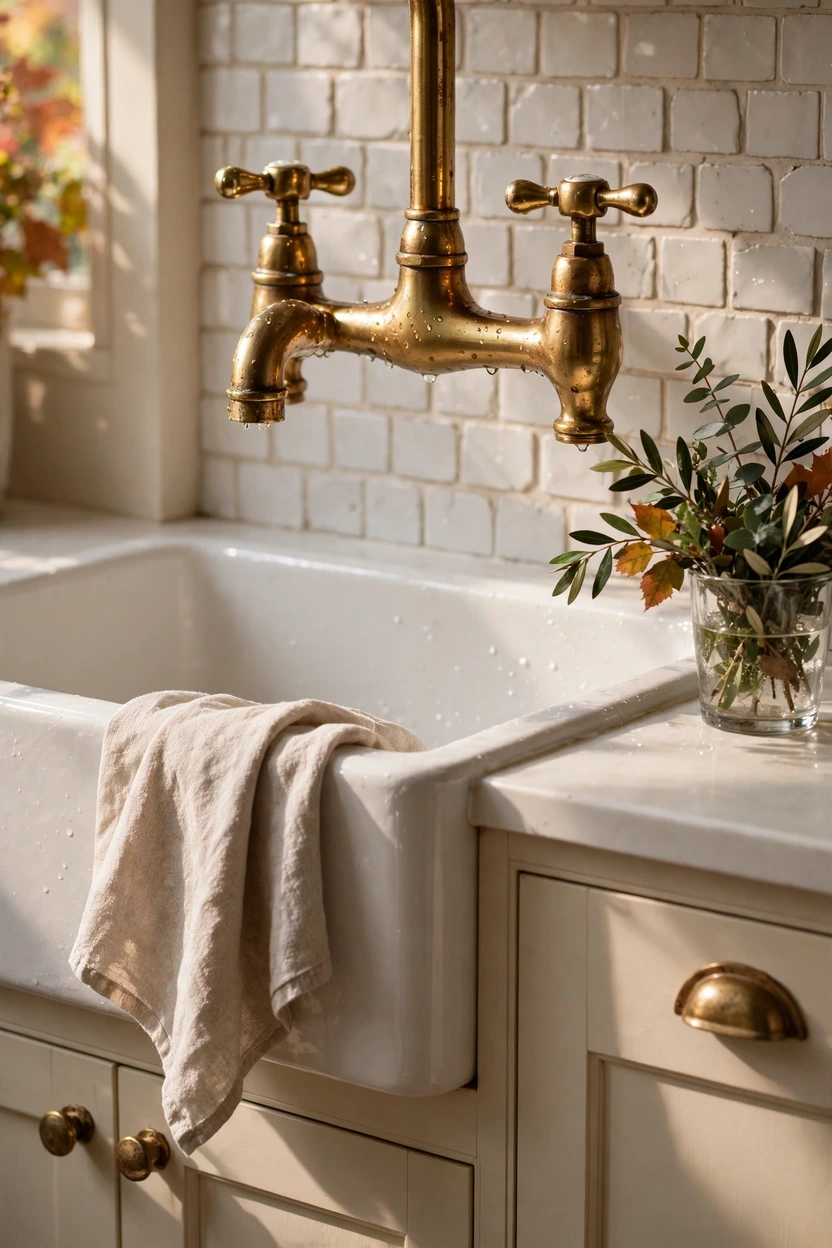
9. Unlacquered Brass Bridge Faucet
A bridge faucet with cross handles looks right on a farmhouse sink and gives a vintage note. Unlacquered brass starts shiny and softens to a warm, uneven tone over time. It pairs well with white, cream, and sage tones. Use the same metal in cabinet pulls and a lamp or pendant to link the room. If you don’t like change, pick lacquered or PVD-coated brass, which keeps its color.
10. Offset Double-Bowl Farmhouse Sink
A 60/40 offset double-bowl sink gives you a large basin for pots and a small one for rinsing or a disposal. It suits people who multitask, such as soaking in one side and washing in the other. The center divider can reduce room for very large pans, so think about your biggest cookware. Typical widths are about 33 to 36 inches. Choose it if you wash dishes by hand and want some separation.

11. Green Cabinets with a White Apron Sink
Deep green or sage cabinets make a white sink stand out like a clean bowl in a garden. The contrast gives the sink presence without a bold sink color. Add brass or copper accents for warmth, and keep the countertop pale or wood so the room doesn’t feel heavy. Test your green in daylight and at night, since it can shift from gray to blue. This is a popular Pinterest pairing for a reason.

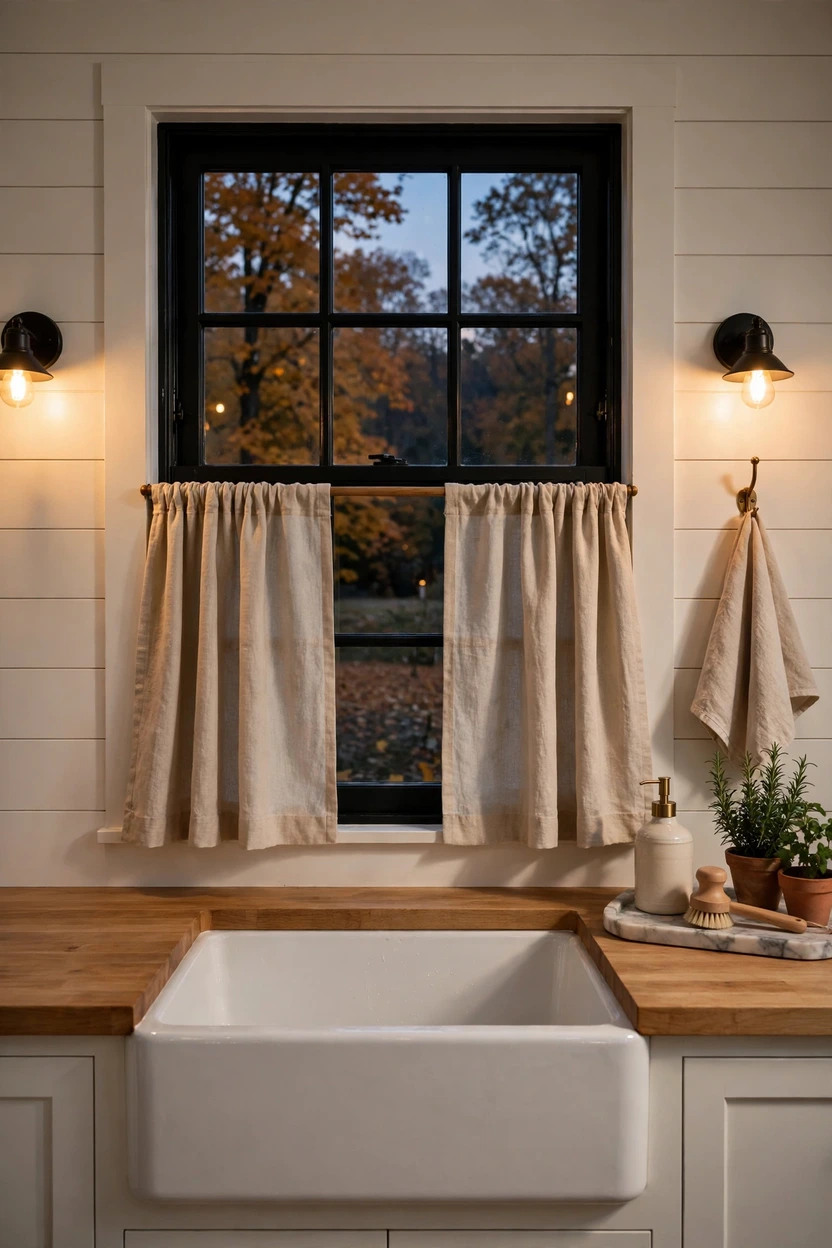
12. The Window, Sconces, and Styled Sink Zone
The sink is where you stand the most, so style the area around it. A window above brings light and a view, and two small sconces at the sides add soft evening glow. Keep a short list of items on the counter: a soap dispenser, a brush, a plant, and a hand towel. Use a tray to group them so the zone looks tidy. Place a rail or hooks for towels instead of draping them on the oven.
13. Island Prep Farmhouse Sink
A small apron-front sink in the island gives you a second work spot. Keep the main sink on the perimeter, and use the island sink for vegetables, drinks, or cleanup when guests are around. Choose a compact single bowl, around 20 to 25 inches, so it doesn’t eat the whole counter. Match the finish to the main sink to keep the look related. Think about plumbing early, since island sinks need drain planning.

14. Small-Kitchen 30-Inch Farmhouse Sink
A 30-inch single-bowl farmhouse sink fits a 33-inch base cabinet and still gives you a deep basin. It leaves more room for counters on either side, which matters in tight kitchens. A wall-mounted or low faucet keeps the line clean and the window clear. Choose light colors for the sink and walls so the space feels open. Keep the area simple, with one plant and one dish brush.

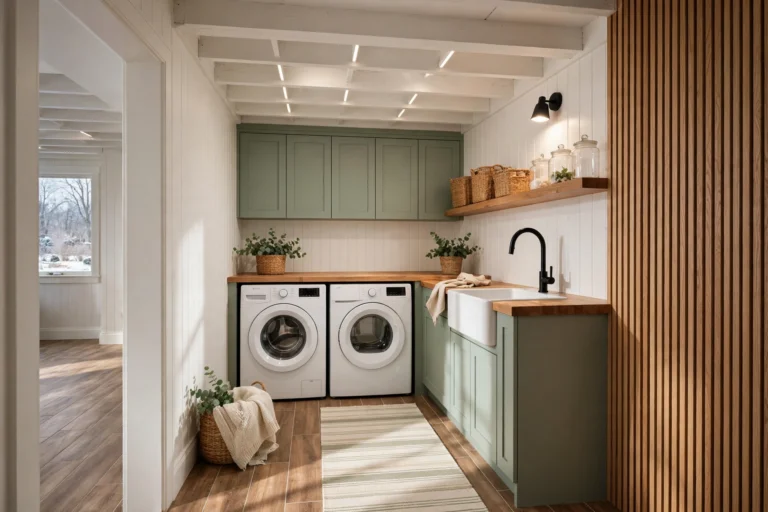
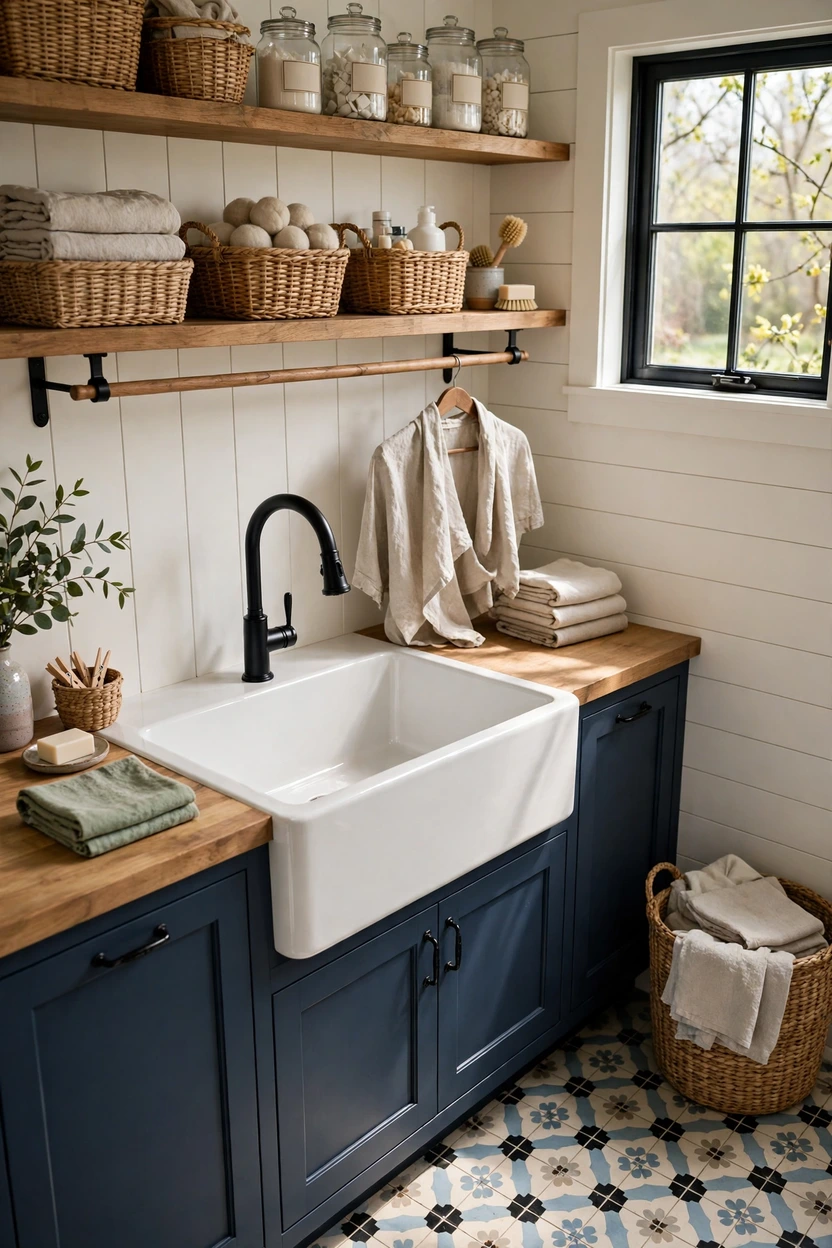
15. Laundry or Mudroom Utility Farmhouse Sink
A deep farmhouse sink is useful in a laundry room or mudroom for soaking, hand-washing, and rinsing muddy boots or pet bowls. Choose a large single-basin fireclay or stainless model, and add a pull-down faucet. Place it in a cabinet with a drying rod and shelves nearby. Use a durable floor, like tile or sealed wood, to handle splashes. A utility sink also keeps messy jobs out of the kitchen.
16. Bathroom Farmhouse Vanity Sink
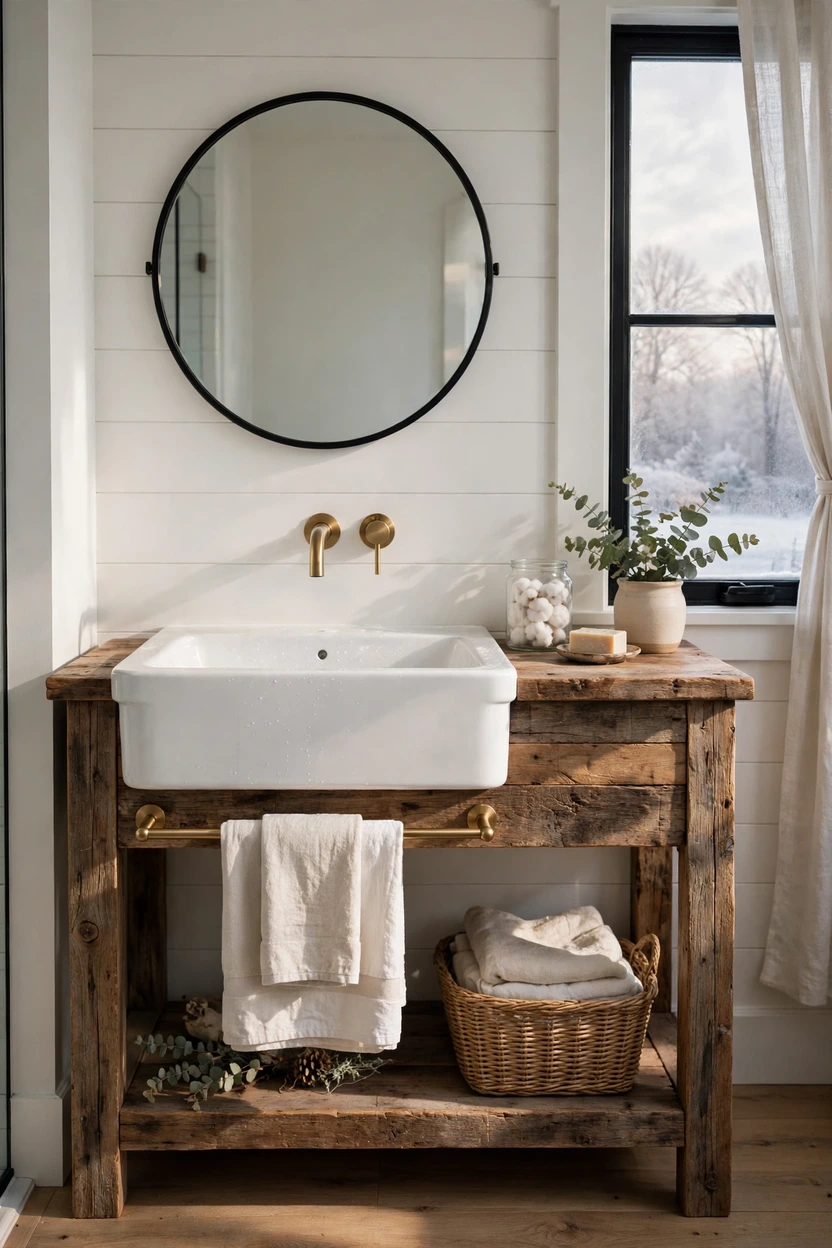
A farmhouse-style sink with an apron front or trough shape adds charm to a bathroom vanity. A freestanding or wall-mounted version works well in a powder room. Pair it with a bridge or wall-mounted faucet and a wood or painted base. Choose a size that leaves counter space for soap and a small tray. Sealed wood and stone-look tile suit the rustic feel.
17. Natural Stone Farmhouse Sink
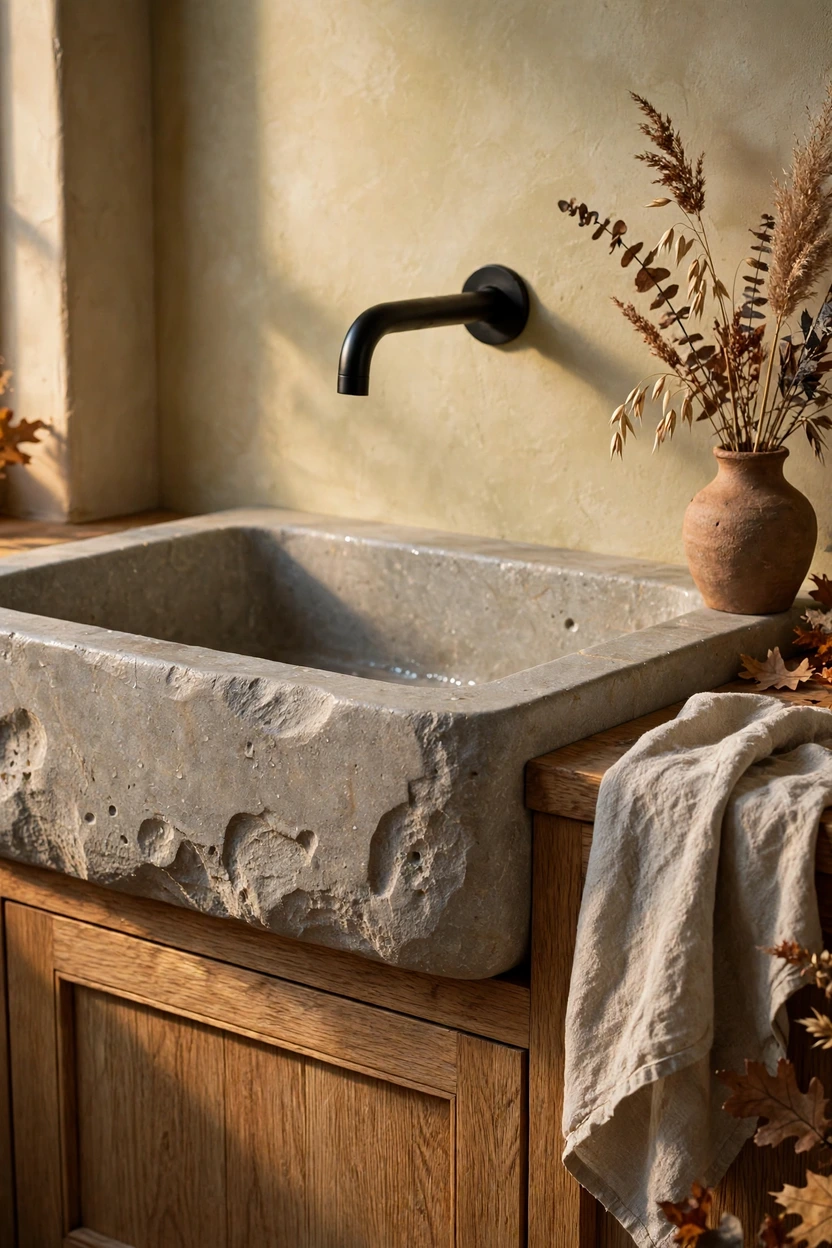
A stone farmhouse sink gives an earthy, hand-carved look that suits modern organic kitchens. Stone varies from piece to piece, so your sink will be one of a kind. Seal it as the maker recommends before first use, and wipe it regularly. It can be heavy, so plan strong support. Pair with simple wood, plaster, or soft-white walls to let the stone stand out.
Related: 16 Modern Farmhouse Dining Room Ideas That Just Work (Cozy + Practical)
Styling Tips
Material cheat sheet (ballpark; prices vary by brand and region):
| Material | Look | Good for | Watch for | Rough sink price |
|---|---|---|---|---|
| Fireclay | Glossy, classic | Hard use, low upkeep | Heavy; can chip from heavy impact | About 500-1,500 |
| Stainless steel | Modern, brushed | Budget, light weight | Scratches and water spots | About 200-800 |
| Cast iron | Vintage, glossy enamel | Old-style kitchens | Very heavy; enamel can chip | About 500-2,000 |
| Copper | Warm, changing patina | Focal-point sinks | Needs care; higher cost | Often $1,200+ |
| Stone | Earthy, one-of-a-kind | Organic modern | Needs sealing; heavy | Varies widely |
Check current prices and the maker’s care instructions before buying.
- Match metals: use one metal for the faucet, pulls, and a light.
- Use one hero element per sink: fluted front, copper, or black. Keep the rest quiet.
- Choose an apron that suits the cabinets: simple front for shaker, fluted for plain or ribbed.
- Light the sink: add task lighting or sconces so the sink isn’t in shadow at night.
- Keep the counter to four items so the sink stays the focus.
Practical Implementation Ideas
Before you order:
- Measure the cabinet. Farmhouse sinks usually need a base cabinet at least a few inches wider than the sink, and often a 36-inch base for a 33-inch sink.
- Plan for modification. The cabinet front is cut open for the apron, and the base needs a support frame, because the sink rests on the cabinet, not the counter.
- Check weight. A 33-inch fireclay sink can run roughly 70 to 100 pounds, and cast iron can run heavier.
- Decide the faucet first. Most farmhouse sinks have no faucet holes. The faucet mounts on the counter behind the sink or on the wall.
- Choose the reveal. Makers often suggest around a quarter-inch reveal with an undermount setup. Follow your sink’s instructions.
- Ask a pro. A cabinet maker and countertop fabricator should see the actual sink before they cut anything.
Common Mistakes to Avoid
- Ordering before measuring. Sinks vary a little in size.
- Skipping the cabinet support. The sink needs a frame built to carry its weight.
- Forgetting the faucet. There’s no deck, so plan the faucet type and placement early.
- Choosing a faucet with the wrong reach. Water should land near the middle of the basin.
- Dropping heavy cast iron pans in fireclay. It can chip the glaze.
- Using harsh abrasives on polished finishes. Follow the maker’s care guide.
- Letting copper stay wet. Rinse and dry for an even patina.
- Choosing a sink that’s too large for the cabinet or counter. Leave space for the faucet and backsplash.
- Cluttering the sink zone. Group items on a tray.
Small-Space Alternatives
- Choose a 30-inch single bowl. It’s deep without taking much counter.
- Use a wall-mounted faucet to free space behind the sink.
- Pick a light sink and light walls so the area feels open.
- Skip a divider so large pans fit.
- Add a shelf above the window for plants instead of using counter space.
- Use a slim drainboard mat or a rack that tucks inside the basin.
Budget-Friendly Alternatives
- Stainless farmhouse sinks often cost less than fireclay, copper, or cast iron, and weigh less.
- Drop-in or above-counter farmhouse styles can need fewer cabinet changes. Check each sink’s installation type.
- Save on the faucet: a simple bridge-style faucet costs less than a wall-mounted one that needs wall plumbing.
- Style it yourself: use a brass-toned soap dispenser, a linen towel, and a plant instead of new fixtures.
- Check secondhand and salvage stores for vintage sinks, then confirm size and condition.
- Spend where it matters: sink and cabinet support first, then faucet, then decor.
Pro Styling Recommendations
- Choose the sink first and the faucet second. Mounting style decides layout.
- Pair a simple sink with a detailed faucet, or a detailed sink with a simple faucet, so they don’t compete.
- Look at the apron height against your drawer and door lines.
- Use natural wood nearby to soften the cool surface of the sink.
- Keep the same finish family across faucet, pulls, and lights.
- Think about how you wash dishes: hand-washers love deep single bowls and drainboards.
FAQs
What is a farmhouse sink?
A farmhouse sink, also called an apron-front or farm sink, is a deep basin with an exposed front panel that sits flush with the cabinet front. It’s wider and deeper than many standard sinks.
Do farmhouse sinks need special cabinets?
Yes. Most need a custom or modified sink base cabinet with the front cut open and a support frame, because the sink rests on the cabinet. A base at least a few inches wider than the sink is common, such as a 36-inch base for a 33-inch sink.
What is the best farmhouse sink material?
Fireclay is popular for durability and easy care. Stainless steel costs less and weighs less. Cast iron suits vintage looks, and copper gives a changing patina. The best choice depends on your budget, cabinets, and style.
How much does a farmhouse sink weigh?
A 33-inch fireclay sink often weighs roughly 70 to 100 pounds, and cast iron can be heavier. Plan strong cabinet support.
Where does the faucet go on a farmhouse sink?
Most farmhouse sinks have no faucet holes, so the faucet mounts on the counter behind the sink or on the wall above it.
How much does a farmhouse sink cost?
Prices vary by material and brand. Stainless is often the lowest, fireclay is mid to high, and copper or cast iron can cost more. Installation and cabinet changes add to the total.
What size farmhouse sink should I choose?
Many kitchens use 30 to 36 inches wide. A 33-inch sink is common in a 36-inch base. Measure your cabinet and check clearance for the faucet and backsplash.
Single bowl or double bowl?
A single bowl fits large pots and is simpler. A 60/40 double bowl helps if you like to soak and rinse at the same time.
Will a farmhouse sink go out of style?
The apron-front shape has lasted a long time across styles. You can keep it current by choosing a simple front, a classic material, and neutral cabinets.
How do you clean and care for a farmhouse sink?
Wipe it after use and use gentle cleaners. Avoid harsh abrasives, and follow the maker’s guidelines. Rinse and dry copper, and seal stone as directed.
A farmhouse sink, also called an apron-front or farm sink, is a deep basin with an exposed front panel that sits flush with the cabinet front. It’s wider and deeper than many standard sinks.
Yes. Most need a custom or modified sink base cabinet with the front cut open and a support frame, because the sink rests on the cabinet. A base at least a few inches wider than the sink is common, such as a 36-inch base for a 33-inch sink.
Fireclay is popular for durability and easy care. Stainless steel costs less and weighs less. Cast iron suits vintage looks, and copper gives a changing patina. The best choice depends on your budget, cabinets, and style.
A 33-inch fireclay sink often weighs roughly 70 to 100 pounds, and cast iron can be heavier. Plan strong cabinet support.
Most farmhouse sinks have no faucet holes, so the faucet mounts on the counter behind the sink or on the wall above it.
Related: 15 Cozy Farmhouse Bedroom Ideas for a Calm, Airy Room
Prices vary by material and brand. Stainless is often the lowest, fireclay is mid to high, and copper or cast iron can cost more. Installation and cabinet changes add to the total.
Many kitchens use 30 to 36 inches wide. A 33-inch sink is common in a 36-inch base. Measure your cabinet and check clearance for the faucet and backsplash.
A single bowl fits large pots and is simpler. A 60/40 double bowl helps if you like to soak and rinse at the same time.
The apron-front shape has lasted a long time across styles. You can keep it current by choosing a simple front, a classic material, and neutral cabinets.
Wipe it after use and use gentle cleaners. Avoid harsh abrasives, and follow the maker’s guidelines. Rinse and dry copper, and seal stone as directed.
Conclusion
A farmhouse sink works when the whole sink zone works together: the size, the faucet, the cabinet, and the light.
You don’t need to pick the boldest option. A simple white fireclay sink with a good faucet and a clean counter can look finished. A fluted front, a dark finish, or a bit of copper can turn it into the part of the kitchen people remember.
Measure first, choose the faucet early, and style it last. Then fill the basin with warm water and enjoy how much room you finally have.