16 Pink Bathroom Ideas That Prove Color Is a Superpower
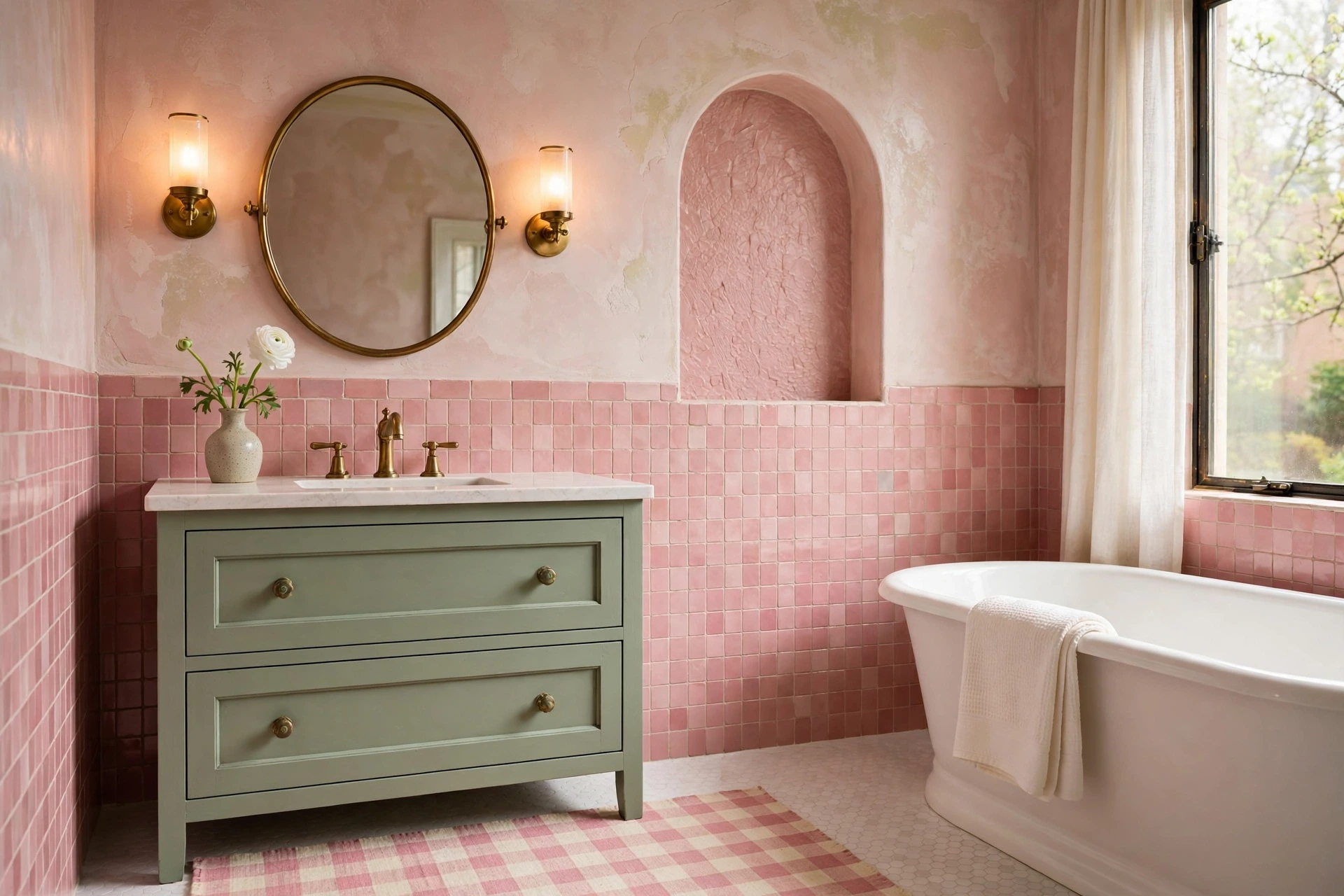
You walk in to wash your face. The walls are the color of warm plaster. The light from two small sconces lands softly on your skin. Nothing is loud, but the room feels like it was made for you.
That is what the right pink can do in a bathroom. It does not have to look sugary or childish. It can look calm, grown-up, and a little bit glamorous.
So why is pink a superpower in a bathroom? There are six reasons. Warm tones bounce a soft glow onto your face, which is why many designers use pink in rooms with mirrors. It softens hard materials like tile, steel, and glass. It looks bright in small rooms and cozy in big ones. It pairs with green, black, wood, and brass. It works in any style, from retro to modern. And on walls, it is one of the easiest colors to change later.
What does a grown-up pink look like? It is a pink with a drop of brown, yellow, or gray in it, like a plaster, a dusty rose, or a soft mauve. Designers often point to shades such as Farrow & Ball Setting Plaster for a quiet blush and Sulking Room Pink for a deeper, moodier rose. Sugary bubblegum pinks can work too, but they need a calm room around them.
These 16 ideas show how to use pink on walls, tile, vanities, floors, and tiny details, with real measurements, lighting rules, and budget swaps.
Table of Contents
The 16 Ideas
Plaster-Pink Walls
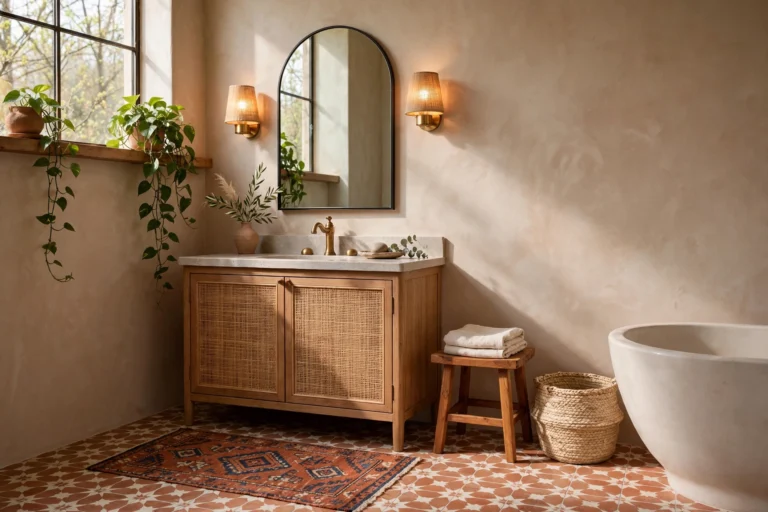
A plaster pink looks like old lime plaster in the sun, soft and slightly earthy. Choose a pink with a little yellow, beige, or gray in it so it does not read as candy. Pair it with warm white trim and a white or stone vanity top so the color stays calm. Paint is the quickest and cheapest way to try pink, because you do not have to change tile or fixtures. Use a moisture-resistant paint in a satin or semi-gloss finish, and make sure your exhaust fan works well.

Pink Shower Tile With Tone-On-Tone Grout
A wall of pink tile in the shower is the biggest, boldest way to use pink. Choose a handmade or glazed finish so the color shifts a little as the light moves. Use grout in a close tone, such as blush or warm white, so the wall reads as one soft surface. Contrasting grout adds a graphic look, but it shows every line and needs more cleaning. Order a few samples and lay them out on the floor first, so you can see them in your own light.

Keep and Style Vintage Mamie-Pink Tile
If you have an original 1950s pink bathroom, you may be sitting on a treasure. Pink tile became popular in the 1950s, and many retro fans work hard to keep it. Instead of ripping it out, style it with black or white trim, a vintage mirror, and a fresh coat of paint on the walls. Swap in a new white sink or toilet if needed, since white is easier to match than old pink. Resale opinions vary, so talk to a local agent if you plan to sell soon. If your home is older, have the tile, adhesive, and paint tested for lead and asbestos before any demolition or sanding.

A Pink Painted Vanity With a White Stone Top
A pink vanity is a gentle way to bring in color without covering the whole room. Paint a wood or MDF vanity in a muted rose or soft clay pink, then top it with white or soft gray stone. Add simple brass or matte black pulls so the cabinet looks grown-up. Keep the walls pale so the vanity is the star. If you change your mind later, a vanity is much easier to repaint than tile.

Pink Terrazzo Floor
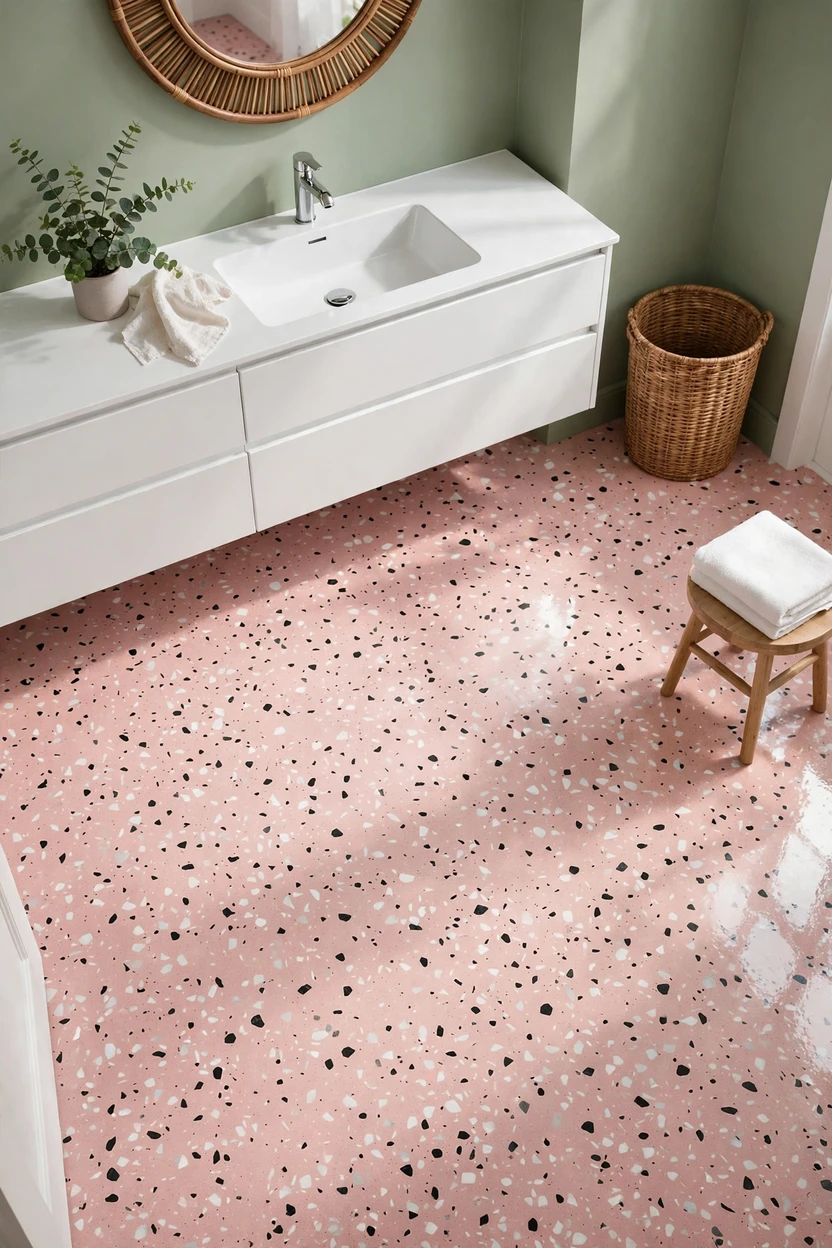
Terrazzo brings a speckled, playful floor without making the walls pink. Choose a pink or blush base with white, gray, and charcoal chips. The busy pattern hides dust and hair well, which helps in a small bathroom. Keep the walls and vanity calm, in white or soft sage, so the floor can speak. Real terrazzo needs sealing, and porcelain terrazzo-look tile is a lower-cost option.
Pink and Green Together
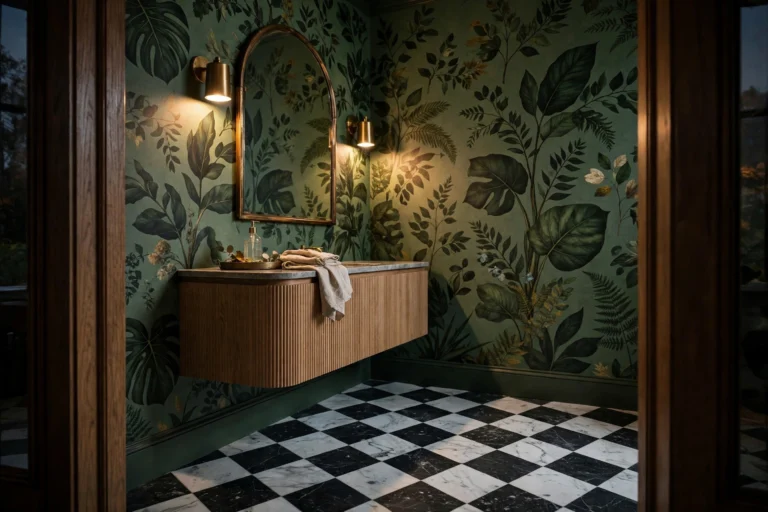
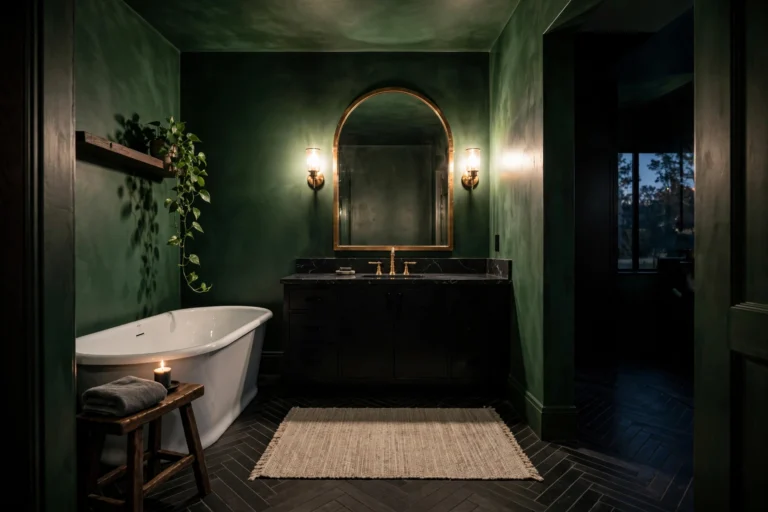
Pink and green are opposites on the color wheel, so they make each other look fresh. Try sage or olive green on the vanity with plaster pink on the walls. Or choose green tile with a pale pink ceiling. Keep one color as the star and the other as the supporting tone, so the room does not feel like a split. Add a touch of brass or wood to tie the two together.

Retro Pink and Black With a Checkerboard Floor
Pink and black make a playful, graphic pair that nods to the 1950s. Use black trim, black fixtures, or a thin black tile band against pink walls. A black and white checkerboard floor adds energy without needing more color. Keep the rest of the room white and simple. If you want it less sweet, choose a dusty rose instead of a baby pink.
Related: 17 Black and White Bathroom Ideas That Look Great on Camera

A Color-Drenched Pink Powder Room
In a tiny room, painting everything the same color can look surprisingly calm. Use one pink on the walls, trim, door, and ceiling, so there are no lines to break up the space. Designers often suggest going all out in a small bathroom or spare room. Pick a matte or soft finish and use a durable, moisture-friendly paint. Add a bright mirror and a warm light so the pink glows.

Moody Mauve With Candlelight
A deeper rose or mauve makes a bathroom feel like a quiet boudoir. Pick a muted mid-tone pink with a little gray or brown, like a dusty mauve. Pair it with warm brass, dark wood, and cream linen towels. Add candles in a safe spot away from towels, or battery candles near the tub. In low light this color becomes rich and calm, so use dimmers if you can.
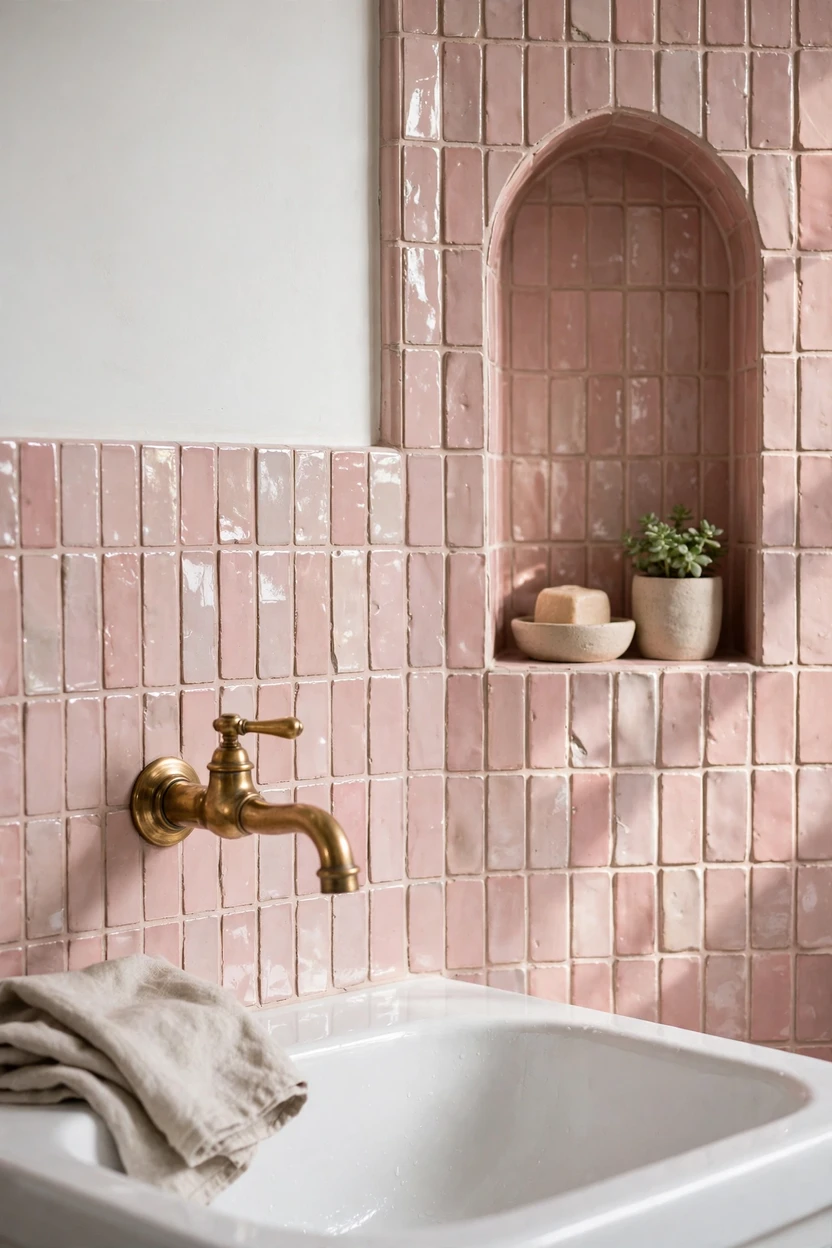
Pink Zellige Backsplash and Arched Niche
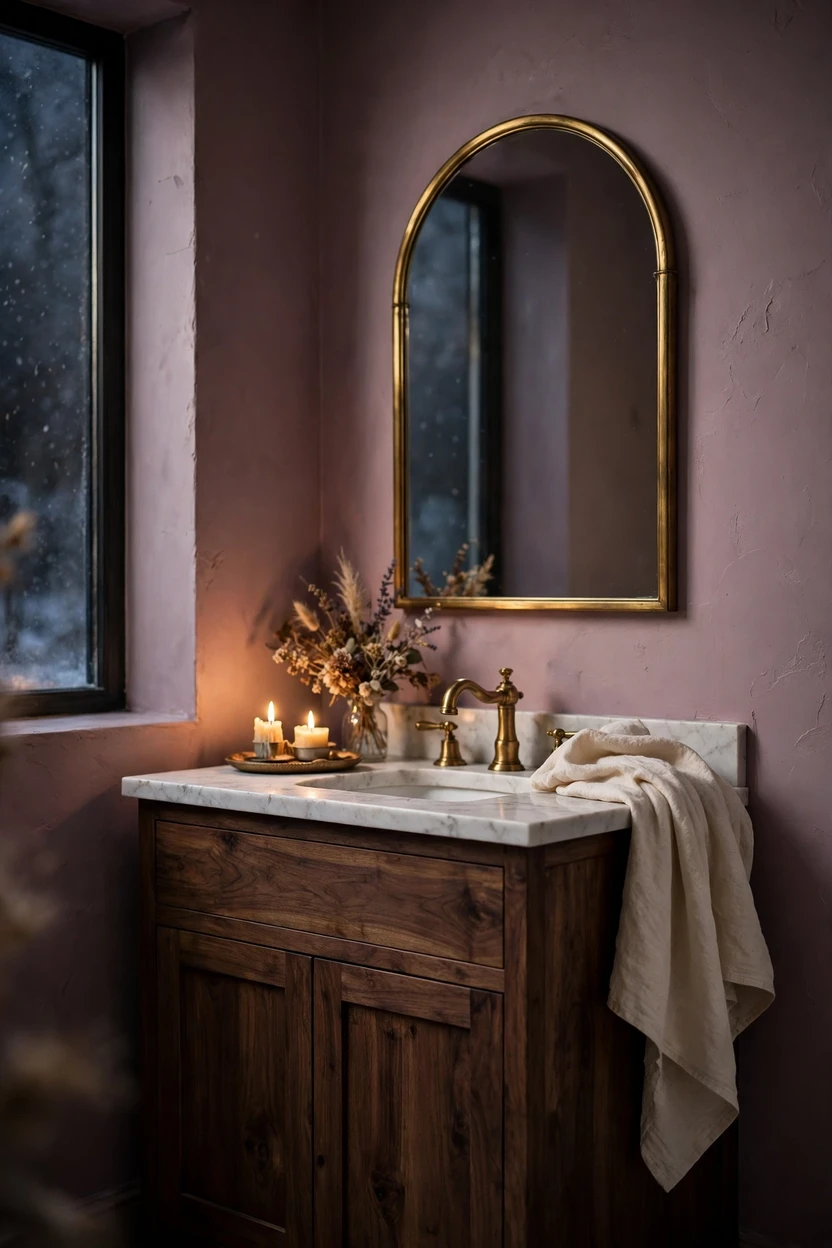
Handmade zellige-style tile has a slight wobble and shine that makes pink look alive. Use it as a backsplash behind the sink or inside a shower niche. An arched niche adds a soft, sculpted shape. Choose a blush or clay pink and use a warm grout. Leave the rest of the walls plain so the tile stands out.
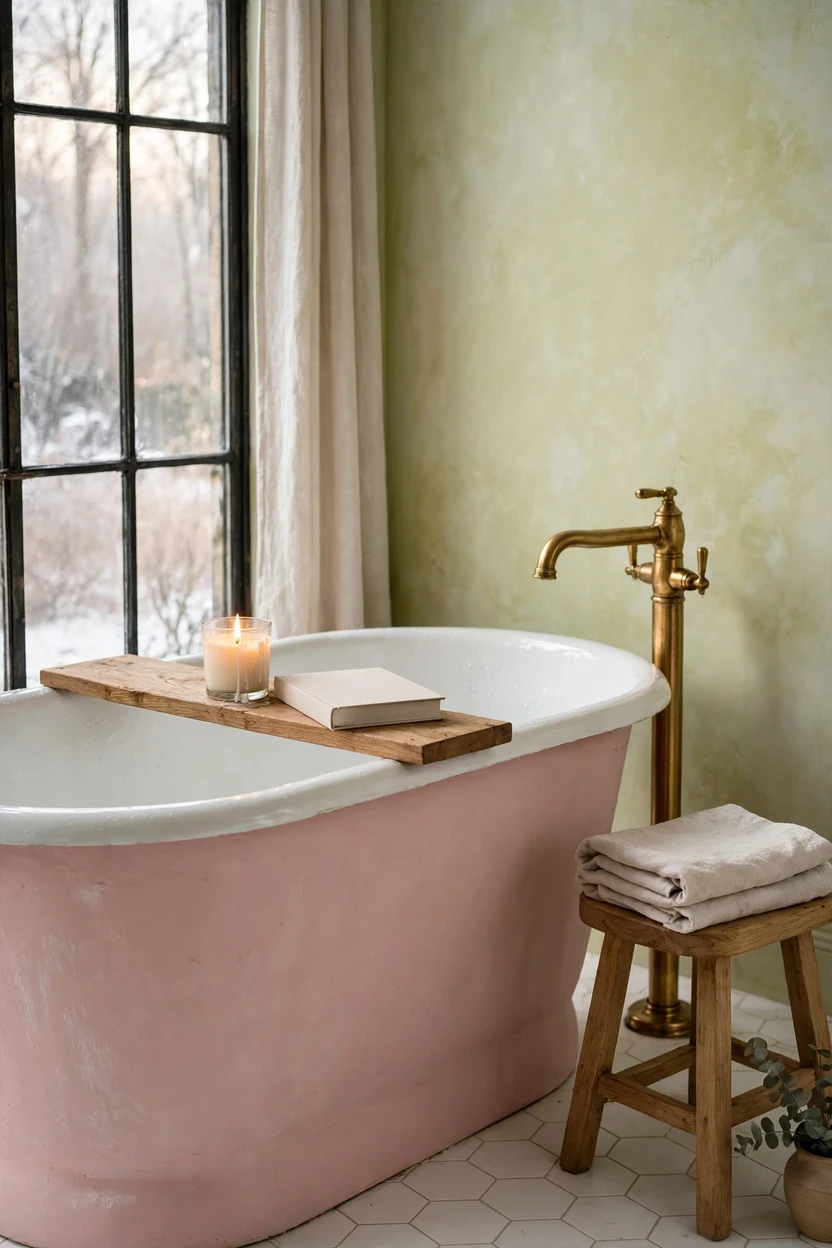
A Pink or Painted Freestanding Tub
A soft pink tub makes the bathroom feel like a boutique hotel suite. If your tub is white, a painted exterior in blush or rose adds color without new plumbing. Use paint made for tubs and follow the instructions for prep and cure time. Keep the walls pale and the floor simple so the tub is the focal point. Add a brass floor-mounted faucet or a simple tray across the tub for a candle and a book.
Brass Fixtures and Eye-Level Sconces
Warm metal makes pink look rich, and good lighting makes it look flattering. Choose brass, aged brass, or brushed gold faucets and hardware, and repeat them in the mirror frame or lights. Place a sconce on each side of the mirror, centered around 60 to 66 inches from the floor, so light reaches your face evenly. Space them about 36 to 40 inches apart. Use warm LED bulbs around 2700 to 3000K with a high color rendering index, about 90, so skin tones look natural.

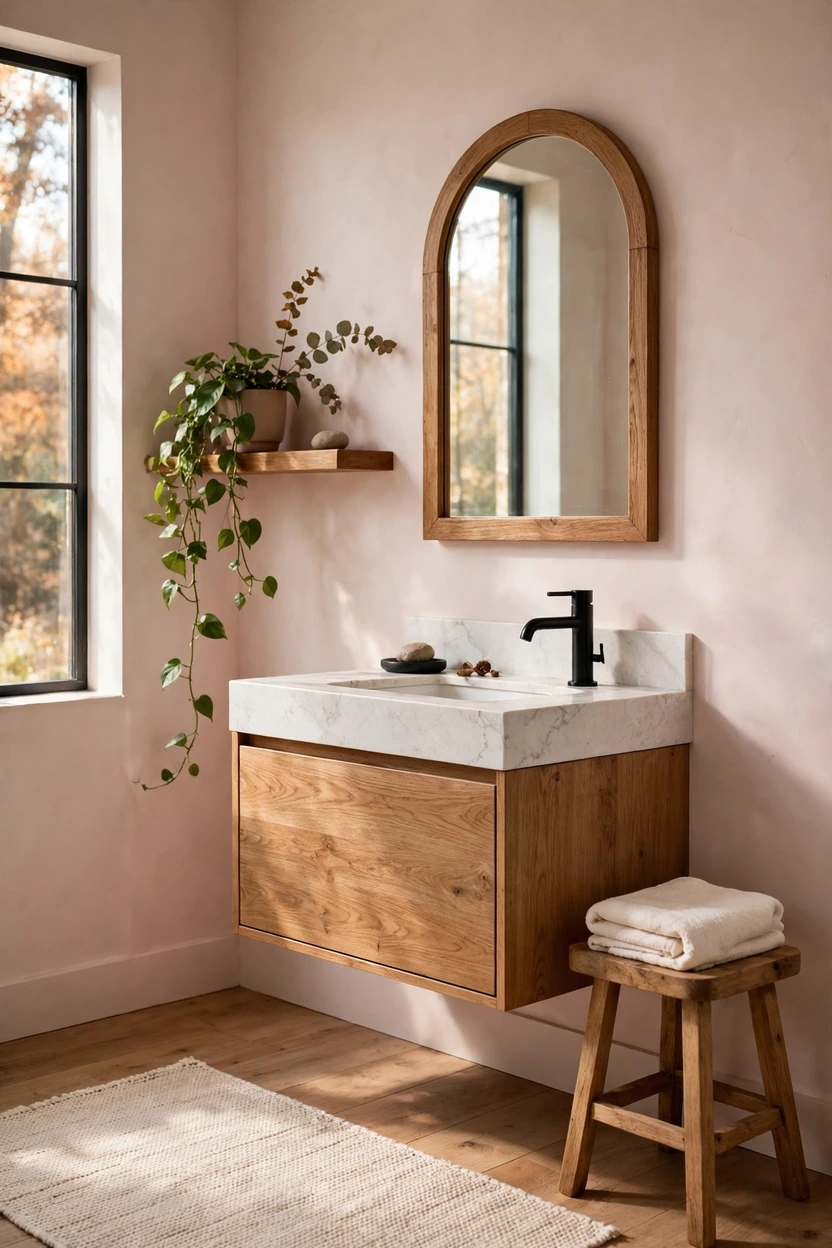
Pink With Warm Wood
Wood keeps pink from feeling sweet. A walnut or oak vanity, a wooden stool, or a wood framed mirror adds warmth and balance. Pale pink walls look especially good with mid-tone wood, while deeper pinks work with darker wood. Seal any raw wood well, since steam and splashes can damage it. Add a linen towel or a cotton rug in cream to tie it together.
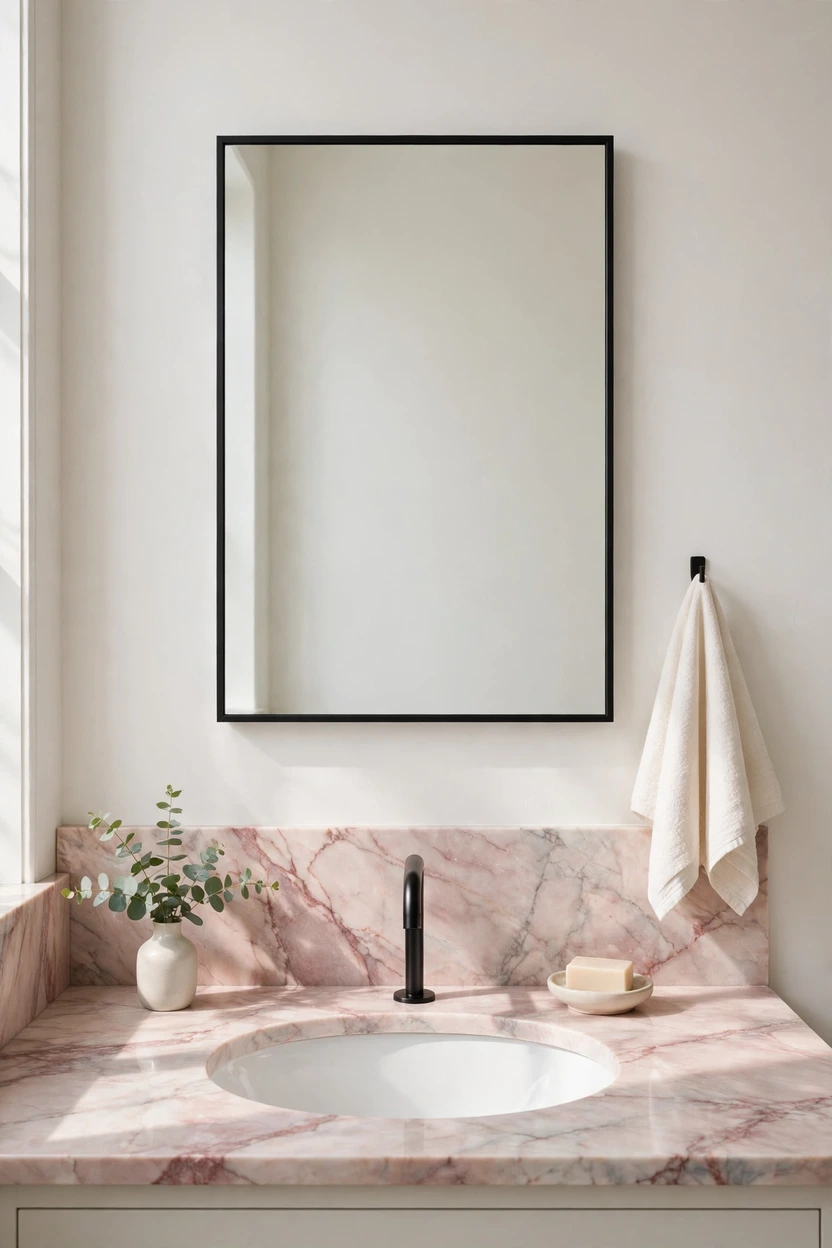
A Pink Marble Vanity Wall
Pink-veined marble or pink stone brings a slow, quiet drama. Use it behind the sink, as a slab on the vanity wall, or as a simple countertop. The natural veins mean no two pieces look the same. Keep the walls and fixtures simple, in white, brass, or black, so the stone shines. Real stone needs sealing, and pink-toned porcelain slabs are a lower-cost, lower-maintenance option.
Pink Wallpaper That Peels Off
Wallpaper is the easiest way to add pink pattern to a powder room or rental bathroom. Choose a small floral, a soft stripe, or a simple geometric in pink and cream. Peel-and-stick styles are a good pick for renters. Avoid putting paper right next to a shower or tub splash zone. Wipe the wall clean and let it dry before sticking, and make sure your fan keeps humidity down.

Pink Accents Only
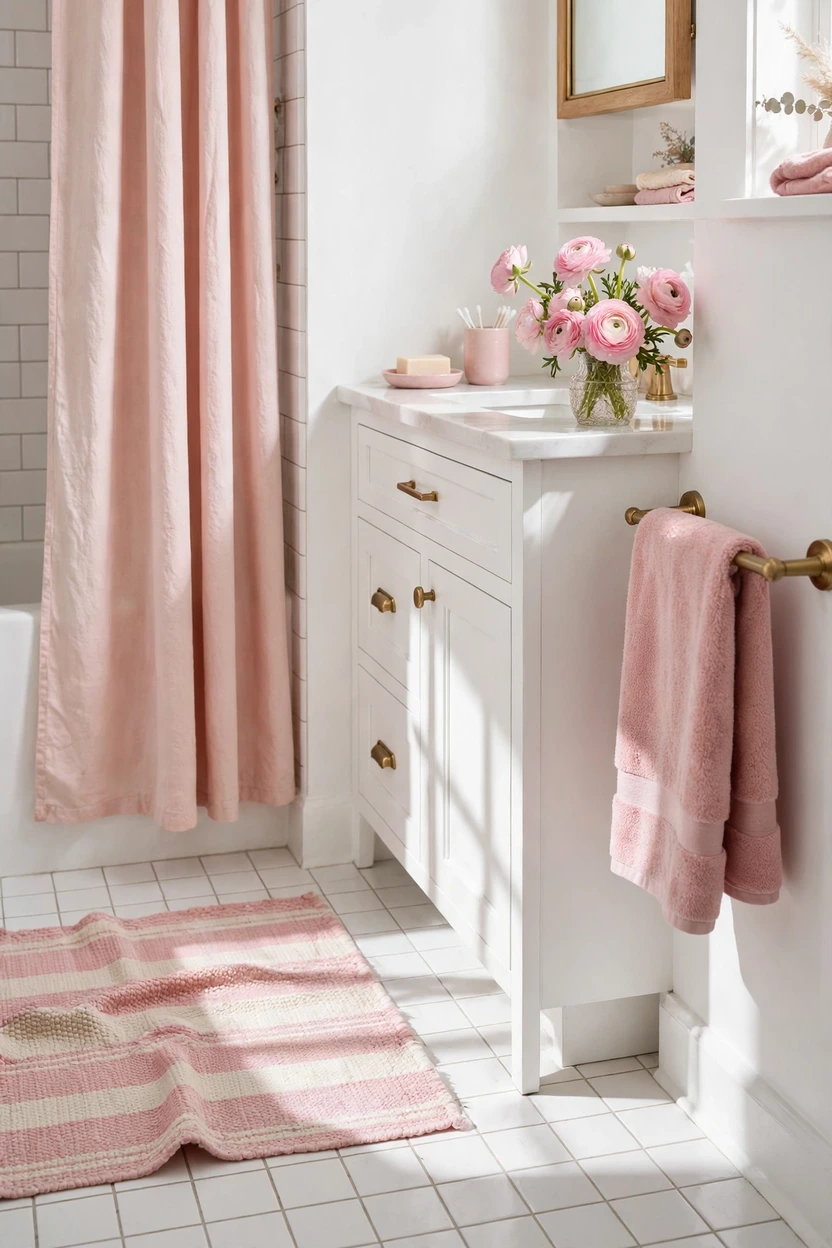
You do not need to remodel to enjoy pink. Start with a few pink touches: a rug, a shower curtain, a towel, a ceramic soap dish, and a vase of pink flowers. Add a pale pink candle or a soft pink art print. If you like the look, you can later paint or tile in the same tone. This is also the least risky way to test what shade you love in your own light.
Styling Tips for a Grown-Up Pink Bathroom
A few habits keep pink looking polished.
Pick one hero pink. Choose a main pink and let the other colors be calm.
Check the undertone. Pinks with a touch of brown, yellow, or gray feel grown-up.
Add a neutral anchor. Warm white, cream, or soft gray keeps the room balanced.
Mix finishes. Use brass, wood, and ceramic so the room does not feel flat.
Repeat one color. Echo pink in a towel, a rug, or flowers, but do not match everything.
Let light shape the color. Look at paint and tile in morning, afternoon, and evening light.
Add a little green. A plant or a sage towel makes pink look fresh.
Practical Implementation: A Plan From Paint to Polish
Follow this order so you do not regret a choice.
Test the pink first. Paint a large sample board and look at it in morning, noon, and evening light, with your actual fixtures nearby.
Check your ventilation. Make sure the exhaust fan works well, since steam is hard on paint and wallpaper.
Choose the hero. Decide if the pink will live on walls, tile, vanity, or floor.
Prep the surface. Clean, repair, and prime walls so the color goes on evenly.
Use the right products. Pick moisture-resistant paint, bathroom-rated wallpaper, and sealed wood.
Add the lighting. Place sconces near eye level at about 60 to 66 inches, with warm bulbs.
Finish with texture. Add a rug, towels, and a plant.
Edit. Take one thing out before you call it done.
Common Mistakes to Avoid
These are the slips that make a pink bathroom feel off.
Related: 23 Coastal Bathroom Ideas That Look Calm, Not Kitschy
Skipping paint samples. The same pink can look peachy, gray, or purple in different light.
Using cool white bulbs. They can make pink look flat and skin look pale.
Matching everything. A pink sink, tub, toilet, and walls can look like a theme.
Forgetting ventilation. Steam can peel paint and wallpaper and grow mold.
Ignoring undertones. A cool pink next to a warm wood can clash.
Using the wrong paint. Flat paint in a steamy room can stain and peel.
Skipping safety checks in an older home. Test for lead and asbestos before demolition or sanding.
Using too many patterns. Pick one pattern, like tile or wallpaper, not both.
Small-Space Alternatives
Pink can work in even a tiny bathroom.
Color drench. Paint walls, trim, and ceiling in one pink to hide awkward lines.
Pale pink walls. Light shades bounce light and feel airy.
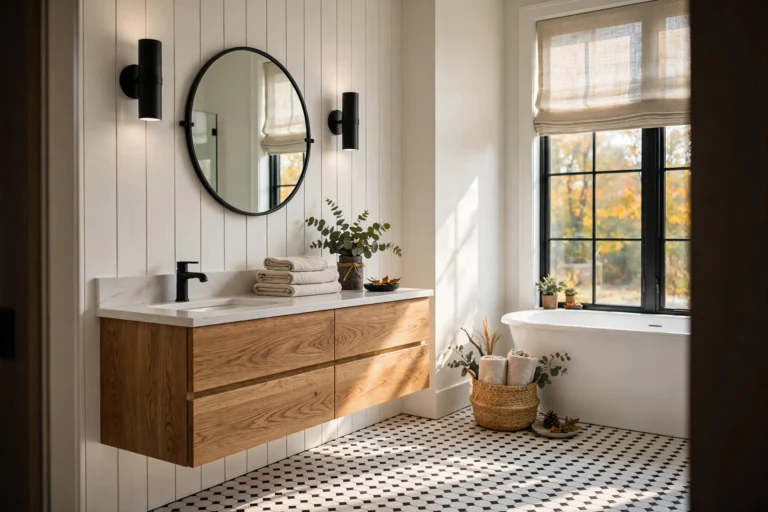
Use a wall-hung vanity. It shows more floor, so the room feels bigger.
Pick a clear shower screen. It keeps the sight line open.
Choose a round mirror. Curves soften tight corners.
Hang sconces instead of a bulky fixture. They free up wall space and light your face.
Keep patterns small. Small tiles and prints make the room feel larger.
Budget-Friendly Alternatives
Pink does not have to be expensive.
Under an hour
Swap in pink towels, a pink soap dish, and a vase of flowers.
Replace cool bulbs with warm ones.
Add a pink and cream bath mat.
Under a weekend
Paint the walls in a soft plaster pink with moisture-resistant paint.
Paint the vanity cabinet and add new pulls.
Stick peel-and-stick wallpaper on one wall or in a powder room.
Under a month
Replace the faucet and mirror with brass pieces.
Add a backsplash in pink tile behind the sink.
Install sconces at eye level on each side of the mirror.
Pro Styling Recommendations
These are the habits designers use to make pink look refined.
Think in undertones. Match the pink to your tile, wood, and metal.
Use contrast. Pair soft pink with a deeper green, black, or wood.
Light the face. Sconces at eye level beat a single overhead light.
Balance hard and soft. Pair glossy tile with matte paint and soft linen.
Pick finishes with care. Glazed tile reflects light, and matte paint absorbs it.
Edit your accessories. Choose a few quality items instead of many small ones.
Plan for change. Use paint, wallpaper, and vanities so you can update later.
FAQs
Is pink a good color for a bathroom?
Yes. Many designers like pink in bathrooms because it creates a warm, flattering glow around mirrors and softens hard materials. Pick a grown-up shade with a touch of brown, yellow, or gray, and use good lighting.
What pink paint colors work best in a bathroom?
Designers often mention soft plaster pinks like Farrow & Ball Setting Plaster, deeper rose or mauve shades like Sulking Room Pink, and dusty rose tones from many brands. Always test a sample first, because undertones change with light.
What colors go with pink in a bathroom?
Warm white, cream, sage, olive, emerald, black, brass, and warm wood all work. Pink and green is a popular pair. Pink and black gives a retro look, and pink with wood feels cozy.
Does a pink bathroom look dated?
Not if you choose modern shades and finishes. Plaster pink, dusty rose, and mauve feel current. A retro 1950s look can also feel charming when styled with care. It depends on the shade, the finishes, and how you edit.
Should I keep my original pink bathroom tile?
Related: 20 Modern Farmhouse Bathroom Ideas That Look Pinterest Perfect
It can be a good idea, since original tile can be hard to replace and has real character. You can update walls, lighting, and fixtures around it. Resale opinions vary, so talk to a local agent if you are selling. Before any demolition in an older home, have the materials tested for lead and asbestos.
How should I light a pink bathroom?
Place sconces on each side of the mirror, centered at about 60 to 66 inches from the floor and roughly 36 to 40 inches apart. Use warm LED bulbs around 2700 to 3000K with a CRI of about 90 so skin tones look natural.
What paint is best for a bathroom?
Use a moisture-resistant paint in a satin or semi-gloss finish, and make sure your exhaust fan is working. Prime first, and let the paint cure before heavy steam. Follow the product directions.
Can renters have a pink bathroom?
Yes. Use peel-and-stick wallpaper in dry zones, a pink shower curtain, a pink rug, towels, and accessories. You can also paint a vanity front if your lease allows it.
How do I keep pink from looking too girly?
Choose a muted shade with warm undertones, add wood, brass, black, or green, and keep the palette small. Avoid matching every item in pink.
What is the best tile for a pink bathroom?
Handmade-look glazed tile, zellige-style tile, square tile, or terrazzo-look porcelain all work well. Choose a grout color close to the tile for a soft look or a contrast for a graphic look. Order samples and test them in your light.
Conclusion
Color is the cheapest big change you can make in a bathroom. Pink, used with care, can make a small room feel warm and a plain room feel designed.
Pick one idea and test it. Paint a sample board, look at it all day, and choose the shade that makes you feel calm and a little bit happy. Then add brass, wood, or green and light the mirror well.
You do not need a remodel to feel the difference. You need a color you love, good light, and the nerve to try it.