20 Vintage Garden Decor Ideas for a Storybook Yard (Thrifted)
You open the back door and step into a story.
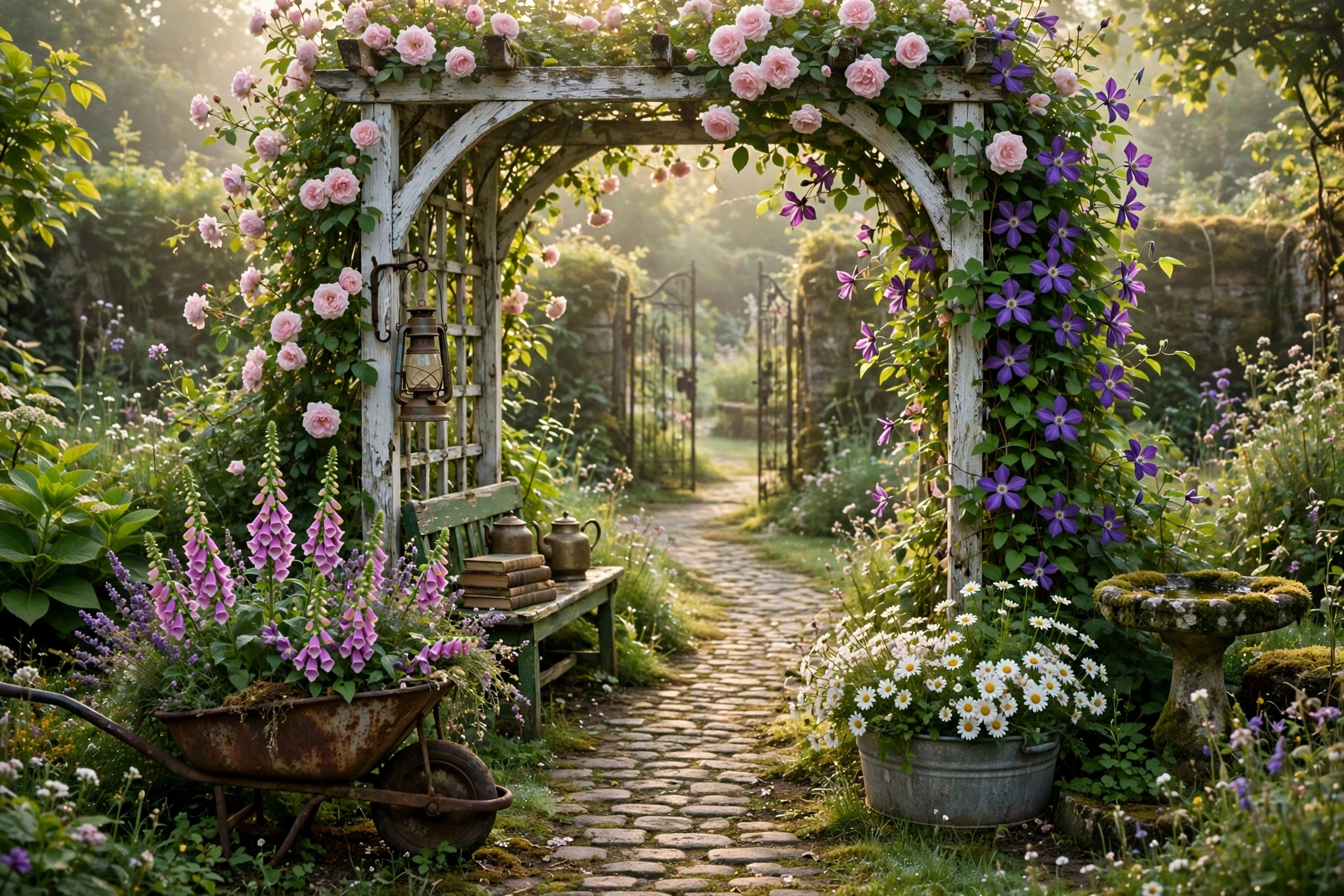
A rose-covered arch frames the way in. A path curves past a rusty wheelbarrow spilling over with foxgloves. At the end, a weathered bench waits under an old lantern, with a teapot on the arm.
That’s a storybook yard. And it doesn’t need a big budget or a big lot. It needs a plan and a few good old things.
Most vintage garden ideas are lists of things to buy. Most fairytale garden guides are lists of plants. This article puts them together. You’ll see where to put each piece, how to plant around it, and how to keep it safe and sturdy.
Think of it as a short story with four parts: an entrance, a path, a place to pause, and small surprises. Then fill it with weathered pieces and flowers that spill over the edges.
The storybook test: A vintage garden feels like a storybook when it has one entrance, one winding path, one place to sit, and at least three small surprises. Repeat two or three colors and keep the pieces weathered, not messy.
Table of Contents
The Entrance and Path
1. Start With a Rose Arbor as Page One
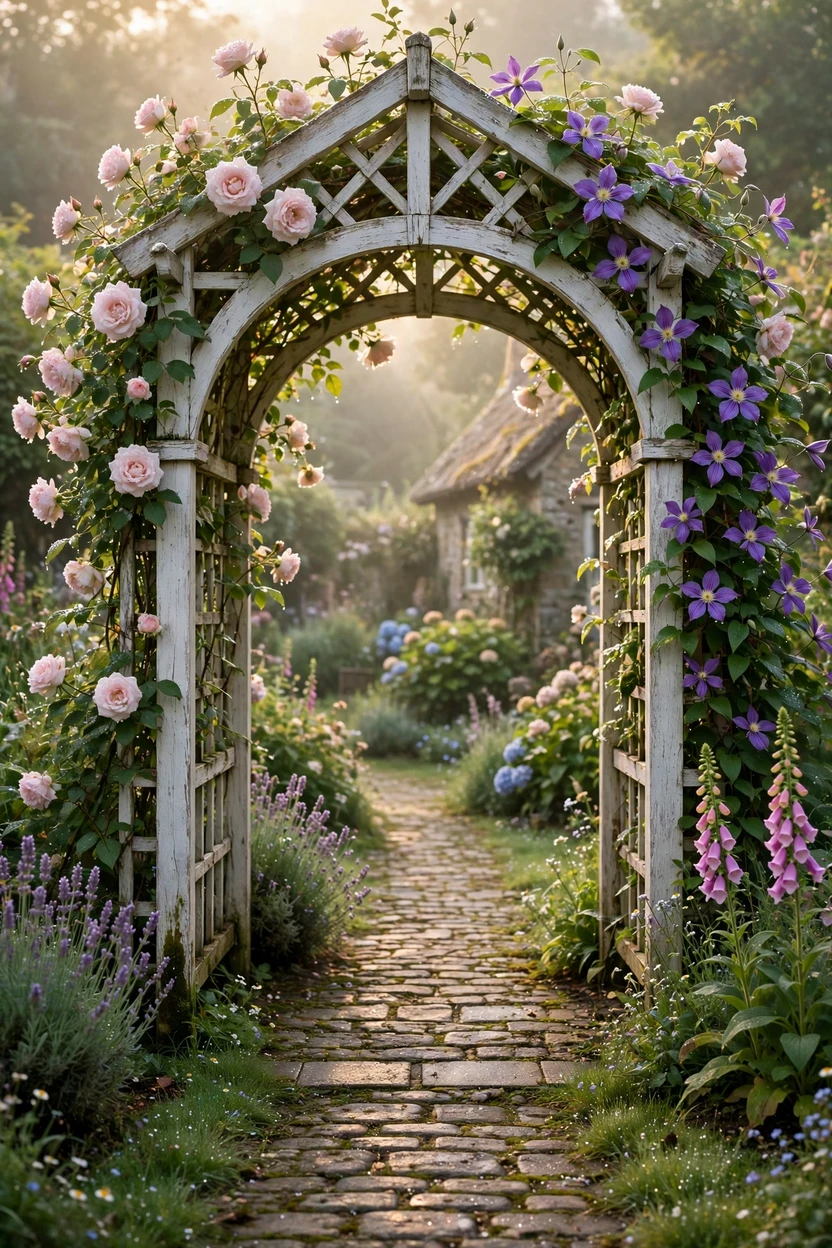
An arbor tells visitors that something special starts here. Choose a wood or iron arbor at least 7 feet tall and 4 feet wide inside, so you can walk through without ducking. Plant climbing roses, clematis, or sweet peas at the base, and tie the stems loosely as they grow. A weathered white or soft gray finish looks the most vintage, and a bit of peeling paint adds to the story. Place it at the start of your path, so the arch frames what’s beyond.
2. Lay a Winding Path
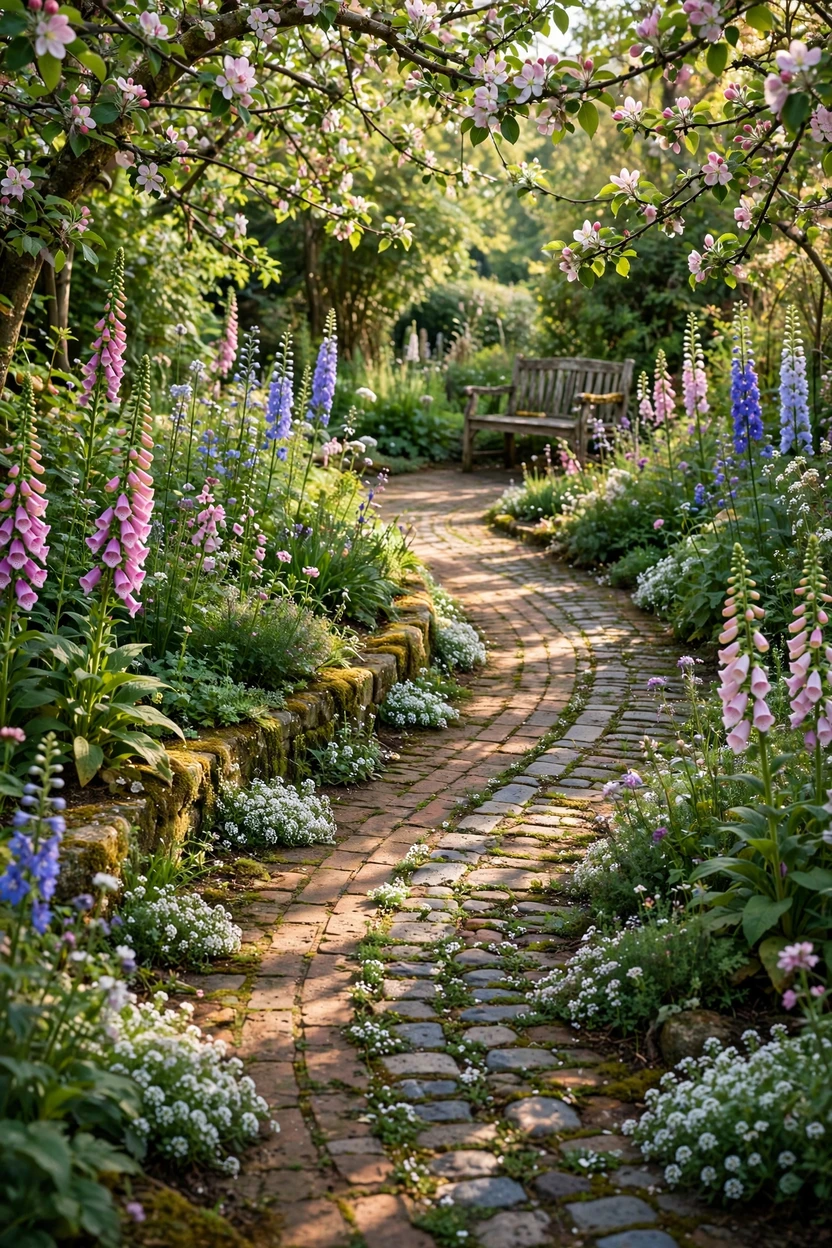
A straight path gets you there. A curved one invites you to look around. Use cobbles, old brick, flat stones, or gravel, and keep the main path about 36 inches wide so two people can walk side by side. For stepping stones, space them about 24 inches center to center so each step feels natural. Let low plants like thyme or alyssum spill over the edges to soften the lines. Curve the path around a tree, a bench, or a flower bed, so the destination stays a surprise.
3. Hang a Weathered Gate
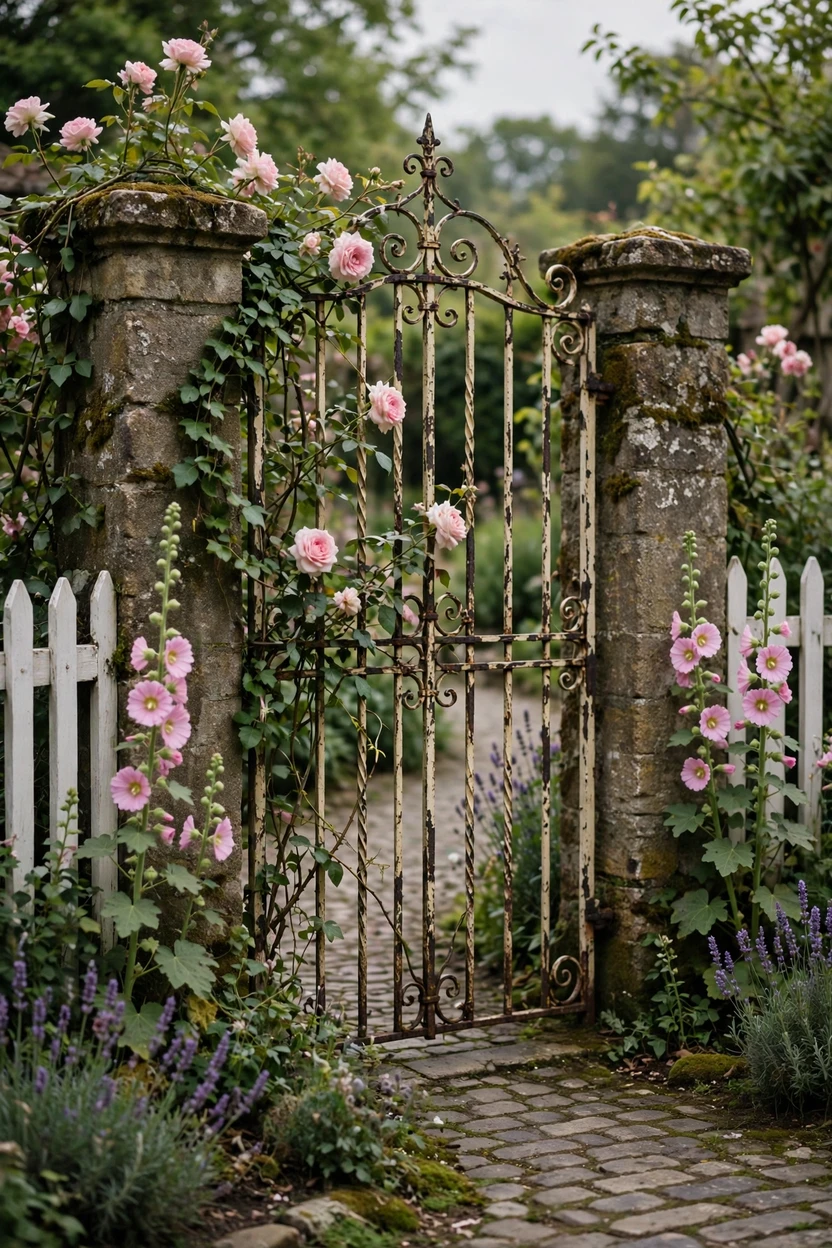
A gate marks a threshold even when there’s no fence. Find a vintage wrought iron or wooden gate at a salvage yard, and set it between two posts or stand it freestanding as a feature. Leave the paint chipped, or add a thin coat of clear sealer to slow the rust. Let climbing plants wind through the bars. A short picket fence on each side makes the gate look like part of a cottage yard.
4. Line the Path With Lanterns
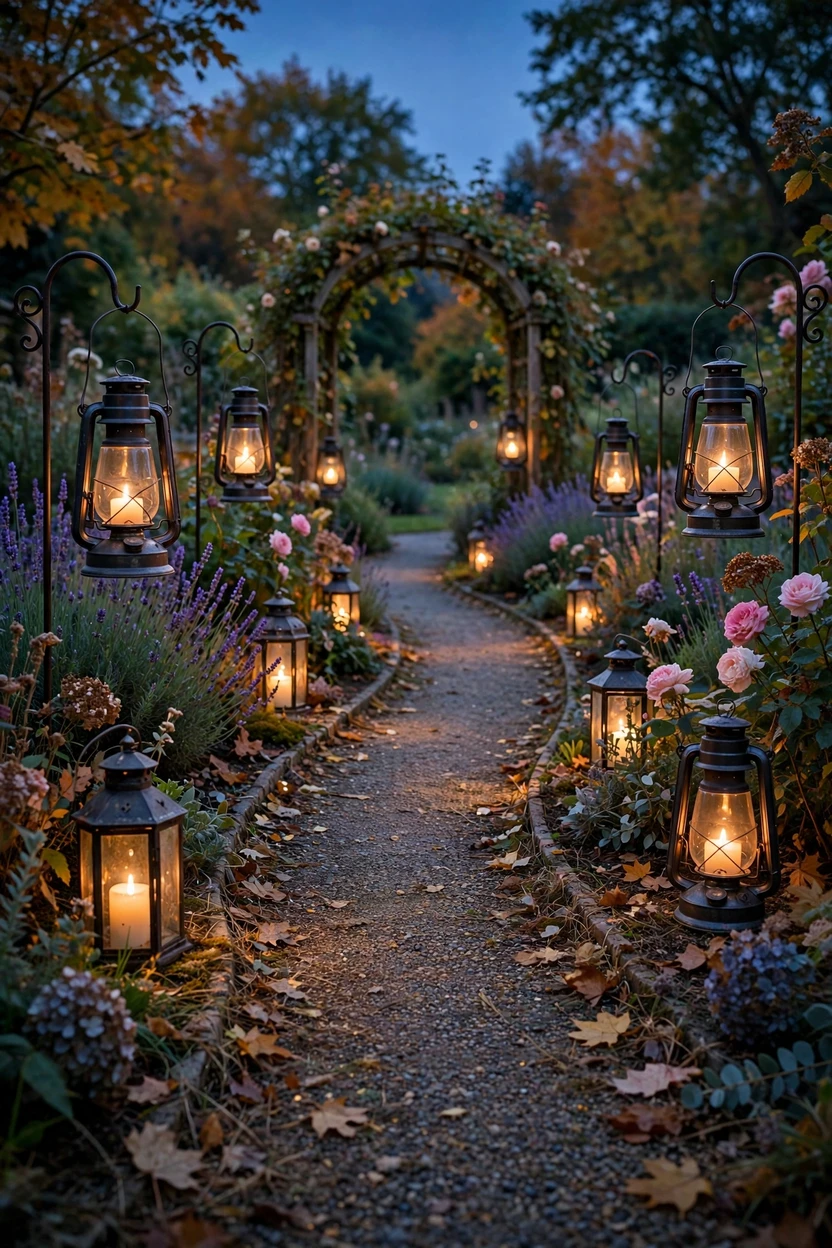
Vintage lanterns give a path a soft glow and a bit of history. Choose metal or glass lanterns with a worn finish, and hang them from shepherd’s hooks or set them on the ground along the edges. Use solar candles or flameless LED inside, since real flames are risky around dry plants. Space them every 4 to 6 feet so each one makes a small pool of light. Group three at the bend of a path for a gentle focal point.
Planters From Old Things
5. Plant in a Galvanized Tub
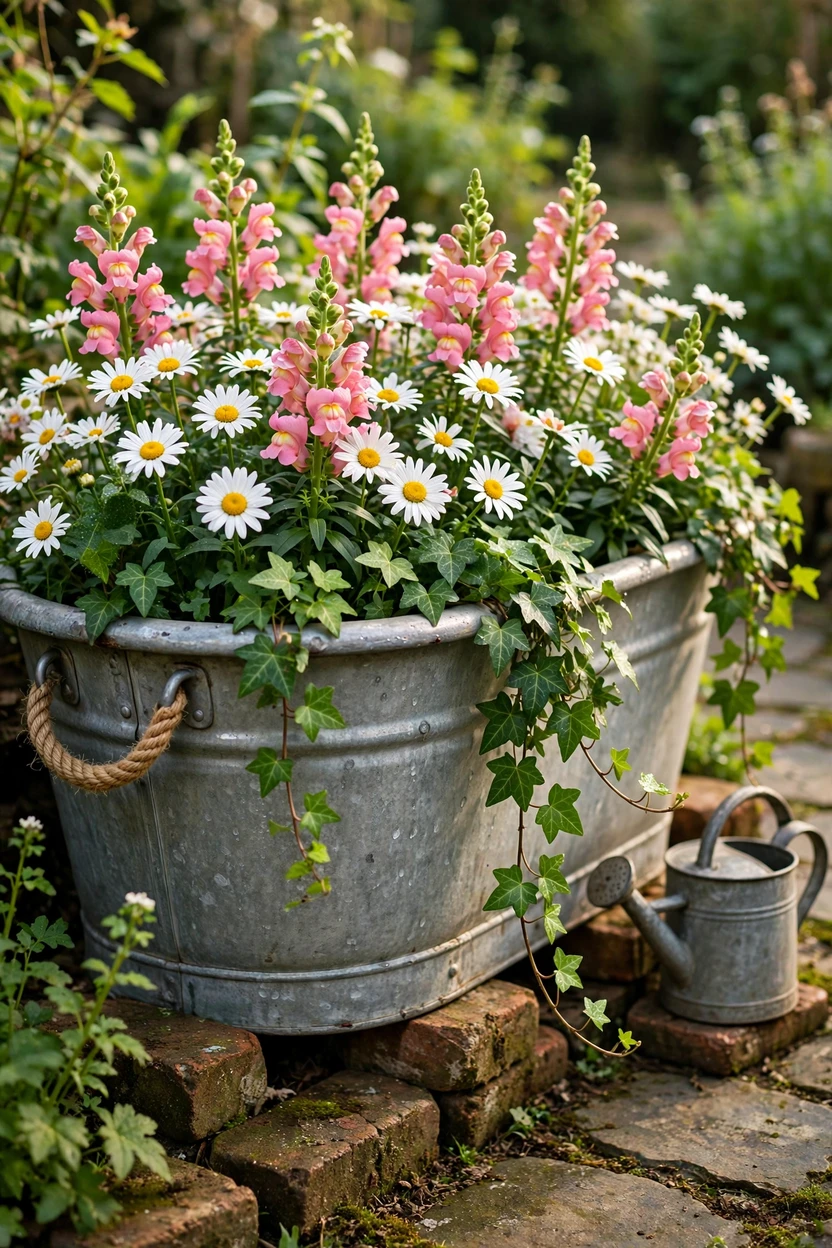
A galvanized washtub is one of the easiest vintage planters. Drill several drainage holes in the bottom, add a layer of gravel, and fill with potting mix. Plant a mix of tall, medium, and trailing plants, such as snapdragons, daisies, and trailing ivy. If you’re growing edibles, line the tub with a plastic pot inside, or use it only for flowers. Raise the tub on bricks so water drains freely.
6. Fill an Old Wheelbarrow
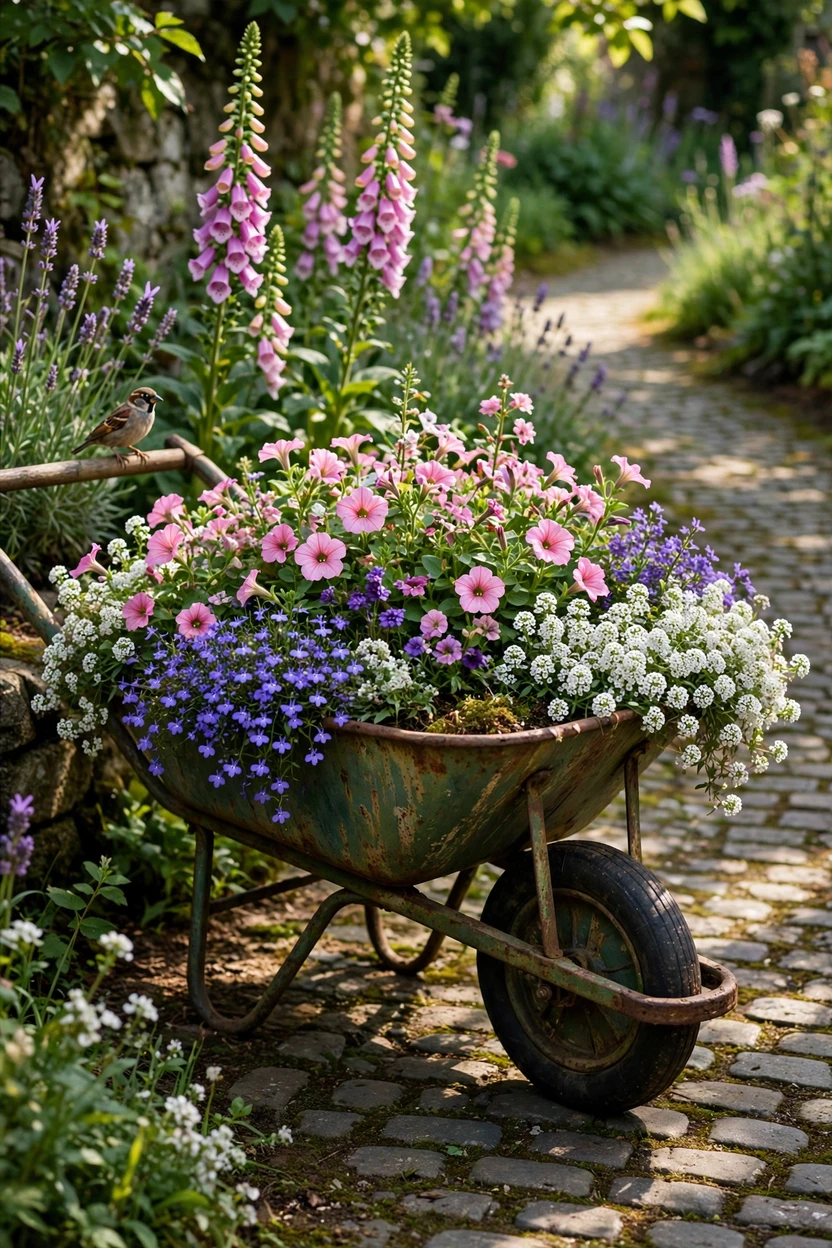
A rusty wheelbarrow is a classic storybook prop. Drill drainage holes in the tray, set a few potted plants inside, or fill it with soil and plant directly. Use plants that spill over, like petunias, lobelia, and sweet alyssum, with something tall like salvia in the middle. Park it at a bend in the path or beside a bench. Seal rust with a clear coat if you want to keep it from staining stones.
7. Upcycle Enamel Basins, Kettles, and Pitchers
Small vintage kitchen pieces make cute planters in a garden. Use old enamel basins, kettles, colanders, and pitchers, and drill or punch drainage holes in the bottom. Plant succulents, herbs, or small flowers in each, and group them on a stool, a stump, or a step. Mix colors like cream, pale blue, and red for a collected look. Wear gloves when handling rusty or sharp edges.

8. Park a Vintage Bike With a Flower Basket
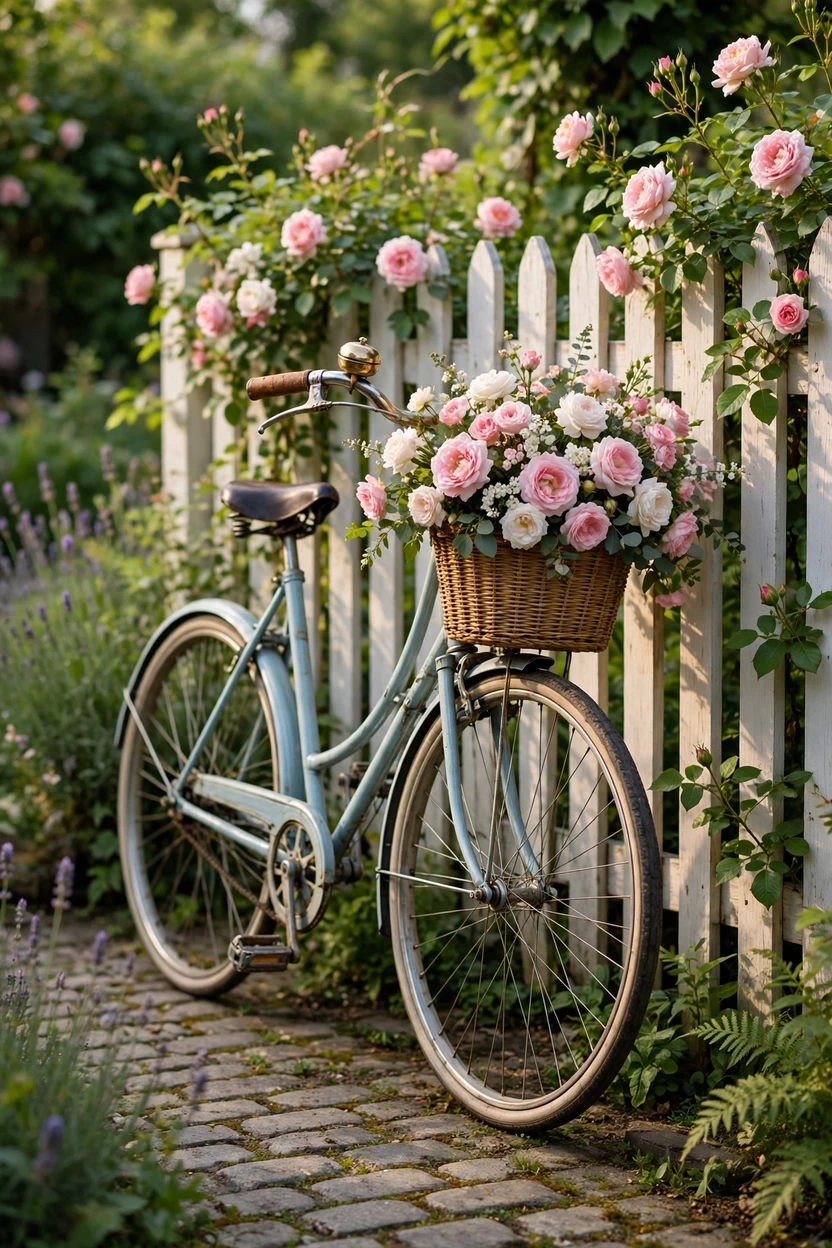
An old bike is a conversation starter and a quick focal point. Lean it against a fence or arbor, and fill the front basket with flowers in a pot. Choose a faded color, like cream, pale blue, or sage, and leave the rust and patina as they are. Add a small bell or a ribbon on the handlebar for a touch of whimsy. Remove the tires or lock it to a post if you want it to stay put.
9. Reuse Old Windows and Doors
Old windows and doors bring cottage charm to a yard. A window frame can become a small cold frame to start seedlings, or you can hang it on a fence as a rustic mirror frame. A door leaned against a wall makes a dramatic backdrop for pots and vines. Choose pieces with a chippy, faded paint finish. If the paint is old, seal it with a clear coat since it may contain lead, and keep kids and pets away from flaking bits.

10. Add a Whiskey Barrel and Stone Urns
Big containers anchor a garden and give it height. A half whiskey barrel fits a mix of tall grasses, lavender, and trailing plants, and it adds a rustic look. Stone or cast iron urns work well at a path entrance or beside a bench. Raise heavy pots on small feet or bricks to help drainage. Repeat the same type of pot twice, such as a pair of urns flanking the arbor, so it feels intentional.

Places to Pause
11. Place a Bench Under the Arch
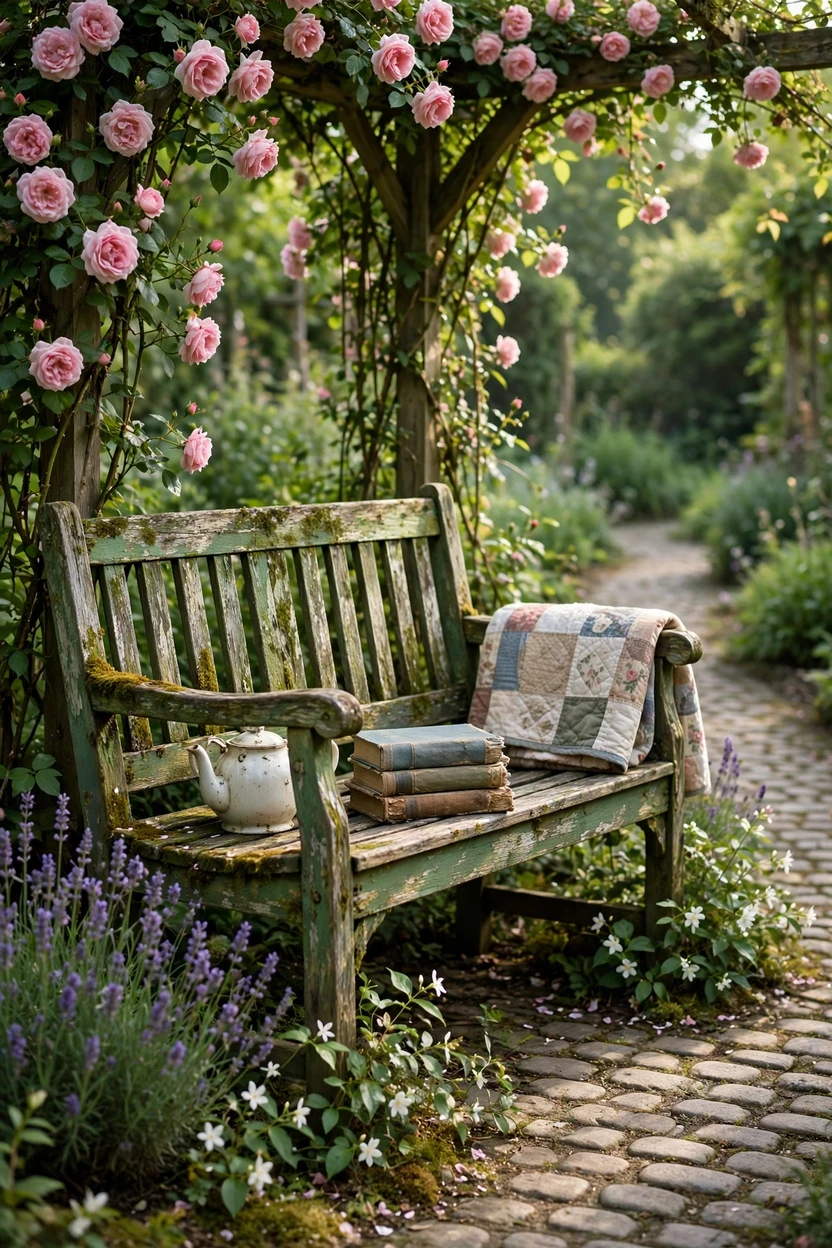
Every story needs a place to pause. Set a weathered bench beneath an arbor, under a tree, or at the end of a path. Choose wood or iron with chippy paint, and keep the seat about 18 inches high. Add a vintage teapot, a stack of old books, or a folded quilt for a lived-in look. Plant fragrant flowers, like lavender or jasmine, nearby so the spot smells as good as it looks.
12. Style a Potting Bench Vignette
A potting bench works hard and looks pretty too. Display a few clay pots, a watering can, old hand tools, and a basket on the bench top, and hang a few tools on hooks on the wall behind it. A vintage mailbox is a handy way to store gloves and small tools. Keep the display to a few items and rotate them with the seasons. Seal the wood with an exterior sealer to protect it from rain.

13. Set a Tea Table for Two
A tiny tea table feels like the middle of a fairytale. Use a small vintage bistro table, two mismatched chairs, and a lace or linen cloth. Add a teapot, two cups, a cake stand, and a jar of wildflowers. Place it in a shady corner, under a tree, or beside a hedge. Bring out the dishes only for the occasion, and use sturdy, weatherproof pieces for everyday display.

Small Surprises
14. Add a Birdbath and Bird Feeders
Birds bring life and sound to a storybook yard. Choose a mossy stone birdbath or a vintage pedestal bath, and keep the basin shallow, about 2 inches deep. Refill and scrub it often to keep it clean. Hang a teacup feeder from a branch, and add birdhouses on posts or trees. Plant berry shrubs and seed-bearing flowers nearby to keep them coming back.

15. Lean a Ladder as a Plant Stand
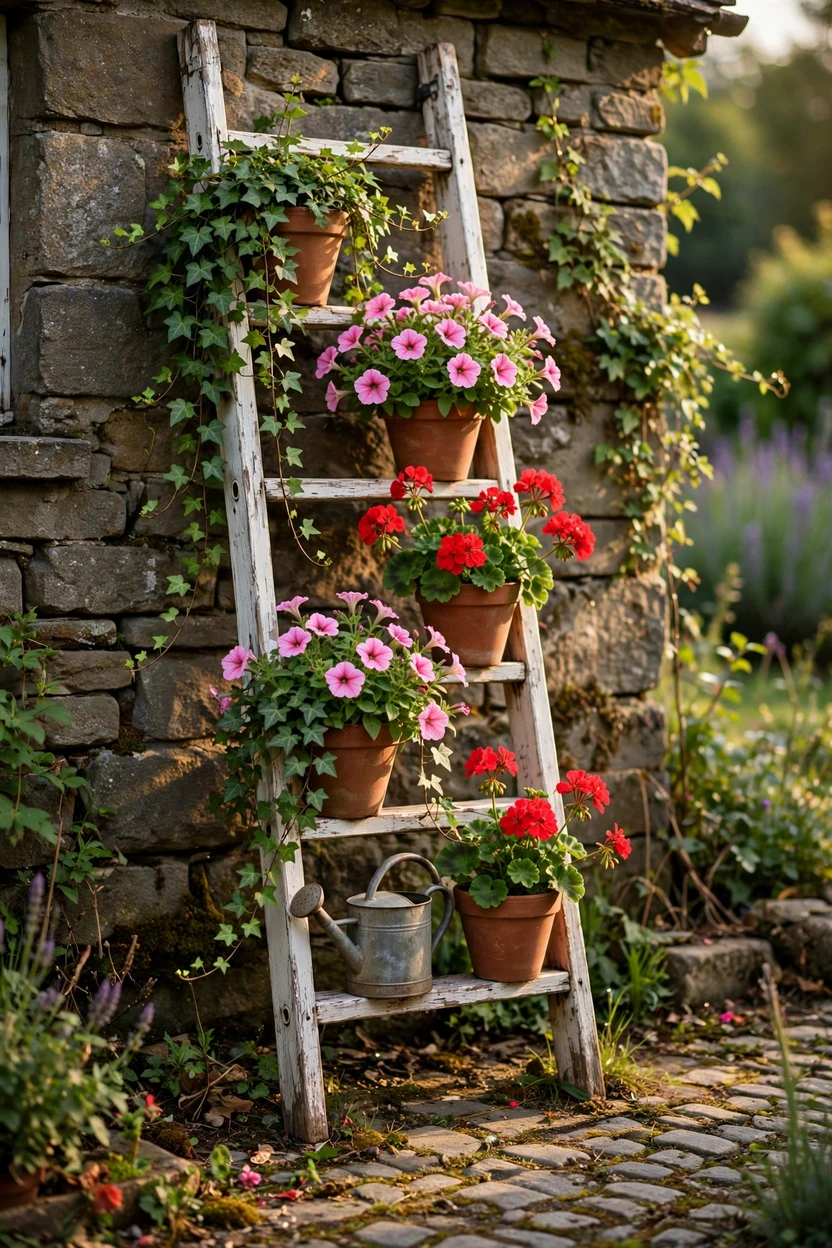
An old wooden ladder makes a tall, airy plant display. Lean it against a wall or fence, and set pots on each rung, with taller ones at the bottom. Use trailing plants like ivy, petunias, and strawberries on the upper steps. Make sure it’s stable by securing the top to the wall with a hook or wire. Sand any splintery spots and finish with a clear exterior sealer.
16. Hide a Garden Mirror in the Greenery
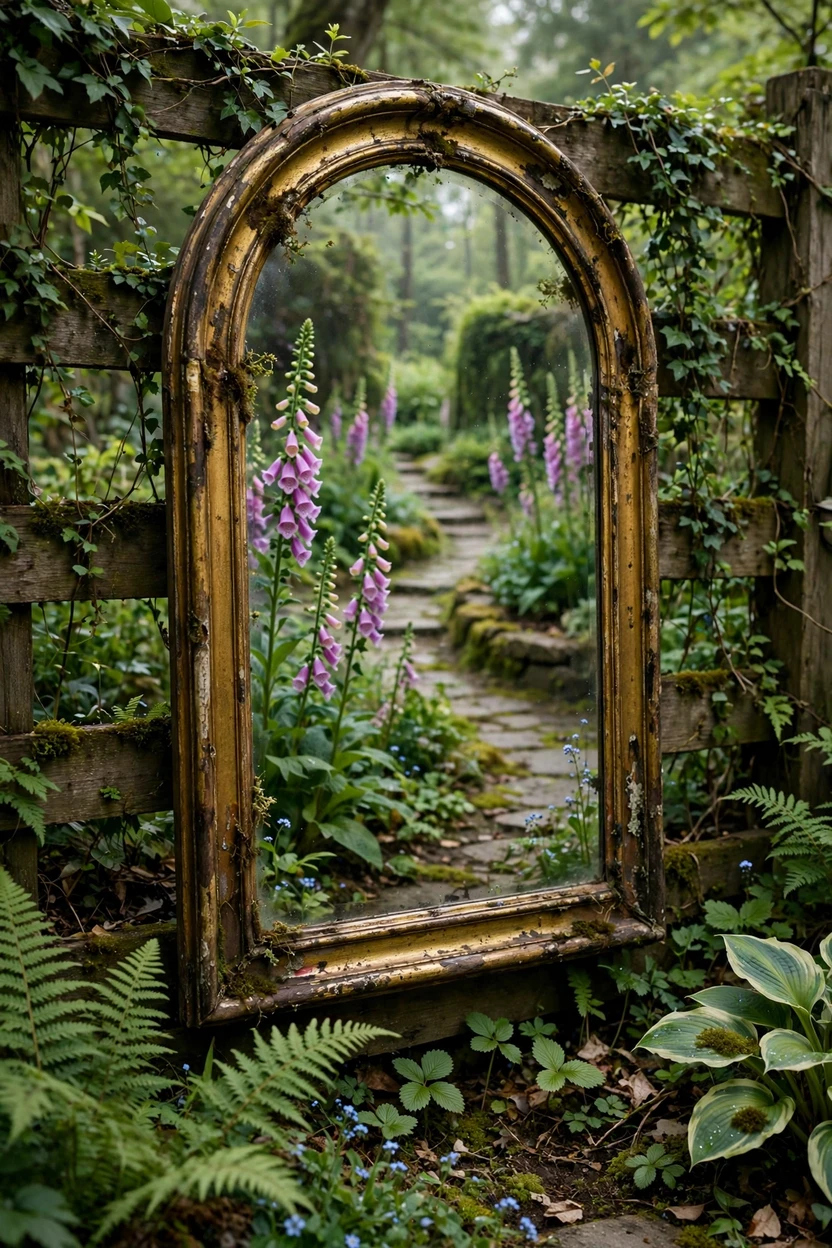
A mirror makes a small garden feel deeper and brings a hint of magic. Use a weatherproof mirror in an old frame, and set it against a fence or wall so it reflects the greenery and flowers. Place it in a shady spot, since a mirror in strong sun can focus light and scorch plants or wood. Tilt it slightly down to keep birds from hitting it. Let ivy grow around the frame so it looks like a secret window.
17. Hang Signs and Display Vintage Tools
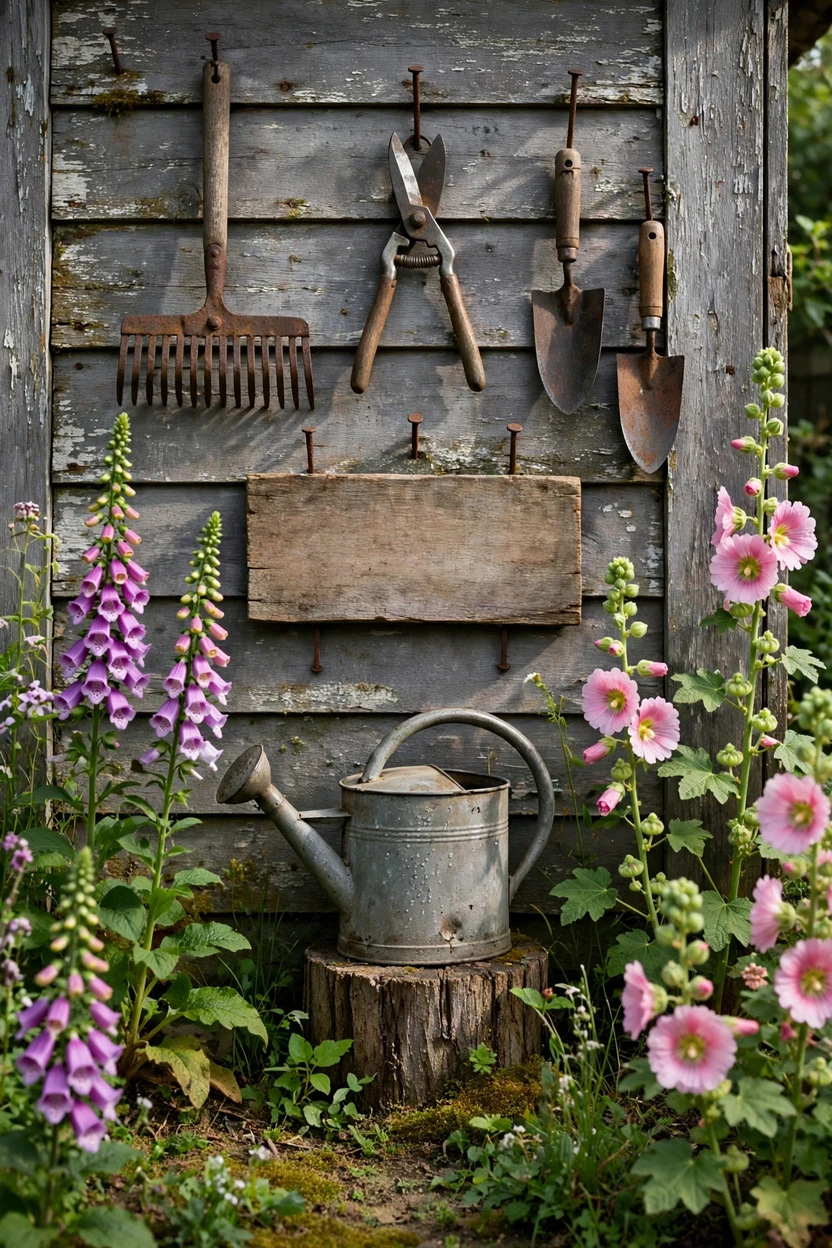
Old garden tools and signs give a yard personality. Hang a few vintage rakes, shears, and trowels on a shed wall or fence, and prop a hand-painted sign among the flowers. Pick a sign with a simple word or phrase, such as “Garden” or “Welcome.” Keep the tools to a small group so it feels like a display, not a pile. Oil the metal parts and seal wood handles to keep them from decaying.
18. Light the Yard for Evening
Warm light makes a vintage garden feel like a fairytale at night. String lights about 8 feet above the ground over a seating area, add solar fairy lights on the arbor, and place lanterns on tables and steps. Choose warm white bulbs, around 2700K, for a soft glow. Keep lights low and shielded so they don’t glare in your eyes. Use outdoor-rated cords and a timer so they come on at dusk.

19. Plant a Cottage Palette
Plants are what make a vintage garden feel alive. Layer tall flowers like foxglove, hollyhock, and delphinium at the back, mid-height roses and peonies in the middle, and lavender, catmint, and alyssum at the front. Pick two or three colors, such as soft pink, purple, and white, and repeat them in clumps. Let plants spill onto the path to soften the edges. Choose perennials for blooms that come back each year.

20. Tuck a Fairy Door Into a Secret Corner
A small surprise at the end of the story makes the whole yard feel magical. Place a tiny wooden door at the base of a tree, or in a mossy corner by a fence. Add a tiny bench, a few acorn caps, and miniature plants like baby tears or moss. Keep it low to the ground, where children can find it. It’s a gentle way to turn the garden into an adventure.

Styling Tips
- Follow the storybook test: one entrance, one winding path, one place to sit, and three surprises.
- Repeat two or three colors across planters, benches, and flowers.
- Group pieces in odd numbers, with a mix of tall, medium, and low items.
- Let some things look worn, but remove anything broken or sharp.
- Place the best vintage pieces where you’ll see them from a window or the path.
- Swap a few items with the seasons: pumpkins and mums in fall, evergreens and lanterns in winter.
Practical and Safety Tips
- Drainage: Drill holes in every metal or plastic container. Raise pots on bricks or feet.
- Rust: Clear-coat or line rusty pieces, or set a plastic pot inside.
- Old paint: Seal it with a clear coat, or strip it carefully, since old paint may contain lead.
- Edibles: Use food-safe containers only. When in doubt, leave it out.
- Sharp edges: Wear gloves and file down rough spots.
- Mirrors: Keep them out of direct sun, and tilt them to avoid bird strikes.
- Flames: Use flameless candles in lanterns near plants and dry mulch.
- Stability: Secure ladders, arbors, and heavy pieces so they can’t tip.
Common Mistakes to Avoid
- Too many objects. A crowded yard looks like a pile, not a story.
- No focal point. Give the eye a destination, such as a bench or an arbor.
- Skipping drainage. Water pools in containers and rots roots.
- Mixing too many colors. Stick to two or three.
- Placing everything in a straight line. Stagger the pieces and curve the path.
- Forgetting height. Add arbors, ladders, and tall flowers.
- Ignoring safety. Check old paint, rust, and stability before use.
- Forgetting the evening. Add warm lights to extend the use of the garden.
Small-Yard Alternatives
- Use one arbor and a short path of 6 to 8 feet.
- Choose a ladder or hanging planters to go vertical.
- Use a small bistro set or a bench in place of a full seating area.
- Use a cluster of small vintage pots on a stool for a mini vignette.
- Hang tools and signs on a fence in place of a shed wall.
- On a balcony, use a galvanized tub, a lantern, and a trellis.
Budget-Friendly Alternatives
- Under $50: Thrifted enamel pots, a few packets of seeds, a can of clear sealer, and solar lights.
- $50–$150: A galvanized tub, a used wheelbarrow, a wooden ladder, and a set of lanterns.
- $150–$400: A new or used arbor, a bench, a birdbath, and climbing rose plants.
- Flea markets, estate sales, and salvage yards often have the best deals. Go early for the best choice, and haggle politely on larger pieces.
Pro Styling Recommendations
- Use odd numbers for groups: three pots, five lanterns.
- Place the largest item first, then fill around it.
- Repeat a shape, like round tubs or arched windows, to create rhythm.
- Choose a mix of metal, wood, and stone for variety.
- Let plants soften the edges of every object.
- Take a photo of the yard from the back door, and edit what you see.
Conclusion
A storybook yard isn’t a place you finish. It’s a place you add to.
Start with the entrance and the path. Add one old thing you love, then a bench, then a lantern. Let the roses climb and the foxgloves spill over, and let the rust and moss tell their own story.
Next time you step outside with your coffee, stop at the gate and look in. If you smile, you’re on the right page.