23 Sunroom Ideas That Flood Your Home With Light & Cozy Style

A sunroom either becomes the room everyone fights over, or it becomes expensive storage by October.
The difference usually isn’t the glass or the view — it’s the layout, the light control, and whether anyone thought about what happens to the space in February. A sunroom with the right roofline, the right furniture weight, and a plan for glare and cold is a room people use every single day, for coffee, for reading, for calls, for dinner. A sunroom without those things becomes a glass box full of dying plants.
This list walks through 23 ideas covering architecture, light control, furniture, and styling — the full range of what separates a sunroom that gets used year-round from one that gets used twice a summer.
Table of Contents
1. Cathedral-Style Vaulted Ceiling
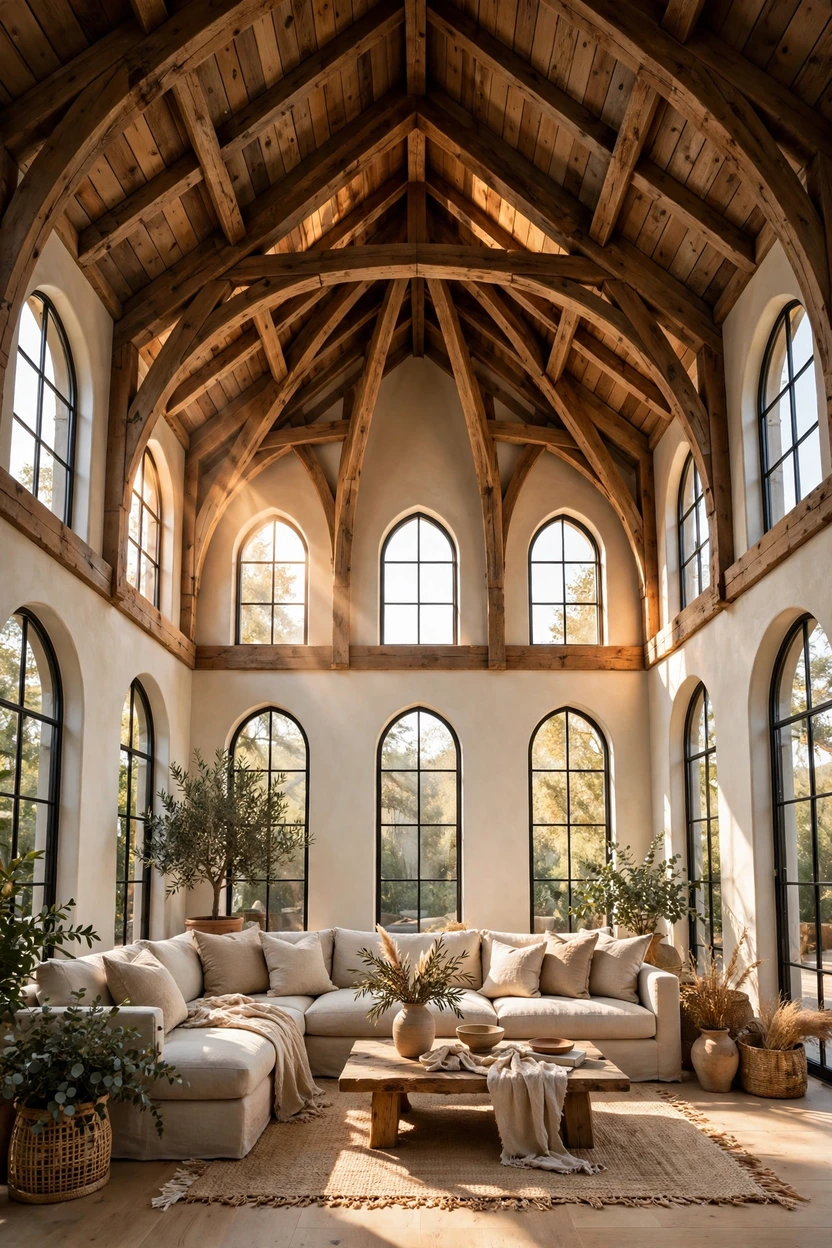
A cathedral-style sunroom uses a steep, gabled roofline to create a vaulted ceiling that pulls the eye straight up, making even a modestly sized room feel dramatic and open. This layout works especially well on homes that already have a traditional pitched roof, since the addition ties into the existing architecture instead of looking bolted on. The extra vertical height allows for taller windows along the top of the walls, which brings in noticeably more daylight than a standard flat-ceiling addition. Because the space reads as grand on its own, it pairs well with simpler furniture choices — a single large sectional or a pair of substantial armchairs is usually enough, rather than a cluttered furniture arrangement fighting for attention with the ceiling. This style suits homes planning to use the sunroom for entertaining or larger family gatherings.
2. Studio-Style Single-Slope Roof
A studio-style sunroom uses a single sloped roof that ties cleanly into a lower or ranch-style roofline, making it one of the most budget-friendly and structurally simple additions to build. The sloped ceiling naturally creates a cozier, more intimate feel than a cathedral layout, which makes it especially well suited to a reading corner, a small lounge, or a coffee-and-conversation nook rather than a large entertaining space. Because the roofline is simpler, window placement tends to run along one long wall, so furniture is usually arranged to face that light source directly. This layout is a strong fit for ranch-style or single-story homes where a steeper roofline addition would look architecturally out of place. Keep furniture low-profile in this layout so it doesn’t compete with the slope of the ceiling overhead.

3. Four-Season Insulated Glass Sunroom
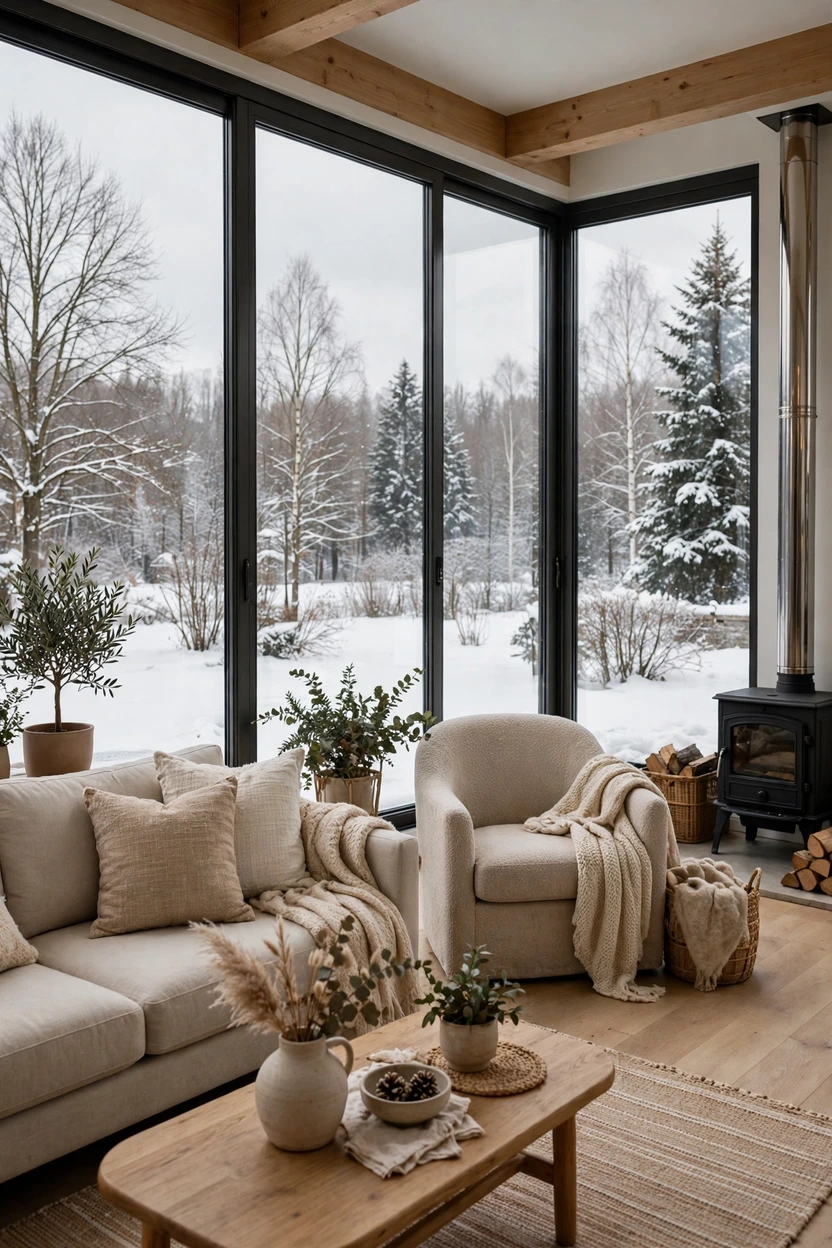
A true four-season sunroom uses insulated, climate-rated glass and proper wall insulation so the room stays usable in both February and August rather than becoming a seasonal space that sits empty half the year. This is the higher-investment option on this list, but it’s the one that turns a sunroom into genuine living square footage instead of a three-season novelty. Pairing insulated glass with a small supplemental heat source and a ceiling fan for summer airflow covers both temperature extremes without needing to run the home’s main HVAC into the space. Because the room is meant for daily use, furniture here should be selected the same way you’d furnish any primary living room — durable upholstery, real storage, proper lighting layers — rather than treated as an afterthought. This is the option worth prioritizing if the sunroom is meant to replace or supplement a family room.
4. Budget Screen Room
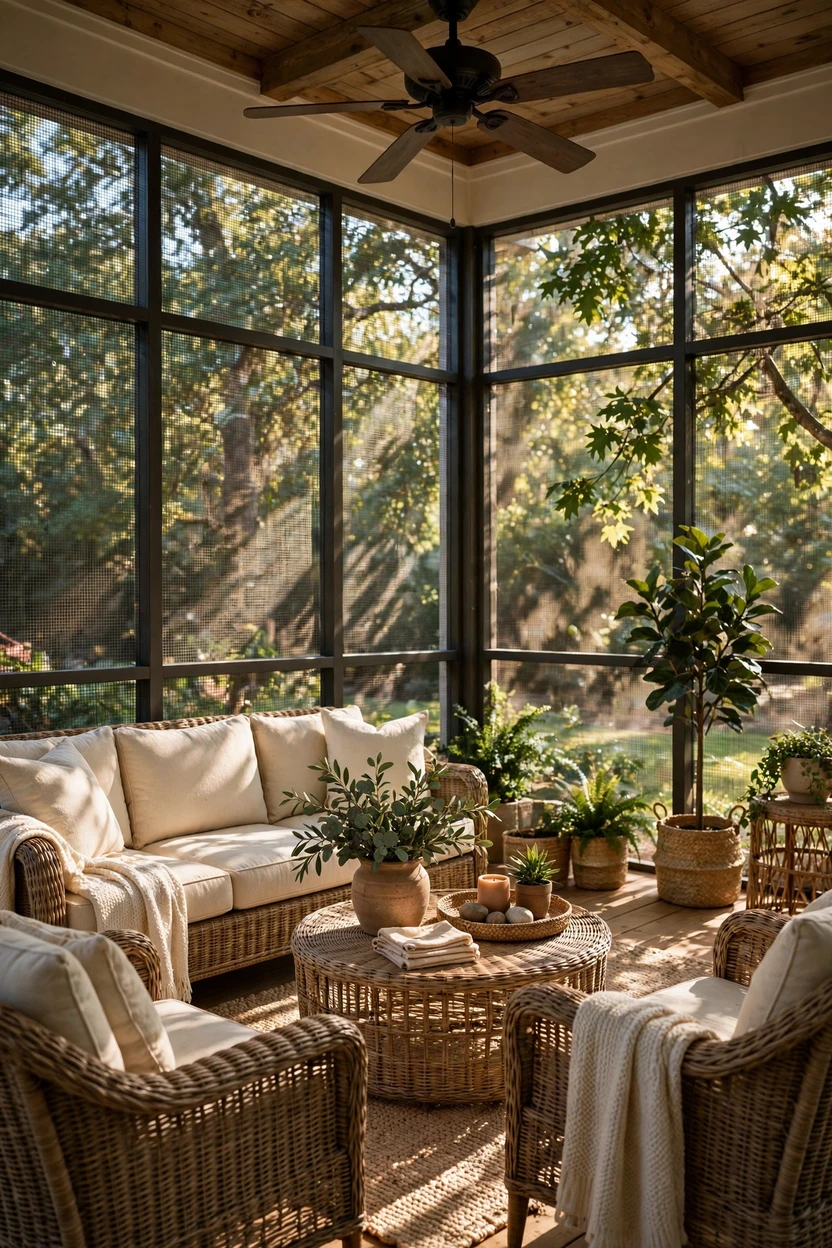
A screened room is the most affordable entry point into sunroom living, using mesh screening instead of glass to keep bugs out while leaving the space open to fresh air and natural breeze. This option skips insulation and climate control entirely, which keeps material and labor costs dramatically lower than a glass addition, making it a smart starting point for anyone testing whether they’ll actually use the space before investing further. Furnish it with weather-resistant wicker or metal furniture and outdoor-rated cushions, since the room will experience humidity and temperature swings a fully enclosed sunroom wouldn’t. This layout works best as a three-season space in most climates, and it can often be upgraded to glass panels later without rebuilding the frame. It’s an especially good fit for anyone attaching the room to an existing porch or deck footprint.
5. Skylights Over a Dining Nook
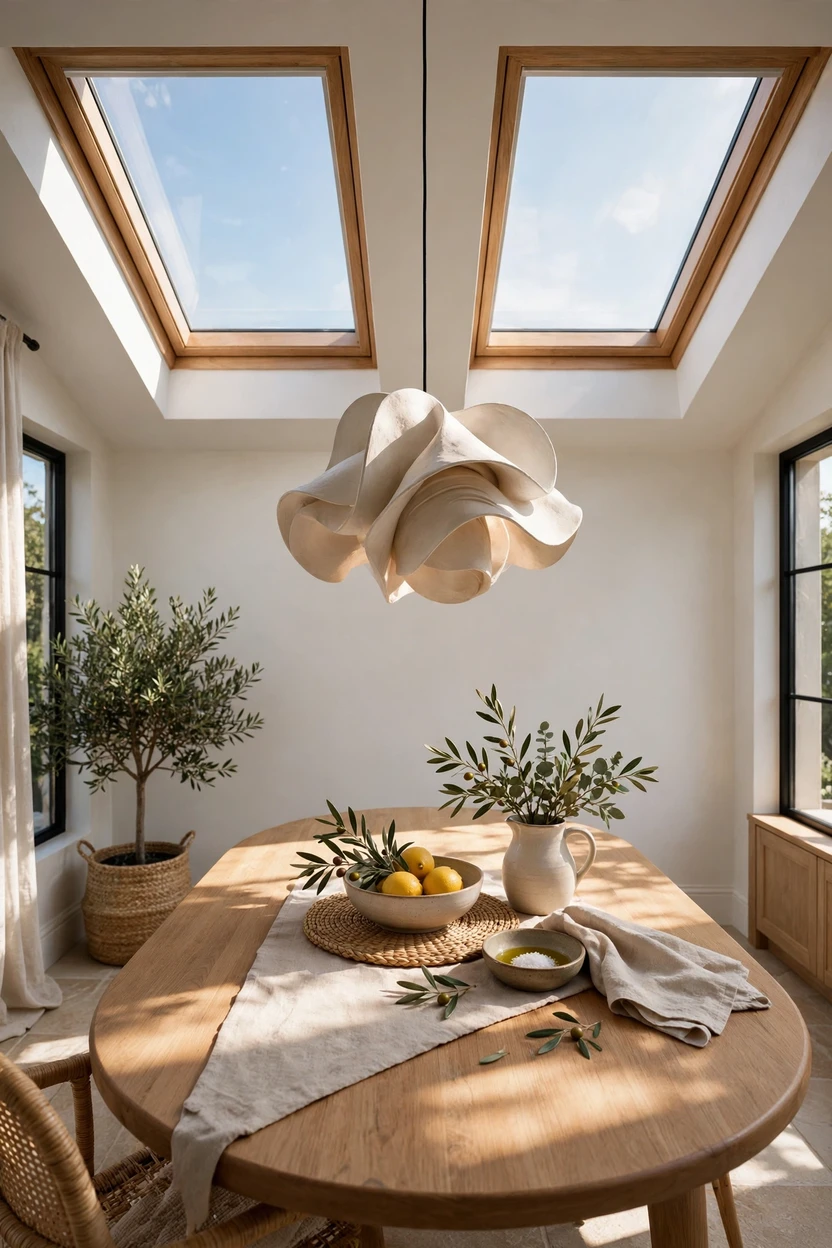
Adding one or two skylights directly above a small dining table turns an ordinary meal into something noticeably more atmospheric, since overhead light behaves completely differently than side light coming through wall windows. This works particularly well in a sunroom being used as a breakfast nook or casual dining extension, where the goal is a bright, airy feeling rather than moody evening lighting. Pair the skylight with a simple pendant fixture positioned below it so the space still has warm, usable light after sunset. A round or oval table tends to work better than a rectangular one under a single skylight, since the light pools more evenly around a curved shape. This is a relatively contained renovation compared to full-wall glass, making it a good mid-budget upgrade for an existing sunroom.
6. Built-In Window Bench With Storage
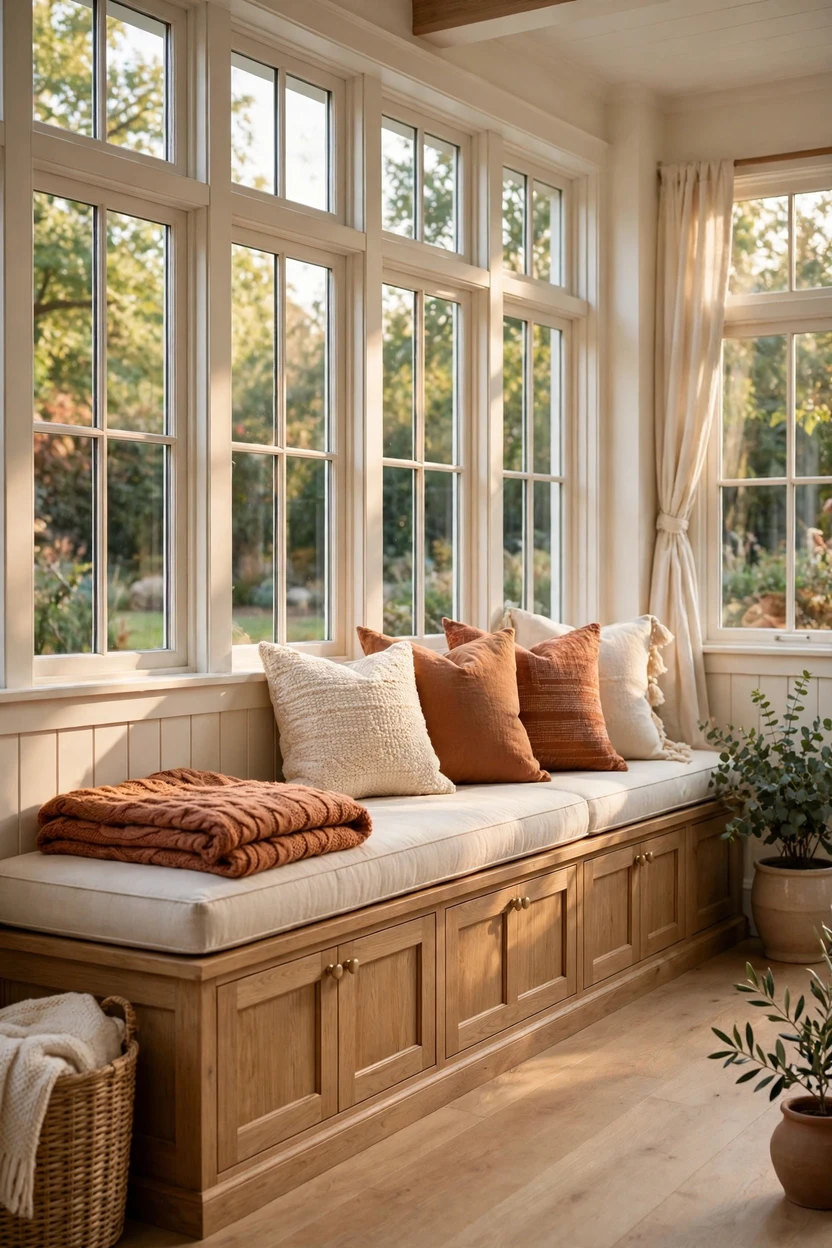
A built-in bench running along a window wall solves two sunroom problems at once: it gives the room permanent, weight-anchoring seating so the space doesn’t feel “floaty,” and it adds hidden storage underneath for cushions, throws, or seasonal items. Built with a simple plywood box frame topped with a cushioned seat pad, this is a manageable weekend-to-week carpentry project rather than a full renovation. The bench also solves a common sunroom layout problem, since floor-standing furniture can feel awkward against a wall of windows, while a built-in bench sits naturally beneath the sill line. Add a row of throw pillows and a folded blanket along the bench to soften the built-in edges and make it read as a lounge spot rather than just a storage box. This is one of the highest-value carpentry upgrades a sunroom can get.
7. Sheer Light-Filtering Curtains
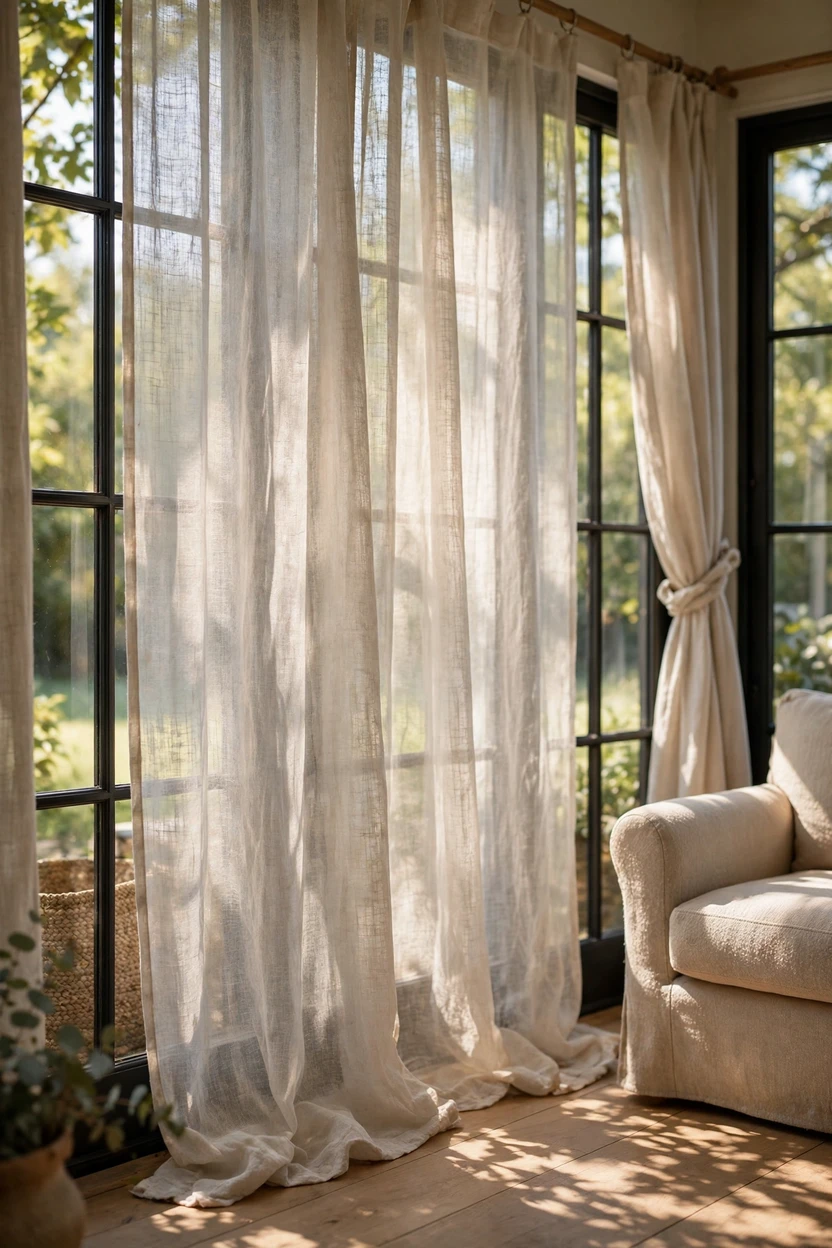
Bare glass walls look striking in photos but create serious glare and heat problems in daily use, which is why sheer, light-filtering curtains have become one of the most practical sunroom additions rather than a purely decorative one. Mounted on simple traverse or tension rods along the glass walls, sheer linen or cotton panels soften harsh afternoon sun while still allowing most of the natural light through, unlike heavier blackout fabric. This is a low-cost, renter-friendly fix that also adds a layer of softness against what can otherwise be a very hard, glassy room. Choosing a warm off-white or natural linen tone over a stark white keeps the room feeling cozy rather than clinical. This upgrade pairs especially well with south- or west-facing sunrooms that get the most direct afternoon sun.
8. Retractable Screens & Shades
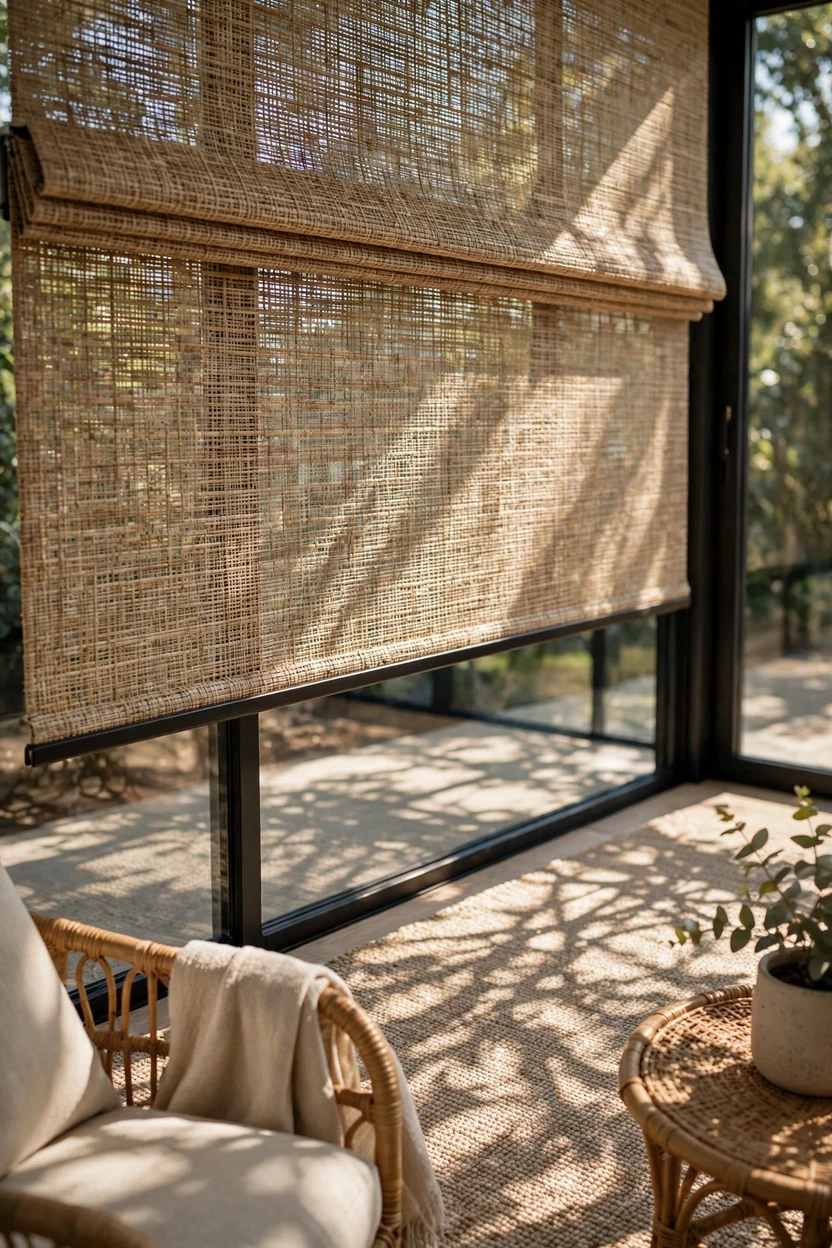
Retractable exterior or interior shades give a sunroom flexible control over glare and heat throughout the day, which is one of the biggest differences between a sunroom that gets used constantly and one that becomes unbearable by early afternoon. Motorized or manual retractable shades can be lowered during peak sun hours and fully raised in the morning or evening to maximize the view and light when it’s comfortable to do so. This is a particularly important addition for glass walls facing south or west, where unmanaged sun exposure can make a room unusable for hours at a time in summer. Choosing a shade in a neutral woven material keeps the look cohesive with the rest of the room even when fully lowered. This upgrade is less visually dramatic than other ideas on this list, but it’s often the single feature that determines whether a sunroom gets daily use.
9. Rattan and Cane Furniture Layer
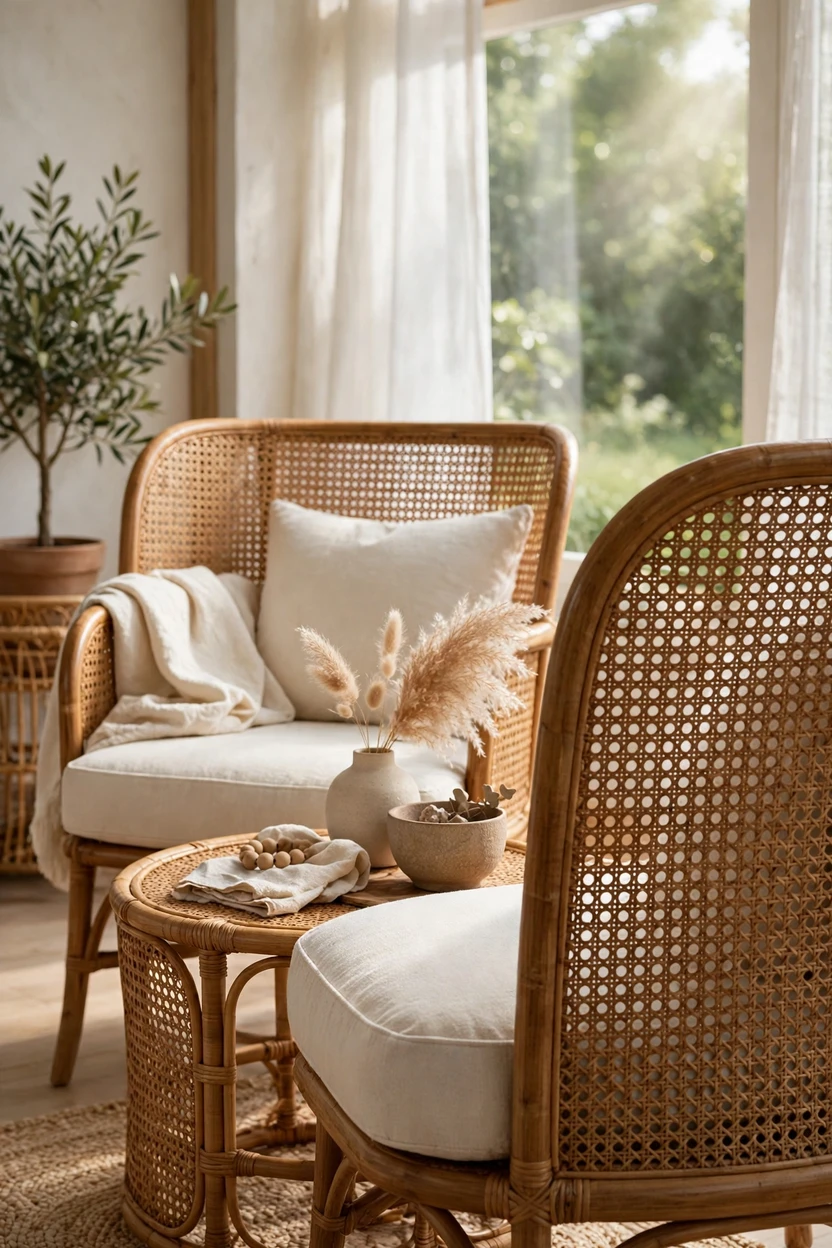
Rattan and cane furniture pieces bring warmth and organic texture into a sunroom without the visual weight of heavier upholstered furniture, which is part of why they’ve remained a defining sunroom material for decades. A pair of cane-backed accent chairs or a rattan coffee table introduces natural material variation against glass and painted walls, softening what can otherwise feel like a sterile, all-hard-surface room. Because rattan has an open, woven structure, it also doesn’t visually block window light the way a solid wood or upholstered piece would, keeping sightlines to the outdoors clear. Pairing rattan with soft cushions in warm neutral or earthy tones keeps the look from tipping into overly rustic or dated territory. This material works in nearly every sunroom style on this list, from cathedral to studio to four-season layouts.
10. Botanical Wallpaper Accent Wall
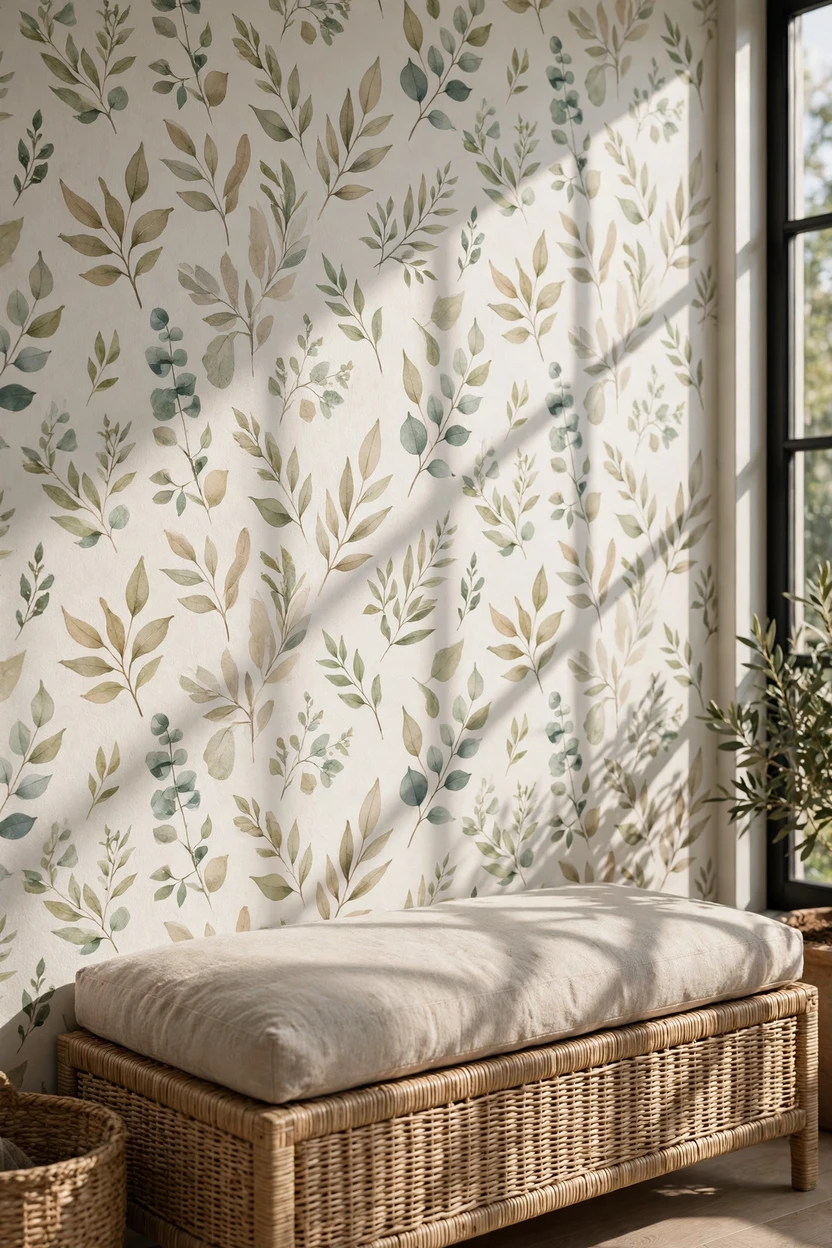
A single wall of botanical or leafy wallpaper on the one solid wall of a sunroom bridges the indoor and outdoor feeling of the space without competing with the actual view outside. This works best on whichever wall doesn’t face windows, since it becomes a grounding, patterned anchor point in a room that’s otherwise dominated by glass and light. Choose a print with a soft, muted color palette rather than high-contrast graphic patterns, since sunrooms already have a lot of visual activity from natural light and outdoor views. Peel-and-stick versions make this an easily reversible project, which matters in a room where trends and light exposure may call for a refresh sooner than in a typical interior room. This is one of the fastest ways to give an all-glass room a sense of enclosure and coziness.
11. Indoor Plant Wall
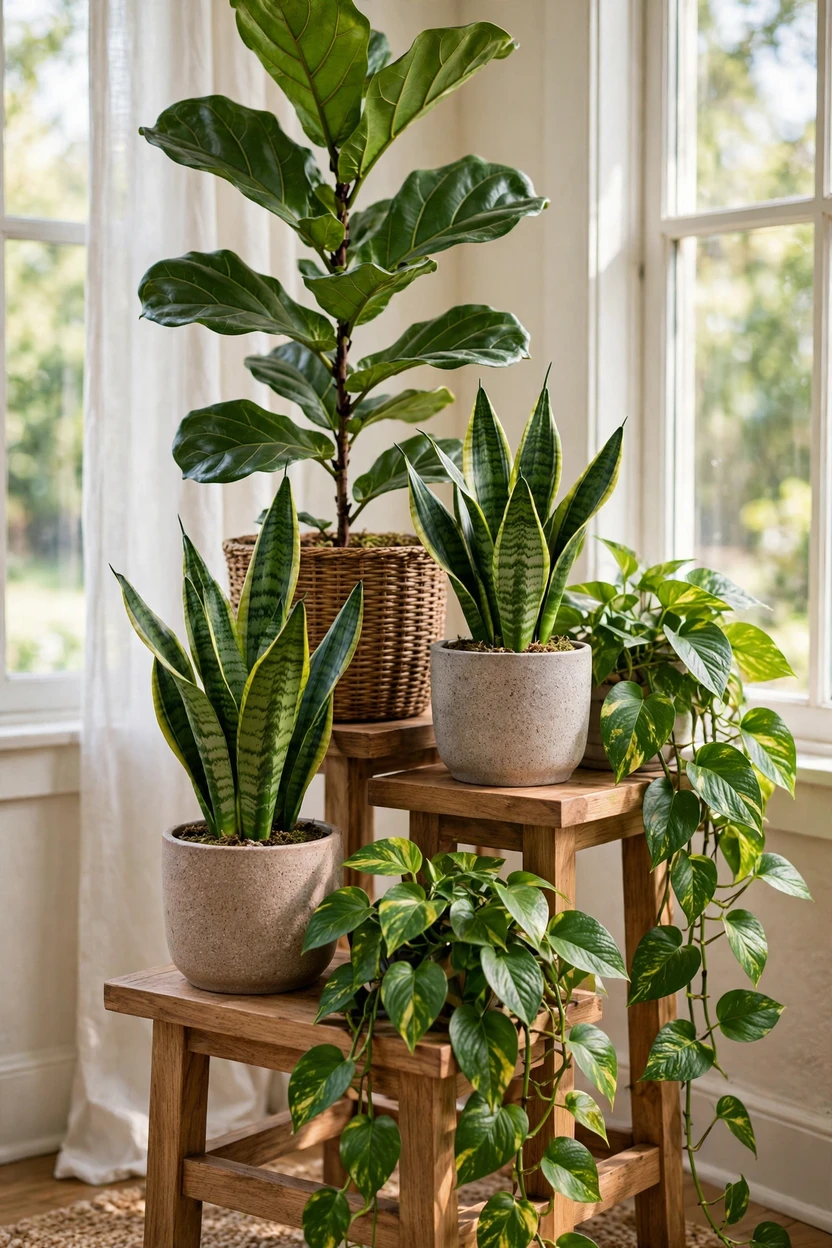
Grouping plants of varying heights along one wall or corner of a sunroom takes advantage of the room’s naturally high light levels, which most other rooms in the house can’t support, and turns that advantage into the room’s defining visual feature. Layer tall floor plants like a fiddle leaf fig or palm behind a mid-height plant stand, then finish with a low grouping of smaller potted plants at the front, creating the same height-variation logic that works in any styled vignette. Wall-mounted planters or a simple floating shelf system add vertical greenery without eating into the floor space a sunroom often can’t spare. This idea does double duty, since sunrooms provide the light most houseplants struggle to get elsewhere in the home, making this one of the lowest-maintenance high-impact styling choices on the list. Group plants by light and water needs so care stays simple.
12. Daybed Reading Nook
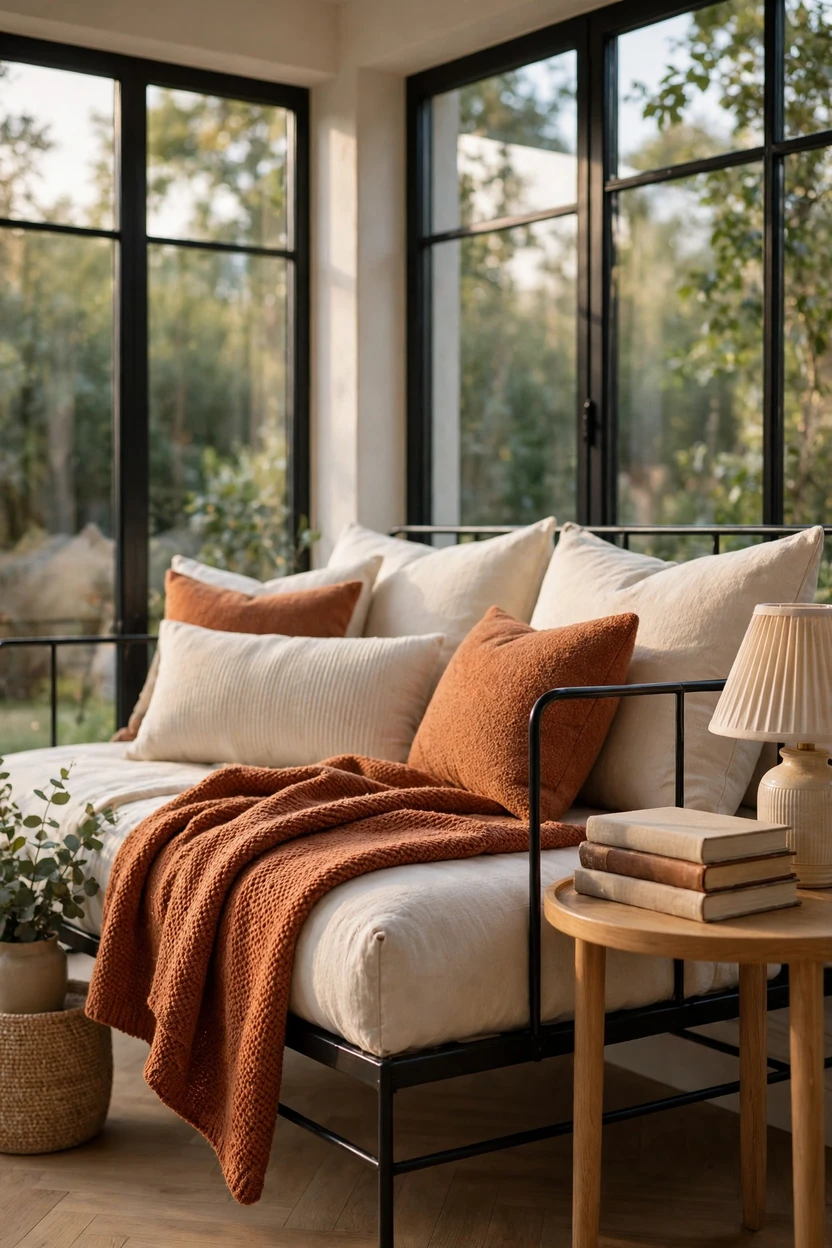
A daybed positioned along a window wall turns a sunroom corner into the most-used reading and napping spot in the house, combining the comfort of a bed with the flexibility of a sofa. Choose a daybed with a slim metal or rattan frame so it doesn’t visually crowd the room, then dress it with a mix of floor cushions and a folded throw for a lounge-like layered look. Positioning it perpendicular to, rather than directly against, the window wall usually works better for both light and sightlines, letting you catch the view without direct glare while reading. A small side table within reach for a lamp, a book, and a drink completes the nook without adding visual bulk. This idea works particularly well in narrower sunrooms where a full seating group wouldn’t comfortably fit.
13. Wall-Mounted Floating Shelves for Small Sunrooms
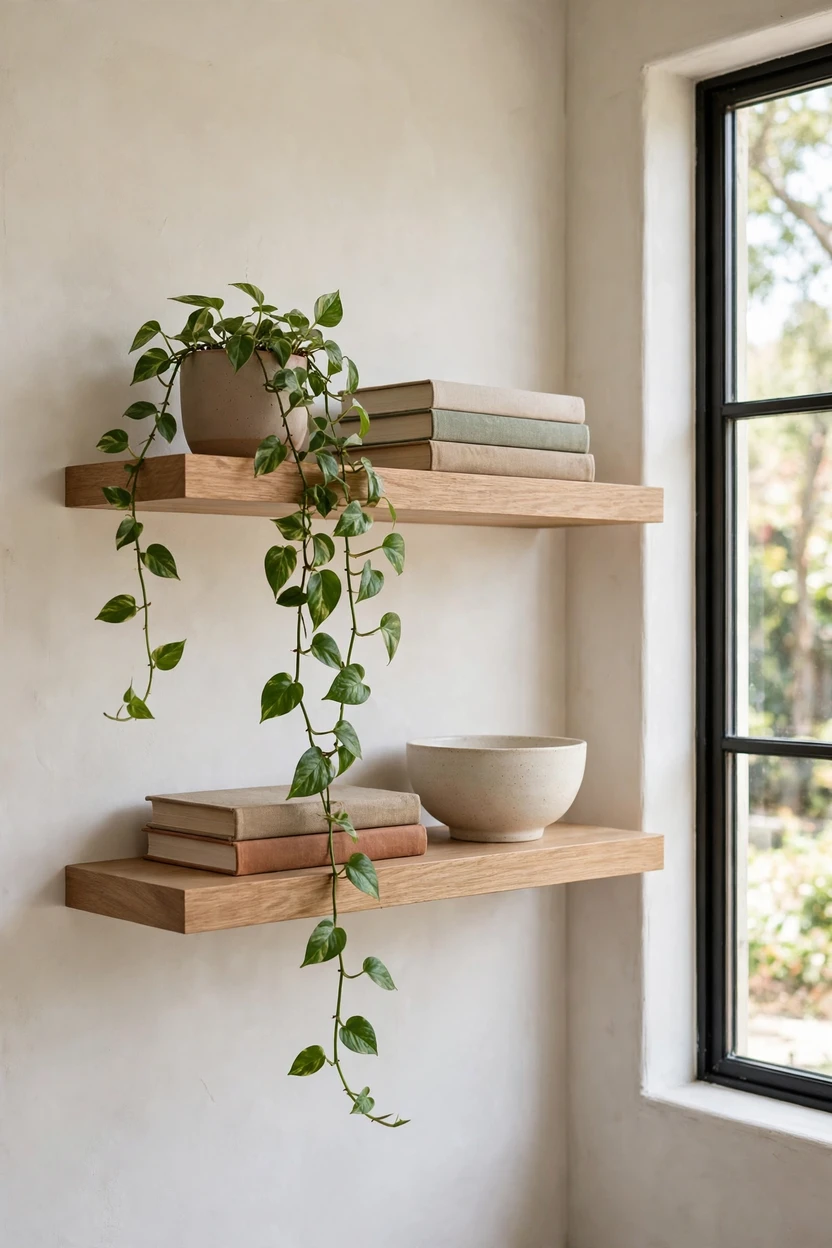
In a small sunroom, floor space is the scarcest resource, which makes wall-mounted floating shelves one of the most effective ways to add styling and storage without shrinking the usable seating area. Install one or two shelves at varying heights along the one solid wall, then style them the same way you would a living room shelf — books, a small plant, a ceramic object, grouped with visible negative space rather than crowded edge to edge. This approach adds personality and function to a small sunroom without the footprint of a bookshelf or console table, both of which can make a compact glass room feel cramped almost immediately. Keeping the shelf styling light and airy, rather than heavy and cluttered, matches the overall feeling a sunroom is meant to have. This is one of the simplest fixes for a small sunroom that otherwise feels underdecorated.
14. Exposed Wood Beam Ceiling
Exposed wood beams across a sunroom ceiling add architectural texture that keeps an all-glass room from feeling flat or sterile, giving the eye a warm, natural material to rest on above the windows. This works especially well in cathedral or vaulted layouts, where the beams follow the roofline and reinforce the sense of height rather than competing with it. Darker stained beams create more dramatic contrast against white walls and glass, while whitewashed or natural-toned beams keep the room feeling lighter and more coastal. It’s worth noting that darker beams can absorb more light and make a room read slightly dimmer, so this choice should be weighed against how much natural light the room already receives. Beams also give a sunroom a sense of permanence and craftsmanship that flat drywall ceilings don’t provide.

15. Linen Slipcovered Seating
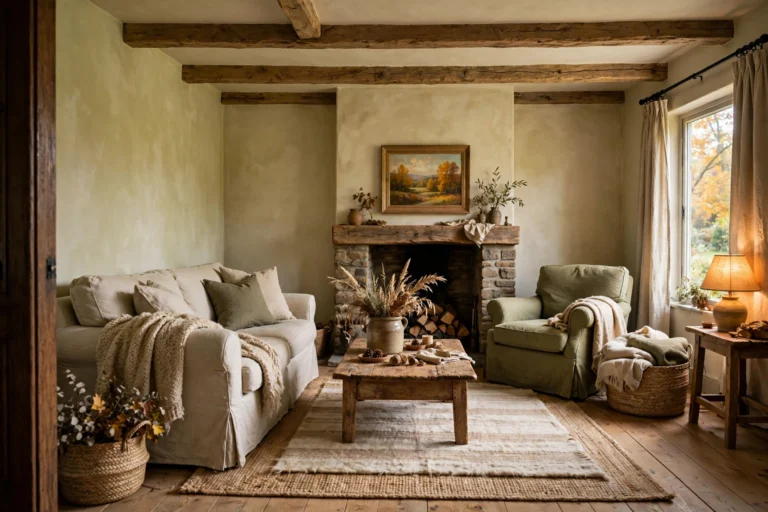
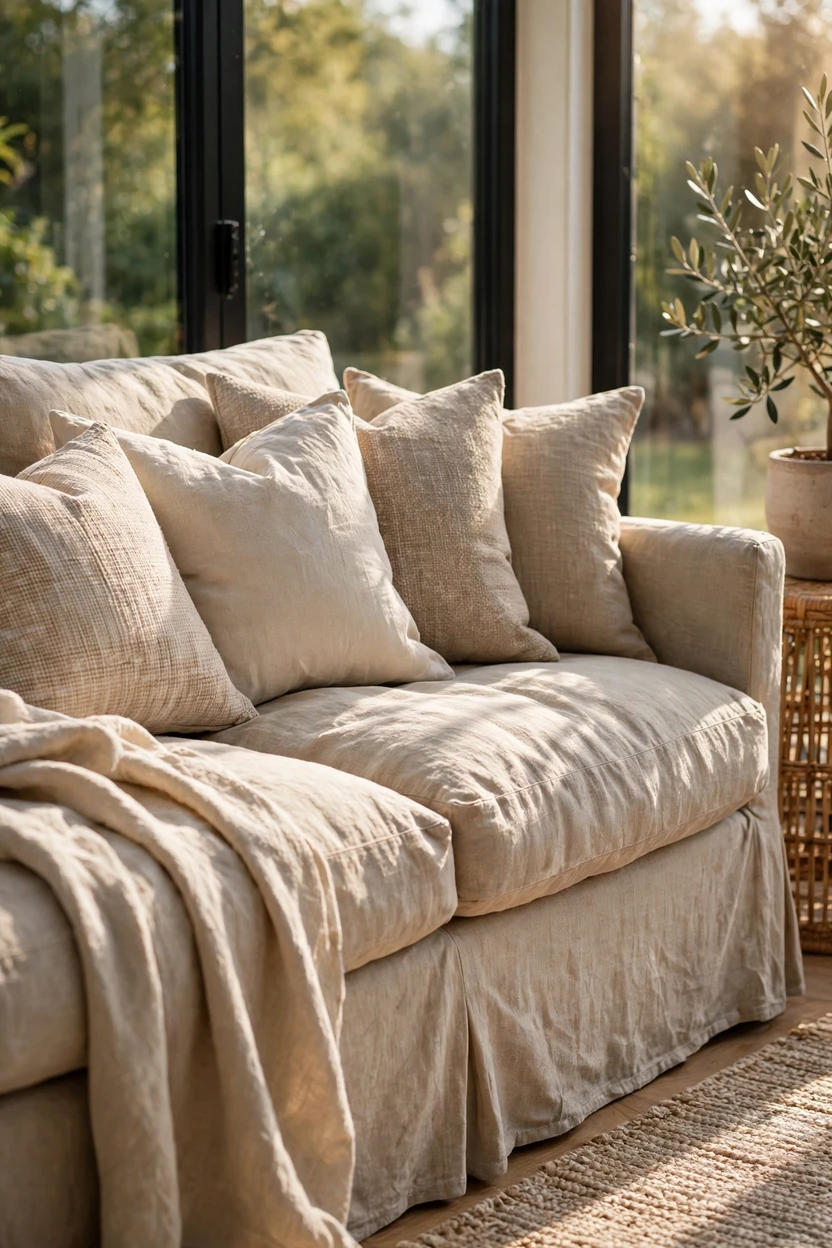
Linen slipcovered sofas and chairs bring a relaxed, collected-over-time feeling to a sunroom that structured, tightly upholstered furniture doesn’t quite achieve, and the slightly rumpled texture of linen actually suits a sun-drenched, casual space better than a stiffer fabric. Slipcovers also offer a practical advantage specific to sunrooms: they’re removable and washable, which matters in a room that gets more dust, pollen, and sun fading than a typical interior living room. Choose a natural, undyed linen tone to let the fabric age gracefully with light exposure rather than showing uneven fading the way darker dyed fabrics eventually do. Pairing slipcovered pieces with one or two structured accent chairs keeps the room from feeling too soft or shapeless overall. This furniture choice pairs particularly well with the rattan and cane ideas above for a cohesive natural-material palette.
16. Tropical Color Palette
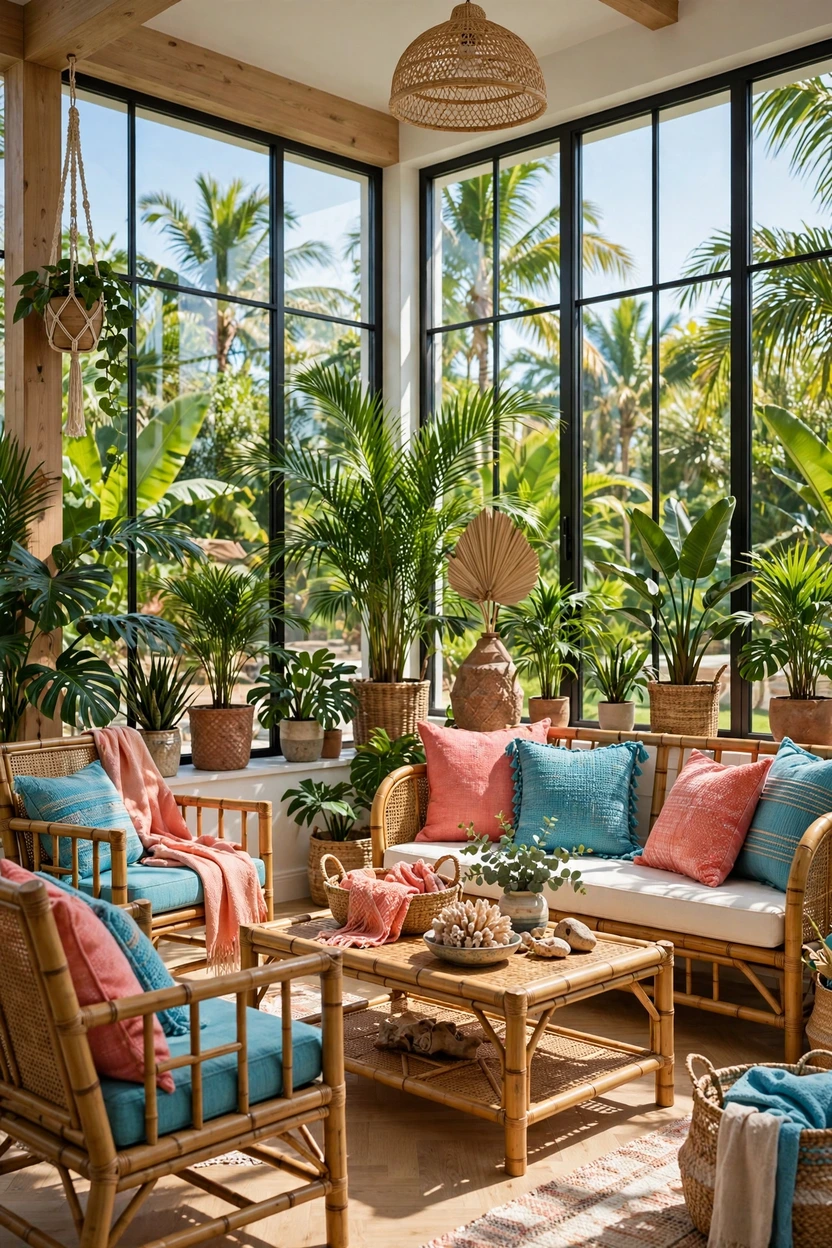
Leaning into a tropical color story — bamboo furniture paired with pops of coral, turquoise, or citrus yellow — gives a sunroom a lively, vacation-like energy that suits rooms surrounded by greenery or a pool view. This palette works because it echoes the outdoor colors already visible through the glass, rather than fighting them with a heavily neutral indoor scheme. Introduce the color through cushions, a woven rug, or ceramic planters rather than large furniture pieces, so the palette can be refreshed seasonally without a full room overhaul. Pairing the bright accent colors with plenty of bamboo, rattan, and green foliage keeps the palette grounded instead of tipping into a themed or costume-like look. This direction works especially well for sunrooms in warmer climates or homes near the coast.
17. Performance Fabric Upholstery
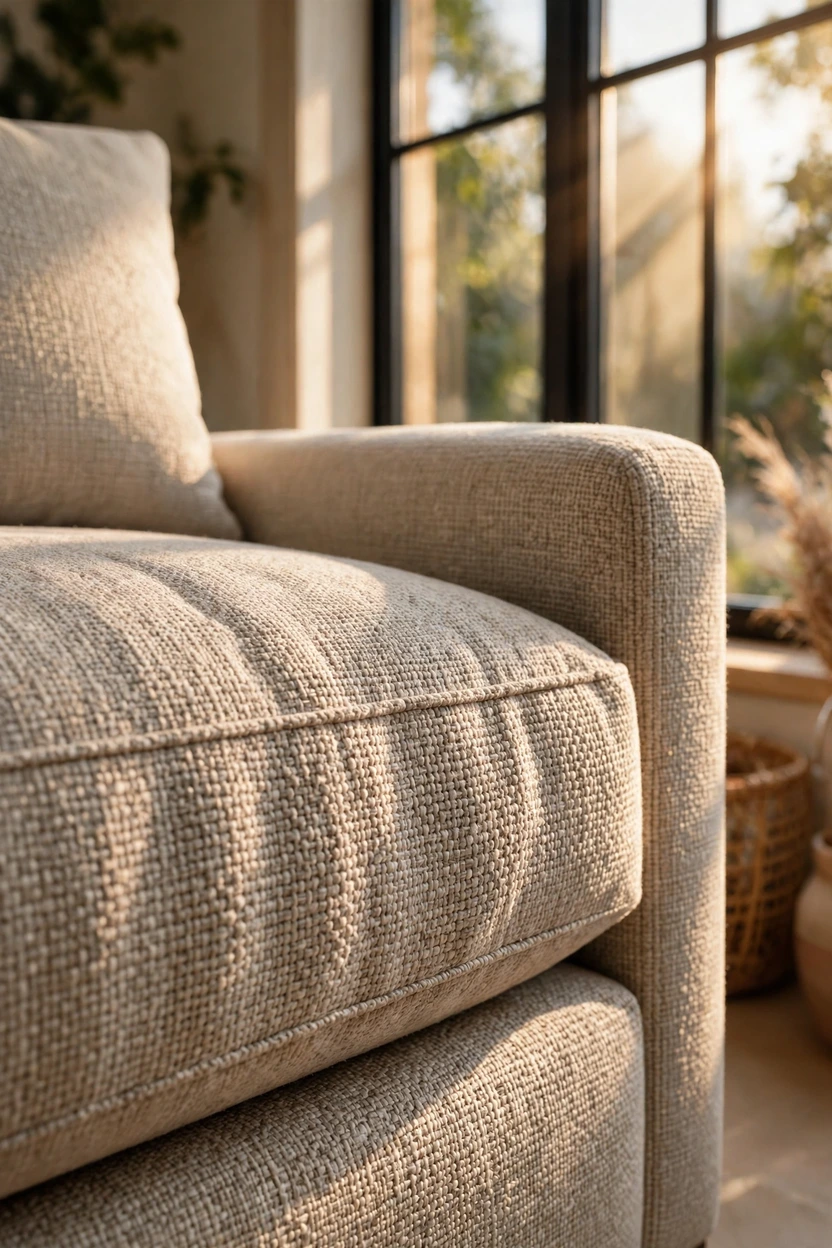
Choosing performance fabric — engineered to resist fading, moisture, and stains — for sunroom cushions and upholstery is one of the most practical decisions in this entire list, since sunrooms take more direct sun exposure and humidity swings than any other room in the house. These fabrics now come in soft, natural-looking weaves that are difficult to distinguish from standard linen or cotton at a glance, so durability no longer means sacrificing a soft, residential look. This matters most for any large, hard-to-replace piece like a sectional or daybed, where fading or staining would be an expensive mistake to live with. Performance fabric is worth the modest upcharge specifically on pieces that sit closest to the glass and get the most direct light. This single material choice often determines how good the room still looks three summers from now.
18. Statement Pendant Lighting
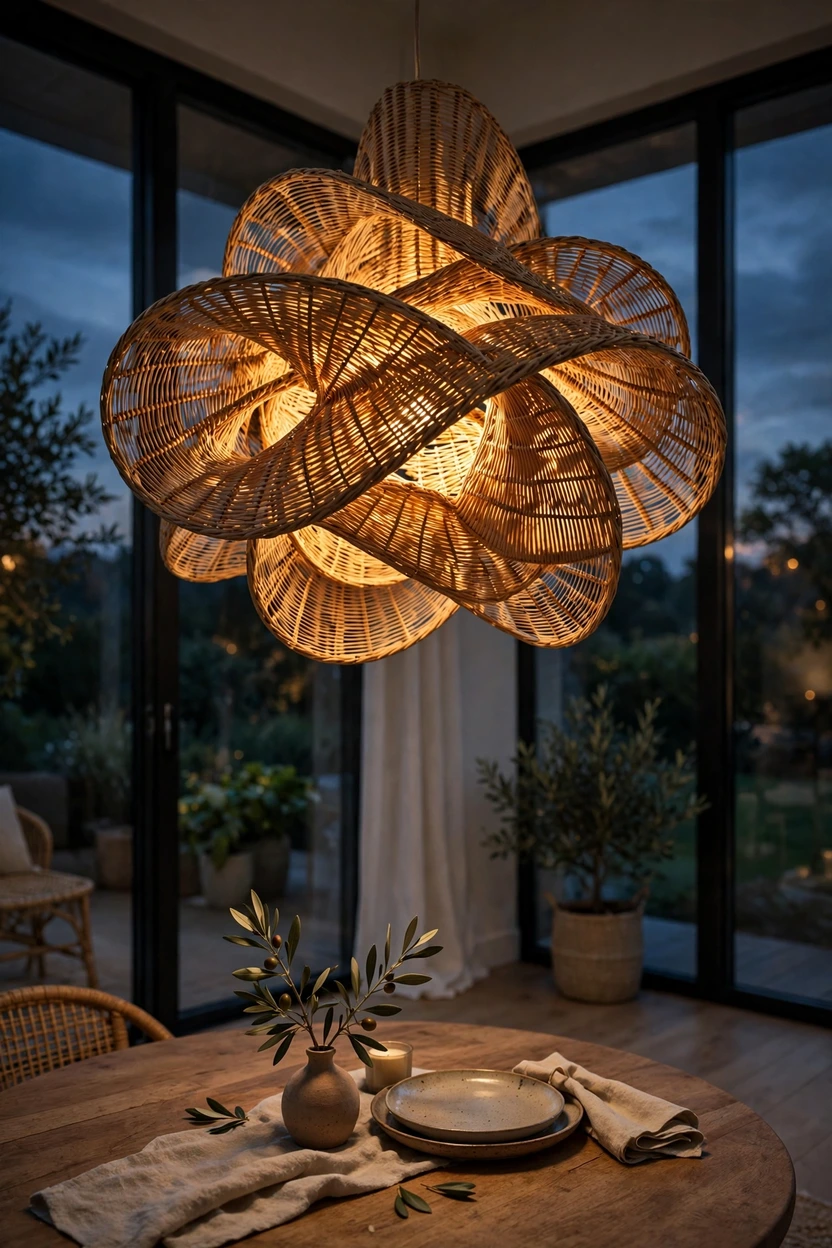
A sculptural pendant light hung over a dining table or central seating area gives a sunroom a defined focal point once the sun goes down, when the room’s biggest daytime asset — natural light — is no longer doing the visual work. Choose a fixture with an open, woven, or sculptural silhouette rather than a solid opaque shade, so it doesn’t block window sightlines during the day when it’s not even turned on. Hanging the pendant at a slightly lower height than typical for a dining or living room reinforces intimacy in a room that can otherwise feel large and airy. This is also one of the simplest ways to shift a sunroom’s mood from bright and functional during the day to warm and atmospheric in the evening. Pairing the pendant with a dimmer switch extends that flexibility even further.
19. Folding Glass Doors for Indoor-Outdoor Flow
Replacing one wall of fixed glass with folding or sliding glass doors turns a sunroom from a room that overlooks the outdoors into one that fully opens into it, which is one of the strongest indoor-outdoor living moves available in sunroom design. On mild days, the doors fold completely open, merging the sunroom with an adjoining patio or yard into a single continuous living space. This is a larger structural investment than most ideas on this list, but it delivers a fundamentally different experience than fixed glass, since airflow and access change entirely rather than just the view. Furniture near the opening should be weather-resilient, since the boundary between indoor and outdoor becomes far less controlled once the doors are open. This upgrade pairs especially well with a four-season glass approach on the remaining walls, giving the room both flexibility and comfort.

20. Layered Cozy Textiles
Layering throws, floor cushions, and a textured rug across a sunroom’s hard surfaces is what keeps an all-glass, all-light room from feeling cold or showroom-like, especially once the sun sets and the glass walls stop doing the work of warming the space visually. Choose natural-fiber textiles — wool, cotton, jute — in warm neutral or earthy tones, layering a floor cushion or two near a daybed or window bench for flexible extra seating. This layering is what most directly separates a sunroom that looks like a “conservatory showroom,” to use the phrase design experts increasingly warn against, from one that looks genuinely lived-in. Rotating in a heavier knit throw for winter and a lighter woven one for summer keeps the room feeling seasonally appropriate without redecorating. This is one of the lowest-cost, highest-comfort upgrades on the entire list.

21. Multifunctional Home Office Corner
Dedicating one corner of a sunroom to a small desk setup takes advantage of the room’s natural light for a workspace that feels nothing like a typical interior home office, while keeping the rest of the room open for lounging or dining. A narrow desk positioned perpendicular to the window wall, rather than facing it directly, avoids screen glare while still keeping the desk within reach of the view and light. Keep the desk setup visually light — an open shelf instead of a bulky filing cabinet, a slim chair instead of a heavy office chair — so the corner blends into the room’s overall airy feeling rather than reading as a separate office space. This layout works especially well in four-season sunrooms being used daily, where the room needs to flex between relaxation and productivity throughout the day. Adding a task lamp covers the desk for early morning or evening use when natural light isn’t available.

22. East-Facing Morning Coffee Nook
A small seating nook positioned to catch direct east-facing morning light creates the single best coffee-and-quiet-moment spot in most homes, since morning sun tends to be softer and less harsh than the midday or afternoon light other parts of the sunroom receive. A single comfortable chair with a small side table, positioned to catch that early light without needing curtains drawn, is often all this nook requires, keeping it simple and separate from the room’s larger furniture groupings. Because morning light energizes without the overheating problems that west-facing afternoon sun creates, this spot typically needs the least glare management of anywhere in the room. This is a strong idea to prioritize early in a sunroom’s design, since orientation is one of the few things that can’t be changed after the room is built. Many homeowners report this becomes the single most-used seat in the entire room.

23. Year-Round Heat Feature
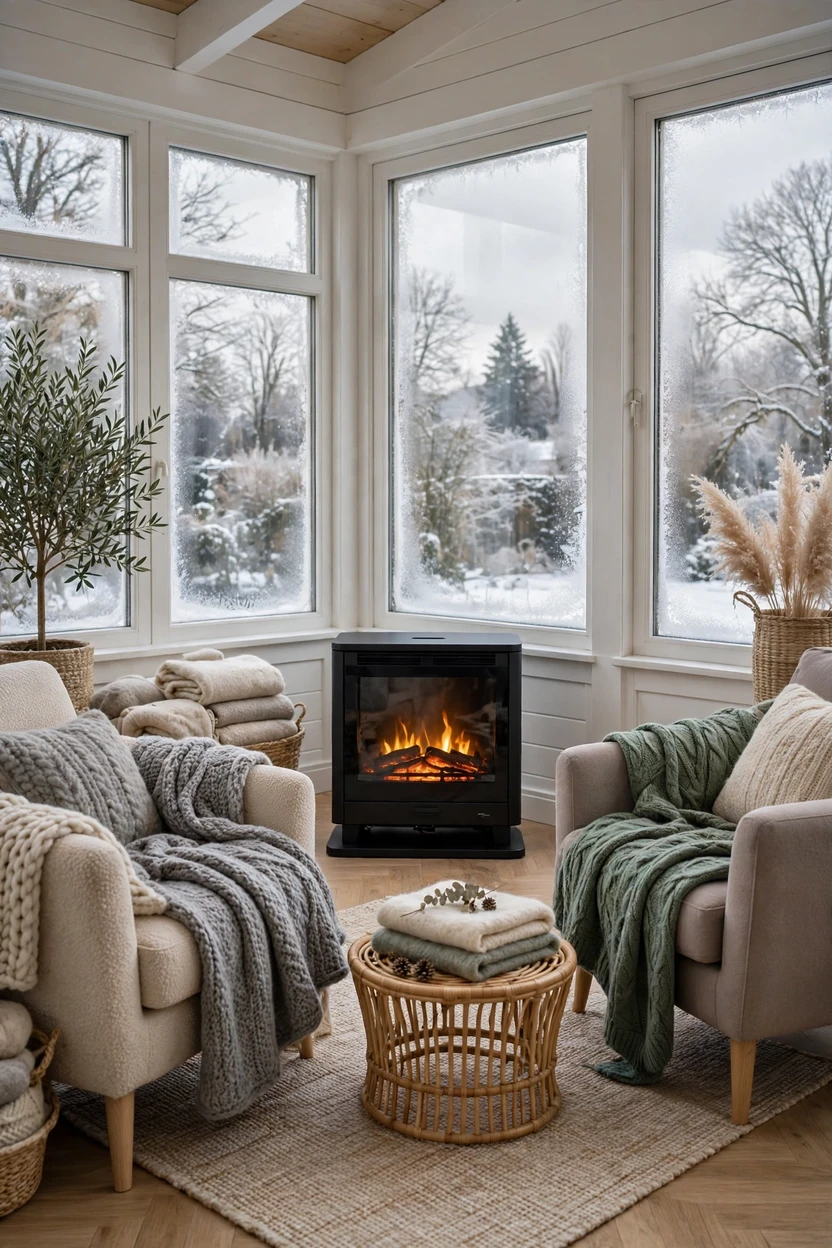
Adding a small heat source — a compact wood stove, an electric fireplace insert, or in-floor radiant heating — is often the single feature that determines whether a sunroom gets used through the colder months or sits closed off from October through April. A freestanding electric fireplace requires no venting and can be added to nearly any sunroom layout, making it the most flexible option for homes not ready for a full four-season glass and insulation upgrade. Positioning the heat feature as a visual focal point, with seating arranged around it the way a living room gathers around a fireplace, gives the room a second identity for cold weather that’s just as intentional as its warm-weather layout. This addition is what most directly extends a sunroom’s usable calendar, turning what might otherwise be a six-month room into one used all year. Pairing the heat feature with heavier layered textiles from earlier in this list completes the cold-weather version of the room.
Styling Tips
- Match furniture weight to ceiling height: cathedral and vaulted rooms can handle larger, more substantial pieces, while studio-style and small sunrooms need lighter, low-profile furniture.
- Keep the palette rooted in neutrals and natural materials (linen, rattan, jute, wood) so the room doesn’t compete visually with the view outside.
- Anchor at least one wall with texture — wallpaper, exposed beams, or a plant grouping — so the room doesn’t feel like a glass box with furniture in it.
- Layer lighting at three levels: natural daylight, one ambient fixture like a pendant, and one warm task lamp for evening use.
Practical Implementation Ideas
- Address glare and heat control (curtains, shades, or screens) before investing heavily in furniture, since an unmanaged sun problem will make even beautiful furniture unusable by early afternoon.
- Choose performance fabric for any large, hard-to-replace upholstered piece from the start rather than upgrading after the first fade or stain.
- Plan furniture layout around the room’s specific light orientation — east-facing spots for morning use, shaded or screened corners for midday, west-facing areas needing the most glare control.
- If budget requires phasing the project, prioritize the roof and glass structure first, then light control, then furniture and styling last.
Common Mistakes to Avoid
- Skipping glare and heat management, leaving a beautiful room unusable during peak sun hours.
- Choosing all-hard-surface furniture (glass, metal, uncushioned rattan) with no textile layering, which reads as cold rather than cozy.
- Underestimating how much darker exposed wood beams or heavy furniture can make a room feel, especially in spaces already limited on light from other angles.
- Treating the sunroom as purely decorative rather than planning for actual year-round use, which often results in a beautiful room nobody sits in past September.
Small-Space Alternatives
- Choose a studio-style single-slope layout instead of a cathedral addition to keep both cost and footprint smaller.
- Use wall-mounted floating shelves instead of freestanding furniture pieces like bookshelves or consoles.
- A single daybed or window bench can replace a full seating group in a narrow sunroom without sacrificing comfortable seating.
- Vertical plant groupings on shelves or wall planters bring greenery into a small sunroom without using floor space a larger plant stand would require.
Budget-Friendly Alternatives
- Start with a screened room instead of a full glass addition, and upgrade to insulated glass later if the space proves to be well used.
- Choose sheer curtains over motorized retractable shades for glare control at a fraction of the cost.
- Use peel-and-stick botanical wallpaper instead of a full accent wall renovation.
- A freestanding electric fireplace is significantly less expensive than in-floor radiant heating or a wood stove installation, while still extending the room’s usable season.
Pro Styling Recommendations
- Prioritize orientation and light control decisions before furniture and decor choices, since those structural elements are the hardest and most expensive to change later.
- Use performance fabric on any piece that sits within a few feet of direct glass exposure.
- Balance hard natural materials (rattan, wood, glass) with soft layered textiles (throws, cushions, rugs) in roughly equal measure for the most livable feel.
- Design at least one corner of the room around a single daily-use purpose — morning coffee, reading, remote work — rather than treating the whole space as one undefined lounge area.
Conclusion
A sunroom earns its place in a home when it solves a real, daily need — morning coffee, remote work, a reading spot, a place for dinner that isn’t the usual dining room. Start with the structural basics that are hardest to change later: roofline, glass type, and light control. Layer in natural materials, cozy textiles, and one clear daily purpose for the space, and a sunroom stops being a seasonal photo opportunity and becomes one of the most-used rooms in the house.