17 Cat Wall Ideas That Beat a Basic Cat Tree (Stylish + Safe)
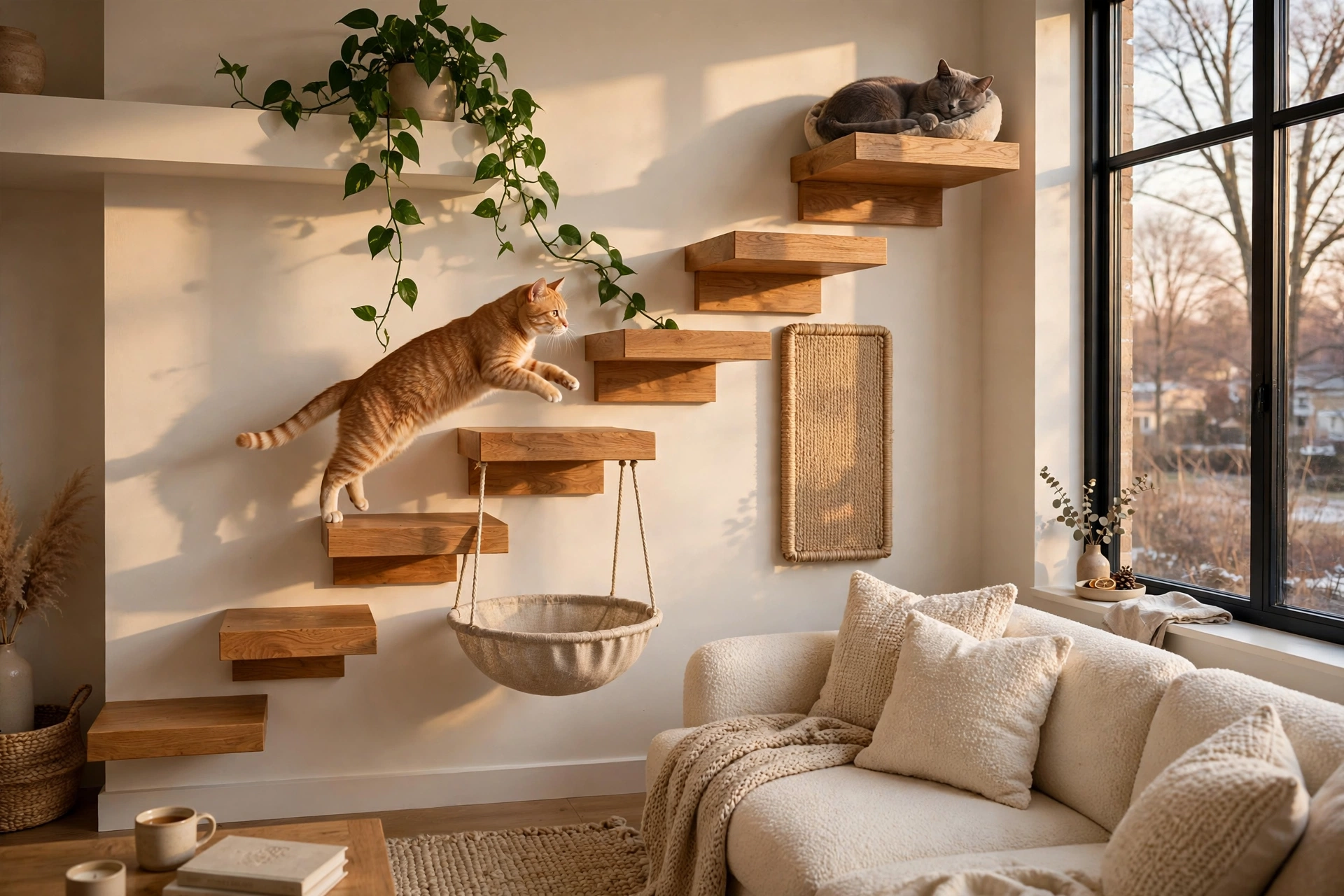
Picture a Saturday morning. Your cat springs onto a low oak shelf, hops to the next one, then settles on a padded perch right at window height. The sun is out, a bird lands on the feeder, and the whole show plays out above your sofa. Nothing in the room looks like pet gear. It just looks like a wall with great shelves.
Now picture the usual cat tree: a beige carpeted tower in the corner, frayed sisal, a little wobble at the top. It does a job. It also takes up a chunk of floor and clashes with everything you own.
A cat wall fixes both problems. It gives your cat routes, heights, and cozy corners, and it gives you a wall that looks planned. Below are 17 ideas, and each one comes with the cat logic, the design logic, and the measurement to use.
Quick answer: what is a cat wall? A cat wall is a set of wall-mounted shelves, steps, ramps, perches, and scratch panels that are anchored into wall studs. Together they make a climbing route for your cat without taking up floor space.
Quick answer: are cat walls better than cat trees? For most homes, yes. Cat walls save floor space, create longer routes, reach window height, and can match your decor. Cat trees are easier to set up and need no drilling, so they can suit renters and kittens.
Quick answer: how far apart should cat shelves be? Space shelves about 12 to 18 inches apart vertically, with shelf depth of 10 to 12 inches. Seniors and kittens do better with 10 to 12 inch gaps, and gaps over 24 inches are risky.
Table of Contents
17 Cat Wall Ideas
1. A Zigzag Step Wall
Stagger the shelves left and right so they climb like a staircase. Keep about 12 to 18 inches between levels, and offset each shelf sideways by roughly 12 to 16 inches so the jump feels natural. Make each shelf 10 to 12 inches deep, and go to 12 to 14 inches for cats over about 18 pounds. Start with the lowest shelf at an easy first hop, then build upward. A simple route like this gets used daily, while a random scatter of shelves often gets ignored.
2. Floating Oak Shelves That Match Your Furniture
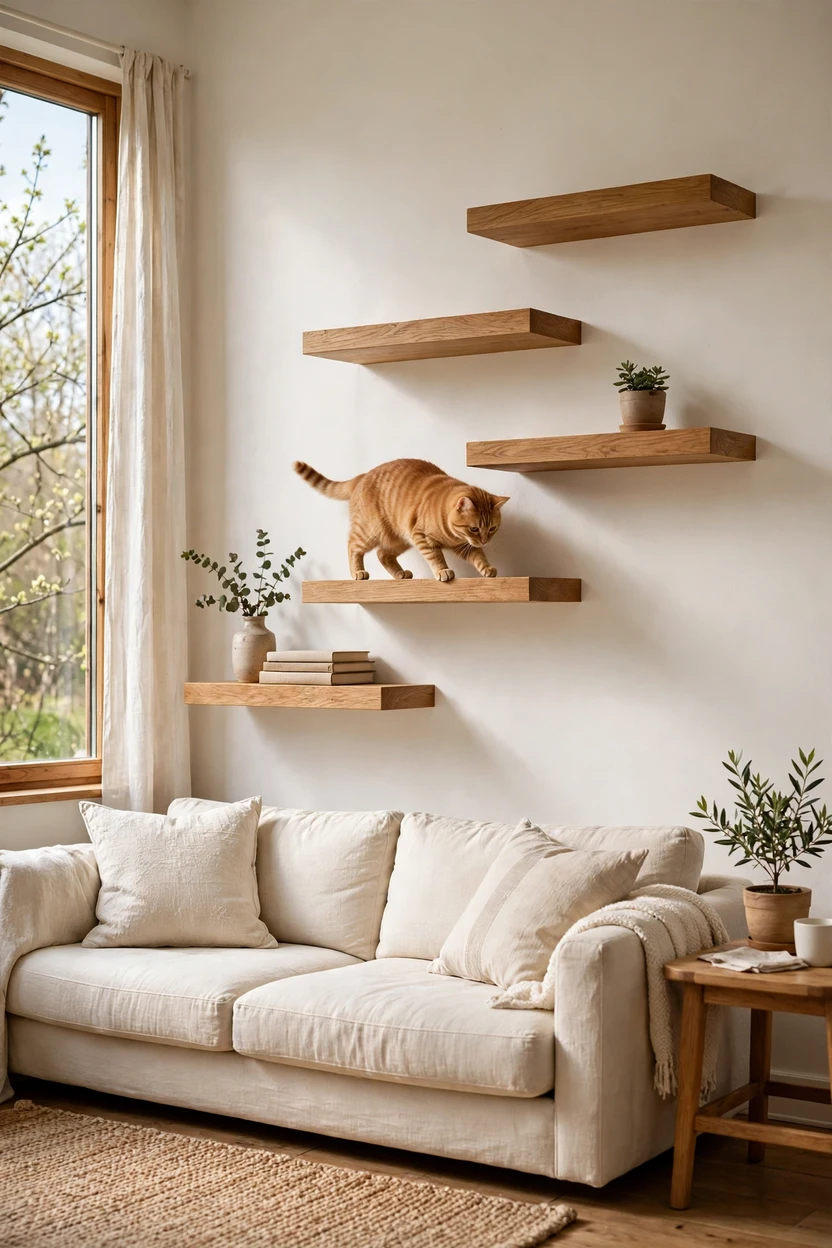
When the shelves match your coffee table or floors, the wall looks like part of the room. Choose solid wood at least three-quarters of an inch thick, because thicker boards resist bending under the hit of a landing cat. Round the corners and use a matte, low-odor water-based finish, and let it cure fully before your cat uses it. Add a removable cork or felt pad on top so paws have grip and you can wash the pad. Skip particleboard, since it can crumble under stress and humidity.
3. A Cat Highway Near the Top of the Wall
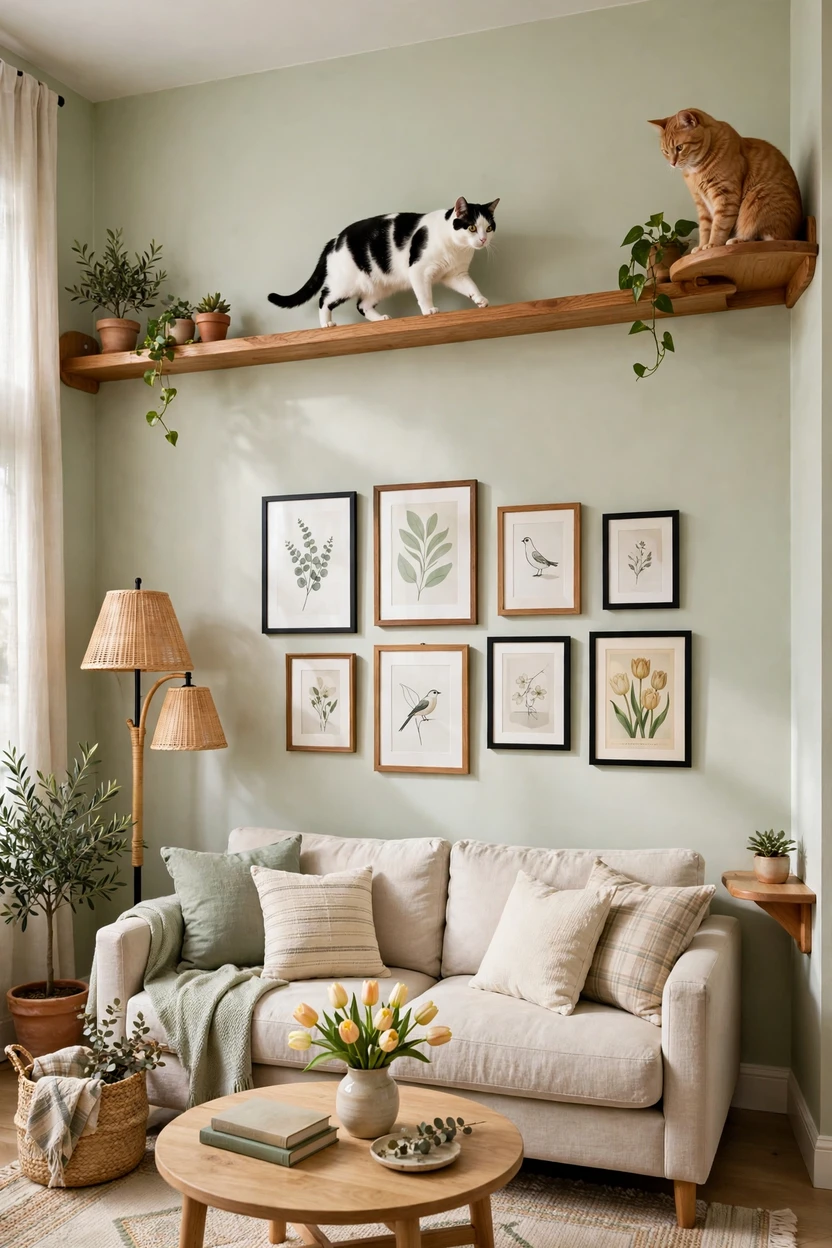
A shelf that runs along the top of a long wall gives your cat a path across the room without ever touching the floor. Cats love height, and extra routes add territory, which can cut squabbles in multi-cat homes. Leave enough headroom for a sitting cat, and keep fragile decor, hot light fixtures, and ceiling fans out of the path. Plan two ways off for every route so one cat never blocks another in a dead end. Mount the whole run into studs, since a long shelf collects more load than a short one.
4. A Shelf Bridge Over the Doorway
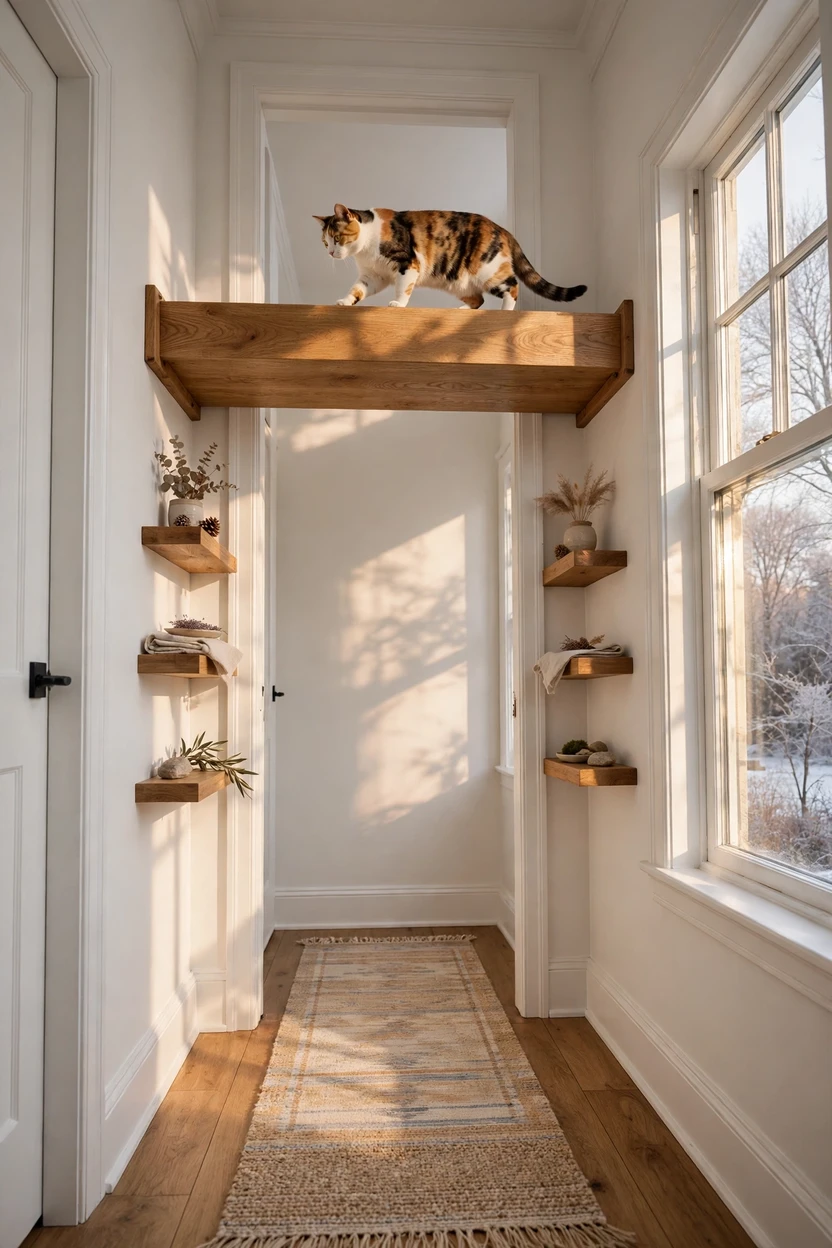
A bridge across a door frame turns a boring pass-through into a cat route that links two walls. Mount it into solid framing, not the trim or just the drywall, and check that the plank is 10 to 12 inches wide so cats can walk with confidence. Add short end ramps or steps on each side so cats can get on and off easily. Leave plenty of clearance for the door and for anyone walking through. Choose a finish that matches the door casing so it reads as built-in trim.
5. A Window Perch Wall
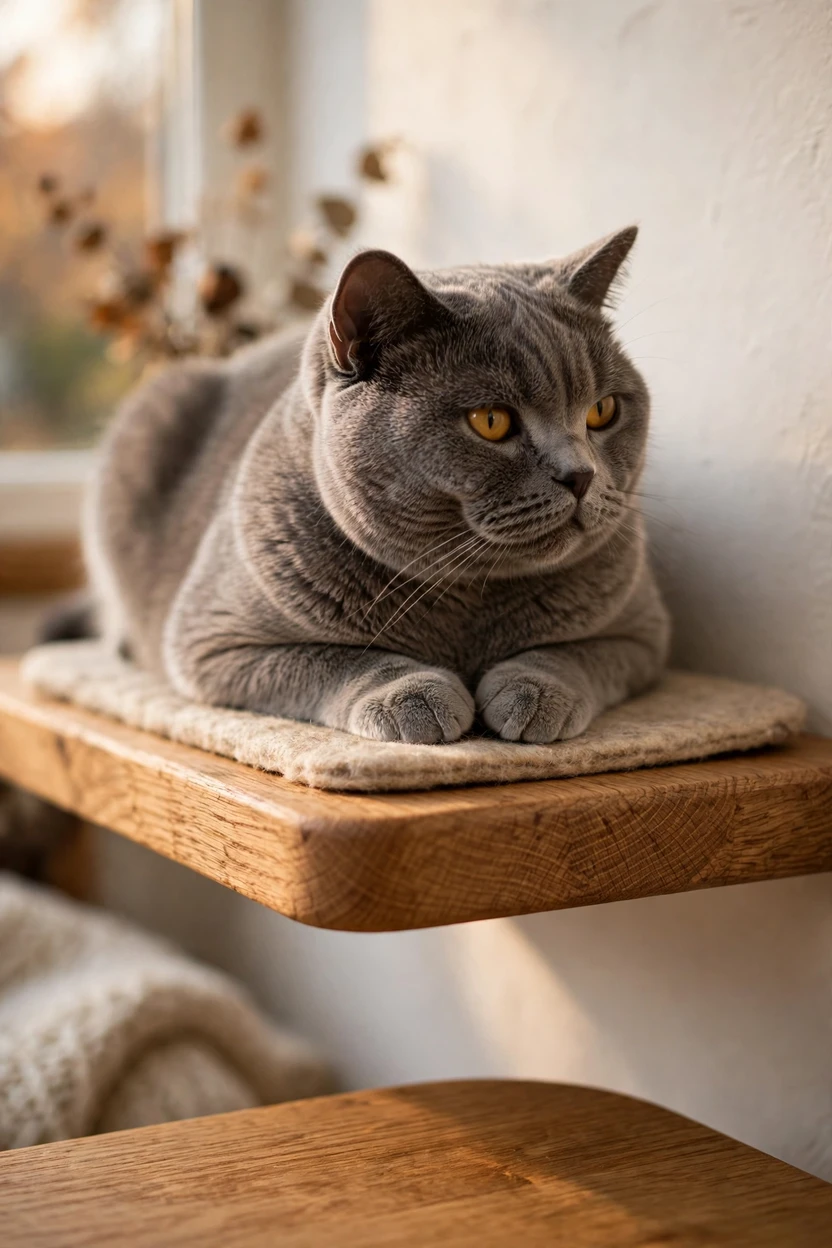
Window access is one of the best rewards you can build into a cat wall. End your route with a padded shelf at sill height, so your cat can watch birds and the street in comfort. Choose a washable pad in a tone that matches your curtains. Keep blind cords out of reach, make sure screens are secure, and watch the shelf in hot summer sun, since glass can heat up fast. A route that leads to a window gets used more than one that dead-ends in a corner.

6. A Corner Cat Wall
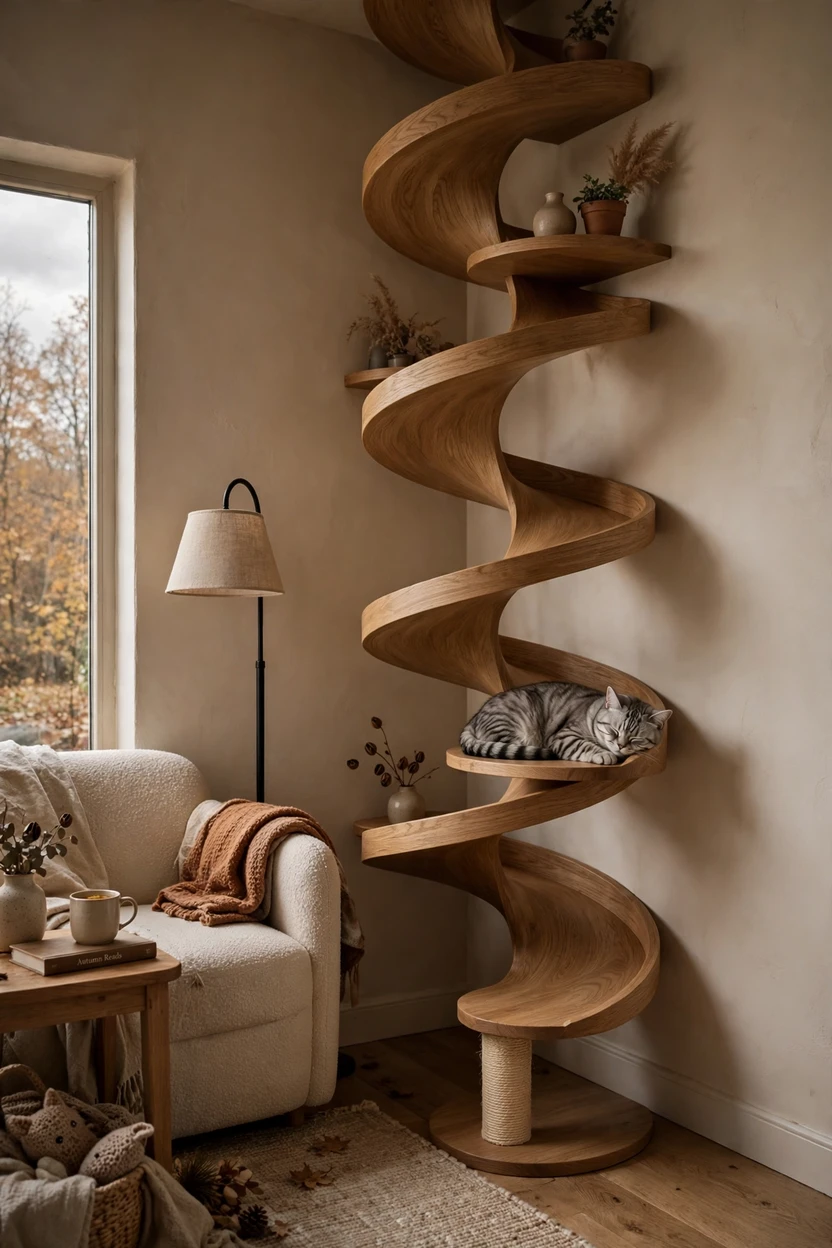
A corner mount spreads weight across two wall surfaces, which can feel steadier than a single flat wall. It also uses a spot that is usually dead space, so you save floor area. Stack L-shaped or curved corner shelves in a gentle spiral, and keep each level 12 to 18 inches above the last. Use a level for every shelf, since a tilt makes cats nervous and puts stress on the screws. Corners also give shy cats a quiet spot to watch the room.
7. A Sisal Scratch Panel Built Into the Wall
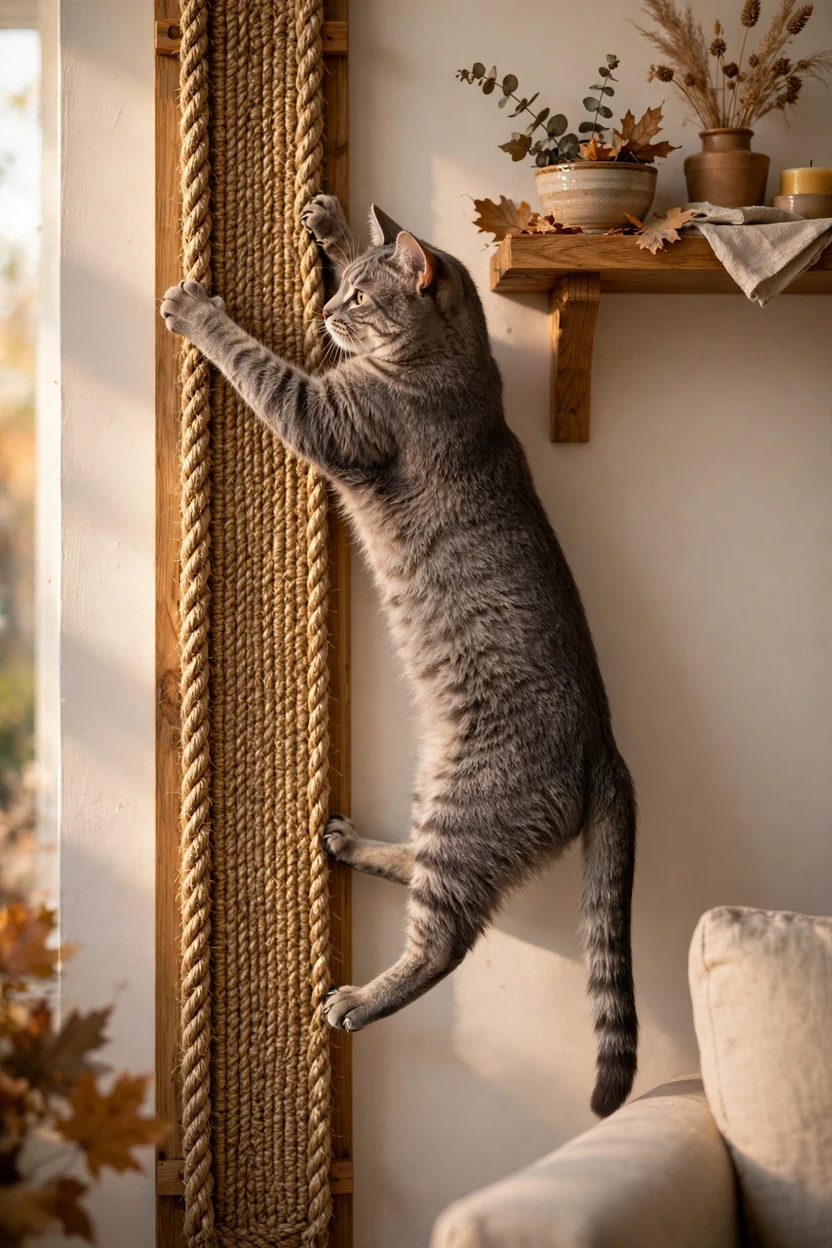
A tall sisal panel gives your cat the stretch it craves and protects your sofa arms. Choose a panel at least 30 to 32 inches tall so your cat can reach up with front paws while the back feet stay planted. Mount it next to your shelf route or sleeping spot, since cats often stretch right after they wake. Pick a neutral rope or fabric in natural tan, and swap it out when it frays. If your cat already scratches a certain spot, put the panel there first.
8. A Hammock and Basket Nook
Cats like to curl into a snug spot, and a wall-mounted hammock or woven basket gives them one that is off the floor. Choose a washable linen or cotton sling, and make sure the bracket is rated well above your cat’s weight, since a jump onto a sling hits harder than a cat at rest. Leave several inches of clearance below the hammock so it can sag without touching a shelf. Place it near the end of a route, where your cat can look back over the room. Pick a neutral color so it blends with your wall and your throw pillows.

9. A Covered Cubby Shelf
A box shelf with a round or oval opening gives shy cats a place to hide while still watching the room. Choose a cubby with good ventilation and, if possible, two openings so a cat is never trapped by a housemate. Make the inside big enough for your cat to turn around, and line it with a washable pad. Mount it at mid-height on your route so it works as a pause point, not a dead end. Paint or finish the outside to match your shelves so it reads as built-in storage.

10. A Cat Wall Next to the Sofa
A sofa can be the launch pad for a cat wall, since the arm gives your cat an easy first step. Put the first shelf close enough to hop from the sofa arm, then climb from there. Keep lamps, vases, and drinks away from the landing zone, and mount the shelves a few inches away from the sofa so cats do not scrape the fabric. The wall also gives your cat a way to watch you from above, which is why cats often choose it over a corner tower. Pick shelf colors that match the sofa for a calm, matched look.

11. A Bookcase Turned Into a Cat Climber
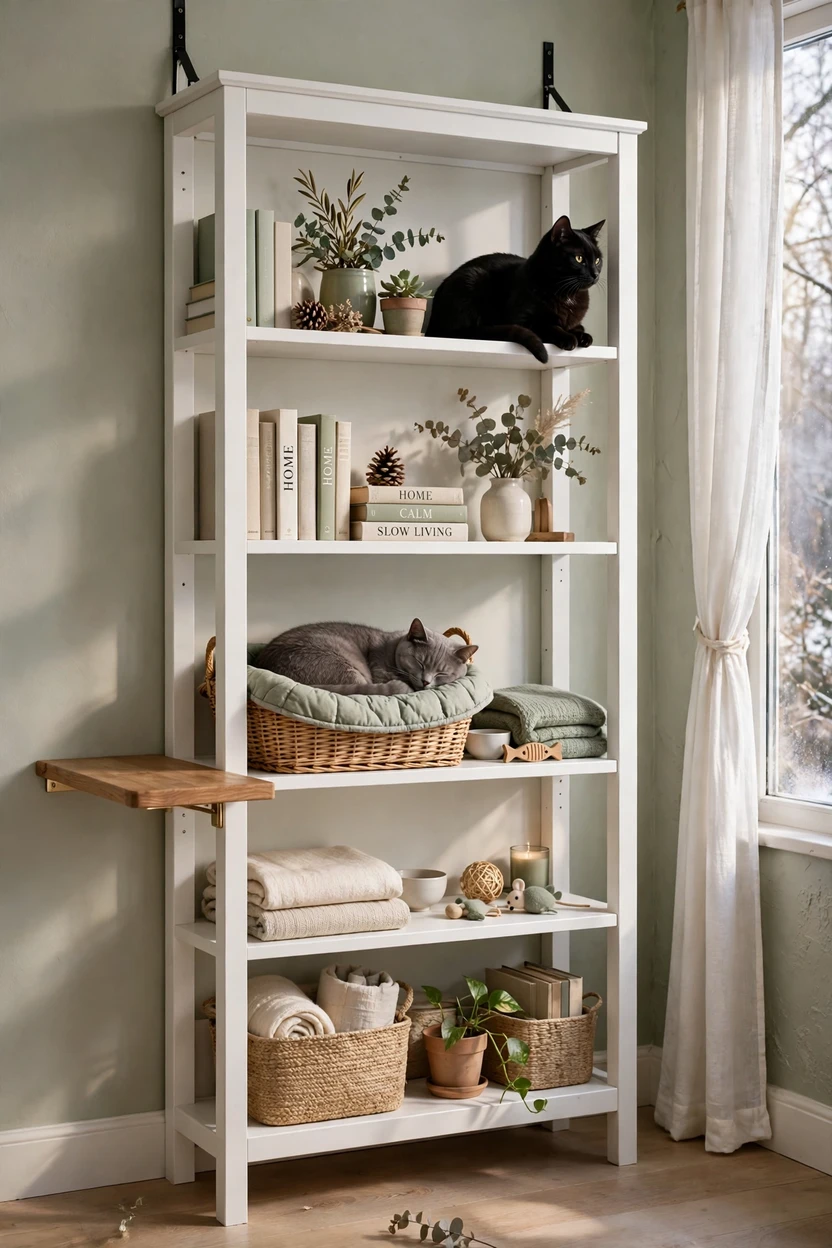
An open bookcase can become a cat climber with a few small changes. Clear one or two shelves, add a padded mat or a basket, and place a short plank as a ledge so cats can hop up from level to level. Anchor the bookcase to wall studs with anti-tip brackets, since a jumping cat adds force that a loose bookcase may not handle. Keep books on the top shelves and the lower ones free for cats. This is a smart option when you want cat features without drilling many holes.
12. A Cat-Safe Plant Ledge
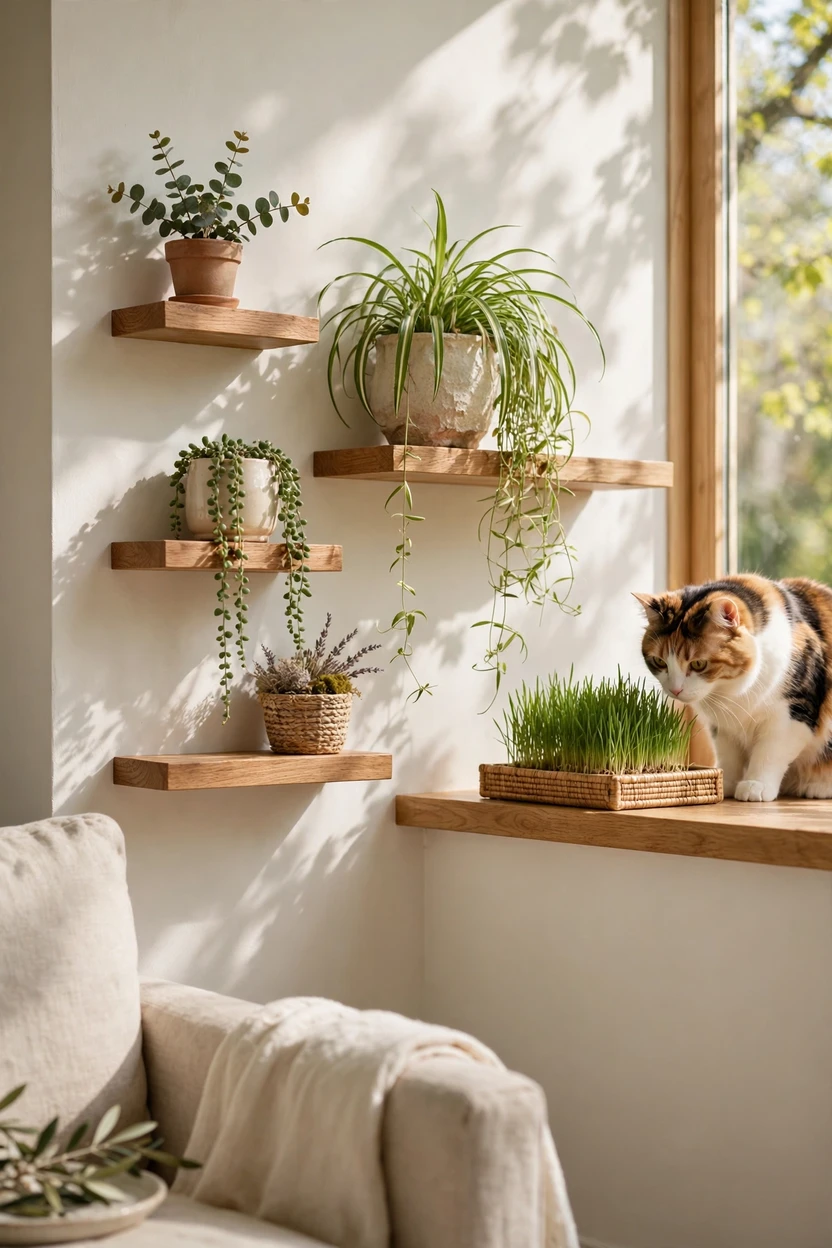
Green plants soften a wall of shelves, but the wrong plants can harm cats, and lilies are especially dangerous. Keep plants on a separate high ledge away from the route, and choose cat-friendly types such as spider plants, or grow a tray of cat grass for your cat to nibble. Check every plant against the ASPCA list before you buy. Use heavy pots so a leaping cat cannot knock them over. A little green makes the wall feel like part of the room and keeps the look from feeling like a gym.
13. A Painted Backdrop Wall
Paint the wall behind your shelves a deep color, and the oak or white shelves will stand out like art. Deep green, terracotta, or inky blue all look rich and hide scuffs from claws. Choose a scrubbable satin or eggshell finish, and paint before you mount anything, so the shelves do not need to be taken down later. Add a thin warm LED strip under the top shelf to light the wall at night. Test the color by lamplight, since dark shades change a lot after sundown.

14. A Cabinet Nook With a Perch on Top
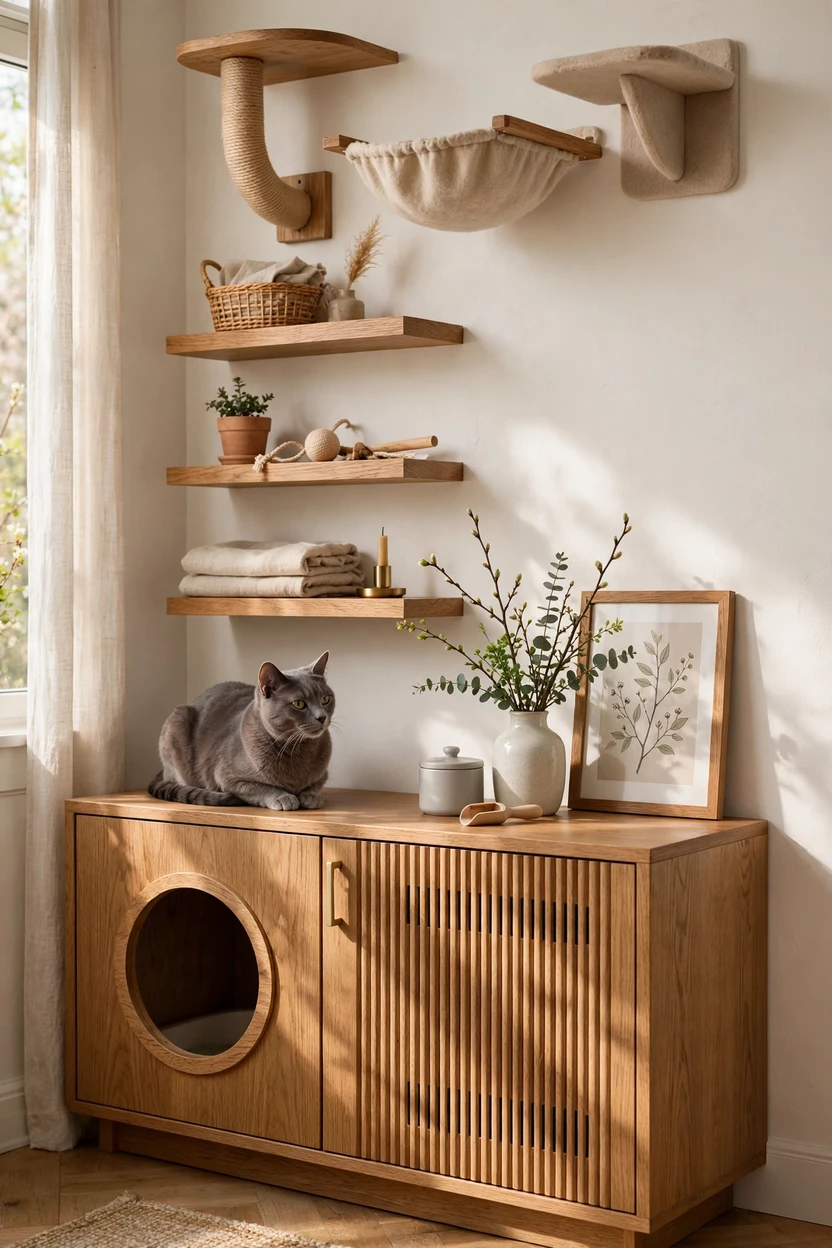
A low cabinet with a cat-sized door hides the litter box and doubles as the base of your cat wall. Run the shelf route up from the cabinet top, so your cat has a place to perch on the way up. Add vent holes or a vented door panel for airflow, and clean the box often so the cabinet does not trap smells. Choose a cabinet finish that matches the shelves so the whole unit looks like one piece. Make sure the entry is large enough for your cat to turn around inside.
15. Gentle Steps and a Ramp for Older Cats
Older cats still love height, but big jumps get hard on their joints. Use closer steps of about 10 to 12 inches between levels, widen the platforms, and add a gentle ramp with a grippy surface. Keep the incline gradual and use a rough cork or sisal surface so paws do not slip. Put a bed or a soft pad at the top so the climb leads somewhere cozy. Watch how your cat moves and add or remove steps as needed.

16. A No-Drill Tension Pole Wall
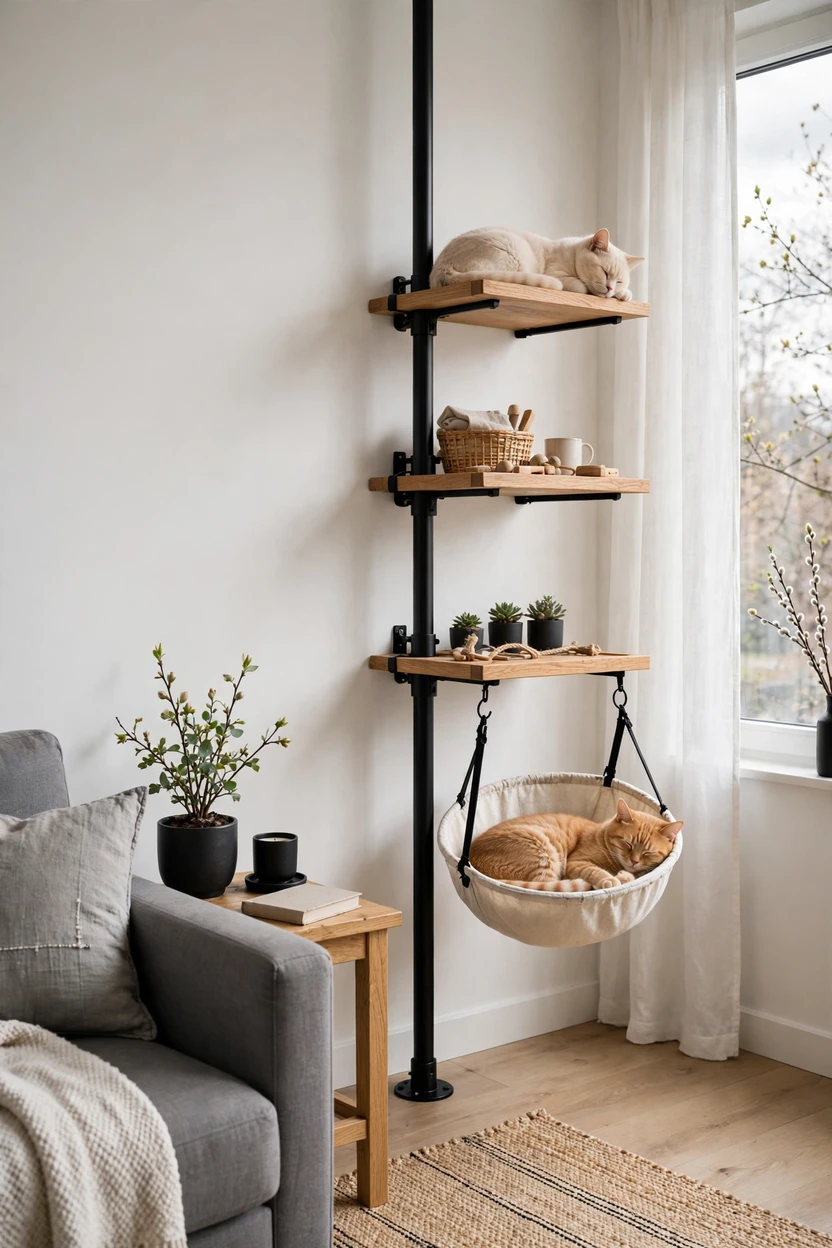
Renters can build a vertical route with a floor-to-ceiling tension pole and clip-on shelves. The pole presses against the floor and ceiling, so there are no holes in the wall. Check that the pole is rated for your cat’s weight, that the ceiling is solid enough to hold the pressure, and that every shelf locks tightly in place. Tighten the pole again every few weeks, since heavy use can loosen it. Choose a pole and shelves in a neutral finish so the setup blends into the room.
17. Cat Shelves Mixed Into a Gallery Wall
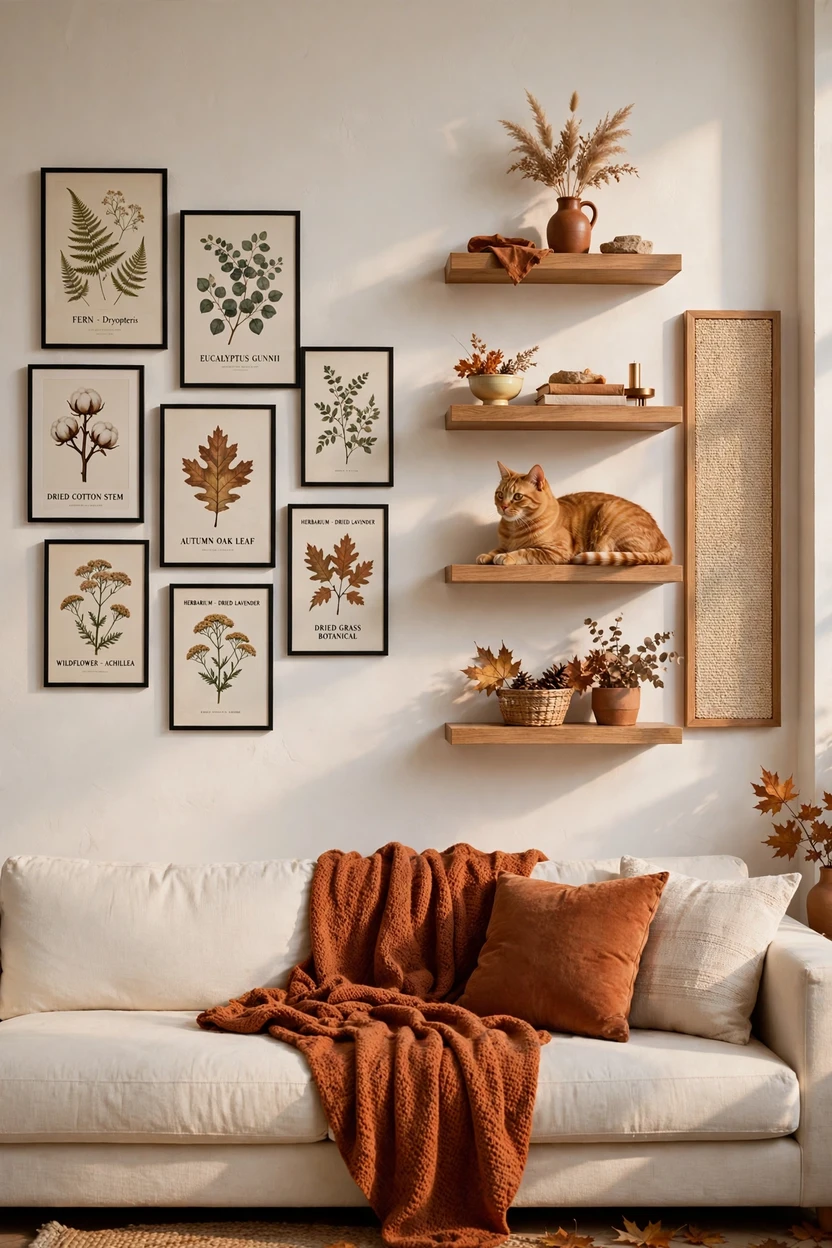
You can blend cat shelves into a gallery wall so the whole area reads as art. Group frames in a loose cluster on one side, and let the oak shelves run in a staggered line on the other. Keep frames out of the cats’ jump path, and hang them with secure hardware so a bump does not send them flying. Pick prints in the same colors as your shelf pads and hammock for a calm look. Lay the plan on the floor first, or use painter’s tape on the wall, before you drill.
Styling Tips That Keep a Cat Wall Looking Like Decor
- Match one material. Use the same wood tone as your coffee table or floors.
- Use two or three colors. Pick colors for shelves, pads, and hammock from your room palette.
- Keep pads removable. Washable pads keep fur and scratches from ruining the look.
- Leave bare wall. A few open spaces keep the wall from looking like a playground.
- Hide the practical stuff. Put litter, toys, and food in cabinets or baskets.
- Light it softly. A warm LED strip or a nearby lamp makes the wall feel planned.
- Edit often. Add one piece at a time and see how your cat uses it.
Practical Implementation Ideas
A one-weekend cat wall plan
- Friday night: Watch where your cat likes to sit, scratch, and jump. Pick a route that links those spots.
- Saturday morning: Find your wall studs with a stud finder and mark them. Tape the shelf positions on the wall with painter’s tape.
- Saturday afternoon: Mount the lowest shelf first, check it with a level, then work upward. Use at least two stud-mounted screws per shelf.
- Sunday: Add pads, a scratch panel, and a hammock. Put treats on each shelf and let your cat explore at its own pace.
Measurements and safety to keep handy
- Stud spacing: usually 16 inches apart, but some homes use 24 inches
- Shelf depth: 10 to 12 inches, and 12 to 14 inches for cats over about 18 pounds
- Shelf thickness: at least three-quarters of an inch for solid wood
- Vertical gap: about 12 to 18 inches, and 10 to 12 inches for seniors and kittens
- Risky gap: anything over 24 inches
- Sideways offset: about 12 to 16 inches between staggered shelves
- Scratch panel height: at least 30 to 32 inches
- Screws: at least two into studs per shelf, long enough to bite deep into the stud
- Hardware rating: well above your cat’s weight, because landing force is higher than resting weight
- Check-up: inspect screws and pads every month
Common Mistakes to Avoid
- Using drywall anchors alone. They are not a safe substitute for studs when a cat lands on a shelf.
- Spacing the shelves too far apart. Big gaps cause skipped jumps or risky leaps.
- Making shelves too narrow. Cats avoid platforms they cannot turn around on.
- Skipping the scratch surface. Without one, your sofa becomes the target.
- Building a dead end. Give every route two ways off, especially in multi-cat homes.
- Mounting without a level. A tilted shelf stresses the screws and unsettles cats.
- Ignoring older cats. Joints need closer steps and grippy surfaces.
- Forgetting to check the hardware. Screws and pads wear out, so check them monthly.
Small-Space Alternatives
- Use corner shelves in a spiral to save floor area.
- Mount a window perch at sill height instead of a tall tower.
- Convert a narrow bookcase into a cat climber with a few cleared shelves.
- Run a single high shelf along a hallway wall for a cat highway.
- Use a tension pole in a studio to skip the drilling.
- Choose a cabinet with a cat door to hide the litter box and add a perch on top.
Budget-Friendly Alternatives
- Build your own shelves. Solid wood boards and heavy-duty brackets cost less than most ready-made sets.
- Use ready-made shelf bases. Sturdy store shelves can work if you mount them into studs and test the weight rating.
- Wrap a board in sisal rope. A simple rope-wrapped plank makes a scratch panel at a fraction of the price.
- Thrift baskets and pads. Secondhand baskets and washable cushions work as cozy nooks.
- Start small. Begin with three shelves and a scratch panel, then add pieces as you see what your cat uses.
- Reuse furniture. An old bookcase or console can become a climber or a cat cabinet.
Pro Styling Recommendations
- Plan the route first and the look second. A pretty wall your cat ignores is a wasted wall.
- Tape the layout on the wall and live with it for a day before you drill.
- Use the same screws and finish across all shelves so the wall looks uniform.
- Introduce the wall slowly with treats and never force your cat up.
- Photograph your cat using the wall, then adjust any step that gets skipped.
- Keep the lowest shelf easy to reach so even a cautious cat will start climbing.
FAQs
Conclusion
A good cat wall does two jobs at once. It gives your cat a place to climb, watch, and nap, and it gives you a wall that looks like you meant it.
Start with one small step: tape a layout, find your studs, or add a sisal panel by the spot your cat already scratches. Then watch how your cat moves. The best cat wall is the one your cat uses every day.