22 Japandi Kitchen Ideas That Fix Cold Modern Kitchens
You know the kitchen. White cabinets, shiny counters, a steel fridge, and bright spots in the ceiling. It looks tidy in photos. But when you stand in it at 7 p.m., it feels like a waiting room.
The room isn’t broken. It’s just missing things: warmth, texture, soft light, and a little quiet. Modern kitchens often chase clean lines and forget how a room feels in the hand, under the eye, and to the ear.
Japandi fixes that. It takes Japanese restraint and Scandinavian warmth, then keeps what matters: a few good materials, calm surfaces, and a place for everything.
Below are 22 Japandi kitchen ideas, each one tied to something modern kitchens tend to miss. Start with one. Your kitchen will thank you.
Table of Contents
What is a Japandi kitchen?
Short answer: A Japandi kitchen blends Japanese minimalism with Scandinavian warmth. It uses light wood, matte stone, soft neutral color, handmade ceramics, and hidden storage to feel calm, warm, and simple.
What modern kitchens often miss, in one list:
- Warmth (too much white, steel, and gloss)
- Texture (surfaces that are smooth and flat)
- Soft light (bright overhead beams)
- Quiet (hard surfaces that bounce sound)
- Craft (everything looks factory-made)
- Ritual (a place to slow down)
Each idea below puts one of these back.
Japandi vs Scandinavian vs wabi-sabi
Scandinavian: Bright, airy, pale wood, white, and cozy hygge touches like throws and candles.
Japanese minimalism: Restraint, empty space, deep tones, natural materials, and craft.
Wabi-sabi: Beauty in imperfection and age, with rougher, handmade surfaces.
Japandi: The middle path. It is warm like Scandinavian design, calm like Japanese design, and refined with a few handmade notes.
22 Japandi kitchen ideas
Swap stark white walls for plaster-toned limewash
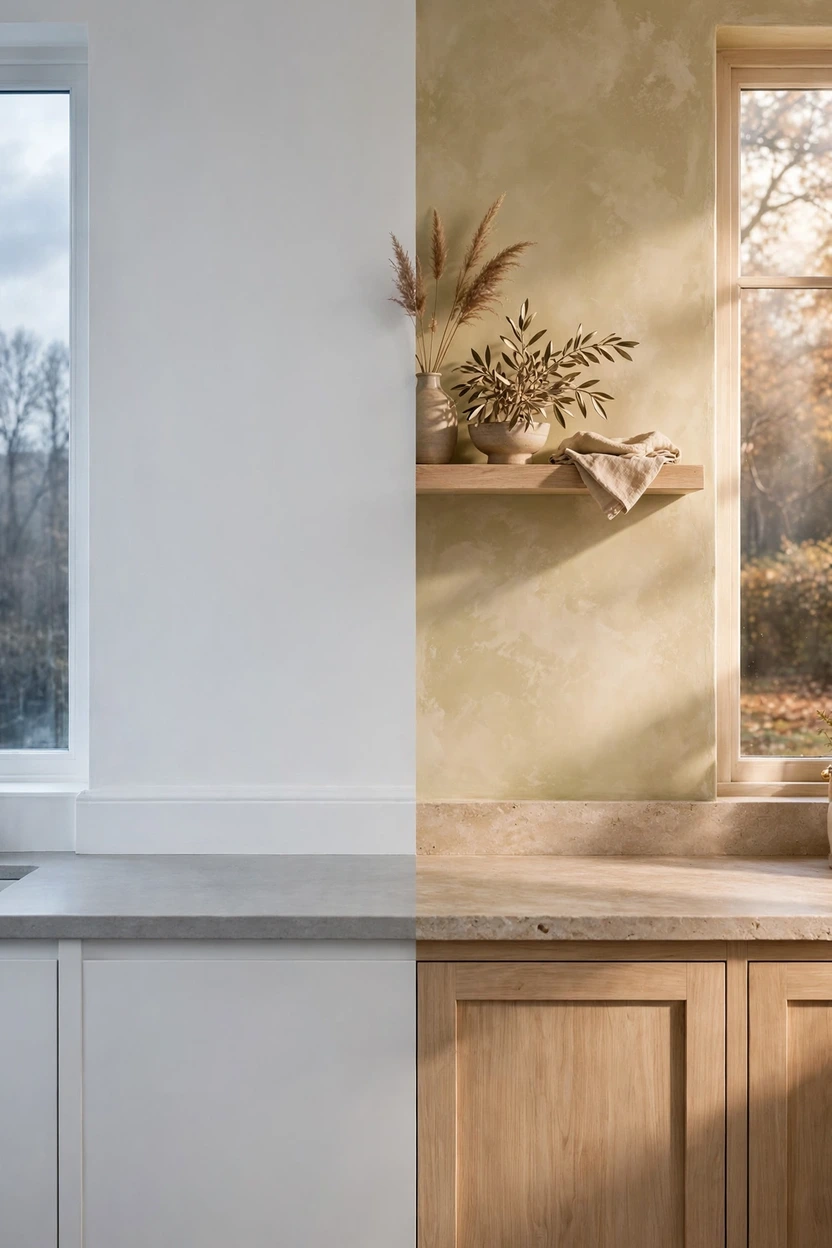
The miss: Bright, flat white walls make wood and stone look dull. The fix: Paint walls in a warm putty, sand, or soft greige, and choose a limewash or plaster-effect finish for a cloudy, hand-troweled look. The surface catches daylight in soft patches that change through the day, which flat paint can’t do. Keep true limewash away from the sink and range splash zone, since it is porous and can stain. Use a washable plaster-effect paint there, and save the chalky finish for the walls you don’t cook against.
Choose honed or leathered stone over polished counters
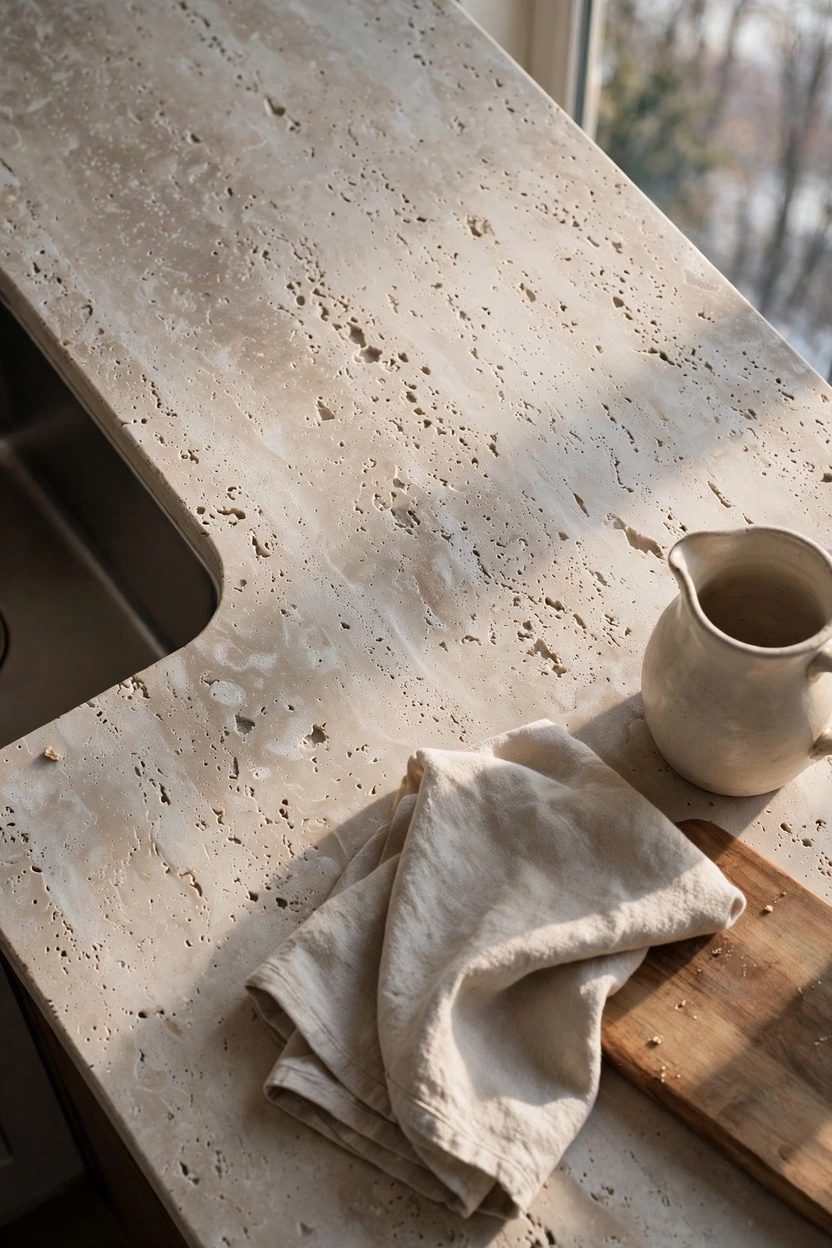
The miss: Polished counters bounce glare and show every fingerprint. The fix: Pick honed or leathered stone, such as soapstone, travertine, or a quartzite in warm cream or soft taupe. The finish absorbs light, so it looks soft and calm instead of shiny. Natural stone needs sealing and gentle cleaners, so be honest about how you cook. A honed quartz or porcelain lookalike gives you the same quiet look with less upkeep, especially in busy family kitchens.
Follow the light-wood-plus-one-deep-tone rule
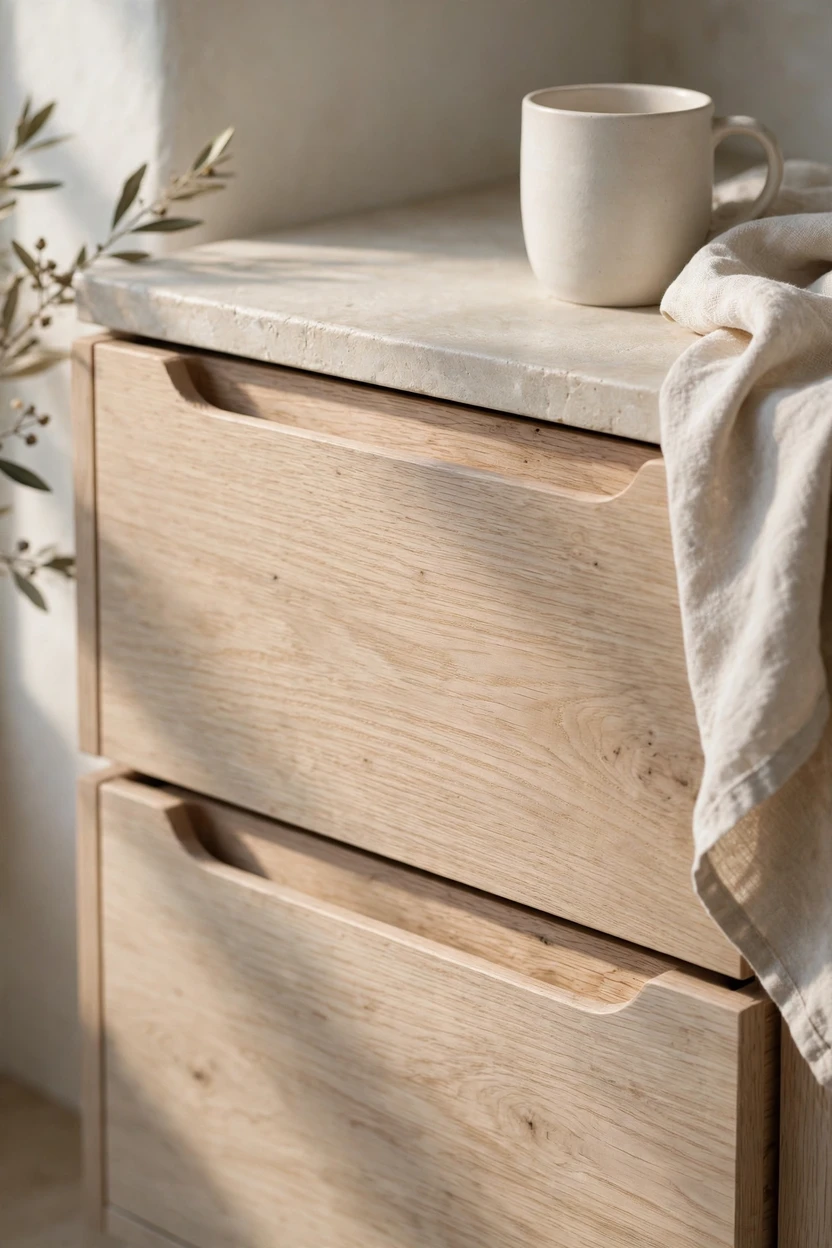
The miss: Modern kitchens often go all one color, or mix four woods that fight. The fix: Use one pale wood, like white oak or ash, for most of the kitchen, and one deeper tone, like walnut or charcoal-stained oak, for a small area such as the island base or tall unit. This gives the room contrast and weight without turning it dark. It also settles the “light or dark?” debate, since you get both in a clear ratio. Hold the same undertone across both woods, either warm honey or cooler ash, so they look related.

Replace chunky handles with finger pulls
The miss: Hardware dots every door and breaks the calm. The fix: Use flat slab doors with routed finger grooves, slim edge pulls, or a tiny recessed pull in the same wood. The fronts read as long, quiet planes, like furniture. Choose finger pulls over push-latch doors if you cook a lot, since latches can be fussy with greasy hands. Keep the groove wide enough for a comfortable grip, and check it with your own fingers before ordering.
Wrap the island in fluted or slatted wood
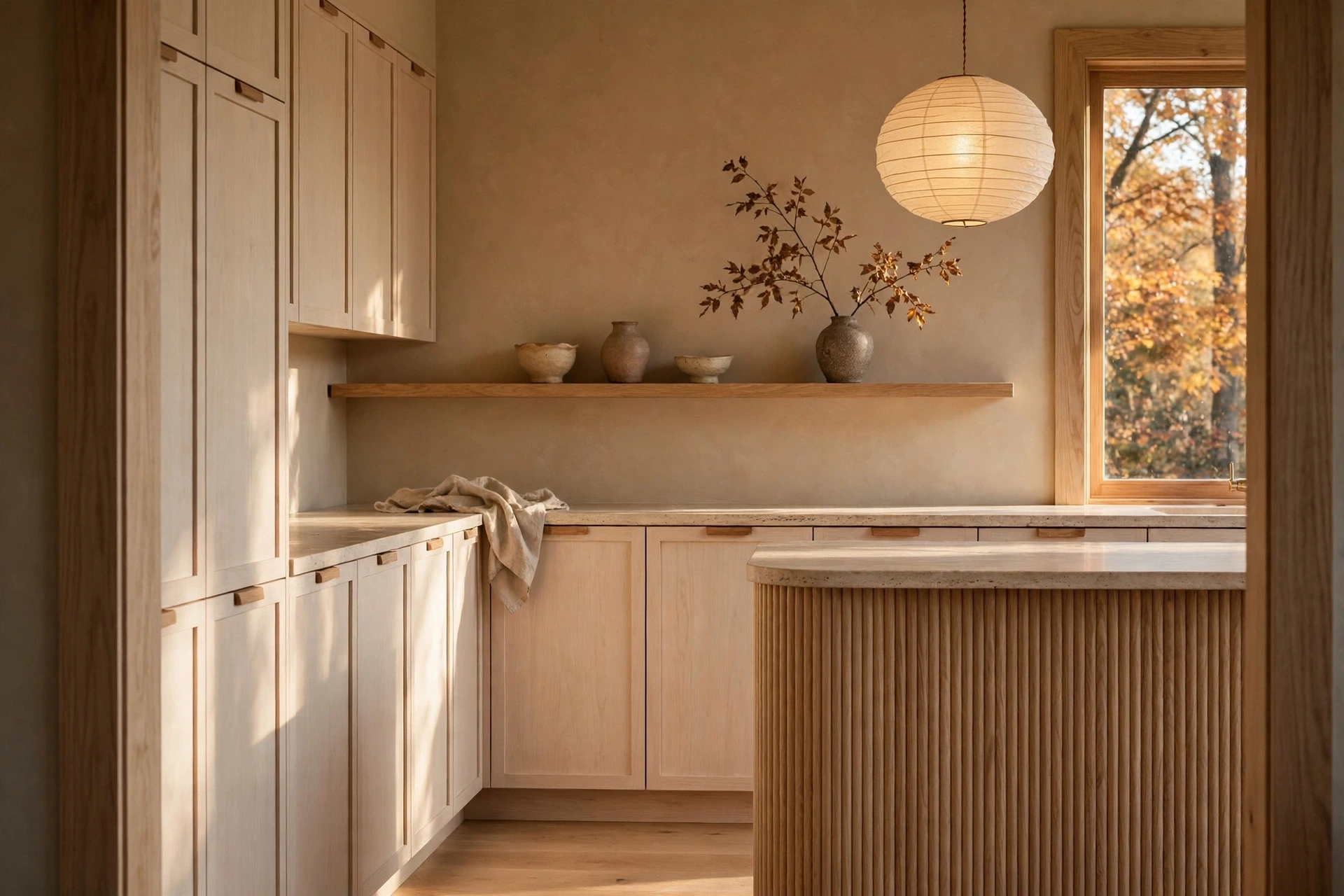
The miss: Flat panels can look plain and cold. The fix: Clad the island front in vertical oak flutes or slim wood slats. The ribs create thin shadow lines that move through the day, so you get depth without color or pattern. Use it on one surface only, usually the island, so the rest of the kitchen stays quiet. Wider grooves are easier to wipe than tight ones, and a rounded edge catches less dust.

Hang a paper lantern pendant to soften glare
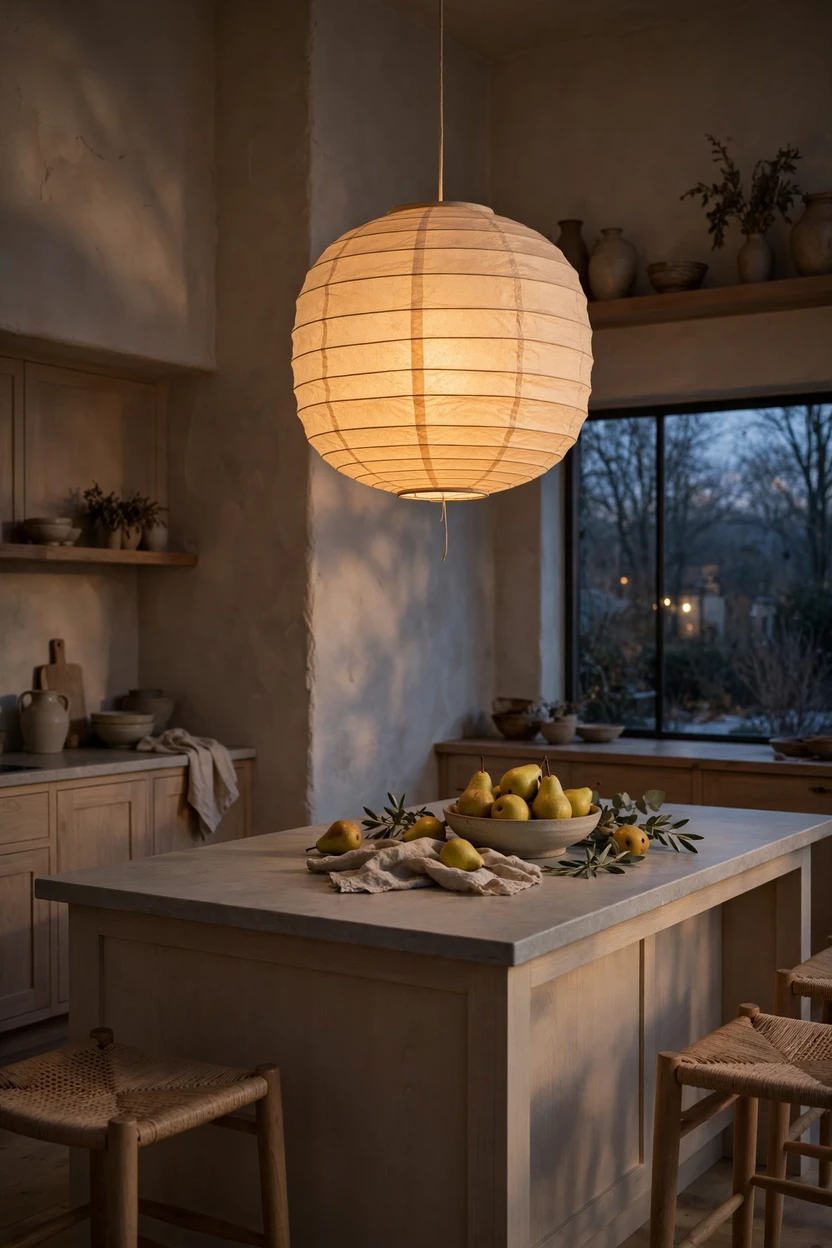
The miss: Bare bulbs and spotlights create hot spots and hard shadows. The fix: Hang a washi-style paper lantern or a linen shade over the island or table, so the light spreads in a soft, even glow. The shade acts like a diffuser, and the warm color flatters wood and food. Use a warm LED bulb (2700K), not an older hot bulb, since paper should never sit near high heat. Choose one large shade over several small ones, which keeps the ceiling calm.
Layer your lighting in three levels
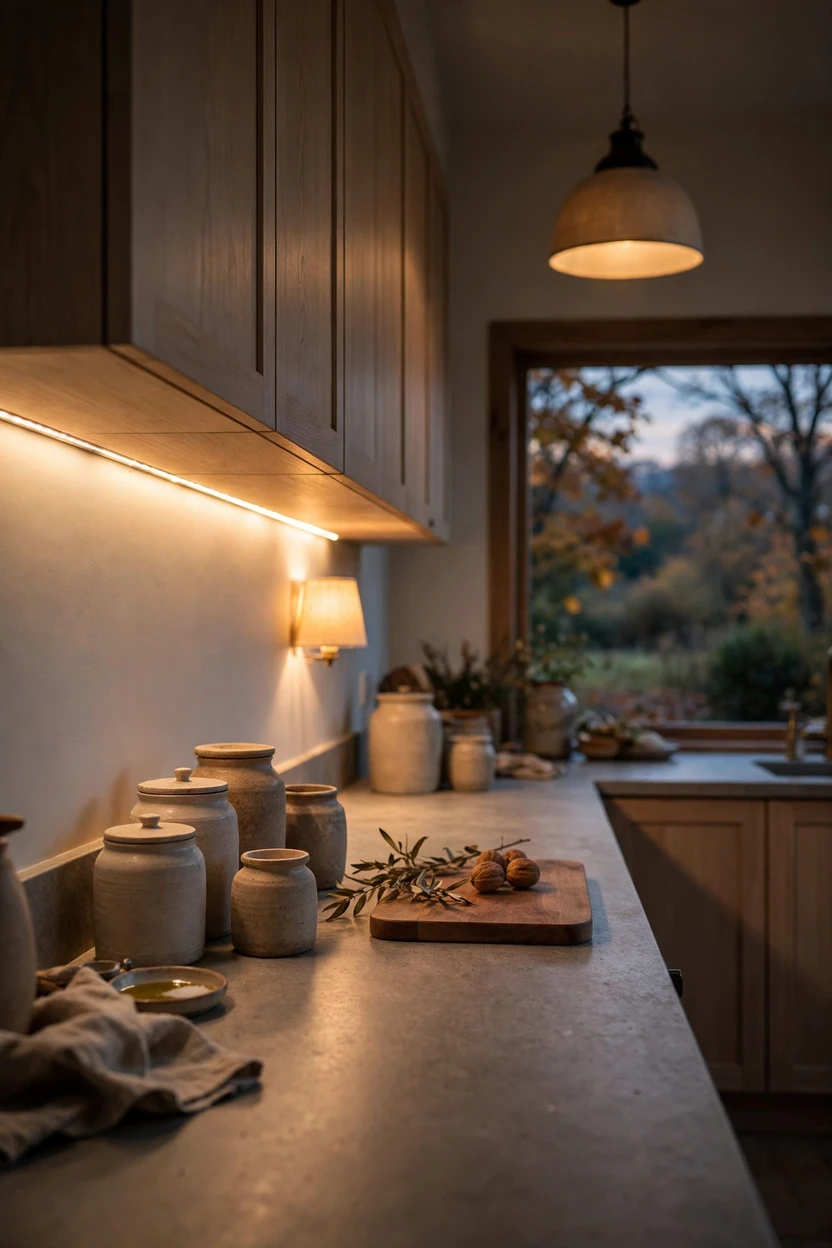
The miss: One overhead light makes a kitchen flat and shadowy. The fix: Use three layers: a dimmable ambient light, warm LED strips under the upper cabinets for task light, and one soft accent like a wall light or shelf glow. Pick bulbs around 2700K to 3000K, with a color rendering index (CRI) of 90 or higher so wood and food look true. Put everything on dimmers, so the room moves from bright prep light to a warm evening glow. This is the cheapest fix on the whole list.
Hide the appliances
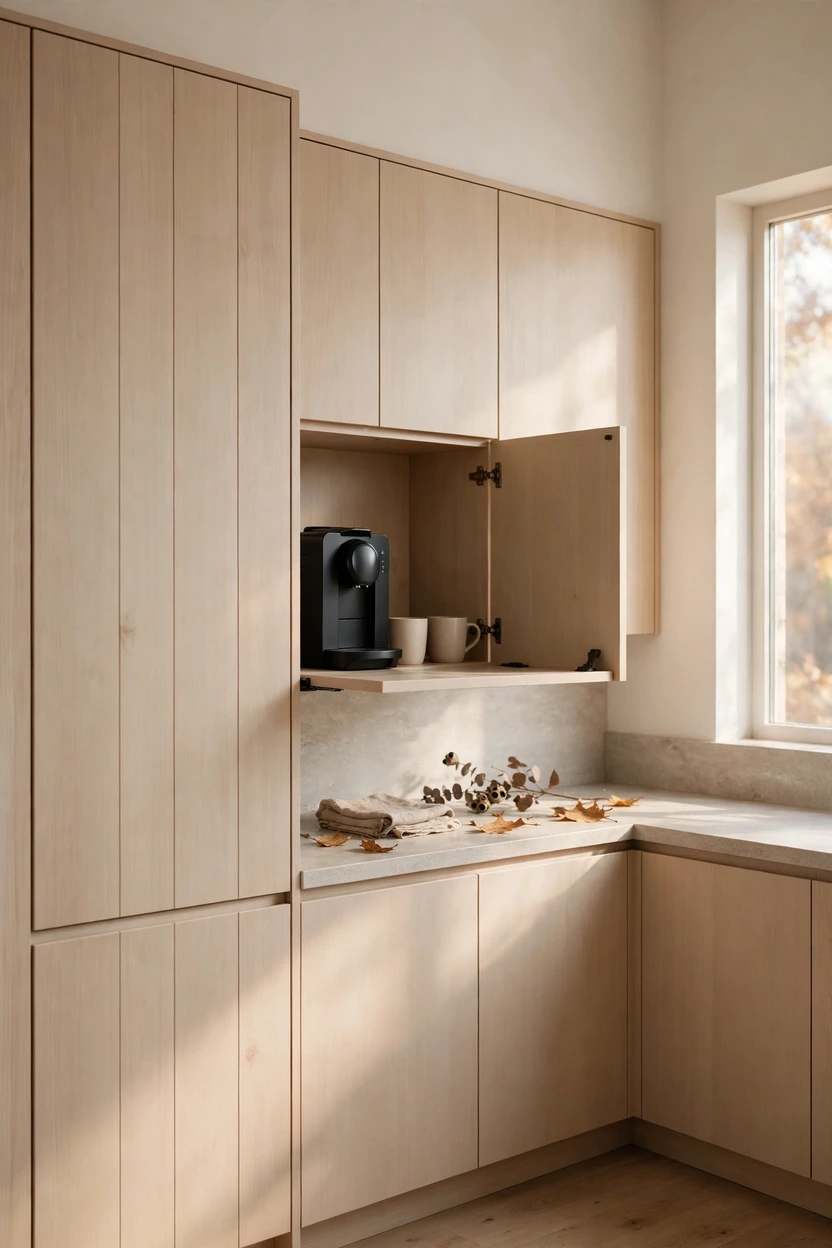
The miss: A big steel fridge and a row of gadgets shout louder than the design. The fix: Use panel-ready appliances that take cabinet fronts, or box in a regular fridge with a cabinet surround so it sits flush. Tuck small appliances into a pocket-door cabinet with an outlet inside. When the doors close, the wall reads as one calm block of wood. Leave the venting gaps your appliance manual calls for, so everything still runs well.
Use handmade-look zellige or glazed tile for the backsplash
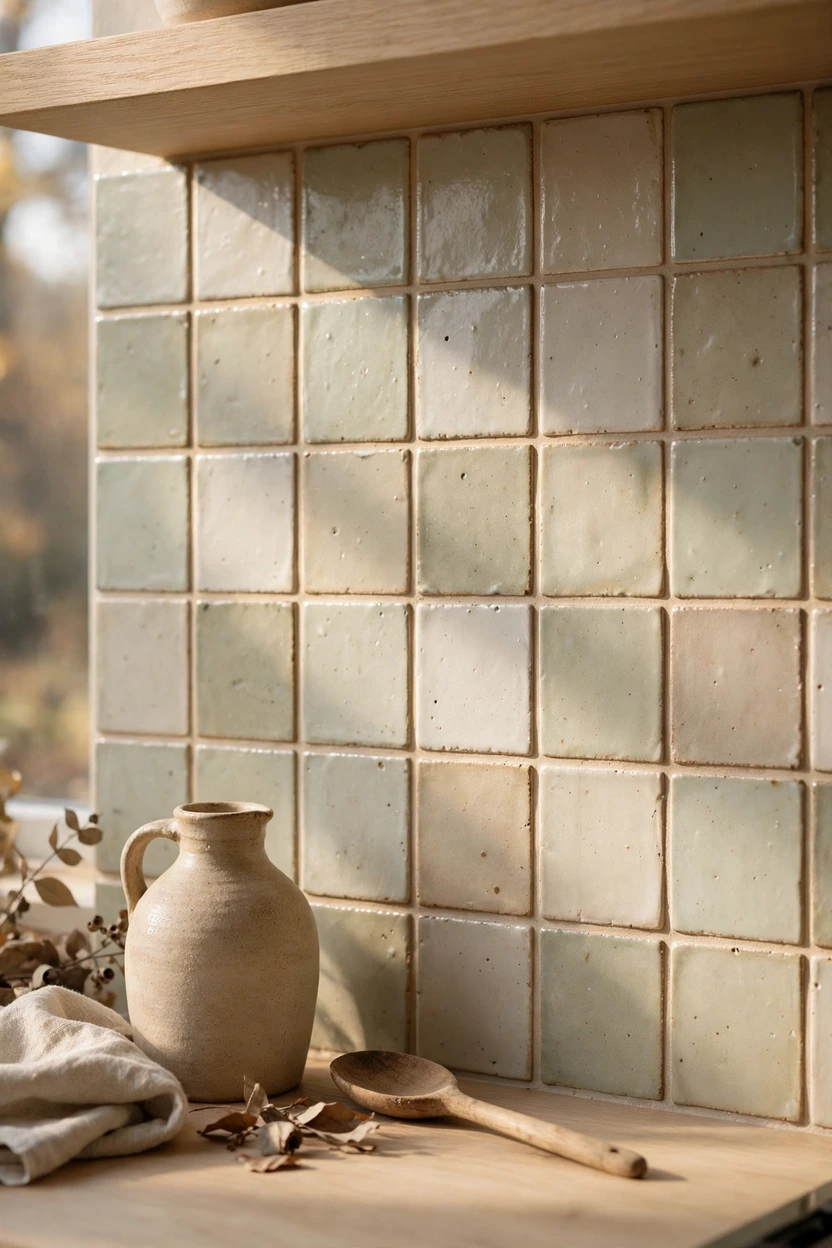
The miss: Factory-perfect tile has no character. The fix: Choose small square zellige or a matte, hand-glazed tile in cream, sage, or clay. Each tile catches light a little differently, which gives the wall a soft, rippled look. Match the grout closely to the tile so the grid stays quiet. Keep the tile to the wall behind the sink or range, and let the other walls stay calm.
Add one charred-wood accent
The miss: All-pale kitchens can feel weightless and bland. The fix: Add a small panel of shou sugi ban, the Japanese method of charring wood, on a tall unit, island base, or one lower cabinet run. The deep, matte, textured surface grounds the room and makes pale oak look warmer next to it. Ask for pieces that are brushed and sealed so no black dust rubs off on your clothes. Keep it to one accent, since too much dark tips the room into heavy.

Add one long floating shelf and style it with restraint
The miss: Heavy upper cabinets close in a small kitchen, and open shelves turn messy. The fix: Swap one run of uppers for a single long oak shelf, and style it with just three or five things, like two bowls, a tall vase with a branch, and a stack of plates. Leave about a third of the shelf empty. That space is what makes the shelf look like a display and not storage. Keep the shelf on the wall that gets daylight, so the ceramics glow.

Build a small tea or coffee ritual corner
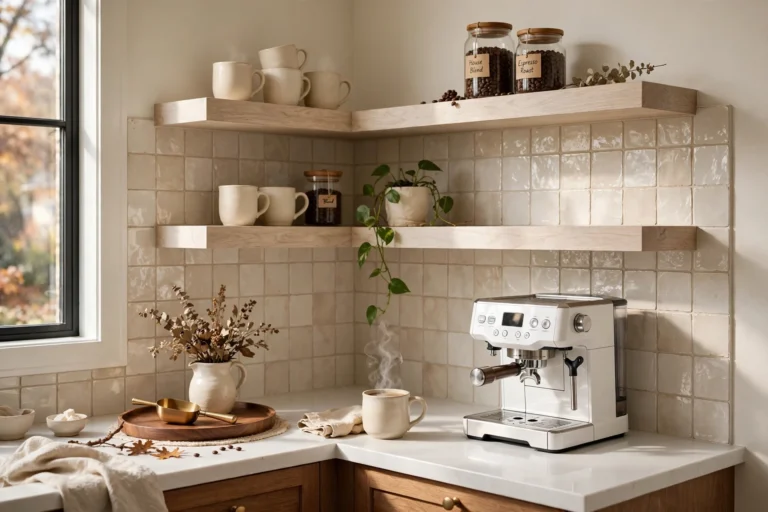
The miss: Modern kitchens plan for cooking, not for pausing. The fix: Give a short stretch of counter to a tray with a kettle, two handmade cups, and a jar of tea or coffee. Add a small outlet inside a cabinet or along the backsplash so the kettle has a home. The corner turns a daily habit into a small moment of calm, which is the heart of the Japanese side of the style. Keep it to one tray so it stays a ritual, not a collection.

Diffuse the window light with a linen or washi shade
The miss: Bare glass gives harsh glare at noon and a black mirror at night. The fix: Hang a simple linen Roman shade, a woven wood shade, or a sheer panel that lets the light in softly. The room stays bright, but the sun spreads out instead of landing in sharp patches on the counter. This borrows the idea of the shoji screen without any heavy build. Pick a shade that is easy to wash or wipe, since kitchens collect steam and splashes.

Build a window bench nook
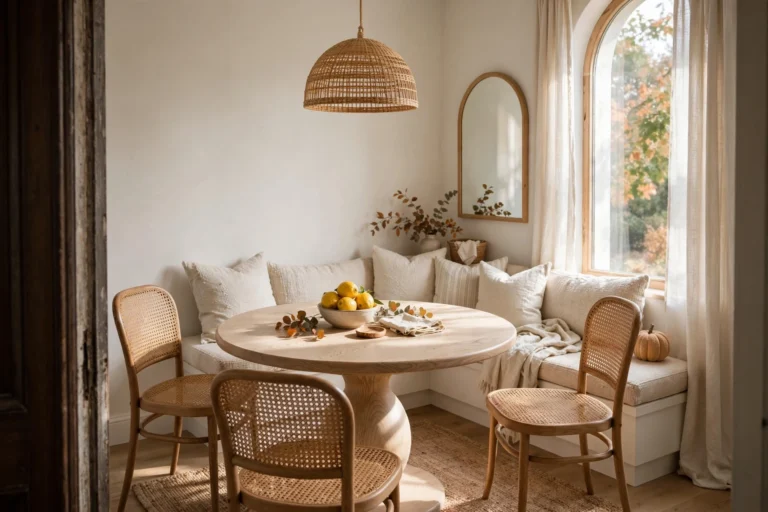
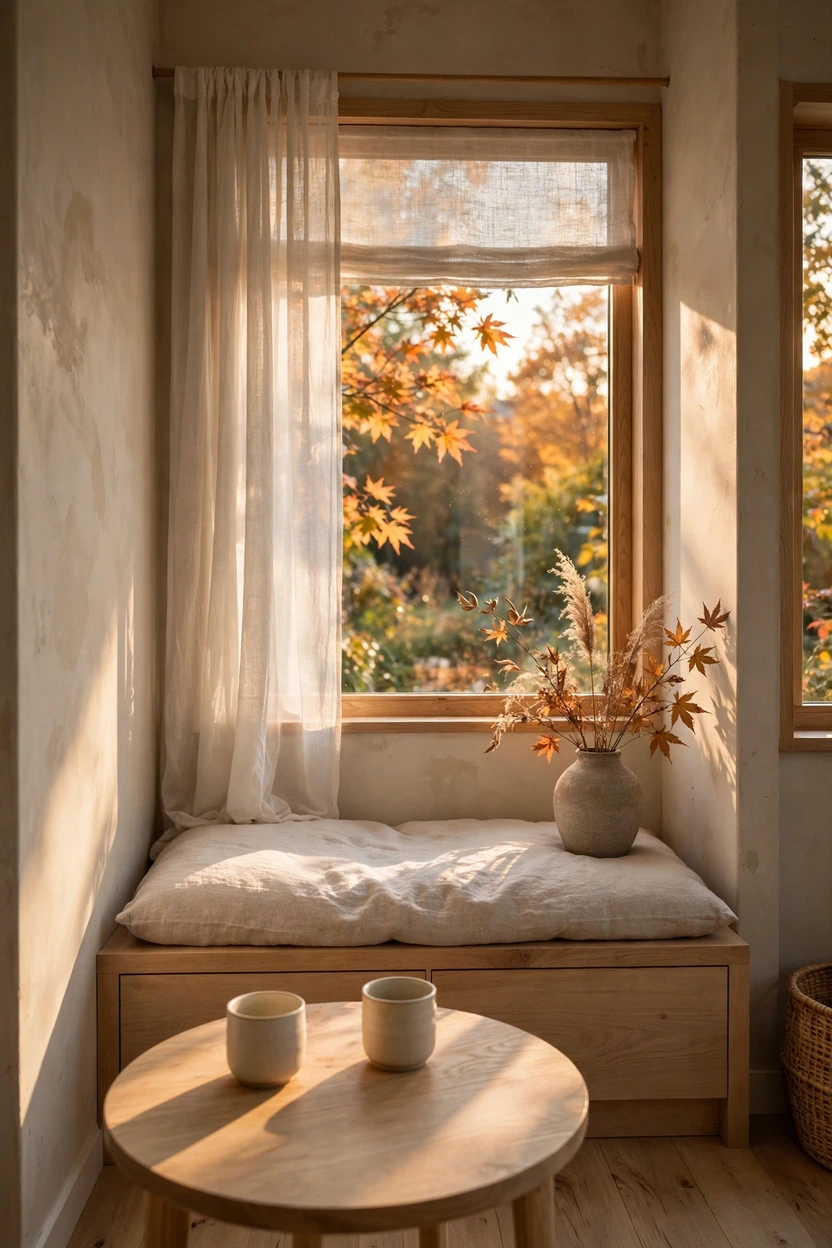
The miss: Modern kitchens often have hard stools and no place to sit and stay. The fix: Add a built-in bench under a window with a small round table. Set the seat around 17 to 19 inches high and the table around 29 to 30 inches. Top the bench with a washable linen or wool-blend cushion, and use storage drawers underneath. A soft seat invites someone to sit with a cup of tea, and that changes how the kitchen feels all day.
Right-size the island and round its corners
The miss: Oversized islands crowd the room and block the walkway. The fix: Plan about 42 inches of clearance around the island for one cook and closer to 48 inches if two people cook. Choose a simple shape with a gentle radius on the corners, which is kinder to hips and softer to the eye. If the room is narrow, use a slim island or a rolling cart instead. Fit stools only where there is room to pull them out without bumping the wall.

Use ribbed or frosted glass in slim wood frames for the pantry door
The miss: Solid doors feel heavy, and plain glass shows the mess. The fix: Set frosted or reeded glass into thin oak frames for a pantry or cabinet door. The grid nods to a shoji screen, and the glass lets light through while blurring what is inside. Use glass instead of paper, since paper does not handle steam and grease. Keep the frame lines slim, and keep the grid simple, such as three or four panels.

Use a wood slat wall to quiet the echo
The miss: Hard counters, floors, and glass make modern kitchens echo. The fix: Add acoustic slat panels, which are oak slats over a felt backing, to one wall near the dining area or at the end of the kitchen. The felt absorbs sound, and the slats add a warm, rhythmic texture. You get a calmer room in sound as well as in sight. Choose a wall that faces a hard surface, such as the wall opposite a glass door or window.

Warm up the floor with wide-plank oak and a slim runner
The miss: Cold tile or glossy floors feel hard underfoot and sound loud. The fix: Choose wide-plank matte oak, or large honed tiles in a warm stone tone, and lay a slim wool-blend runner in front of the sink or prep area. Fewer seams make the room look calmer, and the runner softens footsteps. Pick a low-pile runner with a non-slip pad, and keep it away from the stove. A flatweave in a quiet pattern is easy to shake out and clean.

Carve out a plaster arch or niche for one object
The miss: Modern kitchens are all straight lines and square boxes. The fix: Add a shallow arched niche in the wall, finished in the same plaster as the wall, and put one beautiful object inside, like a vase or a bowl. A curve softens all the right angles around it. The niche can hold a small light too, which gives you a gentle glow at night. If a built niche is out of reach, an arched mirror or arched shelf bracket gives the same effect.

Decant the pantry into jars and wood organizers
The miss: Bright plastic packaging adds visual noise. The fix: Pour pantry staples like rice, oats, and flour into airtight glass or ceramic jars, and sort them in wood or bamboo drawer organizers. A row of calm, matching containers reads as order, not clutter. Label them with simple matte tags. Keep the original packaging for anything with cooking instructions or allergen details.

Keep only a few good tools in sight
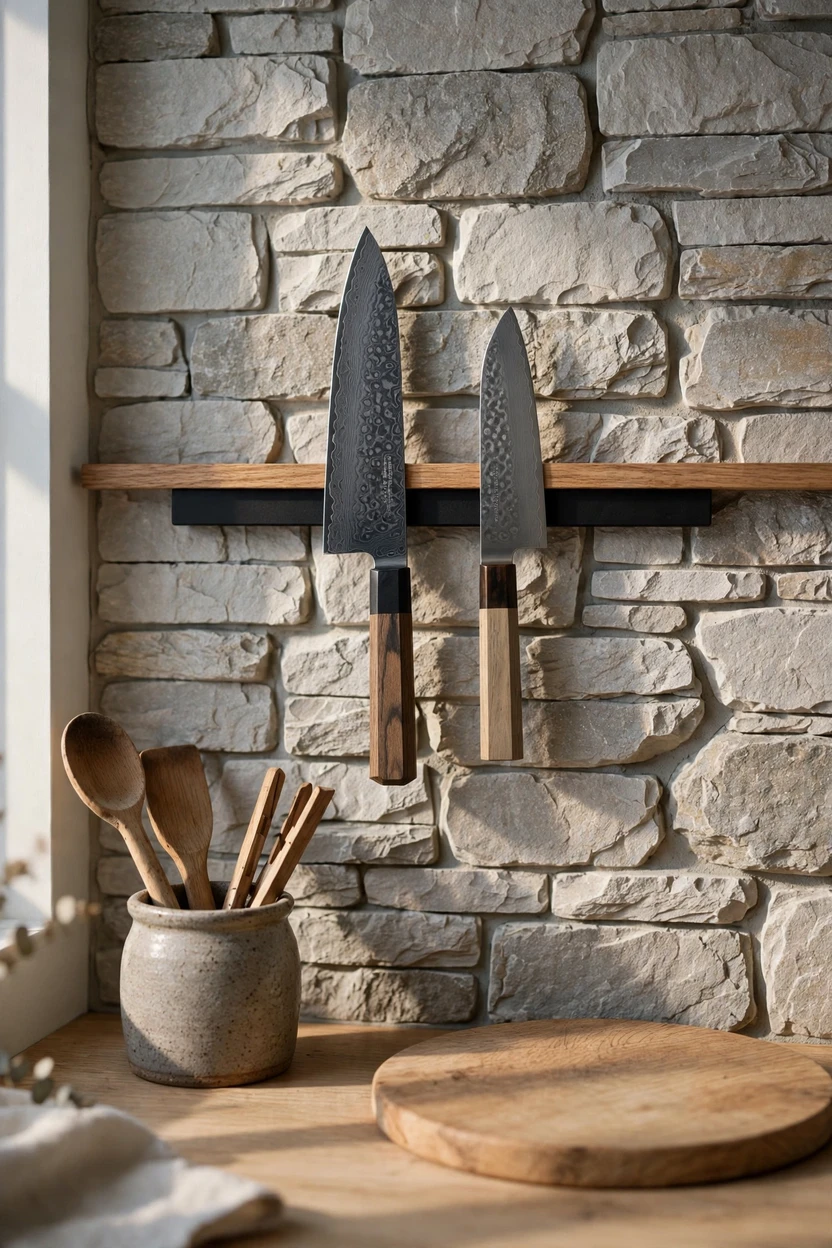
The miss: A forest of gadgets and a block of mismatched knives crowd the counter. The fix: Mount a slim magnetic rail or wood bar on the wall and hang two or three well-made tools, like a chef’s knife, a bread knife, and a wooden spoon. Fewer, better tools tell the eye that care went into the room. Mount the rail above the reach of small kids, and store the rest in a drawer. It also keeps the counter clear for cooking.
Bring in something living: herbs and one branch
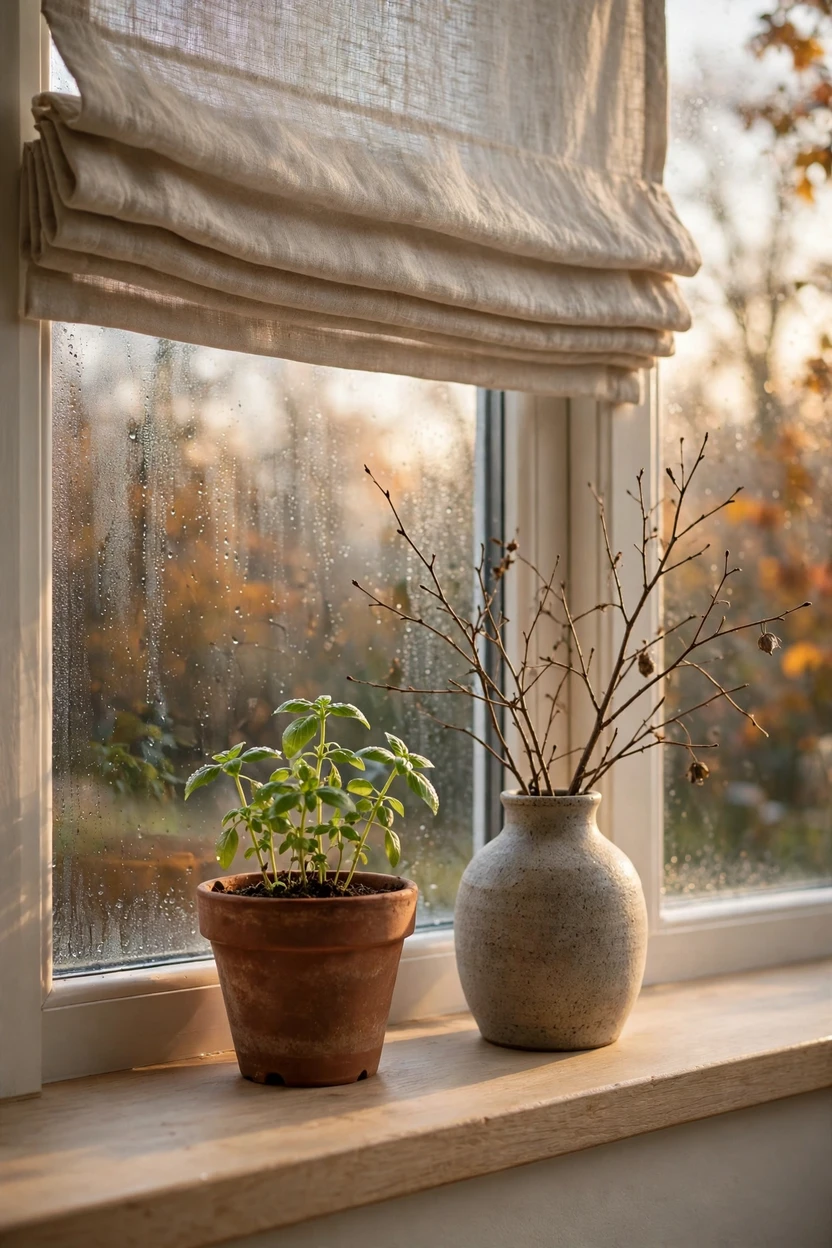
The miss: Modern kitchens can feel sealed off from the outdoors. The fix: Set a small pot of herbs on a sunny sill, such as basil, thyme, or mint, and keep one cut branch in a stoneware vase on the island. Herbs need around six hours of light, so if your window is dim, use a pothos or a branch alone. A living touch brings in color, scent, and a link to the seasons. It is the quickest finish for a room that feels almost done.
Styling tips
Repeat materials, not patterns. Use oak three times, such as cabinets, a shelf, and a stool. That repetition looks planned.
Pick one metal. Brass and matte black both work in Japandi. Choose one and use it on the tap, pulls, and pendant details.
Style in odd numbers. Groups of three or five look natural.
Add texture, not objects. Linen, ceramic, plaster, and wood grain give interest without clutter.
Keep a third of every surface empty. Empty space is part of the design.
Edit by season. In fall, swap lemons for pears. In winter, use one bare branch.
Practical implementation ideas
A smart order if you update in stages:
- Declutter first. Clear counters. Sort items into daily, weekly, and rare use.
- Fix the lighting. Add LED strips, warm bulbs, and dimmers.
- Paint the walls. Move from stark white to a warm putty or greige.
- Swap hardware. Switch to finger pulls or slim pulls and one good tap.
- Add storage that hides. Deep drawers, a pocket-door cabinet, decanted jars.
- Add soft layers. Shade, runner, and one shelf.
- Do the big surfaces last. Counters, backsplash, and floors cost the most, so choose them once you know your look.
Common mistakes to avoid
- Going stark and cold. Bright white and cool bulbs feel clinical. Use warm whites and 2700K light.
- Mixing too many woods. Stick to one light wood and one deeper accent.
- Too many open shelves. One long shelf is plenty.
- Busy tile. Let simple shapes or one handmade tile carry the wall.
- Over-polishing. If everything is flawless, it loses the handmade note.
- Copying the look and skipping function. Plan drawers, zones, and storage before you pick finishes.
- Too much dark. One deep accent grounds the room. Three turn it heavy.
- Treating Japandi as Scandinavian with black paint. The Japanese side is about restraint and craft, not just contrast.
Small-space alternatives
- One long shelf instead of many. It opens the wall and holds your daily bowls.
- Light plaster-toned walls. One color makes the edges blur and the room feel larger.
- Skip the island. Use a slim rolling cart or a wall-mounted drop-leaf if aisles drop under about 42 inches.
- Use a bench with storage. A slim window bench holds linens and seats two.
- Choose a linen shade. It softens the light and adds texture without taking floor space.
- Hang the knives. A wall rail frees up counter room.
- Use a slim runner. One narrow runner warms the floor without crowding it.
Budget-friendly alternatives
Rough price tiers vary by region and product, so treat these as direction, not quotes.
Under a weekend (low cost): warm paint, new slim pulls, warm bulbs, LED strips, a linen shade, one shelf, a few handmade-look bowls.
Mid-range: reface cabinets with flat oak-look fronts, add a honed quartz or butcher-block counter, and a matte tile backsplash.
Bigger project: panel-ready appliances, custom wood cabinetry, real honed stone, a built-in window bench.
Money-saving swaps:
- Use stock cabinet boxes with custom flat-front doors.
- Use large-format porcelain instead of stone slabs.
- Use a plaster-effect paint instead of full plaster.
- Hang a paper lantern in place of a custom light.
Pro styling recommendations
Follow a 60-30-10 mix. About 60% warm neutral, 30% light wood, 10% deep accent.
Give each wall one job. One for display, one for storage, one left quiet.
Keep all counters 80% clear so a single bowl or tray stands out.
Photograph in soft morning light for Pinterest. Turn off overhead bulbs, open the shade, and style one corner.
Make vertical pins. Use 1000×1500 images with short, readable text overlays.
FAQs
What is a Japandi kitchen? A Japandi kitchen blends Japanese minimalism with Scandinavian warmth. It uses light wood, matte stone, soft neutrals, handmade ceramics, and hidden storage for a calm, warm feel.
What is the difference between Japandi and Scandinavian kitchens? Scandinavian kitchens lean bright and cozy, with white, pale wood, and hygge touches. Japandi adds Japanese restraint, deeper accent tones, and handmade craft, so it feels quieter and more grounded.
What is the difference between Japandi and wabi-sabi? Wabi-sabi celebrates age, wear, and imperfection. Japandi is more refined, with smooth surfaces and a few handmade notes.
What colors work best in a Japandi kitchen? Warm whites, putty, sand, greige, taupe, and soft sage, plus natural wood. Add one deep tone, such as charcoal or walnut, for contrast.
Why does my modern kitchen feel cold? Usually it is too many hard, shiny surfaces, white walls, and overhead-only lighting. Add texture, warm layered light, and wood to fix it.
Can a small kitchen be Japandi? Yes. Use one long shelf, a warm single color, deep drawers, and a slim runner. Skip the island if the aisle gets too tight.
Is a Japandi kitchen expensive? It doesn’t have to be. Paint, lighting, pulls, a shade, and styling cost little. Honed stone and custom cabinets cost more but are optional.
Does Japandi work with kids? Yes, with the right choices. Pick honed quartz over soft stone, use wipeable matte finishes, and choose washable fabrics.
How many wood tones should I use? Use two: one light and one deeper, with the same undertone. More than that tends to look random.
Do I have to get rid of my stainless steel appliances? No. Box in the fridge or hide small appliances behind doors. You can also keep stainless steel as one quiet element and balance it with wood and matte finishes.
A Japandi kitchen blends Japanese minimalism with Scandinavian warmth. It uses light wood, matte stone, soft neutrals, handmade ceramics, and hidden storage for a calm, warm feel.
Scandinavian kitchens lean bright and cozy, with white, pale wood, and hygge touches. Japandi adds Japanese restraint, deeper accent tones, and handmade craft, so it feels quieter and more grounded.
Wabi-sabi celebrates age, wear, and imperfection. Japandi is more refined, with smooth surfaces and a few handmade notes.
Warm whites, putty, sand, greige, taupe, and soft sage, plus natural wood. Add one deep tone, such as charcoal or walnut, for contrast.
Usually it is too many hard, shiny surfaces, white walls, and overhead-only lighting. Add texture, warm layered light, and wood to fix it.
Yes. Use one long shelf, a warm single color, deep drawers, and a slim runner. Skip the island if the aisle gets too tight.
It doesn’t have to be. Paint, lighting, pulls, a shade, and styling cost little. Honed stone and custom cabinets cost more but are optional.
Yes, with the right choices. Pick honed quartz over soft stone, use wipeable matte finishes, and choose washable fabrics.
Use two: one light and one deeper, with the same undertone. More than that tends to look random.
No. Box in the fridge or hide small appliances behind doors. You can also keep stainless steel as one quiet element and balance it with wood and matte finishes.
Conclusion
A modern kitchen can have every right thing and still feel wrong. The counters are clean, but the light is harsh. The cabinets are straight, but nothing invites you to sit down.
Japandi doesn’t ask you to buy more. It asks you to notice what’s missing, then fix that one thing: warmer light, a softer wall, a place for tea, a window that glows instead of glares.
Start with whichever miss bothers you most tonight. Change that, and walk back in tomorrow morning. You will feel the difference before you can name it.