18 Home Coffee Bar Ideas That Look as Good as They Smell

The smell hits first. Fresh grounds, warm milk, a little cinnamon from a jar left open on the counter. Then you see it: a small corner with a pretty machine, a row of mugs, and a wooden tray that looks like someone cared about it.
Now look at your own coffee spot. A machine pushed against the backsplash, cords hanging down, mugs stacked in a cabinet three feet away, and a pile of sugar packets near the toaster.
A good coffee bar fixes that without a remodel. It gives each tool a place, keeps the path from beans to cup short, and makes the whole corner pleasant to stand in at 7 a.m.
This list has 18 home coffee bar ideas for tiny kitchens, big kitchens, apartments, and every style in between. You’ll also find exact sizes, outlet and steam tips, storage ideas, and ways to make your coffee bar feel as good as it smells.
Table of Contents
Quick Answer: What Is a Home Coffee Bar?
A home coffee bar is a dedicated spot in your home where you store, brew, and serve coffee. It usually includes a machine, a grinder or beans, mugs, and a few extras like sugar, syrups, or tea. It can be a full cabinet run or just a tray on a counter.
18 Home Coffee Bar Ideas
1. A Tray-Styled Countertop Station
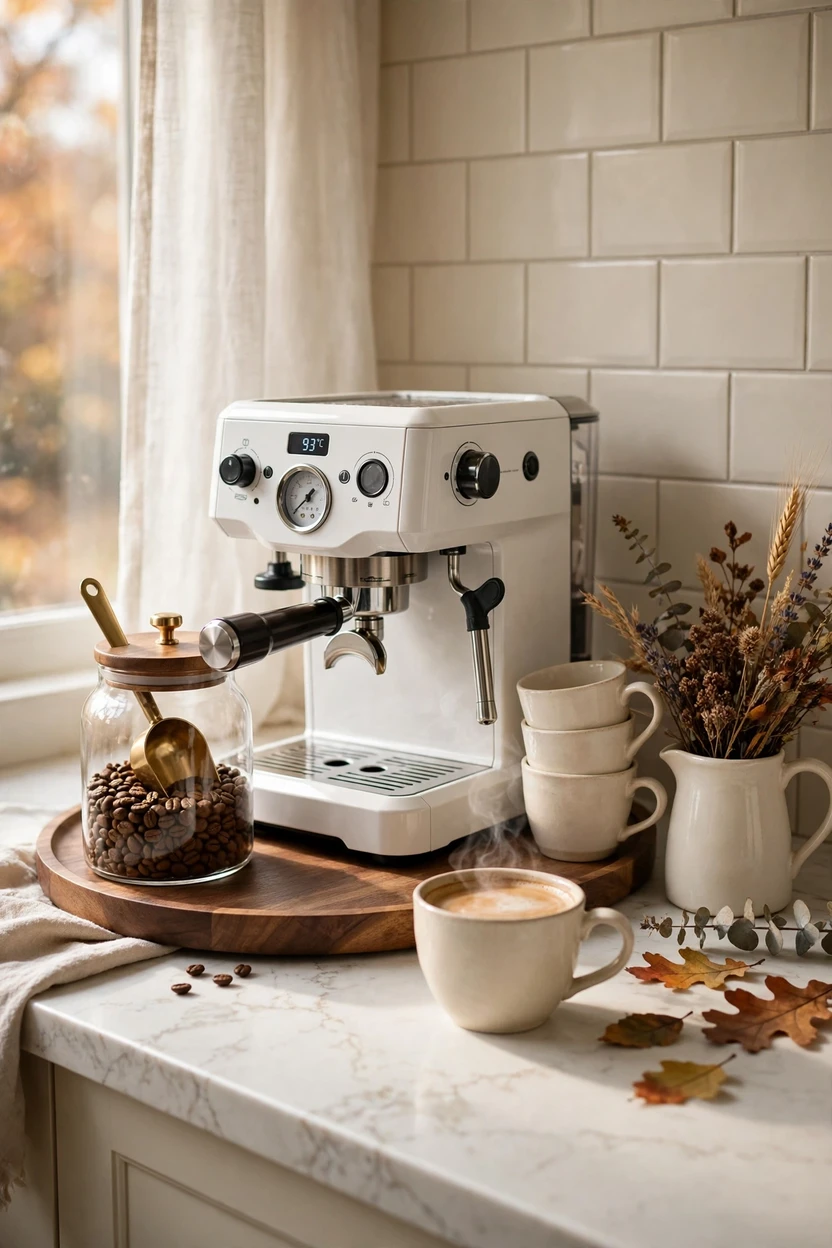
You don’t need new furniture to build a coffee bar. A wood or marble tray defines the station, holds the machine and a canister or two, and protects the counter from drips. Keep the kettle on one side and the cups on the other so the path from beans to mug stays short. Aim for 24 to 36 inches of counter width, which is enough for a machine, a grinder, and a spot to set a cup. Leave the rest of the counter clear so the corner looks planned instead of crowded. Scent and sip touch: keep beans in an airtight jar and grind them fresh, because the smell that fills the kitchen is the best decor you can get.
2. A Floating Shelf Coffee Bar
Two floating shelves above a console or short counter create a coffee bar where there are no cabinets. Choose thick oak or walnut shelves about 8 to 10 inches deep so mugs and jars sit safely. Put mugs and glasses on the top shelf, beans, syrups, and tea on the lower one, and leave the counter below for the machine. Mount the shelves into studs or with heavy-duty anchors, because full jars and ceramic mugs add up quickly. Paint a short cord channel to match the wall so wires don’t spoil the look. Scent and sip touch: tuck a cinnamon stick or a vanilla bean into the sugar jar for a quiet warm scent every time you lift the lid.

3. A Hidden Cabinet Coffee Bar
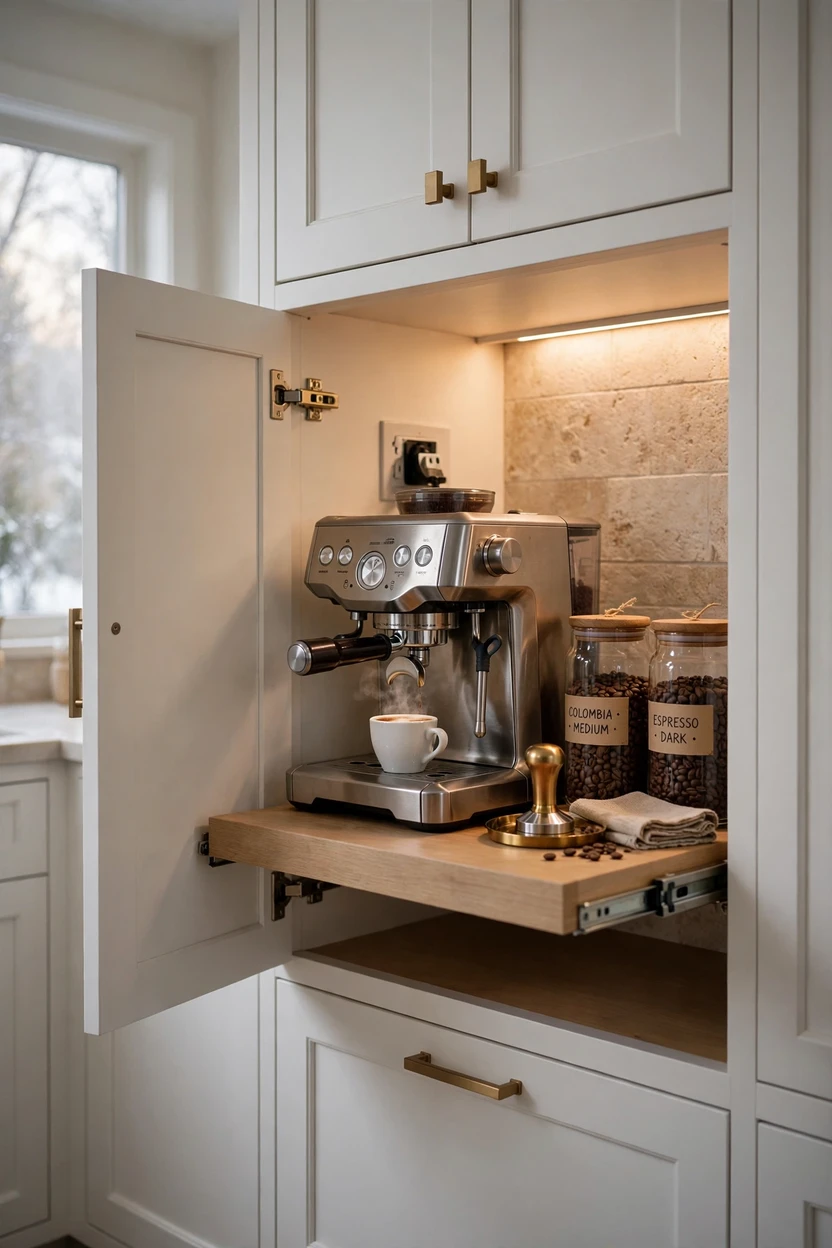
A hidden coffee bar keeps counters clear by tucking the machine behind a door. Use a lift-up or pocket door on an upper cabinet, or fit a pull-out shelf so the machine slides forward when you brew. Leave 3 to 4 inches behind the machine for steam and heat, and never run it in a tightly closed space. Add an outlet inside the cabinet so no cords hang outside, and line the base with a washable mat so spills wipe up fast. Use moisture-resistant materials, since steam adds up over time. Scent and sip touch: keep a small tin of tea and a jar of cocoa nearby, so the cabinet smells warm when you open the door.
Related: 17 Budget-Friendly Mobile Home Outdoor Space Ideas That Feel Cozy
4. A Coffee Bar Cart
A cart gives you a coffee bar with no drilling, which suits apartments and rentals. Pick a two- or three-tier cart with locking wheels, then keep heavy items, like the machine and water jug, on the sturdiest level. Use the top for a tray, a few jars, and mugs, and the lower shelf for filters, syrups, and spare beans. Roll it near an outlet and keep the cord short so it doesn’t dangle in the walkway. When guests come, roll it to the table and it becomes a serving station. Scent and sip touch: a small vase with fresh rosemary or mint adds a clean green smell next to the roasted notes.

5. A Hutch Coffee Bar
A hutch adds a built-in display layer that a plain table can’t give. Put the machine and a tray on the lower counter, and show off mugs and glass jars behind the upper glass doors. Remove one shelf if you need more height for a tall grinder or a large machine. Use the closed lower cabinet for filters, syrups, napkins, and spare beans. Paint the back panel in soft sage, cream, or deep blue so the dishes pop and the piece feels fresh. Scent and sip touch: keep a small bowl of dried orange slices on a shelf for a faint citrus smell when you open the doors.

6. A Bookshelf or Ladder Shelf Coffee Bar
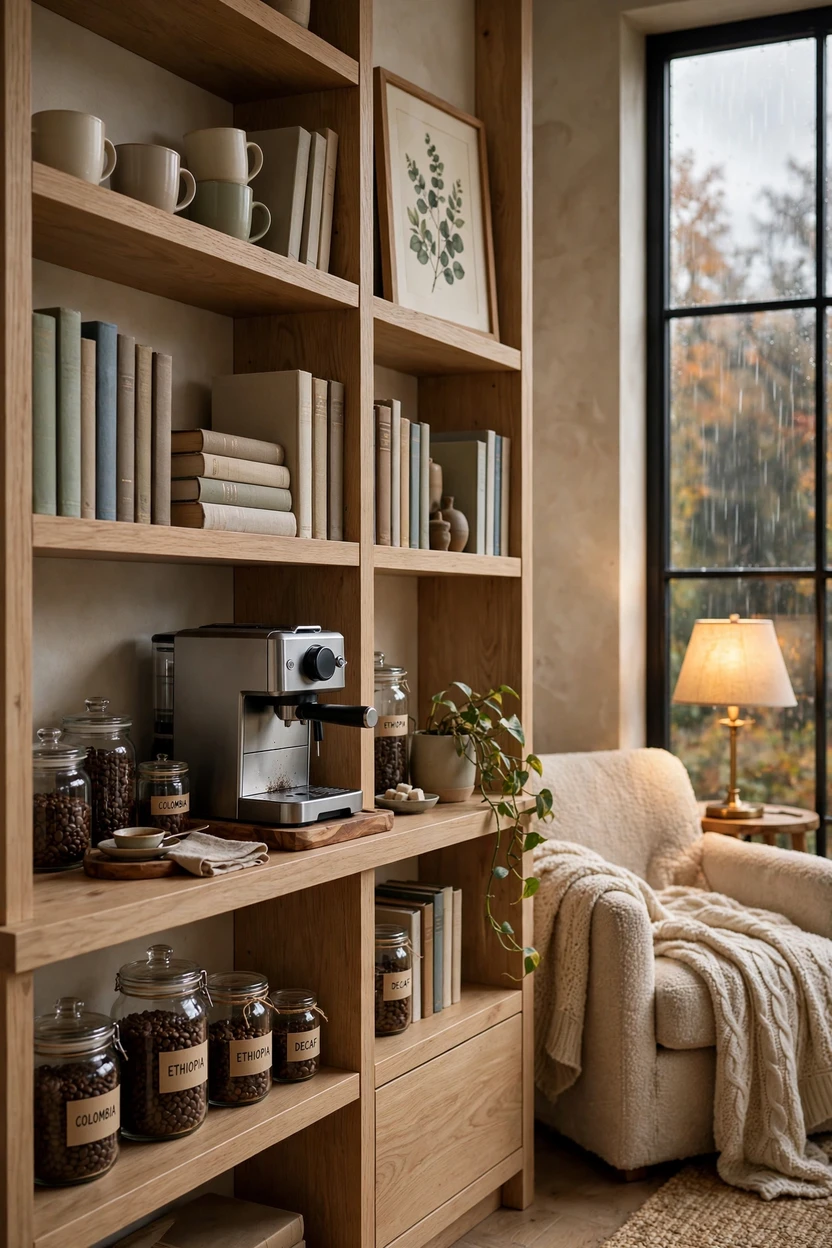
A bookcase can turn into a coffee bar when you set aside one open shelf for the machine and give the others to mugs and decor. Choose a shelf where the machine sits near counter height, about 34 to 36 inches from the floor, and close to an outlet. Mix mugs with a few books, a plant, and a small framed print so it reads like a styled shelf, not a kitchen. Keep paper and fabric away from the machine so steam doesn’t damage them. A ladder shelf works the same way and takes up less floor space. Scent and sip touch: line the back of the shelf with a few jars of whole beans and loose tea, which look pretty and smell great.
7. An Arched Niche With Handmade-Look Tile
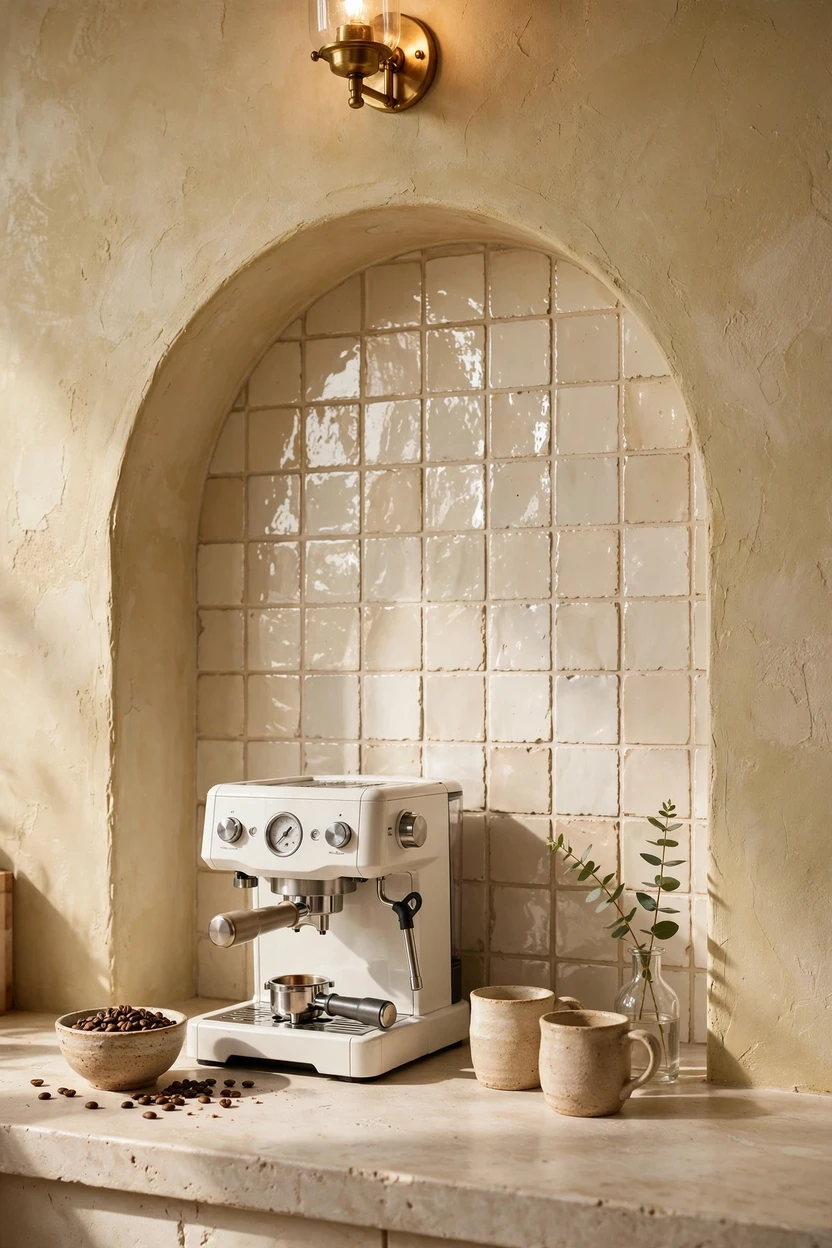
An arched niche gives a coffee bar a built-in look that feels special. If you’re remodeling, frame a shallow arched recess in the wall, and if you’re not, paint an arch shape on the wall behind the counter. Line the space with handmade-look tile, such as zellige-style squares in cream or soft green, because the uneven glaze catches light and adds depth. Place the machine under the arch with one shelf or a small sconce above, and keep everything else off the counter. This one focal point does the styling for you. Scent and sip touch: keep a small ceramic bowl of whole beans in the niche, which looks pretty and gives off a gentle roasted smell.
8. A Farmhouse Coffee Bar
A farmhouse coffee bar is built on warm materials and honest textures. Pair white shiplap or beadboard behind the counter with a butcher block top, then add black metal mug hooks and a wire basket for filters and napkins. Use open shelves in rough wood to hold jars and mugs in cream, gray, and soft blue. Keep the palette warm and simple, and let one old piece, like a wooden crate or enamel pitcher, add age. Scent and sip touch: set a small tin of cocoa and a jar of cinnamon sticks beside the beans for a cozy mix of smells.

9. A Matte Black Modern Coffee Bar
A matte black coffee bar looks sharp and costs less to style than most people expect. Choose a slim black console or paint a built-in cabinet in a deep black or charcoal, then add one matte black shelf above. Use white or cream mugs for contrast so the cups stand out against the dark background. Add a thin LED strip under the shelf to light the counter and hide the cord behind the console. Keep to three or four objects on the counter so the dark color stays crisp. Scent and sip touch: use a clear jar for whole beans, so the dark background shows off the roast color.

10. A Scandinavian Light Oak Coffee Bar
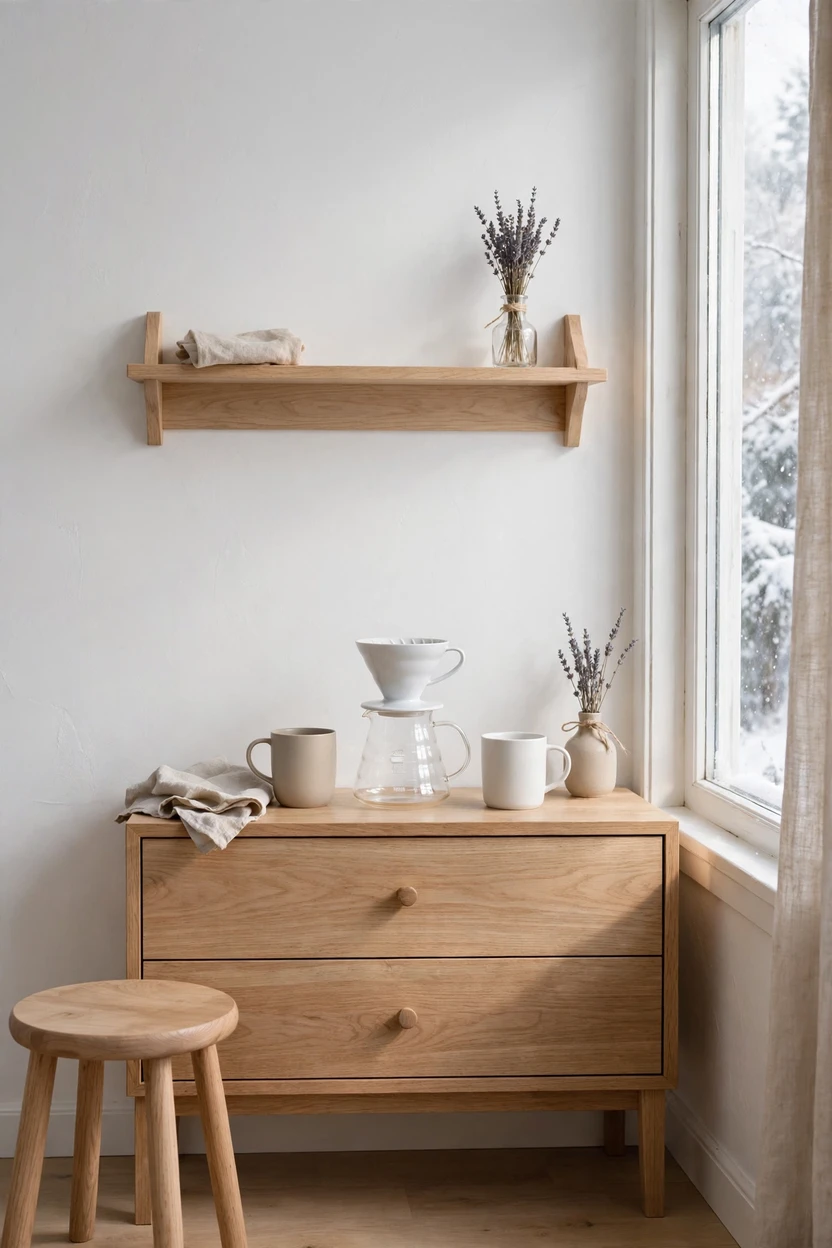
A Scandinavian coffee bar leans on pale wood, soft white, and a calm, uncluttered look. Use a light oak shelf or small sideboard against a white wall, and keep mugs in matte white, beige, and soft gray. Limit the display to what you use every day, and store the rest out of sight. Add one round wooden stool or a linen cloth for warmth, and keep the lines simple. The room feels bigger because the colors stay close together. Scent and sip touch: place a small bundle of dried lavender or a candle with a soft vanilla scent nearby, away from the machine and the beans.
Related: 17 Living Room Wall Art Layering Ideas for a Focal Point
11. A Vintage Sideboard Coffee Bar
An antique buffet or sideboard gives a coffee bar age and character that new furniture can’t match. Protect the wood with a marble slab or a thick tray under the machine, and seal any open wood against drips. Use the drawers for spoons, filters, and napkins, and the cabinet below for beans, syrups, and backup supplies. Mix vintage cups and saucers with plain jars so the styling feels collected, not themed. Add a small brass lamp so the corner glows in the evening. Scent and sip touch: keep a small silver or ceramic dish of sugar cubes next to the cups for a touch of old-fashioned charm.

12. A Dining Room Coffee and Drink Bar
A dining room sideboard can run two shifts: coffee in the morning and drinks in the evening. Use trays to split the space, one for the machine and mugs and one for glasses, a pitcher, and an ice bucket. Hang a mirror above to bounce light and make the room feel larger. Keep daily-use mugs on the left and glasses on the right, with heavy bottles and appliances on the lower shelf. When guests arrive, swap the coffee tray for a serving tray and the bar is ready. Scent and sip touch: add a small bowl of citrus peels or a cinnamon stick near the drink tray, which pairs nicely with coffee and cocktails.

13. A Pegboard and Mug Rail Coffee Wall
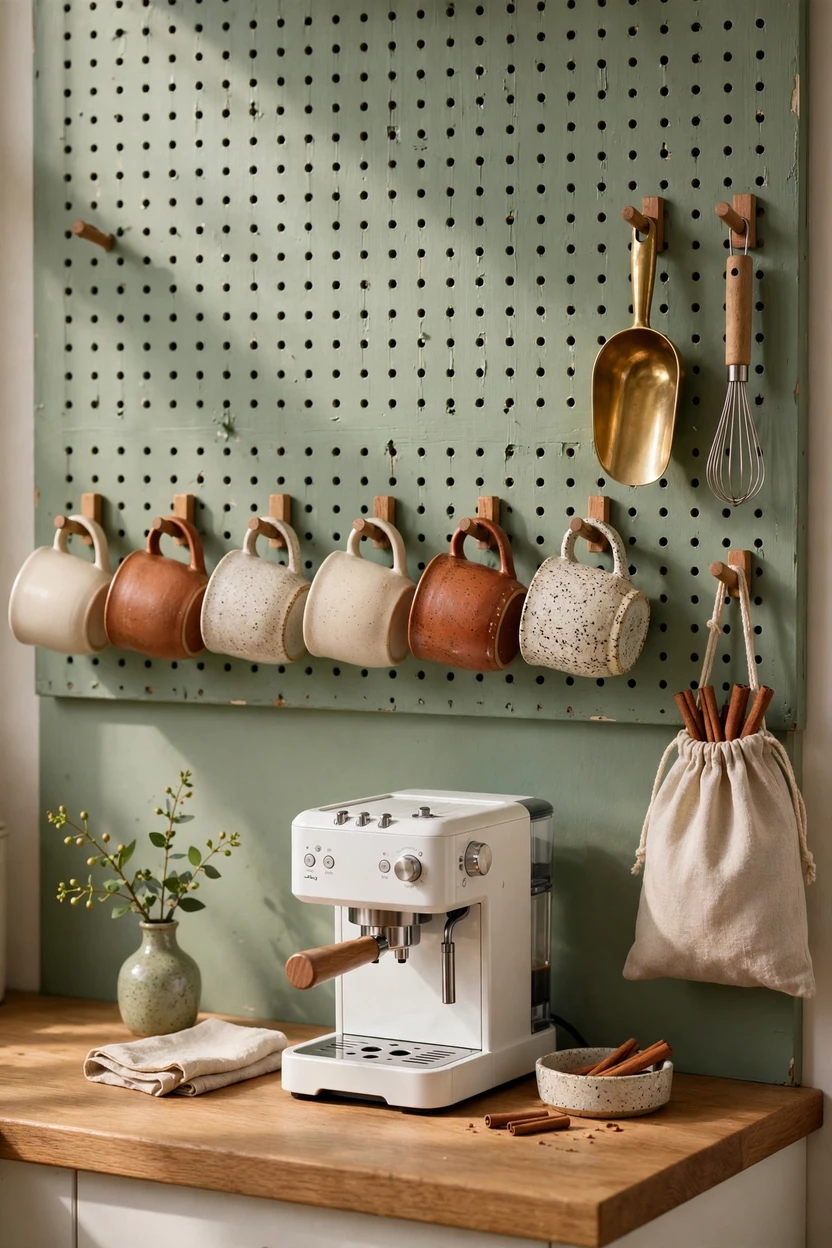
A pegboard or rail keeps mugs and tools off the counter and puts them where your hand lands. Hang a rail or pegboard so the hooks sit about 48 to 54 inches above the floor, which is easy to reach without a stretch. Paint the board in soft sage, warm white, or clay, and add a few hooks for mugs, a scoop, a small whisk, and a strainer. Leave a few empty spots so the wall doesn’t feel crowded. Under it, a short counter holds the machine and a tray. Scent and sip touch: hang a small linen bag of dried herbs or cinnamon sticks from one hook for a fresh smell as you reach for your cup.
14. A Window-Side Coffee Bar With Plants
A coffee bar by a window makes a bright place to start the day, and plants soften the machines. Put the bar on a narrow table or counter beside the window, and add a trailing pothos or a small herb pot on a nearby shelf. Keep the machine out of direct plant spray and keep the beans out of direct sun, since heat and light dull their flavor. Use opaque jars or store extra beans in a cabinet. Choose a tray that matches the window frame color for a clean look. Scent and sip touch: a small pot of fresh mint or basil gives a green note that pairs well with iced coffee.

15. A Closet Coffee Bar
An unused closet makes an excellent coffee bar for apartments because it hides the mess when the door closes. Remove the door or fold it back, then add a small counter surface about 34 to 36 inches from the floor and two shelves above. Use a surge-protected power strip, a mug rail inside the door, and a battery or plug-in light strip for the shelf. Open the door when brewing so steam and heat don’t build up inside. Add a small waste bin or a hook for a bag so the space stays tidy. Scent and sip touch: keep a sealed jar of tea or whole beans on the top shelf so the closet smells like a cafe when you open the door.

16. A Home Office or Bedroom Coffee Nook
A tiny coffee nook in a home office or bedroom saves steps on busy mornings. Use a narrow console or small cabinet about 24 to 30 inches wide, and choose a compact machine or a single-serve brewer. Put a mini fridge or a small insulated pitcher under the console for milk, and keep mugs on a tray on top. Add a small lamp so the nook glows without a harsh overhead light. Keep water in a sealed carafe and wipe up drips quickly, so the furniture stays dry. Scent and sip touch: keep a small jar of cocoa or flavored tea for slow evenings, and store beans in a sealed container away from the bed linens.

17. A Terracotta and Colorful Tile Coffee Bar
Color can make a coffee bar feel playful. Cover the wall behind the counter in terracotta, green, or patterned cement tile, and keep the rest of the area neutral so the color has space. Use mugs in a similar palette, like clay, cream, and olive, so everything feels connected. A plain wood shelf above lets the tile stay the star. If you rent, use peel-and-stick tile on a short stretch behind the machine, and keep the pattern to a small area. Scent and sip touch: terracotta pots with a small herb, like rosemary, tie the earthy colors to the earthy smell of the coffee.
Related: 21 Earthy Cottage Decor Ideas for a Calm, Grounded Home (Cozy + Easy)

18. A Mirrored and Brass Evening Coffee Bar
A mirrored backsplash with brass accents turns a coffee bar into an evening spot that doubles for after-dinner drinks. Use an antique-style mirror or mirrored tile behind the counter, add a brass shelf and a small lamp, and keep the rest of the styling simple. Choose warm bulbs around 2700K so the glow stays soft and flattering. Wipe the mirror often so fingerprints and splashes don’t dull the look. Glass jars and clear mugs reflect nicely and add sparkle without clutter. Scent and sip touch: keep a small dish of dark chocolate squares and a jar of vanilla sugar, which make the spot feel like a cafe after dinner.

Styling Tips That Make a Coffee Bar Look Finished
- Use a tray. A wood, marble, or metal tray groups the machine and tools so the counter looks planned.
- Show only what you use daily. Keep the machine, one canister, and a few favorite mugs out. Store the rest.
- Pick one jar style. Matching glass jars, clay canisters, or black tins make beans, sugar, and tea look related.
- Mix heights. Combine a tall jar, a mid-height kettle, and a low tray so the eye moves across the display.
- Add one living thing. A small plant or a cut sprig of herbs adds color and a fresh smell.
- Light it. A small lamp, a sconce, or a thin LED strip makes the bar feel like a cafe corner in the early morning and at night.
- Limit the palette. Stick to two or three colors plus wood, and let one accent color show up in the mugs.
Practical Implementation Ideas
A coffee bar works best when it follows a simple path: beans, brew, cup. Use this plan.
- Pick the spot. Choose a place near an outlet and, if possible, near water. A standard counter depth of about 24 inches fits most machines.
- Measure. A small coffee bar needs about 24 to 36 inches of counter width, with 12 to 18 inches of shelf or wall storage above. If you have upper cabinets, leave at least 18 to 20 inches between the counter and the cabinet bottom so a tall machine fits.
- Set three zones. Put beans and the grinder on one side, the machine and kettle in the middle, and cups and extras on the other side, so you move in one direction.
- Plan the power. Check the machine’s label for its power draw, and avoid plugging high-wattage appliances into the same power strip. If you can, use a dedicated outlet, and use a GFCI outlet near water.
- Give heat and steam room. Leave a few inches around the machine, especially behind it. Don’t run it inside a tightly closed cabinet.
- Add storage. Use jars for beans, a small drawer or basket for filters and spoons, and a tray for sugar and syrups.
- Add light. Under-shelf strips, sconces, or a small lamp help you see the cups and make the bar look inviting.
- Style last. Put the practical items in place first, and add the plant, the print, or the extra mugs at the end.
Bean storage: Keep whole beans in an airtight container away from light and heat, and buy in amounts you can finish in a few weeks. Grind just before brewing for the strongest smell and flavor.
Care notes: Wipe steam wands and drip trays daily, and follow the maker’s cleaning and descaling instructions so the machine lasts and the coffee tastes clean.
Common Mistakes to Avoid
- Putting the machine too close to the wall. Steam and heat need room, and a flush fit can stain the paint or tile.
- Hiding the cord badly. A dangling cord ruins the look. Use a cord clip, a recessed outlet, or a painted cord channel.
- Overstuffing the counter. Too many canisters, signs, and mugs make the bar look cluttered. Keep out only what you use.
- Forgetting an outlet. A pretty spot with no outlet means a long cord across the room. Check power before you buy furniture.
- Storing beans in a sunny window. Light and heat dull the flavor. Use opaque jars or a cabinet.
- Using open wood without protection. Water rings and coffee splashes stain fast. Use a tray, a mat, or a sealed top.
- Making it too tall or too low. If the machine sits too high, filling the tank is awkward. Keep the working surface near counter height.
- Skipping the water plan. If you must carry water far, the bar loses its charm. Choose a spot near water or keep a pitcher on the tray.
- Buying decor before the layout. Plan the zones first, then buy the pretty pieces to fit.
Small-Space Alternatives
A small home can still have a great coffee bar. The key is to choose one compact setup and make it neat.
- Use a tray on the counter. It defines the area without taking extra space.
- Go vertical. Floating shelves, a ladder shelf, or a wall rail free up counter space.
- Choose a cart. It rolls out of the way and tucks into a corner.
- Pick a slim machine. A compact brewer, a single-serve, or a pour-over set fits narrow spots.
- Use a closet or a cabinet. Hide the whole setup behind a door.
- Share the space. Use a console in the entry or the dining room so the coffee bar doubles as a drop zone or a drink station.
- Keep the cords tidy. Use a short cord and a clip so a tiny space doesn’t look messy.
Budget-Friendly Alternatives
You can build a great coffee bar in layers, and you don’t need to buy everything at once.
- Under a weekend of work: a wood tray, three matching jars, a few favorite mugs, and a small plant.
- A small step up: a mug rail or hook strip, a floating shelf, and a thin LED light strip.
- A mid-size project: a console or a bar cart, a tile or peel-and-stick backsplash, and a better storage setup.
- Save for later: built-in cabinets, a plumbed-in water line, and a high-end espresso machine.
- Spend on what you use every day, like a good grinder and a reliable machine. Save on decor, which is easy to swap, such as jars, trays, and prints.
Pro Styling Recommendations
- Plan for your routine. If you make one cup a day, you need less than a person who hosts brunch every weekend.
- Keep the heavy things low. Put the water jug and bag of beans on a lower shelf or in a cabinet.
- Match metals. Choose black, brass, or chrome for hooks and handles and repeat it two or three times.
- Anchor with a rug or a runner if the bar is in a hallway. It helps the space feel intentional.
- Use a tray for guest mode. A second tray with extra cups, napkins, and spoons makes hosting simple.
- Check the sightline. Stand in the doorway and look at the bar. If the first thing you see is a cord or a mess, fix that first.
- Rotate the mugs by season. Warm colors in autumn, light colors in spring, and cozy knits in winter keep the bar fresh.
Frequently Asked Questions
Conclusion
A good coffee bar doesn’t need a big budget or a big room. It needs a clear spot, a short path from beans to cup, and a few things you love to look at. Start with one idea from this list that fits your space, and build from there.
The best coffee corners feel like a small ritual. A pretty tray, a jar that smells like roasted beans, a mug you like holding. When the corner works for your morning, it starts to look good all on its own.