18 Japandi Living Room Ideas Worth Copying (With Real Sizes)

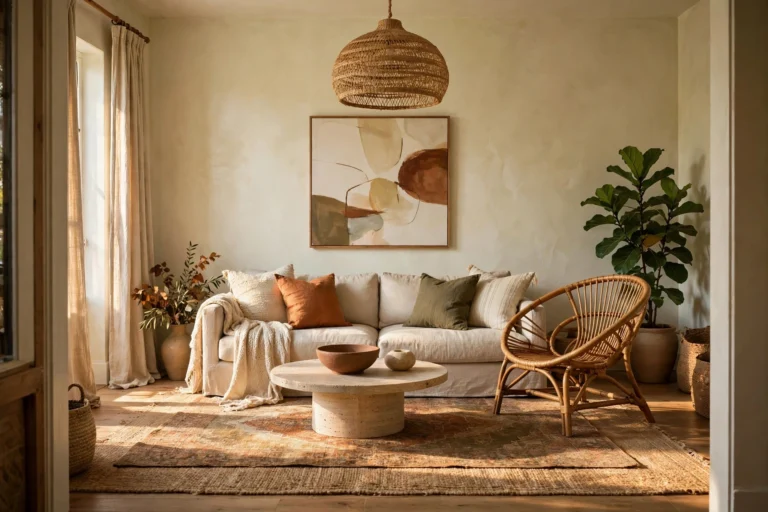
Picture it. Late afternoon light slides through linen curtains. A low sofa sits close to the floor. One ceramic vase holds one bare branch, and the room feels like someone just exhaled.
There is a reason so many people are copying this look. Japandi gives a busy home something rare: space to breathe. It pairs the quiet restraint of Japanese design with the warmth and comfort of Scandinavian living.
But copy the photos exactly and you can end up with the same beige sofa, pale rug, and lonely vase that everyone else has. The room looks calm, yet it does not feel like yours.
The ideas below show you what to copy and why it works, plus how to add the small, personal details that keep a Japandi room from looking staged.
Quick answer: A Japandi living room blends Japanese calm with Scandinavian comfort. It uses low furniture, warm natural wood, muted earthy colors, handmade ceramics, soft light, and lots of open space. To make it feel personal, follow the Low-Warm-Edited rule: keep furniture low, keep the materials warm, edit every surface, and add one dark anchor so the room has depth.
Below are 18 ideas with the heights, distances, and light settings most inspiration pages skip, so your room feels calm and works for real life.
Table of Contents
The 18 Japandi Living Room Ideas
A Low Sofa With Slim Legs
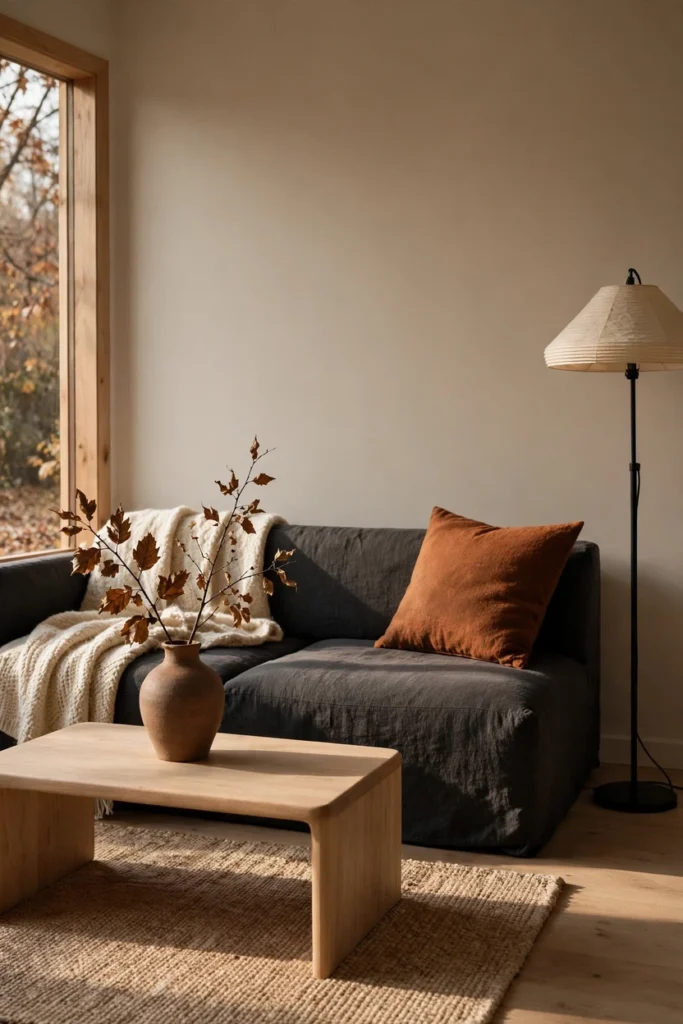
The low sofa is the first thing people copy, and it is the right place to start. A seat height of about 15 to 17 inches keeps your eye line low, which makes the ceiling feel higher and the room more open. Choose a simple shape with a low back and slim wooden legs, so you can see the floor underneath. Upholster it in linen or a cotton blend in oatmeal, stone, or warm gray, and look for removable covers if you have kids or pets. Test the seat before you buy, since very low sofas can be hard to get out of.

A Solid Wood Coffee Table, Slightly Lower Than the Seat
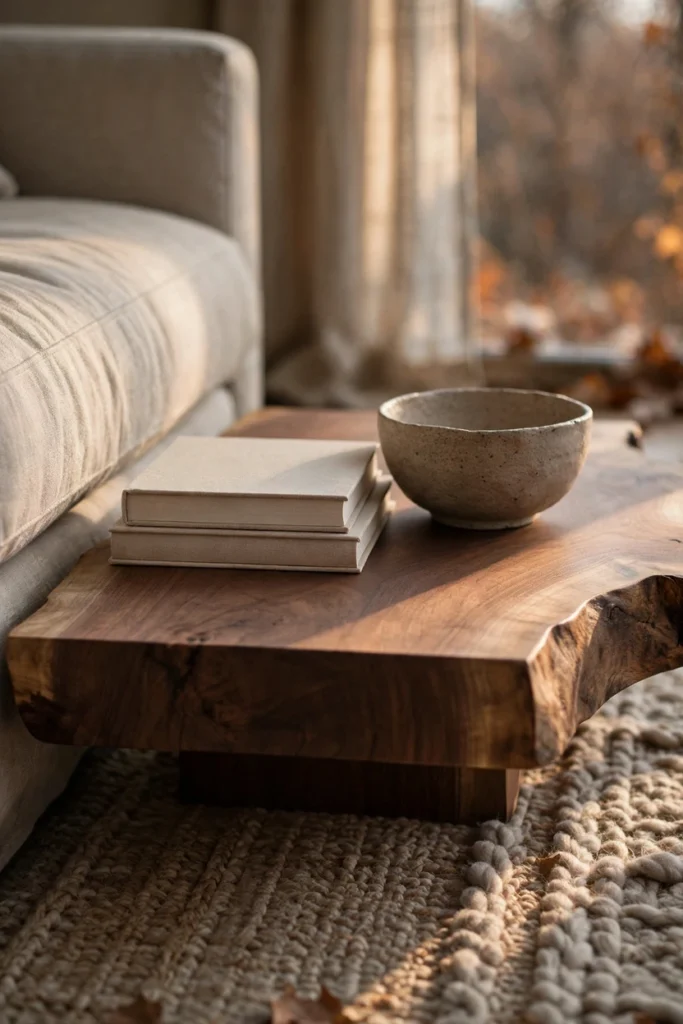
A solid wood table with a visible grain gives the room its warm center. Choose a height 1 to 2 inches below your sofa seat, so you can reach it easily, and leave 12 to 18 inches between the table and the sofa. A rounded or raw-edge top softens the room and suits the wabi-sabi idea that small imperfections are part of the beauty. Oak, ash, and walnut all work, and a matte oil finish looks more natural than a high gloss. Keep the top almost bare, with one bowl or one book stack.
Warm Mushroom or Sand Walls
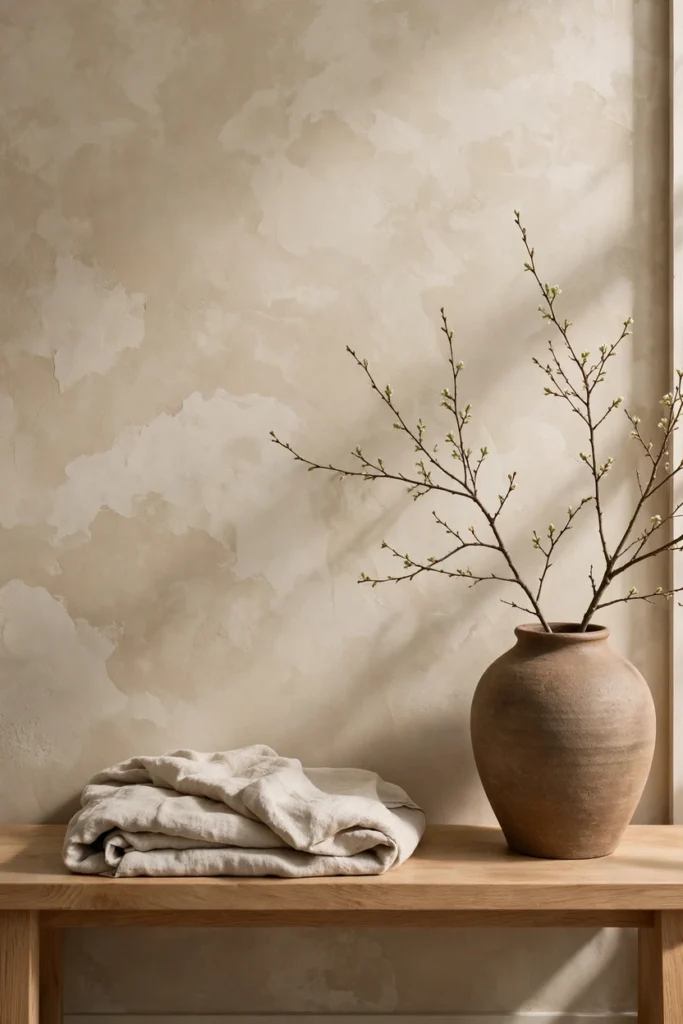
The walls set the quiet background for everything else. Choose warm mushroom, sand, clay, or greige instead of bright white, which can feel cold and flat in this style. A limewash or a matte, slightly textured paint adds soft depth, so the color shifts gently across the day. Keep trim and ceiling a similar tone so the room reads as one calm shape. Look at large paint samples in both morning and evening light before you commit.
One Dark Anchor
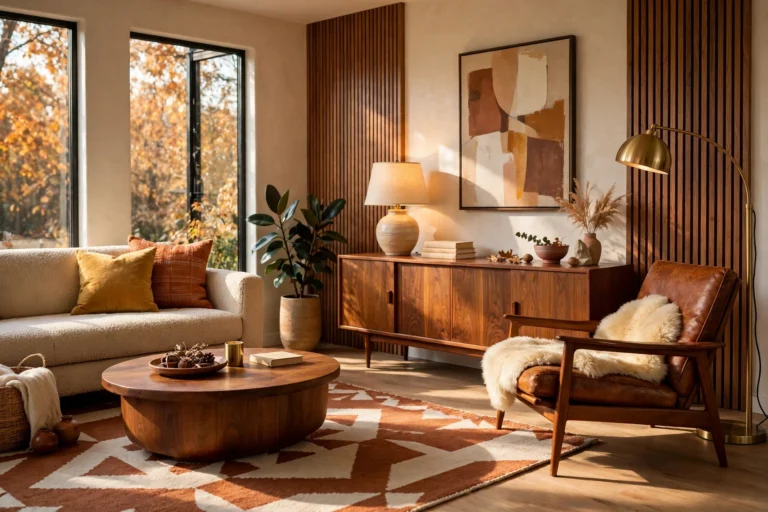
This is the small move that stops a Japandi room from looking washed out. Add one deep tone, such as charcoal, sumi-ink black, or dark walnut, in a sofa, a curtain, a side table, or one wall. The dark piece gives the eye a place to rest and makes the lighter woods and linens look warmer. Keep it to one or two items, and repeat the tone once in something small like a lamp base or a frame. This is also the easiest way to make your room look different from the pale photos everywhere.
A Paper Floor Lamp at Seated Height
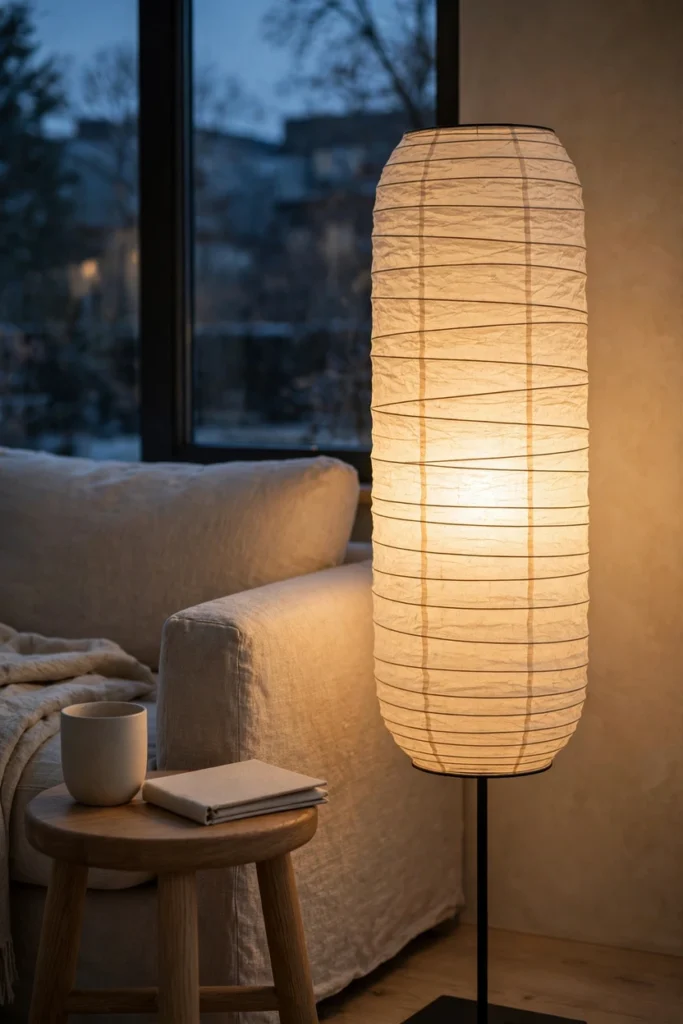
Soft paper light is one of the most copied details because it makes a room feel hushed. A round or tall paper-shade floor lamp spreads a gentle glow that suits the low furniture. Place it at a corner or beside the sofa so the light sits near seated eye level, not above you. Use warm bulbs around 2700K and add a dimmer if you can. Check that the paper is a safe distance from the bulb, and use LED bulbs to keep the heat low.
Floor-Length Linen Curtains
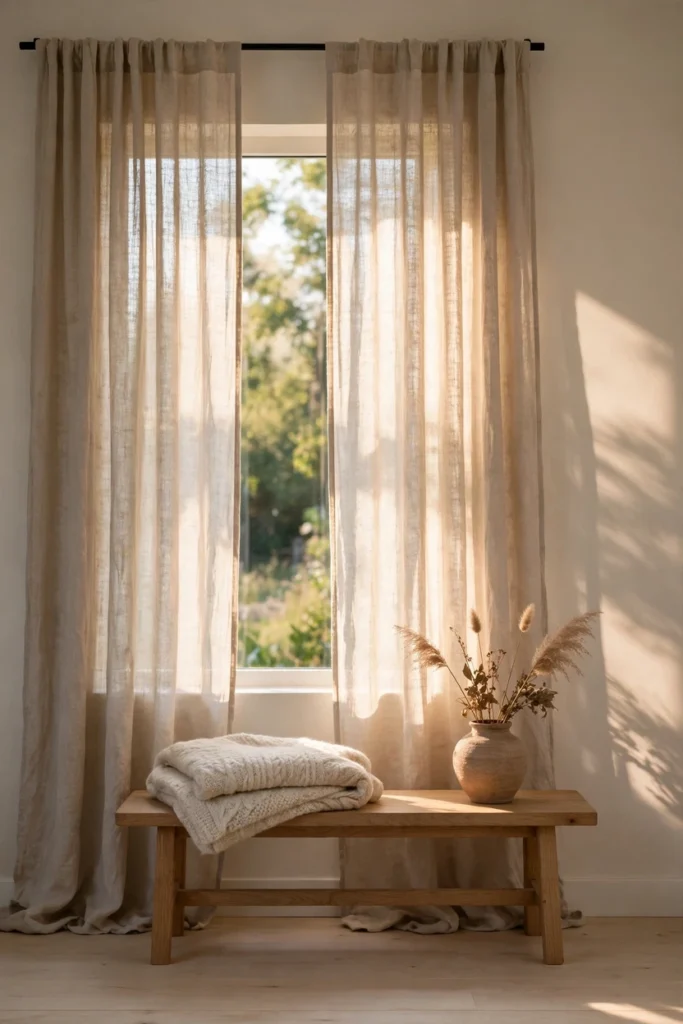
Linen curtains turn harsh daylight into a soft glow, which is the heart of this style. Choose an undyed or soft oatmeal linen, hang the rod close to the ceiling, and let the panels fall to the floor so the window looks taller. A relaxed fullness of about 1.5 to 2 times the window width looks natural. Skip heavy blackout linings in the living room, since stiff backing kills the glow. If you need privacy, use a sheer under layer.
A Natural Fiber Rug Sized to the Seating
A rug ties the low furniture together and gives it a place to sit. Choose a flat-weave jute, wool, or a mix in sand or oatmeal, since thick shag fights the clean look. Make it large enough that at least the front legs of the sofa and chairs sit on it, and leave 6 to 12 inches of rug showing around the coffee table. In many living rooms, an 8 by 10 foot size covers a sofa group well. Add a thin non-slip pad underneath so the edges stay flat.

A Wood Slat Wall or Screen
Vertical wood slats borrow the calm lines of Japanese screens and add warmth to a plain wall. Use thin oak or ash slats behind the sofa or around the TV, with narrow gaps between them so light and shadow play across the surface. If you rent, a freestanding slatted screen or peel-and-stick slat panels give the same look without drilling. Keep the rest of the wall plain so the slats stand out. Use a matte finish so the wood looks natural, not shiny.
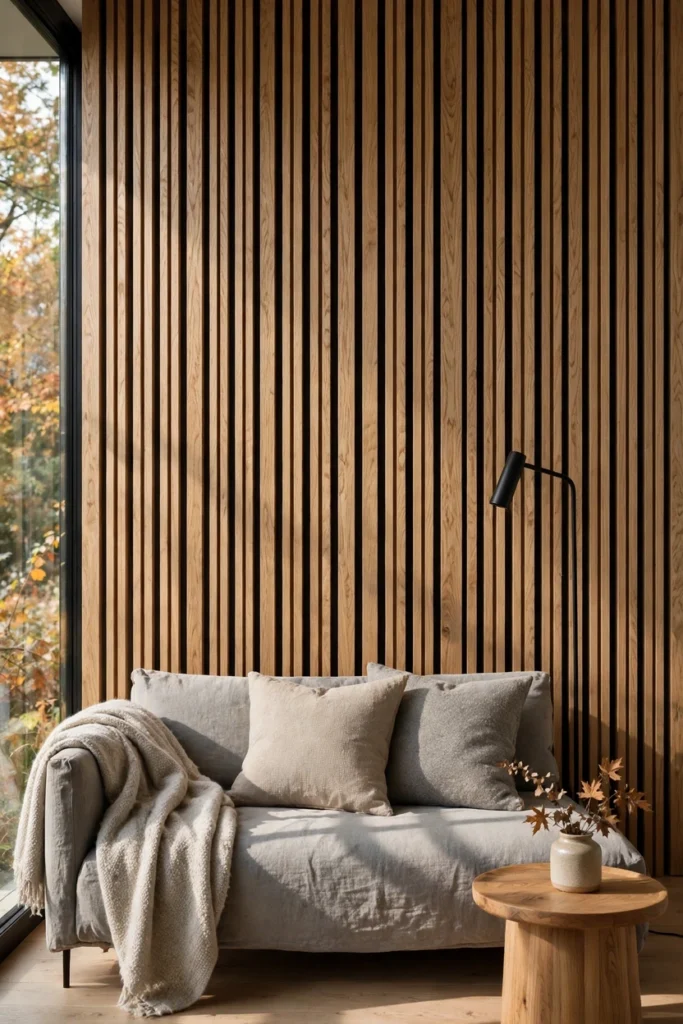
A Hidden TV Solution
The TV is often the biggest dark shape in the room, so decide how it will behave. Put it in a low cabinet with sliding doors, set it into a dark wall so it blends in, or mount a slim set on a wall with a shelf below and a fabric panel nearby. Pick matte wood or textured fronts for the cabinet, and run cords through a hidden channel. When the screen is off, the room should still look like a calm living room, not a media center. Leave about 30 inches of walking space around the console.

One Handmade Ceramic and One Branch
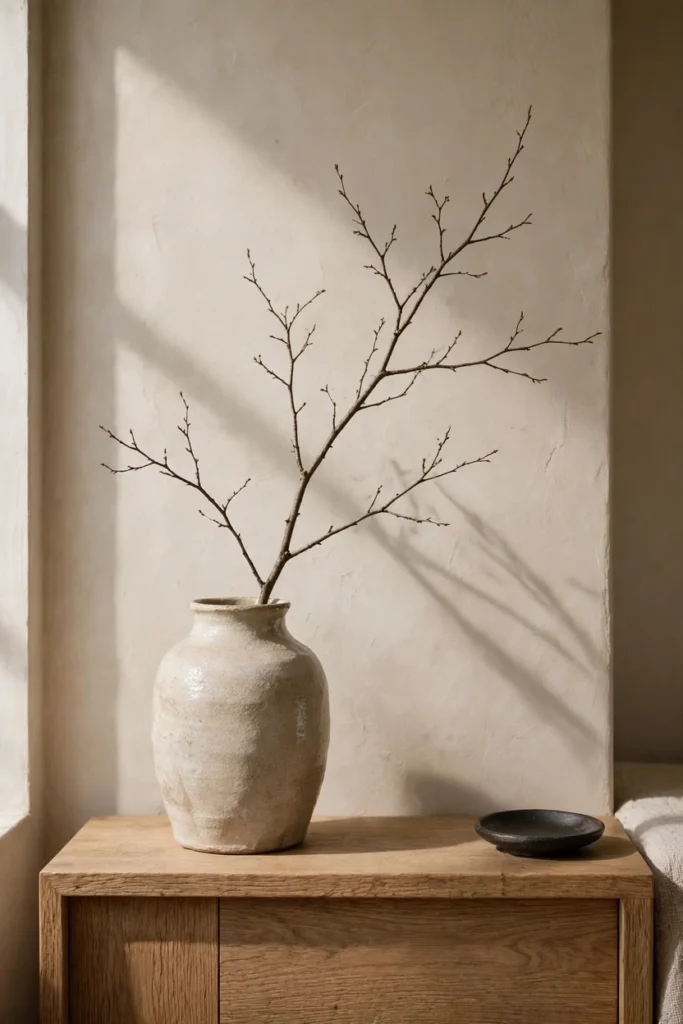
This is the styling move that goes viral, and it works because it follows a real idea: leave space around each object so it can be seen. Choose one handmade vase or bowl with a slightly uneven glaze, and pair it with a single bare branch or a few simple stems. Place it off center on a console or table, and leave space on both sides. A handmade piece also keeps the room from looking like a showroom, since each ceramic is a little different. Buy from a maker when you can, and learn how and where the piece was made.
Low Stools and Floor Cushions
Flexible seating keeps a Japandi room open and ready for guests. Use two small wooden stools, about 14 to 16 inches high, as extra seats or side tables, and keep a pair of floor cushions in a basket for gatherings. When nobody is using them, stools slide under a console and the floor stays clear. Choose simple shapes in oak, ash, or walnut, and match the wood to your coffee table. Floor cushions in washable linen or cotton are easy to refresh.

A Curved Wood Lounge Chair
One sculptural chair adds the Scandinavian comfort the style needs. Choose a lounge chair with a curved wooden frame and a woven paper-cord or soft linen seat, and set it at an angle to the sofa, not flat against the wall. A chair with slim arms and a low back fits the lines of the room and still feels cozy. Check that you can sit comfortably for an hour, since a pretty chair that is hard to use ends up as decor only. Leave about 30 inches of walking space around it.

A Single Large Plant or Olive Tree
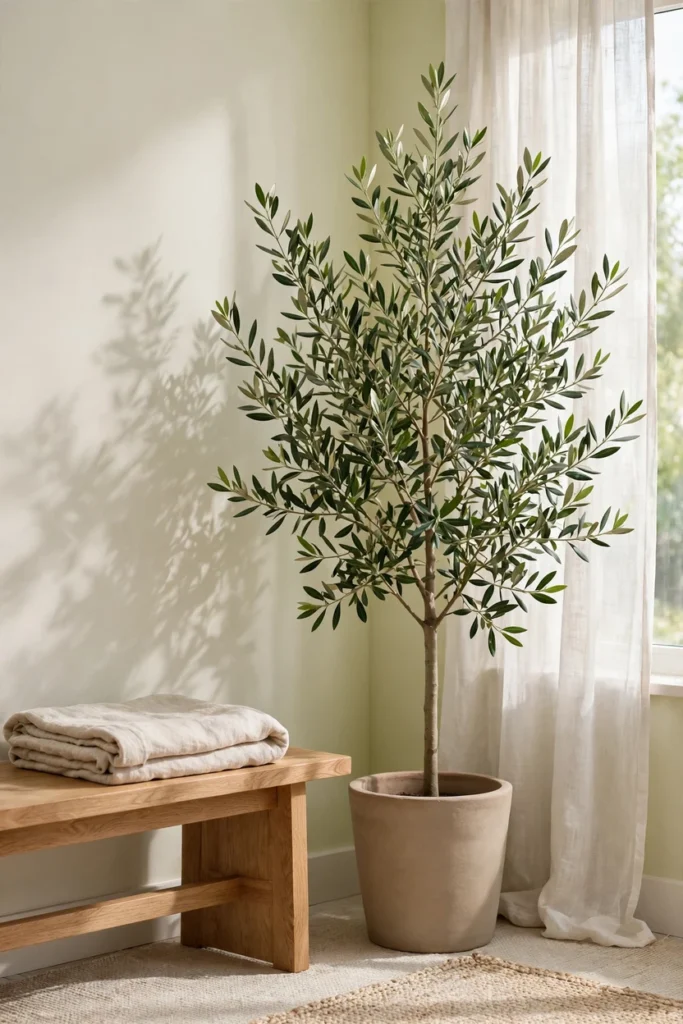
One big plant does more than ten small ones in a room built on space. Choose an olive tree, a rubber plant, or a sculptural branchy plant, and place it in a simple ceramic or stone pot near the window. Most large indoor plants want bright, indirect light, so match the plant to the window you have and rotate it now and then. Keep the pot plain in a soil, clay, or stone tone, so the plant stays the focus. If your room has little light, a bare branch in a vase gives the same shape with no care.
A Low Console With Closed Storage
A calm room needs a place to hide the daily mess. A low console with closed doors or drawers holds remotes, chargers, throws, and games, so the top can stay almost empty. Choose a simple oak or ash piece with slim legs or a wall-mounted design that shows the floor beneath. Keep the top to one ceramic and one lamp or a framed print. A small open niche or shelf above it can act like a quiet gallery spot for a single object.
Related: 17 Living Room Wall Art Layering Ideas for a Focal Point

Stone and Black Metal Accents
A few hard, cool materials make the warm wood and linen feel richer. Add a stone or stone-look side table, a thin black metal lamp base, or a slim black frame for art. Keep each piece small and simple, and repeat the black in two or three places so it looks like a plan. Stone is cool to the touch, which contrasts nicely with soft wool and warm oak. Choose a honed or matte surface, since high-gloss stone feels too formal here.

One Large Textured Art Piece
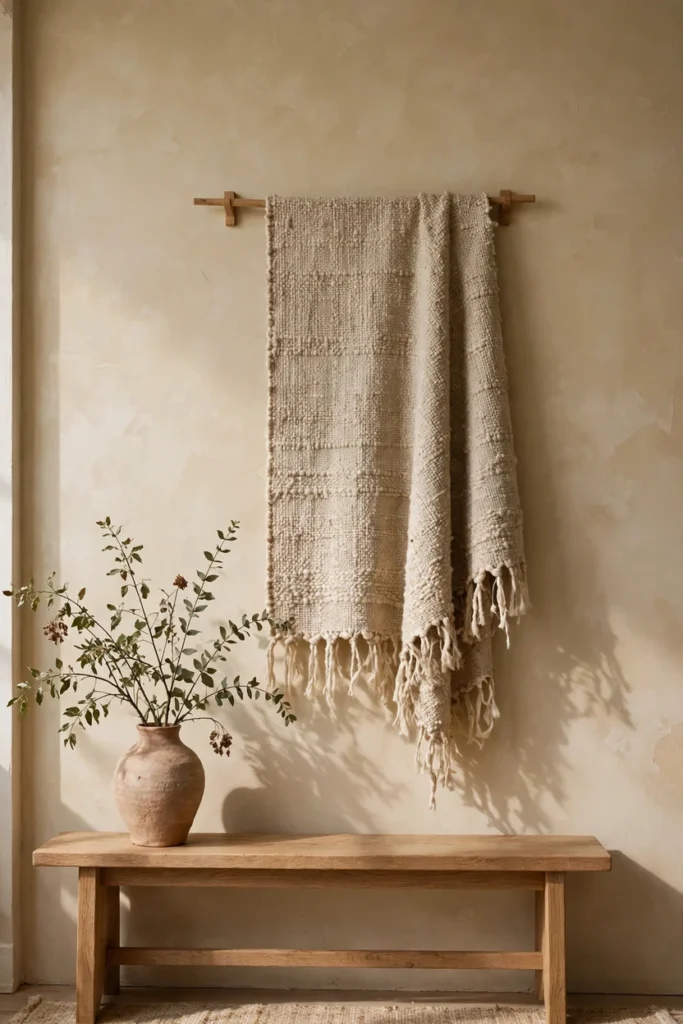
A single big piece of art does the work of a gallery wall without the clutter. Choose a large textile, a soft ink-wash style print, or a plaster-look canvas in neutral tones. Because the furniture is low, hang the art lower than usual, with its center around 48 to 54 inches from the floor, and let it sit slightly off center for the asymmetry this style likes. Use a thin wood or black frame, or let a textile hang from a wooden rod. Leave plenty of blank wall around it.
Layered Neutral Textiles
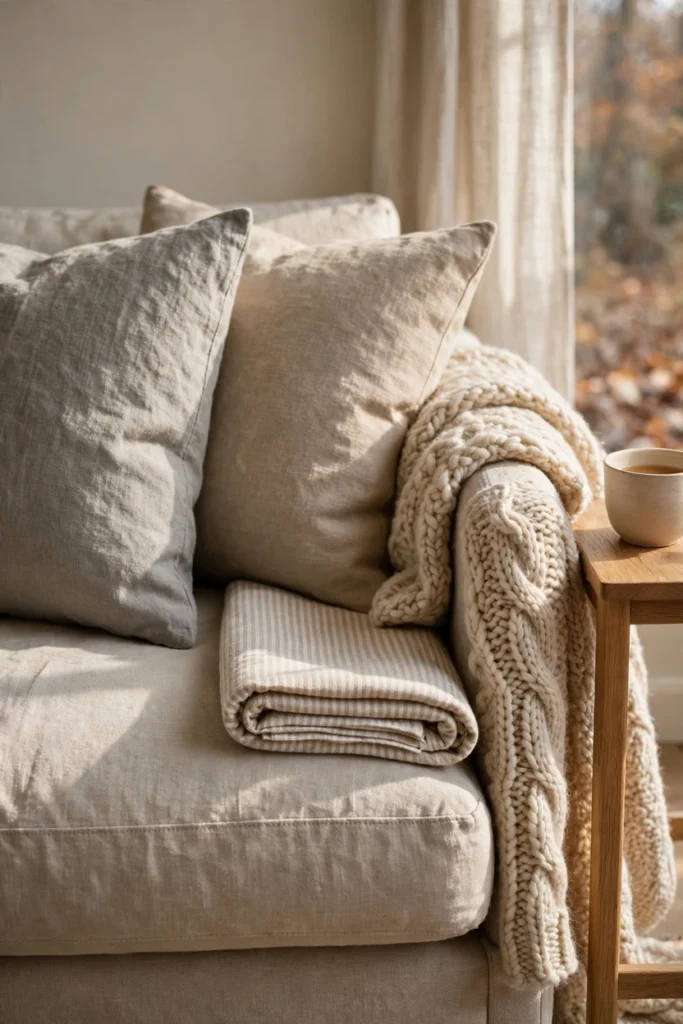
Texture is what keeps a neutral room from feeling cold. Mix a wool throw, linen cushions, and a cotton or boucle-free woven blanket in two or three close tones, and let their different surfaces do the work. Keep patterns very quiet, such as a thin stripe or a subtle weave. Choose washable covers for the pieces you use every day. Stop at about three or four textiles on the sofa, since more starts to look busy.
A Window Reading Corner
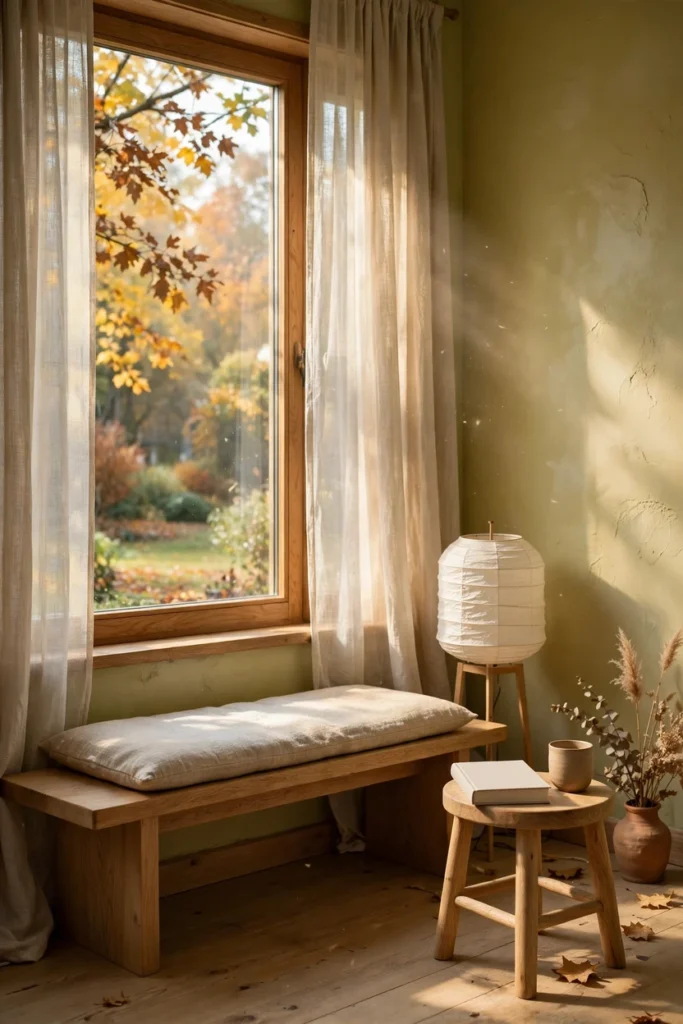
A small, quiet nook shows the Japandi love of simple daily rituals. Place a low wooden bench with a thin cushion under a window, add a paper floor lamp and a small shelf or stool for a book and a cup, and keep the rest of the corner empty. A bench about 16 to 18 inches high works well for reading, and a firm linen cushion keeps it neat. Frame the window with linen curtains that hang high and wide. This also works in a small living room as an extra seat.
Styling Tips
Use the Low-Warm-Edited rule. Keep furniture low, keep materials warm and natural, edit every surface, and add one dark anchor.
Pick two wood tones. One lighter, such as oak or ash, and one darker, such as walnut. Repeat each at least twice so the room feels planned.
Leave space around objects. Open floor and bare wall are part of the design. Give each piece room to be seen.
Place one living thing and one handmade thing. A plant or branch and a ceramic piece are enough to make the room feel human.
Asymmetry looks natural. Place art, vases, and lamps slightly off center instead of in perfect pairs.
Use warm light at seated height. A paper lamp and 2700K bulbs beat bright overhead lights.
Mix soft and hard. Wool and linen beside stone, metal, and wood keep the room from feeling cold or stiff.
Do the one-object test. Take one thing away from a surface. If the room looks better, leave it out.
Practical Implementation Ideas
Build the room in layers, from the big shapes to the small details.
Clear and measure. Remove everything you can. Note the wall lengths, window size, and where light falls during the day.
Choose the wall color. Warm mushroom, sand, or clay with a matte finish. Test samples in morning and evening.
Set the seating. A low sofa with a seat of about 15 to 17 inches and a chair or two. Keep 30 inches of walking space.
Add the table. A solid wood coffee table 1 to 2 inches below the seat, 12 to 18 inches from the sofa.
Ground it with a rug. Flat-weave in wool or jute, large enough for at least the front legs of the seating, with a non-slip pad.
Layer the light. A paper floor lamp, a small table lamp, linen curtains, and warm bulbs.
Add the dark anchor and one handmade piece. Then one plant or branch.
Edit. Remove one item from each surface, then live with the room for a week before adding anything.
Common Mistakes to Avoid
Going all beige. Without one dark anchor, the room looks washed out. Add charcoal, walnut, or black.
Furniture that is too high. Tall sofas and chunky sectionals break the low line. Choose lower pieces.
Cold, smooth surfaces only. Glossy finishes and flat fabrics feel stiff. Add wool, linen, and wood grain.
Fake wood. Shiny laminate that copies oak looks false in a quiet room. Choose real wood or a good matte veneer.
Too many objects. Japandi needs space. If every shelf is full, the style is gone.
Bright, cool lighting. Spotlight grids and cool white LEDs make the room feel like an office. Use warm lamps.
Related: 17 White Living Room Ideas That Prove Minimalism Feels Inviting
Copying symbols without meaning. Do not scatter Japanese-themed items for decoration. Choose well-made pieces and learn what they are.
Ignoring real life. If you have kids or pets, choose washable covers and sturdy finishes. Calm should work every day.
Small-Space Alternatives
Choose a compact low sofa. A slim sofa on legs shows more floor and keeps the room open.
Use stools as tables. Two low stools can serve as a coffee table and extra seats, then tuck away.
Go wall-mounted. A floating shelf and a wall-hung console clear the floor.
Use one large mirror. A single mirror opposite the window bounces light deeper into the room.
Keep one rug. One flat-weave rug in a light tone makes the room feel larger than several small ones.
Hang curtains high. Floor-length linen near the ceiling makes the walls look taller.
Budget-Friendly Alternatives
Paint first. A warm mushroom or sand paint changes the whole mood for the price of a few cans.
Use a linen slipcover. A new cover in oatmeal or stone refreshes an old sofa.
Thrift wood pieces. Secondhand oak or teak stools, benches, and tables sand and oil up nicely.
Make paper lamps work. A paper shade on a simple floor lamp base looks great and costs very little.
Buy one handmade ceramic. One good piece beats a shelf of mass-made decor.
Use a branch. A bare branch in a jug gives the shape of ikebana-style styling for free.
Add a jute rug. A flat-weave jute is one of the least costly natural rugs.
Pro Styling Recommendations
Respect the roots. Japandi borrows from Japanese ideas like wabi-sabi, which values imperfection and age. Learn what you are borrowing, buy from makers when you can, and avoid cliche props.
Know the difference. Scandinavian style leans bright and cozy, wabi-sabi leans rustic and weathered, and Japandi sits in between with warm, calm, edited rooms.
Check scale. The coffee table should be about two-thirds the length of the sofa. Leave 30 inches between it and other furniture.
Choose paper lighting with care. Use LED bulbs, keep the shade a safe distance from the bulb, and put the lamp on a dimmer.
Think about the climate. In a warm home, use lighter linen, jute, and rattan. In a cold one, add more wool and darker wood.
Plan for cords and screens. Hide cables, and decide the TV plan before the sofa goes in.
Related: 19 Sofa Color Psychology Ideas for Your Living Room
Live with it. Add pieces slowly. A room that grows over time feels more personal than one bought in a day.
FAQs
What is a Japandi living room?
A Japandi living room blends Japanese calm and Scandinavian comfort. It uses low furniture, warm natural wood, muted earthy colors, handmade ceramics, soft light, and plenty of open space.
What colors work in a Japandi living room?
Warm neutrals such as mushroom, sand, oatmeal, and clay, with deeper accents like charcoal, moss green, rust, and indigo. Add one dark anchor so the room has depth.
How is Japandi different from Scandinavian style?
Scandinavian style focuses on bright, cozy hygge. Japandi adds the Japanese idea of wabi-sabi, so the room is warmer, darker, lower, and more edited, with fewer objects.
How is Japandi different from wabi-sabi?
Wabi-sabi leans rustic and weathered, with more organic and earthy pieces. Japandi is tidier and more structured, with clean lines and muted colors.
How high should a Japandi sofa and coffee table be?
A sofa seat of about 15 to 17 inches is typical for the low look. Choose a coffee table 1 to 2 inches lower than the seat, with 12 to 18 inches between table and sofa.
How do I hide the TV in a Japandi living room?
Use a closed media cabinet, set the TV into a dark wall, or mount it with a shelf and fabric panel nearby. Pick matte finishes and hide the cords.
Can a small living room be Japandi?
Yes. Small rooms suit the style. Use a compact low sofa, a wall-mounted shelf, a single rug, and lots of open floor.
How can I do Japandi on a budget?
Paint the walls a warm neutral, add a linen slipcover, thrift solid wood pieces, use a paper floor lamp, and buy one handmade ceramic. A bare branch works as decor too.
Can I do Japandi in a rental?
Yes. Use a floor lamp, linen curtains, a wool or jute rug, stools, and a leaning art print. Peel-and-stick slat panels or a freestanding screen add wood texture without drilling.
How do I keep Japandi from feeling cold?
Layer wool, linen, and wood, use warm 2700K light, add one plant or branch, and include one handmade piece. A few textured fabrics make a big difference.
Conclusion
Japandi is popular for a good reason. It gives a busy home permission to slow down. But the best versions are not copied line by line. They are edited by the person who lives there.
Start with the low shapes and warm materials. Add one dark anchor so the room has depth. Then choose one handmade piece and one living thing that mean something to you, and leave space around them.
When the room feels right, you will notice it in small ways. You sit down and the day softens. You look around and nothing is shouting. That quiet is not borrowed. It is yours.