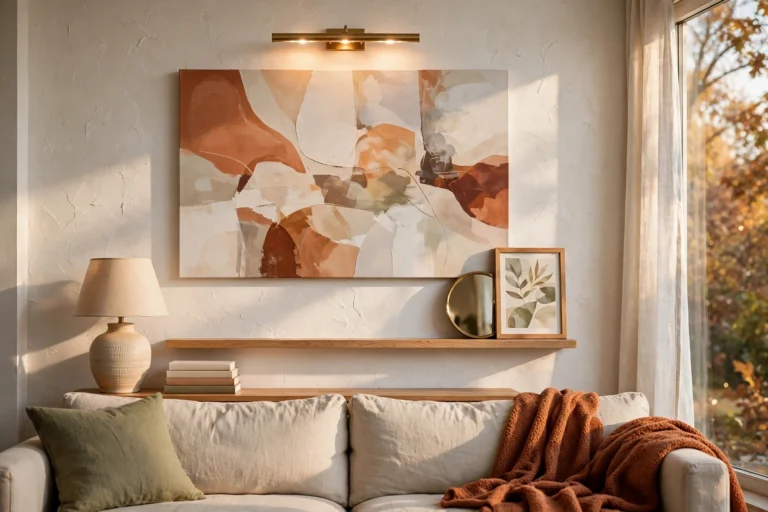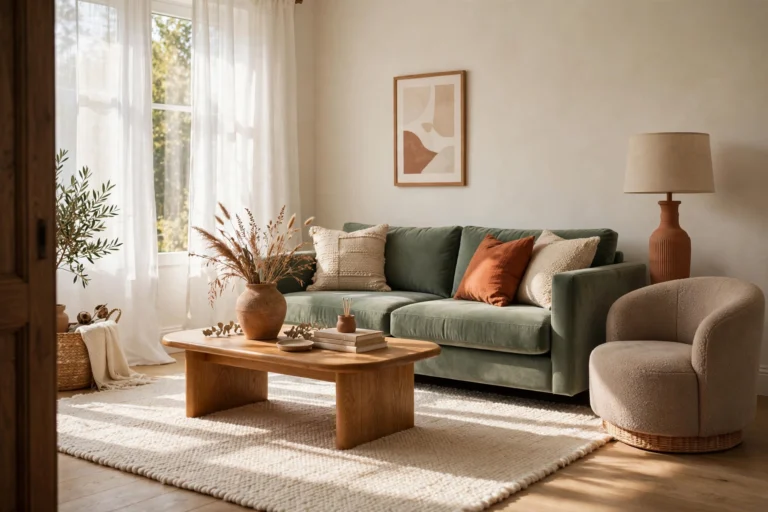
15 Blue Living Room Ideas That Prove the Color Works

It is late afternoon. The light through the window has gone soft and a little gray. In the corner, a lamp clicks on, and the whole room turns warm against the blue walls. You sink into the sofa and, for a moment, nothing else is asking for your attention.
That is what blue does when it is done well. It calms the room without making it cold.
Blue is one of the most popular colors people ask for in living rooms, and it keeps showing up in paint trend forecasts. But it can also go wrong. A blue with the wrong undertone, in the wrong light, with the wrong bulbs, can feel icy.
So does blue work in a living room? Yes, when you follow five simple rules: pick the right undertone, match the blue to your room’s light, add a warm partner like wood, brass, or rust, layer texture so the color is not flat, and light the room with warm bulbs.
Is blue really calming? Many people find it so, and it is a common reason people choose it. The research on color and mood is mixed, though, and personal memories matter as much as the science. Use blue because you love it, and let the room design do the rest.
What is trending? Designers are leaning toward deeper, earthier blues with a bit of green or gray, along with soft sky blues and blue-grays that act like neutrals. Some designers say sharp royal blue and purple-leaning indigo can feel heavy or dated, so test those carefully.
These 15 ideas show how to use blue on walls, sofas, built-ins, rugs, and accents, with real measurements and budget swaps.
Related: 18 Blue and Yellow Bedroom Ideas for Cozy, Calm Contrast
Table of Contents
The 15 Ideas
Soft Sky Blue Walls
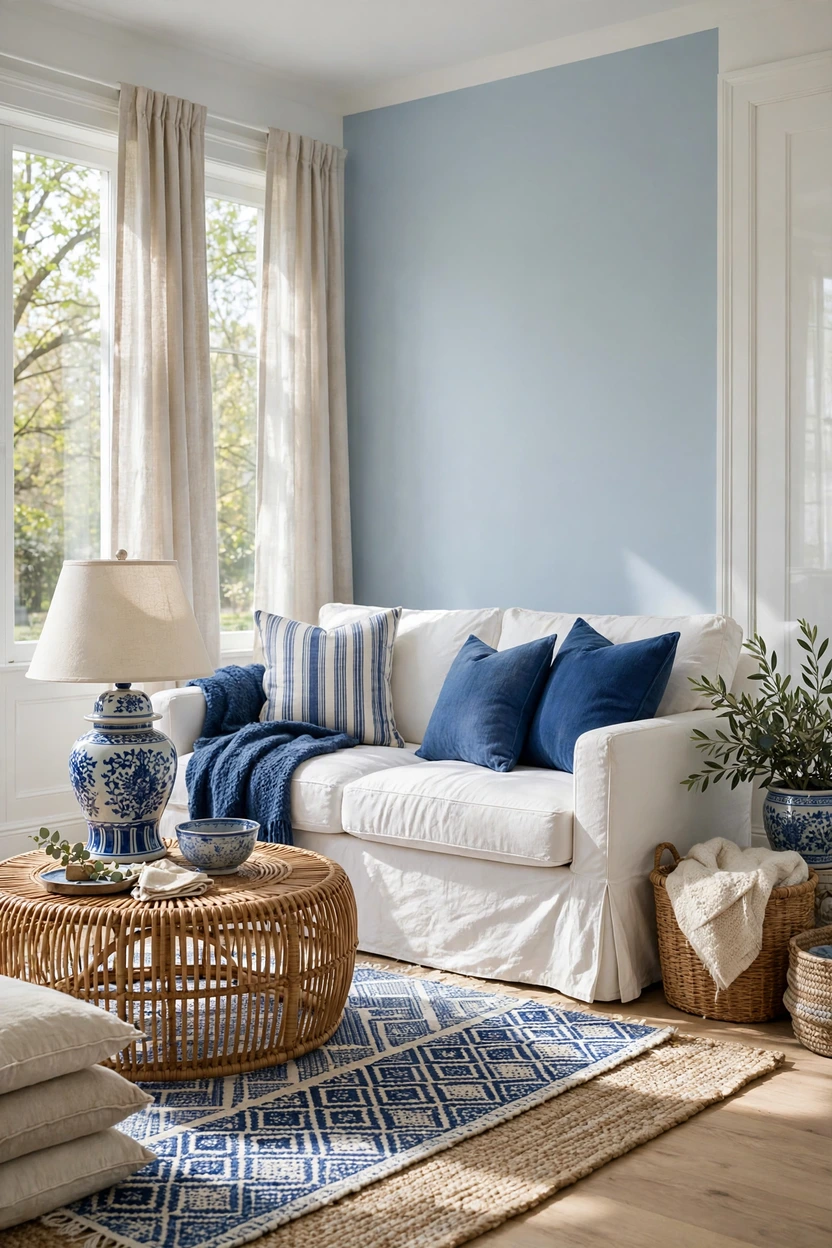
A pale blue on the walls makes a living room feel open and light. It acts like a soft neutral, so you can pair it with white trim, cream furniture, and natural wood. If your room faces north, choose a sky blue with a slightly warmer undertone so it does not read stark or gray. If your room faces south, a cooler, icier pale blue balances the warm sun. Test your sample on two walls and check it morning, noon, and evening.

Blue-Gray That Acts Like a Neutral
A blue-gray is a gentle way to bring in color without it taking over. It sits between gray and blue, so it looks calm and flexible. Pair it with warm white trim, wood, and a cream rug so it does not feel cold. Muted blue-gray also works as a backdrop for art, since it does not compete. This is a good pick if you are unsure about blue and want something you can live with for years.

Navy Walls With Warm Wood and Brass
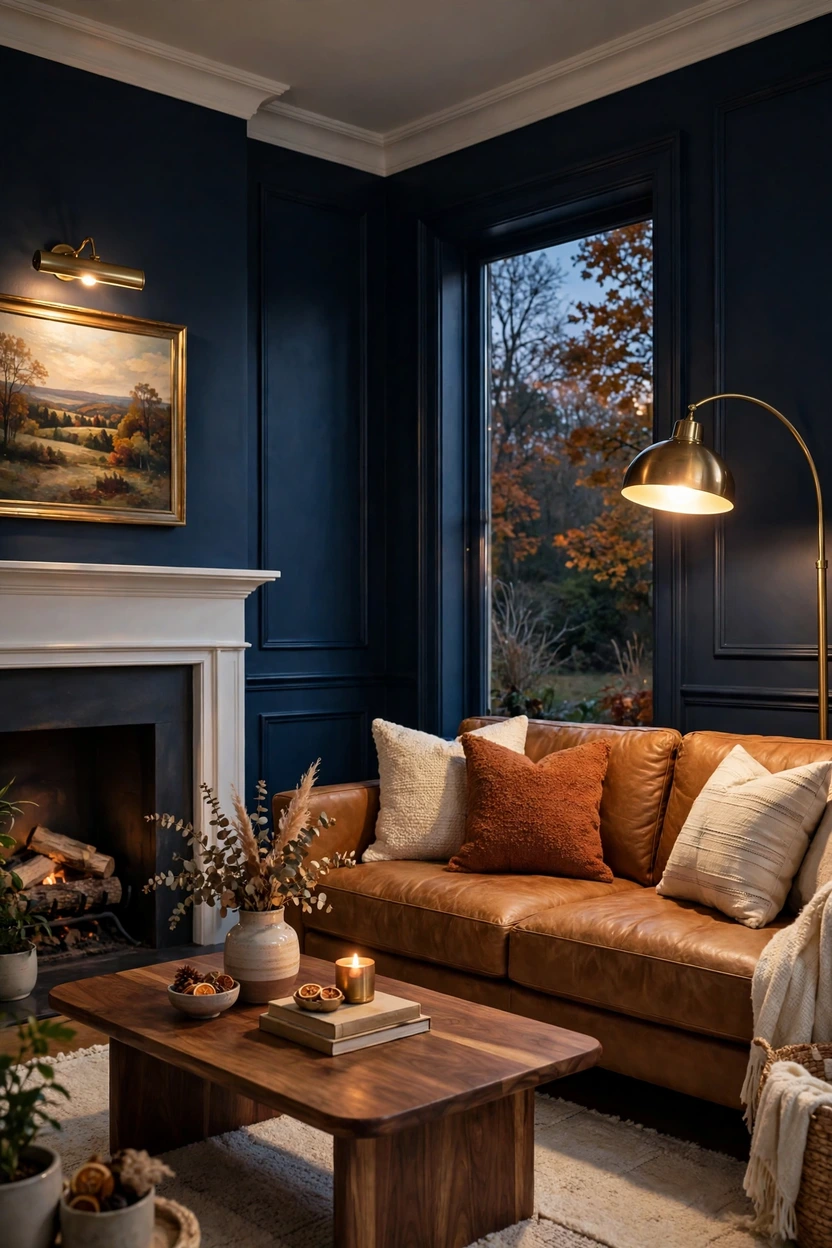
Navy makes a living room feel like a cozy library. Designers like muted navies with gray or green in them, such as Benjamin Moore Hale Navy, because they feel deep without looking harsh. Pair navy with walnut, oak, brass, and cream so the room has warmth to balance the dark. Dark navy absorbs light, so add lamps, sconces, and a pale rug. Use a good primer and expect more than one coat.
A Color-Drenched Blue Room
Color drenching means painting walls, trim, doors, and sometimes the ceiling in one shade. In a living room it makes the space feel wrapped and calm, and it hides awkward lines. Use a slightly different finish for the trim, like satin on the trim and matte on the walls, so the shapes still show. Add contrast with warm furniture and light-colored textiles so the room does not feel flat. Keep the rug and art in lighter tones so they stand out.

Teal and Blue-Green for a Moody Look
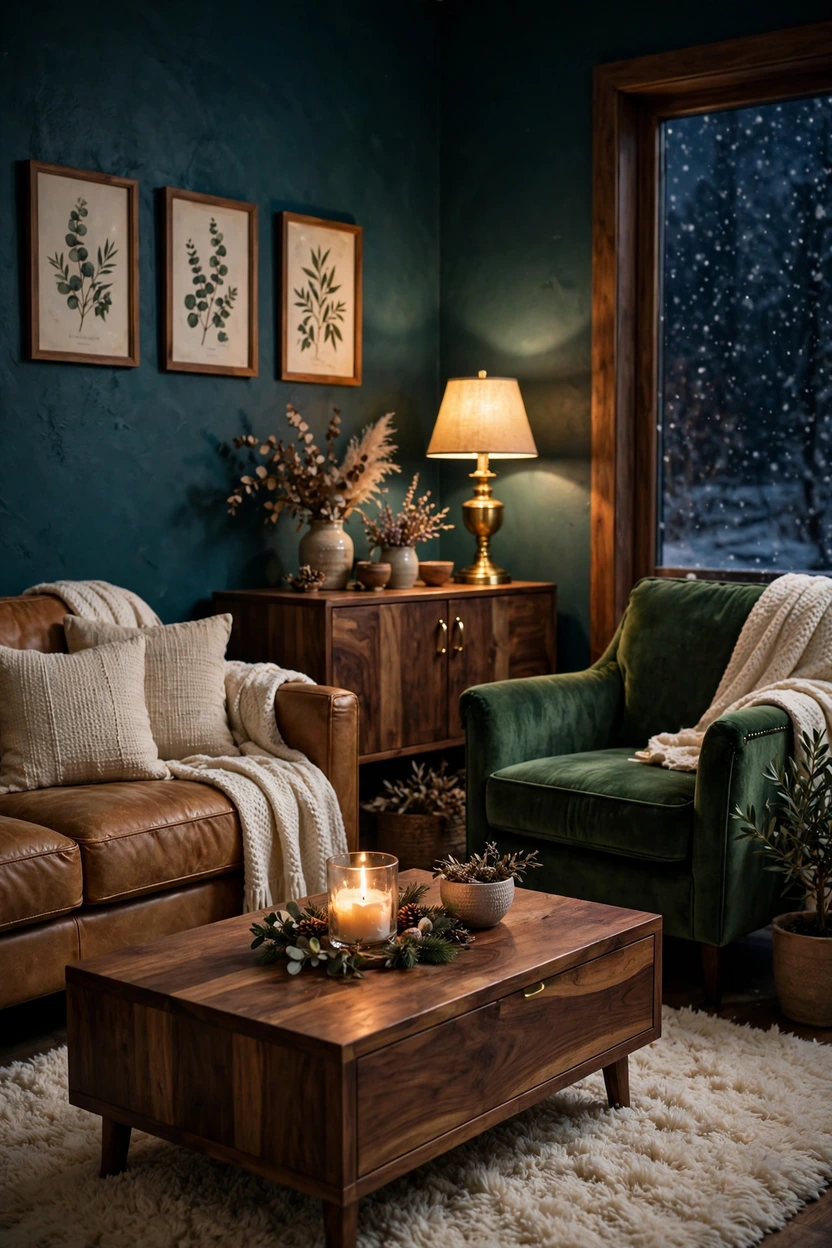
Blue-green shades are trending because they feel earthy and grounded. Deep teal, smoky jade, and petrol blue add richness without the formality of navy. They look best with warm walnut, leather, and brass. Use a warm bulb and keep the ceiling and trim light so the room does not feel closed in. Test the shade at night, since blue-greens can shift to deeper tones under lamplight.
A Blue Sofa as the Focal Point
A blue sofa gives a neutral room a clear center. Choose a deep navy, a dusty denim, or a soft slate blue in velvet, linen, or performance fabric. Keep the walls and rug light, so the sofa stands out. Leave about 14 to 18 inches between the sofa and the coffee table so you can reach your drink and still walk past. Add pillows in cream, rust, and one pattern so the sofa feels layered.

Layered Blue and White
Blue and white is a classic for a reason, but it looks best when it has texture. Mix solid linen, a stripe, a small check, and one patterned ceramic so nothing looks matched. Keep the blues in the same family, like indigo, denim, and soft sky, so they feel related. Add wood, rattan, or leather for warmth. Skip literal shells and anchors, so the room feels like a home and not a theme.
Blue With Rust or Burnt Orange
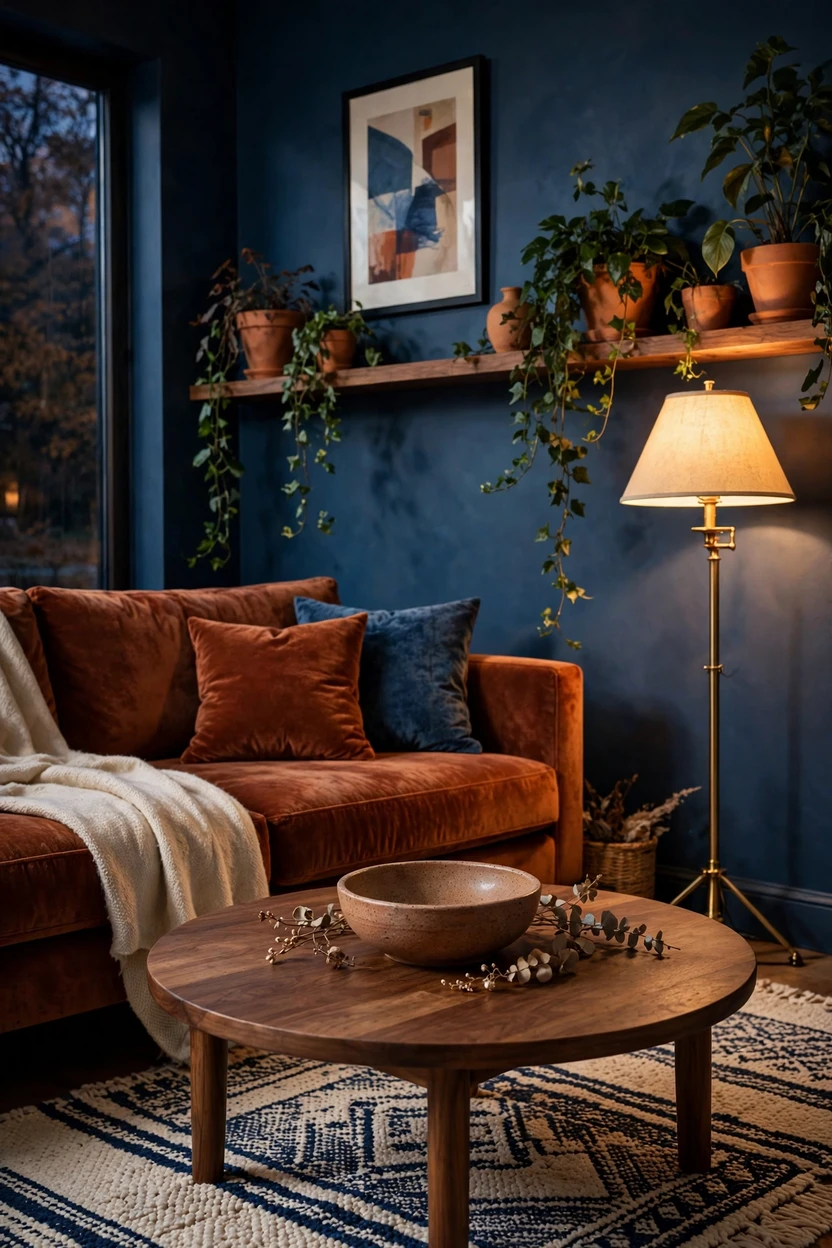
Orange and blue sit across from each other on the color wheel, so they make each other glow. A rust velvet sofa against navy walls, or rust pillows on a blue sofa, feels warm and rich. Keep the orange in earthy tones, like terracotta, clay, and burnt sienna, instead of bright orange. Add brass, leather, and wood to link the colors. Use the 60-30-10 idea: blue as the main color, a neutral as the second, and rust as the accent.
Blue With Blush Pink
Blush and blue is a soft, grown-up pair. Use a pale or muted blue on the walls and add blush or dusty pink in armchairs, pillows, or a vase. The pink warms the cool blue, and the blue keeps the pink from feeling sweet. Choose shades with a touch of gray so neither color feels bright. Add a neutral like cream and a warm metal like brass to settle the mix.

Blue Built-Ins and Bookshelves
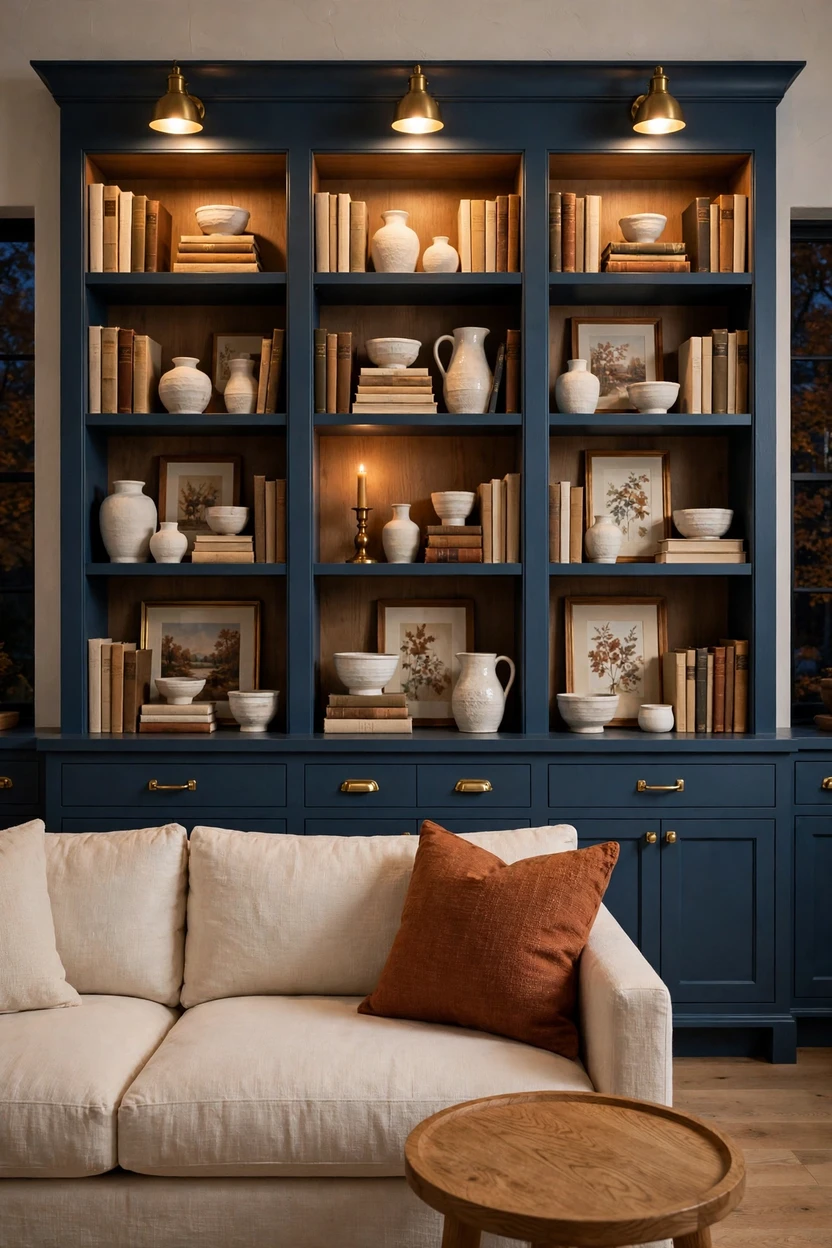
Painting built-in shelves blue gives a living room depth without painting every wall. Use the same shade on the shelf back and sides, then leave the walls a calm warm white. Books, ceramics, and art look sharper against a dark backdrop. Add small picture lights or LED strips inside the shelves so the color glows at night. Mix open and closed storage so the shelves do not feel crowded.
Blue Paneling
Paneling adds texture, and blue paneling adds mood. Choose board and batten, vertical slats, or simple wainscot about one-third to one-half of the wall height. Paint it in a muted blue and keep the wall above in a lighter tone or the same color for a drenched look. Use satin or semi-gloss on paneling, since it handles scuffs better than matte. Add a wall sconce or a framed print to finish the wall.

A Blue Wallpaper Alcove
If painting feels like too much, wallpaper one small area. An alcove, a fireplace wall, or the wall behind a sofa makes a good frame for blue pattern. Pick a small floral, a soft stripe, or a muted botanical in blue and cream so it feels calm. Peel-and-stick wallpaper works well for renters and is easy to change. Keep the furniture in front simple, so the pattern is the star.
Related: 17 Living Room Wall Art Layering Ideas for a Focal Point

A Blue Rug as an Anchor
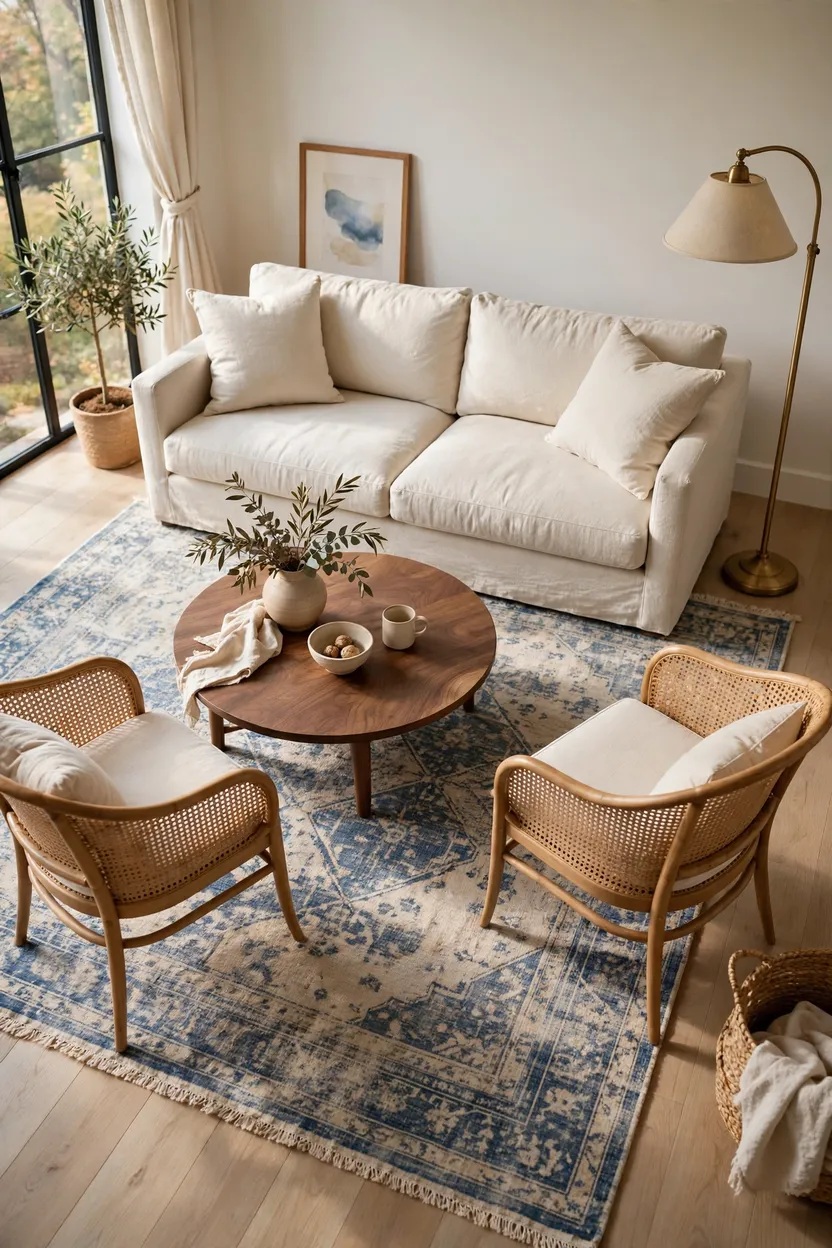
A blue rug is the easiest way to add blue to a neutral room. Choose a faded indigo, a muted blue-gray, or a pattern with cream and blue so it feels lived-in. An 8 by 10 is the workhorse size for most living rooms. Make sure at least the front legs of your sofa and chairs sit on the rug, and leave about 12 to 18 inches of bare floor around the edges if the room allows. A rug that is too small makes the whole room feel disconnected.
A Blue Ceiling
A blue ceiling is a quiet surprise in a neutral living room. Pick a soft sky blue, a dusty blue, or a gentle blue-gray, and keep the walls warm white. The ceiling reflects a cool, gentle light into the room and draws the eye up. Use flat paint so it hides small flaws. Test a sample, since colors look darker overhead than on a small card.

Blue Accents Only
You do not have to paint to make blue work. Add a few blue pillows, a throw, a ceramic vase, and one piece of blue art. Repeat the same blue in three places so it looks planned. Keep the rest of the room neutral, with warm white, wood, and linen. This is the least risky way to test which blue you love before you commit to paint.

Styling Tips to Make Blue Work
A few habits keep blue rooms warm and balanced.
- Pick the undertone first. Blues with gray, green, or purple in them look very different on the wall.
- Add a warm partner. Wood, brass, leather, or rust warms the cool color.
- Layer texture. Linen, wool, velvet, and rattan keep blue from looking flat.
- Use warm bulbs. Choose bulbs around 2700 to 3000K so the room glows instead of glares.
- Repeat blue three times. Echo your main blue in a pillow, a vase, and a piece of art.
- Keep one neutral. Warm white, cream, or oat gives the eye a place to rest.
- Limit patterns. One or two patterns are enough with a strong color.
Practical Implementation: A Plan From Sample to Styling
Follow this order so you love the result.
- Note your light. Check which way the room faces and how the light changes during the day.
- Choose three samples. Pick one lighter, one mid, and one deeper blue, all with similar undertones.
- Test them properly. Paint large sample boards and move them around the room, looking at them morning, noon, and night.
- Choose your finish. Use matte or flat for walls, satin for trim and paneling.
- Prime and paint. Dark blues often need a good primer and more than one coat.
- Plan your layout. Float the sofa about 12 inches off the wall, keep the coffee table 14 to 18 inches from the sofa, and use an 8 by 10 rug as a starting point.
- Add light. Place a floor lamp and a table lamp near seating, with warm bulbs.
- Style lightly. Add pillows, a throw, a plant, and one big piece of art.
Common Mistakes to Avoid
These are the usual reasons a blue room feels off.
- Skipping samples. Blue shifts a lot with light, so what you see on a small chip may not match your room.
- Using cool white bulbs. They can make a blue room feel icy.
- Forgetting a warm contrast. A blue room with no wood, brass, or warm textiles can feel cold.
- Choosing the wrong undertone for your light. A cool blue in a north-facing room can look gray and flat.
- Hanging art too high. Center art at about 57 to 60 inches from the floor.
- Using a rug that is too small. At least the front legs of the seating should be on the rug.
- Matching everything. A matching blue sofa, rug, curtains, and walls can look like a showroom set.
- Painting without primer. Dark blues can show through or look patchy on poorly prepped walls.
Small-Space Alternatives
Blue can work in a small living room.
- Go pale. Soft sky blue or blue-gray reflects light and feels open.
- Use one blue. Keep walls, trim, and ceiling in close tones to blur the edges.
- Pick a slim sofa. Choose raised legs and a low back so you can see more floor.
- Hang a large mirror. It bounces light and doubles the view.
- Choose a smaller rug. A 5 by 8 rug under the front of the sofa can define a small seating area.
- Use wall sconces. They save surface space and add warm light.
- Keep accessories small. A few larger items look calmer than many small ones.
Budget-Friendly Alternatives
You can get a blue living room without a big spend.
Under an Hour
- Add blue pillows and a throw to your sofa.
- Swap cool bulbs for warm ones.
- Hang one blue print or painting.
Under a Weekend
- Paint an accent wall or one set of shelves in blue.
- Use peel-and-stick wallpaper inside an alcove.
- Thrift a blue ceramic vase or lamp base and add a new linen shade.
Under a Month
- Buy a larger blue or blue-and-cream rug.
- Paint the whole room in a muted blue and add white trim.
- Add board and batten paneling to one wall and paint it blue.
Pro Styling Recommendations
These are the habits designers use to keep blue looking rich.
- Match the blue to the light. Warmer blues for north light, smoky or icy blues for south light.
- Treat blue like a neutral. Use it as a backdrop and add warm color on top.
- Mix finishes. Pair matte walls with satin trim and glossy ceramics.
- Layer your lighting. Use a floor lamp, a table lamp, and a picture light for depth.
- Place art low and centered. Hang art so its center sits near 57 to 60 inches.
- Float your furniture. Pull the sofa off the wall by about 12 inches.
- Edit your accessories. A few good pieces beat many small ones.
FAQs
Is blue a good color for a living room?
Yes. Blue works in many living rooms because it can be calm, classic, or bold depending on the shade. Choose the right undertone for your light and add warm elements like wood and brass.
What colors go with blue in a living room?
Warm white, cream, oat, camel, walnut, brass, rust, blush pink, mustard, and olive all work. Blue and rust is a rich pair, and blue and white is a classic.
Related: 17 White Living Room Ideas That Prove Minimalism Feels Inviting
What blue paint is best for a living room?
It depends on your light and your mood. Muted navies like Benjamin Moore Hale Navy and Farrow & Ball Hague Blue are designer favorites, and soft blue-grays and sky blues feel lighter. Always test samples first.
What blue works in a north-facing living room?
Choose a lighter or warmer blue with a touch of green or gray, so it does not look stark. Add warm bulbs and warm textiles to balance the cool light.
What blue works in a south-facing living room?
South light is warmer and brighter, so a cooler or icier pale blue can balance it. A smoky gray-blue also works well and adds depth without overwhelming the room.
Will a blue living room feel cold?
It can if everything is cool. Add wood, brass, leather, rust, and linen, use warm bulbs around 2700 to 3000K, and layer texture. These steps keep the room cozy.
Is navy too dark for a living room?
Not if you plan for it. Add plenty of lamps, a light rug, and warm wood and brass. Navy works best in rooms with some natural light or in cozy rooms made for evening use.
What is the best rug size for a living room?
An 8 by 10 is the most common choice. Make sure at least the front legs of your seating are on the rug, and leave 12 to 18 inches of bare floor around the edges if the room allows.
Can renters have a blue living room?
Yes. Use a blue rug, pillows, throws, art, and peel-and-stick wallpaper in an alcove. A freestanding bookshelf painted blue can also work if your lease allows.
How do I know if I will love a blue paint color?
Test large sample boards on at least two walls and look at them in morning, afternoon, and evening light. Live with them for a few days, with your furniture and rug nearby, before you decide.
Conclusion
Blue works when it has a plan behind it. Choose the right undertone, test it in your light, add something warm, and light the room well.
You do not have to paint every wall. A blue rug, a deep sofa, or a painted bookshelf can change how a living room feels. Start with the idea that fits your home and your budget, and build from there.
The goal is a living room where you can exhale. When the lamp is on, the blue is soft, and the room feels like yours, you have proved the color works.